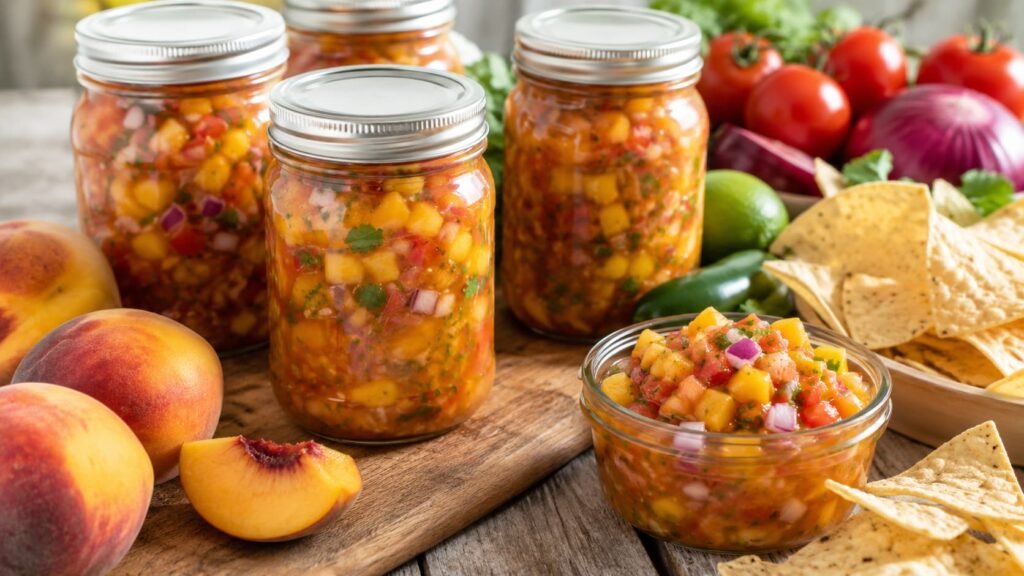
This homemade peach salsa recipe for canning is a sweet, tangy, and slightly spicy way to preserve fresh summer peaches while they are at their best. It combines juicy peaches, ripe tomatoes, peppers, onions, and bright acidity to create a colorful salsa that brings summer flavor to your pantry.
If you have extra peaches from the farmers market, garden, or a fresh fruit box, canning is a smart way to enjoy them beyond peach season. Since salsa includes low-acid ingredients like onions and peppers, it must be made with the right amount of acid and processed correctly in a boiling water bath canner. Do not reduce the acid or change the ingredient balance unless you are following a tested canning recipe.
Quick Recipe Summary
| Recipe Detail | Information |
| Prep Time | About 35 minutes |
| Cook Time | About 20 minutes |
| Processing Time | About 15 minutes, or as required for your altitude |
| Yield | About 5 to 6 pint jars, depending on final batch size |
| Skill Level | Beginner-friendly if safe canning steps are followed |
| Best Jars | Pint canning jars |
| Canning Method | Boiling water bath canning |
| Flavor | Sweet, tangy, mildly spicy, and bright |
| Best Served With | Tortilla chips, tacos, grilled chicken, pork, or fish |
This peach salsa canning recipe works best with ripe but firm peaches. Soft, overripe peaches can break down too much during cooking, while firm peaches hold their shape and give the salsa a chunky, fresh-tasting texture. The finished salsa should taste balanced, with natural sweetness from the peaches, gentle heat from the peppers, and enough acidity to keep the flavor bright.
Before you begin, prepare your ingredients, jars, lids, canning funnel, jar lifter, and boiling water canner. Once the salsa is hot, the filling and processing steps move quickly, so having everything ready makes the process smoother, cleaner, and safer.
Why You’ll Love This Peach Salsa Recipe for Canning
This peach salsa recipe is one of the best ways to save the flavor of fresh summer peaches while they are sweet, juicy, and full of color. Once canned, each jar gives you a bright mix of fruit, tomatoes, peppers, and gentle heat that feels just as welcome with a quick snack as it does with dinner.
The flavor is sweet, tangy, and lightly spicy without being too sharp or too hot. The peaches bring natural sweetness, the tomatoes add body, and the peppers give the salsa enough warmth to keep every bite interesting. It is the kind of homemade salsa you can open for tortilla chips, spoon over grilled chicken, serve with pork, or use as a fresh-tasting topping for fish tacos.
This peach salsa recipe for canning also feels practical. It uses seasonal fruit and simple kitchen ingredients, but the finished jars feel special enough to save for family meals, weekend snacks, or summer-style dinners later in the year. It is beginner-friendly when each canning step is followed exactly, especially the acid amount, jar size, and boiling water bath processing time.
There is something satisfying about opening a jar months after peach season and still getting that sweet summer flavor back on the table. That is what makes this recipe worth making when peaches are fresh, affordable, and at their best.
Is Peach Salsa Safe for Canning?
Peach salsa is safe for canning only when it is made from a recipe designed for canning, not from a fresh salsa recipe. Fresh salsa is usually kept in the refrigerator and eaten within a few days. Shelf-stable peach salsa needs the correct acidity, proper jar preparation, and the right water bath canning time so the finished jars can be stored safely.
This is important because salsa often includes low-acid ingredients such as onions, peppers, and tomatoes. In a peach salsa canning recipe, acid from bottled lime juice, bottled lemon juice, or vinegar is not added only for taste. It helps create the right environment for safe pantry storage.
A tested canning recipe means the ingredient balance, acidity, jar size, and processing time have been developed for safe home canning. That is why it is not a good idea to randomly reduce the acid, add extra vegetables, or make the salsa much thicker before processing. Even small changes can affect how heat moves through the jar during water bath canning.
Food safety note: Do not change the acid amount or vegetable-to-acid ratio in a canning salsa recipe.
Avoid adding extra low-acid ingredients such as more onions, extra peppers, corn, beans, or additional vegetables unless the recipe specifically allows it. If you want more heat or a different flavor, the safest option is to adjust the salsa after opening the jar.
Once a jar is opened, you can stir in fresh cilantro, diced jalapeño, mango, pineapple, or a squeeze of lime before serving. This keeps the recipe for canning peach salsa within safe limits while still giving you room to make it taste the way you like at the table.
Ingredients You’ll Need
A good peach salsa starts with fruit and vegetables that are ripe, firm, and full of flavor. Since this recipe is made for canning, the ingredients also need to stay in the right balance. Peaches, tomatoes, peppers, onions, and acid all work together to create a salsa that tastes fresh, stores well, and keeps the right texture after processing.
Fresh Peaches
Fresh summer peaches are the heart of this salsa, so choose peaches that smell sweet and feel slightly firm when pressed. They should be ripe enough to taste juicy, but not so soft that they break down while chopping or cooking.
Firm-ripe peaches hold their shape better in homemade peach salsa. Overripe peaches can turn the salsa too soft, especially after simmering and water bath processing. Freestone peaches are the easiest choice because the pit separates from the fruit more cleanly, which makes prep faster and less messy.
Peeling the peaches gives the salsa a softer, cleaner texture. To peel them more easily, dip the peaches briefly in boiling water, move them to ice water, and then slip off the skins. If your canning-safe recipe calls for peeled peaches, follow that step so the finished salsa stays smooth, chunky, and pleasant to eat.
Tomatoes
Tomatoes add body, color, and a savory base that balances the sweetness of the peaches. For a canned salsa recipe with fresh tomatoes, use tomatoes that are ripe but still firm enough to chop neatly.
Roma or plum tomatoes are a strong choice because they are meatier and usually release less liquid than large slicing tomatoes. This helps keep the salsa from becoming watery. If your recipe written for canning calls for peeled tomatoes, do not skip that step. Tomato skins can loosen during cooking and leave a tougher texture in the finished jar.
The peaches should still be the main flavor, while the tomatoes give the salsa structure. A good peach salsa canning recipe should taste fruity, tangy, and savory at the same time.
Peppers and Onion
Peppers bring color, crunch, and heat. Bell peppers add sweetness without making the salsa spicy, while jalapeño or serrano peppers give a warm, medium heat. If a recipe includes habanero, use only the amount listed because changing pepper amounts can affect the balance of a canning salsa.
A jalapeño salsa style is usually warm, bright, and family-friendly. A habanero salsa style is much hotter and fruitier, so it works best for people who enjoy stronger heat. For most jars, jalapeño is the more balanced flavor choice because it adds spice without covering the fresh peach flavor.
Red onion works especially well in homemade salsa because it adds color and a mild sharpness. It also makes the salsa taste more complete with chips, tacos, grilled chicken, and seafood. Since onions and peppers are low-acid ingredients, avoid adding extra amounts beyond the recipe.
Acid and Seasoning
Acid is one of the most important parts of a peach salsa recipe for canning. When the recipe calls for bottled lime juice, bottled lemon juice, or vinegar, use the exact type and amount listed. Bottled citrus juice is often used for canning because its acidity is more consistent than fresh-squeezed juice. If vinegar is used, it should be the strength required by the recipe, commonly 5% acidity.
Salt helps bring out the flavor of the peaches and tomatoes. A small amount of brown sugar or another sweetener may also be included if the canning formula uses it, especially when the peaches are not very sweet. Cilantro can add a fresh finish, but if you want a stronger herb flavor, it is usually better to stir in extra cilantro after opening the jar.
The finished salsa should taste bright, not flat. It should have sweetness from the peaches, sharpness from the acid, and enough seasoning to work as both a snack dip and a dinner topping.
Best Peaches for Homemade Peach Salsa
The best peaches for homemade peach salsa are firm-ripe yellow peaches. They have the right mix of sweetness and tang, and they hold their shape better after chopping, simmering, and canning. When peaches are too soft, they can collapse into the salsa and make the texture heavy instead of chunky.
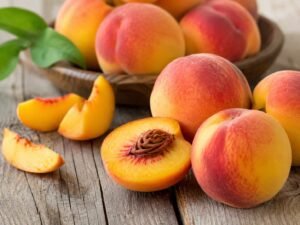
Yellow peaches are usually the better choice for a traditional peach salsa recipe because they bring the classic sweet-tart flavor people expect from summer peaches. White peaches are naturally sweeter and lower in acidity, so they should only be used in a canning recipe if the recipe specifically allows them.
When buying peaches for this recipe, look for fruit with a sweet peach smell, smooth skin, and a little give near the stem. Avoid peaches with deep bruises, wrinkled skin, or very soft spots. Those peaches are better for smoothies, sauces, or desserts, not for canning salsa.
Frozen peaches can work well for fresh salsa or freezer salsa, but they are not the best choice for a shelf-stable canning recipe unless the recipe has been developed for them. Frozen fruit releases more liquid as it thaws, which can change the texture and thickness of the salsa. For the cleanest flavor and best texture, fresh peaches are the better choice when they are in season.
Equipment Needed for Canning Peach Salsa
Before you start cooking the salsa, set up your canning tools so everything is ready when the jars need to be filled. Water bath canning moves quickly once the salsa is hot, and having your equipment prepared helps keep the process clean, smooth, and safe.
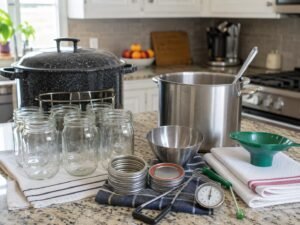
You will need a boiling water canner or a deep stockpot with a rack, pint jars, new jar lids, bands, a jar lifter, canning funnel, bubble remover, ladle, large pot, clean towels, and a timer.
A boiling water canner is used to process the filled jars safely. If you are using a deep stockpot, make sure it is tall enough for the water to cover the jars by at least 1 inch and that it has a rack on the bottom. The rack keeps the jars lifted so heat can move evenly around them.
Pint jars are usually the best size for peach salsa because they are easy to store and practical for snacks, tacos, grilled meats, and small family meals. Use clean canning jars, new jar lids, and matching bands. Lids should be new each time because the sealing compound is made for one use. Bands can be reused if they are clean, dry, and not rusty or bent.
A jar lifter makes it safer to move hot jars in and out of the canner. A canning funnel helps guide the hot salsa into the jars without leaving food on the rims. A bubble remover helps release trapped air before sealing, while clean towels give you a safe place to set hot jars as they cool.
How to Make Homemade Peach Salsa for Canning
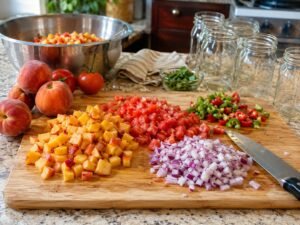
This peach salsa for canning recipe is easiest when you follow the steps in order: prepare the jars, chop the ingredients, cook the salsa, fill the jars, process them, and let them cool. Take your time with the parts that affect safety, especially headspace, clean rims, jar lids, and water bath canning time.
Step 1: Prepare the Jars and Canner
Wash the pint jars in hot, soapy water and rinse them well. Keep the jars hot until you are ready to fill them, because hot salsa should go into hot jars. This helps lower the risk of jars cracking from a sudden temperature change.
Prepare the lids and bands according to the lid manufacturer’s directions. The bands should be clean and ready, but they should not be tightened hard. Start heating your boiling water canner while you prepare the salsa ingredients so the water is ready when the filled jars go in.
Step 2: Prepare the Peaches and Tomatoes
Wash the peaches and tomatoes well before cutting. Peel the peaches if your canning instructions call for it, then remove the pits and chop the fruit into even pieces. Try to keep the peach pieces close in size so they cook evenly and stay pleasant in the finished salsa.
Prepare the tomatoes the same way. If the canning peach salsa recipe calls for peeled tomatoes, peel them before chopping. Dice the tomatoes evenly and avoid very watery or overripe tomatoes, because too much liquid can make the salsa thin.
Good texture matters in homemade peach salsa. The pieces should be small enough to scoop with chips but not so tiny that they disappear during cooking. A chunky salsa should still have visible peach, tomato, pepper, and onion pieces after processing.
Step 3: Cook the Salsa
Add the prepared peaches, tomatoes, peppers, onions, acid, and seasonings to a large pot. Stir everything together gently so the fruit does not break down too much. Bring the mixture to a steady simmer over medium heat, then cook it according to the canning-safe method you are following.
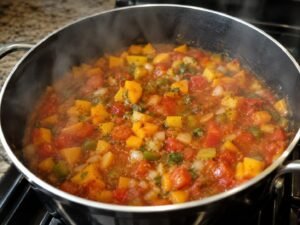
Stir often while the salsa cooks. This keeps the bottom from sticking and helps the ingredients heat evenly. The salsa should look glossy, colorful, and spoonable, with visible pieces of peach and tomato. It should become slightly thickened but still chunky.
Avoid cooking the salsa down too much unless the directions say to. A salsa that becomes too thick may not heat evenly inside the jars during processing.
Step 4: Fill the Jars
Ladle the hot salsa into hot pint jars using a canning funnel. Leave the correct headspace listed in your canning directions. Headspace matters because it gives the salsa room to expand during processing and helps the jar seal properly.
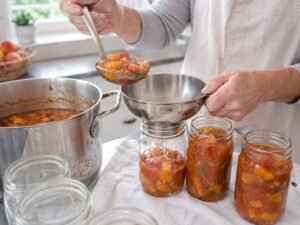
Run a bubble remover or a clean, non-metallic tool around the inside of each jar to release trapped air bubbles. Wipe the rims with a clean damp towel so there is no salsa, syrup, or seed pieces on the glass. Place the jar lids on top, then screw the bands on fingertip tight.
Fingertip tight means the band is secure but not forced. If the bands are too tight, air may not escape properly during processing. If they are too loose, liquid may leak from the jars.
Step 5: Process in a Water Bath Canner
Place the filled jars into the boiling water canner using a jar lifter. The jars should sit upright on the rack, and the water should cover the tops of the jars by at least 1 inch. Once the water returns to a full boil, start the timer.
Process the jars for the time required by your jar size, altitude, and canning directions. Do not guess, shorten, or skip the processing time. When the time is finished, turn off the heat, remove the canner lid carefully, and let the jars rest in the water for a few minutes before lifting them out.
Step 6: Cool and Check the Seal
Move the jars to a clean towel and leave them undisturbed for 12 to 24 hours. Do not press the lids while the jars are cooling. You may hear a popping sound as the jar seal forms, but the final seal should be checked after the jars have cooled completely.
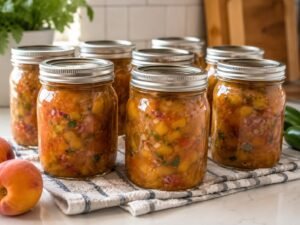
After cooling, check each lid. A sealed lid should be firm and should not flex up and down when pressed in the center. Remove the bands, wipe the jars if needed, then label them with the recipe name and date.
Store sealed jars in a cool, dark place. If possible, store them without the bands so you can notice any seal problem during storage. If any jar did not seal, place it in the refrigerator and use it within a few days. Do not store an unsealed jar in the pantry.
How Long Does Canned Peach Salsa Last?
A properly sealed jar of homemade canned salsa is best used within 1 year for the freshest flavor, color, and texture. The salsa may still be sealed after that, but the bright peach flavor can fade, and the texture may soften the longer it sits.
Store sealed jars in a cool, dry, dark place, such as a pantry, cabinet, or basement shelf away from heat and direct sunlight. Avoid keeping jars near the stove, dishwasher, sunny window, garage heat, or any place where the temperature changes often. Good pantry storage helps protect the jar seal and keeps the salsa tasting its best.
For long-term storage, keep sealed jars without the bands when possible. This makes it easier to notice if a lid loosens or a seal fails during storage. Label each jar with the recipe name and date so you know which batch to use first.
Once a jar is opened, move it to the refrigerator and keep it covered. Opened canned peach salsa should be used within 3 to 4 days. Always use a clean spoon when serving so crumbs, chips, or other food do not get into the jar.
Before eating, check the jar carefully. Do not taste the salsa if the lid is unsealed, the jar is leaking, the liquid looks foamy, mold is visible, or the salsa smells sour, rotten, or strange. If anything seems wrong, throw it away. With home canning, it is always better to be safe than to take a risk.
Fresh Peach Salsa vs Canned Peach Salsa
Fresh peach salsa and canned peach salsa both have their place, but they are not the same recipe. Fresh salsa is made to eat right away, while a peach salsa recipe for canning must be prepared with the right acid level, jar size, and processing time for pantry storage.
| Feature | Fresh Peach Salsa | Canned Peach Salsa |
| Storage | Stored in the refrigerator | Stored in the pantry after proper processing |
| Texture | Fresh, crisp, and juicy | Softer, saucier, and still chunky when made well |
| Flavor | Bright, raw, and fruit-forward | Deeper, sweeter, tangier, and more blended |
| Acid Requirement | Acid is mainly for flavor | Acid is part of the safety of the recipe |
| Cooking Needed | Usually no cooking needed | Cooked before filling jars and processed in a water bath canner |
| Best Use | Same-day snacks, tacos, and summer meals | Pantry storage, meal prep, quick appetizers, and year-round serving |
| Shelf Life | Usually a few days in the refrigerator | Best used within 1 year when properly sealed and stored |
If you want the freshest bite, make fresh peach salsa and keep it chilled. If you want to save summer peaches for later, this canned peach salsa recipe is the better choice. It gives you a jar you can open for tortilla chips, chicken dinners, fish tacos, pork, rice bowls, or quick party snacks when fresh peaches are no longer in season.
How to Make It Mild, Medium, or Spicy
One of the best parts of peach salsa is the way it balances sweet fruit with gentle heat. You can make the flavor mild, medium, or spicy, but for canning, the pepper amount should stay within the safe limits of the recipe. Peppers are low-acid ingredients, so adding extra before processing is not the best place to adjust the heat.
For a mild salsa recipe for canning, use bell peppers for sweetness and remove the seeds and inner ribs from the jalapeño. The ribs hold much of the pepper’s heat, so taking them out keeps the salsa gentle while still giving it a little warmth. Mild peach salsa is a good choice for family meals, snack boards, and guests who prefer a softer heat.
For medium heat, jalapeño or serrano peppers work well. A jalapeño salsa recipe gives you a warm, familiar spice that does not cover the peach flavor. Serrano peppers taste sharper and a little hotter, so they are better when you want the salsa to feel brighter and more lively.
For a hotter version, habanero can add bold, fruity heat, but only use it if the canning-safe directions allow it. A habanero salsa recipe can taste delicious with peaches, but do not replace mild peppers with habanero or add extra hot peppers unless the recipe specifically allows that change.
If you want more heat, the safest time to adjust it is after opening the jar. Stir in hot sauce, fresh chopped jalapeño, crushed red pepper, or a little extra lime right before serving. This keeps the canned salsa within safe limits while still letting you make it hotter at the table.
What to Serve with Peach Salsa
Peach salsa is more than a chip dip. Its sweet, tangy flavor works well with salty, smoky, spicy, and grilled foods, which makes it useful for both quick snacks and simple dinners.
Tortilla chips are the easiest choice. The salsa is chunky enough for scooping, and the sweet heat makes it feel more special than plain tomato salsa. It also works well over nachos with melted cheese, jalapeños, beans, and a little sour cream.
For dinner, spoon peach salsa over fish tacos, chicken tacos, grilled chicken, pork chops, or shrimp. The peaches brighten rich or smoky foods, while the acidity helps balance heavier dishes. For a lighter meal, serve it with grilled fish, shrimp bowls, baked tortilla chips, or rice bowls with beans and vegetables.
If you are making easy family dinners, keep a jar in the pantry for nights when the main dish needs more flavor. A spoonful can make simple grilled chicken, pork, seafood, or rice bowls taste more complete without making another sauce from scratch.
For party snacks, spoon peach salsa over a block of softened cream cheese and serve it with crackers, pita chips, or toasted bread. It also makes a bright topping for quesadillas, mini tacos, sliders, and snack boards.
Common Mistakes to Avoid
Even an easy salsa recipe for canning needs careful handling because salsa is not the same as jam, pickles, or a fresh dip for the refrigerator. The biggest mistake is using a fresh salsa recipe for shelf-stable canning. Fresh salsa can be adjusted by taste, but a recipe for canning salsa needs the right balance of fruit, vegetables, acid, jar size, and processing time.
Do not reduce the acid. Bottled lime juice, bottled lemon juice, or vinegar may seem like flavor ingredients, but in a peach salsa canning recipe, they also help make the salsa safe for storage. Cutting back on acid can change the safety of the finished jars.
It is also important not to add extra onion, peppers, corn, beans, or other low-acid ingredients before canning. These add-ins may taste good, but they can change the acidity and thickness of the salsa. If you want those extras, stir them in after opening the jar instead.
Another common mistake is skipping headspace or guessing it by eye. Too little headspace can cause leaking during processing, while too much headspace can stop the jar from sealing correctly. Use the headspace listed in the canning directions and check it before adding the lids.
Altitude is another detail that many home cooks forget. Water boils at a lower temperature in higher locations, so canning times often need adjustment. If you live above sea level, check a reliable altitude adjustment chart and follow the processing time for your area.
Damaged jars and old lids can also cause problems. Do not use jars with chips, cracks, or rough rims, and use new lids for each batch. After the jars cool, always check the seals before storing them. A jar that did not seal belongs in the refrigerator, not the pantry.
Finally, avoid storing sealed jars in a hot or sunny place. Heat and light can weaken quality over time and may affect the seal. A cool, dry, dark pantry is the best place to keep canned peach salsa until you are ready to open it.
Troubleshooting Peach Salsa for Canning
Why is my peach salsa watery?
Peach salsa can turn watery because peaches and tomatoes both release juice as they cook. This happens more often when the fruit is overripe or the tomatoes are very juicy. Firm peaches and meaty tomatoes, such as Roma or plum tomatoes, usually give a better texture.
If your canning-safe directions allow it, you can drain extra liquid from very watery tomatoes before cooking. You can also simmer the salsa until it reaches the texture listed in the recipe. The goal is a salsa that is spoonable and slightly thickened, but still loose enough to heat safely in the jars.
Why did my jars not seal?
Jars may fail to seal for several reasons. Food may have been left on the rim, the lids may have been old, the headspace may have been wrong, or the bands may have been too loose or too tight. A short processing time can also keep jars from sealing correctly.
After cooling, check every lid. If a jar did not seal, do not place it in pantry storage. Move it to the refrigerator and use it within a few days. Only reprocess jars if your canning-safe directions explain how to do it. If you are unsure, refrigeration is the safer choice.
Can I thicken peach salsa before canning?
Do not add random thickeners such as flour, cornstarch, or starch-based sauces unless the canning recipe specifically allows it. Thickening the salsa too much can affect how heat moves through the jar during water bath canning.
If the salsa seems thin, follow the safe directions in the recipe. In many cases, the better choice is to use firm fruit, avoid overly watery tomatoes, and simmer only as directed. If you want a thicker serving texture, drain off a little liquid after opening the jar or stir in fresh ingredients right before serving.
Can I freeze peach salsa instead?
Yes, peach salsa can be frozen, and freezing is a good option when you want more flexibility with ingredients. A freezer salsa does not need the same acid balance as a shelf-stable canning recipe, so it is easier to adjust for taste.
The texture may soften after thawing because peaches and tomatoes release liquid in the freezer. For the best result, freeze the salsa in small containers and do not fill them to the top because the salsa needs room to expand. Thaw it in the refrigerator before serving. If you want the brightest texture, fresh peach salsa is still best eaten right away.
Recipe Card Section
Homemade Peach Salsa Recipe for Canning
This homemade peach salsa recipe for canning is sweet, tangy, lightly spicy, and full of fresh summer flavor. Firm-ripe peaches, tomatoes, peppers, onion, bottled lime juice, brown sugar, and cilantro are cooked together, packed into pint jars, and processed in a boiling water canner for pantry storage.
Prep Time: 35 minutes
Cook Time: 20 minutes
Processing Time: 20 minutes, plus altitude adjustment if needed
Total Time: About 1 hour 15 minutes, not including cooling time
Yield: About 4 pint jars
Method: Water bath canning
Recipe Type: Salsa
Skill Level: Intermediate
Best For: Chips, tacos, grilled chicken, pork, fish, shrimp, and party snacks
Ingredients
Use firm-ripe fruit and fresh vegetables for the best flavor and texture. Keep the ingredient amounts the same, especially the bottled lime juice, peppers, onion, and tomatoes, because the balance matters in a canning recipe.
- 2 pounds firm-ripe peaches, about 6 peaches, halved and pitted
- 2 pounds ripe tomatoes, about 6 large tomatoes, stem removed and halved
- 1 small red onion, peeled and halved
- 1 small red or yellow bell pepper, halved and seeded
- 2 tablespoons minced jalapeño, serrano, or habanero
- 3/4 cup bottled lime juice
- 1 teaspoon salt
- 2 tablespoons brown sugar
- 1 cup roughly chopped cilantro
Instructions
Prepare the boiling water canner first. Heat the pint jars in simmering water until you are ready to fill them. Do not boil the empty jars. Wash the lids in warm, soapy water and set them aside with the bands.
Heat a grill to medium, or set the broiler to high. Place the peaches, tomatoes, bell pepper, and onion on a grill pan or baking sheet. Cook until the skins are lightly charred and the fruit and vegetables have softened slightly, about 8 to 10 minutes. Let them cool just enough to handle.
Dice the peaches, tomatoes, onion, and bell pepper. Add them to a 4-quart saucepan with the minced pepper, bottled lime juice, salt, and brown sugar. Bring the salsa to a gentle simmer over medium heat, stirring often.
Simmer for about 10 minutes, until the peaches soften slightly and the flavors come together. The salsa should look glossy, colorful, and chunky, not dry or overly thick. Stir in the cilantro near the end of cooking.
Ladle the hot salsa into hot pint jars, leaving 1/2 inch headspace. Remove air bubbles with a bubble remover or clean non-metallic tool. Wipe the rims with a clean damp towel, center the lids on the jars, and adjust the bands to fingertip tight.
Place the filled jars upright in the boiling water canner. The water should cover the jars by at least 1 inch. Once the water returns to a full boil, process the jars for 20 minutes, adjusting for altitude if needed.
When processing is finished, turn off the heat, remove the canner lid, and let the jars stand in the hot water for 5 minutes. Lift the jars out carefully and place them on a clean towel. Let them cool undisturbed for 12 to 24 hours.
Check the seals after the jars have cooled completely. A sealed lid should not flex up and down when pressed in the center. Label each sealed jar with the recipe name and date before storing.
Notes
Use bottled lime juice for this recipe because the acidity is more consistent for canning. Do not replace it with fresh lime juice unless you are following canning directions that specifically allow that change.
Do not add extra onions, peppers, corn, beans, mango, pineapple, or other low-acid ingredients before canning. If you want to customize the salsa, stir in extras after opening the jar.
For mild salsa, use jalapeño and remove the seeds and ribs before mincing. For more heat, use serrano or habanero, but keep the total measured pepper amount the same.
This is a fire-roasted peach salsa, so the lightly charred skins are part of the texture and flavor. If you prefer peeled peaches or peeled tomatoes, only follow that method when using a canning-safe recipe written for peeled produce.
Storage
Store sealed jars in a cool, dry, dark place and use within 1 year for the best flavor and texture. Once opened, refrigerate the salsa and use it within 3 to 4 days.
If a jar did not seal, refrigerate it and use it within a few days. Do not store unsealed jars in the pantry.
Safety Note
This is a canning recipe, so the acid amount, jar size, processing time, and ingredient balance matter. Do not reduce the bottled lime juice, increase low-acid vegetables, skip headspace, or shorten the water bath canning time.
Nutrition Estimate
Approx. 15 to 20 calories per 2-tablespoon serving. Nutrition will vary depending on peach size, tomato variety, final yield, and serving amount.
FAQs About Peach Salsa Recipe for Canning
Can fresh peach salsa be canned?
Fresh peach salsa cannot automatically be canned. A fresh salsa recipe is usually made for the refrigerator and eaten within a few days. For pantry storage, you need a peach salsa recipe for canning with the correct acid level, jar size, and processing time.
Do I need bottled lime juice for peach salsa canning?
Yes, use the acid type and amount required by the canning recipe. Bottled lime juice or bottled lemon juice is often used because the acidity is more consistent than fresh-squeezed juice.
Can I use fresh lime juice instead of bottled lime juice?
For canning, bottled juice is usually preferred when the recipe calls for it because fresh limes can vary in acidity. Do not swap fresh lime juice for bottled lime juice unless your canning-safe directions allow it.
Can I add mango, pineapple, corn, or black beans?
Do not add mango, pineapple, corn, black beans, or other extra low-acid ingredients to a shelf-stable canning recipe unless the recipe has been tested with those ingredients. Add extras after opening the jar instead.
Can I make peach salsa less spicy?
Yes, you can make peach salsa less spicy by removing the seeds and inner ribs from the hot pepper. You can also choose a milder pepper listed in the recipe, but do not increase the total pepper amount beyond the safe recipe limits.
How do I know if canned peach salsa is bad?
Do not eat canned peach salsa if the lid is unsealed, the jar leaks, liquid spurts out when opened, mold appears, the salsa looks foamy, or it smells sour, rotten, or strange. If anything seems wrong, throw it away without tasting it.
How long should peach salsa sit before eating?
For the best flavor, let sealed jars sit for 1 to 2 weeks before opening. This gives the peaches, tomatoes, peppers, lime juice, brown sugar, and seasoning time to blend.