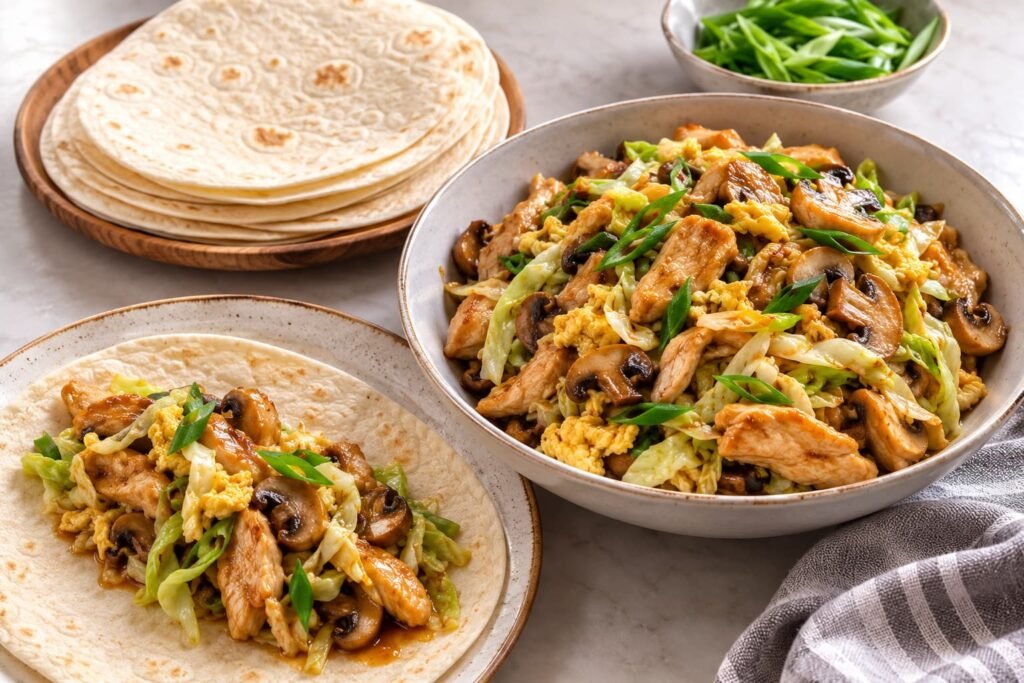
Moo shu chicken is a stir-fried dish that commonly combines chicken, egg, vegetables, and savory seasonings. Many American Chinese versions are served with thin wheat pancakes and hoisin sauce, while some home adaptations use flour tortillas as a convenient substitute.
There is no single universal moo shu chicken recipe. The vegetables, sauce ingredients, mushrooms, and wrappers can vary depending on the style of preparation.
What Is Moo Shu Chicken?
Moo shu chicken is a chicken variation of moo shu, a stir-fry style that commonly combines protein, egg, vegetables, and seasonings.
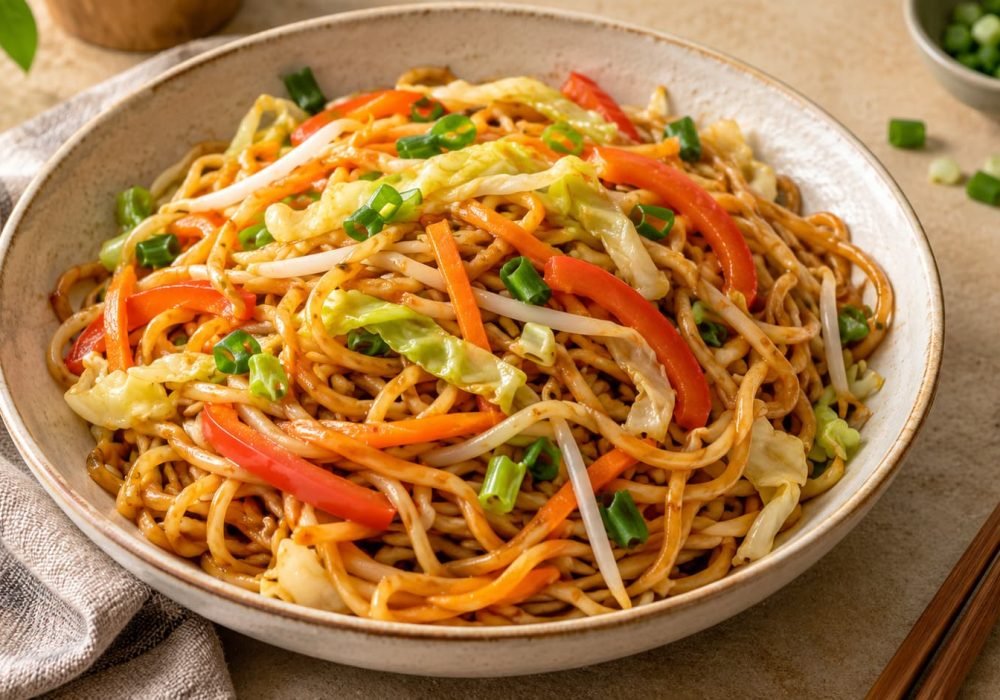
Chicken, cabbage, mushrooms, scallions, and egg appear in many modern versions. Other preparations may include ingredients such as bamboo shoots, cucumber, carrots, or different mushroom varieties.
The wrapper also varies. Thin wheat-based pancakes are more closely associated with moo shu, while flour tortillas are a home-style substitute rather than a traditional wrapper.
For that reason, moo shu chicken is better understood as a style of stir-fried filling than as one fixed formula with a required ingredient list.
What Ingredients Are Commonly Used in Moo Shu Chicken?
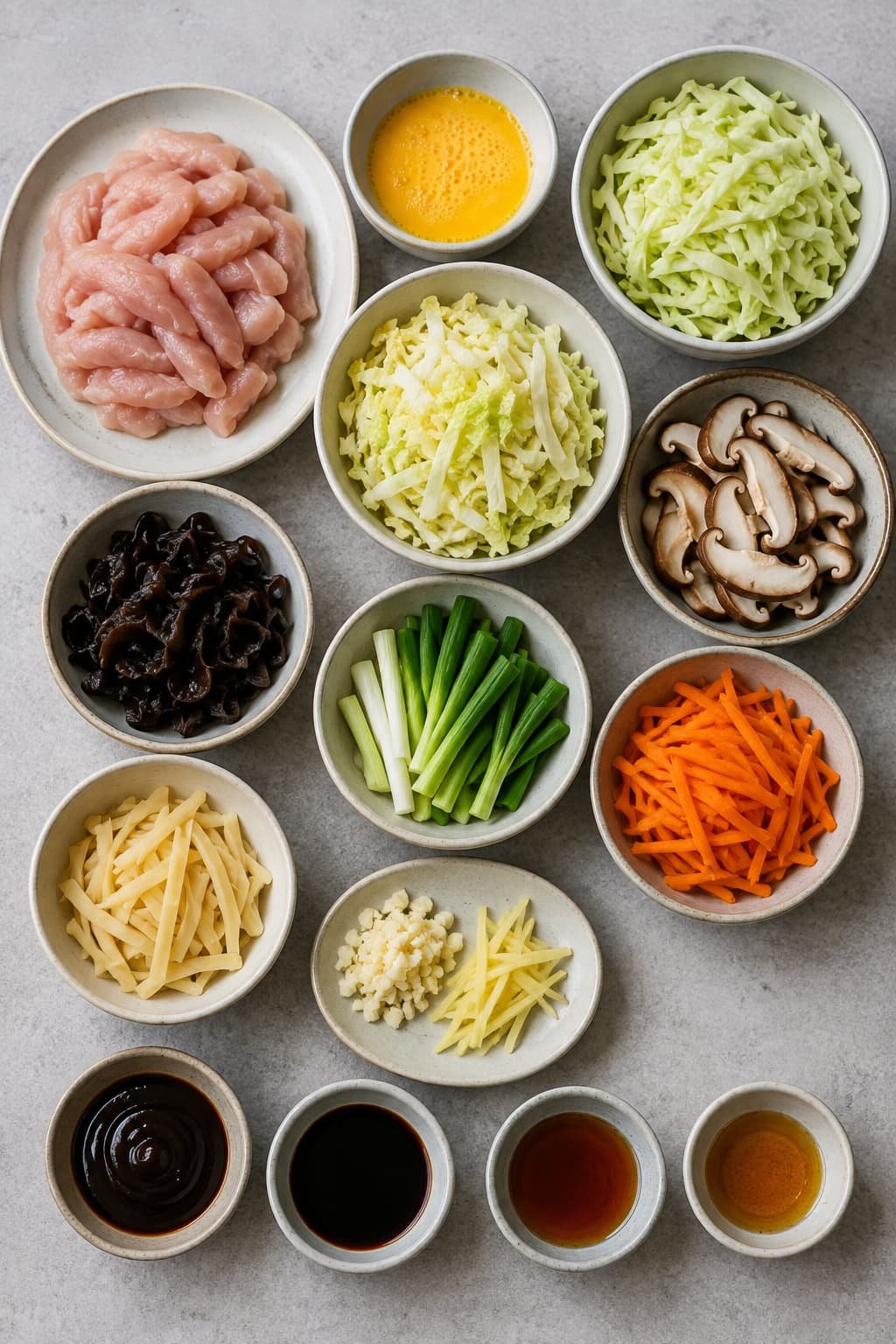
Most versions combine chicken, egg, vegetables, aromatics, and a savory sauce. The exact ingredients depend on the recipe.
Chicken, Egg, and Vegetables
Chicken breast and chicken thigh can both be used. Chicken breast generally contains less fat than chicken thigh. Chicken thigh may provide a richer flavor and different texture depending on how it is cooked.
Egg is common in many moo shu preparations. It may be lightly scrambled or cooked in a thin layer before being cut or broken into pieces and combined with the filling.
Cabbage is particularly common in American Chinese-style versions. Green cabbage and napa cabbage are both possible options, and their texture can differ after cooking.
Mushrooms add savory flavor and another layer of texture. Shiitake, wood ear, and common fresh mushrooms may all be used depending on the version.
Scallions, also called green onions, provide a mild onion flavor.
Other possible vegetables include:
- carrots
- bamboo shoots
- cucumber
- bean sprouts
- leeks
These are variations rather than mandatory ingredients.
Common Sauce and Seasoning Ingredients
There is no single standardized moo shu chicken sauce.
Hoisin sauce is commonly associated with many American Chinese versions and contributes concentrated sweet and savory flavor.
Soy sauce may provide saltiness and umami, while ginger and garlic are often used as aromatics.
Sesame oil may be included for aroma. Other possible additions include oyster sauce, Shaoxing wine, rice vinegar, white pepper, or cornstarch.
Not every version uses all of these ingredients, and the proportions can vary.
The amount of sauce can also affect the filling. A heavily sauced mixture may be more difficult to wrap, especially when vegetables also release moisture.
Are Tortillas Traditional for Moo Shu Chicken?
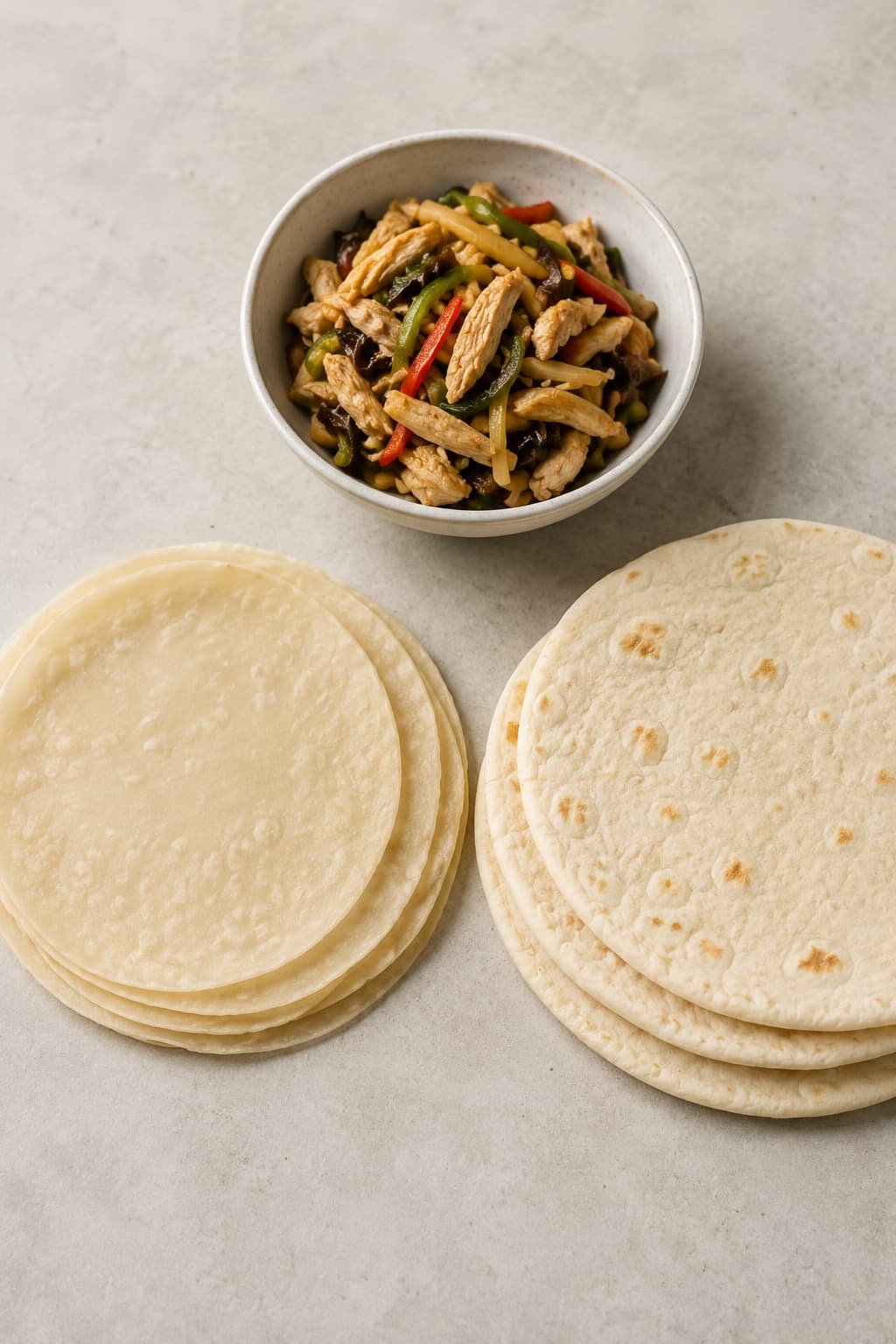
No. Flour tortillas are not the traditional wrapper used for moo shu.
Moo shu is more closely associated with thin wheat-based pancakes, often called Mandarin pancakes or moo shu pancakes in English. Flour tortillas are better described as a practical home substitute.
Mandarin Pancakes vs Flour Tortillas
The two wrappers can hold similar fillings, but they are not the same.
Mandarin pancakes are generally thinner than standard flour tortillas. Their thin, flexible structure allows them to wrap around relatively small portions of filling.
Flour tortillas are thicker and may have a more noticeable bread-like texture. They may also be easier to find in some supermarkets, depending on location.
Using tortillas therefore changes the wrapper and texture of the dish. The clearest description is moo shu chicken with tortillas, rather than treating tortillas as traditional moo shu pancakes.
How Is Moo Shu Chicken Typically Prepared?
Moo shu chicken is generally prepared as a stir-fry. The chicken, egg, and vegetables may be cooked in stages and then combined with seasonings and sauce.
The exact sequence varies by recipe.
Preparing the Chicken, Egg, and Vegetables
Chicken and vegetables are commonly cut into thin pieces. Thin slicing may help the ingredients cook more evenly and makes the filling easier to place inside a pancake or tortilla.
One possible approach is to cook the egg separately first, remove it from the pan, and add it back later.
The chicken can then be cooked separately before the vegetables are stir-fried. Vegetables such as cabbage, mushrooms, scallions, and carrots may be added according to the version being prepared.
The components can then be combined near the end.
Cooking ingredients in stages may make it easier to manage their individual textures, although the result can still vary with pan size, heat level, ingredient quantity, and cooking time.
When Is the Sauce Added?
Sauce is commonly added during the later stages so it can coat the chicken and vegetables.
The exact combination varies. Hoisin sauce, soy sauce, ginger, garlic, sesame oil, and other seasonings may be used.
A heavily sauced filling may be more difficult to wrap, especially when cabbage or mushrooms release additional moisture. A more lightly coated mixture may be easier to spoon into a pancake or tortilla.
There is no single required sauce ratio for every version.
What Affects the Texture of Moo Shu Chicken?
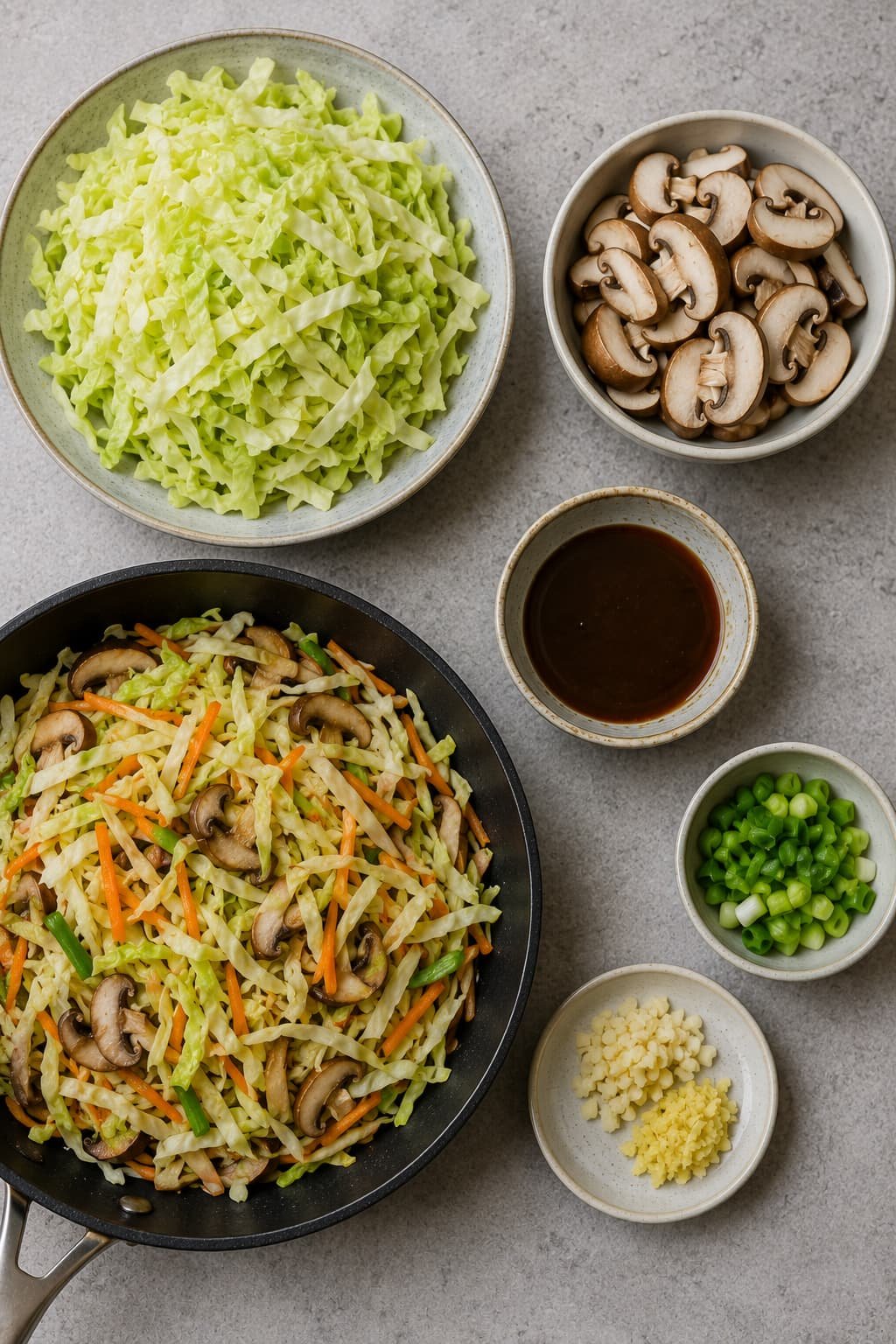
Texture depends on the vegetables, amount of liquid, pan conditions, ingredient size, and cooking order.
Why Can the Filling Become Watery?
Cabbage and mushrooms can release moisture during cooking. If that moisture collects in the pan, the filling may become wetter.
Several factors can contribute:
- overcrowding the pan
- adding a large amount of sauce
- trapping steam
- using vegetables with a high moisture content
Extra moisture may be less noticeable when the filling is served with rice or noodles, but it can soften a pancake or tortilla more quickly.
How Do Ingredient Size and Cooking Order Matter?
Thinly sliced ingredients can cook differently from thicker pieces and may be easier to combine into a wrap-style filling.
Cooking the egg, chicken, and vegetables in separate stages is one possible approach. It may provide more control over each component, but it does not guarantee a specific texture.
The final result can still vary with the pan, heat, ingredient amount, and cooking time.
Can Common Ingredients Be Substituted?
Yes. Some ingredients can be changed based on availability or preference, but substitutions can alter flavor and texture.
Chicken Breast vs Chicken Thigh
Both cuts can be used.
Chicken breast generally contains less fat than chicken thigh. Chicken thigh may produce a richer flavor and different texture depending on the cooking method.
Neither is automatically the better choice.
Can Coleslaw Mix Be Used?
Packaged coleslaw mix can be used as a convenience adaptation in some home versions.
It commonly contains shredded cabbage and carrot, which overlap with vegetables used in many American Chinese-style preparations.
The exact shred size and cabbage-to-carrot ratio vary by product, so the resulting texture may differ from freshly sliced vegetables.
What Mushrooms Can Be Used?
Several mushroom varieties can work.
Shiitake mushrooms have a distinctive savory flavor and can provide a firmer texture than some common fresh mushrooms.
Wood ear mushrooms have a firmer, springier texture and appear in some moo shu preparations.
Fresh white or brown mushrooms may be used in simplified home versions.
No single mushroom variety is required in every preparation.
How Can Moo Shu Chicken Be Served?
Thin wheat pancakes and flour tortillas are the most relevant serving options for a wrap-style presentation.
Mandarin-style pancakes are more closely associated with moo shu and provide a thin wrapper around the filling.
Flour tortillas are a practical alternative but are generally thicker.
The filling may also be served with rice, lettuce cups, or noodles. These options change the presentation and should be viewed as variations rather than direct replacements for Mandarin pancakes.
Storage and Reheating Considerations
The cooked filling is generally better stored separately from tortillas or pancakes.
Moisture from the vegetables and sauce can soften an assembled wrapper during storage.
Reheating may also change the texture of cabbage and mushrooms, which can become softer after cooling and reheating.
USDA guidance says cooked poultry and leftovers can generally be refrigerated for 3 to 4 days when stored properly. Wrappers can be kept separate so moisture from the filling does not soften them.
Frequently Asked Questions
Does Moo Shu Chicken Always Contain Egg?
No. Egg appears in many versions, but adapted recipes may omit it.
When used, the egg may be scrambled or cooked in a thin layer before being added to the chicken and vegetables.
Can Moo Shu Chicken Be Made Without Hoisin Sauce?
Yes, but the flavor will differ from versions in which hoisin is an important component.
Other sauce combinations may use soy sauce, oyster sauce, rice vinegar, sesame oil, or other seasonings. These ingredients are not direct one-for-one substitutes for hoisin, so the balance depends on the individual recipe.
Is Moo Shu Chicken Automatically Gluten-Free?
No. The dish should not automatically be assumed to be gluten-free.
Regular soy sauce, flour tortillas, Mandarin-style pancakes, and some packaged sauces may contain wheat or other gluten-containing ingredients.
Product formulas vary, so anyone who needs to avoid gluten should check individual ingredient labels rather than relying on the dish name alone.