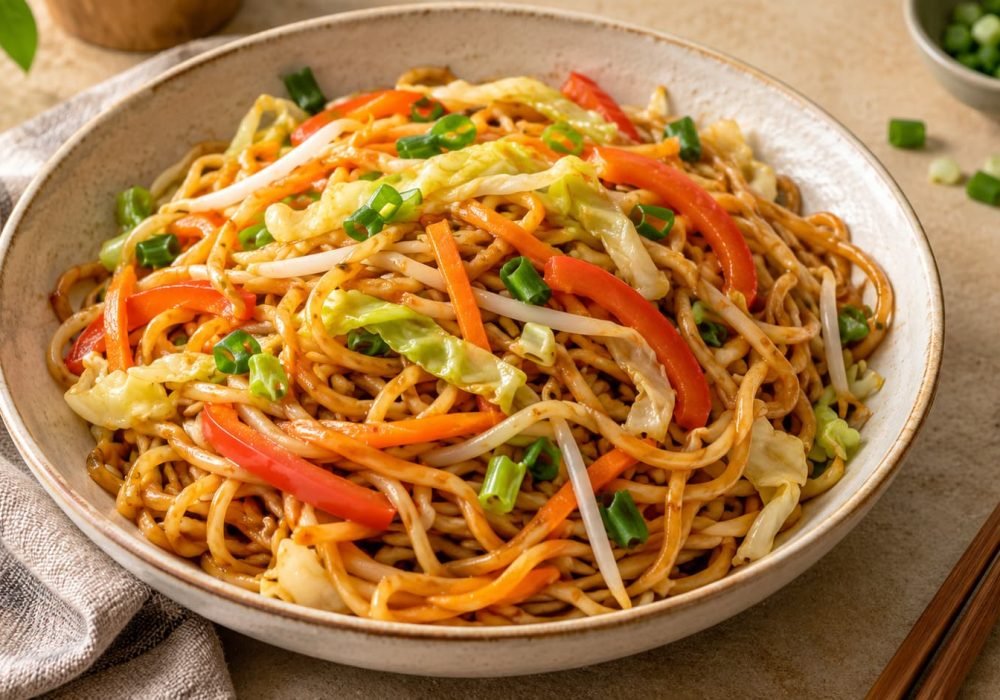
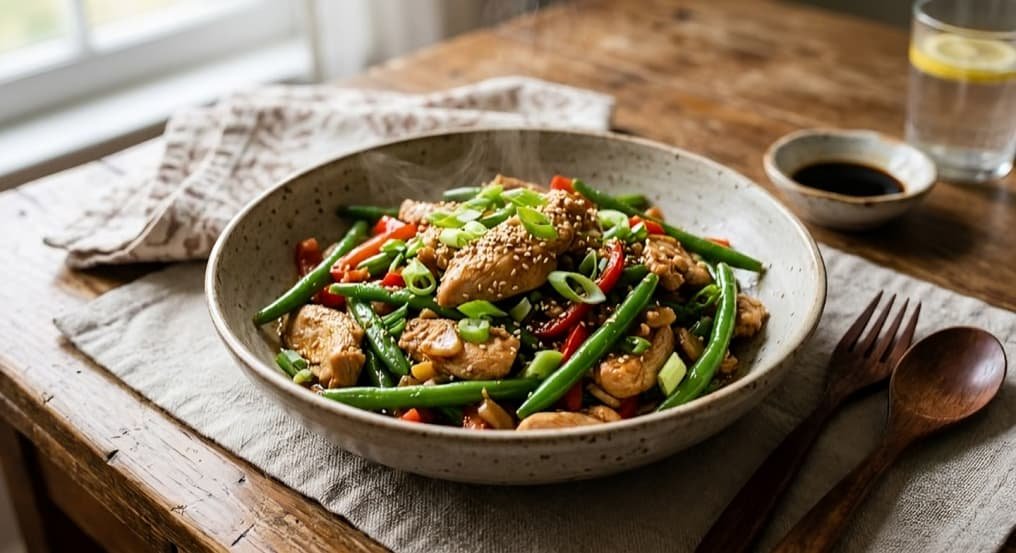
Chicken and green bean stir fry combines pieces of chicken, green beans, aromatics, and a savory sauce in a skillet or wok. The exact ingredients and cooking order can vary, so understanding how the chicken, vegetables, moisture, and sauce behave is more useful than relying on one fixed formula.
What Is Chicken Green Bean Stir Fry?
Chicken green bean stir fry is a pan-cooked dish made with chicken, green beans, seasonings, and sauce. Chicken breast or thighs may be used, while the beans can be fresh or frozen.
Many versions also include garlic, ginger, soy-based seasonings, vinegar, sesame oil, or a starch thickener. Sweet ingredients may be added in some preparations, but they are optional.
The chicken and green beans may be cooked together or in separate stages. Some methods also partially cook the beans before they enter the stir-fry pan. These choices can affect moisture, tenderness, and sauce consistency.
There is no single required method. Ingredient size, pan conditions, heat, and preferred texture can all influence how the dish is prepared.
What Ingredients Are Commonly Used in Chicken Green Bean Stir Fry?
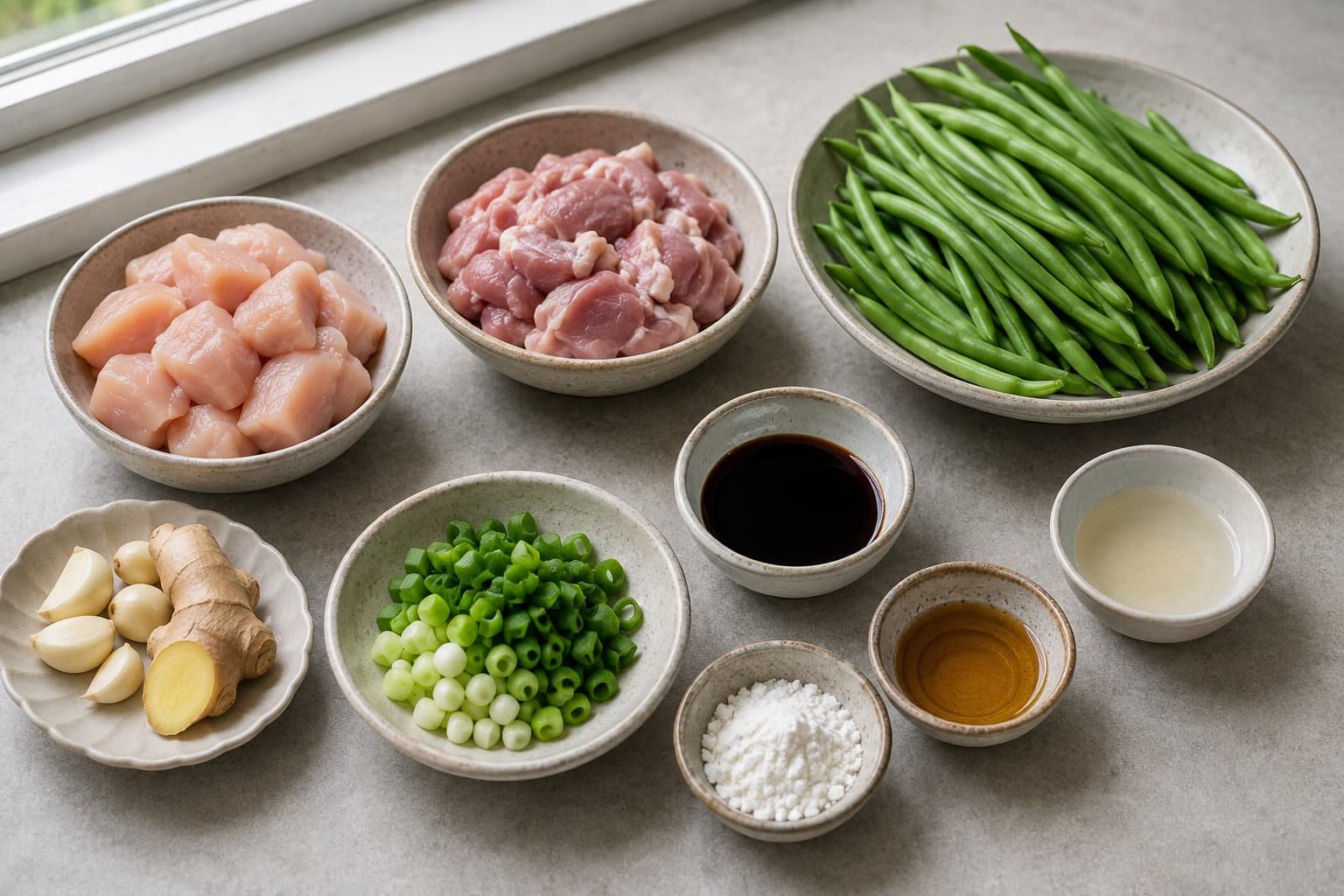
The main components are chicken, green beans, aromatics, and sauce. Other vegetables and seasonings can be added, but they are not necessary for the basic dish.
Chicken Breast vs Chicken Thighs
Boneless chicken breast and boneless chicken thighs can both be used.
Chicken breast is generally leaner than thigh meat. Thighs contain more fat and have different cooking characteristics. Neither cut is automatically better.
Chicken breast may suit someone who prefers leaner meat, while thighs may be chosen for their darker-meat characteristics and different texture.
Piece size also matters. Chicken cut into pieces of similar thickness is easier to cook evenly than a mixture of very thin and very thick pieces.
Fresh vs Frozen Green Beans
Fresh and frozen green beans can both be used, but they may behave differently in the pan.
Fresh beans usually begin firmer and may provide more control over how much they soften during cooking. They can be cooked directly or partially blanched or steamed first.
Frozen beans have already been processed before freezing and may have a different texture from fresh beans. They can also introduce additional moisture as ice and frozen water melt during heating.
Bean size matters as well. Thick beans may not soften at the same rate as thinner ones, so one fixed cooking time does not apply to every batch.
Common Aromatics and Sauce Ingredients
Garlic and ginger are commonly used aromatics. Green onions, chili, and other seasonings may also be included.
A stir-fry sauce may contain ingredients that provide:
- saltiness and savory flavor
- acidity
- sweetness
- aroma
- thickness
Soy-based seasonings are often used for salty and savory flavor. Vinegar can add acidity, while sesame oil contributes a distinct aroma and flavor.
Sugar, honey, or another sweet ingredient may be included in some sauces, but sweetness is not required.
Cornstarch is one possible thickener. When starch is dispersed in liquid and heated, it can increase the viscosity of the sauce. Some sauces use this effect to coat the chicken and vegetables more closely, while others are intentionally thinner.
Do Green Beans Need to Be Cooked Before Stir Frying?
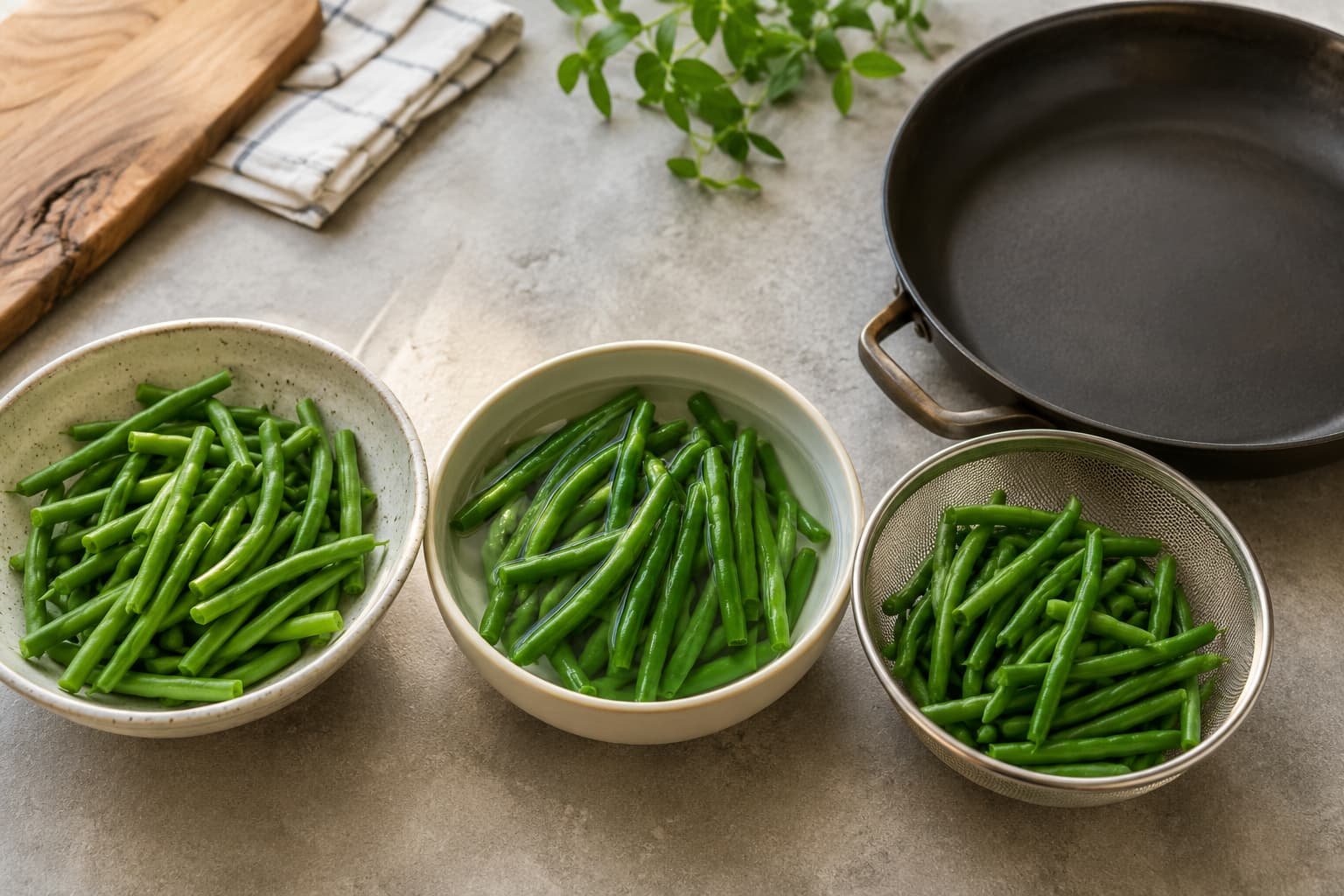
Not always. Green beans can be cooked directly in the pan or partially cooked first.
The most suitable approach depends on bean thickness, the cooking method, and how firm or tender you want them.
Stir Frying Green Beans Directly
Green beans can go directly into a skillet or wok when they will receive enough heat and cooking time to soften.
This approach may work well with thinner beans or when a firmer texture is preferred. It also avoids a separate blanching or steaming step.
Draining washed beans well can help limit unnecessary surface moisture in the pan.
The result can vary with bean size, pan temperature, ingredient quantity, and preferred tenderness, so direct stir frying should not be tied to one universal cooking time.
Blanching or Briefly Steaming Green Beans
Blanching or steaming before stir frying is another option.
Partial cooking can be useful when thicker beans need more time to become tender or when a softer texture is preferred.
Blanching exposes the beans to hot water or steam, which softens plant tissue. Beans that are already quite tender after precooking may soften further once they return to a hot pan or sauce.
For stir frying, blanching is an option rather than a requirement. Direct pan cooking and partial precooking simply provide different ways to manage tenderness.
How Is Chicken and Green Bean Stir Fry Commonly Prepared?
A common approach is to prepare the ingredients first, cook the main components in stages when useful, and add the sauce toward the later part of cooking.
This is a general cooking method, not a fixed Daily Bite Recipes formula.
Preparing Ingredients Before Heating the Pan
Stir frying can move quickly once the pan is hot, so preparing the chicken, beans, aromatics, and sauce beforehand can make the process easier to manage.
Chicken pieces should be reasonably similar in thickness so they cook at a more similar rate.
Washed green beans should be drained well. Extra surface water adds moisture to the pan and may increase steaming.
Garlic, ginger, and sauce ingredients can also be prepared in advance so ingredients already over heat do not need to wait while other components are measured or chopped.
Raw chicken should be kept separate from foods that will not receive further cooking. Hands, utensils, cutting boards, and work surfaces should also be cleaned after contact with raw poultry.
Cooking the Chicken and Green Beans in Stages
Cooking the chicken and green beans in separate stages can provide more control when they need different amounts of cooking.
One possible approach is to partially cook the beans, remove them temporarily, and cook the chicken before combining everything again.
Another option is to cook the chicken first and prepare the beans separately in the same pan.
Neither sequence is universally better.
Cooking in stages may also be useful when adding everything at once would overcrowd the pan.
Exact cooking time depends on chicken thickness, quantity, bean size, pan characteristics, and heat level. For that reason, fixed cooking times should not be treated as universal.
When to Add the Sauce
Sauce is often added after the chicken and vegetables have completed much of their cooking.
Adding it later can limit how long the beans remain surrounded by liquid, which may be useful when a firmer texture is preferred.
Adding a large amount of liquid early can shift more of the cooking toward simmering or steaming.
The timing also affects sauce concentration. Water evaporates during heating, so a sauce may become more concentrated the longer it remains over heat.
A thin sauce and a starch-thickened sauce may behave differently, so there is no single correct timing for every preparation.
What Makes a Stir Fry Sauce Thick or Thin?
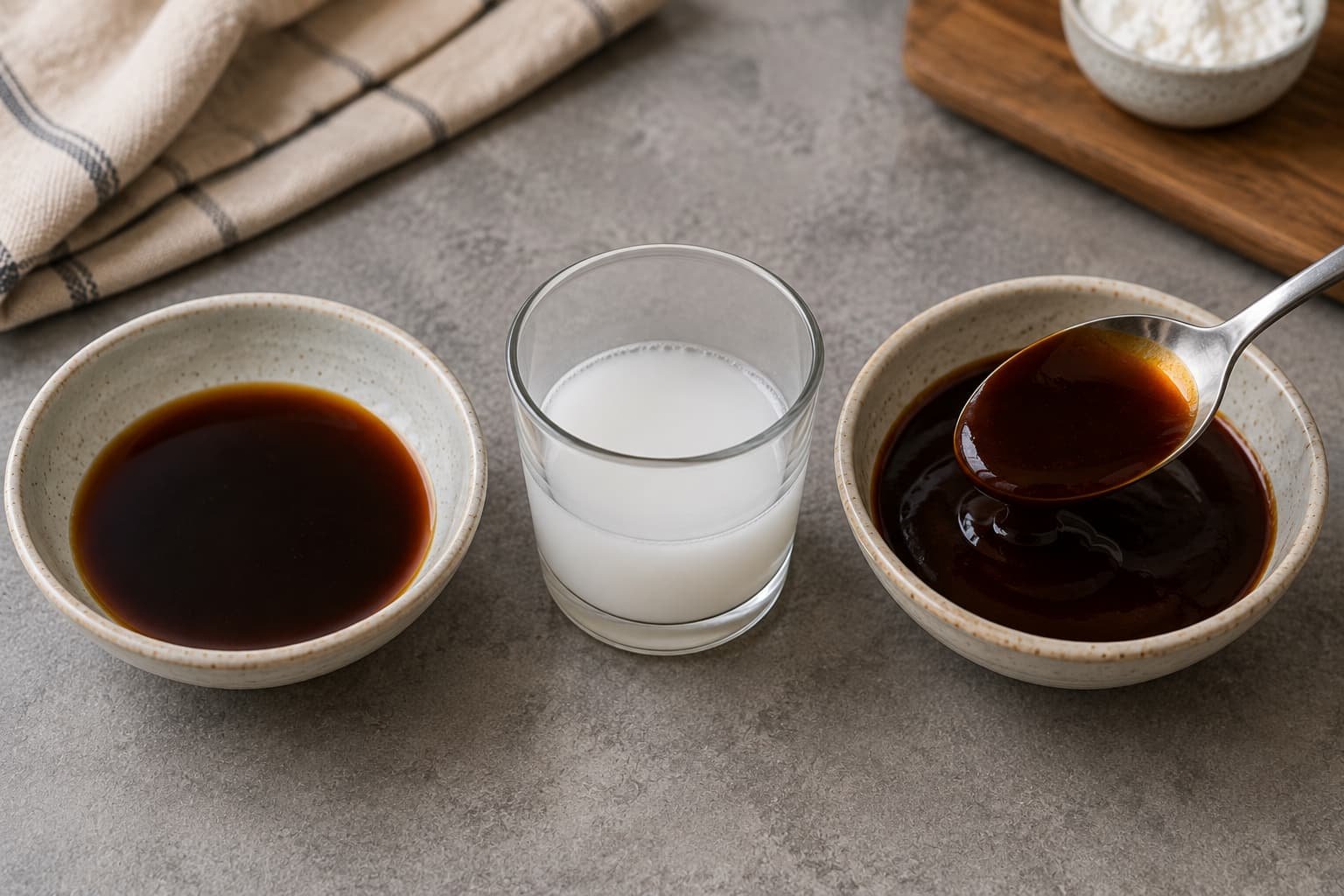
Sauce consistency depends on the amount of liquid, any thickener used, moisture from the other ingredients, and how much water evaporates during cooking.
A thick sauce is not automatically better. Some preparations use a lighter sauce, while others use one that coats the ingredients more heavily.
What Cornstarch Does in Stir Fry Sauce
Cornstarch is commonly used as a thickener.
It is typically dispersed in a cool liquid before being added to a hot mixture. As the starch heats with liquid, it gelatinizes and increases viscosity.
This can produce a sauce that clings more closely to chicken and vegetables.
Cornstarch is optional. No exact starch-to-liquid ratio should be assumed here because this article does not provide a tested sauce formula.
Why a Sauce May Become Too Thin or Too Thick
A sauce may stay thinner than expected when more liquid is present than anticipated.
Possible sources include water on vegetables, moisture from frozen ingredients, liquid released during cooking, or a large amount of sauce.
A starch-thickened sauce may also remain thin if the starch is not properly dispersed or heated enough to thicken.
A sauce can become thicker when more starch is present or when continued heating causes more water to evaporate.
The final consistency therefore depends on the whole pan, not only the sauce mixture prepared separately.
Why Does Chicken Green Bean Stir Fry Become Watery?
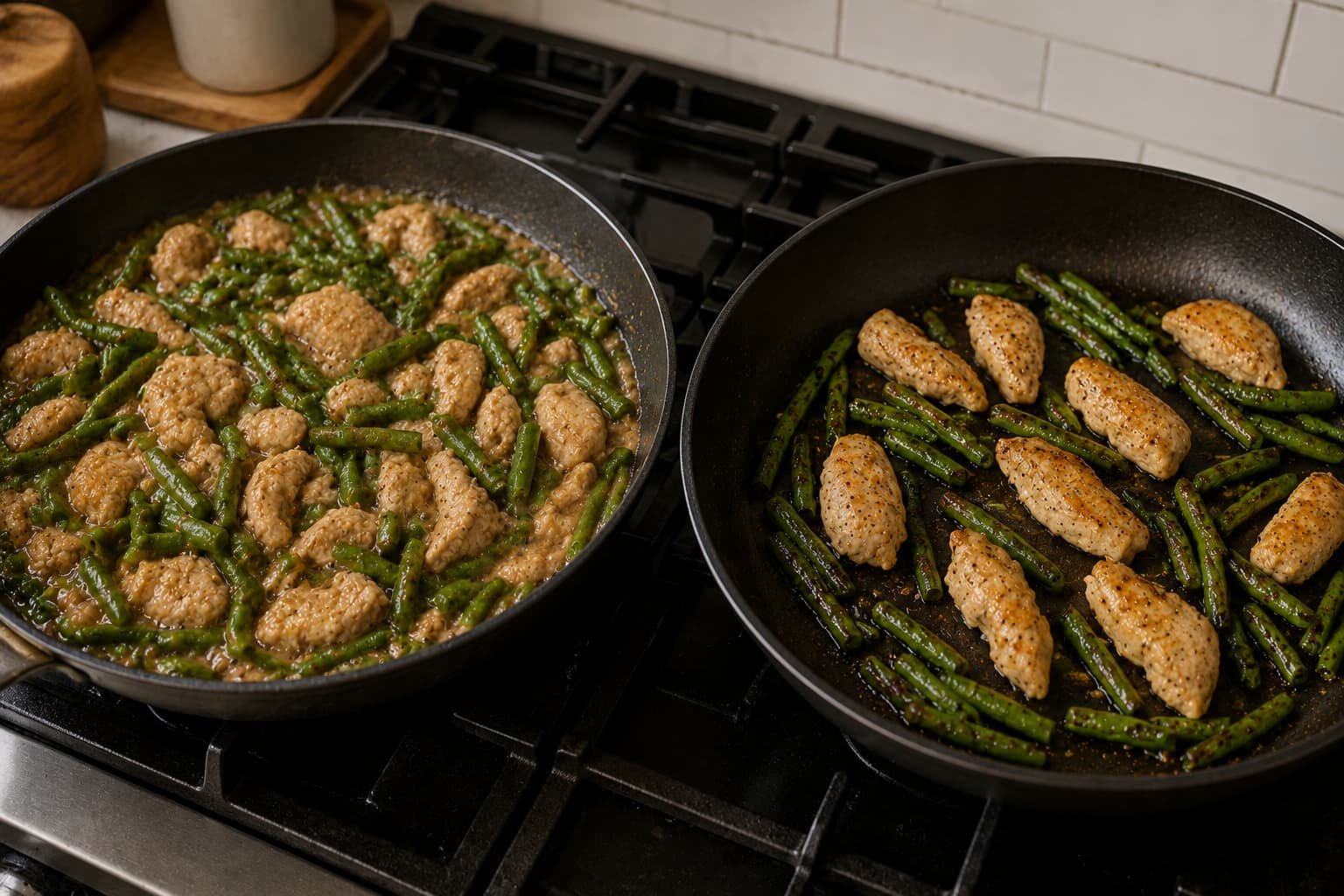
A watery stir fry usually means liquid is collecting faster than it can evaporate.
Several factors may contribute:
- crowding too much food into the pan
- surface water on washed green beans
- moisture released from chicken
- water from frozen green beans
- adding a large amount of sauce early
- limited evaporation during cooking
Crowding can reduce direct contact between the food and the hot cooking surface while allowing more moisture to collect around the ingredients.
A watery result does not necessarily have one cause. Pan size, food quantity, ingredient moisture, sauce amount, heat, and cooking time can all influence how much liquid remains.
Common Texture Problems and What May Cause Them
Texture can vary with ingredient size, starting condition, cooking method, and time over heat. The causes below are possibilities rather than guarantees.
Green Beans Are Too Soft
Green beans become softer as heat affects their structure.
Beans that are partially cooked first may continue softening when they return to a hot pan or spend time in sauce.
If a firmer texture is preferred, one possible approach is to limit additional cooking once the beans have reached the desired tenderness.
Green Beans Are Too Firm
Beans that remain firmer than preferred may need more cooking.
Thicker beans may take longer to soften than thinner ones. Direct pan cooking may be enough for some batches, while others may benefit from partial blanching or steaming.
Bean size and preferred tenderness are more useful guides than one fixed cooking time.
Chicken Becomes Dry or Cooks Unevenly
Chicken pieces with very different thicknesses may cook unevenly. Thin pieces can finish cooking before thicker pieces.
Cutting the chicken into reasonably similar pieces can reduce this difference.
Chicken texture is also affected by the cut and how long it remains over heat. Breast and thigh meat have different compositions, so they should not be expected to behave identically.
Food safety should still be checked separately with a food thermometer rather than judged by texture.
Can Other Vegetables Be Added?
Yes. Bell peppers, onions, mushrooms, carrots, broccoli, and snap peas can all be combined with chicken and green beans.
Different vegetables do not necessarily soften at the same rate. Their size and shape also affect how they cook.
Firmer vegetables such as carrots or broccoli may need more cooking than thinly sliced peppers or onions. Mushrooms can contribute additional moisture to the pan as they cook.
One possible approach is to add vegetables according to their firmness and piece size instead of placing everything in the pan at the same time.
There is no need to use a large mixture. One or two additional vegetables can add variety while keeping chicken and green beans as the main ingredients.
What Can You Serve With Chicken Green Bean Stir Fry?
Rice and noodles are simple serving options. The most suitable side depends on preference and the rest of the meal.
Rice
White rice provides a mild base for the chicken, vegetables, and sauce.
Jasmine rice offers a more aromatic option, while brown rice has a firmer texture and a different grain flavor.
For a more seasoned side, garlic butter rice can also be served alongside the stir fry.
The type and amount of rice will affect the nutritional composition of the complete meal, so serving the dish with rice should not automatically be described as low calorie, low carb, or suitable for a particular diet.
Noodles and Other Options
Rice noodles, wheat-based noodles, and other plain noodles can be served instead of rice.
Other cooked grains may also work, but a grain-based side is optional.
How Should Chicken Green Bean Stir Fry Be Stored and Reheated?
Cooked leftovers should be refrigerated promptly.
USDA guidance states that perishable food should not remain at room temperature for more than 2 hours, or more than 1 hour when the temperature is above 90°F or 32.2°C. Shallow containers can help leftovers cool more quickly.
Most properly refrigerated cooked leftovers should generally be used within 3 to 4 days.
When reheating leftovers, USDA recommends reaching an internal temperature of 165°F or 73.9°C.
These are food-safety guidelines. They do not guarantee that the chicken, beans, or sauce will have exactly the same texture after refrigeration and reheating.
Chicken Food Safety
Chicken should reach a minimum internal temperature of 165°F or 73.9°C, measured with a food thermometer.
A fixed number of cooking minutes should not replace a temperature check because chicken thickness, quantity, pan conditions, and heat can vary.
Color is also not a reliable indicator that poultry is safe to eat. Internal temperature provides the appropriate safety check.
Frequently Asked Questions
Can canned green beans be used in a stir fry?
Yes. Canned green beans can be added, but they should not be expected to behave like raw fresh beans.
Canned beans have already been heat processed, so they may require less additional cooking. Draining them first can also limit extra liquid in the pan.
One possible approach is to add them later in the cooking process. Final texture can vary by product.
Can chicken green bean stir fry be made without soy sauce?
Yes. Soy sauce is common, but other seasonings can be used.
Alternatives may differ in saltiness, sweetness, acidity, and consistency, so they should not automatically be substituted in the same quantity.
If soy is being avoided because of an allergy, ingredient labels should be checked carefully. Soybeans are one of the major food allergens identified by the FDA in the United States.
Can a skillet be used instead of a wok?
Yes. A large skillet can be used.
Woks and skillets have different shapes and heating characteristics, so they do not create identical cooking conditions. The practical priority is having enough cooking surface for the amount of food being prepared.
If the skillet becomes crowded, cooking in stages is one possible solution.
Is chicken green bean stir fry automatically healthy or high in protein?
No. Those descriptions cannot be determined from the name of the dish alone.
Chicken provides protein, but the amount per serving depends on the quantity and cut of chicken, serving size, sauce, vegetables, and other ingredients. Without a defined recipe and nutrition calculation, it would not be accurate to assign a protein amount or automatically call the dish high protein.
The overall nutritional profile also changes with cooking oil, sauce ingredients, sodium, sweeteners, portion size, and side dishes.
It is more accurate to describe the ingredients and preparation than to make a general health claim about every version.