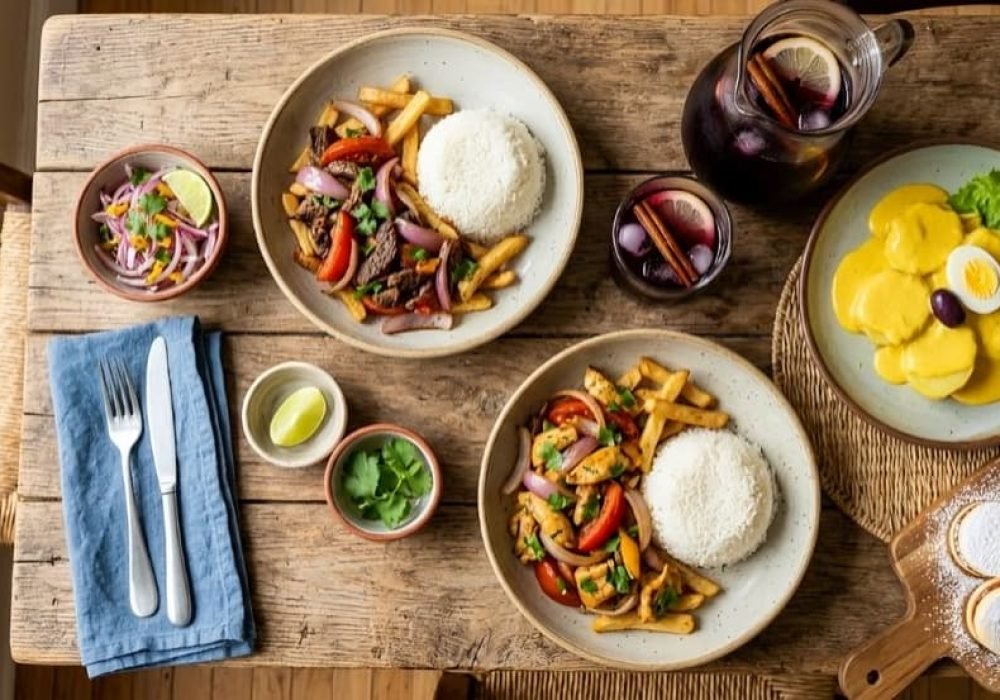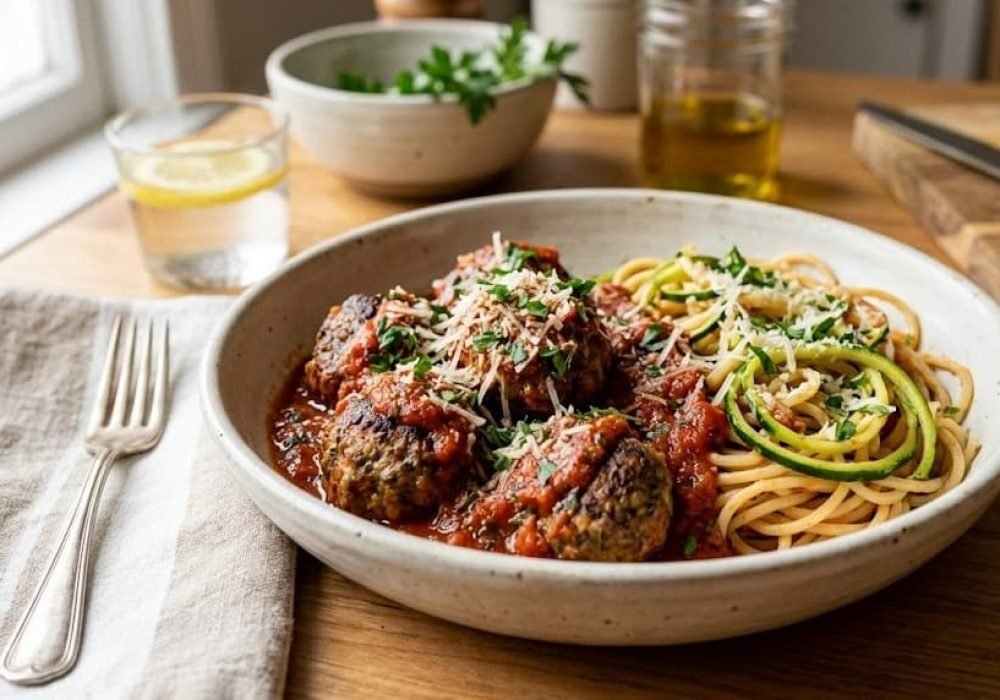
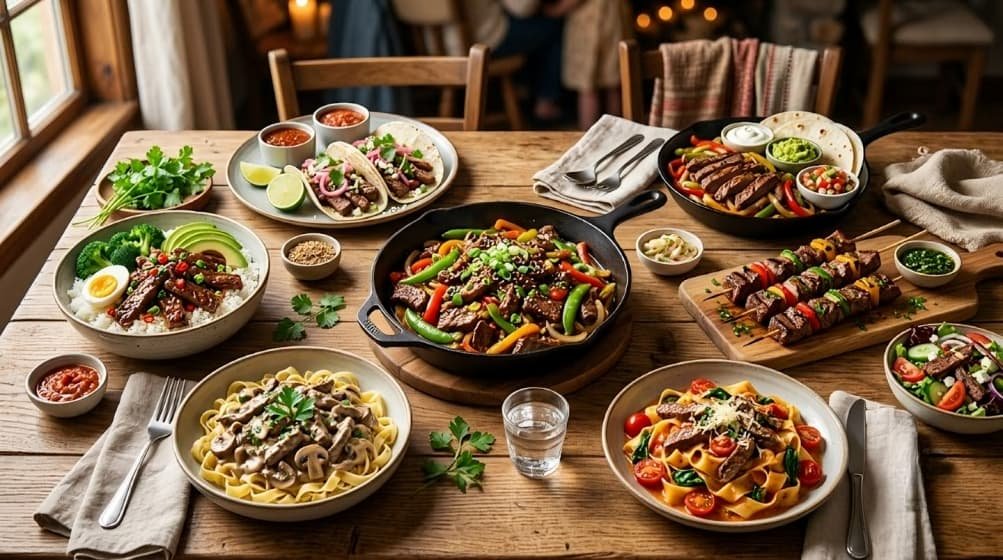
Beef strips are a smart choice when you need a flavorful dinner without spending hours in the kitchen. Because they are cut into thin pieces, they cook quickly in a hot skillet, on the grill, or even in an air fryer. With the right technique, you can have tender, juicy beef on the table in less than 30 minutes, making it a reliable option for busy weeknights and family meals.
The best part is their versatility. These beef strip recipes are not limited to stir-fries. You can turn beef strips into hearty rice bowls, comforting pasta dishes, sizzling fajitas, noodle recipes, fresh salads, loaded sandwiches, grilled favorites, and simple one-pan dinners. Many of these recipes using beef strips can also be customized with the vegetables, seasonings, and sauces you already have at home, making meal planning easier throughout the week.
Whether you are just starting cooking with beef strips or looking for new beef strip dinner ideas, this collection brings together practical meals that fit a variety of tastes, cooking styles, and schedules. Along the way, you will also discover helpful tips for choosing the right cut of beef, keeping the meat tender, and creating quick dinners that feel satisfying without requiring complicated ingredients. For more easy meal inspiration, explore the collection of homemade recipes at Daily Bite Recipes.
What Can You Make With Beef Strips?
Beef strips work well in stir-fries, fajitas, rice bowls, noodles, pasta, stroganoff, tacos, sandwiches, salads, skewers, and one-pan skillet dinners. Because thin slices usually cook quickly over high heat, they are a practical choice for 15-minute and 30-minute meals made with simple vegetables, sauces, and sides you already have at home.
How to Choose the Best Beef Strip Recipe
The best beef strip recipe depends on your available cooking time, preferred flavors, ingredients, equipment, and the type of meal you want to serve. A quick stir-fry may be the right choice for a busy evening, while beef stroganoff, fajitas, or a hearty skillet dinner may suit a more relaxed family meal.
Use this table to choose a recipe that fits your schedule and the ingredients you already have.
| When you want… | Try this beef strip recipe | Why it works |
| Dinner in about 15 minutes | Garlic butter beef strips | Thin strips brown quickly and need only a few basic ingredients |
| A quick family meal | Beef and broccoli rice bowls | Beef, vegetables, and rice come together as a complete dinner |
| Sweet and savory flavors | Teriyaki beef strips | The sauce coats thinly sliced beef well and pairs easily with rice |
| A comforting dinner | Beef stroganoff | Mushrooms, noodles, and a creamy sauce make the meal rich and filling |
| A fresh option | Mediterranean beef strip salad | Crisp vegetables and a bright dressing balance the richness of the meat |
| A lower-carb meal | Beef strips with peppers and cauliflower rice | It delivers plenty of flavor without pasta, bread, or regular rice |
| A grilled dinner | Marinated beef strip skewers | Small pieces cook quickly and pair well with onions and peppers |
| A mostly hands-off method | Air fryer beef strips and vegetables | The air fryer requires little stovetop attention and keeps cleanup manageable |
| A pantry-friendly meal | Beef and rice skillet | Rice, broth, seasonings, and frozen vegetables can create a practical dinner |
| A handheld meal | Beef fajitas | Warm tortillas, peppers, onions, and toppings make serving simple |
Cooking time is a useful place to begin. Stir-fries, fajitas, and simple skillet recipes are usually the fastest because the beef cooks over high heat in small pieces. Meals with rice, pasta, or creamy sauces may take longer, especially when the side dish is prepared from scratch.
For more fast meal ideas, readers can browse these 30-minute meals.
Your preferred flavor can also guide the choice. Soy sauce, ginger, garlic, and sesame oil suit stir-fries and teriyaki-style dishes. Cumin, paprika, lime, onions, and peppers work well in fajitas and tacos. For a richer meal, ingredients such as mushrooms, broth, butter, and cream are better suited to stroganoff and comforting skillet recipes.
Consider your available ingredients before choosing a recipe. Beef strips can be paired with fresh vegetables, frozen vegetables, noodles, rice, tortillas, or salad greens. Choosing a meal that uses what you already have can reduce preparation time and unnecessary grocery shopping.
Cooking equipment matters too. A heavy skillet is ideal for browning beef in small batches, while a wok provides enough space for quick stir-frying. A grill works well for skewers, and an air fryer can be useful when you prefer a method that needs less stovetop attention.
What Are Beef Strips?
Beef strips are narrow slices cut from a steak or another whole piece of beef. They are often prepared from sirloin, flank steak, skirt steak, ribeye, or New York strip. Grocery stores may also sell ready-cut packages labeled stir-fry beef, steak strips, or beef strips.
They are different from ground beef, which is finely minced, and shredded beef, which is usually cooked slowly until it becomes tender enough to pull apart. Beef strips are generally intended for quick cooking in a skillet, wok, air fryer, or on a grill.
Their thin shape helps them cook quickly and creates more surface area for browning, seasoning, and sauces. However, the final texture depends on the cut of beef, the thickness of the slices, the direction of cutting, the cooking temperature, and the total time over the heat.
When preparing thinly sliced beef at home, cut across the grain rather than in the same direction as the muscle fibers. This shortens the fibers and makes the cooked beef easier to chew. Flank steak and skirt steak especially benefit from careful slicing.
High heat is usually best when cooking strips of steak in a skillet or wok. The pan should be hot before the beef is added, and the strips should be cooked in small batches. Overcrowding lowers the temperature and releases moisture, causing the meat to steam instead of brown.
Because steak strips are thin, they can become dry or tough when cooked for too long. Exact timing varies according to the cut, thickness, pan temperature, and desired doneness, so it is better to watch the color and texture instead of relying on one fixed cooking time.
Pre-cut stir-fry beef can save preparation time, but the pieces are not always equal in size. Choose a package with evenly cut strips whenever possible so the meat cooks at a similar rate. When slicing steak at home, place it in the freezer for about 15 to 20 minutes. Slightly firm meat is easier to cut into thin, consistent strips.
The Best Cuts of Beef for Beef Strips
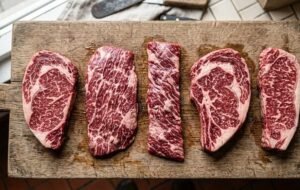
The best cut for beef strips depends on the recipe, the cooking method, and the texture you want. Cuts that cook well over high heat and can be sliced thinly across the grain are usually the most reliable choices.
Sirloin and flank steak are both practical options, but they behave differently in the pan. Sirloin is generally more tender and works well for quick skillet meals, while flank steak has a deeper beef flavor and is especially good in marinated recipes.
Sirloin
Top sirloin is one of the most dependable cuts for beef strips because it offers a useful balance of tenderness, flavor, and value. It is leaner than ribeye, yet it can still remain juicy when sliced evenly and cooked for a short time over high heat.
Sirloin works especially well in stir-fries, rice bowls, garlic butter beef, and quick skillet dinners. Because it is already fairly tender, it usually needs only simple seasoning or a short marinade rather than several hours of preparation.
For the best result, cut the beef into thin, even steak strips and cook them in a hot skillet in small batches. This gives the meat room to brown instead of releasing too much moisture and steaming.
Sirloin is a good choice when you need an easy beef strips recipe that can be paired with rice, noodles, potatoes, or vegetables. Keep a close eye on the cooking time, since lean pieces can dry out if left in the pan too long.
Flank Steak
Flank steak is a lean, strongly flavored cut with long, visible muscle fibers. It is usually chewier than sirloin, so proper slicing is essential. Cut it thinly across the grain to shorten the fibers and make each bite easier to chew.
This cut is well suited to fajitas, teriyaki beef, Korean-style beef strips, and other recipes built around bold marinades. Soy sauce, garlic, ginger, citrus, vinegar, and oil all pair well with its rich beef flavor.
A short marinade can improve flavor and help the surface stay moist during cooking. Thirty minutes is often enough for everyday recipes. When using a highly acidic marinade, avoid leaving the beef for too long, as the outside can become soft or slightly mushy.
Flank steak should be cooked quickly over high heat and removed before it becomes dry. It may still have a firmer bite than sirloin, but when sliced correctly, it works very well in fajitas, rice bowls, grilled dishes, and sweet-savory sauces.
Skirt Steak
Skirt steak is a thin, flavorful cut with a loose grain and a strong beef taste. It cooks quickly over high heat, which makes it especially useful for grilling, fajitas, tacos, and beef skewers.
Because the muscle fibers are long and noticeable, slicing matters as much as cooking time. Cut skirt steak into manageable sections first, then slice thinly across the grain. This helps reduce chewiness and gives the finished steak strips a more tender bite.
Skirt steak also responds well to marinades made with lime juice, garlic, oil, soy sauce, or warm spices. A short marinade adds plenty of flavor, but the beef should still be cooked quickly. Leaving thin strips on the heat for too long can make them dry and tough.
For grilled beef strips, use high heat and avoid crowding the cooking surface. Skirt steak is particularly good when served with charred peppers, onions, tortillas, salsa, rice, or fresh herbs.
Ribeye
Ribeye is a rich, well-marbled cut that produces juicy and flavorful beef strips. The fat running through the meat melts during cooking, making it a good choice for garlic butter beef, quick pan-seared recipes, and hearty steak bowls.
Unlike leaner cuts, ribeye usually needs very little help from a marinade. Salt, black pepper, garlic, herbs, and a small amount of butter are often enough to highlight its natural flavor. Strong sauces can be used, but they should not overpower the beef.
Slice ribeye into even strips and cook it briefly in a very hot skillet. Since the cut contains more fat, some pieces may brown faster than others, so watch the pan closely and remove the beef once the edges are browned and the center reaches your preferred doneness.
Ribeye costs more than sirloin or flank steak in many places, so it is best suited to recipes where the beef is the main feature. Serve the pan-seared steak strips over rice, potatoes, noodles, or roasted vegetables for a simple but satisfying dinner.
New York Strip
New York strip is a flavorful cut with a firm texture and good tenderness when sliced thinly across the grain. It contains less marbling than ribeye, so it delivers a clean beef flavor without as much richness.
This cut works especially well in salads, rice bowls, and pan-fried steak strips. Its texture holds up well alongside crisp vegetables, grains, and lighter sauces, making it a useful choice when the beef is part of a complete meal rather than the only focus.
For the best browning, cut the steak into even strips and cook it in a hot skillet in small batches. Give the pieces enough space to sear instead of steaming, and remove them from the pan as soon as they reach your preferred doneness.
New York strip does not usually need a long marinade. Salt, black pepper, garlic, herbs, or a light soy-based sauce are often enough to bring out its natural flavor.
Beef Cut Comparison for Beef Strips
The right cut depends on the recipe, your budget, and the texture you prefer. This comparison gives a quick overview of how the most common options perform when used for beef strips.
| Beef Cut | Texture | Best Uses | Marinating Advice |
| Sirloin | Tender with a leaner bite | Stir-fries, rice bowls, garlic butter beef, skillet meals | Optional; simple seasoning is often enough |
| Flank steak | Firm with a noticeable grain | Fajitas, teriyaki beef, Korean-style beef, marinated dishes | Helpful for flavor; always slice thinly across the grain |
| Skirt steak | Loose-grained and slightly chewy | Grilling, tacos, fajitas, skewers | Useful for bold flavor, but avoid overly long acidic marinades |
| Ribeye | Rich, juicy, and well marbled | Garlic butter meals, quick pan searing, steak bowls | Usually unnecessary |
| New York strip | Firm with good tenderness | Salads, rice bowls, pan-fried steak strips | Optional; short, light marinades work best |
For everyday cooking, sirloin is usually the most versatile choice. Flank and skirt steak are better suited to recipes with bold seasonings or marinades, while ribeye works best when richness is the priority. New York strip sits between these options, offering a strong beef flavor and a texture that works well in bowls, salads, and quick skillet meals.
How to Cook Beef Steak Strips So They Stay Tender
Tender beef strips come down to four main factors: the cut of beef, the direction of slicing, the temperature of the pan, and the total cooking time. Even a good steak can turn chewy if it is sliced with the grain, added to a pan that is not hot enough, or cooked for too long.
When learning how to cook beef steak strips, aim for thin, even slices and quick cooking over high heat. Browning the meat in small batches gives the strips better color and helps prevent them from steaming in their own juices.
Slice Against the Grain and Keep the Pieces Even
Before cutting the steak, look for the lines running through the meat. These muscle fibers are known as the grain. Slice across them rather than in the same direction to shorten the fibers and make the cooked beef easier to chew.
This step is especially important for flank steak and skirt steak, which have a more visible grain. For cleaner slices, place the steak in the freezer for about 15 to 20 minutes. It should feel firm enough to cut easily but should not be frozen solid.
Try to keep the strips close to the same thickness. Uneven pieces cook at different rates, which can leave some dry while others are still undercooked.
Dry, Season, and Prepare the Pan
Pat the beef dry before seasoning it. Surface moisture interferes with browning and can cause the meat to simmer instead of sear.
Season with salt, black pepper, garlic, or the spices called for in the recipe. When using a wet marinade, allow the excess liquid to drain before the beef goes into the skillet.
Heat a heavy skillet or wok before adding the meat. Use a small amount of oil suited to high-heat cooking, such as avocado, canola, or grapeseed oil. The beef should sizzle as soon as it touches the pan.
Cook in Small Batches
Overcrowding is one of the most common problems when cooking with beef strips. If too much meat is added at once, the temperature drops and liquid begins to collect in the skillet.
Arrange the strips in a single layer with space between the pieces. Let the first side sear briefly before turning or tossing the beef. Avoid stirring constantly, since uninterrupted contact with the pan helps the surface brown.
Transfer each cooked batch to a clean plate before adding the next. This takes a little longer, but it produces better texture and more even cooking.
Stop Cooking Before the Beef Dries Out
Thin steak strips cook quickly, so stay close to the pan. Exact timing depends on the cut, thickness, pan temperature, and preferred doneness, which means one fixed cooking time will not suit every recipe.
Remove the beef once the outside is browned and the center has reached the texture you want. For safety, whole-cut beef should reach at least 145°F before resting, according to USDA guidance.
If the recipe includes a sauce, cook the sauce separately and return the beef to the pan only long enough to coat and warm it. Leaving cooked strips to simmer for several extra minutes can make them dry and tough.
Add the Beef Back at the End
While preparing vegetables, noodles, rice, or sauce, keep the cooked strips on a clean plate away from the heat. Thin pieces do not need a long rest, but removing them from the skillet prevents further cooking.
Return the beef near the end of the recipe and toss everything together briefly. This method works well for stir-fries, fajitas, noodle dishes, rice bowls, and many easy beef strips recipes.
Slice Against the Grain
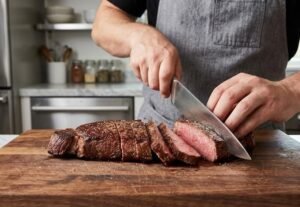
Before cutting the steak, look for the long lines running through the meat. These lines show the direction of the muscle fibers, often called the grain.
Slice across those fibers rather than in the same direction. Cutting against the grain shortens the fibers, which makes the cooked beef easier to chew and less likely to feel tough. This is especially important with flank steak and skirt steak, where the grain is usually easy to see.
If the fibers change direction across a large piece of meat, divide the steak into smaller sections first. Turn each section as needed so every slice crosses the grain. For cleaner, thinner cuts, place the steak in the freezer for about 15 to 20 minutes until it feels slightly firm but not frozen.
Keep the Strips Similar in Thickness
Even thickness matters more than exact length when cooking beef strips. If some pieces are very thin while others are much thicker, the smaller strips can dry out before the larger ones are fully cooked.
Aim for slices that are as consistent as possible, especially for stir-fries and quick skillet meals. Uniform strips brown at a similar rate and are easier to remove from the pan at the right time.
Pre-cut stir-fry beef may contain uneven pieces. Check the package before cooking and trim any noticeably thick strips so the batch cooks more evenly.
Dry the Surface Before Cooking
Surface moisture turns into steam when the beef reaches the hot pan. Too much moisture can prevent proper browning and leave the steak strips pale instead of lightly seared.
Pat unmarinated beef dry with paper towels before seasoning. For marinated strips, let the excess liquid drain away and lightly blot only the wettest areas. There is no need to remove a thick seasoning paste or dry rub.
The goal is simply to remove enough moisture for the beef to make direct contact with the pan and brown instead of simmering in liquid.
Heat the Pan Before Adding the Beef
A properly heated skillet or wok helps beef strips brown quickly without keeping them over the heat for too long. Cast iron, stainless steel, and carbon steel all work well because they hold heat effectively.
Use medium-high or high heat according to the recipe, cookware, and type of oil. Neutral oils such as avocado, canola, or grapeseed oil are useful for higher-temperature cooking. Butter can still be added later for flavor, once the beef has browned or the heat has been reduced.
Add the beef when the oil looks fluid and begins to shimmer lightly. It should sizzle as soon as it touches the pan, but the oil should not be smoking heavily. If liquid quickly collects around the strips, the pan may be too cool, the beef may be too wet, or too much meat may have been added at once.
Do Not Overcrowd the Skillet
Arrange the beef strips in a single layer with a little space between them. If the pan is too crowded, the temperature drops and released moisture collects around the meat, causing it to steam instead of brown.
Cook the beef in batches when necessary, especially when using a smaller skillet. Allow the pan to heat up again before adding the next batch so each round of steak strips has enough heat to sear properly.
Let the First Side Sear
After adding the beef, leave it undisturbed for a short time so the first side can brown. Moving the strips constantly prevents good color from developing and may cause them to cook less evenly.
Once the underside is lightly browned, turn or toss the beef and continue cooking only until it is just done. Thin strips cook quickly, so watch them closely and remove them before they become dry or tough.
Remove the Beef Before Making the Sauce
Transfer the cooked beef to a clean plate before preparing the sauce or finishing the vegetables. Leaving thin strips in the skillet while a sauce simmers or reduces can overcook them.
Cook the sauce until it thickens slightly and coats the back of a spoon, then return the beef near the end. Toss everything together just long enough to coat the strips and warm them through. This keeps the beef tender while giving each piece an even layer of sauce.
For more useful knife, skillet, and meal-preparation techniques, visit the cooking tips section.
How Long to Pan-Fry Beef Strips
Most standard beef strips take approximately 3 to 6 minutes to pan-fry in a properly heated skillet. Very thin slices may cook in as little as 2 to 3 minutes, while pieces thicker than ½ inch can take longer.
Treat these times as estimates rather than guarantees. Cook the beef in small batches and check the thickest strip because the cut, thickness, pan material, starting temperature, and heat level can all affect the final cooking time.
Beef Strip Pan-Frying Time Guide
The times below refer to the approximate total time in the skillet, not the time for each side.
| Beef Strip Thickness | Approximate Total Time | Cooking Guidance |
| Very thin, less than ¼ inch | 2–3 minutes | Sear briefly and turn or toss once |
| Standard stir-fry strips, about ¼ inch | 3–4 minutes | Brown the first side, then turn and finish |
| Medium strips, about ½ inch | 4–6 minutes | Cook over medium-high heat and check the thickest piece |
| Thick strips, more than ½ inch | More than 6 minutes | Consider slicing thinner for faster, more even skillet cooking |
These estimates assume that the strips are placed in a single layer in a hot skillet. Adding a large amount of chilled beef, overcrowding the pan, or leaving excess marinade on the surface can lower the temperature and extend the cooking time.
Marinated beef may also brown faster when the sauce contains sugar, honey, or another sweetener. Drain away excess liquid and watch the skillet closely to prevent the coating from burning before the center is properly cooked.
If the recipe includes a sauce, remove the beef after pan-frying it. Prepare the sauce separately, then return the strips for approximately 30 to 60 seconds, or only long enough to coat and warm them through.
Important Food-Safety Note
The USDA recommends cooking whole beef steaks, chops, and roasts to a minimum internal temperature of 145°F or 62.8°C, followed by a rest of at least three minutes. A food thermometer is more dependable than color, juices, or browning when determining whether meat has reached a safe temperature.
Check the temperature in the thickest part of a strip whenever it is large enough to measure accurately. Keep the thermometer away from fat, gristle, and the hot surface of the skillet.
Measuring very thin steak strips can be difficult because the probe may pass through the meat. When possible, use an instant-read digital thermometer and insert the probe sideways into the thickest available piece rather than pressing it downward toward the pan. USDA guidance similarly recommends sideways insertion when testing thin foods.
Do not treat the timing table or the appearance of the beef as proof of safety. Use evenly cut strips, maintain a properly heated skillet, and verify the thickest measurable piece whenever possible.
25 Easy Beef Strip Recipes for Dinner
Beef strips cook quickly and work well in a wide range of meals, from stir-fries and rice bowls to tacos, pasta, salads, and skillet dinners. The recipes using beef strips in this collection are built around practical ingredients, straightforward methods, and flavors that suit busy evenings. Whether you are looking for beef strips recipes for dinner, easy beef strip recipes for the family, or a quick weeknight dinner that does not require much preparation, these ideas offer plenty of useful options.
1. Garlic Ginger Beef Stir-Fry
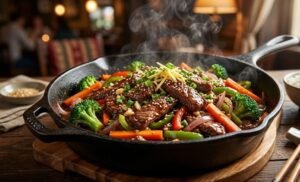
Tender beef strips are seared with broccoli, carrots, garlic, and fresh ginger, then coated in a glossy soy-based sauce. The vegetables stay crisp-tender while the beef remains juicy, creating a balanced dinner with savory, slightly sweet flavors. Broccoli can also be replaced with snap peas, bell peppers, or mushrooms when you need to use what is already in the refrigerator.
Main ingredients: Beef strips, broccoli, carrots, garlic, fresh ginger, soy sauce, beef broth, cornstarch, brown sugar, and a neutral high-heat oil
Time: Approximately 25 minutes
Serve with: Steamed rice, brown rice, or noodles
Helpful tip: Mix the sauce before heating the skillet so it is ready when needed. Cook the beef separately, remove it from the pan, and return it only after the vegetables are crisp-tender and the sauce has thickened enough to coat the back of a spoon.
2. Beef and Broccoli With Savory Sauce
Beef and broccoli is a simple rice dinner built around thinly sliced beef, plenty of broccoli, and a full-flavored brown sauce. Unlike a mixed-vegetable stir-fry, broccoli remains the main vegetable and absorbs the sauce between its florets. Soy sauce, broth, garlic, sesame oil, and a small amount of cornstarch create a smooth coating that works especially well with steamed rice.
Main ingredients: Beef strips, broccoli florets, garlic, soy sauce, beef broth, sesame oil, cornstarch, and neutral oil
Time: Approximately 25 minutes
Serve with: Jasmine rice, brown rice, or cauliflower rice
Helpful tip: Briefly steam the broccoli in the skillet with a splash of water before adding the sauce. It should be bright green and just tender, not soft or watery.
3. Mongolian Beef Strips
Mongolian beef is a sweet and savory takeout-style dinner made with quickly browned strips of beef and a rich soy-based sauce. Brown sugar adds sweetness, while garlic, ginger, and green onions keep the finished dish from tasting flat. Although commonly found on Chinese-American restaurant menus, this familiar version is not a traditional Mongolian dish.
Main ingredients: Beef strips, soy sauce, brown sugar, garlic, ginger, cornstarch, green onions, and neutral oil
Time: Approximately 25 minutes
Serve with: Steamed rice and bok choy, green beans, or broccoli
Helpful tip: Simmer the sauce only until it lightly coats a spoon. Continuing to reduce it can make the sugar burn or leave the finished beef overly sticky.
4. Teriyaki Beef Rice Bowls
Teriyaki beef rice bowls combine warm rice, seared steak strips, and colorful vegetables in a balanced one-bowl meal. The sauce has a mild sweetness from honey or brown sugar, with soy sauce, ginger, and garlic providing a savory base. Bell peppers and broccoli add color and texture, while sesame seeds and green onions make a simple finishing touch. Find more meal ideas in the rice dishes collection.
Main ingredients: Beef strips, cooked rice, bell peppers, broccoli, soy sauce, ginger, garlic, honey or brown sugar, cornstarch, and sesame seeds
Time: Approximately 30 minutes
Serve with: Rice, sliced green onions, cucumber, or steamed edamame
Helpful tip: Keep the cooked rice warm before starting the beef. Thin steak strips are best served soon after cooking rather than being left in the skillet.
5. Korean-Style Beef Strips
These Korean-style beef strips have a savory, gently spicy flavor from gochujang, soy sauce, sesame oil, garlic, and a small amount of sweetness. Green onions provide freshness, while rice helps balance the stronger seasoning. For a milder alternative, combine sweet chilli sauce with a little white miso instead of gochujang to retain some fermented depth without as much heat.
Main ingredients: Beef strips, gochujang, soy sauce, sesame oil, garlic, honey or brown sugar, green onions, and cooked rice
Time: Approximately 25 minutes
Serve with: Steamed rice, sliced cucumber, shredded carrots, and sesame seeds
Helpful tip: Gochujang varies in heat and saltiness, so begin with a small amount. Taste the mixed sauce before adding extra soy sauce or sweetener.
6. Black Pepper Beef and Onions
Black pepper beef and onions brings together seared beef, sweet bell pepper, and softened onion in a bold pepper sauce. Freshly ground black pepper gives the dish a warmer aroma and sharper finish than pre-ground pepper. The vegetables should remain slightly firm so they contrast with the beef rather than disappearing into the sauce.
Main ingredients: Beef strips, bell pepper, onion, garlic, soy sauce, beef broth, cornstarch, and freshly ground black pepper
Time: Approximately 25 minutes
Serve with: Steamed rice or stir-fried noodles
Helpful tip: Add part of the pepper while the sauce cooks and the rest just before serving. This creates both a deeper background flavor and a fresher peppery finish.
7. Sweet Chilli Beef Noodles
Sweet chilli beef noodles are a useful alternative to rice-based beef dinners because the noodles are tossed directly with the meat, vegetables, and sauce. Bell pepper, carrots, and green onions add crunch and color, while lime juice or rice vinegar balances the sweetness. The noodles absorb the sauce as everything is combined, giving the dish a cohesive flavor in every bite.
Main ingredients: Beef strips, egg noodles or rice noodles, sweet chilli sauce, soy sauce, bell pepper, carrots, green onions, and lime juice or rice vinegar
Time: Approximately 30 minutes
Serve with: Lime wedges and sliced green onions, with chopped peanuts offered separately
Helpful tip: Cook the noodles just until tender, then drain them thoroughly. Excess water can dilute the sauce and leave the finished dish soft instead of lightly coated.
8. Moo Shu Beef Wraps
Moo shu beef wraps turn seasoned steak strips, cabbage, mushrooms, and green onions into a relaxed, hands-on dinner. The filling is spooned into warm Mandarin pancakes, small tortillas, or lettuce cups and finished with a thin layer of hoisin sauce. For exact quantities and the complete method, use this Moo Shu Beef recipe.
Main ingredients: Beef strips, shredded cabbage, mushrooms, green onions, hoisin sauce, and Mandarin pancakes or small tortillas
Time: Approximately 30 minutes
Serve with: Warm pancakes, tortillas, or crisp lettuce cups
Helpful tip: Warm the wrappers shortly before serving and keep them covered with a clean kitchen towel. This prevents them from drying out or cracking while the filling is being prepared.
9. Garlic Butter Beef Strips
When you need a fast skillet dinner, garlic butter beef strips are hard to beat. Thin slices of sirloin are browned quickly, then finished with fresh garlic, butter, black pepper, and parsley. The garlic-infused butter lightly coats the meat and creates a simple pan sauce that works especially well with potatoes, vegetables, or crusty bread.
Main ingredients: Sirloin beef strips, butter, garlic, olive oil, salt, black pepper, and fresh parsley
Time: Approximately 20 minutes
Serve with: Mashed potatoes, roasted vegetables, rice, or crusty bread
Helpful tip: Brown the beef before adding the butter and garlic. Lower the heat slightly for the final minute so the garlic becomes fragrant without burning and the garlic butter beef strips stay juicy.
10. Creamy Beef Stroganoff
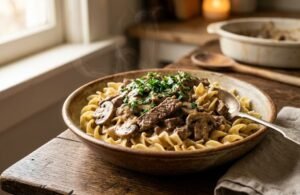
For a comforting weeknight meal, quick beef stroganoff combines pan-fried steak strips with mushrooms, onion, egg noodles, and a silky sour-cream sauce. The mushrooms bring an earthy depth, while the sour cream adds a gentle tang that keeps the dish from tasting too heavy. Sirloin or New York strip works well because both cook quickly and remain tender when sliced thinly.
Main ingredients: Beef strips, mushrooms, onion, sour cream, beef broth, garlic, Worcestershire sauce, flour or cornstarch, butter, and egg noodles
Time: Approximately 30–35 minutes
Serve with: Egg noodles and chopped parsley
Helpful tip: Remove the skillet from direct heat before stirring in the sour cream. High heat can cause the sauce to separate, while gentler heat keeps it smooth and creamy.
11. Beef Tips With Mushroom Gravy
This quicker version of beef tips with mushroom gravy uses thin beef strips instead of larger cubes, helping the meal cook faster while keeping the same hearty flavor. Browned mushrooms, onion, beef broth, Worcestershire sauce, and a smooth brown gravy create a richer, more savory finish than stroganoff. Mashed potatoes are the best match because they absorb the gravy better than noodles.
Main ingredients: Sirloin beef strips, mushrooms, onion, beef broth, Worcestershire sauce, flour or cornstarch, butter, and black pepper
Time: Approximately 35–40 minutes
Serve with: Mashed potatoes and green beans, peas, or roasted carrots
Helpful tip: Let the mushrooms brown before adding the broth. If they release moisture, continue cooking until most of the liquid evaporates so the gravy develops a deeper flavor instead of becoming watery.
12. Philly Cheesesteak Skillet
This Philly cheesesteak-inspired skillet combines thin beef strips, sautéed peppers, onions, and melted provolone in one pan. The beef stays savory and juicy, while the vegetables add sweetness and texture beneath the cheese. It can be served with toasted hoagie rolls for a more traditional meal or paired with cauliflower rice, roasted vegetables, or lettuce cups for a lower-carb option.
Main ingredients: Beef strips, bell peppers, onion, provolone cheese, Worcestershire sauce, olive oil, salt, and black pepper
Time: Approximately 25 minutes
Serve with: Toasted hoagie rolls or a low-carb side such as cauliflower rice or lettuce cups
Helpful tip: Cook the peppers and onions until most of their moisture has evaporated before returning the beef to the skillet. Add the provolone last, cover briefly, and remove the pan from the heat as soon as the cheese melts.
13. Beef Strip Sandwiches With Peppers
These beef strip sandwiches are assembled as a complete handheld dinner with seared beef, softened peppers and onions, melted provolone, and garlic aioli inside toasted rolls. The crisp bread adds structure, while the spread brings extra flavor and helps balance the savory filling. Pickles or a little Dijon mustard can add brightness if the sandwich feels too rich.
Main ingredients: Beef strips, bell peppers, onion, hoagie rolls, provolone cheese, garlic aioli, Worcestershire sauce, olive oil, and optional pickles or Dijon mustard
Time: Approximately 30 minutes
Serve with: Oven fries, coleslaw, pickles, or a simple green salad
Helpful tip: Toast the cut sides of the rolls and let the cooked filling rest for a minute before assembling. This helps the bread capture the savory juices without becoming soft or soggy.
14. Cajun Beef Strips and Potatoes
For a hearty skillet dinner, Cajun beef strips and potatoes combine seared beef, lightly crisp baby potatoes, and sweet bell peppers with a bold seasoning blend. Cajun seasoning commonly includes paprika, garlic, herbs, and pepper, but the heat and salt level can vary by brand. The result is a filling weeknight meal with plenty of texture and a warm, savory finish.
Main ingredients: Beef strips, baby potatoes, bell peppers, Cajun seasoning, garlic, olive oil, salt, and black pepper
Time: Approximately 35 minutes
Serve with: A simple green salad, steamed vegetables, or crusty bread
Helpful tip: Parboil or microwave the baby potatoes before adding them to the skillet. Start with a modest amount of Cajun seasoning, then adjust after tasting so the dish does not become too salty or spicy.
15. Steak Strip Mac and Cheese
Steak strip mac and cheese turns a familiar comfort food into a more complete family dinner. Browned sirloin strips, elbow macaroni, and a creamy cheddar sauce come together in a rich but approachable meal. A small amount of mustard powder or Worcestershire sauce adds depth to the cheese sauce, while Parmesan or Monterey Jack can be mixed in for extra flavor.
Main ingredients: Sirloin steak strips, elbow macaroni, cheddar cheese, milk, butter, flour, mustard powder or Worcestershire sauce, Parmesan or Monterey Jack, salt, and black pepper
Time: Approximately 35 minutes
Serve with: Steamed broccoli, peas, roasted carrots, or a crisp side salad
Helpful tip: Cook the steak separately and stir it into the mac and cheese just before serving. This keeps the beef from overcooking and prevents the sauce from becoming greasy or dry.
16. Beef Fajita Strips

Skirt steak is the classic choice for beef fajita strips, while flank steak is a practical alternative that also cooks well over high heat. The beef is quickly seared with onions and bell peppers, then served in warm tortillas with lime, salsa, and other toppings. Because both cuts have a noticeable grain, slicing thinly across it is essential for a more tender bite.
Main ingredients: Skirt steak or flank steak strips, onions, bell peppers, tortillas, lime juice, garlic, cumin, chili powder, salt, and neutral oil
Time: Approximately 30 minutes
Serve with: Warm flour or corn tortillas, salsa, avocado, sour cream, and lime wedges
Helpful tip: Cook the peppers and onions separately from the beef, then combine everything at the end. This helps the vegetables keep their texture while preventing the steak strips from becoming dry.
17. Steak Strip Tacos
Steak strip tacos use smaller, bite-sized pieces of seared beef instead of the longer strips usually served with fajitas. The meat is tucked into warm corn tortillas and finished with fresh salsa, chopped onion, cilantro, avocado, and lime. This makes the tacos easy to customize and gives each serving a balance of savory beef, bright citrus, and crisp toppings.
Main ingredients: Steak strips cut into small pieces, corn tortillas, salsa, onion, cilantro, avocado, lime, cumin, chili powder, and neutral oil
Time: Approximately 25 minutes
Serve with: Fresh salsa, shredded cabbage, pickled onions, and lime wedges
Helpful tip: Warm the corn tortillas in a dry skillet for a few seconds on each side, then keep them covered with a clean towel. This helps prevent cracking and keeps them flexible for filling.
18. Beef Burrito Bowls
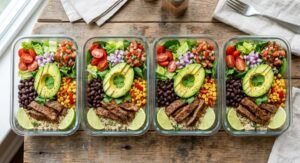
Beef burrito bowls combine cumin-lime beef strips with rice, beans, corn, salsa, and avocado in a complete meal that can be adjusted for different tastes. The rice and beans create a hearty base, while the corn, salsa, and fresh toppings add color and contrast. Shredded lettuce or cabbage can be added on top for extra crunch.
Main ingredients: Beef strips, cooked rice, black or pinto beans, corn, salsa, avocado, lime, cumin, chili powder, and shredded lettuce or cabbage
Time: Approximately 30 minutes
Serve with: Sour cream, shredded cheese, cilantro, lime wedges, or tortilla chips
Helpful tip: Store the avocado, salsa, and other wet toppings separately when preparing the bowls ahead of time. This helps prevent the rice and vegetables from becoming soggy.
19. Chipotle Beef and Rice Skillet
This chipotle beef and rice skillet combines seasoned beef strips, white long-grain rice, tomatoes, corn, and black beans in one covered skillet. Chipotle peppers in adobo add smoky heat as the rice cooks in the broth, creating a hearty dinner with minimal cleanup. The beef is browned first and returned near the end so it stays tender.
Main ingredients: Beef strips, white long-grain rice, chipotle peppers in adobo, diced tomatoes, corn, black beans, beef broth, onion, garlic, and neutral oil
Time: Approximately 35 minutes
Serve with: Avocado, lime, cilantro, shredded cheese, or sour cream
Helpful tip: Start with a small amount of chipotle because the heat level can vary. Once the broth is added, cover the skillet and cook over low heat without stirring too often so the rice cooks evenly and does not become sticky.
20. Beef Strips With Peppers and Mushrooms
Beef strips with peppers and mushrooms make a simple, family-friendly skillet dinner with a savory garlic and black pepper flavor. The mushrooms add richness, while the bell peppers bring sweetness, color, and a little freshness to the pan. Served without a starchy side, it also works well as a lower-carb beef dinner.
Main ingredients: Beef strips, bell peppers, mushrooms, onion, garlic, Worcestershire sauce, olive oil, salt, and black pepper
Time: Approximately 25 minutes
Serve with: Rice, noodles, mashed potatoes, cauliflower rice, or on its own for a lower-carb meal
Helpful tip: Sear the beef first, transfer it to a plate, and then cook the mushrooms until most of their moisture has evaporated. Add the peppers afterward and return the beef near the end so the meat stays tender and the vegetables do not become watery.
21. Mediterranean-Inspired Beef Strip Salad
Mediterranean-inspired beef strip salad combines warm, oregano-seasoned beef with crisp cucumber, juicy tomatoes, red onion, olives, and fresh greens. A lemon and olive oil dressing keeps the salad bright, while an optional garlic yogurt dressing adds a cooler, creamier finish. It is a practical choice when you want a fresh beef dinner that still feels satisfying.
Main ingredients: Beef strips, cucumber, tomatoes, red onion, olives, lettuce or mixed greens, lemon juice, olive oil, garlic, oregano, and Greek yogurt for the optional creamy dressing
Time: Approximately 25 minutes
Serve with: Warm pita, hummus, roasted potatoes, couscous, bulgur, or quinoa
Helpful tip: Let the beef rest briefly and drain away any excess pan juices before adding it to the salad. This helps protect the texture of the greens and keeps the dressing from becoming watery.
22. Beef and Vegetable Lettuce Wraps
Beef and vegetable lettuce wraps combine quickly seared beef strips with crisp lettuce, shredded carrots, cabbage, and green onions. The beef is sliced thinly across the grain and coated in a light sauce made with soy sauce, rice vinegar, garlic, and sesame oil. The vegetables are added at the end so they keep their crunch instead of softening in the pan.
Main ingredients: Beef strips, iceberg or romaine lettuce leaves, shredded carrots, finely sliced cabbage, green onions, garlic, low-sodium soy sauce, rice vinegar, sesame oil, and neutral oil
Time: Approximately 25 minutes
Serve with: Cucumber salad, steamed edamame, or a small portion of rice on the side
Helpful tip: Pat the lettuce leaves completely dry before filling them. Iceberg and romaine are the easiest options to hold, while butter lettuce works well when you prefer a softer, more flexible wrap.
23. Low-Carb Beef Strips With Cauliflower Rice
Low-carb beef strips with cauliflower rice make a practical dinner when you want a lighter alternative to regular rice or noodles. Seared beef strips are paired with cauliflower rice, bell peppers, and broccoli, then seasoned with garlic, black pepper, and a small amount of low-sodium soy sauce. The result is a simple meal with plenty of texture and a clear savory flavor.
Main ingredients: Beef strips, cauliflower rice, bell peppers, broccoli, garlic, low-sodium soy sauce, olive oil, salt, and black pepper
Time: Approximately 25 minutes
Serve with: Sliced avocado, cucumber salad, steamed green beans, or extra broccoli
Helpful tip: Cook the cauliflower rice in a separate pan until most of its moisture has evaporated. Frozen cauliflower rice may need a few extra minutes because it usually releases more water than fresh cauliflower rice.
For more meal ideas built around vegetables and lighter sides, explore the site’s collection of low-carb recipes.
24. Grilled Beef Strip Skewers
Grilled beef strip skewers pair marinated beef with bell peppers and onions for a quick dinner with smoky flavor and plenty of color. Wider beef strips work best when folded onto the skewers, while very thin pieces can be cut into larger bite-sized sections. A short marinade made with olive oil, garlic, low-sodium soy sauce, lemon juice, and black pepper adds flavor without overwhelming the meat.
Main ingredients: Wider beef strips, bell peppers, red or yellow onion, olive oil, garlic, low-sodium soy sauce, lemon juice, black pepper, and wooden or metal skewers
Time: Approximately 30 minutes, plus 20 to 30 minutes for marinating
Serve with: Rice, couscous, flatbread, grilled vegetables, or a fresh salad
Helpful tip: Cut the peppers and onions into pieces small enough to cook at the same rate as the beef, and thread everything loosely to allow heat to circulate. If using wooden skewers, soak them briefly to reduce scorching. Grill over medium-high heat, turning as needed, or broil on an upper oven rack while watching closely. For food safety, whole beef cuts should reach at least 145°F, followed by a 3-minute rest.
25. Air Fryer Beef Strips With Vegetables
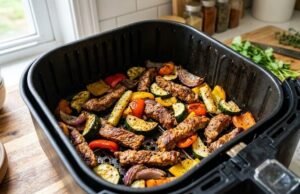
Air fryer beef strips with vegetables make a practical dinner with browned beef, peppers, onions, and zucchini. Because the vegetables cook at different speeds, the peppers and onions should begin cooking first, with the beef and zucchini added later. This keeps the zucchini from becoming overly soft and helps the beef remain tender.
Main ingredients: Beef strips, bell peppers, onion, zucchini, olive oil, garlic powder, paprika, salt, and black pepper
Time: Approximately 15 to 20 minutes
Serve with: Cauliflower rice, a green salad, steamed broccoli, or a garlic yogurt sauce
Helpful tip: Pat the beef dry before seasoning and arrange the ingredients in a loose layer. Cook the peppers and onions at about 380°F for a few minutes before adding the beef and zucchini. Total cooking time will depend on the thickness of the strips, the size of the basket, and the air-fryer model, so check the beef early and remove it once it reaches the desired doneness.
For more ideas that use low-carb ingredients and air-fryer cooking methods, explore the collection of keto air fryer recipes.
What to Serve With Beef Strips
The best side dish for beef strips depends on the way the beef is seasoned and cooked. Saucy stir-fries usually pair well with rice or noodles, while grilled or pan-seared beef works nicely with vegetables, salads, and simple grains. Creamy or gravy-based recipes are often better with potatoes, pasta, or bread that can soak up the sauce.
Rice and Grains
Rice is one of the most practical sides for beef strips because it absorbs sauces and helps balance bold seasonings. White rice works well with teriyaki beef, stir-fries, and garlic beef, while brown rice adds a firmer texture and slightly nutty flavor.
Fried rice is a useful option when you have leftover beef strips and vegetables to use. Quinoa adds more texture, and couscous pairs especially well with grilled, spiced, or Mediterranean-inspired beef.
Good choices include white rice, brown rice, fried rice, quinoa, and couscous. Beef strips can also be served with the same rice bases used in these easy slow-cooked rice dishes, especially when planning meals ahead.
Noodles and Pasta
Noodles are a natural match for beef strips because they hold sauces and make the meal more filling. Egg noodles are especially good with creamy recipes such as beef stroganoff, while lo mein and rice noodles work well with soy, ginger, garlic, or sweet chilli sauces.
Pasta can also be paired with beef strips in creamy, tomato-based, or mushroom sauces. Cavatelli works best when the beef is part of a thicker pasta dish because its curved shape catches small pieces of meat, vegetables, and sauce.
Vegetables
Vegetables can be served separately or cooked alongside the beef, depending on the recipe. Broccoli, green beans, and roasted carrots make easy side dishes, while bell peppers, mushrooms, zucchini, and cabbage can be sautéed in a separate pan or added to the main skillet.
Roasted carrots are particularly good with grilled or peppery beef because their natural sweetness balances savory flavors. When cooking several vegetables together, start with firmer options such as carrots or broccoli and add softer vegetables later.
Lower-Carb Sides
Cauliflower rice, lettuce wraps, green salad, roasted broccoli, and zucchini noodles are useful lower-carb alternatives to regular rice, pasta, or bread. They work well with garlic beef, fajita-style strips, grilled beef, and lightly sauced skillet recipes.
Cauliflower rice can absorb pan sauces, while lettuce leaves provide a crisp base for smaller pieces of beef. Zucchini noodles should be cooked briefly and drained if needed so they do not make the plate watery.
Comfort-Food Sides
Mashed potatoes and baked potatoes pair well with beef strips served in mushroom gravy, garlic butter, or a creamy sauce. Bread rolls are another useful choice when the dish has pan juices or sauce to soak up.
Mac and cheese creates a richer, family-friendly meal and works best with simply seasoned beef, such as garlic-seared sirloin or black pepper beef strips. Adding roasted broccoli, green beans, or a fresh salad helps bring balance to the plate.
Easy Sauces and Marinades for Beef Strips
A simple sauce can change the flavor of beef strips without adding much preparation time. Garlic butter suits pan-seared beef, honey soy works well in rice bowls and stir-fries, and creamy mushroom sauce pairs naturally with noodles or mashed potatoes. The formulas below are designed for about 1 pound of beef and can be adjusted to taste.
For the best texture, brown the beef first and transfer it to a plate. Prepare the sauce in the same skillet, then return the strips for the final minute or two so they absorb the flavor without overcooking.
Garlic Butter Sauce
Melt 3 tablespoons of butter over medium-low heat, then add 2 minced garlic cloves and cook for about 30 seconds. Stir in 1 tablespoon of chopped parsley and season with black pepper to taste before returning the beef to the skillet.
This quick garlic butter sauce works especially well with sirloin, ribeye, or New York strip. Serve it with potatoes, roasted vegetables, rice, or crusty bread.
Simple formula: 3 tablespoons butter, 2 garlic cloves, 1 tablespoon parsley, and black pepper
Honey Soy Sauce
Combine 3 tablespoons of low-sodium soy sauce with 2 tablespoons of honey, 1 minced garlic clove, and 1 teaspoon of grated ginger. Add the mixture after the beef has browned and simmer briefly until it forms a light, glossy coating.
Honey soy sauce is sweeter and thinner than teriyaki-style sauce, making it a good match for beef and broccoli, noodles, stir-fries, and rice bowls. Taste before adding salt because the soy sauce already provides plenty of seasoning.
Simple formula: 3 tablespoons soy sauce, 2 tablespoons honey, 1 garlic clove, and 1 teaspoon ginger
Teriyaki-Style Sauce
Mix 3 tablespoons of low-sodium soy sauce, 1½ tablespoons of brown sugar or honey, 1 tablespoon of rice vinegar, 1 teaspoon of grated ginger, and 1 minced garlic clove. For a lightly thickened sauce, combine 1 teaspoon of cornstarch with 1 teaspoon of cold water and stir it in during the final minute of simmering.
Unlike the simpler honey soy version, this teriyaki-style sauce has a tangier flavor and a slightly thicker finish. Let it simmer before returning the cooked beef so the strips do not become tough while the sauce reduces.
Simple formula: Soy sauce, brown sugar or honey, rice vinegar, ginger, garlic, and cornstarch slurry
Creamy Mushroom Sauce
Cook about 8 ounces of sliced mushrooms in a little oil or butter until their released moisture has evaporated and the edges begin to brown. Add 2 minced garlic cloves and ½ cup of beef broth, then simmer until the liquid reduces slightly.
Lower the heat before stirring in ⅓ cup of sour cream or heavy cream. If using sour cream, remove the skillet from direct heat briefly before adding it to reduce the chance of splitting.
This sauce pairs well with egg noodles, mashed potatoes, rice, or stroganoff-style beef strips.
Simple formula: 8 ounces mushrooms, 2 garlic cloves, ½ cup broth, and ⅓ cup sour cream or cream
Fajita Marinade
For a quick fajita marinade, combine 2 tablespoons of lime juice, 2 tablespoons of neutral oil, 1 teaspoon of ground cumin, 1 teaspoon of paprika, 2 minced garlic cloves, and black pepper to taste. Add a small pinch of salt only if the beef has not already been seasoned.
Coat skirt steak or flank steak lightly and marinate it for about 20 to 30 minutes. Avoid leaving the beef in the acidic mixture for several hours because the lime juice can soften the surface too much.
Simple formula: 2 tablespoons lime juice, 2 tablespoons oil, cumin, paprika, garlic, and black pepper
Black Pepper Sauce
Combine 1 teaspoon of freshly cracked black pepper with 2 tablespoons of low-sodium soy sauce, ⅓ cup of beef broth, and 2 minced garlic cloves. Mix 1 teaspoon of cornstarch with 1 teaspoon of cold water, then stir the slurry into the simmering sauce until it lightly coats a spoon.
Black pepper sauce works particularly well with onions, bell peppers, mushrooms, rice, and noodles. Reduce the pepper slightly for a milder family dinner, and taste the sauce before adding any extra salt.
Simple formula: Black pepper, soy sauce, beef broth, garlic, and equal parts cornstarch and cold water
Common Mistakes When Cooking Beef Strips
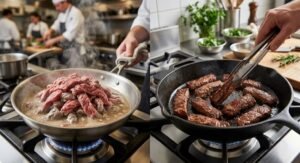
Beef strips are ideal for quick weeknight meals, but their short cooking time means small mistakes can quickly affect the texture. Slicing the meat incorrectly, adding too much to the pan, or leaving it in the sauce for too long can turn tender beef into strips that are chewy, dry, pale, or watery.
The best results come from preparing everything before cooking begins. Slice the beef evenly, dry the surface, heat the skillet properly, and keep the cooking time brief. These simple steps make it much easier to achieve browned edges while keeping the inside tender.
Cutting With the Grain
The direction of the cut has a noticeable effect on how tender the beef feels. Cutting with the grain leaves the long muscle fibers intact, so the strips can still be difficult to chew even when they have been cooked correctly.
Look closely at the surface of the steak before slicing. The visible lines running through the meat show the direction of the grain. Cut across those lines rather than following them.
Some cuts, especially skirt steak, may have fibers running in more than one direction. Divide the steak into smaller sections first, then turn each piece so you can slice it against the grain.
Using Strips of Uneven Thickness
Uneven strips cook at different speeds. Thin pieces may become dry while thicker ones are still undercooked or have not developed enough color.
For most quick stir-fries and skillet recipes, aim for strips around ⅛ to ¼ inch thick. Exact measurements are less important than keeping the pieces reasonably similar in size.
If the beef is difficult to slice neatly, place it in the freezer for about 20 to 30 minutes. It should feel firm enough to control with the knife but should not be frozen solid.
Adding Wet Beef to the Skillet
Surface moisture makes it harder for beef to brown. When wet strips enter a hot pan, the liquid must evaporate before searing can begin. This often causes the meat to steam or simmer instead of forming browned edges.
Pat unseasoned beef dry with paper towels before adding oil or seasoning. If the meat has been marinated, lift it from the liquid and let the excess drip away. A very wet coating can be blotted lightly, but avoid wiping away all the seasoning.
Do not use raw marinade as a finishing sauce unless it has been boiled thoroughly first. An easier option is to reserve a clean portion of the marinade before adding the raw beef.
Starting With a Cold Pan
A cold or barely warm skillet causes the beef to release moisture before it has a chance to sear. The strips may cook slowly, turn grey, and lose some of the rich flavor that comes from browning.
For stainless steel, cast iron, or carbon steel, preheat the skillet before adding the beef. Add the cooking oil when the pan is hot, and wait until it looks fluid and lightly shimmering.
Nonstick pans should not be left empty over very high heat. Add the oil earlier and use medium to medium-high heat, following the cookware manufacturer’s instructions.
The beef should produce a clear sizzle as soon as it touches the pan. A weak sound usually means the skillet needs more time to heat.
Overcrowding the Pan
Adding too much beef at once is one of the most common reasons steak strips become pale or watery. A crowded skillet loses heat quickly, and moisture becomes trapped between the pieces.
Spread the strips in a single layer, leaving a little room around them. If the beef does not fit comfortably, cook it in batches and transfer each finished batch to a clean plate.
Avoid stirring constantly as soon as the beef enters the pan. Let the first side cook briefly so it can develop color. Properly seared pieces will usually release from the skillet more easily than meat that is still sticking.
Cooking the Sauce and Beef Together for Too Long
Thin beef strips do not need to simmer in sauce for several minutes. Once the meat has been seared, extended cooking can make it firm and dry, especially in recipes with thick or bubbling sauces.
Cook the beef first and remove it from the skillet. Prepare the sauce in the same pan, then return the meat near the end. Toss everything together only long enough to coat and warm the strips.
This method works particularly well for beef and broccoli, teriyaki beef, black pepper beef, Mongolian beef, and creamy mushroom dishes. It keeps the meat tender while still allowing the sauce to thicken properly.
Using Low Heat for a Quick-Sear Recipe
Low heat is suitable for braised or slow-cooked beef, but it is not ideal for a recipe built around a quick sear. Thinly sliced beef needs enough heat to brown before the inside becomes overcooked.
Medium-high heat works well for most home skillets. Cast iron, carbon steel, and woks can often handle higher temperatures, while nonstick pans and thin cookware may require slightly lower heat.
Sugary marinades also need extra care because honey, brown sugar, and sweet chilli sauce can burn quickly. In those recipes, use medium-high heat rather than maximum heat and watch the surface closely.
If the beef releases a large pool of liquid, check that the pan is hot enough and not overcrowded. If the oil smokes heavily or the seasoning begins to burn, reduce the heat.
Reheating the Beef Repeatedly
Every reheating cycle removes more moisture from cooked beef. Thin steak strips can become dry and firm particularly quickly, so it is better to warm only the portion you plan to eat.
For stovetop reheating, place the beef in a skillet over medium or medium-low heat with a spoonful of sauce, broth, or water. Warm it briefly, stirring only until heated through.
In the microwave, cover the beef and heat it in short intervals at a lower power setting. Stir between intervals and stop as soon as the meat is hot.
For meal preparation, store the beef and sauce separately when practical. This prevents the strips from sitting in a thick sauce for several days and gives you more control when reheating.
How to Store and Reheat Beef Strips
Cooked beef strips can lose moisture quickly, especially when they are thinly sliced. Storing them properly and using gentle heat will help preserve their texture while keeping the leftovers safe to eat.
Do not leave the beef on the counter until it has cooled completely. Divide larger amounts among shallow containers and refrigerate them within two hours of cooking or serving. When the surrounding temperature is above 90°F, refrigerate the food within one hour. Food left out beyond these limits should be discarded even when it still looks and smells normal.
Store the beef in a covered, airtight container. If the original dish includes gravy, stir-fry sauce, or another suitable cooking liquid, keep a little of it with the meat. This added moisture can help prevent the strips from becoming dry during storage and reheating.
USDA guidance recommends keeping refrigerated leftovers at 40°F or below and using them within three to four days. Freeze portions you will not use within that period. Treat this as safe-storage guidance rather than relying only on appearance or smell to decide whether older leftovers are suitable to eat.
Reheating Beef Strips in a Skillet
A skillet is a good choice when you want to reheat beef strips without cooking them much further. Place only the portion you plan to eat in the pan and use medium-low heat.
Add a spoonful of water, broth, gravy, or reserved sauce. If the sauce is thick, creamy, or sugary, loosen it with a small splash of water so it does not stick or scorch. Cover the skillet briefly, then turn the strips occasionally until they are hot throughout.
Remove the beef from the heat as soon as it is thoroughly reheated. Leaving thin steak strips in the pan for several extra minutes can make the edges dry and firm.
Reheating Beef Strips in the Microwave
The microwave is convenient, but it can heat thinly sliced beef unevenly. Arrange the strips in a shallow, even layer instead of placing them in a thick pile.
Add a teaspoon or two of broth, water, or sauce and cover the container loosely with a microwave-safe lid. Heat the beef in short intervals, stirring or rearranging the pieces between each interval.
Leftovers should reach an internal temperature of 165°F. Stirring and covering the food helps reduce cold spots, but checking the center with a food thermometer is the most reliable method.
Reheat Only the Amount You Need
Repeatedly warming and cooling the same container can affect the beef’s texture and make safe temperature control more difficult. Portion the leftovers before refrigerating them so you can remove one serving without disturbing the rest.
When beef is stored with rice, noodles, vegetables, or sauce, stir the food during reheating and check the temperature in more than one place. A full bowl may feel hot around the edges while remaining cool in the center.
How to Use Leftover Beef Strips

Leftover beef strips work best in meals where most of the other ingredients can be prepared first. Add the cooked meat near the end and heat it only until warmed through. This keeps the beef from becoming tough while giving you a quick starting point for another lunch or dinner.
Make Tacos, Quesadillas, or Wraps
Chop long beef strips into smaller pieces and warm them with a spoonful of salsa, broth, or taco sauce. Serve them in corn or flour tortillas with lettuce, avocado, tomatoes, pickled onions, cilantro, or a squeeze of lime.
For quesadillas, combine the chopped beef with shredded cheese and thinly sliced peppers. Cook until the tortilla is crisp and the filling is hot. For a lighter option, roll the beef into a wrap with salad vegetables and a yogurt or avocado dressing.
Build a Beef Strip Sandwich
Serve the beef cold or warm it gently before adding it to a toasted roll, flatbread, or sliced bread. Sautéed onions, peppers, provolone, mustard, garlic aioli, or horseradish sauce all work well, depending on the original seasoning.
Cut thicker pieces into smaller slices before assembling the sandwich. Shorter pieces are easier to eat and are less likely to pull out of the bread with the first bite.
Add It to Fried Rice or a Noodle Bowl
Cook the vegetables, egg, and chilled rice before adding the leftover beef. Toss the strips into the fried rice near the end with a small amount of soy sauce, sesame oil, garlic, or ginger.
The same approach works for rice noodles, lo mein, ramen, or udon. Prepare the noodles, vegetables, broth, and sauce first, then add the beef for the final minute or two.
When using leftover cooked rice, make sure it was cooled promptly and kept refrigerated. Do not use rice that has been left at room temperature for an extended period.
Turn It Into a Salad or Grain Bowl
Serve chilled or gently warmed beef strips over mixed greens with cucumber, tomatoes, red onion, roasted peppers, corn, avocado, olives, or crumbled cheese. Choose a dressing that suits the original flavor of the beef, such as lemon vinaigrette, balsamic dressing, yogurt sauce, or sesame dressing.
For a more filling bowl, use rice, quinoa, couscous, or cauliflower rice as the base. Heat the beef separately and add cold ingredients such as lettuce, avocado, and tomatoes just before serving.
Add It to an Omelet
Chop the leftover beef into bite-sized pieces before adding it to an omelet or scrambled eggs. Mushrooms, spinach, onions, peppers, and cheese are all useful additions.
Cook the vegetables first, warm the beef briefly, and then add the eggs. Because the meat is already cooked, it only needs enough time in the pan to become hot.
Fill a Loaded Baked Potato
A loaded baked potato is useful when only a small portion of beef remains. Chop the strips and spoon them over a hot potato with sautéed onions, peppers, cheese, sour cream, or leftover gravy.
Heat the beef separately before adding it to the potato. This warms the meat evenly without requiring the entire potato to stay in the oven longer than necessary.
Frequently Asked Questions About Beef Strip Recipes
What Can I Make With Beef Strips Besides Stir-Fry?
Beef strips can be used in fajitas, tacos, stroganoff, toasted sandwiches, rice bowls, salads, skewers, pasta dishes, quesadillas, and lettuce wraps. Because the meat cooks quickly, it works especially well in meals where the vegetables, sauce, or side dish can be prepared first.
Choose the cut according to the recipe. Skirt steak is particularly good for fajitas, while sirloin is a dependable all-purpose option for sandwiches, bowls, pasta, and salads.
What Is the Best Way to Cook Beef Strips?
The best general method is to sear thin beef strips quickly in a properly heated skillet. Arrange the meat in a single layer, leave some room between the pieces, and cook in batches if the pan is crowded.
Let the first side brown before turning or tossing the strips. Remove the beef as soon as it is cooked, then prepare any sauce or vegetables separately. Return the meat to the skillet near the end so it warms through without simmering for too long.
How Long Do Beef Strips Take to Cook?
Thin beef strips usually take about 3 to 6 minutes in a hot skillet. Very thin slices may cook more quickly, while thicker strips need additional time.
The exact cooking time depends on the thickness of the meat, the skillet temperature, the size of the pan, and how much beef is being cooked. These factors are more reliable than following one fixed number for every recipe.
For strips cut from an intact steak, USDA guidance recommends cooking beef steaks to at least 145°F and allowing a three-minute rest. Use a food thermometer when an accurate temperature check is practical.
How Long Should I Pan-Fry Beef Strips?
Most thin beef strips need approximately 3 to 6 minutes in total over medium-high heat. Leave the first side undisturbed briefly so it can brown, then turn or toss the meat to finish cooking.
Strips thinner than ¼ inch may be ready sooner, especially if they will be returned to a hot sauce. Cook them in a single layer, since an overcrowded or insufficiently heated skillet can cause the beef to release moisture and steam instead of searing.
How Do I Keep Beef Strips Tender?
Begin with a suitable cut such as sirloin, flank steak, skirt steak, ribeye, or New York strip. Slice the beef against the grain and keep the strips reasonably similar in thickness so they cook at the same rate.
Pat the surface dry, heat the skillet before adding the meat, and cook in small batches. Keep the cooking time short and remove the beef before making the sauce. Add it back during the final minute or two so it becomes hot without continuing to cook for an extended period.
Which Steak Is Best for Beef Strips?
Sirloin is the best general-purpose choice because it offers a good balance of tenderness, flavor, and value. It works well in stir-fries, pasta dishes, sandwiches, rice bowls, and skillet dinners.
Flank steak and skirt steak are well suited to fajitas and marinated recipes, provided they are sliced across the grain. Ribeye produces richer, more tender strips, while New York strip has a firmer bite that works particularly well in steak bowls and salads.
Can I Cook Beef Strips in an Air Fryer?
Yes, beef strips can be cooked in an air fryer, but the exact time and temperature will depend on their thickness, the marinade, the quantity being cooked, and the appliance itself.
Arrange the strips in a loose, even layer rather than packing the basket tightly. Turn or shake them partway through cooking and begin checking early because thin pieces can overcook quickly.
Be especially careful with marinades containing honey, brown sugar, or sweet chilli sauce. These ingredients can darken or burn before thicker pieces of beef are fully cooked.
Can Beef Strips Be Prepared Ahead?
Beef strips can be sliced earlier the same day or the day before and kept well covered in the refrigerator. They can also be marinated ahead, as long as the meat remains refrigerated throughout the process.
Follow the marinating time provided in the recipe when possible. Marinades containing a high proportion of vinegar, citrus juice, or another acidic ingredient can gradually soften the surface of the meat and may eventually give it an unpleasant texture.
USDA guidance notes that meat should be marinated in the refrigerator rather than on the counter. It also warns that after about two days, some marinades may begin breaking down the meat enough to make it mushy.
What Vegetables Go Well With Beef Strips?
Bell peppers and onions work well in fajitas, cheesesteak-style sandwiches, and skillet dinners. Broccoli, cabbage, carrots, and green beans are useful in stir-fries, while mushrooms and zucchini suit both creamy and savory skillet recipes.
Consider the cooking time of each vegetable. Firm vegetables such as carrots, broccoli, and green beans should usually go into the pan before quick-cooking ingredients such as zucchini or shredded cabbage.
For the best texture, cook the beef separately and return it to the skillet after the vegetables are almost ready.
Can I Use Frozen Beef Strips?
Yes, but thawing frozen beef strips before cooking usually gives you more even results and better browning. Cooking them while still frozen can release extra moisture, lower the temperature of the skillet, and cause the meat to steam.
The USDA recognizes three safe thawing methods: in the refrigerator, in cold water, or in the microwave. Raw beef should not be left on the kitchen counter to thaw.
When using the cold-water method, keep the beef in a sealed, leak-proof package. Beef thawed in cold water or the microwave should be cooked promptly. After thawing, drain away any released liquid and pat the strips dry before seasoning them.
Final Thoughts

These beef strip recipes show how one quick-cooking ingredient can become stir-fries, tacos, pasta, salads, sandwiches, skewers, and satisfying skillet meals. For consistently good results, choose a cut that suits the dish, slice it against the grain, and cook it quickly without overcrowding the pan.
Whether you are planning easy weeknight dinners or looking for new recipes using beef strips, the sauces, vegetables, and side dishes can be adjusted around what you already have. Explore more beef recipes and family dinner ideas for meals built around similar cuts and cooking methods. When you have more time, a slow-roasted New York steak roast makes a flavorful alternative for a relaxed weekend dinner.