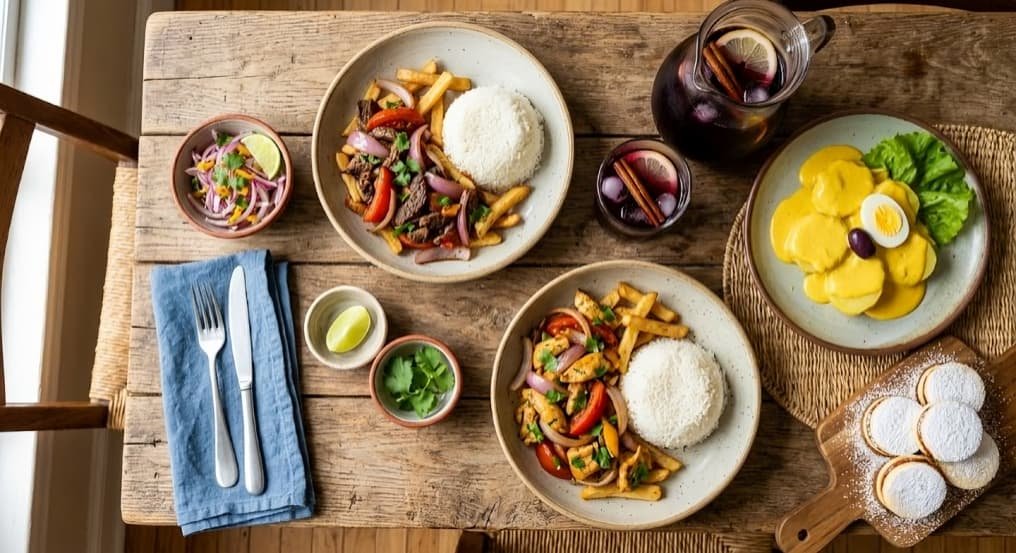
Peruvian food has earned a reputation as one of the most exciting cuisines in the world, yet many of its most popular dishes are surprisingly approachable for home cooks. From hearty chicken and rice meals to flavorful beef stir-fries and refreshing fruit-based drinks, Peruvian cooking combines simple ingredients with vibrant flavor.
One of the reasons Peruvian cuisine stands out is its mix of Indigenous, Spanish, African, Chinese, and Japanese culinary influences. This blend has created a wide variety of dishes that feel both familiar and unique. Many recipes rely on everyday ingredients such as chicken, beef, rice, potatoes, onions, tomatoes, lime, and fresh herbs, making them accessible even if you are new to Peruvian cooking.
Some traditional recipes include ingredients such as ají amarillo paste, ají panca, queso fresco, or purple corn. While these ingredients add distinctive flavor and character, practical substitutions are often available when they are difficult to find locally.
This collection features 15 easy Peruvian recipes you can make at home, including comforting main dishes, flavorful sides, refreshing drinks, and classic desserts.Along the way, you will learn which recipes are best for beginners, which ingredients are worth seeking out, and how to adapt traditional dishes for a modern home kitchen. If you enjoy discovering approachable international meals, you can also explore more homemade recipe ideas on Daily Bite Recipes.
What Are the Easiest Peruvian Recipes to Make at Home?
Some of the easiest Peruvian recipes for beginners include salsa criolla, pollo saltado, lomo saltado, tallarines verdes, papa a la Huancaína, tacu tacu, and chicha morada. These dishes use straightforward techniques such as stir-frying, boiling, blending, and simmering while relying on ingredients that are easy to find in most grocery stores. If you are making Peruvian food for the first time, salsa criolla is one of the simplest places to start, while pollo saltado offers a complete and satisfying meal with minimal preparation.
Peruvian Recipes at a Glance
Some Peruvian recipes can be prepared in less than 30 minutes, while others require roasting, chilling, shaping, or marinating. The table below makes it easier to compare the 15 dishes by cooking time, difficulty, meal type, and access to specialty ingredients.
The times are practical estimates for beginner-friendly home versions. They should be updated later if the final recipe instructions use longer marinating, chilling, or resting periods.
| Recipe | Main Ingredients | Meal Type | Difficulty | Total Time | Vegetarian Status | Special Ingredient |
| Lomo saltado | Beef strips, tomatoes, red onion, soy sauce, potatoes | Main dish | Easy | 35 minutes | Original version: no | Ají amarillo is optional |
| Pollo saltado | Chicken, tomatoes, red onion, soy sauce, potatoes | Main dish | Easy | 30 minutes | Original version: no | No specialty ingredient required |
| Ají de gallina | Shredded chicken, bread, milk, walnuts, potatoes | Main dish | Easy with several steps | 50 minutes | Original version: no | Ají amarillo paste |
| Peruvian roast chicken with ají verde | Chicken, garlic, lime, cumin, herbs | Main dish | Easy | 1 hour 25 minutes | Original version: no | Ají amarillo or huacatay may be used |
| Arroz con pollo Peruano | Chicken, rice, cilantro, peas, carrots | Main dish | Easy with several steps | 1 hour | Original version: no | Ají amarillo is optional |
| Tacu tacu | Cooked rice, beans, onion, garlic | Main dish or side | Easy | 30 minutes | Yes | No specialty ingredient required |
| Tallarines verdes | Pasta, basil, spinach, cheese, milk | Main dish | Easy | 35 minutes | Yes | Queso fresco is preferred |
| Papa a la Huancaína | Potatoes, cheese, milk, crackers, chile paste | Starter or side | Very easy | 35 minutes | Yes | Ají amarillo paste |
| Causa rellena | Yellow potatoes, lime, avocado, chicken or tuna | Starter or light meal | Moderate | 1 hour, plus chilling | Can be adapted with a vegetable filling | Ají amarillo paste |
| Papa rellena | Potatoes, seasoned beef, onion, egg | Main dish or snack | Moderate | 1 hour 15 minutes | Can be adapted with lentils or vegetables | No specialty ingredient required |
| Anticuchos de pollo | Chicken, garlic, vinegar, spices, chile paste | Main dish or appetizer | Easy | 40 minutes, plus marinating | Can be adapted with mushrooms or firm tofu | Ají panca paste |
| Salsa criolla | Red onion, lime, cilantro, chile pepper | Side or condiment | Very easy | 15 minutes | Yes | Peruvian chile is optional |
| Peruvian quinoa soup | Quinoa, potatoes, vegetables, broth, herbs | Soup or light meal | Easy | 45 minutes | Yes, with vegetable broth | No specialty ingredient required |
| Peruvian alfajores | Cornstarch, flour, butter, dulce de leche | Dessert | Moderate | 1 hour 20 minutes | Yes | Dulce de leche |
| Chicha morada | Purple corn, pineapple peel, cinnamon, cloves, lime | Drink | Easy | 1 hour 15 minutes, plus cooling | Yes | Dried purple corn |
For a first attempt at Peruvian cooking, salsa criolla is the easiest place to begin. It requires only slicing and mixing, yet it adds fresh acidity and crunch to grilled meat, rice, beans, and potato dishes.
Pollo saltado and tacu tacu are also practical choices for beginners. Pollo saltado uses a quick stir-fry method, while tacu tacu turns cooked rice and beans into a filling meal with very little preparation. Papa a la Huancaína is another manageable option once you have ají amarillo paste.
Lomo saltado is not technically difficult, but timing matters. The beef should be cooked quickly over high heat so it browns without becoming tough, while the tomatoes and onions should retain some shape.
Causa rellena, papa rellena, and alfajores require more patience because they involve cooling, layering, shaping, or assembling. They are still suitable for home cooks, but reading the complete method before starting will make the process much easier.
What Makes Peruvian Food Unique?

Peruvian food does not follow a single cooking style. Its variety comes from the country’s geography, native crops, migration history, and regional traditions.
Along Peru’s coast, seafood, citrus, rice, and chile peppers appear frequently. In the Andes, potatoes, corn, quinoa, beans, herbs, and slow-cooked meats are central to everyday cooking. The Amazon region contributes tropical fruits, freshwater fish, plantains, cassava, and aromatic herbs.
These regional ingredients meet a wide range of cooking methods. A Peruvian meal may include a creamy potato starter, a wok-cooked beef dish, a cilantro-flavored rice meal, grilled skewers, or a chilled purple corn drink. That contrast is one reason Peruvian cuisine feels so varied even when the ingredients remain relatively simple.
A Blend of Indigenous and Global Influences
The roots of Peruvian cooking begin with Indigenous agriculture and food traditions. Communities in the Andes cultivated potatoes, corn, quinoa, beans, squash, chile peppers, and many other crops long before European arrival. These ingredients still appear throughout modern Peruvian cuisine.
Several recipes in this collection reflect that foundation. Tacu tacu relies on beans and rice, Peruvian quinoa soup highlights an ancient Andean grain, and dishes such as causa rellena and papa a la Huancaína place potatoes at the center of the meal. Ají amarillo and ají panca also provide the color, aroma, and mild-to-moderate heat associated with many Peruvian sauces and marinades.
Spanish influence introduced cattle, pigs, chickens, dairy products, wheat, onions, garlic, and new cooking practices. Over time, these foods were combined with native ingredients rather than used separately. Ají de gallina is a good example: chicken, bread, milk, nuts, potatoes, and Peruvian chile come together in a rich, creamy dish that reflects this blending of food traditions.
African influence became deeply connected with coastal Peruvian cooking. Enslaved Africans and their descendants transformed available ingredients through skilled seasoning, grilling, stewing, and frying. Anticuchos are closely associated with this Afro-Peruvian heritage. Traditionally prepared with marinated beef heart, they show how an inexpensive cut could be turned into one of Peru’s best-known street foods. The chicken anticuchos in this collection are a more familiar home-cooking adaptation of that tradition.
Chinese migration in the nineteenth century led to the development of Chifa, a Chinese-Peruvian style of cooking shaped largely by Cantonese techniques. Wok cooking, soy sauce, rice, scallions, ginger, and quick stir-frying were combined with Peruvian meats, vegetables, and chile peppers.
Lomo saltado is one of the clearest examples of Chifa influence. Beef, tomatoes, onions, soy sauce, and vinegar are cooked quickly over high heat, then served with both rice and fried potatoes. Pollo saltado follows the same general method but uses chicken instead of beef.
Japanese immigration later contributed to Nikkei cuisine, which joins Japanese preparation methods with Peruvian seafood, citrus, chile peppers, and native produce. It is especially known for careful knife work, fresh fish, clean presentation, and balanced acidity.
Tiradito is a familiar example of Nikkei cooking. Thin slices of raw fish are dressed with citrus and chile-based sauces rather than being mixed and marinated in the same way as ceviche. Although tiradito is not included among these beginner recipes, it helps explain why Japanese influence is so important to Peru’s modern food identity.
These traditions did not remain separate. Over generations, they became part of the everyday cooking now recognized as Peruvian cuisine. A single menu can include Indigenous crops, Spanish-introduced dairy, Afro-Peruvian grilling, Chinese stir-frying, and Japanese seafood techniques without feeling disconnected.
That combination of native ingredients and adapted global methods is what gives Peruvian food its range. It can be comforting, fresh, spicy, creamy, smoky, or deeply savory, often within the same meal.
Essential Ingredients for Beginner Peruvian Cooking
Most of the recipes in this collection begin with familiar ingredients such as chicken, beef, rice, potatoes, onions, tomatoes, and lime. Only a few rely heavily on harder-to-find Peruvian products, so you can start cooking without rebuilding your entire pantry.
The most practical approach is to buy traditional Peruvian ingredients when they make a noticeable difference, then use thoughtful alternatives for items that are unavailable locally. A substitution can still produce a good dish, but it may change the flavor, texture, color, or heat level.
Everyday Ingredients You May Already Have
Chicken appears in arroz con pollo, ají de gallina, pollo saltado, anticuchos de pollo, and Peruvian-style roast chicken. Beef is central to lomo saltado, while rice and potatoes are used across main dishes, sides, soups, and fillings.
Onions, tomatoes, garlic, lime, and cilantro provide much of the freshness and savory depth associated with Peruvian cooking. Red onion gives salsa criolla its crisp texture and sharp flavor, while tomatoes and onions are cooked quickly in dishes such as lomo saltado and pollo saltado. Garlic forms part of many marinades, sauces, soups, and rice dishes.
Lime is especially useful for adding acidity to salads, marinades, sauces, and potato dishes. Cilantro brings color and a fresh herbal taste to arroz con pollo, soups, and green sauces.
Eggs, milk, and cheese also appear in several beginner-friendly Peruvian recipes. Boiled eggs are often served with papa a la Huancaína, while milk and cheese help create its creamy sauce. Eggs may also be used in fillings, coatings, or garnishes.
With these everyday ingredients on hand, you can prepare several easy Peruvian recipes before buying any specialty products.
Specialty Ingredients Worth Buying
Ají amarillo paste is the most useful Peruvian pantry ingredient for beginners. It has a fruity aroma, warm golden-orange color, and moderate heat. It is commonly used in ají de gallina, causa rellena, papa a la Huancaína, sauces, and marinades.
Ají panca paste is darker, milder, and less fruity than ají amarillo. Its slightly smoky flavor works particularly well in anticuchos, grilled meats, and slow-cooked marinades. If you plan to make several savory Peruvian dishes, these two chile pastes will cover the widest range of recipes.
Purple corn is needed for traditional chicha morada. It produces the drink’s deep purple color and distinctive earthy, corn-like flavor. There is no close substitute that creates the same result.
Queso fresco is a mild, fresh cheese used in creamy sauces and dishes such as tallarines verdes and papa a la Huancaína. Huacatay, often called Peruvian black mint, has a deep herbal flavor used in sauces, marinades, and regional recipes.
These ingredients may be available in Latin American grocery stores, international food aisles, or reputable online food shops. Refrigerate opened chile pastes according to the package instructions, since storage guidance can vary by brand.
Practical Substitutions and What Changes
Ingredient substitutions can make Peruvian cooking more accessible, but they should not be treated as exact flavor matches. The table below explains what each alternative changes.
| Traditional Ingredient | Practical Alternative | What Changes |
| Ají amarillo paste | Yellow bell pepper blended with a mild chile | This can provide a similar color and gentle heat, but it will be less fruity and will not taste distinctly Peruvian |
| Queso fresco | Farmer’s cheese, panela, or a small amount of mild feta | Farmer’s cheese or panela will be closer in texture; feta will taste saltier and more tangy |
| Choclo | Fresh or frozen sweet corn | The kernels will be smaller, softer, and sweeter than Peruvian choclo |
| Huacatay | Cilantro blended with a small amount of mint | This creates a fresh herbal flavor, but it will be brighter and less earthy than real huacatay |
| Purple corn | No exact substitute | Use genuine purple corn for chicha morada or select another Peruvian drink |
When using substitutes, add strong ingredients gradually. Feta, mint, and prepared chile products can vary considerably in saltiness, intensity, and heat. Starting with a smaller amount gives you more control over the final flavor.
For this roundup, ají amarillo paste should be your first purchase because it appears in several dishes. Ají panca paste is the next most useful choice if you plan to make anticuchos or other marinated meats. Purple corn is only necessary for chicha morada, while queso fresco and huacatay can be purchased as you explore more traditional Peruvian recipes.
Essential Ingredients for Beginner Peruvian Cooking
Many home cooks assume Peruvian food requires a long list of difficult-to-find ingredients. In reality, most of these easy Peruvian recipes use familiar staples such as chicken, beef, rice, potatoes, onions, tomatoes, and lime.
A few traditional Peruvian ingredients add distinctive flavor, color, and aroma, but you do not need to buy everything at once. Start with the ingredients used across several recipes, then add more specialized products as you become comfortable with Peruvian cooking.
Everyday Ingredients You May Already Have
Chicken, beef, rice, and potatoes form the base of many popular Peruvian dishes. Chicken appears in ají de gallina, pollo saltado, arroz con pollo, and Peruvian-style roast chicken, while beef is the main ingredient in lomo saltado.
Rice and potatoes are often served in the same meal, especially with stir-fries, stews, and chicken dishes. Potatoes may also be mashed, layered, filled, fried, or served cold in recipes such as causa rellena, papa rellena, and papa a la Huancaína.
Onions, tomatoes, garlic, lime, and cilantro provide much of the freshness and savory depth found in Peruvian cooking. Red onion gives salsa criolla its crisp texture, while tomatoes and onions are cooked quickly in lomo saltado and pollo saltado. Garlic is widely used in marinades, sauces, soups, and rice dishes.
Lime adds acidity to salads, marinades, sauces, and potato recipes. Cilantro brings fresh herbal flavor and color to soups, green sauces, and arroz con pollo.
Eggs, milk, and cheese are also useful ingredients for beginner Peruvian cooking. Boiled eggs are often served with papa a la Huancaína, while milk and cheese are blended into its creamy sauce. Eggs may also appear in fillings, coatings, and garnishes.
Specialty Ingredients Worth Buying
For this collection, ají amarillo paste is the most useful specialty ingredient to buy first. It has a fruity aroma, golden-orange color, and moderate heat that is difficult to reproduce with ordinary peppers.
Ají amarillo is used in ají de gallina, causa rellena, papa a la Huancaína, and several sauces and marinades. Because it appears in multiple recipes, one jar can be used more than once.
Ají panca paste has a darker color and a milder, slightly smoky flavor. It is particularly useful for anticuchos, grilled meats, and slow-marinated dishes.
Purple corn is necessary for traditional chicha morada. It gives the drink its deep purple color and earthy corn flavor, and there is no close substitute that produces the same result.
Queso fresco is a mild, fresh, crumbly cheese that blends well into sauces and pasta dishes. Huacatay, sometimes called Peruvian black mint, has a strong herbal flavor used in green sauces, marinades, and regional recipes.
These ingredients may be available in Latin American markets, international grocery aisles, or reputable online food stores. Once opened, chile pastes should be stored according to the package directions and handled with a clean spoon.
Practical Substitutions and What Changes
Substitutions can make Peruvian recipes easier to prepare when traditional ingredients are unavailable. However, they should be treated as practical alternatives rather than exact flavor matches.
| Traditional Ingredient | Practical Alternative | What Changes |
| Ají amarillo paste | Yellow bell pepper blended with a mild chile | Similar color and gentle heat, but less fruity and less traditionally Peruvian |
| Queso fresco | Farmer’s cheese, panela, or a small amount of mild feta | Farmer’s cheese and panela are closer in texture; feta will be saltier and tangier |
| Choclo | Fresh or frozen sweet corn | The kernels will be smaller, softer, and sweeter |
| Huacatay | Cilantro blended with a small amount of mint | Fresh and herbal, but brighter and noticeably different from huacatay |
| Purple corn | No exact substitute | Use real purple corn for chicha morada or choose another drink, such as maracuyá juice |
When using a substitute, begin with a smaller amount and taste before adding more. Feta, mint, and chile products can vary considerably in saltiness, strength, and heat.
For these 15 recipes, ají amarillo paste should be your first purchase because it appears in several dishes. Ají panca paste is the next most useful option if you plan to make anticuchos or marinated meat. Purple corn is only needed for chicha morada, while queso fresco and huacatay can be added as you explore more traditional Peruvian recipes.
15 Easy Peruvian Recipes You Can Make at Home
These easy Peruvian recipes are designed for home cooks who want to explore Peruvian food without starting with complicated techniques. Begin with a quick stir-fry such as lomo saltado or pollo saltado, then move on to comforting rice dishes, potato recipes, soups, sauces, desserts, and traditional drinks.
Each recipe includes the main ingredients, estimated cooking time, a practical substitution, serving suggestions, and one useful tip to help beginners get better results.
1. Lomo Saltado
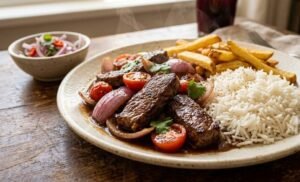
Lomo saltado is a Peruvian beef stir-fry made with thin strips of quick-cooking beef, red onion, tomatoes, soy sauce, vinegar, and garlic. The dish reflects Peru’s Chifa tradition, combining Chinese stir-frying techniques with Peruvian ingredients and the familiar pairing of fried potatoes and white rice.
Why it is beginner-friendly: Most of the work involves slicing and measuring the ingredients before cooking. Once the pan is hot, the beef and vegetables cook in only a few minutes.
Key ingredients: Beef strips, red onion, tomatoes, soy sauce, mild vinegar, garlic, potatoes, and cooked white rice.
Difficulty: Easy
Estimated time: About 35 minutes
Helpful substitution: Sirloin and tenderloin cook quickly and stay tender, but flank steak also works well when sliced thinly across the grain.
What to serve with it: Lomo saltado is commonly served with white rice and fried potatoes. Salsa criolla adds a crisp, acidic contrast to the rich beef and savory sauce.
Practical cooking tip: Use a large, heavy skillet and let it become very hot before adding the beef. Cook the meat in small batches so it browns instead of steaming.
Dietary note: For a gluten-free version, use certified gluten-free tamari and check the labels on all bottled seasonings.
2. Pollo Saltado
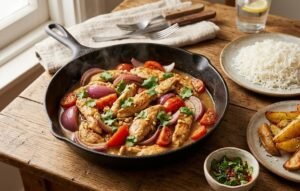
Pollo saltado is a Peruvian chicken stir-fry made with browned chicken, red onion, tomatoes, soy sauce, vinegar, and garlic. It has a savory, lightly tangy flavor similar to lomo saltado, but chicken makes it an affordable and familiar choice for cooks trying Peruvian food for the first time.
Why it is beginner-friendly: The dish uses a straightforward stir-fry method and can be prepared in a large skillet. A wok is helpful for high-heat cooking, but it is not required.
Key ingredients: Boneless chicken, red onion, tomatoes, soy sauce, mild vinegar, garlic, potatoes, and white rice.
Difficulty: Easy
Estimated time: About 30 minutes
Helpful substitution: Boneless chicken thighs remain juicy and are more forgiving, while chicken breast works well when cut into even strips and cooked just until done.
What to serve with it: Serve pollo saltado with steamed white rice, fried potatoes, oven-baked fries, or a combination of rice and potatoes. Salsa criolla gives the meal extra freshness and acidity.
Practical cooking tip: Add the onion and tomato near the end of cooking. They should soften around the edges while keeping some shape, texture, and freshness.
Dietary note: Certified gluten-free tamari can replace regular soy sauce. Roasted potatoes can also be used when you prefer a lighter alternative to fried potatoes.
1. Lomo Saltado Peruvian Beef Stir-Fry
Lomo saltado is a quick Peruvian beef stir-fry made with thin strips of beef, red onion, tomato, garlic, soy sauce, and vinegar. It is commonly served with crisp fries and white rice, creating a filling meal with savory, tangy flavors and plenty of contrast in texture.
Why it is beginner-friendly: Most of the work is done before the pan reaches the stove. Once the beef and vegetables are sliced and the sauce is mixed, the dish cooks quickly over high heat.
Key ingredients: Beef strips, red onion, tomato, garlic, soy sauce, red wine vinegar, fries, and cooked white rice.
Difficulty: Easy | Estimated time: About 35 minutes
Helpful substitution: Sirloin is a dependable choice, but tenderloin, flank steak, or flat iron steak can also work. Slice firmer cuts thinly across the grain to help them stay tender.
What to serve with it: Serve lomo saltado with white rice and crisp fries. Salsa criolla adds a fresh, acidic contrast to the beef and savory pan sauce.
Practical cooking tip: Heat a large, heavy skillet thoroughly and cook the beef in small batches. Avoid overcrowding the pan, or the meat will release moisture and steam instead of browning.
Have extra beef strips? Use them in these quick beef dinners for another practical weeknight meal.
Dietary note: For a gluten-free version, replace regular soy sauce with certified gluten-free tamari and check all bottled seasonings.
2. Pollo Saltado Quick Peruvian Chicken Stir-Fry
Pollo saltado is the chicken alternative to lomo saltado, combining browned chicken with red onion, tomato, garlic, soy sauce, and vinegar. It has a similar savory and lightly tangy character, while chicken makes it an affordable choice for a quick Peruvian weeknight dinner.
Why it is beginner-friendly: The stir-fry itself cooks in one pan and takes only a short time once the ingredients are prepared. A large skillet is enough, so you do not need a wok or other special equipment.
Key ingredients: Boneless chicken, red onion, tomato, garlic, soy sauce, red wine vinegar, potatoes, and cooked white rice.
Difficulty: Easy | Estimated time: About 30 minutes
Helpful substitution: Boneless chicken thighs stay juicy and are more forgiving than chicken breast. Chicken breast also works well when cut into even strips and cooked only until the center is done.
What to serve with it: Pair pollo saltado with steamed rice, crisp fries, roasted potatoes, or a simple salad. Rice and potatoes can also be served together for a more traditional-style plate.
Practical cooking tip: Add the red onion and tomato near the end so they soften around the edges without becoming mushy. For a flexible home-style variation, you can include bell pepper or another quick-cooking vegetable, although the flavor will differ from a more traditional pollo saltado.
For another fast skillet meal, try this easy chicken stir-fry with green beans.
Dietary note: Use certified gluten-free tamari when needed. Roasted potatoes are a practical alternative to fried potatoes.
3. Ají de Gallina Creamy Peruvian Chicken
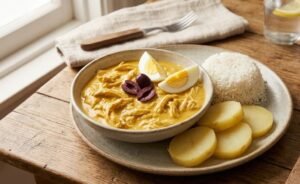
Ají de gallina is a comforting Peruvian chicken dish made with shredded chicken in a thick, creamy sauce flavored with ají amarillo. Bread or plain crackers are blended with milk and stock to give the sauce its signature texture, while the chile adds gentle heat, warm color, and a distinctive fruity flavor.
Why it is beginner-friendly: This recipe works especially well with cooked or leftover chicken, so much of the preparation is already done. The remaining steps involve blending the sauce and simmering it gently until smooth and thick.
Key ingredients: Shredded chicken, ají amarillo paste, onion, garlic, milk, bread or crackers, chicken stock, and optional walnuts or pecans.
Difficulty: Easy to moderate | Estimated time: About 45 minutes with cooked chicken, or up to 60 minutes when starting with raw chicken
Helpful substitution: Rotisserie chicken can replace freshly poached chicken. If ají amarillo paste is unavailable, blend yellow bell pepper with a small amount of mild chile, but keep in mind that no substitute fully reproduces the fruity, floral flavor of ají amarillo.
What to serve with it: Ají de gallina is commonly served with white rice, boiled potatoes, black olives, and slices of hard-boiled egg.
Practical cooking tip: Keep the heat low after adding the bread mixture and dairy. Stir often and add a small amount of stock if the sauce becomes thicker than you prefer.
Dietary note: Nuts are optional in many versions. For a nut-free preparation, leave them out and use a little extra bread or crackers for body. Check bread, crackers, stock, and other packaged ingredients carefully when cooking for someone with a severe allergy.
4. Peruvian Roast Chicken with Ají Verde
This Peruvian roast chicken takes inspiration from pollo a la brasa, Peru’s deeply seasoned rotisserie chicken. A marinade of garlic, cumin, paprika, soy sauce, vinegar, lime, and black pepper gives the chicken rich savory flavor, while ají verde provides a cool, herbal contrast.
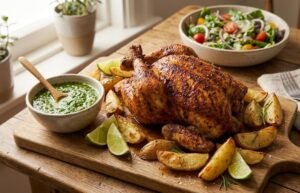
Ají verde is a bright green sauce commonly made with cilantro, chile peppers, lime, and a creamy base such as mayonnaise or yogurt. Its fresh, lightly spicy flavor works especially well with roasted chicken, potatoes, rice, and grilled vegetables.
Why it is beginner-friendly: The marinade does most of the flavor-building, and the chicken can be roasted in a regular oven when a grill or rotisserie is unavailable. A whole chicken serves several people, making it a practical choice for family dinners, weekend meals, or casual gatherings.
Key ingredients: Whole chicken or bone-in chicken pieces, garlic, cumin, paprika, black pepper, soy sauce, vinegar, lime, oil, cilantro, jalapeño or ají amarillo, and mayonnaise or yogurt for the green sauce.
Difficulty: Easy to moderate | Estimated time: About 1 hour 30 minutes, plus marinating time
Helpful substitution: Bone-in thighs or drumsticks are easier to handle than a whole chicken and often cook more evenly. Greek yogurt can replace part of the mayonnaise in the ají verde, although the finished sauce will be tangier and less rich.
What to serve with it: Serve with roasted potatoes, white rice, corn, salad, or grilled vegetables. Extra ají verde can also be spooned over vegetables or used in sandwiches the next day.
Practical cooking tip: Pat the chicken dry before roasting so the skin browns more effectively. In the oven, use a rack or elevated roasting tray; on the grill, cook over indirect heat before moving the chicken briefly over higher heat to crisp the skin.
For more family-friendly chicken dinner recipes, browse the collection for additional weeknight and weekend meal ideas.
Dietary note: Use certified gluten-free tamari in place of regular soy sauce when needed, and check the labels on mayonnaise, yogurt, and bottled seasonings.
5. Arroz con Pollo Peruano Peruvian Chicken and Cilantro Rice
Arroz con pollo Peruano is one of Peru’s most popular comfort foods, combining chicken pieces, green cilantro rice, peas, carrots, and a flavorful broth in a single meal. The blended cilantro mixture gives the rice its signature color and fresh herbal flavor, creating a dish that is both hearty and aromatic.
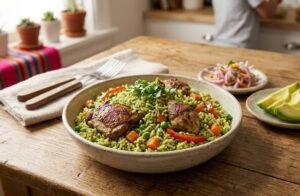
Why it is beginner-friendly: Once the cilantro mixture is prepared, most of the cooking happens in a single pot. The recipe is straightforward, feeds several people, and works well for family dinners, meal prep, or leftovers.
Key ingredients: Chicken pieces, rice, fresh cilantro, onion, garlic, peas, carrots, chicken stock, and optional ají amarillo paste.
Difficulty: Easy to moderate | Estimated time: About 55–65 minutes
Helpful substitution: Bone-in chicken adds flavor to the rice, but boneless chicken thighs are a practical alternative that cooks more quickly. Frozen peas and carrots also work well when fresh vegetables are unavailable.
What to serve with it: Arroz con pollo is commonly served with salsa criolla, sliced avocado, or a fresh tomato and onion salad. The bright flavors help balance the richness of the rice and chicken.
Practical cooking tip: To prevent mushy rice, use the correct amount of cooking liquid, keep the lid closed once the rice starts simmering, and avoid stirring repeatedly. Too much liquid or frequent stirring can soften the grains and affect the final texture.
For more comforting rice dishes, explore these easy lunch and dinner recipes.
Dietary note: The dish is naturally dairy-free. If you need a gluten-free version, verify that your stock and seasonings do not contain gluten-based additives.
6. Tacu Tacu Crispy Peruvian Rice and Beans
Tacu tacu is a classic Peruvian rice and bean dish that transforms leftovers into a satisfying meal. Cooked rice and beans are combined with sautéed onion, garlic, and seasonings, then pressed into a pan and cooked until a crisp golden crust forms on the outside while the center stays soft and creamy.
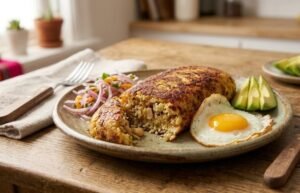
Why it is beginner-friendly: Because the rice and beans are already cooked, the recipe focuses on simple mixing and pan-frying techniques. It is also flexible, affordable, and a great way to reduce food waste.
Key ingredients: Leftover rice, cooked beans, onion, garlic, oil, salt, pepper, and optional ají amarillo or ají panca paste.
Difficulty: Easy | Estimated time: About 25 minutes
Helpful substitution: Canary beans are traditional, but pinto beans, black beans, or other creamy beans work well. If using wetter beans, drain them thoroughly before mixing so the tacu tacu holds its shape more easily.
What to serve with it: Tacu tacu pairs well with salsa criolla, avocado, grilled vegetables, or a fried egg. It can also be served alongside seafood or meat, although it is often enjoyed as a vegetarian meal.
Practical cooking tip: Cold rice works best because it contains less surface moisture. After pressing the mixture into the pan, allow it to cook undisturbed until the bottom develops a crisp crust before flipping or turning.
Tacu tacu is a budget-friendly recipe that proves simple pantry ingredients can become a flavorful meal. Browse more rice dishes for additional ways to use rice in everyday cooking.
Dietary note: For a vegetarian or vegan version, use vegetable oil and make sure the beans were not cooked with pork, bacon, or other animal-based ingredients.
7. Tallarines Verdes Peruvian Green Pasta
Tallarines verdes is a Peruvian green pasta made with a creamy herb sauce that often combines basil, spinach, milk, garlic, and queso fresco. The dish was influenced by Italian pesto-style pasta but developed its own Peruvian character through the use of dairy and a softer, smoother sauce.
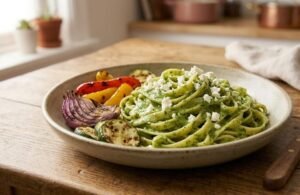
Why it is beginner-friendly: The sauce can be blended in minutes while the pasta cooks in a separate pot. It is a practical weeknight option for cooks who want a flavorful meal without complicated preparation or a long ingredient list.
Key ingredients: Long pasta, fresh basil, spinach, queso fresco or another mild cheese, milk, garlic, oil, salt, and pepper.
Difficulty: Easy | Estimated time: About 30 minutes
Helpful substitution: Farmer’s cheese or panela can replace queso fresco. A small amount of mild feta also works, but it will make the sauce noticeably saltier and tangier.
What to serve with it: Tallarines verdes can be served as a vegetarian main dish or paired with a fried egg, roasted vegetables, grilled chicken, steak, or a simple salad.
Practical cooking tip: Warm the sauce gently rather than boiling it, since high heat can dull the green color and cause the dairy to separate. Reserve a little pasta water and add it gradually if the sauce becomes too thick.
For more quick meals made with simple ingredients, explore these easy pasta dinners for busy weeknights.
Dietary note: The dish is vegetarian when made with cheese that does not contain animal rennet. It contains dairy and gluten unless suitable alternatives are used.
8. Papa a la Huancaína Potatoes with Creamy Peruvian Chile Sauce
Papa a la Huancaína is a well-known Peruvian starter made with slices of boiled potato covered in a creamy sauce of queso fresco, milk, ají amarillo, and crackers or bread. It is usually served cool or at room temperature over lettuce, with black olives and hard-boiled eggs as traditional accompaniments.
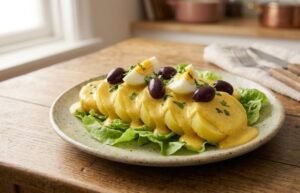
Why it is beginner-friendly: The potatoes require only basic boiling, while the sauce is prepared in a blender. The dish can also be made ahead, which makes it convenient for family meals, gatherings, or menus with several courses.
Key ingredients: Boiled potatoes, ají amarillo paste, queso fresco, milk, crackers or bread, oil, salt, lettuce, black olives, and hard-boiled eggs.
Difficulty: Easy | Estimated time: About 35 minutes active time, plus cooling
Helpful substitution: Farmer’s cheese or panela can replace queso fresco. If ají amarillo paste is unavailable, blend yellow bell pepper with a small amount of mild chile, although no substitute fully reproduces its fruity flavor.
What to serve with it: Serve papa a la Huancaína as a starter or side dish with roast chicken, grilled meat, rice dishes, or other Peruvian mains.
Practical cooking tip: Add the milk gradually while blending. The finished sauce should coat the potatoes without running off the plate; if it is too thick, add milk one spoonful at a time, and if it is too thin, blend in a little more cracker or bread.
Dietary note: The sauce contains dairy and usually gluten. Hard-boiled eggs are a traditional garnish rather than part of the sauce, so they may be omitted when needed.
9. Causa Rellena Layered Peruvian Potato Dish
Causa rellena is a chilled Peruvian potato dish made with firm layers of smooth, seasoned potato and a creamy filling such as chicken or tuna. Lime juice and ají amarillo give the potato mixture a bright, lightly spicy flavor, while avocado adds a creamy layer that softens the citrus and chile notes.
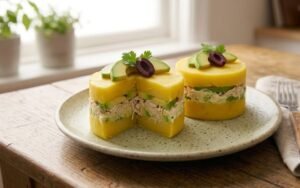
Why it is beginner-friendly: Each part can be prepared separately and assembled after cooling. It is also a useful make-ahead Peruvian dish because the finished causa holds well in the refrigerator before serving.
Key ingredients: Yellow potatoes, ají amarillo paste, lime juice, oil, salt, cooked chicken or canned tuna, mayonnaise, and avocado.
Difficulty: Easy to moderate | Estimated time: About 50 minutes active time, plus at least 30 minutes of chilling
Helpful substitution: Yukon Gold potatoes are a practical alternative when Peruvian yellow potatoes are unavailable because they have a naturally buttery texture and hold their shape well. The filling can be made with shredded chicken, canned tuna, or a seasoned vegetarian mixture.
What to serve with it: Serve causa rellena as a cold starter, light lunch, or side dish with lettuce, black olives, hard-boiled eggs, or a fresh salad.
Practical cooking tip: The potato mixture should be smooth but firm enough to hold a clean layer. Avoid adding milk or butter, which can make it too soft. A ramekin, biscuit cutter, or ring mold works well for individual portions. A clean food can may also be used, but only when both edges are completely smooth, safe, and free of sharp metal.
Dietary note: Use tuna for a pescatarian version. For a vegetarian option, fill the causa with avocado, seasoned vegetables, beans, or a creamy egg-free mixture.
10. Papa Rellena Peruvian Stuffed Potato
Papa rellena is a popular Peruvian stuffed potato made by enclosing a savory ground beef filling inside a seasoned mashed potato shell. The shaped potato is lightly coated and cooked until the outside turns golden while the filling remains moist and flavorful.
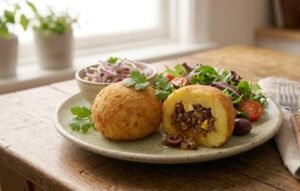
Why it is beginner-friendly: The ingredients are familiar, but shaping and sealing the potatoes take more care than the simpler recipes in this collection. Chilling the potato mixture and filling before assembly makes both easier to handle and reduces the chance of splitting.
Key ingredients: Dry mashed potatoes, ground beef, onion, garlic, spices, and flour for coating. Many versions also include olives, raisins, or chopped hard-boiled egg in the filling.
Difficulty: Moderate | Estimated time: About 1 hour 15 minutes
Helpful substitution: Ground turkey or chicken can replace the beef, although the filling will be lighter and less rich. Lentils, mushrooms, or a combination of both can be used for a vegetarian variation.
What to serve with it: Papa rellena is commonly served with salsa criolla, ají sauce, avocado, or a crisp salad. It works as an appetizer, snack, or light meal.
Practical cooking tip: Use potatoes with a dry, floury texture and mash them without adding excess milk or butter. Chill both the potato mixture and the cooked filling before shaping, and seal every opening carefully so the filling does not escape during cooking.
Cooking method note: Shallow-frying gives papa rellena its more traditional crisp and evenly browned crust. Air-frying uses less oil, but the exterior may be lighter, drier, and less uniformly crisp. Lightly brushing or spraying the surface with oil can improve browning, although the result will still differ from frying.
Dietary note: Some versions use egg in the filling or coating, while flour is commonly used for dredging. Gluten-free flour can be substituted, but the final crust may differ slightly.
11. Anticuchos de Pollo Peruvian Chicken Skewers
Anticuchos de pollo are Peruvian-style chicken skewers marinated with ají panca, garlic, vinegar, cumin, oil, and savory seasonings. In Peru, classic anticuchos are commonly made with beef heart, while this chicken version follows the same general skewer-and-marinade style with a milder, more familiar protein.

Why it is beginner-friendly: Chicken is easy to cut, marinate, and cook, and the skewers work well on an outdoor grill, under the oven broiler, or on a stovetop grill pan. They can also be prepared ahead, making them practical for parties, cookouts, or relaxed family dinners.
Key ingredients: Boneless chicken thighs or chicken breast, ají panca paste, garlic, vinegar, cumin, oil, salt, and black pepper.
Difficulty: Easy | Estimated time: About 35 minutes, plus at least 30 minutes of marinating
Helpful substitution: If ají panca paste is unavailable, combine mild paprika with a small amount of ancho chile powder. This will not reproduce the exact fruity, earthy flavor of ají panca, but it gives the marinade useful color and gentle chile depth.
What to serve with it: Serve anticuchos de pollo with boiled or roasted potatoes, corn, salsa criolla, ají sauce, or a crisp salad.
Practical cooking tip: Cut the chicken into evenly sized pieces so they cook at the same rate. Boneless thighs stay juicier, while breast meat usually needs a shorter cooking time. Cook until the thickest piece reaches 165°F or 74°C.
Cooking method note: Grill over medium-high heat for light charring, broil on a lined tray, or cook on a hot grill pan. If using wooden skewers, soak them in water first to reduce scorching.
Dietary note: The skewers are naturally dairy-free and can be gluten-free when the chile paste, vinegar, and seasonings contain no gluten-based additives.
12. Salsa Criolla Peruvian Red Onion and Lime Relish
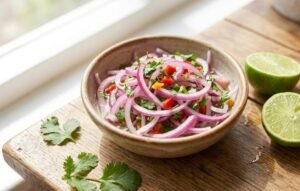
Salsa criolla is a fresh Peruvian onion relish often made with thinly sliced red onions, lime juice, cilantro, chile, and salt. Its sharp, crisp flavor helps balance rich foods such as papa rellena, tacu tacu, grilled meats, sandwiches, beans, and rice dishes.
Why it is beginner-friendly: Salsa criolla requires no cooking and can be prepared in about 15 minutes. A brief cold-water soak softens the harsh edge of the onion while preserving its crunch.
Key ingredients: Red onion, fresh lime juice, cilantro, sliced chile, salt, and optional oil.
Difficulty: Very easy | Estimated time: About 15 minutes
How to Make Salsa Criolla
Thinly slice the red onion and soak it in cold water for 5 to 10 minutes. Drain it very well, then toss it with lime juice, chopped cilantro, sliced chile, and salt. Let the mixture rest for another 5 to 10 minutes before serving so the flavors can settle.
Helpful substitution: Ají amarillo or ají limo gives the relish a more distinctly Peruvian chile flavor. Ají limo can be quite hot, so use it sparingly. Jalapeño or another mild fresh chile is a practical alternative.
What to serve with it: Pair salsa criolla with lomo saltado, anticuchos, papa rellena, tacu tacu, roast chicken, grilled fish, beans, or sandwiches.
Practical cooking tip: Keep the soak brief and drain the onions thoroughly. Too much water can dilute the lime juice and leave the salsa under-seasoned.
Dietary note: Salsa criolla is naturally vegan, dairy-free, and gluten-free when made with basic fresh ingredients.
13. Peruvian Quinoa Soup Hearty Vegetable and Quinoa Soup
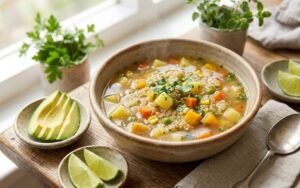
Peruvian quinoa soup is a nourishing, broth-based dish that reflects the long history of quinoa in Andean cooking. The soup typically combines quinoa with potatoes, vegetables, herbs, and simple seasonings to create a satisfying meal that feels both comforting and wholesome. Recipes vary across households, but ingredients such as carrots, peas, corn, squash, onion, garlic, cilantro, and parsley are commonly used.
Why it is beginner-friendly: This recipe relies on straightforward cooking techniques. Most of the preparation involves chopping vegetables and allowing the ingredients to simmer together, making it an approachable option for new cooks.
Key ingredients: Quinoa, potatoes, onion, garlic, carrots, peas or corn, fresh herbs, broth, salt, pepper, and optional chile.
Difficulty: Easy | Estimated time: About 45 minutes
Helpful substitution: Use vegetable broth for a meat-free version or chicken broth for a more savory base. Sweet potatoes, green beans, spinach, or squash can easily replace some of the vegetables depending on the season and what you have available.
What to serve with it: Serve with lime wedges, sliced avocado, crusty bread, or a simple green salad. If you enjoy cooking more meat-free dishes, browse these vegetarian meal ideas for additional inspiration.
Practical cooking tip: Rinse the quinoa thoroughly in a fine-mesh strainer before adding it to the soup. This helps remove much of the natural coating that can leave a slightly bitter taste after cooking.
Freezer guidance: Allow the soup to cool completely before transferring it to airtight containers. Quinoa freezes well, although it will continue to absorb liquid during storage, which can make the soup thicker after reheating. Add extra broth as needed when warming it. Potatoes may soften after freezing, so for the best texture, some cooks prefer adding freshly cooked potatoes when serving reheated soup.
Dietary note: The soup can be vegetarian, vegan, dairy-free, and gluten-free when prepared with suitable broth and seasonings.
14. Peruvian Alfajores Tender Dulce de Leche Sandwich Cookies

Peruvian alfajores are delicate sandwich cookies filled with dulce de leche and finished with a generous dusting of powdered sugar. In many Peruvian recipes, cornstarch plays an important role in creating the cookies’ signature tender, crumbly texture, which sets them apart from firmer sandwich cookies.
Why it is beginner-friendly: The ingredients are familiar, the dough is straightforward to prepare, and the cookies are assembled only after cooling. Chilling the dough before rolling helps prevent sticking and makes shaping much easier.
Key ingredients: Flour, cornstarch, butter, powdered sugar, egg yolks, vanilla, dulce de leche, and additional powdered sugar for finishing.
Difficulty: Easy to moderate | Estimated time: About 1 hour, including chilling and cooling
Helpful substitution: Store-bought dulce de leche is convenient and reliable. If necessary, use a thick caramel spread that is firm enough to stay between the cookies without running out when pressed together.
What to serve with it: Alfajores pair beautifully with coffee, tea, hot chocolate, or milk. They are also popular for celebrations, holiday trays, afternoon gatherings, and homemade gift boxes. Explore more homemade cookie recipes if you enjoy baking classic treats at home.
Practical cooking tip: Chill the dough before rolling and avoid overworking it. When baking, remove the cookies while they are still pale on top with only light coloring underneath. Overbaking can reduce the soft, delicate texture that makes alfajores special.
Storage: Store assembled alfajores in an airtight container at cool room temperature for up to two days or refrigerate them for several additional days. The cookies often become softer after resting with the filling. If refrigerated, allow them to sit at room temperature briefly before serving. Powdered sugar is best dusted on shortly before serving, as it can absorb moisture during storage.
Dietary note: Traditional alfajores contain dairy, eggs, and gluten. Although cornstarch is naturally gluten-free, most recipes still include wheat flour.
15. Chicha Morada Peruvian Purple Corn Drink

Chicha morada is a traditional Peruvian drink made by simmering purple corn with pineapple peel or fruit, cinnamon, and cloves. After straining, the deep purple liquid is sweetened, brightened with fresh lime juice, and chilled before serving.
Why it is beginner-friendly: The method is simple and mostly hands-off. Once the ingredients are placed in the pot, they only need time to simmer and release their color, aroma, and flavor.
Key ingredients: Dried purple corn, pineapple peel or pineapple pieces, cinnamon sticks, whole cloves, water, lime juice, and sugar.
Difficulty: Easy | Estimated time: About 1 hour, plus chilling
Helpful substitution: Apple peel or chopped apple can be added when pineapple is unavailable, although the finished flavor will be different. Purple corn has no close substitute because it provides the drink’s distinctive color and earthy, mildly fruity character.
What to serve with it: Serve chicha morada well chilled with Peruvian meals, grilled dishes, snacks, or desserts. For more refreshing non-alcoholic Latin American drinks, explore these easy Mexican beverage ideas.
Practical cooking tip: Add the lime juice after the strained drink has cooled. Prolonged cooking can weaken its fresh citrus flavor. Taste the chicha morada before adding all the sugar, since the pineapple and other fruit may already provide some natural sweetness.
Chilling and storage: Cool the drink before transferring it to the refrigerator, then chill it thoroughly for the best flavor. Store it in a covered container and stir before serving, especially if additional chopped fruit has been added.
Dietary note: Chicha morada is naturally non-alcoholic, vegan, dairy-free, and gluten-free when made with basic whole ingredients.
How to Choose Your First Peruvian Recipe
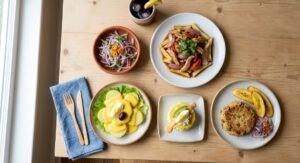
The best Peruvian recipe for a beginner depends on your available time, cooking confidence, and the type of dish you want to make. Salsa criolla is the simplest no-cook option, while pollo saltado is a better starting point when you need a complete weeknight dinner.
| Choose this recipe | Best when you want |
| Salsa criolla | A 15-minute side dish with no cooking |
| Pollo saltado | A complete dinner made with familiar ingredients |
| Papa a la Huancaína | A traditional potato dish with a blended sauce |
| Causa rellena | A make-ahead appetizer with an attractive presentation |
| Tacu tacu | A budget-friendly meal using leftover rice and beans |
Start With Salsa Criolla When You Have 15 Minutes
Salsa criolla is one of the easiest Peruvian recipes for beginners because it requires no cooking. Thinly sliced red onion is briefly soaked, drained, and mixed with lime juice, cilantro, chile, and salt.
Choose this recipe when you need a fresh side dish for grilled chicken, beans, rice, sandwiches, papa rellena, or tacu tacu. The short cold-water soak softens the onion’s sharpness without removing its crisp texture, so even a first-time cook can prepare it confidently.
Choose Pollo Saltado for a Complete Weeknight Dinner
Pollo saltado is a practical first Peruvian main dish for anyone who prefers familiar ingredients. The stir-fry combines chicken, red onion, tomato, soy sauce, and seasonings, then is commonly served with rice and fries.
Most of the cooking happens quickly once the ingredients are sliced and ready. Use a hot pan and cook the chicken in batches when necessary so it browns instead of steaming. This makes pollo saltado a good choice for busy evenings when you want a filling meal without complicated preparation.
Try Papa a la Huancaína for a Traditional Potato Dish
Papa a la Huancaína is a good beginner recipe if you want to explore a well-known Peruvian potato dish and feel comfortable using a blender. Boiled potatoes are served with a creamy sauce made from queso fresco, milk, ají amarillo, and crackers or bread.
The sauce and potatoes can be prepared ahead and served cool or at room temperature. Traditional accompaniments include lettuce, black olives, and hard-boiled eggs, making the dish suitable as a starter or side for a larger meal.
Make Causa Rellena for a Make-Ahead Appetizer
Causa rellena is a strong choice when presentation matters and you have time for careful assembly. Seasoned potato is layered with chicken, tuna, avocado, or a vegetarian filling, then chilled before serving.
This recipe requires more patience than salsa criolla or pollo saltado, but each component can be prepared separately. A lightly oiled ramekin or ring mold can help create neat individual portions without requiring a specialized mold.
Cook Tacu Tacu When You Have Leftover Rice and Beans
Tacu tacu is one of the most practical Peruvian dishes to make at home when you already have cooked rice and beans. The mixture is seasoned and pan-cooked until a crisp golden crust forms while the center remains soft.
It can become a budget-friendly vegetarian meal when prepared with vegetable oil and beans cooked without meat. Serve it with salsa criolla, avocado, grilled vegetables, or a fried egg for a more complete plate.
Which Peruvian Dish Should a Beginner Make First?
Beginners should start with salsa criolla when they want the quickest and easiest option, since it requires no cooking and takes about 15 minutes. Choose pollo saltado for a full dinner, papa a la Huancaína for a traditional potato dish, causa rellena for make-ahead entertaining, or tacu tacu for using leftover rice and beans.
How to Build an Easy Peruvian Dinner Menu
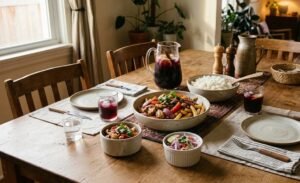
A beginner-friendly Peruvian dinner is easiest to manage when you choose one main dish, one contrasting side, and a drink or dessert that can be prepared ahead. The three menus below are practical for home cooks and balance rich, savory dishes with fresh, creamy, or lightly sweet accompaniments.
Menu 1: The Easiest Peruvian Dinner for Beginners
Serve: Pollo saltado, white rice, optional salsa criolla, and chicha morada.
This is a good first Peruvian dinner when you want familiar ingredients and a straightforward cooking method. Pollo saltado combines chicken, red onion, tomato, soy sauce, and seasonings in a quick stir-fry. White rice makes it more filling, while a small serving of salsa criolla adds fresh lime flavor and crisp onion.
If your pollo saltado recipe also includes fries, serve a smaller portion of rice so the plate does not feel too heavy.
Prepare the chicha morada several hours ahead, since it needs time to simmer, cool, and chill. The salsa criolla can also be made shortly before dinner. Cook the rice next, then prepare the pollo saltado last so the chicken and vegetables reach the table hot.
Planning time: Allow about 45 to 60 minutes for the meal itself when the chicha morada is already chilled.
Menu 2: A Family-Style Peruvian Dinner
Serve: Peruvian roast chicken, papa a la Huancaína, a lime-dressed salad, and alfajores.
This menu works well for a weekend dinner, family gathering, or relaxed meal with guests. The roast chicken provides the main centerpiece, while papa a la Huancaína brings a cool, creamy contrast. A simple salad made with lettuce, tomato, cucumber, or avocado and a light lime dressing helps balance the richer dishes.
Papa a la Huancaína can be served as a starter or placed on the table as a cold side. The potatoes and sauce may be prepared ahead and refrigerated separately, then assembled before serving.
Alfajores are also a convenient make-ahead dessert. They can be baked and filled earlier in the day, leaving only the chicken and salad to finish near dinner time. For more practical planning ideas, explore these family meal ideas.
Menu 3: A Vegetarian Peruvian-Inspired Dinner
Serve: Peruvian quinoa soup, tacu tacu, salsa criolla, and chicha morada.
Begin with a small bowl of Peruvian quinoa soup, then serve tacu tacu as the main course. The rice-and-bean cake is hearty and satisfying, while salsa criolla adds acidity, freshness, and a little chile heat.
Because both quinoa soup and tacu tacu are filling, keep the soup portion modest. This creates a better balance and leaves room for the main dish.
For a vegetarian menu, use vegetable broth and beans cooked without meat or animal fat. For a vegan version, also avoid butter, dairy, eggs, and animal-based garnishes. Chicha morada is a natural choice for the drink because it can be prepared in advance and served well chilled.
Which Peruvian Dinner Menu Is Best for Beginners?
The pollo saltado menu is the easiest starting point when the chicha morada is made ahead. Choose the roast chicken menu for family-style entertaining, or the tacu tacu menu when you want a hearty vegetarian meal with practical make-ahead components.
Beginner Mistakes to Avoid When Cooking Peruvian Food

Many easy Peruvian recipes use straightforward ingredients, but the final result often depends on heat, moisture, timing, and realistic substitutions. Avoiding the following mistakes will help you achieve better flavor and texture when cooking Peruvian food at home.
Overcrowding the Pan When Making Saltado
A good saltado needs high heat and enough room for the meat and vegetables to brown. When the pan is overcrowded, its temperature drops and released moisture causes the ingredients to steam instead.
Prepare and slice everything before you begin because the cooking moves quickly. Sear the chicken or beef in batches when necessary, then return it to the pan with the onion, tomato, and sauce. This keeps the meat browned and prevents the vegetables from becoming overly soft.
Treating Every Peruvian Chile as Interchangeable
Ají amarillo, ají panca, and ají limo differ in heat, aroma, color, and flavor. Ají amarillo is fruity with moderate heat, ají panca is darker and relatively mild, and ají limo is generally hotter and more aromatic.
When the original chile is unavailable, choose a substitute based on its purpose in the recipe. A replacement may provide suitable heat or color, but it will not reproduce the dish exactly, so begin with a modest amount and adjust after tasting.
Adding Too Much Liquid to Rice
Too much liquid can leave rice soft, sticky, or waterlogged. The correct ratio depends on the type of rice, whether it has been rinsed, and the cooking method, so use the package directions as a starting point.
Keep the pot covered while the rice cooks because repeatedly lifting the lid releases steam. Once the liquid has been absorbed, remove the pot from the heat and let the rice rest for several minutes before fluffing it gently with a fork.
Shaping Potatoes Before They Have Cooled
Warm potatoes hold more steam and can feel too soft or sticky to handle. For papa rellena, this can cause the potato shell to split around the filling. For causa rellena, it can make the layers difficult to shape cleanly.
Let the cooked potatoes cool before seasoning or assembling the dish. If the mixture remains loose, chill it briefly rather than immediately adding flour, which may make the finished potatoes heavy or dense.
Expecting Substitutions to Taste Exactly the Same
Ingredient substitutions make Peruvian recipes more accessible, but they usually change the flavor, color, texture, or heat level. Paprika, for example, can add red color when ají panca is unavailable, but it does not have the same earthy chile flavor.
A useful substitution should explain both what works and what changes. This helps home cooks choose ingredients confidently without presenting the adapted result as identical to the traditional dish.
Assuming Lime Juice Makes Raw Ceviche Fully Safe
If you later prepare ceviche, remember that citrus juice changes the fish’s color and texture but does not make raw seafood equivalent to fully cooked fish. The CDC classifies raw or undercooked ceviche as a riskier seafood choice, while FDA guidance notes that ceviche has been associated with human parasite infections.
Children under five, pregnant people, adults aged 65 and older, and people with weakened immune systems should choose thoroughly cooked seafood instead of raw or undercooked ceviche. Fish cooked to an internal temperature of 145°F, or 63°C, is the safer option.
Most beginner problems can be prevented by controlling the heat, measuring liquids carefully, allowing ingredients to cool, and understanding how substitutions affect the finished dish.
Frequently Asked Questions
What Is the Easiest Peruvian Dish to Make?
Salsa criolla is one of the easiest Peruvian recipes for beginners because it requires no cooking and can be prepared in about 15 minutes. The combination of red onion, lime juice, cilantro, chile, and salt delivers plenty of flavor with very little effort. If you want a complete meal rather than a side dish, pollo saltado is often the easiest place to start because it uses familiar ingredients and straightforward cooking techniques.
What Is the Most Popular Peruvian Dish?
There is no single dish that everyone agrees is Peru’s most popular food. Ceviche is internationally famous and is often associated with Peruvian cuisine, but lomo saltado, pollo a la brasa, and ají de gallina are also among the country’s best-known dishes. Popularity varies by region, family traditions, and personal preference, so it is more accurate to view these as some of Peru’s most widely enjoyed foods.
What Ingredients Are Common in Peruvian Cooking?
Many Peruvian recipes are built around everyday ingredients such as potatoes, corn, rice, quinoa, onions, garlic, lime, cilantro, beans, and ají peppers. Depending on the region, you may also find seafood, chicken, beef, fresh cheese, and local herbs. These ingredients reflect the mix of Indigenous, Spanish, African, Chinese, and Japanese influences that have shaped modern Peruvian cuisine.
Is Peruvian Food Very Spicy?
Not necessarily. Peruvian food is usually known more for its flavor than extreme heat. Ají peppers add color, aroma, fruitiness, and varying levels of spice. Ají amarillo typically provides moderate warmth, while ají panca is milder and often used for depth of flavor. Ají limo is generally hotter, though the heat level can vary. If you are sensitive to spice, simply reduce the amount used or serve chile-based sauces on the side.
Can I Make Peruvian Food Without Ají Amarillo?
Yes, although the finished dish will taste different from the original version. If fresh ají amarillo is unavailable, ají amarillo paste is usually the closest practical alternative. For home cooks who cannot find either option, yellow bell pepper can provide color and mild sweetness, while a small amount of jalapeño or another fruity chile can add heat. The result will still be enjoyable, but it will not exactly replicate the flavor of ají amarillo.
What Is a Good Peruvian Dinner for Beginners?
Pollo saltado is one of the best Peruvian dinners for beginners because it combines chicken, onions, tomatoes, and soy sauce in a quick stir-fry that does not require advanced cooking skills. Serve it with white rice and salsa criolla for a balanced meal. Arroz con pollo is another beginner-friendly option, especially for families, because it is filling, comforting, and relatively easy to prepare.
Are There Vegetarian Peruvian Recipes?
Yes. Several traditional and modern Peruvian dishes can be adapted for vegetarian cooking. Tacu tacu, Peruvian quinoa soup, and meat-free causa rellena are good examples. Tallarines verdes can also be vegetarian when served without meat-based toppings. If you are cooking for vegans, check ingredients such as cheese, eggs, butter, and mayonnaise, since some traditional recipes may include them.
What Should I Serve With Peruvian Chicken?
Peruvian chicken pairs well with fries, rice, roasted potatoes, fresh salad, salsa criolla, and ají verde, a popular Peruvian green sauce. For a family-style meal, a crisp salad and a potato side dish help balance the richer flavors of the chicken. If you are serving grilled or roasted chicken, fresh accompaniments such as salsa criolla add brightness and contrast.
Can Peruvian Recipes Be Made Ahead?
Many Peruvian dishes work well for advance preparation. Causa rellena benefits from chilling before serving, while chicha morada needs time to cool and develop flavor. Huancaína sauce, ají verde, quinoa soup, and alfajores can also be prepared ahead. Saltado dishes and fried potatoes are usually best cooked shortly before serving, while roast chicken can be seasoned or marinated in advance and cooked closer to mealtime.
Final Thoughts
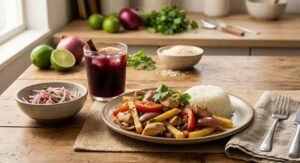
Peruvian home cooking is more approachable than many people expect. Familiar ingredients such as chicken, rice, potatoes, onions, and lime form the foundation of many classic dishes, while specialty ingredients add extra character when they are available. Even when substitutions are necessary, understanding how they affect the final flavor helps set realistic expectations.
Rather than trying to cook several dishes at once, start with one recipe that fits your schedule and confidence level. From there, you can gradually explore more of Peru’s rich culinary traditions. If you are looking for more inspiration, browse the latest beginner-friendly recipes and meal ideas on the Daily Bite Recipes homepage. Whether you prefer chicken, beef, vegetarian meals, or desserts, choose one category and make it your first Peruvian cooking project this week.