If you’re looking for a quick dinner that delivers restaurant-quality flavor without spending hours in the kitchen, this moo shu beef recipe is a perfect choice. Made with tender slices of beef, crisp vegetables, and a savory homemade sauce, it brings together everything people love about Chinese takeout in a meal that can be prepared in about 30 minutes.
Unlike many restaurant versions that can be heavy on sauce, this homemade recipe creates a better balance between beef, vegetables, and seasoning. Traditionally served with thin Mandarin-style pancakes, moo shu beef offers a combination of textures and flavors that make every bite satisfying. Whether you’re preparing a family dinner, looking for a fast weeknight meal, or simply craving something better than takeout, this easy recipe delivers authentic flavor with simple ingredients and straightforward preparation.
What Is Moo Shu Beef?

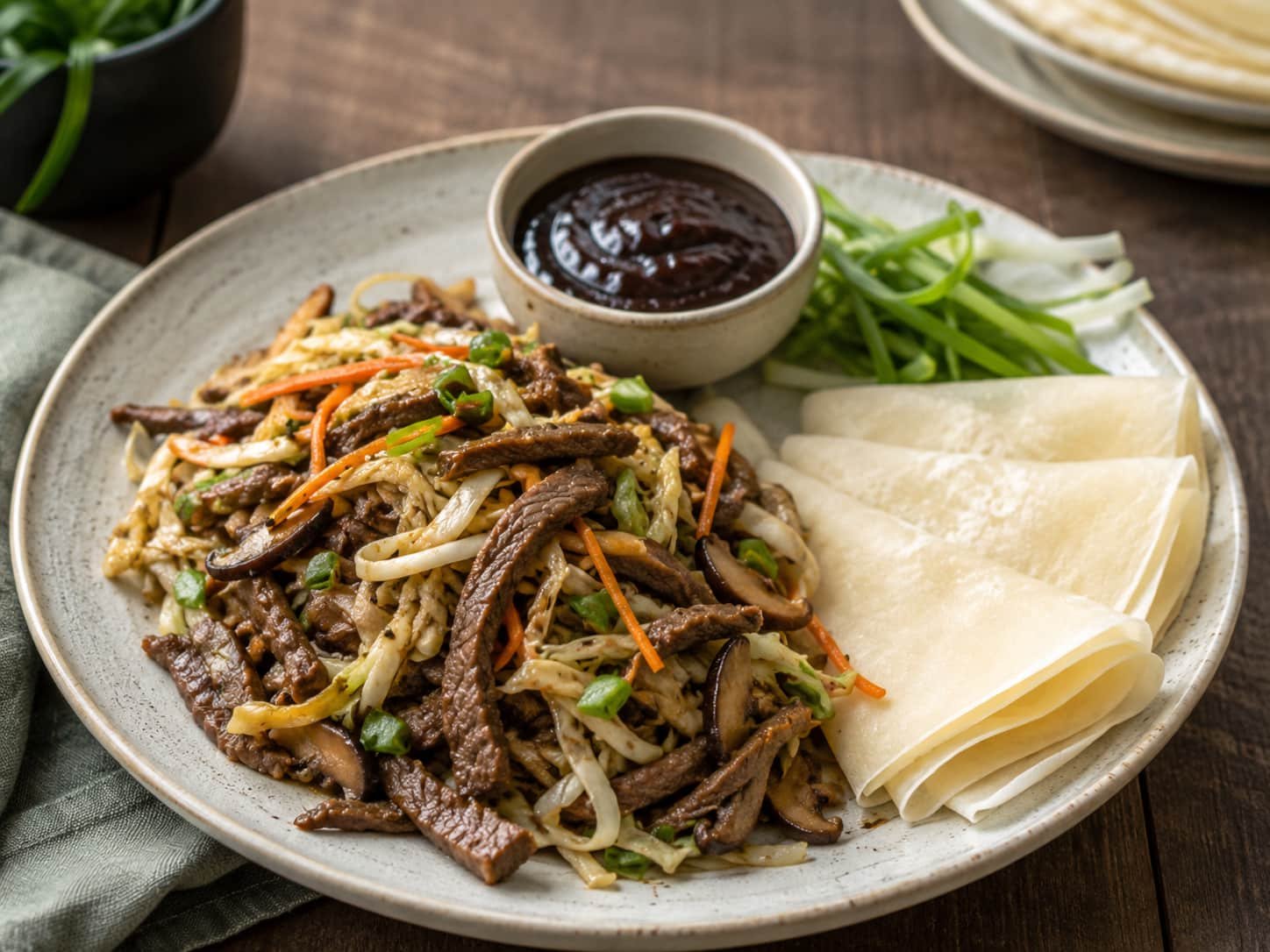
Moo shu beef is a Chinese stir-fry dish made with thinly sliced beef, fresh vegetables, and a savory sauce, traditionally served with thin Mandarin pancakes. The ingredients are cooked quickly over high heat, creating a meal that combines tender beef, crisp vegetables, and rich flavor in every bite.
The origins of moo shu-style dishes can be traced back to northern Chinese cuisine, where stir-fried meat and vegetables were commonly served with thin pancakes. Over time, the dish became popular in Chinese restaurants around the world, leading to several regional and restaurant-style variations. While ingredients may differ slightly, the core concept remains the same: a flavorful mixture of meat, vegetables, and sauce wrapped inside a soft pancake.
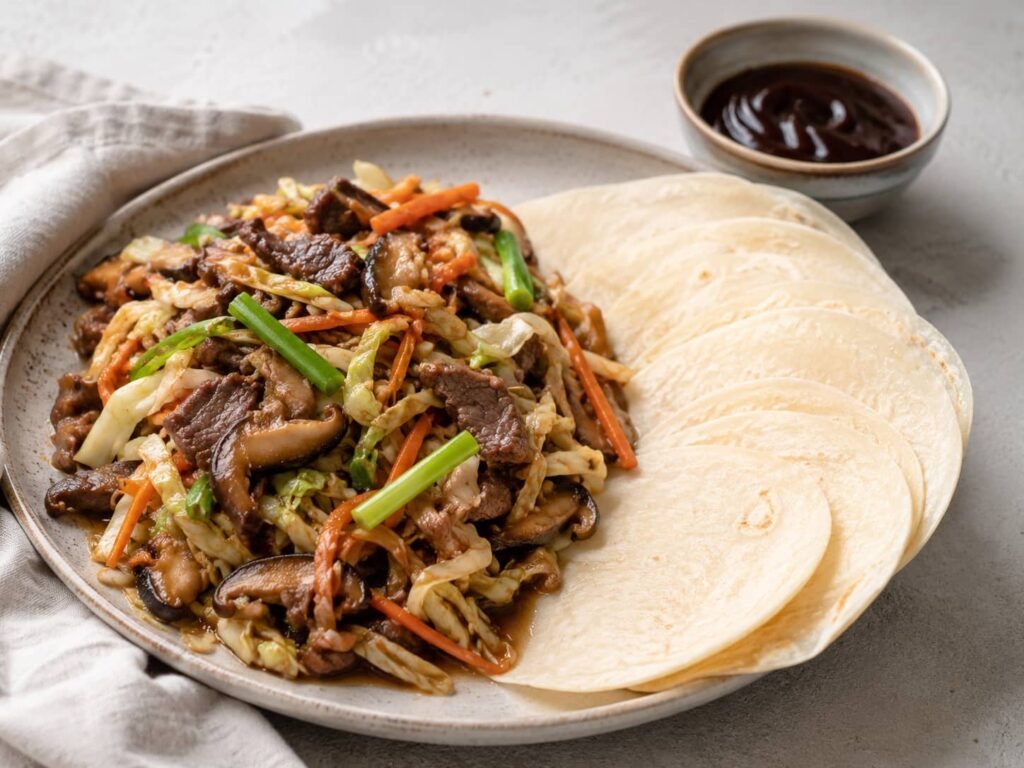
In many moo shu beef Chinese recipes, ingredients such as cabbage, carrots, mushrooms, and green onions are stir-fried alongside thin slices of beef. The dish is then coated in a sauce made with ingredients such as hoisin sauce, soy sauce, garlic, ginger, and sesame oil. The result is a combination of savory, slightly sweet, and aromatic flavors that work together beautifully.
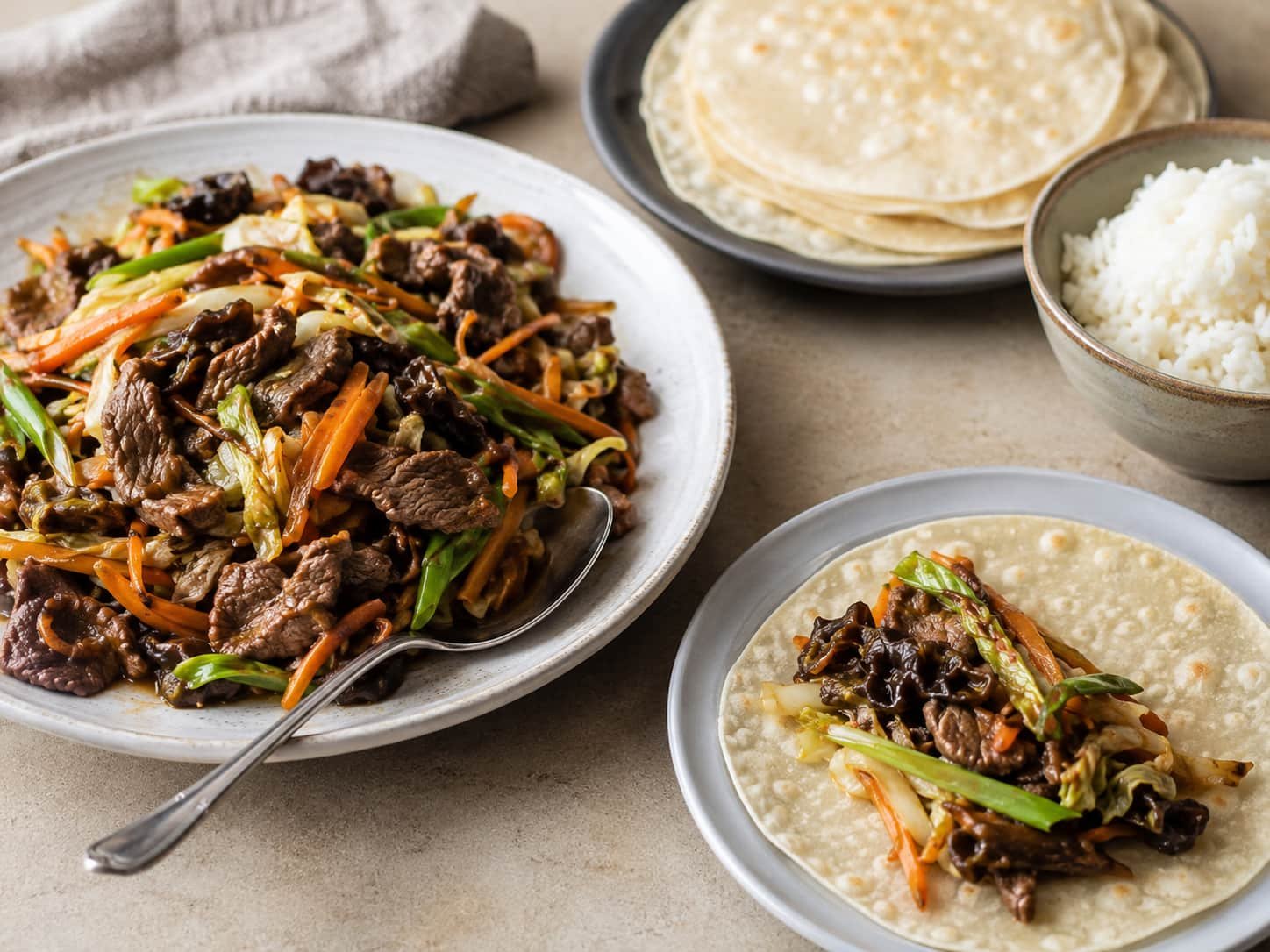
Many people ask, what is moo shu beef with pancakes? Traditionally, the beef and vegetable mixture is spooned into a thin Mandarin pancake, rolled, and eaten by hand. The pancake acts as a wrapper, similar to a soft tortilla, helping balance the rich flavors of the filling while making the dish easy to eat.
One reason moo shu beef stands out from other Chinese beef stir-fries is the way it is served. Dishes such as beef and broccoli or pepper steak are usually eaten with rice, while moo shu beef with pancakes offers a more interactive dining experience. The pancakes create a unique texture and presentation that have become one of the dish’s defining characteristics.
Today, many home cooks enjoy beef moo shu with rice, lettuce wraps, or low-carb alternatives, but the traditional pancake version remains the most recognizable. Its combination of tender beef, fresh vegetables, flavorful sauce, and soft pancakes has helped make moo shu beef a long-time favorite for both restaurant diners and home cooks alike.
Why You’ll Love This Moo Shu Beef Recipe
This moo shu beef recipe is quick, family-friendly, customizable, and packed with restaurant-style flavor. Ready in about 30 minutes meal, it combines tender beef, crisp vegetables, and a savory homemade sauce into a satisfying meal that tastes even better than many takeout versions.
A great moo shu beef recipe should do more than simply recreate a restaurant favorite. It should fit into a busy schedule, use accessible ingredients, and deliver consistent results. This recipe does exactly that, making it an excellent choice for weeknight dinners, casual family meals, and homemade takeout nights.
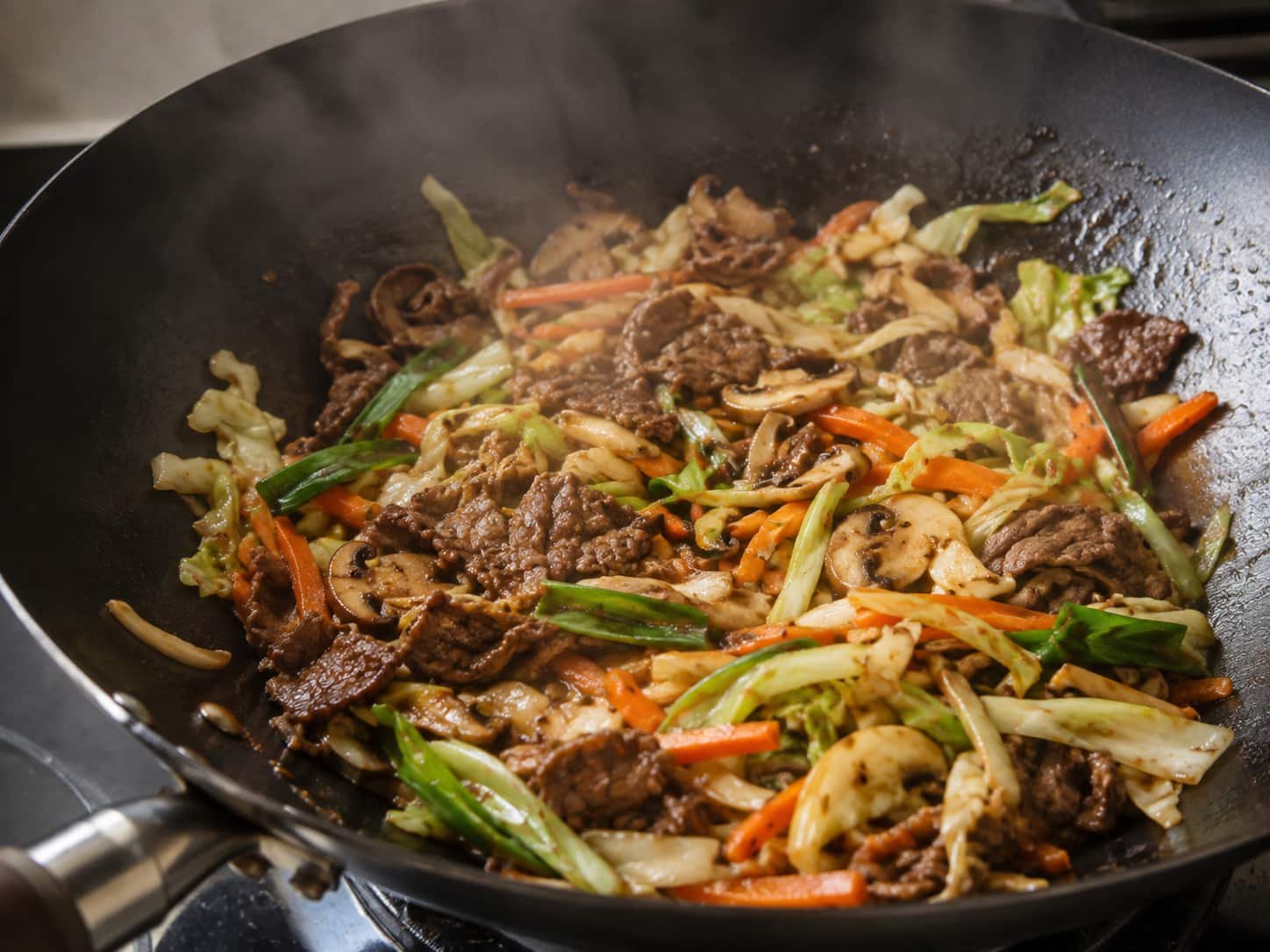
One of its biggest advantages is speed. Once the ingredients are sliced and prepared, the cooking process moves quickly. Most of the dish comes together in a hot skillet or wok in just a few minutes, making it possible to serve a complete meal in about half an hour.
This recipe is also highly adaptable. Family members can customize their own servings by adjusting the amount of beef, vegetables, and sauce they add to their pancakes. Some may prefer extra cabbage and mushrooms, while others may load their pancakes with more beef. This flexibility makes the meal enjoyable for a wide range of tastes.
Another benefit is ingredient control. Homemade moo shu beef allows you to adjust the salt level, increase the vegetables, and fine-tune the sauce to suit your preferences. Many restaurant versions can be heavy on sodium or sauce, while this version focuses on balancing flavor and freshness.
The combination of tender beef, crisp vegetables, garlic, ginger, sesame oil, and hoisin sauce creates the restaurant-style flavor people expect from a quality Chinese stir-fry. At the same time, the freshness of homemade ingredients often produces a brighter and more balanced result than takeout.
Whether you’re looking for a quick dinner, a family-friendly meal, or a homemade alternative to restaurant food, this moo shu beef recipe delivers convenience, flexibility, and satisfying flavor in every bite.
Ingredients You Need

The best moo shu beef recipe relies on a handful of carefully selected ingredients that work together to create the dish’s signature texture and flavor. The tender beef provides richness, the vegetables add freshness and crunch, and the sauce brings everything together with savory, slightly sweet, and aromatic notes.
For the best stir-fry results, it helps to prepare all ingredients before turning on the heat. Moo shu beef cooks quickly, and having everything ready allows the ingredients to cook evenly without becoming overdone.
Beef Ingredients
For the most tender results, flank steak and sirloin steak are among the best cuts for moo shu beef.
- 1 pound flank steak or sirloin steak, thinly sliced
- 1 tablespoon soy sauce
- 1 teaspoon sesame oil
- 1 teaspoon cornstarch
Flank steak is a favorite for stir-frying because it develops excellent flavor while remaining tender when sliced thinly against the grain. Sirloin steak is another reliable option, offering a slightly softer texture while still standing up well to high-heat cooking. If neither is available, skirt steak or flat iron steak can also work well.
The simple marinade plays an important role in texture. Soy sauce adds seasoning, sesame oil contributes richness, and cornstarch creates a light coating that helps lock in moisture. This technique is commonly used in Chinese cooking and helps give the beef the silky texture often associated with restaurant-style stir-fries.
Vegetables
Traditional moo shu beef includes a mixture of vegetables that add freshness, texture, and visual appeal.
- 3 cups green cabbage, thinly sliced
- 1 cup carrots, julienned
- 4 green onions, sliced
- 1 cup mushrooms, sliced
Cabbage provides the crisp texture that forms the foundation of many moo shu beef Chinese recipes. Carrots contribute natural sweetness and color, while green onions add freshness and a mild onion flavor. Mushrooms bring a savory depth that complements the beef and sauce.
Some traditional versions may also include napa cabbage or wood ear mushrooms. While these ingredients are not always easy to find, they can add an extra layer of authenticity for those who want to explore more traditional preparations.
Together, the vegetables create a balance of crunch, sweetness, and savory flavor that contrasts beautifully with the tender beef.
Sauce Ingredients
The sauce is what transforms simple ingredients into classic moo shu beef.
- 3 tablespoons hoisin sauce
- 2 tablespoons soy sauce
- 1 teaspoon sesame oil
- 3 cloves garlic, minced
- 1 tablespoon fresh ginger, grated
Each ingredient serves a purpose. Hoisin sauce contributes subtle sweetness and depth, soy sauce provides savory umami flavor, garlic and ginger create the aromatic foundation, and sesame oil adds a distinctive nutty finish.
The result is a balanced sauce that coats the beef and vegetables without overpowering their natural flavors.
For Serving
Traditionally, moo shu beef is served with thin Mandarin pancakes that are used to wrap the filling before eating.
- 8 to 10 moo shu pancakes (Mandarin pancakes)
- Optional sliced green onions for garnish
If moo shu pancakes are difficult to find, soft flour tortillas can serve as a practical substitute. While not traditional, they provide a similar wrapping experience and work surprisingly well with the savory filling.
Serving the beef inside warm pancakes creates the classic moo shu beef with pancakes experience that has made this dish a favorite in Chinese restaurants and home kitchens around the world.
How to Make Moo Shu Beef Step by Step
This moo shu beef recipe comes together in about 30 minutes, including preparation time. The secret to success is having all of your ingredients sliced, measured, and ready before cooking begins. Once the wok or skillet is hot, the entire stir-frying process moves very quickly.
Step 1: Prepare the Beef

Place the flank steak or sirloin steak in the freezer for 15 to 20 minutes before slicing. This simple step firms the meat slightly, making it easier to cut into thin, even strips.
Transfer the sliced beef to a medium bowl and add the soy sauce, sesame oil, and cornstarch. Toss until every piece is evenly coated.
Allow the beef to marinate for about 15 minutes while preparing the vegetables and sauce. The marinade not only adds flavor but also helps create the tender, velvety texture commonly found in restaurant-style Chinese stir-fries.
For the most tender results, always slice the beef against the grain. Cutting across the muscle fibers shortens them, making each bite noticeably softer and easier to chew.
Step 2: Mix the Sauce

In a small bowl, combine the hoisin sauce, soy sauce, sesame oil, minced garlic, and freshly grated ginger. Stir until the mixture is smooth and fully blended.
Preparing the sauce ahead of time is important because stir-frying happens quickly. Having the sauce ready allows you to add it at the right moment without risking overcooked beef or vegetables.
The combination of hoisin sauce, soy sauce, garlic, and ginger creates the signature sweet-savory flavor that makes moo shu beef such a popular Chinese-inspired dish.
Step 3: Cook the Vegetables
Heat a large wok or skillet over medium-high heat and add a small amount of oil.
Add the mushrooms first and cook for about 1 minute. Mushrooms release moisture as they cook, so giving them a head start helps improve their texture. Next, add the carrots and cabbage, stir-frying for another 2 to 3 minutes. Finally, add the green onions during the last minute of cooking to preserve their fresh flavor.
The vegetables should be tender-crisp rather than fully soft. Maintaining some texture creates the contrast that makes moo shu beef so enjoyable.
Once cooked, transfer the vegetables to a plate and set them aside.
Step 4: Stir-Fry the Beef

Return the skillet or wok to high heat. Add a small amount of oil if necessary, then spread the marinated beef into a single layer.
Allow the beef to sear briefly before stirring. Cook for approximately 2 to 3 minutes, stirring frequently, until the outside is lightly browned and the beef is just cooked through.
If your pan is small, cook the beef in two batches. Overcrowding lowers the cooking temperature and causes the beef to steam instead of developing the rich flavor associated with stir-frying.
The beef is ready when it is browned on the outside, tender in the center, and no longer pink.
Step 5: Combine Everything
Return the vegetables to the skillet with the cooked beef. Pour in the prepared sauce and toss everything together until evenly coated.
Cook for another 1 to 2 minutes, allowing the sauce to lightly glaze the beef and vegetables. The vegetables should remain slightly crisp while the sauce coats every ingredient without becoming thick or sticky.
At this stage, the dish should have a balance of tender beef, fresh vegetables, and a glossy, flavorful sauce.
Step 6: Warm the Pancakes and Serve
While the beef mixture finishes cooking, warm the moo shu pancakes according to the package instructions.
If using flour tortillas as a substitute, warm them briefly in a dry skillet or microwave. Warm pancakes are softer, more flexible, and less likely to tear when rolled.
To serve, spoon the moo shu beef mixture onto a pancake, roll it up, and enjoy. Garnish with additional green onions if desired.
The combination of warm pancakes, tender beef, crisp vegetables, and savory sauce creates the classic moo shu beef with pancakes experience that has made this dish a restaurant favorite for decades.
Tips for Tender Restaurant-Style Moo Shu Beef

Small techniques often make the difference between a good stir-fry and an exceptional one. These practical tips can help you achieve restaurant-style results at home.
Always slice the beef against the grain. This remains one of the most important steps for achieving tender meat. Even premium cuts can become chewy when sliced incorrectly.
Pat the beef dry before adding the marinade if it contains excess moisture. This helps the meat sear properly and encourages better browning during cooking.
Use high heat throughout the stir-frying process. A properly heated wok or skillet helps develop flavor quickly while preventing the ingredients from becoming soggy.
Avoid overcooking the beef. Thin slices cook very quickly and continue cooking slightly from residual heat after being removed from the pan. Taking the beef off the heat at the right moment helps preserve tenderness.
Prepare every ingredient before turning on the stove. Professional kitchens rely on this method because stir-frying leaves little time for chopping or measuring once cooking begins.
Fresh ginger and garlic provide significantly better flavor than powdered alternatives. Their aroma and freshness help create the authentic stir-fry flavor profile associated with quality moo shu beef.
Warm the pancakes immediately before serving. Soft, warm pancakes are easier to roll and create a better overall eating experience.
Finally, if your moo shu beef ever turns out tough, the most common causes are slicing with the grain, overcrowding the pan, or overcooking the beef. Correcting these three issues alone can dramatically improve the final result.
Common Mistakes to Avoid
Even a simple stir-fry can fall short if a few important details are overlooked. Understanding the most common mistakes can help you create moo shu beef with the tender texture, balanced flavor, and restaurant-style results that make this dish so popular.
One of the most common mistakes is overcooking the beef. Because the slices are cut thinly, they cook very quickly. Leaving them in the pan for too long can cause the meat to lose moisture and become tough. For the best texture, cook the beef just until browned and cooked through, then remove it from the heat promptly.
Overcrowding the pan is another issue that often affects homemade stir-fries. When too much beef is added at once, the temperature of the wok or skillet drops. Instead of developing a flavorful sear, the beef releases moisture and begins to steam. Cooking in smaller batches helps maintain high heat and creates the rich flavor associated with restaurant-style moo shu beef.
Using too much sauce can also throw off the balance of the dish. Moo shu beef should be lightly coated rather than swimming in sauce. Excess sauce can overpower the vegetables, make the pancakes soggy, and mask the natural flavors of the ingredients.
Many home cooks underestimate the importance of preparation. Stir-frying happens quickly, leaving little time to chop vegetables or mix sauce once cooking starts. Professional kitchens prepare everything in advance, a technique often called mise en place. Following the same approach makes the cooking process smoother and significantly improves the final result.
Soggy vegetables are another common problem. Cabbage, carrots, mushrooms, and green onions should remain slightly crisp after cooking. Overcooked vegetables lose their texture, making the dish feel heavy instead of fresh and balanced.
One additional mistake is cooking the beef and vegetables together from the beginning. Restaurants often cook them separately before combining them at the end. This method allows each ingredient to cook properly and helps preserve the ideal texture throughout the dish.
Another reason restaurant moo shu beef often tastes different is the intense heat used in commercial kitchens. While most home stoves cannot reach the same temperatures, thoroughly preheating the wok and cooking in batches can help achieve similar results.
When these common mistakes are avoided, the result is a flavorful moo shu beef recipe with tender meat, crisp vegetables, and a perfectly balanced sauce.
Moo Shu Beef Variations

One of the reasons moo shu beef has remained popular for decades is its versatility. The traditional recipe can be adapted in several ways to suit different tastes, dietary preferences, and serving styles while still preserving the flavors that make the dish unique.
Traditional Moo Shu Beef
Traditional moo shu beef focuses on thinly sliced beef, cabbage, carrots, mushrooms, green onions, and a savory sauce served inside warm Mandarin pancakes. Some traditional versions may also include napa cabbage or wood ear mushrooms, ingredients commonly found in northern Chinese cooking.
This version highlights the balance of tender beef, crisp vegetables, and soft pancakes that originally made moo shu-style dishes popular. For those seeking the most authentic dining experience, serving the filling inside warm pancakes remains the preferred method.
Spicy Moo Shu Beef
For those who enjoy bold flavors, spicy moo shu beef is a simple variation that adds extra heat without changing the character of the dish.
Chili garlic sauce, chili crisp, sliced fresh chilies, crushed red pepper flakes, or a small amount of Szechuan-style chili oil can all be incorporated. The heat pairs particularly well with the sweetness of hoisin sauce and creates a deeper, more complex flavor profile.
Low-Carb Moo Shu Beef
A low-carb version removes the traditional pancakes while keeping all of the flavorful filling. The beef and vegetable mixture can be served in lettuce wraps, over cauliflower rice, or enjoyed on its own.
Because the dish already contains a generous amount of protein and vegetables, removing the pancakes naturally lowers the carbohydrate content while maintaining a satisfying meal. This variation is especially popular among people following low-carb or keto-inspired eating plans.
Moo Shu Beef Without Pancakes
While moo shu beef with pancakes is the traditional presentation, many home cooks prefer serving it as a rice-based meal. The beef and vegetables can be spooned over steamed rice, brown rice, jasmine rice, or even fried rice.
This variation creates a heartier meal and works particularly well when preparing dinner for larger families or when Mandarin pancakes are unavailable.
Extra Vegetable Moo Shu Beef
Adding more vegetables is one of the easiest ways to create a lighter and more nutrient-rich version of moo shu beef. In addition to cabbage, carrots, mushrooms, and green onions, vegetables such as bok choy, bell peppers, snow peas, bean sprouts, zucchini, or napa cabbage can be included.
The extra vegetables add color, freshness, and texture while helping stretch the recipe further. Many home cooks find that increasing the vegetable content creates a more balanced meal without sacrificing flavor.
Meal Prep Moo Shu Beef
Moo shu beef also works surprisingly well as a meal-prep option. The beef and vegetable mixture can be prepared in advance and stored in the refrigerator for several days. When ready to eat, simply reheat the filling and serve it with fresh pancakes, lettuce wraps, or rice.
This variation is especially useful for busy weeknights because most of the work is already completed ahead of time.
No matter which version you choose, the foundation remains the same: tender beef, fresh vegetables, and a savory sauce working together to create a satisfying and flavorful meal.
Common Mistakes to Avoid
Even a simple stir-fry can produce disappointing results when a few important details are overlooked. Avoiding common mistakes is often the difference between an average meal and a restaurant-style moo shu beef recipe with tender meat, crisp vegetables, and balanced flavor.
One of the most frequent mistakes is overcooking the beef. Because the slices are cut thinly, they cook very quickly over high heat. Leaving the beef in the pan for too long can cause it to lose moisture and become tough. The best approach is to cook the beef just until browned and cooked through, then remove it from the heat before it continues cooking from residual warmth.
Overcrowding the pan is another issue that affects many homemade stir-fries. When too much beef is added at once, the temperature of the wok or skillet drops. Instead of searing, the meat releases moisture and begins to steam. This prevents proper browning and reduces the rich flavor associated with restaurant-style stir-fried dishes. If necessary, cook the beef in batches to maintain high heat throughout the process.
Using too much sauce can also throw off the balance of the dish. Moo shu beef should be lightly glazed rather than heavily coated. Excess sauce can overwhelm the vegetables, make the pancakes soggy, and mask the natural flavors of the beef and aromatics.
Preparation is equally important. Professional kitchens organize and prepare every ingredient before cooking begins, a technique known as mise en place. Because stir-frying happens quickly, stopping to chop vegetables or mix sauce during cooking can easily lead to overcooked ingredients and uneven results.
Soggy vegetables are another common problem. Excess moisture from vegetables that have not been properly dried can create steam in the pan and reduce the overall cooking temperature. Cabbage, carrots, mushrooms, and green onions should remain slightly crisp after cooking. Maintaining that texture creates the contrast that makes moo shu beef so enjoyable.
Another mistake is cooking the beef and vegetables together from the very beginning. Many restaurants prepare them separately and combine them only during the final stage of cooking. This technique allows each ingredient to cook properly and helps preserve the ideal balance of textures.
The cooking equipment also plays a role. A traditional wok generally provides excellent heat distribution and allows ingredients to cook quickly. However, a large heavy skillet can still produce excellent results when properly preheated. Regardless of the pan you use, maintaining high heat remains one of the keys to creating flavorful moo shu beef at home.
When these mistakes are avoided, the result is a moo shu beef recipe with tender beef, crisp vegetables, and a balanced hoisin-based sauce that closely resembles the quality found in good Chinese restaurants.
Moo Shu Beef Variations
One of the reasons moo shu beef has remained popular for decades is its versatility. The recipe can easily be adapted into traditional, spicy, low-carb, rice-based, vegetable-packed, or meal-prep-friendly versions while preserving the flavors that make the dish unique.
Traditional Moo Shu Beef
Traditional moo shu beef features thinly sliced beef, cabbage, carrots, mushrooms, green onions, and a savory sauce served inside warm Mandarin pancakes. Some authentic regional variations may also include napa cabbage or wood ear mushrooms, ingredients commonly found in northern Chinese cuisine.
The combination of tender beef, crisp vegetables, and soft pancakes creates the classic moo shu beef with pancakes experience that has made the dish a long-time favorite in Chinese restaurants and home kitchens alike.
Spicy Moo Shu Beef
For those who enjoy a little extra heat, spicy moo shu beef is an easy variation to prepare. Chili garlic sauce, chili crisp, fresh chilies, crushed red pepper flakes, or a small amount of Szechuan chili oil can all be added to increase the spice level.
The heat complements the sweetness of hoisin sauce and creates a more complex flavor profile. If you’re unsure how much spice to add, start with a small amount and adjust gradually to suit your taste.
Low-Carb Moo Shu Beef
A low-carb version removes the traditional pancakes while keeping all of the flavorful filling. The beef and vegetable mixture can be served in lettuce wraps, over cauliflower rice, or simply enjoyed on its own.
Because the recipe already contains a generous amount of protein and vegetables, eliminating the pancakes naturally lowers the carbohydrate content while maintaining a satisfying meal. This version is particularly popular among people following low-carb or keto-inspired eating plans.
Moo Shu Beef Without Pancakes
Although moo shu beef with pancakes is the traditional presentation, many people enjoy serving it over steamed rice, jasmine rice, brown rice, or fried rice. The savory sauce blends naturally with rice and creates a hearty, satisfying meal.
Unlike the low-carb variation, this version focuses on transforming moo shu beef into a rice-based dinner while preserving the familiar flavors and textures of the original dish.
Extra Vegetable Moo Shu Beef
Adding more vegetables is one of the easiest ways to create a lighter and more nutrient-rich version of moo shu beef. In addition to cabbage, carrots, mushrooms, and green onions, vegetables such as bok choy, bell peppers, snow peas, bean sprouts, zucchini, and napa cabbage can be incorporated.
The additional vegetables provide color, texture, and freshness while helping stretch the recipe further. Many home cooks find that increasing the vegetable content creates a more balanced meal without sacrificing flavor.
Meal Prep Moo Shu Beef
Moo shu beef works exceptionally well for meal preparation. The beef and vegetable filling can be cooked ahead of time and stored in an airtight container in the refrigerator for up to 3 days.
When ready to serve, simply reheat the filling and pair it with fresh pancakes, lettuce wraps, or rice. This approach makes weeknight dinners faster and more convenient while preserving much of the flavor and texture of freshly prepared moo shu beef.
For even more variety, some home cooks adapt the same cooking method using mushrooms or tofu instead of beef. While technically a different dish, the familiar vegetables and savory sauce still create a meal inspired by the classic flavors of moo shu beef.
No matter which variation you choose, the foundation remains the same: tender beef, crisp vegetables, and a balanced savory sauce working together to create a satisfying and flavorful meal.
Nutrition Benefits of Moo Shu Beef

Moo shu beef offers more than just rich flavor and satisfying texture. When prepared with fresh ingredients, it can be a balanced meal that combines lean protein, vegetables, and a moderate amount of sauce. Compared with many takeout dishes that rely on heavy breading, deep frying, or sugary sauces, homemade moo shu beef often provides a lighter and more nutritious option.
One of the primary nutritional benefits comes from the beef itself. Lean cuts such as flank steak and sirloin provide high-quality protein, which supports muscle maintenance, recovery, and overall satiety. A typical serving of moo shu beef can provide a substantial amount of protein, helping you stay satisfied longer after a meal.
The vegetables contribute important nutritional value as well. Traditional ingredients such as cabbage, carrots, mushrooms, and green onions provide fiber, vitamins, minerals, and antioxidants. These vegetables add both flavor and texture while helping create a more balanced meal than many heavily processed takeout alternatives.
Another advantage of homemade moo shu beef is flexibility. You can increase the vegetable content, select leaner cuts of beef, reduce sodium by adjusting the amount of soy sauce and hoisin sauce, or serve the filling in lettuce wraps instead of pancakes if you prefer a lighter meal.
Compared with dishes such as sweet-and-sour beef or heavily battered beef entrees, moo shu beef relies primarily on stir-fried ingredients rather than deep frying. This allows the natural flavors of the beef and vegetables to remain the focus while reducing unnecessary calories from breading and excess oil.
Like any meal, the overall nutritional profile depends on ingredient choices and portion sizes. When prepared with lean protein, plenty of vegetables, and a balanced amount of sauce, moo shu beef can fit comfortably into a healthy eating pattern while still delivering the bold flavors people enjoy in Chinese-inspired cuisine.
Frequently Asked Questions
What Is Moo Shu Beef?
Moo shu beef is a Chinese-inspired stir-fry made with thinly sliced beef, fresh vegetables, and a savory sauce. Traditional versions commonly include cabbage, carrots, mushrooms, and green onions. The filling is often served with thin Mandarin pancakes that can be wrapped around the beef and vegetables before eating.
What Is Moo Shu Beef With Pancakes?
Moo shu beef with pancakes refers to the traditional serving style of the dish. Warm Mandarin pancakes are filled with the beef and vegetable mixture, then rolled and eaten by hand. The soft pancakes complement the savory filling while adding a pleasant contrast in texture.
What Cut of Beef Is Best for Moo Shu Beef?
Flank steak and sirloin steak are generally considered the best cuts for moo shu beef. Both cuts remain tender when sliced thinly, ideally about ⅛ inch thick, against the grain. Flank steak provides excellent flavor, while sirloin offers a slightly softer texture.
Can I Make Moo Shu Beef Without Pancakes?
Yes. While pancakes are traditional, moo shu beef can also be served over steamed rice, brown rice, fried rice, cauliflower rice, or inside lettuce wraps. These alternatives allow you to customize the dish based on your preferences or dietary goals.
Is Moo Shu Beef Authentic Chinese Food?
Moo shu dishes originated in northern Chinese cuisine, although the versions commonly served in North American Chinese restaurants have evolved over time. Traditional recipes often include ingredients such as wood ear mushrooms, napa cabbage, and Mandarin pancakes, while restaurant adaptations may use different vegetables and seasonings.
Can Moo Shu Beef Be Made Ahead?
Yes. The beef and vegetable filling can be prepared ahead of time and stored in the refrigerator for up to 3 days. When ready to serve, simply reheat the filling and pair it with freshly warmed pancakes, rice, or lettuce wraps.
How Do You Keep Moo Shu Beef Tender?
Tender moo shu beef starts with slicing the meat against the grain and cooking it quickly over high heat. A simple marinade made with soy sauce and cornstarch can help improve texture. Avoid overcooking, as thin slices of beef cook rapidly and can become tough if left on the heat for too long.
Is Moo Shu Beef Healthy?
Moo shu beef can be a healthy meal when prepared with lean beef, fresh vegetables, and moderate amounts of sauce. It provides protein, fiber, vitamins, and minerals while offering greater control over ingredients than many takeout meals. Sodium levels can vary depending on the amount of soy sauce and hoisin sauce used, so adjusting these ingredients can make the dish even more balanced.
What Is the Difference Between Moo Shu Beef and Beef and Broccoli?
Although both are popular Chinese-inspired beef dishes, they are quite different. Beef and broccoli focuses primarily on beef and broccoli in a savory sauce, typically served with rice. Moo shu beef includes a wider variety of vegetables and is traditionally served with Mandarin pancakes, creating a completely different texture and eating experience.