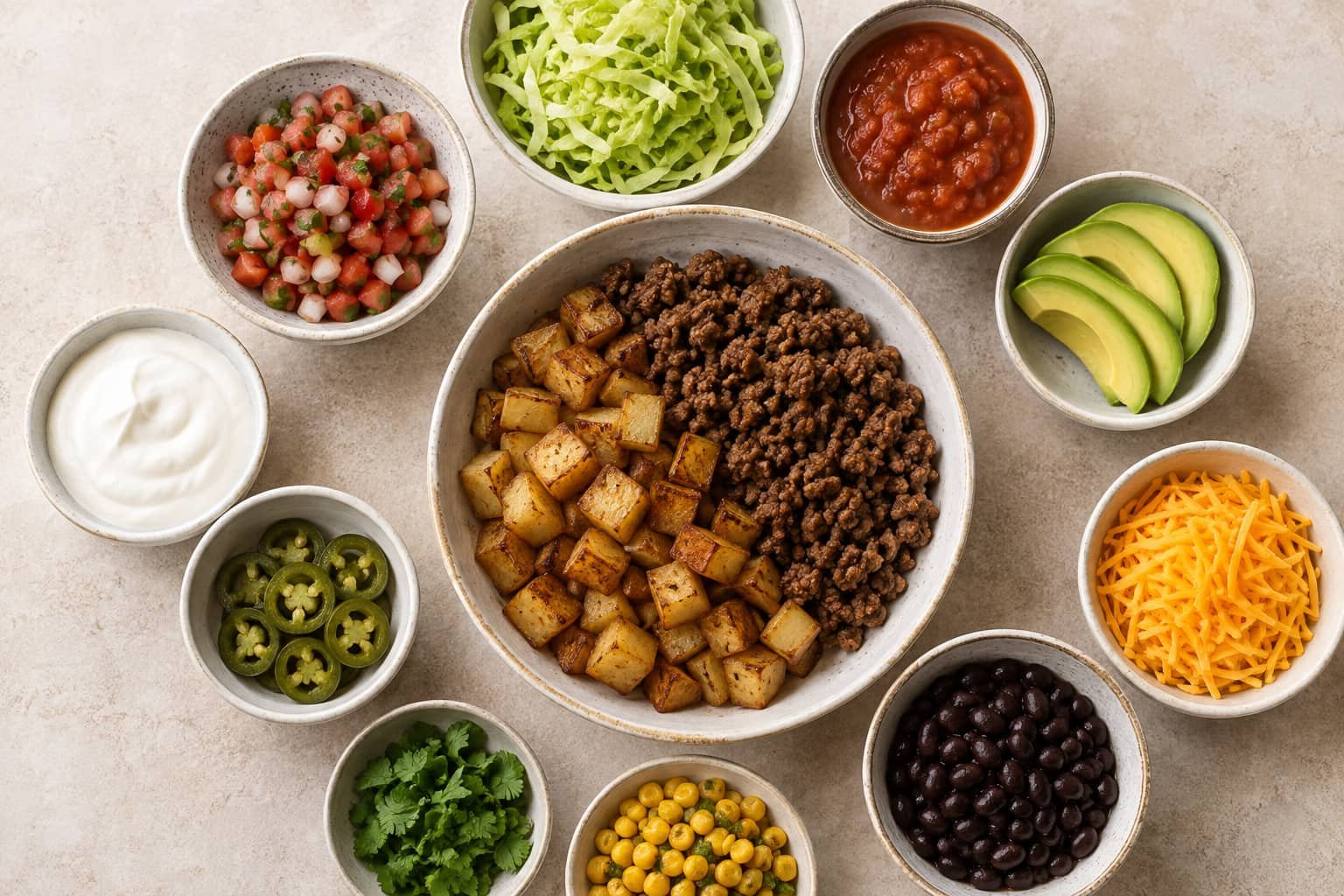
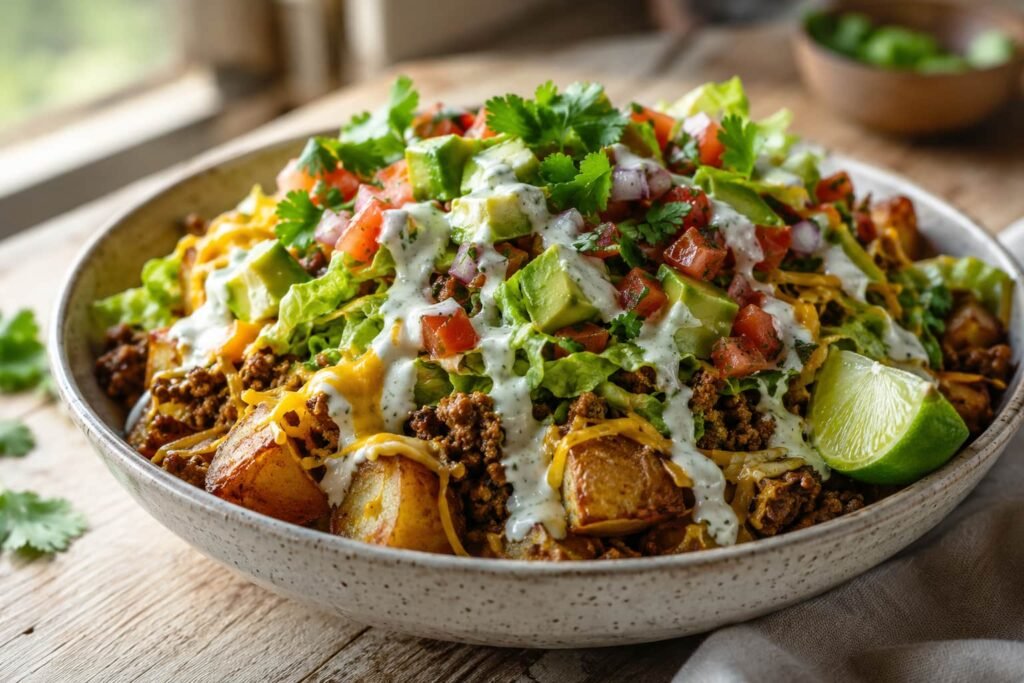
These high protein loaded potato taco bowls combine oven-roasted potatoes, seasoned ground beef, cheddar cheese, crisp lettuce, pico de gallo, avocado, and creamy Greek yogurt-lime sauce. The potatoes replace rice, giving each bowl golden edges, fluffy centers, and a sturdy base that holds the taco filling without becoming heavy or watery. Most of the protein comes from lean ground beef, Greek yogurt, and cheese.
While the potatoes roast, the beef and fresh toppings can be prepared, keeping the oven version close to 40 minutes from start to finish. For meal prep, store the potatoes, taco meat, sauce, and cold toppings separately. Reheat the potatoes before assembling each ground beef potato bowl so they retain their texture instead of absorbing moisture from the sauce and vegetables.
Quick Answer
High-protein loaded potato taco bowls are made with crispy roasted potatoes, lean taco-seasoned ground beef, cheddar, fresh vegetables, avocado, and Greek yogurt-lime sauce. The oven method takes about 40 minutes and makes four servings. Based on 1¼ pounds of 93% lean ground beef, 1 cup of Greek yogurt, and 1 cup of cheddar, each bowl provides an estimated 48 grams of protein. Air-fryer potatoes may require batches.
Recipe at a Glance
| Detail | Recipe information |
| Prep time | 15 minutes |
| Oven cooking time | About 30 minutes |
| Oven total time | About 45 minutes |
| Air-fryer total time | About 45 to 55 minutes, depending on basket size |
| Servings | 4 loaded potato taco bowls |
| Estimated protein | Approximately 48 grams per serving |
| Main protein | 1¼ pounds of 93% lean ground beef |
| Recommended potatoes | 2 pounds of Russet potatoes |
| Cooking options | Oven-roasted or air-fried |
| Best feature | Crispy, customizable bowl suitable for meal prep |
| Dietary note | Gluten-free when all seasonings, broth, sauces, and packaged toppings are verified gluten-free |
The protein estimate is based on four equal servings made with 1¼ pounds of 93% lean ground beef, 1 cup of plain Greek yogurt, and 1 cup of shredded cheddar. Exact nutrition will vary according to the brands, toppings, and portion sizes used.
The oven method is the most practical option for cooking the full two-pound batch at once. Most air fryers require two batches, which can increase the total time even though each individual batch cooks more quickly.

What Is a Loaded Potato Taco Bowl?
A loaded potato taco bowl is a layered meal made with crispy potato cubes instead of rice, tortillas, or crushed chips. Russet potatoes work especially well because they develop browned edges while remaining light and fluffy inside. They are topped with taco-seasoned ground beef, cheddar cheese, lettuce, drained pico de gallo, avocado, and Greek yogurt-lime sauce.
Unlike a loaded baked potato, this loaded potato bowl recipe does not place the fillings inside one whole potato. The ingredients are divided among serving bowls, making it easier to distribute the beef, cheese, vegetables, and sauce evenly.
This taco bowl with potatoes combines warm and cold ingredients in every serving. The potatoes provide a sturdy base for the beef, while the fresh toppings add contrast. For the best texture, assemble this taco bowl without rice shortly before eating and add the sauce last.
What Makes These Taco Bowls High in Protein?
These loaded potato taco bowls get most of their protein from 93% lean ground beef, plain Greek yogurt, and cheddar cheese. Russet potatoes and the standard vegetable toppings provide a smaller amount. The recipe does not require protein powder or a separate protein supplement.
The estimate below is based on 1¼ pounds of 93% lean ground beef, 1 cup of plain nonfat Greek yogurt, 1 cup of shredded cheddar cheese, 2 pounds of Russet potatoes, and four equal servings. Optional toppings such as black beans or extra cheese are not included in the calculation.
| Ingredient | Amount per bowl | Approximate protein contribution |
| 93% lean ground beef | One-quarter of the cooked beef mixture, prepared from 5 ounces raw beef | 28 grams |
| Greek yogurt used in the sauce | ¼ cup | 6 grams |
| Shredded cheddar cheese | ¼ cup, about 1 ounce | 7 grams |
| Russet potatoes and standard vegetable toppings | 8 ounces of potatoes plus lettuce, pico de gallo, and avocado | 5 grams |
| Estimated total | 1 assembled bowl | Approximately 46 grams |
The exact protein content will vary according to the beef, yogurt, cheese, and serving sizes used. Dividing the cooked beef and potatoes into four equal portions helps keep the bowls and nutrition estimates consistent.
The 46-gram estimate applies to the standard recipe portions. Adding black beans, extra beef, or additional cheese will increase the protein, while using smaller amounts will reduce it.
Why This Recipe Works
Crispy Potatoes Create a Sturdy Base
Russet potatoes develop browned edges and light, fluffy centers when they are roasted at high heat. They add more texture than a soft rice base and hold the seasoned beef and toppings well.
The potatoes are cooked separately because moisture from the taco filling would prevent them from browning properly. Time the recipe so the potatoes finish close to serving, then assemble the bowls immediately. If they finish early, keep them spread in a single layer and uncovered rather than piling them in a bowl, where trapped steam can soften the edges.
Lean Ground Beef Adds Flavor and Protein
The standard recipe uses 93% lean ground beef because it browns well while producing less excess grease than fattier options. Ground beef with a 90/10 ratio can also be used for a slightly richer flavor, although it may change the final fat and calorie values.
Let the skillet become hot before adding the beef, then leave it undisturbed briefly so part of the surface can brown. Break it into small pieces as it cooks. Drain only if a noticeable amount of fat remains before adding the seasoning and tomato paste.
The Taco Beef Remains Saucy Without Becoming Watery
Two tablespoons of tomato paste add concentrated tomato flavor and help the seasoning cling to the ground beef. Start with ¼ cup of low-sodium beef broth or water, then simmer the mixture uncovered until it looks glossy and no loose liquid remains at the bottom of the skillet.
If the beef becomes dry before the seasoning is evenly distributed, add more liquid one tablespoon at a time. Adding too much at once can create a thin filling that quickly softens the crispy potato base.
Greek Yogurt-Lime Sauce Adds a Creamy Contrast
Plain nonfat Greek yogurt forms the base of a cool, tangy sauce that balances the warm taco beef and smoky potatoes. Lime juice brightens the flavor, while taco seasoning and garlic connect the sauce to the rest of the bowl.
Add a small amount of water only as needed to make the sauce easy to drizzle. Store it separately for meal prep and spoon it over each bowl immediately before eating. This keeps the sauce creamy and prevents it from soaking into the potatoes during storage.
Each Bowl Can Be Customized at Serving Time
The crispy potatoes and seasoned ground beef provide a shared base, while the toppings can be adjusted for each serving. Cheddar, lettuce, drained pico de gallo, avocado, cilantro, jalapeños, green onions, and hot sauce all work without changing the main cooking method.
Black beans can be added for extra protein and fiber, but they should be treated as an optional topping unless they are included in the final nutrition calculation. Keeping the toppings separate also makes these ground beef potato bowls practical for family dinners and meal prep.

Ingredients You Need
These loaded potato taco bowls have four main components: crispy roasted potatoes, seasoned ground beef, Greek yogurt taco sauce, and fresh toppings. The quantities below make four evenly portioned bowls and support the estimated protein calculation used throughout the recipe.
For the Crispy Potatoes
Use 2 pounds of Russet potatoes, scrubbed and cut into uniform ¾-inch cubes. Russets are the recommended choice because their starchy flesh becomes fluffy inside while the cut surfaces develop crisp, browned edges. The skins can remain on for additional texture.
You will also need 2 tablespoons of olive oil. This provides a light coating that helps the potatoes brown and allows the seasonings to adhere without making the finished bowl greasy.
Season the potatoes with:
- 1 teaspoon smoked paprika
- 1 teaspoon garlic powder
- ½ teaspoon onion powder
- ¾ teaspoon kosher salt or ½ teaspoon fine salt
- ¼ teaspoon ground black pepper
Smoked paprika adds warm color and a mild smoky note that complements the taco filling. Garlic and onion powders distribute evenly over the potato cubes and are less likely to burn than fresh garlic during high-temperature roasting. Salt seasons the surfaces, while black pepper adds mild heat.
Dry the potatoes thoroughly before adding the oil. Excess surface moisture creates steam and makes it harder for crispy roasted potatoes to develop deeply browned edges.
For the Ground Beef Taco Filling
Use 1¼ pounds of 93% lean ground beef. This ratio provides enough fat for browning and flavor while producing less grease than fattier blends. Ground beef labeled 90/10 can also be used, but it will make the filling slightly richer and alter the final nutrition estimate.
Add 1 medium yellow onion, finely diced, which should produce approximately 1 cup. The onion softens into the filling and adds natural sweetness without overpowering the taco seasoning.
Use 2 tablespoons of low-sodium taco seasoning. A homemade blend provides the most consistent control over salt and heat, but a packaged mixture also works. Check the package label before adding additional salt because blends vary considerably between brands.
The filling also uses 2 tablespoons of tomato paste. It adds concentrated savory flavor, strengthens the color, and helps the seasoning cling to the beef.
Add ¼ cup of low-sodium beef broth or water to loosen the tomato paste and distribute the seasoning. Broth gives the ground beef potato bowl a deeper flavor, while water is a practical substitute.
Finish the filling with 1 tablespoon of fresh lime juice. Its acidity balances the richness of the beef and brightens the smoky taco flavors.
For the Greek Yogurt Taco Sauce
Use 1 cup of plain nonfat Greek yogurt as the sauce base. Choose a thick, strained yogurt so the sauce remains creamy rather than watery. A 2% or full-fat Greek yogurt can be substituted for a richer texture, although the calories and fat per serving will change.
Flavor the yogurt with 1 tablespoon of fresh lime juice and 1 teaspoon of taco seasoning. The lime adds a clean, tangy finish, while the seasoning ties the sauce to the beef filling.
Add 2 tablespoons of smooth restaurant-style red salsa for mild tomato flavor. For additional heat, mix in 1 to 2 teaspoons of hot sauce without removing the salsa. Adding hot sauce alongside the salsa preserves the intended sauce volume and texture.
Depending on the thickness of the yogurt, use 1 to 2 tablespoons of cold water to create a drizzleable consistency. Add the water gradually because an overly thin sauce can quickly soften the potato base.
The finished sauce makes slightly more than 1 cup. When divided among four bowls, each serving contains the protein from approximately ¼ cup of Greek yogurt.
For the Toppings
The standard toppings provide freshness, color, and contrast to the warm potatoes and taco beef.
Use 1 cup of shredded cheddar cheese, divided into ¼ cup portions. Cheddar adds a sharp, savory flavor and contributes approximately 7 grams of protein to each bowl.
You will also need:
- 2 cups shredded lettuce
- 1 cup well-drained pico de gallo
- 1 medium avocado, diced
Draining the pico de gallo removes excess tomato liquid that could make the potatoes soft. Dice the avocado shortly before serving to preserve its color and texture.
Optional toppings include sliced jalapeños, chopped cilantro, green onions, roasted corn, hot sauce, or black beans. These additions are not included in the standard nutrition calculation. Extra beef, cheese, beans, or sauce will change the protein and calorie values per serving.

Best Potatoes for Potato Taco Bowls
The best potato depends on whether you prefer crisp edges, a creamy center, or firm pieces that hold their shape. Russet potatoes are the recommended default for this recipe because they provide the strongest contrast between a crisp exterior and a fluffy interior.
| Potato | Interior texture | Crispiness | Best use |
| Russet potatoes | Light and fluffy | Highest | Extra-crispy potato taco bowls |
| Yukon Gold potatoes | Creamy and dense | Moderate to high | Richer potato base |
| Red potatoes | Firm and waxy | Moderate | Pieces that hold their shape |
| Sweet potatoes | Soft and naturally sweet | Moderate | Smoky and sweet variation |
Russet Potatoes
Russet potatoes are the strongest choice for the original loaded potato taco bowl. Their relatively dry, starchy flesh becomes fluffy as it cooks, while the exposed surfaces brown well in both the oven and air fryer.
Cut the potatoes into consistent ¾-inch cubes. Smaller pieces may brown before their centers become tender, while oversized cubes require more cooking time and may remain pale.
Yukon Gold Potatoes
Yukon Gold potatoes have a naturally creamy center and a richer flavor than Russets. Their texture is denser, but they still develop attractive golden edges when properly dried and spaced.
Choose Yukon Golds when you prefer a creamier, more substantial potato base. Their thin skins do not usually need to be removed.
Red Potatoes
Red potatoes are waxier and hold their shape well during cooking and serving. They are less fluffy than Russets and generally produce a firmer bite.
They work well when you want distinct potato pieces that will not break apart as the bowl is assembled. Dry them carefully and avoid crowding the pan so their surfaces can brown.
Sweet Potatoes
Sweet potatoes create a deliberate flavor variation rather than an identical substitution. Their natural sweetness pairs well with smoky taco seasoning, lime, black beans, jalapeños, and hot sauce.
They tend to soften and brown more quickly than Russet potatoes, so their cooking time should be checked earlier. Keep the cubes uniform to prevent smaller pieces from becoming overly dark.
For the standard ground beef potato bowl, use 2 pounds of Russet potatoes. Choose Yukon Golds for a creamier result, red potatoes for firmer pieces, or sweet potatoes for a sweeter contrast with the savory taco filling.
Which Ground Beef Is Best for Loaded Potato Taco Bowls?
The fat ratio of ground beef affects the flavor, moisture, and amount of grease in a loaded potato taco bowl. For this recipe, 93% lean ground beef is the recommended option because it provides plenty of protein while releasing less fat that could soften the crispy potato base.
Ground beef labeled 90/10 also works well when a slightly richer taco filling is preferred. Fattier 85/15 beef requires more careful draining, while very lean beef can dry out if it is cooked too long.
| Ground beef ratio | Cooking result | Best use |
| 85/15 | Rich and juicy, but releases more fat | A richer filling when excess grease is drained |
| 90/10 | Moist, flavorful, and moderately lean | A balanced alternative to 93/7 beef |
| 93/7 | Lean with enough moisture for a saucy filling | Recommended for this recipe |
| 96/4 or leaner | Very lean and easier to overcook | Use with careful timing and added moisture |
85/15 Ground Beef
Ground beef with an 85/15 ratio creates a rich taco filling, but it can release enough fat to coat the potatoes and make the finished bowl feel greasy. Proper browning still depends on using a hot, uncrowded skillet and allowing the meat to cook briefly before breaking it apart.
Drain the visible excess fat before adding the tomato paste, taco seasoning, and broth. Leave only a thin coating in the skillet to help carry the seasoning and prevent the filling from tasting dry.
90/10 Ground Beef
A 90/10 blend provides a useful balance between flavor and leanness. It usually produces less grease than 85/15 beef while remaining slightly richer than the 93/7 option.
It can replace 93/7 ground beef without changing the cooking method. Drain it only when a noticeable pool of rendered fat remains in the skillet.
93/7 Ground Beef
The standard recipe uses 1¼ pounds of 93% lean ground beef. This ratio limits excess grease while remaining moist once the tomato paste and measured broth are added.
Draining is often unnecessary because 93/7 beef releases relatively little fat. Check the skillet after browning and remove fat only when it has collected visibly around the meat.
Very Lean Ground Beef
Ground beef labeled 96/4 or leaner contains less fat to protect it from drying out. It can still be used, but the cooking time should be watched carefully.
Brown the beef only until it is safely cooked, then add the tomato paste and broth. Avoid extending the cooking time simply to reduce excess liquid. Starting with a controlled amount of broth is more effective than trying to repair overcooked beef afterward.
When Should Ground Beef Be Drained?
Drain ground beef when a clear pool of rendered fat collects around the cooked meat. Carefully tilt the skillet and remove the excess with a spoon, keeping the beef in the pan.
Do not rinse the cooked meat. A small amount of fat improves flavor and helps the taco seasoning coat the beef, while rinsing can remove flavor and spread grease around the sink.
Safe Ground Beef Temperature
Cook ground beef to a minimum internal temperature of 160°F or 71°C. Do not judge safety by color alone because browned meat may not always have reached a safe temperature.
For crumbled taco beef, press a small portion into a thicker mound and insert an instant-read thermometer into the center. Check more than one area of the skillet to confirm that the batch has cooked evenly.
Equipment
These taco potato bowls require only basic kitchen equipment.
| Equipment | Purpose |
| Large rimmed baking sheet | Roasts the potatoes in a spacious single layer |
| Air fryer, optional | Creates crisp edges but may require multiple batches |
| Large skillet | Browns the beef and finishes the taco filling |
| Large mixing bowl | Coats the potatoes evenly with oil and seasonings |
| Cutting board and sharp knife | Prepares the potatoes, onion, avocado, and toppings |
| Small bowl | Mixes the Greek yogurt-lime sauce |
| Spatula or wooden spoon | Breaks up and stirs the ground beef |
| Food thermometer | Confirms that the beef reaches 160°F or 71°C |
| Four serving bowls | Holds the evenly divided finished portions |
Use a baking sheet large enough to leave space between the potato cubes. Crowding the pan traps steam and prevents the exposed surfaces from browning properly.
A typical air-fryer basket will not hold 2 pounds of potatoes in one loose layer. Cook them in batches when necessary and keep the completed batches uncovered so trapped steam does not soften the edges.
How to Make High-Protein Loaded Potato Taco Bowls
Begin with the potatoes because they require the longest cooking time. While they cook, prepare the seasoned ground beef, Greek yogurt-lime taco sauce, and fresh toppings. The oven method is the most practical option for cooking all 2 pounds of potatoes at once.
Step 1: Cut and Season the Potatoes
Scrub 2 pounds of Russet potatoes under cool running water and dry them thoroughly. Leave the skins on for added texture, removing only damaged or discolored areas.
Cut the potatoes into uniform ¾-inch cubes. This size provides enough exposed surface for browning while leaving the centers soft and fluffy. Uneven pieces will cook at different rates, so trim larger cubes before seasoning.
Spread the potatoes over a clean kitchen towel and pat them dry. Excess surface moisture creates steam and prevents the cut sides from browning properly.
Transfer the potatoes to a large mixing bowl and add:
- 2 tablespoons olive oil
- 1 teaspoon smoked paprika
- 1 teaspoon garlic powder
- ½ teaspoon onion powder
- ¾ teaspoon kosher salt
- ¼ teaspoon ground black pepper
Toss until every cube has a light coating of oil and seasoning. Scrape up any spices collected at the bottom of the bowl and toss again.

Step 2: Roast or Air Fry Until Crispy
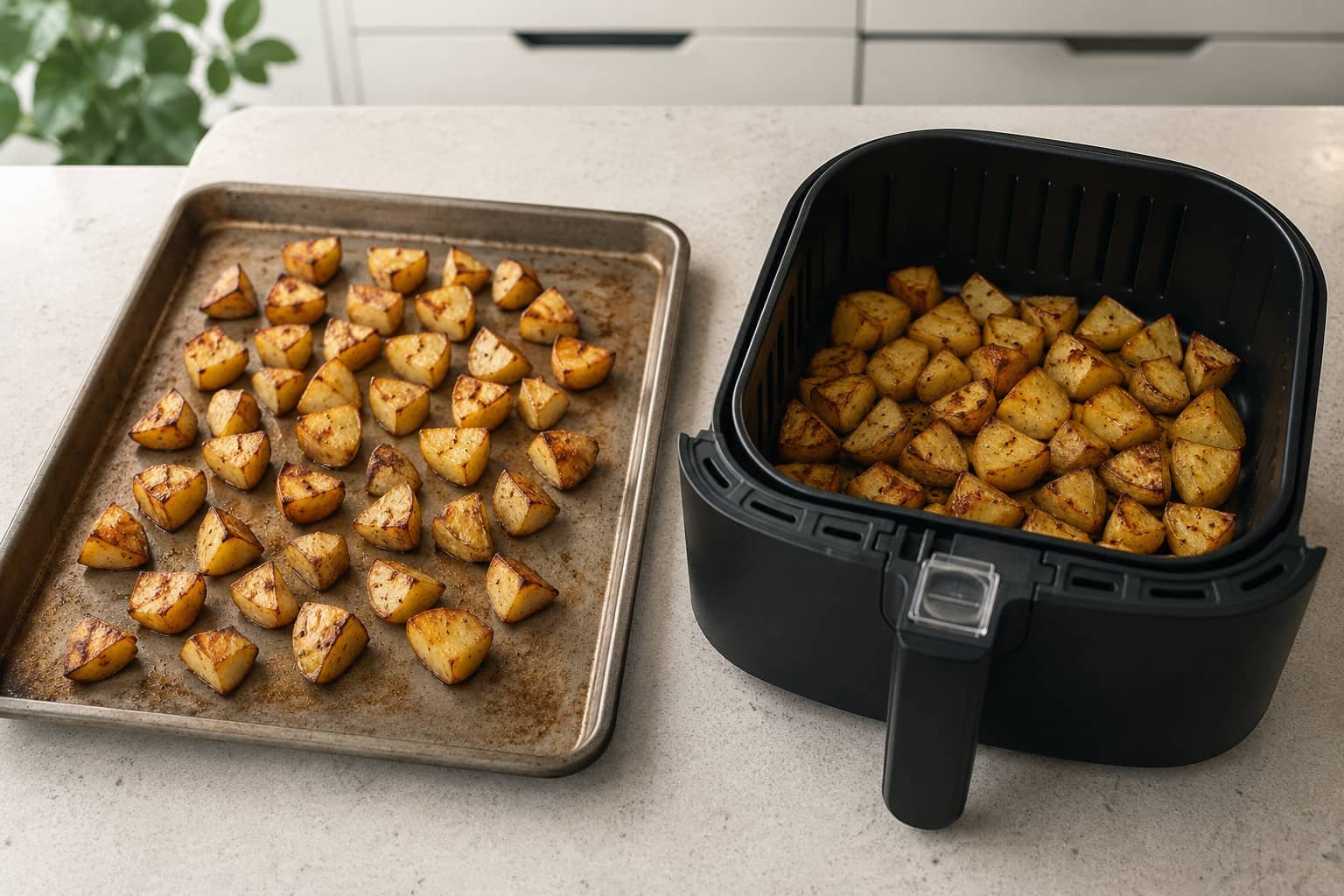
For the oven method, preheat the oven to 425°F or 220°C. Spread the potatoes in a single layer on an 18 × 13-inch rimmed baking sheet. Leave some space between the cubes. Use two pans if they are tightly crowded.
Roast for 28 to 32 minutes, turning the potatoes after about 18 minutes. They are ready when the edges are well browned, the surfaces feel dry, and the largest pieces are easily pierced with a fork. The centers should be tender rather than firm or chalky.
For the air-fryer method, preheat the air fryer to 400°F or 205°C, when recommended by the manufacturer. Arrange the potatoes in a loose layer and cook for 18 to 22 minutes, shaking the basket after 8 minutes and again near the 15-minute mark.
Two pounds of potatoes will usually require at least two batches. Hold the first batch uncovered in a 200°F or 95°C oven while the remaining potatoes cook. Return all batches to the air fryer for 1 to 2 minutes before serving when the edges need refreshing.
Step 3: Brown the Ground Beef
Heat a large skillet over medium-high heat until hot. When using a nonstick skillet, follow the manufacturer’s heat guidance and do not leave the empty pan over high heat for an extended period.
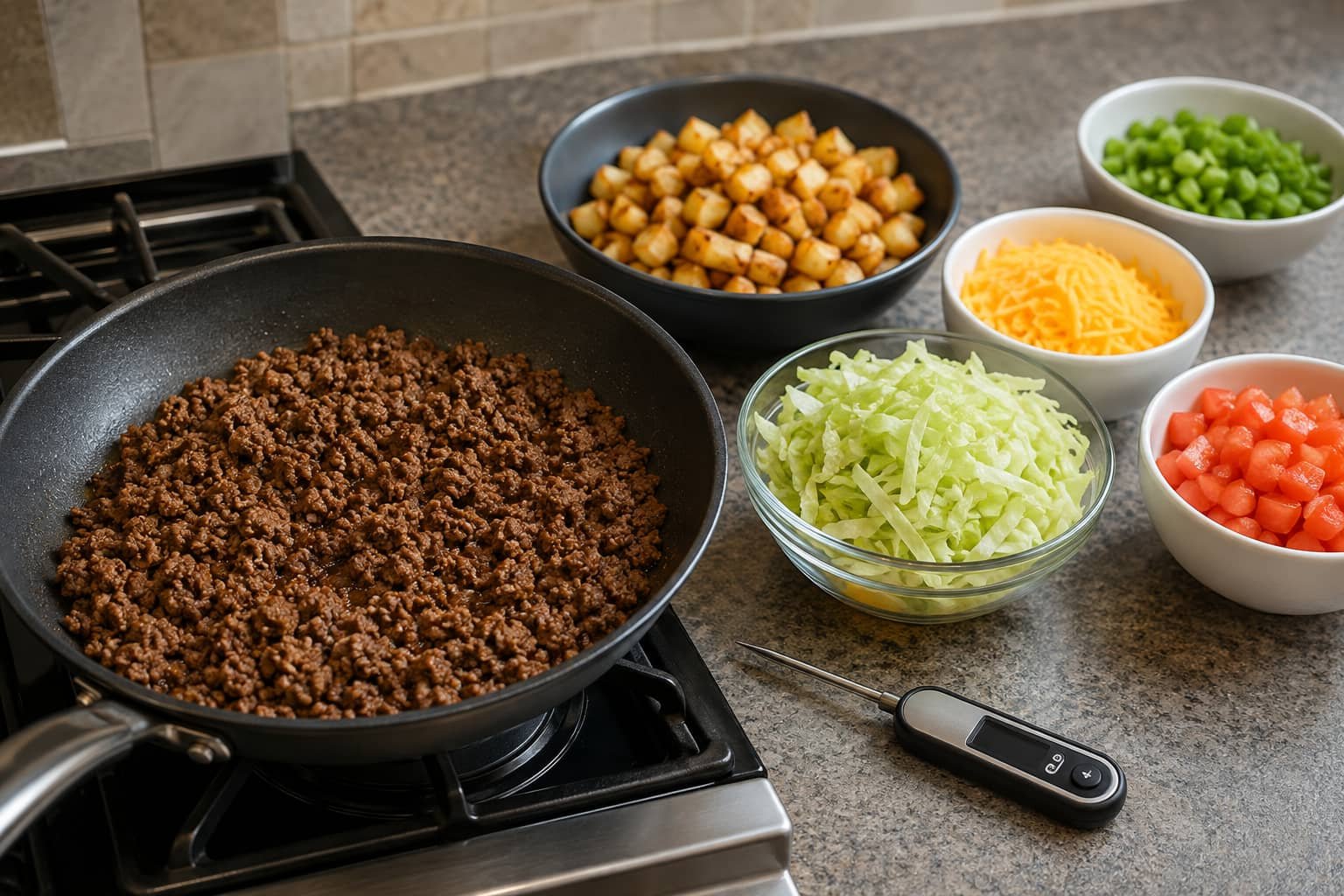
Add 1¼ pounds of 93% lean ground beef and spread it over the skillet. Let it cook undisturbed for 2 to 3 minutes so the surface in contact with the pan can brown.
Break the beef into small, bite-size crumbles. Avoid crushing it into very fine pieces because larger crumbles hold the sauce and provide a better texture.
Continue cooking for another 1 to 2 minutes, then add 1 medium yellow onion, finely diced. Cook for 4 to 6 minutes, stirring occasionally, until the onion softens and the beef is no longer pink.
Drain the skillet only when a visible pool of rendered fat remains. Leave a thin coating behind to carry the tomato paste and taco seasoning.
Cook the ground beef to at least 160°F or 71°C. Insert an instant-read thermometer into several thicker portions of the cooked mixture and check more than one area of the skillet.

Step 4: Season the Taco Beef
Reduce the heat to medium. Add 2 tablespoons of low-sodium taco seasoning and 2 tablespoons of tomato paste.
Cook for about 1 minute, stirring constantly, until the tomato paste darkens slightly and coats the beef. This brief cooking step removes its raw flavor and allows the spices to bloom.
Pour in ¼ cup of low-sodium beef broth or water. Scrape the browned bits from the bottom of the skillet and simmer uncovered for 3 to 5 minutes.
The finished taco beef should look moist and glossy, without a pool of thin liquid at the bottom. Drag a spoon through the mixture. The sauce should cling to the meat and leave a brief trail in the pan.
When the filling becomes dry before the seasoning is evenly distributed, add more broth one tablespoon at a time. Remove the skillet from the heat and stir in 1 tablespoon of fresh lime juice. Taste before adding extra salt because taco-seasoning blends vary.

Step 5: Mix the Greek Yogurt Lime Taco Sauce
In a small bowl, combine:
- 1 cup plain nonfat Greek yogurt
- 1 tablespoon fresh lime juice
- 1 teaspoon taco seasoning
- 2 tablespoons smooth restaurant-style red salsa
Add 1 to 2 teaspoons of hot sauce for more heat, if desired.
Stir in 1 tablespoon of cold water. Add more water one teaspoon at a time until the sauce falls from a spoon in a slow ribbon. It should be easy to drizzle but thick enough to remain visible over the beef.
Refrigerate the sauce until the bowls are ready to assemble.
Step 6: Prepare the Fresh Toppings
Shred 2 cups of lettuce, drain 1 cup of pico de gallo, and dice 1 medium avocado.
Let the pico de gallo drain in a fine-mesh strainer for several minutes. Removing excess tomato liquid prevents it from soaking into the potatoes.
Dice the avocado shortly before serving. Prepare optional toppings such as jalapeños, cilantro, green onions, roasted corn, black beans, or additional hot sauce.
Keep the cold toppings separate from the potatoes and beef until serving.

Oven Versus Air-Fryer Instructions
Step 7: Assemble the Loaded Potato Taco Bowls
Divide the crispy potatoes evenly among four bowls. Add ¼ cup of shredded cheddar cheese to each serving while the potatoes are hot so the cheese begins to soften.
Divide the taco-seasoned ground beef over the potatoes. Let it stop steaming heavily for about a minute before adding the lettuce, drained pico de gallo, and avocado. This helps the cold toppings retain their texture.
Finish each bowl with Greek yogurt-lime taco sauce, chopped cilantro, and a squeeze of lime juice.
For the best texture, assemble the bowls in this order:
- Crispy potatoes
- Cheddar cheese
- Taco-seasoned ground beef
- Lettuce and drained pico de gallo
- Avocado
- Greek yogurt-lime taco sauce
- Cilantro and fresh lime
Placing the cheese against the hot potatoes helps it soften, while adding the fresh toppings and sauce last limits moisture against the crispy potato base.

Oven Versus Air Fryer Instructions
Both methods can produce well-browned potatoes, but the oven is more practical for four servings. It can cook the full 2-pound batch at once, while a typical air fryer requires two or more batches.
| Method | Temperature | Cooking time | Batch size | Best result |
| Oven | 425°F or 220°C | 28 to 32 minutes | Full recipe when potatoes fit loosely | Most practical for four bowls |
| Air fryer | 400°F or 205°C | 18 to 22 minutes per batch | Usually two or more batches | Often the crispest edges in small batches |
Oven Method
Spread the ¾-inch potato cubes in a loose single layer on an 18 × 13-inch rimmed baking sheet. If the pieces are tightly crowded or overlapping, divide them between two pans rather than forcing the entire batch onto one sheet.
Roast for 28 to 32 minutes, turning the potatoes after approximately 18 minutes. Rotate the pan if one side of the oven browns more quickly. The potatoes are ready when the edges are golden brown, the surfaces feel dry, and the largest cubes are tender without a firm or chalky center.
Air-Fryer Method
Arrange the potatoes loosely in the air-fryer basket and cook them at 400°F or 205°C for 18 to 22 minutes per batch. Shake the basket after about 8 minutes and check again near the 15-minute mark.
Avoid filling the basket deeply. Crowded potatoes may cook through, but their surfaces will remain softer and less evenly browned.
When preparing multiple batches, keep the finished potatoes spread out and uncovered. After the final batch is cooked, return the earlier potatoes to the air fryer for 1 to 2 minutes to refresh their edges. Depending on basket capacity, the complete air-fryer version may take approximately 45 to 55 minutes.
How to Keep the Potatoes Crispy
The best crispy potatoes come from controlling moisture at every stage. The cubes must be dry before cooking, spaced properly on the pan, and protected from wet taco filling and toppings after roasting.
Cut, Dry, and Season Evenly
Cut the Russet potatoes into consistent ¾-inch cubes so they cook at roughly the same rate. Large differences in size can leave smaller pieces dry while larger pieces remain firm inside.
Pat the cut potatoes thoroughly with a clean kitchen towel before adding oil. Surface water turns into steam, which slows browning and makes the potatoes more likely to soften.
Add the oil only after the cubes are dry, then toss until every piece has a light coating. Seasoning left at the bottom of the bowl is a sign that the potatoes need to be tossed again.
Give the Potatoes Space and Enough Heat
Arrange the potatoes in one layer with space between most pieces. When the cubes are packed together, released moisture becomes trapped and steams them instead of allowing their surfaces to roast.
Preheat the oven fully to 425°F or 220°C before adding the pan. For an air fryer, use 400°F or 205°C and follow the manufacturer’s preheating guidance.
Leave the oven-roasted potatoes undisturbed long enough for the first side to brown before turning them. They normally need one main turn, although the pan may need rotating when the oven heats unevenly.
Control Moisture in the Taco Filling and Toppings
The taco beef should be glossy and lightly sauced, not surrounded by loose liquid. Simmer it uncovered until the tomato paste and broth cling to the meat. When a spoon is dragged through the skillet, watery liquid should not immediately flow back into the empty space.
Drain the pico de gallo briefly in a fine-mesh strainer until excess liquid stops dripping. Do not press out all its moisture, or the topping may lose too much of its fresh lime and tomato flavor.
Keep the Greek yogurt-lime taco sauce separate until serving. Drizzle it over the assembled toppings rather than soaking the entire potato layer.
Store and Reheat the Potatoes Separately
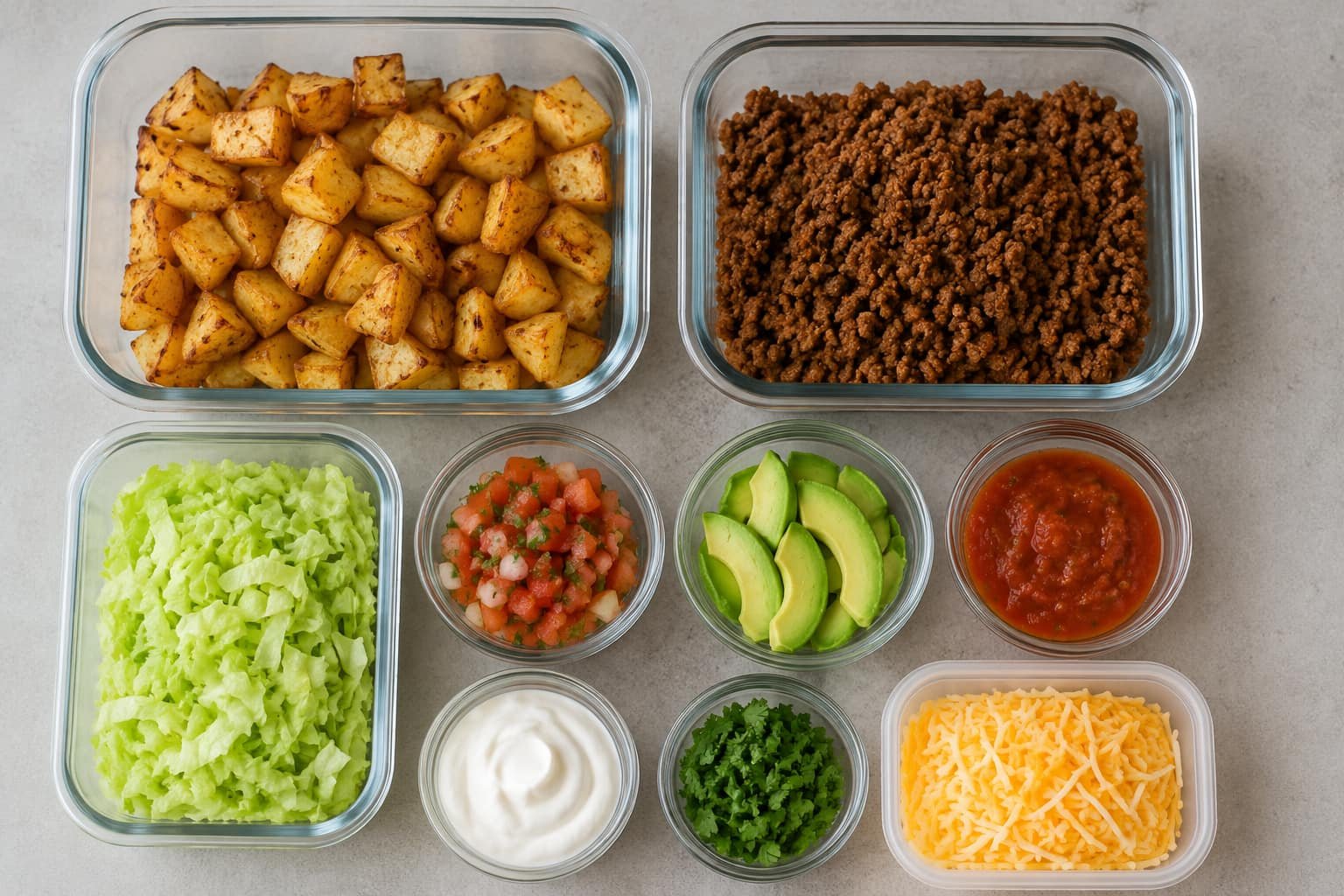
For meal prep, store the potatoes, taco beef, cold toppings, and sauce in separate containers. Let excess steam escape briefly, then refrigerate the components promptly in shallow containers. Covering very hot potatoes immediately can create condensation that softens their surfaces.
Reheat the potatoes separately from the beef. An air fryer usually needs about 5 to 8 minutes at 375°F or 190°C, while an oven may need approximately 8 to 12 minutes. Begin checking at the lower end of the range and continue until the centers are hot and the surfaces feel dry again.
A skillet can also restore some texture. Warm a small amount of oil over medium heat, add the potatoes in one layer, and turn them occasionally until heated through.
The microwave is the fastest option, but it sacrifices surface crispness. When using it, heat the potatoes separately and assemble the loaded potato taco bowl only after all the components are warm.

Taco Bowl Topping Ideas
The potatoes and seasoned ground beef provide the main structure of the bowl, while the toppings add freshness, creaminess, heat, and crunch. Choose a balanced combination instead of piling on every option. Large amounts of salsa, sauce, or other wet toppings can cover the taco flavor and soften the crispy potatoes.
Fresh Toppings
For four bowls, use 2 cups of shredded lettuce, 1 cup of pico de gallo, and 1 medium avocado. Divide them evenly so each serving gets a mixture of cool lettuce, juicy tomato, onion, lime, and creamy avocado.
Drain the pico de gallo briefly in a fine-mesh strainer until excess liquid stops dripping. Do not press it dry, since some moisture is needed to preserve its fresh flavor.
Chopped cilantro, thinly sliced green onions, and lime wedges can be served at the table. Lime juice is especially useful for balancing the richness of the beef, cheddar, and avocado.
Creamy Toppings
The standard recipe uses Greek yogurt-lime taco sauce. Its tangy flavor contrasts with the warm ground beef and smoky potatoes while contributing additional protein.
Guacamole can replace the diced avocado when a smoother texture is preferred. Sour cream is another option, although it contains less protein than Greek yogurt.
Use creamy toppings in moderate amounts when crisp texture matters. Adding large portions of yogurt sauce, guacamole, sour cream, and cheese at the same time can make the bowl heavy and quickly soften the potato base.
Spicy Toppings
Fresh jalapeños provide clean heat, while pickled jalapeños or other pickled peppers add both heat and acidity. Their sharp flavor helps cut through the richness of the beef and cheese.
Hot sauce can be added separately to each serving. For smoky heat, use chipotle sauce or stir a small amount of minced chipotle in adobo into the Greek yogurt-lime sauce.
Keeping spicy toppings separate makes the bowls easier to serve to people with different heat preferences.
Crunchy Toppings
Crushed tortilla chips provide a salty crunch that contrasts with the fluffy potato centers. Add them immediately before eating so they do not absorb moisture from the beef or sauce.
Toasted corn adds mild sweetness and a slightly chewy texture. Roasted pumpkin seeds also work well when you want crunch without adding more tortilla chips.
Do not store crunchy toppings inside assembled meal-prep bowls. Pack them separately and add them after reheating.
Higher-Protein Additions
The standard recipe already provides an estimated 46 grams of protein per bowl, but measured additions can increase that amount.
| Addition | Suggested amount per bowl | Approximate additional protein |
| Black beans | ¼ cup | 3 to 4 grams |
| Cooked lean ground beef | 2 ounces | 12 to 14 grams |
| Plain Greek yogurt | 2 tablespoons | 3 grams |
| Cheddar cheese | 1 ounce | 7 grams |
These values are estimates and vary by brand. The published nutrition information applies only to the standard recipe portions unless the optional additions are included in the final calculation.

Recipe Variations and Substitutions
The original recipe uses Russet potatoes, 93% lean ground beef, cheddar cheese, and Greek yogurt-lime taco sauce. The following substitutions preserve the general bowl format, but they change the cooking result and nutrition.
Ground Turkey or Chicken Taco Bowls
Replace the beef with 1¼ pounds of ground turkey or ground chicken. Both options have a milder flavor and softer texture than ground beef.
Very lean poultry can dry out quickly. Add up to 1 teaspoon of olive oil when using an extra-lean product or cookware that tends to stick. Brown the meat before adding the tomato paste and seasoning, then add broth gradually according to the moisture remaining in the skillet.
Ground poultry must reach 165°F or 74°C, measured with a food thermometer. Ground beef requires a lower minimum temperature of 160°F or 71°C.
Turkey and chicken brands vary in fat content, so the original protein, fat, and calorie estimates will no longer apply.
Sweet Potato Taco Bowls
Replace the Russets with 2 pounds of sweet potatoes, cut into uniform ¾-inch cubes. Their natural sweetness works well with smoked paprika, lime, jalapeños, black beans, and chipotle.
Use the same oven or air-fryer temperature, but begin checking the sweet potatoes several minutes earlier. They often soften and darken faster than Russets because of their higher sugar content.
Remove them when the centers are tender and the edges are browned. The finished bowl will be sweeter and softer than the original version, with less contrast between a crisp exterior and fluffy center.
Black Bean and Beef Taco Bowls
To stretch the meat, use ¾ pound of lean ground beef and one 15-ounce can of black beans, drained and rinsed.
Brown and season the beef as directed, then stir in the beans during the final 2 to 3 minutes. Add broth gradually because the beans do not need as much liquid as a full batch of beef.
This version adds fiber and reduces the amount of meat required, but it may contain less protein per bowl than the standard recipe. Recalculate the nutrition before making any high-protein claim for this variation.
Vegetarian Potato Taco Bowls
For a meat-free version, replace the beef with either:
- Two 15-ounce cans of black beans, drained and rinsed
- 2½ to 3 cups of cooked brown or green lentils
Cook the diced onion first, then add the tomato paste and taco seasoning. Stir in the beans or lentils with 2 tablespoons of broth or water, adding more only if the filling appears dry.
Simmer until the mixture is hot and the seasoning clings to the beans or lentils. Avoid excessive liquid, which can soften the potatoes after assembly.
This variation has a different protein and nutrition profile from the ground beef version. The original 46-gram estimate should not be used.
Dairy-Free Loaded Potato Taco Bowls
Replace the cheddar with a dairy-free shredded cheese alternative. For the sauce, use a thick, plain, unsweetened dairy-free yogurt mixed with lime juice, salsa, taco seasoning, and optional hot sauce.
Dairy-free yogurts vary widely. Some are thick and neutral, while others are thin, sweet, or low in protein. Taste the sauce before adding water and thin it only when necessary.
Check the labels on packaged seasonings, sauces, cheese alternatives, and yogurt when strict dairy avoidance is required. The standard protein estimate does not apply to this version.
Spicy Chipotle Potato Taco Bowls
For heat throughout the filling, add 1 to 2 teaspoons of finely minced chipotle pepper in adobo with the tomato paste. Begin with the smaller quantity because the strength of canned chipotle varies.
For adjustable heat, leave the beef mild and mix the chipotle into the Greek yogurt-lime sauce instead. This allows each person to control how much spicy sauce is added to the bowl.
Finish with pickled jalapeños, cilantro, lime, or a small drizzle of adobo sauce.
Because potatoes are the main base, this recipe is not low-carb. Replacing them with cauliflower, lettuce, or another low-carbohydrate ingredient would create a different taco bowl rather than a simple substitution.

Meal Prep Instructions
These loaded potato taco bowls are suitable for meal prep, but the ingredients should not be fully assembled before storage. Potatoes left beneath taco beef, pico de gallo, and yogurt sauce will absorb moisture and lose their crisp texture.
Use a four-component system instead of placing every ingredient in one container.
| Component | How to store it | Packing note |
| Taco beef | Divide among four shallow containers or compartments | Keep it away from the potatoes until reheating |
| Roasted potatoes | Store in a separate shallow container or dry compartment | Avoid covering them with sauce or wet toppings |
| Greek yogurt-lime taco sauce | Divide among four small sealed sauce cups | Keep refrigerated and add after reheating |
| Cold toppings | Keep lettuce dry and pack pico separately | Cut avocado shortly before serving when possible |
Cool and Portion the Components Safely
Divide the cooked taco beef and potatoes into four equal portions shortly after cooking. Place them in separate shallow containers and refrigerate promptly rather than waiting for them to cool completely on the counter.
Perishable food should be refrigerated within two hours of cooking, or within one hour when exposed to temperatures above 90°F or 32°C. Shallow containers help leftovers cool more quickly, and the refrigerator should remain at 40°F or 4°C or below.
For better potato texture, allow the strongest steam to escape briefly before sealing the container tightly. Do not extend this cooling period beyond the safe refrigeration limit.
Dividing the beef and potatoes evenly also keeps each lunch close to the nutrition values calculated for the standard four-serving recipe.
Pack the Bowls for Lunch
Use a divided lunch container when possible. Place the potatoes in one dry compartment and the taco beef in another. Pack the Greek yogurt-lime sauce and pico de gallo in separate sealed cups.
Keep shredded lettuce in a dry compartment because even drained pico can release additional liquid during storage. Cut the avocado shortly before eating when possible. For a packed morning lunch, toss the diced avocado with a small amount of lime juice and store it separately.
Keep the meal refrigerated until needed. When refrigeration is unavailable during transport, use an insulated lunch bag with enough cold packs to keep the food cold.
Reheat the Components in the Right Order
Begin warming the taco beef first because it retains heat better than the potatoes. Reheat the potatoes last in an air fryer, oven, or skillet so they spend less time sitting after their edges have been refreshed.
Reheat the cooked components thoroughly to 165°F or 74°C. Check the beef in more than one area because skillets and microwaves can create uneven temperatures. FoodSafety.gov recommends reheating leftovers to 165°F and checking microwaved food in several places after an appropriate standing time.
Once the hot ingredients are ready, assemble each bowl with potatoes, cheddar, taco beef, lettuce, drained pico de gallo, avocado, and sauce. Add cilantro and lime at the end.
Storage, Freezing and Reheating
The taco beef, potatoes, sauce, and fresh toppings have different storage requirements. Keeping them separate protects both food safety and texture.
Refrigerator Storage
Store the cooked taco beef and potatoes in separate airtight, shallow containers. Refrigerate them within two hours of cooking and use them within three to four days. Keep the refrigerator at 40°F or 4°C or below.
Store the sauce in a sealed container. Keep shredded lettuce dry and place pico de gallo in a separate cup so its liquid does not wilt the lettuce.
Avocado has the best color and texture when cut close to serving. When it must be prepared ahead, coat the cut surface lightly with lime juice and store it in a tightly sealed container.
Discard perishable leftovers that remain at room temperature beyond the recommended two-hour limit, or one hour in temperatures above 90°F or 32°C. Smell and appearance cannot confirm that improperly stored food is safe.
Freezer Storage
The taco beef is the best component to freeze. Divide it into serving-size portions and place it in airtight freezer containers or bags. Remove excess air and label each portion with the freezing date.
Cooked potatoes can also be frozen, but their texture may become softer or slightly grainy after thawing. Reheating them with dry heat can restore some surface crispness, but they will not be identical to freshly roasted potatoes.
Do not freeze fully assembled loaded potato taco bowls. Freeze the taco beef separately and add cheese, lettuce, pico de gallo, avocado, and Greek yogurt-lime sauce after reheating.
FoodSafety.gov advises freezing leftovers within the four-day refrigerated-storage period. Frozen leftovers maintain their best quality for roughly two to six months, although texture can decline sooner.

How to Reheat the Potatoes
For an air fryer, spread the refrigerated potatoes in a loose layer and heat them at 375°F or 190°C. Begin checking after about 5 minutes, shake the basket once, and continue until the centers are hot and the surfaces feel dry.
For the oven, arrange the potatoes on an uncovered baking sheet at 375°F or 190°C. Begin checking after approximately 8 minutes. Larger portions may need several additional minutes.
A skillet can also restore some texture. Heat a small amount of oil over medium heat, add the potatoes in one layer, and turn them occasionally until hot.
The microwave is the fastest method, but it sacrifices surface crispness. Microwave the potatoes separately rather than covering them with beef or sauce.
How to Reheat the Taco Beef
Warm the taco beef in a skillet over medium-low heat, stirring occasionally. Add one tablespoon of broth or water only when the filling appears dry.
For microwave reheating, place the beef in a microwave-safe container, cover it loosely, and stir halfway through. Allow it to stand briefly after heating, then check several areas with a food thermometer because microwaves can leave cold spots. FoodSafety.gov recommends reheating leftovers to 165°F or 74°C and allowing a standing period so heat can distribute more evenly.
Add the cold toppings and Greek yogurt-lime taco sauce only after the beef and potatoes have been reheated. This keeps the lettuce crisp, the sauce creamy, and the potato base from becoming unnecessarily wet.

Common Problems and Fixes for Loaded Potato Taco Bowls
Most problems with loaded potato taco bowls come from excess moisture, uneven potato sizes, or inaccurate cooking times. Check the likely cause before changing several ingredients at once.
| Problem | Likely cause | Practical fix |
| Potatoes are soft | Cubes were wet or overcrowded | Dry thoroughly and increase pan spacing |
| Potatoes cook unevenly | Pieces are different sizes | Cut uniform ¾-inch cubes |
| Potatoes are brown but firm inside | Cubes are too large | Reduce heat to 375°F and cook until fork-tender |
| Potatoes are dry or too dark | Pieces are small or overcooked | Use larger cubes and check earlier |
| Ground beef is greasy | Beef contains more fat | Drain visible excess fat after browning |
| Taco beef is watery | Too much liquid or short simmering | Simmer uncovered until the sauce clings |
| Taco beef is dry | Very lean beef or overcooking | Add a little broth and avoid further cooking |
| Taco filling is too salty | Seasoning or broth contains excess sodium | Add unsalted beef, beans, or potatoes to dilute it |
| Yogurt sauce is too thick | Greek yogurt is heavily strained | Add water one teaspoon at a time |
| Yogurt sauce is too thin | Too much liquid was added | Mix in more thick Greek yogurt |
| The bowl becomes soggy | Wet toppings were added too early | Drain the pico and add sauce at serving time |
| Lettuce wilts | It touches steaming-hot beef | Let the beef rest briefly before assembly |
| Protein is lower than expected | Portions or ingredients were changed | Divide fixed quantities into four equal servings |
| Meal-prep potatoes become soft | Components were stored together | Store and reheat the potatoes separately |
When the potatoes have texture problems, check their size, surface moisture, and spacing first. For beef, sauce, flavor, or protein problems, review the ingredient quantities and cooking time rather than changing the entire recipe.

What to Serve with Potato Taco Bowls
A ground beef potato bowl already contains protein, potatoes, cheese, vegetables, avocado, and sauce, so it can be served without an additional side. When you want more freshness or variety, choose a light accompaniment that does not compete with the taco flavors.
Fresh and Crunchy Sides
A vinegar-based cabbage slaw adds acidity and crunch. Combine shredded red or green cabbage with lime juice, cilantro, and a small amount of salt. Avoid an overly creamy dressing because the bowls already contain avocado and Greek yogurt-lime sauce.
A simple corn salad is another useful option. Mix cooked corn with diced tomato, green onion, cilantro, and lime juice. Serve a small portion when you want mild sweetness alongside the smoky taco beef.
Fresh fruit also works well, especially when the bowls include jalapeños or chipotle. Watermelon, pineapple, mango, berries, or orange slices provide a cool contrast without adding another rich component.
Vegetables and Black Beans
Roasted zucchini, bell peppers, cauliflower, or broccoli can add more vegetables to the meal. Season them simply with olive oil, salt, pepper, and lime.
Black beans can be served on the side or added directly to each potato taco bowl. A measured ¼-cup portion per person adds approximately 3 to 4 grams of protein, depending on the product. Beans added to the main bowl will change the published nutrition values.
Light Mexican-Inspired Drinks
Sparkling lime water, fruit-infused water, or a lightly sweetened agua fresca pairs well with seasoned beef, chipotle, jalapeños, and smoky potatoes. Citrus-based drinks are especially useful because their acidity balances the cheese, avocado, and yogurt sauce.
For additional ideas, see these easy Mexican drinks without alcohol.
Frequently Asked Questions
Are Potato Taco Bowls High in Protein?
Yes. When divided into four equal servings, this recipe provides an estimated 50 grams of protein per bowl. Most comes from the 93% lean ground beef, Greek yogurt, and cheddar cheese. The actual amount will change with different brands, substitutions, topping quantities, or uneven portions.
What Goes in a Loaded Potato Taco Bowl?
A loaded potato taco bowl includes crispy roasted potatoes, taco-seasoned ground beef, cheddar cheese, shredded lettuce, drained pico de gallo, avocado, and Greek yogurt-lime taco sauce. Optional toppings include cilantro, green onions, jalapeños, black beans, crushed tortilla chips, hot sauce, and fresh lime.
Are Potatoes Good in Taco Bowls?
Potatoes make a sturdy and flavorful base for taco bowls. Roasted Russets provide browned edges and fluffy centers that contrast with the saucy beef and cool toppings. They can replace rice, tortillas, or chips while allowing the taco seasoning, cheese, lime, salsa, and vegetables to remain the main flavors.
What Potatoes Are Best for Taco Bowls?
Russet potatoes are recommended because their starchy interiors become light and fluffy while the cut surfaces brown well. Yukon Gold potatoes also work, but they produce a creamier and denser center. Cut either type into uniform ¾-inch cubes so the pieces cook at approximately the same rate.
Can I Prepare Potato Taco Bowls Ahead of Time?
Yes, but do not assemble the complete bowls before storing them. Refrigerate the cooked beef, potatoes, sauce, lettuce, and pico de gallo separately. Cut the avocado shortly before serving when possible. Properly refrigerated cooked leftovers should be used within three to four days.
How Do I Keep Potatoes Crispy for Meal Prep?
Store the roasted potatoes separately from the beef, pico de gallo, and yogurt sauce. Refrigerate them promptly in a shallow container after the strongest steam has escaped. Reheat them in an air fryer, uncovered oven, or skillet, then assemble the bowl immediately. A microwave is faster but will produce softer potato surfaces.
Can I Use Ground Turkey Instead of Ground Beef?
Yes. Replace the beef with the same weight of ground turkey, but expect a milder flavor, softer texture, and less rendered fat. Extra-lean turkey may require a small amount of oil or broth. Ground turkey must reach 165°F or 74°C, while ground beef must reach 160°F or 71°C.
Can I Make These Taco Bowls Gluten-Free?
The basic potatoes, unseasoned beef, vegetables, cheddar, and plain Greek yogurt do not normally contain gluten. However, packaged taco seasoning, broth, salsa, hot sauce, cheese products, and tortilla chips may contain gluten or have cross-contact warnings. Check every label and choose certified gluten-free products when strict avoidance is required.
Recipe Card
High-Protein Loaded Potato Taco Bowls with Ground Beef
Crispy roasted potatoes are topped with saucy lean ground beef, cheddar cheese, fresh taco toppings, avocado, and creamy Greek yogurt-lime taco sauce. The oven method cooks the complete four-serving batch at once, while the air-fryer option produces smaller batches with crisp edges.
| Recipe detail | Information |
| Prep time | 20 minutes |
| Oven cook time | About 30 minutes |
| Oven total time | About 50 minutes |
| Air-fryer total time | Approximately 50 to 60 minutes |
| Yield | 4 loaded potato taco bowls |
| Serving size | 1 bowl, or one-quarter of the complete recipe |
| Main protein | 93% lean ground beef |
| Primary cooking method | Oven |
| Alternative method | Air fryer |
| Ground beef temperature | 160°F or 71°C |
| Leftover reheating temperature | 165°F or 74°C |
Ingredients
For the Crispy Potatoes
- 2 pounds Russet potatoes, about 907 grams
- 2 tablespoons olive oil, 30 milliliters
- 1 teaspoon smoked paprika
- 1 teaspoon garlic powder
- ½ teaspoon onion powder
- ¾ teaspoon kosher salt, or ½ teaspoon fine salt
- ¼ teaspoon ground black pepper
For the Ground Beef Taco Filling
- 1¼ pounds 93% lean ground beef, about 567 grams
- 1 medium yellow onion, finely diced, about 1 cup or 150 grams
- 2 tablespoons low-sodium taco seasoning
- 2 tablespoons tomato paste, about 32 grams
- ¼ cup low-sodium beef broth or water, 60 milliliters
- 1 tablespoon fresh lime juice, 15 milliliters
For the Greek Yogurt-Lime Taco Sauce
- 1 cup plain nonfat Greek yogurt, about 245 grams
- 1 tablespoon fresh lime juice, 15 milliliters
- 1 teaspoon taco seasoning
- 2 tablespoons smooth restaurant-style red salsa, 30 milliliters
- 1 to 2 teaspoons hot sauce, optional
- 1 to 2 tablespoons cold water, as needed
For the Standard Toppings
- 1 cup shredded cheddar cheese, about 4 ounces or 113 grams
- 2 cups shredded lettuce, about 90 grams
- 1 cup pico de gallo, drained, about 240 grams
- 1 medium avocado, diced, about 150 grams
- Chopped cilantro, optional
- Sliced green onions, optional
- Sliced jalapeños, optional
- Lime wedges, for serving
Instructions
1. Prepare the Potatoes
Scrub the potatoes and remove any damaged areas. Leave the skins on and cut the potatoes into uniform ¾-inch cubes.
Spread the cubes over a clean kitchen towel and pat them thoroughly dry. Transfer them to a large bowl and add the olive oil, smoked paprika, garlic powder, onion powder, salt, and pepper. Toss until every piece has a light, even coating.
2. Roast the Potatoes
Preheat the oven to 425°F or 220°C. Spread the potatoes in a loose single layer on an 18 × 13-inch rimmed baking sheet. Divide them between two pans if they are crowded or overlapping.
Roast for 28 to 32 minutes, turning after approximately 18 minutes. Rotate the pan if one side browns more quickly. The potatoes are ready when the edges are browned, the surfaces feel dry, and the largest cubes are fork-tender.
3. Use the Air-Fryer Method, If Preferred
Preheat the air fryer to 400°F or 205°C when recommended by the manufacturer. Arrange the potatoes in a loose layer and cook for 18 to 22 minutes per batch.
Shake the basket after approximately 8 minutes and check again near 15 minutes. Two pounds of potatoes will usually require at least two batches. Return earlier batches to the air fryer for 1 to 2 minutes before serving if the edges need refreshing.
4. Brown the Ground Beef
While the potatoes cook, heat a 12-inch skillet over medium-high heat. Add the ground beef and spread it across the skillet. Let it cook undisturbed for 2 to 3 minutes so the surface in contact with the pan can brown.
Break the beef into bite-size crumbles and cook for another 1 to 2 minutes. Add the diced onion and continue cooking for 4 to 6 minutes, until the onion is soft and the beef is no longer pink.
Drain only when a visible pool of fat remains. Cook the ground beef to at least 160°F or 71°C, measured with a food thermometer.
5. Season the Taco Beef
Reduce the heat to medium. Add the taco seasoning and tomato paste. Cook for about 1 minute, stirring continuously, until the tomato paste darkens slightly and coats the meat.
Pour in the broth or water and scrape the browned bits from the skillet. Simmer uncovered for 3 to 5 minutes. The finished beef should look moist and glossy, but no thin liquid should remain at the bottom of the pan.
Remove the skillet from the heat and stir in the lime juice. Taste before adding extra salt because seasoning blends vary in sodium.
6. Make the Greek Yogurt-Lime Taco Sauce
Combine the Greek yogurt, lime juice, taco seasoning, and salsa in a small bowl. Add hot sauce when desired.
Stir in 1 tablespoon of cold water. Add additional water one teaspoon at a time until the sauce falls from a spoon in a slow ribbon. Refrigerate until the bowls are ready to serve.
7. Prepare the Toppings
Shred the lettuce and drain the pico de gallo until excess liquid stops dripping. Dice the avocado shortly before serving.
Keep the cold toppings separate from the hot beef and potatoes until assembly.
8. Assemble the Bowls
Divide the roasted potatoes evenly among four bowls. Add ¼ cup of cheddar cheese to each serving while the potatoes are hot.
Divide the taco beef equally among the bowls. Let it stop steaming heavily for about a minute, then add the lettuce, drained pico de gallo, and avocado.
Finish each serving with the Greek yogurt-lime taco sauce. Add cilantro, green onions, jalapeños, and fresh lime as desired.
Storage and Reheating
Store the potatoes, taco beef, sauce, and fresh toppings in separate containers. Refrigerate the cooked components promptly and use them within three to four days.
Reheat the cooked beef and potatoes thoroughly to 165°F or 74°C. Use an air fryer, uncovered oven, or skillet for the potatoes when crisp texture matters. Add the lettuce, pico de gallo, avocado, and sauce only after reheating.
Estimated Nutrition per Serving
| Nutrient | Estimated amount |
| Calories | 720 |
| Protein | 50 grams |
| Carbohydrates | 59 grams |
| Fat | 33 grams |
| Fiber | 10 grams |
| Sodium | Approximately 1,300 milligrams |
The nutrition estimate is based on four equal servings containing one-quarter of the potatoes, beef filling, yogurt sauce, cheddar, lettuce, pico de gallo, and avocado. Ingredient brands, seasoning sodium, substitutions, optional toppings, and uneven portions will change the final values.