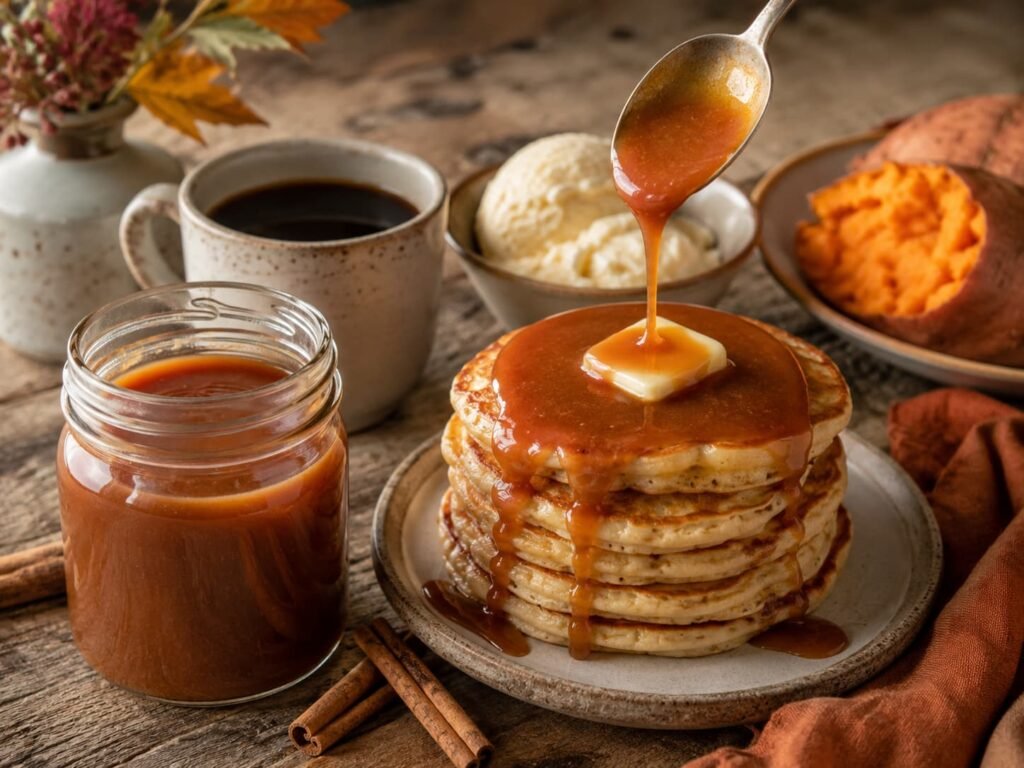
This sweet potato syrup recipe is warm, smooth, lightly spiced, and easy to use in more than one way. It has a soft sweetness from cooked sweet potato, a little depth from brown sugar, and cozy flavor from vanilla, cinnamon, and nutmeg. You can drizzle it over pancakes and waffles, stir it into coffee or lattes, or use it as a simple dessert sauce for ice cream, cakes, cookies, and brownies.
At Daily Bite Recipes, we love homemade recipes that feel practical for everyday cooking, and this homemade sweet potato syrup is a good example. It is not just another sugar syrup. Sweet potato gives it body, a natural golden-orange color, and a gentle earthy flavor that regular pancake syrup does not have. The flavor feels close to fall, but it does not taste only like pumpkin spice. It is sweet, smooth, and spiced enough to work for breakfast, coffee, and desserts without overpowering them.
What Is Sweet Potato Syrup?
Sweet potato syrup is a homemade syrup made with cooked sweet potato or sweet potato puree, water, brown sugar or maple syrup, vanilla, cinnamon, nutmeg, and a small pinch of salt. The ingredients are simmered together until the sweet potato blends into the liquid and the spices create a warm, balanced flavor.
For the best texture, the syrup is blended and strained before storing. This keeps it smooth, pourable, and easy to use. It should be a little thicker than regular simple syrup, but not as thick as a puree or dessert spread.
You can use sweet potato syrup as a breakfast syrup for pancakes, waffles, French toast, oatmeal, yogurt bowls, and cottage cheese bowls. It also works well as a coffee syrup for hot coffee, iced coffee, cold brew, and homemade lattes. For desserts, it makes a cozy drizzle for vanilla ice cream, cakes, cookies, brownies, and no-bake treats.
Why You’ll Love This Sweet Potato Syrup
This easy sweet potato syrup recipe is worth keeping in the fridge because it works in more than one way. You can pour it over pancakes and waffles in the morning, stir a spoonful into coffee later in the day, or use it as a warm dessert drizzle after dinner. The flavor is sweet and cozy, but gentle enough that it does not cover up everything you serve it with.
It also uses real sweet potato, which gives the syrup a lightly thick body and a natural golden-orange color. That makes it feel more homemade than many store-bought flavored syrups, which can sometimes taste more like sugar than real ingredients. Here, the sweet potato adds soft earthy sweetness, while cinnamon, vanilla, and nutmeg bring in warmth.
This homemade syrup recipe is easy to adjust depending on how you plan to use it. If you want a stronger breakfast flavor, use maple syrup. If you want a deeper caramel note, use brown sugar. If you want a lighter syrup for coffee, add a little more water and strain it well so it blends smoothly into hot coffee, iced coffee, cold brew, or a homemade latte.
It is also a smart way to use leftover baked sweet potato. If you already have one in the fridge, you can turn it into a small jar of fall coffee syrup or pancake syrup instead of letting it go to waste.
Ingredients You’ll Need
A good sweet potato syrup starts with simple ingredients. Each one has a purpose, so the final syrup tastes balanced instead of flat, watery, or too sweet.
Sweet Potato
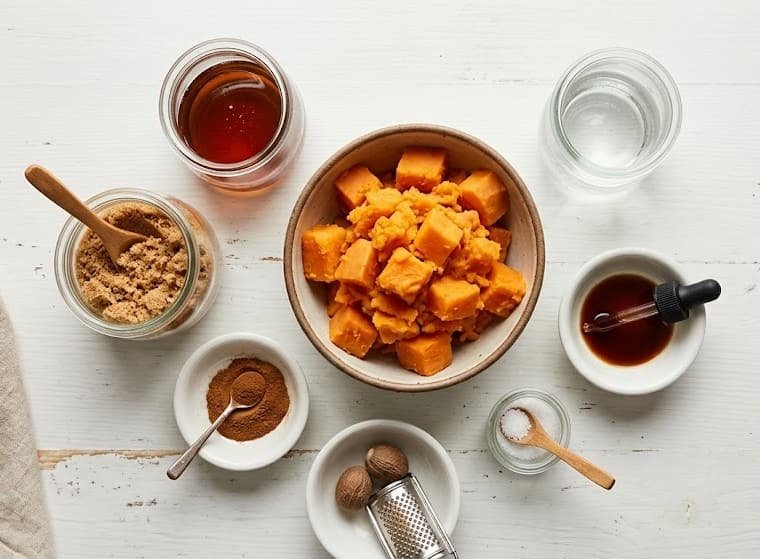
Use cooked sweet potato for the best flavor and texture. Roasted sweet potato gives the syrup the deepest flavor because the natural sugars have more time to develop. Steamed, boiled, or microwaved sweet potato can also work, especially when you want a faster option.
Leftover baked sweet potato is perfect for this recipe as long as it is plain. Avoid sweet potatoes that already have butter, marshmallows, garlic, or savory seasoning mixed in. If you are using canned sweet potato puree, choose one that is smooth and not too watery. A thin puree can make the syrup taste weak and may take longer to simmer down.
Brown Sugar or Maple Syrup
Brown sugar gives this syrup a soft caramel flavor that works well with cinnamon and vanilla. It is especially good when you want the syrup for pancakes, waffles, oatmeal, ice cream, or other sweet breakfast and dessert recipes.
Maple syrup gives the recipe a deeper breakfast-style flavor. It pairs well with sweet potato because both have a warm, earthy sweetness. You can use all brown sugar, all maple syrup, or a mix of both depending on the flavor you want.
Cinnamon and Nutmeg
Cinnamon and nutmeg give the syrup its warm spice flavor. Cinnamon makes it taste cozy and familiar, while nutmeg adds depth. You do not need a lot of either spice. Too much nutmeg can make the syrup taste heavy, so start small and adjust only if needed.
This is where the syrup gets that gentle fall flavor, but it should still taste like sweet potato first. The goal is a warm cinnamon sweet potato syrup that feels balanced, not overly spiced.
Vanilla Extract
Vanilla extract smooths out the earthy flavor of the sweet potato and makes the syrup taste more rounded. It also helps the brown sugar, maple syrup, and spices come together.
For the best flavor, add vanilla near the end of cooking or after the syrup has been taken off the heat. This keeps the vanilla from tasting sharp or fading too much while the syrup simmers.
Salt
A small pinch of salt makes a big difference. It does not make the syrup salty. It simply brings out the sweetness and keeps the flavor from tasting flat.
This is especially helpful because vanilla, brown sugar, maple syrup, and sweet potato all taste better with a little salt behind them.
Water
Water helps turn the cooked sweet potato into a smooth, pourable syrup. Without enough liquid, the mixture can become too thick and feel more like a sauce or puree.
Start with the amount in the recipe, then adjust after blending. If you want a thicker syrup for pancakes or desserts, simmer it a little longer. If you want a thinner syrup made with sweet potato puree for coffee, add a splash of warm water and strain it well before storing.
How to Make Sweet Potato Syrup
If you are wondering how to make sweet potato syrup at home, the main thing to focus on is texture. Sweet potato gives the syrup flavor, color, and body, but it needs to be cooked, blended, and strained properly so the final syrup stays smooth instead of thick or grainy.

Step 1: Cook and Mash the Sweet Potato
Start with a plain cooked sweet potato. Roasted sweet potato gives the syrup the richest flavor because the natural sugars become deeper as it cooks. If you are short on time, a microwaved sweet potato works well too. You can also use steamed sweet potato or leftover baked sweet potato, as long as it has not been mixed with butter, garlic, marshmallows, or savory seasoning.
Once the sweet potato is soft, remove the skin and mash the flesh until it is mostly smooth. A few small lumps are fine at this point because the mixture will be blended in the next step.
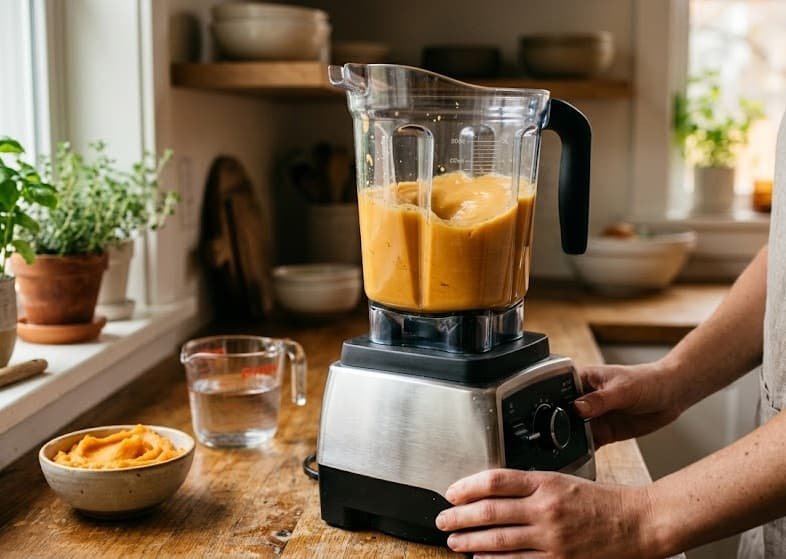
Step 2: Blend with Water
Add the mashed sweet potato to a blender with water. Blending before simmering helps the sweet potato mix evenly into the liquid and keeps the syrup from turning chunky.
If the mixture looks too thick to blend, add a small splash of warm water. It should look loose and creamy, not stiff like mashed potatoes. This step helps give the homemade sweet potato syrup a smoother texture from the start.

Step 3: Simmer with Sugar and Spices
Pour the blended sweet potato mixture into a small saucepan. Add the brown sugar or maple syrup, cinnamon, nutmeg, and a pinch of salt. Cook it over medium-low heat, stirring often so the syrup does not stick to the bottom of the pan.
Let it simmer gently for 10 to 15 minutes, until the sugar dissolves and the syrup looks slightly thicker. Avoid boiling it hard. A strong boil can reduce the syrup too quickly and make it thicker than you want, especially if you plan to use it in coffee or lattes.
Add the vanilla near the end of cooking. This keeps the flavor soft and fragrant instead of letting it fade too much while the syrup simmers.
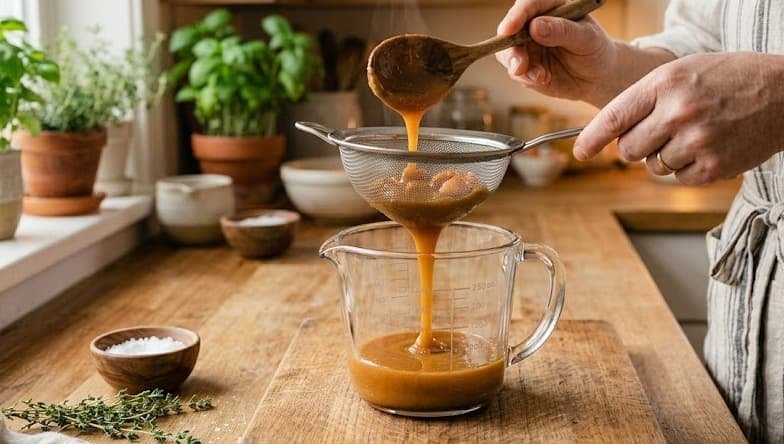
Step 4: Strain for a Smooth Syrup
This is the step that makes the biggest difference. Pour the warm syrup through a fine mesh strainer into a clean bowl or measuring cup. Use a spoon or spatula to press the liquid through, but do not push too much thick pulp into the syrup.
If you want to know how to make sweet potato syrup smooth, this is the answer: blend it well, simmer it gently, and strain it before storing. The final syrup should be lightly thick, glossy, and easy to pour. If you like a thicker syrup, you can stir a small amount of the strained pulp back in, but keep it smooth enough to drizzle.
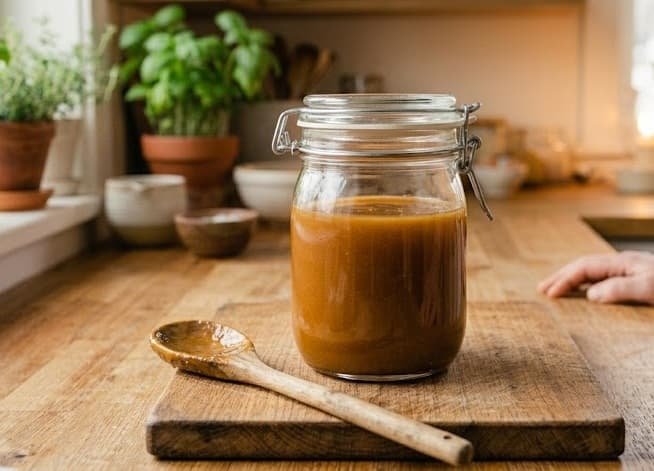
Step 5: Cool and Store
Let the syrup cool before transferring it to a clean glass jar or airtight bottle. Once cooled, store it in the refrigerator. Because this syrup contains real sweet potato, do not leave it sitting at room temperature for long periods.
The syrup may thicken slightly as it chills, so shake or stir it before using. If it becomes too thick for coffee, warm a spoonful for a few seconds or stir in a small splash of warm water. If you want it thicker for pancakes or desserts, simmer it a little longer before straining.
Recipe Card
Sweet Potato Syrup Recipe
This homemade sweet potato syrup is smooth, lightly spiced, and easy to use on pancakes, waffles, coffee, oatmeal, ice cream, cakes, and cookies. It is made with real sweet potato, brown sugar or maple syrup, vanilla, cinnamon, and nutmeg for a warm flavor that works for breakfast and desserts.
Prep Time: 10 minutes
Cook Time: 20 minutes
Total Time: 30 minutes
Yield: About 1 to 1 1/4 cups syrup
Ingredients
- 1 cup cooked mashed sweet potato, plain and peeled
- 1 cup water, plus more if needed
- 1/2 cup light brown sugar or maple syrup
- 1 teaspoon vanilla extract
- 1/2 teaspoon ground cinnamon
- 1/8 teaspoon ground nutmeg
- 1 small pinch of salt
Instructions
- Cook the sweet potato until very soft. Roasting gives the deepest flavor, while microwaving is the fastest option.
- Remove the skin and mash the sweet potato until mostly smooth.
- Add the mashed sweet potato and water to a blender. Blend until smooth and loose.
- Pour the mixture into a small saucepan.
- Add brown sugar or maple syrup, cinnamon, nutmeg, and salt.
- Simmer over medium-low heat for 10 to 15 minutes, stirring often, until slightly thickened.
- Turn off the heat and stir in the vanilla extract.
- Strain the warm syrup through a fine mesh strainer for the smoothest texture.
- Let the syrup cool, then pour it into a clean glass jar.
- Store in the refrigerator and shake or stir before using.
Notes
For pancakes and desserts, simmer the syrup a few minutes longer so it becomes slightly thicker. For coffee, iced coffee, or lattes, keep the syrup a little thinner so it blends into drinks more easily.
If you are using canned sweet potato puree, choose a plain puree with no added seasoning. If the puree is watery, simmer the syrup a little longer to improve the texture and flavor.
You can adjust the sweetness to your taste. Brown sugar gives the syrup a caramel note, while maple syrup gives it a deeper breakfast flavor.
The final yield may be closer to 1 cup if you simmer the syrup longer for a thicker pancake syrup.
Storage
Store sweet potato syrup in a clean airtight jar in the refrigerator for up to 1 week. Always use a clean spoon when serving. If the syrup thickens after chilling, stir in a small splash of warm water before using.
Because this syrup is made with real sweet potato, keep it refrigerated and do not store it at room temperature.
Nutrition
Nutrition is an estimate only and will change depending on the sweetener, simmer time, and final yield. As a general guide, 1 tablespoon of syrup may have about 35 to 45 calories when made with brown sugar or maple syrup.

Best Ways to Use Sweet Potato Syrup
This syrup works best when you treat it like a cross between pancake syrup, coffee syrup, and a lightly spiced dessert sauce. It has enough flavor to stand on its own, but it is not so strong that it takes over the whole dish. You can use it anywhere you would normally use maple syrup, brown sugar syrup, caramel sauce, or a warm cinnamon drizzle.
On Pancakes and Waffles
The easiest way to use it is over warm pancakes or waffles. It works especially well as a homemade pancake syrup because it is lightly thick, smooth, and full of cinnamon-vanilla flavor. Pour it over homemade pancakes with a small pat of butter, or add toasted pecans for a little crunch.
If you want a weekend-style breakfast, drizzle it over fluffy pancakes with sliced bananas or a dusting of cinnamon. For a lighter plate, use a smaller amount over healthy pancakes with Greek yogurt and fresh berries.
This syrup also works well on waffles, French toast, crepes, and breakfast casseroles. If you are using sweet potato syrup for waffles, keep it slightly thicker so it sits on top instead of soaking in too quickly.

In Coffee and Lattes
Sweet potato syrup also makes a warm, cozy coffee sweetener. Stir a spoonful into hot coffee, iced coffee, cold brew, espresso, or a homemade latte. The sweet potato gives the drink a soft richness, while cinnamon, vanilla, and nutmeg make it taste like a gentle fall coffee syrup.
For a sweet potato latte syrup, keep the syrup a little thinner than you would for pancakes. A thinner syrup blends more easily into hot milk, oat milk, almond milk, or cold brew. It is especially good in an oat milk latte because the natural sweetness of the oats works well with the sweet potato.
You can also use it alongside other homemade coffee drinks when you want something different from plain vanilla or caramel. If you already enjoy warm seasonal flavors, this syrup pairs nicely with pumpkin spice coffee creamer without tasting exactly the same.
Over Oatmeal and Yogurt Bowls
Sweet potato syrup can turn a simple bowl of oatmeal into a warm breakfast that feels more filling. Spoon it over cooked oats with sliced banana, chopped pecans, walnuts, or a little extra cinnamon. It gives the bowl sweetness, color, and a soft sweet potato flavor without needing a heavy pour.
It also works well for lighter breakfast bowls, especially Greek yogurt bowls and cottage cheese bowls. Add a small drizzle, then top with fruit, granola, chia seeds, or toasted nuts. The syrup adds enough sweetness to make the bowl feel finished, while the sweet potato keeps the flavor warmer and more rounded than plain sugar syrup.
For more healthy breakfast ideas, use this syrup in small amounts over oats, yogurt, cottage cheese, pancakes, or fruit bowls. It works best as a sweet potato breakfast topping when you want sweetness, warm spice, and a little color without making the bowl too heavy.
On Ice Cream and Desserts
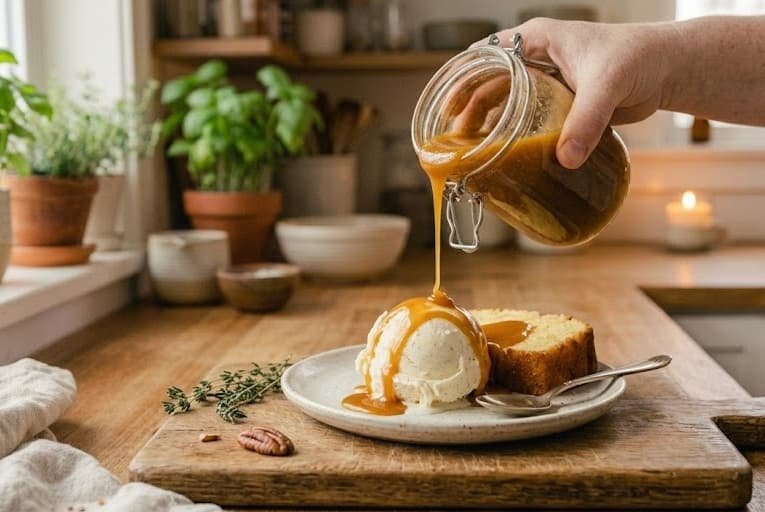
For desserts, this syrup works like a simple spiced drizzle. Warm it slightly and pour it over vanilla ice cream, pound cake, or cheesecake. It also works well with brownies, cookies, banana bread, and no-bake desserts when you want a little cinnamon and brown sugar flavor.
It is especially good over homemade ice cream because the warm syrup melts slightly into the cold cream. You can also drizzle it over easy desserts when you want to add flavor without making a full frosting or glaze.
If you like cozy fall desserts, try it with oatmeal cookies, spice cake, banana bread, or warm brownies. For sweet potato syrup for ice cream, keep the syrup smooth and lightly thick so it pours slowly and coats the top.
Tips for the Smoothest Syrup
The best sweet potato syrup should be smooth, glossy, and easy to pour. Since sweet potato is naturally starchy, the texture can turn thick if it is not handled the right way. These small details make a big difference.
Use warm mashed sweet potato when possible. Warm sweet potato blends more easily with water and gives the syrup a softer texture. Cold sweet potato can still work, but it may need a little extra blending.
Blend the sweet potato with water before it goes into the saucepan. This helps break down the fibers early and keeps the syrup from turning lumpy. If the mixture looks too thick in the blender, add a small splash of warm water until it moves easily.
Simmer the syrup gently. A slow simmer helps the brown sugar or maple syrup dissolve and gives the spices time to blend into the sweet potato. Do not boil it hard, because a strong boil can make the syrup reduce too fast and turn heavy or grainy.
Strain the syrup through a fine mesh strainer before storing. This step removes small fibers and thick bits of sweet potato, which gives the syrup a cleaner finish. If you want a thicker syrup for pancakes, you can press a little more through the strainer, but avoid pushing in too much pulp.
If the syrup becomes too thick, thin it with warm water one teaspoon at a time. If it is too thin, return it to the saucepan and simmer it for a few more minutes. The texture should be thicker than simple syrup, but still loose enough to drizzle from a spoon.
Always shake or stir the syrup before using. Since it is made with real sweet potato, it may settle slightly in the fridge. A quick shake brings the texture back together and makes it easier to pour over pancakes, coffee, oatmeal, or desserts.
Flavor Variations
Once the basic syrup is ready, you can adjust the flavor depending on how you want to use it. Keep the same base, then change the spices, sweetener, or thickness so it works better for pancakes, coffee, oatmeal, or desserts.
Sweet Potato Pie Syrup
For a sweet potato pie syrup, add a little more cinnamon, a pinch of ginger, and an extra 1/4 teaspoon of vanilla. Nutmeg works well too, but keep it light because too much can make the syrup taste heavy.
This version is best for pancakes, waffles, ice cream, pound cake, oatmeal, and warm cookies. It should still taste like sweet potato first, with pie-style spices in the background.
Maple Sweet Potato Syrup
Maple syrup gives this recipe a deeper breakfast flavor. To make maple sweet potato syrup, replace part or all of the brown sugar with maple syrup. The flavor will be softer, less caramel-like, and closer to something you would pour over pancakes, waffles, or French toast.
If you use all maple syrup, simmer the mixture gently and taste it before adding extra spice. Maple syrup already brings its own deep flavor, so you may not need much extra cinnamon or nutmeg.
Brown Sugar Cinnamon Syrup
For a richer syrup, use brown sugar and a little extra cinnamon. This version has a deeper caramel flavor and works especially well as a topping for waffles, oatmeal, ice cream, brownies, and other dessert toppings.
Keep the heat low while it simmers. Brown sugar can give the syrup a warm, deep flavor, but it can also thicken quickly if the mixture boils too hard.
Sweet Potato Coffee Syrup
For sweet potato coffee syrup, keep the texture thinner than you would for pancakes. Add a little extra water after blending, then strain it well so it mixes smoothly into hot coffee, iced coffee, cold brew, or lattes.
This version tastes best with vanilla, cinnamon, and just a small amount of nutmeg. If the syrup is too thick, it may settle at the bottom of the cup instead of blending into the drink.
Low-Sugar Sweet Potato Syrup
You can make a low sugar sweet potato syrup by reducing the brown sugar or maple syrup and using the syrup in smaller amounts. Start by reducing the sweetener by 1 to 2 tablespoons, then taste and adjust from there.
It will not taste as rich or thick as the full-sugar version, but it can still work for oatmeal, yogurt bowls, coffee, and lighter breakfasts. Do not call this version sugar-free unless you are using a true sugar-free sweetener and have tested the texture. Sweet potato naturally contains some sweetness, and reducing the added sugar too much can make the syrup thinner and less glossy.
How to Store Sweet Potato Syrup
Let the syrup cool completely before storing it. Pouring hot syrup straight into a closed jar can create extra moisture inside the container, which is not ideal for freshness.
Once cooled, transfer the syrup to a clean airtight glass jar or bottle and keep it in the refrigerator. Because this recipe uses real sweet potato, it should not be stored at room temperature like a plain sugar syrup. For the safest and freshest flavor, use it within 1 week.
The syrup may thicken or settle slightly after chilling. Shake the jar well or stir it with a clean spoon before each use. If it becomes too thick, warm a small portion for a few seconds or stir in a teaspoon of warm water until it pours easily again.
Always use a clean spoon when serving. Avoid dipping used utensils into the jar, especially if you plan to keep the syrup for several days. This helps keep the syrup fresh and protects the flavor.
If you want to keep it longer, freeze the syrup in small portions. An ice cube tray works well because you can thaw only what you need for coffee, pancakes, or desserts. Once frozen, move the cubes to a freezer-safe bag or container. For best flavor, use frozen portions within 2 to 3 months. Thaw in the refrigerator, then stir or shake before using.
Common Mistakes to Avoid
Sweet potato syrup is simple to make, but the texture can change quickly if the mixture gets too thick, too hot, or too pulpy. Since sweet potato is naturally starchy, the goal is to keep the syrup smooth, pourable, and balanced.
Using Too Much Sweet Potato
Adding too much sweet potato can make the syrup thick like a sauce instead of smooth and easy to pour. It may still taste good, but it will be harder to stir into coffee or drizzle evenly over pancakes and waffles.
If your syrup turns too thick, add warm water a teaspoon at a time and stir until it loosens. For a dessert topping, a little extra body is fine. For coffee, iced coffee, or lattes, the syrup should stay thinner so it blends into the drink.
Skipping the Blender
Mashing the sweet potato by hand is not always enough. Even when it looks soft, small pieces can stay in the mixture and make the syrup uneven.
Blending the sweet potato with water before simmering helps create a smoother base. It also helps the sweetener, cinnamon, nutmeg, and vanilla mix more evenly into the syrup.
Not Straining the Syrup
Straining may feel like an extra step, but it is one of the best ways to get a smooth finish. Sweet potato can leave small fibers behind, especially if it was roasted or mashed by hand.
A fine mesh strainer removes those bits and gives the syrup a smoother finish. This matters most if you plan to use it in coffee, iced coffee, cold brew, or lattes, where small pieces are more noticeable.
Boiling Too Hard
A hard boil can make the syrup reduce too fast. Instead of turning glossy and pourable, it can become too thick, grainy, or sticky.
Keep the heat at a gentle simmer and stir often. This gives the sweet potato, sweetener, and spices time to come together without burning or thickening too much.
Adding Too Much Spice
Cinnamon, nutmeg, ginger, and vanilla can make the syrup taste warm and cozy, but too much spice can hide the sweet potato flavor. Nutmeg and ginger are especially strong, so a small amount is usually enough.
The best sweet potato syrup should still taste like sweet potato first. The spices should support the flavor, not overpower the syrup.
What to Serve with Sweet Potato Syrup
Sweet potato syrup works best with foods that already pair well with warm spices, brown sugar, maple flavor, or creamy textures. It can be used for breakfast, coffee drinks, and simple desserts.
Try it with:
- Pancakes
- Waffles
- French toast
- Oatmeal
- Greek yogurt bowls
- Cottage cheese bowls
- Coffee
- Lattes
- Ice cream
- Pound cake
- Cookies
- Brownies
- No-bake desserts
For breakfast, keep the syrup warm and pourable so it spreads easily over pancakes, waffles, or oats. For coffee and lattes, use a thinner version so it blends smoothly into the drink. For ice cream, pound cake, cookies, and brownies, warm the syrup slightly and use it like a soft spiced drizzle.
FAQs
What does sweet potato syrup taste like?
Sweet potato syrup tastes sweet, warm, and lightly earthy. It has a gentle sweet potato flavor with notes of brown sugar, cinnamon, vanilla, and a little nutmeg. It is not as plain as simple syrup and not as strong as caramel sauce. The flavor sits somewhere between pancake syrup, sweet potato pie filling, and a soft fall coffee syrup.
Can I use canned sweet potato puree?
Yes, you can use canned sweet potato puree as long as it is plain. Choose a puree with no added spices, sugar, butter, or savory seasoning. If the puree is watery, simmer the syrup a little longer so the flavor becomes stronger and the texture thickens slightly.
Avoid canned candied yams or sweet potatoes packed in heavy syrup unless you plan to reduce the sugar in the recipe. They can make the syrup much sweeter than expected.
Can I make sweet potato syrup with leftover baked sweet potato?
Yes, leftover baked sweet potato works very well for this recipe. It is one of the easiest ways to make homemade sweet potato syrup because the sweet potato is already soft and cooked.
Use plain leftover sweet potato with no butter, marshmallows, garlic, herbs, or savory seasoning mixed in. Remove the skin, mash the flesh, then blend it with water before simmering it with the sweetener and spices.
Can I use sweet potato syrup in coffee?
Yes, sweet potato syrup works well in coffee, especially hot coffee, iced coffee, cold brew, espresso drinks, and lattes. For coffee, keep the syrup a little thinner than you would for pancakes so it blends smoothly into the drink.
If the syrup is too thick, warm it slightly or stir in a small splash of warm water before adding it to your cup. Vanilla, cinnamon, and a small amount of nutmeg make it taste like a cozy sweet potato coffee syrup without making the drink feel too heavy.
Is sweet potato syrup the same as sweet potato simple syrup?
They are similar, but not always exactly the same. Sweet potato simple syrup is usually thinner and made more like a drink syrup, often with water, sugar, and sweet potato flavor. Sweet potato syrup can be slightly thicker because it uses real cooked sweet potato or sweet potato puree.
For coffee, mocktails, iced drinks, or cold brew, a thinner sweet potato simple syrup works best. For pancakes, waffles, ice cream, and desserts, a slightly thicker sweet potato syrup is usually better.
How do I make sweet potato syrup smooth?
To make sweet potato syrup smooth, blend the cooked sweet potato with water before simmering it. After the syrup cooks, strain it through a fine mesh strainer to remove small fibers or thick bits of pulp.
Do not skip the straining step if you want a clean, pourable texture. This is especially important if you plan to use the syrup in coffee, lattes, or iced drinks where small pieces are easy to notice.
How long does sweet potato syrup last?
Sweet potato syrup should be stored in a clean airtight jar in the refrigerator and used within 1 week. Because it is made with real sweet potato, it should not be stored at room temperature like plain sugar syrup.
Always use a clean spoon when serving. If you notice an off smell, unusual color, mold, or fizzing, discard it.
Can I freeze sweet potato syrup?
Yes, you can freeze sweet potato syrup in small portions. An ice cube tray works well because you can thaw only what you need for coffee, pancakes, oatmeal, or desserts.
Once frozen, move the cubes to a freezer-safe bag or container. For the best flavor, use frozen portions within 2 to 3 months. Thaw in the refrigerator, then stir or shake before using because the syrup may separate slightly.
Can I make it without brown sugar?
Yes, you can make sweet potato syrup without brown sugar. Maple syrup is the easiest swap and gives the syrup a deeper breakfast flavor. You can also use honey, but it will change the taste and may make the syrup slightly floral.
If you use a sugar-free sweetener, the texture may be different. Brown sugar and maple syrup help create body, so a sugar-free version may be thinner or less glossy unless it is tested and adjusted.
Can I use this syrup on pancakes and waffles?
Yes, this syrup is excellent on pancakes and waffles. For pancakes and waffles, keep it slightly thicker so it sits on top and drizzles slowly. It also tastes good with butter, toasted pecans, sliced bananas, Greek yogurt, or a little extra cinnamon.
If you are serving it with a lighter breakfast, use a smaller drizzle instead of pouring it heavily.
Is sweet potato syrup healthy?
Sweet potato syrup can be a more flavorful homemade option than some store-bought flavored syrups, especially because it uses real sweet potato. But it is still a sweet syrup made with brown sugar, maple syrup, honey, or another sweetener, so it is best used in reasonable amounts.
A lighter way to use it is as a small drizzle over oatmeal, Greek yogurt, cottage cheese bowls, pancakes, or fruit instead of using a large pour.
Why is my syrup too thick?
Sweet potato syrup can become too thick if you use too much sweet potato, simmer it too long, boil it too hard, or do not add enough water. It can also thicken more after chilling in the refrigerator.
To fix it, stir in warm water one teaspoon at a time until it loosens. If you are using it for coffee or lattes, keep it thinner. If you are using it for pancakes, waffles, or desserts, a slightly thicker texture is fine as long as it still pours.
Final Thoughts
Sweet potato syrup is a simple homemade topping that feels cozy, useful, and easy to adjust. It brings real sweet potato flavor, warm spice, and a smooth texture to everyday foods without needing a complicated recipe.
Try it first on pancakes or waffles so you can enjoy the syrup warm and slightly thick. After that, stir a spoonful into coffee or drizzle it over vanilla ice cream, oatmeal, cookies, or brownies. Once you find the thickness you like, this syrup can become an easy homemade topping for breakfast, coffee, and desserts.