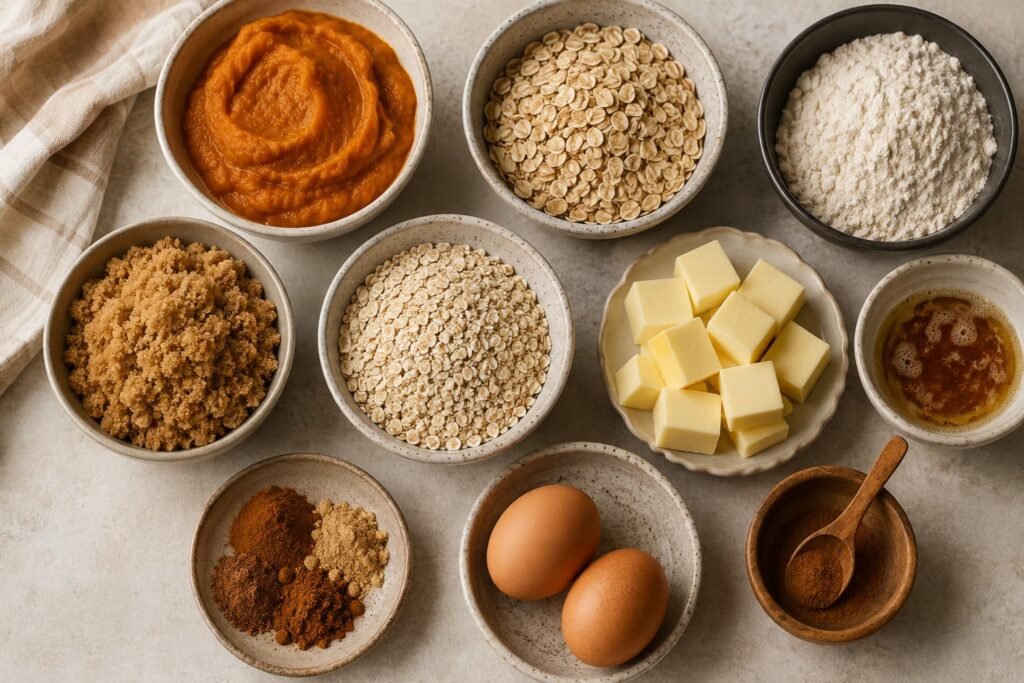
Brown butter pumpkin oatmeal cookies are oatmeal-style cookies made with browned butter, pumpkin puree, and oats.
Brown butter adds toasted, nutty flavor notes. Pumpkin puree adds pumpkin flavor, moisture, and solids, while oats contribute bulk and texture. Together, these ingredients create a different moisture and fat balance from a standard oatmeal cookie made with regular butter and no pumpkin.
There is no single texture that defines every version. Depending on the complete formula, the cookies may be softer, denser, more cake-like, or chewier.
Understanding how the main ingredients interact is more useful than assuming that one ingredient or technique will always create a particular result.
How Do Brown Butter, Pumpkin, and Oats Affect Cookie Texture?
Brown butter, pumpkin puree, and oats influence different parts of the dough. Browning butter removes some water, pumpkin introduces moisture and solids, and oats interact with the available liquid while adding texture.
The final result depends on how these ingredients work with flour, sugar, eggs, leavening, and the rest of the formula.
What Does Brown Butter Change?
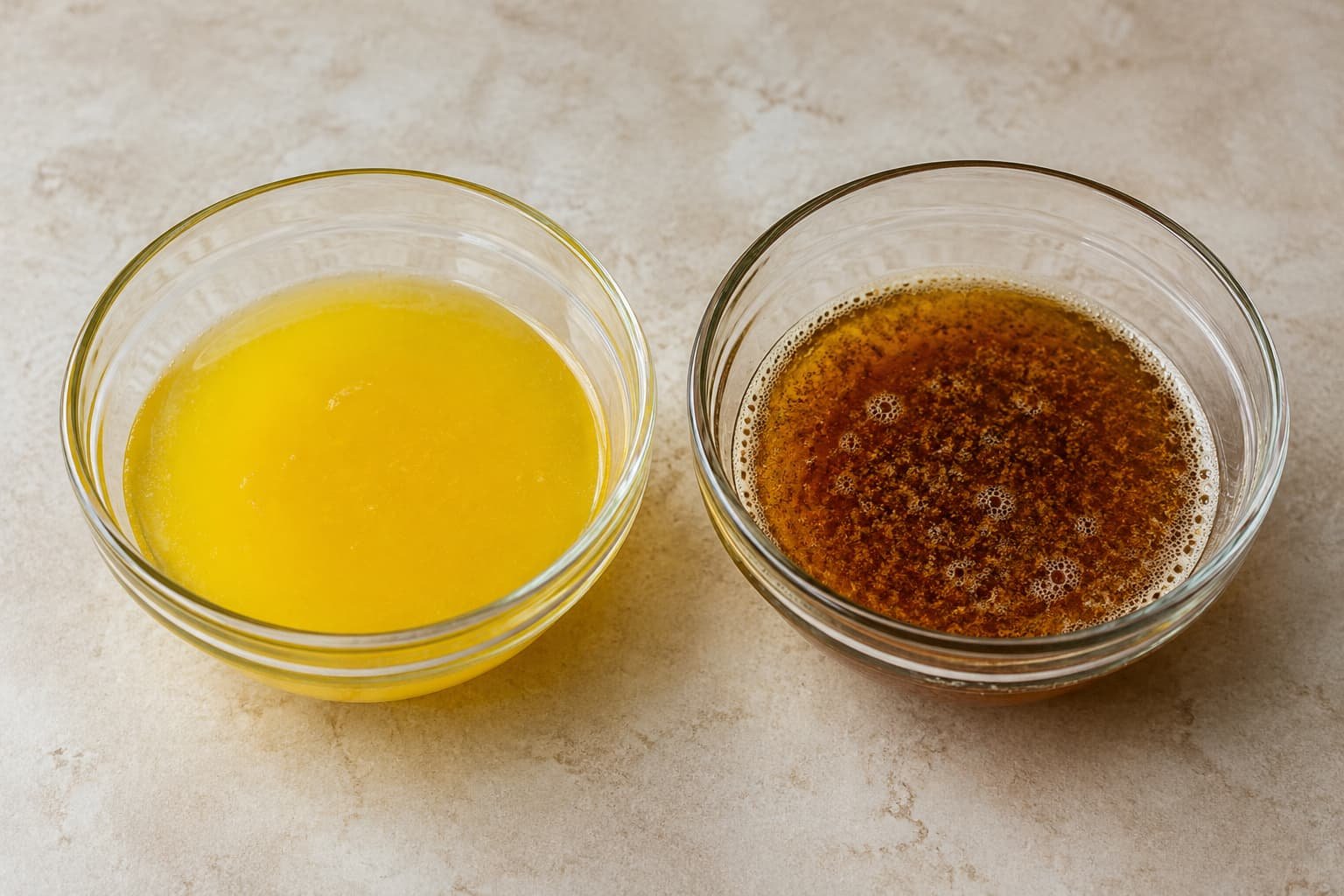
Brown butter changes both flavor and moisture balance.
As butter is heated, water evaporates and the milk components begin to brown. This creates the toasted, nutty flavor associated with brown butter.
Because some water is lost, finished brown butter does not have exactly the same water-to-fat balance as the butter before browning. That difference may affect dough consistency because flour, oats, sugar, eggs, and other ingredients interact with the moisture available in the mixture.
This is particularly relevant in pumpkin cookies because pumpkin puree adds moisture while browning butter removes some. These changes should not be treated as exact opposites that automatically balance each other.
The complete ingredient proportions still determine how the dough behaves.
How Does Pumpkin Puree Affect the Dough?
Pumpkin puree adds moisture and pumpkin solids. That additional moisture can affect dough consistency, spread, and crumb.
In some tested pumpkin-cookie formulas, higher pumpkin moisture has been associated with a softer, more cake-like texture. Reducing part of that moisture has been used to create a denser result in those specific formulations.
That does not mean pumpkin automatically makes cookies cakey, or that reducing pumpkin moisture guarantees chewiness.
Pumpkin has to work alongside the flour, oats, eggs, fat, sugar, and leavening. Changing the amount or consistency of the puree therefore affects more than pumpkin flavor.
What Role Do Oats Play?
Oats add bulk and a noticeable oat texture. They also interact with moisture as they hydrate.
The type of oats matters because different oat products have different physical structures. Old-fashioned rolled oats have relatively large flakes, while quick oats are processed into smaller, thinner pieces.
Changing between them may alter how noticeable the oats are and can affect the overall texture of the dough and finished cookie.
Neither type is universally better. The result depends on the formula and the texture it is intended to produce.
For a broader comparison of oat types in cookies, see the Oatmeal Raisin Walnut Cookies guide.
Why Can Pumpkin Oatmeal Cookies Become Cakey?
A cake-like texture can result from several factors working together, including pumpkin moisture, egg composition, flour and oat balance, leavening, and the overall amount of liquid in the dough.
Pumpkin puree is one possible contributor because it introduces additional moisture. In some tested pumpkin-cookie formulas, reducing that moisture has helped create a denser, less cake-like result.
Eggs can also affect texture because whole eggs, yolks, and whites contribute different proportions of liquid, protein, and fat.
Flour and oats provide dry material and structure, while leavening can influence rise, spread, and internal crumb.
For this reason, a cake-like result should not automatically be blamed on pumpkin alone. It is usually more useful to consider the overall balance of wet ingredients, dry ingredients, fat, eggs, and leavening.
Does Reducing Pumpkin Moisture Change the Texture?
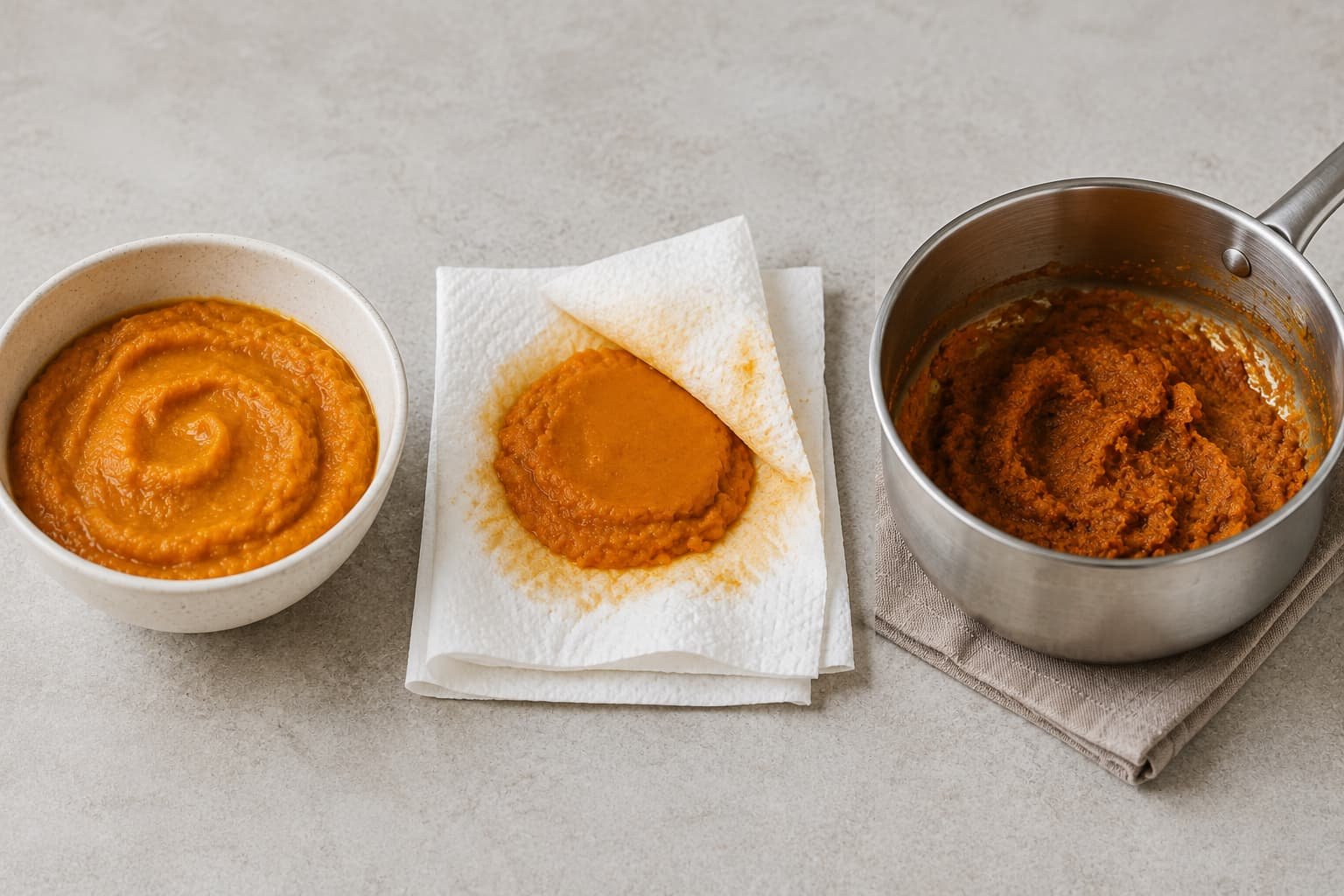
Yes. Reducing moisture from pumpkin puree changes the balance of liquid in the dough and may affect the finished texture.
Some tested pumpkin-cookie formulas deliberately remove part of the pumpkin’s water before mixing. In those formulations, concentrated pumpkin has been used to produce a denser, less cake-like result.
That does not guarantee a chewy cookie. Flour, oats, sugar, eggs, fat, leavening, and baking conditions still influence the outcome.
Blotting vs Cooking Down Pumpkin Puree
Blotting and cooking down both reduce moisture, but they use different methods.
Blotting uses an absorbent material to draw some moisture from the puree before it enters the dough.
Cooking down uses heat to evaporate water. As moisture is removed, the puree becomes thicker and more concentrated.
Neither method is automatically better. A formula developed with regular pumpkin puree may behave differently if the puree is concentrated first.
The important distinction is that changing pumpkin moisture changes the formula. Any effect on chewiness, spread, or crumb still depends on the other ingredients.
Old-Fashioned Oats vs Quick Oats: Does the Type Matter?
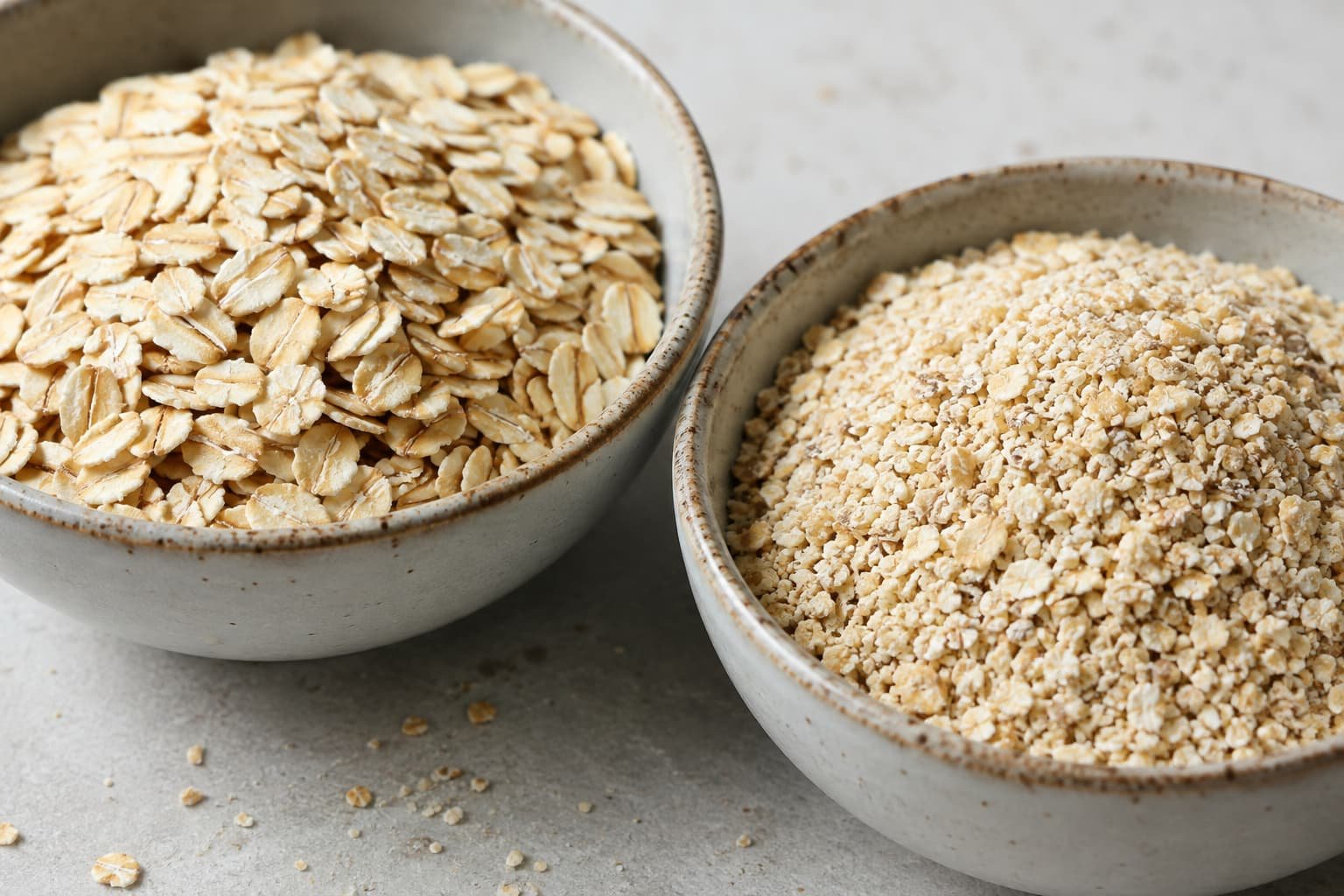
Yes. Old-fashioned and quick oats differ in size and processing, so switching between them can change how the oats appear and behave in a cookie.
Neither type should be treated as automatically better.
Old-Fashioned Rolled Oats
Old-fashioned oats, also called rolled oats, have relatively large, flat flakes.
Their larger size can make the oat pieces more noticeable in the finished cookie and may contribute a more pronounced oat texture.
However, using old-fashioned oats does not guarantee a thick or chewy result. Pumpkin moisture, flour, fat, sugar, eggs, and other ingredients still matter.
Quick Oats
Quick oats are rolled thinner and cut into smaller pieces than old-fashioned oats.
Their finer structure can make the oat pieces less noticeable and may produce a different dough and finished texture.
Because the two oat types are not physically identical, switching from one to the other should not be treated as a completely neutral substitution.
Is Pumpkin Puree the Same as Pumpkin Pie Filling?
No. Plain pumpkin puree and pumpkin pie filling or pumpkin pie mix are different products.
Plain puree provides pumpkin without a prepared sweetener and spice mixture. Pumpkin pie filling or mix commonly contains additional ingredients such as sugar and spices. Exact formulations vary by product, so the ingredient label should be checked.
Replacing plain puree with a sweetened, seasoned mixture can change sweetness, spice balance, and the overall proportions in the dough.
For that reason, pumpkin pie filling should not automatically be used as a one-to-one replacement for plain pumpkin puree.
What Other Ingredients Can Influence Cookie Texture?
Flour, sugar, eggs, leavening, and dough temperature can also influence spread, thickness, and crumb.
These ingredients work together, so changing one may affect several parts of the finished cookie.
Flour, Sugar, and Eggs
Flour contributes structure. Changing the amount relative to the wet ingredients may affect how firmly the dough holds together and how much it spreads.
Sugar contributes sweetness but also influences browning, moisture behavior, and spread. Different sugars have different compositions, so changing the type or proportion can affect more than flavor.
Eggs contribute liquid, protein, fat, and structure. Whole eggs, yolks, and whites do not provide these components in the same proportions, so changing the egg portion may alter the texture.
None of these ingredients determines the result by itself.
For a broader explanation of general cookie structure and spread, see the Chocolate Chip and Peanut Butter Chip Cookies guide.
How Do Leavening and Dough Temperature Matter?
Leavening can affect rise, spread, and internal structure. Baking soda and baking powder do not work in exactly the same way, so replacing one with the other should not be treated as a neutral change.
Dough temperature can also influence handling and spread because fat changes consistency as its temperature changes.
Cooler dough may behave differently from warmer dough, but chilling is not a guaranteed solution for every cookie problem. Its effect depends on the complete formulation.
Why Might Pumpkin Oatmeal Cookie Dough Feel Sticky?
Sticky dough can result from several factors, including pumpkin moisture, warm brown butter, the amount and type of flour or oats, and the overall balance of wet and dry ingredients.
Pumpkin adds moisture, while brown butter may still be fluid if it is warm. Flour and oats interact with available liquid, and dough consistency may also change as those dry ingredients hydrate.
Stickiness alone does not prove that more flour or oats are needed. Adding extra dry ingredients changes the formula and may alter the finished texture.
Why Might the Cookies Spread Too Much or Too Little?
Cookie spread can be affected by several variables rather than one single cause.
Dough temperature and fat consistency may influence how quickly the dough spreads as it heats. The balance of flour, oats, sugar, pumpkin, fat, and other ingredients also affects how much structure develops during baking.
Leavening can contribute to rise and spread as well.
If cookies spread more or less than expected, it is more useful to consider the full formulation than to assume one ingredient is responsible or that one adjustment will always fix the problem.
What Should You Consider Before Changing the Ingredients?
Ingredient substitutions can affect moisture, structure, flavor, and spread. Unless a change has been tested for a specific formula, an identical result should not be assumed.
Changing from old-fashioned oats to quick oats may alter oat texture and dough consistency.
Homemade and commercially canned pumpkin puree can differ in thickness depending on the pumpkin, preparation method, and product being compared. If their moisture levels differ, the dough may also behave differently.
Changing from regular butter to browned butter affects moisture balance because some water is lost during browning. Other butter products or alternatives may have different formulations and may not behave in exactly the same way.
Chocolate, nuts, and dried fruit can add flavor and texture, but larger amounts also change the overall composition of the dough.
Changing sugar or eggs can affect moisture, browning, spread, fat, protein, and structure. These changes should therefore be treated as formula adjustments rather than guaranteed one-to-one substitutions.
Final Takeaway
Brown butter, pumpkin puree, and oats each influence a different part of the cookie.
Browning butter removes some water and develops toasted flavor, while pumpkin adds moisture and solids. Oats, flour, sugar, eggs, leavening, and dough temperature then influence how the mixture behaves.
Because these factors work together, techniques such as reducing pumpkin moisture, changing oat types, altering the egg component, or chilling the dough may affect texture, but none guarantees a particular result.