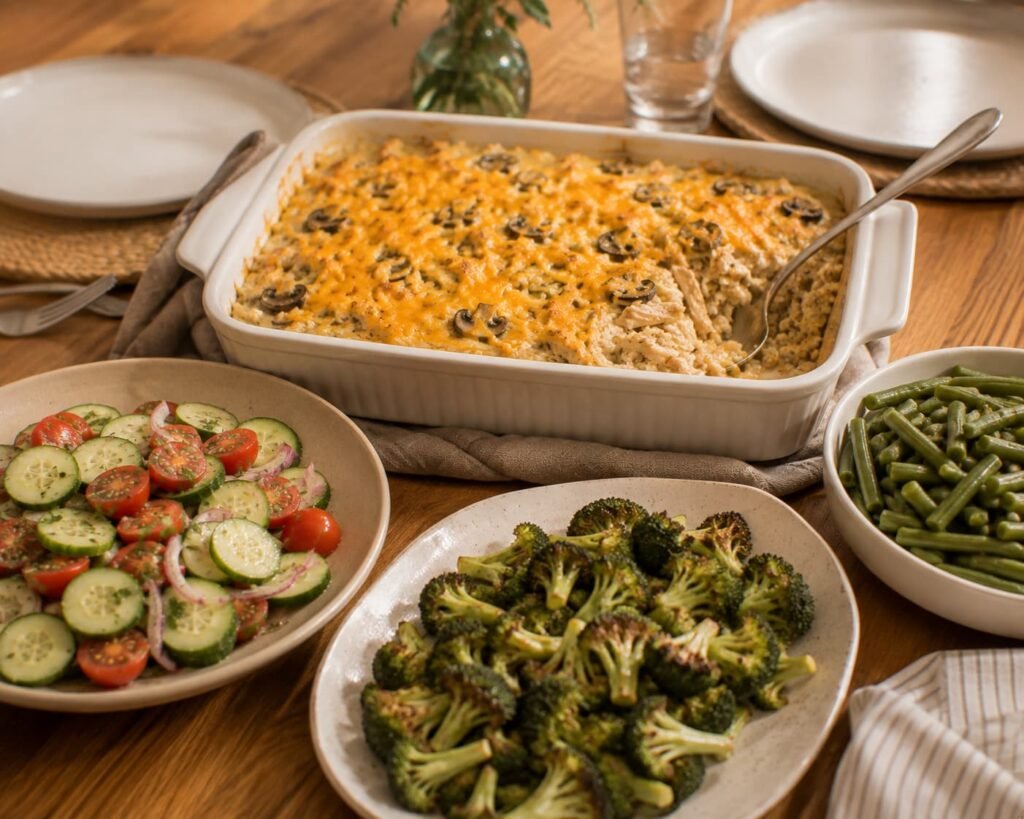
This easy chicken mushroom rice casserole combines cooked chicken, tender long-grain rice, browned fresh mushrooms, and a creamy homemade sauce in one satisfying dinner. Both the chicken and rice are cooked before the casserole is assembled, which gives the recipe more predictable results and reduces the risk of hard rice or overcooked chicken. Sautéing the mushrooms first also removes excess moisture while developing a deeper savory flavor.
This version is made without canned cream of mushroom soup. Instead, butter, flour, chicken broth, and milk create a smooth sauce that coats the chicken and rice without making the casserole overly heavy. Allow about 25 minutes for preparation and 30 minutes for baking, for an estimated total time of 55 minutes. It is a practical choice for weeknight dinners, family meals, or preparing in advance for a busy day.
What Is Chicken Mushroom Rice Casserole?
Chicken mushroom rice casserole is a comforting baked dinner made with cooked chicken, long-grain rice, fresh mushrooms, and a creamy savory sauce. The mixture is spread in a baking dish and baked until hot and lightly golden. Using precooked chicken and rice shortens the cooking time and reduces the risk of hard rice or dry chicken.
Recipe Snapshot
| Detail | Information |
| Prep time | 25 minutes |
| Bake time | 30 minutes |
| Resting time | 5 minutes |
| Total time | 1 hour |
| Servings | 6 |
| Pan size | 9 × 13-inch baking dish |
| Oven temperature | 375°F / 190°C |
| Rice method | Cooked long-grain white rice |
| Chicken method | Cooked shredded or diced chicken |
| Difficulty | Easy |
Why This Chicken Mushroom Rice Casserole Works
Cooked Rice Gives More Predictable Results
Using cooked long-grain rice removes the uncertainty of liquid absorption during baking. Since the grains are already tender, there is less risk of hard rice or the need to add extra broth partway through cooking. It also gives the casserole a shorter and more predictable baking time.
Browning the Mushrooms Reduces Excess Moisture
Fresh mushrooms release a significant amount of liquid as they cook. Sautéing them before assembly allows that moisture to evaporate while concentrating their savory flavor. In this recipe, adding raw mushrooms could introduce more liquid than the sauce is designed to handle, leaving the casserole thinner than intended.
A Homemade Sauce Creates a Creamy Texture
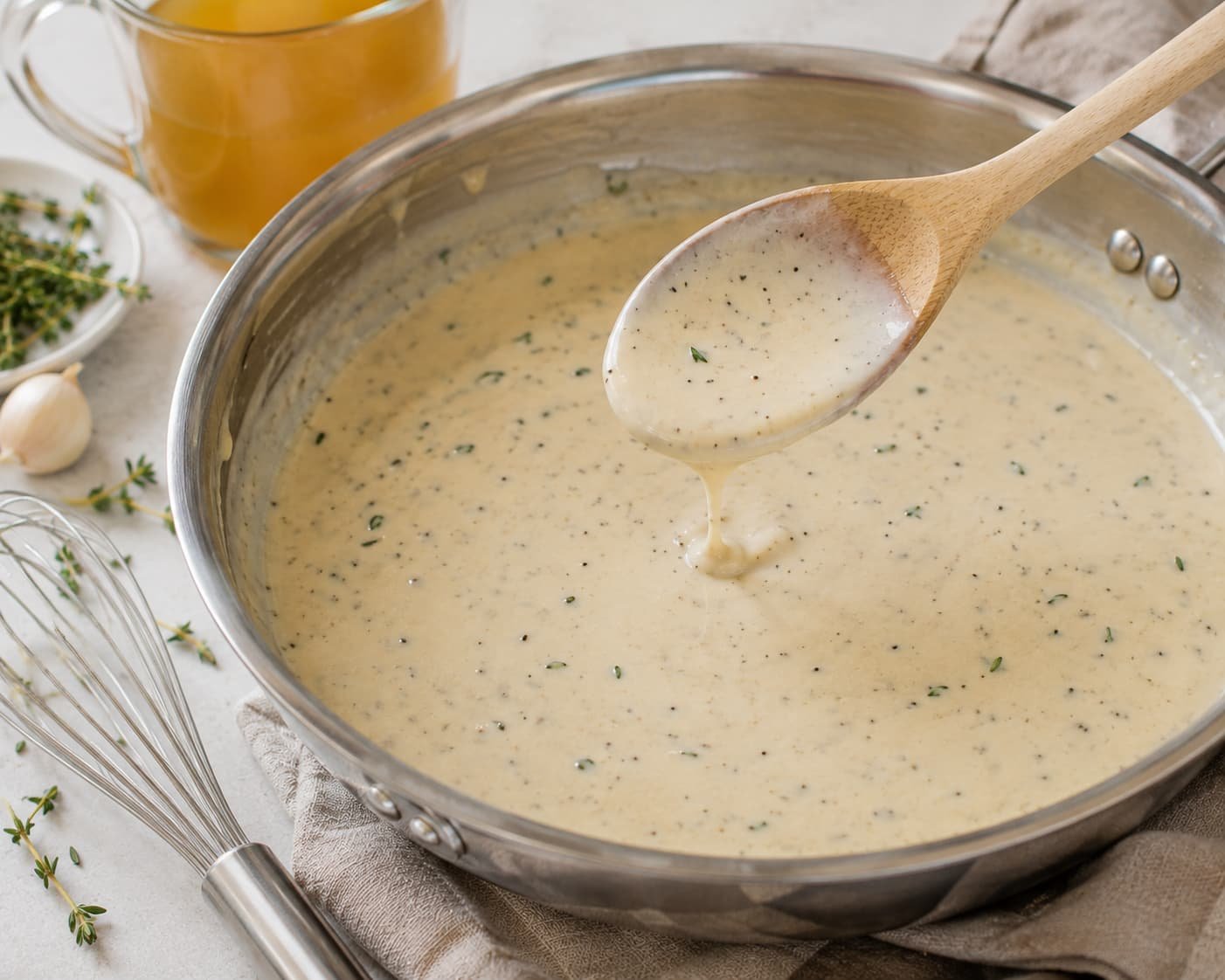
Butter, flour, chicken broth, and milk form a smooth sauce that coats the chicken and rice without becoming overly thick. Cooking the flour briefly removes its raw taste, while gradually whisking in the liquids helps prevent lumps. The sauce should coat the back of a spoon but still pour easily before it is added to the casserole.
Cooked Chicken Simplifies Preparation
Cooked shredded or diced chicken keeps the method practical for weeknight meals. Leftover roasted chicken and rotisserie chicken both work well and remove the need to prepare raw meat separately. Since the chicken is already cooked, the casserole only needs enough oven time to heat through and develop a lightly golden top.
Ingredients You Will Need
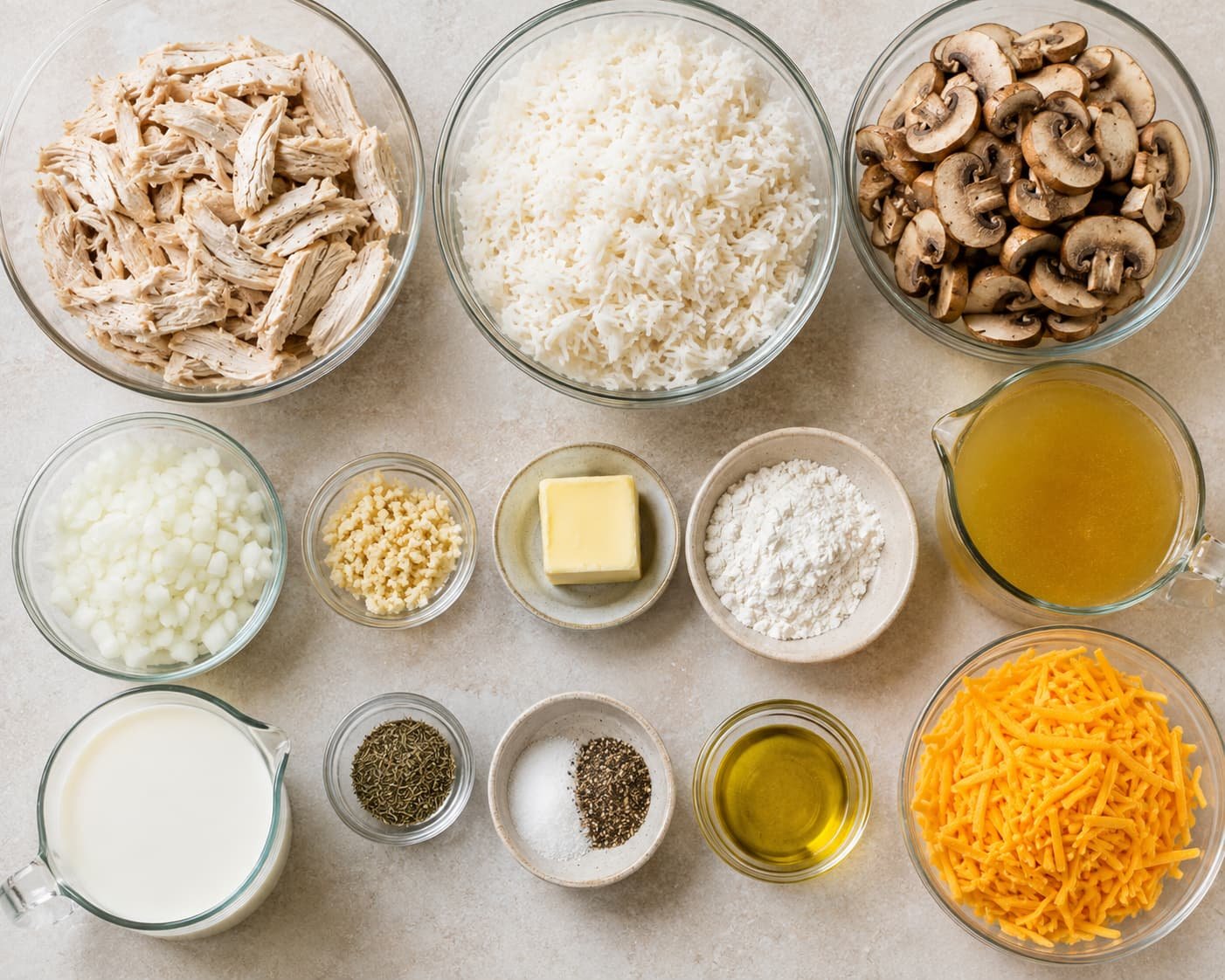
This chicken mushroom rice casserole uses simple ingredients, but their preparation affects the final texture. Cooked chicken and rice keep the baking time predictable, while browned fresh mushrooms add savory flavor without introducing unnecessary moisture.
Cooked Chicken
Use 3 cups loosely packed cooked chicken, about 400–425 g, shredded or cut into small, bite-size pieces. Chicken breast gives the casserole a mild flavor and leaner texture, while chicken thighs remain softer and slightly richer after reheating. A mixture of both works well.
Rotisserie chicken is a convenient option when you do not want to cook the meat separately. Remove the skin and bones, then taste the chicken before seasoning the sauce because some store-bought varieties are already salty. Leftover roasted chicken also works, provided it has been stored properly and is not coated in a sweet or strongly flavored glaze.
Long-Grain White Rice
Use 3 cups of cooked long-grain white rice, about 480 g, measured after cooking. Freshly prepared or chilled leftover rice can be used. Break apart any cold clumps with a fork before mixing so the sauce spreads evenly through the casserole.
Long-grain white rice is recommended because the grains remain relatively separate after baking. Brown rice, wild rice, instant rice, and uncooked rice absorb moisture differently, so they should not be substituted in equal amounts without adjusting the method and liquid.
Fresh Mushrooms
Use 8 ounces fresh mushrooms, about 227 g. Cremini mushrooms provide a deeper, earthier flavor, while white button mushrooms offer a milder and often less expensive alternative.
Cut the mushrooms into slices approximately ¼ inch or 6 mm thick. This size allows them to brown without disappearing into the sauce or remaining overly bulky. Cook them in a wide skillet until most of their released liquid has evaporated and the edges begin to develop color.
Creamy Sauce Ingredients
The homemade sauce brings the chicken, rice, and mushrooms together without relying on canned soup. Start with 3 tablespoons unsalted butter, 42 g, and ¾ cup finely diced onion, about 110 g. Cook the onion in the melted butter until softened, then add 2 teaspoons minced garlic, about 6 g, and cook briefly until fragrant.
Stir in 3 tablespoons all-purpose flour, about 24 g, and cook for about 1 minute. This removes the raw flour taste while preserving its thickening power. Gradually whisk in 1½ cups low-sodium chicken broth, 360 ml, followed by 1 cup whole milk, 240 ml, until the mixture is smooth.
Season the sauce with ½ teaspoon dried thyme, ½ teaspoon fine salt, and ¼ teaspoon ground black pepper. Keep the salt moderate at first because rotisserie chicken and packaged broth may already be well seasoned.
Simmer the sauce gently until it coats the back of a spoon but still pours easily. If it becomes too thick before assembly, whisk in 1 to 2 tablespoons of additional broth or milk. Half-and-half can replace the milk for a richer result, although the finished casserole will be thicker and less light.
Is Cheese Necessary?
Cheese is optional. The homemade sauce already gives the chicken mushroom rice casserole a creamy texture, so the dish can be baked without it for a less rich finish.
For a mild, melted topping, use 1 cup shredded sharp cheddar, about 113 g. Cheddar adds stronger flavor and melts into an even layer. Parmesan is saltier and drier, so it is better used in a smaller quantity as a finishing cheese. Mozzarella creates more stretch but contributes less flavor and may produce a softer topping.
Because each cheese behaves differently, they should not be substituted in equal amounts. Choose the cheese according to the flavor and texture you want, and adjust the quantity carefully.
Best Rice for Chicken Mushroom Casserole
Long-grain white rice is the safest choice because the grains remain separate and become evenly coated with the creamy sauce without turning overly sticky. Its firm texture holds up well beside the chicken and mushrooms, giving the casserole a lighter, less compact finish.
Jasmine rice can be used for a softer texture and mild floral aroma. Basmati rice is another option if you prefer drier, more distinct grains and a slightly aromatic flavor. Both varieties should be fully cooked before measuring and adding them to the casserole.
Short-grain rice is less suitable because its higher starch content can make the finished dish sticky or dense. Brown rice and wild rice may be used only after they are cooked separately, but they will change the texture and may require adjustments to the amount of sauce.
Use 3 cups of cooked rice, about 480 g, measured after cooking. Fresh rice and chilled leftover rice both work. Break apart any cold clumps with a fork before mixing so the sauce can coat the grains evenly.
Should You Use Cooked or Uncooked Rice?
Use cooked rice for this chicken mushroom rice casserole. Uncooked rice needs a separately developed method with more liquid, a longer covered baking time, and different measurements, so it should not be substituted directly into this recipe.
Precooked rice keeps the baking time more predictable and reduces the risk of hard grains or excess liquid. With the rice already tender, the casserole only needs to heat through, settle into a creamy consistency, and melt the optional cheese topping.
How to Make Chicken Mushroom Rice Casserole
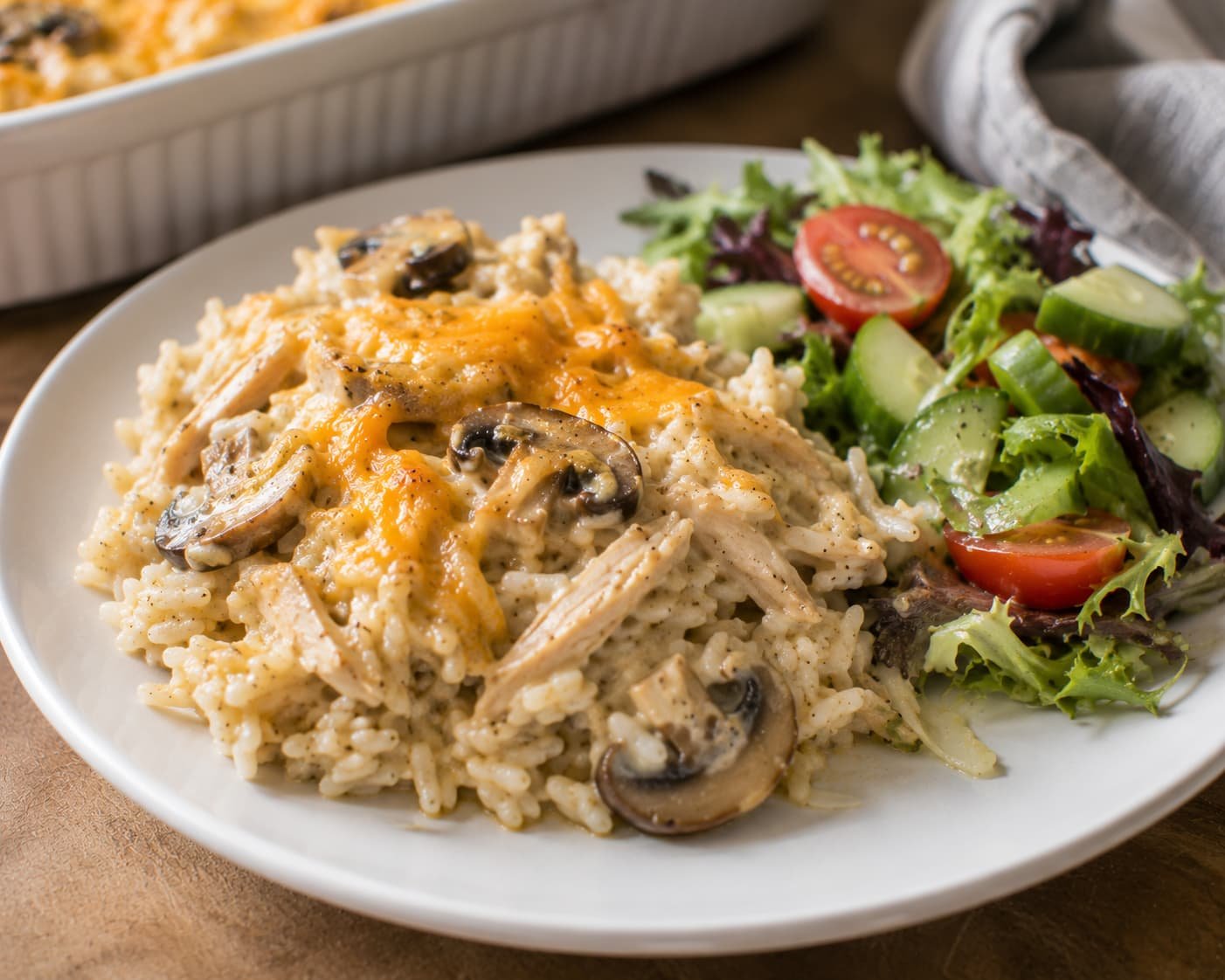
Follow the steps in order so the mushrooms brown properly and the homemade sauce reaches the right consistency before the casserole is assembled.
Step 1. Prepare the Pan and Oven
- Position an oven rack in the center and preheat the oven to 375°F / 190°C.
- Lightly grease a 9 × 13-inch baking dish with butter or nonstick cooking spray. Coat the bottom and sides to help prevent the rice and sauce from sticking.
- Measure 3 cups cooked chicken and 3 cups cooked long-grain white rice before beginning the stovetop steps. Break apart any cold rice clumps with a fork and keep the prepared ingredients nearby.
Step 2. Brown the Mushrooms
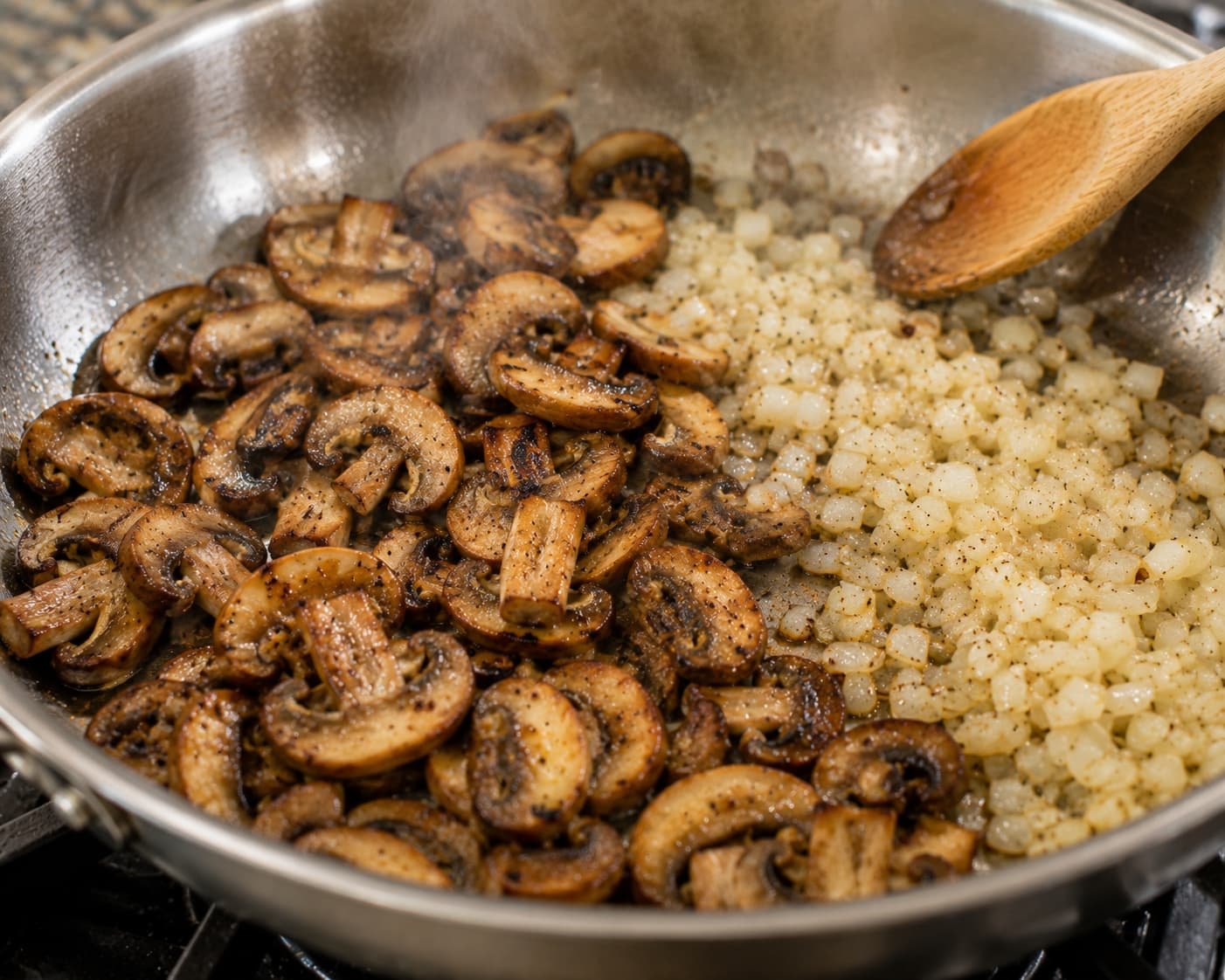
- Heat 1 tablespoon olive oil in a wide 12-inch skillet over medium-high heat. Add 8 ounces / 227 g sliced mushrooms and spread them into an even layer.
- Avoid overcrowding the skillet because tightly packed mushrooms release steam and struggle to brown. Cook them in two batches if your skillet is smaller.
- Cook for approximately 6 to 8 minutes, stirring only occasionally. The mushrooms will first release liquid. Continue cooking until most of the moisture has evaporated and the edges begin to brown. Use these visual signs rather than relying only on the clock.
- Reduce the heat to medium and add ¾ cup finely diced onion, about 110 g. Cook for 4 to 5 minutes, stirring occasionally, until softened.
- Add 2 teaspoons minced garlic, about 6 g, and cook for 30 seconds, just until fragrant. Transfer the mushroom mixture to a plate while you prepare the sauce.

Step 3. Make the Creamy Sauce
- Return the skillet to medium heat and melt 3 tablespoons unsalted butter, 42 g.
- Add 3 tablespoons of all-purpose flour, about 24 g. Stir continuously for about 1 minute, until the mixture looks smooth and lightly foamy. Do not let it turn dark brown.
- Slowly whisk in 1½ cups low-sodium chicken broth, 360 ml. Add the broth in several additions, whisking until smooth after each one. Gradually whisk in 1 cup whole milk, 240 ml.
- Stir in ½ teaspoon dried thyme, ½ teaspoon fine salt, and ¼ teaspoon ground black pepper. Keep the seasoning moderate because cooked chicken and packaged broth may already contain salt.
- Bring the sauce to a gentle simmer over medium heat. Cook for 3 to 5 minutes, whisking often, until it lightly coats the back of a spoon but still pours easily.
- Remove the skillet from the heat once the sauce reaches the correct consistency. If it becomes too thick, whisk in 1 to 2 tablespoons of additional broth or milk. Avoid vigorous boiling, which can cause the sauce to thicken too quickly or scorch around the edges.
Step 4. Combine the Casserole
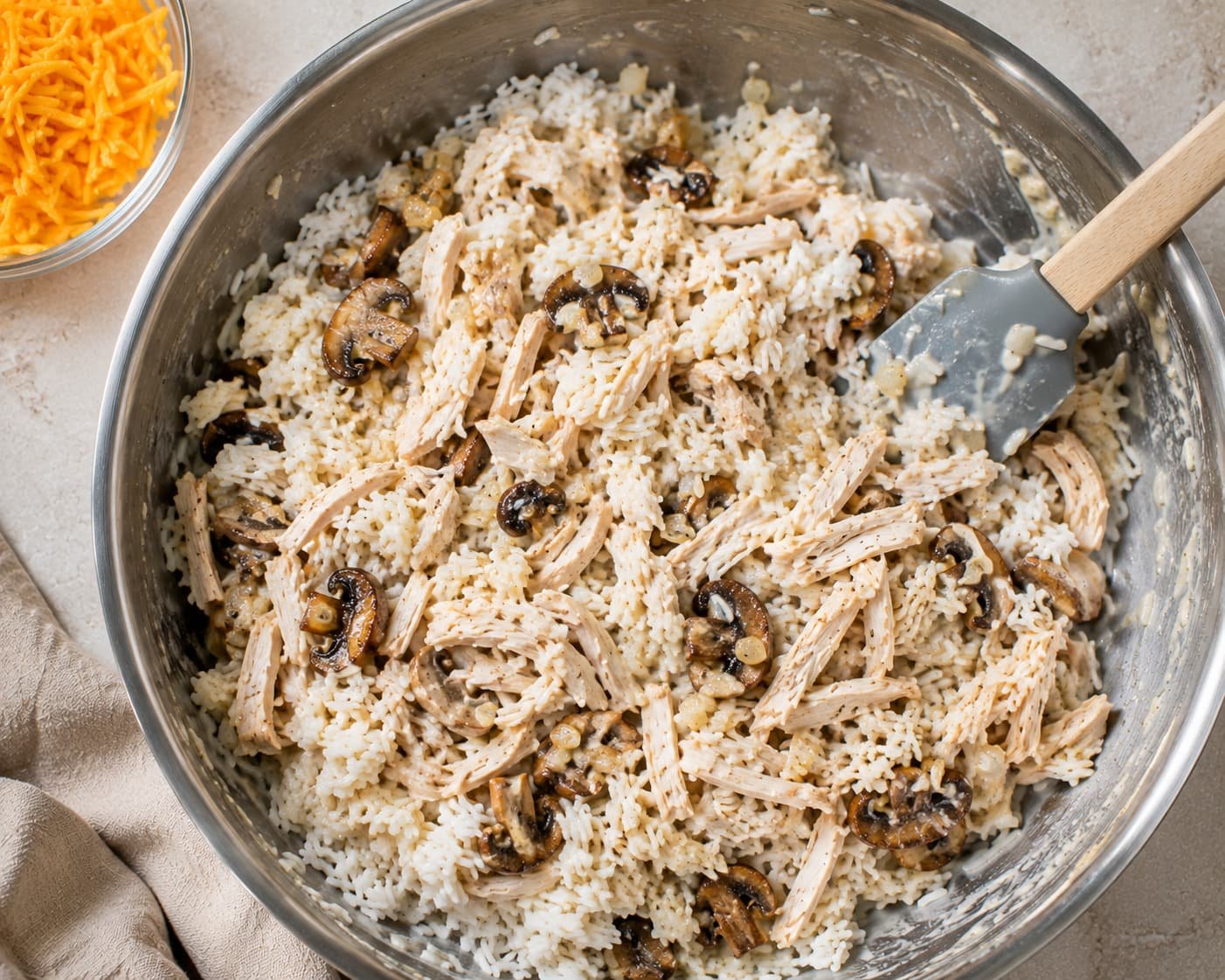
- Add 3 cups of cooked long-grain white rice, about 480 g, to a large mixing bowl. Add 3 cups of cooked shredded or diced chicken, about 400 to 425 g, along with the browned mushrooms and onion.
- Pour the warm creamy sauce over the mixture. Add ½ cup shredded sharp cheddar, about 56 g, if using cheese, and fold the ingredients together gently with a wide spoon or silicone spatula.
- Mix only until the chicken, rice, and mushrooms are evenly coated. Avoid vigorous stirring, which can break down the rice and make the casserole dense or pasty.
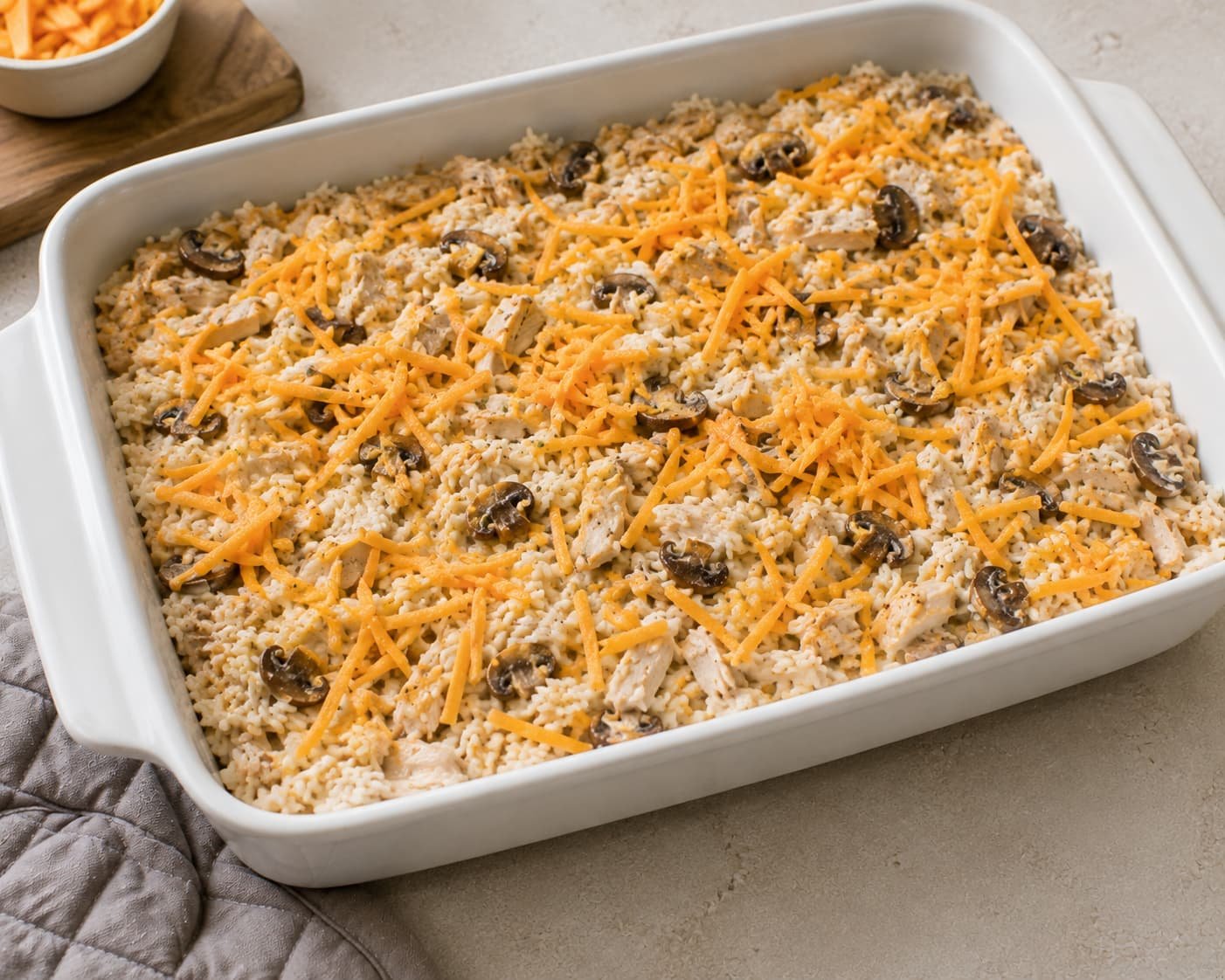
- Spoon the mixture into the prepared 9 × 13-inch baking dish and spread it into an even layer. Sprinkle the remaining ½ cup shredded cheddar, about 56 g, over the top.
Step 5. Bake Until Hot and Bubbling
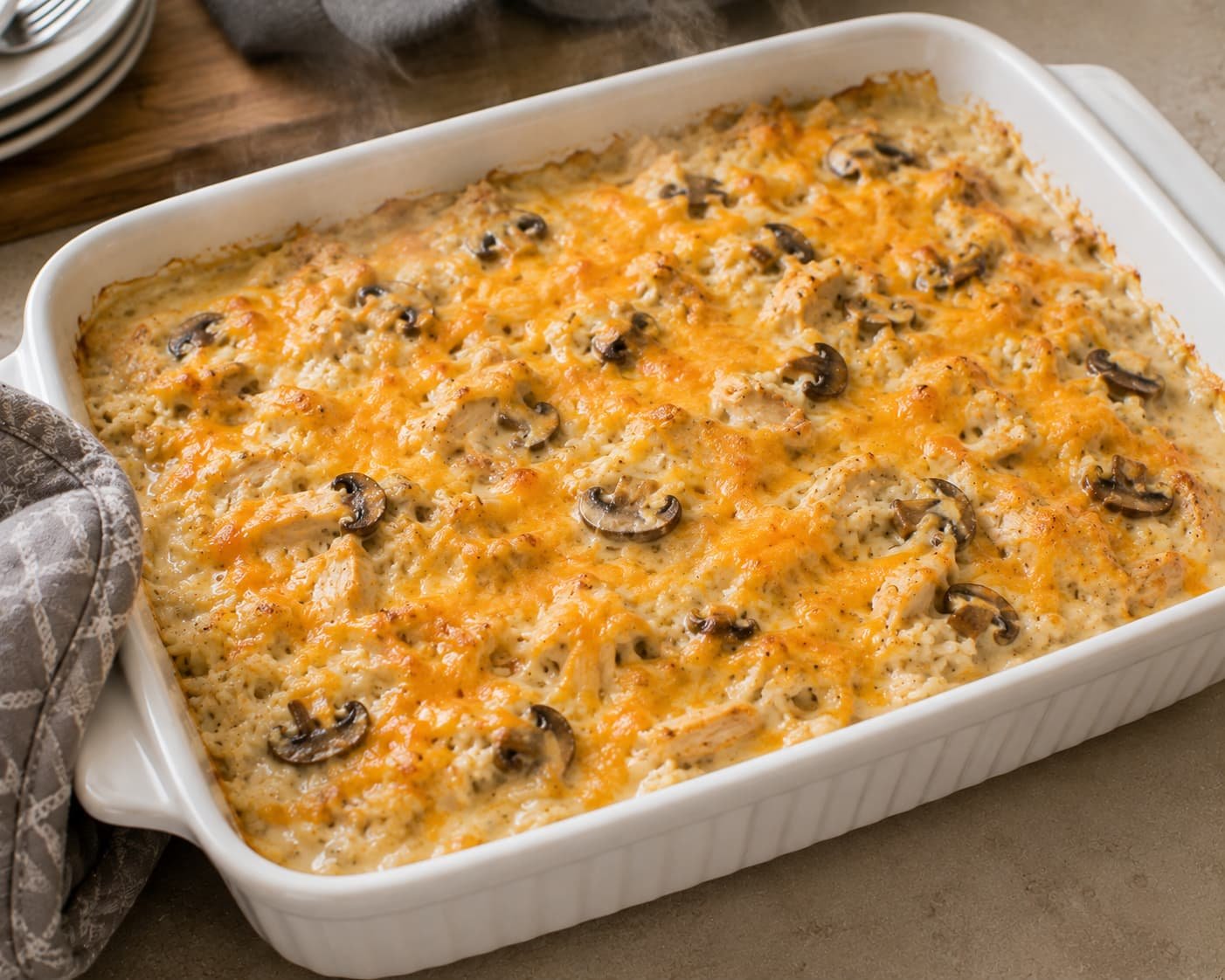
Bake the casserole uncovered at 375°F / 190°C for 25 to 30 minutes, or until the sauce bubbles gently around the edges and the center is thoroughly heated. The optional cheese topping should be fully melted.
If the top begins to brown or dry before the center is hot, cover the dish loosely with foil for the remaining baking time. Avoid overbaking, as prolonged heat can dry out the cooked chicken and rice.
For a casserole assembled with chilled leftover ingredients or refrigerated before baking, check the center with an instant-read thermometer. Reheat it to 165°F / 74°C before serving. A cold make-ahead casserole may require several additional minutes in the oven.
This recipe is designed for cooked chicken. Do not replace it directly with raw chicken, since that would require a different cooking method, moisture balance, and baking time.
Step 6. Rest Before Serving
Remove the baking dish from the oven and let the casserole rest for 5 to 10 minutes. This brief resting period allows the creamy sauce to thicken slightly and cling more evenly to the chicken and rice.
After resting, divide the casserole into approximately six portions and serve while warm.
How to Prevent a Watery Chicken Rice Casserole
A watery chicken rice casserole usually comes from excess moisture, inaccurate liquid measurements, or a sauce that was too thin before baking. The most important step is to control moisture before the ingredients go into the baking dish.
Brown the mushrooms in a wide skillet until their released liquid has evaporated and the edges begin to color. Any moisture left in the pan can thin the creamy sauce once the casserole is assembled. The sauce itself should coat the back of a spoon while still pouring easily. If it looks thin like milk, simmer it gently for another minute or two before mixing it with the chicken and rice.
Measure the broth and milk carefully rather than estimating. Add extra liquid only when the sauce has become too thick, and make small adjustments of 1 tablespoon at a time. If the cooked chicken is sitting in a visible package or storage liquid, lift it out and leave that liquid behind.
Avoid changing several ingredients at once. Adding more mushrooms, extra vegetables, less rice, or a different dairy product can affect the moisture balance. Keep the tested quantities unchanged unless you are following a specific variation.
After baking, let the casserole rest for 5 to 10 minutes. This gives the sauce time to thicken slightly and cling more evenly to the rice instead of appearing loose when served.
How to Prevent Dry Chicken and Rice
Dry chicken and rice usually result from overbaking, too much rice, or too little sauce. Since the chicken and rice are already cooked, the casserole only needs enough time in the oven to heat through and allow the flavors to come together.
Remove the dish when the sauce is bubbling gently around the edges and the center is hot. Leaving it in the oven longer than necessary can make the chicken firm and cause the rice to absorb too much moisture.
Use the full amount of creamy sauce and measure 3 cups of cooked rice after cooking. Do not confuse this with 3 cups of uncooked rice, which would produce far too much and completely change the recipe. Avoid adding extra rice to stretch the casserole unless every ingredient is scaled consistently.
Chicken thighs usually remain softer than breast meat after reheating, while rotisserie chicken offers a convenient mixture of tender cooked meat. Breast meat also works well when the casserole is not overbaked.
When reheating leftovers, cover the dish or individual serving loosely to reduce moisture loss. Add a small splash of chicken broth or milk only when the rice looks dry, using just enough to lightly moisten the portion before warming.
Recipe Substitutions
Several ingredients can be changed while keeping the basic method the same, but the finished flavor and texture may vary. Use the same chicken, rice, and sauce quantities unless you are following a specifically tested variation.
| Ingredient | Possible substitute | Important note |
| Cooked chicken breast | Cooked chicken thighs | Thigh meat has a richer flavor and generally stays more tender after reheating. |
| Cremini mushrooms | White button mushrooms | White mushrooms have a milder flavor but can be sliced and browned in the same way. |
| Whole milk | 2% milk | The sauce will be slightly less rich and may feel a little lighter. |
| Low-sodium chicken broth | Regular chicken broth | Reduce the added salt and taste the sauce before seasoning further. |
| Sharp cheddar | Gruyère | Use a similar amount for a nuttier, slightly more complex flavor. Gruyère may also be saltier. |
| Sharp cheddar | Monterey Jack | Use a similar amount for a milder flavor and smooth melt. |
| Dried thyme | Fresh thyme | Replace ½ teaspoon dried thyme with about 1½ teaspoons finely chopped fresh thyme. |
Do not replace the cooked long-grain rice with uncooked rice, wild rice, instant rice, or cauliflower rice using the same quantity. Each one handles moisture differently and would require changes to the liquid, baking time, or preparation method.
This casserole is designed for cooked chicken. Raw chicken should not be added directly because it would change the cooking time, moisture balance, and food-safety requirements. Unsweetened almond milk may produce a thinner, less creamy sauce, while coconut milk would noticeably change the flavor, so neither is recommended as a direct replacement without testing.
Chicken Mushroom Rice Casserole Variations
These simple variations change the flavor or preparation without altering the basic casserole. Make one major change at a time so the balance of chicken, rice, sauce, and moisture remains manageable.
Rotisserie Chicken Version
Rotisserie chicken is a convenient replacement for home-cooked chicken. Remove the skin, pull the meat from the bones, and shred or dice it into bite-size pieces. Use 3 loosely packed cups, about 400 to 425 g, as directed in the main recipe.
Taste the chicken before seasoning the sauce. Some rotisserie chickens contain enough salt that the casserole may need less additional seasoning.
Chicken Broccoli Mushroom Rice Casserole
For a broccoli variation, use small thawed florets that have been drained and patted dry. Adding frozen broccoli directly can release water into the sauce and leave the casserole loose.
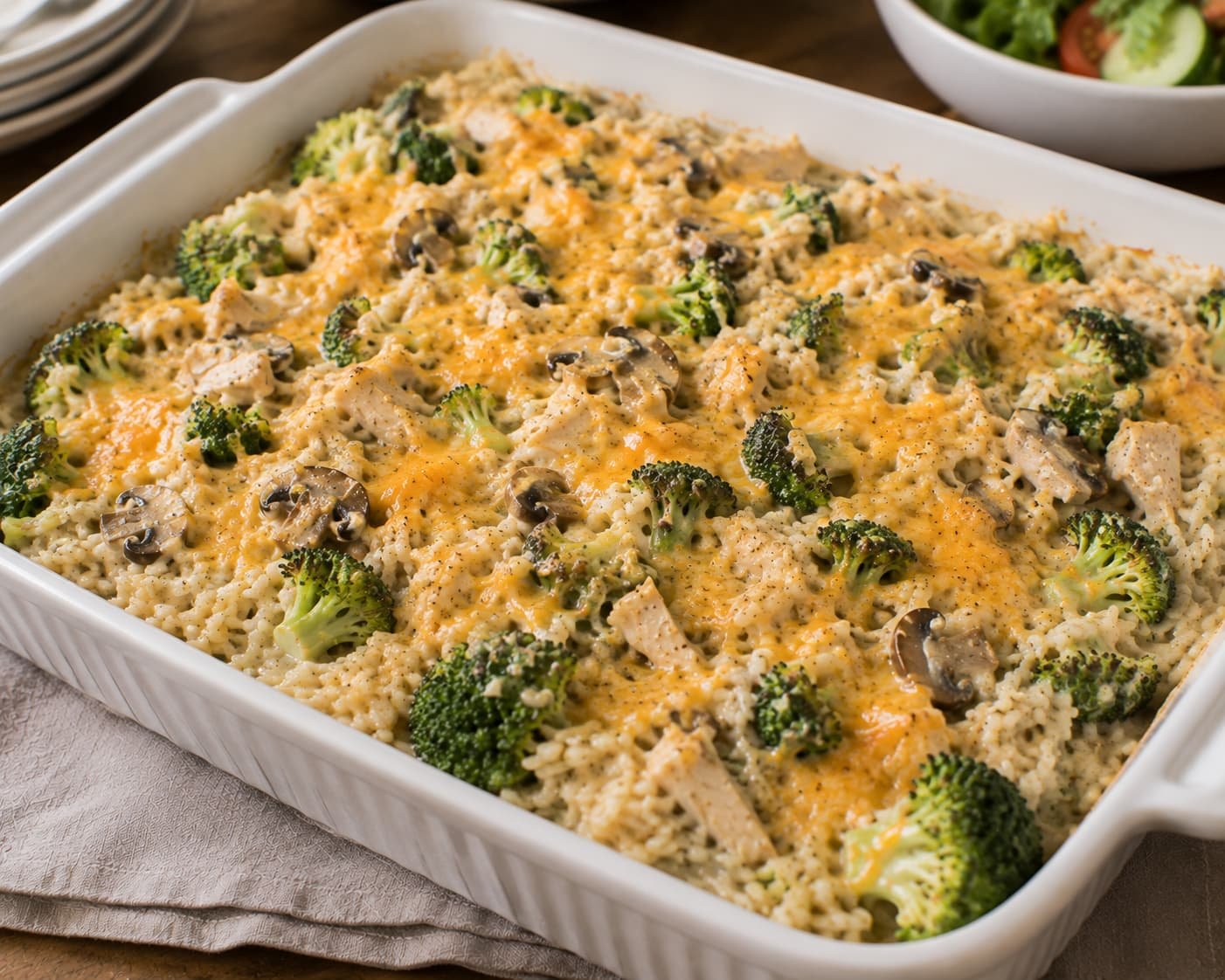
Broccoli also adds bulk, so the quantity should be confirmed with the complete recipe before publication. Adding too much without increasing the sauce can make the filling crowded and dry.
Extra-Cheesy Chicken Mushroom Rice Casserole
The main recipe uses up to 1 cup shredded sharp cheddar, about 113 g, divided between the filling and topping. For a stronger cheese flavor, replace part of the cheddar with Gruyère rather than simply adding a large amount of extra cheese.
Too much cheese can make the casserole greasy, overly salty, and heavy enough to hide the flavor of the mushrooms.
Chicken Mushroom Wild Rice Casserole
Wild rice is not a direct replacement for long-grain white rice. It has a firmer texture and follows a different cooking method.
A wild rice version should use fully cooked wild rice and separately tested sauce proportions. Replacing the white rice cup for cup without adjusting the recipe may change both the texture and moisture balance.
Can You Use Cream of Mushroom Soup?
Condensed cream of mushroom soup can form the base of a shortcut casserole, but it should not replace the homemade sauce in an equal amount. Condensed soup contains its own starch, salt, fat, and liquid, so it changes the thickness and seasoning of the dish.
A soup-based version needs separate ingredient quantities and instructions. Readers looking specifically for that method would be better served by a complete tested variation rather than an unverified substitution note.
Can You Make Chicken Mushroom Rice Casserole Ahead?
Yes. The casserole can be assembled in advance and refrigerated until the following day. Prepare the chicken, rice, mushrooms, and sauce as directed, then let the ingredients stop steaming before assembling the dish.
Do not leave cooked chicken, rice, or dairy sauce sitting at room temperature for a long cooling period. Assemble and refrigerate the casserole promptly, keeping the total time outside refrigeration within two hours.
Spread the mixture in the greased baking dish, cover it tightly, and refrigerate it for up to one day. Keep the cheese topping in a separate covered container when you want the freshest melted finish, then add it immediately before baking.
A refrigerated casserole will take longer to heat than one assembled with warm ingredients. Bake it at 375°F / 190°C, checking after the normal baking time and continuing until the edges bubble and the center is thoroughly hot.
For a chilled make-ahead casserole, use an instant-read thermometer to confirm that the center reaches 165°F / 74°C. USDA guidance recommends reheating leftovers and cooked casseroles to this temperature.
Avoid moving a refrigerator-cold glass or ceramic dish directly into a hot oven unless its manufacturer confirms that this use is safe. Sudden temperature changes can damage some bakeware. A metal pan avoids that particular concern, while other dishes should be handled according to their care instructions.
The exact additional baking time depends on the pan material, filling temperature, and depth of the casserole. Confirm the final range through testing rather than automatically adding 10 or 15 minutes.
Storage, Freezing, and Reheating
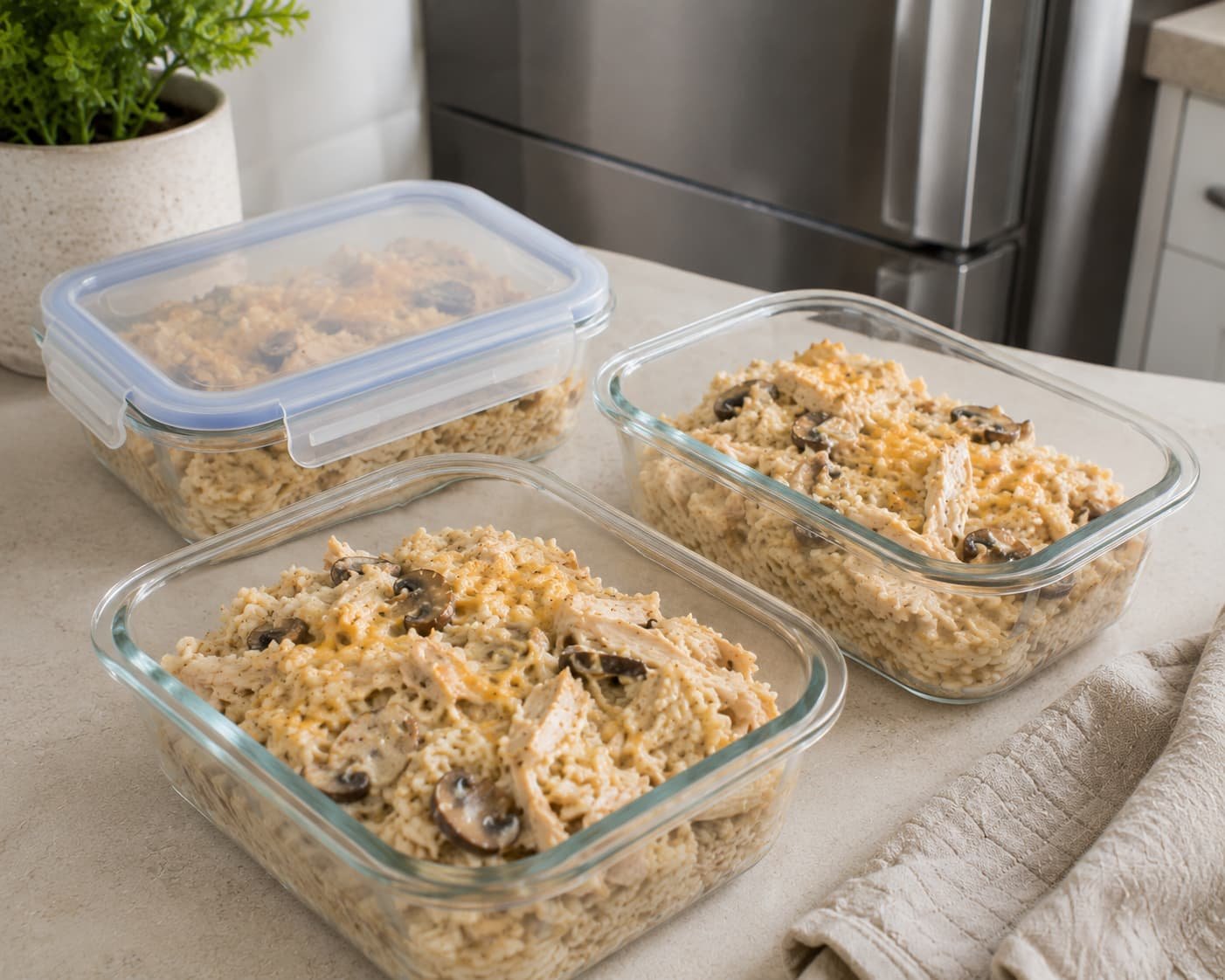
Proper storage helps protect the texture and safety of chicken mushroom rice casserole. Portion and refrigerate leftovers promptly instead of leaving the baking dish at room temperature until it becomes completely cold.
Refrigerating
Transfer leftovers to shallow airtight containers so they cool more quickly and evenly. Refrigerate the casserole within 2 hours of cooking or serving, or within 1 hour when the surrounding temperature is above 90°F / 32°C.
Store the casserole at 40°F / 4°C or below and use it within 3 to 4 days. Keep the container tightly covered to prevent the rice from drying out or absorbing odors from other foods.
Freezing
Divide the casserole into individual portions and place them in freezer-safe containers. Smaller portions freeze, thaw, and reheat more evenly than a full baking dish.
Close the containers tightly, remove as much excess air as possible, and label them with the freezing date. For the best rice and sauce texture, use the frozen casserole within 2 to 3 months.
The creamy sauce may become slightly less smooth after thawing, and the rice may soften. This does not necessarily mean the casserole has spoiled, but the texture may be less creamy than when freshly baked.
Thaw frozen portions overnight in the refrigerator when possible. Avoid moving a frozen glass or ceramic baking dish directly into a hot oven, as a sudden temperature change may damage some types of bakeware.
Reheating
If the rice looks dry, add a small spoonful of chicken broth or milk before reheating. Use only enough to lightly moisten the portion without thinning the sauce.
Cover individual servings loosely and microwave in 60 to 90-second intervals, checking and rotating between intervals until evenly heated. Microwave power varies, so use the temperature rather than the clock as the final guide.
For a larger amount, place the casserole in an oven-safe dish, cover it with foil, and warm it at 350°F / 175°C. The reheating time will depend on the depth of the casserole and whether it is chilled or partially frozen.
Check the center with a food thermometer. Reheated chicken casserole should reach 165°F / 74°C before serving.
What to Serve with Chicken Mushroom Rice Casserole
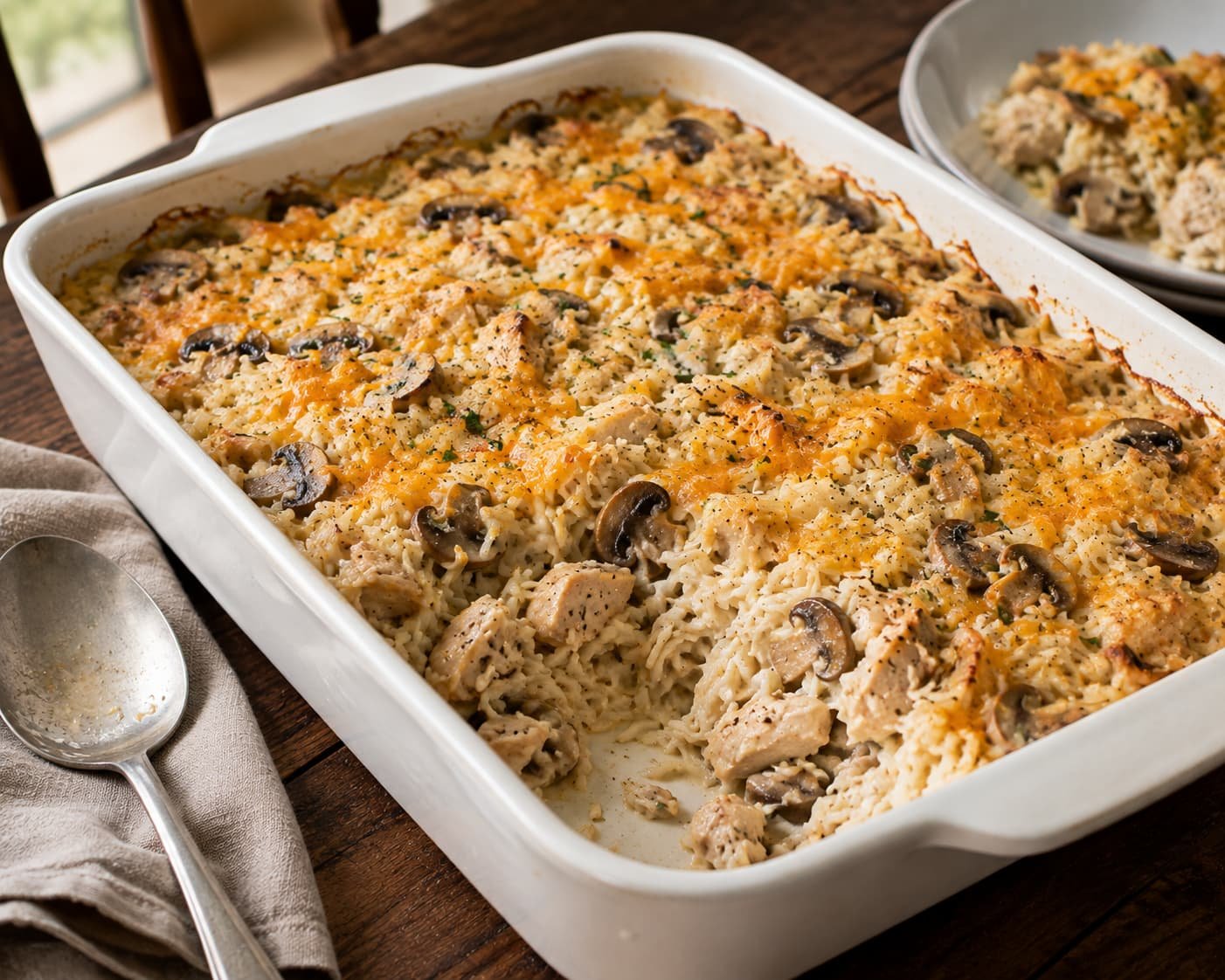
Chicken mushroom rice casserole is creamy, filling, and already contains rice, so lighter vegetable sides work best. Fresh salads and simply cooked vegetables add color, acidity, and texture without making the meal overly heavy.
A green salad with lettuce, cucumber, tomatoes, and a light vinaigrette provides a crisp contrast to the creamy sauce. Cucumber salad is another refreshing option, especially when prepared with vinegar, herbs, and thinly sliced onion rather than a heavy dressing.
For a warm side, choose roasted broccoli, asparagus, green beans, steamed peas, or lightly glazed carrots. Roasted vegetables add browned edges and a firmer texture, while peas and carrots bring mild sweetness to the plate.
One fresh salad or one cooked vegetable is usually enough for a balanced family dinner. Pasta, mashed potatoes, and large servings of bread are less suitable because the casserole already contains a generous amount of rice.
Common Mistakes to Avoid
A few small errors can leave chicken mushroom rice casserole dry, watery, or overly heavy. Pay particular attention to the rice measurement, mushroom moisture, sauce consistency, cheese quantity, and baking time.
Measuring Dry Rice Instead of Cooked Rice
This recipe requires 3 cups cooked long-grain white rice, about 480 g, measured after cooking. Three cups of dry rice would produce far too much cooked rice and leave too little sauce for the filling.
Cook the rice first, measure the required amount, and loosen any cold clumps with a fork before mixing.
Adding Raw Mushrooms
In this recipe, raw mushrooms can release more moisture than the sauce is designed to handle. That extra liquid may leave the finished casserole loose or watery.
Cook the sliced mushrooms until their liquid has evaporated and the edges begin to brown before adding them to the filling.
Using a Sauce That Is Too Thin
The creamy sauce should lightly coat the back of a spoon while remaining easy to pour. If it runs off like milk, continue simmering gently until it reaches the correct consistency.
Rely on this visual cue rather than a fixed time, as thickening speed varies with the pan and heat level.
Adding Too Much Cheese
Cheese should complement the chicken and mushrooms rather than overwhelm them. Excess cheese can make the casserole greasy, salty, and unnecessarily heavy.
Use up to 1 cup shredded sharp cheddar, about 113 g, divided between the filling and topping. The cheese may also be reduced or omitted for a less rich result.
Baking for Too Long
Because the chicken and rice are already cooked, the casserole only needs to heat through and become gently bubbling around the edges. Overbaking can dry the chicken and cause the rice to absorb too much sauce.
Begin checking after 25 minutes at 375°F / 190°C. A casserole assembled with chilled ingredients may need additional time, so use a hot center and bubbling edges as the main doneness signs.
Frequently Asked Questions
Can I use uncooked rice?
No. This recipe is designed for cooked long-grain white rice. Uncooked rice needs more liquid, a longer covered baking time, and different ingredient proportions. Adding dry rice directly could leave the grains hard or make the casserole watery, so use a method developed specifically for uncooked rice.
Can I use leftover rice?
Yes. Properly refrigerated leftover long-grain rice works well in this casserole. Break apart cold clumps with a fork before mixing so the creamy sauce coats the grains evenly. Do not use rice that has been left at room temperature for an extended period or shows signs of spoilage.
Can I use rotisserie chicken?
Yes. Remove the skin and bones, then shred or dice the meat into bite-size pieces. Breast meat, thigh meat, or a combination of both will work. Taste the chicken before adding salt to the sauce because store-bought rotisserie chicken may already be well seasoned.
Do I need to cook the mushrooms first?
Yes, browning the mushrooms first is strongly recommended. Fresh mushrooms release liquid as they cook, which can thin the sauce when they are added raw. Sautéing them until most of the moisture evaporates also concentrates their flavor and improves the texture of the finished casserole.
Can I use canned mushrooms?
Yes. Drain canned mushrooms thoroughly before adding them to the filling. They have a softer texture and milder flavor than fresh cremini or white button mushrooms. Since they are already cooked, they can be folded into the casserole without the longer browning step used for fresh mushrooms.
Can I use cream of mushroom soup?
Condensed cream of mushroom soup can be used in a separately developed shortcut version, but one should not automatically replace the entire homemade sauce. Condensed soup changes the salt, starch, fat, and liquid balance, so a soup-based casserole needs different measurements and seasoning.
Why did my casserole turn watery?
The most common causes are mushrooms that were not browned long enough, a sauce that was too thin, inaccurate broth or milk measurements, or chicken added with excess package liquid. Let the baked casserole rest for 5 to 10 minutes before serving so the sauce can thicken slightly.
Why did my casserole turn dry?
Dry casserole usually results from adding too much cooked rice, reducing the sauce, or baking the dish longer than necessary. Measure the rice after cooking and remove the casserole once the edges are bubbling and the center is hot. Cover leftovers and add a little broth when reheating.
Can I prepare it the night before?
Yes. Prepare the components, let them stop steaming briefly, and assemble the casserole promptly. Cover and refrigerate it within two hours. Keep the cheese topping separate if desired, then add it before baking. A chilled casserole may require additional oven time to heat fully.
Can I freeze the casserole?
Yes. Freeze cooled individual portions in airtight freezer-safe containers for the most even thawing and reheating. For the best texture, use them within 2 to 3 months. The rice may soften and the dairy sauce may become slightly less smooth after thawing.
How long do leftovers last?
Refrigerate leftover chicken mushroom rice casserole at 40°F / 4°C or below and use it within 3 to 4 days. Transfer it to shallow covered containers and refrigerate it within two hours of cooking or serving rather than leaving the full baking dish on the counter.
What temperature should reheated casserole reach?
Reheated chicken mushroom rice casserole should reach 165°F / 74°C in the center. Check the thickest part with a food thermometer and avoid touching the bottom of the container. This temperature guidance applies to chilled leftovers and a refrigerated make-ahead casserole.
Final Thoughts
This easy chicken mushroom rice casserole turns cooked chicken, tender rice, fresh mushrooms, and a homemade creamy sauce into a comforting weeknight meal. It is especially useful when you have leftover or rotisserie chicken and want a dependable dinner without relying on canned soup.
Serve the casserole warm with a crisp salad, roasted vegetables, or green beans. With its simple preparation and make-ahead option, it is a practical recipe to keep for busy family dinners.