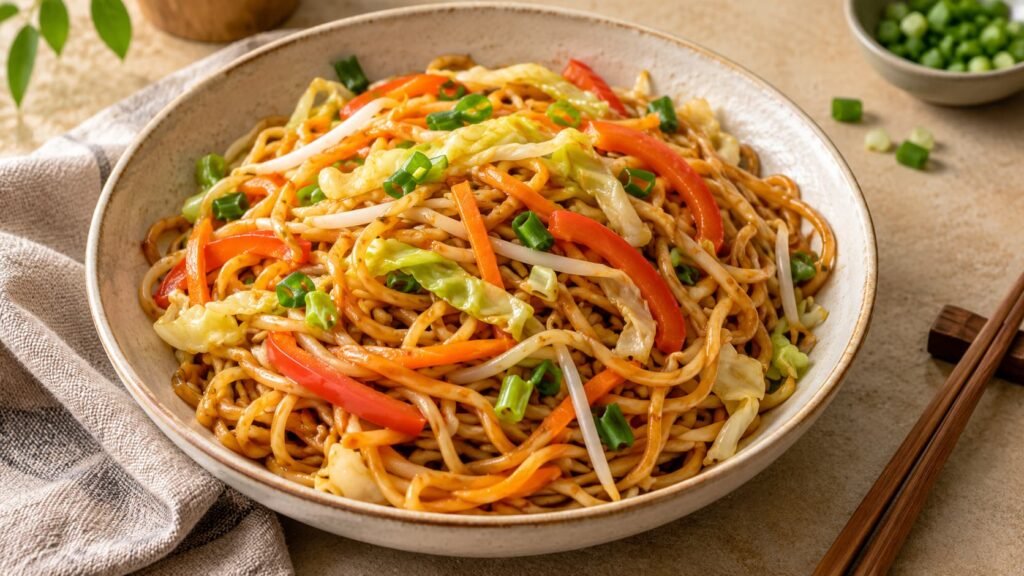
Chinese noodles can be prepared at home using packaged noodles, fresh vegetables, and a few everyday seasonings. Depending on the type of dish, the noodles may be boiled, stir-fried, or served in a flavorful broth. Each method creates a different combination of texture and taste.
For a simple Chinese-style noodle stir-fry, wheat noodles are a practical starting point. They can be combined with vegetables such as cabbage, carrots, and bell peppers, while garlic, ginger, and soy sauce provide savory flavor. The preparation generally involves cooking the noodles separately, stir-frying the vegetables, and combining everything in a pan.
The type of noodles, amount of moisture, and cooking sequence can affect the finished dish. Some noodles need boiling, while others require soaking or only brief heating.
This guide explains the ingredients and basic techniques used to prepare Chinese-style stir-fried noodles at home. It focuses on using ready-made noodles rather than preparing noodle dough from scratch.
What Are Chinese Noodles?
Chinese noodles are a broad group of noodle varieties used in Chinese cooking. They can be made from wheat flour, rice, or different starches, with each type having its own texture and preparation requirements.
Noodles are used in many regional Chinese dishes, including soups, stir-fries, and preparations served with sauces or toppings.
Stir-fried noodles are usually cooked or softened before being combined with vegetables, seasonings, and other ingredients in a hot pan or wok. Noodle soups, on the other hand, are served in broth, often with vegetables, meat, tofu, or other toppings.
There is no single method for preparing Chinese noodles. Ingredients and cooking techniques vary according to the noodle variety, regional dish, and intended texture.
Which Types of Noodles Are Suitable for Stir-Frying?
Several noodle varieties can be used for stir-frying, but they do not all cook in the same way.
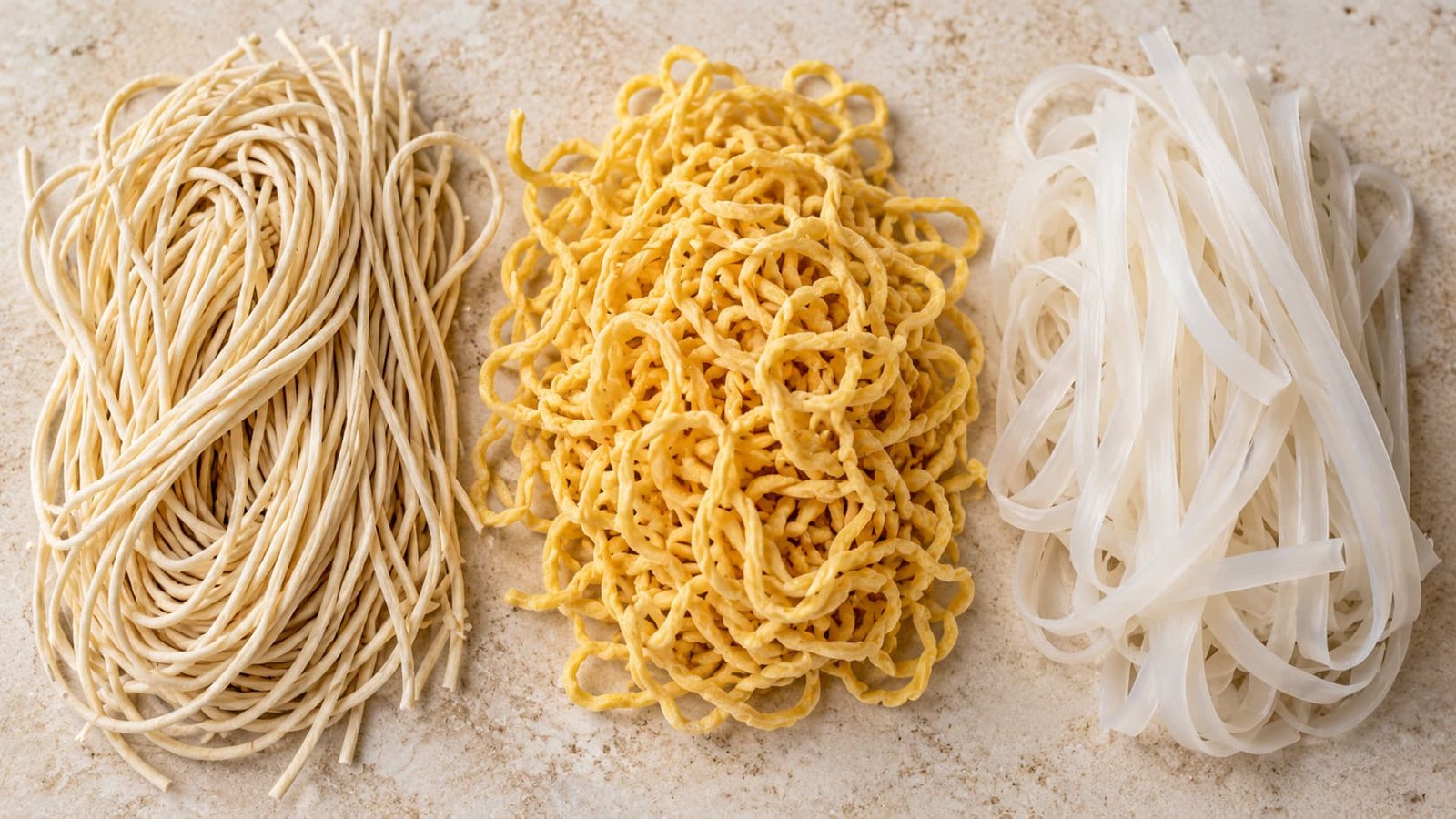
- Wheat noodles: Made primarily from wheat flour and water, these are used in many Chinese noodle dishes. Their texture varies depending on thickness, ingredients, and processing. Dried varieties generally require boiling before stir-frying.
- Egg noodles: These contain egg in addition to wheat-based ingredients. They are commonly used in certain stir-fried noodle dishes. Fresh, dried, and precooked versions may require different preparation methods.
- Rice noodles: Made mainly from rice flour and water, these offer a different texture from wheat noodles. Depending on the product, they may need soaking, boiling, or brief heating before being added to a stir-fry.
For beginners, packaged wheat noodles or egg noodles with clear cooking instructions are convenient options. Rice noodles can also work, but their texture may change more noticeably if they are soaked or cooked for too long.
Always check the packaging because preparation instructions differ between brands and noodle styles.
What Ingredients Are Commonly Used in Chinese-Style Noodles?
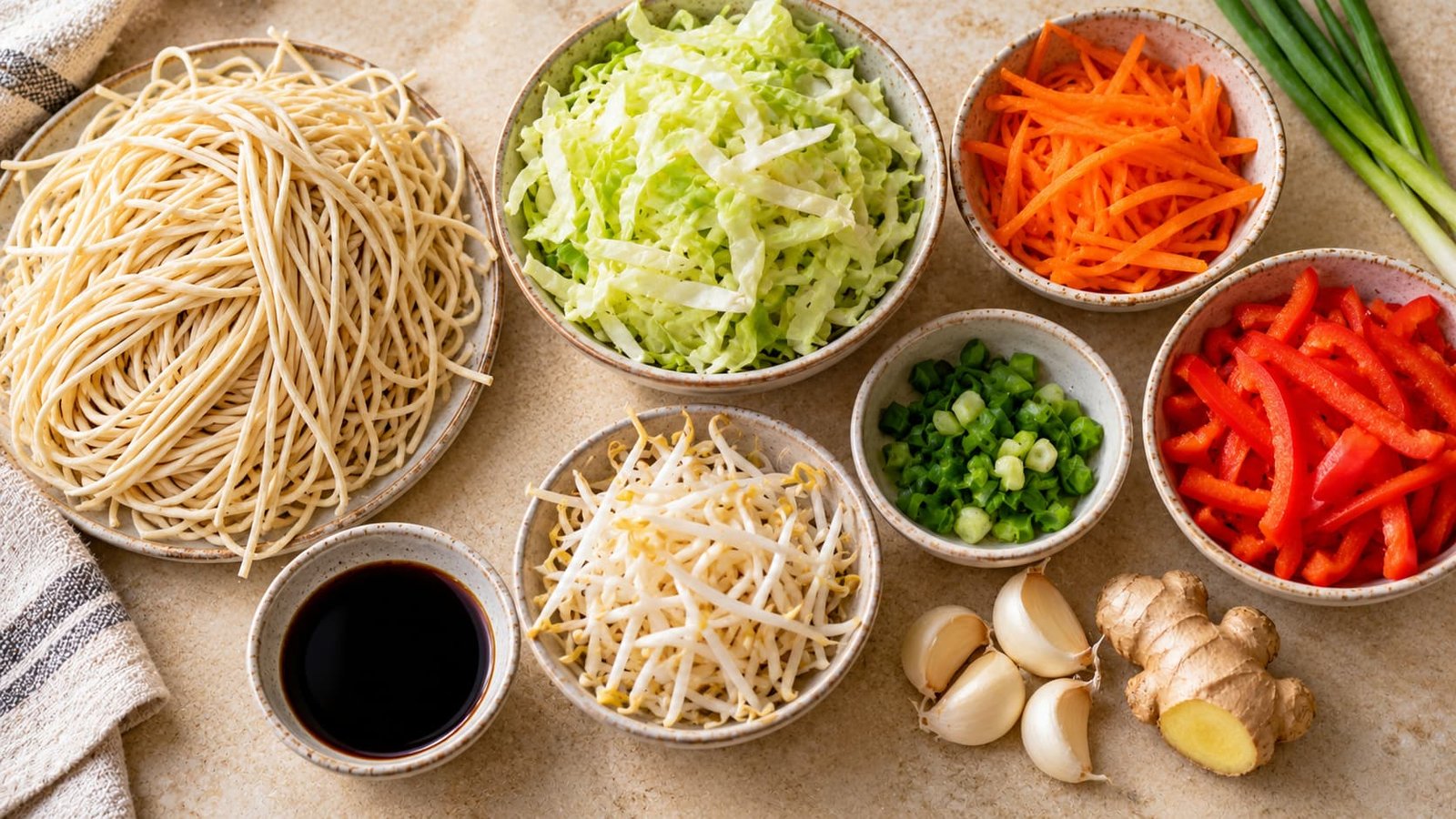
Chinese-style stir-fried noodles commonly combine noodles, vegetables, aromatics, and seasonings. The ingredients vary between dishes, so not every preparation requires the same vegetables or sauces.
For a simple home-style version, it helps to choose ingredients that cook relatively quickly and can be distributed evenly through the noodles.
Noodles and Vegetables
Noodles provide the main structure of the dish, while vegetables add different textures, colors, and flavors.
Common vegetable options include:
- Cabbage: Adds a mild flavor and can retain some firmness when briefly stir-fried.
- Carrots: Provide natural sweetness and a firmer texture. Thin slices or matchsticks are easier to combine with noodles.
- Bell peppers: Add a slightly sweet flavor and can be cooked until tender or left somewhat crisp.
- Green onions: Provide a mild onion flavor. The white parts can be cooked with other aromatics, while the green parts can be added near the end.
- Bean sprouts: Add a delicate, crisp texture and are generally added toward the later stages of cooking.
- Mushrooms: Contribute savory flavor and release moisture as they cook.
Vegetables do not need to be limited to this list. Bok choy, snow peas, and broccoli can also be included, although firmer vegetables may require additional cooking.
Cutting vegetables into reasonably similar sizes helps them cook more evenly. It is also useful to consider their moisture content, since adding several watery vegetables at once can affect the consistency of the finished noodles.
Sauces, Aromatics, and Seasonings
Sauces and aromatics help develop flavor and bring the noodles and vegetables together. A simple combination of garlic, ginger, and soy sauce can provide a savory base without requiring numerous specialty ingredients.
Soy sauce is commonly used to add saltiness and umami. Light soy sauce generally provides seasoning, while dark soy sauce is often used in smaller amounts for its deeper color and different flavor profile. The exact characteristics depend on the product.
Garlic and ginger are aromatic ingredients used in many Chinese stir-fried dishes. Garlic provides a distinctive savory aroma, while ginger contributes a warm, slightly sharp flavor. Both can be finely chopped or minced to distribute them throughout the dish.
Neutral cooking oil, such as canola or another suitable vegetable oil, is used to stir-fry the ingredients. It allows the vegetables and aromatics to cook in a hot pan without adding a strong competing flavor.
Sesame oil may be added in a small amount for its distinctive nutty aroma. Toasted sesame oil is often used as a finishing ingredient rather than the main cooking oil.
Other optional seasonings include white pepper, chili oil, Chinese black vinegar, and oyster sauce. These ingredients can change the flavor considerably and are not necessary for every noodle preparation.
The amount of sauce matters because noodles absorb and carry liquid differently. Too much sauce may leave the dish overly salty or wet, while too little may result in uneven seasoning.
For a basic vegetable stir-fry, starting with a modest amount of sauce and adjusting the flavor gradually is more practical than assuming one seasoning combination will suit every noodle variety.
How Do You Make Chinese Noodles at Home?
A simple Chinese-style noodle stir-fry involves four main stages: preparing the noodles, cutting the vegetables, cooking the vegetables in a pan, and combining everything with sauce.
The process is easier to manage when the ingredients are prepared before heating the pan. This is especially useful for stir-frying, where ingredients are cooked over relatively high heat and need regular attention.
The following steps describe a general cooking method using packaged noodles rather than a tested recipe with fixed quantities or cooking times.
Step 1: Prepare and Cook the Noodles
Start by checking the instructions on the noodle package. Dried wheat noodles commonly require boiling, while some fresh or precooked varieties need only brief cooking or reheating.
For noodles that require boiling, use a pot with enough water to allow them to move freely. Stir gently when needed to prevent the strands from sticking together.
Check the texture as the noodles cook. For stir-frying, they should generally be tender enough to eat but firm enough to withstand further heating in the pan.
Once the noodles reach the appropriate texture, drain them thoroughly. Follow the package guidance on rinsing, as this can differ between noodle types.
If the vegetables are not ready, avoid leaving the noodles sitting in hot cooking water, which can continue to soften them.
Step 2: Prepare the Vegetables and Sauce
Wash the vegetables and cut them into pieces that are easy to mix with the noodles. Thin carrot strips, shredded cabbage, and sliced bell peppers are suitable options for a simple vegetable stir-fry.
Try to keep pieces of the same vegetable similar in size. This can help them cook more evenly.
Prepare the garlic, ginger, and green onions separately. These aromatic ingredients may require less cooking time than firmer vegetables.
In a small bowl, combine the chosen sauce ingredients. A basic mixture may include light soy sauce, a little water if needed, and optional seasonings such as white pepper or sesame oil.
Mixing the sauce beforehand makes it easier to distribute the seasoning once the noodles are added to the pan.
Step 3: Stir-Fry the Vegetables
Heat a small amount of suitable cooking oil in a wide frying pan or wok over medium-high heat. The appropriate temperature depends on the cookware and ingredients.
Add firmer vegetables, such as carrots, before ingredients that soften more quickly. Stir regularly to help the vegetables cook without remaining in prolonged contact with one hot area of the pan.
Cabbage and bell peppers can be added as the firmer vegetables begin to soften. Delicate ingredients, such as bean sprouts or leafy greens, are often added later because they generally require less cooking.
Garlic and ginger can be introduced when there is enough time for their aroma to develop without burning. If the pan is very hot, adding them after the firmer vegetables have started cooking may reduce the chance of scorching.
The vegetables do not all need to become completely soft. Their final texture depends on the dish and the size of the pieces.
Step 4: Combine the Noodles and Sauce
Add the prepared noodles to the pan once the vegetables have reached the desired texture.
Pour in the sauce gradually and use tongs or two cooking utensils to lift and turn the noodles. Gentle tossing helps spread the sauce and vegetables while reducing unnecessary breakage.
If the noodles are difficult to separate, a small amount of water may help loosen them. However, adding too much liquid can make the finished dish watery.
Continue cooking until the ingredients are evenly combined and the noodles are heated through. Avoid prolonged cooking once the noodles have reached the intended texture.
Green onion tops or a small amount of toasted sesame oil can be added near the end for additional aroma.
How Can You Prevent Chinese Noodles from Becoming Sticky or Mushy?
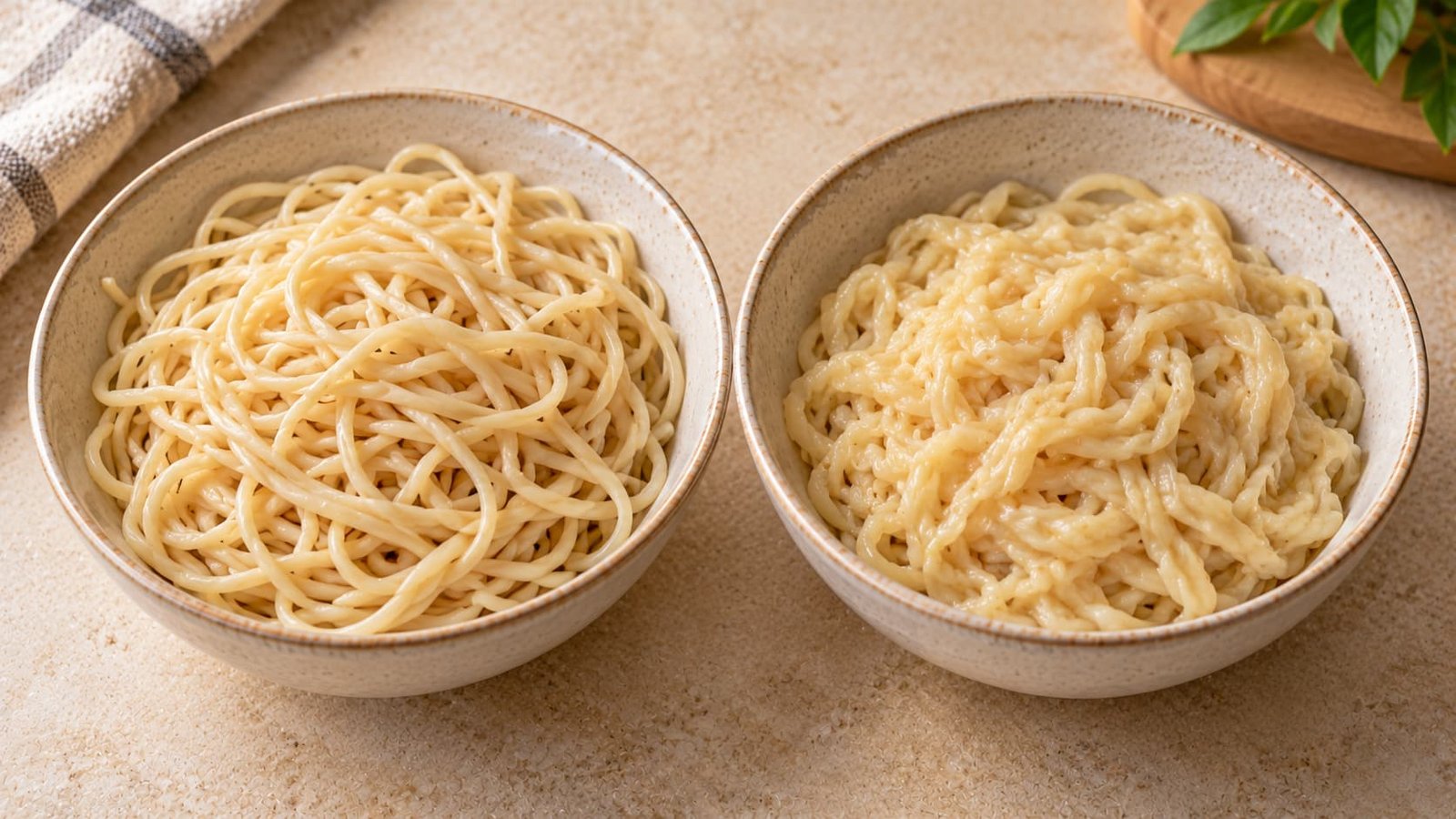
Sticky or mushy noodles can result from overcooking, excess moisture, or handling the noodles too much during stir-frying. The noodle variety also matters because wheat noodles, rice noodles, and other types respond differently to water and heat.
One common problem is cooking the noodles until they are already very soft before adding them to the pan. Because stir-frying involves additional heating, the noodles may soften further and lose their structure.
Excess moisture can also affect the texture. Water remaining after draining, liquid released by vegetables, and large amounts of sauce can collect in the pan. Instead of being lightly coated, the noodles may become overly wet.
Another consideration is the size of the pan. When too many ingredients are added at once, moisture may evaporate more slowly, and the vegetables can steam rather than stir-fry.
To reduce these problems:
- Check noodle texture during cooking. Follow the package instructions and avoid unnecessary additional boiling.
- Drain the noodles thoroughly. Remove excess cooking water before transferring them to the pan.
- Avoid overcrowding. Use a sufficiently wide pan or cook vegetables in batches when necessary.
- Add sauce gradually. Start with enough to lightly coat the noodles, then adjust if needed.
- Handle the noodles gently. Excessive stirring can break softer noodle varieties.
- Limit unnecessary cooking after combining. Once the noodles are heated through and evenly seasoned, further cooking may not be needed.
These practices can help manage noodle texture, but they do not guarantee the same result with every product. Some noodle varieties naturally have a softer or more slippery texture than others.
How Can You Customize Chinese Noodles?
Chinese-style noodles can be adapted by changing the vegetables, adding a protein source, or adjusting the seasonings. The best approach depends on the noodle variety and the type of dish being prepared.
A useful distinction is that adding ingredients can change more than flavor. It may also affect cooking time, moisture, and how easily the noodles can be mixed in the pan.
Vegetarian and Protein Options
A vegetable-based noodle stir-fry can include tofu, eggs, mushrooms, or other ingredients to create different combinations.
Tofu can be cut into cubes or strips and cooked separately before being combined with the noodles. Firm tofu is generally easier to handle during stir-frying than softer varieties, which may break apart.
Eggs can be scrambled in the pan or cooked separately and added later. If preparing eggs alongside vegetables, allowing them enough space to cook before mixing them with the noodles can make the process easier to manage.
Chicken or beef can also be included, but raw meat requires separate attention to safe handling and thorough cooking. It should not be added near the end with the assumption that brief tossing will cook it adequately.
For food safety, poultry should reach a minimum internal temperature of 165°F (74°C), while ground meats generally require 160°F (71°C), according to USDA guidance. Whole cuts of beef have different temperature and resting requirements. A food thermometer is more reliable than judging doneness by appearance alone.
If preparing a vegetarian dish, check the sauce ingredients as well. Some sauces commonly used in noodle dishes contain oyster or fish ingredients.
Adjusting the Flavor and Spice Level
The flavor of a noodle stir-fry can be changed by adjusting the balance of salty, aromatic, acidic, and spicy ingredients.
For a milder dish, garlic, ginger, and a modest amount of soy sauce may provide enough seasoning without adding chili.
For more heat, chili oil or fresh chili can be introduced gradually. The intensity varies between products, so adding a small amount first allows better control over the final flavor.
Chinese black vinegar can contribute acidity, while mushroom-based sauces or oyster sauce can provide additional savory notes. Dark soy sauce may also be used when a deeper color is desired, although it should not automatically replace light soy sauce in equal amounts because the products can differ in flavor and saltiness.
It is generally easier to adjust seasoning in small additions than to correct an overly salty or spicy dish after everything has been combined.
These variations are optional. A simple noodle dish does not need numerous sauces or toppings to be practical for home cooking.
Frequently Asked Questions About Chinese Noodles
Can You Make Chinese Noodles with Regular Spaghetti?
Yes, regular spaghetti can be used as a substitute in a Chinese-style noodle stir-fry. Although spaghetti differs from traditional Chinese noodle varieties in texture and preparation, it can still be combined with vegetables and savory sauces.
Cook the spaghetti according to its package instructions, drain it well, and then add it to the stir-fried ingredients. The finished dish will not have exactly the same texture as one made with Chinese wheat or egg noodles.
Do You Need a Wok to Make Chinese Noodles?
No, a wok is not necessary. A wide frying pan or skillet can also be used to prepare stir-fried noodles at home.
A wok has sloping sides that make it convenient to move and toss ingredients. However, a regular frying pan can work for smaller portions. Avoid overcrowding the pan, as excess moisture can make it harder to stir-fry the vegetables evenly.
Can You Make Chinese Noodles Without Soy Sauce?
Yes, Chinese-style noodles can be prepared without soy sauce. Other seasonings, such as garlic, ginger, vinegar, and suitable savory sauces, can be used to develop flavor.
The finished dish will taste different because soy sauce contributes both saltiness and umami. If avoiding soy because of an allergy, check packaged sauces and other ingredients carefully, as some alternatives may also contain soy.
What Is the Difference Between Chinese Noodles and Regular Pasta?
Chinese noodles and Italian pasta differ in their traditional ingredients, shapes, preparation methods, and culinary uses, although some varieties share similar characteristics.
Many Chinese noodles are made from wheat flour, while others use rice or starches. Some wheat noodles contain alkaline ingredients that influence their texture and color. Italian dried pasta is commonly made from durum wheat semolina and water, although other pasta varieties may contain eggs or different flours.
Chinese noodles are often served in soups, stir-fries, or mixed with sauces. Italian pasta is commonly boiled and combined with sauces or other ingredients. These are broad distinctions rather than strict rules, since both culinary traditions include many variations.
Can You Prepare Chinese Noodles Without Meat?
Yes, Chinese-style noodles can be prepared using vegetables, tofu, mushrooms, and plant-based seasonings without adding meat.
Cabbage, carrots, bell peppers, and leafy greens can provide different flavors and textures. Tofu or mushrooms can also be included for variety.
For a fully vegetarian or vegan preparation, check the ingredients of packaged noodles and sauces. Some egg noodles contain eggs, while certain sauces contain oyster, fish, or other animal-derived ingredients.
Final Thoughts
Making Chinese-style noodles at home involves choosing a suitable noodle variety, preparing the vegetables, and combining the ingredients with a balanced amount of sauce.
The cooking method can be adapted to different ingredients, but noodle texture and moisture are important considerations. Following package instructions, draining noodles properly, and avoiding overcrowding can help make the preparation process more manageable.
Wheat noodles, egg noodles, and rice noodles offer different possibilities, and there is no single method that applies to every Chinese noodle dish.