Quick Recipe Card
| Detail | Information |
| Prep Time | 20 minutes |
| Cook Time | 30 minutes |
| Total Time | 50 minutes |
| Servings | 4–6 |
| Cuisine | Colombian, Latin American |
| Course | Main Course |
| Calories | Approximately 465 kcal per serving* |
| Difficulty | Easy |
*Nutrition varies depending on the ingredients and portion size used.
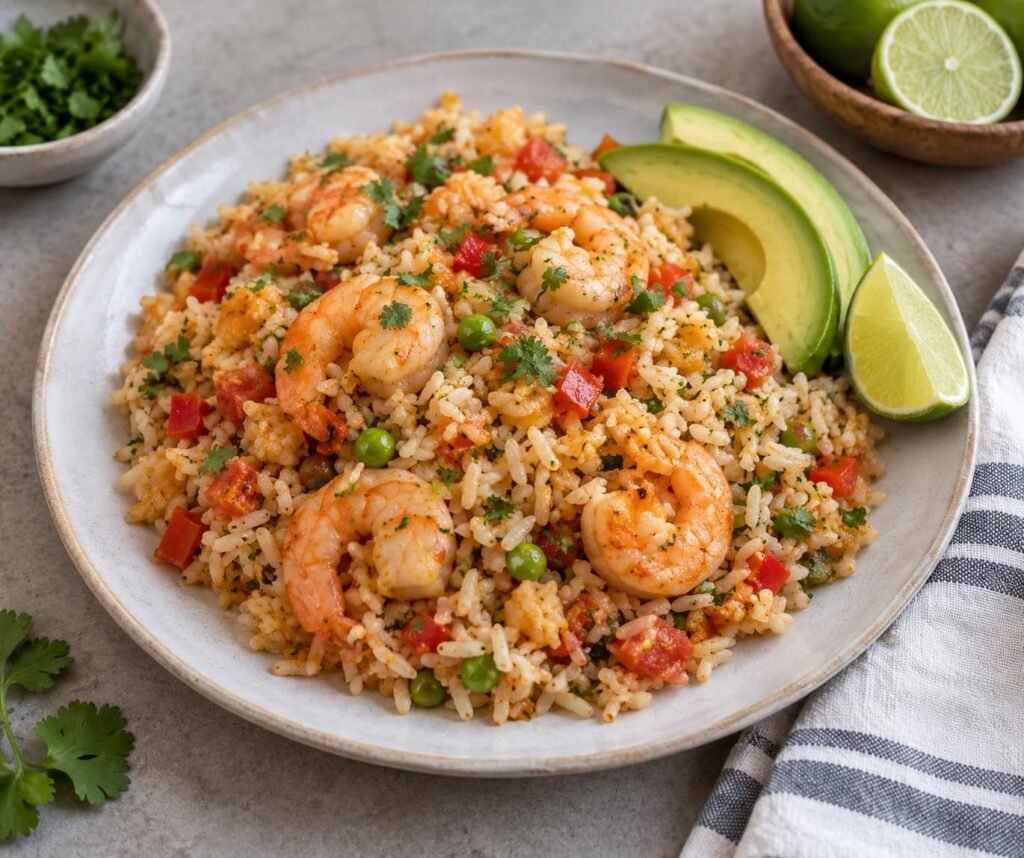
Few dishes capture the warmth of Colombian home cooking quite like Arroz con Camarones. This classic Colombian shrimp and rice recipe combines tender shrimp, fluffy long-grain rice, colorful vegetables, and aromatic seasonings in a single pan, creating a meal that’s comforting enough for a family dinner yet impressive enough to serve to guests.
Unlike many shrimp and rice recipes that rely on heavy sauces, arroz con camarones gets its rich flavor from a simple combination of garlic, onions, sweet peppers, tomatoes, herbs, and well-seasoned broth. As the rice cooks, it absorbs those flavors while the shrimp are added near the end to stay tender and juicy instead of becoming rubbery. The result is a balanced dish that’s savory, fresh, and satisfying without feeling overly rich.
Although the name simply means “rice with shrimp,” this recipe represents more than its ingredients. Along Colombia’s Caribbean coast, it’s a dish often shared during family gatherings, weekend lunches, and celebrations where fresh seafood is part of everyday life. Every household has its own variation, but the heart of the recipe remains the same: simple ingredients, careful cooking, and bold yet balanced flavor.
This version stays true to those traditional flavors while adapting the method for today’s home kitchen. The ingredients are easy to find, the steps are straightforward, and the recipe works beautifully whether you’re using fresh shrimp from the seafood counter or frozen shrimp from the freezer. Even if this is your first time cooking Colombian food, you’ll be able to make a restaurant-quality meal with confidence.
A Dish with Deep Colombian Roots
Arroz con Camarones is one of the signature seafood dishes of Colombia’s Caribbean region, where coastal cities such as Cartagena, Barranquilla, and Santa Marta have long celebrated fresh seafood as part of their local cuisine. Influenced by Indigenous traditions, Spanish cooking techniques, and Afro-Caribbean flavors, the dish reflects Colombia’s rich culinary heritage while remaining wonderfully approachable.
Although shrimp and rice dishes appear throughout Latin America, the Colombian version has its own identity. It typically features colorful vegetables, fragrant herbs, mild spices, and perfectly cooked rice that remains light and separate rather than creamy or sticky. A final sprinkle of fresh cilantro and a squeeze of lime brighten the entire dish, adding freshness that balances the savory flavors.
Today, Colombian shrimp and rice is enjoyed far beyond the country’s coastline. It’s a favorite for family meals because it’s filling, easy to prepare, and brings together everyday ingredients in a way that feels both comforting and special.
Why This Recipe Works
A great arroz con camarones recipe isn’t just about combining shrimp and rice it’s about building flavor at every stage of the cooking process. Small techniques make a noticeable difference in the finished dish.
First, the vegetables are gently sautéed until they become soft and aromatic, creating a flavorful base for the rice. Toasting the rice briefly before adding the broth helps the grains stay light and separate while adding a subtle nutty depth that’s difficult to achieve by simply boiling the rice.
The shrimp are added during the final few minutes of cooking rather than at the beginning. Because shrimp cook quickly, this simple step keeps them juicy and tender while allowing the rice to absorb the savory flavors of the broth without overcooking the seafood.
The recipe also relies on pantry-friendly ingredients instead of complicated spice blends or specialty products. With just a handful of fresh vegetables, herbs, and seasonings, you’ll create a meal that tastes vibrant, balanced, and unmistakably homemade.
Perhaps the best part is that everything comes together in one pan, making both cooking and cleanup remarkably simple. The leftovers also reheat well, making this recipe just as practical for meal prep as it is for serving fresh from the stove.
Who Will Enjoy This Recipe?
Whether you’re exploring Colombian cuisine for the first time or simply looking for a dependable seafood dinner, this recipe fits a wide range of occasions.
It’s an excellent choice for beginner cooks because the ingredients are familiar and the cooking process is easy to follow. Families will appreciate that it’s hearty enough to serve as a complete meal, while seafood lovers will enjoy the fresh, vibrant flavors that make this dish different from heavier shrimp recipes.
If you’re planning meals ahead, Colombian shrimp and rice also stores well for lunch the next day, making it a practical option for busy weekdays. It’s equally suitable for casual weeknight dinners, relaxed weekend lunches, or entertaining friends with something that’s both authentic and approachable.
What Makes This Recipe Authentic Yet Easy?
Traditional Colombian cooking is built on the idea that simple ingredients, when treated with care, create extraordinary meals. This recipe follows that same philosophy while adapting the process for modern home kitchens.
Instead of requiring specialty ingredients, it uses pantry staples and fresh vegetables that are widely available. At the same time, it preserves the characteristics that make authentic arroz con camarones so memorable: fluffy rice, tender shrimp, aromatic vegetables, balanced seasoning, fresh cilantro, and a bright finish with lime.
The method is intentionally straightforward, but it doesn’t cut corners where flavor matters. Toasting the rice, cooking the shrimp gently, and allowing the rice to rest before serving are small details that produce a noticeably better result.
Whether you’re making this recipe for a quiet family dinner or introducing friends to Colombian cuisine, you’ll end up with a colorful, satisfying meal that honors the spirit of the traditional dish while remaining accessible to cooks of every experience level.
What Is Arroz con Camarones?
Arroz con Camarones is a classic Colombian shrimp and rice dish that combines succulent shrimp, fluffy long-grain rice, colorful vegetables, and aromatic seasonings into one comforting meal. While the Spanish name translates simply to “rice with shrimp,” the dish is celebrated for the way simple ingredients are layered to create rich, balanced flavor without relying on heavy sauces.
A traditional arroz con camarones recipe begins with a fragrant base of onion, garlic, tomatoes, and sweet bell peppers. The rice is lightly toasted before simmering in seasoned broth, allowing every grain to absorb flavor while remaining light and separate. Shrimp are added during the final few minutes of cooking, a simple technique that keeps them tender, juicy, and naturally sweet instead of overcooked.
Today, Colombian shrimp and rice is enjoyed in homes, coastal restaurants, and family celebrations throughout Colombia. Its combination of fresh ingredients, approachable cooking method, and satisfying flavor has also made it a favorite among home cooks looking to explore Latin American cuisine.
What Does “Arroz con Camarones” Mean?
The phrase “arroz con camarones” literally means “rice with shrimp.” Although the translation is simple, the dish represents generations of Colombian home cooking rather than just a list of ingredients.
Instead of cooking the rice and shrimp separately, the recipe builds flavor step by step. Aromatic vegetables are softened first to create a savory base, the rice is gently toasted to enhance its texture, and seasoned broth slowly infuses every grain. Shrimp are folded in near the end, allowing their delicate flavor to shine while keeping their texture firm and tender.
This careful balance of timing and technique is one of the reasons authentic Colombian arroz con camarones has remained a beloved comfort food for generations.
Colombian Origins
Arroz con camarones is closely associated with Colombia’s Caribbean coast, where fresh seafood has shaped local cooking traditions for centuries. Coastal cities such as Cartagena, Barranquilla, and Santa Marta are especially known for seafood dishes that reflect a blend of Indigenous knowledge, Spanish culinary influences, and Afro-Caribbean traditions.
With shrimp readily available from nearby waters, families developed rice dishes that celebrated the freshness of local ingredients rather than masking them with heavy seasonings. Over time, these recipes became part of everyday meals as well as festive occasions, often bringing families together around a single pan filled with fragrant rice and seafood.
Although recipes vary from one household to another, authentic Colombian versions share the same philosophy: fresh ingredients, balanced seasoning, and perfectly cooked rice that complements the shrimp instead of overpowering it.
How Is the Colombian Version Different?
Many Latin American countries prepare their own version of shrimp and rice, but each reflects its regional ingredients and culinary traditions.
The Colombian version is recognized for its fluffy rice, colorful vegetables, mild seasoning, and fresh herbs. The focus is on preserving the natural sweetness of the shrimp while creating layers of flavor through slow cooking rather than bold spices.
In Peru, shrimp rice dishes often feature ingredients such as ají amarillo, fresh cilantro, or even beer, resulting in deeper, more herbaceous flavors with regional variations.
In Ecuador, cooks frequently use seafood stock, achiote, or mixed shellfish, giving the rice a richer color and a more pronounced seafood character.
While these dishes share common roots, authentic arroz con camarones from Colombia is especially appreciated for its lighter texture, vibrant vegetables, and bright finish with chopped cilantro and fresh lime.
Traditional Flavor Profile
One of the reasons Colombian shrimp and rice has remained a family favorite is its balanced, comforting flavor. Rather than relying on intense heat or rich sauces, the recipe lets fresh ingredients work together naturally.
The rice absorbs the savory broth while remaining fluffy and separate. Sweet bell peppers, ripe tomatoes, onion, and garlic create a fragrant foundation, while the shrimp contribute a delicate sweetness that pairs beautifully with the fresh herbs. Just before serving, chopped cilantro and a squeeze of lime brighten the entire dish, adding freshness that lifts every bite.
The result is a meal that’s savory, lightly aromatic, and satisfying without feeling heavy a combination that explains why it’s equally suited to casual family dinners and special celebrations.
Why You’ll Love This Recipe
Some recipes become favorites because they’re quick. Others stand out because they’re full of flavor. This Easy Arroz con Camarones Recipe offers both. It delivers the authentic taste of Colombian shrimp and rice while keeping the cooking process simple enough for busy weeknights and relaxed enough for weekend cooking.
Whether you’re preparing seafood for the first time or already enjoy Latin American recipes, this dish is approachable, dependable, and rewarding from the very first attempt.
A True One-Pan Dinner
Everything cooks in the same pan, allowing the vegetables, rice, broth, and shrimp to develop flavor together. Beyond making cleanup easier, this method helps every grain of rice absorb the savory juices from the vegetables and broth, creating a richer final dish without extra effort.
Beginner-Friendly Without Sacrificing Flavor
You don’t need advanced cooking skills to make this recipe successfully. The ingredients are easy to find, the steps are straightforward, and a few simple techniques like toasting the rice and adding the shrimp at the end help deliver consistently excellent results.
Ready in Under an Hour
From chopping the vegetables to serving dinner, this recipe takes about 50 minutes from start to finish. It’s quick enough for a weeknight meal but flavorful enough to serve when friends or family come over.
A Meal Everyone Can Enjoy
The mild seasoning makes this recipe appealing to both adults and children, while its colorful presentation looks beautiful on the table. Serve it with fried plantains, avocado slices, a crisp salad, or fresh lime wedges for a complete Colombian-inspired meal.
Perfect for Leftovers and Meal Prep
Arroz con camarones keeps its flavor remarkably well when stored correctly. In fact, many people find the seasonings become even more balanced after resting overnight. Reheat it gently with a splash of broth or water to restore moisture, and you’ll have a delicious lunch the next day without sacrificing texture.
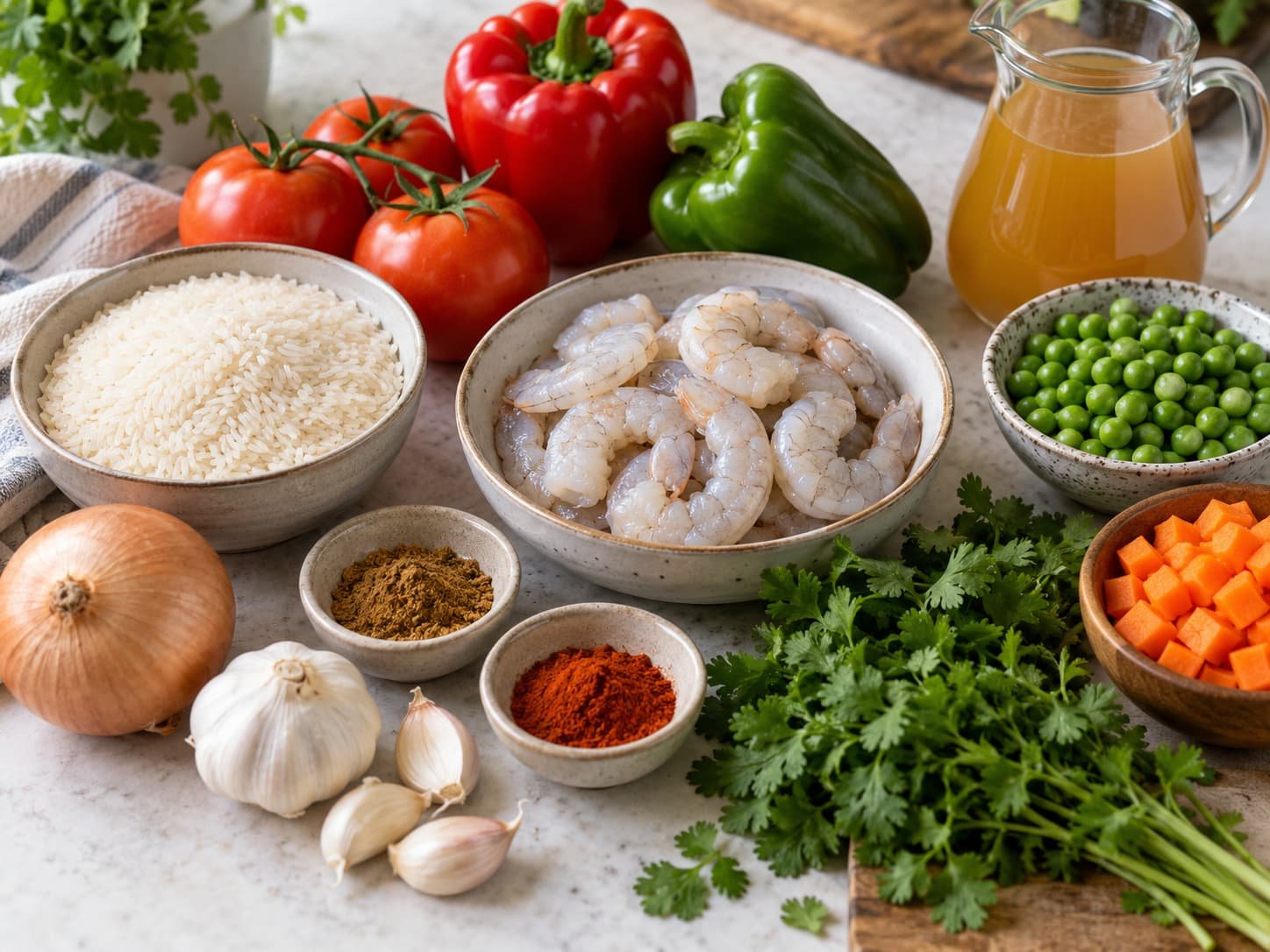
Ingredients You’ll Need

One of the reasons Arroz con Camarones has remained a staple of Colombian home cooking is that it transforms simple ingredients into a meal that’s rich in flavor without being complicated to prepare. Every ingredient contributes something important, whether it’s building the aromatic cooking base, keeping the rice fluffy, or highlighting the natural sweetness of the shrimp.
While authentic Colombian shrimp and rice is traditionally made with fresh seafood and vegetables, this recipe is flexible enough for everyday cooking. If fresh shrimp aren’t available, properly thawed frozen shrimp will still produce excellent results, making this dish practical no matter the season.
The quality of the ingredients matters more than the quantity. Fresh vegetables, flavorful broth, and correctly cooked shrimp will have a much bigger impact than adding extra spices or complicated seasonings.
Main Ingredients
The classic arroz con camarones recipe relies on a handful of pantry staples and fresh produce that work together to create its signature flavor and texture.
Shrimp
Large shrimp are the best choice because they remain tender throughout cooking and are less likely to overcook than smaller varieties. Look for raw, peeled, and deveined shrimp, ideally with the tails removed for easier serving.
Fresh shrimp should smell clean and slightly salty, never overly fishy. If you’re using frozen shrimp, thaw them overnight in the refrigerator or under cold running water, then pat them completely dry before seasoning. Removing excess moisture helps the shrimp sear lightly instead of steaming.
Long-Grain White Rice
Traditional Colombian shrimp and rice is almost always prepared with long-grain white rice. Its lower starch content allows the grains to stay light, separate, and fluffy while absorbing the savory broth.
For the best texture, rinse the rice under cold water until the water runs mostly clear. This simple step removes excess surface starch and helps prevent the rice from becoming sticky.
Onion
Yellow onion is the traditional choice because it softens beautifully during cooking and develops a natural sweetness that balances the seafood. White onion also works well, while red onion can introduce a sharper flavor that’s less common in Colombian recipes.
Garlic
Fresh garlic provides much of the dish’s signature aroma. Finely minced cloves cook evenly and blend into the vegetable base, creating a deeper, more rounded flavor than garlic powder.
Bell Peppers
Red and yellow bell peppers add natural sweetness, vibrant color, and a slight crunch. They also balance the savory broth and seafood without overwhelming the dish.
Tomatoes
Fresh, ripe tomatoes provide natural acidity that brightens the rice while creating a flavorful cooking base. If tomatoes are out of season, good-quality canned diced tomatoes can be used as an alternative.
Chicken or Seafood Broth
Cooking the rice in broth instead of water is one of the easiest ways to build flavor. Seafood broth creates a deeper seafood taste, while chicken broth offers a milder, more balanced profile. Low-sodium broth is recommended because it allows you to season the dish gradually as it cooks.
Fresh Cilantro
Fresh cilantro is stirred in just before serving to preserve its bright, herbal flavor. Dried cilantro doesn’t provide the same freshness, so it’s worth using the fresh herb whenever possible.
Lime Wedges
A squeeze of fresh lime just before eating adds brightness and enhances the natural sweetness of the shrimp. Although optional, it’s a traditional finishing touch that brings the entire dish together.
Seasonings
One of the defining characteristics of authentic arroz con camarones is that the seasonings support the seafood rather than hide it. Instead of relying on bold spice blends, Colombian cooking often uses a few carefully chosen pantry staples to build balanced flavor.
Paprika contributes a gentle warmth and rich color, while ground cumin adds subtle earthiness without dominating the dish. Salt and freshly ground black pepper enhance the natural flavors of the vegetables and shrimp, and a small pinch of dried oregano can add an extra layer of herbal aroma if desired.
The goal is to season gradually throughout the cooking process rather than adding everything at once. This produces a more balanced flavor and prevents the shrimp from becoming overly salty.
Optional Add-Ins
Every Colombian family has its own way of preparing arroz con camarones, which is one reason the recipe has remained popular for generations. While the traditional version is beautifully simple, a few optional ingredients can add variety without changing the character of the dish.
Sweet peas are commonly added to introduce color and a touch of sweetness, while corn kernels provide a pleasant contrast in texture. Finely diced carrots blend naturally into the rice and make the dish even more colorful.
If you enjoy gentle heat, a finely chopped jalapeño or red chili can be sautéed with the vegetables. Some regional variations also use a small amount of achiote oil, which gives the rice its beautiful golden-orange color while adding a subtle earthy flavor.
These additions should complement the shrimp rather than compete with it, so moderation is key.
Ingredient Notes
A few simple techniques can noticeably improve the finished dish.
Whenever possible, choose medium to large shrimp, as they hold their texture better during cooking. Avoid pre-cooked shrimp because they can become dry and rubbery once reheated in the rice.
Use ripe tomatoes with firm flesh instead of overly soft ones, which can release too much liquid into the pan.
If you’re using frozen shrimp, thaw and dry them thoroughly before cooking. Excess moisture can dilute the flavor of the broth and prevent the shrimp from browning properly.
Finally, taste the broth before adding the rice. Since different brands contain varying amounts of salt, adjusting the seasoning early helps ensure the finished dish is balanced.
Best Rice for Arroz con Camarones
Choosing the right rice is one of the most important factors in making an authentic arroz con camarones recipe. Because the rice absorbs nearly all of the cooking liquid, it determines not only the texture of the finished dish but also how well the flavors develop.
The ideal rice should stay fluffy, separate easily with a fork, and absorb the seasoned broth without becoming heavy or sticky.
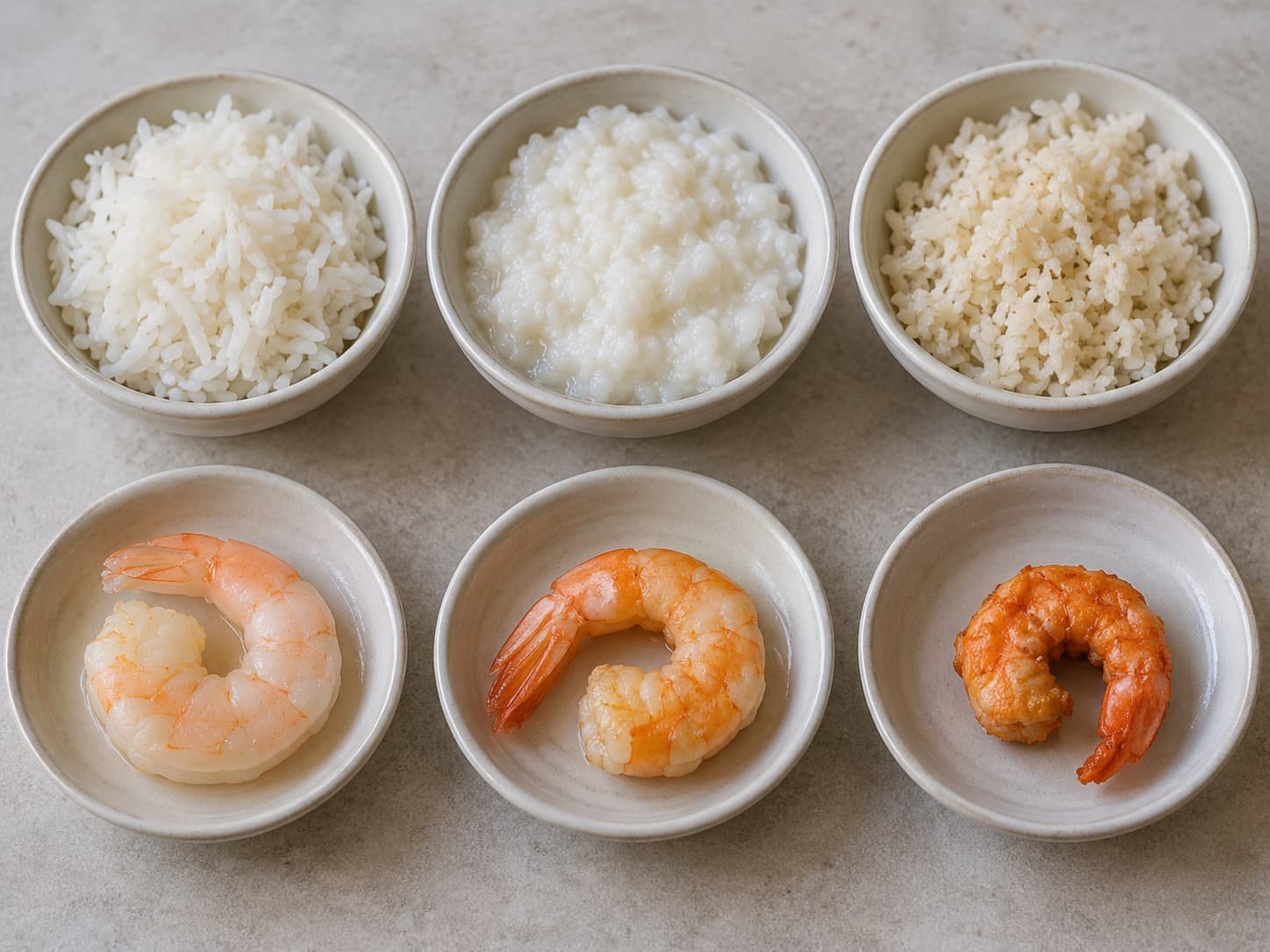
Long-Grain White Rice (Best Choice)
Long-grain white rice is the traditional choice for Colombian shrimp and rice, and for good reason. Its lower starch content produces light, fluffy grains that remain distinct after cooking while still absorbing plenty of flavor.
Before cooking, rinse the rice until the water runs mostly clear. This removes excess starch and helps prevent clumping, giving the dish the texture expected in traditional Colombian cooking.
Jasmine Rice
Jasmine rice is an excellent substitute when long-grain white rice isn’t available. Its delicate floral aroma pairs naturally with seafood, creating a slightly softer but equally enjoyable version of the dish.
Because jasmine rice absorbs liquid more quickly, monitor the cooking time carefully and adjust the liquid if needed according to the package directions.
Basmati Rice
Basmati rice is another reliable alternative. Its naturally long grains remain beautifully separate after cooking and add a subtle nutty aroma that complements shrimp without overpowering the vegetables and herbs.
Since basmati cooks a little faster than standard long-grain rice, keep an eye on the liquid during the final few minutes of cooking.
Why Short-Grain Rice Isn’t Recommended
Short-grain rice varieties, including Arborio and sushi rice, contain significantly more starch than long-grain rice. During cooking, that starch creates a creamy texture that’s ideal for risotto but doesn’t suit traditional arroz con camarones.
Instead of producing fluffy, separate grains, short-grain rice tends to become sticky, making the shrimp and vegetables blend together rather than standing out individually.
For the most authentic texture and appearance, stick with long-grain rice or one of its close alternatives. The difference may seem small, but it’s one of the details that gives Colombian shrimp and rice its signature light, flavorful finish.
How to Make Easy Arroz con Camarones
Preparing Easy Arroz con Camarones is all about timing and building flavor gradually. Instead of cooking every ingredient at once, each step contributes to the final dish, allowing the rice to absorb the seasoned broth while the shrimp stay tender and juicy. This traditional approach creates the light, flavorful texture that makes authentic Colombian shrimp and rice so enjoyable.
Take your time with each stage, and you’ll be rewarded with fluffy rice, perfectly cooked shrimp, and a meal that’s full of fresh, balanced flavor.
Step 1: Season the Shrimp

Pat the shrimp completely dry with paper towels before seasoning. Removing excess moisture helps them absorb the spices more evenly and prevents them from steaming once they’re added to the pan.
Season the shrimp with salt, freshly ground black pepper, paprika, and a pinch of ground cumin. Toss until evenly coated, then let them rest for about 10–15 minutes while you prepare the vegetables. This brief resting period allows the seasonings to lightly penetrate the shrimp without masking their natural sweetness.
If you’re using frozen shrimp, make sure they’re fully thawed and well drained before seasoning. Any excess water can dilute the flavor of the dish and affect the texture of the rice.
Step 2: Sauté the Vegetables

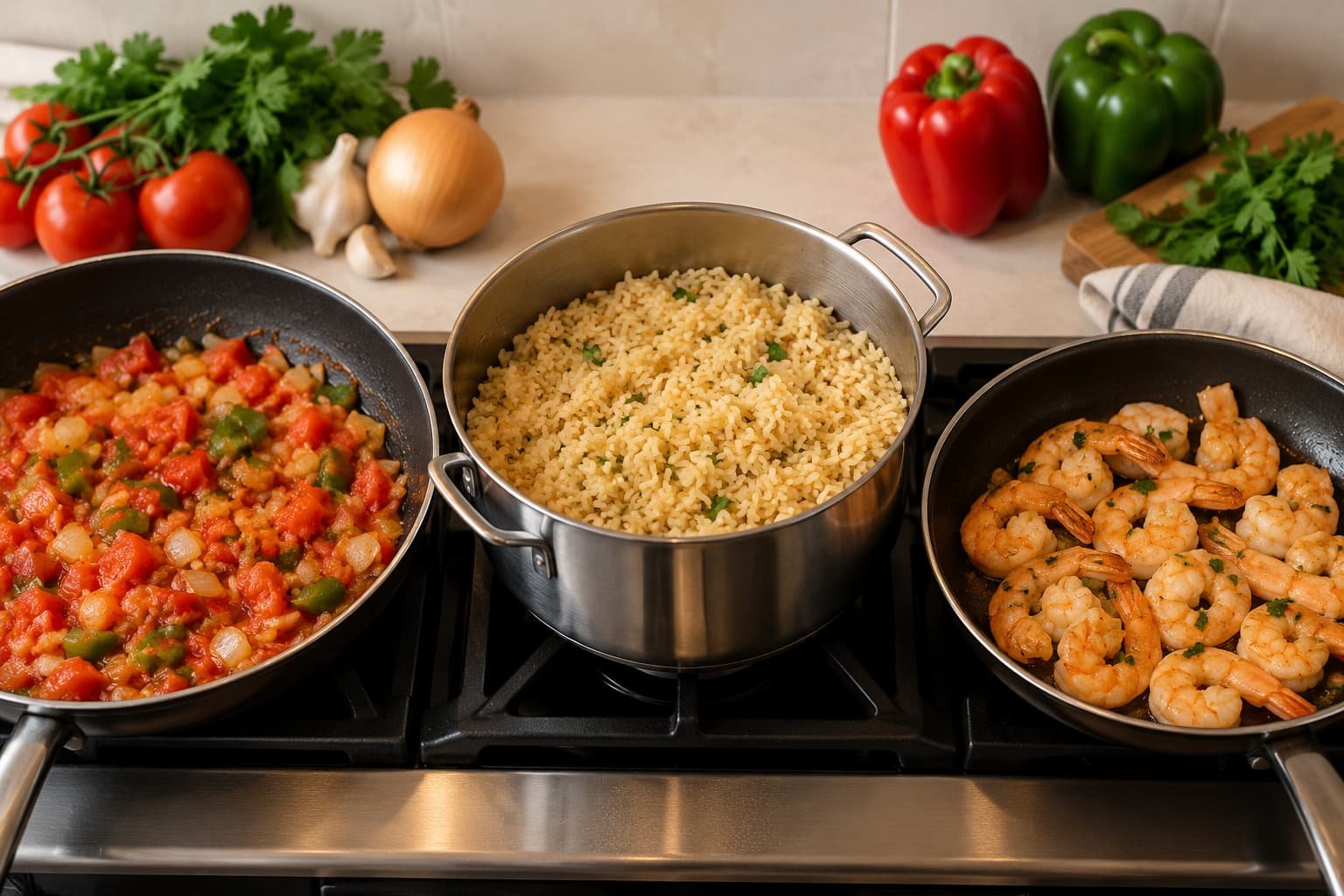
Heat olive oil in a large 12-inch skillet or 5-quart Dutch oven over medium heat. Add the diced onion and bell peppers, stirring occasionally for 5–7 minutes, until the onions become translucent and the peppers soften.
Add the minced garlic and cook for about 30 seconds, just until fragrant. Garlic burns quickly, so avoid letting it brown.
Next, stir in the diced tomatoes and continue cooking for another 3–4 minutes, allowing them to soften and release their juices. The mixture should become slightly thick and jammy, creating a flavorful base that will season every grain of rice.
Don’t rush this step. Much of the finished dish’s flavor develops here, long before the shrimp are added.
Step 3: Build the Flavor Base
Sprinkle the paprika, cumin, oregano, salt, and black pepper evenly over the vegetables. Stir continuously for about one minute so the spices bloom gently in the warm oil.
Cooking the spices briefly deepens their aroma and removes any raw taste before the broth is added. By the end of this step, the vegetables should smell savory, slightly sweet, and well seasoned.
If the spices begin sticking to the bottom of the pan, lower the heat slightly and stir immediately to prevent scorching.
Step 4: Add the Rice and Broth

Stir the rinsed long-grain rice into the vegetable mixture, coating every grain with the seasoned oil. Continue stirring for 2–3 minutes, allowing the rice to toast lightly.
This simple technique gives the rice a subtle nutty flavor while helping the grains remain fluffy after cooking.
Slowly pour in the warm chicken or seafood broth and stir once to combine everything evenly. Once the liquid begins to simmer gently, stop stirring. Continued stirring releases starch from the rice, which can make the finished dish sticky instead of light and separate.
Step 5: Cook the Rice
Reduce the heat to low, cover the pan tightly, and allow the rice to cook undisturbed for 18–20 minutes, or until most of the broth has been absorbed.
Avoid lifting the lid repeatedly during cooking. Every time the steam escapes, the rice loses the moisture needed to cook evenly.
When the rice is ready, it should feel tender while each grain remains distinct. If a small amount of liquid remains on the surface, don’t worry it will finish absorbing during the resting stage.
If the rice still feels firm after the liquid has disappeared, add a few tablespoons of warm broth, cover the pan again, and cook for another two or three minutes.
Step 6: Add the Shrimp
Arrange the seasoned shrimp evenly across the surface of the partially cooked rice instead of stirring them into the pan immediately.
Cover again and cook for 4–6 minutes, depending on the size of the shrimp. Medium shrimp usually cook slightly faster, while larger shrimp may need another minute.
The shrimp are ready when they turn pink, opaque, and curl into a gentle “C” shape. If they curl tightly into an “O,” they’ve likely cooked too long and may become rubbery.
This gentle steaming method keeps the shrimp tender while allowing the rice to finish cooking underneath.
Step 7: Finish with Cilantro and Lime

Remove the pan from the heat and leave it covered for 5 minutes. This short resting period allows the remaining steam to finish cooking the rice while helping excess moisture distribute evenly throughout the pan.
Fluff the rice gently with a fork instead of stirring with a spoon. This keeps the grains separate and prevents the shrimp from breaking apart.
Fold in freshly chopped cilantro just before serving and finish with a generous squeeze of fresh lime juice. The citrus brightens the savory broth, while the herbs add freshness that balances the richness of the seafood.
Serve immediately, ideally with sliced avocado, fried plantains, or a crisp green salad for a complete Colombian-inspired meal.
Chef’s Tips for Perfect Shrimp Rice
Small cooking habits often make the biggest difference in the final result. These practical tips will help you prepare Colombian shrimp and rice with the same light texture and balanced flavor found in many Colombian home kitchens.
Don’t Overcook the Shrimp
Shrimp cook quickly and continue cooking from the heat trapped inside the rice after the pan is removed from the stove.
As soon as they turn pink and opaque, they’re done. If you’re unsure, it’s better to remove the pan slightly early than leave the shrimp on the heat too long. They’ll finish cooking naturally while the rice rests.
Use Warm Broth
Warm broth keeps the cooking temperature steady from the moment it’s added to the pan. Cold broth lowers the temperature of the rice, which can slow cooking and sometimes produce unevenly cooked grains.
Warming the broth first is a small step that helps create more consistent results.
Toast the Rice Before Simmering
Don’t skip the few minutes spent toasting the rice. Coating the grains lightly with oil before adding the broth helps them remain fluffy while adding a subtle nutty flavor that complements the shrimp beautifully.
This simple technique is one of the easiest ways to improve both texture and flavor.
Let the Rice Rest Before Serving
Once cooking is complete, leave the lid on for five minutes before fluffing the rice.
This resting period allows any remaining moisture to settle evenly, producing lighter, fluffier grains while giving the flavors time to blend together.
Taste Before Serving
Every broth contains a different amount of salt, so always taste the rice before serving.
Adjust the seasoning only if needed with a little salt, freshly ground black pepper, or another squeeze of fresh lime juice. Making these final adjustments at the end creates a balanced dish without overpowering the shrimp or fresh herbs.
Don’t Be Afraid to Adjust the Heat
If the liquid begins evaporating too quickly before the rice is tender, reduce the heat slightly and keep the lid closed. If the rice still feels firm after the cooking time, add a splash of warm broth and continue cooking for a few more minutes.
Making small adjustments as you cook is completely normal and often leads to better results than following exact times alone.
Recipe Variations

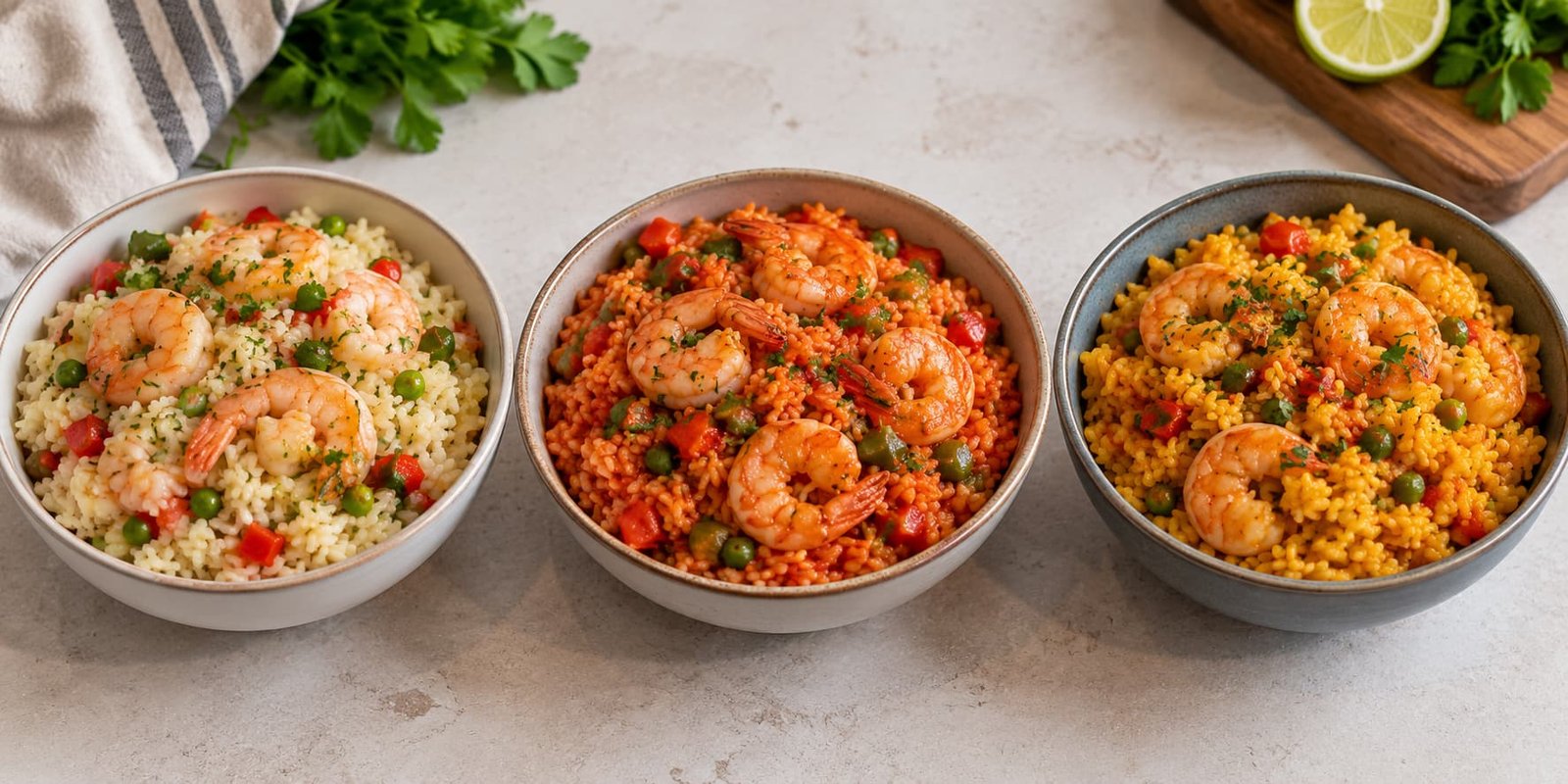
One of the reasons Easy Arroz con Camarones has remained a staple of Colombian home cooking is its flexibility. While the traditional recipe is made with shrimp, long-grain rice, fresh vegetables, and simple seasonings, it’s common for home cooks to adapt the dish based on what’s available in their kitchen or the flavors their family enjoys most.
The following variations preserve the character of authentic arroz con camarones while giving you simple ways to customize the recipe without losing its balanced, seafood-forward flavor.
Spicy Arroz con Camarones
Although the classic Colombian version is mildly seasoned, adding a little heat can give the dish a new dimension without overpowering the shrimp.
Sauté a finely chopped jalapeño, serrano pepper, or fresh red chili with the onions and bell peppers so the heat blends naturally into the cooking base. If you prefer a smoky finish, replace part of the paprika with smoked paprika or add a small pinch of chipotle powder.
Keep the spice level moderate. The goal is to complement the sweetness of the shrimp rather than hide it behind intense heat.
Coconut Arroz con Camarones
Along Colombia’s Caribbean coast, coconut is a traditional companion to seafood, making this one of the most authentic variations you can prepare.
Replace about one-third of the cooking broth with unsweetened coconut milk. The rice becomes slightly richer and creamier while developing a subtle coconut flavor that pairs beautifully with shrimp, cilantro, and fresh lime.
For the best balance, avoid sweetened coconut milk, which can make the finished dish overly sweet and mask the natural seafood flavor.
Vegetable-Packed Version
If you’d like to add more vegetables, this recipe adapts beautifully without losing its traditional character.
Sweet peas, diced carrots, corn kernels, zucchini, or finely chopped green beans all blend naturally into the rice while adding color and texture. Firmer vegetables should be added early so they soften evenly, while delicate vegetables are best stirred in during the last few minutes of cooking.
Adding seasonal vegetables is also a practical way to use fresh produce while making the meal even more satisfying.
Easy One-Pot Version
One of the best things about Colombian shrimp and rice is that it’s already designed to be a one-pan meal.
Using a heavy-bottomed Dutch oven or a deep skillet allows the vegetables, broth, rice, and shrimp to cook together without transferring ingredients between different pans. Besides making cleanup easier, this method helps every grain of rice absorb the flavorful cooking liquid while reducing the risk of scorching.
Choose cookware with a tight-fitting lid to trap steam, which is essential for evenly cooked, fluffy rice.
Brown Rice Version
Brown rice is an excellent alternative if you prefer whole grains or want a little more fiber in the finished dish.
Because it requires a longer cooking time, begin cooking the brown rice before adding the shrimp. Once the rice is almost tender, gently arrange the shrimp over the surface so they steam during the final few minutes of cooking.
The result is a heartier version of arroz con camarones with a slightly nutty flavor while still preserving the fresh seafood and vegetable profile that defines the traditional recipe.

What to Serve With Arroz con Camarones
Colombian shrimp and rice is satisfying enough to serve as a complete meal, but choosing the right accompaniments adds freshness, texture, and balance to every bite.
Traditional Colombian meals usually feature simple side dishes that complement the main course instead of competing with it, allowing the shrimp and seasoned rice to remain the highlight of the table.
Fresh Green Salad
A crisp green salad is one of the easiest and most refreshing side dishes to serve with arroz con camarones.
A combination of lettuce, cucumber, tomatoes, and thinly sliced red onion tossed with a light lime vinaigrette provides a cool contrast to the warm, savory rice. The fresh vegetables help balance the richness of the seafood while adding brightness to the meal.
Fried Plantains
Sweet fried plantains are a classic companion to many Colombian seafood dishes, particularly along the Caribbean coast.
Their lightly caramelized exterior and naturally sweet flavor create a delicious contrast with the savory shrimp and seasoned rice. Serve them warm alongside the main dish for a combination that’s both comforting and authentically Colombian.
If you prefer a crispier option, patacones (twice-fried green plantains) provide a savory alternative with plenty of crunch.
Fresh Avocado
Creamy avocado is one of the simplest additions you can make to this meal.
Its mild flavor and buttery texture balance the acidity of the tomatoes and fresh lime while adding richness without making the dish feel heavy. A sprinkle of sea salt and a squeeze of lime juice are often all that’s needed before serving.
Lime Wedges
Fresh lime may seem like a small detail, but it makes a noticeable difference in the finished dish.
A squeeze of lime just before eating brightens the broth, enhances the shrimp’s natural sweetness, and ties together the flavors of the herbs and vegetables. It’s a finishing touch you’ll find on many Colombian tables and one that’s well worth including.
Traditional Colombian Side Dishes
For a more complete Colombian-inspired meal, pair Easy Arroz con Camarones with a few regional favorites.
Fresh arepas provide a soft, comforting accompaniment, while patacones add crisp texture. A simple avocado and tomato salad or a light cucumber salad also works beautifully, adding freshness without overshadowing the seafood.
These classic sides create a balanced meal that’s suitable for everything from casual family dinners to weekend gatherings with friends.
Storage & Reheating

One of the reasons Easy Arroz con Camarones makes such a practical family meal is that it stores well and reheats beautifully when handled correctly. In fact, many home cooks find the flavors become even more balanced after resting overnight, as the rice has additional time to absorb the seasonings.
Proper storage not only preserves the texture of the rice but also helps the shrimp stay tender instead of becoming dry or rubbery during reheating. Following a few simple steps will keep your Colombian shrimp and rice tasting fresh for days.
How to Store in the Refrigerator
Allow the arroz con camarones to cool for no longer than 2 hours after cooking, then transfer it to a shallow airtight container. Shallow containers cool more evenly than deep ones, helping the rice reach a safe refrigerator temperature faster while maintaining its texture.
For the best flavor and quality, enjoy refrigerated leftovers within 3 days, although properly stored cooked seafood dishes are generally considered safe for up to 4 days. Keep the container tightly sealed to prevent the rice from drying out or absorbing odors from other foods in the refrigerator.
If you’re preparing meals ahead of time, divide the rice into individual portions before refrigerating. Smaller servings reheat more evenly and reduce the chance of overcooking the shrimp.
Can You Freeze Arroz con Camarones?
Yes, Colombian shrimp and rice freezes well, although the shrimp may become slightly firmer after thawing.
Once the dish has cooled completely, transfer it to freezer-safe containers or heavy-duty freezer bags, pressing out as much air as possible before sealing. This helps minimize freezer burn and preserves the flavor of both the rice and seafood.
For the best eating quality, freeze for up to 2 months. While the dish remains safe for longer if continuously frozen, the texture of the rice and shrimp is at its best within this timeframe.
When ready to serve, thaw the container overnight in the refrigerator rather than on the kitchen counter. After thawing, reheat thoroughly and avoid freezing the leftovers again, as repeated freezing and thawing can noticeably affect both texture and quality.
If you know in advance that you’ll be freezing the recipe, slightly undercook the shrimp during the initial preparation. They’ll finish cooking as the dish is reheated, helping them remain more tender.
Best Way to Reheat
Gentle reheating helps preserve the light texture of the rice and prevents the shrimp from becoming tough.

For the stovetop, transfer the rice to a skillet and add 2–3 tablespoons of water or seafood broth. Cover with a lid and warm over low heat for 5–7 minutes, stirring only once or twice until the rice is evenly heated and steaming throughout. The added moisture restores the fluffy texture without making the rice soggy.
For the microwave, place a serving in a microwave-safe bowl, sprinkle a tablespoon or two of water over the rice, and cover loosely with a microwave-safe lid or a damp paper towel. Heat in 30-second intervals, stirring gently between each interval until the rice is evenly warmed.
Avoid reheating over high heat. Shrimp cook very quickly, and excessive heat can turn them firm and chewy. Slow, gentle reheating gives the best results while preserving both texture and flavor.
Common Mistakes to Avoid
Even simple recipes can produce different results depending on technique. Most problems with authentic arroz con camarones come down to timing, moisture, or heat rather than the ingredients themselves.
Understanding these common mistakes will help you achieve fluffy rice, tender shrimp, and balanced flavor every time you prepare this classic Colombian shrimp and rice recipe.
Mushy Rice
Rice that feels sticky or overly soft is usually caused by using too much liquid, choosing a high-starch rice variety, or stirring the rice after the broth has been added.
Always rinse long-grain rice until the water runs mostly clear before cooking. This removes excess surface starch and encourages light, separate grains. Measure both the rice and broth carefully, and keep the lid closed while the rice simmers so the steam can cook it evenly.
If the rice seems slightly wet at the end of cooking, remove the lid and let it rest for a few minutes before fluffing it gently with a fork. The remaining moisture will evaporate naturally.
Rubbery Shrimp
Shrimp need surprisingly little time to cook. Leaving them on the heat for even a few extra minutes can change their texture dramatically.
For the best results, add the shrimp during the final stage of cooking and remove the pan from the heat as soon as they become pink and opaque. Properly cooked shrimp usually curl into a gentle “C” shape. If they tighten into a small “O,” they’ve likely cooked too long.
Choosing large shrimp instead of small ones also provides a little more flexibility and reduces the risk of overcooking.
Adding Too Much Liquid
Using more broth than the rice can absorb is one of the quickest ways to lose the light, fluffy texture that defines arroz con camarones.
Different rice varieties require different amounts of liquid, so always adjust the ratio if you’re using jasmine or brown rice instead of traditional long-grain white rice.
If the rice is still slightly firm after the liquid has been absorbed, add a small splash of warm broth rather than pouring in a large amount all at once.
Over-Seasoning Too Early
As the rice cooks, the broth gradually reduces and the flavors become more concentrated. Adding too much salt or too many spices at the beginning can easily overpower the delicate sweetness of the shrimp.
Season the cooking liquid gradually, then taste the finished dish before making final adjustments. In many cases, an extra squeeze of fresh lime or a little chopped cilantro adds the brightness the dish needs without requiring additional salt.
Stirring the Rice Too Often
Unlike risotto, Colombian shrimp and rice should remain mostly undisturbed once the broth begins simmering.
Frequent stirring releases starch from the rice, making it sticky instead of light and fluffy. After adding the broth, stir only once to distribute the ingredients evenly, then allow the rice to cook gently with the lid closed until it’s done.
This simple habit is one of the easiest ways to achieve the distinct, separate grains that characterize a well-made arroz con camarones.
Frequently Asked Questions
Can I use frozen shrimp for Arroz con Camarones?
Yes. Frozen shrimp are an excellent option for this recipe, especially if fresh shrimp aren’t available. For the best texture, thaw them completely in the refrigerator or under cold running water, then pat them dry before seasoning. Removing excess moisture helps the shrimp cook evenly and prevents additional liquid from making the rice soggy. Whenever possible, choose raw large shrimp instead of pre-cooked shrimp, as they stay juicier and more tender during cooking.
What is the best rice for Arroz con Camarones?
Traditional Colombian arroz con camarones is made with long-grain white rice because it cooks into fluffy, separate grains that absorb the flavorful broth without becoming sticky. Jasmine rice is a good substitute if you prefer a slightly softer texture, while basmati rice offers a lighter, more aromatic alternative. Short-grain rice and Arborio rice are not recommended because their higher starch content creates a creamy texture rather than the light, fluffy consistency this dish is known for.
Can I make Arroz con Camarones ahead of time?
Absolutely. This recipe is a great option for meal prep because the flavors continue to develop as it rests. Allow the dish to cool, store it in an airtight container, and refrigerate it for up to 3 days. When reheating, add a small splash of broth or water and warm it gently over low heat or in short microwave intervals. This helps restore the rice’s moisture while keeping the shrimp tender.
How do I keep the shrimp from becoming rubbery?
Shrimp cook much faster than rice, which is why they’re added near the end of the cooking process. As soon as they turn pink and opaque, remove the pan from the heat. Properly cooked shrimp usually curl into a gentle “C” shape. If they curl into a tight “O,” they’ve likely cooked too long. Since shrimp continue cooking from the residual heat while the rice rests, it’s always better to remove them slightly early than leave them on the heat too long.
Can I substitute brown rice for white rice?
Yes, but a few adjustments are necessary. Brown rice takes longer to cook and requires more liquid than long-grain white rice. Begin cooking the brown rice first, then add the shrimp only when the rice is nearly tender. This keeps the shrimp from overcooking while allowing the rice to finish cooking properly. The finished dish will have a slightly firmer texture and a mild nutty flavor.
Is Arroz con Camarones spicy?
Traditional Colombian shrimp and rice is known for its balanced, mild flavor rather than intense heat. The recipe highlights fresh vegetables, herbs, and seafood instead of spicy peppers. If you’d like to add some heat, stir in a finely chopped jalapeño, serrano pepper, or a pinch of smoked paprika while sautéing the vegetables. This adds warmth without overpowering the shrimp.
What vegetables are commonly used in Arroz con Camarones?
Classic recipes usually include onion, garlic, tomatoes, and bell peppers as the foundation of the dish. Many Colombian home cooks also add sweet peas, carrots, corn, or green beans depending on family tradition or seasonal ingredients. These vegetables add color, texture, and natural sweetness while preserving the authentic character of the recipe.
What should I serve with Arroz con Camarones?
This dish is satisfying on its own, but a few simple sides complete the meal beautifully. Fresh green salad with a light citrus dressing adds brightness, while sliced avocado provides a creamy contrast. Fried sweet plantains or crispy patacones are traditional Colombian favorites that pair naturally with seafood. Warm arepas and fresh lime wedges are also excellent additions that enhance the flavors without competing with the shrimp and rice.
Can I freeze leftover Arroz con Camarones?
Yes. Once the dish has cooled completely, transfer it to a freezer-safe container or heavy-duty freezer bag, removing as much air as possible before sealing. For the best quality, freeze it for up to 2 months. Thaw overnight in the refrigerator before reheating gently with a little broth or water. While the rice freezes very well, the shrimp may become slightly firmer after thawing, so avoid reheating the dish more than once.
Why is my rice sticky instead of fluffy?
Sticky rice usually results from using too much liquid, skipping the step of rinsing the rice, or stirring too often after adding the broth. Rinse the rice until the water runs mostly clear to remove excess starch, measure the broth carefully, and avoid lifting the lid or stirring while the rice simmers. If the rice seems slightly wet at the end of cooking, let it rest uncovered for a few minutes before fluffing it gently with a fork.
Can I use cooked shrimp instead of raw shrimp?
Yes, but raw shrimp are strongly recommended for the best flavor and texture. If you’re using cooked shrimp, add them only during the final 1–2 minutes of cooking, just long enough to warm them through. Cooking them any longer can make them dry and rubbery.
Final Thoughts
Easy Arroz con Camarones is proof that some of the most memorable meals come from simple ingredients prepared with care. Fresh shrimp, fragrant vegetables, fluffy rice, and a handful of everyday seasonings come together to create a dish that’s comforting enough for a family dinner yet impressive enough to serve when friends gather around the table.

Inspired by the flavors of Colombia’s Caribbean coast, this recipe stays true to the traditions that have made authentic arroz con camarones a favorite for generations while using ingredients that are easy to find in most grocery stores. The step-by-step method is straightforward, making it approachable for first-time cooks without sacrificing the depth of flavor that makes the dish so satisfying.
The small details lightly toasting the rice, cooking the vegetables until they’re fragrant, and adding the shrimp at just the right moment are what transform everyday ingredients into a meal with restaurant-quality results. Once you understand those simple techniques, this becomes one of those dependable recipes you’ll reach for whenever you want a flavorful seafood dinner without spending hours in the kitchen.
Whether you serve it with fried plantains, fresh avocado, a crisp salad, or warm arepas, this Colombian shrimp and rice recipe brings warmth, color, and authentic Latin American flavor to the table. It’s equally suited to busy weeknights, relaxed weekend dinners, or special family occasions.
If you make this recipe, don’t be afraid to make it your own. Try one of the suggested variations, pair it with your favorite Colombian side dish, and discover which version your family enjoys most. Like many classic comfort foods, Arroz con Camarones is a recipe that’s meant to be shared and one you’ll likely find yourself returning to again and again.