Chocolate banana bread is a sweet quick bread made with ripe bananas, cocoa powder, flour, and other common baking ingredients. It combines banana sweetness with chocolate flavor and is usually baked in a loaf pan.
Some versions contain chocolate chips, while others use cocoa powder as the main chocolate ingredient. The finished texture may be soft and cake-like or relatively dense, depending on the ingredients and preparation method.
Understanding how the ingredients work together can help you choose a suitable recipe, prepare the batter, and recognize common baking problems.
What Is Chocolate Banana Bread?
Chocolate banana bread is a variation of traditional banana bread made with cocoa powder or other chocolate ingredients. It is typically served in slices and has a soft crumb rather than the chewy structure associated with many yeast breads.
It belongs to the quick bread category. Instead of yeast fermentation, quick breads commonly rely on baking soda, baking powder, or both to help the batter rise.
Mashed bananas contribute moisture and sweetness, while cocoa powder provides chocolate flavor and a darker appearance.
How Is Chocolate Banana Bread Different From Regular Banana Bread?
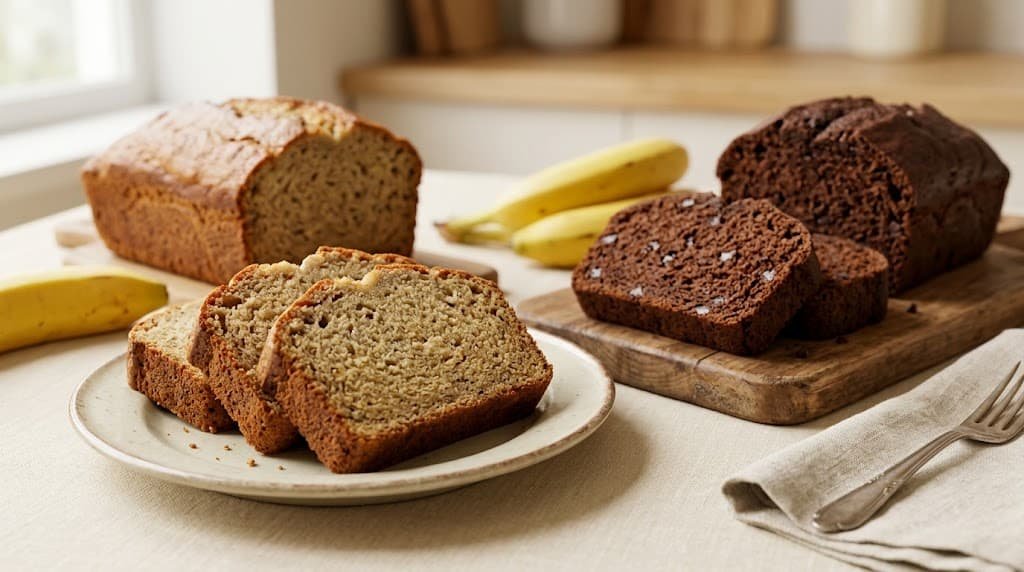
The main difference is the addition of chocolate ingredients.
Regular banana bread usually emphasizes banana flavor and has a lighter-colored crumb. Chocolate banana bread commonly includes cocoa powder, which distributes chocolate flavor throughout the batter.
Chocolate chip banana bread is slightly different. It may use a traditional banana bread batter containing separate pieces of chocolate rather than cocoa powder mixed throughout.
Although these versions share similar baking methods, their ingredient proportions may differ. Adding cocoa powder to regular banana bread without adjusting the formula can change the batter’s consistency and finished texture.
What Ingredients Are Commonly Used in Chocolate Banana Bread?
Most chocolate banana bread recipes use ripe bananas, flour, unsweetened cocoa powder, sugar, eggs, fat, and a chemical leavening ingredient.
Vanilla extract, salt, and chocolate chips are also common additions.
| Ingredient | Main purpose |
|---|---|
| Ripe bananas | Add moisture, sweetness, and banana flavor |
| All-purpose flour | Provides structure |
| Unsweetened cocoa powder | Adds chocolate flavor and color |
| Sugar or brown sugar | Adds sweetness and influences tenderness |
| Eggs | Help bind ingredients and support structure |
| Butter or neutral oil | Contributes fat and tenderness |
| Baking soda or baking powder | Helps the batter rise |
| Vanilla extract | Adds complementary flavor |
| Salt | Balances flavor |
| Chocolate chips | Add optional pieces of chocolate |
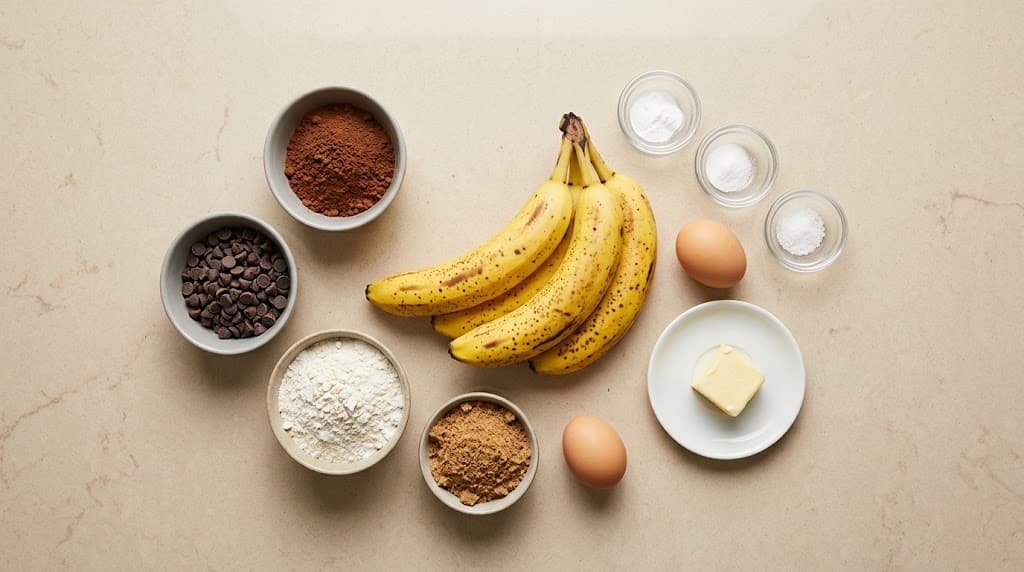
The ingredient quantities depend on the formula. Some versions also contain yogurt, sour cream, or chopped nuts.
How Ripe Should the Bananas Be?
Soft bananas with brown spots on their peels are commonly preferred for banana bread.
As bananas ripen, some starch converts into sugars. This generally makes them sweeter and easier to mash than firm, underripe bananas.
Yellow bananas with noticeable brown spotting are suitable for many recipes. Very ripe bananas may also be used if they show no signs of spoilage.
Because bananas vary in size, measuring the mashed fruit according to the recipe is more consistent than relying only on the number of bananas.
Adding more banana than specified can change the batter’s moisture balance and affect how the loaf sets during baking.
What Do Cocoa Powder and Chocolate Chips Add?
Cocoa powder distributes chocolate flavor throughout the batter, while chocolate chips provide individual pieces of chocolate that may soften or melt during baking.
Unsweetened cocoa powder is commonly used because it does not contain the added sugar found in many sweetened chocolate drink mixes.
Two common types are natural cocoa and Dutch-process cocoa.
Natural cocoa powder is acidic. Dutch-process cocoa is treated with an alkalizing agent that reduces its acidity and can change its color and flavor.
This difference matters because baking soda reacts with acidic ingredients to help baked goods rise. However, other ingredients may also contribute acidity, so the complete formula determines whether the cocoa types can be substituted.
Using the cocoa specified in the chosen recipe helps preserve its intended ingredient balance.
What Roles Do Flour, Eggs, Fat, and Leavening Ingredients Play?
Flour, eggs, fat, and leavening ingredients influence the structure and tenderness of the finished loaf.
Flour provides structure. All-purpose flour is commonly used because it supports the batter while allowing a tender crumb when mixed appropriately.
Eggs contribute moisture and binding. Their proteins help the batter develop structure as it bakes.
Butter or oil adds fat, which influences tenderness. Butter contributes its characteristic flavor, while neutral oil has a milder taste. The two may affect texture differently.
Baking soda and baking powder are chemical leavening agents that produce carbon dioxide through reactions in the batter. Baking soda needs an acidic component for its main leavening reaction, while baking powder contains acidic ingredients.
Sugar also contributes more than sweetness. It influences browning, tenderness, and moisture retention.
These ingredients work together, so changing their proportions may affect the loaf’s structure and texture.
How Is Chocolate Banana Bread Usually Made?
Chocolate banana bread is generally prepared by combining wet and dry ingredients, transferring the batter to a loaf pan, and baking until the center is set.
The preparation method varies between recipes. The oven temperature, pan dimensions, and baking duration should come from a complete formula with specified ingredient quantities.
How Are the Wet and Dry Ingredients Prepared and Combined?
A common quick-bread preparation method involves the following steps:
- Prepare the pan and oven. Preheat the oven and grease or line the loaf pan according to the recipe.
- Combine the dry ingredients. Whisk together flour, cocoa powder, leavening ingredients, and salt.
- Prepare the wet ingredients. Mash the bananas and combine them with the specified eggs, sugar, fat, and flavorings.
- Combine the mixtures. Incorporate the dry ingredients into the wet mixture. Fold in chocolate chips or nuts if included.
- Transfer and bake. Spread the batter evenly in the prepared pan and follow the recipe’s baking instructions.
Some recipes use a different method, such as beating softened butter with sugar before adding the remaining ingredients.
Once flour is added, unnecessary mixing can encourage gluten development and contribute to a tougher crumb.
How Can You Tell When Chocolate Banana Bread Is Fully Baked?
The center should be set, without visible uncooked batter.
A toothpick or thin knife inserted into the middle can help assess doneness. A few moist crumbs may be acceptable, but thick, wet batter suggests that additional baking is needed.
Chocolate chips can make this test less straightforward because melted chocolate may cling to the tester. Checking another area near the center can help distinguish melted chocolate from uncooked batter.
The outside color is not a reliable indicator on its own. Cocoa powder makes the loaf dark before baking, so the crust may appear finished while the center remains underbaked.
After baking, the loaf is generally allowed to rest briefly in its pan before being transferred to a wire rack. Cooling helps the crumb firm up for slicing.
Why Can Chocolate Banana Bread Turn Out Dry, Dense, or Wet in the Middle?
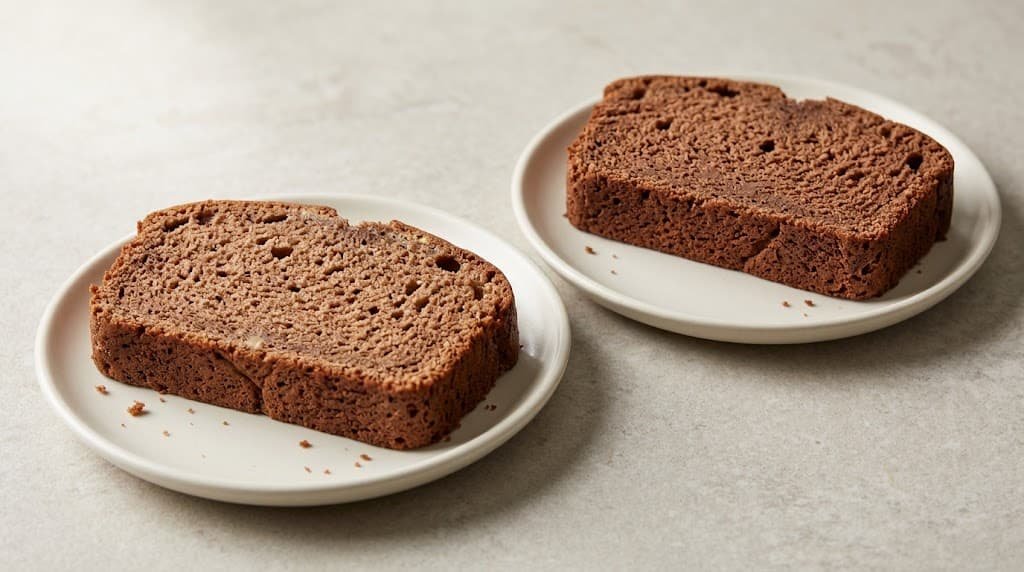
Texture problems can result from ingredient measurements, mixing methods, pan size, or oven conditions.
The exact cause depends on the recipe and preparation process rather than one ingredient alone.
What Can Cause a Dry or Dense Texture?
A dry loaf may result from excessive flour, insufficient moisture relative to the dry ingredients, or prolonged baking.
Flour measurements can vary when using measuring cups, especially if the flour is packed tightly. Following the specified measuring method helps reduce inconsistencies.
A dense or tough crumb may also be associated with overmixing, insufficient leavening, or an imbalance between the ingredients.
However, a dense texture does not always indicate a problem. Some recipes are intentionally formulated to produce a richer, more compact crumb.
Why Might the Center Remain Wet While the Outside Looks Baked?
The outer parts of a loaf heat and set before the center. This means the surface may appear finished while the middle is still baking.
Several factors can contribute to this difference.
A deeper pan can create a thicker layer of batter, affecting how long the center takes to bake. Additional mashed banana or other wet ingredients may also influence how the crumb sets.
Oven temperature differences and removing the loaf before the center is ready are other possible causes.
A moist crumb is not necessarily underbaked. The important distinction is between a soft, fully set texture and a center containing uncooked batter.
Raw batter should not be eaten because uncooked flour and raw eggs can contain harmful microorganisms.
What Variations of Chocolate Banana Bread Can You Make?
Chocolate banana bread can be prepared with different chocolate ingredients, nuts, dairy products, and flour types.
Double chocolate banana bread combines cocoa powder with chocolate chips or pieces. This provides chocolate flavor throughout the batter and additional chocolate in individual bites.
Chocolate chip banana bread typically uses a banana bread batter containing chocolate chips, sometimes without cocoa powder.
Chocolate banana bread with nuts includes walnuts or pecans for a firmer, contrasting texture.
Chocolate banana bread with yogurt uses yogurt or sour cream as part of the wet ingredients, which can influence moisture and acidity.
Whole wheat chocolate banana bread uses some or all whole wheat flour in a suitable formula. Gluten-free versions use appropriate flour blends or combinations developed for baking without wheat gluten.
These variations are not always interchangeable. Alternative flours may absorb liquid differently, while additional dairy ingredients can change the moisture balance.
When preparing the loaf for someone with food allergies, check ingredient labels and consider cross-contact. Depending on the recipe, wheat, eggs, milk, soy, or tree nuts may be present.
How Should Chocolate Banana Bread Be Stored?
Chocolate banana bread should be allowed to cool before being wrapped or placed in a covered container.
The appropriate storage method depends on the ingredients, surrounding conditions, and whether the loaf contains perishable fillings or toppings.
Room-Temperature Storage
Plain chocolate banana bread without perishable toppings or fillings is commonly stored well wrapped at a cool room temperature for a limited period.
Some published recipes recommend storing plain loaves at room temperature for several days. However, the exact storage period varies according to ingredients, temperature, humidity, and handling.
Wrapping the loaf while it is still warm can trap condensation and leave moisture on its surface.
Refrigeration
Refrigeration may be necessary when the loaf contains perishable fillings or toppings, such as certain cream-based frostings.
Plain banana bread does not always require refrigeration. Chilling can also change its texture, sometimes making the crumb firmer.
If the ingredients require refrigeration, keep the bread covered and follow the relevant food-storage guidance.
Freezing
Freezing is an option for longer storage.
After cooling, the loaf can be wrapped securely and placed in a freezer-safe container or bag. Individual slices can also be frozen for convenient portioning.
Plain slices can be thawed before serving. Bread with perishable fillings or toppings may require different handling.
Bread showing visible mold should be discarded. Because bread is porous, contamination may extend beneath the surface, so removing only the moldy section is not considered safe.
Frequently Asked Questions About Chocolate Banana Bread
Can You Use Frozen Bananas for Chocolate Banana Bread?
Yes. Frozen ripe bananas can be used in many banana bread recipes after thawing.
Freezing and thawing soften the fruit and may cause liquid to separate from it. Some recipes include that liquid, while others specify a different preparation method.
Follow the chosen recipe’s instructions for measuring and using thawed bananas rather than adjusting the liquid without considering the complete formula.
Can Chocolate Banana Bread Be Made Without Eggs?
Yes. Egg-free versions are possible when the recipe uses suitable ingredients to replace the functions of eggs.
Some quick-bread formulas use ground flaxseed mixed with water, fruit purées, or commercial egg replacers.
These alternatives do not behave identically. They can influence binding, moisture, and crumb structure.
A recipe developed for egg-free baking is generally more reliable than simply removing the eggs from a standard formula.
Can You Use Whole Wheat or Gluten-Free Flour?
Yes. Chocolate banana bread can be made with whole wheat or gluten-free flour when the formula is suitable for those ingredients.
Whole wheat flour contains the grain’s bran and germ and can absorb liquid differently from refined all-purpose flour.
Gluten-free flour blends also vary in composition. Some are formulated for replacing wheat flour in certain recipes, while individual alternatives such as almond or coconut flour behave differently.
For gluten-free preparation, choose suitable ingredients and avoid cross-contact with gluten-containing foods when necessary.
Final Thoughts
Chocolate banana bread combines ripe bananas, cocoa powder, and common baking ingredients in a loaf-style quick bread.
Its finished texture depends on the ingredient balance, mixing method, pan size, and baking conditions. Understanding these factors can help readers choose suitable variations and recognize possible causes of baking problems.
For preparation, use a complete recipe with clear measurements and instructions, especially when working with alternative flours or making other ingredient substitutions.