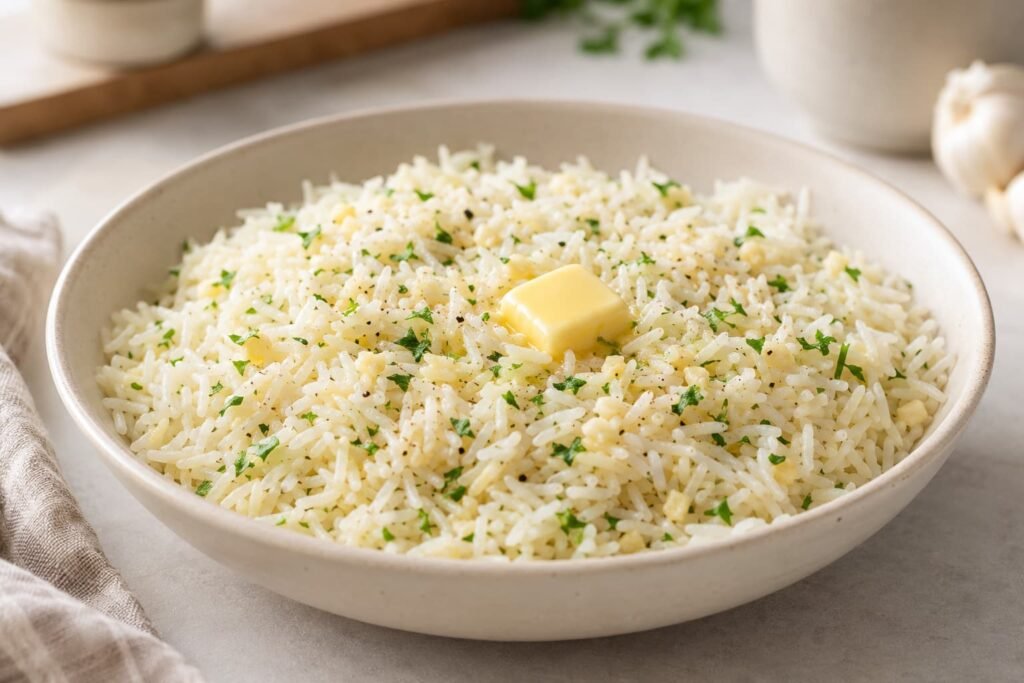
This guide focuses on stovetop garlic butter rice made with uncooked rice using an absorption-style cooking method. It explains the ingredients, cooking process, rice choices, texture factors, common problems, and storage without presenting the dish as personally tested.
This preparation is different from garlic fried rice, which generally starts with rice that has already been cooked and is then sautéed or fried.
What Is Garlic Butter Rice?
Garlic butter rice is rice flavored mainly with butter and garlic. In a common stovetop method, garlic is heated briefly in butter before uncooked rice and cooking liquid are added.
Typical ingredient categories include:
- rice
- butter
- garlic
- water or broth
- salt or other mild seasonings
- optional herbs such as parsley or green onion
The rice then cooks by absorbing the liquid while the pan remains covered. This differs from simply stirring garlic butter into rice that has already been cooked.
What Ingredients Are Commonly Used in Garlic Butter Rice?
The basic ingredients are rice, butter, garlic, and a cooking liquid. Rice affects much of the cooking time and texture, butter adds richness, and garlic provides the main aromatic flavor.
Water or broth supplies the moisture needed for the rice to cook. Exact liquid needs should be based on the rice variety and preparation method rather than one universal ratio.
Which Type of Rice Works Well?
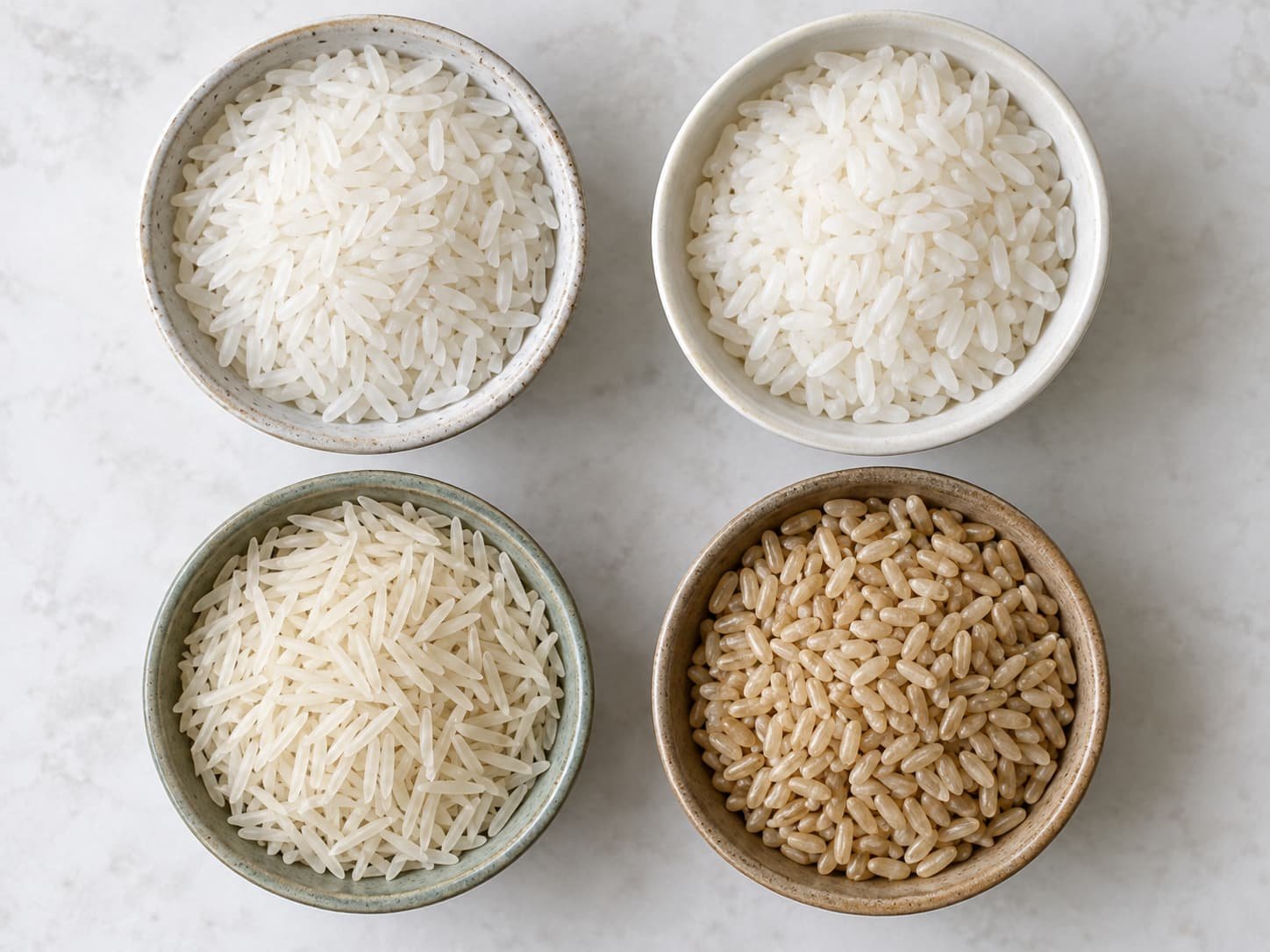
Long-grain white rice is commonly used for this type of stovetop preparation. Its grains can remain relatively separate when cooked with an appropriate amount of liquid and handling.
Other varieties, including jasmine, basmati, and brown rice, can also be paired with garlic and butter. However, they should not automatically be treated as direct substitutes because cooking time, liquid needs, and texture can differ.
More specific differences between these rice types are covered later in this guide.
Fresh Garlic vs. Garlic Powder
Fresh garlic and garlic powder can both provide garlic flavor, but they behave differently during cooking.
Fresh garlic contains moisture and provides pieces of garlic as well as aroma. Minced or finely chopped garlic is commonly heated briefly in butter before the rice and liquid are added.
Garlic can brown quickly, particularly when it is finely minced. Excessive browning may produce a bitter or harsh flavor, so prolonged high-heat cooking is generally unnecessary.
Garlic powder is a dried form of garlic that disperses easily through seasonings and cooking liquid. It does not provide the same texture or flavor profile as pieces of fresh garlic.
Garlic powder should not automatically be substituted for fresh garlic at a one-to-one measured ratio. The appropriate amount can depend on the product and desired flavor strength.
Is Water or Broth Better for Garlic Butter Rice?
Both water and broth can work. The main difference is the flavor they contribute.
Water keeps the seasoning simpler, leaving butter, garlic, and rice as the dominant flavors.
Chicken broth can add additional savory flavor, while vegetable broth can provide another savory option without using meat-based broth.
Broth products vary in seasoning and sodium. When broth or salted butter is used, additional salt may need to be adjusted rather than added automatically.
The choice between water and broth does not change the need to use an appropriate amount of liquid for the specific rice.
How Is Garlic Butter Rice Typically Made on the Stovetop?
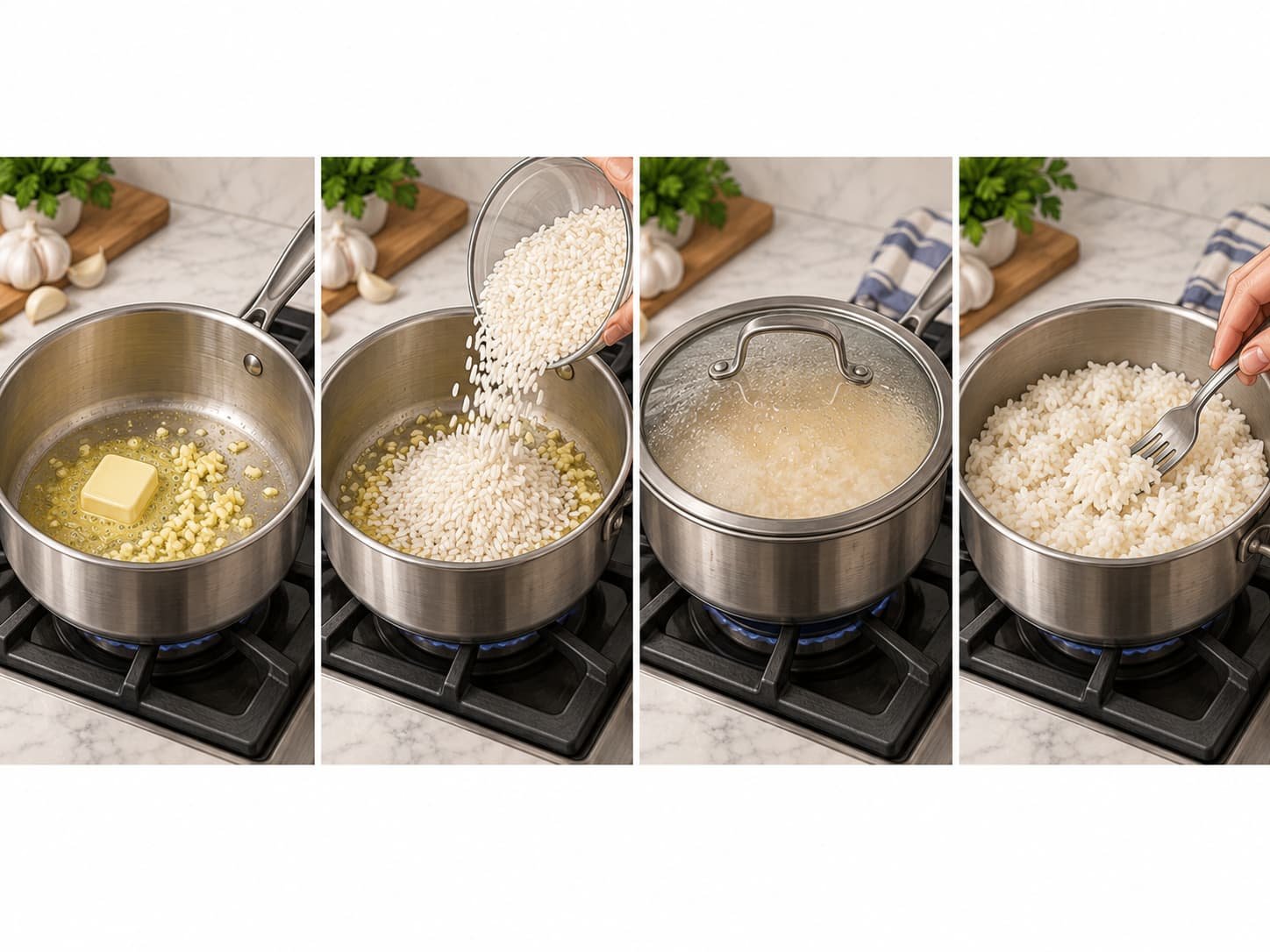
Garlic butter rice is commonly prepared by gently heating garlic in butter, adding uncooked rice, and then cooking the rice with water or broth while covered.
A general stovetop process is:
- Melt the butter over moderate heat.
- Add the garlic and heat it gently without allowing it to become deeply browned.
- Stir in the uncooked rice so the grains are coated with some of the garlic and butter.
- Add the amount of water or broth appropriate for the rice being used.
- Cover the pan and simmer according to the cooking guidance for that rice.
- Once the rice is cooked, allow it to rest briefly before fluffing it gently.
There is no single cooking time or rice-to-liquid ratio that applies to every variety. Long-grain white rice, jasmine rice, basmati rice, and brown rice can require different cooking conditions.
Keeping the pan covered during most of absorption-style cooking helps retain heat and steam. Repeatedly lifting the lid releases some of that heat and moisture and may affect how consistently the rice cooks.
What Affects the Texture of Garlic Butter Rice?
Rice texture can be influenced by the variety of rice, surface starch, amount of liquid, heat, retained steam, and how much the grains are disturbed during cooking.
These factors interact, so no single technique can guarantee the same texture in every preparation.
Does Rinsing Rice Matter?
Rinsing can remove some loose starch from the surface of rice grains. Depending on the rice and cooking method, this may help reduce stickiness caused by excess surface starch.
Rinsing is not necessary for every rice product. Check the package directions for the specific rice being used.
If rinsing is appropriate, drain the rice before adding it to the pan so extra surface water does not unintentionally affect the cooking liquid.
Rinsing alone does not determine the final texture. Rice variety, liquid amount, heat, and cooking method can also influence whether the grains remain separate or become softer and more cohesive.
Why Do Liquid Amount and Steam Matter?
Rice needs enough liquid to hydrate and soften during cooking. The appropriate amount depends on the type of rice and method being used.
More liquid than a particular rice requires can contribute to a softer or mushier texture. Too little may leave some grains firm or incompletely cooked.
Steam also contributes to covered stovetop cooking. Removing the lid repeatedly allows heat and moisture to escape, which may change the cooking conditions inside the pan.
For this reason, use liquid guidance appropriate for the specific rice rather than assuming one ratio works for every variety.
Can Stirring Make Rice Sticky?
Frequent stirring can encourage more starch to move from the surface of the grains into the surrounding liquid. Depending on the rice variety and preparation method, this may contribute to a softer or stickier texture.
For absorption-style rice, repeated stirring is generally unnecessary after the cooking liquid has been added. The rice is typically left covered with minimal disturbance.
This differs from dishes such as risotto, where starch release is intentionally encouraged to develop a creamier consistency.
How Do You Keep the Garlic From Burning?
Keep the heat moderate and avoid letting finely minced garlic brown too deeply. Small pieces of garlic can cook quickly and may develop a bitter or harsh flavor if they burn.
Fresh garlic is commonly heated in butter until it becomes aromatic, after which the rice or cooking liquid is added.
If the garlic begins darkening rapidly, reducing the heat can help slow further browning. The aim is to develop garlic flavor without depending on heavy browning.
Common Garlic Butter Rice Problems and Possible Causes
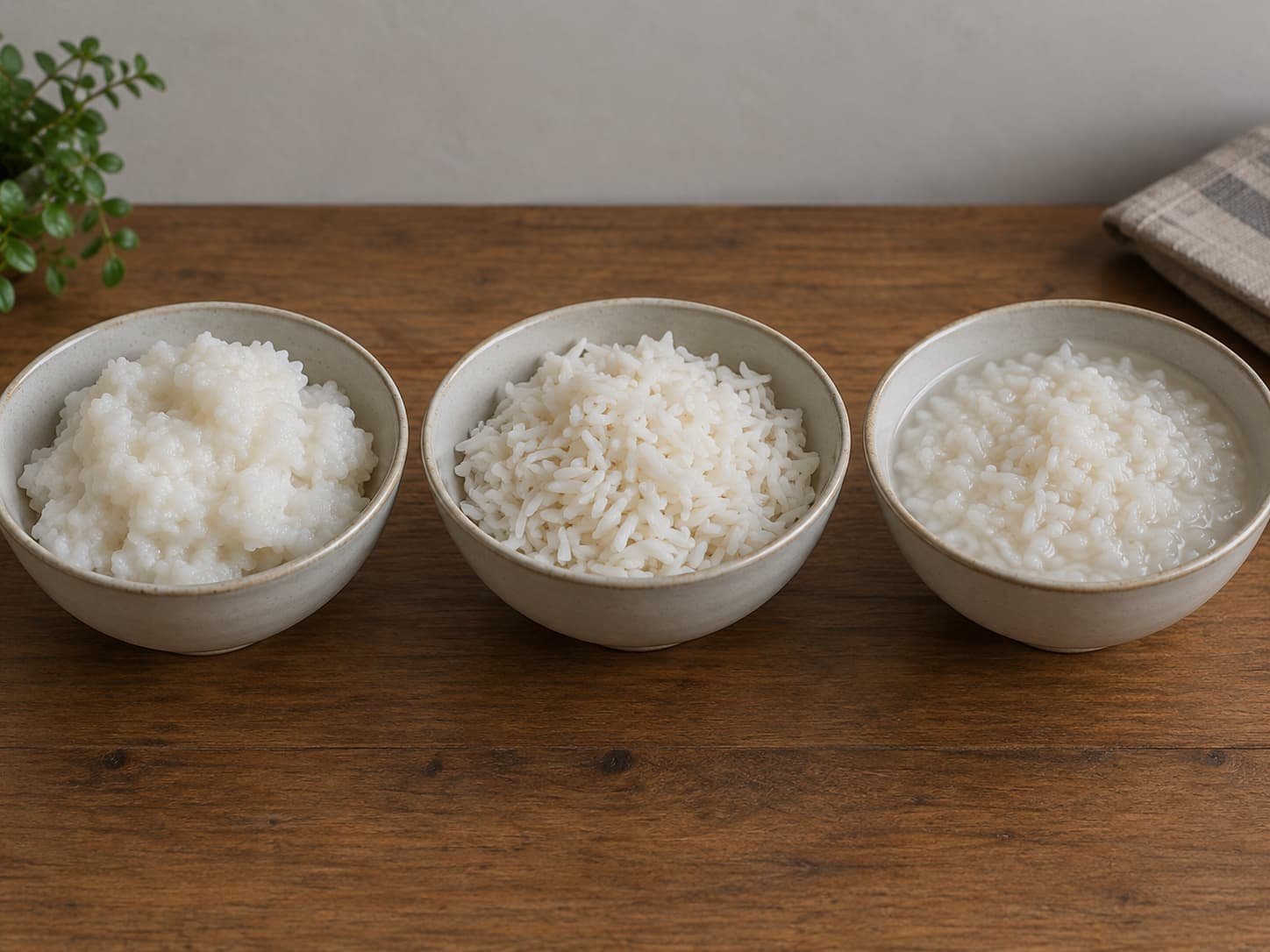
Problems with rice texture can have several possible causes. Rice variety, liquid amount, heat, retained steam, and handling can all affect the result.
Why Is the Rice Mushy or Too Soft?
Rice may become unusually soft when it absorbs more liquid than needed, cooks for too long, or is stirred frequently during absorption-style cooking.
Rice variety can also contribute. Some varieties naturally produce a softer or more cohesive texture than others.
If mushiness happens repeatedly, compare the method with the cooking guidance for the specific rice before assuming that the same liquid amount should work for every variety.
Why Is the Rice Still Hard?
Rice may remain firm when it has not received enough moisture or enough cooking time for that variety.
Steam loss can also affect the cooking process. Repeatedly lifting the lid releases heat and moisture, while very low or inconsistent heat may slow softening.
If firm rice is a recurring issue, compare the cooking method with the package guidance before changing the amount of liquid.
Why Is the Rice Still Wet?
Wet rice means noticeable cooking liquid remains in the pan after the grains have started to soften.
Possible causes include using more liquid than the rice required or ending the cooking process before enough liquid was absorbed.
Different rice varieties do not necessarily absorb liquid in the same way. If the grains are already tender while substantial liquid remains, extending cooking indefinitely may simply make the rice softer.
Why Does the Garlic Taste Bitter?
Over-browning or burning is one possible reason cooked garlic can taste bitter or harsh.
Finely chopped garlic has more exposed surface area and can darken quickly in hot fat. Moderate heat and adding the next ingredient once the garlic becomes aromatic may reduce the chance of excessive browning.
Other ingredients or overcooking elsewhere in the dish can also affect flavor, so garlic should not automatically be treated as the only possible source of bitterness.
Can You Use a Different Type of Rice?
Yes. Jasmine, basmati, and brown rice can all be paired with garlic and butter, but changing the rice may change the texture, liquid needs, and cooking time.
Follow guidance for the specific variety rather than assuming instructions for standard long-grain white rice will work unchanged.
Jasmine or Basmati Rice
Both jasmine and basmati rice can be used in garlic-butter-style rice.
Jasmine rice is aromatic and may produce a somewhat softer or more cohesive texture than some other long-grain varieties.
Basmati rice has long, slender grains and a distinct aroma. Its finished texture differs from standard long-grain white rice.
Liquid needs and cooking conditions can vary by product and method, so neither should automatically be treated as a one-to-one cooking substitute.
Brown Rice
Brown rice can also be flavored with garlic and butter, but it generally requires a longer cooking process than white rice.
Because its bran layer remains intact, brown rice behaves differently as it absorbs moisture and softens. Liquid amounts and cooking times should therefore follow guidance for the specific brown rice being prepared.
It may not fit the same short cooking schedule as white rice.
Can Garlic Butter Rice Be Made With Already Cooked Rice?
Yes, but using already-cooked rice creates a different preparation method.
Instead of cooking uncooked grains by absorption in water or broth, cooked rice can be reheated or sautéed with butter, garlic, and seasonings. Because the grains are already cooked, they do not need a full cooking liquid.
This approach is closer to a sautéed rice dish than to the absorption-style stovetop method described above.
It may also resemble garlic fried rice, which commonly begins with cooked rice. Garlic fried rice is a separate preparation style and should not be treated as another name for garlic butter rice made from uncooked grains.
Can Garlic Butter Rice Be Made in a Rice Cooker?
Yes. Rice can be prepared with garlic, butter, and seasonings in a rice cooker, but liquid amounts and settings should follow the instructions for the specific rice and appliance.
Rice cookers vary in capacity, programs, and heating methods. Different rice varieties can also require different cooking conditions, so stovetop ratios and timings should not automatically be transferred to a rice cooker.
Garlic and butter may be incorporated differently depending on the appliance and method. Some preparations add them before cooking, while others add part of the seasoning afterward.
If the appliance has a sauté function, check the manufacturer’s instructions before using it to heat butter or garlic directly.
What Can You Serve With Garlic Butter Rice?
Garlic butter rice can accompany chicken, seafood, beef, vegetables, stir-fries, beans, or lentils.
For chicken meals, Honey BBQ Chicken Bites provide a sweet and smoky pairing, while Grilled Chicken Bites with Creamy Garlic Sauce keep the meal more savory and garlic-focused.
Chicken and Green Bean Stir Fry is another relevant option because the rice can provide a simple base for the chicken, vegetables, and sauce.
Other possible pairings include:
- baked or grilled fish
- shrimp
- beef dishes
- roasted vegetables
- vegetable stir-fries
- beans or lentils
With a strongly seasoned main dish, the rice can be kept relatively simple. A milder entrée leaves more room to add herbs or other seasonings according to preference.
How Should Leftover Garlic Butter Rice Be Stored and Reheated?
Leftover garlic butter rice should be refrigerated promptly in a covered container. USDA guidance recommends refrigerating perishable leftovers within 2 hours, or within 1 hour when the surrounding temperature is above 90°F (32°C). Shallow containers can help food cool more quickly.
Refrigerated leftovers should generally be used within 3 to 4 days when kept at 40°F (4°C) or below.
When reheating leftovers, USDA guidance recommends an internal temperature of 165°F (74°C). Covering and stirring or rotating food during microwave reheating can help it heat more evenly.
USDA guidance for leftovers generally gives 3 to 4 months as a freezer-storage period for best quality. Food kept continuously frozen at 0°F (-18°C) remains safe indefinitely, although quality can decline during longer storage.
These figures are food-safety and quality guidelines, not guarantees of texture. How the rice feels after refrigeration or freezing can vary.