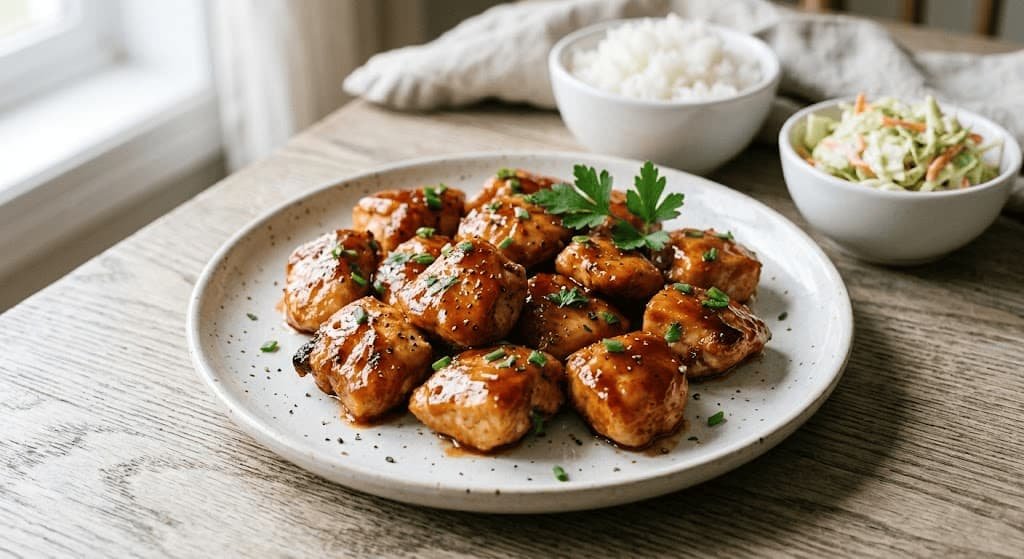
BBQ chicken bites are small pieces of boneless chicken cooked and served with barbecue sauce. They can be breaded or unbreaded and prepared in a skillet, oven, air fryer, or on a grill.
Honey BBQ chicken bites are a sweeter variation in which honey is added to barbecue sauce. The final flavor and texture can vary depending on the chicken cut, sauce, seasoning, coating, and cooking method.
What Are BBQ Chicken Bites?
BBQ chicken bites generally refer to bite-sized pieces of boneless chicken paired with barbecue sauce.
There is no single standard preparation. Some versions use seasoned chicken without a coating, while others add breading. The chicken may be cooked before the sauce is added or coated during part of the cooking process.
They can be served as a main dish, appetizer, bowl topping, wrap filling, or slider filling.
What Ingredients Are Commonly Used?
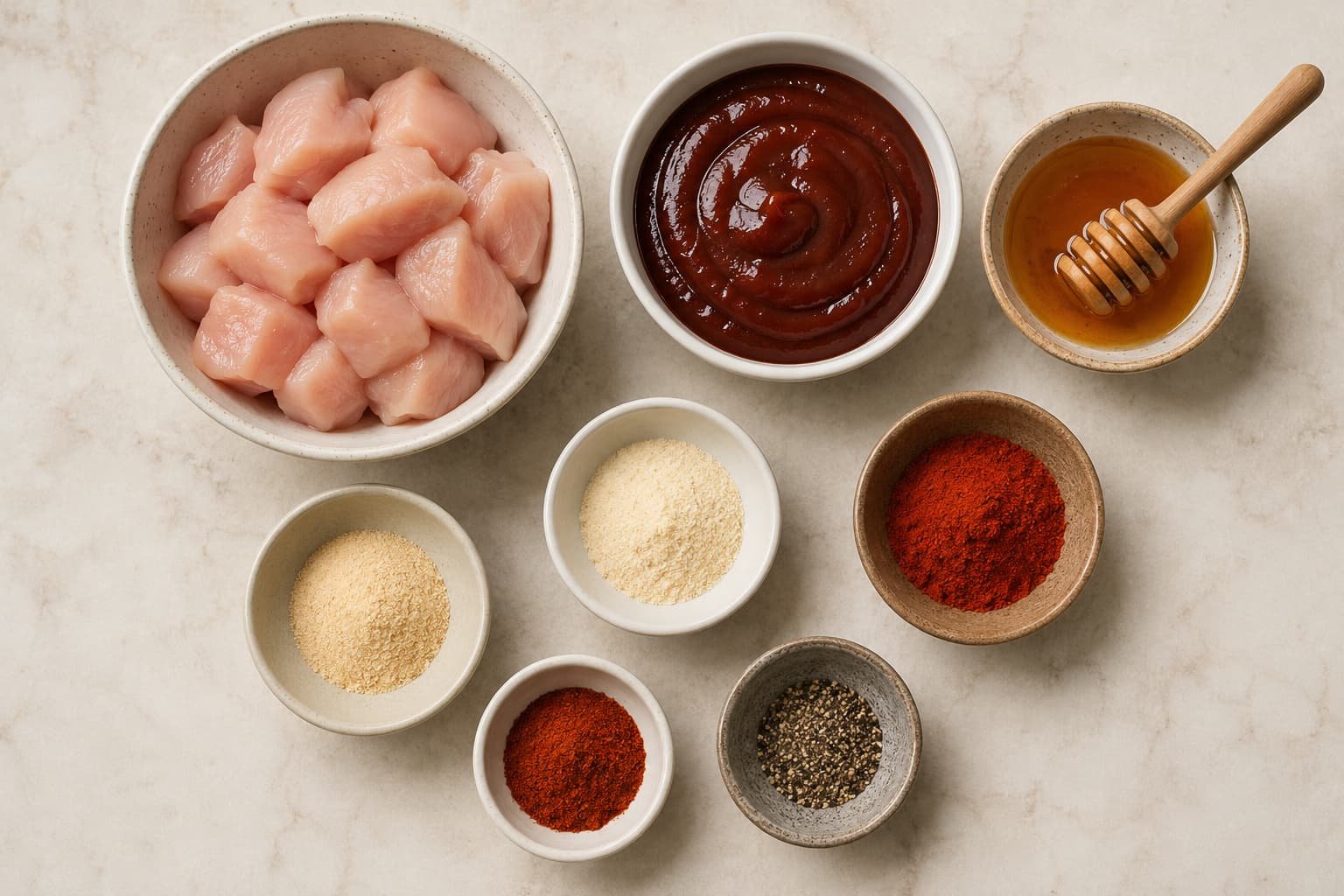
Most versions use a few basic ingredient categories:
- Boneless chicken
- Barbecue sauce
- Seasonings
- Optional cooking oil
- Optional honey or another sweet element
The exact combination depends on the style being prepared.
Chicken Breast vs. Chicken Thighs
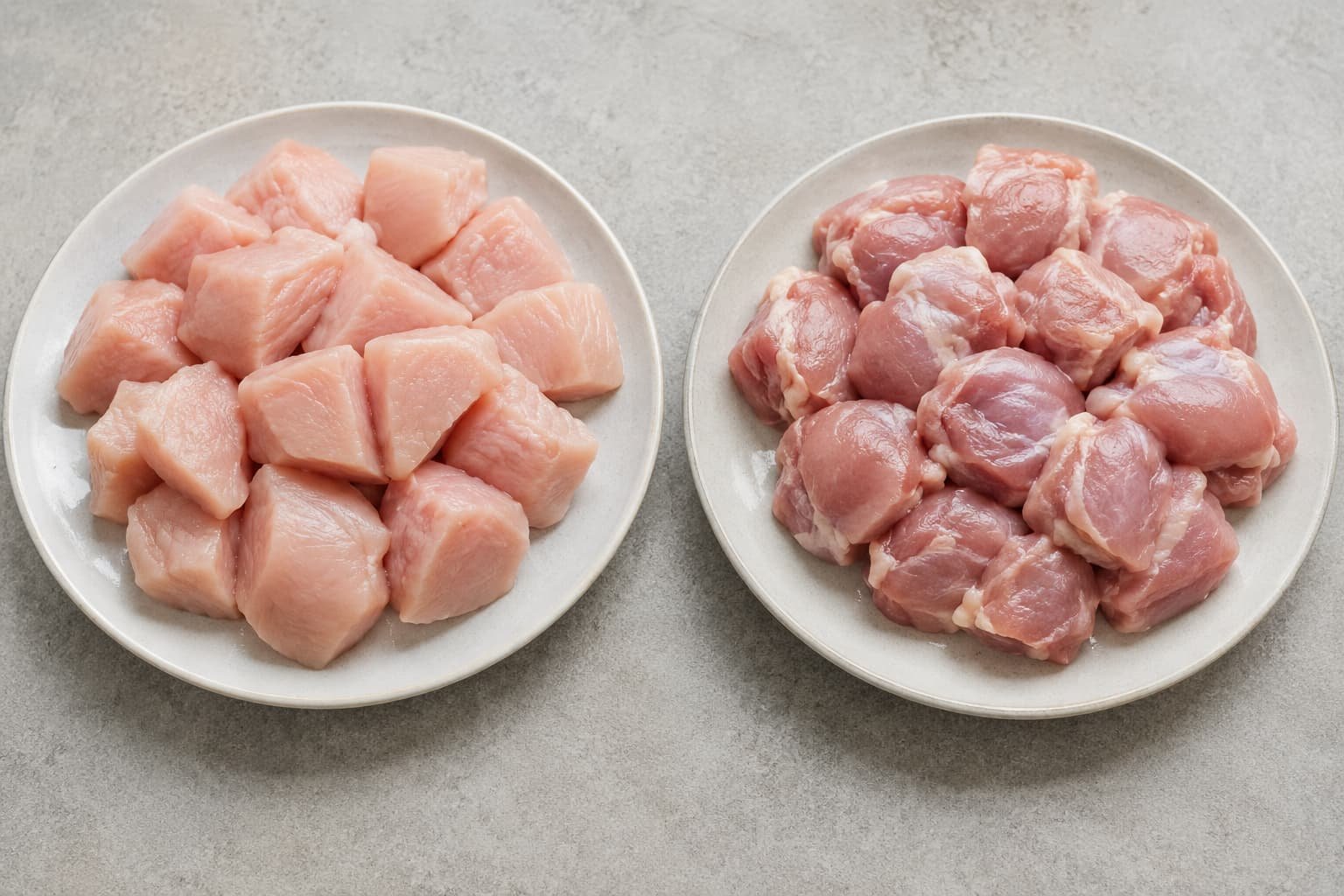
Boneless chicken breast and boneless skinless thighs can both be used.
Chicken breast and thigh meat differ in fat content and structure, which can affect how they behave during cooking. Breast meat is also relatively easy to cut into uniform pieces, while thigh meat may produce less regular shapes.
Neither cut is automatically better. The choice can depend on the cooking method, desired style, and personal preference.
Keeping pieces reasonably similar in size can help them cook at a more similar rate.
BBQ Sauce, Honey, and Seasonings
Barbecue sauce provides most of the characteristic flavor.
Depending on the sauce, it may emphasize sweetness, acidity, tomato, mustard, smoke, chili, or spices. Because sauces vary widely, adding honey will not produce the same result in every preparation.
Honey adds sweetness and may create a more glaze-like coating depending on the amount used and how the sauce is cooked.
Common seasonings may include garlic powder, onion powder, paprika, smoked paprika, and black pepper. There is no required seasoning blend, so the seasonings can be chosen to complement the sauce rather than compete with it.
How Do Different Cooking Methods Affect the Result?
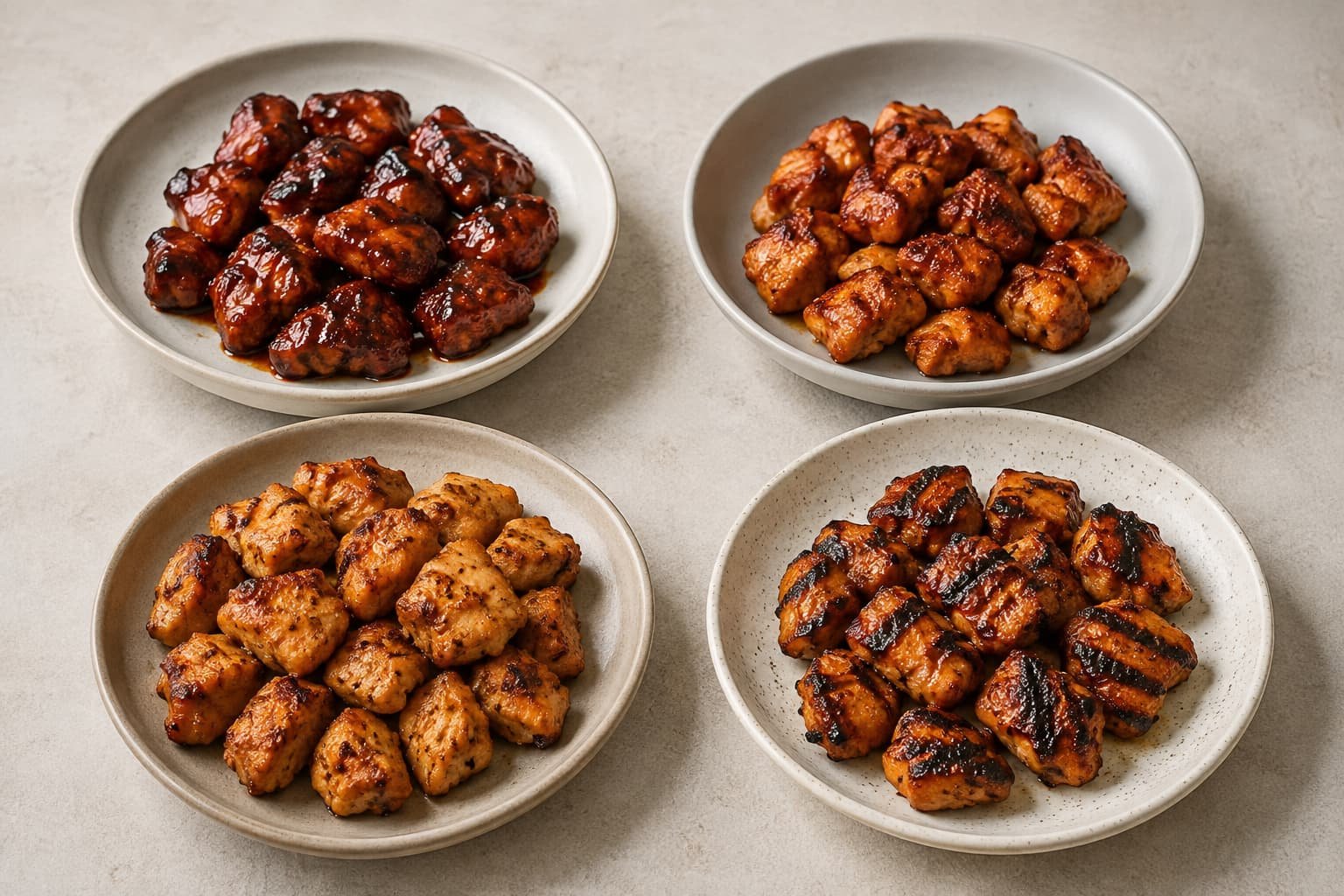
The cooking method can influence surface browning, sauce coverage, and how much attention the chicken needs while cooking.
Regardless of the method, poultry should reach a minimum internal temperature of 165°F (73.9°C) as measured with a food thermometer. Browning or color alone should not be used to judge doneness.
Skillet Cooking
A skillet places the chicken directly against a heated surface, which can encourage browning where the pieces contact the pan.
Crowding the pan may reduce browning because moisture can collect around the food instead of evaporating as quickly.
One possible approach is to cook most of the chicken before adding the barbecue sauce. This leaves more of the surface exposed during the earlier stage of cooking.
Air Frying
Air fryers circulate heated air around the food.
This can expose more of the chicken surface to dry heat than cooking the pieces while they are surrounded by sauce.
Some preparations therefore add barbecue sauce later, after the chicken has had more exposure to circulating hot air.
Air fryers vary in capacity, airflow, and power, so one cooking time or temperature should not be treated as universal.
Oven Baking
Oven baking can be practical when preparing more pieces at once or when less stovetop attention is preferred.
Leaving space between the pieces allows more hot air to reach their surfaces. Closely packed chicken can hold more moisture around the food and may develop less surface browning.
Barbecue sauce can be added at different stages depending on the preparation. Exact oven temperature and cooking time should come from a verified recipe rather than being guessed.
Grilling
Grilling exposes chicken to direct or indirect heat and may create smoky or charred notes depending on the grill and cooking setup.
Small pieces can be placed on skewers or another grill-safe surface that prevents them from falling through the grates.
Sweet barbecue sauces are often applied later because prolonged exposure to strong heat can cause excessive browning or burning.
If a sauce or marinade has been in contact with raw chicken, it should not be brushed onto cooked chicken unless it has first been brought to a full boil. A separately reserved portion is another option.
Breaded vs. Unbreaded Chicken Bites
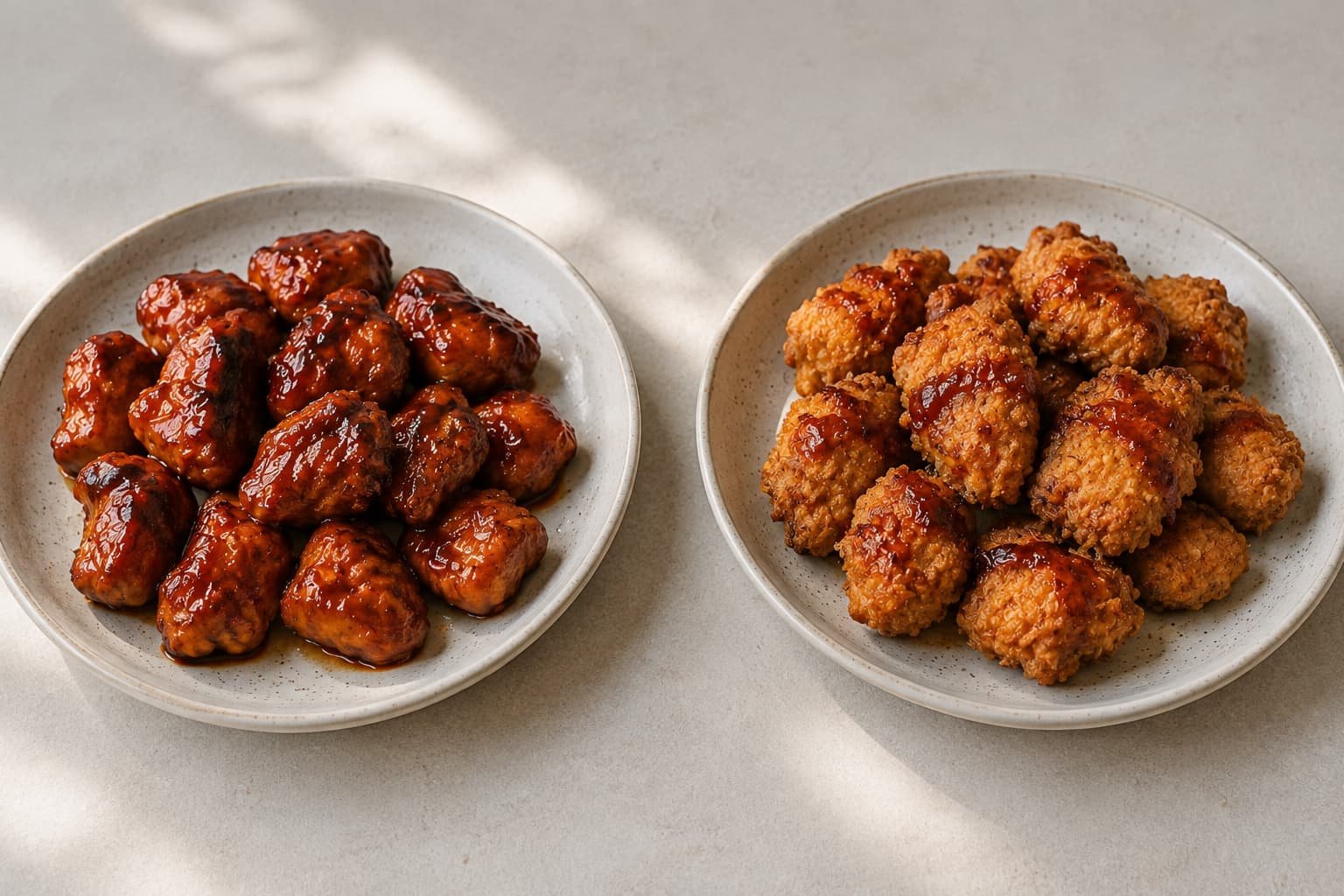
Chicken bites can be prepared with or without an outer coating.
Unbreaded Chicken Bites
Unbreaded versions place the sauce directly on the chicken and rely mainly on seasoning, browning, and barbecue sauce for flavor.
They can work well in:
- Rice or grain bowls
- Wraps
- Salads
- Sliders
- Meals served with vegetables
The final texture can vary with the chicken cut, cooking method, amount of sauce, and cooking time.
Breaded Chicken Bites
Breaded versions add an outer coating.
Depending on the coating and cooking method, the breading may create more contrast between the exterior and the chicken inside.
Once a wet barbecue sauce is added, a crisp coating may soften as it comes into contact with moisture. If maintaining more surface texture is important, one possible approach is to add the sauce close to serving time or serve it separately for dipping.
When Should BBQ Sauce Be Added?
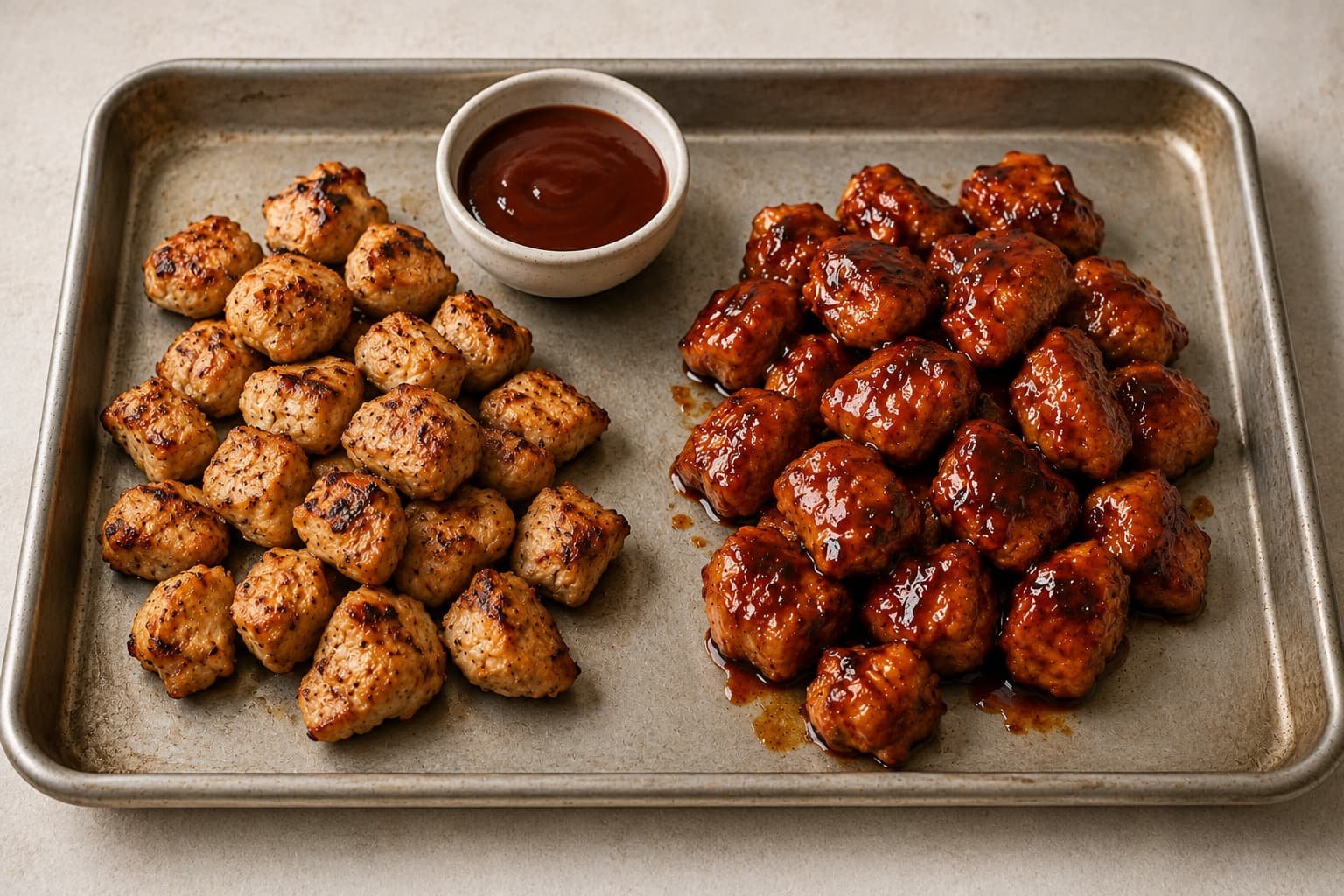
BBQ sauce can be added during cooking or used mainly as a finishing coating.
Adding sauce earlier keeps the chicken coated for more of the cooking process. Adding it later leaves more of the surface exposed to direct heat first, which may allow more browning to develop.
Sweet sauces can darken or burn when exposed to strong heat for too long. For that reason, adding a sweet BBQ glaze closer to the end is one possible approach, particularly with grilling and other high-heat methods.
There is no single sauce timing that works for every skillet, oven, air-fryer, or grilled preparation.
What Can Affect the Texture?
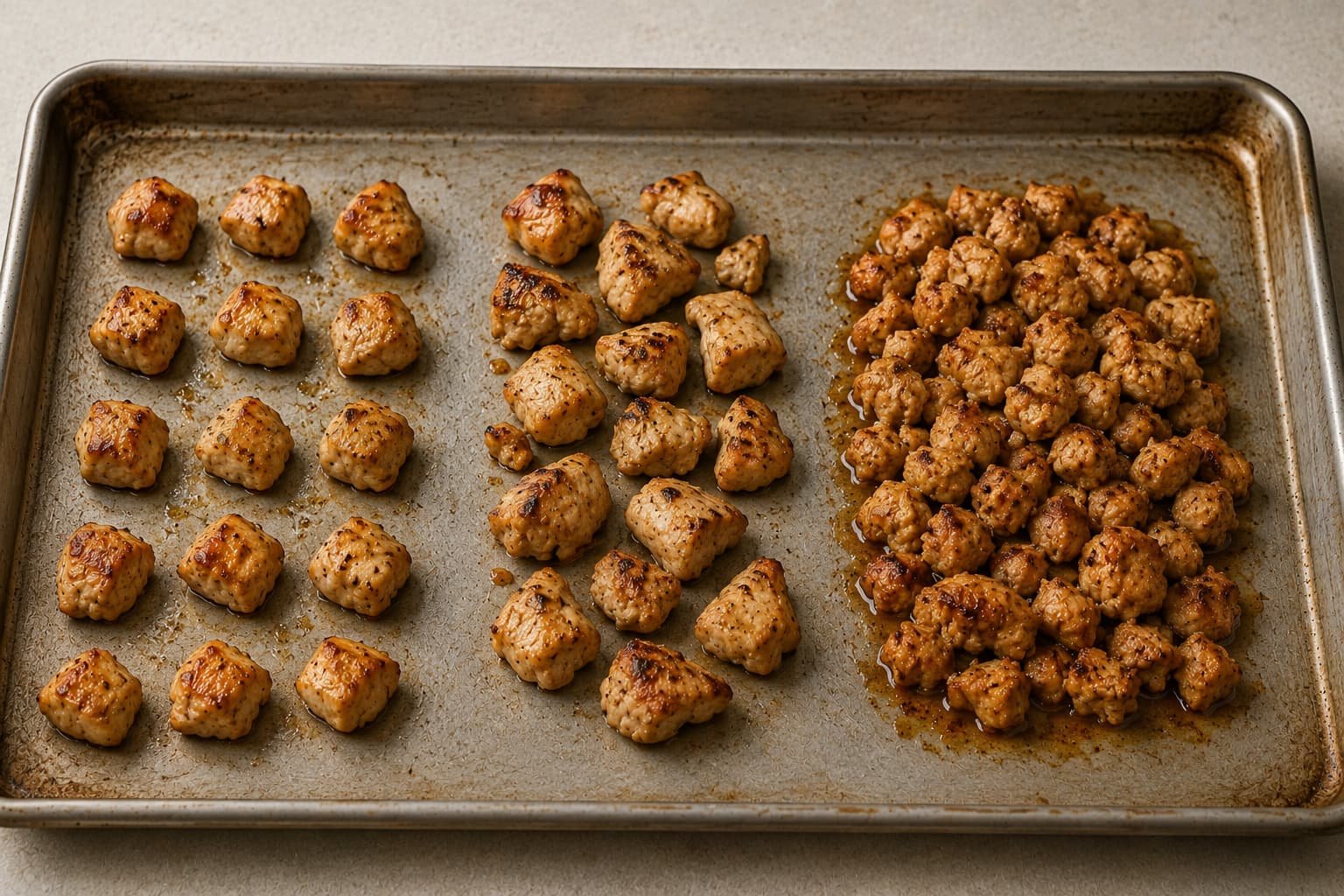
Several factors can affect texture, including piece size, moisture, crowding, chicken cut, heat, and cooking duration.
Chicken Piece Size
Pieces that vary greatly in size may finish cooking at different times.
Smaller pieces generally heat through faster than larger ones under similar conditions. Cutting the chicken into reasonably similar pieces can therefore make cooking more consistent.
Crowding and Surface Moisture
Surface moisture can limit browning because moisture needs to evaporate before stronger browning develops.
When chicken pieces are crowded closely together, moisture released during cooking can remain around the food for longer.
Leaving some space between pieces is therefore a reasonable approach when greater surface browning is wanted.
Cooking Beyond Doneness
Cooking chicken longer than needed can continue to change its texture and may make lean cuts firmer or drier. Use a food thermometer rather than color, firmness, or browned edges to determine safe doneness.
How Does Honey Change BBQ Sauce?
Honey primarily adds sweetness and changes the balance between sweet, tangy, smoky, and spicy flavors.
A tangy sauce may taste less sharp after honey is added, while a smoky sauce can develop a stronger sweet-smoky contrast. A spicy sauce may gain additional sweetness alongside the heat.
Honey may also make the sauce seem thicker or more glaze-like depending on how much is used and how much moisture remains during cooking.
There is no universal honey-to-BBQ-sauce ratio. Some barbecue sauces are already very sweet, while others are more acidic, smoky, or spicy.
It is more useful to treat honey as an optional flavor adjustment rather than a required ingredient.
What Goes Well With BBQ Chicken Bites?
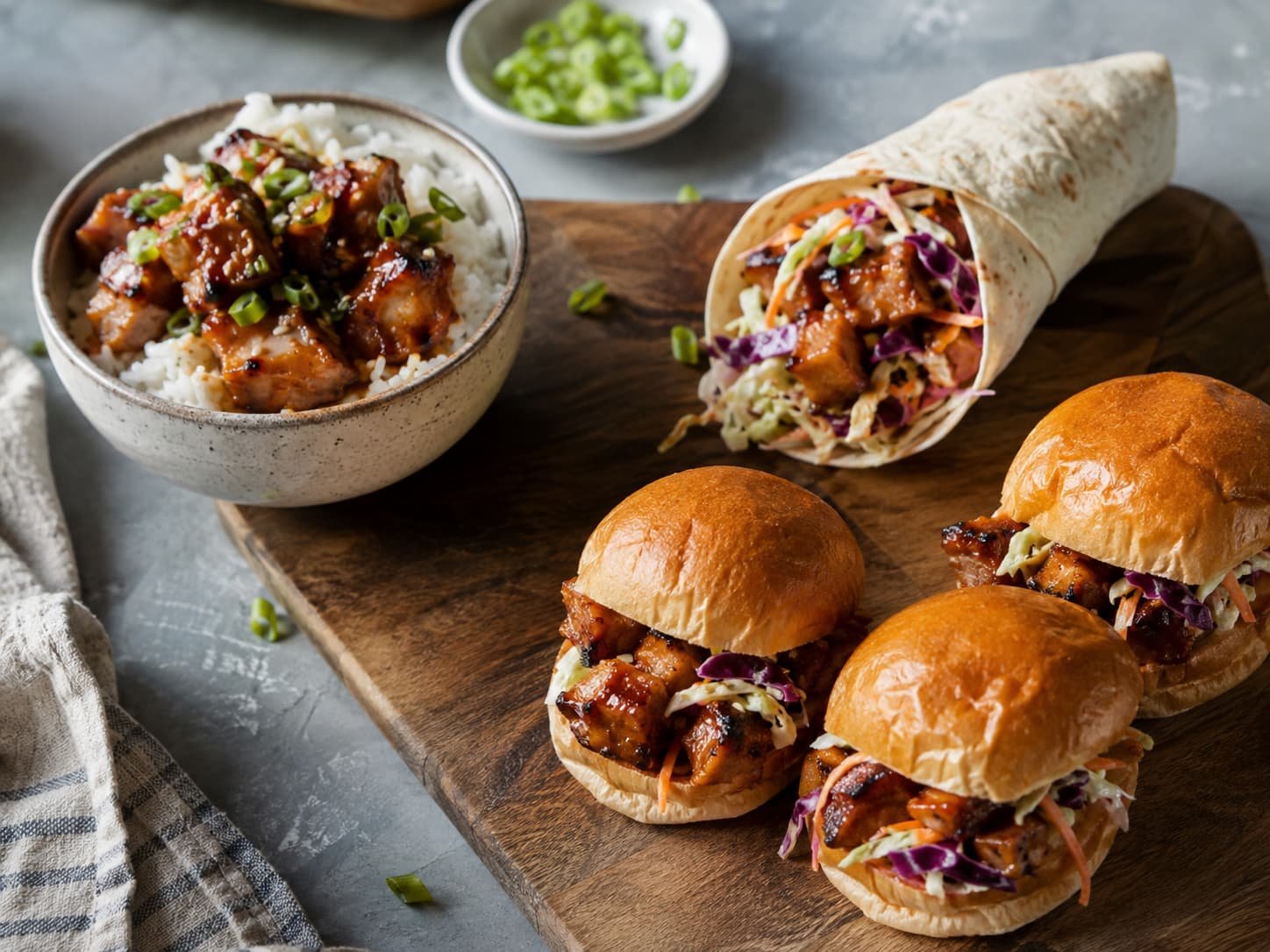
These chicken bites can be served as a main dish or incorporated into wraps, bowls, sandwiches, sliders, and appetizer plates.
As a Main Meal
Common side options include:
- Rice or other grains
- Roasted or mashed potatoes
- Steamed or roasted vegetables
- Coleslaw
Rice and potatoes provide a relatively neutral base, while vegetables or slaw can add contrast to a sweet or smoky sauce.
In Wraps, Bowls, Sliders, or Appetizer Plates
For wraps, chicken bites can be combined with lettuce, cabbage, onion, or a creamy sauce.
Bowls may include rice or grains, vegetables, corn, beans, or other toppings that suit the barbecue flavor.
For sliders, the chicken can be paired with ingredients such as slaw, pickles, onions, or cheese.
When served as an appetizer, a separate dipping sauce can provide another flavor option. Daily Bite Recipes also has a Burger Sauce Recipe that can work as a creamy dip for chicken bites, wraps, or sliders.
Storing and Reheating BBQ Chicken Bites
Cooked chicken leftovers should be refrigerated promptly.
USDA guidance says perishable cooked food should generally be refrigerated within 2 hours, or within 1 hour when the surrounding temperature is above 90°F (32.2°C).
Cooked chicken can generally be refrigerated for 3 to 4 days when kept at 40°F (4.4°C) or below.
When reheating leftovers, USDA recommends heating them to 165°F (73.9°C) throughout and checking the temperature in more than one place with a food thermometer.
A microwave, stovetop, or conventional oven can be used. When microwaving, covering and stirring or rotating the food can help reduce uneven heating.
The reheating method may change the texture of the chicken or sauce, so convenience and desired texture can both influence the choice.
Frequently Asked Questions
What Is the Difference Between BBQ Chicken Bites and Chicken Nuggets?
BBQ chicken bites generally refer to small pieces of chicken served with barbecue sauce, while chicken nuggets are commonly breaded or coated and may be made from whole pieces of chicken or formed chicken mixtures.
The two foods can overlap in size and serving style, but they are not necessarily the same preparation.
Are Honey BBQ Chicken Bites Different From Regular BBQ Chicken Bites?
Yes. Honey BBQ versions include honey or a honey-style barbecue sauce to increase sweetness and change the flavor balance.
Regular BBQ chicken bites do not require honey. Their flavor depends mainly on the barbecue sauce and seasonings being used.