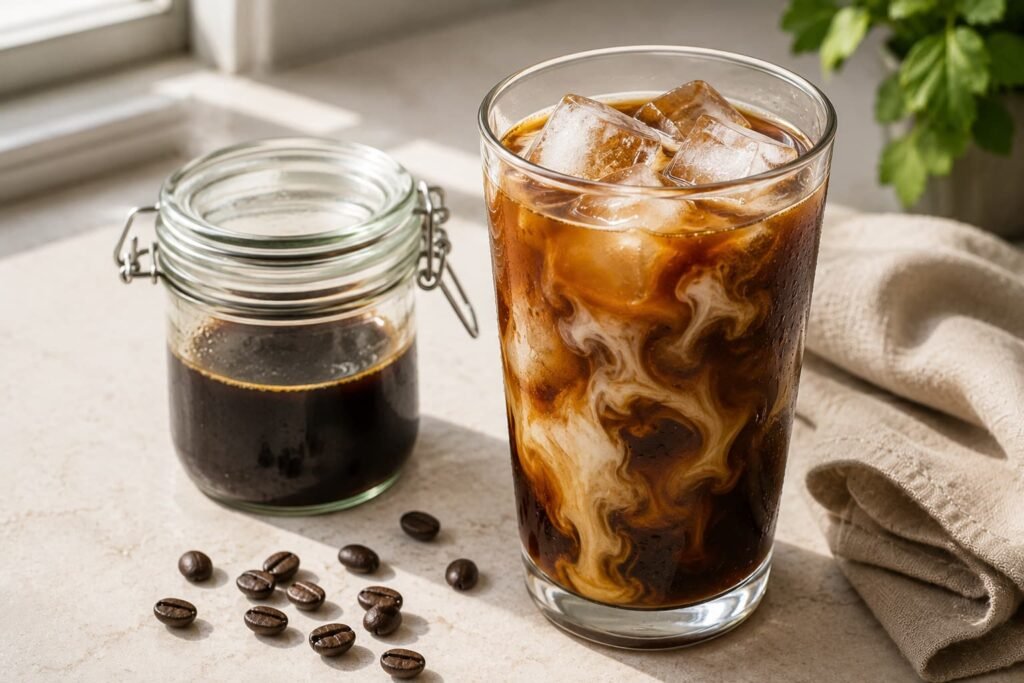
Cold brew concentrate

Cold Brew Concentrate Recipe for Smooth Iced Coffee

Facebook
LinkedIn
Pinterest
WhatsApp

Table of Contents

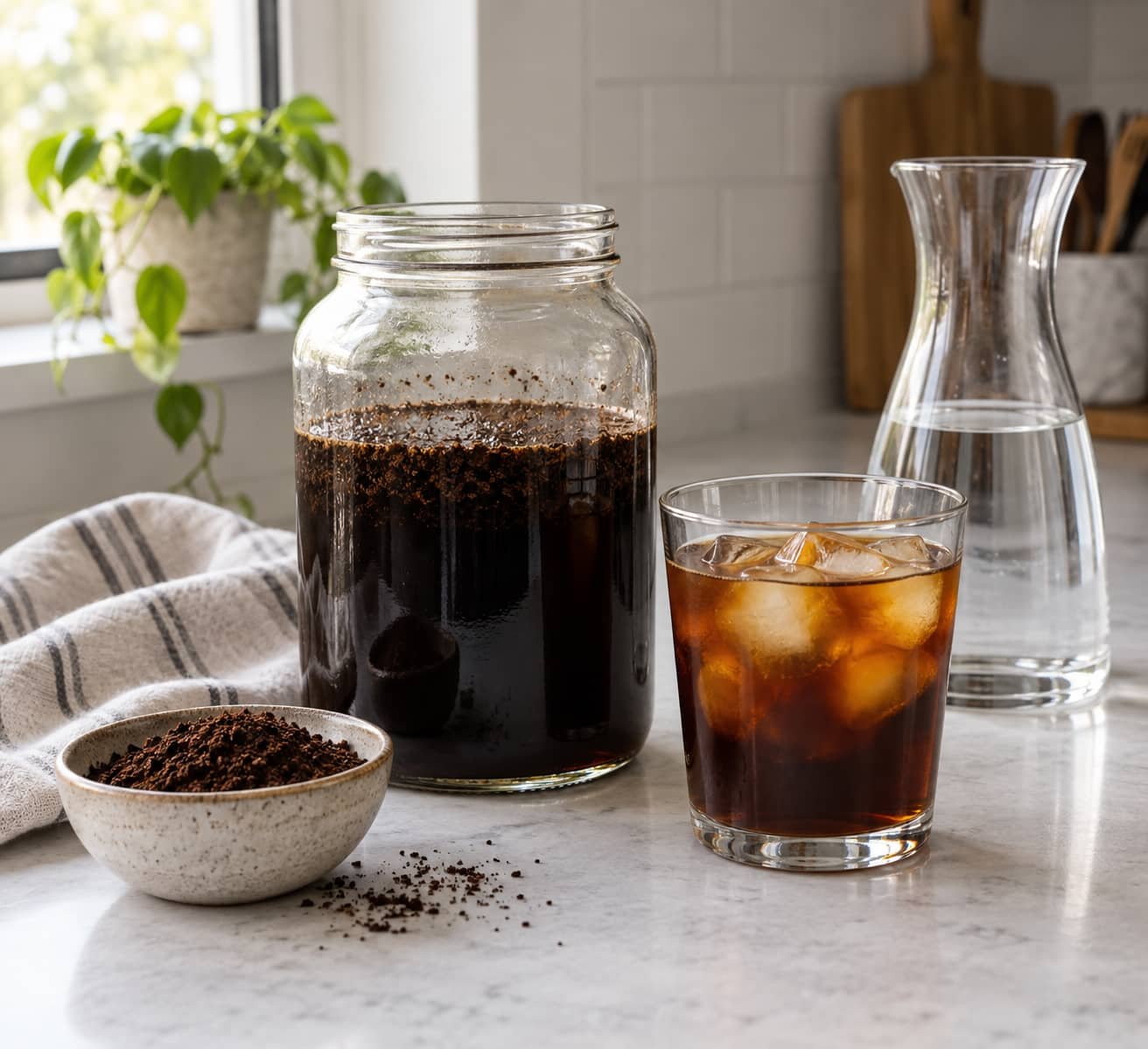
Making smooth iced coffee at home is simple when you have a prepared coffee base in the refrigerator. This cold brew concentrate recipe combines medium-coarse coffee grounds with filtered water to make a strong, smooth concentrate without an espresso machine or special cold-brew maker.

The grounds steep in the refrigerator for about 16 hours before the liquid is strained through a fine-mesh sieve and cheesecloth to reduce sediment. Because the finished concentrate is much stronger than ready-to-drink cold brew, it should be diluted with cold water, milk, or a combination of both before serving over ice. Store it in a clean, airtight container in the refrigerator and use it within seven days for convenient homemade iced coffee throughout the week.

Quick Answer: How Do You Make Cold Brew Concentrate?

To make cold brew concentrate, combine medium-coarse coffee grounds and filtered water at a 1:5 ratio by weight in a clean jar. Stir gently until the grounds are fully saturated, covered, and steep in the refrigerator for about 16 hours. Strain through a fine-mesh sieve lined with cheesecloth without pressing the grounds. Transfer to a clean, airtight jar and refrigerate for up to seven days. Before serving, mix one part concentrate with one part water or milk, then adjust to taste.

Cold Brew Concentrate at a Glance

Use this overview to check the timing, brewing ratio, equipment, storage, and recommended serving method before you begin.

Detail Recipe information
Preparation time 5 minutes
Steeping time About 16 hours
Straining time 5–10 minutes
Total time About 16 hours 15 minutes
Brewing ratio 1 part coffee to 5 parts water by weight
Grind size Medium-coarse
Brewing method Cold extraction in the refrigerator
Equipment Glass jar, digital scale, long spoon, fine-mesh sieve and cheesecloth
Storage After straining, refrigerate in a clean, airtight jar for up to 7 days
Serving Start with 1 part concentrate and 1 part water or milk, then adjust to taste

What Is Cold Brew Concentrated?

Cold brew concentrate is a strong, undiluted coffee base made by steeping medium-coarse coffee grounds in cold water. In this recipe, the grounds remain in the refrigerator for about 16 hours. Because the brewing ratio uses more coffee in relation to water than ready-to-drink cold brew, the strained liquid is concentrated and must be diluted before serving.

During the long cold-brewing process, water gradually extracts flavor from the grounds without relying on heat. After steeping, the coffee is filtered to reduce sediment. The concentrate can then be mixed with cold water, milk, or both and poured over ice.

Cold brew concentrate is different from hot-brewed coffee that has simply been chilled. Refrigerating regular coffee changes its temperature but not the original brewing method. Cold brewing extracts coffee with unheated water over an extended period, which produces a different body and flavor profile.

Cold Brew Concentrate vs. Cold Brew vs. Iced Coffee

Although all three drinks can be served over ice, they differ in brewing method, concentration, and whether they require dilution.

Drink Brewing method Concentration before serving Ready to drink? Typical flavor profile
Cold brew concentrate Cold-steeped using a higher coffee-to-water ratio Concentrated No; dilute before serving Bold and smooth
Ready-to-drink cold brew Cold-steeped at a lighter ratio or prepared by diluting concentrate Standard drinking strength Yes Smooth and mellow
Iced coffee Brewed with hot water, cooled and served over ice Standard drinking strength Yes Brighter and more aromatic

These concentration descriptions refer to how the drinks are prepared, not their exact caffeine content. Caffeine cannot be determined reliably from flavor alone. It varies with the beans, roast, grind size, brewing ratio, extraction time, serving size, and dilution. Acidity also varies, so cold brew should not automatically be described as more caffeinated or less acidic than every iced coffee.

Why This Method Produces Smoother Cold Brew

Smooth cold brew depends on steady extraction and effective filtration. Medium-coarse coffee grounds provide enough surface area for a long steep while producing less powdery sediment than finely ground coffee. Grounds that are too fine can pass through the filter, slow the straining process, and leave the concentrate cloudy or muddy.

Water quality also affects the finished drink because water remains its largest component after dilution. Using clean-tasting filtered water reduces the chance that strong chlorine, mineral, or metallic flavors will interfere with the coffee.

Refrigerator steeping maintains a relatively stable brewing temperature, while weighing the coffee and water makes each batch easier to repeat. Double-straining improves clarity by removing the larger grounds first and capturing smaller particles during the second pass. Allowing the coffee to drain naturally, rather than pressing or squeezing the grounds, also helps keep excess sediment out of the concentrate.

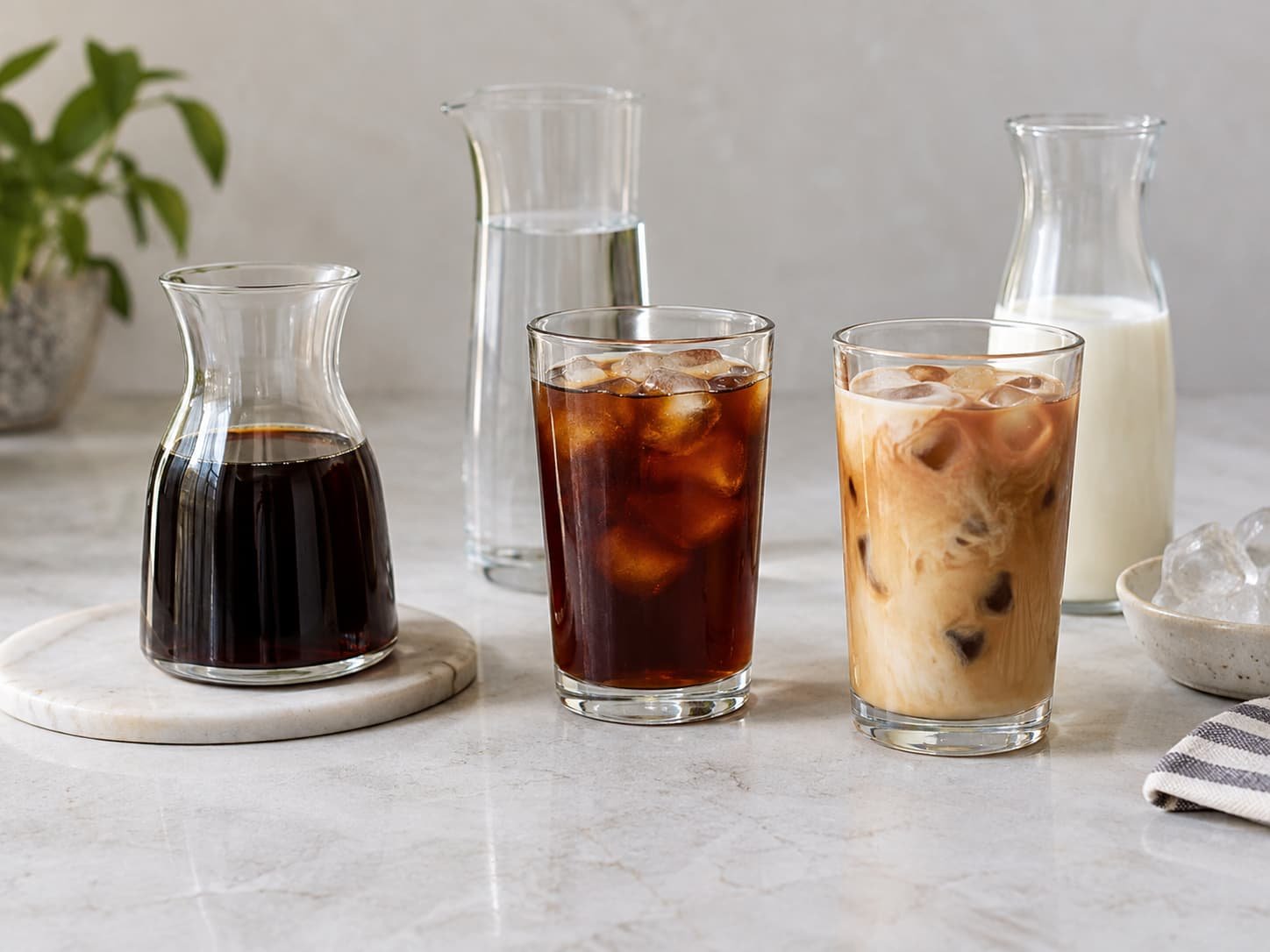
Dilution provides the final level of control. The same concentrate can be mixed with water for a bold black cold brew, combined with both water and milk for a lighter iced coffee, or served with more milk for a creamier drink.

Why This Recipe Uses a 1:5 Coffee-to-Water Ratio

This recipe uses one part medium-coarse coffee to five parts filtered water by weight. A standard batch combines 100 grams of ground coffee with 500 grams, or approximately 500 milliliters, of water.

This ratio produces a strong base designed to be diluted after straining. It does not mean that the finished batch will contain 500 milliliters of concentrate. The grounds absorb and retain some of the brewing water, so the strained yield will be lower than the amount of water added at the beginning.

Why Weight Is More Dependable Than Cups

A digital scale gives more consistent results than measuring ground coffee by volume. The amount of coffee that fits into one cup changes with the roast, grind size, and how loosely or firmly the grounds settle. As a result, two cups that look equally full may not contain the same weight of coffee.

Weighing removes most of that uncertainty. One hundred grams remains one hundred grams regardless of how much space the grounds occupy. Water is also simple to weigh because one gram of water is approximately equal to one milliliter.

Volume measurements can still be provided for convenience, but grams should remain the main standard when repeatable strength matters.

Brewing Ratio vs. Dilution Ratio

The brewing ratio measures the dry coffee and water combined before steeping. In this recipe, 100 grams of coffee and 500 grams of water follow a 1:5 brewing ratio.

The dilution ratio is used after the concentrate has been strained. A 1:1 dilution means mixing equal volumes of concentrate and water or milk. For example, 4 fluid ounces of concentrate mixed with 4 fluid ounces of water produces an 8-fluid-ounce drink before ice is added.

These ratios serve different purposes. The brewing ratio controls the strength of the concentrate, while the dilution ratio controls the strength of each finished drink.

How a 1:5 Ratio Compares with a 1:8 Ratio

A 1:5 batch contains more coffee in relation to water and produces a more concentrated base. It usually needs to be diluted before drinking. A 1:8 batch uses more brewing water, creating a lighter result that may require less dilution.

Whether a 1:8 batch functions as concentrate depends on the beans, extraction time, and preferred serving strength. There is no universal ratio that legally or technically separates concentrate from ready-to-drink cold brew. A practical distinction is whether the strained coffee is intended to be diluted. If it tastes balanced without additional water, it is more accurately described as ready-to-drink cold brew.

How to Scale a 1:5 Cold Brew Batch

Keep the same proportion when increasing or reducing the recipe.

Medium-coarse ground coffee Filtered water
50 g 250 g
100 g 500 g
150 g 750 g
200 g 1,000 g

Choose a container with enough empty space for the coffee grounds, water, and gentle stirring. The grounds will swell as they absorb liquid. Increasing the batch size does not automatically require a longer steep step, although a larger quantity may take more time to strain.

Ingredients You Need

brew concentrate

This cold brew concentrate recipe uses only medium-coarse ground coffee and filtered water. Because nothing is added to hide their flavor, the quality of the coffee and the taste of the water directly affect the finished concentrate.

For the standard 1:5 batch, use 100 grams of ground coffee and 500 grams of water. The final strained yield will be lower than 500 milliliters because the grounds absorb and retain part of the brewing water.

Coffee Beans and Grind Size

Medium or medium-dark roast coffee is a dependable starting point for homemade cold brew concentrate. These roasts usually provide enough body to remain flavorful after the concentrate is diluted with water or milk and served over ice.

Beans with chocolate, caramel, or nutty flavor notes work particularly well in milk-based cold brew. Their deeper flavors remain noticeable after dilution without requiring an extremely dark roast. Very dark beans can still be used, but smoky or heavily roasted notes may taste harsh after a long steep.

Light-roast coffee produces a brighter result and may have floral, citrus, or fruit-forward notes. It often works best when the finished cold brew is served black or with a small amount of milk. Because light roasts vary considerably, taste the diluted concentrate before changing the brewing time or ratio.

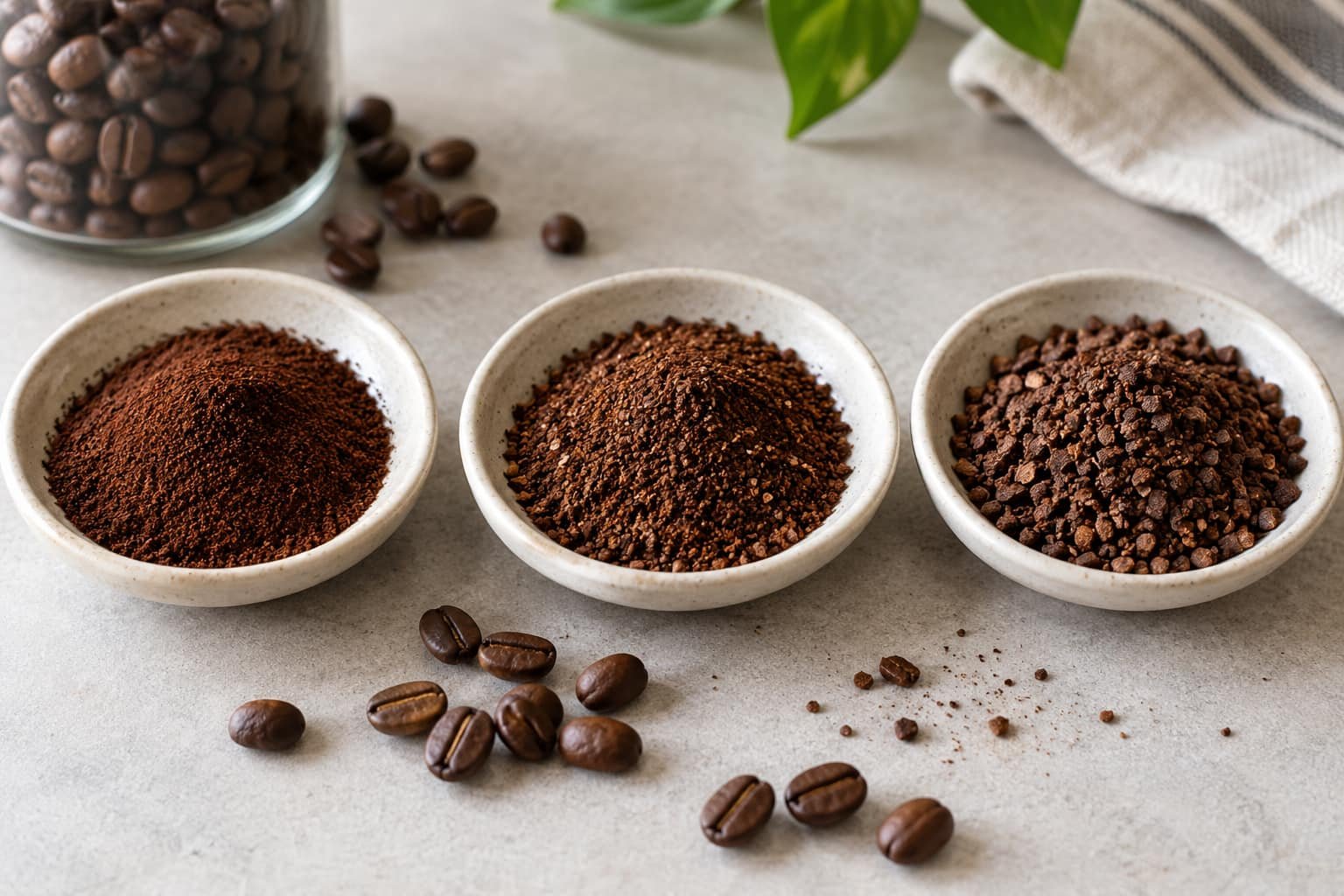
For better control, grind whole beans shortly before brewing. Use a medium-coarse texture resembling coarse sand rather than the fine consistency used for drip coffee. This size supports gradual extraction while making the concentrate easier to filter and less likely to contain excessive sediment.

If the beans are ground at a store or coffee shop, request a medium-coarse grind and describe the texture you need. Labels such as “French press” or “cold brew” are useful starting points, but grind settings can vary between machines.

Filtered Water

Water makes up most of the concentrate and an even greater proportion of the drink after dilution. Tap water with noticeable chlorine, metallic, sulfur, or strong mineral flavors can carry those qualities into the finished coffee. A long steep will not hide unpleasant-tasting water.

Filtered water provides a cleaner, more neutral base and reduces the chance that unwanted flavors will compete with the coffee. If your unfiltered tap water already tastes clean and pleasant when served cold, it can still be used. Filtering improves the water, but it cannot compensate for stale beans, an unsuitable grind, or an inaccurate brewing ratio.

Keep the main batch plain and customize each drink after dilution. Add vanilla, cinnamon, flavored syrup, or another sweetener when serving instead of mixing it into the entire batch. This keeps the concentrate versatile and allows different drinks to be prepared from the same jar.

Choosing the Correct Grind Size

Use medium-coarse coffee grounds for this cold brew concentrate recipe. The particles should look similar to coarse sand: clearly visible and fairly even, with very little powder. This texture provides sufficient surface area for a 16-hour refrigerator steep while making the grounds easier to filter from the concentrate.

Brown Sugar Cold Foam

Finely ground coffee contains more small particles that can pass through a basic strainer. These particles can slow filtration and leave the finished cold brew cloudy or silty. Because a fine grind extracts more quickly, it may also produce a harsher flavor when steeped for the full brewing time.

An extremely coarse grind can cause the opposite problem. Large or uneven pieces have less contact with the water and may produce a weak, underdeveloped concentrate. For consistent extraction, avoid both powdery grounds and large cracked pieces.

Pre-ground drip coffee will work when freshly ground beans are unavailable, but its finer texture is less suitable for cold brewing. Strain it carefully and expect a little more sediment. If necessary, pass the concentrate through cheesecloth, a clean nut milk bag, or an unbleached paper coffee filter after removing the larger grounds.

Coffee grounds do not dissolve in cold water. The water extracts soluble flavor compounds, but the solid particles remain and must be removed after steeping.

Equipment for Cold Brew Concentrate

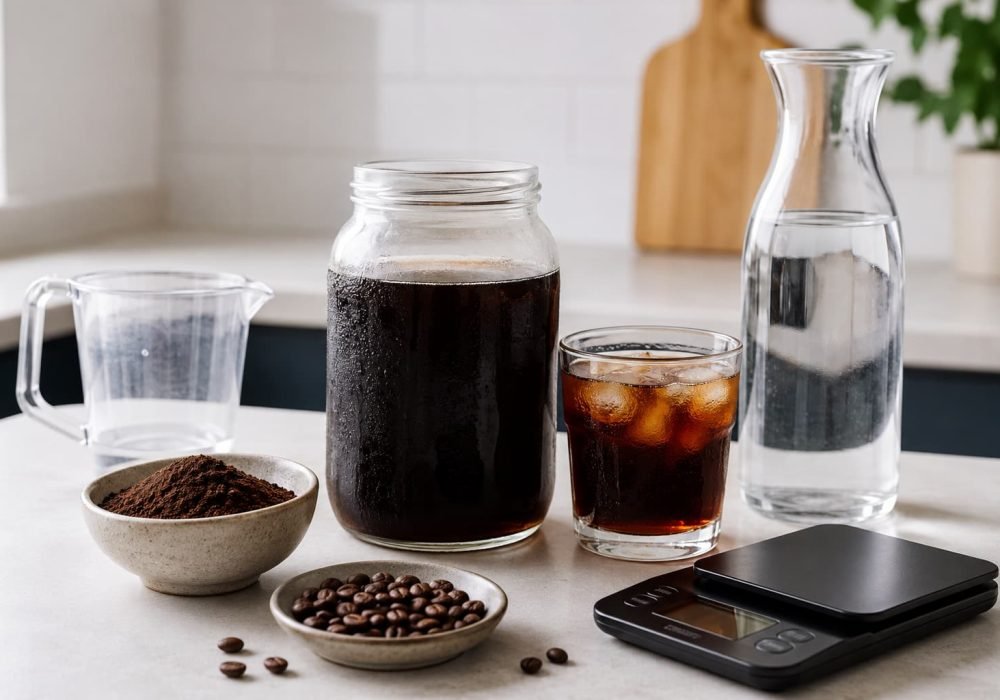
You do not need a dedicated cold-brew machine. A roomy glass jar and a few basic kitchen tools are enough to brew, filter, and store homemade cold brew concentrate.

Brown Sugar Cold Foam

Equipment Purpose
Digital kitchen scale Measures coffee and water accurately for the 1:5 brewing ratio
1½-quart or larger glass jar with a lid Leaves room for the grounds to absorb water and for gentle stirring
Long spoon Helps wet the grounds evenly without vigorous shaking
Fine-mesh strainer Removes the larger coffee particles during the first strain
Cheesecloth, clean nut milk bag, or unbleached paper coffee filter Captures finer sediment during the second filtration
Clean, airtight storage jar Keeps the concentrate covered and limits exposure to refrigerator odors

A wide-mouth 1-quart jar may hold the standard batch, but the fit can be tight once the coffee absorbs water. A 1½-quart container provides more headspace and makes stirring less messy.

Strain the larger grounds through the fine-mesh sieve before using a paper filter, since adding all the grounds directly to the filter can cause it to clog. The brewing jar may be reused for storage after it has been emptied and washed thoroughly, although a separate clean jar is more convenient.

How to Make Cold Brew Concentrate

This method combines coffee and water at a 1:5 ratio by weight, followed by a 16-hour refrigerator steep. Measuring the ingredients by weight produces more consistent results because the volume of ground coffee changes with the beans, roast level, and grind size.

Step 1: Measure the Coffee and Water

Iced Protein Coffee

Measure 100 grams of medium-coarse ground coffee and 500 grams of filtered water. Without a scale, use approximately 1¼ cups of ground coffee and 2 cups plus 2 tablespoons of water. These volume measurements are estimates, so grams should remain the primary recipe standard.

Add the ground coffee to a clean 1½-quart or larger glass jar. The extra headspace allows the grounds to absorb water and makes stirring easier without spilling.

Troubleshooting: If one batch tastes noticeably stronger than another, inconsistent cup measurements may be responsible. Weigh both ingredients whenever possible.

Process image: Ground coffee and filtered water measured separately on a digital kitchen scale.

Step 2: Combine and Saturate the Coffee Grounds

Pour the filtered water slowly over the coffee. Stir gently with a long spoon, reaching the bottom and sides of the jar until no dry pockets remain.

Iced Protein Coffee

Some grounds may float after stirring. Fold them into the water gently rather than pressing or shaking the mixture. Vigorous shaking is unnecessary and can leave coffee stuck to the lid and upper walls of the jar, where it will not remain fully immersed.

Troubleshooting: Check the bottom of the jar for dry clumps before covering it. Coffee that is not evenly saturated may extract inconsistently.

Process image: Medium-coarse coffee grounds evenly saturated inside a wide glass jar.

Step 3: Steep the Coffee in the Refrigerator

Concentrate

Cover the jar and refrigerate it for 16 hours. The cool temperature produces a slow extraction without using hot water. Set a timer so the coffee can be strained at the intended time.

Steeping longer does not automatically produce stronger or smoother cold brew. Excessive contact time may introduce dry, woody, or harsh flavors, although the result also depends on the beans and grind size.

Troubleshooting: If the finished drink tastes weak, check the coffee measurement, grind size, and serving dilution before extending the brewing time.

Process image: Covered glass jar of cold brew steeping on a refrigerator shelf.

Step 4: Strain the Cold Brew Concentrate

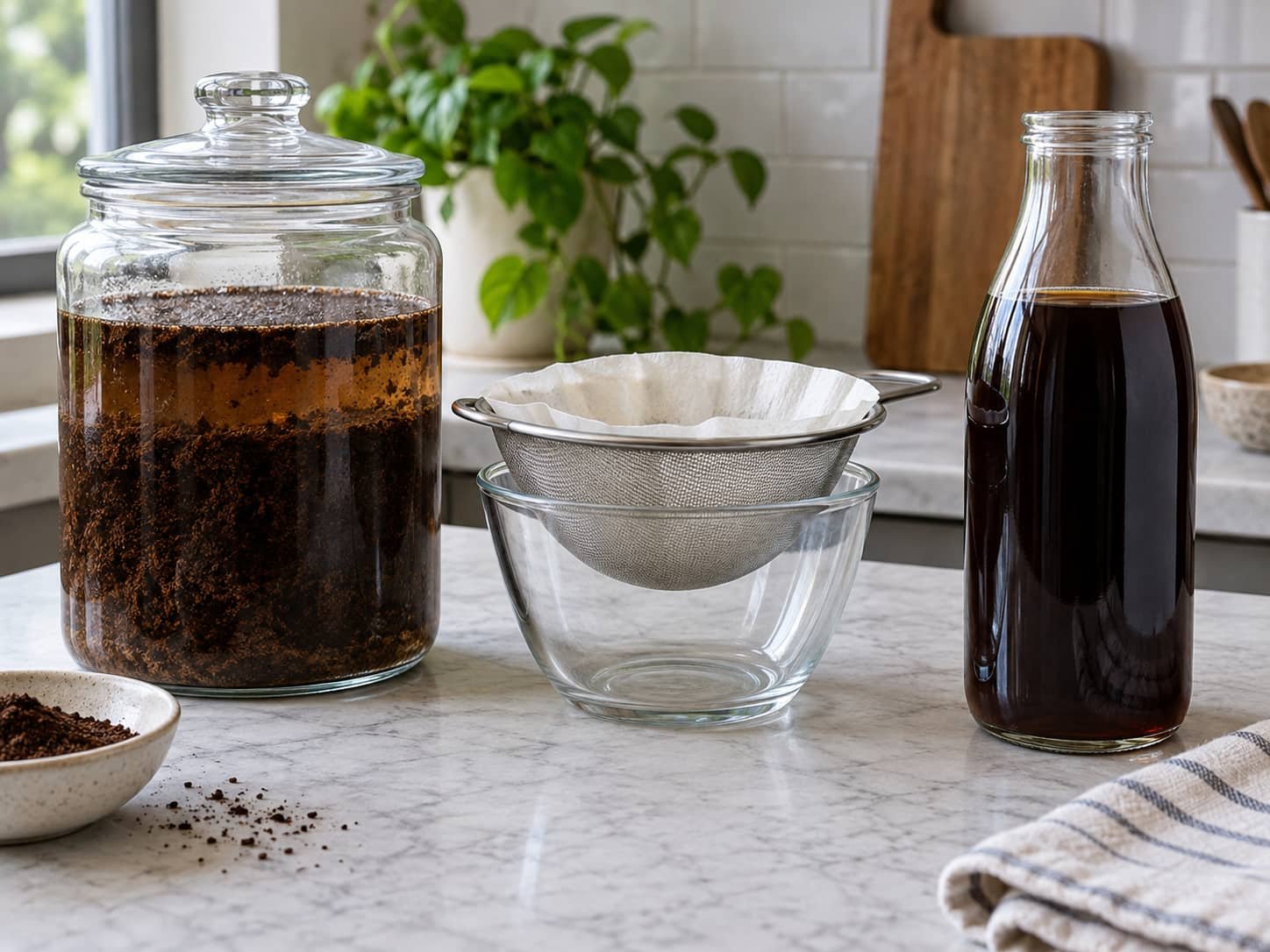
Place a fine-mesh strainer over a clean bowl or measuring jug. Pour the mixture through it slowly to remove the larger grounds. Let gravity do the work instead of pressing the coffee with a spoon.

For a cleaner concentrate, strain the liquid a second time through cheesecloth, a clean nut milk bag, or a rinsed paper coffee filter. Paper filtration catches more sediment but may take longer and can produce a slightly lighter-bodied result by removing some coffee oils.

Iced Coffee with Instant Coffee

Troubleshooting: If a paper filter drains slowly, allow it more time. Replace it only if the flow stops completely, and do not squeeze the grounds because this may force fine sediment into the concentrate.

Process image: Cold brew concentrate passing through a lined fine-mesh strainer into a clean glass jug.

Step 5: Transfer and Refrigerate

Pour the strained cold brew concentrate into a clean, airtight glass jar. Use a funnel if the jar has a narrow opening, then label the container with the preparation date and refrigerate it immediately.

Honey Cinnamon Iced Latte

Keep the concentrate covered and use it within seven days. Do not combine a fresh batch with older concentrate because doing so makes its storage time difficult to track. Dilute each serving with cold water, milk, or both before drinking.

Troubleshooting: Use a different container if the clean jar still smells like previously stored food, since lingering odors can affect the coffee’s flavor.

Process image: Finished cold brew concentrate stored in a labeled airtight glass jar.

Should Cold Brew Steep in the Refrigerator or at Room Temperature?

Cold brew can be prepared at either temperature, but this recipe uses refrigerator steeping for better temperature control and more repeatable results. The colder environment slows extraction, making a 16-hour steep a practical starting point for this 1:5 concentrate.

Room-temperature water extracts coffee compounds more quickly. However, that does not automatically produce a stronger or better-tasting drink. Using the same ratio and steeping time at a warmer temperature can change the extraction and flavor balance.

Method Extraction Time used in this article Recommendation
Refrigerator steeping Slower and easier to control 16 hours Primary method for consistent overnight preparation
Room-temperature steeping Faster because the water is warmer Shorter than 16 hours; exact time not provided because it has not been tested Treat as a separate variation requiring its own testing

Do not move the jar between room temperature and the refrigerator while expecting the original timing to remain accurate. Temperature, grind size, coffee-to-water ratio, and steeping time work together, so changing one variable can alter the final concentrate.

Regardless of the brewing temperature, strain the finished coffee into a clean container and refrigerate it immediately. Do not store prepared cold brew concentrate at room temperature. Keep your refrigerator at 40°F (4°C) or below, following the FDA’s refrigerator-temperature guidance.

How to Strain Cold Brew Without Grit or Cloudiness

The most effective way to produce cleaner cold brew is to filter it in two stages. Remove the larger grounds with a fine-mesh strainer, then catch smaller particles with cheesecloth, a clean nut milk bag, or a rinsed paper coffee filter. Let gravity move the liquid through both filters without squeezing the grounds.

Why Does Cold Brew Taste Gritty?

A gritty or muddy texture usually means the coffee was ground too finely or too many small particles passed through the filter. Pressing the grounds with a spoon or tightly squeezing a filter bag can make the problem worse by forcing fine sediment into the concentrate.

If the batch is already strained, let it rest in the refrigerator until the sediment settles. Pour the clearer coffee into another clean jar, leaving the gritty layer behind. A second pass through a paper filter can remove additional particles, although it may also give the concentrate a slightly lighter body.

Why Does Cold Brew Look Cloudy?

Cloudiness often comes from suspended coffee particles, but natural oils can also make cold brew appear less than perfectly clear. A cloudy appearance alone does not necessarily mean the batch was filtered incorrectly.

If the concentrate is both cloudy and muddy, the grind was probably too fine or the second filtration stage was insufficient. Use a more consistent medium-coarse grind for the next batch and inspect cheesecloth for gaps before pouring the coffee through it.

What Should You Do If the Paper Filter Clogs?

Paper filters drain slowly when too many fine particles reach them. Always remove the larger grounds with a fine-mesh strainer before beginning the paper-filtration stage.

Allow the coffee to drip without stirring or pressing. If the flow stops completely, replace the clogged filter instead of forcing the liquid through it. Rinsing a new paper filter with clean water before use can also reduce unwanted papery flavor.

Is Sediment in Cold Brew Normal?

A thin layer of sediment may settle at the bottom of cold brew stored in the refrigerator, especially when cheesecloth or a reusable filter is used. This small amount usually affects texture rather than the overall quality of the concentrate.

Pour each serving gently and leave the final sediment in the storage jar. Avoid shaking the container before serving. If a thick layer forms after every batch, use a more even grind or improve the second filtration stage.

How to Dilute Cold Brew Concentrate

Cold brew concentrate is intentionally stronger than ready-to-drink coffee and should normally be diluted before serving. For the homemade 1:5 concentrate in this recipe, start with equal parts concentrate and water, milk, or a combination of both.

The ideal cold brew dilution ratio is not universal. Beans, roast level, grind size, brewing temperature, steeping time, and filtration can all affect the finished strength. Use the following ratios as starting points, stir the drink thoroughly, and adjust it after tasting.

Drink style Starting dilution
Strong black cold brew 1 part concentrate + ½ part cold water
Standard iced cold brew 1 part concentrate + 1 part cold water
Creamy cold brew 1 part concentrate + ½ part cold water + ½ part milk
Hot coffee made with cold brew concentrate 1 part concentrate + 1 part hot water, then adjust to taste
Flavored cold brew 1 part concentrate + 1 part water or milk + start with 1 teaspoon syrup per 8 fluid ounces

Protein Cold

Water, milk, and creamer can all dilute the concentrate. Syrup primarily adds sweetness and should not be counted as a meaningful part of the dilution. Taste the diluted coffee before adding more syrup so sweetness does not hide an excessively strong drink.

Measure the concentrate and diluting liquid before adding ice. This produces more consistent servings and makes it easier to repeat the ratio you prefer. If using a packaged concentrate instead of this homemade version, follow its label because commercial products can vary considerably in strength.

How to Make Smooth Iced Coffee with Cold Brew Concentrate

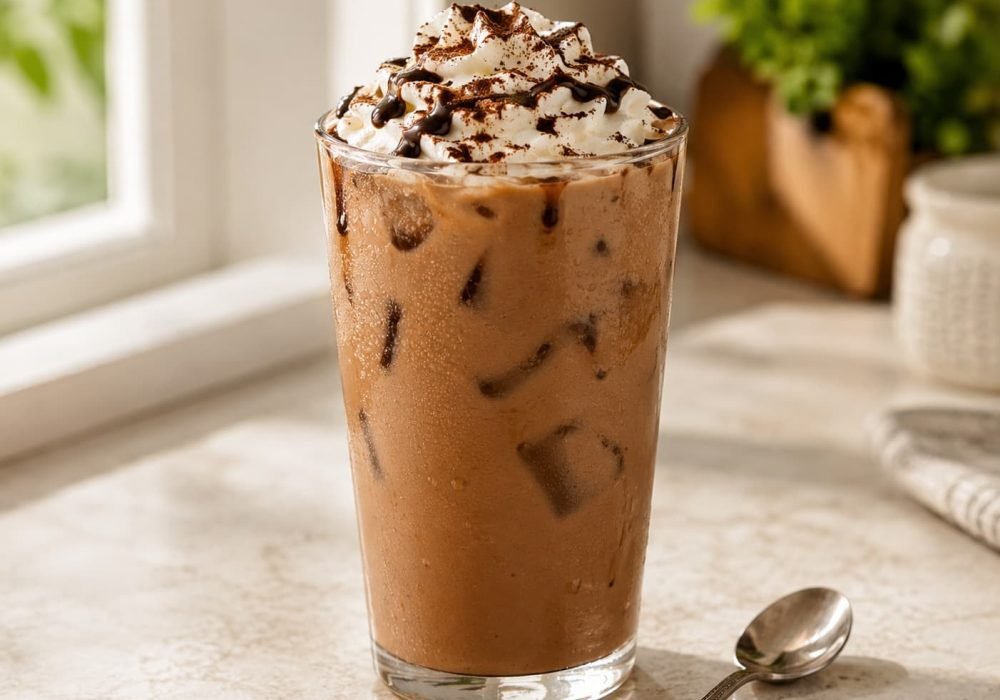
For one serving, combine 4 fluid ounces (120 milliliters) of cold brew concentrate with 4 fluid ounces (120 milliliters) of cold water. Pour the mixture into a 16-ounce glass containing ¾ cup of ice, then stir thoroughly.

coffee

For a creamier iced coffee, use 4 fluid ounces of concentrate, 3 fluid ounces of cold water, and 1 fluid ounce (30 milliliters) of milk or creamer. This keeps the total amount of diluting liquid at 4 fluid ounces.

If desired, add 1 teaspoon of simple syrup or another liquid sweetener. Stir and taste before adding more because flavored syrups differ in sweetness and intensity.

Do not depend on ice alone to dilute undiluted concentrate. Ice melts gradually, so the coffee may taste excessively strong at first and become increasingly watery as it sits. Mixing in a measured amount of water or milk creates a more balanced drink from the first sip.

Taste the coffee after it has been mixed. If it is too strong, add cold water 1 fluid ounce at a time. If it is too light, add 1 tablespoon at a time until it reaches your preferred strength.

Easy Cold Brew Flavor Variations

Add flavorings to individual servings after diluting the cold brew concentrate. This keeps the refrigerated concentrate plain and allows each drink to be prepared with a different level of sweetness or creaminess.

The measurements below are starting points for 8 fluid ounces of prepared coffee before adding ice. Mix the drink thoroughly and taste it before increasing any syrup or sweetener.

Vanilla Cold Brew

Stir 1 teaspoon of vanilla syrup into 8 fluid ounces of diluted cold brew. For a creamier drink, replace 1 fluid ounce of the diluting water with 1 fluid ounce of milk or oat milk.

Add the vanilla syrup by the glass rather than mixing it into the stored concentrate. This prevents the entire batch from becoming sweeter than intended.

Caramel Iced Coffee Without Espresso

Brown Sugar Cinnamon Cold Brew

Stir 1 to 2 teaspoons of brown sugar into 2 teaspoons of hot water until completely dissolved. Whisk in a very small pinch of cinnamon, allow the mixture to cool briefly, and then stir it into the diluted cold brew before adding ice.

The brown sugar will dissolve, but ground cinnamon will only disperse through the liquid. Keep the amount small and stir the drink again before serving to prevent a heavy layer of spice from settling at the bottom.

Creamy Oat Milk Cold Brew

For an 8-fluid-ounce serving, combine 4 fluid ounces of cold brew concentrate with 2 fluid ounces of cold water and 2 fluid ounces of chilled oat milk.

Barista-style oat milk is formulated to create a fuller, creamier texture in coffee drinks. Shake the carton before measuring, and check the label before adding syrup because some varieties are already sweetened.

Pumpkin Spice Cold Brew

Combine 4 fluid ounces of concentrate with 3 fluid ounces of cold water and 1 fluid ounce, or 2 tablespoons, of this homemade pumpkin spice coffee creamer. Stir until evenly blended, then pour the drink over ice.

This version is correctly described as pumpkin spice cold brew rather than pumpkin cream cold brew. A true pumpkin cream drink requires a separately tested cold-foam topping that remains thick enough to sit above the coffee.

Sweet Potato Spice Cold Brew

Stir 1 teaspoon of this sweet potato syrup into 8 fluid ounces of diluted cold brew before adding ice. The sweet potato, vanilla, and warm spices create a seasonal flavor that is distinct from pumpkin.

Use the thinner coffee-syrup consistency described in the linked recipe. A thick pancake-style syrup may collect at the bottom of the glass instead of blending smoothly into the cold coffee.

Troubleshooting Cold Brew Concentrate

Cold brew problems usually come from the grind size, brewing ratio, steeping time, filtration, water quality, or serving dilution. Before changing the recipe, determine whether the problem is present in the undiluted concentrate or appears only after water, milk, and ice are added.

Use the table to identify the most likely cause. Change one variable at a time so you can judge whether that adjustment improves the next batch.

Problem Likely cause Fix
Bitter or harsh flavor Fine grind, excessive steeping, repeated agitation, or very dark roast Start with an even medium-coarse grind, use the 16-hour refrigerator steep, and stir only during initial saturation. Try a less-dark roast if the coffee tastes smoky
Weak or watery concentrate Incorrect brewing ratio, extremely coarse grind, or short steep Measure 100 grams of coffee and 500 grams of water, use a medium-coarse grind, and complete the full steep
Weak drink after serving Too much water, milk, or melting ice Begin with a measured 1:1 dilution and reduce the diluting liquid if necessary
Cloudy appearance Fine particles passed through, although coffee oils may also create cloudiness Use a fine-mesh sieve first, followed by cheesecloth or a rinsed paper coffee filter
Muddy or gritty texture Grounds were squeezed, grind was too fine, or filter openings were too large Let the coffee drain naturally. Allow sediment to settle, decant the clearer liquid, or filter it again through paper
Finished drink tastes too strong Concentrate was not diluted enough Add cold water or milk gradually until the drink tastes balanced
Flat or dull flavor Stale beans, unpleasant water, or excessive serving dilution Use fresher coffee, filtered water, and measured amounts of concentrate and diluting liquid
Filtering takes too long Grind was too fine or the paper filter became clogged Remove larger grounds with a fine-mesh sieve before paper filtration. Replace the paper filter if the flow stops

If the undiluted concentrate seems unusually intense even after the prepared drink is diluted 1:1, check the original brewing measurements. Accidentally using more than 100 grams of coffee or less than 500 grams of water will produce a stronger ratio than the recipe intends.

Record the coffee weight, water weight, grind setting, steeping time, and serving dilution for each batch. Without those measurements, changing several variables at once becomes guesswork and makes a successful result difficult to repeat.

How to Store Cold Brew Concentrate Safely

Transfer the strained cold brew concentrate to a clean, airtight container and refrigerate it promptly. Label the container with the preparation date so you do not have to estimate how long it has been stored.

Keep your refrigerator at 40°F (4°C) or below, following the FDA’s general refrigerator-temperature guidance. Place the container toward the back of the refrigerator, where the temperature is usually more stable, rather than in the door.

Keep the stored concentrate plain. Add milk, creamer, syrup, and other flavorings to individual servings. Dairy and plant-based milks have their own refrigeration and use-by requirements, so follow the instructions on their packaging.

Pour the concentrate directly from the jar or use a clean utensil each time. Close the container promptly after serving. Never return coffee from a drinking glass to the storage jar or combine a newly prepared batch with older concentrate.

How Long Does Homemade Cold Brew Concentrate Last?

Use homemade cold brew concentrate within seven days when it has been prepared with clean equipment and kept continuously refrigerated. This is a conservative storage window for this homemade recipe, not an FDA-established shelf life specifically for cold brew.

A two-week storage period is not recommended for this homemade, unpasteurized concentrate because it has not undergone validated commercial processing or shelf-life testing. Preparing a smaller weekly batch provides better control over freshness and storage time.

Homemade cold brew concentrate is not shelf-stable. Do not keep it in a pantry or use countertop storage as a preservation method. Return the container to the refrigerator immediately after pouring each serving.

When Should You Discard Cold Brew Concentrate?

Discard the concentrate if you notice visible mold, recurring bubbles in an undisturbed jar, unexpected pressure when opening the container, an unusual color or texture, or a fermented or otherwise unpleasant smell.

If the coffee develops an unexpected flavor during normal serving, stop drinking it and discard the remaining concentrate. Do not deliberately taste coffee that already looks or smells suspicious.

The absence of visible spoilage does not guarantee that the concentrate is safe. Discard it if its refrigeration history is uncertain, it was handled with an unclean utensil, or it has been stored beyond the recommended seven-day window.

  1. Can You Freeze Cold Brew Concentrate?

  2. Yes, cold brew concentrate can be frozen in small portions. Pour the strained concentrate into a clean, odor-free ice-cube tray and freeze it until solid.
  3. Transfer the frozen cubes to a labeled, sealed freezer container or freezer-safe bag. Removing them from the open tray limits exposure to freezer odors and helps prevent their surfaces from drying out. Write the freezing date on the container and use the oldest cubes first.
  4. Ice-cube trays vary in capacity, so do not assume that every cube represents 1 fluid ounce. Measure the liquid added to each compartment if you want to maintain an accurate cold brew dilution ratio.
  5. Replace some regular ice with frozen cold brew cubes to prevent plain melting ice from making the drink watery. Include the measured cube volume when calculating the final ratio. For example, use 3 fluid ounces of liquid concentrate, 4 fluid ounces of water, and one cube made from 1 fluid ounce of concentrate. After the cube melts, the drink will contain equal amounts of concentrate and water.
  6. Freezing slows flavor deterioration but does not preserve peak quality indefinitely. Coffee aroma may become flatter, and poorly sealed cubes can absorb freezer odors during extended storage. Freeze manageable portions, keep them sealed, and do not treat the freezer as permanent storage.cottage cheese breakfast bowl
  7. Common Cold Brew Mistakes to Avoid

  8. These common mistakes can affect the strength, texture, and freshness of cold brew concentrate. Preventing them is easier than correcting the finished batch.
Common mistake What to do instead
Measuring the 1:5 ratio by volume Weigh 1 part coffee and 5 parts water. Ground coffee occupies different volumes depending on its roast and grind
Grinding the coffee too finely Use an even medium-coarse grind to reduce sediment and harsh extraction
Using stale beans or unpleasant-tasting water Start with fresher coffee and clean-tasting filtered water
Leaving dry pockets in the jar Stir gently at the beginning until all the grounds are evenly saturated
Assuming a longer steep is always better Strain the coffee after the recipe’s 16-hour refrigerator steep
Squeezing or pressing the grounds Allow gravity to drain the coffee so fewer fine particles enter the concentrate
Skipping the fine filtration stage Remove the larger grounds first, then use cheesecloth, a nut milk bag, or a rinsed paper filter
Assuming concentrate is ready to drink Begin with equal parts concentrate and water or milk, then adjust to taste
Keeping finished concentrate at room temperature Transfer it to a clean container and refrigerate it promptly
Adding dairy to the full storage batch Keep the concentrate plain and add milk or creamer to each serving

Frequently Asked Questions

What Is the Best Ratio for Cold Brew Concentrate?

Use a 1:5 coffee-to-water ratio by weight as a starting point. For this recipe, that means 100 grams of coffee and 500 grams of water. The ratio produces a strong concentrate intended for dilution, but the final result still varies with the beans and grind size.

How Long Should Cold Brew Concentrate Steep?

Steep the coffee in the refrigerator for 16 hours. If a later batch tastes over- or under-extracted, first check the ratio and grind, then adjust the next step by one or two hours. A longer brewing time does not automatically produce better flavor.

Can I Use Regular Pre-Ground Coffee?

Yes, although coffee ground for a drip machine is usually finer than the medium-coarse grind preferred for cold brew. It may create additional sediment and slower filtration. Remove the larger grounds first, then pass the concentrate through a rinsed paper coffee filter if necessary.

Can I Make Cold Brew Concentrate in a French Press?

Yes. Combine the coffee and water in the French press, cover it, and refrigerate for the standard steeping time. Lower the plunger slowly, stopping if you encounter strong resistance, and immediately pour the concentrate into another container. Fine-filter it if sediment remains.

Can I Drink Cold Brew Concentrate Straight?

This concentrate is intended to be diluted. Start with equal parts concentrate and water or milk, then adjust after tasting. Caffeine concentration varies with the beans, brewing ratio, grind, and extraction time, while the amount consumed also depends on dilution and serving size. Cold-brew extraction research demonstrates how these variables affect the result.

Is Cold Brew Concentrate Stronger Than Iced Coffee?

Before dilution, cold brew concentrate is generally more concentrated than ordinary iced coffee because it uses more coffee relative to water. After dilution, the final flavor and caffeine per serving depend on the recipe, serving ratio, ice, and portion size.

Why Does My Cold Brew Taste Bitter?

Common causes include an overly fine grind, an excessive steep, or a very dark roast. Use medium-coarse coffee, follow the recipe’s steeping time, and try a medium or medium-dark roast if the flavor tastes smoky. Avoid squeezing the grounds because this can push fine particles into the concentrate and create a harsher texture.

How Long Does Cold Brew Concentrate Last?

Use homemade cold brew concentrate within seven days when prepared with clean equipment and kept continuously refrigerated at 40°F (4°C) or below. Seven days is a conservative storage window for this recipe, not a universal shelf life for every homemade or commercial product.

Can I Use Decaf Coffee for Cold Brew Concentrate?

Yes. Use the same 1:5 brewing ratio, medium-coarse grind, and refrigerator method. Decaf beans may produce a slightly different flavor, so taste the first finished batch before changing its grind, ratio, or steeping time.

Is Cold Brew Less Acidic Than Hot Coffee?

Cold brew often tastes smoother and less sharply acidic than hot-brewed coffee. Some studies have found lower titratable acidity in cold brew even when differences in pH were limited. Results still vary with the beans, roast, grind, ratio, and extraction method. See this research comparing cold and hot brew acidity.

Cold brew is not a treatment for acid reflux or another digestive condition. A smoother, less sharply acidic taste does not guarantee that it will prevent symptoms.

Final Recipe Summary

Use a digital scale to measure 100 grams of coffee and 500 grams of filtered water for this cold brew concentrate recipe. Choose an even medium-coarse grind, stir gently until all the grounds are saturated and no dry pockets remain, then refrigerate the covered jar for 16 hours. Strain through a fine-mesh sieve, followed by a clean strainer lined with cheesecloth or a rinsed paper filter. Store the concentrate in a clean, airtight jar in the refrigerator for up to seven days. To serve, mix equal parts concentrate and water or milk, then pour over ice and adjust to taste.

Cold Brew Concentrate Recipe for Smooth Iced Coffee

This homemade cold brew concentrate uses medium-coarse coffee and filtered water at a 1:5 ratio by weight. It steeps in the refrigerator for 16 hours and is filtered twice for a smoother texture. Mix the finished concentrate with water or milk before serving over ice.

Ingredients

For the Concentrate

  • 100 grams medium-coarse ground coffee, approximately 1¼ cups; weight strongly recommended
  • 500 grams filtered water, approximately 500 milliliters or 2 cups plus 2 tablespoons

For One Iced Coffee

  • 4 fluid ounces cold brew concentrate
  • 4 fluid ounces cold water or milk
  • ¾ cup ice

Instructions

  1. Add the medium-coarse ground coffee to a clean 1½-quart or larger glass jar.
  2. Pour in the filtered water. Stir gently until all the grounds are evenly saturated and no dry pockets remain.
  3. Cover the jar and steep the coffee in the refrigerator for 16 hours.
  4. Set a fine-mesh sieve over a clean measuring jug. Pour the mixture through the sieve and allow it to drain naturally without pressing the grounds.
  5. Pass the concentrate through a second clean strainer lined with cheesecloth. Allow gravity to complete the filtration.
  6. Transfer the strained concentrate to a clean, airtight jar. Label the container with the preparation date and refrigerate it promptly.
  7. For one iced coffee, combine 4 fluid ounces of concentrate with 4 fluid ounces of cold water or milk. Pour over ¾ cup of ice, stir, and adjust the dilution to taste.

Equipment

  • Digital kitchen scale
  • 1½-quart or larger glass brewing jar
  • Long spoon
  • Fine-mesh sieve
  • Second clean strainer
  • Cheesecloth
  • Measuring jug
  • Clean airtight storage jar

Recipe Notes

Use the gram measurements as the primary recipe standard. Ground coffee occupies different amounts of volume depending on the beans, roast level, and grind size.

For a clearer but slightly lighter-bodied concentrate, use a rinsed paper coffee filter for the second filtration. Paper filtering normally takes longer than cheesecloth.

Keep the concentrate refrigerated at 40°F (4°C) or below and use it within seven days. Do not mix milk, creamer, syrup, or other flavorings into the full storage batch.

The 1:1 serving dilution is a starting point. Add water or milk gradually if the prepared drink remains too strong.

Related Blogs

Scroll to Top