
Yes, you can make iced coffee with instant coffee without brewing ground coffee or using a coffee machine. Instant coffee is soluble, so it can be mixed with liquid and used as the base of a cold coffee drink.
A common approach is to dissolve the instant coffee first, then add cold water or milk and finish with ice. The final strength can vary depending on the coffee product, the amount of liquid added, and how much the ice melts.
There is no single ratio that works for every instant coffee. Products differ in strength and preparation directions, so the package instructions can provide a useful starting point. From there, the drink can be adjusted according to the desired concentration, milk level, and sweetness.
What Is Iced Coffee with Instant Coffee?
Iced coffee with instant coffee is a cold drink made by dissolving instant coffee in liquid and serving it chilled or over ice.
The main advantage of instant coffee is that the coffee has already been extracted during manufacturing. The brewed coffee extract is dried into soluble granules or powder, which can later be dissolved in water.
This means instant coffee does not need to be brewed and filtered at home before making an iced drink.
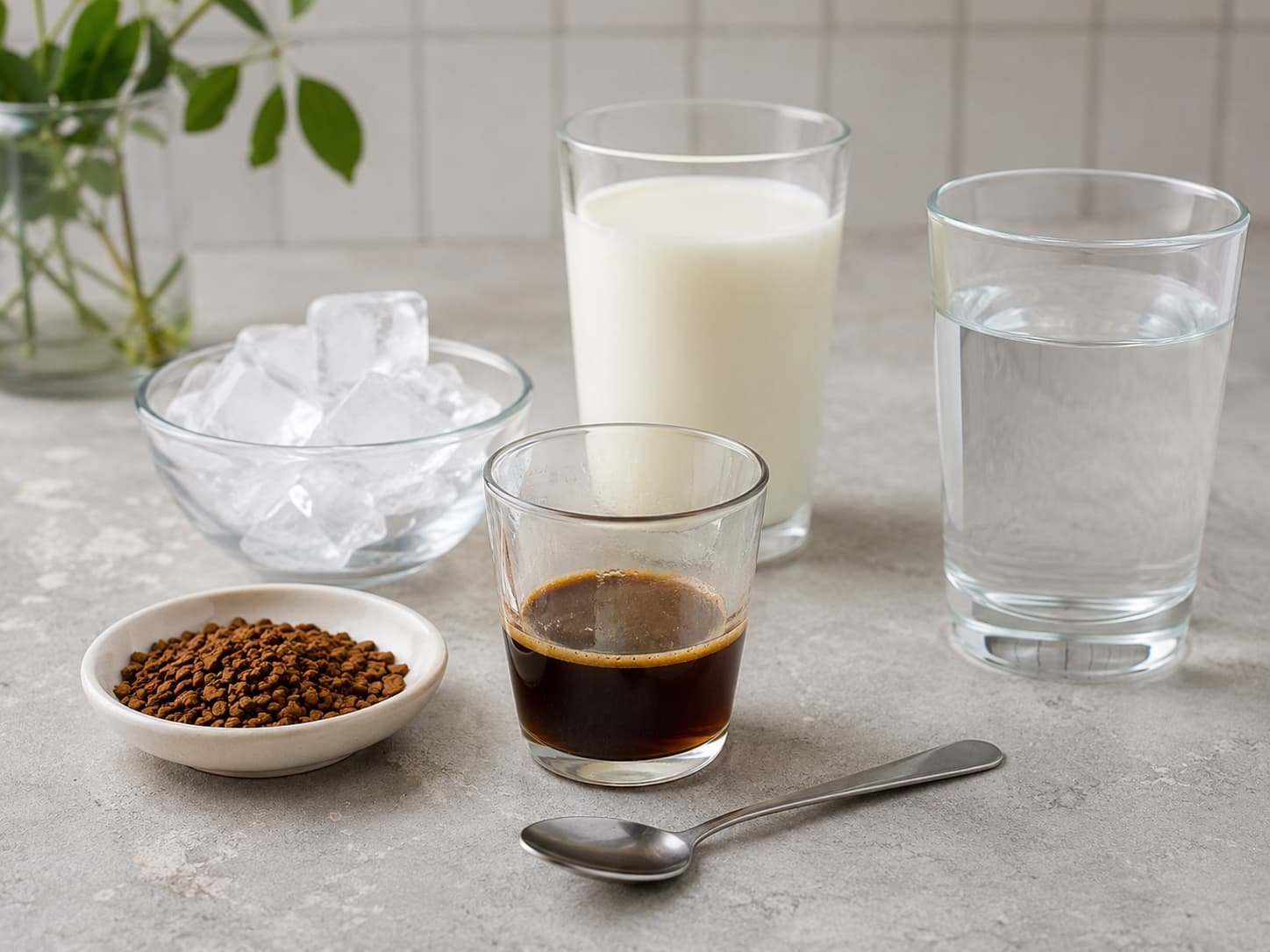
A basic version may contain:
- instant coffee
- water
- ice
Milk, creamer, sugar, or another sweetener may also be added depending on preference.
The final concentration depends on how much coffee and liquid are combined. Adding more water, milk, or melted ice increases dilution, while using a more concentrated coffee base creates a stronger coffee-to-liquid ratio.
How Instant Coffee Differs From Ground Coffee
Instant coffee is soluble coffee that has already been brewed and dried. Ground coffee is roasted coffee that still needs to be brewed before drinking.
During instant coffee production, roasted and ground coffee is extracted with water. The resulting coffee extract is then dried, commonly by spray-drying or freeze-drying, to create soluble coffee.
Ground coffee has not gone through this final extraction and drying process. During normal brewing, water extracts soluble compounds from the grounds, and the remaining coffee particles are separated from the drink.
For this reason, ordinary ground coffee cannot simply be stirred into cold water or milk in the same way as instant coffee. It normally needs to be brewed first.
For a quick cold coffee, instant coffee removes the brewing and filtering steps.

What You Need to Make Instant Iced Coffee
The basic ingredients are simple, but each one affects the finished drink differently.
Instant coffee provides the coffee base. Water dissolves and dilutes it. Milk can change the body and flavor. Ice cools the drink but also adds water as it melts. Sweeteners are optional.
The exact amounts can vary according to the instant coffee product and personal preference.
Instant Coffee
Instant coffee provides the main coffee flavor and concentration.
One example of a standard instant coffee available for this type of drink is Nescafé Clásico Dark Roast Instant Coffee (Amazon). Because of these differences, one amount should not be treated as correct for every brand or type.
When available, follow the package directions as a starting point. If milk, additional water, and ice will also be added, the coffee may taste less concentrated once the full drink is assembled.
Using more instant coffee increases the concentration of coffee solids, but it does not guarantee a better result. Depending on the product, a stronger concentration may also make bitter or roasted notes more noticeable.
A more useful approach is to adjust the concentration gradually instead of relying on a supposed perfect ratio.
Water, Milk, and Ice
Water, milk, and ice all affect the final concentration of instant iced coffee.
Water is used to dissolve the coffee and can also be used to dilute the drink. One possible method is to dissolve the instant coffee in a small amount of water before adding the remaining cold ingredients.
Warm water may make dissolving instant coffee and granulated sugar easier. However, hot water is not required for every product. Some instant coffees are specifically formulated to dissolve in cold water or milk, so package instructions should be checked when available.
Cold water can be used for a milk-free version. Adding more water increases the total liquid volume and lowers the concentration of the coffee.
Milk is optional. It can change the body, color, and flavor of the drink. Using a larger proportion of milk may make the coffee taste less intense, although the result varies by product.
Dairy milk and plant-based alternatives can also differ in sweetness, fat content, thickness, flavor, and added ingredients. No single type should be treated as universally better for iced coffee.
Ice cools the drink. As it melts, it also adds water, which gradually dilutes the coffee.
The basic relationship is simple:
More added liquid or melted ice means more dilution. A more concentrated coffee base contains more coffee solids relative to the liquid.
This explains why a drink that begins with a noticeable coffee flavor may become milder as additional liquid or melting ice is introduced.
Sugar and Other Sweeteners
Sweetener is optional and can be adjusted according to preference.
Granulated sugar may dissolve more easily before the drink becomes very cold because sugar is generally more soluble in warmer water than in colder water.
One possible approach is to dissolve the sugar with the coffee in a small amount of warmer liquid before adding cold water, milk, and ice.
Liquid sweeteners can also be convenient in cold drinks because they are already dissolved. Simple syrup is one common example.
Honey, maple syrup, and flavored syrups can also provide sweetness, but they may change the flavor of the coffee. They should therefore be treated as flavor variations rather than exact substitutes for granulated sugar.
Flavored creamers and some milk or plant-based drinks may already contain added sugars or sweeteners. Checking the ingredient list or nutrition label is more reliable than assuming that every product has the same sweetness.
There is no universal amount of sweetener needed for instant iced coffee. A practical approach is to add it gradually while considering any sweetness already provided by milk, creamer, or flavored ingredients.
How to Make Iced Coffee with Instant Coffee
A simple way to make instant iced coffee is to prepare a coffee base first, add cold liquid, and then finish with ice. The exact amounts can vary because instant coffee products differ in strength and preparation directions.
Rather than relying on one fixed formula, use the package directions as a starting point when available and adjust the drink according to the amount of milk, water, and ice being added.
Dissolve the Instant Coffee
Start by dissolving the instant coffee in liquid.
One possible approach is to use a small amount of warm water. This can make mixing easier, especially if granulated sugar is being added at the same time.
Warm water is not required for every instant coffee. Some products are designed to dissolve in cold water or milk, while others may mix more easily in warmer liquid. Checking the manufacturer’s preparation instructions is the most reliable way to know how a particular product is intended to be used.
The main goal at this stage is to create an evenly mixed coffee base before adding a larger amount of cold liquid and ice.
Add Cold Water or Milk
Once the coffee is dissolved, add cold water, milk, or a combination of the two.
Cold water keeps the drink closer to black iced coffee and reduces the concentration without adding the flavor or body of milk.
Milk can create a fuller-bodied drink and may make the coffee flavor seem less intense as its proportion increases. The result can vary depending on whether dairy milk, plant-based milk, or another milk product is used.
The amount of liquid also affects strength. More liquid means greater dilution, while less liquid leaves the coffee more concentrated.
There is no need to follow a universal milk-to-water ratio. The balance can be adjusted according to the instant coffee product and the type of drink desired.
Add Ice and Adjust the Drink
Add ice after the coffee has been dissolved and the cold liquid has been mixed in.
Ice lowers the temperature, but it also begins to dilute the drink as it melts. This means the coffee may gradually become less concentrated, especially if it sits for a longer period.
After adding the ice, the drink can be adjusted according to preference. If the coffee seems too concentrated, additional cold water or milk can dilute it. If it seems too mild, the better approach is usually to adjust the coffee concentration in a future preparation rather than adding undissolved granules directly to the finished glass.
Sweetness can also be adjusted at this stage if a liquid sweetener is being used. Granulated sugar may be more difficult to dissolve once the drink is very cold.
The important point is that instant iced coffee is flexible. The coffee product, added liquid, and amount of melting ice all influence the final strength, so small adjustments are more useful than assuming one exact formula will suit everyone.
Do You Need Hot Water for Instant Iced Coffee?
No, hot water is not universally required to make iced coffee with instant coffee.
Instant coffee is made to dissolve in liquid, but how easily it dissolves in cold water or milk can differ by product. Some instant coffees are specifically intended for cold preparation, while others may mix more easily when a small amount of warm water is used first.
Using warm water can be especially useful when granulated sugar is included because it may help the coffee and sugar dissolve before the cold ingredients are added.
Only a small amount of warm liquid is needed for this approach. The remaining water or milk can then be added cold.
However, there is no reason to use warm water when the instant coffee package specifically provides cold-mixing directions and the product dissolves as intended.
A practical rule is simple: check the manufacturer’s instructions first, then choose a warm-water or cold-mixing method that suits that particular instant coffee.
How Coffee Strength and Ice Affect the Final Drink
The strength of instant iced coffee depends mainly on the concentration of the coffee base and how much additional liquid is introduced.
Water and milk both dilute the coffee. Ice adds another source of dilution because it becomes water as it melts.
This means coffee strength is not determined only by how much instant coffee is used at the beginning. The total amount of liquid in the finished glass also matters.
Why Iced Coffee Can Taste Weak or Watery
Instant iced coffee may seem weak when the coffee base is too diluted for the amount of water, milk, and ice in the glass.
For example, adding a large amount of milk or water to a mild coffee base reduces the concentration. Melting ice can lower it further.
This does not mean the drink needs a complicated ratio. It simply means the coffee and total liquid need to be considered together.
If weak coffee is a repeated problem, possible adjustments include:
- starting with a somewhat more concentrated coffee base
- reducing the amount of added water or milk
- considering how much dilution may come from melting ice
These are general adjustments rather than guaranteed corrections because instant coffee products and personal preferences differ.
How to Adjust a Drink That Tastes Too Strong
If the coffee tastes too concentrated, additional cold water or milk can gradually dilute it.
It is better to make small adjustments than to add a large amount of liquid at once. This gives more control over the final concentration.
Water mainly reduces coffee concentration without adding milk flavor. Milk also dilutes the coffee but changes the body and flavor of the drink.
Sweetener may change how bitterness or intensity is perceived, but it does not reduce the actual coffee concentration. For that reason, adding water or milk is the more direct way to dilute a drink that contains too much coffee relative to its total liquid.
There is no universal “perfect” instant coffee ratio. The most useful approach is to understand how coffee concentration, added liquid, and melting ice work together and adjust those elements according to the product and personal preference.
How to Make Iced Coffee with Instant Coffee
To make iced coffee with instant coffee, first dissolve the coffee, then add cold water or milk, and finish with ice. Exact amounts can vary because instant coffee products differ in strength and preparation directions.
When available, use the package instructions as a starting point rather than assuming one coffee-to-liquid ratio works for every product.
Dissolve the Instant Coffee
First, dissolve the instant coffee in liquid.
One practical approach is to mix it with a small amount of warm water before adding the cold ingredients. Warm liquid can make mixing easier, especially when granulated sugar is added at the same time.
Warm water is not required for every instant coffee. Some products are formulated for mixing directly with cold water or milk. Because dissolving performance varies, follow the manufacturer’s directions when they provide specific cold-preparation instructions.
The aim is simply to create an evenly mixed coffee base before adding more liquid and ice.
Add Cold Water or Milk
After the coffee has dissolved, add cold water, milk, or a combination of both.
Cold water dilutes the coffee without adding milk flavor or body. Milk also lowers the coffee concentration while changing the drink’s flavor and texture.
The amount matters as much as the type of liquid. Adding more water or milk creates greater dilution, while using less liquid keeps the coffee more concentrated.
Dairy and plant-based milks can behave differently because their composition varies. Sweetness, fat content, thickness, and added ingredients can all affect the finished drink.
There is no universal milk-to-water ratio. The balance can be adjusted according to the instant coffee being used and the type of drink preferred.
Add Ice and Adjust the Drink
Add ice after the coffee and cold liquid have been combined.
Ice cools the drink, but melting ice also adds water. As a result, the coffee becomes gradually more diluted as the ice melts.
If the drink seems too concentrated, add cold water or milk gradually. If it seems too mild, the coffee base can be made more concentrated the next time rather than stirring dry instant coffee directly into an ice-filled drink.
If more sweetness is wanted after the drink is cold, a liquid sweetener may be easier to mix than granulated sugar.
The key idea is simple: instant coffee determines the starting concentration, while water, milk, and melting ice determine how much that concentration is diluted.
Do You Need Hot Water for Instant Iced Coffee?
No. Hot water is not required for every type of instant coffee.
Instant coffee is soluble coffee, but how easily a particular product mixes in cold liquid can vary. Some instant coffees are specifically made for cold preparation, while others may dissolve more readily when a small amount of warm water is used first.
Warm water can also be useful when granulated sugar is added because sugar generally dissolves more readily in warmer water than in colder water.
This does not mean the whole drink needs to be prepared hot. One possible method is to use a small amount of warm water for dissolving, followed by cold water or milk and ice.
If the package specifically provides directions for mixing the coffee with cold water or milk, those instructions should take priority.
How Coffee Strength and Ice Affect the Final Drink
Coffee strength depends on both the concentration of the coffee base and the total amount of liquid in the glass.
Water and milk dilute the coffee when they are added. Ice contributes additional dilution as it melts.
For that reason, two drinks made with the same amount of instant coffee can have different perceived strengths if one contains considerably more milk, water, or melted ice.
Why Iced Coffee Can Taste Weak or Watery
Iced coffee may taste weak when the coffee base becomes too diluted relative to the total amount of liquid.
This can happen when a mild coffee base is combined with a large amount of water or milk. Continued ice melting can reduce the concentration further.
If the drink repeatedly seems too weak, possible adjustments include:
- beginning with a more concentrated coffee base
- using less added water or milk
- accounting for the additional water that melting ice introduces
These are general adjustments, not fixed corrections. Instant coffee products and personal preferences differ.
How to Adjust Coffee That Tastes Too Strong
If the coffee tastes too concentrated, add cold water or milk gradually.
Water lowers the concentration without adding milk flavor. Milk also dilutes the coffee while changing its body and flavor.
Making small additions provides more control than adding a large amount of liquid at once.
Sweetener can change how bitterness or intensity is perceived, but it does not reduce the actual concentration of coffee solids. Adding water or milk is the more direct way to dilute an overly concentrated drink.
There is no universal “perfect” ratio for instant iced coffee. A more useful approach is to understand the relationship between the coffee base, added liquid, and melting ice, then adjust those elements according to the product and personal preference.
Can You Make Instant Iced Coffee With Milk?
Yes. Milk can replace some or most of the added water in instant iced coffee.
Using more milk changes both the body and flavor of the drink. It also lowers the concentration of the coffee because milk becomes part of the total liquid.
The result can vary depending on the product. Dairy milk and plant-based alternatives may differ in fat content, sweetness, thickness, flavor, and added ingredients. Because of these differences, the same coffee base may taste different with different types of milk.
There is no universal milk-to-water ratio. Some people may prefer mostly milk, while others may prefer a mix of milk and cold water. The balance can be adjusted according to the instant coffee and the desired strength.
If the milk or plant-based drink is already sweetened or flavored, it may also reduce the need for additional sweetener.

Can You Make It Without Milk?
Yes. Milk is optional.
For black instant iced coffee, dissolve the instant coffee according to the product directions, add cold water, and serve it over ice.
Without milk, the coffee flavor may be more noticeable because there is no dairy or plant-based ingredient changing the body or flavor of the drink.
The amount of water can be adjusted according to the desired concentration. Sugar or another sweetener can still be added if preferred.
Common Problems With Instant Iced Coffee
The most common issues involve poor dissolving or an unbalanced coffee-to-liquid concentration.
Because instant coffee products differ, troubleshooting should focus on small adjustments rather than one fixed correction.
Instant Coffee Is Not Dissolving
If instant coffee leaves visible granules, the liquid temperature or the product’s formulation may be affecting how easily it mixes.
Some instant coffees are specifically designed for cold preparation, while others may dissolve more readily in warmer liquid. Check the package directions when available.
If cold mixing does not work well, one possible approach is to dissolve the coffee in a small amount of warm water before adding cold water, milk, and ice.
Granulated sugar may also be easier to mix before the drink becomes very cold. Once ice has been added, undissolved coffee or sugar can be harder to distribute evenly.
The Coffee Tastes Too Weak
Weak iced coffee usually means the coffee base has been diluted too much for the total amount of liquid.
Water and milk both reduce the concentration of the coffee. Melting ice adds more water and can dilute it further.
If the drink repeatedly seems too mild, possible adjustments include using a more concentrated coffee base or reducing some of the added liquid.
These changes are best made gradually because instant coffee products vary in strength. Adding dry granules directly to a finished ice-filled drink may also make even mixing more difficult.
The Coffee Tastes Too Strong or Bitter
If the coffee tastes too concentrated, adding cold water or milk can dilute it.
Water reduces the concentration without adding milk flavor. Milk also dilutes the coffee while changing its body and flavor.
Bitterness can have several possible causes. It may be related to the instant coffee itself, its roast style, the concentration used, or individual taste preference.
If a drink is consistently too intense, using a less concentrated coffee base in the next preparation is one possible adjustment.
Sweetener or milk may change how bitterness is perceived, but they do not reduce the amount of coffee solids already present. Adding more liquid is the more direct way to reduce concentration.
There is no universal “perfect” strength. The useful approach is to adjust the coffee and liquid balance according to the product and personal preference.
Simple Ways to Customize Instant Iced Coffee
Instant iced coffee can be customized with small flavor additions without changing the basic preparation method.
Vanilla can add sweetness and aroma. Caramel syrup can add both sweetness and caramel flavor, so less additional sweetener may be needed.
Chocolate can turn the drink toward a mocha-style coffee. For a more detailed chocolate version, see this iced mocha without an espresso machine.
Cinnamon can add spice, although ground cinnamon does not dissolve in liquid the same way as instant coffee or sugar.
Flavored creamers can change sweetness, flavor, and body depending on the product. Decaf instant coffee can also be used when it is prepared according to the manufacturer’s directions.
When using sweetened milk, flavored creamer, or syrup, consider the sweetness already present before adding extra sugar.

Instant Iced Coffee vs Cold Brew
Instant iced coffee and cold brew are both cold coffee drinks, but they use different preparation methods.
Instant iced coffee starts with soluble coffee that has already been extracted and dried during manufacturing. It is dissolved in liquid and then served cold or over ice.
Cold brew starts with ground coffee. The grounds are steeped in cool or room-temperature water and then separated from the finished coffee.
The main difference is the extraction step. Instant coffee has already been extracted before it reaches the consumer, while cold brew extracts soluble compounds from ground coffee during preparation.
For more detail, see the cold brew concentrate guide. Readers looking specifically for cold-brew measurements can also use the cold brew ratio chart.
Cold-brew ratios should not be applied directly to instant coffee because the two methods use different forms of coffee and different preparation processes.
Frequently Asked Questions About Iced Coffee With Instant Coffee
Can Regular Instant Coffee Be Used for Iced Coffee?
Yes. Regular instant coffee can be used to make iced coffee.
Dissolve it according to the product directions, then add cold water, milk, or both, followed by ice. The final strength can be adjusted according to the coffee product and the amount of liquid used.
A separate cold-brew product is not required because instant coffee is already soluble.
Can Instant Coffee Dissolve Directly in Cold Milk?
Some instant coffee products can dissolve directly in cold milk, but this varies by product.
Instant coffees made for cold preparation may mix easily in cold liquid. Other products may dissolve more evenly when first mixed with a small amount of warm water.
If cold milk leaves visible granules, dissolving the coffee separately before adding the milk is one practical option. Follow the package directions when specific instructions are provided.
Can Decaf Instant Coffee Be Used for Iced Coffee?
Yes. Decaf instant coffee can be used in the same general type of cold coffee preparation.
Dissolve it according to the package directions, then add the preferred cold liquid and ice.
Strength and flavor can vary between decaf products, so the same amount should not automatically be assumed to work equally well for every one.
Can Ground Coffee Be Substituted for Instant Coffee?
Not as a direct substitute.
Instant coffee is soluble because brewed coffee extract has already been produced and dried. Ground coffee still needs to be brewed or extracted before drinking.
Stirring ordinary ground coffee into water or milk will not make it dissolve like instant coffee. The grounds normally need to be brewed and then separated from the liquid.
If ground coffee is prepared by steeping it in cool water for an extended period, that is a different method, such as cold brew.
Is Instant Iced Coffee the Same as an Iced Latte?
No. They use different coffee bases.
Instant iced coffee uses soluble instant coffee. A traditional iced latte is made with espresso, milk, and ice.
A milk-heavy instant coffee drink may look or taste similar in some ways, but it is more accurate to describe it as milk-based instant iced coffee rather than a traditional iced latte.
Final Takeaway
Instant coffee is a practical base for iced coffee because it is soluble and does not require brewing ground coffee at home.
The basic method is to dissolve the coffee, add cold water or milk, and finish with ice. The final strength depends on the concentration of the coffee base, the amount of added liquid, and dilution from melting ice.
Because instant coffee products differ, there is no single ratio that should be treated as universal. Package directions can provide a starting point, while the liquid, sweetness, and coffee concentration can be adjusted according to the product and personal preference.