What Is Hojicha Ice Cream?
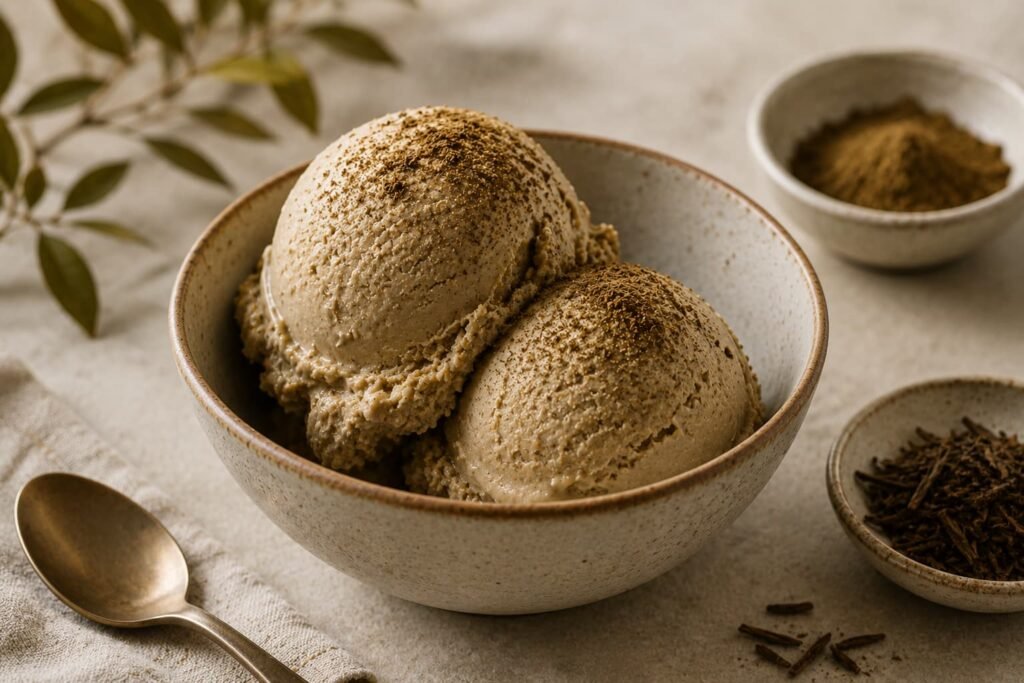
Hojicha ice cream is a frozen dessert flavored with hojicha, a roasted Japanese green tea. Hojicha is commonly made by roasting teas such as sencha, which gives it a different color, aroma, and flavor profile from many other Japanese green teas.
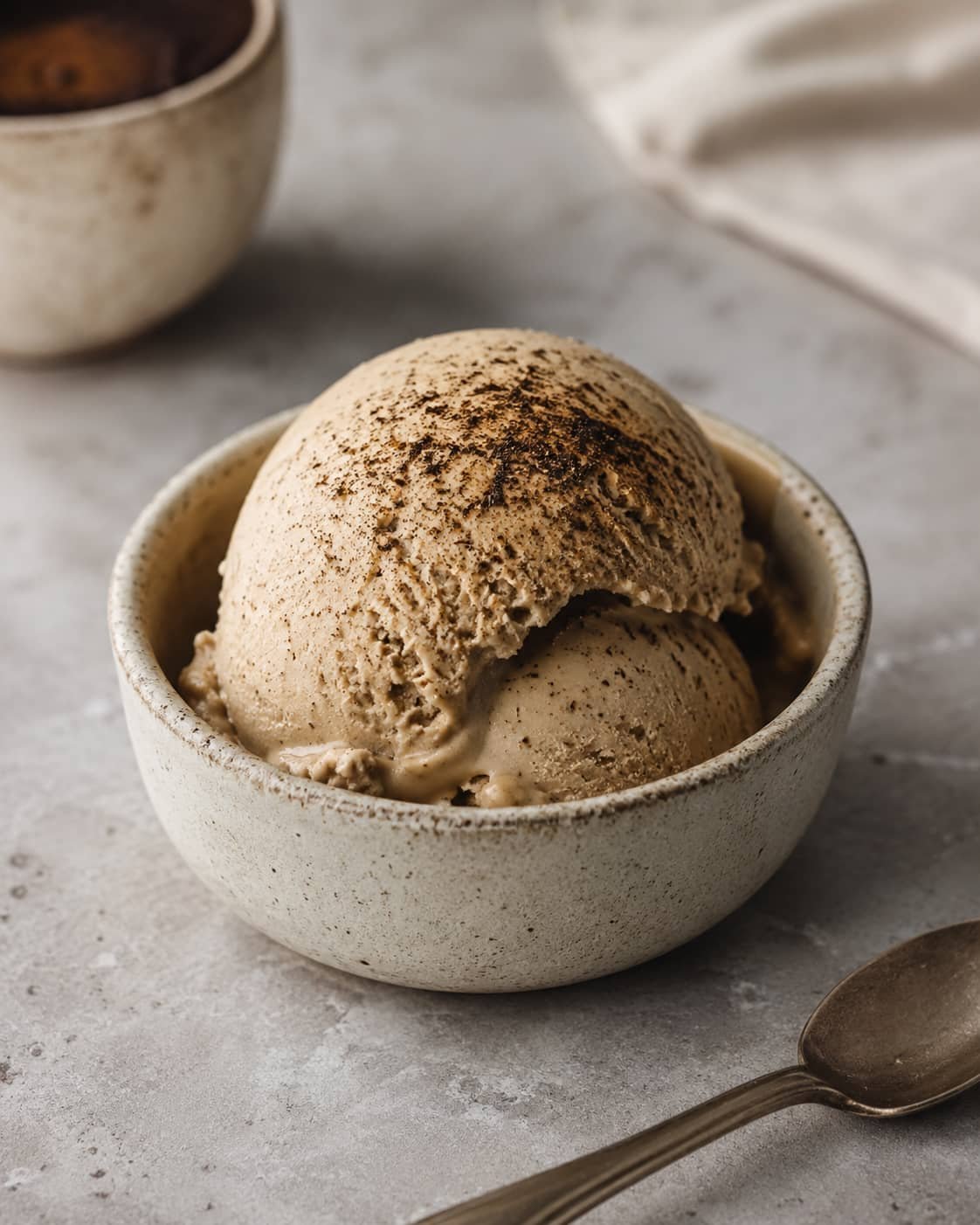
Hojicha itself has brown tones after roasting, so an ice cream made with hojicha powder will usually look beige, tan, or brown rather than bright green. The exact shade can vary depending on the tea powder and how much is used.
This article focuses on a homemade no-churn version made without an ice cream machine. In this type of preparation, whipped cream provides aeration, sweetened condensed milk forms part of the base, and hojicha provides the tea flavor. The final firmness and texture can vary with the ingredients, their proportions, and freezing conditions.
What Does Hojicha Ice Cream Taste Like?
Hojicha can give ice cream a roasted and toasted tea flavor, often with mildly nutty notes. Some hojicha products may also have aromas that are perceived as slightly sweet or caramel-like.
The flavor is not identical from one hojicha product to another. The tea used, its roast level, its concentration in the mixture, and the other ingredients in the base can all affect how noticeable the roasted character becomes.
This means hojicha ice cream can range from mild and dairy-forward to more strongly tea-flavored depending on the formulation.
Hojicha Ice Cream vs Matcha Ice Cream
The main difference between hojicha ice cream and matcha ice cream comes from the tea itself. Hojicha is roasted, while matcha is produced by grinding processed tencha into a fine powder.
Their appearances are also different. Hojicha is brown-toned after roasting, so it generally produces beige or brown frozen desserts. Matcha retains a green color and usually gives ice cream a noticeably greener appearance.
The flavor profiles should not be treated as interchangeable either. Hojicha is associated with roasted and toasted characteristics, while matcha has a distinctly different green-tea character. Both can be used in frozen desserts, but they create different results.
How No-Churn Hojicha Ice Cream Works
No-churn hojicha ice cream can be made without an ice cream machine by incorporating air into the mixture before it freezes. A commonly used approach combines whipped cream, sweetened condensed milk, and hojicha.
Whipping cream traps air and creates an aerated structure. Traditional ice cream also contains air, although commercial and conventional churned methods typically introduce it while the mixture is being frozen and agitated.
In a no-churn method, the cream is whipped first and then combined with the remaining ingredients. Gentle folding can help preserve some of the air already incorporated into the cream.
Hojicha powder can be mixed into this type of base to provide concentrated tea flavor without requiring a large amount of brewed tea.
The method is simple in principle, but the final result is still affected by formulation. Sugar concentration, fat, water content, incorporated air, ingredient proportions, and freezer conditions can influence how firm or icy a frozen dessert becomes.
What Does Sweetened Condensed Milk Do in a No-Churn Base?
Sweetened condensed milk contributes sweetness, milk solids, and sugar to a no-churn ice cream base. Its role is therefore broader than simply making the dessert taste sweet.
Sugar changes the freezing behavior of water. In ice cream and other frozen desserts, dissolved sugars lower the freezing point of the liquid portion of the mixture. This affects how much water freezes at a given temperature and can influence the frozen structure.
For that reason, sweetened condensed milk should not automatically be replaced with ordinary milk while expecting the same result. Changing it also changes the balance of sugar, water, and milk solids in the formulation.
Reducing the condensed milk or replacing it with another ingredient may change firmness, sweetness, and ice formation. A different formulation may therefore be needed rather than assuming a simple one-to-one substitution.
Choosing Hojicha for Ice Cream
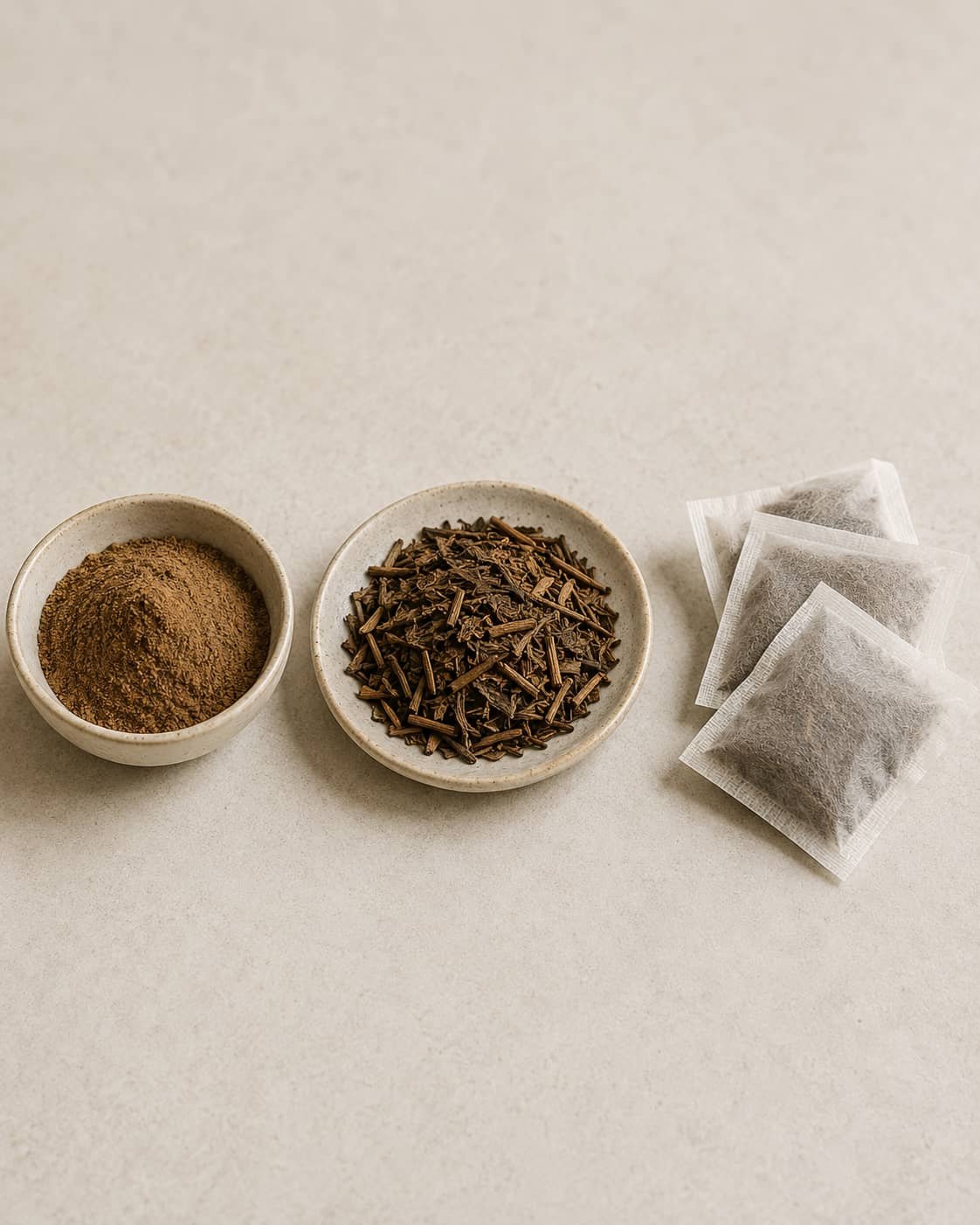
The main choice is between hojicha powder and an infused form such as loose-leaf tea or tea bags. Hojicha powder can be mixed directly into the base, while leaves and tea bags usually need to be infused into a liquid ingredient and removed before freezing.
Hojicha Powder vs Loose-Leaf Hojicha
Hojicha powder is the more direct option for a no-churn ice cream base. Because it is finely ground, it can be mixed into the other ingredients without a separate brewing step and without adding much extra water.
The powder still needs to be dispersed evenly. Fine tea particles can form clumps when added to a thick mixture, so sifting the powder or incorporating it gradually may help it mix more evenly. The final texture can still vary depending on the powder and the overall formulation.
Loose-leaf hojicha requires a different approach. The leaves are generally infused into a liquid ingredient, such as cream, and then strained out before the ice cream base is assembled.
This means the flavor strength depends on the tea, the amount of liquid used, and the infusion method. Loose leaves therefore should not be treated as a direct one-to-one replacement for hojicha powder unless a specific formulation has been developed for that substitution.
For a recipe designed around hojicha powder, powder is usually the simpler choice. Loose-leaf hojicha can still provide the roasted tea flavor, but it requires an infusion step and its own appropriate proportions.
Can Hojicha Tea Bags Be Used?
Yes. Hojicha tea bags can be used to flavor an ice cream base, but they are normally used by infusion rather than by adding the contents directly to the mixture.
One possible approach is to infuse the tea into a liquid ingredient and remove the bags before combining that liquid with the rest of the base. This is similar to the method used with loose-leaf hojicha.
Tea bags are not an exact substitute for hojicha powder. The amount of tea in each bag and the strength of the resulting infusion can vary, so an exact number of bags or replacement ratio should not be assumed.
Using an infusion may also change the amount of liquid in the formulation. That can affect both tea concentration and frozen texture, which is why tea bags are better treated as a separate variation rather than a guaranteed direct replacement for hojicha powder.
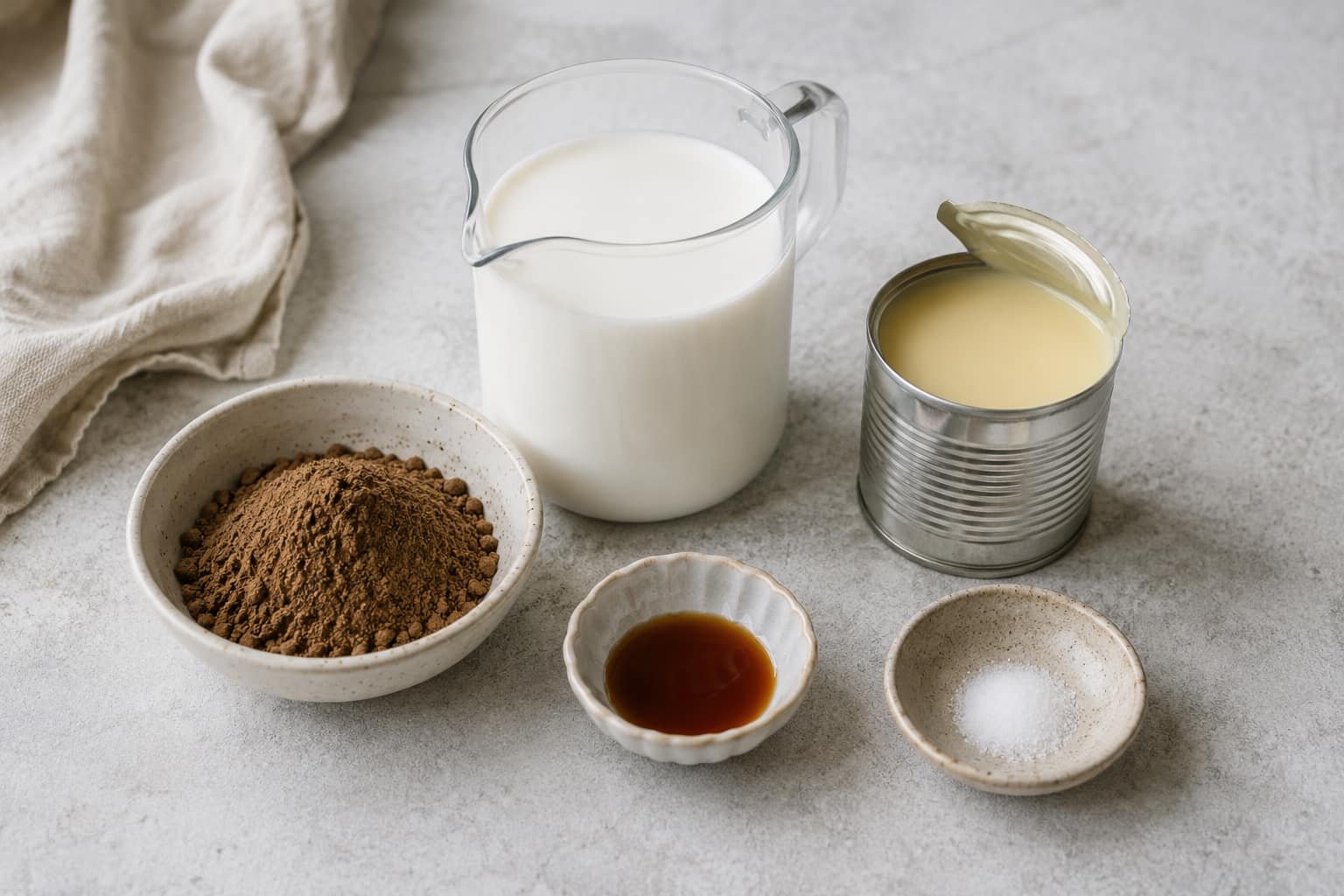
Ingredients Commonly Used in No-Churn Hojicha Ice Cream
A typical no-churn hojicha base uses hojicha powder, heavy whipping cream, and sweetened condensed milk. Vanilla and salt are optional additions. Each ingredient serves a different purpose, so changing one can affect more than flavor.
Hojicha powder provides the roasted tea character. Because it is finely ground, it can be mixed directly into the base without brewing and straining tea leaves first. Flavor strength can vary between products, so the amount needed depends on the particular powder and the rest of the formulation.
Heavy whipping cream provides fat and can hold air when whipped. This aeration helps create a lighter frozen structure than an unwhipped liquid mixture. The final texture can still vary with the ingredient balance and freezing conditions.
Sweetened condensed milk contributes sugar, milk solids, and sweetness. Its sugar content also affects how water freezes, which means it plays a structural role in this type of frozen dessert. Ordinary milk should not be treated as a direct substitute because it has a different balance of water, sugar, and milk solids.
Vanilla is optional and may add a mild background aroma. It should be used with restraint when the goal is to keep the roasted tea flavor noticeable.
Salt is also optional. A small amount is commonly used in desserts to influence flavor perception, but it is not essential to the basic no-churn structure.
Exact ingredient quantities are not included here because the proportions need to be appropriate for a complete, verified formulation rather than estimated independently.
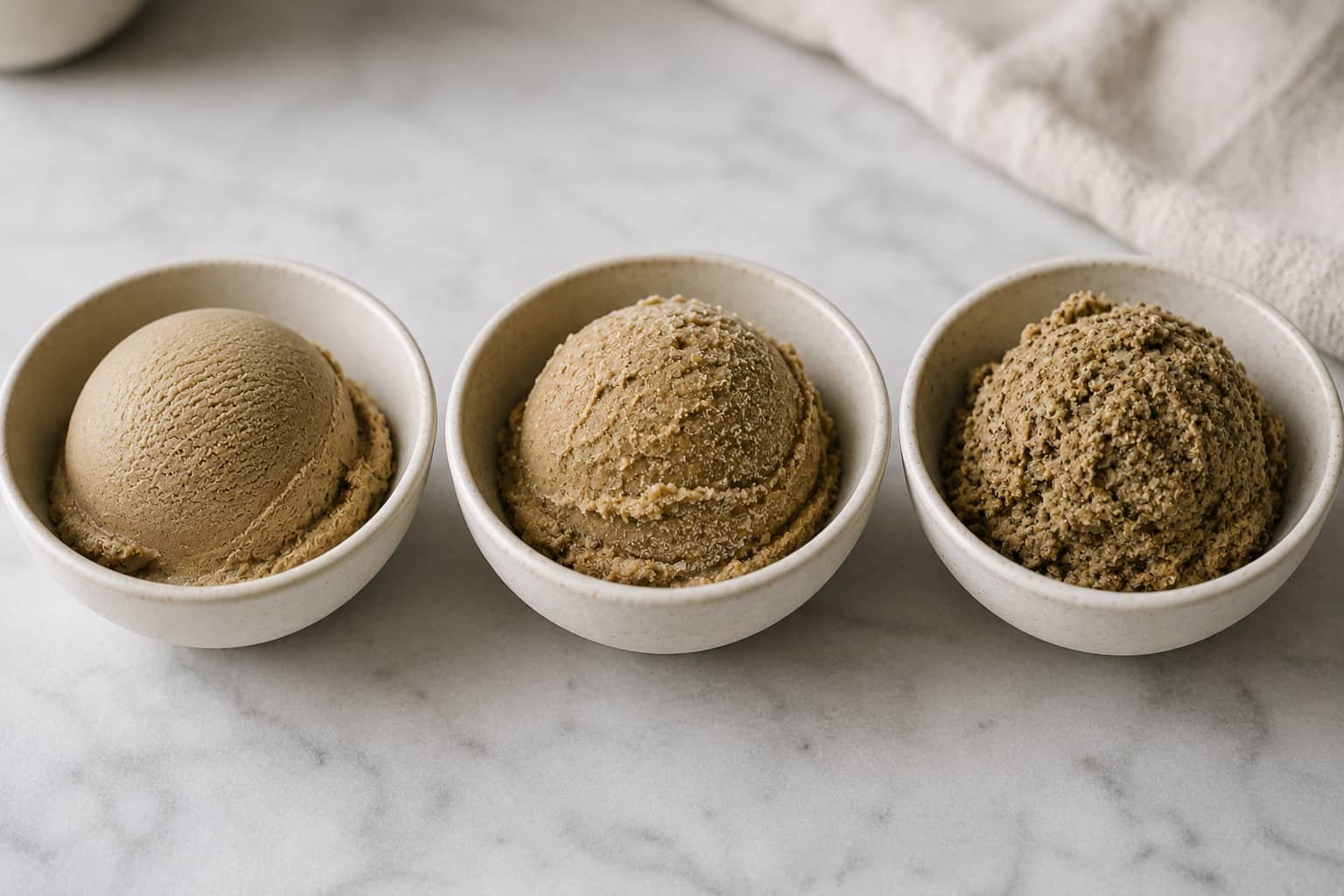
General Method for Making No-Churn Hojicha Ice Cream
The basic method has four stages: disperse the tea powder, whip the cream, gently combine the mixtures, and freeze the base in a covered container. An ice cream machine is not required for this approach.
1. Disperse the Hojicha
Mix the hojicha powder evenly into part of the base before combining it with the whipped cream. Sifting the powder first or adding it gradually may help reduce visible clumps.
Fine tea powders can behave differently depending on their grind and the surrounding ingredients, so these techniques may improve dispersion but do not guarantee a completely smooth result.
2. Whip the Cream
Whip the cream until it has enough structure to hold the air incorporated during mixing. The purpose is to add volume and aeration before freezing.
An exact peak stage is not specified here because the most suitable consistency can depend on the complete formulation. Overly precise instructions would imply a recipe-specific result that has not been established.
3. Fold the Mixtures Together
Gently combine the whipped cream with the hojicha mixture until the color and tea powder appear evenly distributed.
Folding rather than vigorous stirring may help retain more of the air already incorporated into the cream. There is no need for prolonged mixing once the ingredients are evenly combined.
4. Transfer and Freeze
Place the mixture in a covered, freezer-safe container and freeze it until it is firm enough to scoop.
There is no single reliable freezing time for every batch. The amount of mixture, container depth, starting temperature, ingredient proportions, and freezer temperature can all affect how quickly it firms.
Keeping the container covered also helps limit exposure to freezer air and surrounding odors while the dessert is stored.
What Can Affect the Texture of Hojicha Ice Cream?
The texture of a no-churn frozen dessert can be influenced by water content, incorporated air, sugar, fat, other dissolved ingredients, and freezer conditions. In a hojicha-based version, extra liquid from brewed tea, loss of air during mixing, and major changes to the ingredient balance are especially relevant.
Extra Water
Adding brewed hojicha introduces extra water into the base. Depending on the formulation, that additional water may contribute to more ice formation and a firmer or icier texture after freezing.
Hojicha powder avoids this issue because it adds concentrated tea flavor without requiring a separate quantity of brewed liquid.
Loose-leaf hojicha or tea bags can still be used through infusion. One possible approach is to infuse the tea into a liquid ingredient already included in the base, such as cream, rather than adding a separate cup of brewed tea.
Extra liquid does not automatically make ice cream icy. The final result depends on the overall balance of water, sugar, fat, milk solids, and other ingredients.
Air Lost During Mixing
Whipped cream adds air to a no-churn base. If the mixture is stirred aggressively after whipping, some of that air can be lost.
Less incorporated air may contribute to a denser frozen texture. Gentle folding is therefore a reasonable way to combine the whipped cream with the hojicha mixture while limiting unnecessary deflation.
Folding alone does not guarantee a particular texture. It simply helps preserve more of the aeration created during whipping.
Ingredient Ratios and Freezer Temperature
The balance of fat, sugar, water, milk solids, and other dissolved ingredients affects how a frozen dessert sets. Changing one part of that balance can alter both firmness and texture.
Sugar is important because dissolved sugars lower the freezing point of water. Reducing sweetened condensed milk, adding more unsweetened liquid, or making another major substitution may therefore change how much of the mixture freezes at a given temperature.
Freezer conditions also matter. A colder freezer can make the dessert firmer, while temperature changes during storage may affect ice-crystal development.
Container depth can influence how quickly the mixture cools and freezes as well. These variables help explain why the same general no-churn method can produce somewhat different results under different conditions.
Common Hojicha Ice Cream Problems
Problems with texture or flavor can have several possible causes. In a no-churn tea ice cream, the powder, ingredient balance, incorporated air, and freezer conditions may all affect the result.
Why Is My Hojicha Ice Cream Gritty?
A gritty texture may be related to hojicha powder that has not dispersed evenly through the base.
Possible causes include powder clumps, uneven mixing, or a large amount of fine tea particles remaining noticeable after freezing. The grind of the hojicha powder may also affect how smoothly it blends with the other ingredients.
Sifting the powder before mixing or adding it gradually may help improve dispersion. These methods can reduce clumping, but they do not guarantee a completely smooth texture in every formulation.
Why Is My Hojicha Ice Cream Too Hard or Icy?
A hard or icy texture may result from several factors, including extra water, changes to the ingredient proportions, reduced sugar, limited aeration, or very cold freezer conditions.
For example, adding a substantial amount of brewed tea increases the water in the mixture. Reducing sweetened condensed milk can also change the balance of sugar, water, and milk solids that affects freezing behavior.
Loss of incorporated air during mixing may make the frozen dessert denser as well. Because these factors can interact, a hard or icy texture should not automatically be blamed on one ingredient.
Why Does the Hojicha Flavor Seem Weak?
A weak tea flavor may be related to the hojicha product, the amount used, or how much the other ingredients dilute its roasted character.
Flavor intensity can vary with the tea’s roast level, freshness, concentration, and the overall formulation. Cold temperatures can also reduce the perceived intensity of some flavors compared with the unfrozen mixture.
If the tea flavor is too mild, the formulation may need adjustment. An exact additional amount of hojicha should not be suggested without a verified recipe ratio, because different powders can vary in strength.
Can You Change the Ingredients?
Yes, but major substitutions can change both the flavor and structure of a no-churn frozen dessert. Ingredients such as sweetened condensed milk and whipping cream affect sweetness, fat, water content, milk solids, and aeration, so some replacements may require a different formulation rather than a simple swap.
Can You Make It Without Condensed Milk?
Yes, hojicha ice cream can be made without sweetened condensed milk, but the base needs to be formulated differently.
Condensed milk contributes sugar and milk solids while also affecting the overall water balance. Removing it may change sweetness, firmness, and freezing behavior.
Ordinary milk is not a direct one-to-one substitute because it contains a different proportion of water, sugar, fat, and milk solids.
If condensed milk is being avoided, a formulation specifically designed around another sweetener and dairy base is a more reliable approach than replacing it without adjusting the other ingredients.
Can Hojicha Ice Cream Be Dairy-Free?
Yes, a dairy-free version is possible, but plant-based ingredients may behave differently from heavy cream and dairy-based condensed milk.
Products such as plant-based whipping creams, coconut-based ingredients, and non-dairy condensed alternatives can vary in fat, water, sugar, stabilizers, and whipping ability. These differences may affect aeration, firmness, and freezing behavior.
For that reason, plant-based ingredients should not automatically be treated as direct one-to-one replacements. A formula developed around the specific dairy-free products being used is more appropriate than assuming the original proportions will behave the same way.
Storing Homemade Hojicha Ice Cream
Store homemade hojicha ice cream in a covered, freezer-safe container. Keeping it sealed helps limit exposure to freezer air and reduces the chance of the dessert picking up odors from nearby foods.
Repeated thawing and refreezing may also affect texture because temperature changes can encourage larger ice crystals to develop over time.
No exact storage period is given here because quality can vary with the formulation, container, freezer conditions, and handling.
Frequently Asked Questions
Does Hojicha Ice Cream Contain Caffeine?
Yes. Hojicha contains caffeine, so ice cream made with it can also contain caffeine.
The exact amount depends on the tea product, how much hojicha is used, and the serving size. A fixed caffeine value should not be assumed for a homemade version without those details.
Does Hojicha Ice Cream Need Eggs?
No, eggs are not required for the no-churn method described here. Whipped cream and sweetened condensed milk can form the basic base without a traditional egg custard.
However, other hojicha ice cream recipes may use eggs, especially custard-style versions.
Do You Need an Ice Cream Maker?
No. This no-churn method uses whipped cream to introduce air before freezing, so an ice cream machine is not required.
Why Is Hojicha Ice Cream Brown?
Hojicha ice cream is usually beige, tan, or brown because hojicha is roasted during processing. That roasting gives the tea its brown color, unlike the green appearance commonly associated with matcha.
The final shade can vary with the particular hojicha product and the amount used.
Can Brewed Hojicha Be Added Directly?
Yes, but brewed hojicha also adds extra water to the ice cream base.
A larger amount of added liquid may change freezing behavior and texture, depending on the rest of the formulation. Hojicha powder avoids adding much extra liquid, while another possible approach is to infuse loose-leaf tea into a liquid ingredient already used in the base.
Brewed tea should not be treated as a direct replacement for hojicha powder without adjusting the formulation.
Final Takeaway
Hojicha brings a roasted Japanese tea character to frozen desserts. For a no-churn version, hojicha powder is convenient because it can provide concentrated tea flavor without adding much extra liquid.
Whipped cream and sweetened condensed milk are commonly used in this type of base, but the final flavor and texture can vary with the tea, ingredient proportions, aeration, water content, and freezer conditions.
Major substitutions may change how the mixture freezes, so they are better treated as formulation changes rather than simple one-to-one replacements.