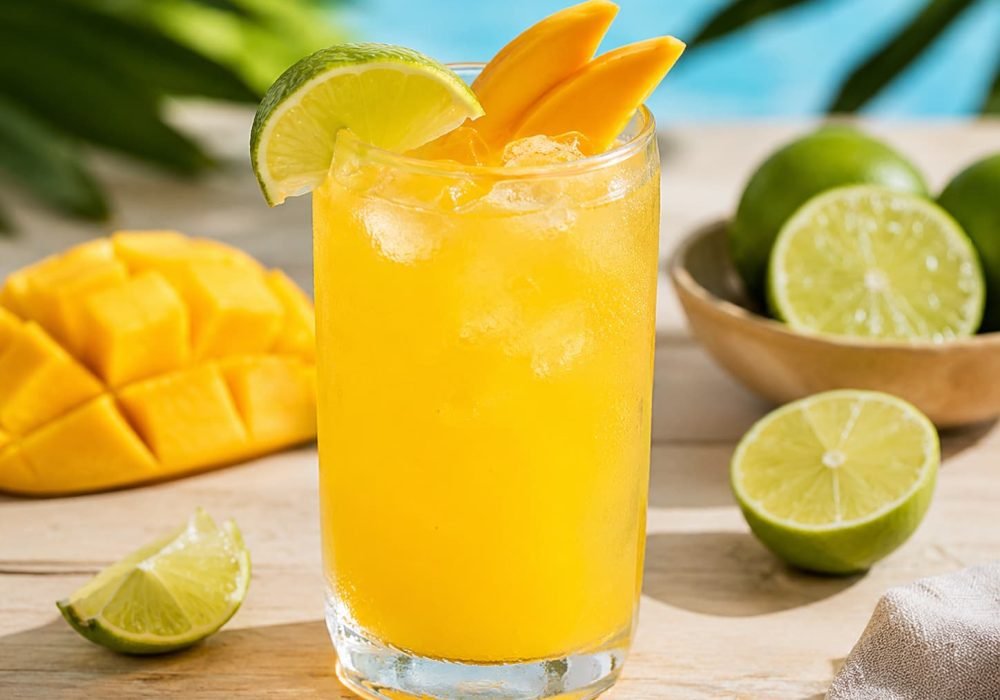

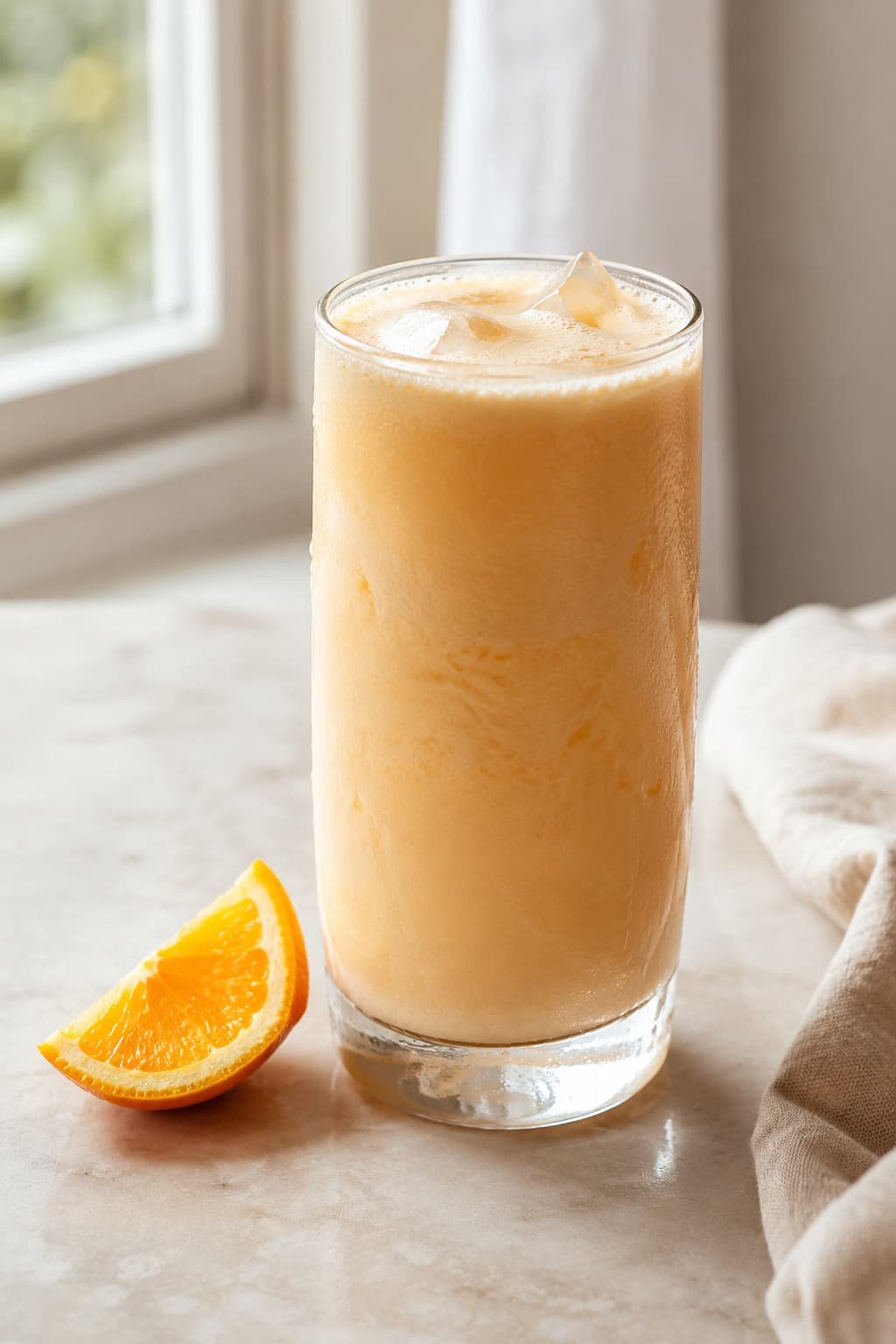
An orange creamsicle drink combines orange, vanilla, and a creamy ingredient in a cold beverage. Depending on the ingredients and preparation method, it can be light and fizzy or thicker and more dessert-like.
This guide focuses on a non-alcoholic, pourable version rather than an alcoholic cocktail, smoothie, milkshake, or float. There is no single required formula. Different orange bases and creamy ingredients can change the sweetness, texture, acidity, and carbonation.
What Is an Orange Creamsicle Drink?
An orange creamsicle drink is a cold beverage with an orange-and-vanilla flavor and a creamy element.
The orange component provides citrus flavor, while vanilla adds the dessert-style note associated with creamsicle-inspired drinks. Cream, half-and-half, ice cream, or a plant-based creamy ingredient may provide richness and body.
The texture depends largely on how the drink is formulated.
A pourable version may use orange juice or soda with a smaller amount of a creamy ingredient. Using more ice cream or frozen ingredients can create a thicker blended beverage.
A float is different because it typically combines a carbonated beverage with a scoop of ice cream rather than fully mixing the ingredients together.
Alcoholic creamsicle-style cocktails also exist, but they are outside the scope of this non-alcoholic drink.
What Ingredients Create an Orange Creamsicle Flavor?
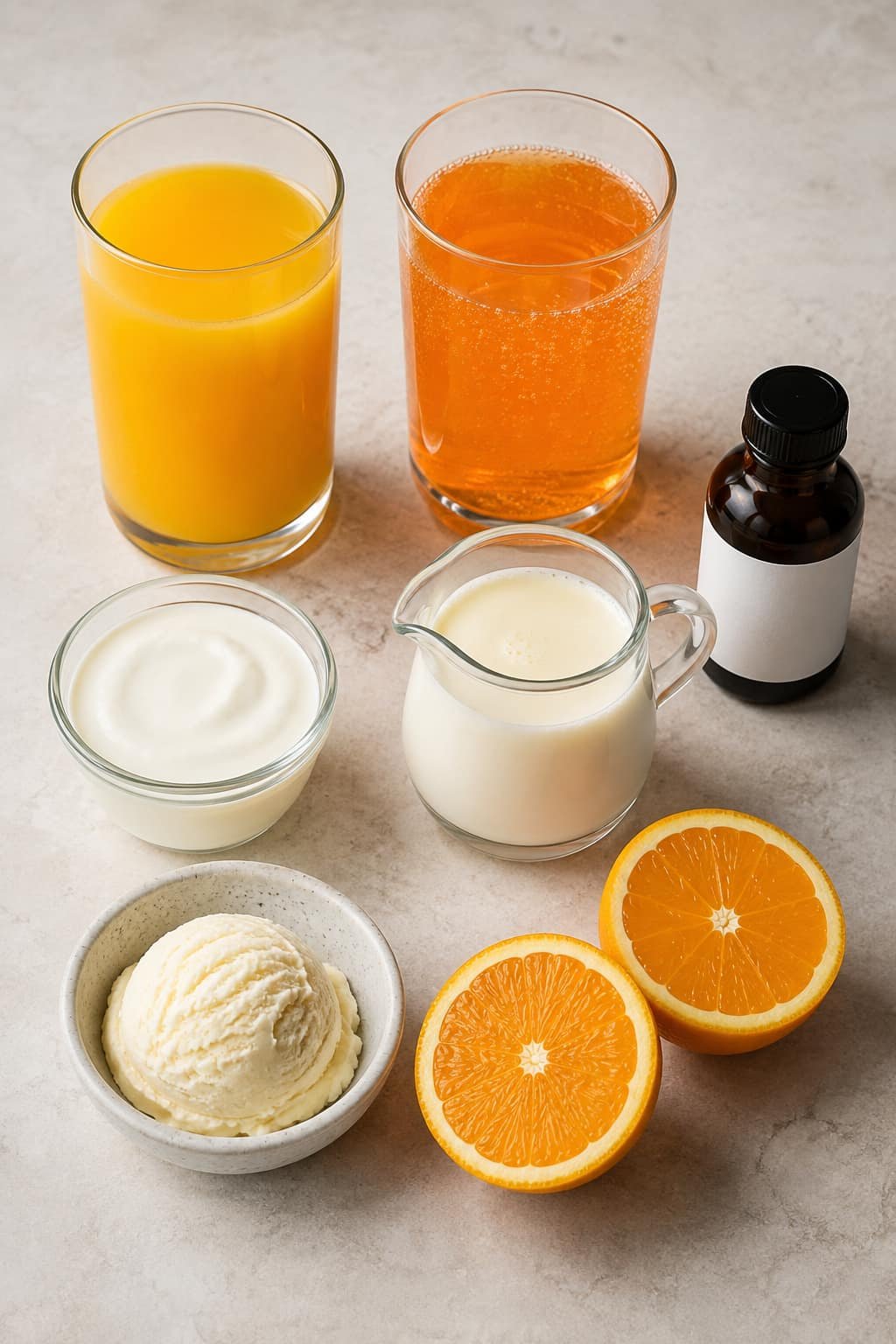
The basic flavor profile usually depends on three components:
- an orange-flavored base
- vanilla
- a creamy ingredient
The specific ingredients used for each component can change the character of the drink. Orange juice and orange soda, for example, do not provide the same sweetness, acidity, or carbonation.
Orange Juice vs. Orange Soda
Orange juice provides fruit flavor and natural citrus acidity, while orange soda provides carbonation and usually a sweeter, more soda-like orange profile.
Orange juice can vary in sweetness, acidity, and pulp depending on the product or fruit used. Pulp-free juice may be preferred when a smoother drink texture is wanted, while juice containing pulp can add more noticeable fruit particles.
Orange soda is carbonated and often sweetened. It can produce a lighter, fizzier drink with a flavor profile that differs from straight orange juice.
Because the two ingredients behave differently, they should not automatically be treated as equal substitutions.
Orange juice may suit a drink where a more fruit-forward citrus flavor is wanted. Orange soda may suit a sweeter, more carbonated version.
There is another practical difference when dairy is involved. Orange juice is acidic, and acidic liquids can affect the stability of dairy proteins. Depending on the ingredients and proportions, this may contribute to visible separation.
Vanilla and Creamy Ingredients
Vanilla provides much of the dessert-like character that distinguishes a creamsicle-style drink from a basic orange beverage.
Possible vanilla ingredients include vanilla flavoring, vanilla extract, vanilla syrup, vanilla ice cream, and vanilla-flavored creamers.
These ingredients are not interchangeable in equal amounts. Some mainly provide flavor, while others also add sweetness, fat, liquid, or thickness.
The creamy component also affects the final texture. Common options may include cream, half-and-half, vanilla ice cream, coconut-based ingredients, or plant-based creamers.
For example, ice cream can add considerably more body than a small amount of cream or creamer.
Plant-based alternatives can behave differently from dairy products because their base ingredients, sweetness, fat content, and stabilizers can vary. They are therefore better treated as alternative ingredient categories rather than guaranteed one-to-one substitutions.
The final texture, sweetness, richness, appearance, and stability can vary depending on the combination used.
What Does Cream Soda Add?
Cream soda may contribute carbonation, sweetness, and a vanilla-like soda note to an orange creamsicle drink.
Its carbonation can create a fizzier beverage than a version made only with orange juice and a creamy ingredient.
Cream soda also contributes sweetness, which matters when other sweetened ingredients are being used. Orange soda, vanilla syrup, sweetened creamer, and ice cream may add sweetness of their own.
For that reason, cream soda should be considered as part of the overall flavor balance rather than simply extra liquid.
It is not required. Orange, vanilla, and creaminess can still create a creamsicle-style flavor without carbonation.
How Can a Non-Alcoholic Orange Creamsicle Drink Be Prepared?
A non-alcoholic creamsicle-style drink can be assembled by combining an orange base with vanilla and a creamy ingredient. The exact approach depends on whether the drink uses juice, soda, cream, ice cream, or a plant-based alternative.
One possible approach is to begin with chilled ingredients so the beverage is already cold before much ice is needed.
The creamy and vanilla components can be combined first, followed by the orange component while mixing gently.
If cream soda, orange soda, or another carbonated ingredient is included, adding it near the end can reduce unnecessary agitation after the soda is poured.
Add ice if desired and serve the drink reasonably soon after assembly when noticeable carbonation is part of the intended texture.
Because no specific formula has been independently verified here, exact quantities, ingredient ratios, yield, and mixing times should not be assumed.
Why Can Orange Juice and Dairy Separate?
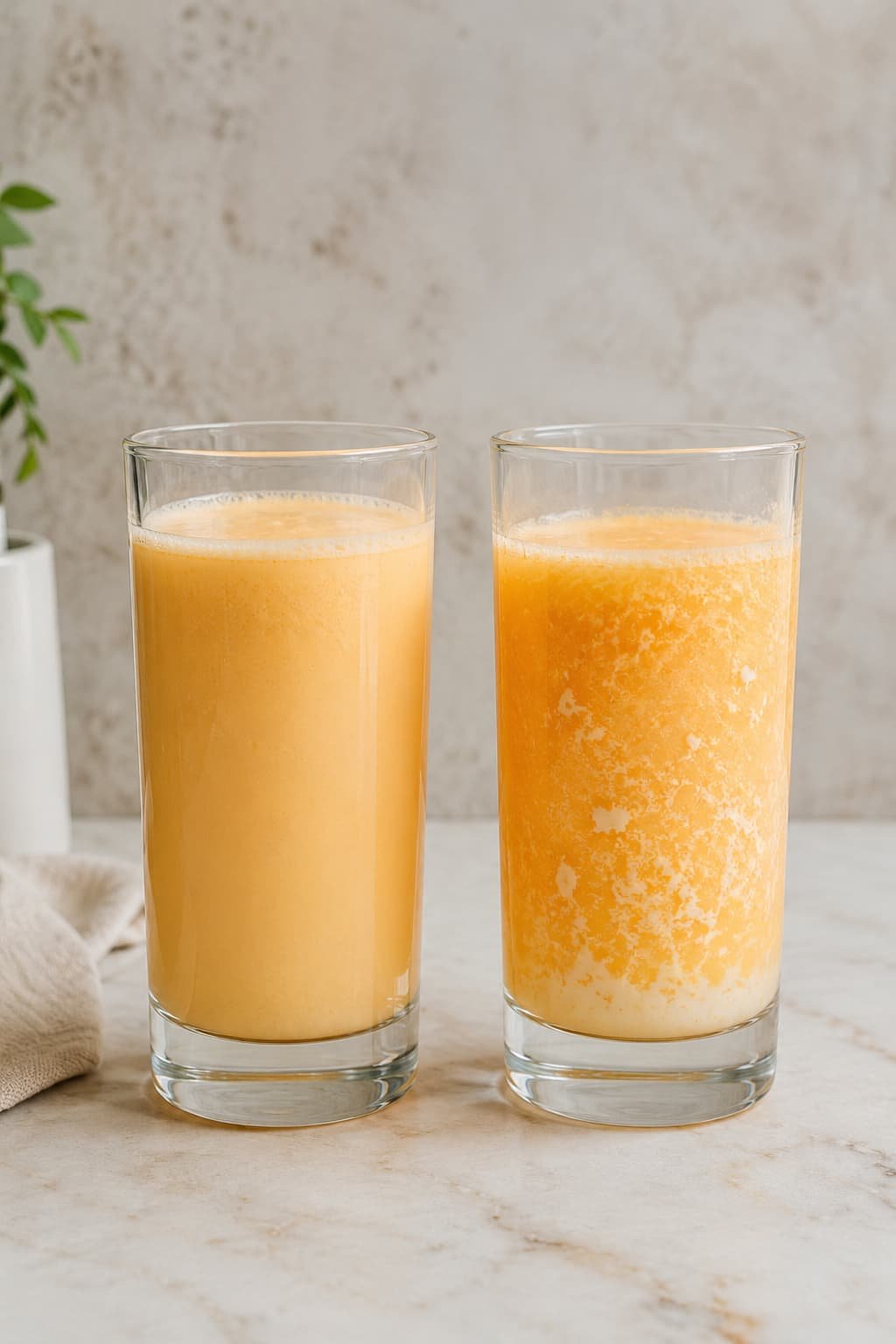
Orange juice and dairy can separate because citrus juice is acidic. Under sufficiently acidic conditions, milk proteins can become less stable and begin to coagulate.
In a drink, this may appear as small pale particles, streaks, or visible separation. How noticeable it becomes can vary with the orange juice, dairy product, ingredient proportions, and overall formulation.
How Does Citrus Acidity Affect Dairy?
Milk contains proteins called caseins. As milk becomes more acidic, these proteins can lose stability and begin to aggregate rather than remaining evenly dispersed.
Orange juice contains acids that can lower the pH of a dairy mixture. This is why combining citrus juice with milk, cream, or another dairy ingredient may sometimes cause visible curdling or separation.
The reaction is not identical in every drink. Dairy products can differ in protein content, fat content, processing, and added stabilizers. Orange juices can also differ in acidity and formulation.
Changing either ingredient may therefore change how the mixture behaves.
Can You Completely Prevent Orange Juice and Dairy From Separating?
No single preparation method can guarantee that an orange-and-dairy drink will remain completely uniform.
Using chilled ingredients and mixing gently may be practical during assembly, but these steps do not remove the acidity of the orange juice or guarantee that the dairy proteins will remain stable.
The final behavior depends on the dairy or creamy ingredient, acidity of the orange component, ingredient proportions, and other components in the mixture.
Claims that a particular mixing technique or ratio will always prevent curdling would require testing of that specific formulation.
Some visible separation may still occur.
How Ingredient Choices Affect Texture and Flavor
The final texture and flavor depend on the ingredients used and how the drink is prepared. Creamy ingredients affect body, sweetened ingredients affect overall sweetness, and soda can contribute carbonation.
How Can You Make the Drink Thicker or More Pourable?
Vanilla ice cream and other thick creamy ingredients can add more body.
Using a greater proportion of liquid ingredients such as orange juice or soda can move the drink toward a more pourable consistency, while using more frozen or thick ingredients can move it closer to a milkshake-style beverage.
Preparation method also matters. Blending is useful for drinks containing ice cream, ice, or other frozen ingredients. Stirring is more suited to a simple chilled beverage, especially when carbonation is included.
There is no universal adjustment ratio for changing thickness. Exact changes would depend on the specific formulation.
How Should Sweetness Be Adjusted?
Consider all of the sweetened ingredients before adding extra sweetener.
Orange juice contains naturally occurring sugars, while orange soda, cream soda, vanilla syrup, sweetened creamers, and ice cream may contribute additional sweetness.
A drink made with several sweetened ingredients can therefore taste very different from one based mainly on unsweetened ingredients.
If an adjustment is needed, changing one component at a time is a reasonable approach. Preferred sweetness is subjective, so there is no single ratio that applies to every version.
How Can You Keep More Fizz in a Carbonated Version?
Add carbonated ingredients near the end and avoid unnecessary vigorous mixing.
Carbonated beverages contain dissolved carbon dioxide. After a container is opened and pressure drops, carbon dioxide gradually leaves the liquid, causing the drink to lose fizz.
Agitation can encourage gas to escape more quickly. Combining the non-carbonated ingredients first and adding soda afterward is therefore a practical approach when noticeable carbonation is wanted.
Do You Need Ice Cream for an Orange Creamsicle Drink?
No. Ice cream is optional.
Vanilla ice cream can add vanilla flavor, sweetness, richness, and thickness at the same time. When blended into the drink, it can move the texture closer to a thicker dessert beverage.
A lighter version can instead use orange juice or soda with vanilla and a smaller amount of cream, half-and-half, or another creamy ingredient.
Neither approach is automatically better. They simply produce different styles of orange-and-vanilla drink.
Can You Make an Orange Creamsicle Drink Dairy-Free?
Yes. A dairy-free version can use a plant-based creamy ingredient instead of dairy.
Possible categories include coconut-based ingredients and commercially prepared non-dairy creamers. Different products can vary in sweetness, thickness, flavor, fat content, and stabilizers.
Coconut-based ingredients may also contribute a noticeable coconut flavor, while other plant-based creamers may have a more neutral profile.
Because formulations differ, a plant-based product should not automatically be substituted in a fixed one-to-one ratio unless that specific formula has been verified.
Make-Ahead and Storage Considerations
A fully assembled drink may change while it sits.
Carbonated ingredients gradually lose fizz. Ice melts and can dilute the beverage. A mixture containing orange juice and dairy may also become less uniform over time.
When practical, chilling the individual ingredients and combining them closer to serving can help avoid relying on an assembled drink to maintain the same carbonation and texture.
If the drink contains dairy or another ingredient that requires refrigeration, keep it refrigerated. Food that requires refrigeration should be held at 40°F (4°C) or below.
Perishable foods and drinks should not remain unrefrigerated for more than two hours. When the surrounding temperature is above 90°F (32°C), that limit is one hour.
These are food-safety limits, not claims about how long a specific creamsicle formulation will retain its preferred flavor, appearance, or texture. No specific refrigerated shelf life is given here because that would depend on the actual ingredients and formulation.
Common Orange Creamsicle Drink Problems
Why Did the Drink Separate?
Orange juice is acidic, and that acidity can cause dairy proteins to coagulate or separate.
How noticeable the separation becomes depends on the ingredients and overall formulation. Refer to the earlier section on citrus acidity rather than assuming that additional stirring will solve the problem.
Why Is the Drink Too Sweet?
Several sweetened ingredients may be contributing at the same time.
Orange soda, cream soda, vanilla syrup, sweetened creamers, ice cream, and orange juice can all contribute sweetness.
Consider the complete ingredient combination before adding more sweetener. There is no single adjustment that applies to every version.
Why Is the Drink Too Thin or Too Thick?
The balance between liquid, creamy, and frozen ingredients affects body.
Ice cream and thicker creamy ingredients can create a heavier texture, while juice, soda, and other liquids can make the drink more pourable.
Blending ice or frozen ingredients can also create a different texture from simply stirring chilled ingredients.
There is no universal correction ratio. The useful adjustment depends on the ingredients already present and the texture being targeted.
Why Did the Drink Lose Its Fizz?
Carbonation gradually decreases after a soda is opened and mixed.
If soda is part of the drink, adding it near the end and avoiding unnecessary shaking or vigorous stirring can help retain more fizz.
Frequently Asked Questions
Can I Use Bottled Orange Juice?
Yes. Bottled orange juice can be used, but different products may produce different results.
Sweetness, acidity, pulp content, and formulation can vary. These differences may affect flavor, texture, and how the juice behaves with a creamy ingredient.
Bottled and freshly squeezed juice should therefore not be assumed to behave identically in every formulation.
Can I Make an Orange Creamsicle Drink Without a Blender?
Yes. A blender is not required for a light, pourable version.
A stirred drink can combine orange, vanilla, and a creamy ingredient without blending. A blender becomes more useful when the goal is a thicker beverage made with ice cream, ice, or other frozen ingredients.
The choice depends mainly on the desired texture.
Final Takeaway
An orange creamsicle-style drink is based on three main elements: orange, vanilla, and creaminess.
Orange juice and orange soda create different styles of citrus flavor. Cream, ice cream, and plant-based alternatives can change body, sweetness, and texture, while soda can add carbonation.