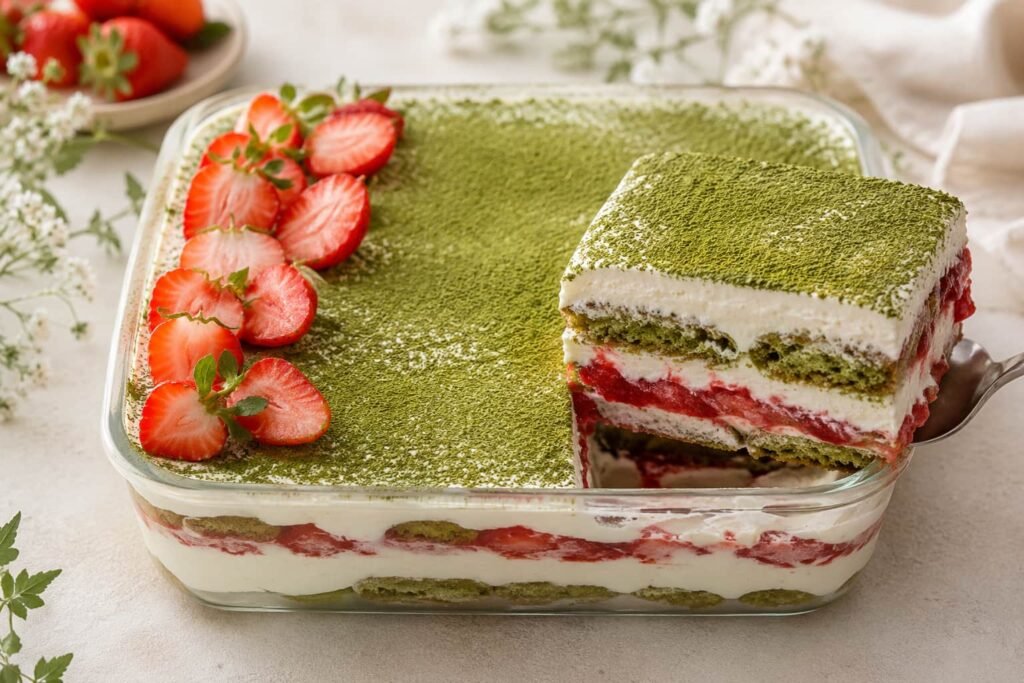
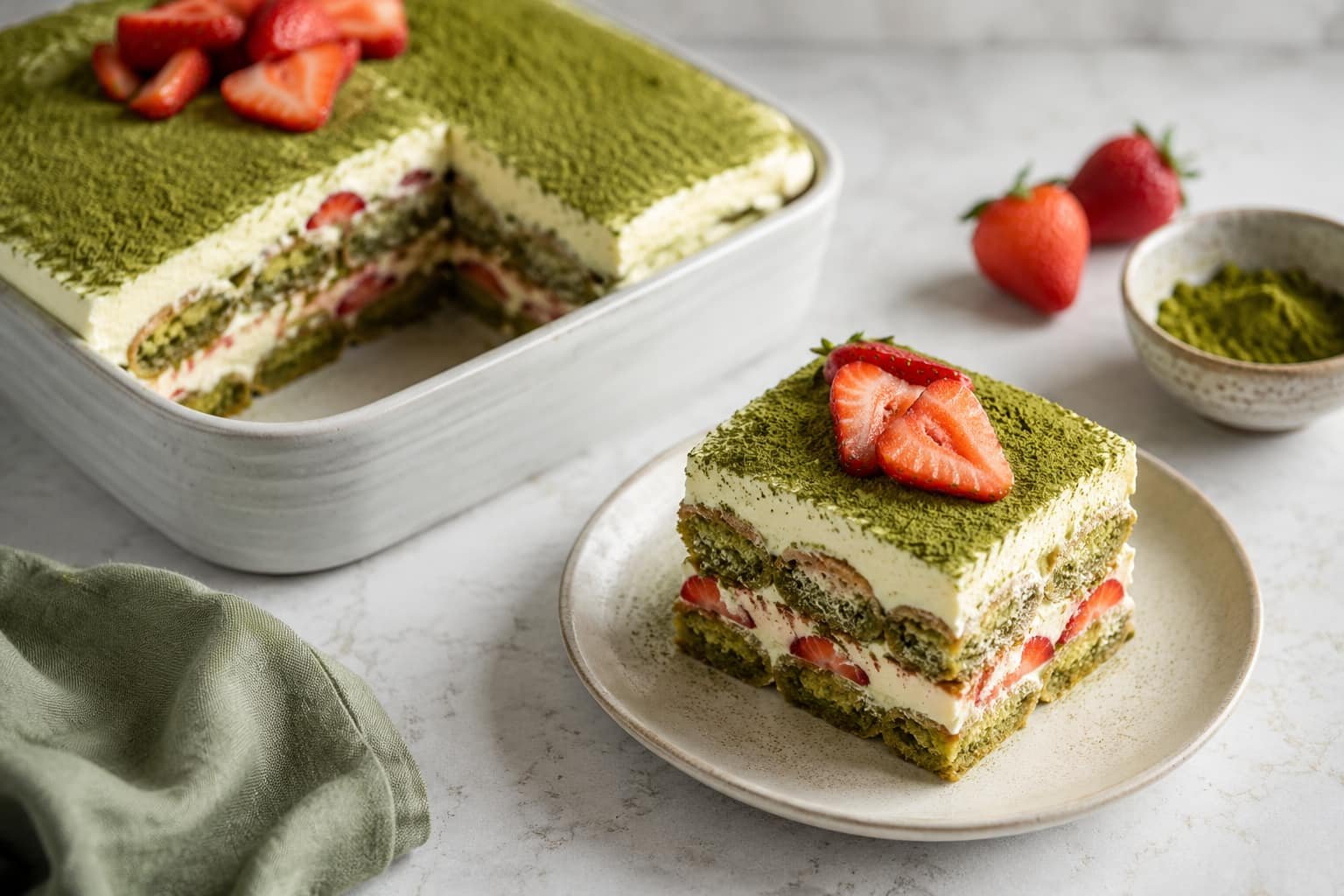
Strawberry matcha tiramisu is a chilled layered dessert made with matcha-soaked ladyfingers, mascarpone-based cream, and strawberries. It follows the basic structure of tiramisu but replaces the usual coffee flavor with matcha and adds a fresh fruit component.
The main challenge is balancing moisture and flavor. Matcha strength affects bitterness and tea flavor, while the soaking liquid and strawberries can influence how soft the ladyfingers become. The final texture can vary depending on the ingredients and preparation method.
What Is Strawberry Matcha Tiramisu?
Strawberry matcha tiramisu is a variation of tiramisu that combines ladyfingers, mascarpone-based cream, matcha, and strawberries.
Traditional tiramisu is commonly built around coffee-soaked ladyfingers and a mascarpone filling. In this version, matcha takes the place of the coffee element, while strawberries add fruit flavor and additional moisture.
It is therefore more accurate to describe strawberry matcha tiramisu as a tiramisu variation rather than traditional tiramisu. It keeps the layered biscuit-and-cream format but changes the main flavor profile.
The strawberry component can also vary. Some versions use sliced fresh strawberries, while others use a purée, sauce, or prepared fruit mixture. These approaches can affect both flavor distribution and moisture, so they should not automatically be treated as interchangeable.
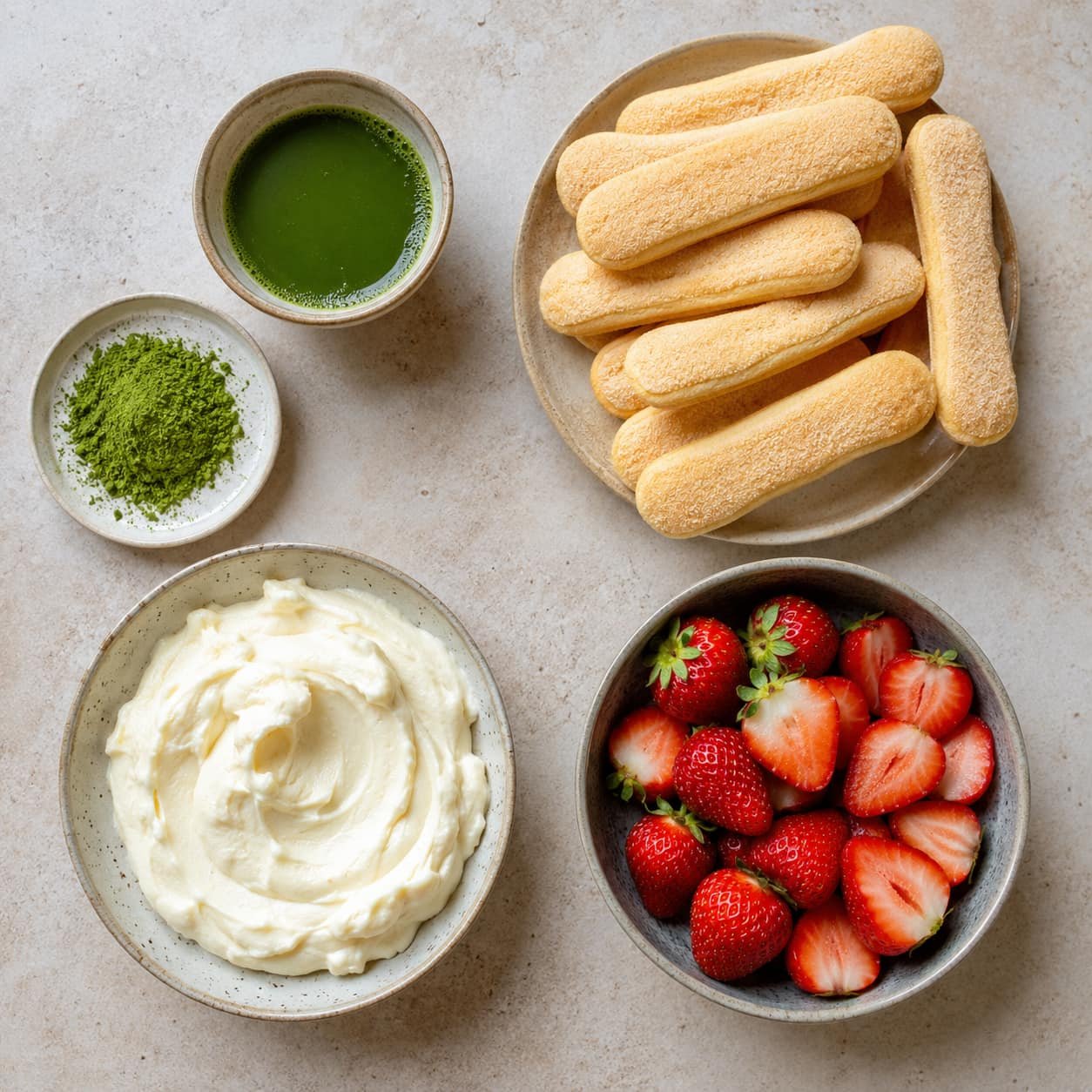
What Are the Main Components of Strawberry Matcha Tiramisu?
Most versions are built around four main components:
- a matcha soaking liquid
- ladyfingers or savoiardi
- mascarpone-based cream
- strawberries
Each component has a different role. Matcha provides the tea flavor, ladyfingers create the sponge layers, mascarpone forms the creamy filling, and strawberries provide the fruit element.
How these components are prepared can affect the finished dessert. More soaking liquid can soften the biscuits further, while juicy strawberries or a thin fruit sauce may introduce additional moisture.
Matcha Soak
The matcha soak flavors and moistens the ladyfingers. It serves a similar purpose to the coffee mixture commonly used in traditional tiramisu.
Matcha concentration can affect the balance of the dessert. A more concentrated mixture may produce a stronger tea flavor and greater bitterness, while a lighter mixture may be less noticeable once combined with mascarpone and strawberries.
The powder should also be dispersed through the liquid rather than left in dry clumps. Sifting matcha before whisking is one commonly used approach.
Exact matcha quantities, liquid ratios, and water temperature should follow a verified recipe formula rather than being estimated.
Matcha products may be described by sellers as culinary, premium, or ceremonial. These labels are not part of one universal grading standard, so the name alone does not guarantee how a particular matcha will behave in a dessert.
For tiramisu, the more useful considerations are flavor intensity, bitterness, color, and how the matcha works with the other ingredients. Culinary-style matcha is commonly used in desserts, while other matcha products may provide a different balance of flavor and color.
Ladyfingers or Savoiardi
Ladyfingers, also known as savoiardi, form the sponge layers of tiramisu.
Their dry and airy structure allows them to absorb the matcha liquid. This is useful because the biscuits need moisture to soften, but excessive soaking can contribute to an overly wet texture.
For that reason, tiramisu methods commonly moisten ladyfingers briefly rather than leaving them submerged for a long period.
There is no single dipping time that applies to every recipe. Ladyfingers can differ in size, density, and dryness, and the rest of the dessert may also contain different amounts of moisture.
The biscuits continue to absorb moisture after assembly. Liquid from the matcha soak, cream, and strawberries can move through the layers while the dessert rests in the refrigerator.
This means moisture control depends on the whole formula, not only on how long the ladyfingers are dipped.
Mascarpone Cream
Mascarpone forms the rich, creamy layer that gives tiramisu much of its characteristic texture.
Different tiramisu recipes prepare this filling in different ways. Some use eggs, while others combine mascarpone with whipped cream. In an egg-free version, whipped cream can add volume and make the mascarpone mixture lighter.
Temperature and mixing technique may affect the consistency of the filling. Heavy cream generally whips more readily when cold, while excessive beating of mascarpone-based mixtures can contribute to a grainy or separated texture.
Overmixing is not the only possible cause of a loose or uneven cream. Ingredient ratios, temperature, added liquids, and the order in which ingredients are combined may also influence the result.
The preparation method should therefore follow the specific formula being used rather than assuming one mixing technique will produce the same texture in every recipe.
Strawberries
Strawberries provide the main fruit flavor in strawberry matcha tiramisu, but they also contribute moisture.
Fresh strawberries can be sliced or chopped and placed between the layers. Other versions may use strawberry purée, sauce, or another prepared fruit component.
The choice changes more than appearance.
Fresh sliced berries create distinct pieces of fruit throughout the dessert. A purée or sauce spreads strawberry flavor more evenly but can also introduce more liquid into the surrounding cream and biscuits.
Strawberries should generally be dried after washing before they are added to a layered dessert. Water left on the surface adds moisture without adding strawberry flavor.
Cut berries can also release juice as they sit. Adding sugar may draw additional liquid from the fruit, which can be useful when making a sauce or syrup but may require more moisture control when the fruit is placed directly between tiramisu layers.
A thin strawberry sauce may affect the ladyfingers differently from sliced berries because the liquid can spread through a larger area.
Neither fresh fruit nor purée is automatically the better choice. Fresh strawberries provide more defined fruit pieces, while purée or sauce distributes the flavor differently. The better approach depends on the recipe formula and the amount of moisture already present in the other components.
Understanding this difference helps explain why strawberry preparation can influence both the flavor and texture of the finished tiramisu.
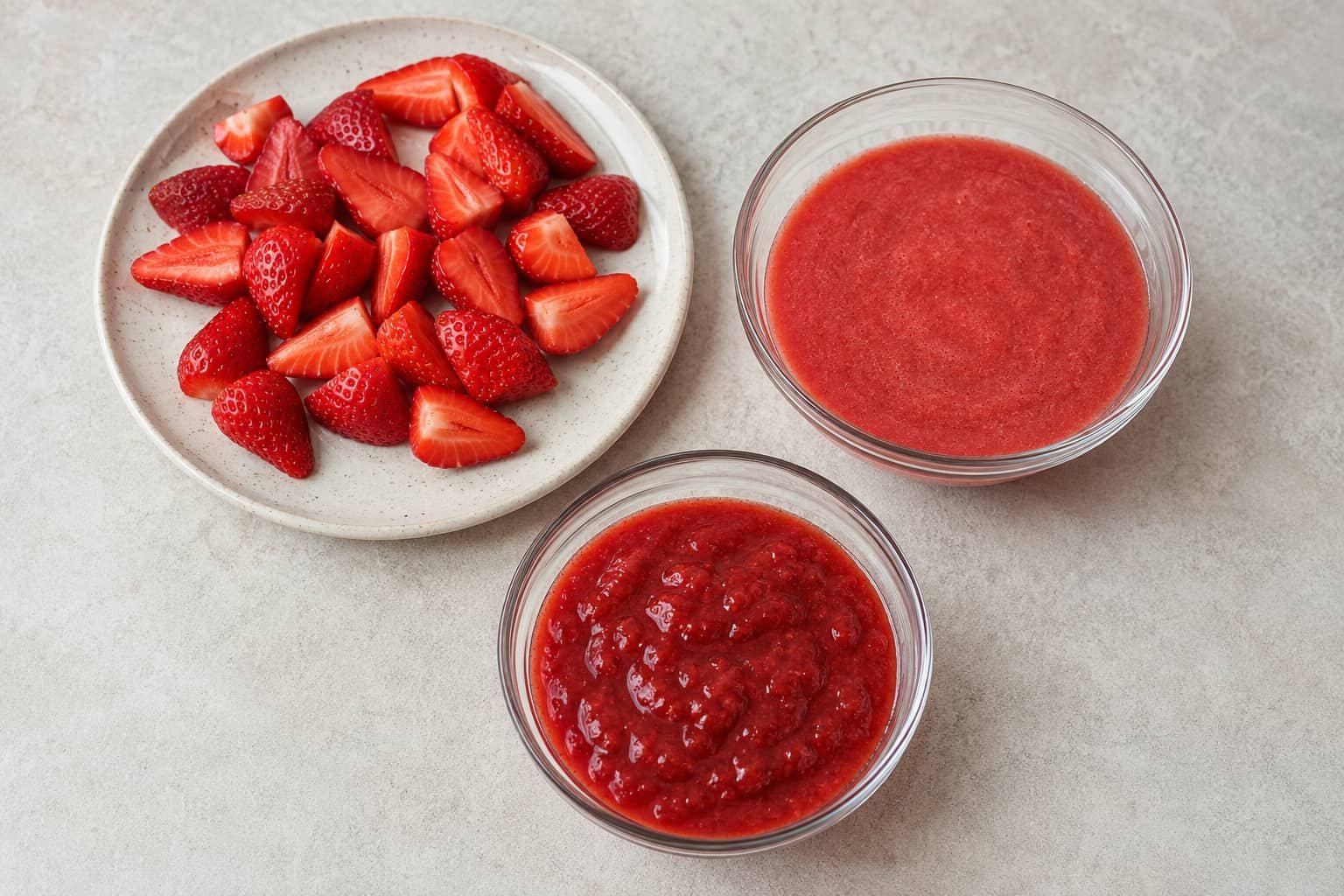
Fresh Strawberries, Purée, or Strawberry Sauce: What Is the Difference?
Fresh strawberries, strawberry purée, and strawberry sauce can all provide fruit flavor, but they affect a tiramisu differently. Fresh berries create distinct pieces of fruit, while purée or sauce spreads strawberry flavor more evenly through the layers. The amount of added moisture also differs.
Fresh Sliced Strawberries
Fresh sliced strawberries keep the fruit as a separate layer, so the strawberry flavor appears in distinct bites rather than throughout the entire cream.
They also add moisture. After washing, the berries should be dried before slicing so extra surface water is not introduced into the dessert. Cut strawberries can release juice as they rest, which may soften nearby ladyfingers or cream.
Adding sugar to sliced strawberries can encourage more juice to develop. That can be useful when a syrupy fruit layer is intended, but it may also increase the amount of liquid in the dessert.
Fresh strawberries are therefore a useful option when visible fruit pieces and a more defined strawberry layer are preferred.
Strawberry Purée or Sauce
Strawberry purée or sauce spreads fruit flavor more evenly because it can cover a larger area than sliced berries.
The main consideration is consistency. A thin purée or sauce can move into the mascarpone cream or ladyfingers more easily, which may contribute to softer layers. This matters especially when the biscuits already contain moisture from the matcha soak.
A thicker strawberry mixture may provide more concentrated fruit flavor with less free-flowing liquid than a thin sauce. Some preparations use cooked fruit to create a thicker consistency, but the exact ingredients and cooking method should follow a verified formula.
Fresh fruit and purée serve different purposes rather than one being automatically better. Sliced berries provide visible pieces and more localized fruit flavor, while purée or sauce distributes the strawberry flavor more evenly.
What Type of Matcha Can Be Used for Tiramisu?
Culinary-style matcha is a practical choice for tiramisu because it is commonly used in foods where the tea is combined with other ingredients. Higher-grade matcha can also be used, but it is not automatically necessary for this type of dessert.
Matcha products can vary in color, bitterness, aroma, and flavor intensity. These differences may affect how noticeable the tea remains after it is combined with mascarpone, sugar, strawberries, and the soaking liquid.
A darker or more bitter matcha may create a stronger tea character, while another product may taste milder or produce a brighter green color. The result depends on the matcha itself as well as the amount used.
Labels such as culinary, premium, or ceremonial should not be treated as a universal guarantee of quality or suitability. Grading language can vary between sellers, so the label alone does not determine how a particular matcha will perform in a dessert.
For tiramisu, the most useful things to consider are:
- flavor intensity
- bitterness
- color
- aroma
- how well the matcha remains noticeable alongside dairy and strawberries
Culinary matcha can work well when the tea is being mixed with other ingredients. A higher-grade matcha is another option when a different balance of flavor, aroma, or color is preferred.
There is no need to use ceremonial matcha simply because the dessert contains matcha. The more useful approach is to choose a product that fits the flavor balance of the specific recipe.
How Is Strawberry Matcha Tiramisu Assembled?
Strawberry matcha tiramisu is assembled by preparing the matcha soak, strawberry component, and mascarpone filling separately, then layering them with briefly moistened ladyfingers before refrigeration.
The exact ingredient amounts, dish size, number of layers, chilling time, and yield should come from a verified recipe formula rather than being estimated.
Prepare the Matcha Mixture
The matcha mixture is used to flavor and moisten the ladyfingers.
Matcha is typically sifted and whisked into liquid so the powder disperses as evenly as possible. The concentration influences how noticeable the tea flavor and bitterness are in the finished dessert.
Exact matcha quantities, liquid ratios, and water temperature should follow the specific verified formula being used.
Prepare the Strawberry Component
Fresh strawberries should be washed and dried before slicing or chopping. Removing surface water helps avoid adding unnecessary liquid to the dessert.
If the formula uses sliced berries, they can be prepared for layering as directed. If it uses strawberry purée, sauce, or another fruit mixture, the consistency becomes more important because thinner preparations can spread more easily into the cream and ladyfingers.
The strawberry component should therefore be prepared according to the chosen formula rather than treated as interchangeable with fresh sliced fruit.
Prepare the Mascarpone Filling
The mascarpone filling is prepared separately before assembly.
Tiramisu fillings vary. Some formulas combine mascarpone with whipped cream, while others include eggs or use another method. These approaches should not automatically be substituted for one another because the ingredient ratios and preparation steps can differ.
When whipped cream is included, it is commonly prepared before being combined with mascarpone. Excessive mixing may affect the consistency of a mascarpone-based filling, so the method should follow the verified recipe rather than relying on an assumed texture.
Dip and Layer the Ladyfingers
Ladyfingers are briefly moistened in the matcha mixture and arranged in the serving dish.
The remaining components are then layered according to the formula. A common framework is:
- matcha-moistened ladyfingers
- mascarpone filling
- strawberries or strawberry mixture
- additional layers as directed by the recipe
The biscuits need enough liquid to soften as the dessert rests, but excessive soaking can contribute to an overly wet layer. The appropriate amount depends on the ladyfingers and the total moisture in the recipe.
Refrigerate Before Serving
Refrigeration allows the assembled layers to settle and the ladyfingers to continue absorbing moisture.
Cooling also firms the dairy-based filling compared with leaving it warm. However, the final consistency can still vary according to the cream formula, fruit moisture, ladyfinger type, and amount of soaking liquid.
An exact chilling time should only be stated once it has been verified for the specific recipe.
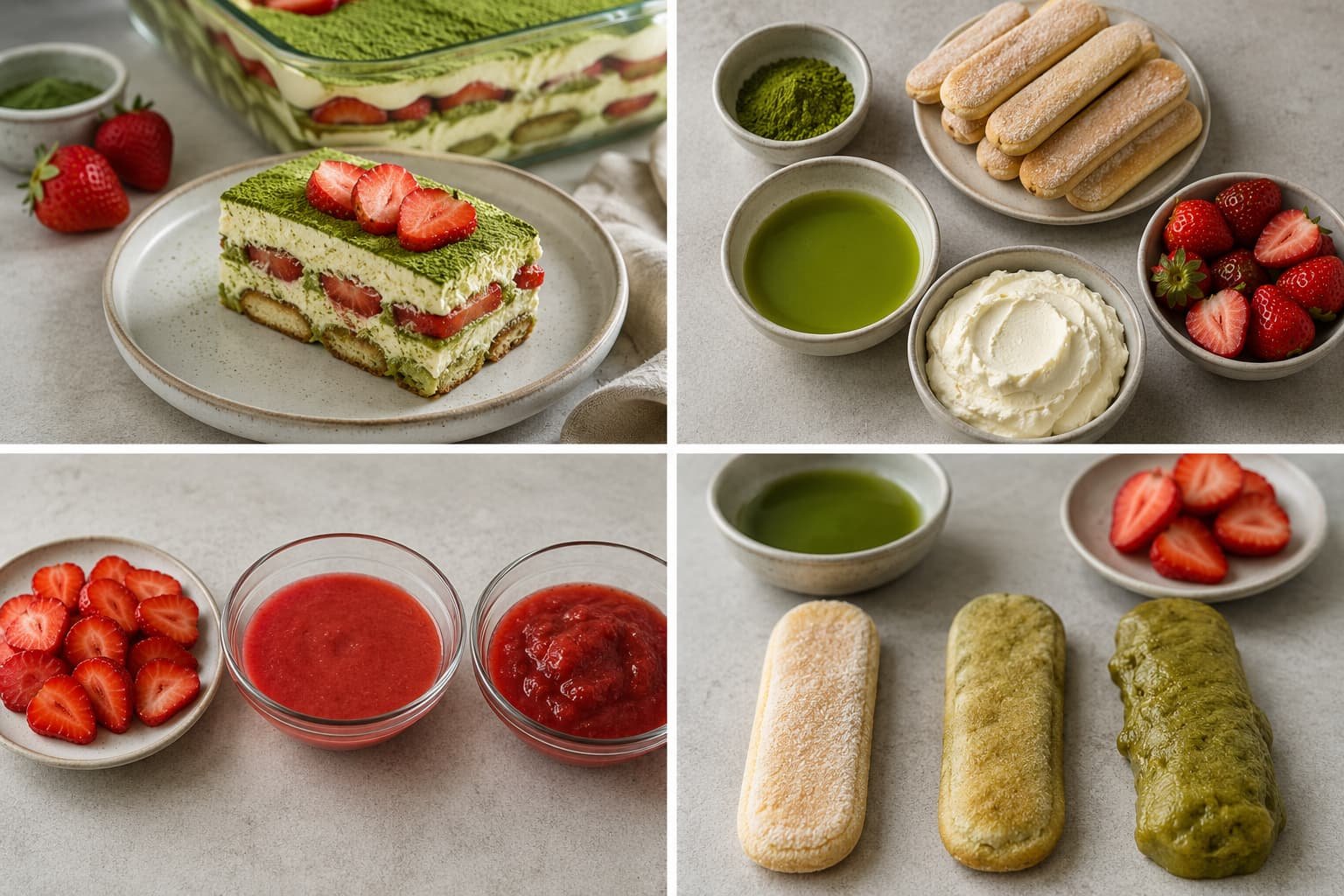
How Do You Keep Strawberry Matcha Tiramisu From Becoming Too Wet?
To reduce the risk of an overly wet tiramisu, control the total amount of liquid coming from the matcha soak, strawberries, fruit sauce, and filling.
Too much moisture can soften the ladyfingers and surrounding cream, but there is not always a single cause.
Ladyfingers absorb liquid readily, so prolonged soaking may increase the amount of matcha mixture they carry into the dessert. The strawberries can add moisture as well, especially if surface water remains after washing or the cut fruit releases juice while resting.
Adding sugar to strawberries can draw more liquid from the fruit. This may be useful when a syrupy strawberry component is intended, but it can also increase the amount of free liquid between the layers.
Purées and sauces need similar attention. A thin strawberry mixture can spread into the cream and biscuits more easily than sliced fruit.
The main factors to consider are:
- how much matcha liquid the ladyfingers absorb
- whether the strawberries are well dried
- how much juice the fruit releases
- whether the strawberry sauce or purée is thin or thick
- how much liquid is present in the filling
- how these components are balanced in the recipe
A soft or wet texture does not automatically point to one mistake. The type of ladyfingers, strawberry preparation, filling consistency, and overall liquid balance can all contribute.
Common Strawberry Matcha Tiramisu Problems
Problems with this dessert usually come down to moisture, ingredient consistency, or flavor balance. Because different formulas use different amounts of liquid, cream, fruit, and matcha, troubleshooting should focus on likely causes rather than assuming one step is always responsible.
Why Are the Ladyfingers Too Soggy?
Ladyfingers can become too wet when they absorb more liquid than the dessert can comfortably hold.
Possible causes include leaving the biscuits in the matcha soak too long, using a larger amount of soaking liquid, or adding a very wet strawberry component. Juice from cut berries and thin strawberry purée or sauce can also move into the biscuit layers as the dessert rests.
Longer refrigerated storage may soften the ladyfingers further because they continue interacting with moisture from the surrounding layers.
A soggy texture does not automatically mean the dipping step was the only problem. The overall balance of matcha liquid, fruit moisture, cream consistency, and resting time may all contribute.
Why Are the Ladyfingers Still Dry?
Ladyfingers may remain dry if they do not absorb enough liquid before or during chilling.
This can happen when the biscuits have only very brief contact with the matcha mixture or when the chosen ladyfingers are particularly dense or dry. The amount of liquid available in the overall formula also matters.
Different brands can absorb liquid differently, so there is no universal dipping time that applies to every recipe.
If a verified formula gives a specific soaking method, it is better to follow that method rather than increasing the liquid based on guesswork.
Why Is the Mascarpone Cream Loose or Grainy?
A loose or grainy mascarpone filling can have more than one possible cause.
Ingredient ratios may affect how firm the filling becomes. Temperature can also matter, especially when whipped cream is part of the mixture.
Mixing technique is another factor. Excessive beating may contribute to a grainy or separated mascarpone mixture, but overmixing should not be treated as the only explanation. Added liquids, ingredient temperature, and the order in which the components are combined may also influence consistency.
The safest approach is to follow the mixing method and ingredient ratios from the verified formula rather than trying to correct the filling with unverified additions.
Why Does the Matcha Taste Too Bitter?
Matcha can taste overly bitter when its flavor is too concentrated compared with the other ingredients.
The amount of matcha used is one possible factor, but different products also vary in bitterness, aroma, and flavor intensity. A matcha that tastes mild in one formula may behave differently from a stronger or more bitter product.
The sweetness of the dessert and the amount of dairy can also affect how noticeable the bitterness seems.
There is no single matcha ratio that can be described as ideal for every tiramisu. The balance depends on the specific matcha, the soaking liquid, the mascarpone filling, and the strawberry component.
Can Strawberry Matcha Tiramisu Be Made Without Raw Eggs?
Yes. Strawberry matcha tiramisu can be made without raw eggs. Some tiramisu fillings use eggs, while others use mascarpone combined with whipped cream.
The Daily Bite Recipes version uses an egg-free mascarpone and whipped-cream filling. This keeps the basic layered structure of tiramisu without using raw eggs in the cream.
If another recipe includes eggs that remain raw or undercooked, food safety needs extra attention. The FDA recommends using pasteurized shell eggs or pasteurized egg products in recipes where eggs are served raw or undercooked.
Egg-free and egg-based fillings should not be treated as direct substitutes for one another because their ingredient ratios and preparation methods can differ.
Ingredient Substitutions and Variations
Some ingredients and serving formats can be changed, but substitutions may affect flavor, moisture, and texture. Unless a replacement ratio has been verified for the specific formula, it is safer to treat these changes as variations rather than exact swaps.
Can Cream Cheese Replace Mascarpone?
Cream cheese can be used in some tiramisu-style desserts, but it is not the same as mascarpone.
Cream cheese is generally tangier and can be firmer, so it may change both the flavor and consistency of the filling. It should not automatically replace mascarpone at a 1:1 ratio unless the recipe has been developed or verified for that substitution.
If mascarpone is unavailable, using a formula specifically designed with cream cheese is more reliable than guessing the amount.
Can Sponge Cake Replace Ladyfingers?
Yes, sponge cake can be used in a tiramisu-style dessert, but it may absorb the matcha soak differently from ladyfingers.
Ladyfingers are dry, airy biscuits that take in liquid readily. Sponge cake can vary in thickness, density, and moisture, so the same soaking method may not produce the same result.
If sponge cake is used, the amount of matcha liquid should follow a formula designed for that type of cake rather than automatically copying a ladyfinger method.
Can Frozen Strawberries Be Used?
Frozen strawberries can be used in some strawberry components, but they behave differently from fresh berries after thawing.
Thawed strawberries may release more liquid and become softer. That extra moisture can affect a dessert that already contains soaked biscuits and a creamy filling.
Frozen berries may work more naturally in a purée, sauce, or cooked strawberry component when the recipe is designed for one. They should not automatically replace fresh sliced strawberries without considering the added liquid.
Can It Be Made in Individual Cups?
Yes. The dessert can be assembled in individual glasses or dessert cups instead of one larger dish.
The same basic layers can be used: matcha-moistened ladyfingers, mascarpone filling, and the strawberry component. Ladyfingers may need to be trimmed or broken to fit the container.
Changing the serving format does not require changing the basic concept, but the number of cups, portion size, and yield should come from a verified formula rather than being estimated.
Make-Ahead and Storage Considerations
Strawberry matcha tiramisu can be assembled ahead because refrigeration is part of the preparation. While the dessert rests, the ladyfingers absorb moisture from the surrounding layers and the mascarpone-based filling remains chilled.
Because the dessert contains perishable dairy ingredients and fresh fruit, it should be stored under refrigeration. An exact storage duration should follow verified food-safety guidance for the final recipe rather than being estimated.
The texture can change during storage. Ladyfingers may continue to soften, while cut strawberries can release additional juice into the cream and biscuit layers. This means a dessert stored for longer may have a softer texture than it had earlier.
Fresh strawberry garnish and matcha powder can be added closer to serving when appearance matters. Cut berries may release juice as they sit, while matcha powder can absorb moisture from the cream and darken on the surface.
Frequently Asked Questions
Does Strawberry Matcha Tiramisu Contain Coffee?
No, coffee is not required. Matcha usually replaces the coffee-flavored soaking liquid associated with traditional tiramisu.
Some variations may combine coffee and matcha, but that is a different flavor choice rather than a requirement.
Does Strawberry Matcha Tiramisu Need Alcohol?
No. Alcohol is optional and is not necessary for the basic structure of the dessert.
Some tiramisu formulas use liqueur for flavor, while others contain no alcohol. A strawberry and matcha version can therefore be made without it when the recipe is designed that way.
Should Matcha Go in the Cream or Only in the Ladyfinger Soak?
Matcha can be used in the ladyfinger soak, the cream, or both, depending on the recipe.
Keeping matcha mainly in the soak concentrates more of the tea flavor in the biscuit layers. Mixing it into the mascarpone filling distributes that flavor more evenly through the dessert.
Neither method is universally better. The appropriate approach depends on the intended balance between matcha, strawberry, and mascarpone.
When Should Matcha Be Dusted on Top?
Matcha can be dusted over the dessert closer to serving when a brighter, more defined surface is preferred.
Because matcha powder absorbs moisture from a creamy surface, its color can darken as it sits. The amount used also affects flavor, so the topping should complement rather than overwhelm the other components.
Can Strawberry Matcha Tiramisu Be Frozen?
Some tiramisu-style desserts can be frozen, but freezing and thawing may change the texture of the cream, strawberries, and softened ladyfingers.
Fresh strawberries can release additional liquid as their structure changes during freezing and thawing, while the creamy and biscuit layers may not return to exactly the same consistency.
An exact freezing duration and thawing method should only be provided after those instructions have been independently verified for the final recipe.
How Long Should Strawberry Matcha Tiramisu Chill?
The dessert needs enough refrigeration time for the filling to become thoroughly chilled and for the ladyfingers to soften as they absorb moisture.
There is no single chilling time that applies to every formula. Ladyfinger type, soaking liquid, fruit moisture, filling consistency, layer thickness, and dish size can all affect how the dessert sets.
The final article should therefore use the chilling time specified by the independently verified recipe rather than applying an estimated universal duration.