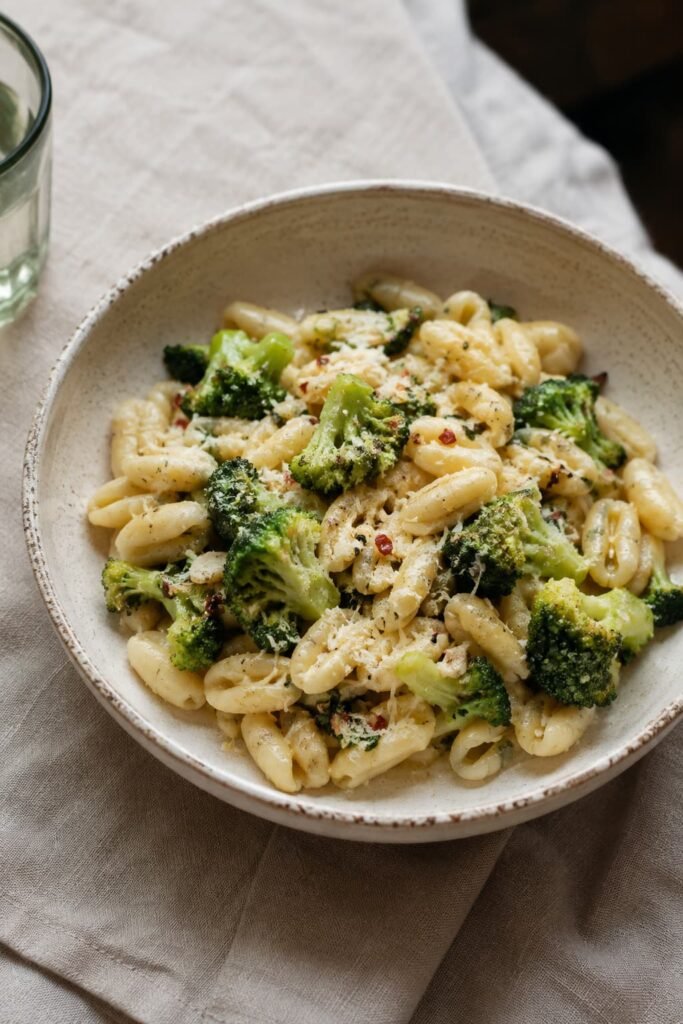
Cavatelli and broccoli is a pasta dish made with small, indented cavatelli and cooked broccoli. Garlic and olive oil are common flavoring ingredients, while some versions also include cheese, chili, anchovies, broth, or sausage.
There is no single formula for the dish. The broccoli may remain in recognizable florets, soften into smaller pieces, or become part of a smoother vegetable-based coating.
What Is Cavatelli and Broccoli?
Cavatelli and broccoli is a pasta preparation that combines cavatelli with cooked broccoli and seasonings.
The broccoli can play different roles depending on the preparation. It may stay distinct from the pasta, soften enough to spread through the dish, or be partly blended. These are different preparation styles rather than one required method.
What Is Cavatelli Pasta?
Cavatelli is a small pasta with a curved, hollowed, or indented shape. The indentation can collect small pieces of vegetables, sauce, cheese, and other ingredients.
Cavatelli is associated with Southern Italy, including regions such as Molise and Puglia. Traditional versions are commonly made with durum wheat semolina and water, although regional recipes and commercial products can vary.
Cavatelli may be fresh, dried, or frozen. These forms can have different cooking requirements, so package directions are useful when using a commercial product.
What Goes Into Cavatelli and Broccoli?
The two main components are cavatelli and broccoli. Garlic, olive oil, cheese, chili, anchovies, broth, and sausage may then be used to change the flavor and character of the dish.
There is no fixed ingredient list that applies to every version.
Cavatelli and Broccoli
Cavatelli provides the main pasta component. Its small, indented shape can collect broccoli pieces and the surrounding oil or vegetable-based coating.
Broccoli provides the main vegetable component. Florets are commonly used, while trimmed stems can also be included.
How the broccoli is cooked affects the final texture. Firmer broccoli remains more distinct, while softer broccoli can break into smaller pieces and mix more closely with the pasta.
Garlic, Olive Oil, and Cheese
Garlic and olive oil form a simple flavor base in many versions.
The oil helps distribute garlic and other seasonings around the pasta and vegetables. A separate cream or tomato sauce is therefore not required.
Garlic is often heated in the oil before the other components are combined. Garlic that becomes excessively dark can develop bitter notes, so heavy browning should not be treated as a required result.
Hard grating cheeses such as Pecorino Romano or Parmesan may provide additional savory and salty flavor. Cheese is optional, and other salty ingredients can affect how much additional seasoning is needed.
Optional Additions
Several ingredients can be added without being essential:
- Chili or red pepper flakes can provide heat.
- Anchovies appear in some Italian preparations and can soften into the oil as they cook.
- Broth may provide additional liquid and flavor.
- Sausage can create a meat-based variation.
Cheese, anchovies, sausage, and some broths can all contribute salt, so seasoning needs can vary with the ingredients used.
How Is Cavatelli and Broccoli Commonly Prepared?
The dish can be prepared by cooking the pasta and broccoli, making a garlic-and-olive-oil base, and then combining the components. The exact sequence varies between preparations.
The broccoli may be cooked separately or in the same water as the pasta. Some preparations cook them together, while separate cooking can provide more control over the texture of each ingredient.
Garlic is commonly heated in olive oil, with chili or anchovies included in some versions. The cooked pasta and broccoli are then combined with the flavoring mixture.
Reserved pasta cooking water may be added if additional moisture is needed. Cheese, olive oil, chili, or other finishing ingredients can then be used depending on the style of the dish.
This general sequence describes common preparation approaches rather than a fixed recipe with universal quantities or cooking times.
How Does Broccoli Texture Change the Dish?
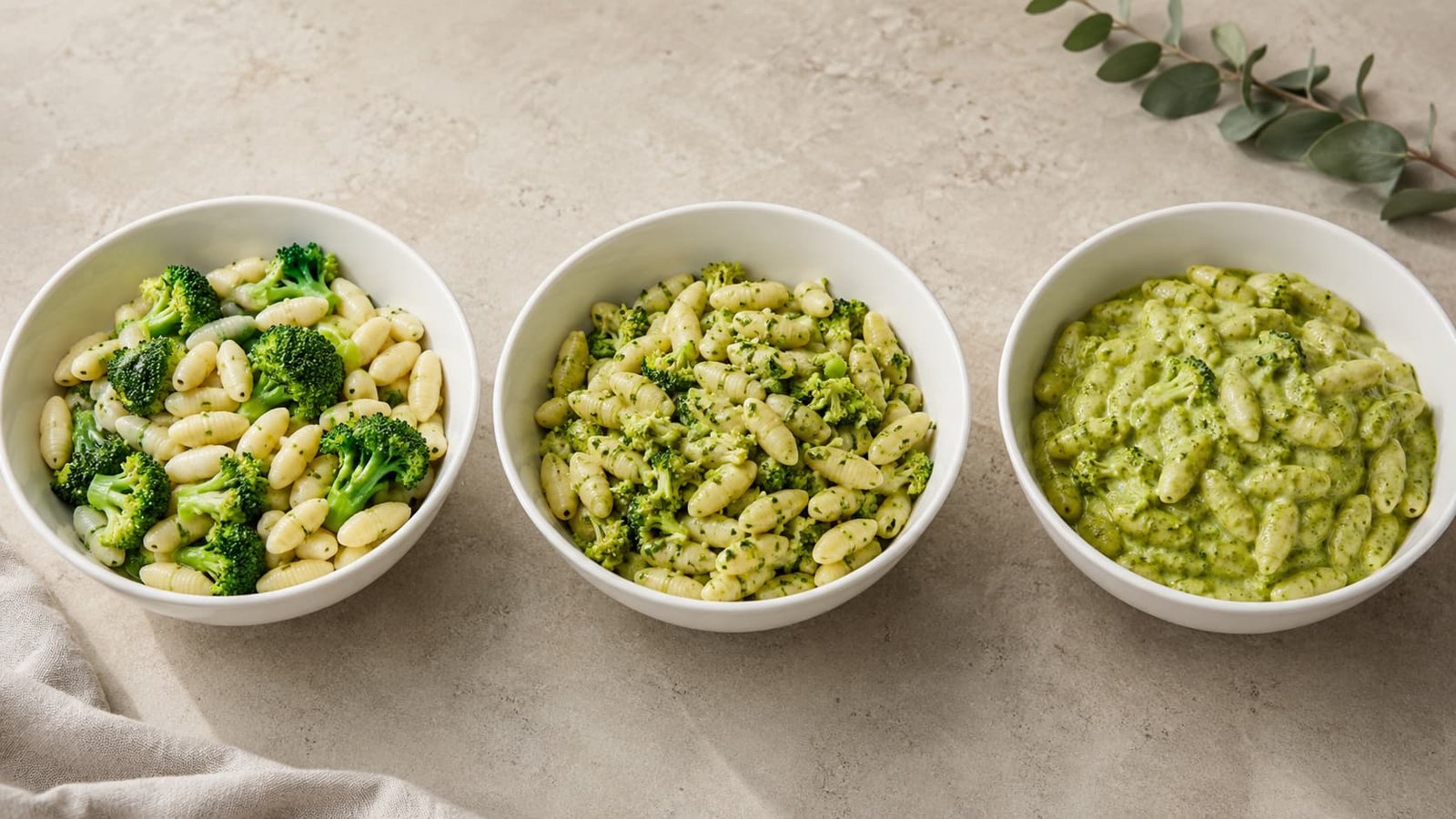
Broccoli texture determines whether the vegetable stays distinct or becomes more integrated with the pasta.
Broccoli cooked to a firmer texture remains in clearer pieces. As it softens, it can break apart more easily and spread through the oil and cooking liquid.
Keeping the Broccoli in Florets
Keeping the broccoli in recognizable florets creates a more distinct pasta-and-vegetable combination.
Cutting the broccoli into reasonably similar-sized pieces can help them cook more consistently. The florets can then be combined with the pasta without deliberately breaking them down.
Allowing Some Broccoli to Break Down
Softer broccoli can break into smaller pieces as it is mixed with the pasta.
These pieces may spread through the cooking liquid and oil, creating a more integrated coating around the cavatelli without requiring a cream-based sauce.
How much the broccoli breaks down can vary with its size, degree of cooking, and how the mixture is handled.
Blending Part of the Broccoli
Blending some cooked broccoli is another possible approach.
Published Italian preparations include versions in which part of the broccoli is blended with cooking water and olive oil before being combined with cavatelli and remaining broccoli.
This can create a smoother vegetable-based coating while leaving some recognizable pieces. It is one preparation option rather than a requirement.
What Changes With Fresh, Frozen, or Dried Ingredients?
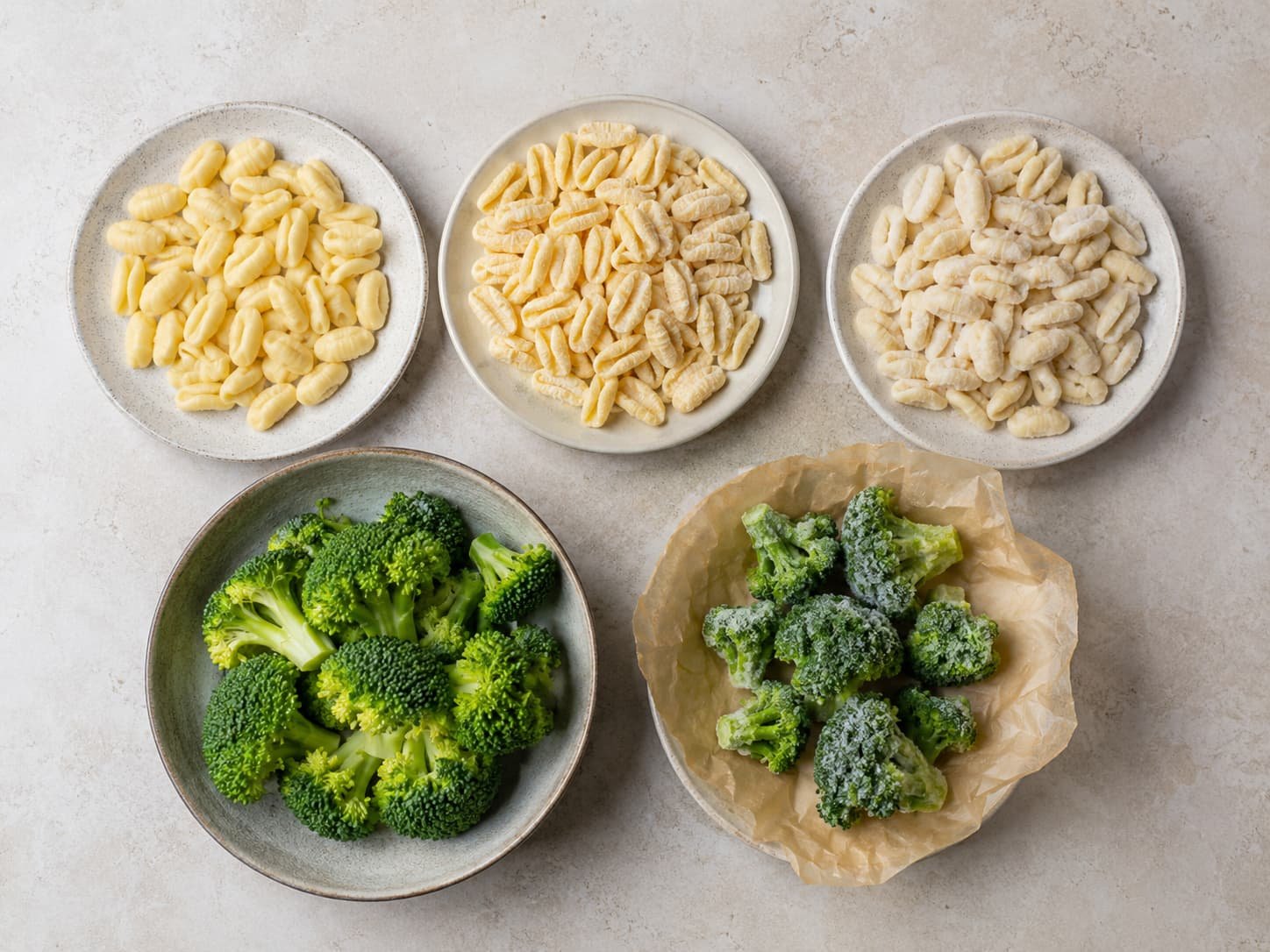
Fresh, frozen, and dried ingredients can behave differently because their moisture levels and processing differ.
The practical point is that one cooking method or timing should not automatically be applied to every form of cavatelli or broccoli.
Fresh, Frozen, and Dried Cavatelli
Fresh cavatelli contains more moisture than dried pasta and therefore usually behaves differently during cooking.
Dried cavatelli needs to absorb more water, while frozen commercial products may have their own preparation directions. Size, thickness, and manufacturer can also affect cooking behavior.
The finishing stage matters as well. Pasta can continue to soften while it remains in a hot pan with broccoli and other ingredients.
Fresh vs. Frozen Broccoli
Both fresh and frozen broccoli can be used, but their texture may differ.
Broccoli prepared for freezing is generally blanched first. Because it has already been briefly heated, frozen broccoli may soften differently from raw fresh broccoli when cooked again.
Frozen broccoli may also introduce some thawed or surface moisture. Before adding pasta water or broth, the amount of liquid already present can be considered.
Fresh broccoli provides more control over how the stems and florets are cut before cooking.
Neither fresh nor frozen broccoli is universally better. The two forms simply may require different handling.
What Does Pasta Cooking Water Do?
Pasta releases some starch into the surrounding water as it cooks. Reserved cooking water can therefore provide moisture and a small amount of starch when the pasta is combined with broccoli, olive oil, cheese, or other ingredients.
In an oil-based pasta dish, it can help loosen the mixture and distribute the coating around the pasta.
There is no standard amount that applies to every preparation. The amount needed can depend on the pasta, broccoli, and other liquids already present.
Broccoli vs. Broccoli Rabe: Are They the Same?
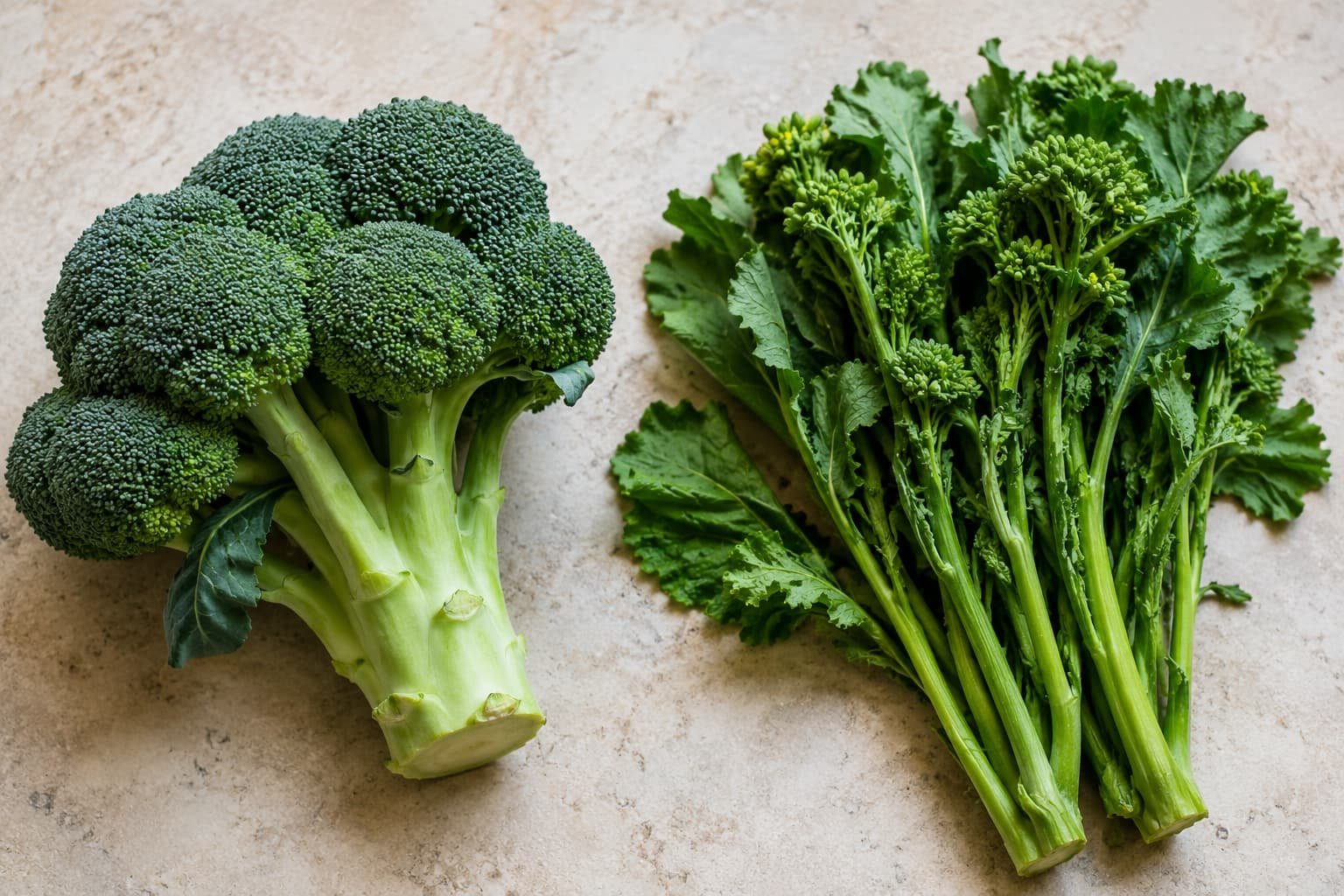
No. Broccoli and broccoli rabe, also called rapini, are different vegetables.
Regular broccoli has larger florets and thicker stems. Broccoli rabe has more leaves, slender stems, and small flower buds and is known for a more pronounced bitter flavor.
Cavatelli can also be paired with broccoli rabe, sometimes with sausage, garlic, or cheese. Using broccoli rabe, however, creates a different variation rather than an identical replacement for regular broccoli.
How Can Cavatelli and Broccoli Be Varied?
Cheese, chili, anchovies, and sausage are some of the ingredients that can change the basic pasta-and-broccoli combination.
Cheese and Chili Variations
Pecorino Romano or Parmesan may be used for additional savory and salty flavor.
Chili or red pepper flakes can be added when more heat is wanted. They may be combined with garlic and olive oil or added later, depending on the preparation.
Neither cheese nor chili is essential.
Anchovy Variation
Anchovies appear in some documented cavatelli-and-broccoli preparations.
When heated in olive oil, they can soften and disperse through the mixture, contributing salty and savory flavor.
Because anchovies contain fish, this variation is not vegetarian.
Sausage Variation
Sausage can be added to create a meat-based version.
Published dishes pair cavatelli with Italian sausage and either broccoli or broccoli rabe. Adding sausage also introduces additional fat, salt, and seasoning.
Different sausage products vary in their ingredients and seasoning, so they should not be expected to produce identical results.
What Can Be Used Instead of Cavatelli?
Another short pasta can be used when cavatelli is unavailable, although the finished dish will be different.
Orecchiette is one possible alternative because its small, concave shape can hold broccoli pieces and sauce. Small shells and short twisted pasta shapes are other reasonable options.
Different pasta shapes vary in thickness, surface texture, and cooking requirements, so cavatelli cooking directions should not automatically be applied to a substitute.
Why Can Cavatelli and Broccoli Become Watery or Dry?
Several factors may affect the final consistency.
Extra moisture from the broccoli, broth, or cooking water can produce a looser coating. Adding more liquid than the mixture needs may have the same effect.
Too little available moisture can create a drier coating. Hot pasta may also continue to absorb surrounding liquid after it is combined with the other ingredients.
Very soft broccoli may break down more than expected. This is not necessarily a problem because some versions intentionally use softened or blended broccoli.
Garlic that becomes very dark may contribute bitter notes.
These are possible contributing factors rather than guaranteed diagnoses. The final texture can vary with the pasta, broccoli, added liquids, and finishing method.
What Can Be Served With Cavatelli and Broccoli?
Cavatelli with broccoli can be served as the main pasta dish or paired with simple sides.
A fresh salad can provide a crisp contrast, while roasted or baked vegetables are another option. Cheesy Italian squash bake with tomatoes can work as an Italian-inspired vegetable side.
Bread is another possible accompaniment, particularly with versions based on olive oil, garlic, and softened broccoli.
If a separate protein is wanted, chicken or fish are possible choices. Grilled chicken bites with creamy garlic sauce are one option, although adding a creamy sauce creates a more substantial meal.
A version that already contains sausage, cheese, or another substantial addition may need fewer accompanying dishes.
How Should Leftovers Be Stored and Reheated?
USDA guidance recommends refrigerating cooked leftovers within two hours. If the surrounding temperature is above 90°F (32°C), the limit is one hour.
Covered refrigerated leftovers should generally be used within three to four days.
When reheating leftovers, USDA guidance recommends reaching an internal temperature of 165°F (74°C) as measured with a food thermometer.
Storage can also change the texture of the dish. Pasta may absorb surrounding liquid, while broccoli may become softer.
If the mixture seems dry during reheating, adding a small amount of liquid is one possible way to loosen it. Reheating should not be expected to restore exactly the same texture as the freshly prepared dish.
Frequently Asked Questions
Is cavatelli the same as gnocchi?
No. Cavatelli is pasta, while gnocchi refers to a separate group of dumpling-like foods.
Traditional cavatelli is commonly made from durum wheat semolina and water. Potato gnocchi commonly use potato and flour, although other types of gnocchi also exist.
Can frozen broccoli be used with cavatelli?
Yes. Frozen broccoli can be used.
Because it is generally blanched before freezing, its texture may differ from fresh broccoli. It may also introduce some thawed or surface moisture, which can affect how much additional liquid is needed.
Does cavatelli and broccoli need a cream sauce?
No. A cream sauce is not required.
Garlic, olive oil, broccoli, and pasta cooking water can form the coating in simpler versions. Other preparations may include cheese, broth, anchovies, or blended broccoli.
Can cavatelli and broccoli be vegetarian?
Yes, depending on the ingredients used.
A version made with suitable cavatelli, broccoli, olive oil, garlic, and chili can be vegetarian. Anchovies, sausage, and meat-based broth would make it non-vegetarian.
When specific dietary restrictions matter, labels on pasta, cheese, broth, and other packaged ingredients should be checked because formulations can vary.
Can broccoli and cavatelli be cooked in the same pot?
Yes. Some preparations cook the broccoli and cavatelli in the same water.
They do not necessarily need to be added at the same time. The pasta type, size of the broccoli pieces, and desired vegetable texture can affect how each ingredient is handled.
Final Overview
Cavatelli and broccoli is a flexible pasta preparation rather than one fixed recipe. Broccoli, garlic, and olive oil can form a simple base, while cheese, chili, anchovies, sausage, or other ingredients may be added depending on the version.
The main differences between preparations come from how the broccoli is handled and the type of cavatelli used. The broccoli may stay in recognizable florets, soften into smaller pieces, or become part of a smoother coating.
Because ingredients and pasta products vary, one cooking time, liquid amount, or finishing method should not be assumed to work for every preparation.