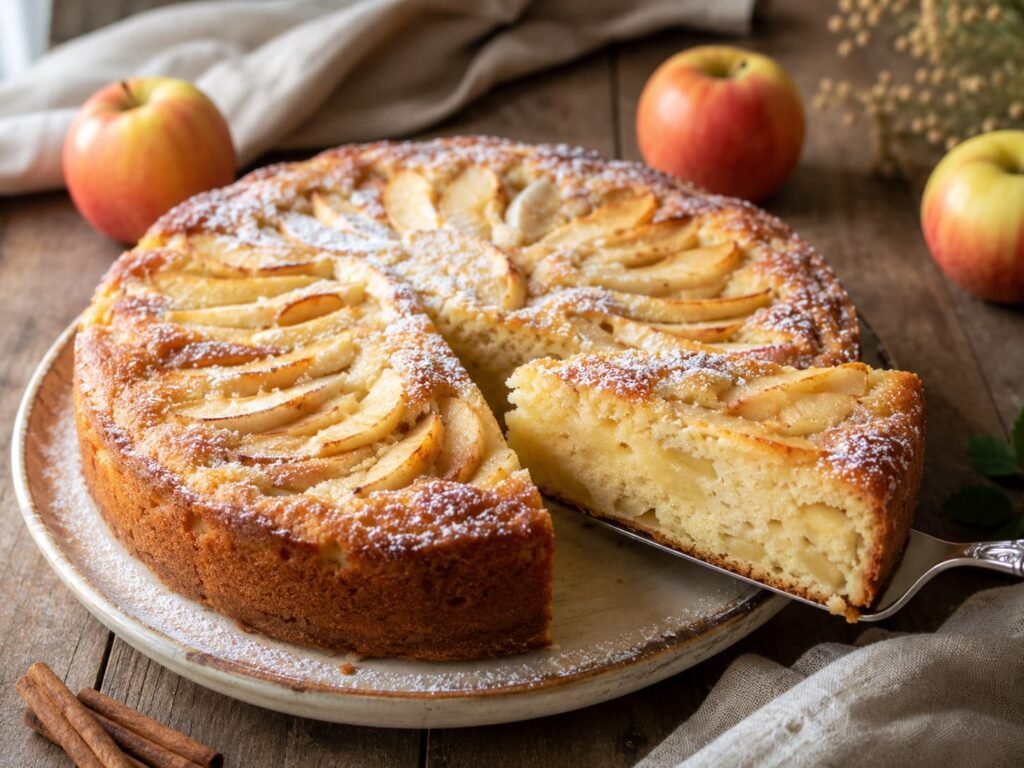
German apple cake is commonly known as Apfelkuchen, a German term meaning “apple cake.” It does not refer to one single standardized recipe. Different versions can use cake batter, firmer dough, fruit filling, streusel, or other toppings and additions.
Because the construction varies, two cakes described as Apfelkuchen may look and taste quite different. Understanding those differences is more useful than expecting every German apple cake to follow the same ingredient list or produce the same texture.
What Is German Apple Cake?
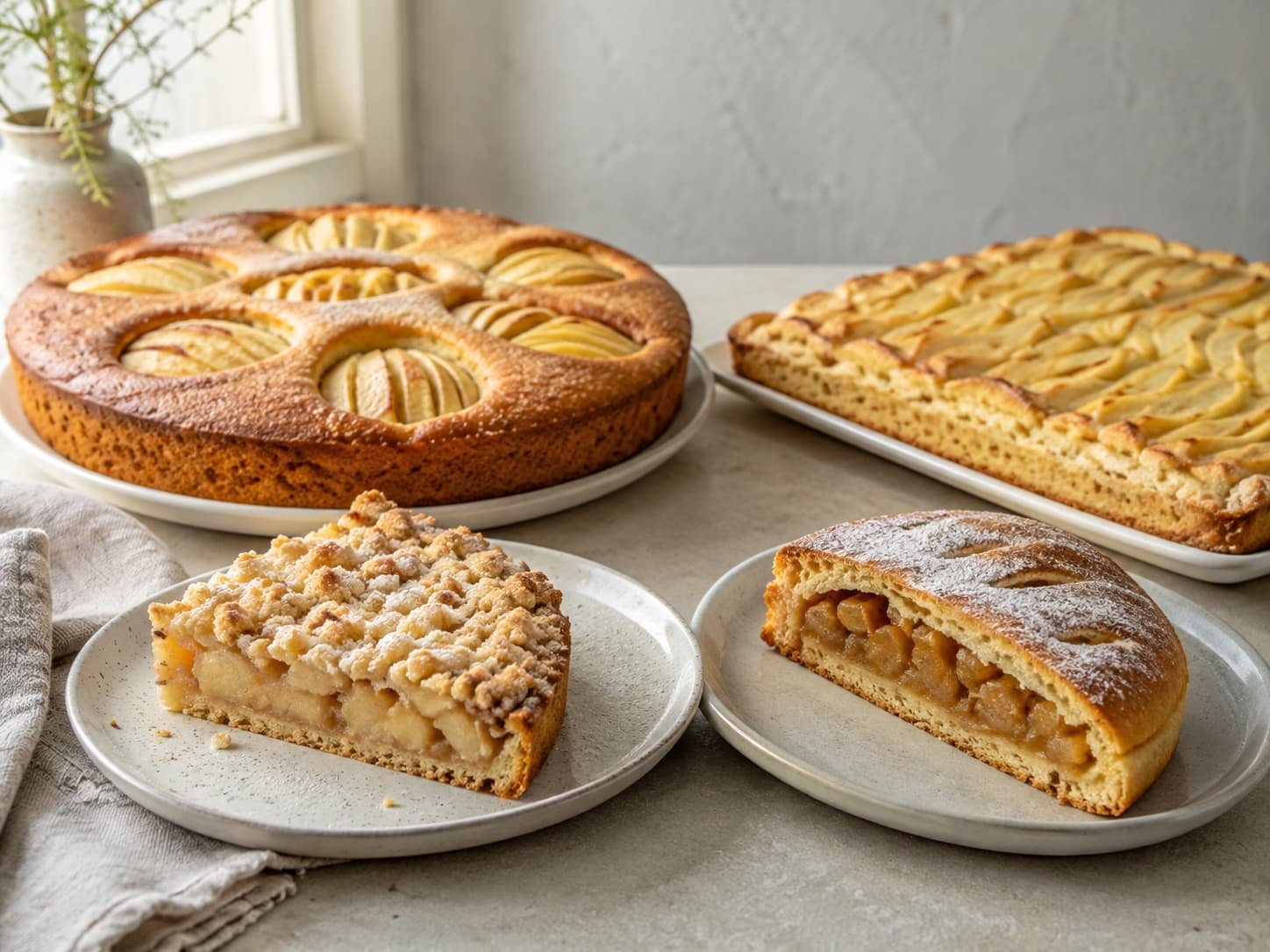
German apple cake is a broad category of apple-based cakes and baked desserts found in German baking.
Some versions place sliced or sectioned apples into cake batter. Others spread apples across a sheet-cake base, add a crumb topping, or enclose an apple filling between layers of dough.
The texture therefore depends on the particular style. A batter-based cake may have a cake-like crumb, while a covered version can have a firmer outer structure with a distinct apple filling.
What Ingredients Are Commonly Used in German Apple Cake?
Apples are the central fruit ingredient, but the surrounding ingredients depend on the type of Apfelkuchen being prepared.
Flour, butter or another fat, eggs, sugar, and leavening may appear in cake-style versions. Other preparations can rely on different dough structures. Cinnamon, lemon, vanilla, almonds, raisins, and streusel may also be used, but none should be treated as a requirement for every German apple cake.
Apples
Apple choice can influence both flavor and texture.
Different varieties soften differently when heated. Firmer apples may remain more distinct after baking, while softer varieties can break down more readily.
Sweetness and acidity also affect the overall flavor. A tart apple may create stronger contrast with a sweet batter or filling, while a sweeter variety can produce a different balance.
Moisture is another consideration. Apples contain water, and some varieties release more juice during baking than others. How that moisture affects the cake depends on the complete formula, including the amount of fruit and the surrounding batter or dough.
There is no single apple variety that must be used for every Apfelkuchen. Firmness, sweetness, acidity, and baking behavior are more useful considerations than declaring one variety universally best.
Batter, Dough, and Basic Baking Ingredients
German apple cakes do not all use the same type of base.
Flour provides structure in flour-based batters and doughs. Its effect depends on the amount used and the other ingredients in the formula.
Butter or another fat can contribute richness and influence texture. Changing the fat in a defined recipe may alter the result.
Eggs appear in many cake-style preparations and can contribute to structure and binding, although their exact role depends on the recipe.
Sugar adds sweetness and also participates in browning during baking.
Leavening may be included in cake-style versions, but it is not a universal Apfelkuchen ingredient. Dough-based preparations can use different methods to create their structure.
For this reason, ingredients from several different German apple cake recipes should not automatically be mixed into one formula.
Common Flavorings and Additions
German apple cakes may include additional ingredients that change their flavor, appearance, or texture.
Cinnamon appears in some apple cake preparations, but not all of them.
Lemon may be used as zest or juice to add citrus flavor and acidity.
Vanilla can appear in some cake batters or fillings.
Almonds may be used sliced, ground, or as part of an almond-based filling or topping.
Raisins are included in some versions but are not a defining ingredient.
Streusel is a crumb topping generally based on flour, sugar, and fat. It creates a separate crumbly layer and is one possible style rather than a requirement.
These variations help explain why Apfelkuchen cannot be reduced to one ingredient list.
How Do Apples Affect Texture and Moisture?
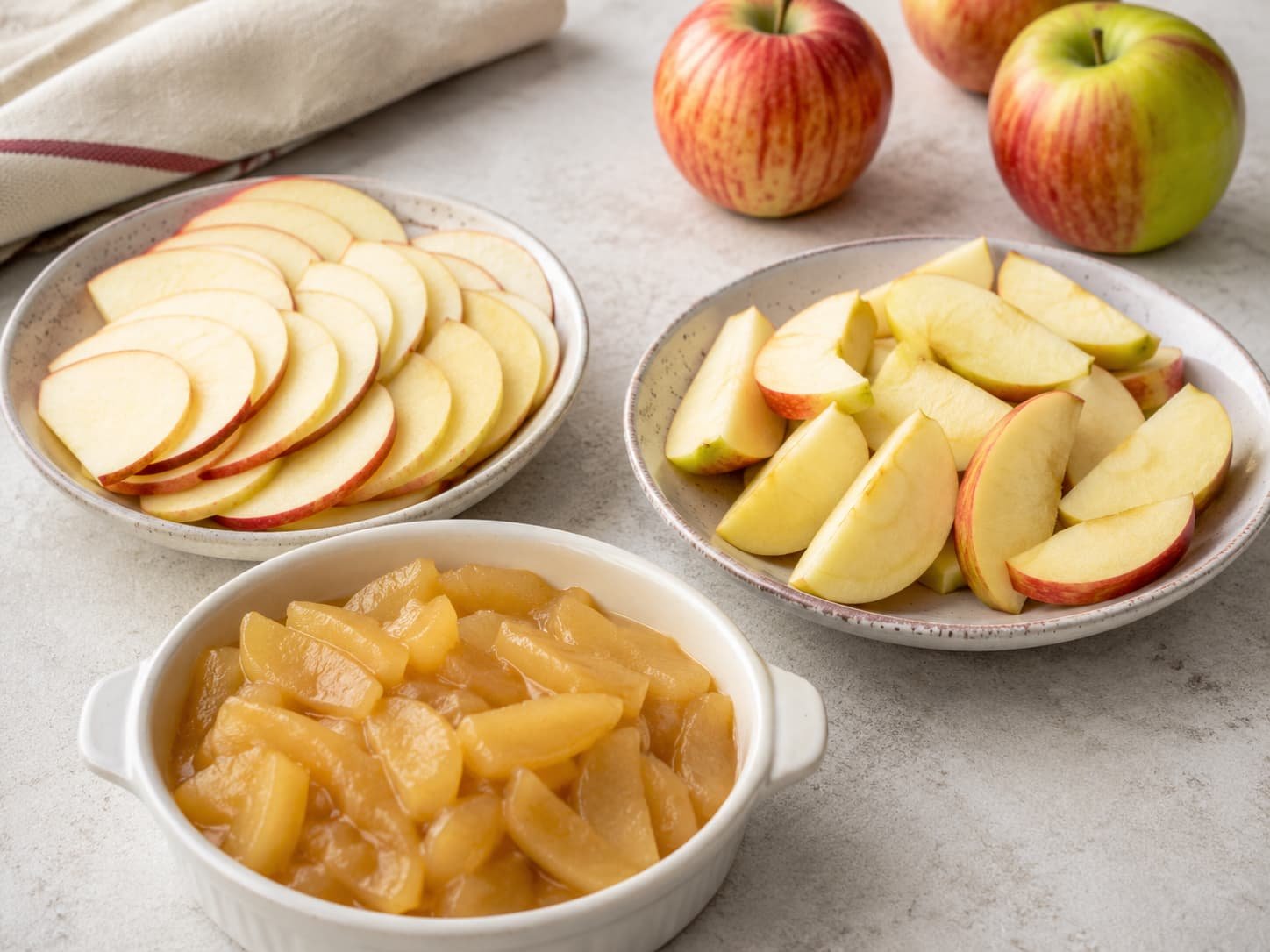
Apples can affect both the fruit layer and the surrounding cake or dough. The result depends on the apple variety, fruit quantity, preparation, and structure of the recipe.
Firmer apples may retain more recognizable slices or pieces after baking. Softer varieties may break down more readily and blend more into the surrounding filling or cake.
Piece size matters as well. Thin slices and larger apple sections do not necessarily soften at the same rate, so changing the cut specified by a recipe can affect the finished texture.
Apples also release moisture as they heat. In some formulas, a larger amount of fruit juice can contribute to softer or wetter areas around the apples.
A wet cake should not automatically be blamed on the fruit, however. Apple variety, fruit quantity, batter structure, pan depth, and baking conditions can all influence the result.
How Is German Apple Cake Commonly Prepared?
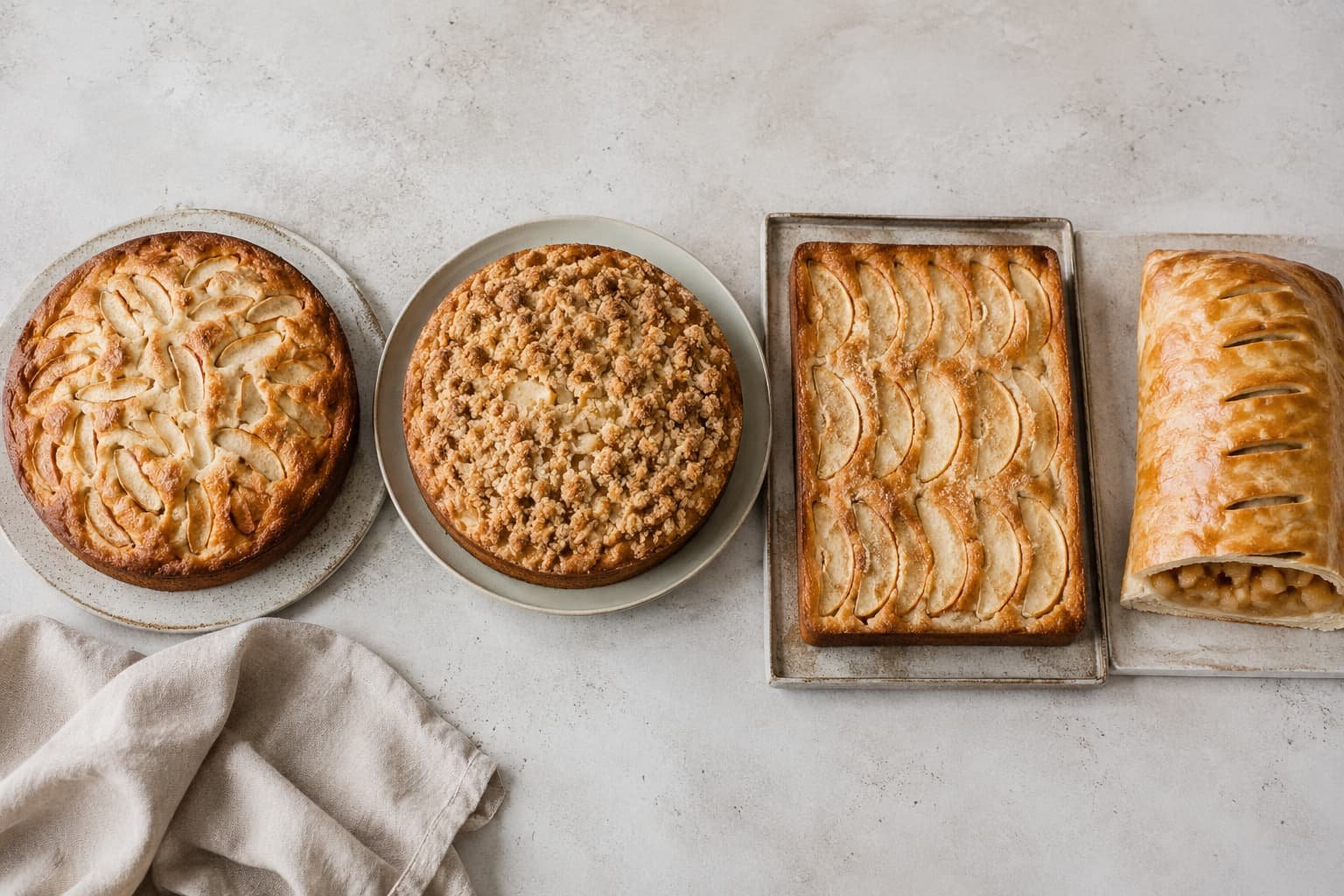
There is no single preparation method for every German apple cake. The main difference between styles is how the apples interact with the batter, dough, filling, or topping.
Apples Set Into Cake Batter
Versunkener Apfelkuchen, often described as sunken apple cake, places prepared apple pieces on or partly into cake batter.
As the cake bakes, the batter forms around the fruit, leaving the apples partly embedded in the surface. The exact shape and arrangement of the fruit can vary between recipes.
Apple Cake with Streusel
Some Apfelkuchen versions add streusel over the apples or cake base before baking.
This creates a separate crumbly layer above the fruit and gives the cake a different texture from an open-topped version.
Streusel is optional rather than a defining feature of German apple cake.
German Apple Sheet Cake
Apfelkuchen vom Blech refers to apple cake prepared in a tray or sheet-cake format.
Its wider, shallower shape spreads the cake base and fruit across a larger surface than many round cakes. Individual recipes may use different batters, doughs, toppings, and apple arrangements.
The name describes the format rather than one fixed recipe.
Covered German Apple Cake
Gedeckter Apfelkuchen is a covered form in which an apple filling is enclosed between layers of dough or crust.
This gives it a different structure from a cake where apples sit openly on or inside batter. The fruit forms a distinct filling rather than simply being arranged over the cake surface.
What Texture Should German Apple Cake Have?
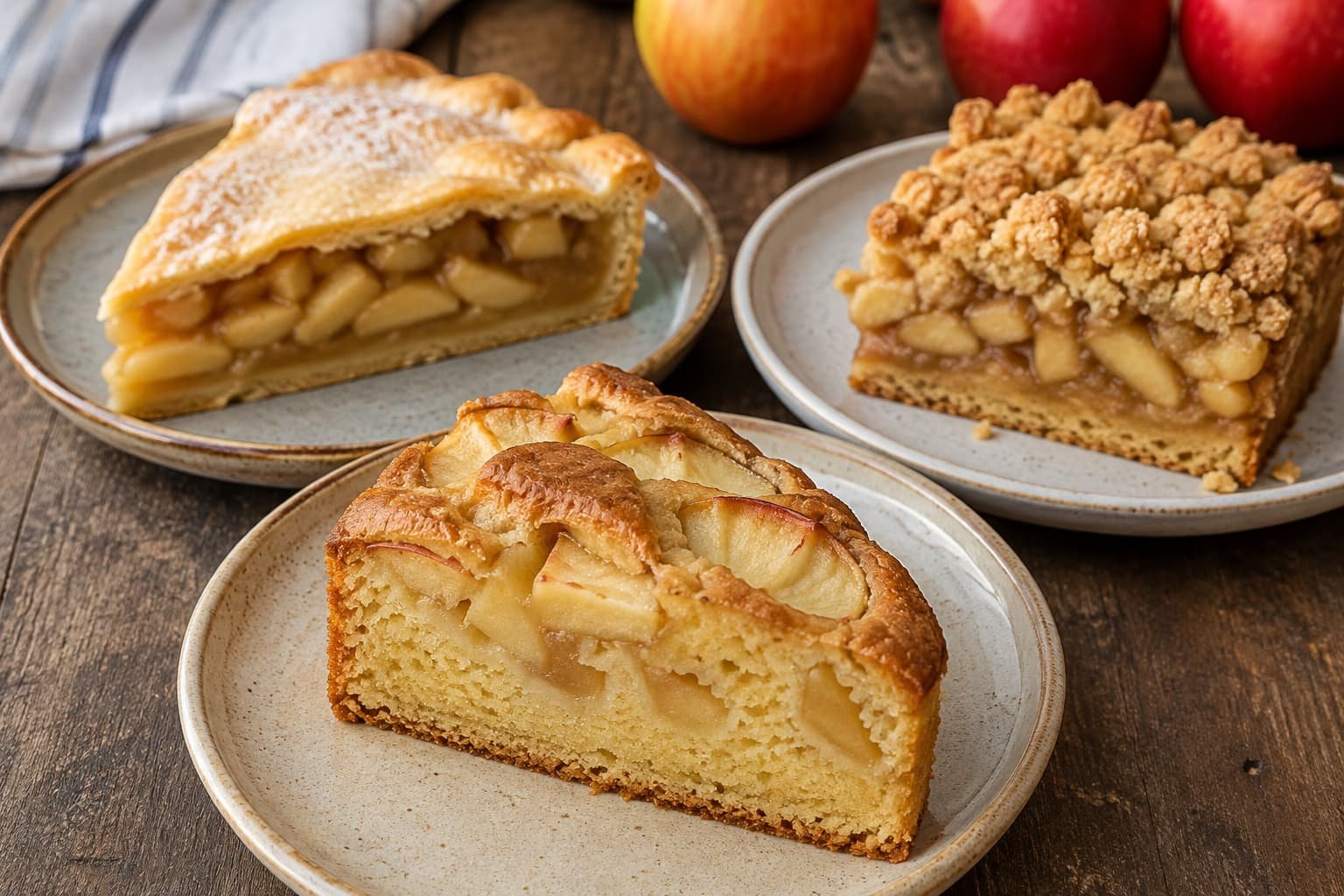
There is no single texture that defines every German apple cake.
A batter-based version may have a cake-like crumb with baked apples throughout or across the surface. A dough-based version can have a firmer foundation. A covered cake may contain a separate apple filling enclosed by dough.
Streusel versions add a crumbly upper layer, while sheet cakes may have thinner layers because the ingredients are spread across a wider pan.
The expected texture should therefore be judged according to the type of Apfelkuchen being prepared rather than against one universal standard.
Why Can German Apple Cake Become Too Wet or Dry?
Wetness or dryness can have several causes, and the explanation depends on the specific formula.
Too Much Moisture Around the Apples
Apples contain water, and some varieties can release more juice during baking than others.
A high proportion of fruit, juicy apples, large pieces, or densely arranged fruit may affect how much moisture is present around the cake or dough.
The center can also seem excessively wet when the surrounding structure has not fully set. Baking conditions, pan depth, ingredient balance, and fruit preparation can all contribute.
This means a wet result cannot be diagnosed reliably from the apples alone.
A Dry or Dense Result
A dry or dense cake can also result from more than one factor.
Using more flour than a formula is designed for may shift the balance between dry and wet ingredients. Changes to fat, eggs, liquids, sugar, or fruit can also alter the structure.
Baking conditions matter as well. More heat or a longer baking period than a particular formula requires can reduce moisture.
Rather than assuming one ingredient caused the problem, troubleshooting should consider the complete recipe and method.
Common German Apple Cake Variations
Several styles help show the range covered by the term Apfelkuchen.
Versunkener Apfelkuchen
Versunkener Apfelkuchen is a sunken-style apple cake in which apple pieces are positioned on or partly inside cake batter.
The fruit remains visible as part of the cake surface instead of being completely mixed through the batter.
Streusel-Topped Apfelkuchen
These versions add a crumb topping over the apple layer or cake base.
The streusel creates a contrasting crumbly surface above the softer fruit or cake underneath.
Apfelkuchen vom Blech
Apfelkuchen vom Blech is prepared as a tray or sheet cake.
It may use different bases and toppings, so the sheet format should not be mistaken for one standardized recipe.
Gedeckter Apfelkuchen
Gedeckter Apfelkuchen encloses an apple filling between layers of dough or crust.
Its construction is therefore different from both sunken batter cakes and open-topped sheet cakes.
German Apple Cake vs Other Apple Desserts
German apple cake, apple strudel, and apple pie can all contain baked apples, but their surrounding structures differ.
German Apple Cake vs Apple Strudel
Apple strudel uses thin strudel dough around an apple filling. The dough and filling may be rolled or folded together depending on the preparation.
Apfelkuchen can instead use cake batter, firmer dough, a sheet-cake base, streusel, or an enclosed crust.
The main difference is therefore structural: strudel relies on thin pastry dough, while German apple cake includes several cake and dough formats.
German Apple Cake vs Apple Pie
Apple pie generally contains an apple filling inside pie crust, often with a bottom crust and some form of upper crust.
Covered Apfelkuchen can appear similar because the apples are also enclosed by dough. Other German apple cakes are much more cake-like and may leave the apples visible.
German apple cake is therefore a broader category, while apple pie usually follows a more recognizable pie-crust-and-filling structure.
What Should You Consider Before Following a German Apple Cake Recipe?
First identify which style of Apfelkuchen the recipe is intended to make. A sunken cake, sheet cake, streusel-topped cake, and covered cake use different structures, so their methods should not automatically be combined.
Follow the apple preparation specified by the recipe. Changing slices into thick pieces, or changing the arrangement of the fruit, may affect how the apples soften and interact with the surrounding cake or dough.
Use the pan and baking instructions given for that particular formula. A shallow sheet cake behaves differently from a deeper round cake or an enclosed dough-based version.
Substitutions also deserve caution. Changing flour, fat, eggs, or leavening can alter the balance and structure of a recipe. A substitution that works in one Apfelkuchen should not automatically be assumed to work in another.
Most importantly, expect the finished texture to reflect the specific style rather than one universal idea of what German apple cake should be.
Frequently Asked Questions
Is German apple cake the same as Apfelkuchen?
Apfelkuchen means apple cake in German. The term covers several German apple cake styles rather than one fixed recipe.
Is there one traditional German apple cake recipe?
No. German baking includes several forms of Apfelkuchen that use different batters, doughs, fillings, toppings, and preparation methods.
Does German apple cake always have streusel?
No. Streusel appears on some versions, while others use exposed apples, different toppings, or an enclosed crust.
Does German apple cake always contain cinnamon?
No. Cinnamon is used in some apple cake preparations, but it is not required for every Apfelkuchen.
Should apples be peeled for German apple cake?
It depends on the recipe. Removing the peel changes the fruit’s texture and appearance, while leaving it on creates a different result. Follow the preparation specified by the formula you are using.
What kinds of apples can be used in German apple cake?
Different varieties can work depending on the cake. Firmness, sweetness, acidity, and how readily the apple softens during baking are useful characteristics to consider.
There is no single variety that is universally best for every type of Apfelkuchen.
Why do some German apple cakes have apples sunk into the batter?
Sunken-style cakes place apple pieces on or partly into batter before baking. As the cake forms around the fruit, the apples can remain partly embedded in the surface. This style is associated with Versunkener Apfelkuchen.
Is German apple cake supposed to be moist?
Not every version has the same moisture level. Batter-based cakes may have a more tender crumb, while dough-based and covered versions can be firmer. The expected texture depends on the particular style of Apfelkuchen.