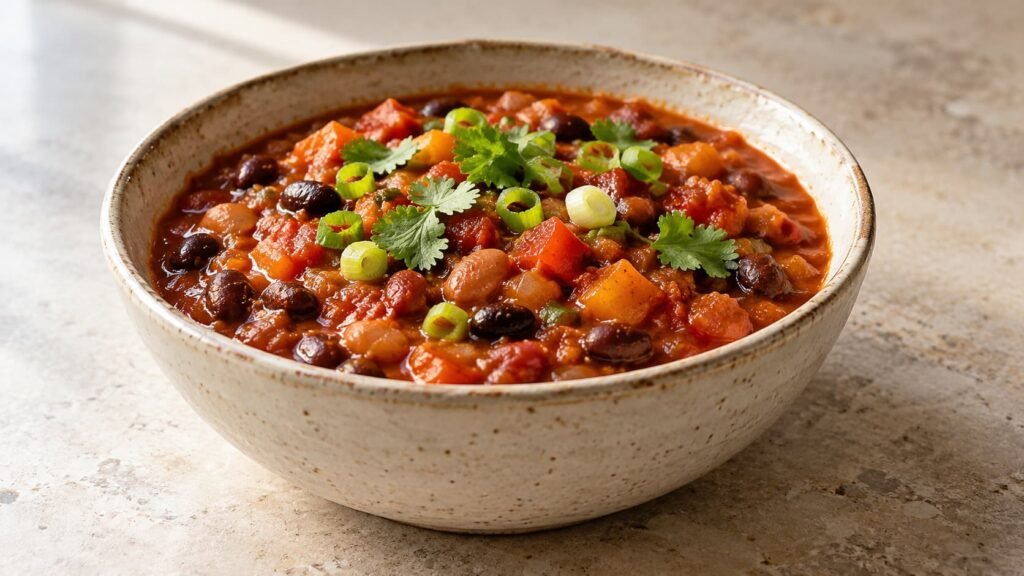
Crockpot pumpkin chili is a slow-cooked variation of chili made with pumpkin puree, beans, tomatoes, vegetables, and savory seasonings. The pumpkin adds a smooth base and mild, earthy flavor, while the other ingredients provide the texture and seasoning commonly associated with chili.
Unlike many traditional chili recipes, this version includes pumpkin puree alongside the tomatoes and other ingredients. It can be prepared with beans and vegetables or adapted to include ground turkey or beef.
The consistency and flavor depend on the ingredients and their proportions. Understanding these differences can help when choosing ingredients, preparing the mixture, and adjusting the finished dish.
What Is Crockpot Pumpkin Chili?
Crockpot pumpkin chili is a savory dish that combines pumpkin puree with familiar chili ingredients, such as tomatoes, beans, onions, peppers, and spices. The ingredients cook together in a slow cooker until the vegetables are tender and the mixture is thoroughly heated.
One important difference from conventional chili is the use of pumpkin puree as part of the base. Although chili recipes vary widely, many versions rely mainly on tomatoes, meat, beans, or broth for their consistency.
Pumpkin puree is smooth and relatively thick, so adding it can give the chili more body. However, the finished texture also depends on the quantity of broth, tomatoes, and other ingredients.
Pumpkin has a naturally mild flavor with earthy and slightly sweet notes. In a savory chili, ingredients such as cumin, garlic, chili powder, and tomatoes can balance those characteristics.
The dish does not necessarily taste sweet. Its flavor depends on the amount of pumpkin used and the surrounding seasonings.
Some versions may resemble a thick stew, while others have a more fluid consistency. Neither texture is required for every pumpkin chili variation.
What Ingredients Are Commonly Used in Crockpot Pumpkin Chili?
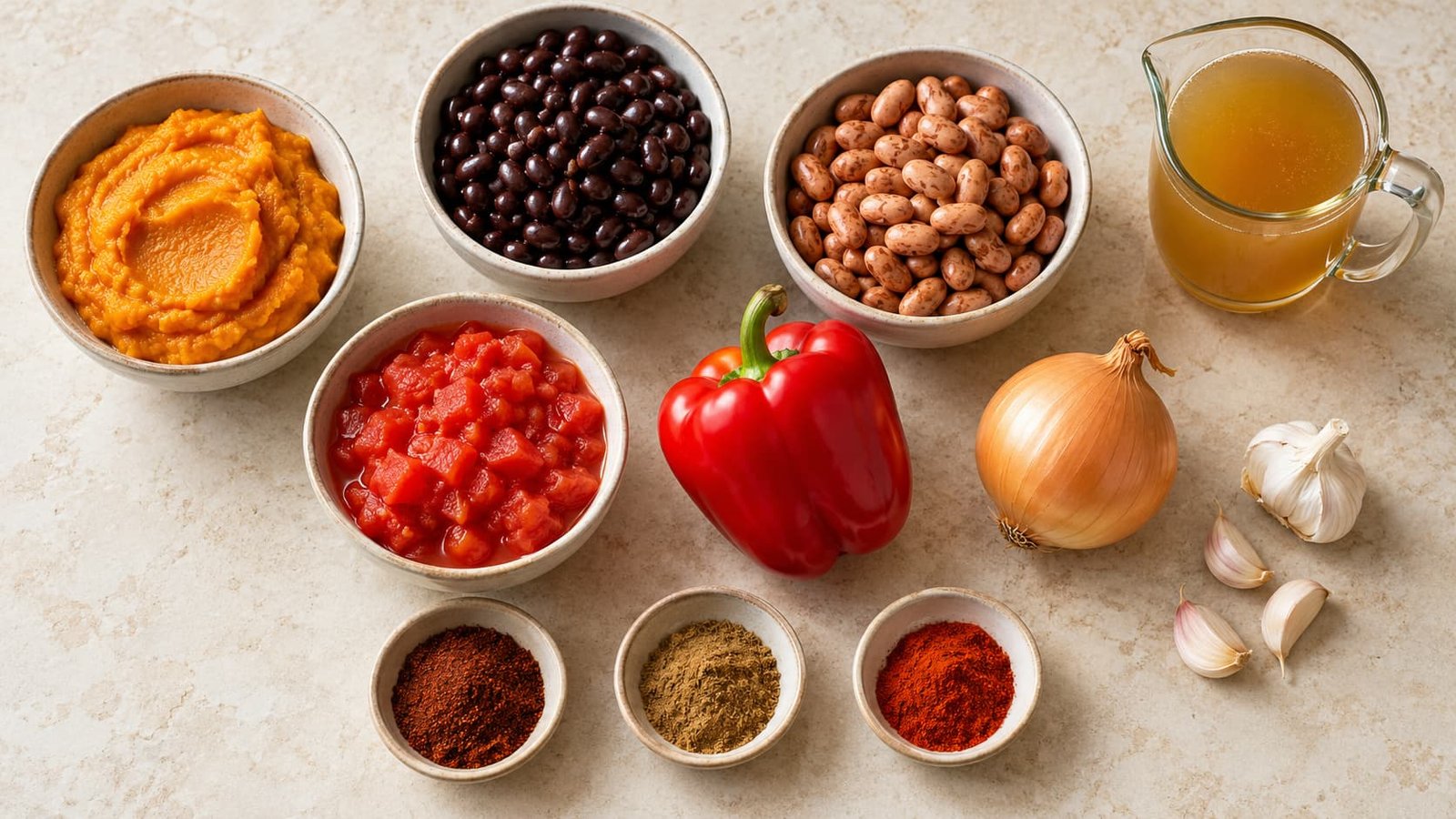
Common ingredients include plain pumpkin puree, cooked beans, canned tomatoes, vegetables, broth, and chili seasonings. These ingredients contribute different flavors and textures, but their quantities can vary between recipes.
A vegetarian version may use beans and additional vegetables, while other preparations may include ground meat.
Pumpkin Puree, Beans, and Tomatoes
Pumpkin puree provides the characteristic pumpkin element. Commercially canned pumpkin puree is typically cooked and processed into a smooth consistency, making it convenient to mix with other chili ingredients.
Fresh pumpkin can also be cooked and pureed before use. Homemade puree may contain a different amount of moisture than canned puree, which can affect the final thickness.
Plain pumpkin puree and pumpkin pie filling are not interchangeable in every savory recipe. Pumpkin pie filling generally contains added sweeteners and spices intended for desserts. Plain puree is a more suitable starting point when the goal is to control the chili’s savory flavor.
Beans add substance and a different texture from the smooth pumpkin base. Black beans, pinto beans, and kidney beans are possible options.
Canned beans are already cooked and can be drained and rinsed before use.
Raw or undercooked kidney beans require particular care because they contain phytohaemagglutinin, a naturally occurring lectin that can cause illness. The FDA advises proper boiling before consumption and warns that slow cookers alone may not reach the temperatures needed to make improperly prepared dried kidney beans safe.
Using commercially canned kidney beans avoids the need to prepare dried kidney beans from scratch.
Tomatoes provide moisture and acidity. Diced tomatoes retain more distinct pieces, while crushed tomatoes create a smoother base.
The ratio of tomatoes to pumpkin affects the overall consistency. More pumpkin puree may make the chili thicker, while the liquid in canned tomatoes can make it looser.
Vegetables, Broth, and Chili Seasonings
Onions, garlic, and bell peppers are common vegetables in pumpkin chili. They contribute different flavors and textures without changing the basic character of the dish.
Other possible additions include corn, carrots, and sweet potatoes. These are optional variations rather than necessary ingredients.
Broth helps combine the puree, tomatoes, beans, and seasonings. Vegetable broth is appropriate for a meat-free version, while chicken or beef broth can be used in other preparations.
The amount of liquid should be considered alongside the moisture already present in the canned tomatoes and pumpkin puree.
A large amount of broth may produce a thinner chili. Using less broth may help maintain a thicker consistency, although the mixture still needs enough moisture for the intended slow-cooker preparation.
Seasonings provide much of the savory character. Common possibilities include:
- Chili powder for pepper-based seasoning.
- Ground cumin for an earthy flavor.
- Smoked paprika for a smoky note.
- Dried oregano for herbal flavor.
- Salt and black pepper for general seasoning.
- Cayenne pepper for additional heat.
Some variations use a small amount of cinnamon. This is a flavor choice rather than an essential ingredient, and its suitability depends on the intended seasoning profile.
How Do You Make Crockpot Pumpkin Chili at Home?
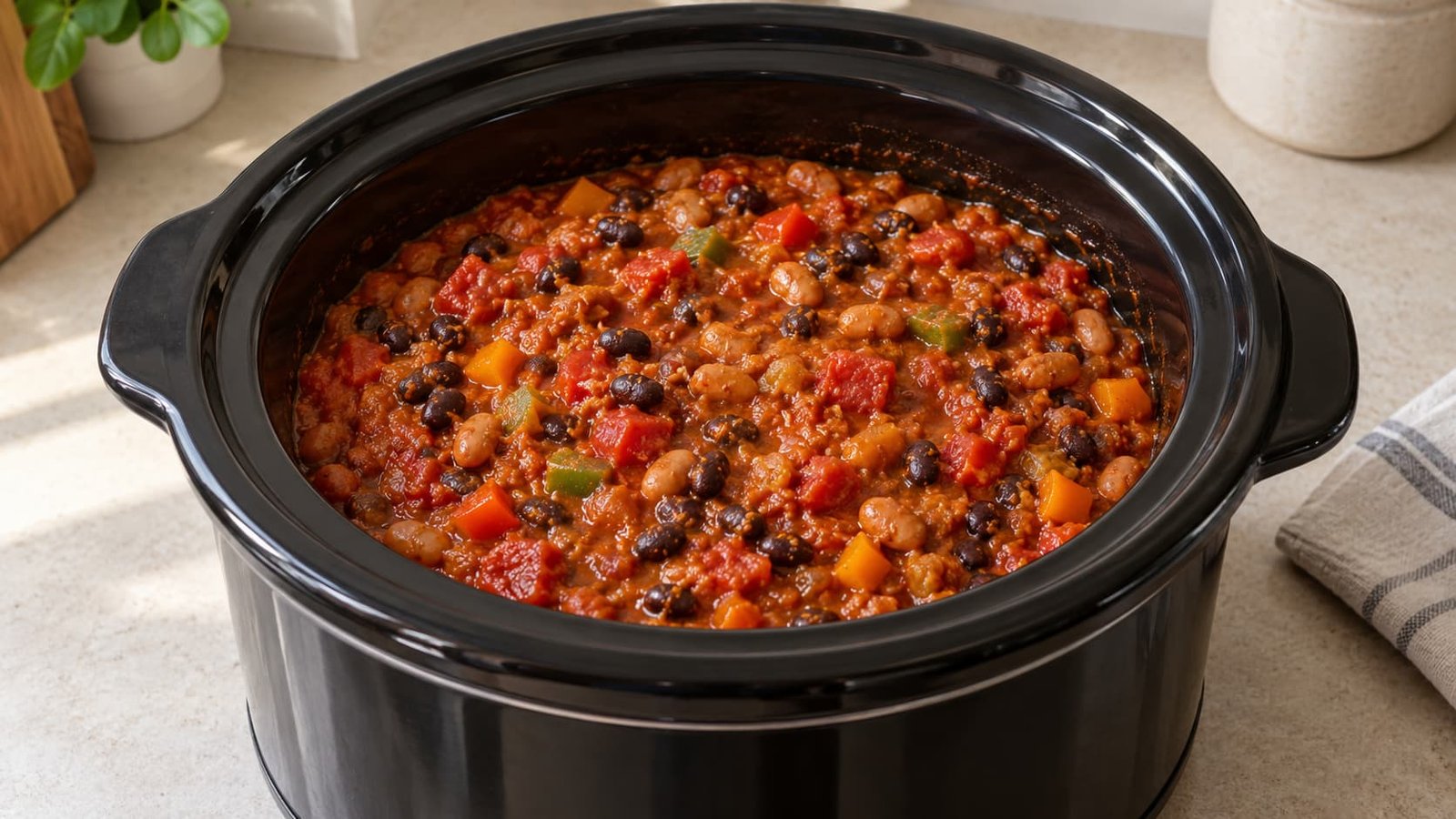
A general preparation method involves combining pumpkin puree, cooked beans, tomatoes, vegetables, broth, and seasonings in a slow cooker, then cooking the mixture until the vegetables are tender.
This describes a commonly used approach, not a personally tested recipe. Without a defined and verified ingredient formula, an exact cooking time, yield, or final consistency cannot be established.
Preparing and Combining the Ingredients
Start with clean utensils, a clean work surface, and properly prepared ingredients.
Wash the vegetables, then dice the onion and bell pepper. Peel and mince the garlic.
Cutting vegetables into reasonably similar-sized pieces may help them cook more evenly.
Drain and rinse canned beans if preferred. Plain canned pumpkin puree can be mixed directly with the other ingredients.
Place the chopped vegetables, cooked beans, pumpkin puree, and tomatoes in the slow cooker. Add the selected seasonings and an appropriate amount of broth.
Stir the mixture to distribute the puree and spices.
Do not exceed the slow cooker’s recommended capacity, and follow the manufacturer’s instructions for the amount of liquid and food it can accommodate.
For meat-based versions, ground beef or turkey may be cooked separately before being combined with the other ingredients. Browning can also allow excess fat to be drained.
Keep raw meat separate from ready-to-eat ingredients during preparation to reduce the risk of cross-contamination.
Cooking the Chili in a Slow Cooker
After combining the ingredients, cover the slow cooker and select a cooking setting appropriate for the appliance and preparation.
Most slow cookers offer low and high settings. Cooking time varies according to the model, amount of food, and ingredients.
USDA guidance explains that slow cookers use low, sustained heat to cook food and that keeping the lid in place helps maintain the cooking environment.
Because this article does not provide a verified ingredient formula, it does not assign a specific number of cooking hours.
The vegetables should become tender, and all ingredients must be cooked safely before serving.
If the chili contains ground meat, use a food thermometer to confirm the appropriate minimum internal temperature:
- Ground beef: 160°F (71°C).
- Ground turkey: 165°F (74°C).
These temperatures follow USDA food-safety recommendations.
Meat and poultry should be thawed safely before being placed in a slow cooker. The USDA cautions that frozen meat may take too long to reach a safe temperature in this type of appliance.
A slow cooker’s warm setting should not be used as a substitute for its cooking settings.
Checking the Texture and Adjusting the Seasoning
Once the ingredients are fully cooked, the chili’s consistency can be adjusted according to preference.
Pumpkin puree contributes a smooth texture, but the amount of liquid in the tomatoes, broth, and vegetables can affect the result.
If the mixture appears too thick, a small amount of additional hot broth may help loosen it. Add liquid gradually so the change is easier to control.
If it appears too thin, mashing some of the cooked beans into the mixture may increase its thickness. This is a practical adjustment, not a guarantee of a particular texture.
The seasoning can also be adjusted after cooking.
Additional cumin or chili powder may create a more pronounced savory flavor. Cayenne pepper or another hot pepper can increase the heat, although the effect depends on the type and amount used.
Salt should be adjusted with consideration for the sodium already present in canned beans, tomatoes, broth, and seasoning blends.
The chili can be served with optional toppings such as green onions, cilantro, shredded cheese, or plain yogurt.
These additions provide different flavors and textures, and their suitability depends on personal preference and dietary requirements.
How Can You Adjust the Flavor and Consistency of Pumpkin Chili?
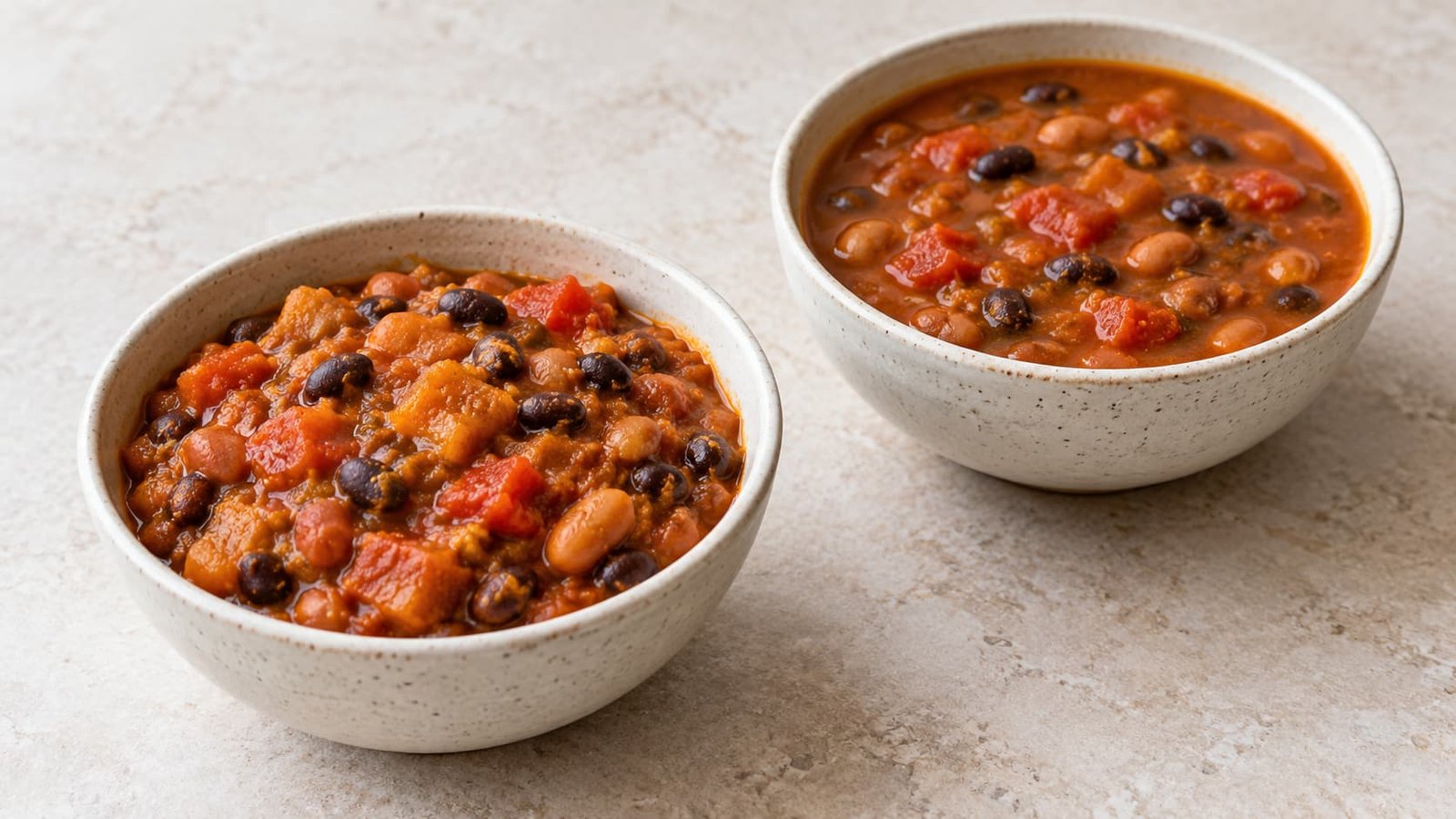
The flavor and thickness of pumpkin chili depend on the balance of pumpkin puree, tomatoes, beans, broth, and seasonings. Adjusting one ingredient at a time can make it easier to control the final result.
Balancing Pumpkin, Tomatoes, and Chili Spices
Pumpkin puree has a mild, earthy flavor with some natural sweetness. Tomatoes contribute acidity, while garlic, cumin, and chili powder add savory notes.
If the pumpkin flavor seems too noticeable, adjusting the seasonings may help create a different balance. However, adding spices does not remove the pumpkin’s natural sweetness.
Increasing the amount of tomatoes may produce a more tomato-forward flavor. Additional pumpkin puree, on the other hand, may create a milder and thicker base.
Cumin and chili powder can be adjusted according to preference. Cayenne pepper or fresh chili peppers are options for increasing heat, although their strength varies by type and quantity.
For greater control, add seasonings gradually and taste the fully cooked mixture before making further adjustments.
Making Pumpkin Chili Thicker or Thinner
Pumpkin puree contributes a smooth, relatively thick consistency. Beans also add body, while tomatoes and broth provide moisture.
The final texture depends on the proportions of these ingredients.
If the chili seems too thick, adding a small amount of hot broth may help loosen it. Stir thoroughly and assess the consistency before adding more liquid.
For a thinner mixture, vegetable broth is suitable for vegetarian preparations. Chicken or beef broth may be used in meat-based versions.
If the chili seems too thin, mashing some of the cooked beans into the mixture may help thicken it. This is a practical cooking adjustment rather than a guaranteed result.
Another option is to use less broth in a future preparation, provided the mixture still contains sufficient liquid for the slow cooker and the selected cooking method.
Because pumpkin puree, canned tomatoes, and vegetables can contain different amounts of moisture, adjustments may produce different results between preparations.
What Variations of Crockpot Pumpkin Chili Can You Make?
Pumpkin chili can be adapted with different beans, vegetables, and meat options. The pumpkin and tomato base can remain similar, while the additional ingredients change the flavor and texture.
Vegetarian Pumpkin Chili
A vegetarian version can be prepared using pumpkin puree, tomatoes, cooked beans, vegetables, and vegetable broth.
Black beans and pinto beans are possible choices because they provide a different texture from the smooth pumpkin base. Properly prepared kidney beans or cooked lentils can also be used.
Bell peppers, corn, carrots, and sweet potatoes are other possible additions.
Sweet potatoes contain natural sugars and may contribute a mildly sweet flavor. Their effect on the finished dish depends on the quantity used and the other ingredients.
For a vegetarian preparation, check the labels on broth and seasoning products for meat-derived ingredients.
A meat substitute is optional rather than necessary.
Pumpkin Chili With Ground Turkey or Beef
Ground turkey or ground beef can be added to create a meat-based variation.
The flavor and fat content depend on the type of meat selected. Ground beef may provide a richer flavor, while ground turkey offers a different taste and texture.
Browning the meat separately before combining it with the other ingredients is one possible approach. This allows excess rendered fat to be drained.
According to USDA food-safety guidance, ground beef must reach a minimum internal temperature of 160°F (71°C), while ground turkey must reach 165°F (74°C).
A food thermometer should be used to check doneness rather than relying on color or appearance.
Adding meat changes the proportion of solids to liquid, so the amount of broth may need adjustment.
How Should You Store and Reheat Pumpkin Chili?
Cooked pumpkin chili should be refrigerated promptly, stored at safe temperatures, and thoroughly reheated before serving again.
Refrigerating Leftover Chili
Transfer leftovers into shallow containers to help them cool quickly.
Refrigerate within two hours after cooking, or within one hour if the surrounding temperature is above 90°F (32°C).
Keep the refrigerator at 40°F (4°C) or below.
According to USDA and FoodSafety.gov guidance, cooked soups and stews containing vegetables or meat can generally be refrigerated for three to four days.
Discard leftovers that have remained at room temperature beyond the recommended safety limits.
Freezing Pumpkin Chili
Pumpkin chili can be divided into smaller portions and stored in freezer-safe containers.
Keep the freezer at 0°F (-18°C) or below.
FoodSafety.gov recommends approximately two to three months of freezer storage for the best quality of soups and stews.
This period relates to quality rather than a strict safety deadline. Food kept continuously frozen at 0°F (-18°C) or below can remain safe longer, although its texture and flavor may deteriorate.
Beans and vegetables may become softer after freezing and thawing. Stirring during reheating can help distribute the ingredients evenly.
Reheating Pumpkin Chili
Leftover chili can be reheated on the stovetop or in a microwave.
USDA guidance recommends reheating leftovers to an internal temperature of 165°F (74°C). Soups and similar liquid dishes should also be brought to a rolling boil.
When using a microwave, stir the chili and check its temperature in several places to reduce the risk of uneven heating.
Do not use a slow cooker to reheat refrigerated leftovers because the food may heat too slowly.
If necessary, properly reheated chili can be transferred to a preheated slow cooker and maintained at 140°F (60°C) or above for hot holding.
Frequently Asked Questions About Crockpot Pumpkin Chili
Does Pumpkin Chili Taste Sweet?
Not necessarily. Plain pumpkin puree has a mild flavor with some natural sweetness, but tomatoes, garlic, beans, and chili seasonings can create a savory dish.
The final taste depends on the ingredient proportions. A version containing more pumpkin or naturally sweet vegetables may have a more noticeable sweetness.
Can You Use Fresh Pumpkin Instead of Canned Pumpkin?
Yes. Fresh pumpkin can be cooked and blended into puree before being added to chili.
Homemade puree may contain a different amount of moisture than commercially canned puree. The broth may therefore need adjustment.
Use properly prepared pumpkin rather than assuming that raw and cooked pumpkin puree will behave the same way.
Can You Make Pumpkin Chili Without Beans?
Yes. Beans can be omitted, although removing them will change the texture and substance of the dish.
Vegetables such as sweet potatoes, bell peppers, or carrots may be used instead. Ground turkey or beef is another option for meat-based variations.
Because cooked beans contribute body, bean-free chili may require a different balance of pumpkin puree and broth.
Can You Use Pumpkin Pie Filling in Pumpkin Chili?
Plain pumpkin puree is generally a more suitable choice for savory chili.
Pumpkin pie filling commonly contains added sweeteners and spices intended for desserts. These ingredients may change the savory flavor of the dish.
Check the ingredient label before selecting a canned pumpkin product.
Final Thoughts
Crockpot pumpkin chili combines pumpkin puree with beans, tomatoes, vegetables, and savory seasonings. The balance of these ingredients determines much of its flavor and consistency.
The dish can be adapted with vegetarian ingredients or ground meat, while broth and cooked beans offer practical ways to adjust its thickness.
Choosing suitable ingredients, following the slow cooker’s instructions, and using safe storage and reheating practices are important considerations when preparing pumpkin chili at home.