
A great egg white omelette recipe should be light, fluffy, flavorful, and easy to make, yet many home cooks struggle with omelettes that turn dry, flat, or rubbery. The secret is not complicated ingredients or professional equipment. In most cases, success comes down to properly whisking the egg whites, controlling the heat, and knowing exactly when to fold the omelette.
If you’re looking for a quick healthy breakfast that is high in protein and simple enough for beginners, an egg white omelette is hard to beat. It cooks in minutes, can be customized with your favorite vegetables or cheese, and provides a satisfying start to the day without feeling heavy. One of the most common mistakes people make is cooking egg whites over high heat, which causes them to lose their soft texture and become tough.
In this guide, you’ll learn how to make the perfect omelette recipe with egg whites, including the simple techniques that help create a fluffy, tender omelette every time. Whether you’re preparing breakfast before work or looking for a healthy meal after a workout, this recipe delivers reliable results with minimal effort.
Why This Egg White Omelette Recipe Works
This egg white omelette recipe works because it combines simplicity, nutrition, and texture in a breakfast that takes only a few minutes to prepare. It delivers a generous amount of protein while remaining lighter than many traditional omelettes, making it an excellent choice for busy mornings, post-workout meals, or anyone looking for a healthy breakfast that feels satisfying without being overly heavy.
One of the biggest advantages of an egg white omelette is its balance between protein and calories. Since the yolks are removed, the omelette contains less fat and fewer calories than a whole egg omelette while still providing quality protein that helps keep you full throughout the morning. That makes it a popular option for people who want a high-protein breakfast without sacrificing flavor or texture.
Another reason this healthy omelette recipe stands out is its versatility. The mild flavor of egg whites pairs well with a wide variety of ingredients, including spinach, mushrooms, bell peppers, onions, herbs, and cheese. Whether you prefer a vegetable-packed breakfast or a protein-rich meal with a small amount of cheese, the recipe can easily be adjusted to suit your preferences.
The cooking method also plays an important role in the final result. Many people assume egg white omelettes are naturally dry, but that usually happens when they are cooked over heat that is too high. Egg whites cook faster than whole eggs, so gentle heat allows them to set gradually while retaining moisture. Whisking the egg whites before cooking introduces air, helping create the light and fluffy texture that makes a perfect omelette recipe so enjoyable.
Perhaps the best part is how approachable this recipe is. The ingredients are affordable, the preparation is straightforward, and the entire process can be completed in less time than many other breakfast recipes. With the right technique, even beginners can consistently make a fluffy egg white omelette that is tender, flavorful, and never rubbery.
Ingredients You Need for an Egg White Omelette

The best egg white omelette recipe starts with a handful of fresh ingredients. Each ingredient contributes something important, whether it is flavor, texture, color, or nutrition. Choosing quality ingredients and preparing them properly can make a noticeable difference in the final result.
Main Ingredients
- 4 large egg whites
- ¼ teaspoon salt
- ¼ teaspoon black pepper
- 1 teaspoon olive oil spray or 1 teaspoon butter
- ½ cup fresh spinach, roughly chopped
- ¼ cup mushrooms, sliced
- ¼ cup bell peppers, diced
- 2 tablespoons onion, finely chopped
- 2 tablespoons shredded cheese (optional)
- 1 tablespoon fresh herbs such as parsley, chives, or dill
Understanding the Ingredients
Egg whites are the foundation of this recipe. They provide high-quality protein while keeping the omelette lighter and lower in calories than a traditional egg omelette. When whisked properly, they also create the airy structure needed for a fluffy texture.
Spinach adds freshness and blends naturally with egg whites without overpowering their delicate flavor. Mushrooms contribute a rich, savory taste that helps make the omelette feel more substantial. For the best texture, it is often worth sautéing mushrooms briefly before adding them, as they release moisture during cooking.
Bell peppers bring a subtle sweetness and a slight crunch, while onions add depth and aroma. Together, they create a vegetable filling that adds flavor without making the omelette heavy.
Cheese is optional but can provide a creamy texture and richer flavor. A small amount is often enough to enhance the omelette without overpowering the vegetables. Options such as feta, mozzarella, cheddar, or goat cheese all work well.
Fresh herbs may seem like a small addition, but they can completely change the flavor of the finished dish. Chives add a mild onion flavor, parsley contributes freshness, and dill pairs particularly well with vegetables and cheese.
For the fluffiest results, fresh egg whites are generally preferred over carton egg whites. Many home cooks notice that freshly separated egg whites whisk more easily and hold more air, helping create a lighter texture. Carton egg whites remain a convenient alternative, but fresh egg whites often produce a slightly softer and more delicate omelette when cooked over gentle heat.
How to Make the Perfect Egg White Omelette Step by Step

Making a fluffy egg white omelette is less about complicated techniques and more about getting a few small details right. The key is to cook the egg whites gently, avoid overcrowding the pan, and remove the omelette from the heat before it becomes dry. Follow these simple steps for consistent results every time.
Step 1: Prepare the Egg Whites
Crack the eggs and separate the whites from the yolks, placing the egg whites in a medium mixing bowl. Add the salt and black pepper, then whisk vigorously for 30 to 45 seconds until the mixture becomes slightly frothy and small bubbles appear across the surface.
This step is often overlooked, but it plays an important role in creating a fluffy egg white omelette. Whisking introduces air into the egg whites, helping them cook into a lighter and more tender texture.
Step 2: Heat the Pan Properly
Place a non-stick skillet over low to medium-low heat and lightly coat it with olive oil spray or butter. Allow the pan to warm for about a minute before adding the egg whites.
Many people make the mistake of using high heat to speed up the process. Egg whites cook quickly, and excessive heat can cause them to become tough before the center has fully set. A gently heated pan gives you more control and produces a softer omelette.
Step 3: Cook the Egg Whites Slowly
Pour the whisked egg whites into the pan and allow them to cook undisturbed for about 1 to 2 minutes. As the edges begin to set, use a silicone spatula to gently lift them, allowing any uncooked egg white to flow underneath.
Continue cooking until the surface is mostly set but still slightly glossy. At this stage, the omelette should look soft and delicate rather than completely dry.
Step 4: Add Healthy Fillings
Once the bottom is set and the top remains slightly moist, add the spinach, mushrooms, bell peppers, onions, and optional cheese to one side of the omelette.
If using mushrooms, consider sautéing them beforehand. Mushrooms naturally release moisture during cooking, and pre-cooking them helps prevent excess water from affecting the texture of the omelette. The same principle applies to other vegetables with a high water content.
Step 5: Fold and Serve
Using a spatula, carefully fold the empty side of the omelette over the fillings. Cook for another 30 to 60 seconds, just until the cheese begins to melt and the omelette is fully set.
Remove the omelette from the pan immediately and garnish with fresh herbs. Keep in mind that residual heat will continue cooking the eggs for a short time after they leave the pan, so avoiding overcooking is one of the easiest ways to maintain a tender texture.
Serve warm and enjoy your perfect egg white omelette recipe while it is fresh.
Tips for a Fluffy Egg White Omelette
A light and fluffy omelette comes down to technique more than ingredients. Even small adjustments can make a noticeable difference in the final texture.
Start by whisking the egg whites thoroughly before they go into the pan. Vigorous whisking traps air inside the mixture, helping create a softer and more airy omelette. If the egg whites are barely mixed, the finished omelette may feel dense and flat.
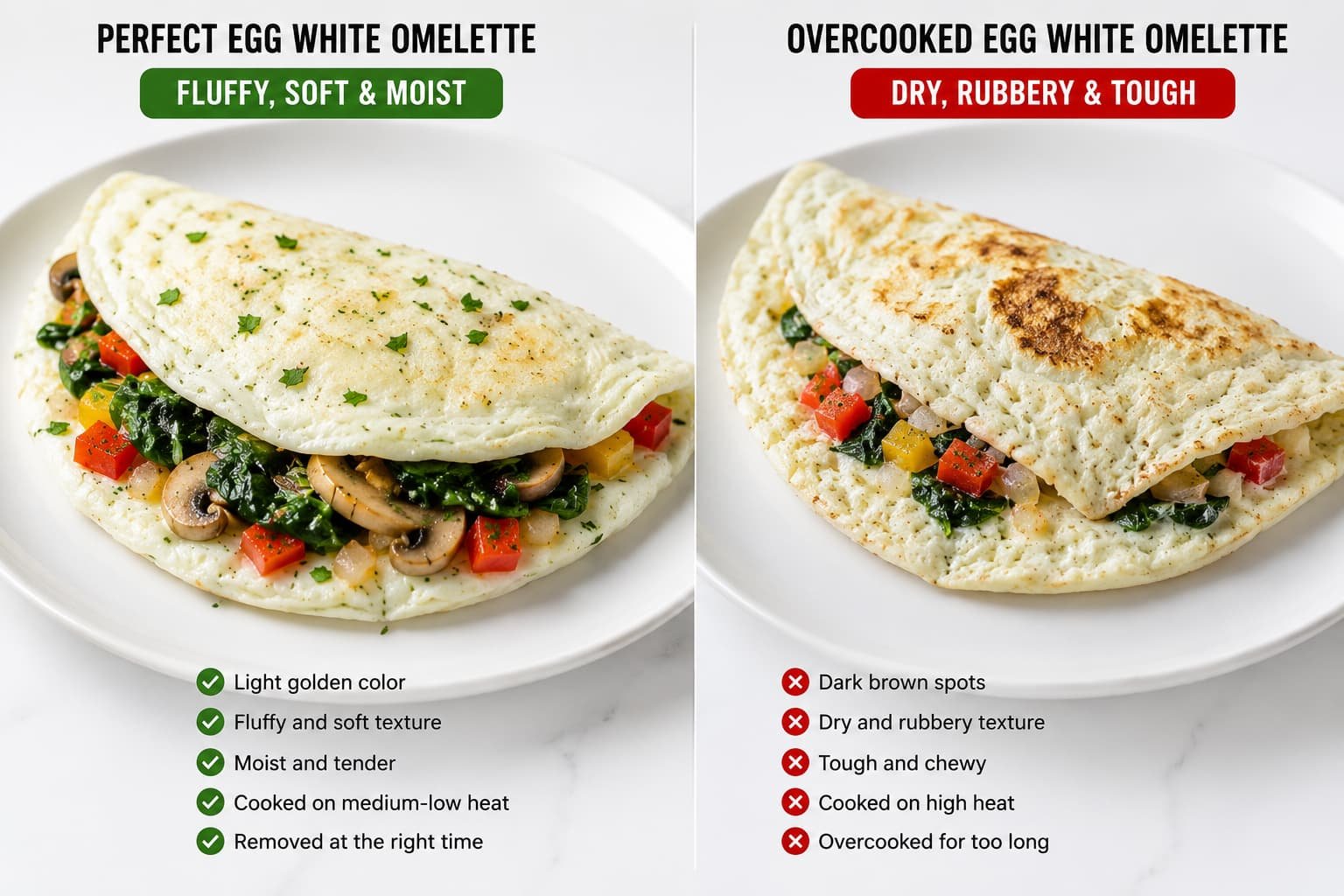
Always cook over low to medium-low heat. Egg whites are delicate and cook faster than whole eggs. Gentle heat allows them to set gradually without becoming dry or rubbery.
Use a quality non-stick skillet whenever possible. A reliable pan makes folding easier and reduces the risk of tearing the omelette while it cooks.
Wait until the bottom has started to set before adding fillings. Adding vegetables too early can interfere with the cooking process and make the omelette difficult to fold.
Be mindful of vegetables that release a large amount of moisture. Mushrooms, tomatoes, and some peppers can add excess water if they are not cooked beforehand. Briefly sautéing them often leads to a better texture.
Most importantly, avoid overcooking. The omelette should still look slightly moist when removed from the heat. Residual heat will finish the cooking process, helping preserve the soft texture that makes a fluffy egg white omelette so enjoyable.
Common Mistakes That Make Egg White Omelettes Rubbery
Egg white omelettes usually become rubbery because of excessive heat, overcooking, insufficient whisking, excess moisture from fillings, or poor pan control. Fortunately, these mistakes are easy to avoid once you understand how egg whites behave during cooking.
One of the biggest causes of a tough omelette is cooking over heat that is too high. Egg whites contain proteins that tighten quickly when exposed to excessive heat. While high temperatures may seem like a faster way to cook breakfast, they often produce an omelette that looks done on the outside while becoming dry and chewy on the inside. A low to medium-low temperature gives the egg whites time to cook evenly and retain moisture.
Overcooking creates a similar problem. Many people wait until every part of the omelette looks completely dry before removing it from the pan. In reality, egg whites continue cooking for a short period after leaving the heat. Taking the omelette off the stove when the surface still appears slightly moist helps preserve a softer texture.
Whisking is another step that should not be rushed. Proper whisking introduces air into the egg whites, helping create a lighter structure. If the egg whites are only lightly stirred, the finished omelette can feel dense rather than fluffy. A quick 30 to 45 seconds of whisking often makes a noticeable difference.
Fillings can also affect texture more than most people realize. Ingredients such as tomatoes, mushrooms, and zucchini naturally release moisture during cooking. Adding too many wet vegetables at once may create excess steam inside the omelette, preventing it from setting properly. Lightly cooking moisture-rich vegetables beforehand often improves both texture and flavor.
The condition of your pan also matters. A quality non-stick skillet allows the omelette to release easily and fold cleanly. If the surface is scratched or worn, the egg whites may stick, tear, or overcook while you try to move them.
Another common mistake is folding the omelette too soon. When the center is still very loose, the omelette can break apart and cook unevenly. Waiting until the edges are fully set and the center is mostly cooked creates a cleaner fold and a better final texture.
A helpful rule to remember is that egg whites reward patience. Gentle heat, proper whisking, and careful timing will consistently produce a fluffy egg white omelette that remains tender instead of rubbery.
Best Fillings for an Egg White Omelette
The best fillings for an egg white omelette add flavor, texture, and nutrition without overwhelming the delicate texture of the eggs. A balanced combination of protein, vegetables, and healthy fats often creates the most satisfying result.
High-Protein Fillings
Adding extra protein can transform a simple breakfast into a meal that keeps you satisfied for hours. Cottage cheese is one of the most effective additions because it blends smoothly into the omelette while increasing the protein content. Adding one or two tablespoons just before folding creates a creamy texture without making the filling heavy.
Feta cheese is another excellent option. Its slightly tangy flavor pairs especially well with spinach, onions, and peppers. Because feta has a stronger taste than many cheeses, a small amount usually goes a long way.
Lean turkey and grilled chicken provide additional protein while keeping the meal relatively light. They work particularly well when diced into small pieces and added after the egg whites begin to set. This prevents the fillings from weighing down the omelette.
Smoked salmon offers a more premium variation. Its rich flavor pairs naturally with fresh herbs, spinach, and avocado, creating a combination that feels both satisfying and fresh.
Vegetable Fillings
Vegetables bring freshness, color, and natural flavor to a healthy omelette recipe. Spinach remains one of the most popular choices because it cooks quickly and adds nutrients without changing the texture of the omelette.
Mushrooms contribute a savory depth that makes the omelette feel more substantial. For the best results, lightly sauté them before adding them to the eggs. This reduces excess moisture and concentrates their flavor.
Bell peppers add natural sweetness and a slight crunch, while onions contribute aroma and complexity. Together, they create a balanced filling that complements the mild flavor of egg whites.
Tomatoes can provide freshness and brightness, but they should be used in moderation. Their high water content can affect the texture of the omelette if too much is added at once.
Zucchini is another excellent choice. When lightly cooked beforehand, it develops a sweeter flavor and blends well with herbs, cheese, and other vegetables.
Healthy Fat Additions
Healthy fats can make an egg white omelette more satisfying while improving overall flavor. Avocado is one of the best options because it adds creaminess without requiring additional cooking. For the freshest texture, add sliced avocado after the omelette has been folded and transferred to a plate.
A small drizzle of extra-virgin olive oil can enhance flavor while helping vegetables caramelize more effectively during cooking. Even a modest amount can improve the overall richness of the dish.
Goat cheese provides a creamy texture and distinctive flavor that pairs particularly well with spinach, mushrooms, and roasted peppers. Because of its richness, a little is usually enough to enhance the omelette without overpowering it.
Some of the most successful filling combinations include spinach and feta, mushrooms and goat cheese, turkey and bell peppers, or smoked salmon with fresh herbs and avocado. These combinations provide a balance of flavor, texture, and nutrition while allowing the egg whites to remain the star of the dish.
Egg White Omelette Variations

The best egg white omelette variations combine simple ingredients with flavors that complement the light texture of the eggs. Whether you prefer extra vegetables, more protein, or a creamier filling, a few small changes can create a completely different breakfast while keeping the recipe healthy and satisfying.
Spinach Egg White Omelette
A spinach omelette recipe is one of the easiest ways to add extra nutrients without changing the light texture that makes egg white omelettes so popular. Spinach cooks quickly, blends naturally with egg whites, and adds freshness without overpowering the flavor of the dish.
For a single omelette, about ¼ to ½ cup of fresh spinach is usually enough. Allow it to wilt briefly before folding the omelette to prevent excess moisture from collecting inside. Spinach pairs particularly well with feta cheese, diced onions, and fresh herbs, creating a balanced breakfast that feels both light and flavorful.
Mushroom Egg White Omelette
A mushroom omelette recipe is ideal for those who enjoy deeper, more savory flavors. Mushrooms provide a rich, almost meaty texture while keeping the omelette relatively low in calories.
Because mushrooms naturally contain a significant amount of water, it is worth sautéing them for a few minutes before adding them to the eggs. This simple step concentrates their flavor and helps prevent the omelette from becoming watery. For an especially satisfying combination, pair mushrooms with spinach, caramelized onions, or a small amount of goat cheese.
Cheese Egg White Omelette
A cheese omelette recipe adds richness and creaminess while still allowing the egg whites to remain the star of the dish. The key is moderation. Too much cheese can overpower the delicate flavor of the eggs and make the omelette feel heavier than intended.
For most single-serving omelettes, 1 to 2 tablespoons of shredded cheese is usually sufficient. Cheddar provides a bold flavor, mozzarella melts smoothly, feta adds a tangy bite, and goat cheese contributes a creamy texture. Adding the cheese during the final minute of cooking allows it to melt evenly without overcooking the eggs.
Veggie Egg White Omelette
A veggie omelette recipe is perfect for anyone looking to add more vegetables to their breakfast. Bell peppers, onions, spinach, mushrooms, zucchini, and tomatoes all work well together while contributing color, flavor, and texture.
The best vegetable omelettes are balanced rather than overloaded. Too many fillings can make folding difficult and may affect the texture of the eggs. A combination of two or three vegetables is often enough to create a flavorful omelette while maintaining a light and fluffy texture.
High Protein Egg White Omelette
A high protein omelette recipe is a practical choice for busy mornings, active lifestyles, or post-workout meals. Egg whites already provide a strong protein foundation, but additional ingredients can make the meal even more filling.
Lean turkey, grilled chicken, cottage cheese, and smoked salmon are among the best additions. Adding around 2 ounces of turkey or chicken, or 2 tablespoons of cottage cheese, can significantly increase the protein content without making the omelette feel heavy. One particularly popular combination is egg whites, spinach, and cottage cheese, which creates a protein-rich breakfast with a soft, creamy texture.
No matter which variation you choose, the most successful combinations enhance the flavor of the eggs rather than compete with them. A few carefully selected ingredients often create a better omelette than an overfilled one.
What to Serve with an Egg White Omelette
An egg white omelette is satisfying on its own, but pairing it with the right side dishes can create a more balanced and complete meal. The best accompaniments provide contrast in texture and flavor while complementing the protein-rich nature of the omelette.
Whole grain toast remains one of the most popular choices. Its crisp texture contrasts nicely with the softness of the omelette, while the fiber and complex carbohydrates help create a more balanced breakfast. It works particularly well with vegetable-filled omelettes and can be topped with avocado for additional flavor and nutrition.
Avocado is another excellent pairing because its creamy texture complements the lightness of the egg whites. Rather than cooking avocado inside the omelette, many people prefer to add fresh slices on the side, where the texture remains intact and the flavor stays fresh.
Fresh fruit provides a refreshing contrast to the savory flavor of the omelette. Berries, oranges, melon, and sliced apples add natural sweetness while contributing vitamins, fiber, and hydration. This combination works especially well for lighter breakfasts.
Greek yogurt is a practical option for anyone looking to increase the protein content of the meal. A small serving of plain Greek yogurt paired with fresh fruit creates a balanced side dish that feels filling without being heavy.
For a heartier breakfast or weekend brunch, roasted potatoes are a classic choice. Their crisp exterior and soft interior pair naturally with eggs, making them a satisfying addition when you want a more substantial meal.
A smoothie can also complement an egg white omelette surprisingly well. Smoothies made with berries, spinach, bananas, or Greek yogurt provide additional nutrients while keeping the meal fresh and easy to enjoy.
If you’re serving the omelette for brunch, a simple side salad can add brightness and balance. Mixed greens, cucumbers, tomatoes, and a light vinaigrette provide freshness that contrasts nicely with the warm, fluffy texture of the eggs.
The best meal combinations include a balance of protein, healthy fats, fiber, and fresh produce. Whether you choose toast and avocado, fruit and yogurt, or roasted potatoes and salad, the right pairing can turn a simple egg white omelette into a satisfying and well-rounded meal.
How to Store and Reheat an Egg White Omelette
An egg white omelette is best enjoyed fresh, but it can be refrigerated for up to 2 days and reheated successfully with gentle heat. Proper storage helps preserve texture, while careful reheating prevents the eggs from becoming dry or rubbery.
Freshly cooked egg white omelettes have the lightest texture and best flavor. However, leftovers can still taste excellent when stored correctly. Allow the omelette to cool for a few minutes before placing it in an airtight container. Once cooled, refrigerate it promptly and consume it within 2 days for the best quality.
For food safety, avoid leaving cooked eggs at room temperature for extended periods. Refrigerating leftovers soon after the meal helps maintain both freshness and quality.
When it comes to reheating, patience is important. Egg whites are naturally delicate and can become tough when exposed to excessive heat. The most reliable method is to warm the omelette in a non-stick skillet over low heat for 2 to 3 minutes. If the omelette seems slightly dry, adding a teaspoon of water to the pan and briefly covering it can help restore moisture without overcooking the eggs.
A microwave can also be used when time is limited. Place the omelette on a microwave-safe plate and heat it in 15 to 20 second intervals, checking after each interval. Short bursts of heat reduce the risk of overheating, which is one of the most common causes of a rubbery texture.
Freezing is possible, but it is not ideal for a fluffy egg white omelette. Although frozen omelettes remain safe to eat when stored properly, the texture often changes after thawing. The eggs may become watery, spongy, or noticeably less tender. For the best eating experience, preparing the omelette fresh is usually the better option.
If you enjoy meal prep, a practical alternative is to prepare vegetables, herbs, and fillings in advance while cooking the egg whites fresh when needed. This approach saves time while preserving the soft texture that makes a perfect omelette recipe so enjoyable.
Nutrition Benefits of Egg White Omelette

An egg white omelette is high in protein, naturally low in fat, and lower in calories than many traditional omelettes. These qualities make it a popular choice for anyone looking for a lighter breakfast that still feels satisfying.
One of the biggest nutritional strengths of an egg white omelette recipe is its protein content. Egg whites contain high-quality protein that supports muscle maintenance and helps create a feeling of fullness after eating. This is one reason why many people choose a high-protein breakfast to start the day.
Because the yolk has been removed, egg whites contain fewer calories and less fat than whole eggs. This allows you to enjoy a filling breakfast while keeping the overall meal relatively light. Compared with many cheese-heavy omelettes that rely on large amounts of cheese, butter, or processed meats, an egg white omelette can feel noticeably lighter while still providing plenty of flavor.
Another advantage is versatility. Egg whites pair naturally with vegetables such as spinach, mushrooms, onions, bell peppers, and tomatoes. Adding these ingredients increases the nutrient density of the meal while contributing flavor, texture, and color.
It is also worth understanding the nutritional role of the egg yolk. While egg whites provide most of the protein, the yolk contains many important nutrients, including vitamin D, vitamin B12, choline, selenium, and healthy fats. For this reason, some people prefer to combine several egg whites with one whole egg to create a balance between protein and overall nutrition.
If your goal is a healthy breakfast that supports satiety without feeling overly heavy, an egg white omelette can be an excellent option. Pairing it with vegetables, healthy fats such as avocado, and fiber-rich foods like whole grain toast can help create a balanced meal that keeps you satisfied throughout the morning.
Ultimately, the nutritional value of an omelette depends on the ingredients you choose. With thoughtful fillings and proper preparation, a fluffy egg white omelette can become a protein-rich breakfast that is both nutritious and enjoyable.

Frequently Asked Questions
How Do You Make an Egg White Omelette Fluffy?
To make an egg white omelette fluffy, whisk the egg whites thoroughly and cook them slowly over low to medium-low heat. Whisking for 30 to 45 seconds helps incorporate air into the mixture, creating a lighter texture as the eggs cook.
Using a non-stick skillet also makes a difference because it allows the omelette to cook evenly and fold without tearing. For the softest results, remove the omelette from the heat while the center is still slightly moist. The residual heat will finish the cooking process without drying out the eggs.
Is an Egg White Omelette Healthy?
Yes, an egg white omelette can be a healthy breakfast option because it is naturally high in protein and lower in calories and fat than many traditional breakfast dishes. When paired with vegetables such as spinach, mushrooms, onions, and bell peppers, it becomes a nutrient-rich meal that provides protein, fiber, vitamins, and minerals.
For those looking for additional nutrients, combining several egg whites with one whole egg is a practical option. While the egg whites provide most of the protein, the yolk contributes nutrients such as vitamin D, vitamin B12, choline, and healthy fats.
Why Is My Egg White Omelette Rubbery?
An egg white omelette usually becomes rubbery because it is cooked at too high a temperature or left on the heat for too long. Egg whites cook quickly, and excessive heat causes their proteins to tighten, resulting in a tough texture.
Other common causes include insufficient whisking, overcrowding the omelette with wet fillings, or reheating leftovers too aggressively. Cooking over gentle heat and removing the omelette before it appears completely dry are two of the simplest ways to keep it tender.
Can I Use Carton Egg Whites?
Yes, carton egg whites work well in an egg white omelette recipe and offer a convenient alternative to separating fresh eggs. They are especially useful when preparing breakfast quickly or making multiple servings.
Fresh egg whites often produce a slightly fluffier texture because they tend to trap air more effectively during whisking. If using carton egg whites, allowing them to sit at room temperature for a few minutes before cooking can help them cook more evenly and improve texture.
What Vegetables Go Best in an Egg White Omelette?
Some of the best vegetables for an egg white omelette include spinach, mushrooms, onions, bell peppers, tomatoes, and zucchini. These vegetables add flavor, texture, and nutritional value while complementing the mild taste of egg whites.
One of the most popular combinations is spinach, mushrooms, and bell peppers because it provides a balance of freshness, savory flavor, and natural sweetness. For the best texture, vegetables with a high water content should be lightly cooked before being added to the omelette.
Can I Add Cheese to an Egg White Omelette?
Absolutely. Cheese can enhance both flavor and texture while still allowing the omelette to remain light and satisfying. Feta, mozzarella, cheddar, and goat cheese are among the most popular choices.
For a single-serving omelette, 1 to 2 tablespoons of cheese is usually enough to add flavor without overwhelming the eggs. Adding the cheese during the final minute of cooking allows it to melt evenly while helping preserve the fluffy texture of the omelette.
Is Egg White Omelette Good for Weight Loss?
An egg white omelette can fit well into a weight-loss-friendly eating plan because it provides a significant amount of protein while remaining relatively low in calories. Protein helps promote fullness, which may make it easier to manage hunger between meals.
To create a more balanced meal, pair the omelette with vegetables and nutrient-dense foods rather than high-calorie breakfast sides. Ingredients such as spinach, mushrooms, peppers, and onions can add volume, flavor, and nutrition without dramatically increasing calorie intake.
How Many Egg Whites Should You Use for an Omelette?
Most single-serving egg white omelettes use 4 to 6 large egg whites, depending on the desired portion size. Four egg whites typically create a light breakfast, while six egg whites produce a larger, more filling meal.
If you want additional nutrients without significantly increasing calories, consider using 3 to 4 egg whites along with 1 whole egg. This combination provides a balance of protein, vitamins, minerals, and flavor.