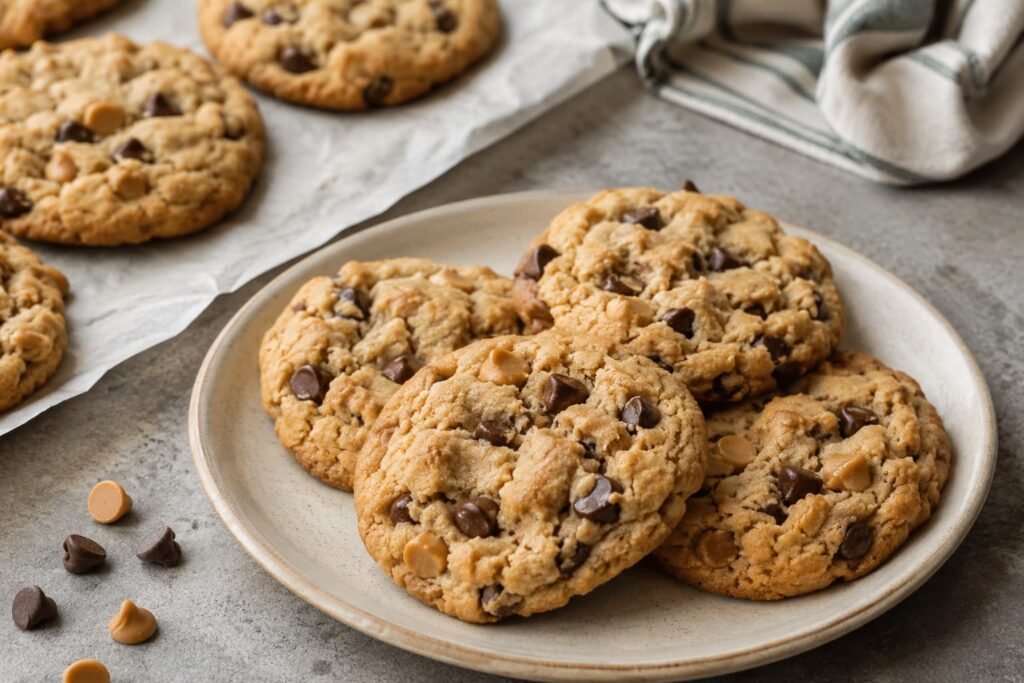
Chocolate chip and peanut butter chip cookies combine two baking mix-ins in the same cookie dough. Chocolate chips contribute cocoa flavor, while peanut butter chips add concentrated peanut flavor and additional sweetness.
For someone searching for a chocolate chip and peanut butter chip cookie recipe, the two types of chips are only part of the picture. Flour measurement, butter condition, sugar balance, dough temperature, mix-in quantity, cookie size, and baking conditions can all influence how a cookie spreads and sets.
It is also important to distinguish peanut butter chips from peanut butter mixed directly into the dough because they do not play the same role in a cookie formula.
What Are Chocolate Chip and Peanut Butter Chip Cookies?
Chocolate chip and peanut butter chip cookies are generally drop-style cookies made with a flour-based dough containing both types of baking chips.
The exact formula can vary. Some cookies contain more chocolate, some emphasize peanut butter chips, and others use a more balanced combination.
Peanut butter does not necessarily need to be part of the dough. In many versions, the peanut flavor comes mainly from peanut butter chips distributed throughout the cookie.
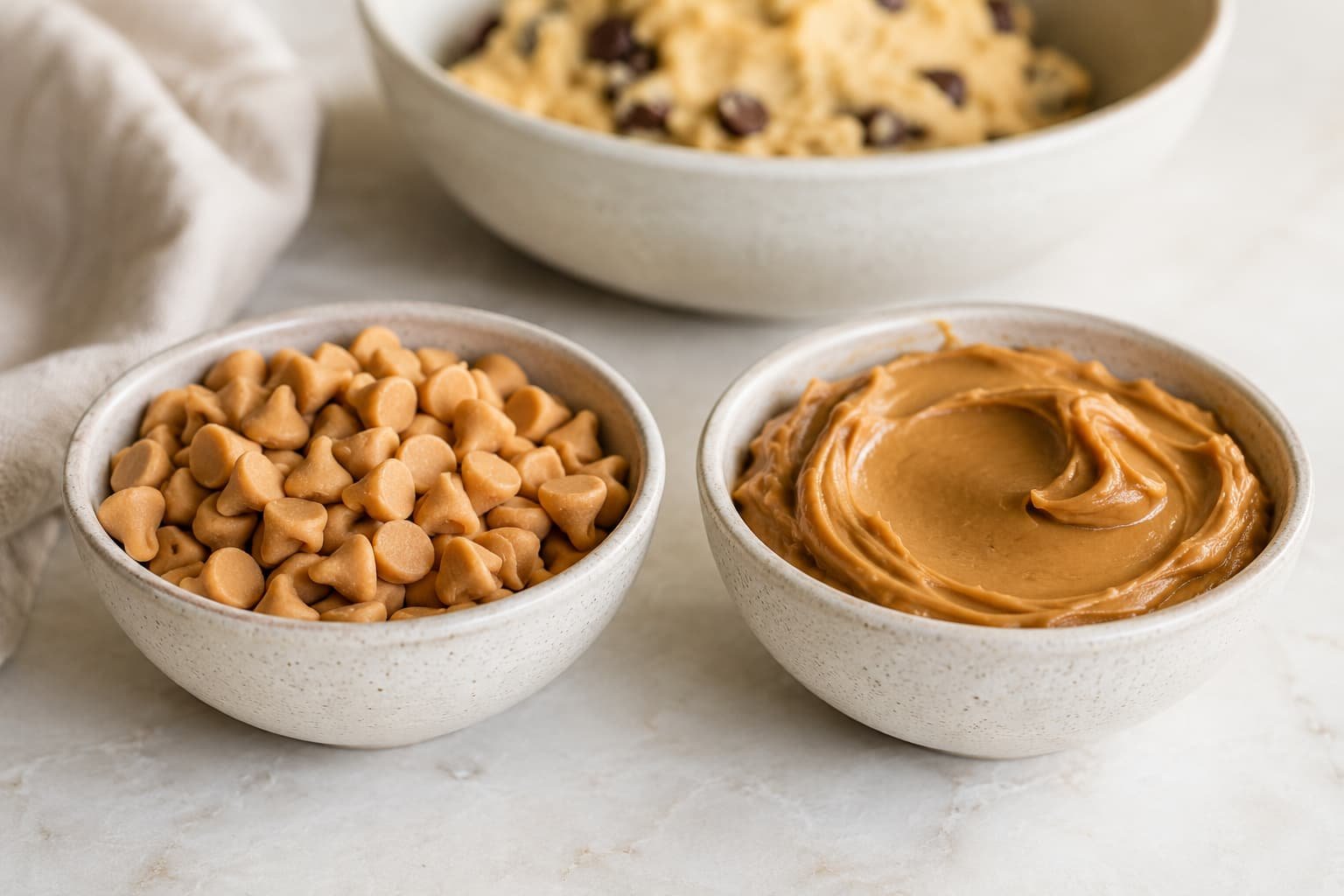
Are Peanut Butter Chips the Same as Peanut Butter?
No. Peanut butter chips and peanut butter serve different purposes in cookie dough.
Peanut butter chips are solid baking pieces used as mix-ins. They remain distributed through the dough as individual pieces.
Peanut butter becomes part of the dough when mixed in. It contributes fat and peanut solids, with the exact composition depending on the product. Adding it can therefore change the balance of the cookie formula rather than simply adding another flavor.
For that reason, peanut butter should not automatically be treated as a direct replacement for peanut butter chips.
Natural peanut butter products can vary in consistency and oil separation, which may affect how they behave in cookie dough. If peanut butter is intended to be part of the dough, a formula developed around that ingredient is a more suitable starting point.
How Do Chocolate Chips and Peanut Butter Chips Change the Flavor?
Using both types of chips creates a combination of cocoa, peanut, and sweet flavors.
Chocolate type can shift that balance. Milk chocolate often produces a sweeter and milder chocolate profile, while semisweet or darker chocolate can provide more cocoa contrast.
The proportion of each mix-in matters too. More chocolate chips may make chocolate more noticeable, while increasing peanut butter chips may emphasize the peanut flavor.
There is no universal ratio that is right for every cookie formula. The sweetness and flavor intensity of individual products can also vary.
What Ingredients Matter Most in This Type of Cookie?
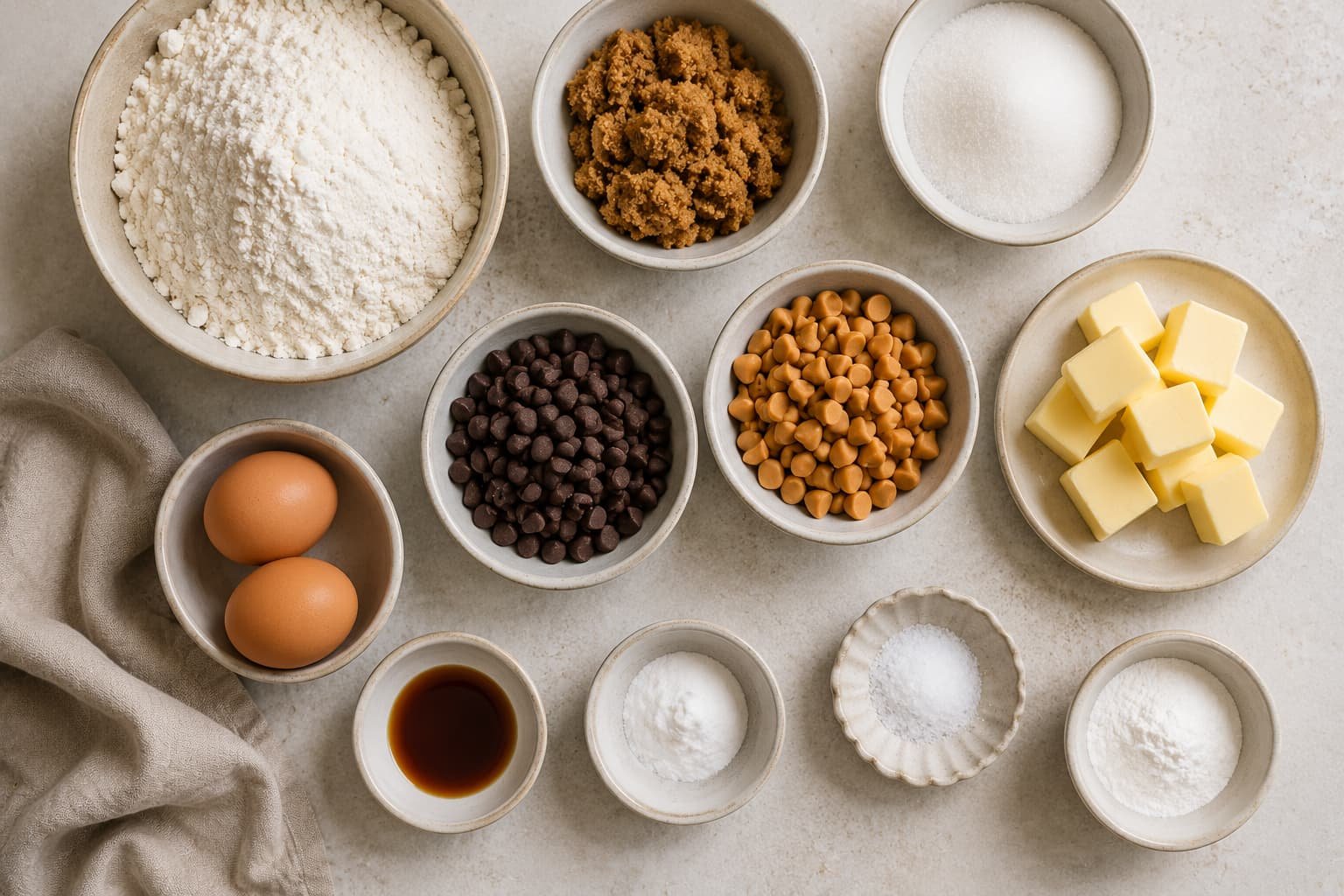
The chips provide much of the recognizable flavor, but the base dough controls much of the cookie’s structure.
Flour, butter, sugar, eggs, leavening, salt, and flavorings commonly appear in this type of dough. Their proportions and how they are handled can influence spread, thickness, browning, and texture.
How Do Flour, Butter, Sugar, and Eggs Affect Cookie Dough?
Flour provides much of the cookie’s structural framework. If substantially more flour is added than a formula requires, the dough may become stiffer and the finished cookie may spread less or seem drier and denser.
Butter contributes fat, water, and flavor. Its condition matters because softened, melted, and very warm butter can behave differently during mixing and baking.
Brown and granulated sugars contribute more than sweetness. Their amount and balance can also influence moisture, browning, spread, and texture.
Eggs contribute moisture, protein, and binding. Changing the amount or replacing them can affect dough consistency and structure.
These ingredients work together. A texture problem should not automatically be attributed to one ingredient.
How Do Chocolate Type and Peanut Butter Chips Affect Sweetness?
Chocolate choice can change the overall flavor without necessarily requiring a completely different cookie concept.
Semisweet or darker chocolate can provide more cocoa contrast, while milk chocolate often creates a sweeter overall profile, depending on the products used.
Chocolate chunks may also be used in some formulas. Because they are larger than standard chips, they create larger areas of chocolate and may distribute differently through the dough.
Peanut butter chips contribute their own sweetness and peanut flavor. As the quantity of both types of chips increases, the cookie becomes more mix-in focused.
The total amount still needs to suit the dough formula rather than assuming that more chips will always produce a better result.
What Affects Cookie Texture and Spread?
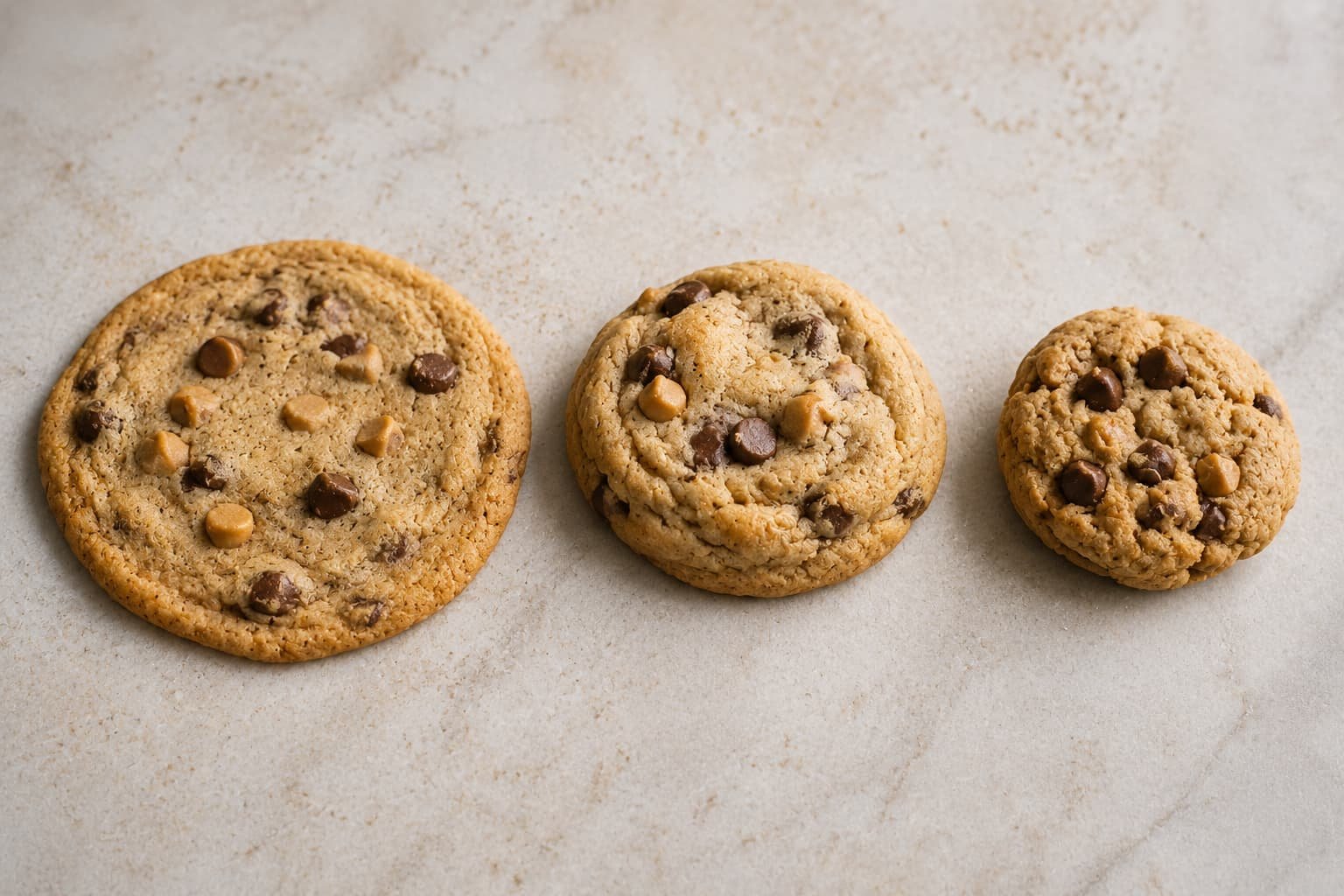
Cookie texture and spread are influenced by several interacting factors.
Flour quantity, butter condition, sugar balance, dough temperature, cookie size, baking surface, and time in the oven can all play a role.
This is why two cookies containing the same types of chips can still behave differently.
How Can Flour Measurement Affect Thickness and Density?
Flour quantity can noticeably change dough consistency.
Too much flour may produce a firmer dough that spreads less and can result in a more compact or dry texture. Too little flour relative to the other ingredients may provide less structure and allow more spreading.
Measurement method matters as well. Flour packed firmly into a measuring cup can result in more flour being used than intended.
When a reliable weight measurement is available, using a kitchen scale can reduce variation caused by volume measurement.
Adding extra flour should not, however, be treated as the automatic solution for spreading. Dough temperature, butter condition, sugar balance, and other formula changes can produce similar problems.
How Do Butter and Dough Temperature Affect Spread?
Butter condition and dough temperature can influence how quickly the dough begins to spread in the oven.
Very warm or melted butter behaves differently from butter that is softened but still holds its shape. If a formula was developed for one condition and another is used, the result may change.
Cooler dough also takes longer to warm during the early part of baking. That can slow spreading in some formulas.
Temperature is only one variable, however. Cooling the dough cannot necessarily correct inaccurate ingredient measurements or major changes to the formula.
Does Chilling Cookie Dough Reduce Spreading?
Chilling can reduce spreading in some cookie formulas by cooling and firming the fat before baking.
It can also make very soft dough easier to portion.
That does not mean every chocolate chip and peanut butter chip cookie dough needs refrigeration. Some formulas are designed to bake without chilling, while others specifically account for a chilling step.
Chilling should therefore be viewed as a technique that may influence spread and dough handling, not as a guarantee of thicker cookies.
If a recipe includes refrigeration, it is generally better to treat it as part of that formula rather than assuming the step can be removed without affecting the result.
How Do Cookie Size and Baking Time Affect Texture?
Cookie size affects how quickly the center heats and sets.
Smaller portions generally heat through more quickly than larger ones. Using similarly sized portions can therefore help cookies on the same baking sheet progress more evenly.
Time in the oven can also affect moisture and firmness. A longer bake may produce a firmer or drier result, depending on the dough and cookie size.
There is no single baking time that can be applied to every cookie formula. Dough composition, portion size, oven behavior, baking surface, and intended texture all matter.
Why Can Cookies Turn Out Flat, Dry, or Dense?
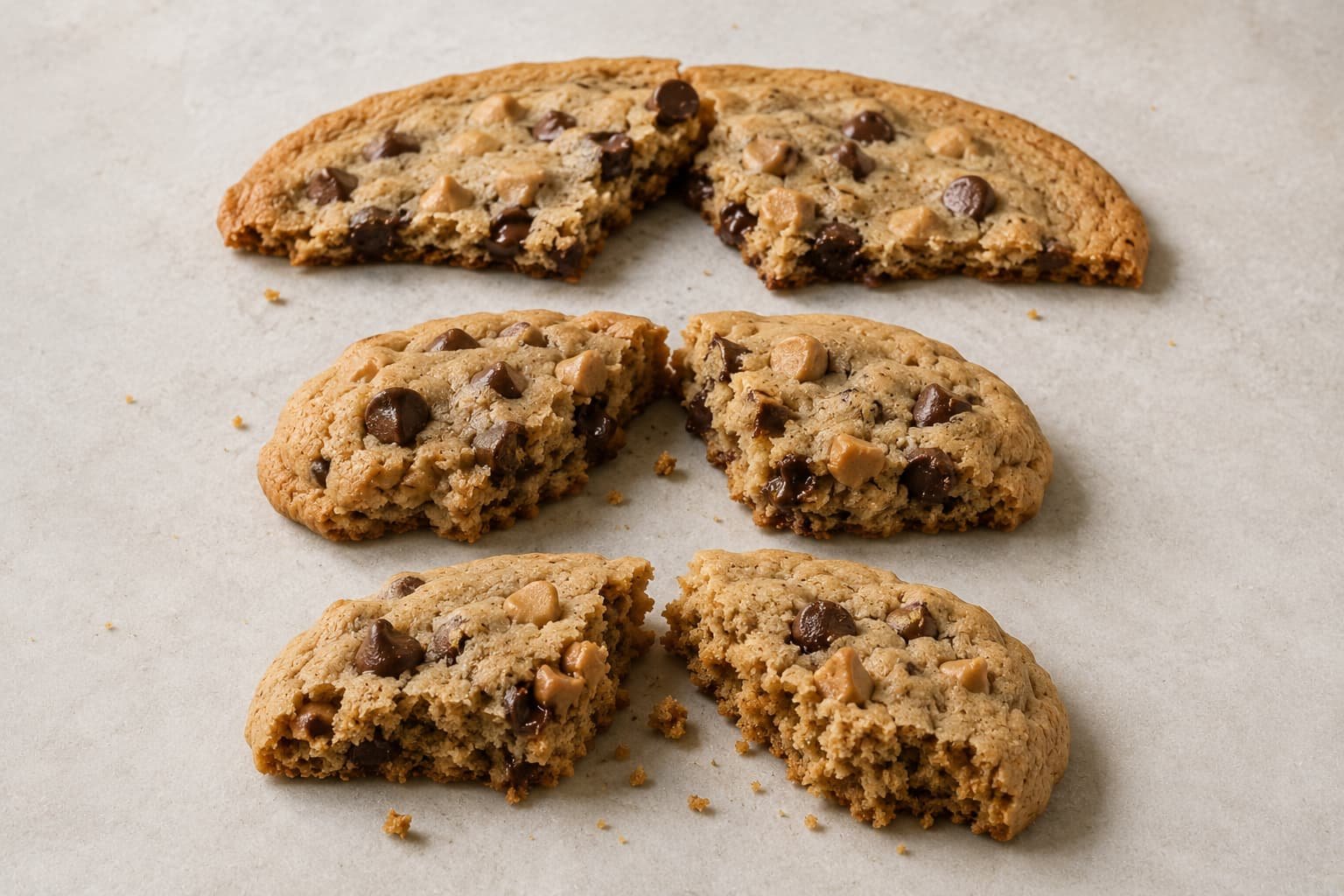
Flat, dry, or dense cookies can have several possible causes. The same appearance does not always point to the same problem.
Checking measurements, ingredient changes, dough temperature, and baking conditions is more useful than assuming one ingredient is responsible.
Why Do Cookies Spread Too Much?
Excessive spreading can happen when the dough has less structure than the formula requires or when the fat becomes warm quickly.
Possible factors include:
- Too little flour relative to the other ingredients
- More sugar or liquid than the formula was designed for
- Butter that is much warmer than intended
- Warm cookie dough
- A hot baking sheet
- Differences in the baking surface
- Significant ingredient substitutions
These are possible causes, not guaranteed diagnoses.
If a recipe that normally behaves consistently begins spreading differently, checking ingredient measurements, butter condition, dough temperature, the baking sheet, and any substitutions can help identify what changed.
Why Can Cookies Become Dry or Dense?
Too much flour is one possible reason a cookie may become dry or dense.
Flour packed firmly into a measuring cup can result in more being added than intended. Baking longer than a particular formula requires may also remove additional moisture and create a firmer result.
Changes to eggs, fat, sugar, or flour can affect moisture and structure as well.
Dryness or density should therefore be treated as a result with several possible causes rather than a problem with one guaranteed fix.
How Can Too Many Mix-Ins Affect the Dough?
Chocolate chips, peanut butter chips, nuts, and other additions take up space within the dough.
As the proportion of mix-ins increases, the dough-to-mix-in balance changes. This may affect portioning and the way a particular cookie formula holds together.
There is no universal amount that automatically counts as too many mix-ins because different formulas are designed to support different quantities.
If a substantial increase in chips, nuts, or other additions is wanted, a formula developed around that quantity may be a more suitable starting point.
What Should You Consider Before Changing a Cookie Recipe?
Ingredient substitutions can affect more than flavor.
Flour, fat, sugar, eggs, and leavening contribute to the structure and behavior of cookie dough. Changing one component can influence moisture, spreading, sweetness, or texture at the same time.
Can Peanut Butter Replace Peanut Butter Chips?
Peanut butter is not a direct substitute for peanut butter chips.
Peanut butter chips remain separate mix-ins. Peanut butter becomes part of the dough and contributes fat and peanut solids, with its exact composition depending on the product.
Replacing one with the other can therefore change the overall formula.
If peanut butter in the dough is the goal, using a recipe formulated around peanut butter is more appropriate than assuming an unverified one-to-one substitution.
Can You Change the Ratio of Chocolate Chips to Peanut Butter Chips?
Yes, the balance can be changed to shift which flavor is more noticeable.
More chocolate may emphasize cocoa flavor, while more peanut butter chips may make the peanut element more prominent.
Large changes can also alter the total quantity and distribution of mix-ins. Changing their ratio is therefore different from simply adding unlimited amounts of both.
There is no single ratio that works for every cookie formula.
What Happens When You Add Nuts or Other Mix-Ins?
Nuts, chocolate chunks, and other solid additions increase the total mix-in load of the dough.
Adding a large amount may affect portioning or the dough-to-mix-in balance, especially when the formula already contains substantial quantities of chocolate and peanut butter chips.
Rather than treating every addition separately, it can be more useful to consider the total amount of solid mix-ins in the dough.
Nuts also introduce additional allergen considerations, so ingredient and product labels matter when baking for someone with a food allergy.
Should Chocolate Chips and Peanut Butter Chips Be Added After the Dough Comes Together?
In many cookie formulas, chips and other solid mix-ins are incorporated after the main dough has formed.
This can help distribute the chips without extending the mixing step more than the particular formula requires.
The preparation instructions for the specific recipe should still take priority because mixing methods can vary.
Why Can Major Ingredient Changes Require a Different Formula?
Major substitutions can change several properties of cookie dough at once.
Changing a fat source may influence both moisture and spreading. Changing flour can affect structure and dough consistency. Adding peanut butter introduces different components from adding peanut butter chips.
For this reason, major substitutions should not be presented as guaranteed one-to-one swaps.
A formula specifically designed around the desired ingredient is often a more appropriate starting point when making a substantial change.
Food Safety and Allergen Considerations
Food-safety and allergy guidance requires particular care and should be based on reliable information rather than general baking assumptions.
Why Should Conventional Raw Cookie Dough Not Be Eaten?
Conventional cookie dough containing raw flour should not be eaten before it has been properly cooked or baked.
Flour is a raw food and may contain harmful bacteria. Some cookie dough formulas also contain raw eggs.
Ordinary baking dough should therefore not be treated as edible cookie dough simply because it looks or tastes similar.
Products or formulas specifically intended to be eaten without conventional baking require their own appropriate food-safety controls.
What Should You Check When Baking With Peanut Butter Chips?
Peanuts are one of the major food allergens recognized in the United States.
When baking for someone with a food allergy, check the full ingredient list and allergen information on the specific peanut butter chips and other packaged ingredients being used.
Depending on the recipe and products selected, other major allergens may also be present, including wheat, milk, eggs, soy, tree nuts, or sesame.
Product labels should be checked rather than assuming an ingredient is suitable based only on its name.
Final Thoughts
Chocolate chip and peanut butter chip cookies can vary considerably even when they contain the same two types of baking chips.
The most useful factors to consider are flour measurement, ingredient balance, butter and dough temperature, chocolate type, total mix-in quantity, cookie size, baking conditions, and whether peanut butter chips or peanut butter are being used.
Understanding those differences can make it easier to compare recipes, identify possible causes of texture problems, and make more careful ingredient changes without assuming that one technique will produce the same result in every cookie formula.