

Celery and cucumber juice is a vegetable-based drink made by processing fresh celery and cucumber with a juicer or blender. Ingredients such as lemon, ginger, mint, or apple may also be added to change the flavor.
A celery and cucumber juice recipe does not have one required formula. The proportions, optional ingredients, preparation method, and amount of pulp retained can all affect the finished drink.
This guide explains the ingredients, preparation methods, texture differences, common variations, and food-safety considerations without presenting a personally tested recipe.
Quick Answer
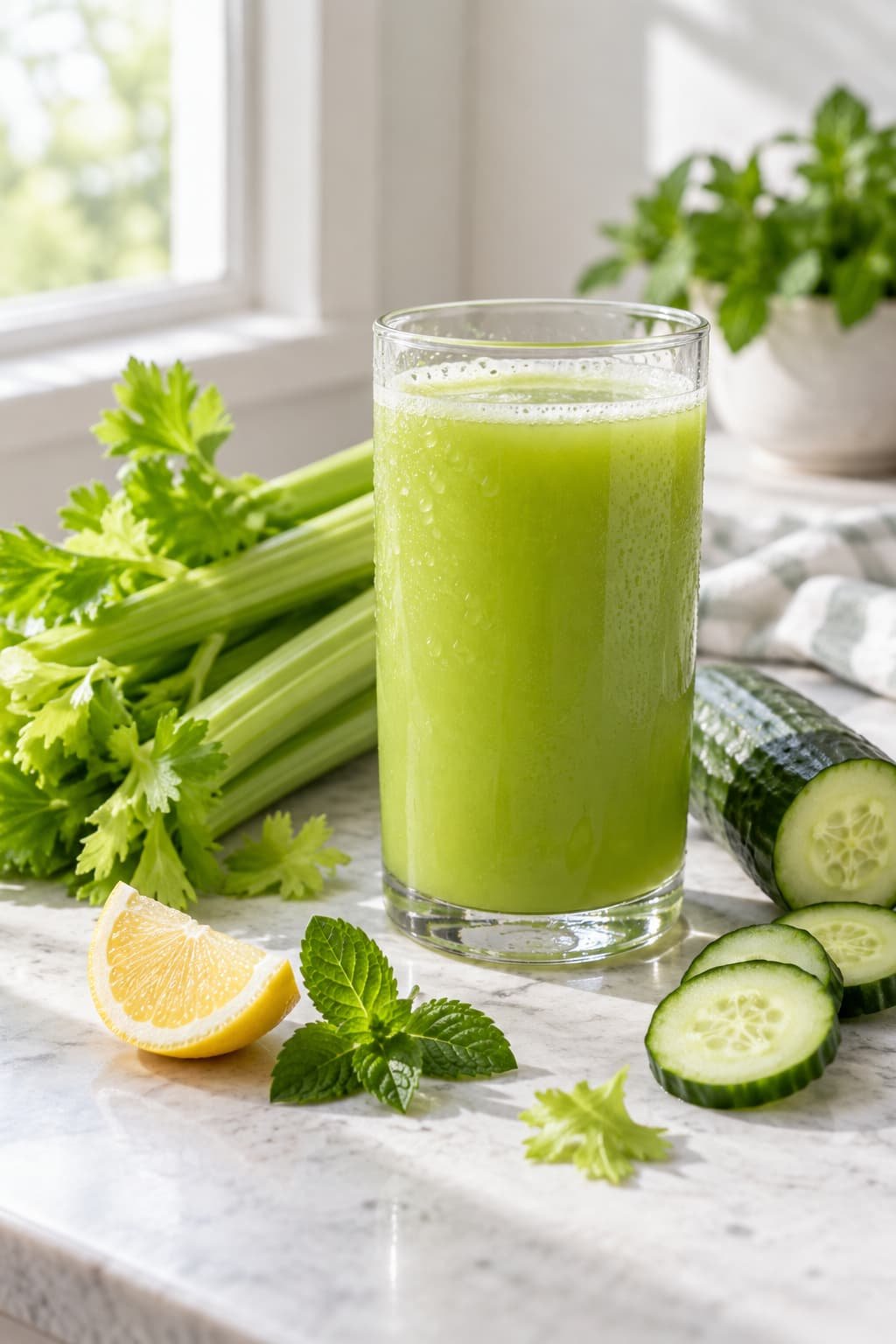
Celery and cucumber juice is generally made by washing and cutting fresh celery and cucumber and then processing them in a juicer or blender.
A juicer separates much of the pulp during processing. A blender keeps the ingredients together initially, so the mixture can be left thicker or strained for a thinner drink.
Lemon, ginger, mint, apple, and other ingredients are optional rather than required.
What Is Celery and Cucumber Juice?
Celery and cucumber juice is a fresh vegetable beverage in which celery and cucumber are the main ingredients.
Celery usually contributes the stronger vegetal flavor, while cucumber has a milder taste. The balance between them depends on the proportions used.
Some versions contain only the two vegetables. Others add citrus, herbs, ginger, or fruit to alter acidity, sweetness, or aroma.
The drink can also vary in texture. Juice produced with a juicer is generally thinner, while an unstrained blender version retains more pulp and has a thicker consistency.
What Do the Main Ingredients Contribute?
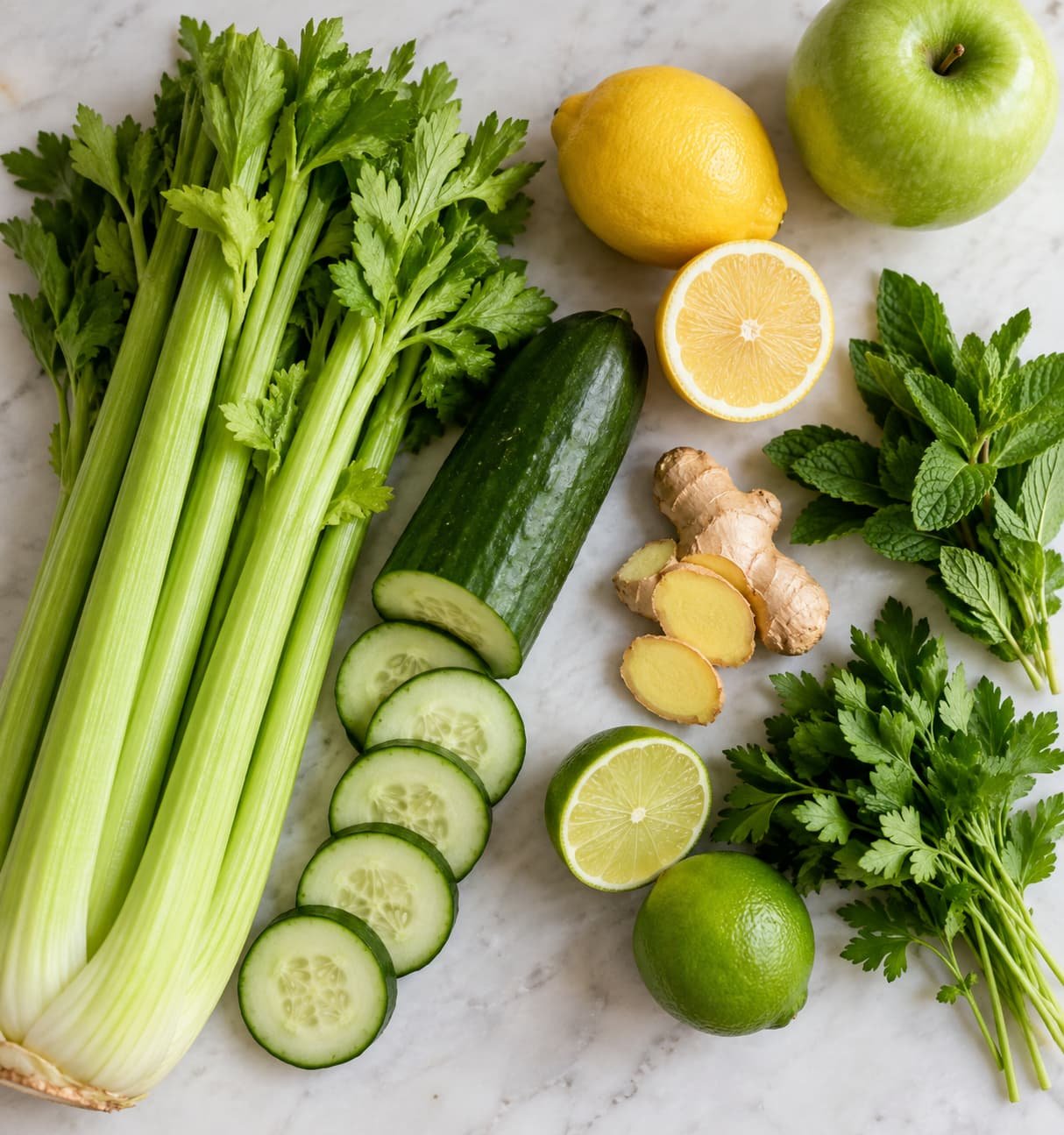
The ingredients serve different flavor and texture roles. None of the optional additions is necessary for every version.
Celery
Celery provides much of the characteristic vegetable flavor.
Both the stalks and edible leaves may be used, although the leaves can contribute a stronger herbal flavor. How much of each part is included is mainly a matter of the particular preparation and flavor preference.
Celery stalks should be washed carefully because dirt can collect around the base and between stalks.
Cucumber
Cucumber contributes liquid and a comparatively mild flavor.
Whether it is peeled depends on the cucumber and the preparation. Thin, edible skin can be left on after proper washing, while peeling may be preferred when the skin is thick, damaged, waxed, or unwanted for flavor or texture reasons.
Lemon or Lime
Citrus is optional.
Lemon or lime can add acidity and make the vegetable flavors taste sharper. The amount used depends on personal preference and the other ingredients in the drink.
Ginger and Herbs
Fresh ginger can add a stronger, spicy character.
Mint, parsley, and other suitable herbs may also be included for a more herbal flavor. These ingredients can become prominent quickly, so their effect depends on how much is used.
Fruit
Apple, pineapple, orange, or other suitable fruit may be added when a sweeter flavor is wanted.
Adding fruit changes more than flavor; it also changes the overall nutritional composition of the drink. Exact nutrition values would depend on the ingredients and quantities used.
How Is Celery and Cucumber Juice Prepared?
There are two common approaches: using a juicer or using a blender.
Both begin with clean produce. The FDA recommends washing fruits and vegetables thoroughly under running water before preparing them and advises against using soap, detergent, or commercial produce wash. Damaged areas should be removed and rotten produce discarded.
After washing, cut the produce into pieces appropriate for the equipment being used. Follow the manufacturer’s instructions for a blender or juicer, particularly for feed-tube size and safe operation.
The ingredients can then be processed using either method.
Juicer Method
A juicer extracts liquid while separating much of the fibrous pulp.
Celery and cucumber are passed through the machine according to its instructions. Suitable optional ingredients, such as ginger or apple, may also be processed if the juicer is designed for them.
Citrus juice can be added separately afterward if wanted.
The result is generally thinner and contains less visible pulp than an unstrained blender preparation.
Blender Method
A blender processes the edible ingredients together rather than automatically separating pulp.
Some water may be needed to help the blades move effectively, depending on the blender and amount of produce.
After blending, the mixture can be consumed as it is or strained through a suitable fine-mesh strainer for a thinner consistency.
Straining removes more of the solid plant material, so an unstrained blended drink and a clear strained juice are not the same product nutritionally or texturally.
Blender vs. Juicer
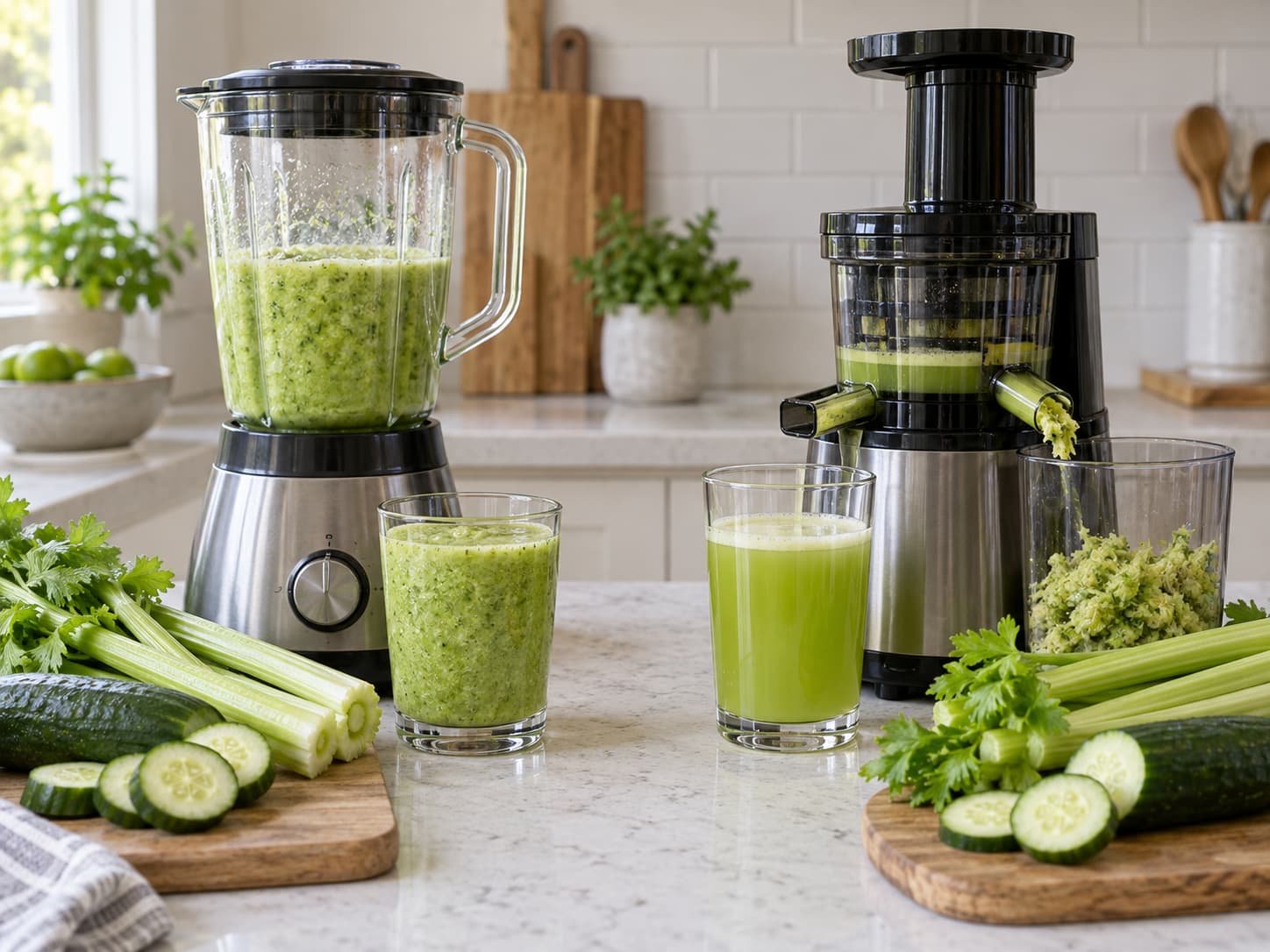
Neither method is universally better. They simply produce different results.
| Feature | Blender | Juicer |
|---|---|---|
| Processes the produce | Yes | Yes |
| Separates pulp automatically | No | Yes |
| Additional straining | Optional | Usually unnecessary for a thin juice |
| Added water | May be needed | Usually not needed for extraction |
| Texture | Thicker if left unstrained | Generally thinner |
| Pulp retained | Can be adjusted by straining | Much of it is separated during juicing |
A blender may be practical for someone who does not own a juicer. A juicer may be more convenient when the goal is specifically a thinner beverage with most of the pulp separated.
How Do Ingredient Choices Affect Flavor?
The flavor depends largely on the balance of ingredients.
Using a greater proportion of celery can make its vegetal character more noticeable. Increasing cucumber may make the overall flavor milder.
Citrus adds acidity, while fruit can increase sweetness. Ginger adds a sharper flavor, and herbs such as mint or parsley introduce herbal notes.
These are variations rather than improvements. There is no single flavor balance that will suit everyone.
Common Celery and Cucumber Juice Variations
A basic celery-and-cucumber combination can be adapted without changing the general preparation method.
Celery, cucumber, and lemon adds citrus acidity while keeping the drink primarily vegetable-based.
Celery, cucumber, and ginger introduces a stronger, spicy note.
Celery, cucumber, and apple adds fruit flavor and sweetness.
Celery, cucumber, lemon, and mint combines citrus acidity with an herbal note.
Celery, cucumber, and leafy greens creates a broader vegetable mixture rather than a simple two-ingredient juice.
These combinations do not have universal ratios. The balance depends on the particular preparation and desired flavor.
Should Celery and Cucumber Juice Be Strained?
Straining is optional.
A juicer already separates much of the pulp. With a blender, straining creates a thinner beverage by removing more solid plant material.
Leaving a blended mixture unstrained produces a thicker drink and retains more of the original pulp.
Because straining changes what remains in the beverage, strained juice should not be assumed to be nutritionally identical to eating the same vegetables whole.
Celery and Cucumber Juice vs. Whole Vegetables
Juice and whole vegetables are not equivalent forms of the same food.
Eating whole celery and cucumber retains the complete edible structure of the vegetables. Juicing separates much of the solid material, while an unstrained blended drink retains more of it.
This does not make one form universally better than another. It simply means their physical composition differs, so juice should not be treated as a direct nutritional substitute for whole vegetables.
Is Celery and Cucumber Juice a “Detox” Drink?
There is not good evidence that celery and cucumber juice has a special detoxifying effect.
“Detox” and “cleanse” claims are common around juices, but the National Center for Complementary and Integrative Health reports that research on detox programs is limited and that available studies have generally been low quality. It also notes that there is no compelling research supporting detox diets for eliminating toxins or long-term weight management.
Celery and cucumber juice is more accurately described as a vegetable-based beverage.
The ingredients contain naturally occurring nutrients, but that does not establish that the drink removes toxins, treats a medical condition, or promotes weight loss.
Fresh Juice and Food-Safety Considerations
Fresh juice made at home from raw produce has not been commercially pasteurized unless a separate validated treatment is used.
The FDA notes that harmful bacteria from raw fruits and vegetables can end up in freshly prepared juice. This is why proper produce washing and clean preparation equipment matter.
Untreated juice can pose greater risks for young children, older adults, pregnant people, and people with weakened immune systems. FDA guidance specifically identifies these groups as being at increased risk from untreated juice.
Washing produce can reduce contamination, but it does not sterilize it. FDA guidance recommends washing fresh produce under running water and keeping hands, utensils, cutting surfaces, and preparation equipment clean.
How Should Fresh Homemade Juice Be Stored?
Fresh homemade juice should be treated as a perishable food and refrigerated promptly when it is not being consumed immediately.
FDA food-safety guidance recommends keeping the refrigerator at 40°F (4°C) or below and refrigerating prepared perishable foods within two hours.
This is general food-safety guidance, not a claim that homemade celery and cucumber juice remains safe or maintains quality for a specific number of days.
The article does not assign a refrigerated shelf life because that would require more specific evidence about the preparation and handling conditions.
Common Preparation Issues
Why Is the Drink Too Thick?
A blender preparation can be thicker because the pulp remains in the mixture.
Straining removes more solid material and can create a thinner consistency. Adding water can also dilute the mixture, although the amount needed depends on the preparation.
Why Is the Drink Too Thin?
A blender version may become more diluted when more water is added.
Using less added water or retaining more pulp can produce a thicker consistency.
Why Does Celery Dominate the Flavor?
Celery generally has a more pronounced vegetal flavor than cucumber.
Changing the relative proportions may shift the balance, but there is no universal ratio that produces the preferred flavor for everyone.
Why Can Ginger Become Overpowering?
Ginger has a strong, distinctive flavor, so increasing it can noticeably change the drink.
Using it as an optional flavoring rather than a required ingredient makes it easier to adjust the overall balance.
Frequently Asked Questions About Celery and Cucumber Juice
Does celery and cucumber juice need lemon?
No.
Lemon is an optional flavoring. It can provide acidity, but celery and cucumber can be processed without citrus.
Does cucumber need to be peeled before juicing?
Not always.
Edible cucumber skin can remain after thorough washing. Peeling may be preferred when the skin is thick, damaged, waxed, or unwanted in the finished drink.
Can celery leaves be included?
Yes, celery leaves are edible.
They can contribute a stronger herbal flavor than the stalks, so including them may change the overall taste.
Why does homemade juice separate?
Separation can occur because liquid and suspended plant particles settle differently while the drink stands.
Stirring or shaking can temporarily combine the layers again. Separation by itself is not the same as evidence that a drink is safe or unsafe to consume.
Final Overview
Celery and cucumber juice is a vegetable-based beverage that can be prepared with either a juicer or blender. The preparation method determines how much pulp remains, while optional ingredients such as citrus, ginger, herbs, or fruit can change the flavor.
There is no single required formula, and exact ingredient ratios are not necessary for understanding the topic. A blender can produce a thicker drink or a strained juice, while a juicer separates much of the pulp during processing.
Fresh homemade juice also requires appropriate food-safety handling because it is made from raw produce and is typically untreated. It should not be promoted as a proven detox drink, weight-loss treatment, or substitute for a varied diet.