Many people think weight loss is simply about eating less food. In reality, the quality of your meals often plays an equally important role. A meal that keeps you satisfied for several hours can make it easier to manage hunger and maintain healthy eating habits throughout the day.
This is one reason high protein salads have become increasingly popular among people looking for practical and sustainable ways to support healthy weight loss. When built with the right ingredients, these salads provide a balance of protein, fiber, and healthy fats that can help reduce hunger while delivering valuable nutrients.
Unlike salads that rely mostly on lettuce and low-calorie vegetables, a high protein salad is designed to function as a complete meal rather than a light side dish.
Quick Answer
High protein salads can support healthy weight loss because protein helps increase fullness, slows digestion, and may reduce the urge to snack between meals. When combined with fiber-rich vegetables and healthy fats, protein-rich salads can help create satisfying meals that support long-term healthy eating habits.
Protein Supports Fullness
One of the most well-known benefits of protein is its ability to help you feel satisfied after eating.
Meals that contain adequate protein often take longer to digest than meals made primarily from refined carbohydrates. As a result, hunger may return more slowly, making it easier to stay comfortable between meals.
For example, a salad topped with grilled chicken, eggs, tuna, or chickpeas is typically far more filling than a basic green salad with vegetables alone.
This added fullness can make a significant difference for people trying to manage their daily calorie intake without constantly feeling hungry.
Why Many Salads Leave You Hungry
Many traditional salads contain plenty of vegetables but very little protein.
While vegetables provide important vitamins, minerals, and fiber, they generally do not provide enough protein to create lasting satiety on their own.
A salad made entirely from lettuce, cucumber, tomatoes, and a light dressing may contain very few calories, but it may also leave you searching for a snack shortly after eating.
Adding ingredients such as:
- Chicken breast
- Tuna
- Eggs
- Cottage cheese
- Chickpeas
- Lentils
- Quinoa
can transform a light salad into a balanced meal that helps control hunger for much longer.
Helps Reduce Unnecessary Snacking
Frequent snacking is often driven by hunger rather than habit.
When a meal lacks protein, the body may signal hunger sooner than expected. This can lead to extra snacks, larger portions at later meals, or cravings for highly processed foods.
A healthy high protein salad can help bridge the gap between meals by providing nutrients that support longer-lasting satisfaction.
Many people find that switching from a low-protein lunch to a protein-rich salad helps reduce afternoon cravings and improves meal consistency throughout the day.
Supports Muscle Maintenance During Weight Loss
When losing weight, the goal is not simply to lose pounds. Ideally, weight loss should come primarily from body fat while maintaining as much muscle as possible.
Protein plays an important role in this process.
Adequate protein intake helps support muscle maintenance, particularly when combined with regular physical activity. This is one reason high protein salad recipes are popular among fitness enthusiasts, active individuals, and people following structured weight loss plans.
Protein-rich ingredients such as chicken breast, tuna, eggs, Greek yogurt, cottage cheese, lentils, and tofu can all contribute to a more balanced approach to healthy weight management.
Provides More Stable Energy Levels
Many people experience an energy slump a few hours after eating meals that are high in refined carbohydrates and low in protein.
A balanced high protein salad may help support steadier energy throughout the day by combining:
- Lean protein
- Fiber-rich vegetables
- Healthy fats
- Complex carbohydrates
This combination slows digestion and provides a more gradual release of energy compared to meals built primarily around highly processed foods.
For busy professionals, students, and parents, maintaining consistent energy levels can make a noticeable difference in productivity and overall well-being.
High Protein and High Fiber: A Powerful Combination
Protein is important, but it works best when paired with fiber.
Fiber helps add volume to meals and can contribute to feelings of fullness after eating. Combining protein-rich ingredients with vegetables, legumes, and whole-food carbohydrates creates a more balanced and satisfying meal.
Some excellent high fiber, high protein salad ingredients include:
| Ingredient | Protein | Fiber |
| Chickpeas (1 Cup) | 15g | 12g |
| Lentils (1 Cup) | 18g | 15g |
| Black Beans (1 Cup) | 15g | 15g |
| Edamame (1 Cup) | 18g | 8g |
| Quinoa (1 Cup) | 8g | 5g |
Including these ingredients in your salads can help create meals that are both filling and nutrient-dense.
Example of a High Protein Salad for Weight Loss
A simple high protein salad does not need complicated ingredients.
For example:
- 100g grilled chicken breast
- Mixed greens
- Cherry tomatoes
- Cucumber
- Red onion
- Avocado
- Greek yogurt dressing
This type of salad can provide more than 30 grams of protein while also supplying fiber, healthy fats, vitamins, and minerals.
The result is a balanced meal that supports fullness, provides lasting energy, and fits comfortably into many healthy eating plans.
The Goal Is Balance, Not Perfection
The best high protein salad for weight loss is not necessarily the one with the most protein. Instead, focus on creating meals that combine quality protein sources with vegetables, fiber, and healthy fats.
When these elements work together, salads become more satisfying, more nutritious, and far easier to enjoy as a regular part of a healthy lifestyle.
 Why High Protein Salads Help With Weight Loss
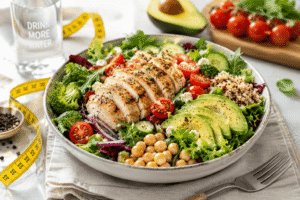 Why High Protein Salads Help With Weight Loss
Many people believe weight loss is simply about eating fewer calories. While calorie intake matters, the quality of those calories can be just as important. Foods that help control hunger often make it easier to maintain healthy eating habits over time.
This is one reason high protein salads have become increasingly popular. When built with the right combination of protein, vegetables, healthy fats, and fiber, they can help create meals that are both satisfying and nutrient-dense.
Unlike traditional salads that may leave you hungry an hour later, a healthy high protein salad can function as a complete meal that supports fullness, steady energy, and healthy weight management.
Quick Answer
High protein salads can support healthy weight loss because protein helps increase fullness, reduce hunger between meals, support muscle maintenance, and provide more stable energy levels. A well-balanced high protein salad typically contains 20 to 40 grams of protein along with fiber-rich vegetables and healthy fats.
Protein Supports Fullness
Protein is one of the most satisfying nutrients you can include in a meal.
After eating a protein-rich meal, many people stay full longer compared to meals that contain mostly refined carbohydrates. Protein takes longer to digest and helps slow the rate at which food leaves the stomach.
For example, a high protein chicken salad with vegetables and a healthy dressing is generally far more filling than a simple salad made mostly from lettuce and low-calorie toppings.
This added fullness can make it easier to stay consistent with healthy eating habits throughout the day.
Helps Reduce Snacking
One of the biggest obstacles to healthy weight loss is excessive snacking between meals.
When meals lack protein, hunger often returns quickly, increasing the likelihood of reaching for convenience foods or highly processed snacks.
A high protein salad recipe can help reduce this cycle by providing nutrients that support longer-lasting satisfaction. Ingredients such as chicken, tuna, eggs, cottage cheese, chickpeas, and lentils help create meals that feel more complete and satisfying.
Many people find that replacing a low-protein lunch with a protein-packed salad helps reduce afternoon cravings and improves overall meal consistency.
Supports Muscle Maintenance
Healthy weight loss is not just about losing body weight. Preserving muscle mass is equally important.
Protein plays a critical role in maintaining and repairing muscle tissue, particularly for people who exercise regularly or follow a calorie-controlled eating plan.
Including protein-rich foods such as grilled chicken, tuna, eggs, Greek yogurt, cottage cheese, tofu, or legumes in your salads can help support muscle maintenance while working toward your weight management goals.
This is one reason high protein salad recipes remain popular among active individuals, athletes, and fitness enthusiasts.
Helps Maintain Energy Levels
Meals that are high in refined carbohydrates can sometimes provide a quick burst of energy followed by an afternoon slump.
A well-balanced high protein salad can help support more consistent energy because it combines:
- Lean protein
- Fiber-rich vegetables
- Healthy fats
- Complex carbohydrates
This combination supports slower digestion and a steadier release of energy throughout the day.
For busy professionals, students, and parents, maintaining stable energy levels can make a noticeable difference in productivity and focus.
Why Many Salads Leave You Hungry
Many traditional salads are built primarily around leafy greens and vegetables.
While vegetables provide important vitamins, minerals, and fiber, they often contain very little protein. Without enough protein, a salad may not provide the lasting fullness most people expect from a meal.
Adding ingredients such as:
- Chicken breast
- Tuna
- Eggs
- Cottage cheese
- Chickpeas
- Lentils
- Quinoa
can transform a light side dish into a satisfying meal that supports both healthy weight loss and lasting energy.
High Protein and High Fiber: A Powerful Combination
Protein becomes even more effective when paired with fiber-rich foods.
Fiber adds volume to meals and contributes to feelings of fullness after eating. Combining protein-rich foods with ingredients such as beans, lentils, chickpeas, vegetables, and whole grains creates meals that are both filling and nutrient-dense.
| Ingredient | Protein | Fiber |
| Chickpeas (1 Cup) | 15g | 12g |
| Lentils (1 Cup) | 18g | 15g |
| Black Beans (1 Cup) | 15g | 15g |
| Edamame (1 Cup) | 18g | 8g |
| Quinoa (1 Cup) | 8g | 5g |
This combination is one reason high protein bean salads, chickpea salads, and lentil salads are often recommended for healthy weight management.
Best Protein Sources for High Protein Salads
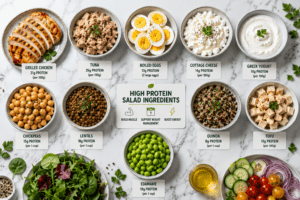
The quality of a high protein salad often comes down to the ingredients you choose.
The best protein sources provide a combination of nutrition, flavor, and satiety while pairing naturally with vegetables, grains, and healthy dressings. Whether you’re preparing a high protein chicken salad, a vegetarian protein salad, or a meal prep salad for the week, choosing the right protein source can make a significant difference.
Chicken Breast
Chicken breast remains one of the most popular ingredients used in high protein salad recipes.
It is lean, versatile, and easy to prepare in advance. A 100-gram serving provides approximately 31 grams of protein while remaining relatively low in calories.
Chicken works especially well in:
- High protein chicken salad
- Chicken Caesar salad
- Buffalo chicken salad
- Mediterranean chicken salad
- Southwest chicken salad
Tuna
Tuna is a convenient, high-protein ingredient that requires very little preparation.
A 100-gram serving provides approximately 25 grams of protein, making it one of the highest-protein salad ingredients available.
Popular choices include:
- High protein tuna salad
- Tuna and chickpea salad
- Mediterranean tuna salad
- Tuna meal prep salad
Eggs
Eggs are affordable, nutrient-dense, and easy to prepare.
Two large eggs provide roughly 12 grams of protein along with important vitamins and minerals.
They work well in:
- High protein egg salad
- Egg and avocado salad
- Cobb salad
- Chopped protein salad
Cottage Cheese
Cottage cheese has become increasingly popular because it adds both creaminess and protein.
Many people use cottage cheese as a healthier alternative to heavier dressings while also boosting protein content.
One cup provides approximately 24 grams of protein.
Greek Yogurt
Greek yogurt is another versatile ingredient that adds protein without requiring extensive preparation.
It is commonly used in:
- High protein salad dressings
- Chicken salad recipes
- Egg salad recipes
- Mediterranean salads
One cup typically contains around 20 grams of protein.
Chickpeas
Chickpeas are one of the most versatile plant-based protein sources.
In addition to protein, they provide fiber, complex carbohydrates, and important minerals.
One cup provides approximately 15 grams of protein and 12 grams of fiber.
Black Beans
Black beans are an excellent option for high protein bean salads.
They provide a combination of protein, fiber, and slow-digesting carbohydrates that help create satisfying meals.
One cup contains approximately 15 grams of protein and 15 grams of fiber.
Lentils
Lentils offer one of the best protein-to-fiber ratios among plant-based foods.
They work exceptionally well in meal prep salads and provide approximately 18 grams of protein per cooked cup.
Quinoa
Quinoa contains less protein than some other ingredients but remains a valuable addition to high protein vegetarian salads.
As a complete protein source, quinoa also provides complex carbohydrates, fiber, magnesium, and iron.
One cooked cup contains approximately 8 grams of protein.
Tofu and Edamame
For vegan and plant-based eaters, tofu and edamame are among the best protein options available.
Edamame provides approximately 18 grams of protein per cup, while tofu contributes around 10 grams per 100 grams.
Both ingredients work well in:
- High protein vegan salads
- Asian-inspired salads
- Meal prep bowls
- Plant-based lunch salads
Protein Comparison at a Glance
| Protein Source | Protein | Best For |
| Chicken Breast | 31g | Weight Loss |
| Tuna | 25g | Meal Prep |
| Cottage Cheese | 24g | High Protein Salads |
| Greek Yogurt | 20g | Healthy Dressings |
| Lentils | 18g | Vegetarian Salads |
| Edamame | 18g | Vegan Salads |
| Chickpeas | 15g | High Fiber Salads |
| Black Beans | 15g | Meal Prep Bowls |
| Eggs | 12g | Budget-Friendly Meals |
| Tofu | 10g | Plant-Based Salads |
| Quinoa | 8g | Balanced Vegetarian Meals |
Choosing a variety of these protein sources throughout the week can help create flavorful, nutrient-dense salads that support healthy weight loss, lasting energy, and long-term healthy eating habits.
How to Build the Perfect High Protein Salad
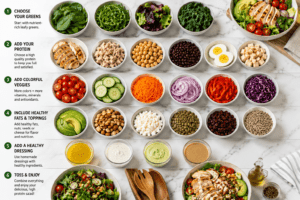
The best high protein salads are simple, balanced, and satisfying. Rather than following complicated recipes, you can build a nutritious salad by combining a few key components that work together to support fullness, healthy weight management, and lasting energy.
Whether you’re making a high protein salad for lunch, meal prep, post-workout recovery, or a quick dinner, following a simple formula makes it easy to create delicious meals every time.
Start With Leafy Greens
Leafy greens provide the foundation of a healthy salad.
They add volume, fiber, vitamins, minerals, and texture while keeping calories relatively low. Using a variety of greens creates more flavor and nutritional diversity.
Popular options include:
- Romaine lettuce
- Spinach
- Kale
- Arugula
- Mixed greens
- Butter lettuce
Combining two different greens often creates a more interesting and flavorful salad base.
Add a Protein Source
Protein is the most important ingredient in a high protein salad.
Without enough protein, even a large salad may not provide lasting satisfaction. Aim to include a protein source that helps bring the total protein content to at least 20 grams per serving.
Excellent choices include:
- Grilled chicken breast
- Tuna
- Eggs
- Cottage cheese
- Greek yogurt
- Chickpeas
- Black beans
- Lentils
- Tofu
- Edamame
Most healthy high protein salads contain between 20 and 40 grams of protein.
Include Fiber-Rich Vegetables
Vegetables add crunch, freshness, color, and nutrients.
They also increase meal volume without adding excessive calories, making them especially useful for people focused on healthy weight loss.
Great additions include:
- Cucumbers
- Tomatoes
- Bell peppers
- Carrots
- Red onions
- Cabbage
- Broccoli
- Celery
- Radishes
Using multiple vegetables helps improve both flavor and texture.
Add Healthy Fats
Healthy fats contribute to satisfaction and help your body absorb certain vitamins found in vegetables.
A small serving is usually enough.
Popular options include:
- Avocado
- Walnuts
- Almonds
- Pumpkin seeds
- Sunflower seeds
- Olive oil
- Feta cheese
Choose a Healthy Dressing
A good dressing brings all the ingredients together.
Many homemade dressings provide great flavor without the added sugars often found in store-bought varieties.
Popular healthy choices include:
- Greek yogurt dressing
- Olive oil and lemon juice
- Mustard vinaigrette
- Balsamic vinaigrette
- Cottage cheese dressing
- Avocado dressing
Quick High Protein Salad Formula
Use this simple formula whenever you build a salad:
Leafy Greens + Protein + Vegetables + Healthy Fat + Dressing = Balanced High Protein Salad
Example:
- Romaine lettuce
- Grilled chicken breast
- Cucumbers and tomatoes
- Avocado
- Greek yogurt dressing
Approximate Protein: 35g+
This formula can be adapted to hundreds of different combinations depending on your preferences and goals.
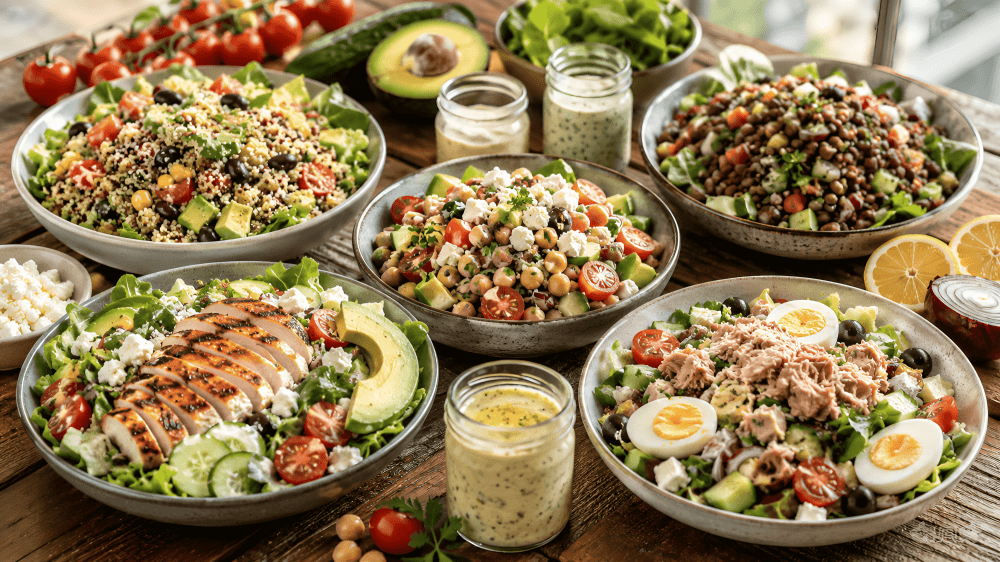
15 High Protein Salad Recipes
The following high protein salad recipes combine protein-rich ingredients with vegetables, healthy fats, and flavorful dressings. They work well for meal prep, healthy lunches, quick dinners, and weight management.
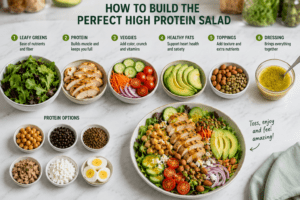
High Protein Chicken Caesar Salad
A lighter version of the classic Caesar salad that delivers excellent protein while remaining satisfying.
Key Ingredients:
- Grilled chicken breast
- Romaine lettuce
- Parmesan cheese
- Greek yogurt Caesar dressing
Approximate Protein: 35g+
How to Make It:
Combine chopped romaine lettuce with sliced grilled chicken. Toss with a Greek yogurt Caesar dressing and sprinkle with parmesan cheese before serving.
High Protein Chicken Cucumber Salad
Fresh, crunchy, and ideal for meal prep.
Key Ingredients:
- Grilled chicken
- Cucumbers
- Cherry tomatoes
- Red onion
- Greek yogurt dressing
Approximate Protein: 30g+
How to Make It:
Combine sliced chicken with chopped vegetables and lightly coat with Greek yogurt dressing. Chill before serving for maximum freshness.
This salad is especially useful for healthy weight management because it delivers high protein with relatively low calorie density.
Buffalo Chicken High Protein Salad
Perfect for anyone who enjoys bold flavors.
Key Ingredients:
- Buffalo chicken breast
- Romaine lettuce
- Celery
- Carrots
- Light ranch dressing
Approximate Protein: 35g+
How to Make It:
Toss sliced buffalo chicken with lettuce, celery, and carrots. Finish with a light ranch dressing.
High Protein Cobb Salad
One of the highest-protein salads on this list.
Key Ingredients:
- Chicken breast
- Eggs
- Avocado
- Tomatoes
- Mixed greens
Approximate Protein: 35–40g
How to Make It:
Arrange ingredients over mixed greens and drizzle with your preferred dressing before serving.
High Protein Tuna Salad
Affordable, quick, and meal-prep friendly.
Key Ingredients:
- Tuna
- Celery
- Red onion
- Greek yogurt
- Mixed greens
Approximate Protein: 30g+
How to Make It:
Mix tuna with Greek yogurt, celery, and onion. Serve over a bed of greens.
Tuna and Chickpea Protein Salad
Combines two excellent protein sources in one meal.
Key Ingredients:
- Tuna
- Chickpeas
- Cucumbers
- Tomatoes
- Lemon dressing
Approximate Protein: 35g+
How to Make It:
Combine all ingredients and toss with a simple lemon and olive oil dressing.
High Protein Egg Salad
A healthier take on a traditional favorite.
Key Ingredients:
- Hard-boiled eggs
- Greek yogurt
- Mustard
- Celery
Approximate Protein: 25g+
How to Make It:
Chop eggs and mix with Greek yogurt, mustard, and celery until well combined.
Cottage Cheese Egg Salad
Extra creamy and protein-packed.
Key Ingredients:
- Eggs
- Cottage cheese
- Green onions
- Mustard
Approximate Protein: 30g+
How to Make It:
Combine chopped eggs with cottage cheese and season to taste.
High Protein Chickpea Salad
A simple vegetarian option rich in both protein and fiber.
Key Ingredients:
- Chickpeas
- Cucumbers
- Tomatoes
- Parsley
- Lemon dressing
Approximate Protein: 18–20g
How to Make It:
Mix all ingredients together and toss with fresh lemon juice.
High Protein Mediterranean Salad
Fresh, colorful, and full of flavor.
Key Ingredients:
- Chickpeas
- Cucumbers
- Tomatoes
- Olives
- Feta cheese
Approximate Protein: 20g+
How to Make It:
Combine ingredients and drizzle with olive oil and lemon juice.
High Protein Black Bean Salad
An excellent high fiber and high protein salad.
Key Ingredients:
- Black beans
- Corn
- Bell peppers
- Cilantro
- Lime dressing
Approximate Protein: 18–20g
How to Make It:
Mix ingredients together and finish with fresh lime juice.
High Protein Lentil Salad
One of the most filling vegetarian salad recipes available.
Key Ingredients:
- Lentils
- Cucumbers
- Tomatoes
- Red onions
- Parsley
Approximate Protein: 20g+
How to Make It:
Combine cooked lentils with vegetables and toss with a light vinaigrette.
The combination of protein and fiber helps support fullness for longer periods.
High Protein Quinoa Salad
Balanced, nutritious, and meal-prep friendly.
Key Ingredients:
- Quinoa
- Chickpeas
- Cucumbers
- Bell peppers
- Lemon vinaigrette
Approximate Protein: 18–22g
How to Make It:
Mix cooked quinoa with vegetables and chickpeas before adding dressing.
High Protein Vegetarian Salad
A flexible vegetarian option with multiple protein sources.
Key Ingredients:
- Chickpeas
- Quinoa
- Feta cheese
- Mixed vegetables
Approximate Protein: 22–25g
How to Make It:
Combine all ingredients and toss with your favorite vinaigrette.
High Protein Vegan Salad
A completely plant-based salad that still provides impressive protein.
Key Ingredients:
- Edamame
- Tofu
- Mixed greens
- Cabbage
- Sesame dressing
Approximate Protein: 25g+
How to Make It:
Combine tofu, edamame, greens, and cabbage before tossing with sesame dressing.
Quick Comparison: Which High Protein Salad Is Best for You?
| Salad Type | Protein | Best For |
| Chicken Caesar Salad | 35g+ | Weight Loss |
| Chicken Cucumber Salad | 30g+ | Low-Calorie Meals |
| Cobb Salad | 35–40g | Maximum Fullness |
| Tuna Salad | 30g+ | Meal Prep |
| Egg Salad | 25g+ | Budget-Friendly Meals |
| Chickpea Salad | 18–20g | High-Fiber Diets |
| Lentil Salad | 20g+ | Vegetarian Eating |
| Vegan Salad | 25g+ | Plant-Based Diets |
These high protein salad recipes offer a variety of flavors, textures, and protein sources, making it easy to find options that fit your dietary preferences, meal prep routine, and healthy eating goals.
Best High Protein Salad Dressings
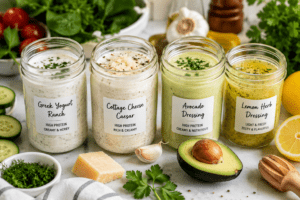
A great dressing can turn a simple salad into a satisfying meal. While many store-bought dressings contain added sugars, excess oils, and unnecessary ingredients, homemade high protein salad dressings can add flavor while contributing additional protein.
The best high protein salad dressings complement your ingredients without overpowering them. They also help create more satisfying meals that support healthy weight loss and lasting energy.
Quick Answer: What Is the Best High Protein Salad Dressing?
Greek yogurt ranch dressing and cottage cheese Caesar dressing are among the best high protein salad dressings because they provide 8 to 12 grams of protein per serving while remaining creamy, flavorful, and lower in calories than many traditional dressings.
Greek Yogurt Ranch Dressing
Greek yogurt ranch is one of the easiest ways to add extra protein to a salad while keeping the dressing creamy and flavorful.
Key Ingredients:
- Plain Greek yogurt
- Lemon juice
- Garlic powder
- Onion powder
- Fresh dill
- Salt and pepper
Approximate Protein: 8–10g per serving
Storage Life: Up to 5 days refrigerated
How to Make It:
Mix all ingredients in a bowl until smooth. Adjust seasoning to taste and refrigerate for 30 minutes before serving.
This dressing works especially well with:
- High protein chicken salad
- Cobb salad
- Buffalo chicken salad
- Chopped salads
Cottage Cheese Caesar Dressing
This high protein Caesar dressing provides a creamy texture while significantly increasing protein compared to traditional Caesar dressing.
Key Ingredients:
- Cottage cheese
- Lemon juice
- Parmesan cheese
- Garlic
- Dijon mustard
- Black pepper
Approximate Protein: 10–12g per serving
Storage Life: Up to 4 days refrigerated
How to Make It:
Blend ingredients until smooth and creamy. Add a small amount of water if needed to achieve your preferred consistency.
This dressing pairs well with:
- Chicken Caesar salad
- Tuna salad
- Mediterranean salads
- Meal prep salads
Lemon Herb Dressing
A lighter dressing option that works well for people who prefer fresh flavors.
Key Ingredients:
- Lemon juice
- Olive oil
- Fresh parsley
- Fresh dill
- Garlic
- Black pepper
Approximate Protein: 1–2g per serving
Storage Life: Up to 5 days refrigerated
How to Make It:
Whisk ingredients together and drizzle over salads immediately before serving.
This dressing complements:
- Chickpea salads
- Lentil salads
- Quinoa salads
- Mediterranean salads
High Protein Avocado Dressing
Avocado creates a creamy texture while providing healthy fats and additional nutrients.
Key Ingredients:
- Avocado
- Greek yogurt
- Lime juice
- Garlic
- Fresh cilantro
- Water
Approximate Protein: 6–8g per serving
Storage Life: Up to 3 days refrigerated
How to Make It:
Blend all ingredients until smooth and creamy.
This dressing works particularly well with:
- Southwest chicken salad
- Black bean salad
- Taco salad
- High protein vegan salad
Quick Comparison of High Protein Salad Dressings
| Dressing | Protein | Calories | Best For |
| Greek Yogurt Ranch | 8–10g | 70–90 | Chicken Salads |
| Cottage Cheese Caesar | 10–12g | 80–100 | Caesar Salads |
| Lemon Herb Dressing | 1–2g | 50–70 | Mediterranean Salads |
| Avocado Dressing | 6–8g | 90–120 | Southwest Salads |
High Protein Salad Meal Prep Guide
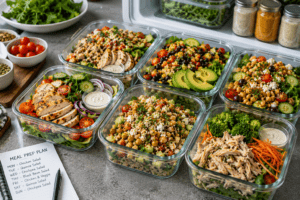
Meal prep is one of the easiest ways to make healthy eating more consistent. Preparing salads in advance saves time, reduces daily decision-making, and makes it easier to choose nutritious meals throughout the week.
The key is selecting ingredients that store well and maintain their texture after refrigeration.
Best Salads for Meal Prep
Not every salad works well for meal prep.
Some ingredients become soggy quickly, while others remain fresh for several days.
The following salads are excellent choices for meal prep:
- High protein chicken cucumber salad
- Tuna and chickpea salad
- High protein lentil salad
- High protein black bean salad
- High protein quinoa salad
- High protein Mediterranean salad
- High protein vegan salad
These salads maintain their flavor and texture well when stored properly.
Storage Tips
Proper storage helps keep meal prep salads fresh and enjoyable throughout the week.
For the best results:
- Store dressing separately
- Use airtight containers
- Keep leafy greens dry
- Add crunchy toppings before serving
- Refrigerate immediately after preparation
Pro Meal Prep Tips
Many experienced meal preppers use these strategies to improve freshness:
- Place heavier ingredients at the bottom of containers.
- Keep leafy greens on top until serving.
- Store nuts and seeds separately.
- Use mason jars for layered salads.
- Freeze cooked proteins separately for longer storage.
These small steps can noticeably improve texture and shelf life.
How Long Do High Protein Salads Stay Fresh?
Storage time depends on the ingredients used.
| Salad Type | Refrigerator Life |
| Chicken Salad | 3–4 Days |
| Tuna Salad | 3–4 Days |
| Egg Salad | 3–4 Days |
| Chickpea Salad | 4–5 Days |
| Lentil Salad | 4–5 Days |
| Quinoa Salad | 4–5 Days |
| Black Bean Salad | 4–5 Days |
| Vegan Salad | 3–4 Days |
Always inspect food before eating and discard anything that shows signs of spoilage.
High Protein Salad Ingredient Cheat Sheet
Use this quick reference when building meal prep salads.
| Ingredient | Protein | Calories |
| Chicken Breast (100g) | 31g | 165 |
| Tuna (100g) | 25g | 132 |
| Cottage Cheese (1 Cup) | 24g | 206 |
| Greek Yogurt (1 Cup) | 20g | 130 |
| Lentils (1 Cup) | 18g | 230 |
| Edamame (1 Cup) | 18g | 188 |
| Chickpeas (1 Cup) | 15g | 269 |
| Black Beans (1 Cup) | 15g | 227 |
| Eggs (2 Large) | 12g | 140 |
| Tofu (100g) | 10g | 76 |
| Quinoa (1 Cup) | 8g | 222 |
Protein Comparison Table
| Protein Source | Protein | Best For |
| Chicken Breast | 31g | Weight Loss |
| Tuna | 25g | Meal Prep |
| Cottage Cheese | 24g | High Protein Salads |
| Greek Yogurt | 20g | Dressings |
| Lentils | 18g | Vegetarian Salads |
| Edamame | 18g | Vegan Salads |
| Chickpeas | 15g | High Fiber Salads |
| Black Beans | 15g | Meal Prep Bowls |
| Eggs | 12g | Budget-Friendly Meals |
| Tofu | 10g | Plant-Based Salads |
| Quinoa | 8g | Balanced Vegetarian Meals |
Sample 7-Day High Protein Salad Meal Plan
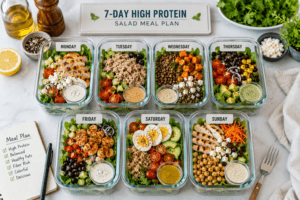
If you’re new to meal prep, following a simple weekly plan can help create variety while ensuring you get plenty of protein throughout the week.
| Day | High Protein Salad | Approximate Protein |
| Monday | High Protein Chicken Caesar Salad | 35g+ |
| Tuesday | High Protein Chicken Cucumber Salad | 30g+ |
| Wednesday | High Protein Tuna Salad | 30g+ |
| Thursday | High Protein Lentil Salad | 20g+ |
| Friday | High Protein Black Bean Salad | 20g+ |
| Saturday | High Protein Mediterranean Salad | 20g+ |
| Sunday | High Protein Vegan Salad | 25g+ |
This schedule provides a mix of animal-based and plant-based protein sources while keeping meals interesting throughout the week.
Common Mistakes When Making High Protein Salads
Even healthy salads can fall short if a few important elements are missing.
Avoiding these common mistakes can help create more balanced and satisfying meals.
Not Enough Protein
Many salads contain plenty of vegetables but very little protein.
Without enough protein, a salad may not keep you full for very long.
Aim for at least 20 grams of protein per serving whenever possible.
Too Much Dressing
Dressings can add flavor, but using excessive amounts may significantly increase calories without improving nutrition.
Measure portions when possible and choose nutrient-dense dressings made from quality ingredients.
Missing Healthy Fats
Some people remove all fats from salads when trying to lose weight.
However, healthy fats contribute to satisfaction and help support nutrient absorption.
Good choices include:
- Avocado
- Olive oil
- Nuts
- Seeds
Low Fiber Ingredients
Protein is important, but fiber also plays a major role in fullness.
Salads built around protein alone may feel less satisfying than those that combine protein with fiber-rich vegetables, legumes, and whole-food ingredients.
Using Too Many Processed Toppings
Many salads become surprisingly high in calories because of processed toppings.
Common examples include:
- Fried tortilla strips
- Sugary dried fruit
- Flavored croutons
- Bacon bits
- Sweetened dressings
These ingredients can quickly increase calories without adding much nutritional value.
Choosing whole-food toppings instead often creates a more balanced and satisfying salad.
Combining adequate protein, fiber-rich ingredients, healthy fats, and sensible portions is usually the most effective approach for building high protein salads that support healthy weight loss and lasting energy.
Key Takeaways
- Aim for 20 to 40 grams of protein in a meal-sized salad.
- Chicken breast, tuna, cottage cheese, lentils, and edamame are among the highest-protein salad ingredients.
- Combining protein and fiber can help support fullness and healthy weight management.
- Most high protein meal prep salads stay fresh for 3 to 5 days when stored properly.
- Homemade protein-rich dressings can add flavor while contributing additional nutrition.
- High protein salads can support weight loss, meal prep, muscle maintenance, and lasting energy.
Frequently Asked Questions
What Is the Best High Protein Salad for Weight Loss?
A grilled chicken cucumber salad is often considered one of the best high protein salads for weight loss because it combines lean protein, fiber-rich vegetables, and relatively low calories while still providing more than 30 grams of protein per serving. Other excellent options include tuna and chickpea salad, high protein Cobb salad, and lentil-based salads. The most effective salad is one that keeps you satisfied for several hours while fitting your overall nutrition goals.
How Much Protein Should a Salad Have?
For most adults, a meal-sized high protein salad should contain approximately 20 to 30 grams of protein. People with higher activity levels, strength-training goals, or larger calorie requirements may benefit from 30 to 40 grams of protein per meal. Including enough protein helps transform a salad from a light side dish into a satisfying main meal.
Can You Meal Prep High Protein Salads?
Yes. Most high protein salads can be prepared in advance and stored for 3 to 5 days in the refrigerator. Salads made with chicken, tuna, lentils, chickpeas, black beans, quinoa, and edamame tend to hold up particularly well. For the best texture and freshness, store dressings separately and add crunchy toppings immediately before serving.
Are High Protein Salads Good for Muscle Gain?
Yes. High protein salads can support muscle growth and recovery when they provide adequate protein, calories, and nutrient-dense ingredients. Salads made with chicken, tuna, eggs, cottage cheese, Greek yogurt, tofu, or edamame can easily provide 25 to 40 grams of protein, helping support muscle maintenance and post-workout recovery.
What Vegetables Have the Most Protein?
Edamame, green peas, spinach, broccoli, Brussels sprouts, kale, and asparagus are among the vegetables with the highest protein content. While vegetables alone typically do not provide enough protein for a complete meal, combining them with ingredients such as chicken, beans, lentils, eggs, or tofu can significantly increase the protein content of your salad.
What Is the Highest Protein Ingredient for a Salad?
Chicken breast is one of the highest-protein salad ingredients, providing approximately 31 grams of protein per 100 grams. Other excellent choices include tuna, cottage cheese, Greek yogurt, lentils, edamame, and eggs. The best option depends on your dietary preferences and the type of salad you are preparing.
Can I Make a Vegetarian High Protein Salad?
Absolutely. A vegetarian high protein salad can easily contain more than 20 grams of protein by combining ingredients such as chickpeas, lentils, black beans, quinoa, Greek yogurt, cottage cheese, eggs, and edamame. Mixing several protein sources often creates a more satisfying and nutritionally balanced meal.
What Is the Best Dressing for a High Protein Salad?
Greek yogurt ranch dressing and cottage cheese Caesar dressing are among the best high protein salad dressings because they add extra protein while remaining creamy and flavorful. For lighter options, lemon herb dressing and avocado-based dressings pair well with chicken salads, Mediterranean salads, bean salads, and vegetarian protein bowls.
Conclusion
High protein salads are much more than a healthy side dish. When built with quality protein sources, fiber-rich vegetables, healthy fats, and flavorful dressings, they become complete meals that can support healthy weight management, meal prep goals, muscle maintenance, and steady energy throughout the day.
Whether you prefer a high protein chicken salad, tuna salad, chickpea salad, lentil salad, vegetarian salad, or vegan salad, the key is creating balanced meals that provide enough protein to keep you satisfied while delivering a wide range of nutrients.
If you’re just getting started, begin with one simple recipe such as a grilled chicken salad, chickpea salad, or tuna salad. Once you find combinations you enjoy, experiment with different proteins, vegetables, and homemade dressings to create meals that fit your lifestyle and personal preferences.
Small improvements made consistently often produce the best long-term results. A single high protein salad each day can be an easy and practical step toward healthier eating habits.
For more healthy meal ideas, explore our healthy breakfast recipes, meal prep recipes, high protein recipes, and nutritious salad guides to discover additional ways to build satisfying meals that support your health and wellness goals.