If you’ve ever skipped breakfast because you were running late, you’re not alone. For many people, the busiest part of the day happens before they even leave the house. Between work, school drop-offs, morning workouts, and daily responsibilities, preparing a nutritious breakfast often falls to the bottom of the priority list.
The result is usually the same: grabbing something convenient, relying on sugary snacks, or skipping breakfast entirely. While this may save a few minutes in the moment, it often leads to low energy, increased hunger, and poor food choices later in the day.
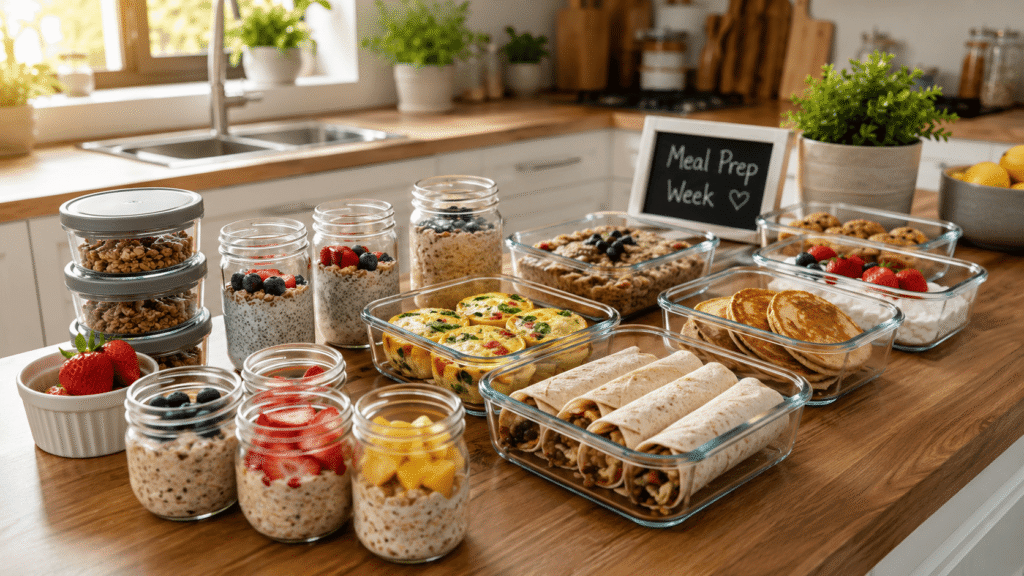
Breakfast meal prep offers a simple solution. By preparing meals ahead of time, you can start each morning with a ready-to-eat breakfast that supports your schedule and nutritional goals. A single meal prep session can provide several days’ worth of breakfasts, making busy mornings much more manageable.
The best meal prep breakfasts are easy to prepare, store well, and provide a balance of protein, fiber, and healthy fats to help keep you satisfied throughout the morning. Whether you prefer something sweet, savory, high-protein, or grab-and-go, there are plenty of make-ahead breakfast options that can fit your lifestyle.
What Are the Best Meal Prep Breakfasts for the Week?
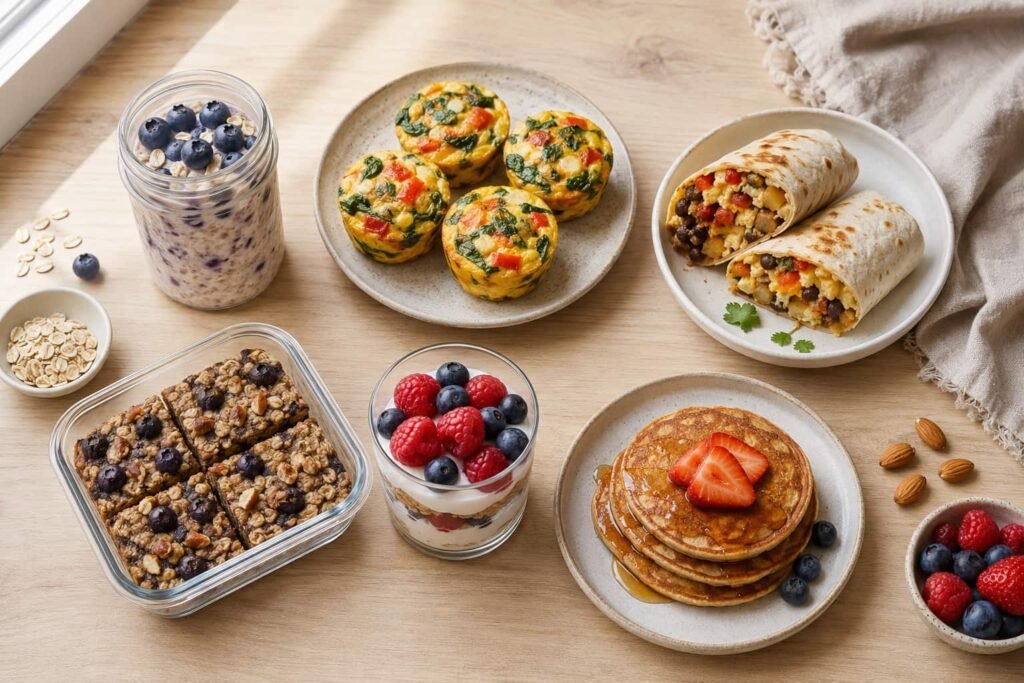
The best meal prep breakfasts for the whole week include:
- Overnight oats
- Egg muffins
- Breakfast burritos
- Baked oatmeal
- Greek yogurt parfaits
- Protein pancakes
- Breakfast sandwiches
- Chia pudding
- Cottage cheese breakfast bowls
- Smoothie packs
These breakfast meal prep ideas can be prepared in advance, stored safely in the refrigerator or freezer, and enjoyed throughout the week with minimal effort.
At a Glance
| Breakfast Option | Prep Time | Fridge Life | Freezer Friendly |
| Overnight Oats | 10 Minutes | 4–5 Days | No |
| Egg Muffins | 30 Minutes | 4 Days | Yes |
| Breakfast Burritos | 45 Minutes | 4 Days | Yes |
| Baked Oatmeal | 40 Minutes | 5 Days | Yes |
| Greek Yogurt Parfaits | 10 Minutes | 3–4 Days | No |
| Protein Pancakes | 30 Minutes | 4 Days | Yes |
What Makes a Good Meal Prep Breakfast?
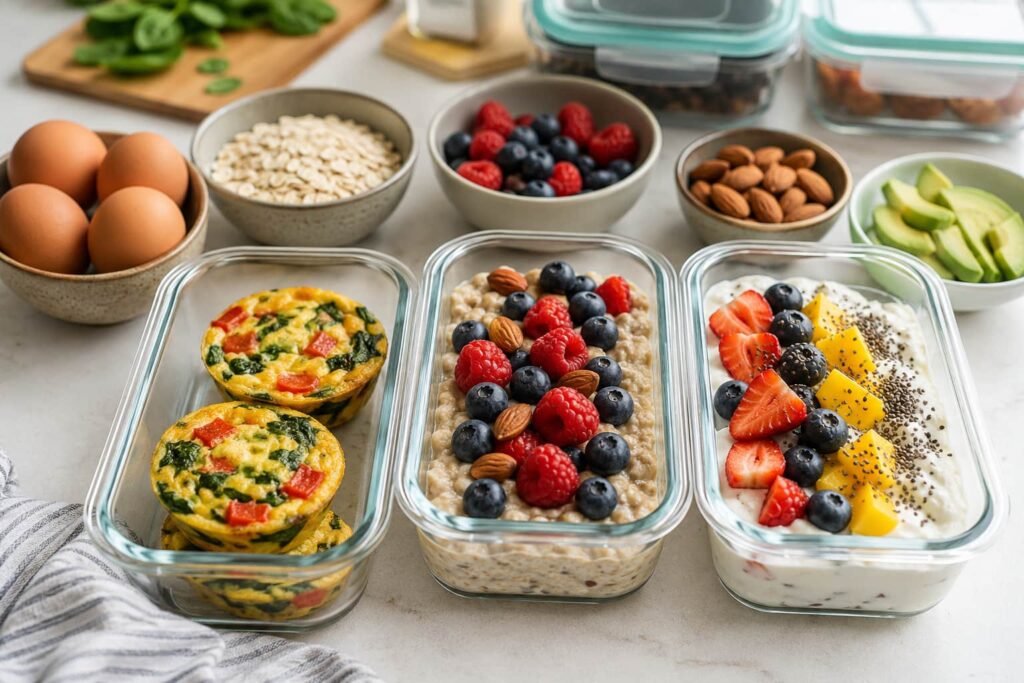
Not every breakfast recipe works well for meal prep. Some meals become soggy after a day in the refrigerator, while others require too much effort to make regularly.
The best meal prep breakfasts have a few qualities in common. They save time, maintain their quality after storage, and help keep you energized throughout the morning.
Before filling your containers for the week, look for breakfast recipes that meet the following criteria.
Easy to Prepare
A successful breakfast meal prep routine should make life easier, not more complicated.
Recipes that can be prepared in batches are usually the most practical. Overnight oats, baked oatmeal, egg muffins, and breakfast burritos are popular because they allow you to prepare multiple servings at once.
Many experienced meal preppers find that spending just 60 to 90 minutes on a weekend can provide breakfast for the next five to seven days.
When evaluating breakfast meal prep ideas, consider whether they:
- Use simple ingredients already found in most kitchens
- Require minimal cooking steps
- Can be prepared in large batches
- Are easy to portion into individual servings
The simpler the process, the easier it becomes to maintain the habit week after week.
Stores Well
Storage is often the difference between a successful meal prep breakfast and wasted food.
The best make-ahead breakfast recipes maintain their flavor and texture throughout the week. Overnight oats can typically stay fresh for up to five days, while baked oatmeal and egg muffins often keep well for four to five days when refrigerated properly.
For longer-term planning, freezer-friendly breakfast recipes provide additional flexibility.
Popular freezer breakfast options include:
✔ Breakfast burritos
✔ Egg sandwiches
✔ Protein pancakes
✔ Breakfast casseroles
✔ Homemade breakfast wraps
Choosing recipes that store well reduces waste and helps ensure your breakfast is ready whenever you need it.
Reheats Easily
Busy mornings leave little time for cooking.
The most practical breakfast meal prep recipes require little more than a quick reheat before serving. Foods like breakfast burritos, egg muffins, and baked oatmeal can usually be warmed in two to three minutes.
Some breakfasts require no reheating at all.
Cold breakfast options include:
- Overnight oats
- Chia pudding
- Greek yogurt parfaits
- Cottage cheese bowls
- Fruit and yogurt combinations
Having both hot and cold options available can help prevent breakfast fatigue during the week.
Provides Lasting Energy
Convenience is important, but nutrition matters just as much.
A breakfast that leaves you hungry an hour later isn’t doing its job. The most effective healthy meal prep breakfasts combine protein, fiber, and healthy fats to help support sustained energy and fullness.
A balanced breakfast often includes:
| Nutrient | Common Sources |
| Protein | Eggs, Greek yogurt, cottage cheese, turkey sausage |
| Fiber | Oats, berries, chia seeds, whole grains |
| Healthy Fats | Nuts, seeds, nut butters, avocado |
This combination can help reduce mid-morning hunger and provide more stable energy levels throughout the day.
High-protein meal prep breakfasts are especially popular among busy professionals, parents, and fitness enthusiasts because they tend to be more filling and easier to fit into a structured eating routine.
Quick Checklist for Choosing Meal Prep Breakfasts
Before adding a recipe to your weekly rotation, ask yourself:
✔ Can I prepare multiple servings at once?
✔ Will it stay fresh for at least 3–5 days?
✔ Can it be frozen if needed?
✔ Does it contain a source of protein?
✔ Is it easy to reheat or serve?
✔ Can I portion it into grab-and-go containers?
If the answer is yes to most of these questions, the recipe is likely a strong candidate for breakfast meal prep.
Now that you know what makes a breakfast suitable for meal prep, let’s look at the specific breakfast recipes that consistently stay fresh, reheat well, and make weekday mornings significantly easier.
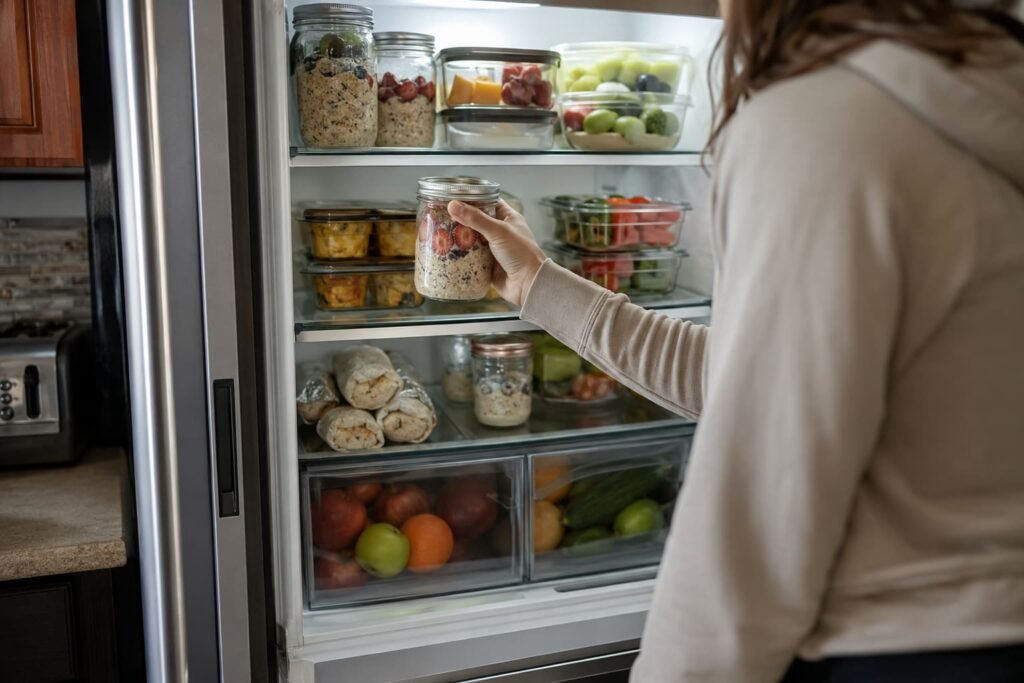
Benefits of Meal Prepping Breakfast for the Week
Preparing breakfast ahead of time is one of the simplest ways to make busy mornings easier. Instead of starting each day by deciding what to eat, you already have nutritious meals ready to grab, reheat, or enjoy straight from the refrigerator.
A well-planned breakfast meal prep routine can save time, reduce waste, support healthier food choices, and make it easier to stay consistent with your nutrition goals throughout the week.
Whether you’re preparing overnight oats, breakfast burritos, egg muffins, or high-protein breakfast bowls, the benefits go far beyond convenience.
Quick Takeaway: Why Is Breakfast Meal Prep Worth It?
Meal prepping breakfast helps you:
- Save time during busy mornings
- Reduce food waste at home
- Make healthier breakfast choices
- Stay consistent with nutrition goals
- Control portion sizes more effectively
- Keep ready-to-eat meals available throughout the week
For many people, spending just 60 to 90 minutes preparing breakfast on the weekend can eliminate the need to cook breakfast every weekday morning.
Saves Time Every Morning
One of the biggest advantages of breakfast meal prep is the amount of time it saves during the week.
Preparing breakfast from scratch each morning may seem manageable, but even 15 minutes a day adds up quickly. Over a five-day workweek, that’s more than an hour spent cooking, preparing ingredients, and cleaning up.
By preparing several breakfasts at once, you can dramatically simplify your morning routine.
For example, a batch of overnight oats, baked oatmeal, or egg muffins can provide breakfast for multiple days with very little additional effort.
Instead of:
- Searching for ingredients
- Cooking from scratch
- Washing dishes
- Packing breakfast for work
You simply grab your prepared meal and start your day.
For parents managing school schedules, professionals rushing to meetings, or students heading to class, having breakfast ready can make mornings feel far less stressful.
Helps Reduce Food Waste
Many ingredients commonly used for breakfast have a relatively short shelf life.
Fresh fruit, yogurt, milk, vegetables, and bread often go unused when meals aren’t planned in advance. As a result, perfectly good food frequently ends up being discarded.
Breakfast meal prep encourages more intentional use of ingredients.
Rather than buying ingredients with no clear plan, you purchase items knowing exactly how they’ll be used throughout the week.
For example:
- A container of Greek yogurt can be portioned into several parfaits.
- Fresh berries can be divided among overnight oats and smoothie packs.
- Eggs can be used for breakfast sandwiches, burritos, and muffins.
- Oats can become multiple breakfasts with different flavor combinations.
This approach not only reduces waste but can also help stretch your grocery budget further.
Supports Healthy Eating Habits
Many breakfast decisions are driven by convenience rather than nutrition.
When you’re short on time, it’s easy to grab a pastry, sugary cereal, or fast-food breakfast because it’s quick and accessible. Unfortunately, these options often leave people hungry again shortly afterward.
Healthy meal prep breakfasts remove much of that daily decision-making.
When balanced meals are already prepared, healthy choices become the easiest choices.
This can help you:
- Increase daily protein intake
- Eat more fiber-rich foods
- Include more fruits and whole grains
- Reduce reliance on ultra-processed convenience foods
- Build a more consistent eating routine
Over time, these small improvements can make a noticeable difference in how you approach breakfast and overall meal planning.
Makes Portion Control Easier
Portion sizes can vary significantly when meals are prepared on the spot.
It’s easy to pour too much cereal, add extra toppings, or eat larger servings without realizing it.
Meal prepping breakfast in advance creates built-in portion control.
Each meal is divided before the week begins, making it easier to maintain consistency from one day to the next.
This can be especially helpful for people who are:
- Tracking protein intake
- Managing calorie goals
- Following a structured meal plan
- Working toward fitness goals
- Building more mindful eating habits
With individual portions ready to go, there’s less guesswork involved and fewer opportunities for overeating.
Reduces Decision Fatigue
Many people underestimate how much mental energy is spent deciding what to eat.
Making dozens of food-related decisions every week can become exhausting, especially during busy mornings.
Having breakfast already planned removes one more decision from your day.
Instead of asking:
“What should I eat this morning?”
The answer is already waiting in your refrigerator.
This simple change can make it easier to stay consistent with healthy eating habits while reducing unnecessary stress.
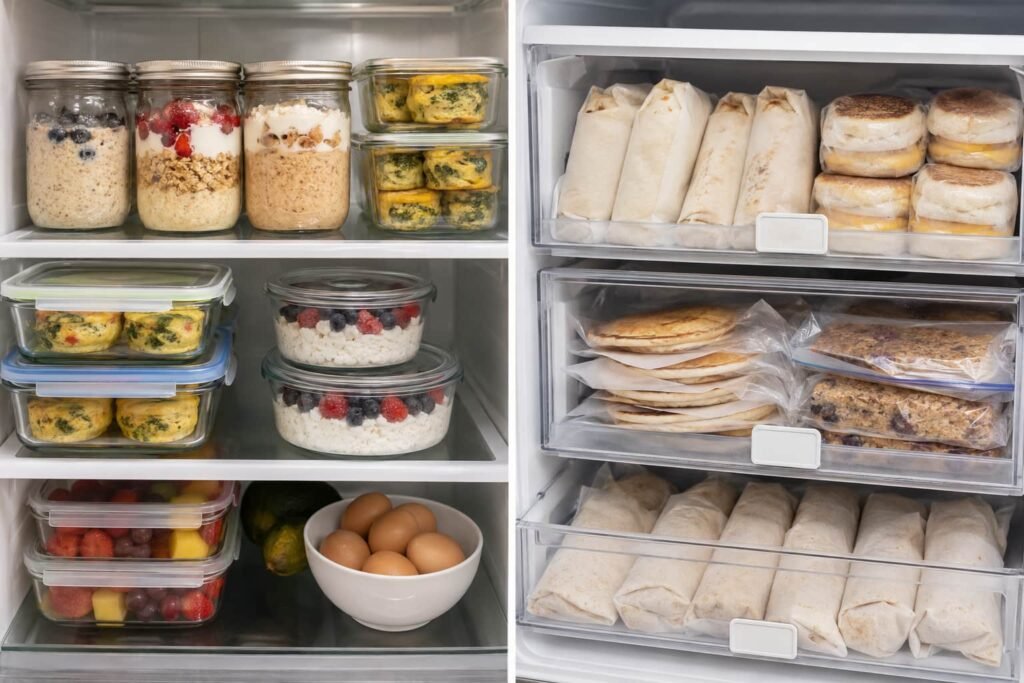
How Long Do Meal Prep Breakfasts Last?
One of the most common questions about breakfast meal prep is how long prepared meals stay fresh.
The answer depends on the ingredients used, how the food is stored, and whether it’s refrigerated or frozen.
In general, most meal prep breakfasts remain fresh for 3 to 5 days in the refrigerator, while many freezer-friendly breakfast recipes can be stored for up to 2 to 3 months.
Proper storage is important not only for food safety but also for preserving flavor and texture.
Quick Answer: How Long Do Meal Prep Breakfasts Last?
Most breakfast meal prep recipes stay fresh for:
| Storage Method | Typical Freshness |
| Refrigerator | 3–5 Days |
| Freezer | 2–3 Months |
Foods containing eggs, dairy, and cooked ingredients should always be stored in airtight containers and refrigerated promptly after preparation.
Refrigerator Storage Guidelines
For weekly breakfast meal prep, refrigeration is usually the most convenient option.
Many popular make-ahead breakfast recipes maintain excellent quality for several days when stored correctly.
| Breakfast Type | Refrigerator Storage Time |
| Overnight Oats | 4–5 Days |
| Chia Pudding | 4–5 Days |
| Baked Oatmeal | 4–5 Days |
| Egg Muffins | 3–4 Days |
| Breakfast Burritos | 3–4 Days |
| Greek Yogurt Parfaits | 3–4 Days |
| Cottage Cheese Bowls | 3–4 Days |
| Breakfast Sandwiches | 3–4 Days |
To maximize freshness:
✔ Store meals in airtight containers.
✔ Refrigerate within two hours of preparation.
✔ Keep your refrigerator at or below 40°F (4°C).
✔ Label containers with the preparation date.
✔ Place older meals at the front so they are eaten first.
Many experienced meal preppers prepare breakfast on Sunday and enjoy those meals through Thursday or Friday.
Why Some Breakfasts Last Longer Than Others
Not all breakfast foods behave the same way during storage.
Overnight oats and chia pudding often stay fresh longer because they are designed to absorb liquid gradually over time.
Fresh fruit, on the other hand, may begin losing texture after several days.
Breakfast sandwiches and burritos remain safe when stored properly, but bread products may become softer during refrigeration.
Understanding these differences can help you choose breakfast meal prep recipes that best fit your schedule.
Freezer Storage Guidelines
Freezing allows you to prepare breakfast weeks or even months ahead of time.
This is especially helpful during busy periods when you may not have time for weekly meal prep sessions.
Some of the best freezer-friendly breakfast recipes include:
- Breakfast burritos
- Egg muffins
- Protein pancakes
- Breakfast sandwiches
- Baked oatmeal
- Breakfast casseroles
| Breakfast Type | Freezer Storage Time |
| Breakfast Burritos | Up to 3 Months |
| Baked Oatmeal | Up to 3 Months |
| Egg Muffins | Up to 2 Months |
| Protein Pancakes | Up to 2 Months |
| Breakfast Sandwiches | Up to 2 Months |
For best results:
- Cool food completely before freezing.
- Freeze individual portions when possible.
- Use freezer-safe bags or containers.
- Remove excess air to reduce freezer burn.
- Label meals with preparation and freezing dates.
These simple steps help maintain quality and make it easier to rotate meals.
Common Meal Prep Storage Mistakes
Even well-prepared breakfasts can lose quality if stored incorrectly.
Avoid these common mistakes:
- Sealing hot food before it cools
- Using containers that are not airtight
- Leaving prepared meals at room temperature too long
- Freezing foods without labels
- Preparing more food than can realistically be consumed
Small storage mistakes can shorten shelf life and affect texture, flavor, and freshness.
Food Safety Tips
Food safety should always be part of your breakfast meal prep routine.
Even the best make-ahead breakfast recipes should be discarded if they show signs of spoilage.
Watch for:
- Unusual odors
- Visible mold
- Discoloration
- Excess moisture buildup
- Significant texture changes
To keep meal prep breakfasts safe:
✔ Wash hands and preparation surfaces thoroughly.
✔ Use clean containers and utensils.
✔ Cool cooked foods before sealing.
✔ Refrigerate meals promptly.
✔ Reheat hot breakfasts thoroughly before serving.
✔ When in doubt, throw it out.
Proper food handling helps ensure your meal prep breakfasts stay safe, fresh, and enjoyable throughout the week.
Now that you understand the benefits of breakfast meal prep and how to store meals safely, it’s time to explore the best meal prep breakfasts that consistently deliver convenience, nutrition, and great flavor all week long.
Best Meal Prep Breakfasts for the Whole Week
When it comes to breakfast meal prep, not every recipe is worth adding to your weekly routine. Some breakfasts become soggy after a day or two, while others require too much preparation to be practical for busy mornings.
The best meal prep breakfasts are easy to make in batches, store well, and provide a balance of protein, fiber, and healthy fats. They should save time during the week while still giving you something enjoyable to look forward to each morning.
What Are the Best Meal Prep Breakfasts?
If you’re looking for reliable make-ahead breakfast recipes, these options consistently perform well for meal prep:
- Overnight Oats
- Egg Muffins
- Breakfast Burritos
- Chia Seed Pudding
- Baked Oatmeal
- Greek Yogurt Parfaits
- Breakfast Sandwiches
- Cottage Cheese Breakfast Bowls
- Protein Pancakes
- Breakfast Quesadillas
- Smoothie Packs
- Homemade Breakfast Bars
Each option offers different benefits depending on your goals, schedule, and taste preferences.
Best Meal Prep Breakfasts by Goal
| Goal | Best Breakfast Option |
| High Protein | Egg Muffins, Cottage Cheese Bowls |
| Grab-and-Go | Greek Yogurt Parfaits, Breakfast Bars |
| Family-Friendly | Baked Oatmeal |
| Freezer-Friendly | Breakfast Burritos, Breakfast Sandwiches |
| No-Cook Breakfast | Overnight Oats, Chia Pudding |
| Quickest Preparation | Smoothie Packs |
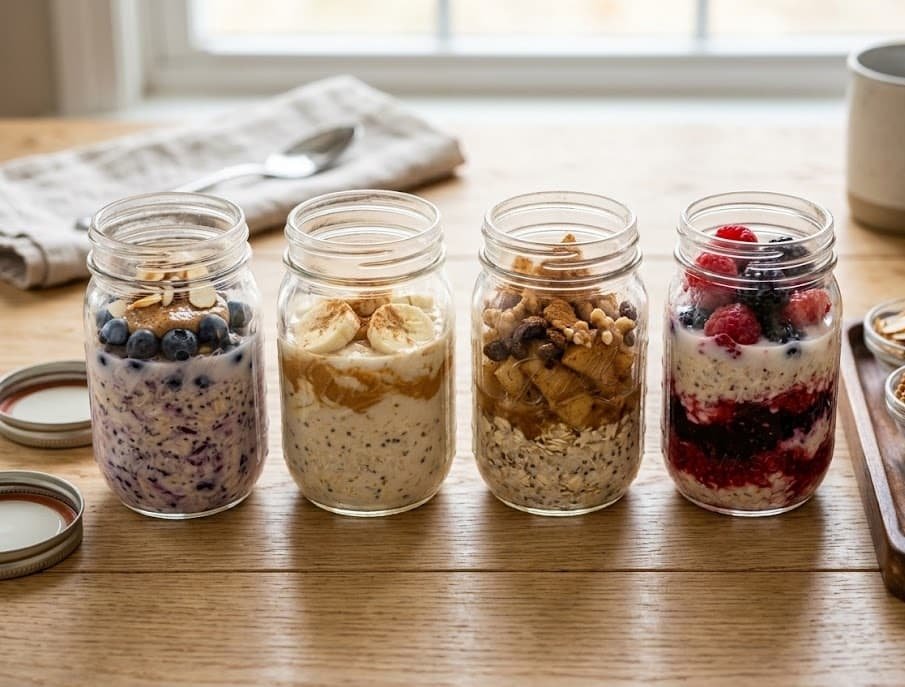
Overnight Oats
Overnight oats remain one of the most popular breakfast meal prep ideas because they require almost no effort. Everything is prepared the night before, allowing the oats to absorb liquid gradually while developing a creamy texture.
Why It Works
Unlike cooked oatmeal, overnight oats require no morning preparation. Simply open the container and eat.
Many people find overnight oats particularly helpful during busy workweeks because they can prepare several jars in less than 15 minutes.
Benefits include:
- No cooking required
- Minimal cleanup
- Excellent refrigerator life
- Easy flavor customization
- Rich in fiber and complex carbohydrates
Storage Tips
For the best results:
✔ Store in airtight jars or containers.
✔ Keep refrigerated at all times.
✔ Consume within 4 to 5 days.
✔ Add nuts, granola, or crunchy toppings before serving.
Flavor Ideas
Popular combinations include:
- Peanut Butter Banana
- Blueberry Almond
- Apple Cinnamon
- Mixed Berry Vanilla
- Chocolate Protein Oats
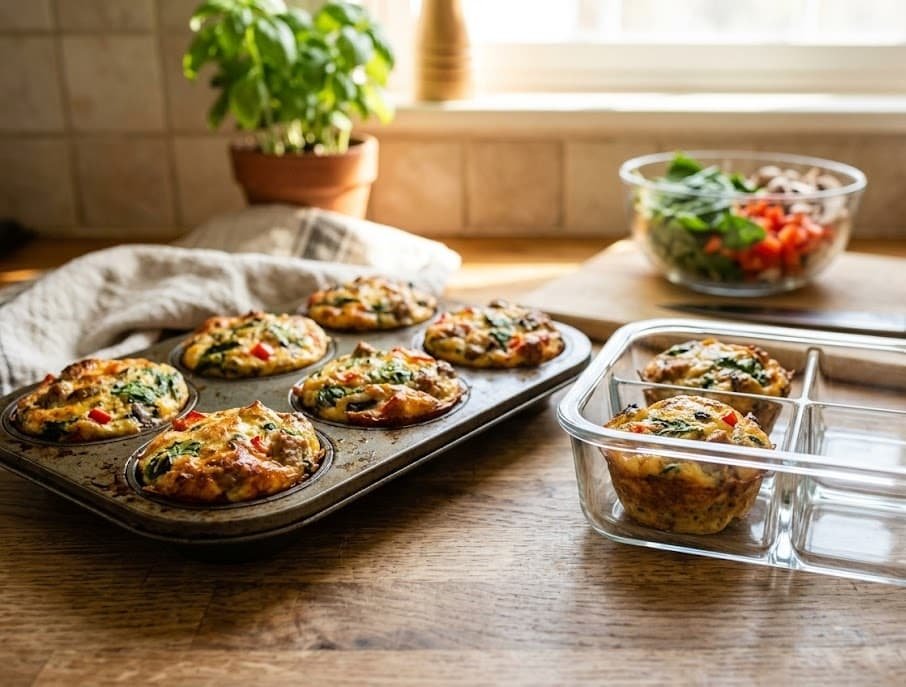
Egg Muffins
Egg muffins are among the most reliable high-protein meal prep breakfasts because they combine convenience, nutrition, and flexibility.
A single batch can provide several breakfasts while taking less than 30 minutes to prepare.
Protein Benefits
Eggs provide high-quality protein along with essential vitamins and minerals.
Depending on ingredients, egg muffins can help support fullness throughout the morning while providing:
- Protein
- Healthy fats
- Vegetables
- Micronutrients
Adding spinach, bell peppers, turkey sausage, mushrooms, or cottage cheese can further improve nutritional value.
Make-Ahead Instructions
After baking:
✔ Refrigerate for 3 to 4 days.
✔ Freeze for up to 2 months.
✔ Reheat in 30 to 60 seconds.
Many meal preppers make 12 muffins at a time and freeze half for future breakfasts.
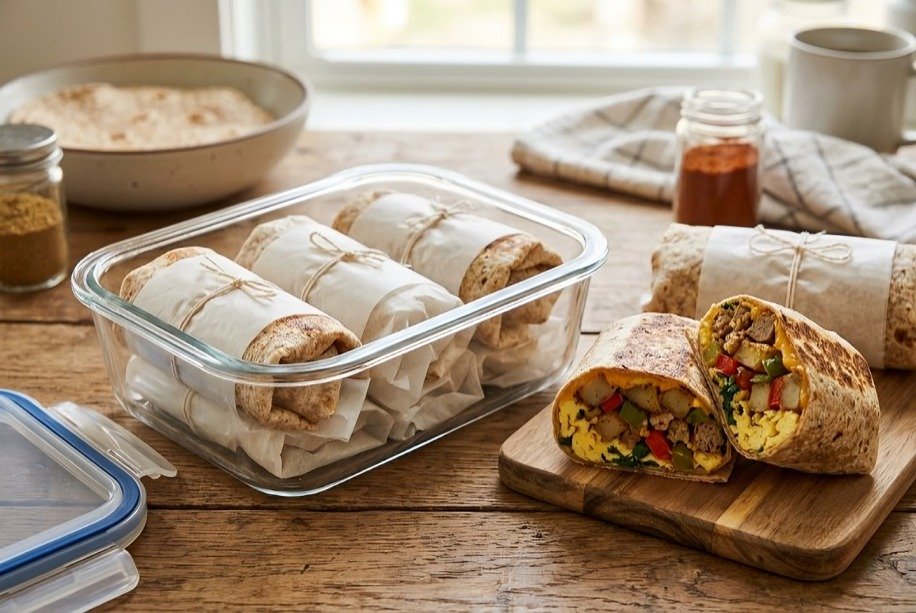
Breakfast Burritos
Breakfast burritos are a favorite among people who want a filling breakfast that can be frozen and reheated easily.
They combine protein, carbohydrates, and vegetables in a convenient handheld format.
Freezer-Friendly Advantages
Breakfast burritos work exceptionally well for long-term meal prep because they maintain their quality after freezing.
Benefits include:
- Excellent freezer storage
- Easy portion control
- Highly customizable fillings
- Convenient reheating
Meal Prep Tip:
Avoid adding watery vegetables such as fresh tomatoes before freezing, as they can affect texture after reheating.
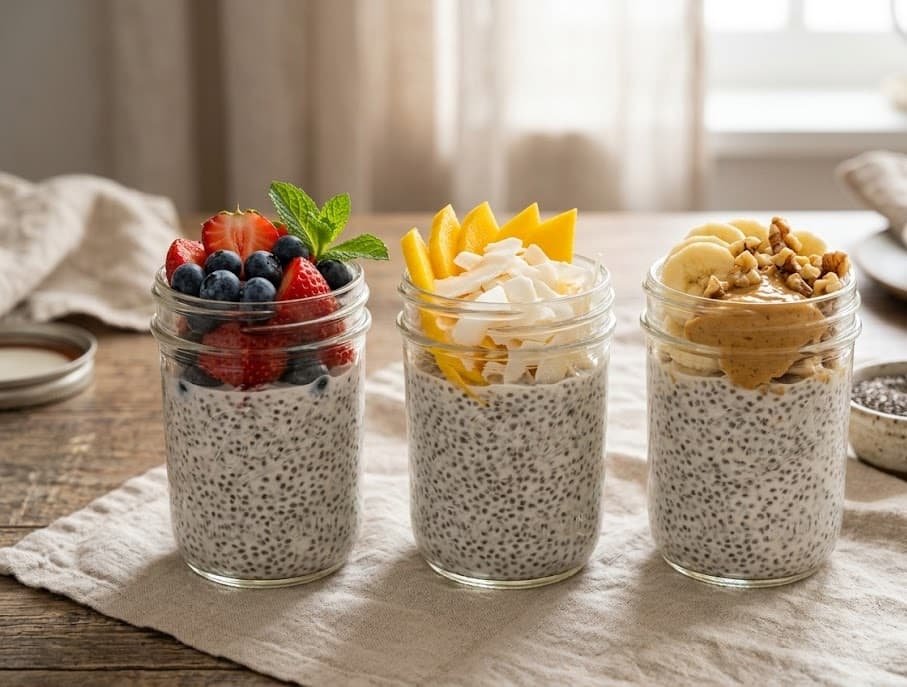
Chia Seed Pudding
Chia seed pudding is one of the simplest healthy meal prep breakfasts available.
With only a few ingredients, it creates a nutrient-dense breakfast that stores exceptionally well.
Healthy Fats and Fiber
Chia seeds are naturally rich in:
- Fiber
- Omega-3 fatty acids
- Plant-based protein
- Antioxidants
Because chia seeds absorb liquid slowly, they help create a thick texture while supporting longer-lasting fullness.
Many people find chia pudding particularly useful when they want a lighter breakfast that still feels satisfying.
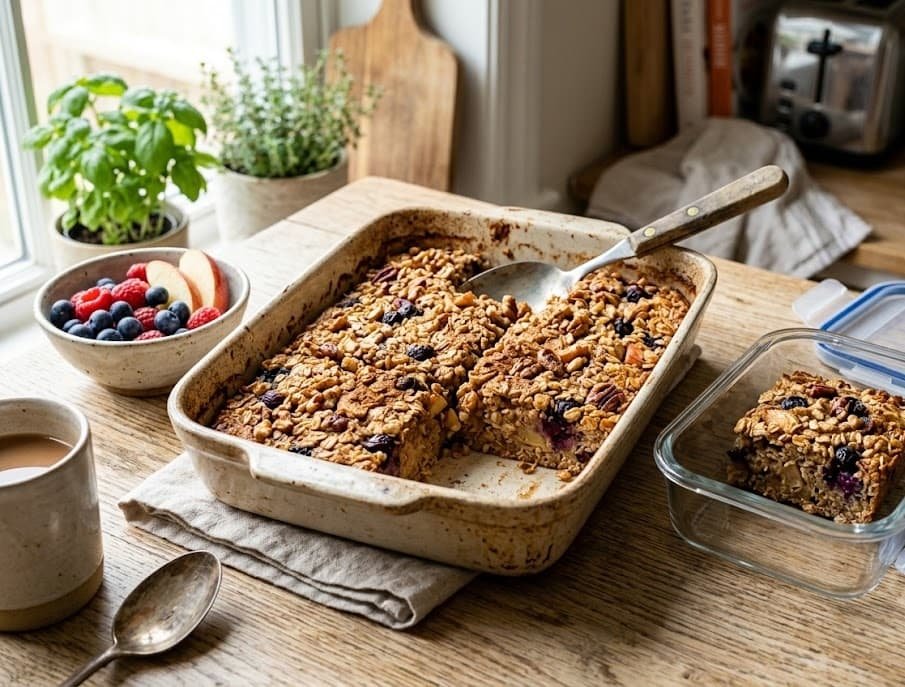
Baked Oatmeal
Baked oatmeal combines the comfort of traditional oatmeal with the convenience of meal prep.
Instead of preparing individual bowls each morning, you bake a large batch and portion it throughout the week.
Family-Friendly Option
Baked oatmeal works especially well for families because one dish can serve multiple people.
Advantages include:
- Easy batch cooking
- Customizable ingredients
- Excellent storage
- Kid-friendly flavors
Popular additions include:
- Apples
- Bananas
- Blueberries
- Pecans
- Cinnamon
Many families prepare baked oatmeal on Sunday and enjoy it throughout the week.
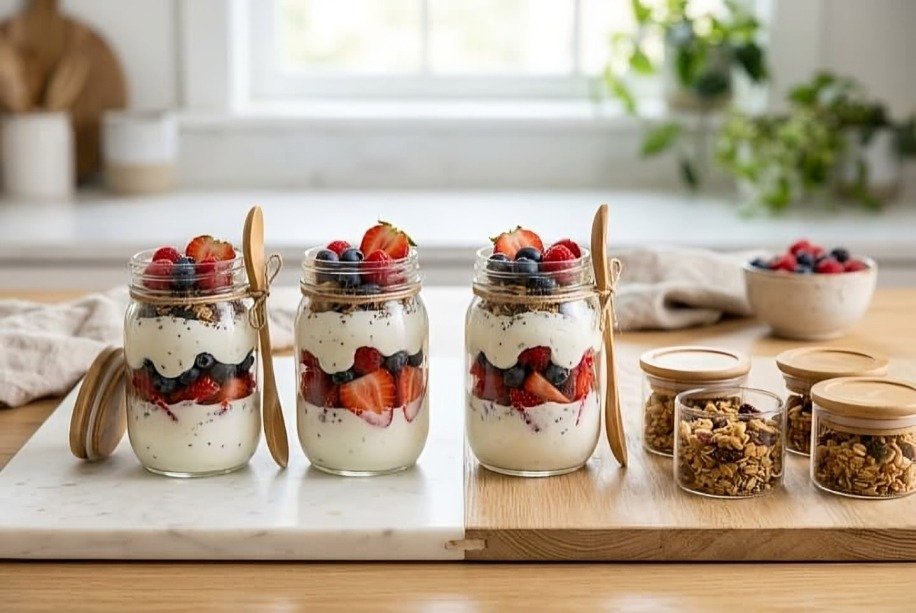
Greek Yogurt Parfaits
Greek yogurt parfaits provide one of the fastest grab-and-go breakfast solutions available.
They require almost no cooking while delivering protein and freshness.
Quick Grab-and-Go Breakfast
A balanced parfait often contains:
- Greek yogurt
- Fresh fruit
- Granola
- Nuts or seeds
Meal Prep Tip:
Store granola separately and add it just before eating to maintain its crunch.
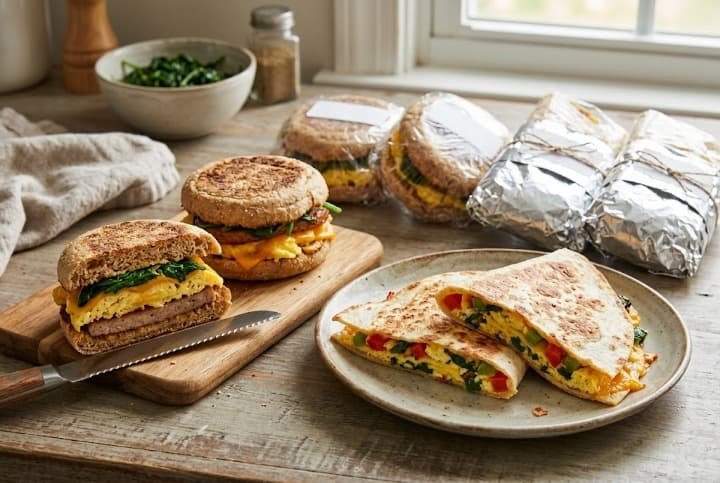
Breakfast Sandwiches
Breakfast sandwiches are ideal for people who prefer a savory breakfast.
They can be prepared in batches, frozen individually, and reheated in just a few minutes.
Meal Prep and Freezing Tips
Common ingredients include:
- Eggs
- Cheese
- Turkey sausage
- English muffins
- Whole-grain bread
For best quality:
✔ Wrap each sandwich individually.
✔ Freeze after cooling completely.
✔ Reheat in an air fryer or microwave.
Many meal preppers find that homemade breakfast sandwiches are both more affordable and more nutritious than store-bought alternatives.
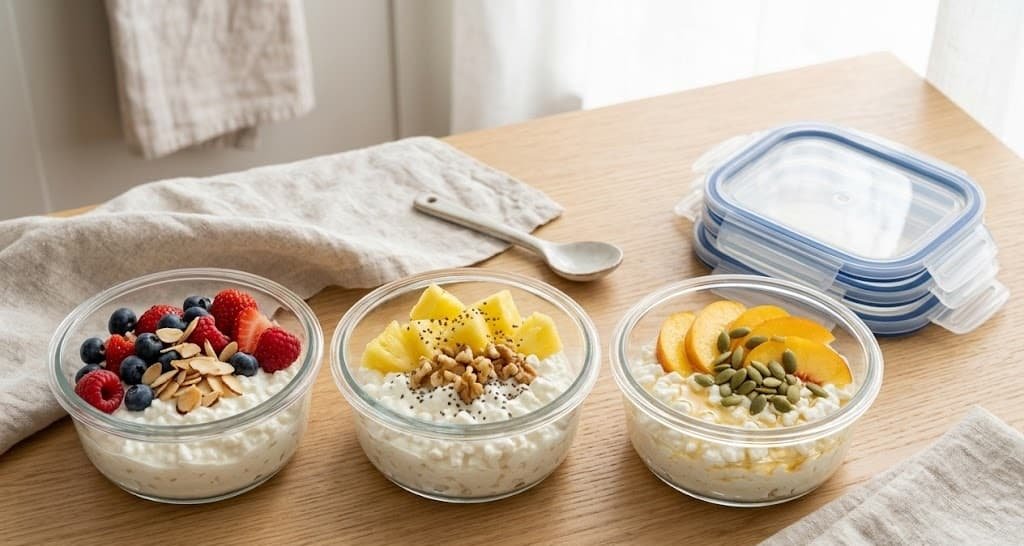
Cottage Cheese Breakfast Bowls
Cottage cheese breakfast bowls have become increasingly popular among people looking for simple high-protein breakfast recipes.
High-Protein Option
A typical serving may provide more than 20 grams of protein while requiring almost no preparation.
Popular toppings include:
- Fresh berries
- Pineapple
- Sliced peaches
- Honey
- Chopped nuts
Because cottage cheese has a mild flavor, it works equally well in sweet and savory combinations.
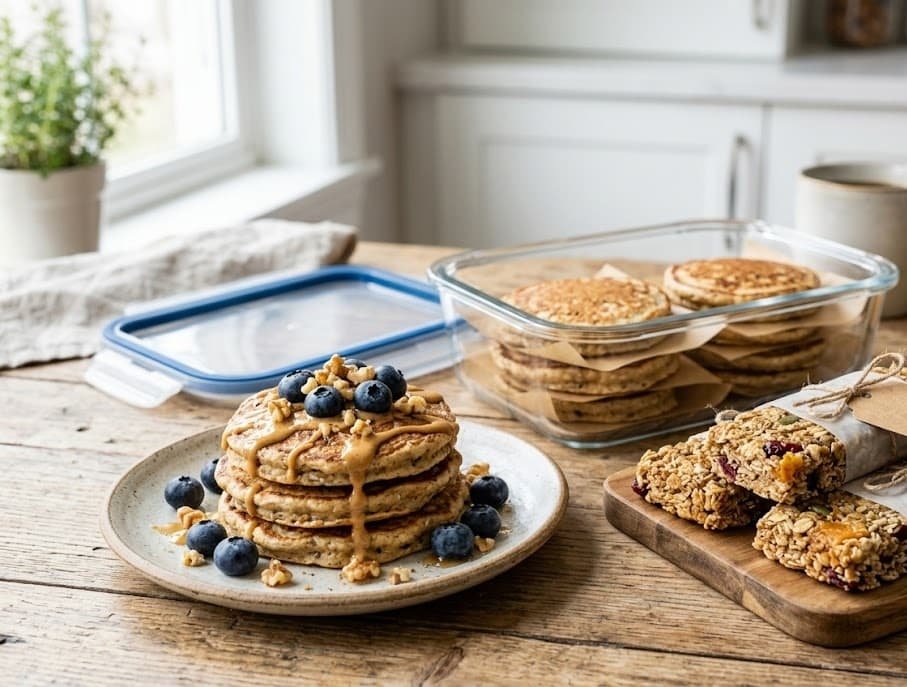
Protein Pancakes
Protein pancakes offer a practical way to enjoy a traditional breakfast while increasing protein intake.
Batch Cooking Method
Many people prepare a large batch over the weekend and freeze individual portions.
For best results:
✔ Cool completely before storing.
✔ Separate pancakes with parchment paper.
✔ Reheat in a toaster, skillet, or microwave.
This prevents pancakes from sticking together and makes weekday breakfasts much easier.
Breakfast Quesadillas
Breakfast quesadillas combine eggs, cheese, vegetables, and protein inside a tortilla that reheats surprisingly well.
Easy Reheating
Unlike some meal prep breakfasts that lose texture over time, quesadillas often remain enjoyable after reheating.
For best results:
- Reheat in a skillet
- Use an air fryer
- Warm in the oven
These methods help restore crispness while keeping the filling warm.
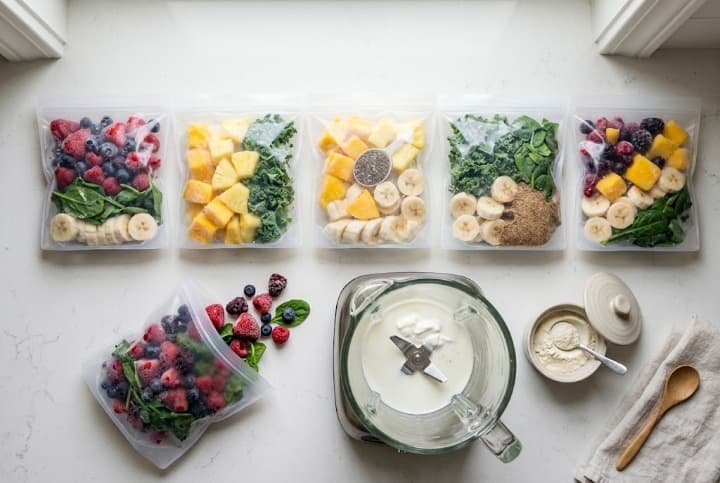
Smoothie Packs
Smoothie packs remove nearly all morning preparation.
Instead of measuring ingredients each day, everything is portioned ahead of time and frozen.
Freezer Preparation Strategy
A typical smoothie pack may include:
- Frozen fruit
- Leafy greens
- Protein powder
- Chia seeds
- Flaxseeds
When ready to serve, simply add milk, water, or yogurt and blend.
This makes smoothie packs one of the fastest breakfast meal prep ideas available.
Homemade Breakfast Bars
Homemade breakfast bars provide a practical alternative to many packaged breakfast products.
They are portable, customizable, and often contain fewer unnecessary ingredients than store-bought versions.
Portable Breakfast Solution
Breakfast bars are especially useful for:
- Busy commuters
- Students
- Travelers
- Parents managing hectic mornings
Common ingredients include:
- Oats
- Nut butter
- Honey
- Seeds
- Dried fruit
Because they require no refrigeration for short periods, breakfast bars remain one of the most convenient grab-and-go breakfast options.
Quick Comparison: Which Meal Prep Breakfast Is Best for You?
| Breakfast Type | Protein Level | Prep Time | Fridge Life | Freezer Friendly |
| Overnight Oats | Medium | 10 Minutes | 5 Days | No |
| Egg Muffins | High | 30 Minutes | 4 Days | Yes |
| Breakfast Burritos | High | 45 Minutes | 4 Days | Yes |
| Chia Seed Pudding | Medium | 10 Minutes | 5 Days | No |
| Baked Oatmeal | Medium | 40 Minutes | 5 Days | Yes |
| Greek Yogurt Parfaits | High | 10 Minutes | 4 Days | No |
| Breakfast Sandwiches | High | 45 Minutes | 4 Days | Yes |
| Cottage Cheese Bowls | High | 5 Minutes | 4 Days | No |
| Protein Pancakes | High | 30 Minutes | 4 Days | Yes |
| Breakfast Quesadillas | High | 30 Minutes | 4 Days | Yes |
| Smoothie Packs | Variable | 15 Minutes | N/A | Yes |
| Homemade Breakfast Bars | Medium | 30 Minutes | 7 Days | Yes |
The best breakfast meal prep strategy is often a combination of several options. Mixing hot and cold breakfasts throughout the week helps prevent boredom while ensuring you always have a convenient, nutritious meal ready when mornings get busy.
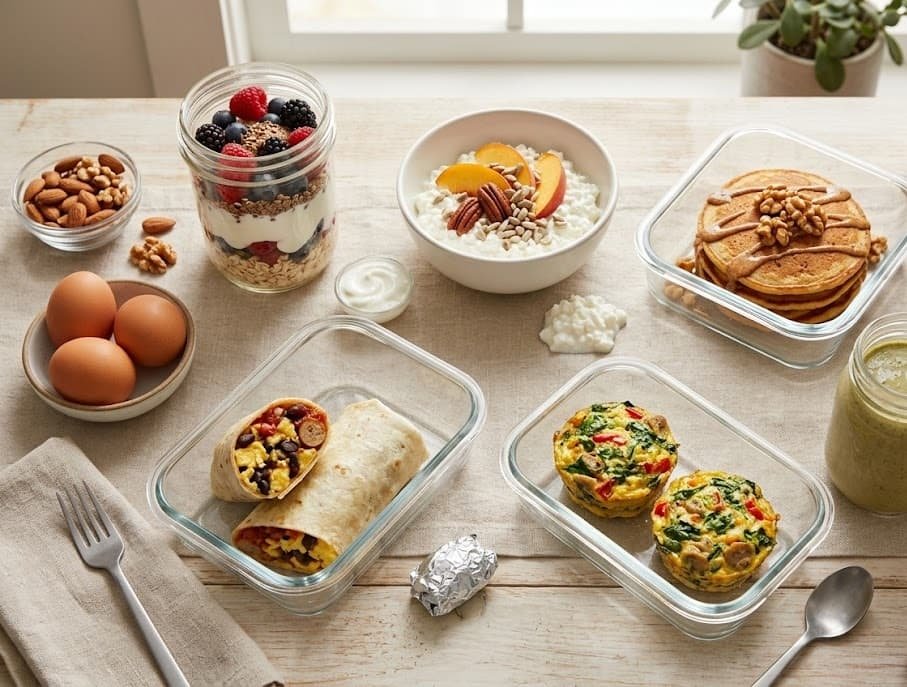
High-Protein Meal Prep Breakfast Ideas
Protein is often the difference between a breakfast that keeps you satisfied and one that leaves you reaching for a snack before lunchtime.
While many traditional breakfast foods are rich in carbohydrates, adding enough protein can help create a more balanced meal. Protein takes longer to digest than simple carbohydrates, which may help support fullness, provide more consistent energy, and make busy mornings easier to manage.
This is one reason why high-protein meal prep breakfasts have become a staple for professionals, parents, students, and fitness enthusiasts alike.
Quick Answer: What Are the Best High-Protein Meal Prep Breakfasts?
If your goal is to increase protein intake, these breakfast meal prep ideas consistently provide some of the best results:
- Egg Muffins
- Breakfast Burritos
- Greek Yogurt Parfaits
- Cottage Cheese Breakfast Bowls
- Protein Pancakes
- Breakfast Sandwiches
- Protein Smoothies
- Egg-Based Breakfast Casseroles
Most of these options can provide between 20 and 30 grams of protein per serving, making them excellent choices for meal prep.
How Much Protein Should Breakfast Contain?
Protein needs vary from person to person, but many nutrition experts suggest aiming for 20 to 30 grams of protein at breakfast whenever possible.
A protein-rich breakfast may help:
- Support fullness throughout the morning
- Reduce unnecessary snacking
- Promote more stable energy levels
- Support muscle maintenance and recovery
- Create a more balanced meal
Rather than focusing on one ingredient, try building breakfast around multiple protein sources when appropriate.
Best Protein Sources for Meal Prep Breakfasts
Not all protein-rich foods are equally practical for meal prep. The best options are easy to prepare, store well, and work in a variety of breakfast recipes.
Protein Content Comparison
| Protein Source | Typical Serving | Approximate Protein |
| Eggs | 2 Large Eggs | 12g |
| Greek Yogurt | 1 Cup | 15–20g |
| Cottage Cheese | 1 Cup | 20–25g |
| Turkey Sausage | 2 Links | 10–14g |
| Protein Powder | 1 Scoop | 20–30g |
| Milk | 1 Cup | 8g |
Combining two or more of these sources often creates a more satisfying breakfast.
Eggs
Eggs remain one of the most versatile ingredients for meal prep breakfasts.
Why they work:
- Complete protein source
- Budget-friendly
- Easy batch cooking
- Excellent freezer compatibility
Best used in:
- Egg muffins
- Breakfast sandwiches
- Breakfast burritos
- Breakfast casseroles
Greek Yogurt
Greek yogurt is one of the easiest ways to increase protein without adding cooking time.
Best used in:
- Yogurt parfaits
- Overnight oats
- Smoothies
- Breakfast bowls
Its creamy texture and naturally high protein content make it a meal prep favorite.
Cottage Cheese
Cottage cheese continues to gain popularity because it delivers substantial protein while requiring virtually no preparation.
Best used in:
- Breakfast bowls
- Smoothies
- Pancakes
- Egg dishes
Many people find cottage cheese bowls more filling than traditional cereal breakfasts.
Lean Breakfast Meats
Lean breakfast meats can increase protein while helping create a more satisfying meal.
Examples include:
- Turkey sausage
- Chicken sausage
- Lean turkey bacon
These ingredients work particularly well in breakfast burritos, wraps, and sandwiches.
Protein Powder
Protein powder can help increase protein intake without significantly increasing food volume.
Common uses include:
- Smoothie packs
- Overnight oats
- Protein pancakes
- Homemade breakfast bars
Breakfasts That Keep You Full Longer
Not all breakfasts provide the same level of satisfaction.
A bowl of sugary cereal may provide quick energy, but many people feel hungry again shortly afterward. In contrast, breakfasts that combine protein, fiber, healthy fats, and complex carbohydrates tend to provide longer-lasting fullness.
The Four Components of a Filling Breakfast
The most satisfying meal prep breakfasts often contain:
✔ Protein
✔ Fiber
✔ Healthy fats
✔ Complex carbohydrates
This combination slows digestion and helps support more consistent energy levels throughout the morning.
Best High-Protein Breakfasts for Fullness
| Breakfast | Protein Range | Why It Works |
| Egg Muffins | 18–25g | High protein, portable |
| Breakfast Burritos | 20–30g | Balanced and filling |
| Cottage Cheese Bowls | 20–25g | High protein with minimal prep |
| Greek Yogurt Parfaits | 15–25g | Protein plus fiber-rich toppings |
| Protein Pancakes | 20–30g | Higher protein than traditional pancakes |
| Breakfast Sandwiches | 20–30g | Balanced combination of nutrients |
Many people find these breakfasts significantly more satisfying than pastries, sweet cereals, or highly processed convenience foods.
Common High-Protein Breakfast Mistakes to Avoid
Adding protein is important, but balance still matters.
Some common mistakes include:
- Choosing flavored yogurts high in added sugar
- Eating protein without fiber-rich foods
- Relying entirely on protein shakes
- Ignoring healthy fats
- Preparing portions that are too small
A balanced breakfast should contain more than just protein alone.
Meal Prep Tip
If you regularly feel hungry before lunch, try increasing protein first before increasing portion size.
Simple upgrades include:
- Adding Greek yogurt to overnight oats
- Mixing cottage cheese into breakfast bowls
- Adding an extra egg to breakfast burritos
- Including protein powder in smoothies
Small adjustments often improve fullness without dramatically increasing calories.
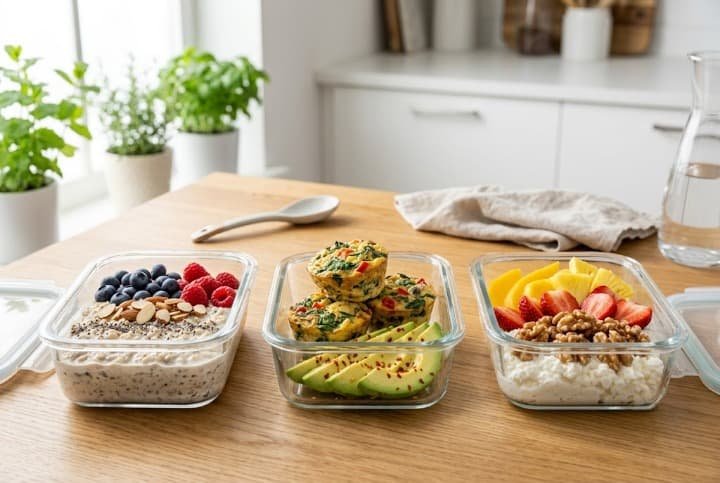
Healthy Meal Prep Breakfast Ideas for Weight Management
Many people assume that eating less is the most important factor for weight management. In reality, the quality and composition of breakfast can play a significant role in how satisfied you feel throughout the morning.
A healthy meal prep breakfast should provide enough nutrition to support energy levels while helping reduce the likelihood of excessive hunger later in the day.
The goal isn’t necessarily to eat the smallest breakfast possible. Instead, focus on creating balanced meals that fit your individual needs and schedule.
Balanced Macronutrients Matter
Protein often receives most of the attention, but a balanced breakfast includes multiple nutrients working together.
The three primary macronutrients each serve a different purpose.
| Macronutrient | Primary Function |
| Protein | Supports fullness and muscle maintenance |
| Carbohydrates | Provide energy for daily activities |
| Healthy Fats | Support satisfaction and flavor |
When one component is missing, breakfast may feel less satisfying.
For example:
A bowl of plain cereal primarily provides carbohydrates.
A bowl of overnight oats with Greek yogurt, berries, and almonds provides protein, fiber, healthy fats, and complex carbohydrates in one meal.
Examples of Balanced Meal Prep Breakfasts
The following breakfast ideas provide a combination of nutrients while remaining practical for meal prep.
Overnight Oats with Greek Yogurt
Provides:
- Protein
- Fiber
- Complex carbohydrates
- Long-lasting energy
Egg Muffins with Vegetables
Provides:
- Protein
- Healthy fats
- Vitamins and minerals
- Convenient portions
Cottage Cheese and Fruit Bowls
Provides:
- High protein
- Natural sweetness
- Calcium
- Micronutrients
Protein Smoothie Packs
Provides:
- Protein
- Fruits and vegetables
- Flexible ingredients
- Fast preparation
Portion Planning for Weekly Meal Prep
One of the biggest advantages of breakfast meal prep is portion consistency.
Preparing meals ahead of time allows you to establish serving sizes before hunger influences your decisions.
This can help with:
- Managing calorie intake
- Tracking protein goals
- Reducing mindless eating
- Creating structured eating habits
Simple Portion Planning Formula
A balanced breakfast often includes:
- A protein source
- A fiber-rich carbohydrate
- A healthy fat source
- Optional fruits or vegetables
Practical Examples
| Protein | Carbohydrate | Healthy Fat |
| Eggs | Oats | Avocado |
| Greek Yogurt | Berries | Almonds |
| Cottage Cheese | Fruit | Walnuts |
| Protein Powder | Banana | Peanut Butter |
This simple framework works across a wide variety of breakfast meal prep recipes.
Best Breakfasts by Goal
| Goal | Recommended Breakfast |
| High Protein | Egg Muffins |
| Long-Lasting Fullness | Breakfast Burritos |
| Weight Management | Greek Yogurt Parfaits |
| Fastest Preparation | Cottage Cheese Bowls |
| Family-Friendly | Baked Oatmeal |
| Grab-and-Go | Homemade Breakfast Bars |
Healthy Weight Management Starts with Consistency
Many people spend too much time searching for the perfect breakfast and not enough time building a routine they can maintain.
The most effective meal prep breakfast is often the one you can prepare consistently, enjoy regularly, and fit into your schedule week after week.
A breakfast that combines protein, fiber, healthy fats, and sensible portions is more likely to support long-term healthy eating habits than a highly restrictive plan that is difficult to follow.
Consistency, preparation, and balance remain the foundation of successful breakfast meal prep.
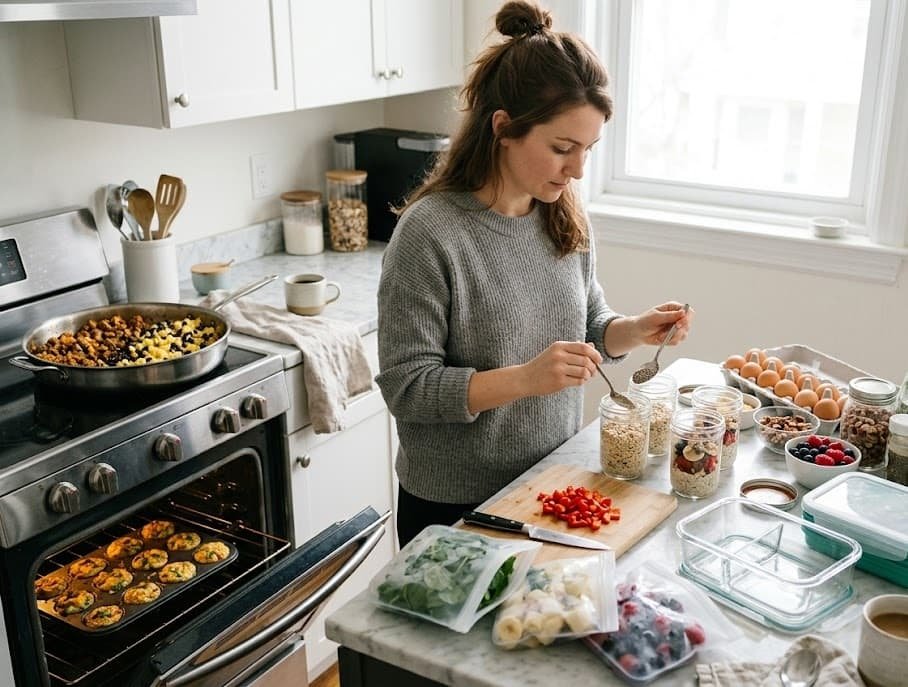
One-Hour Sunday Breakfast Prep Plan
Many people assume meal prepping breakfast requires hours in the kitchen every weekend. In reality, a simple one-hour meal prep session can provide enough breakfasts for most of the workweek.
The secret isn’t cooking more food. It’s choosing recipes that work well together, preparing ingredients efficiently, and organizing meals in a way that makes weekday mornings easier.
If you’re new to breakfast meal prep, start simple. A few well-planned breakfasts are often more effective than spending half a day preparing meals you may never eat.
Quick Answer: Can You Meal Prep Breakfast for an Entire Week in One Hour?
Yes. Most people can prepare 5 to 7 breakfasts in about 60 minutes by focusing on a few simple make-ahead breakfast recipes.
A typical one-hour breakfast meal prep session might include:
- Overnight oats
- Egg muffins
- Smoothie packs
- Breakfast burritos
- Greek yogurt parfaits
Many experienced meal preppers find that their first session takes closer to 75 to 90 minutes. Once you develop a routine, the process becomes much faster.
Best Beginner Breakfast Meal Prep Combination
If you’re just getting started, don’t try to prepare five different recipes at once.
Instead, focus on three reliable options:
| Recipe | Servings |
| Overnight Oats | 3 |
| Egg Muffins | 6 |
| Smoothie Packs | 3 |
Total Prep Time: Approximately 45–60 minutes
Breakfasts Covered: 6–7
Storage: Refrigerator + Freezer
This approach keeps meal prep manageable while providing enough variety to avoid breakfast fatigue.
Step 1: Choose Recipes
Successful breakfast meal prep starts with choosing recipes that fit your lifestyle.
Instead of preparing seven identical breakfasts, consider combining a few different options.
A practical weekly plan might include:
| Recipe | Servings |
| Overnight Oats | 3 |
| Egg Muffins | 4 |
| Smoothie Packs | 3 |
| Breakfast Burritos | 3 |
This combination provides:
✔ Hot breakfasts
✔ Cold breakfasts
✔ Grab-and-go options
✔ High-protein choices
✔ Freezer-friendly meals
When selecting recipes, think about:
- Available refrigerator space
- Freezer capacity
- Protein content
- Preparation time
- Personal preferences
The simpler your recipe selection, the easier it becomes to maintain the habit.
Step 2: Batch Cook
Batch cooking is where the time savings happen.
Rather than cooking breakfast every morning, you’re preparing multiple meals in a single session.
A practical workflow might look like this:
- Place egg muffins or baked oatmeal in the oven.
- Prepare overnight oats while they bake.
- Assemble smoothie packs.
- Cook breakfast burrito fillings.
- Allow cooked foods to cool before storing.
Preparing multiple recipes simultaneously can significantly reduce total prep time.
Meal Prep Tip
Use oven time strategically.
While egg muffins or baked oatmeal are baking, prepare cold breakfasts such as overnight oats, yogurt parfaits, or smoothie packs.
This simple adjustment can save 15 to 20 minutes during a typical meal prep session.
Step 3: Portion and Store
Portioning meals immediately after preparation is one of the easiest ways to simplify weekday mornings.
Instead of opening large containers and serving yourself each day, every breakfast is already ready to grab and enjoy.
Benefits include:
- Faster mornings
- Consistent serving sizes
- Easier protein tracking
- Better calorie awareness
- Reduced food waste
Many people find that pre-portioned meals also make it easier to stay consistent with healthy eating habits.
Step 4: Label and Rotate
Labeling containers may seem unnecessary until your freezer is full of meals that all look the same.
A simple label should include:
- Recipe name
- Preparation date
- Freeze date (if applicable)
This becomes especially important for:
- Breakfast burritos
- Protein pancakes
- Baked oatmeal
- Breakfast sandwiches
Many meal preppers use the “first in, first out” method.
This means older meals are eaten before newer meals.
Benefits include:
✔ Less waste
✔ Better food safety
✔ Improved freshness
✔ Easier organization
Spending one extra minute labeling containers can save several meals from being forgotten.
The 2-2-1 Variety Rule
One of the easiest ways to prevent breakfast boredom is to rotate different types of breakfasts.
Try this simple formula:
- 2 cold breakfasts
- 2 hot breakfasts
- 1 grab-and-go option
Example:
- Overnight oats
- Greek yogurt parfaits
- Egg muffins
- Breakfast burritos
- Homemade breakfast bars
This creates variety without adding significant preparation time.
Sample One-Hour Breakfast Meal Prep Schedule
| Time | Task |
| 0–10 Minutes | Gather ingredients and containers |
| 10–20 Minutes | Prepare overnight oats |
| 20–40 Minutes | Bake egg muffins |
| 20–40 Minutes | Assemble smoothie packs |
| 40–55 Minutes | Portion and store meals |
| 55–60 Minutes | Label containers and clean up |
After a few weeks of practice, many people can complete this routine even faster.
Common Meal Prep Breakfast Mistakes to Avoid
Breakfast meal prep is straightforward, but a few common mistakes can lead to wasted food, poor texture, and unnecessary frustration.
Avoiding these mistakes can make your meal prep routine more effective and sustainable.
Preparing Too Much Food
One of the most common beginner mistakes is preparing more breakfasts than can realistically be eaten.
Meal prep should reduce stress, not create waste.
Start with:
- Three to five breakfasts
- One or two recipes
- Manageable portions
As you learn what you enjoy, you can gradually increase variety and quantity.
Why This Matters
Many people abandon meal prep after throwing away several containers of unused food.
Starting small often leads to greater long-term success.
Ignoring Storage Times
Every meal prep breakfast has a shelf life.
Even properly stored meals eventually lose quality.
Ignoring storage guidelines can result in:
- Poor texture
- Reduced flavor
- Food waste
- Potential food safety concerns
Quick Reference Guide
| Breakfast Type | Refrigerator Life |
| Overnight Oats | 4–5 Days |
| Egg Muffins | 3–4 Days |
| Greek Yogurt Parfaits | 3–4 Days |
| Breakfast Burritos | 3–4 Days |
Knowing these timelines helps you plan more effectively.
Not Including Protein
Protein plays a major role in creating a satisfying breakfast.
Without enough protein, some people find themselves hungry long before lunch.
Common low-protein breakfasts include:
- Sugary cereals
- Plain toast
- Pastries
- Sweet baked goods
Instead, include protein-rich foods such as:
- Eggs
- Greek yogurt
- Cottage cheese
- Turkey sausage
- Protein powder
Quick Protein Check
Before storing your breakfast, ask:
“Where is the protein source?”
If you can’t answer immediately, the meal may benefit from a protein-rich addition.
Using Poor Containers
Storage containers can have a surprising impact on meal prep success.
Low-quality containers often lead to:
- Leaks
- Faster spoilage
- Freezer burn
- Reduced freshness
Look for containers that are:
✔ Airtight
✔ Durable
✔ Microwave-safe
✔ Freezer-safe
✔ Easy to stack
Good containers can help preserve both food quality and organization.
Preparing the Same Breakfast Every Day
Eating the same breakfast seven days in a row can become repetitive.
This is often called breakfast fatigue and is one of the most common reasons people stop meal prepping.
Instead of preparing one recipe for the entire week, rotate several options.
Example:
- Monday: Overnight oats
- Tuesday: Greek yogurt parfait
- Wednesday: Egg muffins
- Thursday: Breakfast burrito
- Friday: Protein pancakes
A little variety can make breakfast more enjoyable without increasing preparation time significantly.
Forgetting Convenience
Nutrition matters, but convenience matters too.
A breakfast can be healthy, but if it’s difficult to prepare, transport, or eat on a busy morning, it may not fit your routine.
The best meal prep breakfasts balance:
- Nutrition
- Convenience
- Taste
- Storage life
- Preparation time
A simple breakfast you consistently eat is usually more valuable than a complicated recipe that remains untouched in the refrigerator.
Meal Prep Tip: Keep a Backup Breakfast
Many experienced meal preppers keep at least one freezer-friendly breakfast available at all times.
Examples include:
- Breakfast burritos
- Protein pancakes
- Egg muffins
This backup option can be incredibly helpful when your planned breakfasts run out earlier than expected.
Final Meal Prep Reminder
Successful breakfast meal prep doesn’t require perfection.
Start with a few simple recipes, focus on proper storage, include enough protein, and make small adjustments as you learn what works best for your schedule.
Consistency matters far more than complexity. A realistic routine that you can maintain week after week will always outperform an ambitious meal prep plan that becomes difficult to follow.
Sample 7-Day Breakfast Meal Prep Schedule
One of the biggest reasons people abandon breakfast meal prep is boredom. Even the healthiest breakfast can become difficult to enjoy when you’re eating the exact same thing every morning.
The solution is simple: build variety into your meal prep routine.
A combination of cold breakfasts, hot breakfasts, high-protein options, and freezer-friendly meals helps keep breakfast interesting while still saving time throughout the week.
The following schedule is an example of how you can enjoy different meal prep breakfasts without spending hours preparing food every day.
Quick Answer: What Does a Balanced Week of Breakfast Meal Prep Look Like?
A successful weekly breakfast plan usually includes:
- At least two high-protein breakfasts
- One or two no-cook options
- One freezer-friendly meal
- A mix of hot and cold breakfasts
- Different flavors and textures
This approach helps prevent breakfast fatigue while making it easier to stick with meal prep long-term.
Sample Weekly Breakfast Plan
| Day | Breakfast | Approximate Protein |
| Monday | Overnight Oats | 12–18g |
| Tuesday | Egg Muffins | 20–25g |
| Wednesday | Greek Yogurt Parfait | 18–25g |
| Thursday | Breakfast Burrito | 20–30g |
| Friday | Cottage Cheese Bowl | 20–25g |
| Saturday | Protein Pancakes | 20–30g |
| Sunday | Baked Oatmeal | 10–15g |
Why This Schedule Works
This weekly breakfast meal prep schedule balances convenience, nutrition, and variety.
Instead of relying on a single recipe, each day offers something slightly different while still fitting into a practical meal prep routine.
Monday: Overnight Oats
Monday mornings are often the busiest of the week.
Overnight oats provide a ready-to-eat breakfast that requires zero cooking and almost no preparation.
Popular flavor combinations include:
- Blueberry Almond
- Peanut Butter Banana
- Apple Cinnamon
- Mixed Berry Vanilla
Because they’re already prepared, overnight oats remove one decision from an already busy morning.
Tuesday: Egg Muffins
Egg muffins are one of the easiest high-protein meal prep breakfasts.
They store well, reheat quickly, and can be customized with different vegetables and proteins.
Try adding:
- Spinach
- Bell peppers
- Mushrooms
- Turkey sausage
for additional flavor and nutrition.
Wednesday: Greek Yogurt Parfait
Midweek is a great time for a quick grab-and-go breakfast.
Greek yogurt parfaits provide protein, calcium, and freshness while requiring almost no effort.
Meal Prep Tip:
Store granola separately and add it just before serving to keep it crunchy.
Thursday: Breakfast Burrito
Breakfast burritos are ideal for busy mornings when you need something filling.
A well-balanced burrito may include:
- Eggs
- Lean protein
- Vegetables
- Cheese
- Whole-grain tortilla
Many people keep frozen breakfast burritos on hand as a convenient backup meal.
Friday: Cottage Cheese Bowl
Cottage cheese bowls are one of the simplest high-protein breakfasts available.
Popular toppings include:
- Fresh berries
- Pineapple
- Walnuts
- Almonds
- Honey
Many people who struggle with hunger before lunch find cottage cheese bowls more satisfying than cereal-based breakfasts.
Saturday: Protein Pancakes
Weekend breakfasts often feel more relaxed.
Protein pancakes provide a familiar breakfast while offering more protein than traditional pancake recipes.
Many meal preppers make extra pancakes and freeze them for future breakfasts.
Sunday: Baked Oatmeal
Baked oatmeal is both comforting and practical.
It’s also one of the easiest breakfasts to prepare in large batches.
Many people use Sunday as both:
- A breakfast day
- A meal prep day
This makes baked oatmeal a natural fit for the end of the week.
Best Breakfast Meal Prep Options by Goal
Not every breakfast serves the same purpose.
Choosing the right meal depends on your priorities.
| Goal | Best Breakfast Choice |
| Highest Protein | Egg Muffins |
| Longest Fullness | Breakfast Burritos |
| Weight-Friendly Option | Greek Yogurt Parfaits |
| No-Cook Breakfast | Overnight Oats |
| Fastest Morning Option | Smoothie Packs |
| Family-Friendly Breakfast | Baked Oatmeal |
| Grab-and-Go Convenience | Homemade Breakfast Bars |
Meal Prep Tip
You don’t need seven different breakfasts every week.
Many successful meal preppers rotate:
- One cold breakfast
- One hot breakfast
- One freezer-friendly breakfast
This simple strategy provides variety while keeping preparation manageable.
Frequently Asked Questions
What Is the Best Breakfast to Meal Prep for the Week?
The best breakfast to meal prep for the week depends on your schedule and preferences. However, overnight oats, egg muffins, breakfast burritos, and baked oatmeal are among the most popular options because they store well, require minimal effort, and provide balanced nutrition throughout the week.
How Many Days Does Meal Prep Breakfast Last?
Most meal prep breakfasts stay fresh for 3 to 5 days when stored properly in airtight containers in the refrigerator. Foods such as overnight oats and chia pudding typically last longer, while egg-based breakfasts are best consumed within 3 to 4 days.
Can I Freeze Meal Prep Breakfasts?
Yes, many breakfast meal prep recipes freeze very well. Breakfast burritos, egg muffins, protein pancakes, breakfast sandwiches, and baked oatmeal can often be frozen for up to 2 to 3 months and reheated whenever needed.
What Are the Healthiest Make-Ahead Breakfasts?
Healthy make-ahead breakfasts usually contain a combination of protein, fiber, healthy fats, and complex carbohydrates. Options like overnight oats with Greek yogurt, vegetable egg muffins, chia pudding, and cottage cheese bowls provide balanced nutrition while remaining convenient for busy mornings.
What Is a Good High-Protein Breakfast for Meal Prep?
Egg muffins, breakfast burritos, Greek yogurt parfaits, cottage cheese bowls, and protein pancakes are excellent high-protein meal prep breakfasts. Depending on the ingredients used, these meals can provide anywhere from 20 to 30 grams of protein per serving.
Can Overnight Oats Be Meal Prepped for a Whole Week?
Overnight oats can typically be prepared 4 to 5 days in advance without losing quality. If you want enough for an entire week, it is often best to prepare a second batch midweek or freeze extra portions for later use.
Can Meal Prep Breakfasts Save Money?
Meal prepping breakfast can help reduce food waste and decrease spending on convenience foods, coffee shop breakfasts, and drive-through meals. Preparing breakfast at home for the week is often significantly more cost-effective than purchasing breakfast every morning.
What Containers Are Best for Breakfast Meal Prep?
The best containers for breakfast meal prep are airtight, leak-resistant, and suitable for refrigeration or freezing. Glass containers are durable and easy to reheat, while BPA-free plastic containers are lightweight and convenient for taking breakfast on the go.
Conclusion
Breakfast meal prep is one of the simplest ways to make busy mornings more manageable.
By preparing a few breakfasts in advance, you can spend less time cooking, make more consistent food choices, and start each day with a meal that’s already waiting for you.
Whether you choose overnight oats, egg muffins, breakfast burritos, protein pancakes, cottage cheese bowls, or baked oatmeal, the most important step is simply getting started.
You don’t need to prepare a week’s worth of meals on your first attempt. Begin with one or two breakfast meal prep recipes, learn what works for your schedule, and gradually build a routine that feels sustainable.