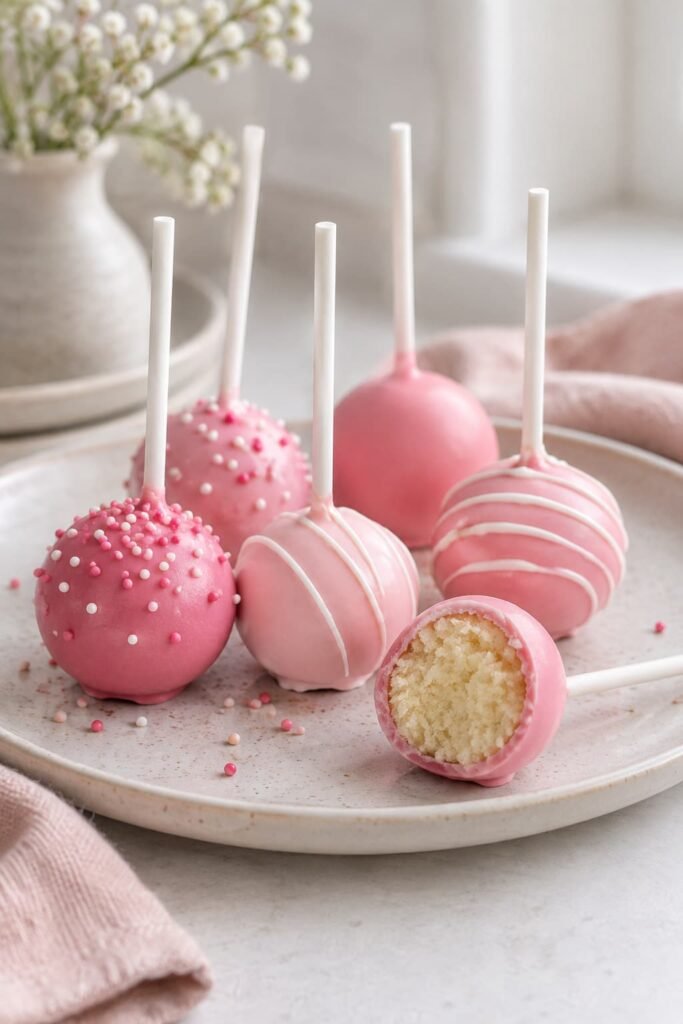
Pink cake pops are small cake-based treats made by combining cake crumbs with frosting or another binder, shaping the mixture, placing it on sticks, and covering it with a pink coating.
The word pink usually describes the appearance rather than the flavor. The center can be vanilla, chocolate, strawberry, lemon, or another cake flavor, while the coating or decorations provide the pink color.
There is no single formula for every cake pop. The cake, binder, coating, coloring, and decorations can all vary depending on the recipe and the style being created.
What Are Pink Cake Pops Made From?
Most versions contain three main components: a cake base, a binder, and an outer coating. Decorations can then be added if wanted.
Cake Base
Cake forms the center of the pop.
Vanilla and white cake are possible choices when a light-colored or mild-flavored center is wanted. Chocolate can create a darker center beneath the pink exterior, while strawberry, lemon, and other flavors may also be used in recipes designed for them.
Different cakes vary in moisture, density, and crumb structure. Because of that, they may not all require the same amount of frosting or another binder.
Frosting or Another Binder
Frosting is commonly mixed with cake crumbs to help the mixture hold together when shaped.
Vanilla, chocolate, cream cheese-style, strawberry, and other frostings may be used depending on the cake and recipe.
The amount matters. Excessive frosting can make a cake-pop mixture denser and heavier, which may make it more difficult to keep securely on a stick during dipping.
There is no universal frosting-to-cake ratio that works for every recipe. Exact quantities should come from a tested recipe rather than being estimated.
Pink Coating and Decorations
The outer coating usually provides most of the pink color.
Confectionery coatings designed for melting and dipping are commonly used for cake pops. White chocolate may also be used in some recipes.
These products should not automatically be treated as identical. Confectionery coating and white chocolate can differ in composition and in the way they melt, accept coloring, flow, and set.
A compatible food coloring may be added to a light-colored coating when appropriate for the product being used. The resulting color can range from pale blush to brighter or deeper pink.
Decorations may include edible sprinkles, nonpareils, decorative sugar, or a contrasting drizzle.
Decorations intended to be eaten should be suitable for direct use on food. Decorative glitter or dust should not be assumed to be edible simply because it is sold for cake decorating.
How Are Pink Cake Pops Generally Made?
The general process is to crumble cooled cake, combine the crumbs with enough binder to hold together, shape the mixture, allow it to become firm, attach sticks, and apply the coating.
This is a process explanation rather than a complete recipe. Exact quantities, chilling periods, melting temperatures, and other details can vary.
Crumbling and Binding the Cake
The cake is allowed to cool and then broken into fine crumbs.
Frosting or another recipe-specified binder is commonly added gradually until the mixture can hold together when shaped.
Adding the binder gradually is useful because different cakes can behave differently. A loose crumb mixture may not require the same amount as a denser cake.
The goal is not to apply one frosting ratio to every cake-pop mixture. When exact quantities are needed, they should come from a recipe developed for those ingredients.
Shaping and Firming the Mixture
Once the mixture holds together, it can be divided into individual portions and shaped.
Round cake balls are common, although other shapes may be possible when the mixture and decorating method are suitable.
Keeping the portions reasonably similar in size can make them easier to handle together, but there is no single required cake-pop size.
The shaped pieces are commonly allowed to become firm before coating. An exact chilling period should not be generalized from one recipe to another because ingredient proportions and preparation methods can differ.
Very cold or frozen centers can also create problems with some coatings, so making the cake portions colder does not automatically improve the dipping process.
Adding the Stick and Coating
“cake-pop stick” text par link lagayein. Yahan link natural hai because reader ko exactly us tool ki zarurat samajh aa rahi hoti hai.
After the stick is secure, the exposed cake can be covered with the pink coating. Excess coating is generally allowed to come away before the outer layer sets.
The exact method depends on the coating being used. White chocolate and confectionery coatings may require different melting, coloring, and handling instructions.
There is therefore no universal melting temperature or dipping time that should be applied to every cake pop.
Adding Decorations
Sprinkles and similar toppings are commonly added while the freshly applied coating can still hold them.
A contrasting drizzle may be applied separately depending on the design and coating being used.
Decoration does not need to be complicated. A plain pink coating can also provide the main visual effect without additional toppings.
What Can You Use for the Pink Cake Pop Coating?
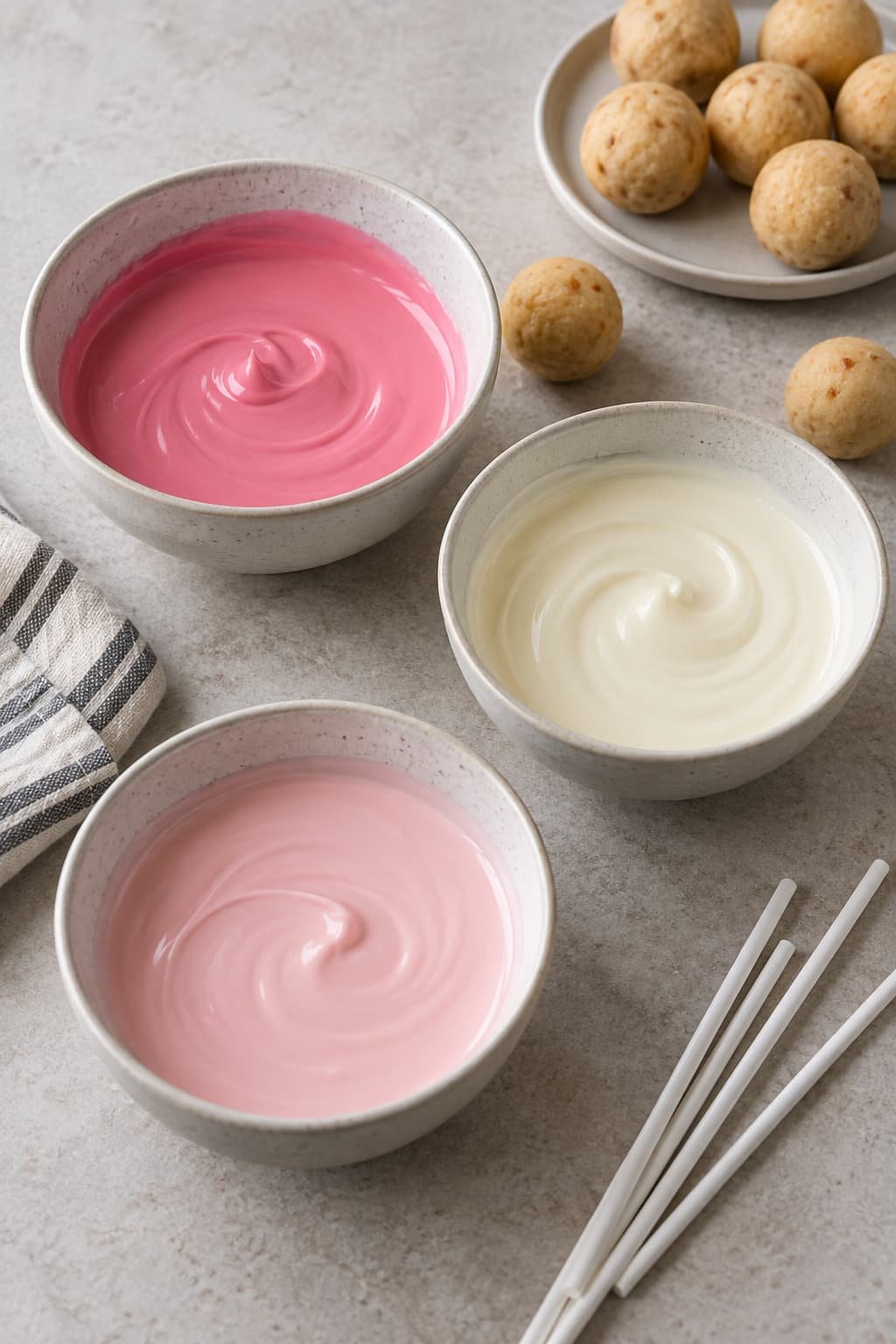
Confectionery coating and white chocolate are two possible options, but they do not behave exactly the same way.
The appropriate choice depends on the recipe, desired appearance, and instructions for the particular product.
Pink Confectionery Coating
Confectionery coatings made for melting and dipping are commonly used for cake pops.
Pre-colored pink coating” ke baad product link add karein. Ye contextually strong hai because reader isi point par coating options samajh raha hai.
Compatibility matters because some confectionery coatings can seize or change consistency when incompatible liquids are added.
If a coating needs to be colored, melted, reheated, or thinned, follow the manufacturer’s instructions rather than applying one method to every product.
White Chocolate and Other Coatings
White chocolate is another possible coating used in some cake-pop recipes.
However, it should not automatically be substituted for confectionery coating using the same quantities or handling method. The products can behave differently when melted, colored, dipped, and allowed to set.
The same caution applies to other coatings. A product that melts successfully does not necessarily behave the same way as white chocolate or confectionery coating during dipping.
How Can the Shade of Pink Vary?
The exterior can range from very light blush pink to brighter or deeper rose tones.
The final appearance depends partly on the starting color of the coating and the coloring product used. Because food colorings vary in strength and formulation, there is no useful universal number of drops to add.
Pink can also come from the decorations rather than the entire coating. For example, a light-colored cake pop may use pink drizzle or edible pink sprinkles as the main color accent.
Why Do Cake Pops Sometimes Fall Off, Crack, or Develop Thick Coating?
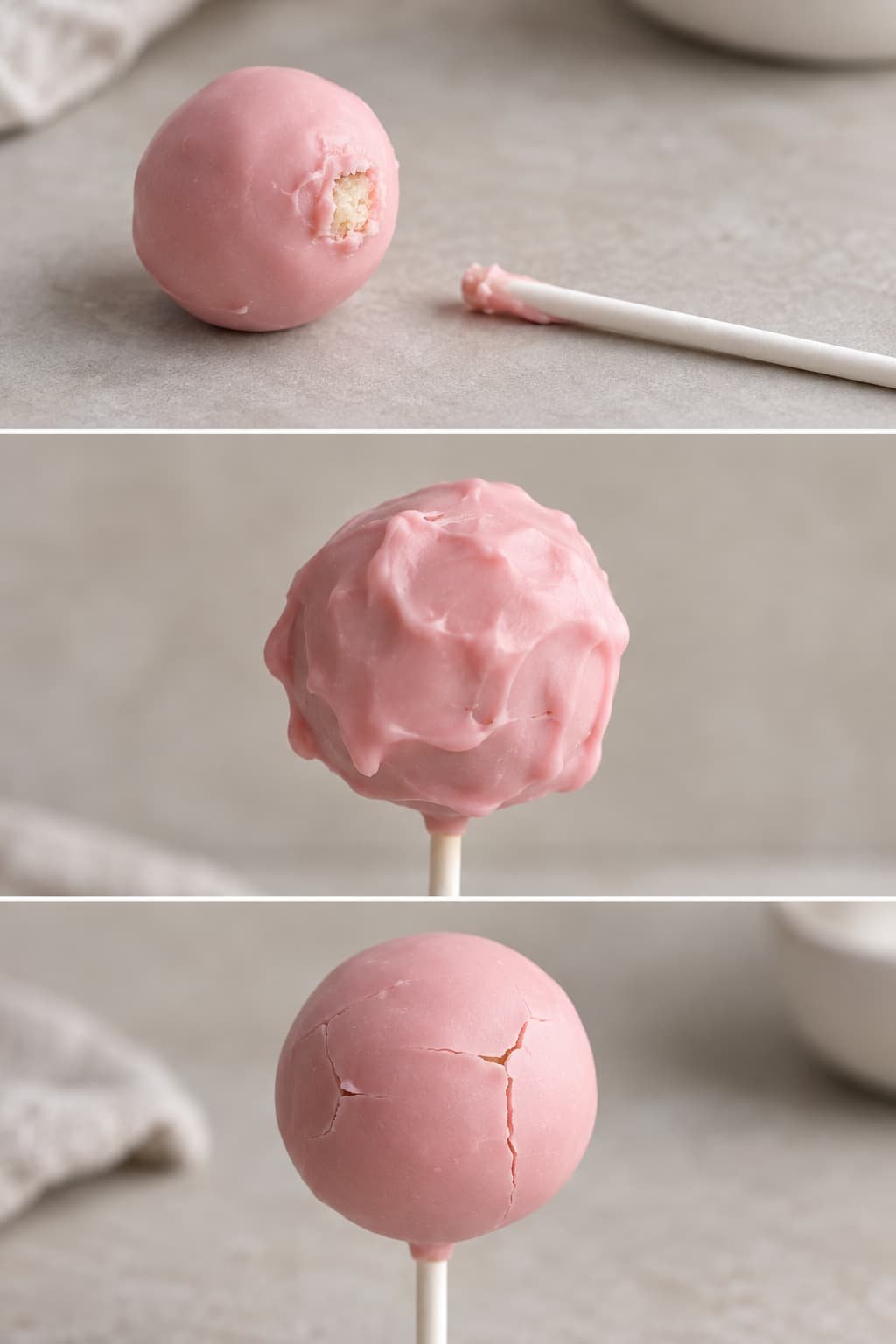
Cake-pop problems can involve the cake mixture, coating, temperature, or handling. The same problem can also have more than one possible cause.
Why Can Cake Pops Fall Off the Stick?
A cake pop may slide or fall from its stick if the mixture is too soft or heavy, the portion is difficult for the stick to support, or the connection between the stick and cake is not secure.
Possible factors include:
- too much frosting or binder
- a mixture that is too soft
- relatively heavy portions
- the mixture becoming softer as it warms
- excessive movement during dipping
These are possible causes rather than guaranteed diagnoses. The exact reason can depend on the recipe and preparation method.
Why Can the Coating Become Too Thick?
Coating consistency can change with the type of product, its temperature, the melting method, and its formulation.
Some coatings may also become thicker as they cool during use.
If a coating becomes difficult to dip, the appropriate response depends on the product. Some manufacturers provide specific instructions for reheating or thinning their coatings.
Adding water, milk, oil, or another liquid without checking the product instructions can cause problems with some confectionery coatings. There is no universal thinning ratio that should be applied to every product.
Why Can the Outer Coating Crack?
A large temperature difference between a very cold cake center and warm coating may contribute to cracking with some confectionery coatings.
This is only one possible factor. Coating formulation, coating thickness, preparation method, and handling can also affect the finished surface.
Cake-pop mixtures are commonly firmed before dipping, but making the center extremely cold does not necessarily improve the coating process.
If cracking happens repeatedly, check the instructions for the specific coating and recipe rather than assuming there is one universal cause or fix.
What Flavors Work With Pink Cake Pops?
Pink is a color theme, not a flavor requirement.
Vanilla is one possible choice when a mild-flavored center is wanted. Its light color can also contrast with a brighter outer coating.
Strawberry-inspired versions can fit the pink theme, but a pink exterior does not mean strawberry ingredients are present. Strawberry flavor may come from the cake, frosting, or another recipe-specific ingredient.
Chocolate creates a darker center beneath a pink coating, while lemon is another possible option when a citrus-style flavor is preferred.
These are flavor ideas rather than substitution instructions. Changing the cake or frosting may also change how a recipe behaves, so exact ingredient swaps should come from a recipe designed for them.
How Can Pink Cake Pops Be Decorated for Birthdays and Parties?
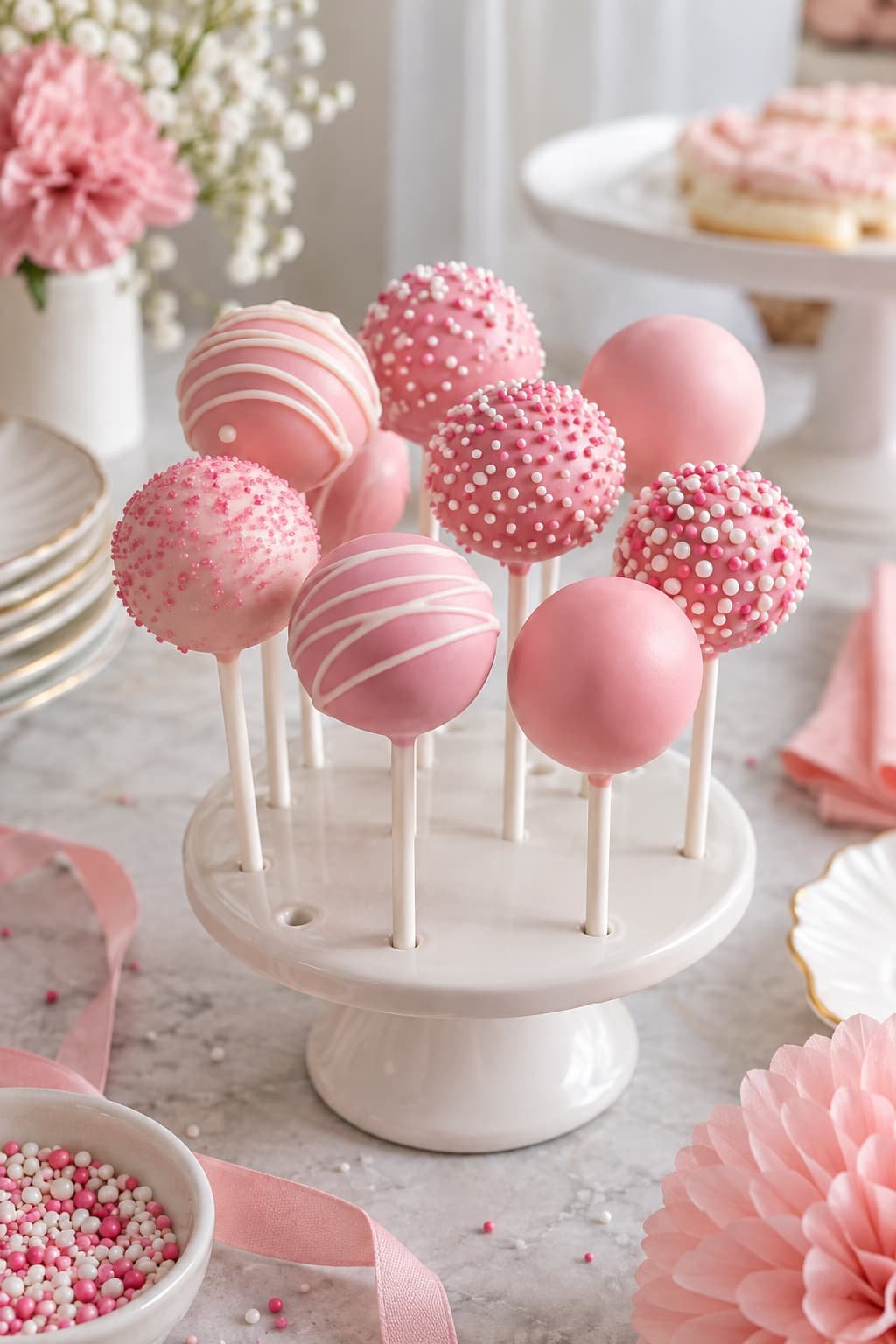
Decoration can be adjusted to match an event without changing the basic cake-pop format.
The main visual choices are the coating shade, toppings, drizzle, and display style.
Simple Pink and White Designs
Pink and white can be combined in several simple ways:
- pink coating with white drizzle
- light-colored coating with pink edible sprinkles
- pink coating with white nonpareils
- several shades of pink displayed together
- plain pink coating without extra decoration
A pale blush shade can create a softer visual style, while brighter pink creates stronger color contrast.
These are design possibilities rather than fixed decorating rules.
Birthday and Celebration Displays
Cake pops can be displayed alongside cakes, cupcakes, and other desserts at birthdays and other celebrations.
Pink may also fit baby showers, bridal showers, Valentine’s Day gatherings, or other events using a similar color theme.
There is no need to create a completely different cake-pop formula for every occasion. Changing the coating shade, edible decorations, or display style can create a different appearance while keeping the general format the same.
For a larger dessert table, related Daily Bite Recipes ideas such as strawberry crunch cake or strawberry-filled cupcakes may provide additional strawberry or pink-themed options.
Cake Pops vs. Cake Balls: What Is the Difference?
The main practical difference is presentation.
A cake pop is generally presented on a stick, while a cake ball is usually served without one.
Both can use a similar mixture of cake crumbs and binder with an outer coating, although individual recipes may differ.
Common Questions About Pink Cake Pops
Can You Make Pink Cake Pops Without Candy Melts?
Yes. Products sold as Candy Melts are one type of confectionery coating, not the only possible cake-pop coating.
Some recipes use white chocolate or other confectionery coatings. These products can differ in composition and in the way they melt, flow, accept coloring, and set.
They should not automatically be exchanged using the same quantities or preparation method. Follow instructions written for the coating being used or a recipe developed with that product.
Can Pink Cake Pops Be Prepared Ahead of a Party?
Some cake-pop recipes include make-ahead preparation, but there is no single storage period that should be applied to every version.
Storage requirements depend on the actual ingredients and recipe being used. Because this article does not provide a tested formula, it would be misleading to assign one room-temperature, refrigerator, or freezer duration to all cake pops.
When preparing them in advance, follow the storage guidance provided with the specific recipe and ingredients rather than assuming every version can be stored in the same way.