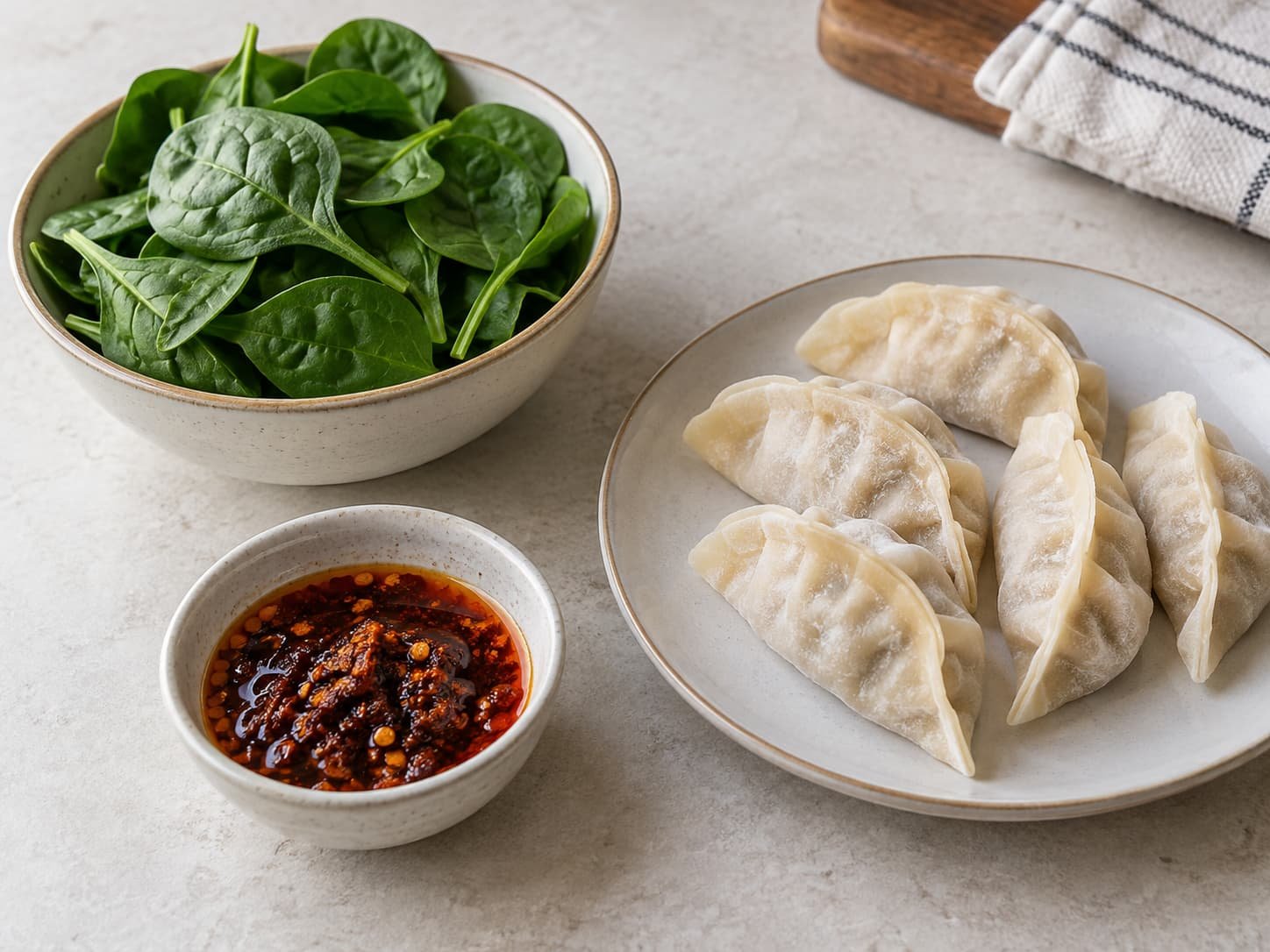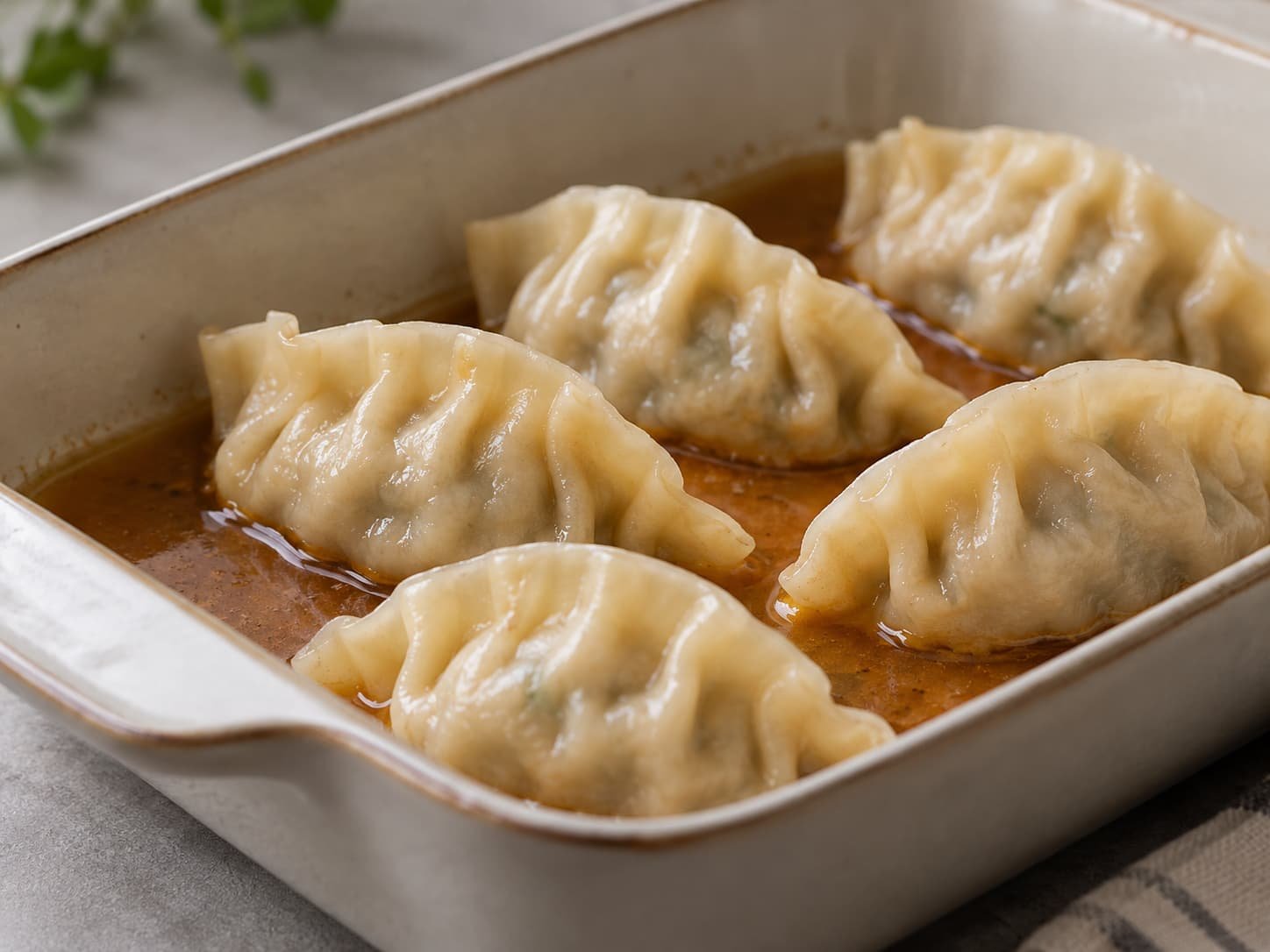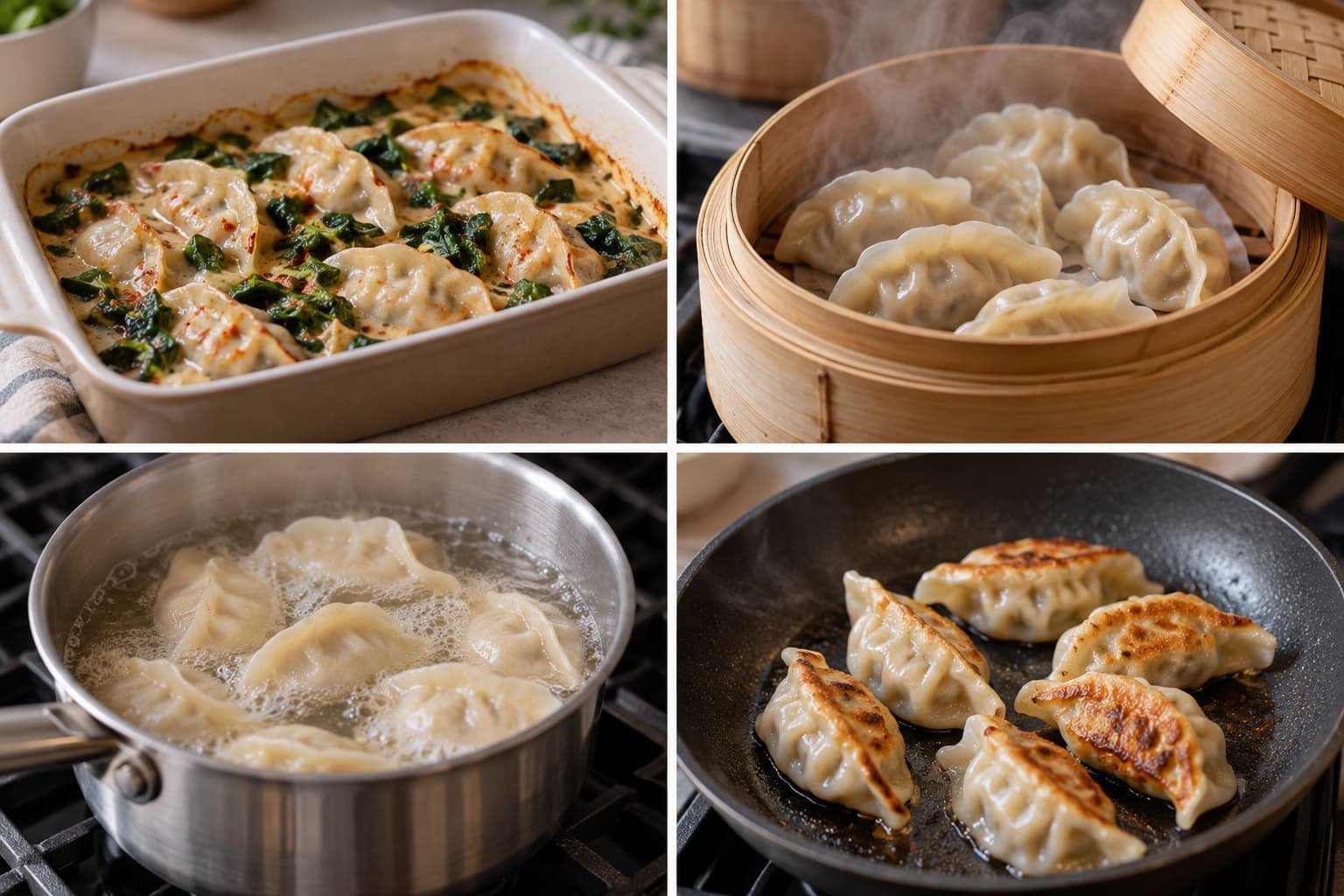
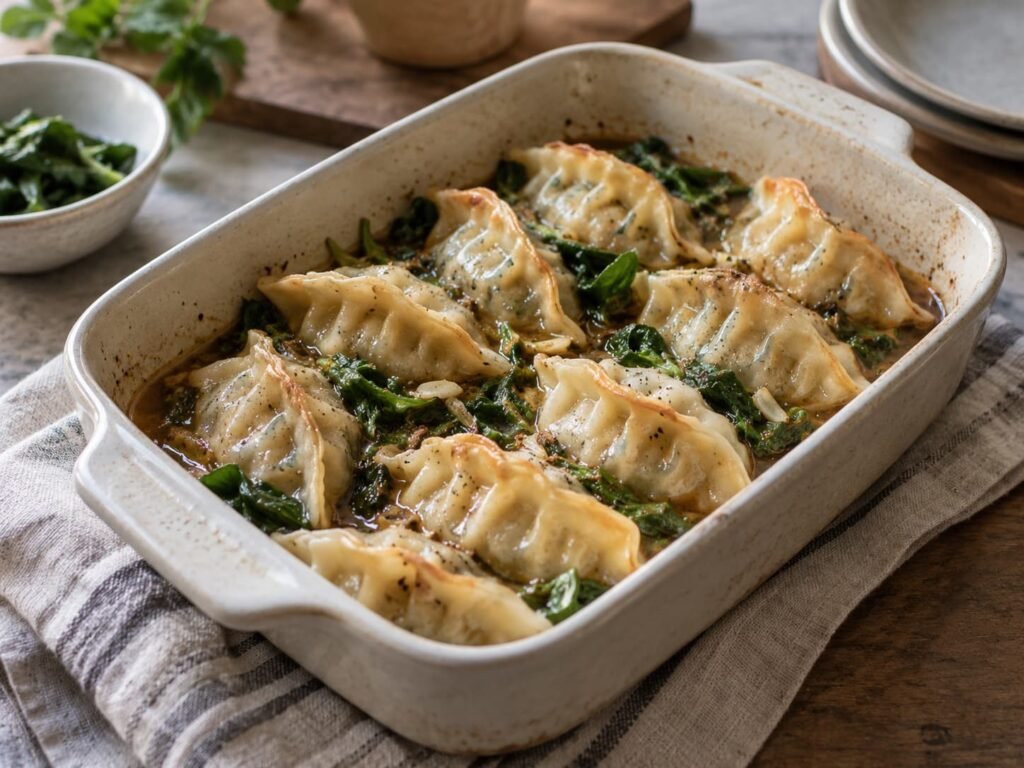
These one-pan baked dumplings turn frozen dumplings into a warm, satisfying dinner with only a few minutes of preparation. They cook directly in a creamy coconut curry sauce, so there is no need to thaw, boil, steam, or pan-fry them first.
Fresh spinach wilts into the sauce as the dumpling bake cooks, adding color and making the dish feel more complete. Chili crisp is spooned over the dumplings after baking, helping its crunchy garlic and chili pieces keep more of their texture while allowing each person to adjust the heat.
This easy one-pan dinner takes about 10 minutes to assemble and roughly 25 to 35 minutes to bake, depending on the size of the dumplings and the depth of the baking dish. It is a practical option for busy evenings when you have frozen dumplings and a few flavorful pantry ingredients but do not want to cook several separate components.
Quick Recipe Overview
| Detail | Information |
| Preparation time | About 10 minutes |
| Baking time | About 25 to 35 minutes |
| Approximate total time | About 35 to 45 minutes |
| Cooking method | Covered oven baking |
| Main shortcut | Frozen dumplings |
| Main vegetable | Fresh spinach |
| Sauce style | Creamy coconut curry |
| Heat level | Adjustable |
| Best served | Immediately |
| Expected servings | About 4 |
Covered baking traps steam inside the dish, helping the frozen dumpling wrappers become tender while the filling cooks evenly. The dumplings should be arranged in a single layer and surrounded by enough sauce so their exposed edges do not dry out.
For the best texture, serve the dish soon after it comes out of the oven. The dumplings continue absorbing the coconut curry sauce as they sit, which can make the wrappers increasingly soft. Add chili crisp just before serving so its aromatic oil and crunchy pieces remain noticeable.

Can You Bake Frozen Dumplings?
Yes, frozen dumplings can be baked without thawing when they are surrounded by enough sauce or liquid and covered during the first part of cooking. The trapped steam helps soften the wrappers and warm the filling more evenly, while the sauce protects the exposed edges from becoming dry or chewy.
Moisture matters because dumplings baked in a dry oven can develop firm wrappers before the centers are fully heated. In this frozen dumpling bake, the coconut curry sauce warms around the dumplings and creates steam, producing a softer result than baking them on a dry tray.
The baking dish should be covered tightly at the beginning. A fitted lid or secure layer of foil keeps steam inside the pan and slows moisture loss. If too much steam escapes, the sauce may reduce too quickly and leave the dumpling edges firm while the centers still need more time.
Keep the dumplings frozen until you are ready to place them in the dish. Thawing can make some wrappers sticky or fragile, especially if the dumplings sit at room temperature. Cooking them from frozen also gives more consistent results when they are similar in size and arranged in a single layer.
Baking dumplings in sauce produces a different texture from dry baking. Dumplings baked on a tray are usually brushed or sprayed with oil and develop firmer surfaces. Dumplings cooked in sauce remain softer and more tender because they cook with a combination of oven heat, liquid, and steam.
Package instructions still matter because frozen dumplings vary in size, wrapper thickness, filling type, and whether the filling was cooked before freezing. Use the recipe’s baking time as a starting point, compare it with the package guidance, and make sure the wrappers are tender and the centers are fully heated before serving.

Why This One-Pan Dumpling Bake Works
Frozen Dumplings Keep Preparation Simple
Frozen dumplings make this one-pan dumpling bake practical for a busy weeknight. There is no dough to prepare, filling to mix, or dumplings to shape by hand. Everything cooks together in one baking dish, so you also avoid steaming or pan-frying several batches.
Chicken, pork, shrimp, and vegetable dumplings can all work, but size and wrapper thickness affect the final cooking time. Medium frozen dumplings are usually the easiest choice because they heat more evenly than very large or heavily filled varieties.
The Covered Dish Holds in Moisture
As the liquid in the coconut curry sauce heats, it produces steam inside the covered baking dish. This gentle moisture helps soften the wrappers while the dumpling centers warm through.
The lid or foil also limits evaporation during the first part of baking. That keeps the sauce from reducing too quickly and lowers the risk of firm, dry edges around the dumplings.
Spinach Cooks Alongside the Dumplings
Fresh spinach wilts directly into the creamy sauce, adding color and a mild vegetable flavor without requiring another pan. It cooks quickly enough to soften during the same baking time as the dumplings.
The spinach also helps turn the dish into a more complete dinner. Use enough to distribute throughout the pan, but avoid packing it into thick clumps that may cook unevenly beneath the dumplings.
Chili Crisp Keeps Its Best Texture
Chili crisp is added after baking rather than mixed into the sauce at the beginning. This helps preserve the aroma of the chili oil and keeps more of the fried aromatics and chili pieces noticeably crunchy.
Adding it at the end also creates a better contrast with the tender baked dumplings and creamy sauce. If it cooks for the full baking time, much of that crisp texture can soften.
Each Serving Can Be Adjusted for Heat
Curry paste and chili crisp can vary widely in spice level. Start with a smaller amount of curry paste if you are unfamiliar with the brand, then serve extra chili crisp at the table.
This makes the one-pan dinner easier to serve in households with different spice preferences. Mild eaters can enjoy the coconut curry sauce as it is, while others can add more chili crisp to their individual portions.
Why This One Pan Dumpling Bake Works
Frozen Dumplings Keep Preparation Simple
Frozen dumplings make this one-pan dumpling bake practical for a busy weeknight. There is no dough to prepare, filling to mix, or dumplings to shape by hand. Everything cooks in the same baking dish, which also removes the need to steam or pan-fry several batches.
Chicken, pork, shrimp, and vegetable dumplings can all be suitable, but they may not cook at exactly the same speed. Medium dumplings with sturdy wrappers are usually the most reliable choice because very large dumplings may need longer, while mini dumplings can soften more quickly.
The Covered Dish Holds in Moisture
As the liquid in the coconut curry sauce heats, it creates steam inside the covered baking dish. This gentle moisture helps the wrappers become tender while the dumpling centers warm through.
The lid or foil also slows evaporation during the first part of baking. That prevents the sauce from reducing too quickly and lowers the risk of dry, firm edges around the dumplings.
Spinach Cooks Alongside the Dumplings
Fresh spinach wilts directly into the creamy sauce, adding color and a mild vegetable flavor without requiring another pan. Because it cooks quickly, it can soften during the same baking time as the dumplings.
Roughly chopped spinach also distributes more evenly through the dish. Avoid packing it into thick clumps beneath the dumplings, as tightly compressed leaves may cook unevenly.
Chili Crisp Keeps More of Its Texture
Chili crisp is spooned over the baked dumplings just before serving. Adding it at the end helps preserve the aroma of the seasoned oil and keeps more of the fried chili and aromatic pieces noticeably crunchy.
Mixing it into the sauce before baking would still add heat, but much of its crisp texture could soften. The final topping creates a better contrast with the tender dumpling wrappers and creamy coconut curry sauce.
Each Serving Can Be Adjusted for Heat
Red curry paste and chili crisp vary widely in strength, so it is better to keep the base sauce moderately spiced. Start cautiously when using an unfamiliar curry paste, then offer extra chili crisp at the table.
This makes the one-pan dinner easier to serve in households with different spice preferences. Mild eaters can enjoy the sauce as prepared, while others can add more heat to their individual portions.
Ingredient Substitutions
These substitutions make the dumpling bake easier to adapt, but they will change the flavor, richness, or cooking behavior of the sauce. For the most predictable result, change one major ingredient at a time and make sure the sauce is pourable before adding the frozen dumplings.
Can I Make It Without Coconut Milk?
Yes, although the finished sauce will not have exactly the same flavor or texture. Coconut milk adds richness and provides much of the liquid needed to cook the dumplings gently, so a replacement should supply both moisture and some body.
Unsweetened coconut cream is the closest alternative. Dilute it with water or broth until it has a pourable consistency similar to full-fat coconut milk. Using it undiluted can make the sauce too heavy and may prevent it from moving easily around the dumplings.
For a non-coconut version, combine broth with a small amount of heavy cream or unsweetened cooking cream. Plain broth alone will create a lighter, thinner sauce rather than the same creamy result. When using dairy, add lime juice or vinegar near the end to reduce the chance of the sauce separating.
Cashew cream is a useful dairy-free option. Thin it with broth or water until it pours easily from a spoon. A sauce that is too thick may not circulate well enough around the dumplings during covered baking.
Red Curry Paste Alternatives
Green curry paste can be used for a brighter, more herbal flavor. It may be hotter than red curry paste depending on the brand, so begin with a smaller amount and adjust cautiously.
Yellow curry paste usually creates a warmer, milder sauce with more noticeable turmeric and spice notes. It works well for readers who prefer less heat, but the flavor will differ from the red curry version.
A prepared mild curry sauce can also work when convenience matters. Choose one that is suitable for heating and thin enough to surround the dumplings. Check its salt, sweetness, and thickness before adding soy sauce, sweetener, or extra liquid.
For a curry-free variation, combine broth with miso, fresh ginger, garlic, soy sauce, and a small amount of sesame oil. This creates a savory ginger-miso sauce rather than a direct substitute for red curry paste, so expect a completely different finished dish.
Spinach Alternatives
Baby bok choy is one of the easiest replacements for spinach. Slice the stems thinly and keep the leaves slightly larger so both parts soften during the same baking time.
Kale can also work, but remove the tough stems and slice the leaves finely. Briefly wilting the kale first can help it cook evenly and prevent dense clumps beneath the dumplings.
Thinly sliced mushrooms add savory flavor, although they also release moisture as they cook. Avoid using a large amount, or the sauce may become thinner than intended.
Bell pepper adds sweetness and a firmer texture, while shredded cabbage softens and blends more fully into the sauce. Slice either vegetable thinly so it cooks in the same time as the frozen dumplings. Larger or denser pieces may need partial cooking first.
Whichever vegetable you choose, avoid overcrowding the pan. Thawed or pre-cooked vegetables should be drained well so excess moisture does not dilute the sauce.
Gluten-Free Option
This recipe is not gluten-free by default because most frozen dumpling wrappers contain wheat.
For a gluten-free version, use certified gluten-free dumplings, tamari or certified gluten-free soy sauce, and a chili crisp labeled gluten-free. Check the curry paste and any prepared sauce as well, since hidden gluten can appear in seasonings and flavoring blends.
Vegetarian Option
Use vegetable-filled dumplings and verify the remaining ingredients rather than relying on the product name alone. Some curry pastes contain shrimp paste or fish-based seasonings, while certain broths, sauces, and chili crisps may include animal-derived ingredients.
Choose vegetarian dumplings, curry paste, broth, and chili crisp. Standard soy sauce is usually vegetarian, but readers following strict dietary requirements should still check the label.
Allergy Note
This recipe may contain wheat, soy, sesame, shellfish, or tree nuts, depending on the dumplings, sauces, chili crisp, and substitutions used. Cashew cream introduces a tree-nut allergen, while shrimp dumplings or shrimp-based curry paste introduce shellfish. Always check packaged ingredients when cooking for someone with an allergy.

Best Pan for Baked Dumplings and How to Arrange Them
The baking dish affects how quickly the sauce heats, how evenly the dumplings cook, and how much liquid evaporates. Choose a pan that holds the frozen dumplings in one layer with small gaps between them, but without leaving large areas of exposed sauce.
Use a Shallow Baking Dish
A shallow baking dish is usually more suitable than a deep casserole dish for this one-pan dumpling bake. It keeps the sauce layer from becoming excessively deep, helping the liquid heat more evenly around the dumplings.
A deeper dish can still work, but the sauce may take longer to become hot and bubbling. This can extend the cooking time, especially when the pan is made from thick glass or ceramic.
Arrange the Dumplings in One Layer
Place the frozen dumplings side by side rather than stacking or heavily overlapping them. The lower portion of each dumpling should sit in the coconut curry sauce while the upper portion remains exposed.
Overlapping can prevent parts of the wrappers from contacting the sauce, which may leave some areas firmer than others. A single layer also makes it easier to check whether each dumpling is tender and fully heated.
Leave Small Gaps Between the Dumplings
Allow a small amount of space between each dumpling so the sauce can flow around the wrappers. The gaps do not need to be large; the dumplings should still fit comfortably and closely within the pan.
Using a dish that is much larger than necessary can spread the sauce into a very shallow layer. It may then reduce or thicken before the dumplings have finished cooking.
Cover the Baking Dish Securely
Cover the pan with a fitted oven-safe lid or a tightly sealed sheet of foil during the initial baking period. A secure cover limits moisture loss and creates the humid environment needed to soften the frozen dumpling wrappers.
Press foil firmly around the rim of the dish without allowing it to rest directly on the dumplings. Loose foil may allow too much steam to escape and cause the sauce to reduce faster than expected.
Match the Pan Size to the Quantity
The pan should be large enough to prevent crowding but small enough to keep the sauce at a useful depth. An overcrowded dish can cause the dumplings to overlap, while an oversized dish may leave too much empty space.
For approximately 16 to 20 medium dumplings, a 9-inch square baking dish may be a practical starting point. The exact size should be confirmed during recipe testing because dumpling shapes and brands vary.
The sauce should surround the lower portion of each dumpling without fully submerging the tops. This provides enough moisture to soften the wrappers while preserving the shape and texture of the exposed surface.

How to Make Baked Dumplings in the Oven
This one-pan method requires little hands-on preparation, but the order of the steps matters. Mix the sauce until smooth, distribute the spinach evenly, and seal the baking dish tightly so the frozen dumplings cook in a moist environment without developing dry or tough wrappers.
1. Preheat the Oven and Prepare the Baking Dish
Preheat the oven to [tested oven temperature]. Use a [tested pan size] shallow baking dish that holds the dumplings comfortably in one layer.
Avoid using a dish with large empty areas around the dumplings because the sauce may spread too thin and reduce quickly. The pan should also have enough room to prevent the dumplings from stacking or pressing tightly against one another.
2. Whisk the Coconut Curry Sauce
In the baking dish, whisk together the coconut milk, red curry paste, soy sauce, garlic, ginger, sesame oil, lime juice or rice vinegar, and the optional sweetener listed in the recipe card.
Continue whisking until the curry paste is completely dissolved and the sauce has an even color with no concentrated lumps. Adjust the seasoning before adding the dumplings, keeping in mind that chili crisp will add more salt and heat at serving time.
3. Add the Spinach
Add the roughly chopped spinach and turn it through the coconut curry sauce until the leaves are lightly coated. Spread it evenly across the bottom of the pan rather than leaving it in thick piles.
The spinach will lose considerable volume as it cooks. Even distribution helps it wilt at the same rate and prevents dense clumps from forming beneath the dumplings.
4. Arrange the Frozen Dumplings
Place the dumplings directly from the freezer into the baking dish. Arrange them in a single layer with small gaps between them, avoiding heavy overlap.
The lower portion of each dumpling should sit in the sauce while the upper portion remains exposed. This gives the wrappers enough moisture to become tender without completely submerging the dumplings.

5. Cover and Bake
Cover the dish tightly with a fitted oven-safe lid or a securely sealed sheet of foil. Press the foil around the rim so steam remains inside, but do not allow it to rest directly on the dumplings.
Bake covered for [tested covered baking time]. If testing shows that a final uncovered period improves the surface texture, remove the cover and bake for an additional [tested uncovered baking time].
Avoid repeatedly opening the dish during baking. Each time the cover is lifted, steam escapes and the dumplings may require additional cooking time.
6. Check the Dumplings for Doneness
The wrappers should feel tender rather than dry, gummy, or firm. The filling should be fully heated in the center, and the coconut curry sauce should be gently bubbling around the edges of the pan.
For meat- or seafood-filled dumplings, follow the package cooking guidance and confirm the filling reaches the internal temperature recommended by the manufacturer. Wrapper softness alone does not prove that a large or heavily filled dumpling is fully cooked.
If the centers are not hot or the wrappers remain firm, cover the dish again and continue baking in 3- to 5-minute intervals. If the sauce has reduced too far, add [tested amount] of hot broth or water before returning the dish to the oven.
7. Rest and Finish with Chili Crisp
Let the baked dumplings rest for [tested resting time] after removing them from the oven. This allows the sauce to settle slightly, although the dish should still be served while hot.
Spoon chili crisp over the dumplings, then add sliced scallions, sesame seeds, and cilantro if using. Serve with lime wedges so each person can adjust the acidity and heat to taste.
Adding the chili crisp after baking preserves more of its aroma and crunchy fried pieces, creating a stronger contrast with the tender dumpling wrappers and creamy sauce.
How to Tell When the Dumplings Are Cooked
Properly cooked dumplings should have tender wrappers, fully heated centers, and sauce bubbling gently around the edges of the baking dish. Depending on the wrapper, they may look softer or slightly more translucent, but appearance alone cannot confirm that the filling is safely cooked.
Check the Wrapper Texture
The wrappers should feel soft and flexible rather than dry, leathery, or gummy. The lower portions sitting in the sauce will usually be more tender, while the exposed tops may remain slightly firmer.
If the edges are still stiff, cover the dish again and continue baking for a few more minutes. Firm wrappers can indicate that the dumplings need additional covered cooking, more time in contact with the hot sauce, or both.
Check the Center of a Dumpling
Test one dumpling from near the center of the pan, where the dish may heat more slowly. Cut it open carefully or use a food thermometer when appropriate. The filling should be hot throughout, with no cold or frozen area in the middle.
Small vegetable dumplings or thin gyoza may finish sooner than large, densely filled pork, chicken, or shrimp dumplings. Size, wrapper thickness, filling density, and whether the filling was precooked all affect the final cooking time.
Do Not Judge Meat Dumplings by Appearance Alone
A dumpling can look fully cooked outside while the center remains cooler than expected. Wrapper softness is therefore not a reliable safety check for meat- or seafood-filled dumplings.
Follow the package directions for the specific product you are using. When the manufacturer provides an internal-temperature recommendation, use that guidance to confirm doneness rather than relying only on color or texture.
Allow Extra Time for Large Dumplings or Deep Pans
Large dumplings usually need more time than mini gyoza. A deep or heavy glass or ceramic baking dish may also require a few extra minutes because the sauce can take longer to heat fully.
If the dumplings are not ready at the expected time, cover the dish again and continue baking in 3- to 5-minute intervals. Recheck one dumpling after each interval instead of adding a long block of cooking time at once.
Tips for Tender Dumplings and Creamy Sauce
Before Baking
Keep the dumplings frozen until they go into the pan. Thawing can make some wrappers sticky or fragile, especially if they sit at room temperature.
Use full-fat coconut milk for the richest, most stable sauce. Stir or shake the can well before measuring because the coconut fat and liquid may separate during storage.
Whisk the red curry paste thoroughly into the sauce before adding the spinach and dumplings. Any concentrated lumps can create uneven pockets of salt, spice, and heat.
During Baking
Arrange the dumplings in one layer without crowding or stacking them. The lower part of each dumpling should sit in the sauce so the wrapper receives enough moisture while cooking.
Cover the pan securely during the initial baking period and avoid opening the oven repeatedly. Every time the lid or foil is lifted, heat and steam escape, which can extend the cooking time and affect the wrapper texture.
Adjusting the Sauce
If the sauce becomes thicker than expected, stir in hot broth or water about 1 tablespoon at a time until it reaches the desired consistency. Add liquid gradually because too much can quickly turn a creamy sauce watery.
If the sauce appears thin when the dumplings first leave the oven, let the dish rest for a few minutes before changing it. The sauce may thicken slightly as the bubbling settles.
Finishing and Serving
Add chili crisp after baking so its seasoned oil, fried aromatics, and chili pieces retain more of their fragrance and texture.
Serve the dumplings soon after their short resting period. The wrappers continue absorbing sauce as they sit and can become overly saturated, very soft, and more likely to tear if left in the pan for a long time.
Common Mistakes to Avoid
A few small details can affect the texture and flavor of a one-pan dumpling bake. The most common problems come from losing too much moisture, overcrowding the pan, or using ingredients without accounting for differences between brands.
Baking the Dumplings Uncovered
Leaving the dish uncovered from the beginning allows steam to escape before the wrappers have softened. This can leave the exposed edges dry or chewy while the centers are still heating.
Keep the pan tightly covered during the initial baking period. Only remove the lid or foil if the tested recipe includes a short uncovered finish.
Using Too Little Sauce
Frozen dumplings need enough liquid around their lower surfaces to cook gently and remain tender. If the sauce is too shallow, it may reduce before the centers are fully heated.
Do not add extra dumplings without increasing the sauce or changing the pan size. The lower portion of each dumpling should sit in the liquid without being completely submerged.
Crowding the Baking Dish
Stacking or tightly packing the dumplings can prevent parts of the wrappers from contacting the sauce. It can also make the center of the pan heat more slowly.
Arrange the dumplings in one layer with small gaps between them. Use a dish that fits the quantity closely, since an oversized pan can spread the sauce too thin and cause it to reduce quickly.
Adding Too Much Curry Paste
Red curry paste varies widely in heat, saltiness, and concentration. An amount that tastes balanced with one brand may overpower the sauce when another brand is used.
Start with less when trying a new product. To add more, whisk the curry paste with a spoonful of sauce until smooth before stirring it back into the baking dish.
Adding Chili Crisp Too Early
Adding chili crisp before baking will flavor the sauce, but its fried pieces can soften and its aroma may become less distinct.
Spoon it over the baked dumplings just before serving. This keeps more of the seasoned oil, fried aromatics, and crunchy texture noticeable.
Expecting Every Dumpling to Cook at the Same Speed
Frozen dumplings vary in size, wrapper thickness, filling density, and whether the filling was precooked. Small, thin dumplings may heat faster than large or heavily filled varieties.
Use the recipe time as a starting point, then compare it with the package instructions. Check one dumpling near the center of the pan before serving, especially when using meat or seafood fillings.
Letting the Dumplings Sit Too Long
Dumpling wrappers continue absorbing sauce after the pan leaves the oven. A short rest allows the bubbling sauce to settle, but a long wait can make the wrappers overly saturated and fragile.
Serve the dumplings soon after baking for the best texture. Detailed refrigeration and reheating guidance should be provided in the storage section.

Easy Variations
These variations use the same basic one-pan method while changing the spice level, filling, or sauce. Dumpling size and wrapper thickness can affect the baking time, so use the recipe timing as a guide and compare it with the package directions.
Mild Family-Friendly Dumpling Bake
Reduce the red curry paste or choose a mild variety to keep the coconut sauce gentle. Add chili crisp at the table rather than to the full pan so each person can choose their preferred heat level.
Finish the dish with scallions and lime for extra flavor without adding more spice.
Extra-Spicy Chili Crisp Dumplings
Add thinly sliced fresh chili after baking and spoon extra chili crisp over individual servings. This increases the heat while preserving the fragrance and texture of the chili topping.
Adjust the curry sauce before adding the frozen dumplings, since curry paste and chili crisp can both contribute considerable salt and heat.
Coconut-Lime Dumpling Bake
Stir finely grated lime zest into the coconut curry sauce, then finish the baked dumplings with fresh lime juice and cilantro.
Adding most of the juice after baking creates a brighter citrus flavor. Taste before adding more, as too much acidity can overwhelm the coconut and curry notes.
Vegetable Dumpling Bake
Use vegetable dumplings with a moderate amount of sliced mushrooms and baby bok choy. Cut the firmer bok choy stems more finely than the leaves so they soften within the same baking time.
Dry the vegetables well after washing them. Mushrooms and bok choy both release moisture as they cook, and using too much can leave the sauce thinner than intended.
Higher-Protein Dumpling Bake
Choose chicken or shrimp dumplings and add shelled edamame for additional protein and texture. This increases the protein content, although the exact amount will depend on the dumpling brand and serving size.
If the frozen edamame is heavily coated with ice, thaw and drain it before adding it to the pan. This prevents unnecessary water from diluting the sauce.
Dumpling Bake Without Curry Paste
For a curry-free version, use a savory sauce made with broth, miso, fresh ginger, garlic, soy sauce, and a small amount of sesame oil.
This variation produces a lighter, broth-style sauce rather than the same creamy coconut curry result. For more body, a small amount of coconut milk, cooking cream, or thinned cashew cream can be added.
Miso and soy sauce are both salty, so adjust them carefully before arranging the dumplings in the pan.

What to Serve with Baked Dumplings
Baked dumplings can be served on their own for a lighter dinner, but rice or a simple vegetable side can make the meal more substantial. Choose sides with mild, fresh flavors so they complement the coconut curry sauce rather than compete with it.
Rice
Steamed jasmine rice is one of the best pairings for baked dumplings. Its mild flavor works well with the curry sauce, and it absorbs any extra liquid left in the pan.
Brown rice is a firmer, heartier alternative. Either option can help stretch the meal when serving more people.
Fresh Salads
A cucumber salad provides a cool, crisp contrast to the warm dumplings and creamy sauce. Use a light rice-vinegar, lime, or sesame dressing rather than a thick creamy one.
A simple shredded cabbage salad also works well. Keep the seasoning restrained so the salad balances the curry and chili crisp.
Vegetable Sides
Sesame broccoli, roasted green beans, and lightly seasoned edamame are practical side dishes that add texture without making the meal overly heavy.
Because the dumpling bake already contains spinach, one simple vegetable side is usually enough.
Light Broth
A clear ginger, mushroom, or scallion broth can accompany smaller portions of baked dumplings. Serve it in a separate bowl so it does not dilute the coconut curry sauce or soften the dumpling wrappers further.

Storage and Reheating
Baked dumplings have their best texture when served shortly after cooking. Leftovers can still be stored and reheated, but the wrappers will continue absorbing the coconut curry sauce and become softer over time.
How to Refrigerate Leftover Dumpling Bake
Transfer the leftovers to shallow, airtight containers and refrigerate them within two hours of cooking. They do not need to cool completely at room temperature first. When the surrounding temperature is above 90°F, refrigerate them within one hour. Properly stored leftovers should be eaten within 3 to 4 days.
Store the dumplings with the sauce already in the dish rather than adding extra liquid. Dividing the leftovers into smaller portions helps them cool faster and prevents the entire batch from being reheated several times.
Expect the wrappers to become more tender during storage. That texture change is normal because they continue absorbing liquid even after the dish has cooled.
How to Reheat Baked Dumplings
For a small portion, place the dumplings and sauce in a covered skillet over low to medium-low heat. If the sauce has become very thick, add hot water or broth about 1 tablespoon at a time.
Warm the dumplings gently, turning them carefully instead of stirring aggressively. Continue reheating until the sauce is steaming and the center of the food reaches 165°F.
For a larger portion, transfer the leftovers to an oven-safe dish. Add a small splash of water or broth if needed, cover tightly, and reheat in a 325°F oven until the center reaches 165°F.
Reheating in the Microwave
The microwave is convenient, although it usually makes the dumpling wrappers softer. Place one portion in a microwave-safe dish and add a small amount of water or broth only if the sauce has thickened.
Cover the dish loosely and heat in 30- to 45-second intervals. Rearrange the dumplings between intervals so the centers warm more evenly, then continue until the food reaches 165°F.
Can You Freeze Dumpling Bake?
Cooked dumpling bake can be frozen, but freezing is not the best option for texture. The wrappers may become overly saturated after thawing, and the coconut curry sauce can look slightly separated when reheated.
Freeze leftovers as soon as you know they will not be eaten within the next few days rather than waiting until the end of the refrigerator-storage period. Place them in an airtight freezer-safe container with the sauce, leaving as little unnecessary air space as possible. USDA guidance allows leftovers to be frozen within the 3- to 4-day refrigerated period, although earlier freezing generally preserves better quality.
Thaw the dumplings in the refrigerator before reheating when practical. Warm them gently and stir the sauce carefully; slight separation may improve as the sauce heats and comes back together.
For better make-ahead results, prepare the coconut curry sauce separately and refrigerate it in an airtight container for up to [tested make-ahead period]. Add the frozen dumplings and spinach shortly before baking. Avoid storing uncooked dumplings in the sauce for an extended period because the wrappers can absorb liquid and become fragile before cooking.
Frequently Asked Questions
Can I Bake Dumplings Directly from Frozen?
Yes. Frozen dumplings can go straight into the baking dish when they are surrounded by enough sauce and covered tightly during the first part of cooking. The sauce creates steam inside the pan, helping the wrappers soften and the filling heat through without drying the exposed edges.
Do I Need to Thaw Frozen Dumplings First?
No. Thawing may make some wrappers sticky, fragile, or overly soft before baking. Arrange the dumplings directly from the freezer so they hold their shape more reliably. Cooking them from frozen also makes it easier to compare the recipe timing with the package instructions.
How Long Do Frozen Dumplings Take in the Oven?
Medium frozen dumplings generally need about [tested baking range] in the oven. Large dumplings, thick wrappers, dense fillings, or deep baking dishes may require a few extra minutes. Use the recipe timing as a starting point, but always compare it with the manufacturer’s package guidance.
Can I Make Dumpling Bake Without Coconut Milk?
Yes, although the sauce will have a different flavor and texture. Diluted coconut cream gives the closest result. Broth with a small amount of cooking cream works as a non-coconut option, while thinned cashew cream provides dairy-free richness. Plain broth creates a noticeably lighter sauce.
Can I Use Potstickers or Gyoza?
Usually, yes. Frozen potstickers and gyoza work well when the package allows cooking from frozen and the wrappers are sturdy enough for covered baking. Avoid very delicate soup dumplings unless their instructions specifically support this method. Cooking time may vary by size and filling.
Is Chili Crisp Very Spicy?
The heat level varies considerably by brand. Some chili crisps are mild and aromatic, while others are intensely hot. Add a small spoonful after baking, then serve extra at the table so each person can increase the spice level without changing the entire dumpling bake.
Why Did My Baked Dumplings Turn Out Dry?
Dry wrappers are usually caused by too little sauce, a loose cover, overcrowding, or excessive baking. Make sure the lower portion of each dumpling sits in the sauce and keep the dish tightly covered during the initial cooking period. Add extra cooking time only in short intervals.
Why Is My Dumpling Bake Watery?
A thin sauce may result from light coconut milk, poorly drained frozen spinach, too many moisture-rich vegetables, or excess added broth. The sauce can also look thinner while it is actively bubbling. Let the dish rest briefly before adjusting it, as it may thicken slightly.
Can I Prepare the Dish Ahead?
Prepare the coconut curry sauce up to [tested make-ahead period] in advance and refrigerate it separately. Keep the dumplings frozen until shortly before baking. Do not leave uncooked dumplings sitting in the sauce for a long period because the wrappers can absorb liquid and become fragile.
Are Baked Dumplings Crispy?
Not like pan-fried potstickers. Dumplings baked under cover in sauce are mostly tender and lightly steamed, although the exposed tops may remain slightly firmer. Most of the crunch comes from chili crisp, sesame seeds, and sliced scallions added just before serving.
Final Thoughts
This one-pan dumpling bake turns frozen chicken, pork, shrimp, or vegetable dumplings into an easy dinner with spinach and creamy coconut curry sauce. Keep the base mild, then let everyone add chili crisp and lime to suit their preferred level of heat.
Recipe Card
One-Pan Baked Dumplings with Spinach and Chili Crisp
Frozen dumplings bake in a creamy coconut curry sauce with spinach, garlic, ginger, and lime. Chili crisp is added after baking for adjustable heat and crunchy bits that contrast with the tender wrappers.
Yield: 4 light servings
Preparation time: 10 minutes
Estimated cooking time: 30 to 35 minutes
Estimated total time: 40 to 45 minutes
Pan: 9-inch square shallow baking dish
Oven temperature: 400°F or 200°C
Method: Covered oven baking

Ingredients
For the Dumpling Bake
- 18 medium frozen dumplings, about 20 to 24 ounces total
- 4 ounces fresh baby spinach, roughly chopped
- 1 can full-fat unsweetened coconut milk, 13.5 ounces
- 1 to 2 tablespoons red curry paste, depending on the brand and preferred heat
- 1 tablespoon low-sodium soy sauce
- 2 garlic cloves, finely grated or minced
- 2 teaspoons freshly grated ginger
- 1 teaspoon toasted sesame oil
- 2 teaspoons rice vinegar
- 1 teaspoon honey or maple syrup, optional
For Finishing
- 2 tablespoons chili crisp, plus more to taste
- 2 scallions, thinly sliced
- 1 teaspoon sesame seeds
- Fresh cilantro, optional
- Lime wedges
If the Sauce Becomes Too Thick
- Hot low-sodium broth or water, added 1 tablespoon at a time
Instructions
1. Preheat the Oven
Preheat the oven to 400°F or 200°C. Use a 9-inch square shallow baking dish that holds the frozen dumplings in one layer without stacking or leaving large empty areas.
2. Mix the Coconut Curry Sauce
Add the coconut milk, red curry paste, soy sauce, garlic, ginger, sesame oil, rice vinegar, and optional sweetener to the baking dish.
Whisk until the curry paste is completely dissolved and the sauce has an even color. Start with the smaller amount of curry paste when using an unfamiliar brand because heat and saltiness vary considerably.
3. Add the Spinach
Add the chopped spinach and turn it through the sauce until the leaves are lightly coated. Spread it evenly across the base of the dish rather than leaving it in dense clumps.
4. Arrange the Frozen Dumplings
Place the dumplings directly from the freezer into the pan. Arrange them in one layer with small gaps between them.
The lower portion of each dumpling should sit in the sauce while most of the top remains exposed. Do not thaw, stack, or completely submerge them.
5. Cover and Bake
Cover the baking dish tightly with an oven-safe lid or foil. Seal the edges securely so steam remains inside.
Bake covered for 25 minutes without repeatedly lifting the cover.
6. Check for Doneness
Carefully remove the lid or foil. The sauce should be gently bubbling, the wrappers should be tender, and the filling should be fully heated in the center.
Check one dumpling near the middle of the dish. For meat- or seafood-filled dumplings, follow the package directions and confirm the filling reaches the internal temperature recommended by the manufacturer.
If the dumplings need more time, cover the dish again and continue baking in 3- to 5-minute intervals.
An uncovered finish should only be used if testing shows that it improves the surface texture without drying the wrappers. Do not automatically bake them uncovered for another 10 minutes.
7. Adjust the Sauce if Needed
If the sauce is thicker than desired, stir in hot broth or water 1 tablespoon at a time. If it looks slightly thin, allow the dish to rest before changing it because the sauce may thicken as the bubbling settles.
8. Rest and Serve
Let the dumplings rest for 3 to 5 minutes.
Spoon chili crisp over the top, then finish with scallions, sesame seeds, cilantro, and lime wedges. Serve promptly for the best wrapper texture.
Recipe Notes
Keep the dumplings frozen until they are arranged in the baking dish. Thawing may make some wrappers sticky or fragile.
Medium dumplings with sturdy wrappers are the most reliable choice. Very large dumplings may need longer, while mini gyoza may cook more quickly.
Full-fat coconut milk creates the richest sauce. Light coconut milk can be used, but the result will usually be thinner.
This method produces tender dumplings with lightly firm exposed tops, not deeply crisp potstickers. Most of the crunch comes from chili crisp, sesame seeds, and scallions.
The exact cooking time depends on dumpling size, filling, wrapper thickness, pan material, and oven accuracy.
Storage and Reheating
Transfer leftovers to shallow, airtight containers and refrigerate them within two hours of cooking. Eat refrigerated leftovers within 3 to 4 days.
Reheat a small portion gently in a covered skillet with 1 tablespoon of broth or water if the sauce has thickened. Larger portions can be reheated in a covered 325°F oven until the center reaches 165°F.
Microwaving is convenient but will soften the wrappers further. Freezing is possible, although the wrappers may become overly saturated and the coconut sauce may separate slightly after thawing.
Nutrition
Nutrition information is omitted because the values vary significantly by dumpling brand, filling, coconut milk, curry paste, soy sauce, and amount of chili crisp used.
Recipe Classification
Category: Dinner
Cuisine: Asian-inspired
Cooking method: Baking
Keywords: baked dumplings, frozen dumpling bake, one-pan dumplings, coconut curry dumplings, chili crisp dumplings