
Homemade strawberry Swiss roll

Easy Strawberry Swiss Roll with Fresh Strawberries and Cream

Facebook
LinkedIn
Pinterest
WhatsApp

Table of Contents

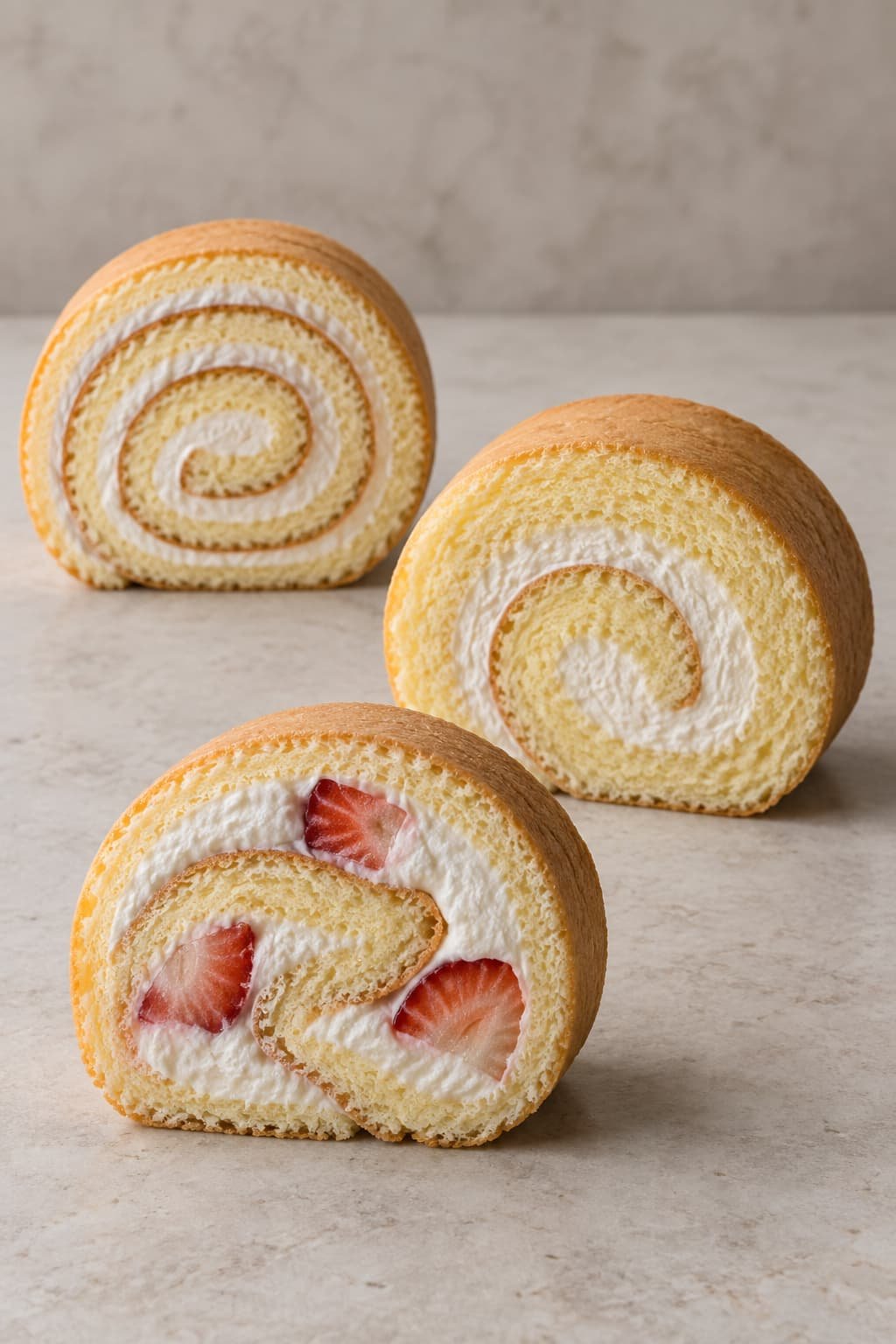
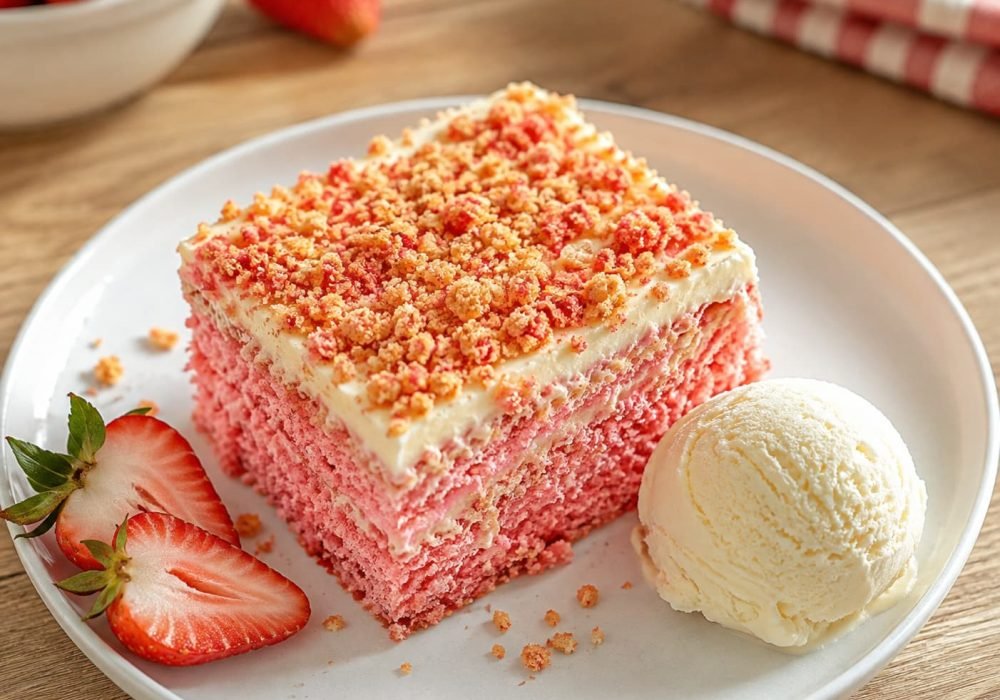
This easy strawberry Swiss roll wraps a light vanilla sponge around lightly sweetened whipped cream and fresh strawberries. The sponge stays soft and flexible, while the cool cream balances the bright, juicy berries without making the cake feel heavy. Once chilled and sliced, the strawberry cake roll reveals a clean spiral that looks elegant without requiring complicated decoration.

The key is handling the sponge at the right stage. It must be removed from the oven as soon as it is set, then pre-rolled while warm so it cools in the correct shape without cracking. After cooling, the sponge is gently unrolled, covered with an even layer of cream and dry, thinly sliced strawberries, then rolled again without forcing the filling from the sides. This recipe guides you through each stage and explains how to control moisture, protect the airy texture, and produce clean slices that hold their shape.

Quick Answer

A strawberry Swiss roll is a thin vanilla sponge filled with lightly sweetened whipped cream and fresh strawberries. For a flexible spiral without cracks, bake the sponge until its surface springs back lightly, roll the unfilled cake while warm, cool it completely, then add chilled whipped cream and well-dried strawberry slices before rerolling and chilling.

Strawberry Swiss Roll Recipe Snapshot

Detail Information
Active preparation time Approximately 30 minutes
Baking time 10 to 12 minutes
Sponge cooling time Approximately 45 minutes
Final chilling time At least 1 hour
Estimated total time About 2 hours 30 minutes
Yield 10 slices
Pan 10 × 15-inch jelly-roll pan
Difficulty Intermediate with detailed guidance
Best served Chilled

Why This Strawberry Swiss Roll Works

The sponge is baked in a thin, even layer so it remains light and flexible enough to form a neat spiral. Well-dried fresh strawberries provide bright berry flavor and tender pieces of fruit without relying on a layer of sweet cooked jam.

A stabilized whipped cream filling holds its shape instead of becoming soft or squeezing from the sides. Chilling the assembled strawberry Swiss roll firms the cream, helps the cake retain its rounded shape, and makes it easier to cut into clean, attractive slices.

What Is a Strawberry Swiss Roll?

A Swiss roll, also known as a cake roll or sponge roll, is a thin sheet of sponge cake wrapped around cream, jam, or frosting. Its distinctive spiral is revealed when the chilled cake is cut into individual slices.

This strawberry sponge roll combines a light vanilla sponge with fresh strawberries and whipped cream instead of jelly or heavy buttercream. The airy filling and fresh fruit give each slice a lighter texture and less sugary finish than many traditional cake rolls.

Ingredients You’ll Need

A successful strawberry Swiss roll needs a sponge that is light enough to rise, flexible enough to form a spiral, and structured enough to hold the filling without tearing. This version uses separated eggs for volume, while a small amount of neutral oil and milk keeps the sponge soft after cooling and refrigeration. Exact quantities should appear in the complete recipe card.

strawberry Swiss roll

For the Vanilla Sponge

Eggs: Separated eggs provide both structure and lift. The yolks add richness and tenderness, while the whites are whipped to glossy medium-stiff peaks to create an airy sponge. The meringue must be folded into the batter gently so the trapped air is not lost.

Sugar: Sugar sweetens the cake and helps stabilize the whipped egg whites. Adding it gradually produces a smooth, glossy meringue with enough structure to support the sponge. Follow the measured quantity because reducing or increasing the sugar can affect the cake’s flexibility and texture.

All-purpose flour: Flour gives the vanilla sponge enough strength to roll without falling apart. Weighing it produces the most consistent result. It should be sifted before being folded into the batter because flour pockets and aggressive mixing can produce a firm, dry cake that cracks more easily.

Neutral oil and milk: Neutral oil helps the sponge remain soft after chilling because it does not harden like butter. Room-temperature milk adds moisture and loosens the yolk mixture so it combines more evenly with the meringue. Use a mild oil that will not compete with the vanilla and strawberry flavors.

Vanilla and salt: Vanilla adds a gentle flavor that complements the fresh strawberries and cream. Salt balances the sweetness and brings out the vanilla without making the sponge taste salty.

The whipped egg whites provide the lift in this recipe, so baking powder is not needed. Keeping a single, clearly defined source of lift makes the sponge texture more predictable and avoids unnecessary changes to the batter.

For the Fresh Strawberry and Cream Filling

Fresh strawberries and cold heavy whipping cream create a filling that tastes fresh and remains firm enough to slice after chilling. Choose ripe, fragrant berries with an even red color, firm flesh, and no bruised or moldy areas. Avoid very soft strawberries because they release more liquid and can leave wet patches in the sponge.

Heavy whipping cream must be thoroughly chilled so it can trap air and develop enough volume. Powdered sugar blends into the cream quickly and provides smooth sweetness, while vanilla adds a gentle flavor that does not overpower the berries.

This strawberry Swiss roll uses cold, full-fat mascarpone to stabilize the whipped cream. Its mild flavor supports the fresh strawberries without making the filling taste strongly of cheese. The measured mascarpone also gives the cream enough structure to hold its shape when the cake is rolled, chilled, and sliced. It must be mixed carefully because excessive whipping can make the filling grainy or cause it to separate.

Choosing and Preparing the Strawberries

Use ripe but firm strawberries that retain their shape when sliced. Wash the berries while they are still whole, then remove the green tops. This reduces the chance of water collecting inside the exposed centers.

Spread the washed strawberries on a clean towel and pat them completely dry. Surface moisture can loosen the cream and soak into the vanilla sponge. Cut the berries into thin, even slices so they lie flat inside the roll. Thick or irregular pieces can create gaps, place uneven pressure on the sponge, or force cream from the sides.

Prepare the strawberries shortly before assembling the cake. Do not coat them with sugar in advance because sugar draws juice from the fruit. That released liquid can thin the filling and make the strawberry cake roll wet around the spiral.

Equipment and Correct Pan Size

Pan size controls the thickness of the sponge, which directly affects baking time, flexibility, and the finished spiral. This strawberry Swiss roll recipe is formulated for a light-colored 10 × 15-inch jelly-roll pan, measured across the inside, with sides approximately 1 inch high.

A light-colored metal pan distributes heat more gently than a dark pan, which can brown the edges before the center is fully set. Do not use batter intended for a 13 × 18-inch half-sheet pan in the smaller jelly-roll pan. The thicker layer may bake unevenly and become difficult to roll without cracking.

Preparing the Jelly-Roll Pan

Lightly grease the bottom of the pan to hold the parchment paper in place. Fit the parchment smoothly across the bottom and into the corners, leaving a small overhang at the short ends to help release the sponge.

Leave the top of the parchment and the exposed sides of the pan ungreased. This gives the batter a clean surface to cling to as it rises. Flatten any creases because deep folds can leave visible marks in the thin sponge.

Mixing Equipment

An electric hand mixer or stand mixer makes it easier to whip the egg whites evenly and reach the required volume. The mixing bowl and beaters must be completely clean and dry because grease or traces of egg yolk can prevent the whites from whipping properly.

Use a fine-mesh sieve to remove flour lumps before mixing. A broad, flexible spatula helps fold the flour and meringue together without pressing too much air from the batter.

Tools for Rolling, Cooling, and Slicing

Prepare a clean, lint-free kitchen towel before the sponge goes into the oven. Dust the towel with a light, even coating of powdered sugar to reduce sticking when the warm cake is turned out and rolled from the short end.

Place the towel-wrapped sponge seam-side down on a cooling rack. This position helps the roll retain its shape as it cools away from the hot pan.

After filling and chilling the strawberry cake roll, cut it with a sharp serrated knife. Use short, gentle strokes instead of pressing straight down, and wipe the blade between cuts to keep the cream and strawberry spiral clean.

How to Make a Strawberry Swiss Roll

Prepare the pan, towel, and measured ingredients before mixing the batter. Once the meringue is folded into the yolk mixture, spread and bake the batter immediately. Letting it stand allows the trapped air to escape, producing a flatter and less flexible sponge.

Step 1: Prepare the Pan and Oven

  1. Position an oven rack in the center and preheat the oven to 350°F (175°C) using conventional heat. Wait until the oven has reached the full temperature before beginning the batter.
  2. Lightly grease the bottom of a light-colored 10 × 15-inch jelly-roll pan to hold the parchment in place. Measure the pan across the inside and use one with sides approximately 1 inch high.
  3. Fit the parchment smoothly across the bottom and into the corners. Leave a small overhang at both short ends to make the baked sponge easier to release. Press out any deep creases that could mark the cake.
  4. Leave the top of the parchment and the exposed sides of the pan ungreased. This allows the egg-based batter to cling lightly to the surface as it rises.
  5. Spread a clean, lint-free kitchen towel on the counter and dust it evenly with 2 tablespoons of powdered sugar. Keep the towel close to the oven because the baked sponge must be turned out and rolled while warm.

Step 2: Make the Vanilla Sponge Batter

  1. Separate the eggs while they are cold, placing the whites and yolks in different bowls. Allow both to stand at room temperature for approximately 20 to 30 minutes. The whites should no longer feel refrigerator-cold when mixing begins.
  2. Beat the yolks with the exact portion of sugar listed for the yolk mixture. Continue until they become pale, smooth, and slightly thickened. Add the room-temperature milk, neutral oil, and vanilla, then mix until evenly combined.
  3. Sift the all-purpose flour over the yolk mixture. Whisk briefly until most of the flour disappears, then use a flexible spatula to incorporate the remaining dry patches. Stop mixing as soon as the batter is smooth.
  4. Using completely clean and dry beaters, whip the egg whites until the surface becomes foamy and no clear liquid remains at the bottom. Add the portion of sugar reserved for the whites gradually while continuing to beat.
  5. Stop at glossy medium-stiff peaks. When the beater is lifted, the meringue should form a peak that stands upright but bends slightly at the tip. Dry, dull, or clumpy whites have been whipped too far.
  6. Fold approximately one-third of the meringue into the yolk batter to loosen it. Add the remaining meringue in two portions. Cut the spatula through the center, sweep along the bottom, and lift the batter over itself while slowly rotating the bowl.
  7. Stop folding as soon as the batter has an even color with no visible white streaks. It should look smooth and glossy and fall from the spatula in a broad ribbon that slowly blends back into the surface.
  8. Transfer the batter to the prepared pan immediately. Use a few gentle strokes to guide it into the corners and level the surface. Avoid repeatedly spreading or pressing the batter because that can remove the air needed for a light strawberry cake roll.

medium-stiff peaks

Step 3: Spread and Bake the Sponge

  1. Transfer the batter to the prepared 10 × 15-inch jelly-roll pan immediately. Use a flexible spatula to guide it toward the corners, then level the surface with a few light strokes.
  2. The batter should form a uniform layer close to ½ inch thick. Evenness matters more than achieving a perfect measured depth. Thin areas around the corners or edges can become dry before the center finishes baking.
  3. Bake on the center rack at 350°F (175°C) for approximately 10 to 12 minutes. Keep the oven closed for the first 10 minutes so the delicate sponge is not disturbed before its structure has set.
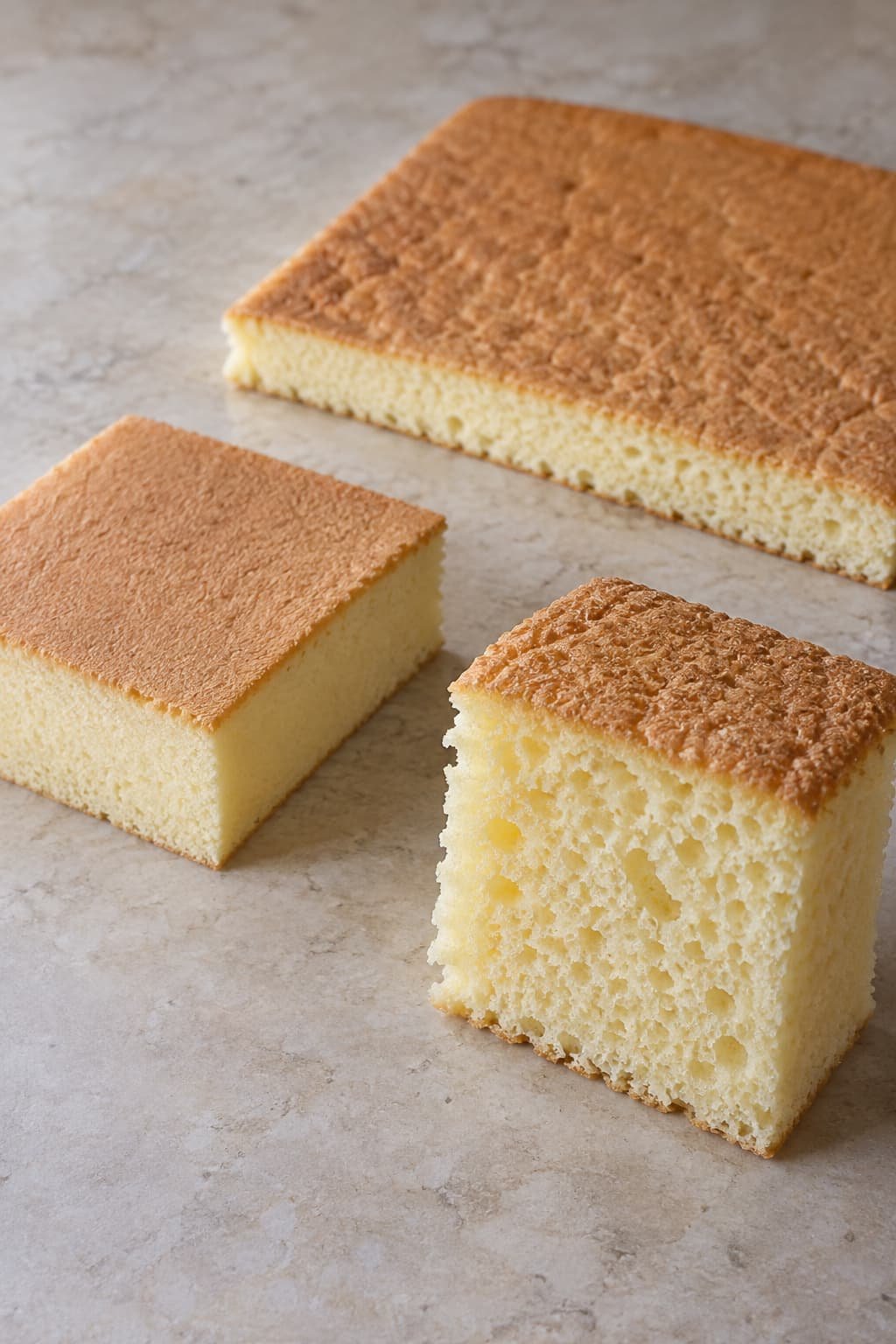
  4. Check the center using very light fingertip pressure. The surface should look set and lightly golden, with no wet shine, and it should spring back without leaving a deep mark. A toothpick inserted near the center should come out without wet batter.
  5. Remove the sponge as soon as these signs appear. Overbaking removes moisture and makes the thin cake firm and brittle. A dry sponge cannot bend easily and is more likely to crack during the first roll.

batter

Step 4: Form the First Roll

  1. Lay the prepared towel on a flat board or heat-resistant counter with the powdered-sugar side facing upward.
  2. Remove the pan from the oven and place it on a heat-resistant surface. Run a thin knife around the exposed edges to release any sponge attached to the pan.
  3. Wearing oven mitts, hold the pan close to the prepared towel and invert it in one controlled movement. Lift the pan away so the parchment-covered sponge rests directly on the powdered sugar.
  4. Peel off the parchment while the cake is still warm. Pull the paper back slowly and close to the sponge rather than lifting it upward. If one area sticks, release it gently with a thin knife.
  5. Starting at one short end, roll the warm sponge and towel together. The roll should be secure enough to establish a curve but not aggressively tight. Pulling too firmly can compress the center and make the filled cake difficult to reroll.
  6. Place the towel-wrapped sponge seam-side down on a cooling rack. Let it cool completely in its rolled shape. This will usually take about 45 minutes, but temperature is more important than the clock.
  7. Do not unroll the sponge while it is warm or leave it to cool flat. The first roll trains the cake into the curved shape needed for the final strawberry and cream spiral.

Warm vanilla

Step 5: Make the Stabilized Cream Filling

  1. Begin the filling near the end of the sponge’s cooling time. Keep the heavy whipping cream and full-fat mascarpone refrigerated until needed. If the kitchen is warm, chill the bowl and beaters for 10 to 15 minutes.
  2. Add the cold mascarpone, powdered sugar, and vanilla to the chilled bowl. Mix on low speed only until the mascarpone becomes smooth. Scrape down the bowl so no dense pockets remain.
  3. With the mixer running on low, pour in the measured cold heavy cream gradually. Once the cream is incorporated, increase to medium speed.
  4. Whip until the filling reaches medium-stiff peaks. A lifted beater should leave a defined peak that holds its shape but bends slightly at the tip. The cream should look smooth and spreadable.
  5. Stop mixing immediately when this stage is reached. Overwhipped mascarpone cream can become grainy, curdled, or separated. More whipping will not improve a filling that is already firm.
  6. Cover and refrigerate the filling until the sponge is completely cool. Mascarpone gives the whipped cream enough body to remain stable inside the chilled strawberry Swiss roll without replacing the fresh cream as the main flavor.

Mascarpone whipped

Step 6: Fill the Cooled Sponge

  1. Check that the rolled sponge is completely cool before adding the filling. A warm cake will soften the mascarpone whipped cream and cause it to slide during rerolling.
  2. Place a fresh sheet of parchment paper on the work surface. Set the towel-wrapped sponge on top, then gently unroll it so the side that faced inward during the first roll is facing upward. Do not force the tightest curved end completely flat.
  3. Stir the chilled mascarpone cream once or twice with a spatula to make sure it is smooth and spreadable. If it feels very firm, let it stand for a few minutes rather than pressing it heavily across the delicate sponge.
  4. Spread the measured filling in an even layer approximately ¼ inch thick. Leave a ½-inch border along the long sides and a 1-inch border at the far short edge, where the final roll will close.
  5. Arrange the well-dried strawberry slices in a single layer over the cream. Keep the first inch near the starting edge free from large berry pieces so the center can form a compact curve. Avoid stacking or overlapping the fruit.
  6. Use only the measured amount of filling and strawberries. Overfilling can create gaps in the spiral, split the sponge, or force cream from the sides during rerolling.

strawberry slices

Step 7: Reroll and Chill

  1. Begin at the same short end used for the warm pre-roll. Lift the curved edge gently and allow it to follow the shape established while cooling.
  2. Use the parchment underneath as a sling to guide the cake forward. The paper should support the movement but must not become trapped inside the strawberry and cream spiral.
  3. Continue rolling with light, even pressure. Keep the cake secure without squeezing or compressing the sponge. If a small amount of filling escapes, remove it cleanly with a spatula instead of pushing it back inside.
  4. Finish with the seam underneath the roll. Wrap the outside with the parchment to support its shape, then transfer it to a flat tray or serving plate.
  5. Refrigerate the strawberry Swiss roll seam-side down for a minimum of 1 hour. For the cleanest slices, allow up to 2 hours. Chilling firms the mascarpone cream and helps the seam remain closed.
  6. If the roll will be refrigerated for longer than the initial chilling period, place the parchment-wrapped cake in an airtight container to prevent the sponge from drying out.
  7. Trim the ends and decorate after chilling. Use completely dry strawberries for the topping and add them shortly before serving so their moisture does not mark the sponge or soften the cream.

roll cream

Step 8: Decorate and Slice

Remove the chilled strawberry Swiss roll from the refrigerator and unwrap it carefully. Set it seam-side down on a clean cutting board or serving platter so the roll remains secure while you decorate and slice it.

Using a sharp serrated knife, trim approximately ¼ inch from each uneven end. This reveals the strawberry and cream spiral and creates a neater presentation without wasting too much cake.

Pipe small swirls of the mascarpone cream reserved during assembly over the top. Add completely dry strawberry halves or thin slices shortly before serving. Decorating too far in advance can allow moisture from the berries to soften the cream and sponge.

Cut the strawberry cake roll into slices approximately 1 inch thick. Use short, gentle sawing motions instead of pressing straight down, which can flatten the sponge and push out the filling. Wipe the knife clean and dry after every cut to keep each spiral neat.

How to Roll a Swiss Roll Without Cracking

Use this checklist to keep the vanilla sponge flexible and prevent cracks:

  • Do not overbake the sponge. Remove it when the surface is lightly golden, no longer wet, and springs back after gentle pressure.
  • Form the first roll while the cake is warm. The warm pre-roll method trains the sponge to hold its curved shape as it cools.
  • Keep the sponge covered. Cool it inside the towel and wrap the assembled roll during chilling so the cake does not dry out.
  • Follow the existing curve. Do not flatten the cooled sponge completely or force it into an aggressively tight spiral.
  • Avoid overfilling. Use a thin, even cream layer and a single layer of finely sliced strawberries to prevent excessive pressure inside the roll.

Small surface lines may still appear, especially around the tightest part of the spiral. These do not mean the cake has failed. Deep cracks usually indicate that the sponge was overbaked, allowed to cool flat, or rolled with too much pressure.

Strawberry Swiss

How to Keep the Cream and Strawberries Stable

A stable filling depends on cold cream, properly prepared strawberries, and sufficient chilling time. Keep the heavy whipping cream, full-fat mascarpone, mixing bowl, and beaters cold until you are ready to prepare the filling.

Whip the mascarpone cream only to medium-stiff peaks. It should hold a defined shape while remaining smooth and easy to spread. Stop mixing before it becomes dry or grainy because overwhipped mascarpone cream can separate.

Wash the strawberries while they are still whole, then remove the green tops and dry the fruit thoroughly. Slice the berries thinly shortly before assembling the cake. Do not mix them with sugar in advance because sugar draws out juice that can loosen the cream and create wet patches in the sponge.

Spread the cream evenly and arrange the strawberries in a single layer without overlapping large pieces. Once rolled, wrap the strawberry Swiss roll and refrigerate it seam-side down for at least 1 hour. Chilling it for up to 2 hours will produce firmer cream and cleaner slices.

Add cream and completely dry strawberries to the top shortly before serving. Fresh berries left on the decoration for too long may release moisture and soften its surface.

Strawberry Swiss Roll Troubleshooting

Cracks, a dense sponge, and leaking filling usually result from overbaking, deflating the whipped eggs, or adding too much moisture. This troubleshooting guide explains the most likely cause of each problem and how to correct it while following the same strawberry Swiss roll method.

Problem Likely cause Practical fix
Sponge cracked while rolling The sponge was overbaked, rolled after cooling, or forced into a tight spiral Begin checking it at 10 minutes. Remove it when the surface is lightly golden and springs back gently, then form the first roll while it is still warm.
Sponge feels rubbery Too much flour was added or the batter was overmixed Weigh the flour instead of packing it into a measuring cup. Mix only until the flour disappears, then fold the meringue gently.
Sponge is flat or dense The egg whites were underwhipped, overwhipped, or deflated during folding Whip the whites to glossy medium-stiff peaks. Fold them into the yolk mixture in three additions and stop when no white streaks remain.
Sponge sticks to the parchment The pan was lined incorrectly or the parchment was removed too aggressively Use smooth baking parchment fitted inside the pan. While the sponge is warm, peel the paper back slowly and close to the cake’s surface rather than pulling it upward.
Sponge sticks to the towel The towel was not dusted evenly or the cake remained wrapped for too long after cooling Apply a light, even coating of powdered sugar to a clean, lint-free towel. Unroll the sponge only after it has cooled completely.
Mascarpone cream is runny The ingredients or equipment were too warm, the cream was underwhipped, or low-fat mascarpone was used Use cold heavy cream, cold full-fat mascarpone, and chilled equipment. If the filling becomes warm, refrigerate it for 10 to 15 minutes, then whip briefly until it reaches medium-stiff peaks.
Cream looks grainy or separated The mascarpone filling was overwhipped For slight graininess, mix in 1 tablespoon of cold heavy cream on low speed. If the filling has separated into solids and liquid, remake it rather than continuing to whip.
Filling leaks from the roll Too much filling was added, the berries were wet, or the strawberry pieces were too thick Spread the cream approximately ¼ inch thick. Add one layer of dry, thinly sliced strawberries, leaving a ½-inch border along the long sides and a 1-inch border at the finishing edge.
The spiral looks squashed The cake was squeezed or pulled too tightly during the final roll Use the parchment underneath to support the cake and guide it along its existing curve. Apply light pressure without compressing the sponge.
The roll opens during chilling The cake was rolled too loosely, placed seam-side up, or left unwrapped Wrap the finished strawberry cake roll securely in parchment without squeezing it. Refrigerate it seam-side down so the spiral settles in the correct position.
Slices look messy The filling was too soft, the cake was not chilled sufficiently, or the knife was not cleaned Chill the assembled roll for at least 1 hour, or up to 2 hours for firmer portions. Cut with a sharp serrated knife and wipe the blade clean and dry between slices.

Flexible vanilla sponge

Make-Ahead, Storage and Freezing

This strawberry Swiss roll is best assembled on the day it will be served. Fresh strawberries gradually release moisture after slicing, so keeping the make-ahead period short protects the light sponge and keeps the mascarpone filling firm.

Making It Ahead

For an evening dessert, bake and pre-roll the vanilla sponge earlier the same day. Let it cool completely in the clean towel while it holds its curved shape. Once cool, keep the rolled sponge covered until you are ready to fill it.

Prepare the mascarpone cream and cut the strawberries shortly before assembly. Dry the sliced berries again if any juice appears on their surface.

The completed strawberry cake roll can be assembled up to 8 hours before serving. Wrap the undecorated roll carefully and refrigerate it seam-side down. Chill it for at least 1 hour, although 2 hours will produce a firmer spiral and cleaner slices.

Pipe the reserved cream over the cake and add completely dry strawberries shortly before serving. The final recipe card should state exactly how much cream must be reserved for this decoration.

Refrigerator Storage

A strawberry Swiss roll filled with whipped cream, mascarpone, and fresh berries must remain refrigerated. Store it at 40°F (4°C) or colder in an airtight container on an interior refrigerator shelf rather than in the warmer refrigerator door.

An undecorated roll can be wrapped securely without pressing against the sponge. After adding cream to the top, use a covered container with enough space to protect the decoration.

For the best flavor and texture, eat the cake within 2 days. It can be refrigerated for up to 3 days, but the berries may release juice and the sponge will become softer over time.

Return leftovers to the refrigerator promptly. Do not leave this cream-filled cake at room temperature for more than 2 hours. If the temperature is above 90°F (32°C), reduce that limit to 1 hour.

Can You Freeze a Strawberry Swiss Roll?

Freezing the completed strawberry Swiss roll is not recommended. Fresh strawberries soften and release liquid during thawing, while mascarpone whipped cream may become uneven or begin to weep. This can create wet patches inside the sponge and damage the defined spiral.

The unfilled sponge may tolerate freezing better than the assembled cake, but this specific sponge has not been tested after freezing and thawing. For a dependable result, prepare the sponge earlier on the serving day instead of freezing it.

Recipe Variations

The original recipe already contains stabilized mascarpone cream, so a strawberry mascarpone Swiss roll is not a separate variation. The following options change the flavor without replacing the established sponge or rolling method.

Strawberry Jam and Cream Roll

Spread a very thin, even layer of smooth strawberry jam over the completely cooled sponge. Leave the usual borders clear and cover the jam with a slightly thinner layer of mascarpone cream.

Reduce the amount of fresh strawberries so the total filling does not become too thick. A full layer of berries combined with too much jam can create excess moisture and make the filling slide during rerolling.

Choose a smooth jam without large fruit pieces. The jam layer should be thin enough for the sponge to remain visible through it rather than forming a heavy coating.

Strawberry and Blueberry Swiss Roll

Replace part of the sliced strawberries with small, firm blueberries. Wash and dry both fruits thoroughly, then arrange them in a single layer over the mascarpone cream.

Keep the strawberries thin and avoid stacking the blueberries. Large blueberries can create gaps in the spiral, so cut them in half when necessary. Do not use frozen berries because they release too much liquid after thawing.

Lemon Strawberry Swiss Roll

Add finely grated lemon zest to the mascarpone cream for a brighter filling that complements the fresh strawberries. Use only the colored outer layer of the peel because the white pith tastes bitter.

Avoid adding lemon juice directly to the cream. Extra liquid can loosen the filling, while its acidity may affect the smooth texture of the dairy ingredients. Lemon zest adds flavor without introducing the same amount of moisture.

Serving Suggestions

Serve the strawberry Swiss roll chilled so the mascarpone cream stays firm and the spiral holds its shape. Place the roll on a serving platter, add the final decoration, and cut it with a clean serrated knife shortly before serving.

Decorate the top with reserved mascarpone cream and completely dry strawberry halves or slices. Add the berries immediately before serving because their juice can soften the cream and leave wet marks on the sponge.

The light vanilla sponge and fresh strawberry filling pair well with coffee, black tea, green tea, or lightly sweetened iced tea. Less-sweet drinks provide a pleasant balance to the cream and fruit filling.

This strawberry cake roll works particularly well for a spring brunch, Mother’s Day dessert, afternoon tea, or a summer gathering. Keep it refrigerated until serving, especially when the weather is warm.

Frequently Asked Questions

Can I use frozen strawberries?

Frozen strawberries are not recommended for this recipe. After thawing, they become soft and release enough liquid to loosen the mascarpone cream and create wet areas inside the sponge.

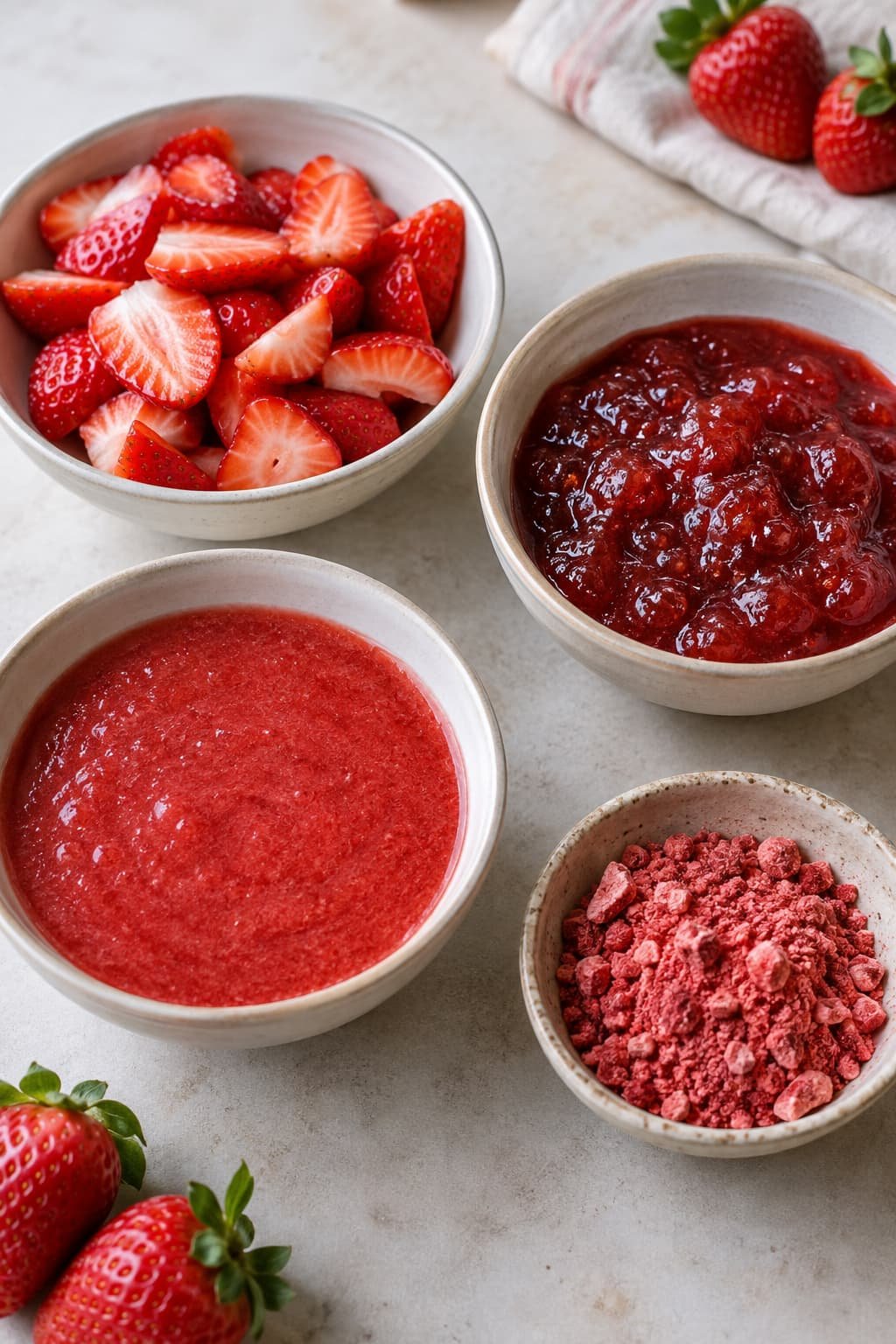
Use ripe but firm fresh strawberries for the cleanest spiral. A cooked filling made from frozen strawberries would require different quantities and moisture adjustments, making it a separate jam-style cake roll rather than a direct substitution.

Why did my strawberry Swiss roll crack?

The sponge was probably overbaked, allowed to dry out, left to cool before the first roll, or rolled too tightly. Remove it when the surface is lightly golden and springs back after gentle pressure.

Form the first roll while the unfilled sponge is still warm. Keep it covered in the prepared towel as it cools, and follow its natural curve instead of forcing a tight spiral.

Should I roll a Swiss roll while it is hot or cold?

For this recipe, roll the unfilled sponge while it is warm. This first roll helps the cake cool in the curved shape needed for the final spiral.

Wait until the sponge is completely cold before adding the mascarpone cream and strawberries. Filling a warm cake would soften the cream and cause it to slide or leak.

What pan is best for a Swiss roll?

Use a light-colored 10 × 15-inch jelly-roll pan, measured across the inside, with sides approximately 1 inch high. This produces the thin, even sponge required for rolling.

Do not use the same quantity of batter in a 13 × 18-inch half-sheet pan or a 9 × 13-inch baking pan. Changing the pan dimensions changes the sponge thickness, baking time, and flexibility.

Can I make a strawberry Swiss roll one day ahead?

You can assemble the roll the evening before if it will be served the following morning. Fill it with cold mascarpone cream and thoroughly dried strawberries, wrap it carefully, and refrigerate it seam-side down for up to 8 hours.

A full 24-hour hold is not recommended for the best appearance because sliced strawberries gradually release moisture. Add the final cream and fresh strawberry decoration shortly before serving.

How do I keep whipped cream from becoming runny?

Use cold heavy whipping cream, cold full-fat mascarpone, and chilled mixing equipment. Whip the filling to medium-stiff peaks, when it holds a defined shape but remains smooth and spreadable.

Mascarpone stabilizes the whipped cream and gives it enough structure to remain inside the roll. Stop mixing at the correct stage because overwhipped mascarpone cream can become grainy or separate.

How long does strawberry Swiss roll last?

Store the strawberry Swiss roll in an airtight container at 40°F (4°C) or colder. It has the best texture when eaten within 2 days and should be used within 3 days.

Do not leave the cream-filled cake at room temperature for more than 2 hours. Reduce this limit to 1 hour when the temperature is above 90°F (32°C).

Can I use cream cheese instead of mascarpone?

Cream cheese is firmer, tangier, and lower in fat than mascarpone, so it will produce a denser filling. It should not be substituted in an equal amount without adjusting the heavy cream and powdered sugar.

This recipe does not include a tested cream-cheese filling. Use the mascarpone specified in the recipe unless a separately tested cream-cheese version with exact quantities is provided.

Strawberry Swiss Roll Recipe Card

Easy Strawberry Swiss Roll with Fresh Strawberries and Cream

A light vanilla sponge filled with fresh strawberries and mascarpone-stabilized whipped cream. The warm pre-roll method helps the sponge hold its spiral, while careful filling and chilling produce clean, attractive slices.

Preparation time: Approximately 40 minutes
Baking time: 10 to 12 minutes
Cooling time: Approximately 45 minutes
Minimum chilling time: 1 hour
Estimated total time: About 2 hours 40 minutes
Yield: Approximately 10 slices
Pan: Light-colored 10 × 15-inch jelly-roll pan with approximately 1-inch sides
Difficulty: Intermediate, with detailed guidance
Category: Dessert
Cooking method: Baking

Ingredients

For the Vanilla Sponge

  • 4 large eggs, separated, approximately 200 grams without shells
  • ½ cup granulated sugar, 100 grams, divided
  • ½ cup plus 2 tablespoons all-purpose flour, 75 grams
  • 3 tablespoons whole milk, 45 grams, at room temperature
  • 2 tablespoons neutral oil, 28 grams
  • 1 teaspoon vanilla extract, 5 grams
  • ¼ teaspoon fine salt, 1.5 grams
  • ½ teaspoon neutral oil, 2 grams, for securing the parchment
  • 2 tablespoons powdered sugar, 15 grams, for the rolling towel

For the Strawberry and Mascarpone Cream Filling

  • 1 cup cold heavy whipping cream, 240 grams
  • ½ cup cold full-fat mascarpone, 113 grams
  • ⅓ cup powdered sugar, 40 grams
  • 1 teaspoon vanilla extract, 5 grams
  • 1½ cups ripe but firm strawberries, approximately 225 grams, washed and dried thoroughly

Instructions

  1. Prepare the oven and pan. Position a rack in the center of the oven and preheat it to 350°F (175°C) using conventional heat. Lightly grease only the bottom of a 10 × 15-inch jelly-roll pan to hold the parchment in position. Fit the paper smoothly into the corners and leave a small overhang at the short ends. Do not grease the top of the parchment or the exposed sides.
  2. Prepare the rolling towel. Place a clean, lint-free kitchen towel on the counter. Dust one side evenly with the powdered sugar and keep it near the oven.
  3. Prepare the eggs. Separate the eggs while they are cold, placing the whites and yolks in different bowls. Let them stand at room temperature for 20 to 30 minutes. The bowl and beaters used for the whites must be completely clean and free from grease or egg yolk.
  4. Make the yolk mixture. Beat the yolks with 2 tablespoons, or 25 grams, of the granulated sugar until pale and slightly thickened. Mix in the milk, neutral oil and vanilla until smooth. Sift the flour and salt over the mixture, then whisk gently only until no dry flour remains.
  5. Whip the egg whites. Beat the whites until foamy. Add the remaining 6 tablespoons, or 75 grams, of granulated sugar gradually while continuing to mix. Stop at glossy medium-stiff peaks. A lifted peak should stand but bend slightly at its tip.
  6. Fold the batter. Fold approximately one-third of the whipped whites into the yolk mixture. Add the remaining whites in two portions. Cut through the center with a flexible spatula, sweep along the bottom, and lift the batter over itself while turning the bowl. Stop as soon as no white streaks remain.
  7. Spread and bake. Transfer the batter to the prepared pan immediately. Guide it into the corners and smooth the surface with a few light strokes. Bake for 10 to 12 minutes, beginning the doneness check at 10 minutes. Remove the sponge when it is lightly golden, no longer wet in the center, and springs back after gentle pressure.
  8. Turn out the sponge. Release the exposed edges with a thin knife. Place the prepared towel powdered-sugar side down over the warm cake. Set a cooling rack or flat board over the towel, then invert everything carefully. Lift away the pan and peel the parchment slowly back from the sponge.
  9. Form the first roll. Starting at one short end, roll the warm sponge and towel together. Keep the roll secure without pulling or squeezing it tightly. Place it seam-side down on a cooling rack for approximately 45 minutes, or until completely cool.
  10. Prepare the strawberries. Hull the dry berries and cut approximately 1 cup, or 160 grams, into thin, even slices. Keep the remaining berries whole or halved for decorating. Refrigerate them until required.
  11. Make the mascarpone cream. Place the cold mascarpone, powdered sugar and vanilla in a chilled bowl. Mix on low speed only until smooth. Add the cold heavy cream gradually, then whip on medium speed until the filling forms smooth medium-stiff peaks. Reserve approximately ½ cup for decorating.
  12. Fill the cooled sponge. Place a fresh sheet of parchment on the work surface and gently unroll the cake. Do not force the tightest end completely flat. Spread enough mascarpone cream to create an even layer approximately ¼ inch thick. Leave a ½-inch border along the long sides and a 1-inch border at the far short edge. Keep any excess cream for decorating.
  13. Add the strawberries. Arrange the dry strawberry slices in one layer over the cream. Avoid stacking the fruit or placing thick pieces close to the starting edge.
  14. Reroll the cake. Beginning at the same short end used for the first roll, guide the sponge along its existing curve. Use the parchment underneath for support without allowing it to become trapped inside the spiral. Finish with the seam underneath.
  15. Wrap and chill. Wrap the roll in parchment to support its shape, then place it in an airtight container. Refrigerate it seam-side down for at least 1 hour, preferably 2 hours for cleaner slices. The undecorated roll can remain refrigerated for up to 8 hours before serving.
  16. Decorate and slice. Trim approximately ¼ inch from each uneven end with a sharp serrated knife. Pipe the reserved mascarpone cream over the top and add the remaining dry strawberries. Cut into approximately 1-inch slices using gentle sawing motions. Wipe the knife clean and dry after every cut.

Recipe Notes

The whipped egg whites provide the lift, so baking powder is unnecessary. Stop whipping at medium-stiff peaks because dry, overwhipped whites are difficult to fold evenly.

Weigh the flour whenever possible. Packing flour into a measuring cup can produce a dry, rubbery sponge that is more likely to crack.

Do not substitute another pan size without adjusting the entire formula. A larger pan produces a thinner sponge, while a smaller pan produces a thicker cake that requires a different baking time.

Use only enough mascarpone cream to create the stated ¼-inch layer. Forcing all the filling into the cake may cause leaking during the final roll.

Wash the strawberries before hulling them and dry them completely. Do not mix the sliced berries with sugar because it draws out juice that can soak into the sponge.

The baking time is short, and oven performance varies. Use the visual and touch tests rather than waiting for the cake to become deeply golden.

Storage

Keep the strawberry Swiss roll in an airtight container at 40°F (4°C) or colder. For the best texture, serve it within 2 days and use any remaining cake within 3 days.

Do not leave the cream-filled roll at room temperature for more than 2 hours. Reduce this limit to 1 hour when the temperature is above 90°F (32°C).

Freezing the assembled roll is not recommended. Thawed strawberries may release liquid, while the mascarpone cream can lose its smooth consistency.

Estimated Nutrition

Approximate nutrition per slice, based on 10 slices:

  • Calories: 280
  • Carbohydrates: 24 grams
  • Protein: 4 grams
  • Fat: 19 grams
  • Saturated fat: 11 grams
  • Sugar: 16 grams
  • Fiber: 1 gram
  • Sodium: 105 milligrams

Nutrition values are estimates. The amount of powdered sugar retained from the towel, ingredient brands, decoration and final slice size will affect the actual values.

Related Blogs

Scroll to Top