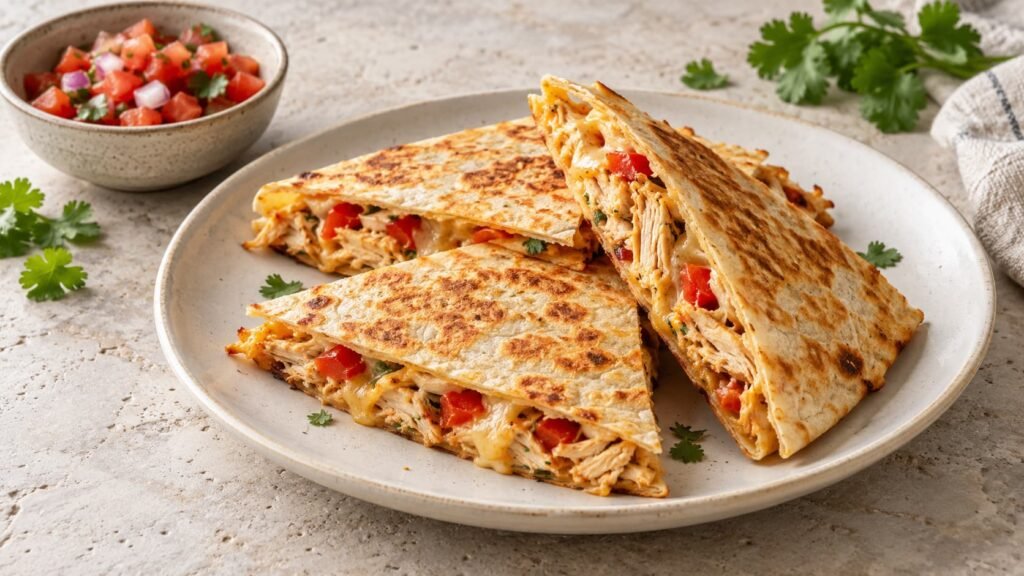
Chicken quesadillas are made with tortillas filled with cooked chicken, melting cheese, and optional vegetables or seasonings. They are usually cooked in a skillet until the cheese melts and the tortilla becomes lightly golden and crisp.
Making chicken quesadillas at home involves choosing suitable ingredients, preparing a filling that is not too wet, and controlling the cooking temperature. These details affect how well the tortilla holds together and how evenly the cheese melts.
This guide explains how to select ingredients, assemble chicken quesadillas, cook them in a skillet, and avoid common preparation problems.
What Is a Chicken Quesadilla?
A chicken quesadilla is a tortilla filled with cooked chicken and other ingredients, commonly including cheese, then heated until the filling is warm and the cheese melts.
Quesadillas are part of Mexican cuisine, although ingredients and preparation styles vary. Versions made with flour tortillas, shredded chicken, cheddar cheese, and peppers are also common in Tex-Mex cooking.
Unlike a burrito, which is wrapped around its filling, a quesadilla is usually folded in half or assembled using two tortillas. It can then be cut into wedges for serving.
The three basic components are a tortilla to hold the filling, cooked chicken for substance, and cheese for flavor and texture. Vegetables and seasonings are optional additions.
What Ingredients Are Used in Homemade Chicken Quesadillas?
Homemade chicken quesadillas typically contain cooked chicken, tortillas, cheese, and seasonings. Bell peppers, onions, mushrooms, and other vegetables can also be included.
The ingredients should be easy to distribute across the tortilla. Large chicken pieces or overly wet vegetables can make assembly and cooking more difficult.
Which Type of Chicken Works Best?
Boneless chicken breast, chicken thighs, and rotisserie chicken are all suitable options. The main differences involve flavor, texture, and preparation.
Chicken breast has a relatively lean texture and mild flavor. It can be shredded or diced after cooking, although excessive cooking may make it dry.
Chicken thighs contain more fat than breast meat and can remain tender during cooking. Their richer flavor works with onions, peppers, and spices.
Rotisserie chicken is convenient because it is already cooked. Remove the bones, shred the meat, and consider its existing seasoning before adding more salt or spices.
Regardless of the cut, raw chicken must be cooked to an internal temperature of 165°F (74°C), measured with a food thermometer.
Shredded chicken spreads easily inside a tortilla, while diced chicken creates more distinct pieces in each bite. Either can be used according to preference.
What Cheese Is Suitable for Chicken Quesadillas?
Monterey Jack, cheddar, Colby Jack, and Oaxaca cheese are suitable choices because they can melt into the chicken filling.
| Cheese | Flavor and texture |
|---|---|
| Monterey Jack | Mild flavor and smooth melting texture |
| Cheddar | Stronger flavor; melting depends partly on age |
| Colby Jack | Mild, creamy flavor and good melting characteristics |
| Oaxaca | Mild flavor and stretchy texture |
| Low-moisture mozzarella | Mild flavor and stretchy melted texture |
Monterey Jack can be combined with cheddar for a mixture of mild and stronger cheese flavors.
Freshly shredded cheese may melt differently from packaged shredded cheese, which sometimes contains anti-caking ingredients.
Spread the cheese across the filling rather than piling it in the center. This helps distribute melted cheese throughout the quesadilla.
Should You Use Flour or Corn Tortillas?
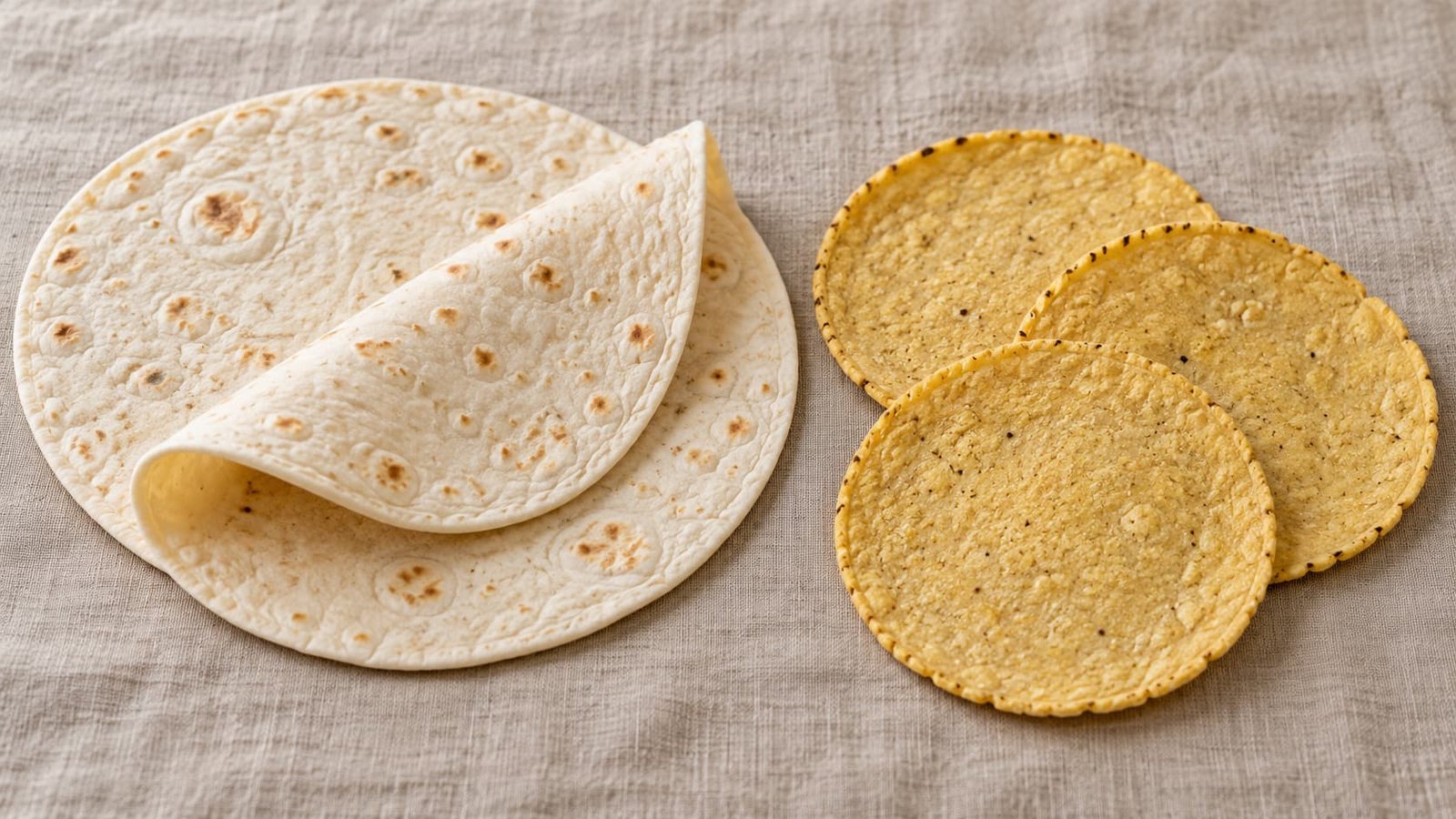
Both flour and corn tortillas work for chicken quesadillas, but they differ in flavor, flexibility, and size.
Flour tortillas are usually flexible and convenient for folding around chicken, cheese, and vegetables. Larger sizes can hold more filling.
Corn tortillas have a distinct corn flavor and are often smaller. They may crack when folded if they are cold or dry, so warming them first can make handling easier.
For a larger folded quesadilla, a flour tortilla is a practical choice. Corn tortillas are suitable when a smaller portion or more pronounced corn flavor is preferred.
Which Vegetables and Seasonings Can You Add?
Bell peppers, onions, jalapeños, mushrooms, and spinach can be added to chicken quesadillas.
Peppers and onions bring sweetness and savory flavor, while jalapeños provide heat. Mushrooms and spinach can add variety but may release moisture during cooking.
Common seasoning options include chili powder, ground cumin, garlic powder, paprika, black pepper, and salt.
A combination of cumin, garlic powder, and chili powder can create a savory, mildly spiced filling. Cayenne pepper or chipotle seasoning may be added when a spicier flavor is preferred.
Cook vegetables that release substantial moisture before assembling the quesadilla. This helps prevent liquid from collecting inside the tortilla.
How Do You Make Chicken Quesadillas at Home?
Chicken quesadillas can be made in three stages: prepare the cooked chicken filling, assemble it with cheese inside a tortilla, and heat the tortilla in a skillet until lightly browned.
The chicken should already be fully cooked before assembly. Skillet cooking intended to brown the tortilla and melt the cheese is not a reliable way to cook raw chicken safely.
The following instructions describe a general preparation method rather than a personally tested recipe with fixed ingredient quantities or cooking times.
How Do You Prepare the Chicken Filling?
Start with safely cooked chicken. Shred it with two forks or cut it into small pieces so it can be spread evenly across the tortilla.
If using onions, bell peppers, or mushrooms, cook them separately in a skillet until softened and excess moisture has reduced.
Combine the vegetables with the chicken, then add the preferred seasonings. Mix gently so the spices are distributed throughout the filling.
The mixture should not contain a large amount of loose liquid. If liquid collects in the pan, allow some of it to evaporate before assembly.
How Do You Assemble a Chicken Quesadilla?
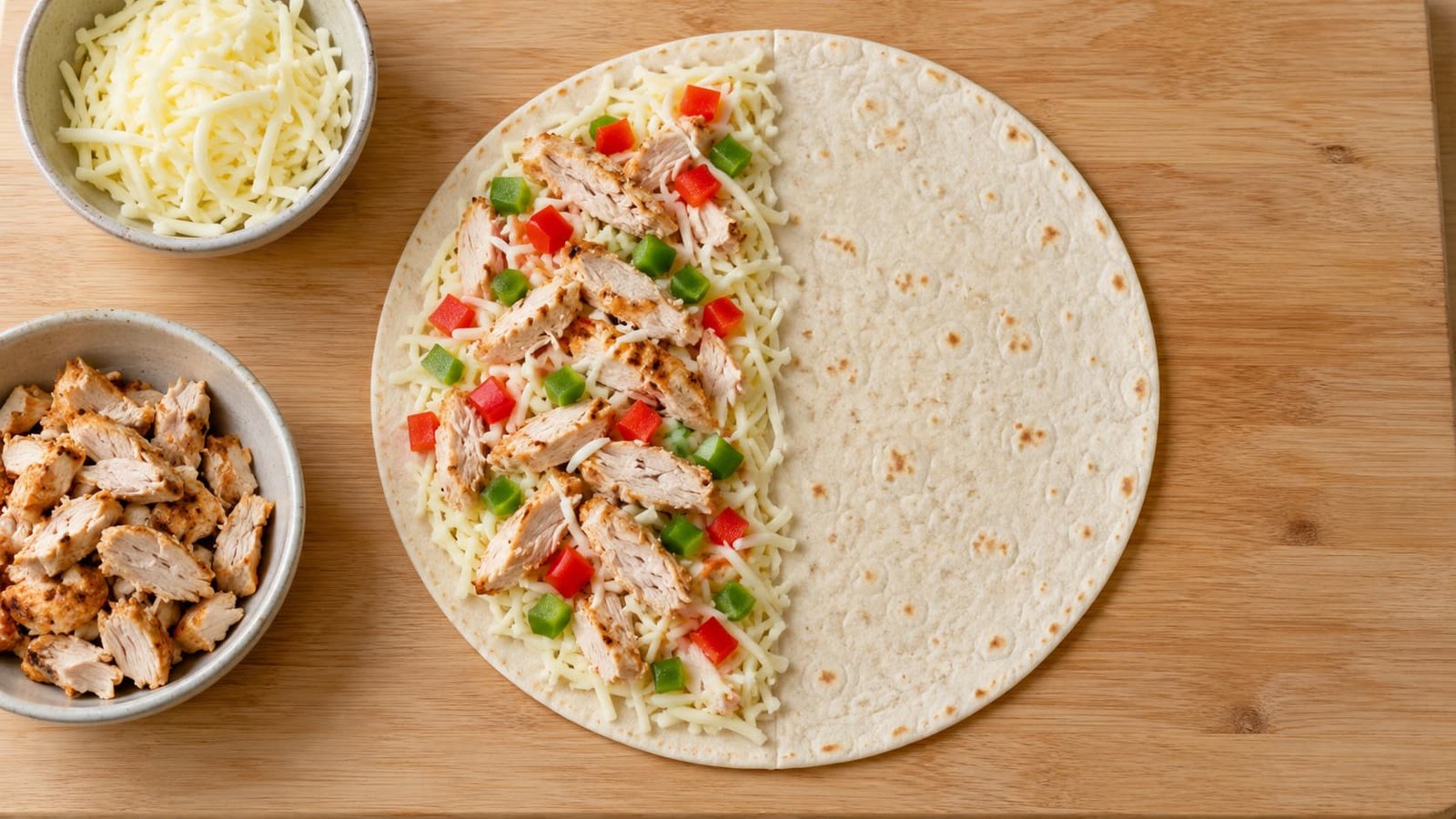
Place a tortilla on a clean surface and spread shredded cheese across one half.
Add a thin, even layer of chicken filling, followed by a little more cheese. Leave a small border around the edge so the ingredients are less likely to spill out.
Fold the empty half over the filling to create a semicircle.
For a two-tortilla version, place the filling on one tortilla and cover it with another. This creates a round quesadilla that can be sliced into wedges after cooking.
The folded method is generally easier to handle in a smaller skillet.
How Do You Cook a Quesadilla in a Skillet?
A skillet allows the tortilla to brown while the cheese melts. Medium to medium-low heat is a useful starting point because it provides greater control over browning.
- Preheat the skillet. Use a nonstick or well-seasoned skillet over moderate heat. A small amount of oil is optional.
- Add the quesadilla. Place it carefully in the skillet, keeping the filling evenly distributed.
- Brown the first side. Allow the underside to develop golden patches without becoming excessively dark.
- Turn carefully. Support the tortilla with a wide spatula to reduce spilling.
- Cook the second side. Continue heating until the cheese melts and the tortilla becomes lightly crisp.
- Cut and serve. Transfer the quesadilla to a cutting board and allow the melted cheese to settle briefly before slicing.
Cooking time varies depending on tortilla thickness, filling quantity, and skillet temperature. Monitor the tortilla’s color rather than relying on one fixed cooking time.
If using refrigerated leftovers as filling, ensure they are reheated to 165°F (74°C), checked with a food thermometer.
How Can You Make Chicken Quesadillas Crispy Without Burning Them?
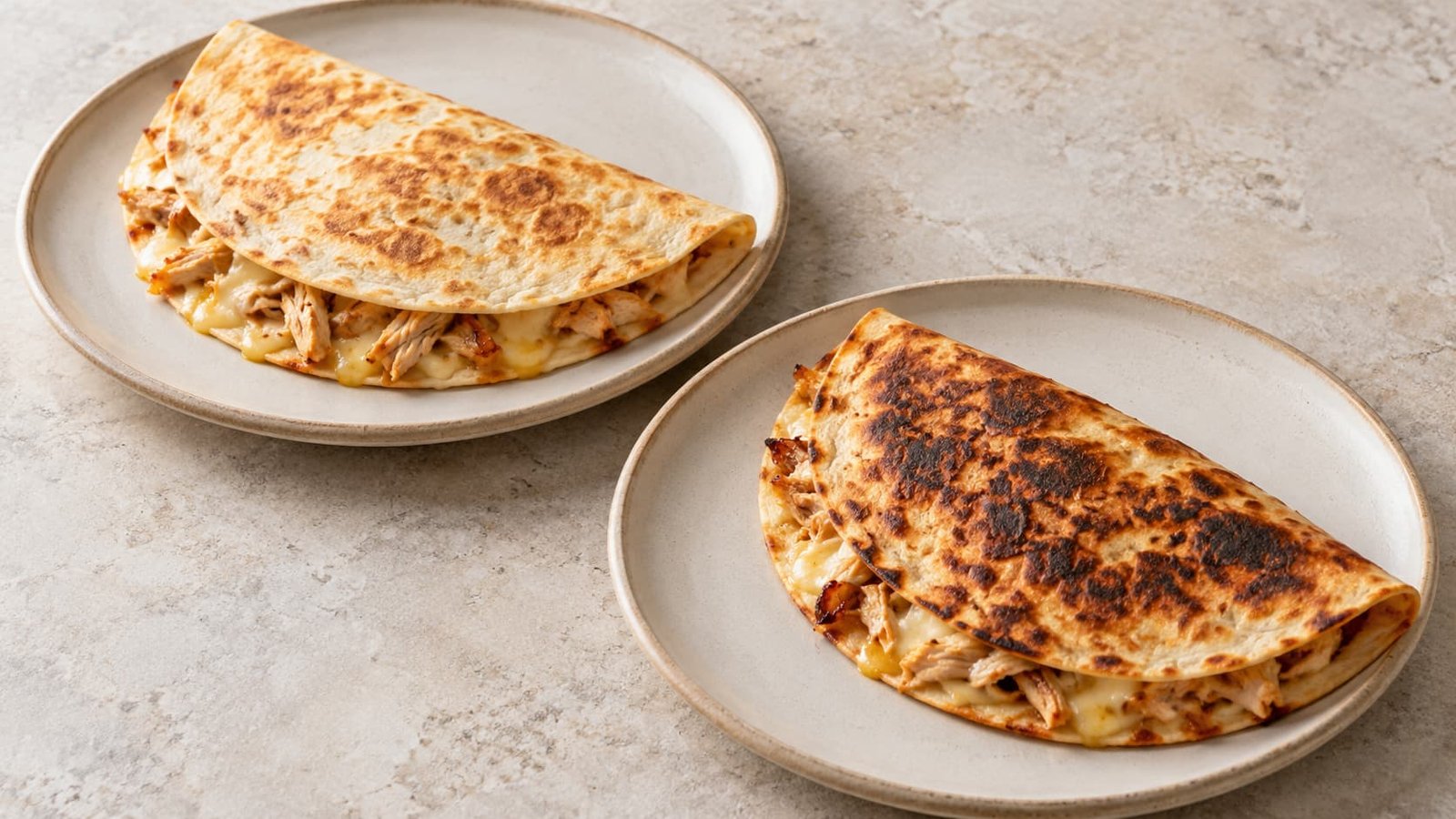
A lightly crisp tortilla depends mainly on controlling the heat and limiting excess moisture inside the filling.
Medium to medium-low heat allows more time for the cheese to melt before the tortilla becomes too dark. If the outside browns too quickly, reduce the temperature.
Moist vegetables and sauces can soften the tortilla. Cooking vegetables separately and serving wet toppings on the side may help maintain a crisper texture.
Avoid adding too much filling. A thinner layer allows more of the tortilla to remain in contact with the skillet, encouraging more even browning.
A small amount of oil may help the surface brown, but it is not essential when using suitable cookware.
What Are Some Chicken Quesadilla Variations?
Chicken quesadillas can be adapted with different cheeses, vegetables, sauces, and seasonings.
Chicken and cheese: Combine fully cooked chicken with Monterey Jack, cheddar, or another suitable melting cheese. This keeps the filling simple.
Chicken and vegetables: Add cooked onions, peppers, mushrooms, or spinach for different flavors and textures. Remove excess vegetable moisture before assembly.
Spicy chicken: Include jalapeños, chili flakes, cayenne pepper, or chipotle seasoning. Adjust the amount to the preferred level of heat.
BBQ chicken: Add a modest amount of barbecue sauce to cooked chicken before combining it with cheese. Too much sauce may soften the tortilla, and sugary sauces can brown quickly at high temperatures.
These variations work with flour or corn tortillas, although smaller tortillas generally require less filling.
What Common Mistakes Should You Avoid When Making Chicken Quesadillas?
The most common preparation problems involve soggy tortillas, uneven melting, filling that spills out, and excessive browning.
| Problem | Possible cause | What to do |
|---|---|---|
| Soggy tortilla | Wet vegetables or too much sauce | Reduce excess liquid before assembly |
| Cheese is not fully melted | Skillet heat is too high or filling is too thick | Lower the heat and distribute the cheese evenly |
| Filling falls out | Tortilla is overfilled | Use less filling and leave a border |
| Uneven browning | Uneven filling or skillet hot spots | Spread ingredients evenly and adjust the heat |
| Tortilla burns | Excessive cooking temperature | Lower the heat before the surface becomes too dark |
| Chicken is undercooked | Raw chicken was not cooked separately | Cook raw chicken to 165°F (74°C) before assembly |
A browned tortilla does not confirm that chicken is safely cooked. Use a food thermometer when checking poultry or reheated leftovers.
What Can You Serve With Chicken Quesadillas?
Chicken quesadillas can be served with salsa, guacamole, sour cream, beans, rice, or fresh vegetables.
Salsa and pico de gallo add tomato flavor, while guacamole and sour cream provide a creamy contrast to the warm filling.
For a more substantial meal, black beans, Mexican-style rice, or a green salad are practical accompaniments.
Serve moist toppings separately when possible. This allows the tortilla to retain more of its crispness until it is eaten.
How Do You Store and Reheat Chicken Quesadillas?
Chicken quesadillas should be refrigerated promptly after cooking and reheated thoroughly when served as leftovers.
Storage can change their texture, particularly when the filling contains moisture-rich vegetables or sauces.
How Should Leftover Quesadillas Be Stored?
Place leftovers in shallow, covered containers and refrigerate them within two hours of cooking. When the surrounding temperature exceeds 90°F (32°C), refrigerate them within one hour.
The USDA recommends keeping refrigerators at 40°F (4°C) or below. Properly handled cooked leftovers can generally be stored for three to four days.
For longer storage, place quesadillas in freezer-safe packaging and keep them at 0°F (-18°C) or below.
FoodSafety.gov lists two to six months as a freezer-quality guideline for cooked meat or poultry leftovers. This is a general quality range rather than a guarantee of how long a quesadilla will retain its preferred texture.
How Can You Reheat Them Without Making the Tortillas Soggy?
A skillet or oven can help restore some crispness to a refrigerated quesadilla. The filling must also be reheated thoroughly.
Skillet: Warm the quesadilla over moderate heat, turning it as needed to prevent excessive browning.
Oven: Arrange quesadillas in a single layer on a baking sheet and heat until the filling is thoroughly reheated.
Microwave: This method can warm the filling but may leave the tortilla softer. Follow safe microwave reheating practices and check for uneven heating.
USDA guidance recommends reheating leftovers to an internal temperature of 165°F (74°C).
Frozen quesadillas may be thawed in the refrigerator or reheated directly from frozen, provided they reach the recommended safe temperature.
Frequently Asked Questions About Chicken Quesadillas
Can You Make Chicken Quesadillas With Rotisserie Chicken?
Yes. Remove the bones and shred the cooked meat before combining it with cheese and other fillings. Rotisserie chicken may already be seasoned, so additional salt or spices can be adjusted accordingly.
Can You Make Chicken Quesadillas Ahead of Time?
Yes. The cooked chicken and vegetable filling can be prepared in advance and refrigerated safely. Keeping the filling separate from the tortillas until cooking may help prevent sogginess.
If using previously cooked chicken, follow its existing storage period rather than starting a new one when preparing the filling.
Can You Make Chicken Quesadillas Without Oil?
Yes. A suitable nonstick or well-seasoned skillet can be used without added oil. Moderate heat can help brown the tortilla, although the final texture will depend on the tortilla and cooking surface.
Can You Freeze Chicken Quesadillas?
Yes. Package cooked quesadillas in freezer-safe containers or bags, separating portions if needed. Freeze promptly and reheat thoroughly before serving. Freezing may change the tortilla’s texture, especially when the filling contains substantial moisture.
Final Thoughts
Homemade chicken quesadillas can be prepared with cooked chicken, tortillas, melting cheese, and optional vegetables or seasonings.
Choosing ingredients that work together, limiting excess moisture, and controlling skillet heat may help produce a lightly crisp tortilla with evenly melted cheese.
The filling can be adjusted to suit different preferences, from simple chicken and cheese to versions with vegetables, spices, or sauces.