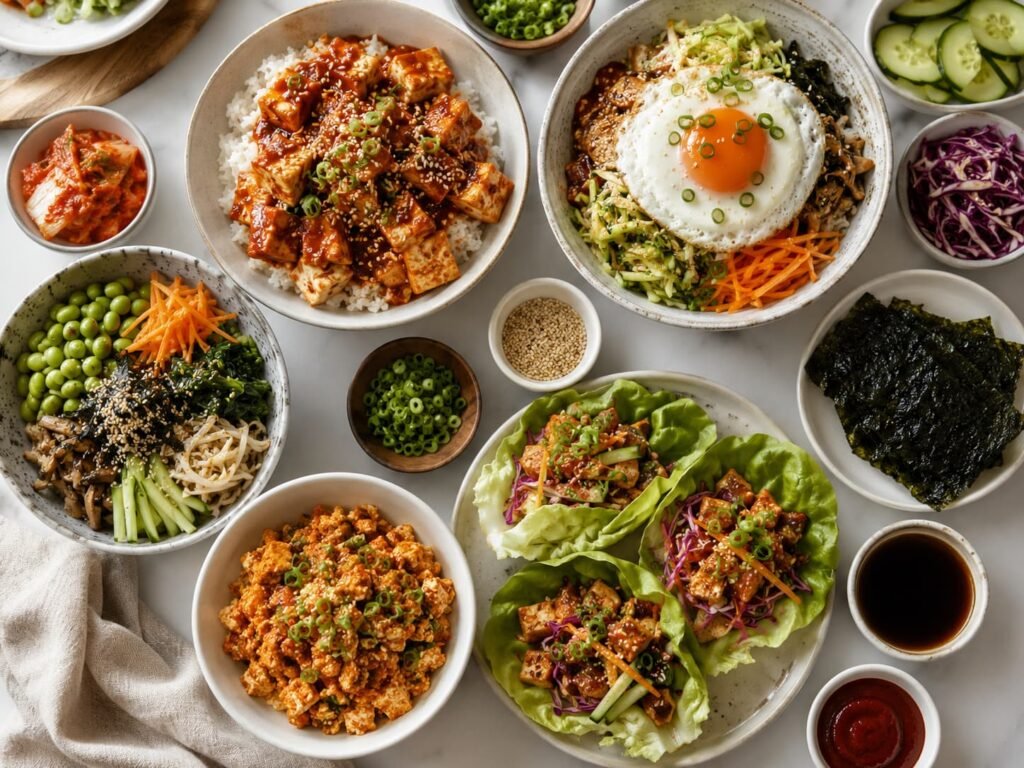
Korean vegetarian meals can be simple, filling, and full of flavor when they are built with the right protein sources. A bowl of rice and vegetables may taste fresh, but it may not keep you full for long on its own. That changes when you add tofu, eggs, edamame, beans, lentils, or soy-based ingredients with Korean flavors like gochujang, sesame oil, garlic, ginger, and soy sauce.
This guide focuses on high protein vegetarian recipes that are realistic for everyday home cooking. These are easy Korean-inspired meals you can make for lunch, dinner, or weekly meal prep using simple ingredients like tofu, eggs, beans, rice, noodles, cabbage, cucumber, mushrooms, seaweed, and vegetarian kimchi.
If you already enjoy simple vegetarian recipes, this is a flavorful way to make them more filling. The goal is to build Korean vegetarian meals that give you protein, texture, warmth, crunch, and balance in one bowl or plate.
Quick answer: High protein Korean vegetarian meals are usually made with tofu, eggs, edamame, beans, lentils, chickpeas, or soy-based ingredients, then paired with Korean flavors like gochujang, soy sauce, sesame oil, garlic, ginger, kimchi, rice, noodles, cabbage, cucumber, mushrooms, and seaweed.
What Makes Korean Vegetarian Meals High in Protein?
Korean vegetarian meals become more satisfying when they include one or two strong protein sources instead of relying only on vegetables, rice, or noodles. Rice, cabbage, cucumber, mushrooms, seaweed, and kimchi-style vegetables bring comfort and flavor, but the meal becomes more filling when tofu, eggs, beans, edamame, lentils, tempeh, or soybeans are added.
Tofu is one of the best ingredients for high protein Korean vegetarian meals because it takes on bold sauces very well. Firm tofu can be pan-seared with gochujang, soy sauce, sesame oil, garlic, and ginger until the edges turn golden. Soft tofu works better in warm stews and soups. Crumbled tofu can also be cooked with vegetarian kimchi, mushrooms, and scallions for a quick tofu scramble.
Eggs are another useful protein source if you eat them as part of a vegetarian diet. A Korean egg rice bowl with sesame oil, scallions, roasted seaweed, cucumber, and a little soy sauce can feel simple but still filling. Eggs also work well in omelets, skillet meals, bibimbap-style bowls, and soft tofu stews.
Beans make these meals more budget-friendly and better for meal prep. Black beans, chickpeas, lentils, and soybeans are not traditional in every Korean dish, so they should be used as Korean-inspired additions rather than presented as classic Korean ingredients. They still work well with gochujang, sesame oil, garlic, cabbage, cucumber, rice, and noodles. Chickpeas can be tossed in a spicy-sweet gochujang sauce, while lentils can add body to a kimchi-style stew.
Edamame is especially useful in vegetarian Korean food because it fits naturally into rice bowls, noodle bowls, and salad-style meals. It adds protein, color, and a fresh bite without making the dish feel heavy. Tempeh can also be used when you want a firmer texture, especially in stir-fries, lettuce wraps, or meal prep bowls.
Sesame seeds can support the protein in a meal, but they should not be treated as the main protein source. They are better used as a topping for crunch and nutty flavor. The main protein should still come from tofu, eggs, edamame, beans, lentils, tempeh, soybeans, or chickpeas.
| Protein Source | Best Use | Meal Idea |
| Tofu | Bowls, stir-fries, stews | Gochujang tofu bowl |
| Eggs | Rice bowls, omelets, stews | Korean egg rice bowl |
| Edamame | Bowls, salads, noodles | Edamame bibimbap |
| Black beans | Bowls and meal prep | Korean black bean tofu bowl |
| Chickpeas | Budget bowls | Gochujang chickpea bowl |
| Lentils | Stews and soups | Kimchi lentil stew |
A good high protein Korean vegetarian meal usually has three parts: a protein base, a flavorful sauce, and vegetables with texture. For example, tofu gives the meal protein, gochujang sauce gives it depth, and cucumber or cabbage adds freshness. When these parts are balanced, the meal feels complete instead of light or unfinished.
This is why Korean-inspired bowls work so well for high protein recipes. You can start with rice or noodles, add tofu or eggs, include beans or edamame, then finish with vegetables, sesame seeds, and sauce. It is flexible, affordable, and easy to adjust for lunch, dinner, or weekly meal prep.
For readers who want lighter meals, the same idea can also work for vegetarian meals for weight loss. The key is to keep the protein strong, use plenty of vegetables, and control the amount of rice, noodles, or sauce. A tofu bowl with cucumber, cabbage, mushrooms, and edamame can feel filling without needing a heavy portion of carbs.
Korean Ingredients That Make Vegetarian Meals Taste Better
The flavor in Korean vegetarian meals comes from a small group of ingredients that add spice, saltiness, sweetness, nuttiness, freshness, and depth. When these ingredients are balanced properly, even simple tofu, eggs, beans, rice, or noodles can taste rich and satisfying.
Gochujang is one of the most useful ingredients for Korean-inspired vegetarian cooking. It is a red chili paste with a spicy, savory, slightly sweet flavor. You can mix it with soy sauce, rice vinegar, garlic, ginger, and sesame oil to make a quick sauce for tofu, chickpeas, noodles, or rice bowls. It has a strong flavor, so it is better to start with a small amount and adjust according to your heat level.
Soy sauce adds saltiness and depth. It works especially well with tofu because tofu is naturally mild and needs seasoning. For a simple Korean-style sauce, soy sauce can be mixed with sesame oil, garlic, ginger, rice vinegar, and scallions. This kind of sauce can be used over tofu, eggs, mushrooms, cabbage, rice, or noodles.
Sesame oil gives Korean vegetarian dishes a warm, nutty finish. It is usually best added near the end instead of using it like a regular frying oil. A small drizzle over rice bowls, egg bowls, tofu stir-fries, cucumber salads, or noodle bowls can make the meal taste more complete.
Garlic and ginger are small ingredients, but they make a big difference. Garlic adds sharpness and depth, while ginger adds warmth. Together, they help mild vegetarian ingredients like tofu, beans, cabbage, mushrooms, and noodles taste more savory.
Gochugaru, or Korean red pepper flakes, adds heat and color. It can be used in stews, sauces, tofu scrambles, vegetable sides, and noodle bowls. It is helpful when you want spice without adding too much sauce.
Rice vinegar helps balance spicy and salty flavors. If a gochujang sauce tastes too heavy, a splash of rice vinegar can make it brighter. It works well in cucumber salads, cabbage slaws, noodle bowls, and quick dipping sauces.
Scallions and sesame seeds are simple finishing ingredients that add freshness and texture. Scallions bring a mild onion flavor, while sesame seeds add a light crunch. They are easy toppings for tofu bowls, egg rice bowls, noodle dishes, and bibimbap-style meals.
Kimchi is another important ingredient, but it needs a clear note for vegetarian cooking. Not all kimchi is vegetarian. Many traditional versions include fish sauce, shrimp paste, or other seafood-based ingredients. For these Korean vegetarian meals, use vegetarian kimchi or vegan kimchi, and always check the ingredient label if you are buying it from a store.
Cabbage, cucumber, mushrooms, and seaweed help make these meals feel fresh and balanced. Cabbage can be stir-fried, added to bowls, or used in slaw-style toppings. Cucumber adds crunch and coolness, especially with spicy gochujang tofu. Mushrooms give a meaty texture without using meat. Seaweed adds a salty, savory flavor that works beautifully with rice, eggs, and tofu.
Rice and noodles make these meals more filling. Rice is perfect for Korean vegetarian bowls, bibimbap-style meals, egg rice bowls, and tofu meal prep. Noodles are useful when you want something quicker and more comforting. If you are planning rice dishes, Korean-style tofu bowls, egg rice bowls, and edamame bibimbap are easy ideas to build from.
The best part is that these ingredients can be mixed and matched. You do not need every item at once. A simple bowl with rice, tofu, cucumber, scallions, sesame seeds, and gochujang sauce can still taste complete. Another bowl with noodles, mushrooms, egg, cabbage, and sesame oil can feel just as satisfying.
For busy days, these ingredients also work well in 15 minute vegetarian meals because the sauces are quick and many vegetables cook fast. If the rice is already cooked and the tofu is pressed or baked ahead of time, you can build a Korean-inspired vegetarian meal in very little time.
The main rule is balance. Use protein for fullness, vegetables for texture, sauce for flavor, and rice or noodles for comfort. When these parts work together, Korean vegetarian meals become more than just side dishes. They become complete meals that are easy to enjoy for lunch, dinner, and meal prep.
High Protein Korean Vegetarian Meal Ideas with Tofu, Eggs, and Beans
Once you understand the main protein sources and flavor base, it becomes much easier to build Korean vegetarian meals that feel complete. The best meals usually start with a filling base like rice, noodles, lettuce, or seaweed, then add a protein such as tofu, eggs, edamame, beans, chickpeas, or lentils. Fresh vegetables bring crunch, while sauces like gochujang, soy sauce, sesame oil, garlic, and ginger bring the Korean-inspired flavor.
These meals are built for busy days when you want something filling, flavorful, and easy to repeat without cooking a completely new dish every time. Some ideas are closer to classic Korean dishes, while others are Korean-inspired. That is important because ingredients like chickpeas, black beans, and lentils are not traditional in every Korean recipe, but they work well with Korean flavors and make vegetarian meals more protein-rich and practical.
Gochujang Tofu Rice Bowl
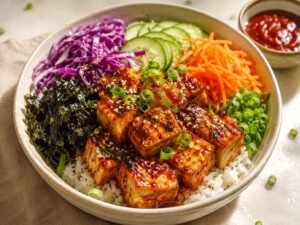
A gochujang tofu rice bowl is one of the easiest Korean vegetarian meals to make when you want something filling without using meat. Start with firm tofu, press out the extra moisture, then pan-sear it until the edges turn golden. Toss the tofu with a quick sauce made from gochujang, soy sauce, sesame oil, garlic, ginger, and a small splash of rice vinegar.
Serve the tofu over warm rice with cucumber, shredded carrots, scallions, and sesame seeds. The tofu gives the meal protein, the rice makes it satisfying, and the vegetables add the crunch that balances the spicy sauce. This is a strong option for readers looking for vegetarian tofu recipes that work for lunch, dinner, or meal prep.
For a better texture, keep the sauce separate until serving. This helps the tofu stay firmer and keeps the cucumber and carrots fresh.
Korean Egg Rice Bowl
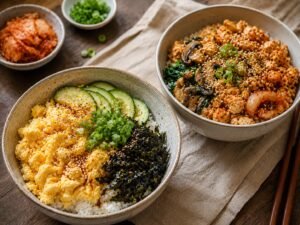
A Korean egg rice bowl is one of the fastest ovo-vegetarian Korean-inspired meals you can make at home. It uses cooked rice, eggs, soy sauce, sesame oil, scallions, cucumber, and optional roasted seaweed. The ingredients are simple, but the bowl tastes warm, savory, and comforting.
The eggs can be fried, softly scrambled, or cooked into a thin omelet and sliced over the rice. A small drizzle of sesame oil and soy sauce gives the bowl depth, while cucumber and scallions keep it fresh. Roasted seaweed adds a salty flavor that works especially well with rice and eggs.
This is a good meal for anyone searching for vegetarian egg recipes because it is quick, realistic, and easy to adjust. Add tofu or edamame if you want more protein, or add mushrooms and cabbage if you want more vegetables.
Kimchi Tofu Scramble
Kimchi tofu scramble is a flexible high protein vegetarian recipe that can work for breakfast, lunch, or dinner. Use crumbled firm tofu as the base, then cook it with vegetarian kimchi, spinach, mushrooms, garlic, soy sauce, and a little sesame oil. The tofu soaks up the kimchi flavor and becomes savory without needing a long cooking time.
The most important detail is to use vegetarian or vegan kimchi. Many traditional kimchi products include fish sauce or shrimp paste, so always check the label before using it in vegetarian Korean meals. If the kimchi is very spicy, balance it with extra spinach, mushrooms, or a small serving of rice.
This meal is useful when you want something warm and protein-rich but do not want to build a full rice bowl. It can also be served inside lettuce leaves, over noodles, or with a side of rice for a more filling plate.
Vegetarian Bibimbap with Tofu and Eggs
Vegetarian bibimbap with tofu and eggs is one of the best Korean vegetarian dishes for people who like variety in one bowl. It usually starts with rice, then adds sautéed spinach, carrots, mushrooms, bean sprouts, tofu, egg, and gochujang sauce. Each topping brings a different texture, which makes the bowl feel complete.
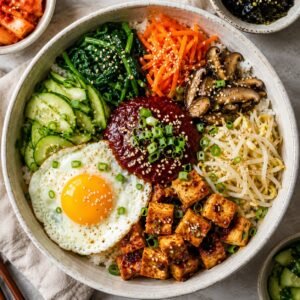
Tofu adds protein and absorbs the sauce well, while the egg makes the bowl richer and more satisfying. Mushrooms bring a meaty texture without meat, and bean sprouts add freshness and crunch. The gochujang sauce ties everything together with heat, sweetness, and depth.
Bibimbap is also helpful for meal prep because most toppings can be cooked ahead. Store the rice, tofu, vegetables, and sauce separately, then build the bowl when you are ready to eat. For more bowl-style ideas, readers can explore other rice dishes that use simple grains as a base.
Soft Tofu and Bean Stew
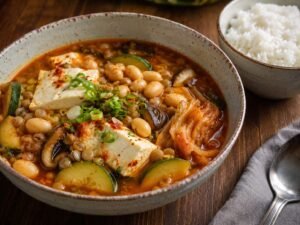
Soft tofu and bean stew is a warm dinner idea for days when you want comfort food that still feels protein-focused. Use soft tofu with white beans or soybeans, mushrooms, zucchini, garlic, ginger, gochugaru, and vegetable broth. The tofu gives the stew a silky texture, while the beans add body and make the meal more filling.
This recipe idea is Korean-inspired because it uses soft tofu, gochugaru, garlic, ginger, and broth, while the beans add a practical vegetarian protein boost. White beans work well because they become creamy, while soybeans give a firmer bite.
Serve the stew with rice for a full dinner, or keep the rice portion smaller if you want a lighter bowl. This is a good option for readers looking for high protein vegetarian dinner recipes that are warm, simple, and not too heavy.
Korean Black Bean Tofu Bowl
A Korean black bean tofu bowl is a good way to use beans in a Korean-inspired meal without calling it a traditional Korean dish. Black beans are filling, affordable, and easy to prep ahead. Tofu adds extra protein and a softer texture, so the bowl feels more complete than a simple rice and vegetable meal.
Build the bowl with rice, tofu, black beans, shredded cabbage, cucumber, scallions, sesame seeds, and a sesame gochujang sauce. The cabbage and cucumber keep the bowl fresh, while the sauce brings enough flavor to connect the tofu and beans.
This is useful for high protein vegetarian meal prep because tofu and beans hold well in the fridge. Store the rice, tofu or beans, fresh vegetables, and sauce in separate containers. This keeps the vegetables crisp and stops the rice from becoming too wet.
Gochujang Chickpea Bowl
A gochujang chickpea bowl is budget-friendly, filling, and easy to make in larger portions. Chickpeas are not a classic Korean ingredient, but their mild flavor works well with spicy, sweet, and savory gochujang sauce. They also add protein and fiber, which helps the bowl feel more satisfying.
Cook the chickpeas with gochujang, soy sauce, garlic, sesame oil, and a splash of rice vinegar. Serve them over rice with cucumber, carrots, cabbage, scallions, and sesame seeds. The chickpeas bring body, while the vegetables add freshness and crunch.
This is one of the best vegetarian meal prep ideas for affordable lunches. It also fits well with budget meals because chickpeas, rice, cabbage, and carrots are simple ingredients that can stretch across several meals.
Edamame Bibimbap Bowl
An edamame bibimbap bowl is a fresh way to add plant-based protein to Korean vegetarian meals. Edamame works well in rice bowls because it adds protein without making the meal heavy. It also pairs naturally with mushrooms, spinach, carrots, bean sprouts, cucumber, rice, and gochujang.
The best way to build this bowl is to keep the vegetables lightly cooked or crisp. Mushrooms can be sautéed with soy sauce and garlic, spinach can be quickly wilted, and cucumber can stay raw for crunch. Add edamame and rice, then finish with gochujang sauce and sesame seeds.
This bowl works well for lunch because it feels filling but still fresh. If you want more protein, add tofu. If you eat eggs, a fried or soft scrambled egg also works well on top.
Korean Tofu Lettuce Wraps
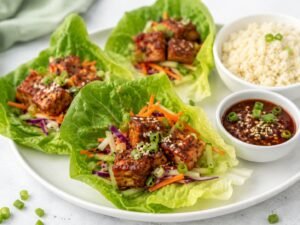
Korean tofu lettuce wraps are a lighter option when you want the flavor of a rice bowl without the rice. Use crispy tofu, shredded cabbage, cucumber, carrots, scallions, sesame seeds, and gochujang sauce, then spoon everything into large lettuce leaves.
The tofu should be cooked until firm and golden so it holds its texture inside the wrap. Cabbage and carrots add crunch, cucumber cools the spicy sauce, and scallions bring freshness. The result is light but still satisfying because tofu is the main protein.
This is a useful idea for readers looking for low carb vegetarian recipes. It also works well as a quick dinner or party-style meal because everyone can build their own wraps at the table.
Gochujang Noodles with Tofu and Egg
Gochujang noodles with tofu and egg are filling, flavorful, and easy to balance with extra vegetables. Use noodles, tofu, egg, cabbage, mushrooms, carrots, sesame oil, and a gochujang-based sauce. The noodles bring comfort, the tofu and egg add protein, and the vegetables keep the dish from feeling too heavy.
The sauce should be flavorful but not overpowering. Mix gochujang with soy sauce, rice vinegar, garlic, ginger, sesame oil, and a little water to loosen it. Toss the noodles with the sauce, then add cooked tofu, vegetables, and egg.
This is a strong option for vegetarian lunch recipes because it reheats well when the sauce is stored separately. It also fits readers who want Korean vegetarian recipes that feel more filling than a salad but still include plenty of vegetables.
Korean Bean Sprout Tofu Bowl
A Korean bean sprout tofu bowl is simple, fresh, and easy to build with basic ingredients. Bean sprouts add crunch and a light Korean-style freshness that works well with tofu, rice, spinach, garlic, sesame oil, and soy sauce.
The tofu can be pan-seared or baked, depending on how much time you have. Bean sprouts should be cooked briefly so they stay crisp. Spinach adds color and softness, while sesame oil and soy sauce give the bowl a savory finish.
This meal works best when the textures are balanced. Soft rice, firm tofu, crisp bean sprouts, and tender spinach make the bowl more interesting without needing too many ingredients.
Tofu Kimbap with Egg and Vegetables
Tofu kimbap with egg and vegetables is a practical vegetarian lunch idea that works well for lunch boxes, meal prep, or picnic-style meals. It uses rice, seaweed sheets, tofu strips, egg strips, cucumber, carrot, spinach, and sesame oil. The ingredients are simple, but the rolled shape makes the meal easy to pack and eat.
The tofu should be cooked in strips so it holds its shape inside the roll. Eggs can be cooked into a thin omelet and sliced into long pieces. Cucumber and carrot add crunch, while spinach gives the kimbap a soft, savory layer.
Kimbap is especially useful because it does not need to be served hot. If you are making it ahead, let the rice cool slightly before rolling and avoid overfilling the seaweed sheet. This keeps the rolls neat and easier to slice.
After choosing your favorite bowls, wraps, noodles, or kimbap, the next step is learning how to prep the protein, vegetables, rice, and sauces so these meals stay fresh through the week.
Kimchi Lentil Stew
Kimchi lentil stew is best treated as a Korean-inspired comfort stew, not a classic Korean recipe. It works well when you want something warm, filling, and high in protein without using meat. Lentils add body to the broth, tofu gives the stew a soft texture, and vegetarian kimchi brings the sharp, spicy flavor that makes the bowl taste deeper.
Use lentils, vegetarian kimchi, tofu, mushrooms, scallions, garlic, and vegetable broth. Let the lentils cook until tender before adding the tofu near the end. This helps the tofu stay in larger pieces instead of breaking down too much. Mushrooms make the broth taste more savory, while scallions add freshness right before serving.
This is a strong choice for readers looking for high protein vegetarian dinner recipes because it feels like comfort food but still uses simple, balanced ingredients. Serve it with rice for a fuller dinner, or keep it lighter with extra mushrooms, cabbage, and broth.
Korean Tofu Salad Bowl
A Korean tofu salad bowl is a fresh way to enjoy Korean vegetarian meals while keeping the protein strong. Instead of using rice or noodles as the base, this bowl starts with greens, cucumber, carrots, cabbage, edamame, tofu, sesame seeds, and a soy-ginger dressing.
The tofu can be baked, pan-seared, or air-fried until firm. This helps it hold its shape over the salad and stops the bowl from feeling too soft. Edamame adds more plant-based protein, while cabbage and cucumber bring the crunch that makes the bowl feel fresh. A simple soy-ginger dressing with soy sauce, rice vinegar, sesame oil, ginger, garlic, and a little gochujang gives the salad enough flavor without making it heavy.
This meal works well for lunch because it is light but still filling. If you enjoy protein-rich salad bowls, you can also explore more high protein salad recipes for similar meal ideas.
Korean Egg and Tofu Skillet
A Korean egg and tofu skillet is a quick meal for days when you want something warm, savory, and easy to cook in one pan. It uses tofu slices, eggs, mushrooms, scallions, soy sauce, gochugaru, garlic, and sesame oil. The tofu gives the skillet structure, while the eggs make it richer and more satisfying.
Start by cooking the mushrooms until they release their moisture and turn lightly browned. Add tofu slices with soy sauce, garlic, and a small pinch of gochugaru. Once the tofu is warm, crack in the eggs or pour in lightly beaten eggs and cook until just set. Finish with scallions and a small drizzle of sesame oil.
This can be served with rice for a fuller dinner or with cauliflower rice if you want a lighter, lower-carb plate. It is also a helpful option for readers who want vegetarian egg recipes that feel more complete than a basic omelet.
Gochujang White Bean Bowl
A gochujang white bean bowl is creamy, filling, and budget-friendly. White beans are not a classic Korean ingredient, but their mild flavor works well with Korean-style sauces. They soak up gochujang, sesame oil, garlic, soy sauce, and rice vinegar without overpowering the bowl.
Build the bowl with rice, tofu, white beans, cucumber, shredded cabbage, scallions, sesame seeds, and a light sesame gochujang dressing. The white beans make the bowl creamy, tofu adds extra protein, and cabbage gives it a fresh crunch. This makes the meal feel hearty without needing expensive ingredients.
This is a useful option for high protein vegetarian meal prep because tofu and beans hold their texture well in the fridge. Keep the cucumber, cabbage, and sauce separate until serving so the bowl stays crisp and fresh.
Vegetarian Mapo Tofu Korean-Inspired Style
Mapo tofu is originally a Chinese dish, so it should not be presented as a traditional Korean recipe. Still, a Korean-inspired vegetarian version can work well when you use tofu, mushrooms, beans, garlic, ginger, soy sauce, gochujang, and a little gochugaru for heat.
The key is to keep the tofu soft and the sauce rich. Mushrooms help replace the meaty texture often found in classic mapo tofu, while beans add more protein and make the meal more filling. Gochujang gives the sauce a spicy-sweet depth, and gochugaru adds color and warmth.
This is a useful idea for readers searching for a mapo tofu recipe vegetarian style, especially if they want a spicy tofu dinner without meat. Serve it over rice for a filling meal, or add extra mushrooms and cabbage if you want the bowl to feel lighter.
Korean Mushroom Tofu Stir-Fry
Korean mushroom tofu stir-fry is simple, quick, and full of savory flavor. It uses firm tofu, mushrooms, cabbage, soy sauce, garlic, ginger, sesame oil, and optional gochugaru. Mushrooms are important here because they add a meaty texture without using meat, while tofu keeps the meal protein-focused.
For the best texture, cook the tofu first until golden, then remove it from the pan. Cook the mushrooms and cabbage next so they brown slightly instead of steaming too much. Add garlic, ginger, soy sauce, and a small amount of sesame oil near the end, then return the tofu to the pan.
This stir-fry works well with rice, noodles, or lettuce wraps. It is also a good weeknight meal because the ingredients cook quickly and the sauce stays simple.
Korean Breakfast Bowl with Eggs and Tofu
A Korean breakfast bowl with eggs and tofu is filling enough for the morning but also works well as breakfast-for-dinner. Use scrambled eggs, tofu, rice, spinach, cucumber, scallions, and a sesame soy sauce. The eggs make the bowl soft and rich, while tofu adds extra protein and helps the meal feel more complete.
Cook the tofu until lightly golden, then scramble the eggs separately or in the same pan. Serve them over rice with spinach and cucumber. A simple sauce made from soy sauce, sesame oil, garlic, and scallions gives the bowl a Korean-style flavor without making it too heavy.
This is a practical option for busy days because cooked rice and tofu can be prepared ahead. When you are ready to eat, you only need to cook the eggs and assemble the bowl.
Korean Meal Prep Protein Boxes
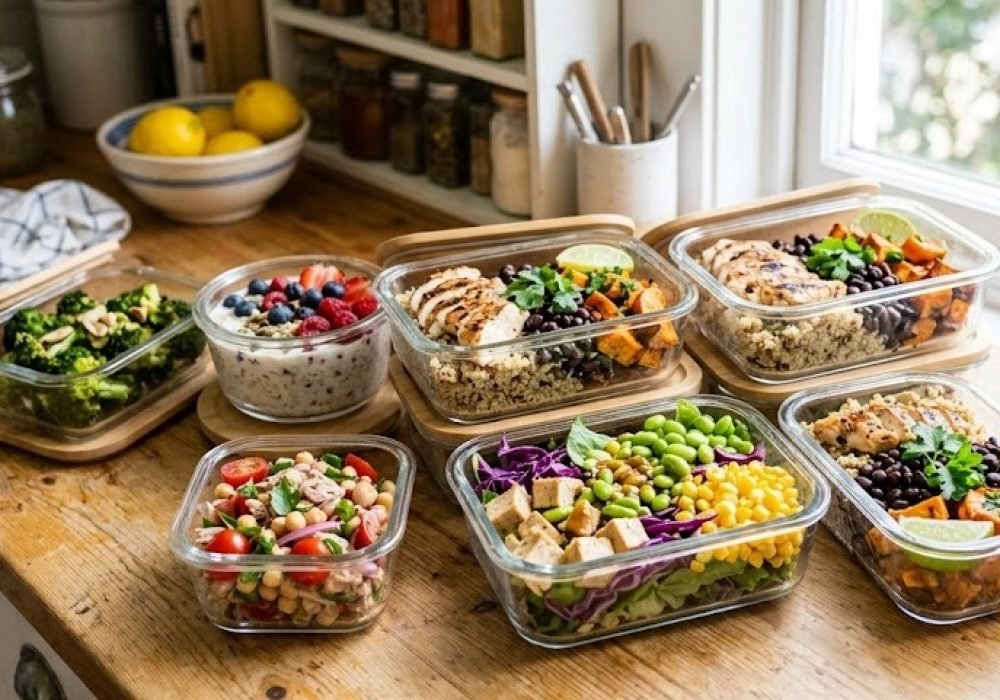
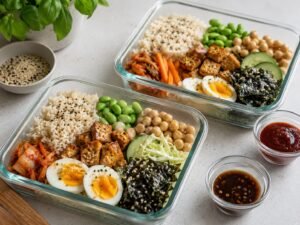
Korean meal prep protein boxes are useful when you want several lunches ready for the week without eating the exact same meal every day. Start with cooked rice, tofu, boiled eggs, edamame, cucumber, cabbage, carrots, and small sauce cups. The sauce can be gochujang-based, soy-ginger, or sesame garlic.
The best way to keep these boxes fresh is to separate the wet and dry ingredients. Rice, tofu, eggs, and edamame can go in the main container. Cucumber, cabbage, and carrots should stay crisp, so avoid adding sauce too early. Keep the sauce in a small cup and mix everything right before eating.
This idea fits well for vegetarian meal prep because it gives you protein, vegetables, and a filling base in one container. It also works for readers looking for vegetarian meal prep recipes that are easy to repeat with small changes. One day you can use tofu and egg, another day you can add edamame and chickpeas, and another day you can use mushrooms and extra cabbage for a lighter box.
For a more filling protein box, use two protein sources together, such as tofu with egg, tofu with edamame, or beans with boiled eggs. Once these meal ideas are clear, it becomes easier to plan weekly combinations with tofu, eggs, beans, edamame, rice, vegetables, and sauces without repeating the same lunch every day.
Best Protein Combinations for Korean Vegetarian Meals
The easiest way to make Korean vegetarian meals more filling is to combine two protein sources instead of depending on just one. Tofu works well on its own, but tofu with egg, edamame, lentils, beans, or chickpeas gives the meal more balance. This is especially helpful for lunch bowls, dinner plates, and meal prep boxes that need to keep you full for several hours.
These combinations also make the food more enjoyable to eat. Tofu can be soft or crisp, eggs add richness, beans make the bowl heartier, and edamame adds a fresh bite. When you pair these proteins with rice, noodles, cabbage, cucumber, mushrooms, gochujang, soy sauce, and sesame oil, the meal feels complete without needing meat.
| Combination | Best Meal | Why It Works |
| Tofu + egg | Rice bowls | Complete and filling |
| Tofu + edamame | Plant-based bowl | Higher protein and fiber |
| Egg + beans | Budget dinner | Simple and affordable |
| Tofu + lentils | Stew | Good for meal prep |
| Chickpeas + tofu | Bowl | Filling and easy |
| Beans + rice + egg | Balanced meal | Good for lunch or dinner |
For the most filling bowl, choose one main protein and one supporting protein. For example, tofu can be the main protein, while egg, edamame, beans, or lentils can make the meal more satisfying. This keeps the meal balanced without making it complicated.
Tofu and egg are one of the easiest combinations for Korean-style rice bowls. The tofu absorbs sauces like gochujang, soy sauce, garlic, ginger, and sesame oil, while the egg makes the bowl taste richer. This works well for quick dinners because both ingredients cook fast and pair easily with rice, cucumber, scallions, mushrooms, or seaweed.
Tofu and edamame work better when you want a plant-based bowl with more texture. Edamame adds a firmer bite and fresh taste, while tofu gives the meal a stronger protein base. This combination fits well in bibimbap-style bowls, salad bowls, and meal prep containers with cabbage, carrots, cucumber, and soy-ginger dressing.
Eggs and beans are a good choice for budget-friendly vegetarian meals. This combination is not traditional in every Korean dish, but it works well in Korean-inspired bowls when paired with gochujang, sesame oil, garlic, scallions, and rice. Black beans, white beans, or chickpeas can make a simple egg bowl more filling without making the recipe expensive.
Tofu and lentils are best for stews and warm dinner bowls. Lentils thicken the broth and add body, while tofu gives a softer texture. This combination works especially well with vegetarian kimchi, mushrooms, garlic, ginger, gochugaru, and vegetable broth. It is a practical option for high protein vegetarian dinner recipes because it feels comforting but still balanced.
Chickpeas and tofu are useful for simple meal prep bowls. Chickpeas hold their shape well in the fridge, and tofu can be baked or pan-seared ahead of time. Add rice, cabbage, cucumber, carrots, sesame seeds, and gochujang sauce, and you have a protein-rich lunch that is easy to repeat during the week.
Beans, rice, and egg make a balanced meal when you want something simple and satisfying. Rice gives comfort, beans add body, and egg brings richness. Add a Korean-style sauce, crunchy vegetables, and scallions, and the bowl becomes much more flavorful than a plain rice-and-bean meal.
The best combination depends on the type of meal you want. For a quick bowl, tofu and egg are easiest. For a plant-based lunch, tofu and edamame work well. For meal prep, tofu with lentils, beans, or chickpeas is more practical because these ingredients hold up better in the fridge.
How to Meal Prep Korean Vegetarian Meals
Korean vegetarian meals are easy to meal prep because many of the parts can be made ahead and mixed in different ways. You do not need to cook a new recipe every day. A few prepared ingredients like rice, tofu, boiled eggs, sliced vegetables, vegetarian kimchi, and sauces can turn into several different lunches or dinners.
Start with the base. Cook rice or noodles ahead of time and let them cool before storing. Rice works well for bibimbap-style bowls, tofu rice bowls, egg bowls, and protein boxes. Noodles are better for quick lunches, but they should be lightly tossed with a small amount of sesame oil so they do not stick together. If you are not eating them the same day, keep the sauce separate.
Tofu should be prepared before the week starts if you want faster meals. Press firm tofu to remove extra moisture, then bake or pan-sear it until the edges are golden. This gives the tofu a better texture and helps it hold up in bowls, wraps, salads, and stir-fries. Soft tofu is better saved for stews because it can break apart if stored with too many other ingredients.
Eggs are another easy meal prep ingredient. Boiled eggs can be kept for protein boxes, rice bowls, and quick lunches. You can also cook thin egg strips for kimbap or keep eggs uncooked and scramble them fresh when you are ready to eat. Freshly cooked eggs usually taste better in warm bowls, while boiled eggs are more practical for packed lunches.
Vegetables should be washed, dried, and sliced before storing. Cucumbers, carrots, cabbage, and scallions are especially useful because they add crunch and freshness to spicy tofu, chickpea bowls, egg rice bowls, and noodle meals. Keep watery vegetables like cucumber separate from rice and tofu so the bowl does not become soggy.
Sauces should always be stored separately. Gochujang sauce, soy-ginger dressing, sesame garlic sauce, and rice vinegar-based dressings can make the food taste fresh even after a few days in the fridge. If you add sauce too early, the vegetables can soften and the rice may become wet. Small sauce cups are helpful for meal prep boxes.
Vegetarian kimchi is useful because it adds strong flavor with very little effort. The important thing is to check the label, since many kimchi products include fish sauce or shrimp paste. For this article, vegetarian or vegan kimchi is the safest choice. It can be served beside rice bowls, mixed into tofu scrambles, or added to stews for a sharper flavor.
Crunchy toppings should also be kept separate until serving. Sesame seeds, roasted seaweed, scallions, and fresh cabbage taste better when added at the end. This small step makes meal prep bowls feel fresher and less like leftovers.
A simple weekly prep plan can include cooked rice, baked tofu, boiled eggs, edamame, sliced cucumbers, shredded cabbage, carrots, vegetarian kimchi, and two sauces. From those ingredients, you can build a gochujang tofu bowl one day, a Korean egg rice bowl the next day, and a tofu salad bowl or meal prep protein box later in the week.
Most cooked rice, baked tofu, beans, edamame, and sauces work best when used within three to four days. Let cooked rice cool before storing, and keep cooked ingredients refrigerated in sealed containers. Add fresh cucumber, scallions, seaweed, and sesame seeds right before serving so the meal keeps its texture.
These vegetarian meal prep ideas work best when you think in parts instead of fixed recipes. Prepare the protein, base, vegetables, and sauce separately, then build bowls fresh before eating. This keeps the meals flexible, reduces waste, and makes it easier to repeat Korean vegetarian meals without getting bored.
For readers looking for vegetarian meal prep recipes, the most useful approach is to prep enough ingredients for three or four days at a time. Tofu, rice, beans, edamame, cabbage, carrots, and sauces usually hold up well, while fresh cucumber, scallions, and seaweed are best added right before serving. This same method also works well for busy readers who like quick 30 minute meals during the week.
From here, you can adjust the same Korean vegetarian meals for vegan, low-carb, lighter, or budget-friendly eating by changing the base, protein, vegetables, and sauce.
Low-Carb Swaps for Korean Vegetarian Meals
Korean vegetarian meals often use rice or noodles, but you can still enjoy the same flavors with lighter swaps. The goal is not to remove comfort from the meal. The better approach is to keep the protein, vegetables, and sauce strong while using a smaller portion of higher-carb ingredients.
Cauliflower rice is the easiest swap for white rice. It works well with gochujang tofu, egg bowls, mushroom stir-fries, and tofu salad bowls because it absorbs flavor from soy sauce, sesame oil, garlic, and ginger. Cook cauliflower rice quickly in an open pan so extra moisture can escape. If it steams for too long, it can turn watery. If you do not want to fully replace rice, use half rice and half cauliflower rice. This keeps the bowl satisfying while making it lighter.
Lettuce wraps are another useful option. Instead of building every meal as a rice bowl, spoon crispy tofu, cucumber, cabbage, carrots, scallions, and gochujang sauce into lettuce leaves. This works best when the tofu is cooked until firm because soft tofu can make the wraps messy. Lettuce wraps are a good fit for readers looking for low carb vegetarian recipes that still feel fresh and flavorful.
Extra tofu and eggs can also make a meal more filling when you reduce rice or noodles. For example, a Korean egg and tofu skillet can be served with cauliflower rice, sautéed cabbage, or mushrooms instead of a full bowl of rice. If you eat eggs, they add richness and help the meal feel complete. If you prefer plant-based meals, use extra tofu or edamame instead.
Vegetables make the biggest difference in low-carb Korean vegetarian meals. Mushrooms add a meaty texture, cucumber brings crunch, spinach adds softness, zucchini cooks quickly, and cabbage gives the bowl more volume. These ingredients keep the meal interesting without making it feel heavy.
Beans can still be used, but the portion should be smaller if you are keeping carbs lower. Instead of making beans the main base, use them as a supporting protein with tofu, eggs, edamame, or extra vegetables. This works well for readers who want lighter meals but still enjoy the comfort of beans and Korean-style sauces.
If your goal is lighter eating, many of these ideas can also fit naturally with vegetarian meals for weight loss. Keep the protein strong, use plenty of vegetables, and treat rice, noodles, and beans as supporting ingredients instead of the largest part of the bowl.
| Regular Ingredient | Lower-Carb Swap | Best Use |
| White rice | Cauliflower rice | Tofu bowls, egg bowls, stir-fries |
| Rice bowls | Lettuce wraps | Crispy tofu, cabbage, cucumber |
| Large bean portions | Smaller beans with tofu or egg | Meal prep bowls |
| Noodles | Zucchini, cabbage, or mushrooms | Stir-fries and skillet meals |
| Rice-heavy bowls | Extra tofu, eggs, and vegetables | Dinner bowls |
Vegan Swaps for Korean Vegetarian Meals
Many Korean vegetarian meals in this guide use eggs, but they can still be adjusted for vegan cooking. The easiest swap is to replace eggs with extra tofu. Firm tofu can be pan-seared for rice bowls, crumbled for scrambles, or baked for meal prep boxes. Soft tofu works better in stews, soups, and saucy bowls.
When you remove eggs, add extra tofu, edamame, beans, or chickpeas so the meal still has enough protein to feel satisfying. This matters because eggs often add both richness and structure. Without them, the bowl can feel lighter unless you replace that protein with another filling ingredient.
Edamame is one of the best vegan swaps because it adds plant-based protein without changing the whole meal. It works well in bibimbap-style bowls, tofu salad bowls, noodle bowls, and meal prep boxes. If a recipe uses both tofu and egg, you can use tofu and edamame instead to keep the meal filling.
Kimchi needs extra attention in vegan Korean meals. Many store-bought kimchi products include fish sauce, shrimp paste, or seafood-based seasoning. Use vegan kimchi or vegetarian kimchi, and check the label before adding it to tofu scrambles, lentil stews, rice bowls, or noodle dishes.
Some sauces may also need small changes. If a sauce uses honey for sweetness, use maple syrup instead. You only need a small amount because gochujang already has a deep, bold flavor. Maple syrup works well in gochujang sauce, soy-ginger dressing, and sesame garlic sauce.
Gochujang labels should also be checked. Most gochujang is plant-based, but ingredients can vary by brand. Look for versions without seafood extracts or non-vegan additives if you want the meal fully vegan.
These swaps work especially well if you already enjoy simple vegetarian recipes and want to make them more plant-based. The same bowl can be adjusted in small ways: egg becomes tofu, honey becomes maple syrup, and regular kimchi becomes vegan kimchi.
Common Mistakes to Avoid
Even simple Korean vegetarian meals can fall flat if the balance is missing. Most problems come from using the wrong kimchi, skipping protein, adding too much sauce, or storing meal prep bowls in a way that makes them soggy.
Using Non-Vegetarian Kimchi
Kimchi adds great flavor, but many traditional versions include fish sauce, shrimp paste, or seafood-based seasoning. For vegetarian or vegan meals, choose a clearly labeled vegetarian kimchi or vegan kimchi. This is especially important in tofu scrambles, kimchi lentil stew, bibimbap bowls, and noodle dishes.
Adding Vegetables Without Enough Protein
Cabbage, cucumber, carrots, spinach, mushrooms, and rice taste good together, but they may not keep you full for long. A better meal includes tofu, eggs, edamame, beans, chickpeas, or lentils. This is the same reason many high protein recipes work well for lunch and dinner. They give the meal more staying power.
Using Too Much Sauce
Gochujang, soy sauce, sesame oil, and rice vinegar are flavorful, but they should support the meal, not cover everything. Start with a smaller amount of sauce, then add more after tasting. This keeps the vegetables fresh and stops the rice or noodles from becoming too wet.
Not Pressing Firm Tofu
Firm tofu should usually be pressed before cooking so it can brown better and hold its shape. If tofu is not pressed, it can stay watery and soft in stir-fries, bowls, and wraps. Pressing tofu also helps it absorb gochujang sauce, soy sauce, garlic, ginger, and sesame oil more evenly.
Overcooking Tofu
Overcooked tofu can become dry, especially if it is baked too long or cooked without enough sauce. For bowls and wraps, cook tofu until the edges are golden and firm. For stews, add soft tofu near the end so it stays tender instead of breaking apart too much.
Skipping Texture
Texture is easy to forget, but it makes a big difference. A bowl with only soft rice, soft tofu, and sauce can feel flat. Add cucumber, cabbage, carrots, bean sprouts, sesame seeds, scallions, or roasted seaweed for crunch. This small detail makes Korean vegetarian meals taste fresher and more complete.
Making Every Bowl Too Rice-Heavy
Rice is comforting and useful, but it should not be the only thing that makes the meal filling. Use rice as the base, then build the bowl with protein, vegetables, and sauce. If you want more variety, try lettuce wraps, tofu salad bowls, cauliflower rice, or noodle bowls. For more quick meal structure, readers can also explore 15 minute vegetarian meals and simple 30 minute meals.
Storing Sauces Too Early
For meal prep, the biggest mistake is storing everything together too early. Sauces, cucumber, scallions, seaweed, and sesame seeds are better added right before eating. If sauce sits on rice and vegetables for too long, the bowl can become soggy. Store the protein, base, vegetables, and sauce separately, then build the bowl fresh before serving.
The best Korean vegetarian meals are simple but balanced. Use enough protein, keep the vegetables crisp, choose the right sauce, and avoid making every meal the same rice bowl. These small fixes make the recipes easier to repeat through the week without getting bored.
FAQs About High Protein Korean Vegetarian Meals
Are Korean vegetarian meals high in protein?
Yes, Korean vegetarian meals can be high in protein when they include tofu, eggs, edamame, lentils, chickpeas, beans, tempeh, or other soy-based ingredients.
A simple rice bowl becomes much more filling when it has tofu, egg, vegetables, and gochujang sauce instead of only rice and vegetables. The best approach is to build the meal around protein first, then add rice, noodles, vegetables, and sauce for balance. Tofu bowls, Korean egg rice bowls, edamame bibimbap, kimchi tofu scramble, and lentil stews are all good examples of high protein vegetarian recipes with Korean-style flavor.
Is kimchi vegetarian?
Kimchi is not always vegetarian. Many traditional kimchi recipes use fish sauce, shrimp paste, or seafood-based seasoning.
For vegetarian Korean meals, use vegetarian kimchi or vegan kimchi and always check the ingredient label before buying. This is especially important if you are adding kimchi to tofu scrambles, rice bowls, noodle bowls, lentil stews, or bibimbap-style meals. If you are cooking fully vegan, choose kimchi that is clearly labeled vegan.
What protein goes well with Korean vegetarian meals?
Tofu, eggs, edamame, black beans, white beans, lentils, chickpeas, tempeh, soybeans, and bean sprouts all work well in Korean vegetarian meals.
Tofu and eggs are especially useful for quick rice bowls, skillets, and meal prep boxes because they cook fast and pair well with gochujang, soy sauce, sesame oil, garlic, and ginger. For plant-based meals, tofu with edamame is one of the easiest combinations. For budget-friendly meals, chickpeas, lentils, and beans can make the dish more filling without using expensive ingredients.
Can I meal prep Korean vegetarian meals?
Yes, Korean vegetarian meals are easy to meal prep when you store the parts separately.
Cook rice or noodles ahead, bake or pan-sear tofu, boil eggs, slice vegetables, and prepare sauces in small containers. This makes it easy to build fresh bowls during the week. For the best texture, keep sauces separate until serving. Cucumbers, scallions, roasted seaweed, sesame seeds, and cabbage also taste better when added at the end. Most cooked rice, baked tofu, beans, edamame, and sauces work best when used within three to four days.
Are Korean vegetarian meals good for weight loss?
Korean vegetarian meals can work well for lighter eating when they include enough protein, plenty of vegetables, and controlled portions of rice or noodles.
Tofu bowls, egg rice bowls, lettuce wraps, cauliflower rice bowls, and vegetable-heavy stews can all be good options when the meal is balanced. The main thing is to avoid making every bowl too rice-heavy. Keep tofu, eggs, edamame, beans, or lentils as the protein base, then add cucumber, cabbage, mushrooms, spinach, zucchini, or bean sprouts for volume and texture.
What can I use instead of eggs?
You can replace eggs with extra tofu, edamame, tempeh, chickpeas, lentils, or beans.
For a scramble-style texture, crumbled firm tofu works well with garlic, sesame oil, soy sauce, turmeric, mushrooms, spinach, and vegetarian kimchi. If a recipe uses egg for richness, add a little more sesame oil or use soft tofu for a creamier texture. If the egg is mainly there for protein, replace it with edamame, baked tofu, chickpeas, lentils, or tempeh so the meal still feels filling.
What are the easiest Korean vegetarian meals for beginners?
The easiest Korean vegetarian meals for beginners are gochujang tofu rice bowls, Korean egg rice bowls, kimchi tofu scramble, edamame bibimbap bowls, Korean tofu lettuce wraps, and gochujang chickpea bowls.
Start with one sauce, one protein, one base, and two or three vegetables. For example, rice, tofu, cucumber, carrots, scallions, sesame seeds, and gochujang sauce can make a simple bowl that tastes complete without much effort. Once you understand that basic structure, you can change the protein, sauce, or vegetables without learning a completely new recipe.
Conclusion
High protein Korean vegetarian meals work best when you build them around one main protein, one fresh vegetable layer, and one flavorful sauce. Tofu, eggs, edamame, beans, chickpeas, lentils, and tempeh can turn simple rice bowls, noodle bowls, stews, salads, and wraps into meals that feel filling and easy to repeat.
These meals do not need to be complicated. A good Korean-style vegetarian bowl can start with rice or noodles, then add tofu or eggs, fresh vegetables, vegetarian kimchi, and a simple sauce made with gochujang, soy sauce, sesame oil, garlic, and ginger. Readers who enjoy this type of cooking can also explore more high protein recipes for filling lunch and dinner ideas.
For meal prep, keep the parts separate. Store rice, tofu, beans, eggs, vegetables, kimchi, and sauces in different containers, then build each bowl fresh before eating. This keeps the texture better and makes the meals easier to repeat during the week.
If you want lighter options, use cauliflower rice, lettuce wraps, extra vegetables, and smaller portions of rice or beans. If you want vegan meals, replace eggs with extra tofu, edamame, chickpeas, lentils, or tempeh, and choose vegan kimchi.
Once you understand the protein, sauce, vegetable, and base combinations, Korean vegetarian meals become easy to adjust for lunch, dinner, meal prep, lighter eating, or simple weeknight cooking.