Baking fruit-based muffins with health-conscious ingredients requires more than a simple direct swap of traditional baking staples. When replacing refined white flours and heavy processed sugars, the structural mechanics of the batter fundamentally change. Formulating a healthier muffin that retains a soft crumb while balancing the tartness of citrus and sweet berries requires a strategic approach to hydration, leavening, and flavor extraction.
Essential Ingredient Categories for Healthy Muffins
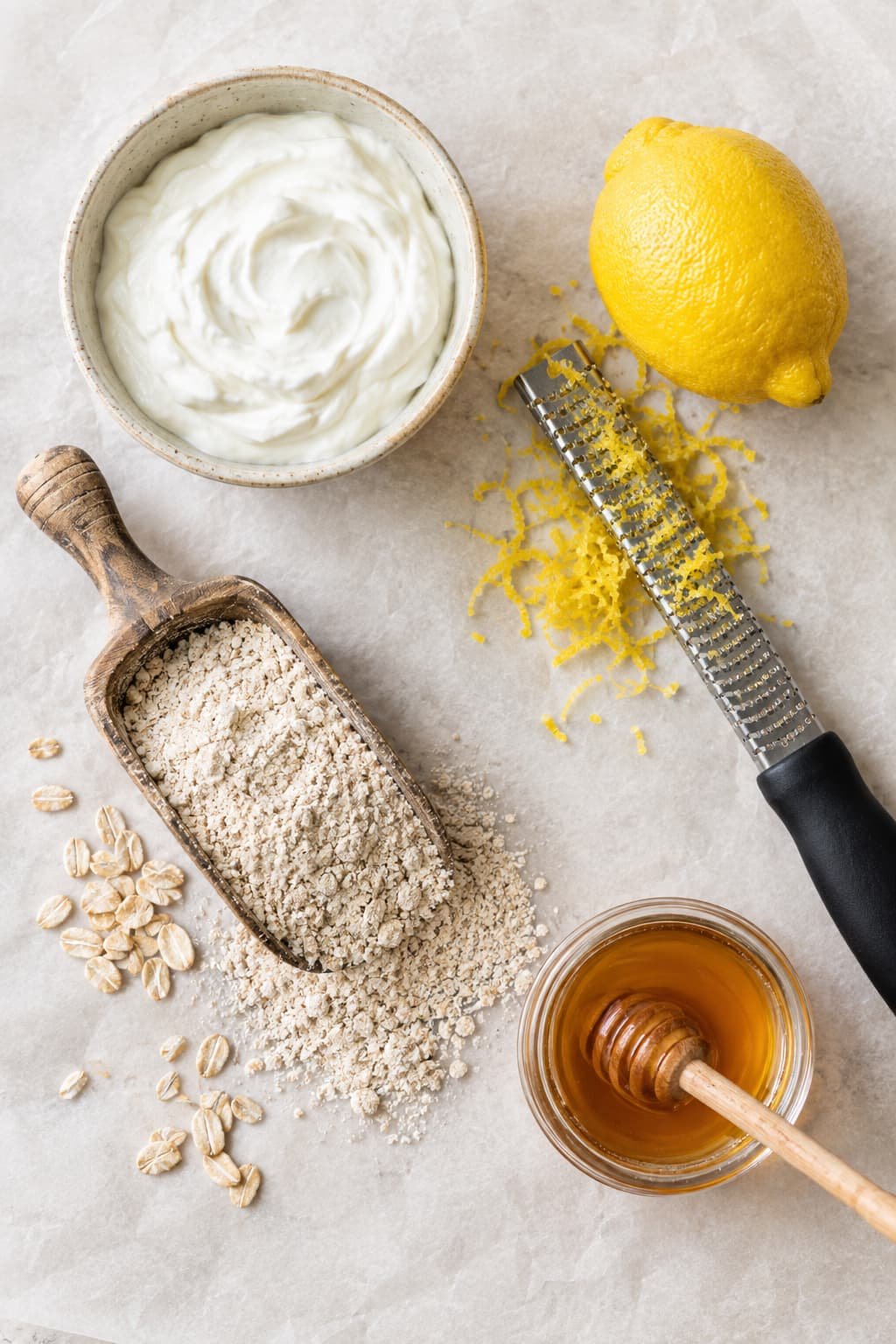
Every muffin relies on a precise balance between dry structural elements and wet tenderizers. When adjusting a formulation for better nutritional value, the alternative ingredients used fall into specific functional categories that dictate the final texture and taste.
How Alternative Flours Affect Moisture
Whole-grain flours, such as whole wheat pastry flour or oat flour, behave differently than refined all-purpose flour. The bran and fiber present in these alternatives absorb liquid at a significantly higher rate.
Because of this rapid absorption, batters utilizing whole grains typically require a higher ratio of wet ingredients. If the formulation does not compensate for this moisture draw, the resulting crumb often turns out dense, dry, or crumbly.
Tenderizers for Alternative Flours
To counteract the drying nature of alternative flours, specific moisture sources are commonly utilized to keep the muffin soft:
-
Acidic Dairy: Products such as plain Greek yogurt or buttermilk serve as highly effective tenderizers. The acidity in these ingredients helps break down the long gluten strands in the flour, yielding a softer texture.
-
Liquid Fats: Melted coconut oil or mild olive oil coat the flour proteins, which can inhibit excess gluten formation.
-
Fruit Purees: Unsweetened applesauce is frequently incorporated to trap water molecules within the batter, further enhancing moisture retention without relying entirely on heavy fats.
How to Maximize Lemon Flavor Without Adding Liquid
Natural liquid sweeteners, such as pure maple syrup or honey, contribute both sweetness and essential hydration to the batter. However, because they are liquids rather than dry solids, the overall moisture balance of the formulation must be adjusted to prevent a soggy interior.
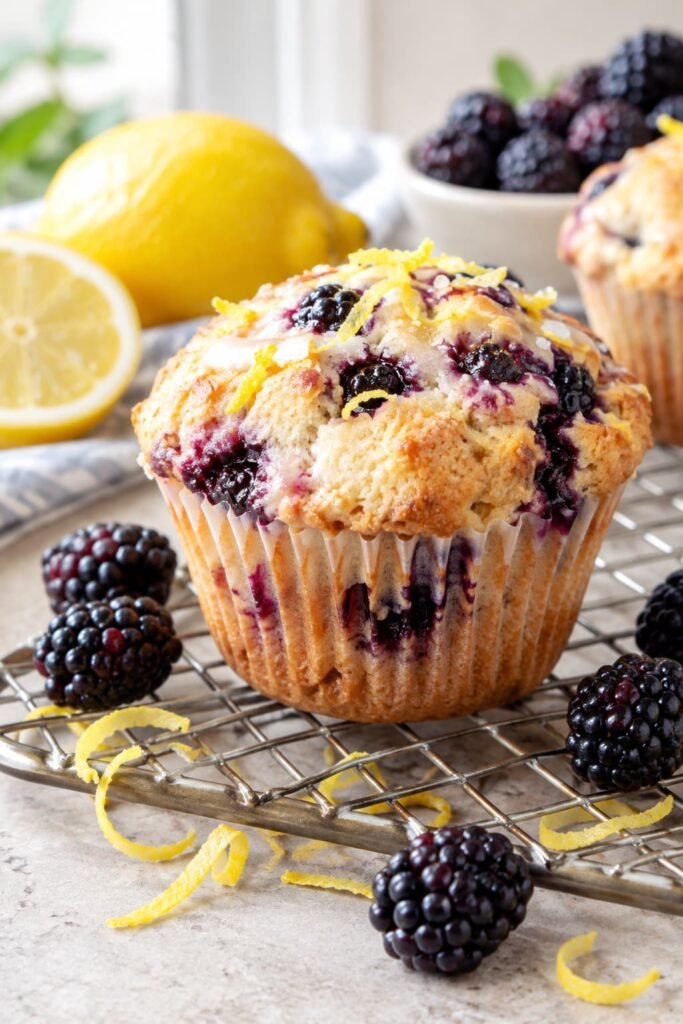
When attempting to create a strong citrus profile, relying solely on lemon juice often adds too much liquid before a prominent taste is achieved. Instead, standard baking practice relies heavily on fresh lemon zest. The zest contains highly concentrated essential oils that deliver a potent, bright flavor without altering the hydration matrix of the batter. Rubbing the zest directly into the chosen sweetener before mixing can help release these aromatic oils more evenly throughout the muffin.
Managing Blackberries in Muffin Batter
Baking with whole fruit introduces physical weight and extra moisture to the batter. Managing these variables is necessary to ensure an even distribution of fruit without compromising the structural integrity of the muffin.
How to Prevent Blackberries from Sinking
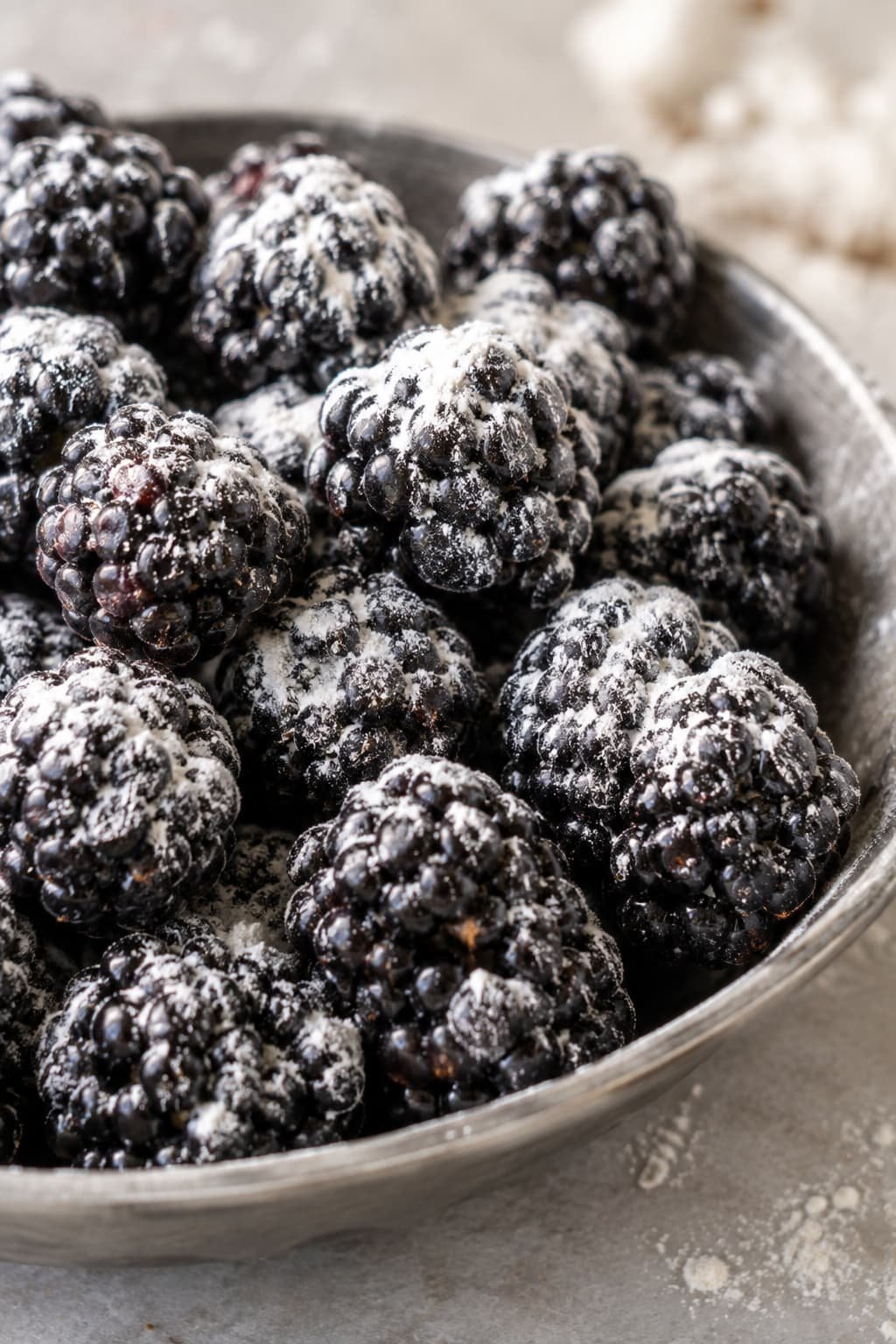
Because blackberries are dense and heavy, they naturally tend to sink to the bottom of the muffin tin before the batter can set. A commonly used technique to prevent this is tossing the berries in a small amount of dry flour before adding them to the bowl.
The light coating of flour creates physical friction between the exterior of the fruit and the surrounding batter. This friction helps to suspend the berries evenly throughout the muffin during the baking process, preventing a soggy bottom layer.
Comparison: Fresh vs. Frozen Berries
Both fresh and frozen fruit can be utilized, but they interact with the batter differently:
-
Fresh Berries: These maintain their structural integrity well during the mixing process and release less immediate moisture.
-
Frozen Berries: These hold excess water that releases as they thaw. This excess juice can easily cause the batter to discolor, often turning the surrounding crumb a grey or greenish hue. To mitigate this bleeding and limit unwanted liquid, frozen berries are typically added to the batter directly from the freezer without thawing. Note: This approach lowers the local temperature of the batter, which may slightly increase the overall time required in the oven.
Why Healthy Muffins Become Dry or Dense
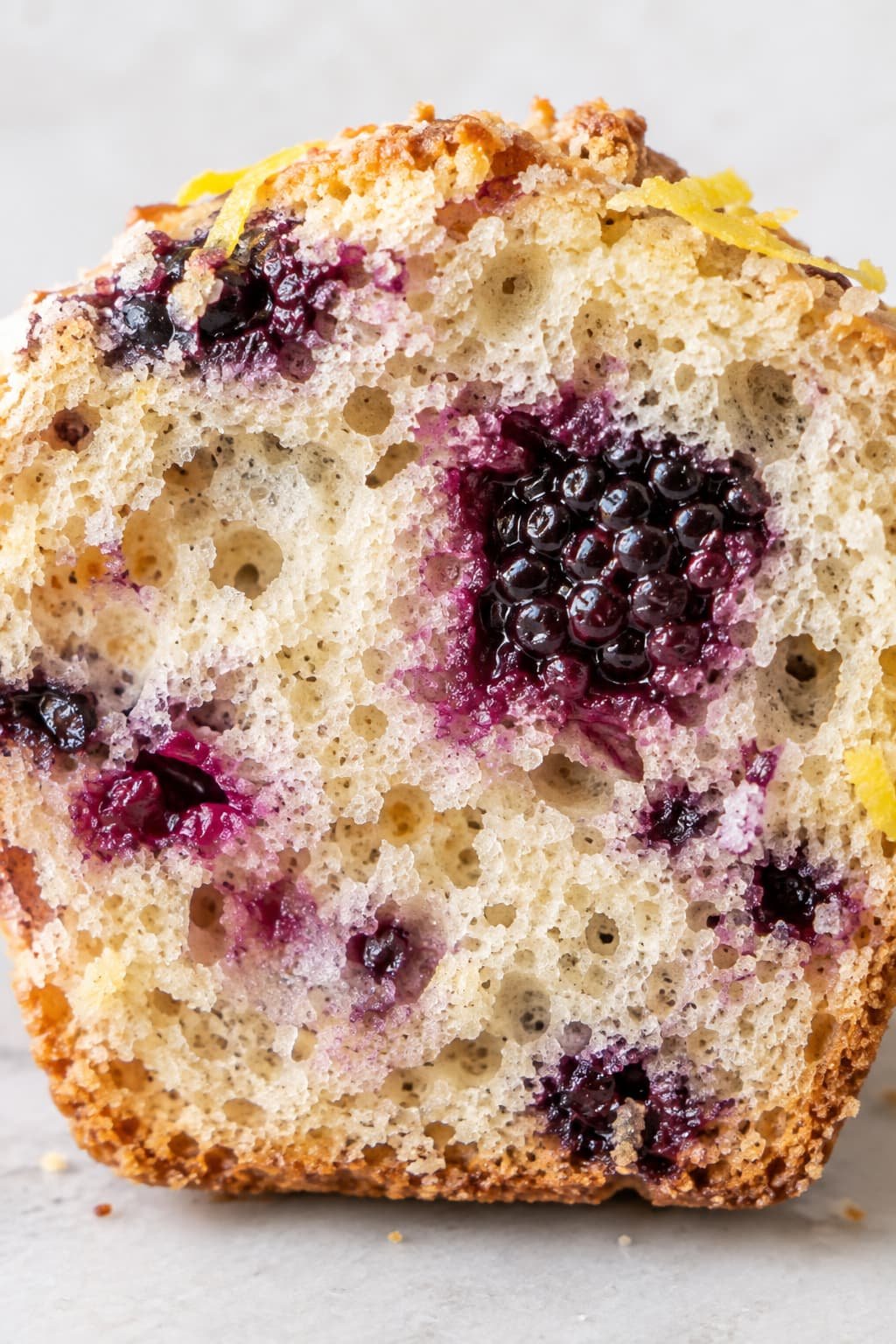
Modifying traditional formulations by reducing fat and sugar often leads to structural failures if the mechanics of the batter are not respected. Understanding how ingredients bind and rise can help prevent common texture issues.
What Happens When You Overmix Muffin Batter?
Aggressively stirring wet and dry ingredients together develops excess gluten, which typically results in a tough, dense, or rubbery muffin.
When wheat-based flours hydrate, their proteins bond to form an elastic network. While strong gluten is desirable for chewy breads, it is detrimental to delicate baked goods. For a soft, tender crumb, gentle folding is universally recommended. Standard baking methodology suggests mixing the batter only until the dry flour streaks just disappear, leaving the mixture intentionally slightly lumpy.
The Role of Leavening and Acid Reactions
Achieving a high, bakery-style rise depends on the chemical reaction between leavening agents and acidic ingredients.
When baking soda (an alkaline base) interacts with acidic components like lemon juice or Greek yogurt, it rapidly produces carbon dioxide gas. These gas bubbles expand in the heat of the oven, providing necessary lift to the heavy, fruit-laden batter. If a formulation lacks sufficient acid to activate the leavener, or if the leavening proportions are incorrect, the muffins may fail to rise properly, potentially resulting in a collapsed center or a bitter, soapy aftertaste.
How to Adapt a Muffin Recipe for Healthy Ingredients
Converting a standard muffin formulation into a health-conscious version requires careful adjustment rather than direct ingredient replacement.
-
Sweetener Substitutions: A 1:1 substitution of refined white sugar for liquid sweeteners (such as honey or maple syrup) introduces excess water into the batter. This imbalance can easily result in a soggy or dense interior.
-
Flour Substitutions: Swapping standard all-purpose flour directly for whole-grain or alternative flours alters the liquid absorption rate. Because whole grains draw in more moisture, they typically require additional wet ingredients to prevent a crumbly, dry texture.
When adapting recipes, the overall liquid-to-dry ratio—as well as the leavening proportions—must be recalculated to maintain a stable, well-structured batter.
Frequently Asked Questions
Can lemon extract be used instead of fresh lemon zest?
Yes, lemon extract can be used, but the resulting flavor profile will differ significantly. Fresh lemon zest provides natural essential oils that yield a bright, complex citrus note without adding extra liquid to the batter. Alcohol-based lemon extracts deliver a highly concentrated flavor but can sometimes introduce a harsh or artificial undertone, depending on the specific product formulation.
How long do homemade fruit muffins typically last?
Because they contain high-moisture fruit and lack commercial preservatives, homemade fruit muffins generally have a shorter shelf life than store-bought equivalents. Over time, moisture from the berries migrates into the surrounding crumb, which may cause sogginess or accelerate spoilage. Storing the baked goods in an airtight container lined with a dry paper towel is a commonly used method to absorb excess ambient moisture at room temperature. Refrigeration can extend their viability, though cold air may dry out the crumb faster than room-temperature storage.
Should muffin batter rest before baking?
Resting the batter for a short duration before portioning it into tins is a frequently utilized technique to improve texture and height. A brief resting phase allows complex starches—particularly in whole-grain or oat flours—to fully hydrate. It also gives the leavening agents time to begin their initial chemical reaction, which can encourage a taller, more structured dome during the baking process.