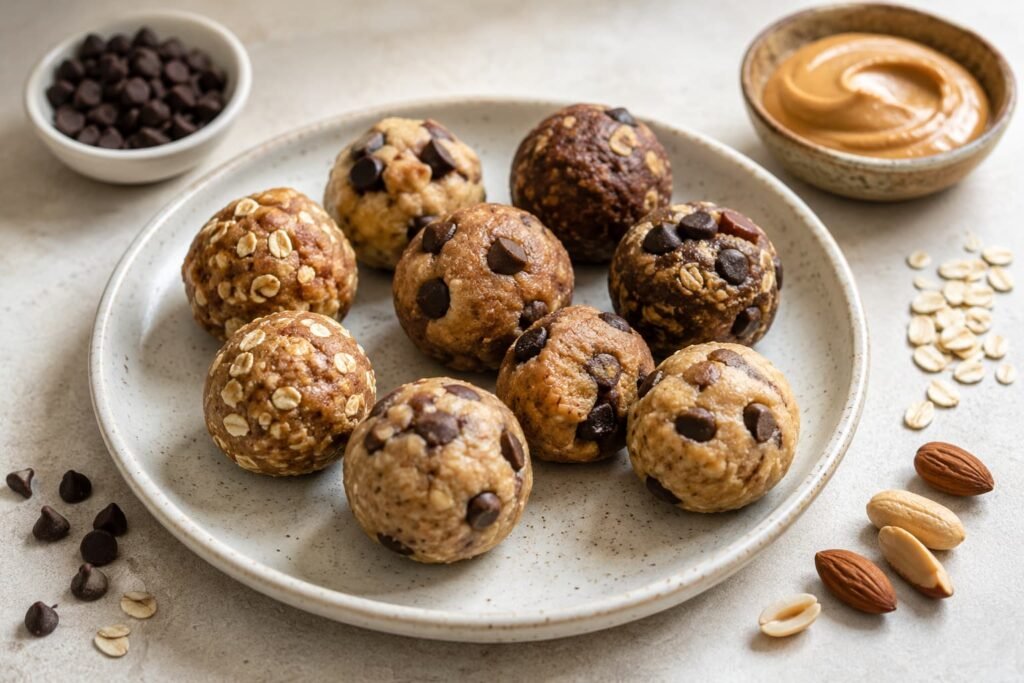
These easy high-protein cookie dough bites are soft, chewy, and loaded with mini chocolate chips. Made with creamy peanut butter and vanilla protein powder, they have the familiar flavor of chocolate chip cookie dough without raw eggs or baking. The mixture comes together in one bowl in about 10 minutes, making it a convenient no-bake snack for busy afternoons, meal prep, or a small dessert after dinner. Enjoy the bites immediately when the dough is firm enough to roll, or refrigerate them for a slightly firmer texture. They also freeze well, so you can keep a batch ready whenever a sweet snack craving hits.
Quick Recipe Summary
| Recipe detail | Information |
| Prep time | 10 minutes |
| Cook time | 0 minutes |
| Total time | 10 minutes |
| Yield | Approximately 12 cookie dough bites |
| Serving size | 2 bites |
| Protein | Approximately 6–8 grams per serving, depending on the ingredients used |
| Storage | Refrigerate in an airtight container or freeze for longer storage |
| Recipe type | No-bake snack or easy dessert |
| Dietary notes | Egg-free; can be made dairy-free or gluten-free with suitable ingredients |
The exact protein and calorie content will vary according to the brand of protein powder, peanut butter, milk, and chocolate chips used. For the most accurate nutrition information, calculate the values using the specific products included in your batch.
Why You’ll Love These Protein Cookie Dough Bites
These protein cookie dough bites are a practical choice when you want something sweet without baking a full dessert. The dough comes together in one bowl and can be shaped into individual bites in about 10 minutes, making the recipe useful for busy afternoons, workday snack boxes, or simple meal prep.
Their texture is soft and chewy, with a rich cookie-dough consistency rather than the dry or chalky texture sometimes found in protein snacks. Creamy nut butter helps keep the mixture smooth, while mini chocolate chips add a little sweetness and familiar chocolate-chip cookie dough flavor.
You can enjoy the bites as soon as the dough is firm enough to roll, although a short rest in the refrigerator gives them a denser, slightly firmer texture. They also store well, so you can prepare a batch in advance and keep a few ready for quick snacks throughout the week. For longer storage, place them in a freezer-safe container and thaw only the amount you need.
The recipe is also easy to customize. Use peanut butter for a stronger, classic flavor, or choose almond butter, cashew butter, or sunflower seed butter to suit your preference. You can also change the flavor of the protein powder or replace the chocolate chips with chopped nuts, dried fruit, or another small mix-in.
Because the bites are individually portioned, they work well as a quick high-protein snack or a small dessert when you want something sweet without making a larger recipe.
What Makes These Cookie Dough Bites High in Protein?
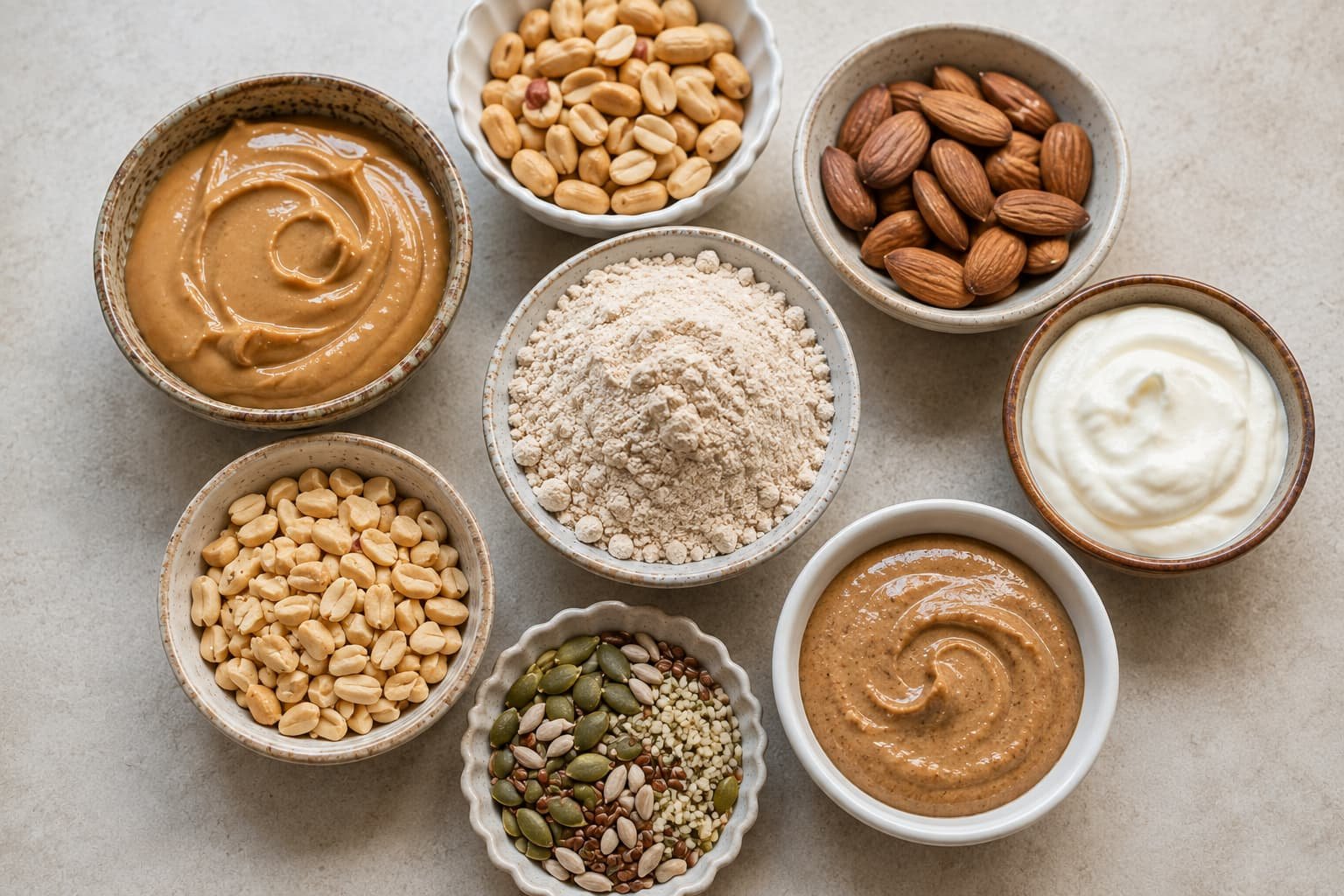
Protein powder is the main source of protein in these high-protein cookie dough bites. Vanilla protein powder is a good choice because its mild flavor pairs well with nut butter, vanilla, and chocolate chips while keeping the overall taste close to traditional cookie dough.
Both whey and plant-based protein powders can work, but they do not always behave the same way. Plant-based powders are often more absorbent and may require a little extra milk, while some whey powders produce a softer or slightly stickier dough. Adding the liquid gradually makes it easier to control the final texture.
Nut or seed butter provides additional protein and helps bind the mixture together. Peanut butter usually contributes the strongest flavor, while almond and cashew butter create a milder result. Sunflower seed butter can be used when a nut-free alternative is needed, although it may slightly change the color and taste.
Milk and other ingredients may contribute smaller amounts of protein, but protein powder and nut or seed butter provide most of the total. The exact protein per serving will depend on the protein powder brand, type of butter, ingredient quantities, serving size, and any substitutions used.
Once the recipe has been tested, calculate the protein in the complete batch using the nutrition labels from the exact products used. Divide that total by the final number of servings to provide readers with a realistic estimate. This is more accurate than using a general protein claim that may not apply to every version of the recipe.
These homemade protein cookie dough bites can be a convenient higher-protein alternative to traditional cookie dough treats, but the final nutrition information should always reflect the tested recipe and actual portion size.
Ingredients You’ll Need

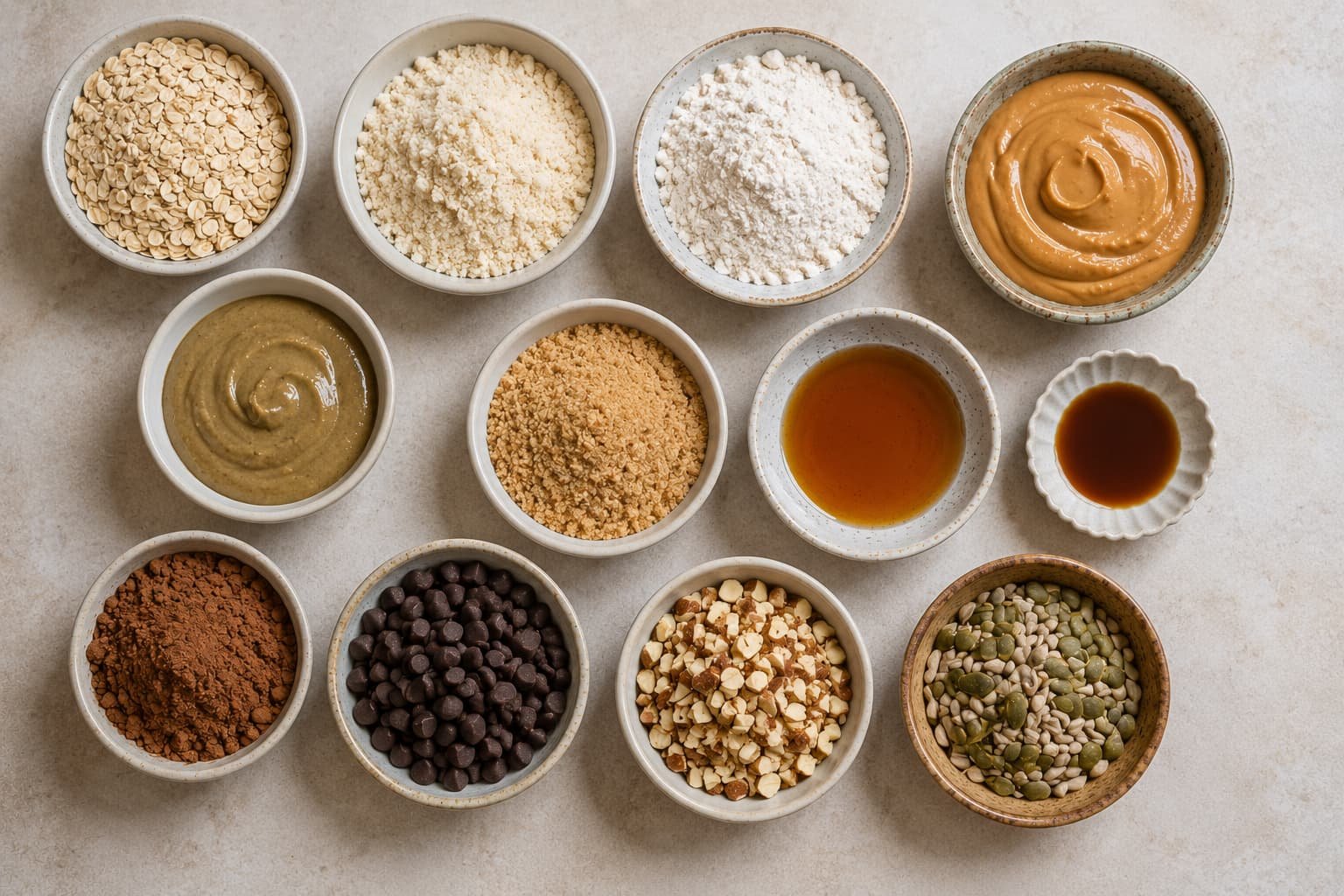
A short ingredient list keeps these high-protein cookie dough bites easy to prepare, but the ingredients do more than add flavor. The dry base gives the dough enough structure to hold together, while vanilla protein powder increases the protein content and helps create a soft, rollable texture.
Since the bites are not baked, every ingredient should be suitable for eating without additional cooking. Measure the liquid carefully and add it gradually, as the amount needed will depend on the type and brand of protein powder you use.
Ready-to-Eat Dry Base
A ready-to-eat dry base absorbs moisture from the nut butter and milk, helping the cookie dough become thick enough to shape. It should create a soft, chewy texture without making the bites dry, powdery, or difficult to roll.
For the closest result to traditional chocolate-chip cookie dough, use commercially treated flour that is clearly labeled as ready to eat. Ordinary all-purpose wheat flour should not be eaten raw unless the manufacturer confirms that it has received an appropriate treatment for uncooked use. Regular flour is sold as a raw ingredient and is normally intended to be cooked before it is consumed.
A finely ground oat-based product labeled for ready-to-eat or no-bake recipes may be used as an alternative. However, oat-based ingredients can produce a slightly different flavor and may absorb more or less liquid than treated wheat flour. Add the dry ingredient gradually if making a substitution, rather than assuming that an equal amount will create the same texture.
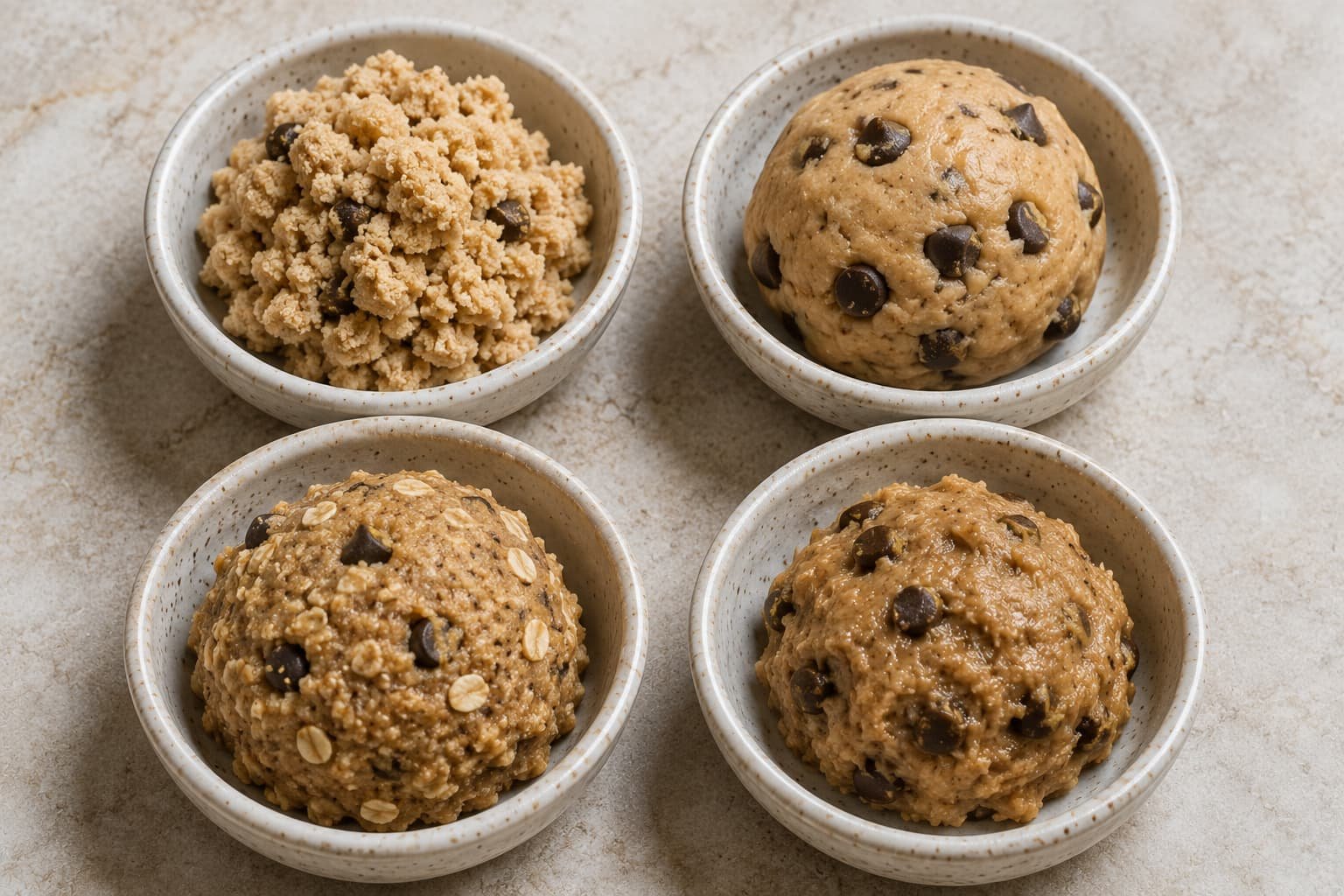
The finished dough should feel soft and slightly tacky but should not coat your hands heavily. When pressed between your fingers, it should hold together without crumbling. If the mixture is too sticky to shape, mix in a small amount of the dry base and check the texture again before adding more.
Vanilla Protein Powder
Vanilla protein powder provides most of the protein in these protein cookie dough bites. Its mild sweetness works well with creamy nut butter, vanilla, and mini chocolate chips, creating a flavor that is closer to classic cookie dough than strongly flavored protein powders.
Many whey-based protein powders produce a relatively smooth and soft dough. However, whey isolate, whey concentrate, and blended formulas can behave differently. Some become sticky quickly when liquid is added, so it is best to start with less milk and increase it only as needed.
Plant-based protein powders often contain pea, rice, soy, seed, or a combination of plant proteins. Many of these powders absorb more moisture than whey and may create a thicker or slightly grainier dough. They may require additional milk, but the liquid should still be added slowly because absorbency varies considerably between products.
Sweeteners, gums, thickeners, and other ingredients in the protein powder can also affect the final consistency. Even two vanilla powders with similar nutrition labels may not produce exactly the same result.
After combining the dry ingredients and nut butter, add milk one teaspoon at a time. Mix thoroughly after each addition and stop when the dough is soft enough to roll while still firm enough to hold its shape. If it cracks or crumbles, add another small splash of milk. If it becomes too wet or sticky, mix in a little more of the ready-to-eat dry base.
Creamy Peanut Butter
Creamy peanut butter gives the bites a rich, roasted flavor and helps create the soft, chewy texture expected from cookie dough. Its natural fats coat the dry ingredients and help bind the mixture, so the dough can be pressed together and rolled without crumbling.
For the most consistent result, use a smooth peanut butter that has been stirred well before measuring. Chunky peanut butter can make the dough harder to shape, while very stiff peanut butter may leave the mixture dry.
Natural peanut butter can vary significantly between brands. Some are thin and oily, while others are thick and firm, especially after refrigeration. Stir the jar thoroughly so the oil and peanut solids are evenly combined. If the peanut butter is very runny, the dough may need a little more ready-to-eat dry base. If it is unusually thick, add milk one teaspoon at a time until the mixture becomes easy to roll.
Lightly salted peanut butter can help balance the sweetness of the maple syrup and chocolate chips. When using unsalted peanut butter, a small pinch of salt may improve the overall cookie-dough flavor, depending on the final tested recipe.
Maple Syrup or Honey
Maple syrup or honey adds sweetness, moisture, and extra binding power to these protein cookie dough bites. Both options help soften the dry ingredients and prevent the finished dough from tasting powdery.
Maple syrup is thinner and blends easily with peanut butter and vanilla protein powder. It adds a mild caramel-like sweetness without making the dough overly sticky. Honey is thicker and more adhesive, so it may produce a slightly firmer, stickier mixture.
Because these sweeteners have different consistencies, the amount of additional milk may vary. Mix the sweetener with the peanut butter before adding any milk, then check the dough. It should hold together when pressed but remain firm enough to keep its shape after rolling.
For a fully vegan version, use maple syrup along with plant-based protein powder, dairy-free milk, and chocolate chips made without dairy. Honey is not considered vegan, but it can be used when a vegan recipe is not required.
Pure maple syrup or a mild-flavored honey works best because either one will complement the peanut butter, vanilla, and chocolate without overpowering the familiar cookie-dough taste.
Vanilla and Salt
Vanilla and salt are used in small amounts, but both help create the familiar flavor of traditional chocolate chip cookie dough. Vanilla adds warmth and rounds out the sweetness from the maple syrup or honey, while salt brings the peanut butter, chocolate, and vanilla flavors into better balance.
Pure vanilla extract gives the bites a clean, classic dessert flavor, although imitation vanilla can also be used. In peanut butter cookie dough bites, vanilla helps balance the roasted peanut flavor so the finished mixture tastes more like cookie dough and less like plain peanut butter.
The amount of salt needed depends on the peanut butter. If you use salted peanut butter, only a small pinch may be necessary. Unsalted peanut butter usually benefits from a little more salt, but it should be added carefully so it enhances the chocolate and vanilla without making the bites taste salty.
Milk
Milk is only needed when the mixture is too dry to hold together. Peanut butter and maple syrup or honey already add moisture, so pouring in too much milk at once can quickly turn the dough soft, sticky, and difficult to shape.
Regular dairy milk or a plain dairy-free alternative can be used. Almond milk is usually light and neutral, while oat milk may add slightly more sweetness and body. Soy milk also works well and may contribute a small amount of additional protein. Choose an unsweetened milk so you can better control the sweetness of the finished chocolate chip cookie dough bites.
Add the milk one teaspoon at a time, mixing thoroughly after each addition. This small amount matters because protein powder and the ready-to-eat dry base can absorb liquid very differently depending on the brand. In some batches, one teaspoon may be enough to bring the dough together.
Stop adding milk when the mixture holds together when pressed and rolls without cracking. The dough should feel soft and slightly tacky, but it should not stick heavily to your hands or lose its shape.
Mini Chocolate Chips
Mini chocolate chips work especially well in small cookie dough bites because they spread more evenly through the mixture than standard-size chips. Their smaller size gives each portion a more balanced amount of chocolate and makes the dough easier to scoop and roll.
Full-size chocolate chips can make smaller bites feel bulky and may cause the dough to split when shaping. Mini chips blend into the soft mixture more smoothly while still providing the familiar flavor and texture of chocolate chip cookie dough.
Fold the chocolate chips in only after the dough has reached the correct consistency. This allows you to adjust the moisture first and prevents the chips from getting in the way while checking whether the mixture is too dry or too sticky.
Dairy-free mini chocolate chips can be used as part of a vegan version, along with maple syrup, dairy-free milk, and plant-based protein powder. Reduced-sugar chips are another option, although their sweetness and texture can vary by brand.
Among the cookie dough bites ingredients, mini chocolate chips are one of the easiest to customize. You can adjust the amount to suit your preferred level of sweetness, but keeping the pieces small will help the finished bites hold their shape and maintain an even chocolate flavor.
How to Make High-Protein Cookie Dough Bites

To make high-protein cookie dough bites:
- Mix the peanut butter, maple syrup or honey, and vanilla until smooth.
- Add the vanilla protein powder, ready-to-eat dry base, and salt.
- Stir until a thick dough begins to form.
- Add milk one teaspoon at a time only if the mixture is too dry.
- Fold in the mini chocolate chips and roll the dough into evenly sized bites.
Step 1 — Combine the Wet Ingredients
Add the creamy peanut butter, maple syrup or honey, and vanilla extract to a medium mixing bowl. Stir until the mixture is smooth and evenly combined.
Mixing the wet ingredients first distributes the vanilla and sweetener through the peanut butter, helping the finished dough develop a more even flavor and reducing the chance of dry pockets later.
If you are using natural peanut butter, stir the jar thoroughly before measuring so the oil and peanut solids are fully combined. The mixture in the bowl should look smooth and uniform rather than oily or lumpy.
Step 2 — Add the Dry Ingredients
Add the vanilla protein powder, ready-to-eat dry base, and salt to the bowl. Stir slowly at first so the fine ingredients stay inside the bowl, then continue mixing until a thick dough starts to form.
The mixture may look slightly crumbly during the first few turns. Keep stirring and pressing the dough against the side of the bowl so the dry ingredients can fully blend with the peanut butter and sweetener before adding any milk.
Stop mixing once the dough is evenly combined. It should feel soft and hold together when pressed between your fingers. If it still cracks or falls apart after thorough mixing, add milk one teaspoon at a time in the next step.
Step 3 — Adjust the Texture
Check the dough before adding any milk. If it holds together when pressed and rolls without cracking, it is already at the right consistency.
If the mixture feels dry or crumbly, add milk one teaspoon at a time. Mix thoroughly after each addition and wait a few moments before adding more, since protein powder and the dry base may continue absorbing moisture as the dough sits.
The finished dough should feel soft, cohesive, and easy to shape. A slight tackiness is normal, but it should not stick heavily to your hands or lose its shape soon after rolling.
If the mixture becomes too soft, add a small amount of the ready-to-eat dry base and mix again. Avoid adding too much at once, as excess dry ingredients can make the bites powdery or firm.
Step 4 — Fold in the Chocolate Chips
Once the dough has reached the correct consistency, add the mini chocolate chips. Fold them in gently with a spoon or spatula until they are evenly distributed and no dry patches remain.
Stop mixing as soon as the chips are incorporated. Prolonged mixing may warm or compact some protein-based doughs, making them softer or more difficult to shape.
Mini chocolate chips work especially well in chocolate chip cookie dough bites because they spread evenly through small portions and make the dough easier to roll than full-size chips.
After adding the chocolate chips, the dough should remain soft and rollable. If it feels slightly sticky, chill it for 10–15 minutes before shaping instead of adding a large amount of extra dry base.
Step 5 — Scoop and Roll

Use a small cookie scoop or level tablespoon to divide the dough into evenly sized portions. Keeping the bites close to the same size makes them easier to shape and gives you a more consistent serving size.
Roll each portion gently between your palms until it holds together in a smooth ball. Stop once the dough is shaped, as too much handling can warm the mixture and make it softer.
Place the finished bites on a plate or parchment-lined tray. If the dough begins to stick to your hands, chill it briefly, then continue rolling once it feels firmer.
Step 6 — Serve or Chill

These no-bake cookie dough bites can be eaten immediately if they are firm enough to hold their shape. Served right away, they will have a softer, more tender cookie-dough texture.
For firmer homemade cookie dough bites, place them in the refrigerator before serving. Chilling firms the peanut butter and helps the dough develop a denser, more cohesive texture.
Keep the bites in a single layer while they are still soft. Once chilled and firm, transfer them to an airtight container for storage.
Serve them straight after rolling when you prefer a softer texture, or enjoy them chilled when you want a firmer, chewier bite.
How to Get the Best Cookie Dough Texture

The texture of protein cookie dough can vary depending on the protein powder, nut butter, and dry base used in the recipe. Whey, casein, and plant-based protein powders do not absorb moisture in the same way, so the dough may need a small adjustment even when the measurements stay the same.
Before adding anything, press a small amount of dough between your fingers. It should hold together without crumbling, feel soft enough to roll, and keep its shape once formed. A slight tackiness is normal, but the mixture should not feel wet or leave a thick coating on your hands.
Make one small adjustment at a time. Adding too much milk or nut butter at once can quickly turn a dry mixture into dough that is too soft to shape.
If the Dough Is Too Dry or Crumbly
If the dough breaks apart when pressed or develops deep cracks as you roll it, let the mixture rest for a few minutes before making any changes. This gives the dry ingredients time to hydrate fully and helps you judge the final consistency more accurately.
Check the dough again after resting. If it still feels dry, add milk one teaspoon at a time. Mix thoroughly after each addition, then press a small amount together before adding more. Protein dough can change quickly with even a small amount of liquid.
For a softer, richer, and more cohesive texture, you can also mix in a little extra nut butter. Add only a small amount at a time, especially when using a thin or runny natural nut butter, which can loosen the dough more quickly.
Stop adjusting once the dough rolls easily and holds its shape without feeling wet, sticky, or crumbly. These small corrections are especially useful when making protein cookie dough bites because different types and brands of protein powder can produce noticeably different textures.
If the Dough Is Too Sticky
If the dough sticks heavily to your hands, feels difficult to roll, or loses its shape after being portioned, it likely needs a small texture adjustment.
Start by mixing in a little more of the same ready-to-eat dry base used in the recipe. Add it gradually, stirring well after each addition. Using the original dry ingredient helps maintain the intended flavor and texture while absorbing excess moisture.
If the dough remains too soft, add a small amount of protein powder. Use this adjustment sparingly, as extra protein powder can quickly make the dough dry or chalky if too much is added.
Before adding more ingredients, consider chilling the dough. Refrigeration firms the nut butter and often makes the mixture easier to handle without changing the balance of flavors.
If the dough still sticks slightly while rolling, lightly dampen your hands with water. As a final option, use only a trace amount of neutral oil on your palms to reduce sticking.
The ideal dough should feel soft and cohesive, hold its shape when rolled, and release easily from your hands with only a slight tackiness.
If the Bites Become Firm in the Refrigerator
Homemade cookie dough bites naturally become firmer after chilling. As the nut butter cools and sets, the texture becomes denser and more compact.
If the bites feel too firm straight from the refrigerator, let them sit at room temperature for a few minutes before serving. This allows the nut butter to soften slightly and helps restore a softer, chewier texture.
The texture of chilled protein cookie dough bites is also influenced by the ingredients used. Dough made with large amounts of protein powder tends to firm up more than dough made with a balanced ratio of protein powder, nut butter, and liquid ingredients.
The choice of nut butter matters as well. Smooth, creamy nut butter generally produces softer bites than very thick or dry varieties. For natural nut butters, stir well before measuring so the oils are evenly incorporated.
If the dough already feels firm before refrigeration, soften it with a small amount of milk or additional creamy nut butter before shaping. Chilling will make the bites firmer, so it is best to achieve the desired consistency first.
If the Protein Powder Tastes Chalky
Protein powder is one of the most noticeable flavors in a no-bake recipe, which is why the choice of protein powder can have a major impact on the final result. For the best flavor, use a protein powder that you already enjoy in shakes, smoothies, or other recipes.
If the dough has a mild chalky taste, try increasing the vanilla slightly. A small adjustment can help round out the flavor and make the dough taste more like traditional cookie dough.
A pinch of salt can also improve balance by enhancing sweetness and reducing flat or powdery notes. Mini chocolate chips contribute bursts of chocolate flavor throughout the dough, helping create a more enjoyable bite without overpowering the other ingredients.
Avoid adding extra protein powder solely to increase the protein content per serving. Beyond a certain point, additional powder often has a greater effect on texture and flavor than it does on the overall nutritional value. A soft texture, balanced sweetness, and enjoyable flavor will usually produce better protein cookie dough bites than chasing the highest possible protein number.
Best Protein Powder for Cookie Dough Bites

The best protein powder for cookie dough bites is one that tastes pleasant on its own, blends without excessive grittiness, and produces a dough that is easy to shape. Because the recipe is not baked, the powder’s flavor, sweetness, and texture remain noticeable in every bite.
Both whey and plant-based protein powders can work well. Begin with the measurements listed in the recipe, then make only small adjustments if your powder creates a noticeably softer or drier dough. For a traditional cookie-dough flavor, vanilla protein powder is usually the easiest choice, although an unflavored powder can work if the sweetness and vanilla are adjusted separately.
Whey Protein Powder
Whey protein powder often produces a softer, less dense dough than many plant-based powders. It generally mixes easily with creamy nut butter and liquid sweetener, which can make the dough simple to stir and roll.
Many whey-only powders require little or no extra milk, but this is not a fixed rule. Whey concentrate, whey isolate, and whey blends can all behave differently. Products containing casein, gums, or other thickening ingredients may absorb more moisture and become noticeably firmer after resting.
Allow the mixture to sit briefly before adjusting it. If the dough feels too soft, mix in a small amount of the original dry base rather than adding a large amount of extra protein powder. This helps the bites hold their shape without making them dry or chalky.
For beginners, a vanilla whey powder that already tastes good in a shake is often a reliable starting point. Avoid powders with an overpowering artificial-sweetener aftertaste, since it will remain noticeable in the finished protein cookie dough bites.
Plant-Based Protein Powder
Plant-based protein powder often creates a thicker, slightly denser dough because many plant proteins absorb moisture readily. Pea, brown rice, soy, and blended plant powders can all produce different results, so texture should be judged after the dough has been fully mixed and allowed to rest.
If the mixture remains dry or develops deep cracks when pressed, add milk one teaspoon at a time. A small amount of extra creamy nut butter can also improve binding and soften a dough that feels powdery.
Some blended plant proteins produce a smoother texture than single-source powders, but this depends on the formula and how finely the powder is ground. Check the label and choose a product you already enjoy, especially if you are sensitive to earthy flavors, grittiness, or a strong stevia aftertaste.
Plant-based powders can work especially well in homemade cookie dough bites, but they may require slightly more adjustment than whey. Add liquid gradually and stop once the dough feels soft, cohesive, and easy to roll.
Unflavored Protein Powder
Unflavored protein powder gives you more control over the sweetness and flavor of the dough, but it usually requires more adjustment than vanilla protein powder. Depending on the protein source, it may taste mild, milky, earthy, or slightly bitter.
Add vanilla gradually until the mixture tastes closer to classic cookie dough. You may also need a little more sweetener, especially if the protein powder has no added flavoring.
Liquid sweeteners such as maple syrup or honey also add moisture, so use them carefully. If the dough already has the right consistency, a small amount of granulated or concentrated sweetener may be easier to add without making it too soft.
Once the main ingredients are fully mixed and every ingredient is safe to eat without baking, taste the dough and adjust the flavor. Check it again after adding the mini chocolate chips, since the chocolate, nut butter, vanilla, and salt all affect the final balance.
Different unflavored protein powders can produce noticeably different results. Whey may remain relatively soft, while pea, rice, or blended plant proteins may create a thicker or more absorbent dough. Begin with the listed measurements and make only small changes based on the powder you are using.
Chocolate Protein Powder
Chocolate protein powder turns the recipe into chocolate cookie dough bites rather than classic chocolate-chip cookie dough. It pairs especially well with mini chocolate chips, peanut butter, almond butter, and a small pinch of salt.
The sweetness and chocolate intensity vary widely between products. Some powders have a mild cocoa flavor, while others contain more sweetener, stronger flavoring, or a noticeable stevia aftertaste. Taste the dough before adding extra cocoa or sweetener.
If the protein powder is already quite sweet, you may need less maple syrup or honey than the original recipe calls for. Reducing the liquid sweetener slightly can also help prevent the dough from becoming too soft.
Texture can vary as much as flavor. Cocoa, fiber, gums, and other thickening ingredients may make some formulas more absorbent, while others produce a softer or stickier dough. Allow the mixture to rest briefly, then adjust it with small amounts of milk, nut butter, or the chosen dry base only if needed.
Different chocolate protein powders will not behave the same way. Choose one you already enjoy and adjust the mixture gradually until the chocolate cookie dough bites feel soft, cohesive, and easy to roll.
Easy Flavor Variations

Adjust the base dough before adding any flavor extras. Once it feels soft, cohesive, and easy to roll, fold in the mix-ins gradually so you can monitor the texture as it changes.
Birthday Cake Cookie Dough Bites
To make birthday cake cookie dough bites, fold rainbow jimmies into the finished dough and reduce or omit the mini chocolate chips. Jimmies usually work better than very small nonpareils, which can bleed color more quickly and may add a slightly crunchy texture.
Mix the sprinkles in gently and stop once they are evenly distributed. Adding too many can make the dough overly sweet or interfere with rolling.
For a stronger birthday-cake flavor, increase the vanilla slightly. A few drops of almond extract can also help, but use it sparingly because the flavor becomes strong very quickly.
If the protein powder or sprinkles are already quite sweet, taste the dough before adding more sweetener.
Cookies and Cream Cookie Dough Bites
For cookies and cream cookie dough bites, fold finely crushed chocolate sandwich cookies into the prepared dough. Keep a few small cookie pieces rather than crushing everything into powder so each bite has some texture.
Reduce or leave out the mini chocolate chips, since the sandwich cookies already add chocolate flavor, sweetness, and extra bulk. Add the cookie pieces gradually to avoid crowding the dough.
The cookie filling may soften the mixture, while the dry crumbs can make it thicker as they absorb moisture. If the dough becomes too soft, chill it until it feels firm enough to roll. If it becomes dry, mix in a small amount of milk or creamy nut butter.
A small pinch of salt can help balance the sweetness and bring out the chocolate-and-vanilla flavor.
Chocolate Cookie Dough Bites
To make chocolate cookie dough bites, replace the vanilla protein powder with a chocolate protein powder you already enjoy. This creates a chocolate-flavored base while keeping the preparation method the same.
For a richer cocoa taste, combine a small amount of unsweetened cocoa powder with the other dry ingredients before mixing the dough. Add it gradually, since cocoa absorbs moisture and can make the mixture firmer or more difficult to roll.
Taste the dough before adding extra sweetener. Many chocolate protein powders are already sweetened, and some have a stronger cocoa or artificial-sweetener flavor than others.
If the dough becomes too dry, add a small amount of milk or creamy nut butter. Fold in mini chocolate chips for a double-chocolate variation, or leave them out for a more uniform chocolate texture.
Peanut Butter Chocolate Chip Cookie Dough Bites
For peanut butter cookie dough bites with a stronger roasted-peanut flavor, use a smooth, creamy peanut butter that tastes rich on its own. You can add a little more peanut butter, but only if the dough remains firm enough to scoop and roll.
When using thin or runny natural peanut butter, hold back the milk at first. Mix the remaining ingredients, check the texture, and add milk only if the dough feels dry.
Fold in the mini chocolate chips after the dough has reached the right consistency. Their smaller size distributes the chocolate evenly and keeps the bites easy to portion.
A small pinch of salt can enhance the peanut-butter flavor, especially if the nut butter is unsalted. For a peanut-free variation, sunflower seed butter can be used, although the flavor and color will be different.
Chocolate Covered Cookie Dough Bites
To make chocolate covered cookie dough bites, chill the shaped bites until they feel firm enough to lift and dip without losing their shape. Melt semi-sweet, milk, or dark chocolate, then coat each bite partly or completely before placing it on a parchment-lined tray.

For neater chocolate-dipped cookie dough bites, use a fork to lower each bite into the melted chocolate and let the excess drip back into the bowl. Dipping only the bottom or one side creates a thinner coating, while a full dip gives the bites a firmer chocolate shell and a soft cookie-dough center.
If the melted chocolate is too thick, stir in a few drops of neutral oil or melted coconut oil at a time. Use only enough to loosen the coating, since too much oil may prevent it from setting firmly.
Refrigerate the coated bites until the chocolate feels firm to the touch. This variation takes longer than the basic 10-minute recipe because the bites must be chilled before dipping and given additional time for the chocolate to set.
Once firm, store the bites in a single layer or place parchment paper between layers to keep the chocolate coatings from sticking together.
Mint Chocolate Chip Cookie Dough Bites
To make mint chocolate chip cookie dough bites, add a very small amount of peppermint extract to the wet ingredients before mixing in the protein powder and dry base.
Peppermint extract is highly concentrated, so begin with only a drop or two. Mix well and taste the dough before adding more. The finished bites should have a light, refreshing mint flavor rather than a sharp or medicinal taste.
Fold in mini chocolate chips after the dough reaches the correct consistency. The chocolate pieces add richness and balance the cool peppermint flavor without overwhelming the base.
For a deeper chocolate-mint variation, use chocolate protein powder instead of vanilla. Check the texture before adding extra liquid, since chocolate powders can absorb moisture differently.
If the mint flavor becomes too strong, mix in more of the plain base dough rather than trying to cover it with extra sweetener. This usually restores the balance without making the bites overly sweet.
Substitutions and Dietary Options

These high protein cookie dough bites can be adapted for different dietary needs, but each substitution may change the flavor, moisture level, and firmness of the dough. Make one change at a time, then check the consistency before adding more liquid or dry ingredients.
Nut-Free Cookie Dough Bites
To make nut-free cookie dough bites, replace the peanut butter or other nut butter with a smooth seed butter, such as sunflower seed butter. Choose a creamy, well-stirred variety, since thick or dry seed butter can make the dough harder to combine and roll.
The flavor and texture will be slightly different from the original recipe. Sunflower seed butter has a more noticeable roasted, earthy taste, and some brands are thinner or oilier than peanut butter.
Start with the same amount used in the base recipe. If the dough feels too soft, mix in a small amount of the ready-to-eat dry base. If it feels crumbly, add milk gradually before adding more seed butter, since too much seed butter can make the mixture greasy.
When preparing the recipe for someone with a peanut or tree-nut allergy, check the labels on the protein powder, chocolate chips, seed butter, and other packaged ingredients. A product may contain no nuts in the ingredient list but still carry a cross-contact warning because it was made on shared equipment.
Dairy-Free Cookie Dough Bites
To make dairy-free cookie dough bites, use a plant-based protein powder, dairy-free milk, and dairy-free chocolate chips. Unsweetened oat, soy, coconut, or almond milk can work, although each one may affect the flavor and texture slightly.
Use oat, soy, or coconut milk if the bites also need to be nut-free. Oat and soy milk usually have a milder flavor, while coconut milk may add a light coconut taste.
Many plant-based protein powders absorb more moisture than whey, but the exact amount varies by brand and formula. Add the milk gradually until the dough is soft enough to press together but still firm enough to scoop and roll.
Choose chocolate chips specifically labeled dairy-free rather than assuming dark or semi-sweet chocolate contains no milk. For a milk allergy, check both the ingredient list and any cross-contact statement on the package.
Also review flavored protein powders, coatings, and optional mix-ins for hidden dairy ingredients. Whey, casein, milk powder, and milk solids are all dairy-based. For a vegan version, use maple syrup instead of honey and confirm that the protein powder and chocolate chips are vegan.
Vegan Protein Cookie Dough Bites
To make vegan protein cookie dough bites, use a plant-based protein powder, maple syrup, vegan chocolate chips, and dairy-free milk only if the dough needs extra moisture.
Use maple syrup instead of honey, since honey is not considered vegan. Maple syrup also contributes moisture, so replacing it with a granulated sweetener would require further changes to the recipe.
Plant-based protein powders can absorb liquid differently from whey. Mix the dough first, then add dairy-free milk gradually until it holds together and can be rolled without becoming sticky.
Check the ingredient list on the chocolate chips rather than relying only on the words “dark chocolate” or “dairy-free.” Some products still contain milk fat, milk powder, or other animal-derived ingredients.
Gluten-Free Protein Cookie Dough Bites
For gluten-free protein cookie dough bites, use the gluten-free, ready-to-eat dry ingredient specified in the base recipe and check every packaged ingredient before mixing.
Do not assume that all protein powders are gluten-free. Flavored powders may contain malt, cereal pieces, cookie crumbs, or other gluten-containing additions, and some are made on shared equipment.
Chocolate chips, coatings, and mix-ins can also vary by brand. Plain chocolate ingredients do not usually contain gluten, but finished products may include added flavors or carry cross-contact warnings.
When preparing the recipe for someone with celiac disease or a serious gluten sensitivity, choose products clearly labeled or certified gluten-free. Use clean utensils, bowls, and preparation surfaces to reduce the risk of cross-contact.
If oats or oat flour are used as the dry base, make sure they are specifically labeled gluten-free. Regular oats are often exposed to wheat, barley, or rye during processing.
Can You Make Cookie Dough Bites Without Protein Powder?
These cookie dough bites cannot be made reliably by simply leaving out the protein powder. It adds volume, absorbs moisture, and helps the dough hold its shape.
Without it, the mixture may become loose, oily, or difficult to roll. Adding extra flour, nut butter, or sweetener may solve one problem while making the bites too dry, dense, or sweet.
A version without protein powder needs a tested replacement that provides both structure and balance. It should be treated as a separate recipe rather than a one-to-one substitution in these high-protein cookie dough bites.
Removing the protein powder will also reduce the protein content. For the best result, use a dedicated edible cookie dough bite recipe developed with safe, ready-to-eat ingredients rather than untreated raw flour.
How to Store and Freeze Protein Cookie Dough Bites
The best way to store protein cookie dough bites depends on the ingredients used and the texture you prefer. Keep them covered, refrigerate leftovers promptly, and avoid leaving them at room temperature longer than needed.
| Storage method | Recommended approach |
| Room temperature | Set out only the amount you plan to serve and return any leftovers to the refrigerator promptly. Milk and other moisture-rich ingredients can make extended room-temperature storage unsuitable. |
| Refrigerator | Store cookie dough bites in an airtight container to prevent them from drying out or absorbing other food odors. Chilling usually gives the bites a firmer, chewier texture. |
| Freezer | Freeze the bites in a single layer on a lined tray until firm, then transfer them to an airtight freezer-safe container. Separate layers with parchment paper if needed. |
| Thawing | Let frozen cookie dough bites sit briefly at room temperature before eating. They are usually softer and more pleasant to eat when slightly thawed. |

These bites make a practical freezer-friendly snack because they can be portioned before freezing and removed one at a time as needed. They also work well as a meal-prep snack when kept chilled until serving.
The exact refrigerator and freezer storage periods should be based on the tested recipe, its moisture level, the type of milk used, and any added coatings or mix-ins. Texture after freezing may also vary slightly depending on the protein powder and nut or seed butter.
Chocolate-covered bites are best stored in a single layer or with parchment between layers to help prevent the coating from sticking, cracking, or rubbing off.
Serving Ideas
These protein cookie dough bites are best enjoyed as a small snack, dessert, or addition to a balanced plate rather than as a complete meal.

Serve them with sliced strawberries, banana, apple, or fresh berries for a lighter contrast to the rich cookie-dough flavor. They also pair well with coffee or tea as a simple mid-morning or afternoon treat.
For a post-workout snack, enjoy one or two bites with fruit, Greek yogurt, plant-based yogurt, or another food that provides the energy and protein you need. The bites can be a convenient part of a recovery snack, but they are not intended to replace a full meal.
They also work well in a packed snack box with fruit, crackers, or another suitable snack. When the recipe contains milk or other moisture-rich ingredients, pack the bites in an insulated lunch bag with an ice pack and keep them chilled until serving.
For a quick dessert, chop one over plain or vanilla yogurt, or crumble it over homemade ice cream. This adds small pieces of soft cookie dough and chocolate to each spoonful.
You can also serve a single bite as a small after-dinner sweet when you want something richer than fruit but lighter than a larger dessert.
Nutrition Notes
The nutrition in these cookie dough bites will depend on the exact ingredients, quantities, and final yield. Calculate the nutrition only after the recipe has been tested and the confirmed number of bites is known.
The nutrition panel should clearly state the serving size and include the estimated cookie dough bites calories, protein per bite, carbohydrates, fat, and fiber when the recipe provides a meaningful amount per serving.
For the most accurate estimate, calculate the nutrition for the entire batch and divide it by the confirmed number of evenly portioned bites. If one serving contains more than one bite, list the number of bites per serving and avoid using “per bite” and “per serving” interchangeably.
The calories in cookie dough bites can change considerably depending on the type and amount of nut or seed butter, maple syrup or honey, protein powder, and chocolate chips. Chocolate coatings, crushed cookies, sprinkles, and other mix-ins will also affect the calorie, carbohydrate, and fat totals.
Protein per bite will vary by protein powder brand, serving size, and final yield. Avoid adding extra protein powder only to increase the protein count, since too much can make the dough dry, dense, or chalky.
Any published cookie dough bites nutrition information should be presented as an estimate rather than an exact laboratory result. Ingredient brands, substitutions, measuring methods, and portion sizes can all change the final values.
Frequently Asked Questions
Are High-Protein Cookie Dough Bites Safe to Eat Without Baking?
These high-protein cookie dough bites are safe to enjoy without baking only when every ingredient is suitable for uncooked use. The recipe contains no eggs and should use the ready-to-eat dry base specified in the tested recipe.
Ordinary untreated flour should not be added directly to edible cookie dough because it is a raw ingredient and may contain harmful bacteria. Check the packaging of the dry base to confirm that it is intended for no-bake recipes.
How Much Protein Is in Each Cookie Dough Bite?
Each bite contains approximately [insert tested protein value] grams of protein when the batch is divided into [insert confirmed yield] evenly sized bites.
The exact protein per bite may vary slightly depending on the protein powder, nut or seed butter, chocolate chips, ingredient brands, and final portion size. Recalculate the nutrition whenever you change the recipe quantities or yield.
Why Are My Protein Cookie Dough Bites Dry?
Protein powder absorbs moisture, and some varieties are more absorbent than others. Plant-based powders, casein blends, and products containing added fiber or gums can produce a firmer dough.
Let the mixture rest briefly, then add milk a little at a time until it holds together. If the dough still tastes dry or chalky, mix in a small amount of creamy nut or seed butter. Avoid adding too much liquid at once, since the dough can quickly become sticky.
Can I Make Cookie Dough Bites Without Peanut Butter?
Yes. For a nut-free option, use a creamy seed butter such as sunflower seed butter. Almond butter, cashew butter, or another smooth nut butter can also work when allergies are not a concern.
Expect some change in flavor and consistency. Thin natural butters may create a softer or oilier dough, while thick seed butters may need a small amount of extra milk. Start with the same quantity used in the original recipe and adjust only after mixing.
Can I Make These Without Protein Powder?
Do not simply remove the protein powder from this recipe. It adds volume, absorbs moisture, and helps the dough hold its shape.
Leaving it out changes both the structure and the protein content. A protein-powder-free version requires a tested combination of replacement ingredients and should be followed as a separate edible cookie dough recipe rather than treated as a direct substitution.
Do Protein Cookie Dough Bites Need to Be Refrigerated?
Yes, refrigeration is recommended for this recipe. Chilling helps maintain the texture and freshness of the bites, especially when the dough contains milk or other moisture-rich ingredients.
Store them in an airtight container and return leftovers to the refrigerator promptly after serving. The exact storage period should be based on the final tested recipe and the ingredients used.
Can I Freeze Cookie Dough Bites?
Yes. Arrange the shaped bites in a single layer on a parchment-lined tray and freeze until firm. Transfer the frozen cookie dough bites to an airtight freezer-safe container, separating layers with parchment paper if needed.
Freezing may make the bites slightly firmer, but they will soften again as they thaw. Remove only the amount you need and let the bites sit briefly at room temperature before eating.
Can I Use Chocolate Protein Powder?
Yes. Replace the vanilla protein powder with a chocolate variety you already enjoy. The finished bites will taste like chocolate cookie dough rather than classic chocolate-chip cookie dough.
Chocolate protein powders vary in sweetness and moisture absorption, so check the consistency before adding extra milk. Taste the dough before adding more sweetener, since many chocolate powders are already sweetened. Fold in mini chocolate chips for a double-chocolate version.
Can I Use Whey or Plant-Based Protein Powder?
Both can work, but they may produce different textures. Whey protein often creates a softer dough, while many plant-based powders absorb more liquid and may result in a denser consistency.
Use a protein powder you already enjoy and add milk only after checking the texture. The exact amount needed will vary by brand and formula.
Can Children Eat Protein Cookie Dough Bites?
Whether these bites are suitable for a child depends on the child’s age, allergies, dietary needs, portion size, and the protein powder used. Check the label for peanuts, tree nuts, milk, soy, gluten, sweeteners, stimulants, and other ingredients that may not be appropriate.
Serve an age-appropriate portion and consider the child’s ability to chew safely. Protein supplements are not automatically necessary for children who already eat a balanced diet. Parents and caregivers should review the product label and consult a pediatrician or registered dietitian when they have concerns about a child’s individual protein needs.
More Easy High-Protein Snacks
Keep building your collection of simple, make-ahead snacks with these related recipes:
[No-Bake Protein Balls] – Soft, chewy protein bites made in one bowl with simple pantry ingredients.
[High-Protein Overnight Oats] – A make-ahead breakfast or snack that can be customized with fruit, nut butter, and different protein powders.
[Greek Yogurt Protein Bark] – A cold, creamy snack topped with fruit, nuts, or chocolate and stored in the freezer.
[Homemade Protein Granola Bars] – Portable bars designed for packed lunches, meal preparation, and busy days.
[Chocolate Peanut Butter Protein Cups] – A rich no-bake treat with a creamy peanut-butter center and chocolate coating.
Replace the bracketed titles with links to the most relevant recipes already published on your website.
Final Thoughts
These high-protein cookie dough bites bring together soft chocolate-chip cookie dough flavor, simple ingredients, and a preparation time of about 10 minutes. There is no baking required, and the bites can be customized with different protein powders, nut or seed butters, coatings, and mix-ins. Keep them chilled for a soft, chewy snack or freeze a batch for convenient portions later. They are an easy way to satisfy a cookie-dough craving while adding more protein to snack time. After trying the recipe, leave a rating and comment to share which variation worked best for you.