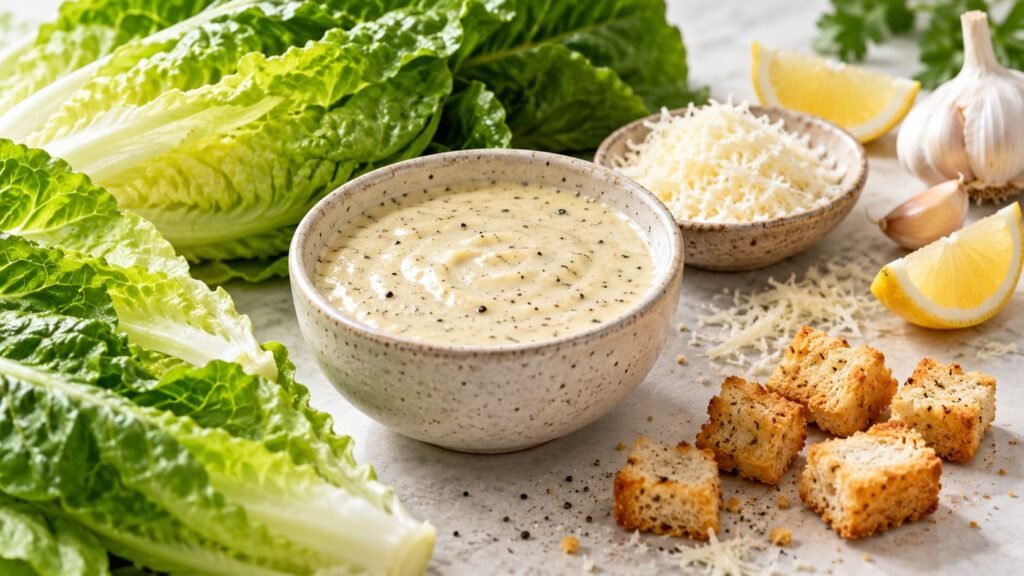
Texas Roadhouse serves Caesar salad with crisp hearts of romaine, fresh Parmesan cheese, made-from-scratch croutons, and what the restaurant describes as a zesty Caesar dressing.
The restaurant does not publicly provide the complete formula for the dressing. Because of that, any homemade version should be described as Texas Roadhouse-style or copycat-style, not as the exact restaurant recipe.
If you want a similar dressing at home, you can use ingredients commonly found in creamy Caesar dressings and adjust the flavor to suit your preference.
What Is Texas Roadhouse Caesar Dressing?
Texas Roadhouse Caesar dressing is the dressing served with the restaurant’s Caesar salads.
According to the official menu, the Caesar salad includes crisp hearts of romaine, fresh Parmesan cheese, made-from-scratch croutons, and zesty Caesar dressing. The same dressing is also listed with the Chicken Caesar Salad and Salmon Caesar Salad.
Texas Roadhouse does not publicly list every ingredient, so the exact base, seasonings, and proportions cannot be confirmed from its menu.
More generally, Caesar dressings often combine rich, acidic, salty, and savory elements. Depending on the recipe, ingredients may include garlic, lemon, Parmesan, anchovies, mustard, Worcestershire sauce, egg, oil, or mayonnaise.
What Does Texas Roadhouse Caesar Dressing Taste Like?
Texas Roadhouse officially describes its Caesar dressing as zesty. It does not provide a more detailed public flavor description.
A homemade Caesar-style dressing commonly combines tangy, garlicky, salty, creamy, and savory flavors.
Lemon can provide acidity, garlic adds a sharper aromatic note, and Parmesan contributes saltiness and savory depth. Some Caesar recipes also use anchovies or Worcestershire sauce for additional umami.
The exact flavor of a homemade version depends on the ingredients and proportions used, so it should not be expected to taste exactly like the restaurant dressing.
What Makes It Different From Regular Caesar Dressing?
There is no single formula used for every Caesar dressing.
Some recipes create an emulsion using egg yolk and oil. Others use mayonnaise as a convenient ready-made creamy base. Recipes can also vary in the amount or use of Parmesan, anchovies, garlic, Dijon mustard, Worcestershire sauce, and lemon.
Texas Roadhouse describes its own dressing as zesty, but the restaurant has not publicly identified a specific ingredient that makes it different from other Caesar dressings.
For a homemade copycat-style version, it is more useful to focus on the general character of the dressing rather than claim that one ingredient recreates the restaurant formula.
What Ingredients Are Commonly Used in a Texas Roadhouse-Style Caesar Dressing?
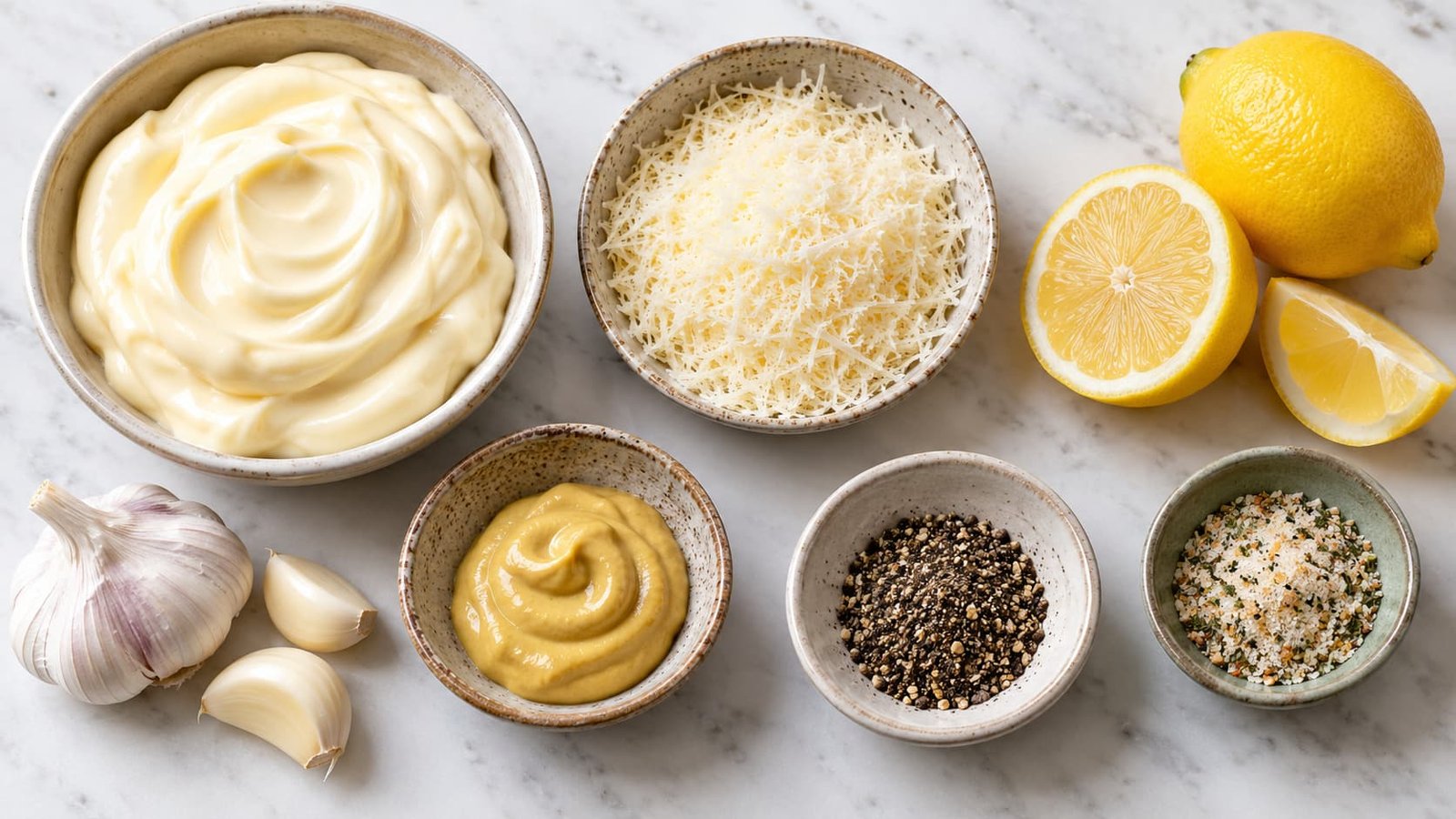
The restaurant’s exact ingredients are not publicly confirmed.
For a homemade interpretation, you can work with ingredients commonly used in creamy Caesar dressings.
Creamy Base
Mayonnaise is one possible base for an easy homemade Caesar dressing because it is already emulsified and provides a smooth consistency.
Other Caesar recipes create their base by emulsifying oil with egg yolk.
Using mayonnaise is simply a homemade preparation choice. It does not mean Texas Roadhouse uses mayonnaise in its dressing.
Parmesan and Savory Ingredients
Parmesan is commonly used in Caesar salads and dressings and contributes salty, savory flavor.
Anchovies are also used in many Caesar recipes because they add saltiness and umami, although not every Caesar dressing includes them.
Worcestershire sauce is another ingredient found in some Caesar-style recipes and can contribute savory and tangy notes.
These are general Caesar-dressing ingredients, not confirmed parts of the Texas Roadhouse formula.
Garlic, Lemon, and Seasonings
Garlic and lemon are common additions to Caesar dressing.
Garlic contributes a sharp aromatic flavor, while lemon adds acidity. Some recipes also include Dijon mustard, black pepper, and salt.
Because Parmesan, Worcestershire sauce, and anchovy can already add saltiness, it is sensible to taste a homemade dressing before adding extra salt.
How Can You Make Texas Roadhouse-Style Caesar Dressing at Home?
You can make a homemade Caesar-style dressing using a creamy base with Parmesan, garlic, lemon, Dijon mustard, Worcestershire sauce, and optional anchovy.
Because Texas Roadhouse does not publish its recipe, there is no verified set of restaurant measurements to reproduce.
For an informational homemade version, the process is more important than pretending to know an exact restaurant formula.
Prepare the Dressing Base
Start with a creamy base such as mayonnaise.
Stir in finely grated Parmesan and a small amount of Dijon mustard.
The goal is to create a smooth base that can hold the other flavors evenly.
Add the Flavor Ingredients
Add lemon juice, garlic, Worcestershire sauce, black pepper, and optional anchovy.
Add stronger ingredients gradually. Garlic, anchovy, mustard, and lemon can all become dominant if too much is added at once.
Taste before adding extra salt.
Mix Until Smooth
Whisk the ingredients until evenly combined.
Finely grated Parmesan and finely minced or grated garlic will blend more easily than larger pieces.
If you prefer a smoother texture, the mixture can be blended briefly.
Check the Flavor and Consistency
Taste the dressing and make small adjustments.
More lemon can increase acidity. A little more creamy base can soften an overly sharp flavor.
If the mixture is too thick, add a small amount of cold water and mix again.
These adjustments are general preparation recommendations rather than verified Texas Roadhouse instructions.
How Can You Get the Right Creamy Texture?
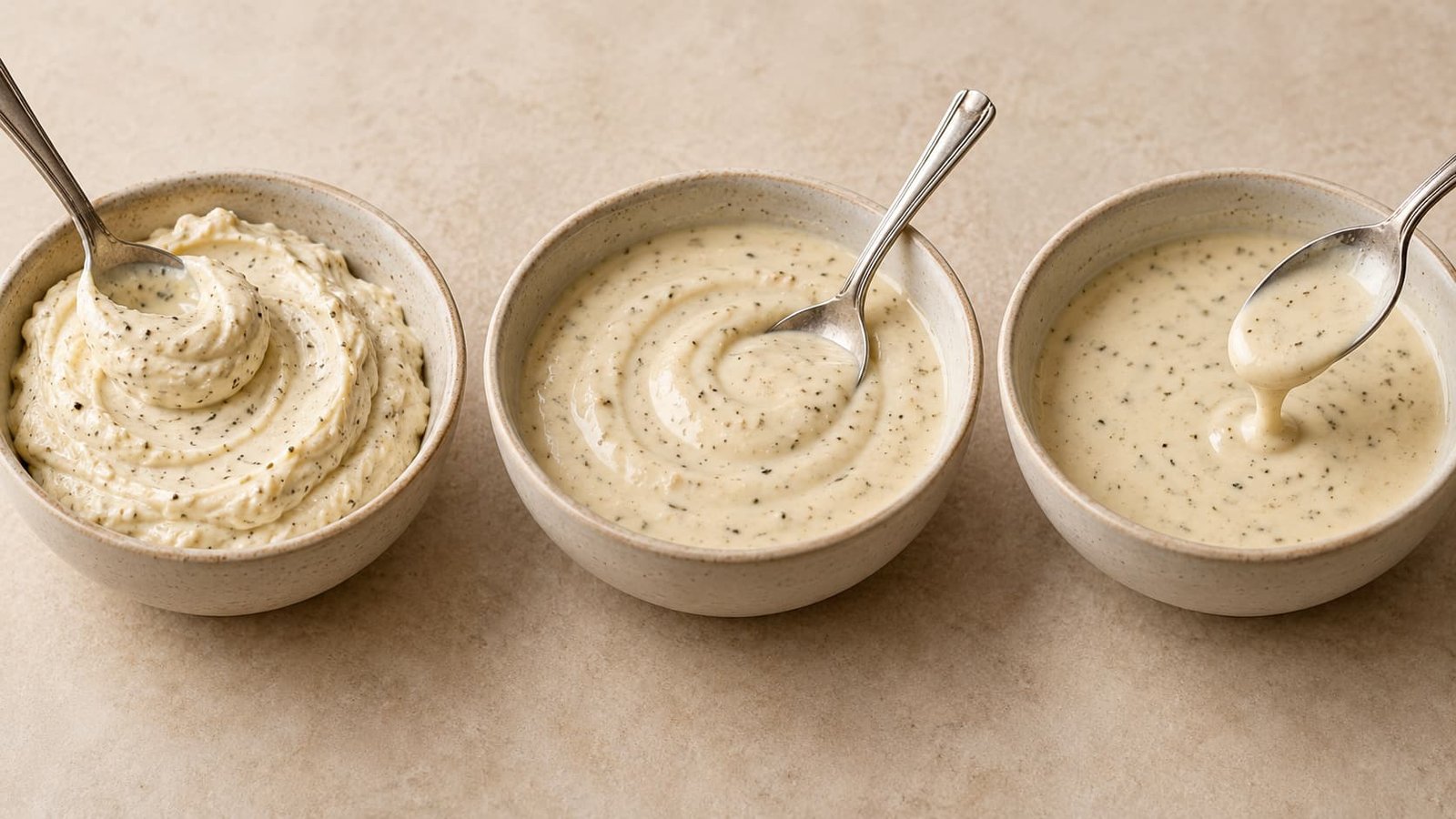
The easiest approach is to start with a thicker mixture and thin it gradually.
A creamy base gives the dressing body, while Parmesan can add more thickness. Water or other liquid ingredients can make the mixture looser.
For salad, a dressing that coats the lettuce without forming heavy clumps is usually easier to toss evenly.
For dipping or spreading, a thicker consistency may be more practical.
How Can You Adjust the Flavor?
Change one ingredient at a time so you can tell how each adjustment affects the dressing.
For More Tanginess
Add a little more lemon juice.
Dijon mustard can also add sharpness, but too much may make its flavor more noticeable.
For More Garlic Flavor
Add a small amount of additional fresh garlic.
Fresh garlic can become strong quickly, so increase it gradually.
For a Milder Flavor
Use less garlic or anchovy, or add a little more of the creamy base.
This changes the balance without requiring a completely different recipe.
For a Thinner Dressing
Add cold water in small amounts and whisk between additions.
Water reduces thickness without increasing acidity or saltiness.
Can You Make Caesar Dressing Without Anchovies?
Yes. A homemade Caesar-style dressing can be prepared without anchovies.
Leaving out anchovy paste will change the savory profile, but Parmesan, garlic, mustard, and other seasonings can still contribute flavor.
One important distinction is that some Worcestershire sauces contain anchovies.
If you need the dressing to be fish-free because of an allergy or dietary restriction, check the ingredient label on the specific Worcestershire sauce you use. Do not assume every product has the same formula.
What Can You Serve With Caesar Dressing?
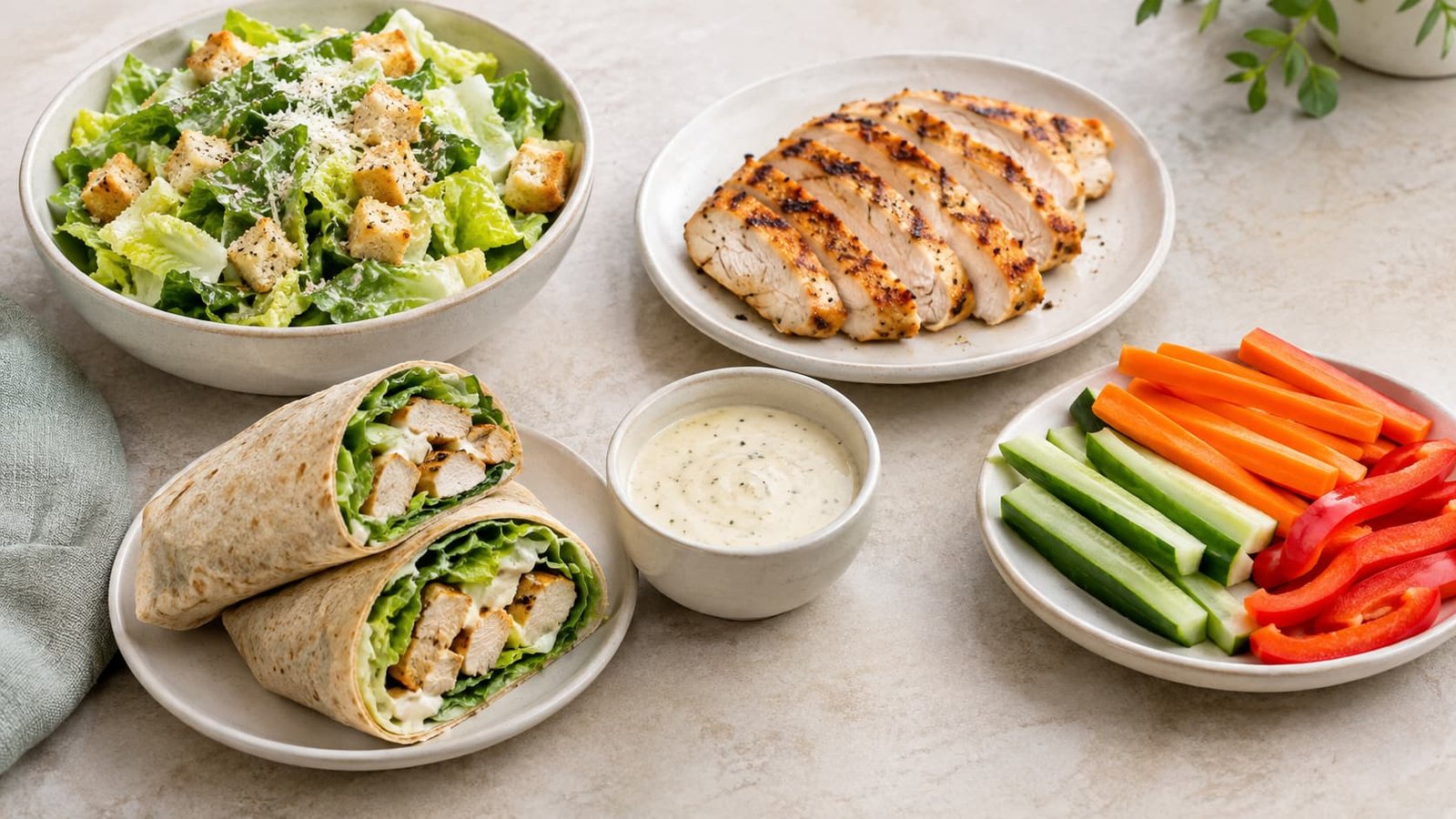
Caesar-style dressing can be used with several foods beyond a traditional salad.
Caesar Salad
The most direct use is with romaine, Parmesan, and croutons.
Start with a small amount and add more only if needed so the lettuce is coated rather than overloaded.
Grilled Chicken
Caesar dressing can be served with grilled chicken or used in a chicken Caesar salad.
The creamy and savory profile can pair well with simply seasoned chicken.
Wraps and Sandwiches
A thicker version can work as a spread in wraps and sandwiches.
Chicken Caesar wraps are one straightforward example.
Vegetables
A thicker homemade version can also be used as a dip for vegetables such as carrots, cucumber, celery, or bell pepper.
These are general serving ideas, not Texas Roadhouse serving recommendations.
What Are Common Mistakes When Making Caesar Dressing?
Several problems can be avoided by making small adjustments instead of adding large amounts at once.
- Too much garlic: Fresh garlic can easily dominate the dressing.
- Too much lemon: Excess acidity can make the dressing taste sharply sour.
- Adding salt too early: Parmesan, Worcestershire sauce, and anchovy may already provide saltiness.
- Making it too thick: A very thick dressing may be difficult to distribute evenly through salad.
- Adding too much liquid: Thin the dressing gradually so it does not become watery.
- Calling a copycat recipe exact: The complete Texas Roadhouse formula is not publicly available.
How Should Homemade Caesar Dressing Be Stored?
Keep homemade Caesar dressing covered and refrigerated at 40°F (4.4°C) or below. USDA identifies 40°F as the upper temperature for keeping cold food out of the food-safety “danger zone.”
USDA also advises not leaving perishable food in the danger zone for more than 2 hours, or more than 1 hour when the temperature is above 90°F (32.2°C).
There is no single verified storage period that applies to every homemade Caesar dressing recipe, so this article does not give a fixed number of refrigerator days.
Ingredients matter as well. If a Caesar dressing uses raw or undercooked egg, FDA recommends using pasteurized shell eggs or pasteurized egg products for recipes such as Caesar dressing that are served without fully cooking the egg.
A mayonnaise-based homemade version does not require adding a raw shell egg. FDA notes that commercial mayonnaise, dressings, and sauces generally use pasteurized eggs.
Frequently Asked Questions
Does Texas Roadhouse Caesar dressing contain anchovies?
Texas Roadhouse does not publicly list the full ingredient formula for its Caesar dressing.
Because of that, there is not enough verified public information to say that its dressing definitely contains or does not contain anchovies.
If this question relates to a fish allergy, the safest approach is to confirm directly with the restaurant rather than rely on a copycat recipe.
Can Caesar dressing be made ahead of time?
Yes, homemade Caesar dressing can be prepared ahead, but it should be kept refrigerated promptly.
Keep perishable dressing at 40°F (4.4°C) or below. If a recipe contains raw or undercooked egg, use pasteurized eggs or pasteurized egg products as recommended by the FDA.
Can Caesar dressing be used as a dip?
Yes. A thicker homemade Caesar-style dressing can also be served as a dip.
You can keep it thicker by adding less thinning liquid and serve it with vegetables or other foods that pair well with savory dressings.
Final Thoughts
Texas Roadhouse officially serves its Caesar salad with crisp hearts of romaine, fresh Parmesan, made-from-scratch croutons, and what it calls a zesty Caesar dressing.
The restaurant does not publicly provide the complete dressing formula. For that reason, homemade versions should be described as Texas Roadhouse-style or copycat-style, not as exact reproductions.
A homemade version can use familiar Caesar-dressing ingredients such as a creamy base, Parmesan, garlic, lemon, and savory seasonings. The flavor and texture can then be adjusted according to how you plan to serve it.
The important distinction is between what is verified and what is a homemade interpretation. The restaurant’s menu description is confirmed. The homemade ingredient choices and preparation method are reasonable ways to create a similar style, not a verified Texas Roadhouse recipe.