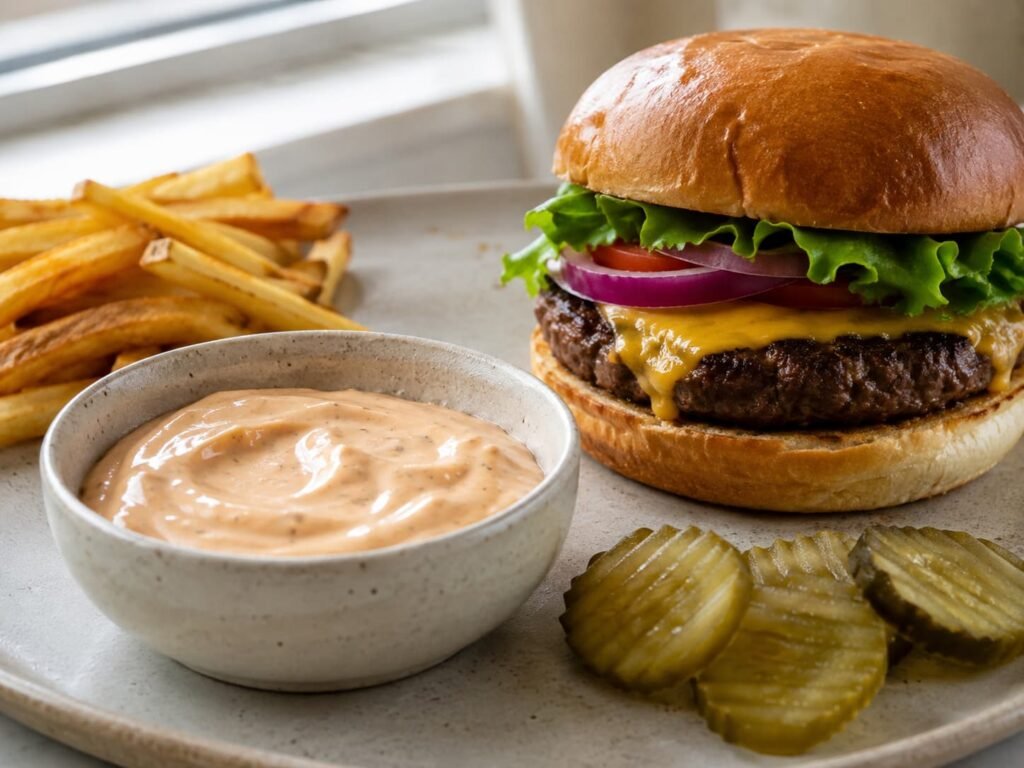
Homemade burger sauce is usually a creamy condiment made with mayonnaise, ketchup, mustard, pickles or relish, and optional seasonings. There is no single standard formula, so the flavor and texture can vary depending on the ingredients used.
Mayonnaise commonly provides the creamy base. Ketchup may add tomato flavor and sweetness, mustard can contribute sharpness, and pickles, relish, or pickle brine may add acidity and texture.
Understanding what each ingredient does makes it easier to adjust the sauce for burgers, sandwiches, dips, and other uses.
What Is Homemade Burger Sauce?
Homemade burger sauce is a mixed condiment commonly served with hamburgers, cheeseburgers, sliders, and similar foods.
Many versions combine a creamy base with ketchup, mustard, and some form of pickle or relish. Seasonings may then be added to change the flavor.
Burger sauce is better understood as a broad style of condiment rather than one standardized recipe. One version may be mild and creamy, while another may be more tangy, sweet, smoky, or spicy.
The final result can vary with the type of mustard, the pickle or relish used, the amount of liquid in the mixture, and the choice of seasonings.
What Ingredients Are Commonly Used in Burger Sauce?
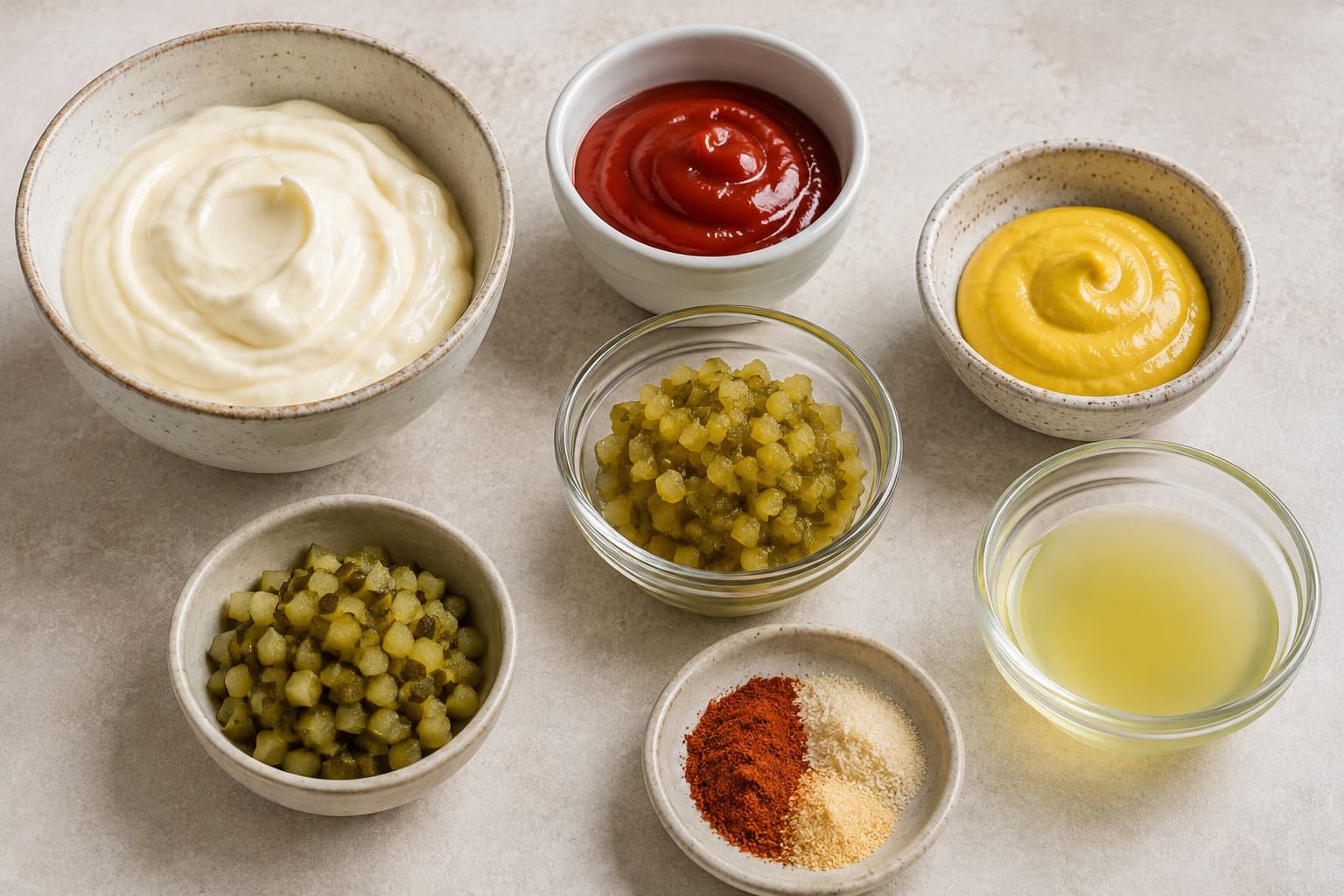
Most homemade versions use a few main ingredient categories: a creamy base, tomato and mustard components, a pickle element, and optional seasonings.
Creamy Base
Mayonnaise is commonly used as the main base because its thick texture gives the sauce body and makes it easy to spread.
It also provides a relatively mild foundation for stronger ingredients such as mustard, pickles, ketchup, and spices.
Changing the amount or type of creamy base can affect consistency and flavor. More of a thick base may produce a thicker, milder mixture, while additional liquid ingredients may make it looser.
Burger sauce can also be made without mayonnaise. Some variations use another creamy ingredient or a different combination of condiments. Because alternative ingredients can differ in moisture, acidity, fat content, and texture, they should not automatically be treated as exact substitutes.
Tomato and Mustard Components
Ketchup and mustard are commonly used together, but they serve different purposes.
Ketchup may contribute tomato flavor, sweetness, acidity, and color. When combined with a pale creamy base, it can also give the sauce a pink, peach, or orange appearance.
Mustard adds a sharper and more distinctive flavor. Yellow mustard and Dijon have different flavor profiles, so changing the mustard can noticeably change the finished sauce.
Neither type is universally better. The choice depends on the flavor being created.
Commercial ketchup and mustard products can also vary in sweetness, acidity, seasoning, and consistency. Those differences may affect the final mixture.
Pickles, Relish, and Pickle Brine
Pickles and relish can contribute acidity, seasoning, pickle flavor, and texture.
Finely chopped pickles usually leave small pieces throughout the sauce. Relish is already chopped and may distribute more evenly through the creamy base.
The type also matters. Dill pickles or dill relish generally create a different flavor profile from sweet relish, which may add more noticeable sweetness.
Pickle brine can add acidity and pickle flavor without adding solid pieces. Because it is a liquid, it may also make the sauce thinner.
Liquid ingredients are generally easier to control when added gradually rather than assuming one amount will suit every mixture.
Optional Seasonings
Seasonings can change the character of the sauce without changing its basic structure.
Common options include:
- Garlic powder
- Onion powder
- Paprika
- Smoked paprika
- Black pepper
- Worcestershire sauce
- Hot sauce
- Cayenne
Garlic powder and onion powder may add savory notes. Paprika can contribute seasoning and color, while smoked paprika may add a smoky character.
Hot sauce or cayenne can increase heat. Worcestershire sauce also appears in some variations and may add savory and tangy notes.
These are optional additions rather than required ingredients.
How Is Homemade Burger Sauce Prepared?
Homemade burger sauce is generally prepared by combining the thicker ingredients first and then adding pickles, seasonings, and liquid ingredients.
One possible approach is to mix the creamy base with ketchup and mustard. Chopped pickles or relish can then be incorporated, followed by dry seasonings.
Liquid ingredients such as pickle brine, vinegar, Worcestershire sauce, or hot sauce can be added gradually because they may affect both flavor and consistency.
After mixing, the sauce can be assessed for thickness and overall flavor.
If it seems too thick for the intended use, a small amount of an appropriate liquid ingredient may loosen it. If it becomes too thin, increasing a thicker component may add more body, although this can also change the flavor balance.
The final consistency depends on the particular products and proportions being used, so one fixed ratio should not be assumed to suit every version.
How Do the Ingredients Affect Flavor and Texture?
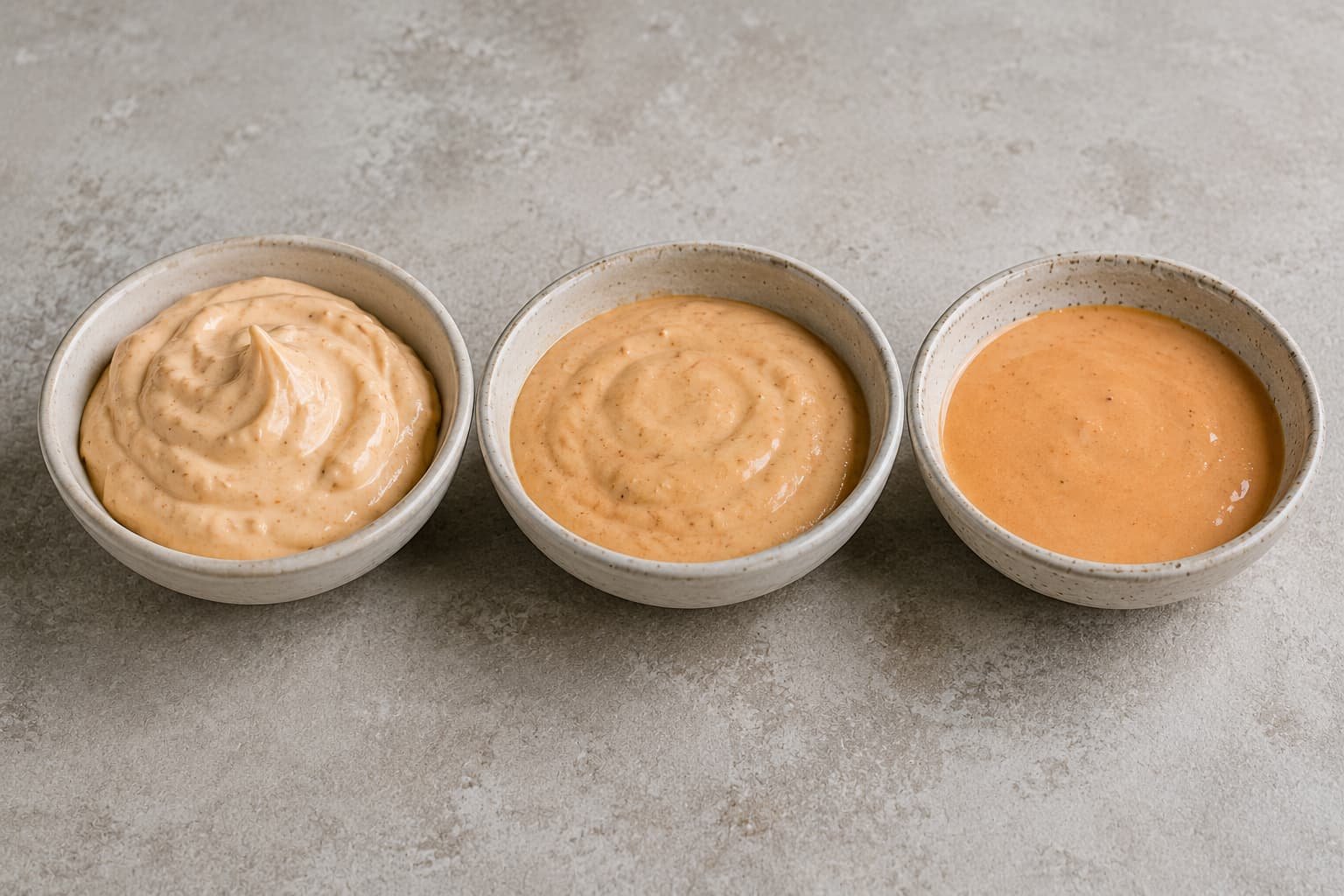
The balance of the ingredients determines whether the sauce is thick or thin, mild or sharp, sweet or tangy, and mild or spicy.
What Makes Burger Sauce Creamier or Thicker?
The creamy base usually has the greatest influence on body and spreadability.
A higher proportion of mayonnaise or another thick creamy ingredient may make the sauce thicker and may reduce the intensity of stronger ingredients.
Liquid ingredients such as pickle brine, vinegar, or hot sauce can make the mixture looser.
The intended use also matters. A thicker consistency may be useful for spreading or dipping, while a looser version may be easier to spoon over a burger bowl.
What Makes Burger Sauce Tangier or Sharper?
Mustard, pickle brine, vinegar, pickles, and relish can all contribute acidity or sharper flavors.
Mustard adds acidity along with its own characteristic flavor. Yellow mustard and Dijon can therefore create different results.
Pickles and relish add pickle flavor as well as texture and seasoning. Dill-based varieties generally create a different balance from sweeter varieties.
Pickle brine and vinegar can increase acidity without adding solid pieces, but they can also thin the mixture.
When several strongly flavored or acidic ingredients are being used, adding them gradually may make the changes easier to control.
What Makes Burger Sauce Sweeter, Smokier, or Spicier?
Ketchup and sweet relish may contribute sweetness, although the amount depends on the products being used.
Smoked paprika may add a smoky character. Regular paprika has a different flavor profile, so the two should not automatically be treated as interchangeable when smokiness is wanted.
Hot sauce and cayenne can increase heat. Different hot sauces may also contribute acidity, salt, or other seasonings.
These ingredients are optional ways to change the flavor rather than required parts of a standard formula.
Pickles or Relish: Which Works in Burger Sauce?
Both can work, but they affect texture and flavor differently.
Finely chopped pickles usually leave more noticeable pieces, which can create a chunkier texture. Relish is already finely chopped and may blend more evenly into the sauce.
Dill pickles and dill relish generally create a more savory and tangy profile than sweeter pickle products. Sweet relish may contribute additional sweetness.
Because pickles and relish can both provide pickle flavor, acidity, and texture, they can sometimes fill a similar role. They should not, however, be treated as exact substitutes in every formula.
Their liquid content, sugar, salt, seasoning, and texture can differ, so an exact substitution ratio should not be assumed without a specific verified formulation.
Can You Make Burger Sauce Without Relish?
Yes. Relish is common in many versions, but it is not required.
Finely chopped pickles are one possible alternative and can provide both pickle flavor and texture.
Pickle brine may also be used when additional acidity or pickle flavor is wanted without adding relish pieces. Because brine is liquid, it may also thin the mixture.
A sauce can also be made without relish or another pickle component if the remaining ingredients provide the flavor profile being sought.
Common Burger Sauce Problems and Possible Adjustments
Consistency and flavor problems often relate to the balance between thick ingredients, liquids, and strongly flavored condiments.
Because products and formulations vary, there is no universal fix for every sauce.
Why Is Burger Sauce Too Thin?
A mayonnaise-based sauce may become thinner when it contains a relatively large amount of liquid.
Possible contributors include pickle brine, vinegar, hot sauce, or liquid from relish and other condiments.
One practical approach is to add liquid gradually and stop when the desired consistency is reached.
If the mixture is already thinner than intended, increasing a thicker creamy component may add body. This can also reduce the intensity of other flavors, so the overall balance may change.
Why Is Burger Sauce Too Thick?
A sauce may become very thick when dense ingredients make up most of the mixture.
That may be suitable for dipping or spreading, but a very thick sauce can be harder to drizzle or spread in a thin layer.
A small amount of an appropriate liquid ingredient may loosen the mixture. Because that liquid can also change acidity or flavor, small adjustments may be easier to control.
Why Does the Sauce Taste Too Sweet, Sharp, or Pickle-Heavy?
A sauce may seem unbalanced when one ingredient category becomes much more noticeable than the others.
If the mixture seems very sweet, ketchup, sweet relish, or another sweetened condiment may be contributing most of that sweetness.
If it tastes especially sharp, mustard, vinegar, pickle brine, or several acidic ingredients used together may be responsible.
A strongly pickle-forward sauce may contain a larger proportion of pickles, relish, or brine.
One possible adjustment is to increase a milder component rather than adding another strong flavor immediately. The result can vary, so these are general adjustment ideas rather than guaranteed fixes.
What Can Burger Sauce Be Used For?
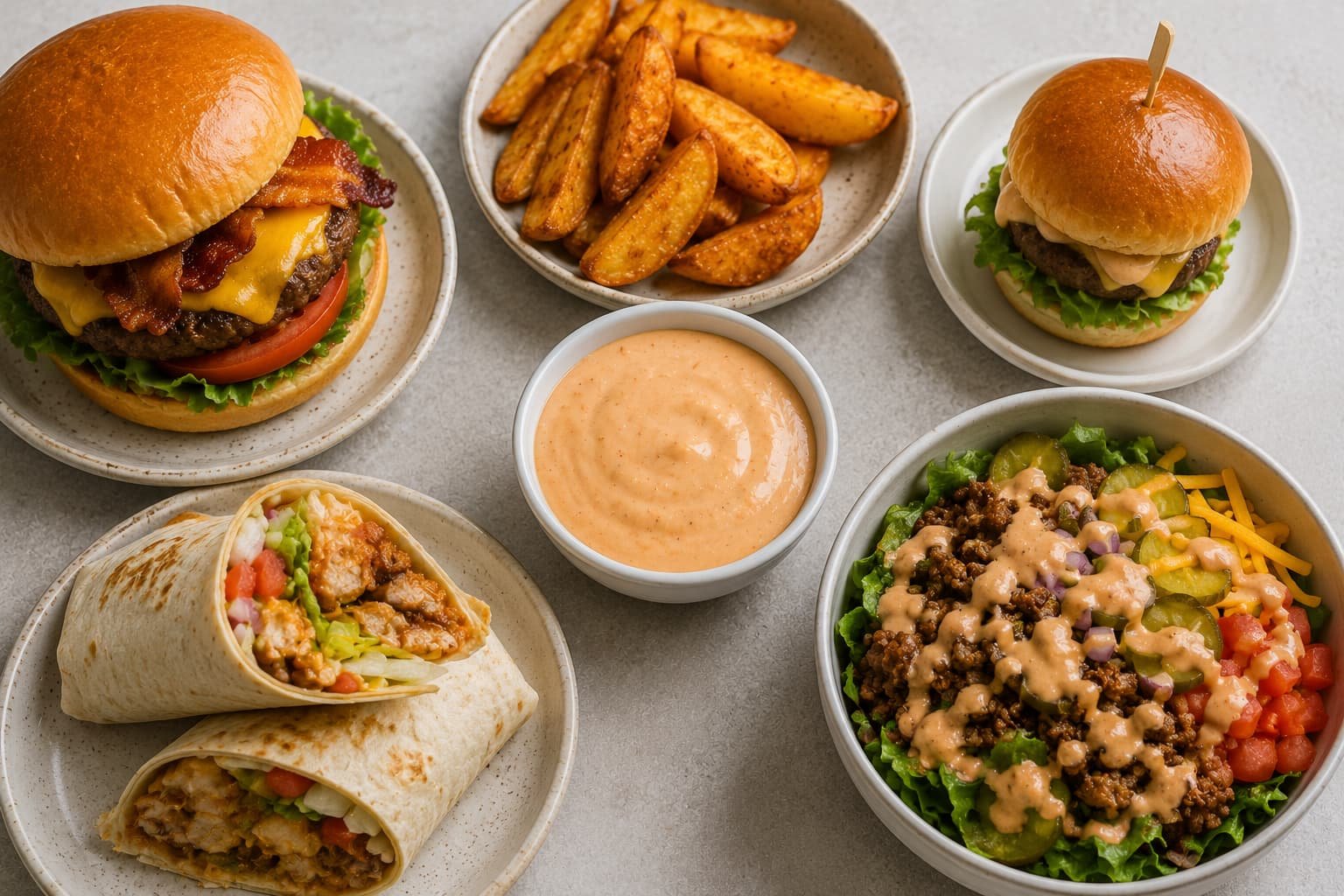
Burger sauce is mainly associated with hamburgers, but it can also be used as a spread, topping, or dip.
Common uses include:
- Hamburgers and cheeseburgers
- Smash burgers
- Sliders
- Chicken or turkey burgers
- Veggie burgers
- Sandwiches and wraps
- Burger bowls
- Fries and potato sides
For burgers and sliders, the sauce can be spread on the bun or added during assembly.
A thicker version may work as a dip for fries or potato wedges. A slightly looser version may be easier to spoon over a burger bowl.
It can also be used in sandwiches and wraps when a mixed creamy condiment is wanted instead of separate mayonnaise, ketchup, and mustard.
Is Burger Sauce the Same as Special Sauce or Thousand Island?
Not necessarily. The sauces can share similar ingredients, but the names do not automatically refer to the same formulation.
Burger Sauce vs Special Sauce
“Special sauce” is a broad label rather than one standardized condiment.
Restaurants, food companies, and home cooks may use the term for different sauces containing mayonnaise, ketchup, mustard, pickles, relish, spices, or other ingredients.
A burger sauce may be described as a special sauce in some situations, but not every special sauce is the same type of burger sauce.
Looking at the actual ingredients is more useful than relying on the name alone.
Burger Sauce vs Thousand Island Dressing
Burger sauce and Thousand Island dressing can contain similar ingredient categories, including a creamy base, tomato-based ingredients, and pickle or relish components.
That overlap does not make them automatically identical.
Individual versions can differ in sweetness, acidity, seasoning, texture, and ingredient proportions. A burger sauce may therefore resemble some Thousand Island dressings without being the same formulation.
Is Burger Sauce the Same as Big Mac Sauce?
No. A generic homemade burger sauce should not be presented as identical to McDonald’s Big Mac Sauce.
The sauces may share some creamy, tangy, savory, or pickle-related characteristics, but a homemade burger sauce is not an official or exact copy of the commercial product.
Make-Ahead and Storage Considerations
Homemade burger sauce can be mixed before serving, but storage requirements depend on the ingredients used.
Follow the storage instructions for each condiment or ingredient, including any refrigeration directions after opening.
Keep the mixed sauce in a clean, covered container and use clean utensils when removing sauce from it.
There is no single refrigerator-life number that can be applied to every homemade burger sauce. A mixture made from commercially prepared condiments is not necessarily equivalent to one containing homemade mayonnaise, uncooked egg, dairy ingredients, or other perishable additions.
If homemade mayonnaise or another ingredient involving uncooked egg is used, follow current food-safety guidance specific to that formulation rather than relying on a generic burger-sauce storage rule.
Final Thoughts
Homemade burger sauce is a flexible condiment that can combine a creamy base with ketchup or another tomato component, mustard, pickles or relish, and optional seasonings.
The important distinction is what each ingredient contributes. The creamy component affects body, mustard and pickle ingredients can contribute sharper or tangier flavors, while ketchup and optional seasonings may move the sauce toward sweeter, smoky, or spicy profiles.
Understanding those roles allows the sauce to be adjusted for burgers, sliders, sandwiches, wraps, burger bowls, fries, and similar foods without treating one formula as universally correct.