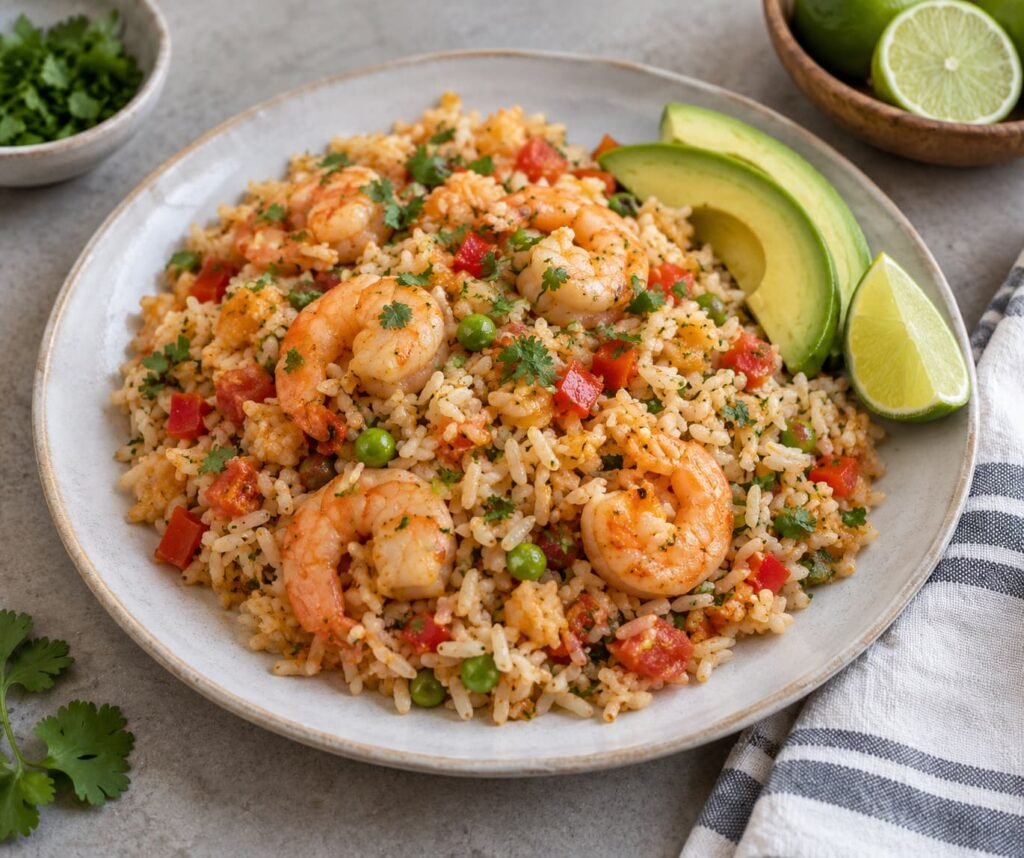
Arroz con camarones is a rice-and-shrimp dish prepared in different forms across Latin America. Colombian versions can combine rice, shrimp, vegetables, aromatics, and seasonings, but there is no single formula that defines every preparation.
Some versions cook the rice in a seasoned vegetable base and add the shrimp later. Others use shrimp-flavored stock or prepare the seafood separately before combining it with the rice.
What Is Arroz con Camarones?
Arroz con camarones means “rice with shrimp” in English. The name describes a dish centered on rice and shrimp rather than one fixed recipe.
Rice with shrimp is prepared in several Latin American countries, so the dish is not exclusive to Colombia. Colombian-style versions can use combinations of tomato, onion or scallion, garlic, peppers, vegetables, herbs, and spices.
One documented Colombian preparation from Magdalena uses a sofrito made with scallion, tomato, bell pepper, garlic, and ají dulce before the rice and shrimp are incorporated.
Other preparations use different vegetables, seasonings, or cooking liquids. Colombian arroz con camarones is therefore better understood as a group of related preparations rather than a dish with one mandatory ingredient list.
What Is Commonly Used in Colombian Arroz con Camarones?
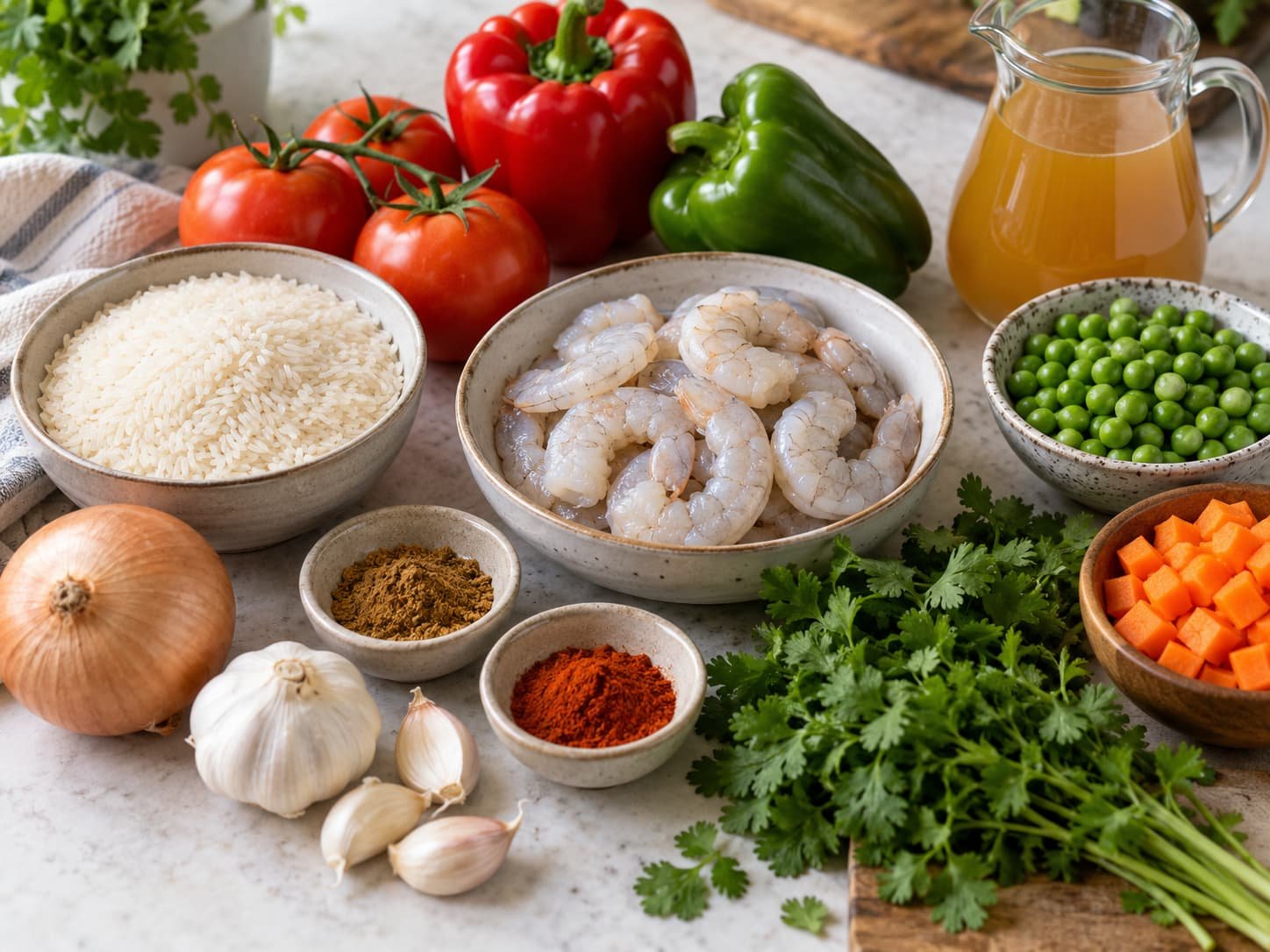
Documented Colombian versions center on rice and shrimp, supported by cooking liquid and various aromatics, vegetables, herbs, or spices.
The exact combination varies, so understanding what these components do is more useful than treating one ingredient list as universal.
Rice and Cooking Liquid
Rice forms the main base of the dish and absorbs flavor from the liquid and seasonings used during cooking.
White rice appears in documented Colombian preparations, but the exact type can vary. One rice variety should not be treated as the only correct choice unless a particular preparation specifically calls for it.
The cooking liquid can differ as well. Some versions use water with a seasoned vegetable base, while others use shrimp or seafood stock.
A shrimp-flavored stock can carry seafood flavor into the rice as the grains cook. Water provides a more neutral base, leaving more of the flavor to the aromatics, vegetables, and seasonings.
The amount of available liquid also affects rice texture. There is no universal rice-to-liquid ratio for every version because rice type, vegetables, cooking vessel, heat, and evaporation can all influence how much moisture is needed.
Shrimp
Shrimp is the main seafood component, but it can be handled in different ways.
A shrimp deveining tool can be useful when preparing shell-on or uncleaned shrimp before cooking.
Raw and previously cooked shrimp also require different handling. Raw shrimp still needs to cook, while previously cooked shrimp generally requires less additional heating.
Rice usually needs a longer cooking process than shrimp, which is why some preparations add the shrimp later or cook it separately before combining the two.
Shrimp size, whether it is fresh or frozen, and whether it is raw or already cooked can all affect how it is handled. No single shrimp size needs to be treated as universally preferable.
Aromatics, Vegetables, and Seasonings
A cooked aromatic base appears in many Colombian-style preparations.
Possible ingredients include:
- tomato
- onion or scallion
- garlic
- bell peppers
- ají dulce
- peas
- carrots
- green beans
- cilantro or parsley
- cumin
- black pepper
- paprika
- tomato paste
A sofrito generally refers to aromatic ingredients cooked together to create a flavor base. The exact combination depends on the cuisine and preparation.
The term hogao may also appear in Colombian cooking, particularly for tomato-and-onion-based mixtures. However, hogao and sofrito should not be treated as fixed formulas or required components of every shrimp-and-rice dish.
Achiote may appear in some preparations, but it is better treated as a possible seasoning or coloring ingredient rather than a universal requirement.
How Is Colombian Arroz con Camarones Generally Prepared?
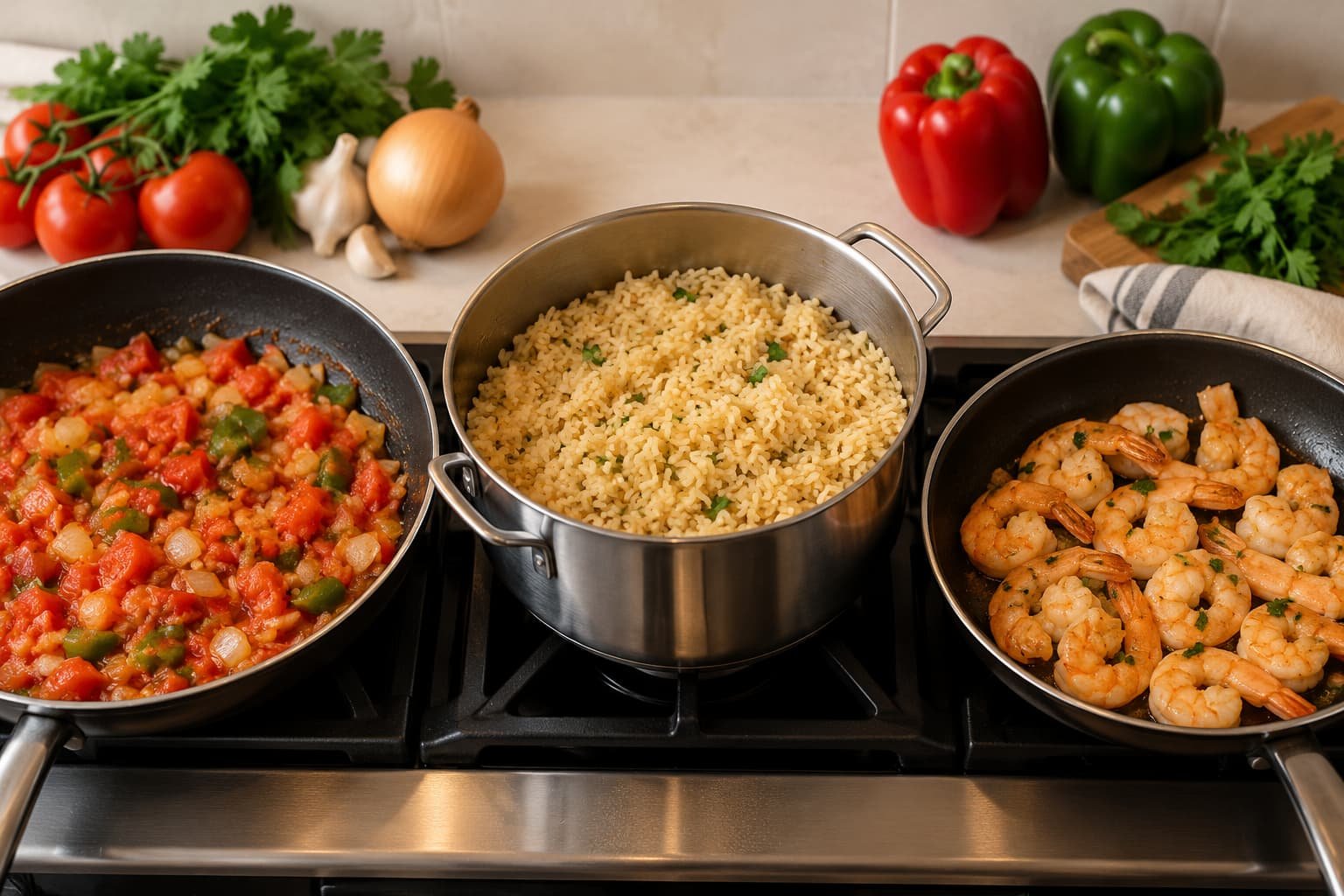
Colombian versions generally combine seasoned rice with shrimp, but the cooking sequence can differ.
Some preparations cook the rice in an aromatic vegetable mixture and add the shrimp later. Others prepare the shrimp separately and combine it with the rice near the end.
Building the Aromatic Base
Many versions begin by cooking vegetables and seasonings before adding the rice.
Tomato, onion or scallion, garlic, and peppers can form the base, while cumin, paprika, herbs, or tomato paste may provide additional flavor depending on the preparation.
Cooking aromatics before the rice allows their flavors to become part of the surrounding cooking liquid.
There is no single required aromatic mixture. One version may emphasize tomato and peppers, while another may use a different balance of vegetables, herbs, and spices.
Cooking the Rice
Rice may be cooked directly in seasoned liquid so that it absorbs flavor while hydrating.
Prepared seafood stock is another option when a recipe calls for a seafood-flavored cooking liquid.
Moisture matters because both water availability and the characteristics of the rice influence the finished texture.
Tomatoes and other vegetables may also release moisture while cooking. This means the total liquid in the dish depends on more than the water or broth added directly.
Because rice varieties and cooking methods differ, one exact liquid ratio should not be assumed to work for every preparation.
Adding or Combining the Shrimp
Shrimp may be added after the rice has already cooked for part of the process, or it may be prepared separately and combined with the rice later.
Both approaches appear in Colombian preparations.
Adding shrimp later can reduce how long it remains exposed to heat. Cooking it separately can provide more control over when it is combined with the rice.
The appropriate approach depends on factors such as shrimp size, whether it is raw or previously cooked, and how the rice is being prepared.
How Do Rice and Shrimp Affect the Final Texture?
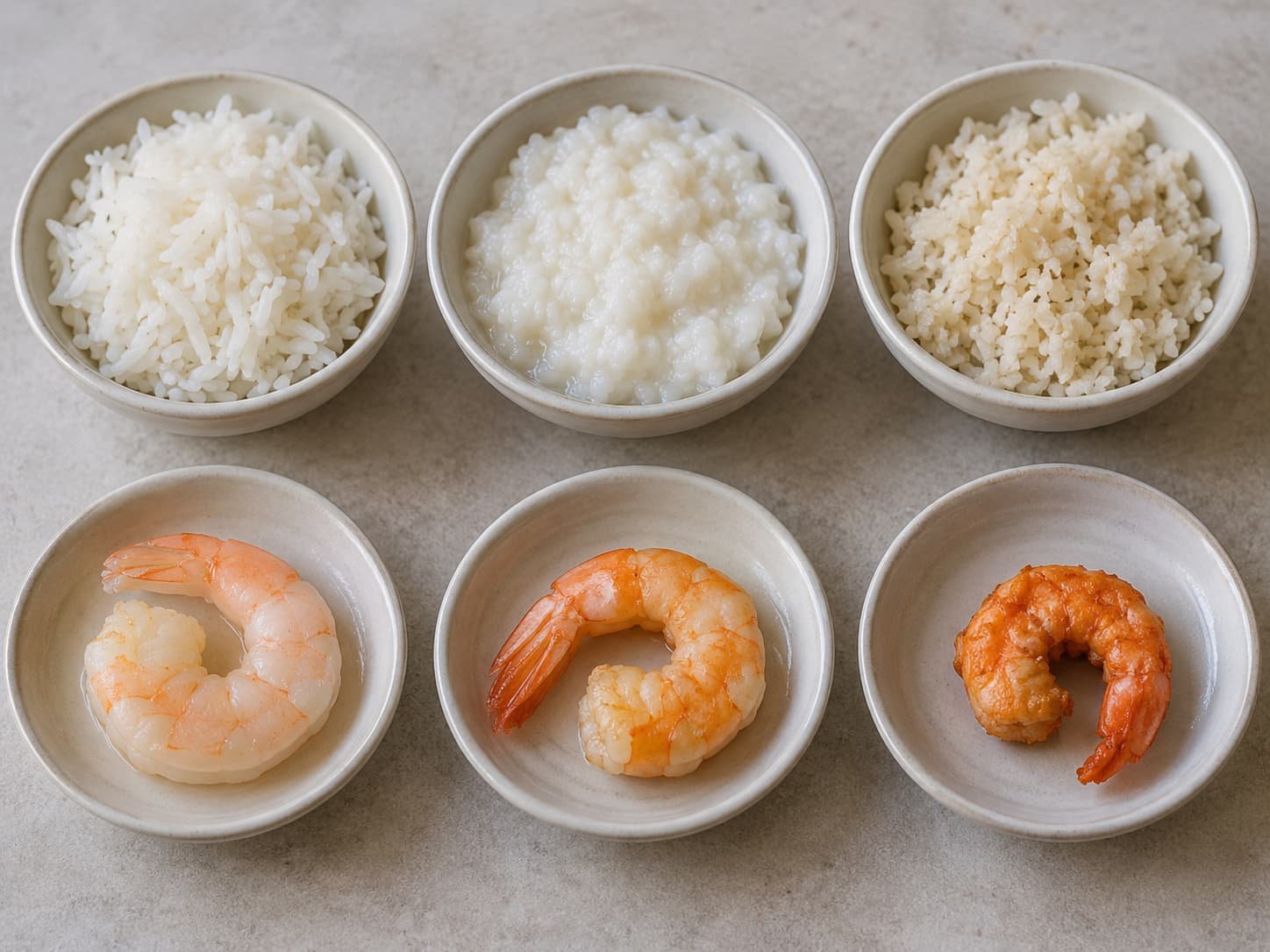
Rice and shrimp respond differently to cooking.
Rice texture is influenced by moisture, rice type, heat, and cooking conditions. Shrimp texture changes as heat affects its proteins and moisture.
Because the two ingredients behave differently, the cooking sequence can influence the final consistency.
Factors That Can Affect Rice Texture
The amount of available liquid is an important factor in rice texture.
Possible contributors to rice that becomes unusually wet, soft, dry, or firm include:
- the amount of cooking liquid
- the type of rice
- moisture released by vegetables
- evaporation during cooking
- heat distribution
- the cooking vessel
- changes to the preparation method
Different rice varieties can also behave differently because their starch composition and water absorption are not identical.
These factors can interact. Rice that seems overly soft, for example, may result from excess liquid, moisture from vegetables, limited evaporation, or several factors acting together.
Without knowing the exact formula and method, these are better treated as possible causes rather than definite diagnoses.
Why Can Shrimp Become Firm or Tough?
Heat changes shrimp proteins and can affect moisture retention and firmness.
Extended or unsuitable heating is one possible reason shrimp develops a firmer or tougher texture, although the effect depends on temperature, cooking method, and other conditions.
This helps explain why some shrimp-and-rice preparations add the seafood later or cook it separately.
There is no universal minute count that works for every version. Shrimp size, starting temperature, whether it is raw or already cooked, and the cooking method all matter.
What Gives Arroz con Camarones Its Flavor and Color?
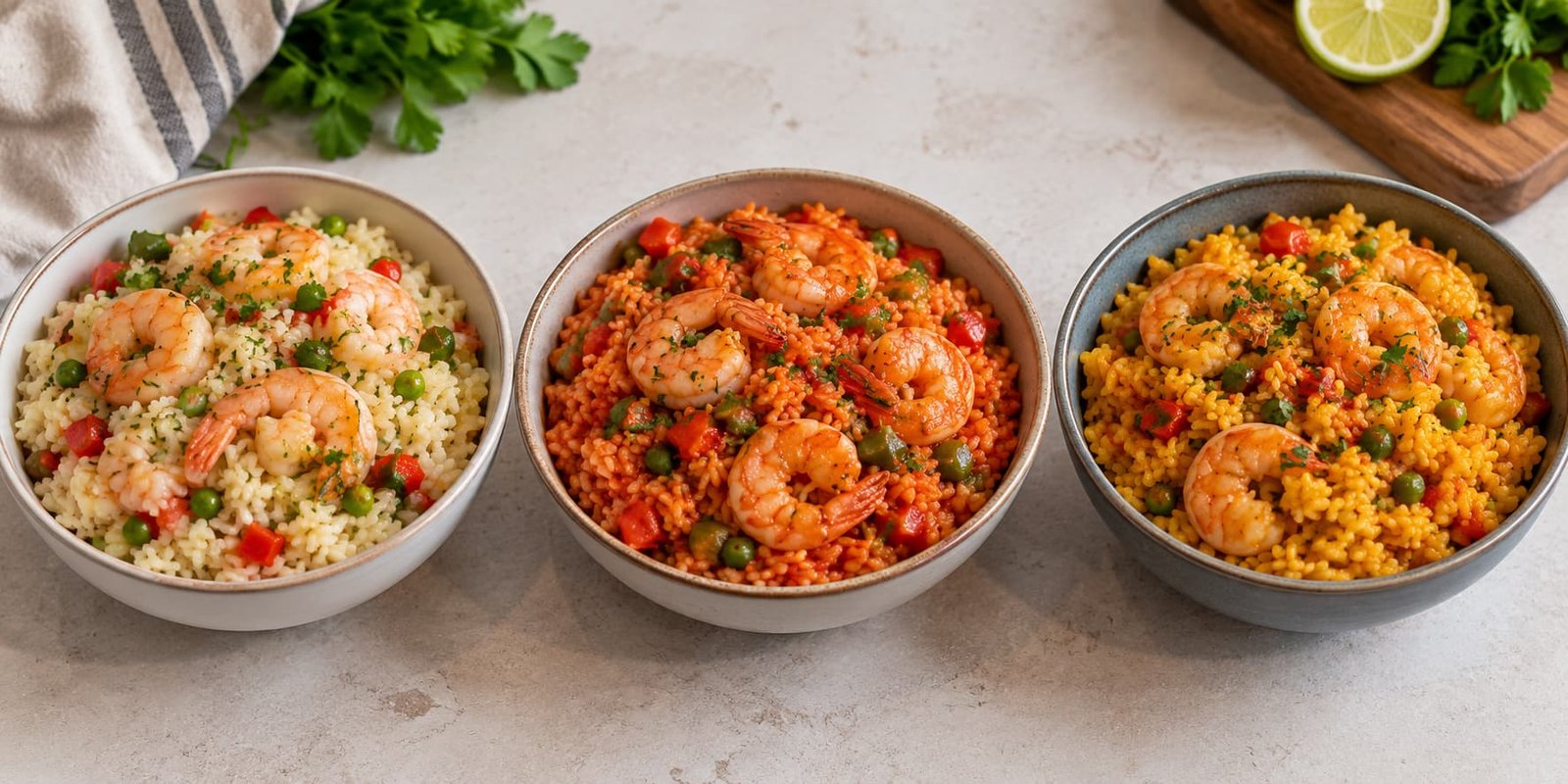
The flavor can come from a combination of shrimp, seasoned cooking liquid, vegetables, aromatics, herbs, and spices.
Tomato, peppers, garlic, cumin, paprika, herbs, and tomato paste may all contribute depending on the preparation.
Shrimp or seafood stock can add more seafood character because the rice cooks directly in the flavored liquid.
The color is not universal. Tomato and tomato paste may create reddish tones, while paprika, achiote, turmeric, or other seasonings can produce orange or golden shades in some preparations.
For that reason, Colombian shrimp and rice does not need to have one specific color.
How Much Does Colombian Arroz con Camarones Vary?
Colombian versions can vary in their vegetables, seasonings, cooking liquids, and seafood preparation.
These differences do not automatically make one version correct and another incorrect. They reflect the fact that the dish does not follow one fixed national formula.
Some preparations use only a few vegetables, while others may include peas, carrots, green beans, or different peppers. Herbs and spices such as cumin, paprika, black pepper, cilantro, or parsley can also vary.
The cooking liquid may differ as well. Some preparations use water with a seasoned tomato-and-vegetable base, while others use shrimp or seafood stock to carry more seafood flavor into the rice.
These ingredients and methods are better treated as documented possibilities rather than requirements for every Colombian version.
Common Problems When Preparing Shrimp and Rice
Texture problems can result from several factors working together.
Rice type, available liquid, heat, evaporation, vegetables, and shrimp timing may all affect the outcome.
Why Can the Rice Become Too Wet or Soft?
Rice may become wetter or softer than intended when more moisture is available than the particular rice and cooking method can handle.
Possible causes include:
- excess cooking liquid
- moisture released by tomatoes or vegetables
- differences between rice varieties
- limited evaporation
- changes to the intended cooking method
All sources of moisture need to be considered together. In a dish containing tomatoes, peppers, broth, and other moisture-rich ingredients, the problem may not come from added water alone.
Why Can the Rice Turn Out Dry or Unevenly Cooked?
Rice may remain firm, dry, or uneven when it receives too little usable moisture or when heat and evaporation are not distributed evenly.
Possible factors include insufficient liquid, faster-than-expected evaporation, uneven heat, differences in rice type, or changes to the intended method.
The cooking vessel and whether it remains covered can also affect moisture loss.
If one part of the rice is soft while another remains firm, several factors may be involved. The exact cause cannot be identified reliably without knowing the full preparation.
Why Can the Shrimp Become Tough?
Prolonged or unsuitable heating is one possible reason shrimp becomes firmer.
Because rice generally requires a longer cooking process, shrimp that remains in the pot for the entire period may receive more heat than needed for that particular preparation.
Adding shrimp later or cooking it separately are two ways recipes can manage this difference.
The appropriate timing still depends on the shrimp and cooking method, so one universal rule should not be assumed.
What Can Be Served With Arroz con Camarones?
Possible accompaniments include avocado, lime wedges, or a simple green salad.
These sides can provide contrast to seasoned rice, but they are optional rather than defining parts of the dish.
Serving choices can vary by preparation and personal preference.
Arroz con Camarones Questions
Can Frozen Shrimp Be Used for Arroz con Camarones?
Yes. Frozen shrimp is a possible choice when it is handled appropriately for the preparation.
When frozen seafood needs to be thawed, FDA guidance recommends thawing it gradually in the refrigerator. Faster options include placing sealed seafood in cold water or using a microwave when it will be cooked immediately afterward.
Raw frozen shrimp and shrimp that was cooked before freezing should not be treated as identical because they require different amounts of additional cooking.
Is Arroz con Camarones the Same as Paella?
No. They are different rice dishes from different culinary traditions.
Paella is associated with Spain, especially Valencia, and is prepared in a characteristic shallow paella pan. Valencian paella has its own ingredient and cooking traditions, while seafood and mixed variations also exist.
Arroz con camarones simply means rice with shrimp and appears in several Latin American cuisines. Colombian versions may use tomato-based aromatics, vegetables, seafood stock, herbs, and spices depending on the preparation.
Both dishes can contain rice and seafood, but that similarity does not make them interchangeable.