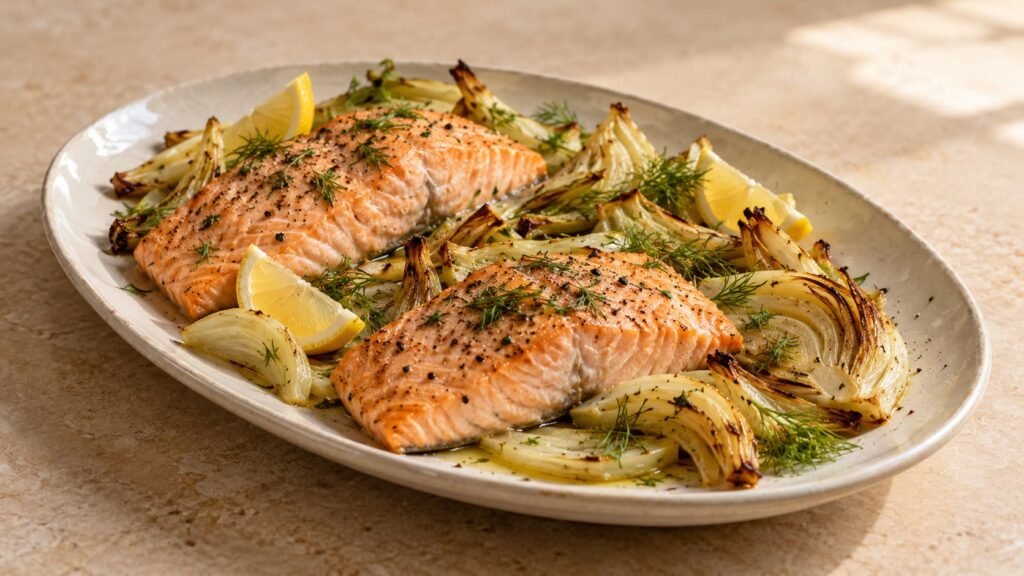
A fennel salmon recipe combines salmon fillets with fresh fennel, olive oil, lemon, garlic, and simple seasonings. One way to prepare this dish is to roast the fennel first, then add the fish and continue baking until the salmon reaches a safe internal temperature.
Fresh fennel has a mild anise-like flavor and a firm texture that softens during cooking. Because salmon usually cooks more quickly than fennel, the vegetable may need additional time in the oven.
This guide explains the ingredients, preparation method, cooking considerations, and ways to serve the dish.
What Is a Fennel Salmon Recipe?
Fennel salmon is a seafood dish made with salmon and fennel, commonly using the fresh fennel bulb. The ingredients can be baked, roasted, or cooked in a skillet.
A fennel bulb is a pale, layered vegetable with green stalks and feathery leaves called fronds. The bulb provides a crisp texture when raw and becomes softer when cooked.
Its mild licorice-like flavor can complement the richness of salmon. Lemon, garlic, olive oil, and fresh herbs are common additions that provide acidity and aromatic flavors.
What Ingredients Are Used in a Fennel Salmon Recipe?
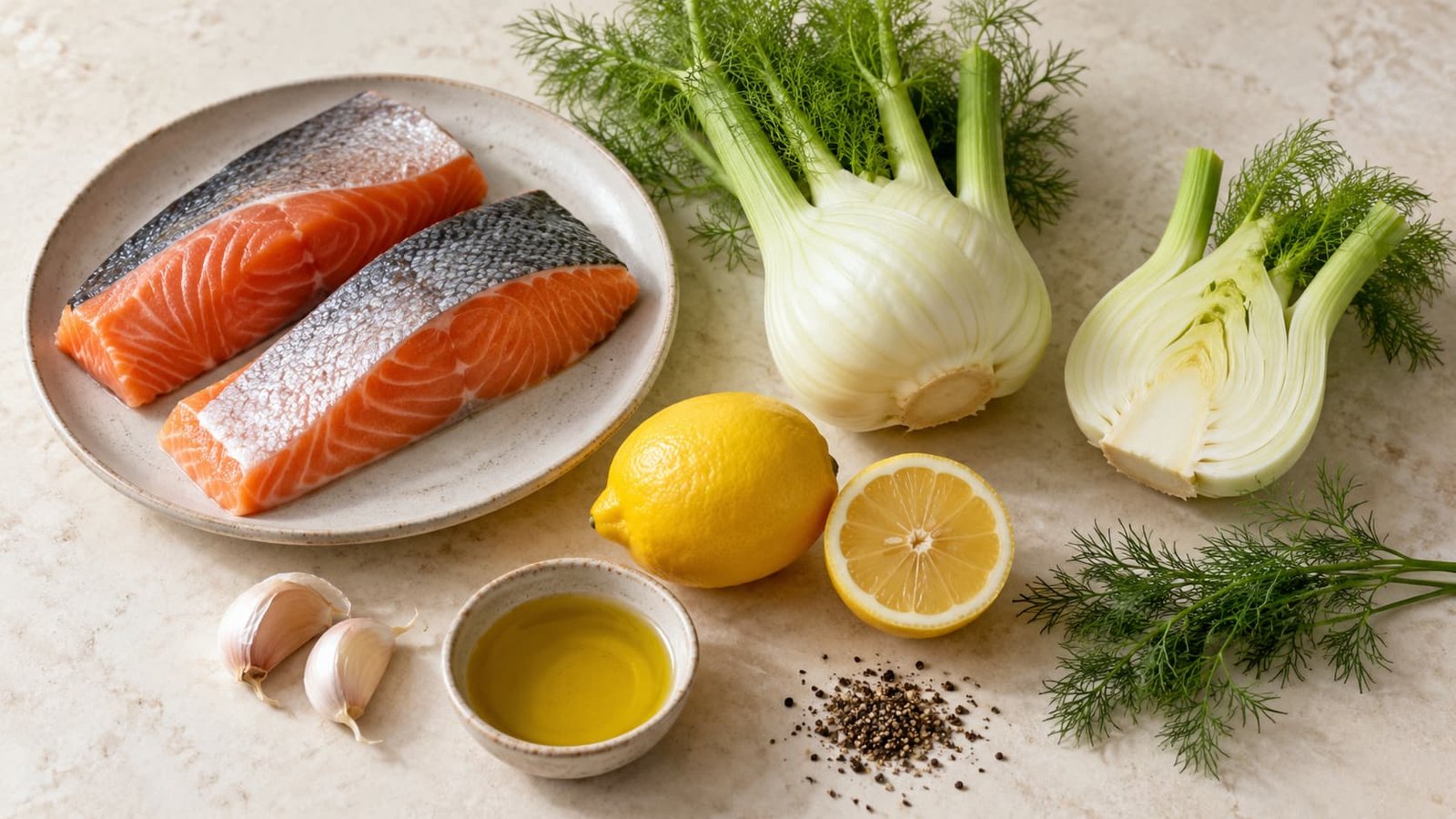
The basic ingredients include salmon fillets, fresh fennel, olive oil, lemon, garlic, salt, and black pepper. Fresh herbs are optional.
These ingredients provide a foundation for an adaptable cooking method. The quantities depend on the number and size of salmon portions and the amount of fennel being prepared.
Choosing Salmon and Fresh Fennel
Choose salmon fillets of similar thickness when possible, as they generally require similar cooking times.
Both skin-on and skinless salmon can be used. Skin-on fillets are commonly arranged with the skin facing down during baking.
Fresh or properly thawed frozen salmon is suitable. When buying fresh fish, look for firm flesh without unusual discoloration or sour odors.
Choose fennel bulbs that feel firm and do not have significant soft or damaged areas.
Fresh fennel and fennel seeds have different uses. The bulb provides a vegetable component, while the seeds are primarily used as a spice.
Simple Seasonings and Flavor Options
A small selection of seasonings can complement salmon and fennel.
- Olive oil: Helps coat the ingredients and distribute seasonings.
- Lemon: Adds acidity and citrus aroma.
- Garlic: Contributes savory flavor.
- Salt and black pepper: Provide basic seasoning.
- Fresh herbs: Dill, parsley, thyme, or fennel fronds can be added for extra flavor.
These ingredients can be adjusted according to the amount of fish and vegetables being prepared.
How Do You Prepare and Cook Salmon with Fennel?
A practical oven method involves preparing the fennel, roasting it until it begins to soften, and then adding the salmon.
The exact cooking time depends on ingredient thickness, oven performance, and the desired texture of the fennel.
Preparing and Slicing the Fennel
Rinse the fennel bulb under cool running water.
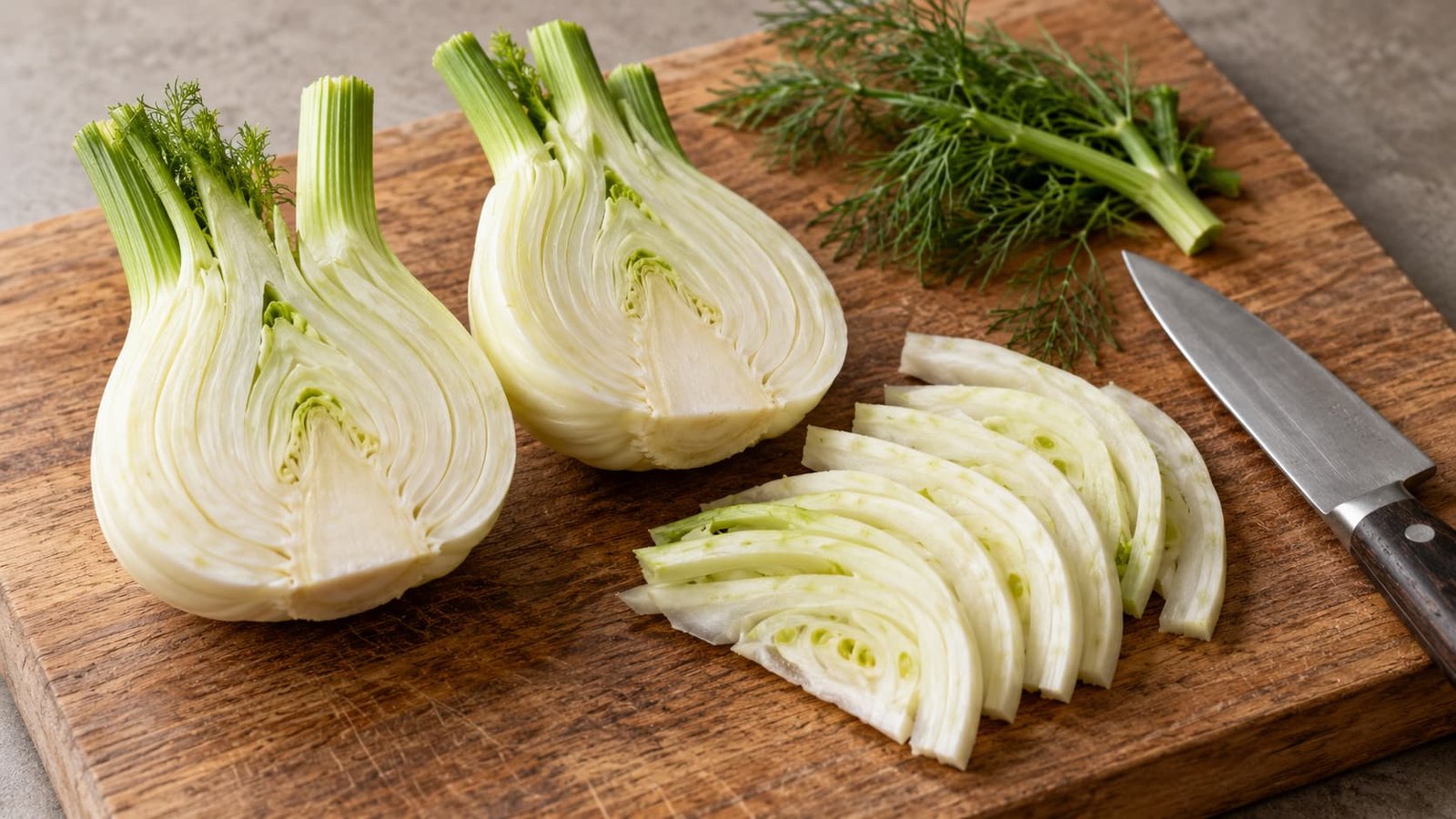
Remove the green stalks and reserve some fronds for garnishing if desired. Trim the bottom of the bulb and remove damaged outer layers.
Cut the bulb in half lengthwise and remove particularly tough core sections if necessary.
Place each half on its flat side and cut it into thin, even slices. Pieces of similar thickness are easier to cook consistently.
Roasting the Fennel and Adding the Salmon
Preheat the oven to 400°F (200°C), a temperature used in published oven-roasted salmon and fennel preparations.
Arrange the sliced fennel on a rimmed baking sheet or in an oven-safe dish. Coat it lightly with olive oil and add salt and black pepper.
Place the fennel in the oven and check its texture periodically. When it begins to soften, remove the dish carefully.
Arrange the seasoned salmon fillets over or alongside the fennel. Add garlic and a small amount of lemon juice or zest if desired.
Return the dish to the oven and continue cooking until the fish reaches the recommended safe internal temperature.
If the fennel remains firmer than preferred when the salmon is ready, remove the cooked fish and allow the vegetable to continue roasting separately.
Checking When the Salmon Is Safely Cooked
According to USDA guidance, fish should reach a minimum internal temperature of 145°F (63°C).
Insert a food thermometer into the thickest part of the salmon, avoiding contact with the baking dish.
Cooking time can vary with the thickness and starting temperature of the fillets. Checking the internal temperature is more reliable than depending on a fixed number of minutes.
What Can Affect the Texture and Flavor of Fennel Salmon?
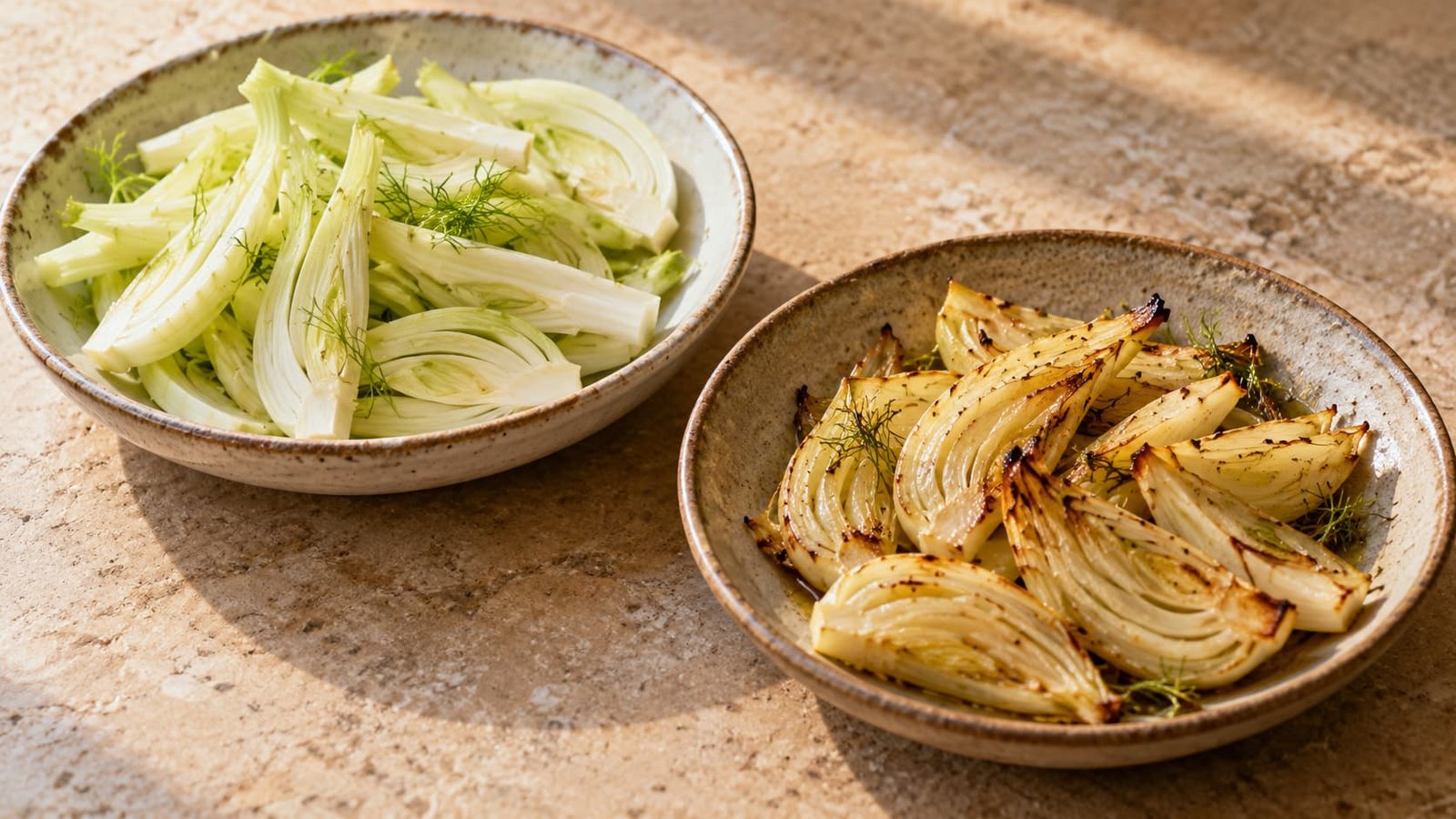
Several cooking factors can change the texture and flavor of the dish.
Fennel thickness: Thin slices generally soften faster than thick pieces. Uneven slices may finish with different textures.
Salmon thickness: Larger or thicker portions may require more time in the oven than thinner fillets.
Moisture: Adding too much liquid or crowding the baking dish may encourage steaming and limit surface browning.
Overcooking: Excessive cooking can make salmon firmer and drier. A food thermometer helps determine when the fish reaches a safe temperature.
Seasoning: Lemon contributes acidity, garlic provides savory flavor, and herbs add aromatic notes. The balance can be adjusted according to preference.
What Can You Serve with Fennel Salmon?
Salmon with fennel can be served with a variety of simple side dishes.
Steamed rice provides a mild base for the fish and vegetables.
Roasted potatoes add a different texture and can be seasoned with herbs or black pepper.
Couscous can be served plain or mixed with parsley and lemon zest.
Green vegetables, such as broccoli, asparagus, or green beans, provide additional vegetable options.
A simple leafy salad is another choice when a fresh side is preferred.
Frequently Asked Questions
Can You Use Frozen Salmon for This Dish?
Yes. Frozen salmon can be used after safe thawing.
The FDA recommends thawing seafood in the refrigerator. For quicker thawing, place the fish in a sealed, leakproof bag and immerse it in cold water, then cook it promptly.
Do not thaw raw salmon on the kitchen counter.
Can Fennel Seeds Replace Fresh Fennel?
Not directly. Fennel seeds can provide a similar aromatic flavor, but they do not replace the vegetable texture of a fresh fennel bulb.
If fresh fennel is unavailable, the seeds can be used in small amounts as seasoning alongside another vegetable.
Can You Make Fennel Salmon Without Lemon?
Yes. Lemon is optional.
The dish can be seasoned with olive oil, garlic, black pepper, and herbs without using citrus. The overall flavor will be different, but the basic cooking method remains suitable.
How Should Leftover Fennel Salmon Be Stored?
Refrigerate cooked salmon and fennel in shallow, covered containers within two hours of cooking. If the surrounding temperature exceeds 90°F (32°C), refrigerate within one hour.
Keep leftovers at 40°F (4°C) or below and use them within three to four days.
When reheating, check that the food reaches an internal temperature of 165°F (74°C), following USDA leftover safety guidance.
Final Thoughts
Preparing salmon with fennel involves selecting suitable ingredients, slicing the vegetable evenly, and accounting for the different cooking requirements of fish and fennel.
Roasting the fennel before adding the salmon is one practical approach. Checking the fish with a food thermometer provides a reliable way to determine safe doneness.
Simple ingredients such as olive oil, garlic, lemon, and herbs allow the dish to be adapted without making the preparation complicated.