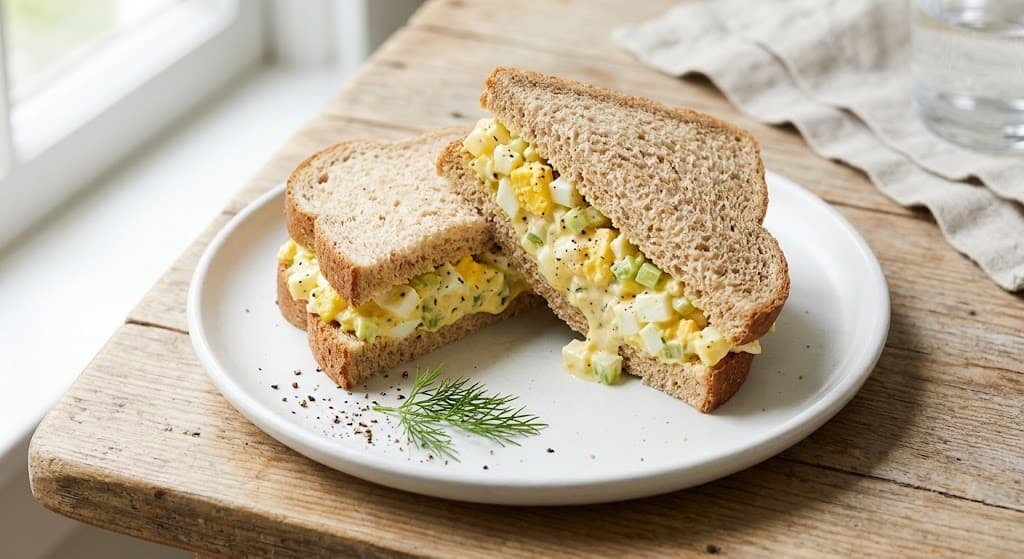
What Is a Classic Egg Salad Sandwich?
A classic American-style egg salad sandwich contains hard-boiled eggs mixed with mayonnaise and seasonings, served between slices of bread. The filling is usually creamy, although its texture can range from chunky to smooth. Common versions also include mustard, celery, or fresh herbs. These ingredients appear in established egg salad recipes, but there is no single combination used in every version. <sup>[1][2]</sup>
The main distinction between egg salad and other egg sandwiches is how the eggs are served. In egg salad, chopped or mashed eggs are combined with a dressing to make a spreadable filling. Other egg sandwiches may contain fried eggs, scrambled eggs, or sliced hard-boiled eggs without mixing them into a creamy dressing.
The final texture depends partly on how the eggs are cut and how much dressing is added. Coarsely chopped eggs leave more noticeable pieces, while finely chopped or mashed eggs create a more uniform filling. These are preparation choices rather than strict rules for a classic sandwich.
What Ingredients Are Commonly Used in Egg Salad?
Hard-boiled eggs, mayonnaise, and seasonings form a common base for American-style egg salad. Mustard and ingredients such as celery, onion, or fresh herbs are frequent additions, but they are optional. The exact combination depends on the recipe. <sup>[1][2]</sup>
Hard-Boiled Eggs and Mayonnaise
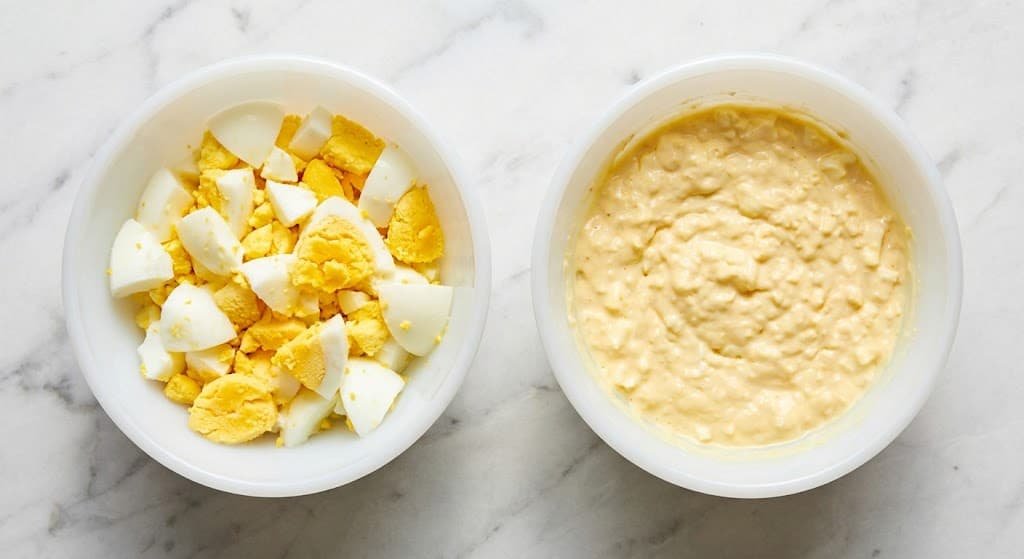
Hard-boiled eggs provide the main substance of the filling. The whites contribute firm pieces, while the yolks break down when mashed and help create a more cohesive mixture.
Mayonnaise acts as a creamy dressing that coats and binds the chopped eggs. The amount used affects the consistency: a mixture with less mayonnaise will generally have less dressing, while adding more makes the filling creamier and may make it softer.
The size of the egg pieces also influences the result. Coarsely chopped eggs preserve a chunkier texture, whereas finely chopped or mashed eggs make the filling easier to spread evenly. Neither texture is essential to every version; the choice depends on personal preference.
Mustard and Basic Seasonings
Mustard, salt, and black pepper are common seasonings in egg salad. Mustard adds tanginess, while salt and pepper help bring out the other flavors. Classic recipes use different types of mustard, including yellow and Dijon, so neither is mandatory. <sup>[1][2]</sup>
Yellow mustard typically has a familiar, tangy flavor, while Dijon mustard has a different, more pronounced flavor profile. The difference is a matter of taste, not a requirement for making an authentic sandwich.
Salt and pepper can be adjusted according to preference and the ingredients already present in the dressing. Because some mayonnaise and mustard products contain added salt, the amount needed will vary.
Optional Additions for Flavor and Texture
Optional ingredients can make egg salad more crunchy, tangy, or herbaceous without changing its basic character.
- Celery: Adds a crisp contrast to the soft egg mixture.
- Green onions: Provide a mild onion flavor.
- Fresh herbs: Chives, dill, and parsley offer different herbal notes.
- Pickle relish: Adds sweetness and acidity, depending on the type used.
These ingredients are commonly found in variations of egg salad, but they are not required in every recipe. For example, celery is a useful choice when a crunchier filling is preferred, while fresh herbs can add flavor without substantially changing the texture. <sup>[1][2]</sup>
A simpler filling can rely on eggs, mayonnaise, and basic seasonings. Other versions combine several additions to create more contrast. Neither approach is universally best; the choice depends on the desired flavor and texture.
Source notes for editorial verification
Verified factual information: Established recipes from Martha Stewart and Food Network include hard-boiled eggs, mayonnaise, seasonings, and optional ingredients such as mustard, celery, and herbs. <sup>[1][2]</sup>
General explanations supported by culinary practice: Chopping, mashing, and changing the amount of mayonnaise affect the filling’s texture. These are practical culinary explanations, not fixed scientific measurements.
Reasonable recommendations: Choose optional ingredients based on the flavor and texture desired. This is editorial guidance rather than an objective rule.
Unverified assumptions: There is no verified universal ingredient list or single official definition that requires every classic egg salad sandwich to contain mustard, celery, or herbs. The article therefore describes common ingredients without presenting optional additions as mandatory.
How Do Ingredients Affect Egg Salad Texture?
The texture of egg salad depends on how the eggs are cut, how much mayonnaise is added, and whether crunchy ingredients are included. These choices can make the filling smooth and creamy or give it a chunkier texture.
Chopped eggs create small, distinct pieces that retain some of their shape. Mashed eggs produce a softer, more blended filling. Some versions combine both methods to create a mixture that is creamy but still has noticeable pieces of egg.
Mayonnaise helps bind the ingredients and makes the filling moist. Using more mayonnaise generally creates a creamier, softer consistency, while using less allows the egg pieces to remain more prominent. The result also depends on how finely the eggs are chopped or mashed.
Optional ingredients can change the texture, too. Finely chopped celery adds a crisp bite, while pickle relish can contribute small pieces of texture along with moisture. Adding too much of a moist ingredient may make the filling looser, so the amount should suit the desired consistency.
What Bread Works Well with Egg Salad?
White sandwich bread, whole-wheat bread, sourdough, and rolls can all work well with egg salad. The best choice depends on whether you prefer a soft sandwich, a heartier flavor, or bread with a firmer crust.
- White sandwich bread: Its soft texture and mild flavor let the creamy egg filling stand out. It is a familiar choice for a traditional sandwich.
- Whole-wheat bread: This bread has a heartier texture and a more pronounced grain flavor. It can add substance and contrast to a mild filling.
- Sourdough: Its firmer crust and slightly tangy flavor provide more contrast with the creamy eggs. Thin slices can help keep the sandwich balanced.
- Rolls: Soft rolls can hold a generous amount of filling, while firmer rolls provide more structure. Their shape can make them useful when serving egg salad as a handheld lunch.
Bread texture matters because a very soft slice can compress around the filling, while a firm crust creates a more noticeable contrast. Flavor matters as well: mild bread keeps the focus on the egg salad, whereas tangy or grainy bread adds another layer of taste.
What Are the Most Common Egg Salad Sandwich Variations?
Egg salad can be adapted with ingredients that change its flavor, texture, or overall character. Mustard adds tang, celery brings crunch, and herbs or pickles introduce fresh or sharp notes. The basic combination of eggs and a creamy binder can remain the same while these additions create different styles.
Mustard and Celery Egg Salad
Mustard and celery are common additions to classic-style egg salad. Mustard gives the filling a tangier flavor that balances the richness of mayonnaise. The exact taste depends on the type used: yellow mustard is generally mild and familiar, while Dijon mustard has a more pronounced flavor.
Celery adds a crisp texture that contrasts with the soft eggs. Chopping it finely helps distribute the crunch throughout the filling without leaving large pieces in each bite. The amount of mustard and celery can be adjusted to suit personal preferences.
Herb and Pickle Egg Salad
Fresh herbs can make egg salad taste brighter and more aromatic. Chopped chives, parsley, and dill are possible options, each offering a slightly different flavor. Chives provide a mild onion-like note, parsley has a fresh, green taste, and dill has a distinctive herbal character.
Pickles and pickle relish add a tangy, sometimes sweet-and-sour flavor. Relish also distributes small pieces throughout the filling, while chopped pickles can provide a more noticeable crunch. Because pickles and relish vary in sweetness and acidity, it is useful to add them gradually to avoid overpowering the eggs.
Herbs and pickles can be used together, but neither is essential. A simpler egg salad may suit readers who prefer the flavor of eggs and mayonnaise to remain the main focus.
American Egg Salad vs. Japanese Tamago Sando
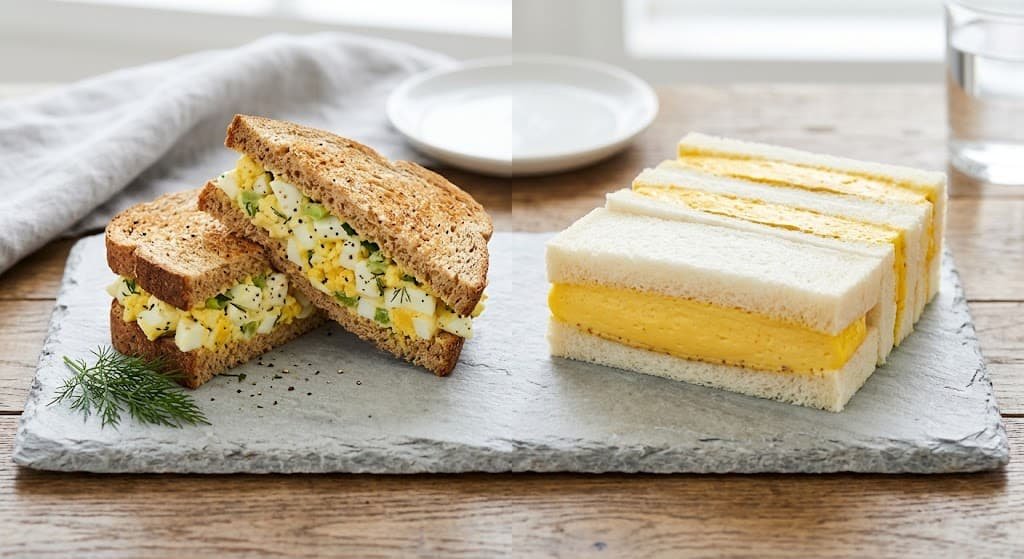
American-style egg salad and Japanese tamago sando both use eggs in a sandwich, but they often differ in texture, seasoning, and presentation.
American-style egg salad commonly combines chopped or mashed hard-boiled eggs with mayonnaise. Depending on the version, it may include mustard, celery, herbs, or pickles. It is often served on ordinary sandwich bread, although other bread types can also be used.
Japanese tamago sando typically features a creamy egg filling inside soft, often crustless white bread. The eggs may be mashed more finely, and Japanese mayonnaise is commonly used in many versions. The result is often a smooth, delicate filling with a simple presentation.
These are general distinctions rather than strict rules. Recipes vary between households and cooks, and both styles can be prepared with different textures and seasonings. The main difference is the style of filling and sandwich being made, not simply the presence of eggs and mayonnaise.
How Should Egg Salad Be Stored Safely?
Egg salad must be kept refrigerated in an airtight container at or below 40°F (4°C). According to United States Department of Agriculture (USDA) food safety standards, prepared egg salad should be eaten within 3 to 5 days.
Never leave it out at room temperature for longer than 2 hours—or 1 hour if the ambient temperature is 90°F (32°C) or higher. Bacteria multiply rapidly between 40°F and 140°F, so prompt refrigeration is essential. Freezing is not recommended because the cooked whites become rubbery and the emulsion breaks upon thawing.
Frequently Asked Questions
Does a classic egg salad sandwich always contain mayonnaise?
While mayonnaise is the traditional binder in classic versions, it is not strictly required. Plain Greek yogurt, mashed avocado, sour cream, or a light olive oil vinaigrette can bind the ingredients together. However, changing the binder alters both the fat content and the overall flavor profile.
Is mustard necessary for egg salad?
No, mustard is optional. It is frequently added to cut through the richness of the yolk and mayonnaise, introducing a slight tang or sharp bite. Yellow mustard offers a familiar, mild taste, whereas Dijon or whole-grain varieties add stronger spice and texture.
Can celery be added to a classic egg salad sandwich?
Yes. Finely diced celery is one of the most common additions, providing a fresh crunch that balances the soft texture of the eggs. Slicing it into very small pieces ensures an even distribution throughout the spread without overpowering individual bites.
What is the difference between American egg salad and Japanese egg salad?
The main differences lie in the bread, the mayonnaise, and how finely the eggs are processed:
- American Egg Salad: Typically features coarsely chopped hard-boiled eggs mixed with standard mayonnaise, often accompanied by mustard, celery, relish, or herbs. It is commonly served on whole wheat, white bread, or rolls.
- Japanese Egg Salad (Tamago Sando): Features finely mashed eggs bound with Japanese mayonnaise (made exclusively with egg yolks and rice or apple cider vinegar, giving it a richer, tangier profile). It is traditionally served on soft, crustless Japanese milk bread (shokupan).
How long can egg salad stay at room temperature?
Egg salad should never remain at room temperature for more than 2 hours. If the room or outdoor environment exceeds 90°F (32°C), that window drops to 1 hour maximum. Beyond these thresholds, discard the mixture to prevent foodborne illness.
Final Thoughts
Making a great sandwich comes down to balancing texture, moisture, and flavor. Adjusting how finely you cut the eggs, choosing your binder carefully, and pairing the filling with the right type of bread allows for endless variation while keeping preparation simple and safe.