
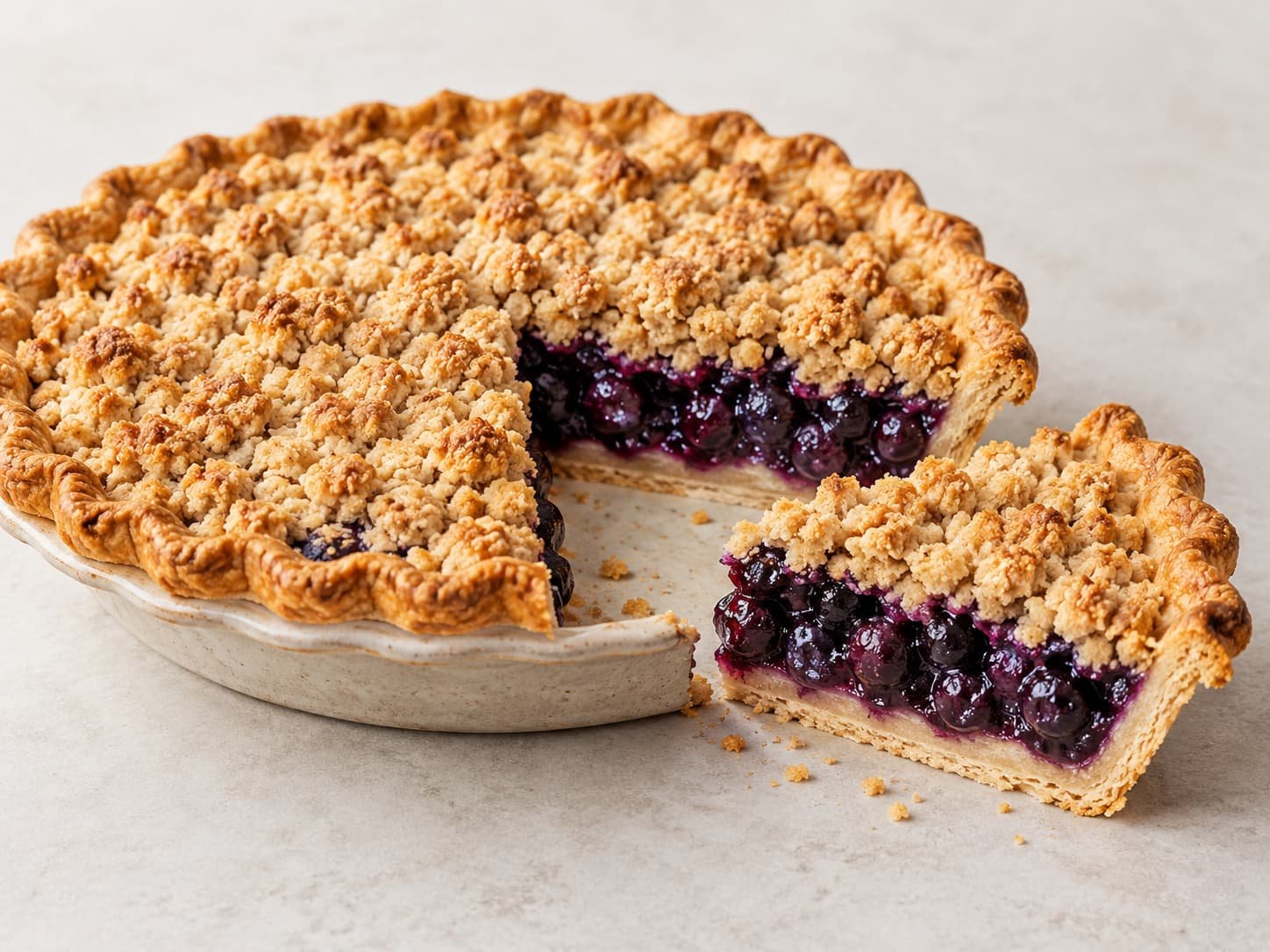
Blueberry pie with crumb topping is made with a bottom pastry crust, blueberry filling, and a crumb or streusel topping instead of a full upper crust. The topping commonly combines flour, sugar, and fat, while some versions also include oats, nuts, or spices.
The exact result can vary with the type of blueberries, filling thickener, pie crust, and crumb mixture. Understanding the role of each component makes it easier to follow a specific blueberry crumb pie formula without assuming that every version is prepared the same way.
What Is Blueberry Pie With Crumb Topping?
Blueberry pie with crumb topping is a fruit pie with three basic layers: a pastry crust on the bottom, a blueberry filling in the center, and loose crumbs or streusel on top.
Unlike a double-crust pie, it does not have a complete layer of pastry covering the fruit. The crumb topping leaves small spaces across the surface and creates a different structure from a solid or lattice pastry top.
Recipes vary considerably. Some use a simple flour-based streusel, while others add oats, nuts, cinnamon, or other ingredients. Filling methods and thickeners can also differ.
Blueberry Crumb Pie vs. Traditional Blueberry Pie
The main difference is the topping.
A traditional blueberry pie may be covered with a full pastry crust or arranged with pastry strips in a lattice. A blueberry crumb pie uses a crumbly flour, sugar, and fat mixture instead.
The type of topping can also affect how moisture and steam escape during baking. A crumb or lattice top is more open than a solid pastry crust, so the filling may behave differently depending on the recipe and the amount of thickener used.
Both styles still contain blueberry filling inside a bottom pie crust.
Blueberry crumb pie is also different from a blueberry crumble. A crumble may consist mainly of fruit and a crumb topping, while a crumb pie includes a pastry crust underneath the filling.
Is Crumb Topping the Same as Streusel?
Crumb topping and streusel are closely related terms. In baking, streusel generally refers to a crumbly mixture based on flour, sugar, and fat. Nuts, spices, or other additions may also be included.
The terminology is not completely standardized, so recipes may use crumb, crumble, and streusel somewhat differently.
Oats are not required. Some blueberry pies use a flour-based streusel without oats, while others include oats to create a different type of topping.
For this reason, blueberry crumb pie, blueberry crumble pie, and blueberry pie with streusel topping can refer to closely related desserts, but the ingredient list should be checked before assuming the toppings are identical.
The Main Components of a Blueberry Crumb Pie
A blueberry crumb pie has three main components: the bottom crust, blueberry filling, and crumb topping. Each has a different function, and changes to one part can influence the overall structure of the pie.
There is no single formula that defines every blueberry crumb pie.
The Bottom Pie Crust
The bottom crust provides the base that holds the fruit filling.
A homemade pie dough can be used for a from-scratch version, although pie dough formulas vary in their flour, fat, liquid, and preparation methods. Those differences can affect how the crust handles moisture and browns during baking.
Moisture is especially relevant because blueberries release juice as they heat. Factors such as the filling consistency, crust thickness, baking method, and whether the crust is used raw or partially baked may influence the bottom layer.
Not every blueberry crumb pie requires blind baking or par-baking. Published methods differ, so crust preparation should follow the specific formula being used rather than a universal rule.
The Blueberry Filling
Blueberry pie filling usually combines fruit with ingredients that help manage sweetness, acidity, and consistency.
Blueberries provide the fruit and much of the liquid in the filling. Their sweetness, tartness, and moisture can vary depending on the fruit.
Sweeteners may be added to balance the berries. The appropriate amount depends on the fruit and the particular recipe rather than one fixed standard.
Lemon juice or zest appears in many blueberry pie formulas. It can add acidity and citrus flavor, but the type and amount used vary.
Thickeners help control the liquid released by the berries as they bake. Common options include cornstarch, flour, and tapioca.
These thickeners are not automatically interchangeable in equal amounts. They differ in thickening strength and behavior, so changing from one to another may require a formula specifically designed for that ingredient.
Blueberries also contain natural pectin, but that does not remove the need to follow the thickening method specified by a particular pie formula.
The Crumb Topping
A crumb topping is commonly made from flour, sugar, and fat mixed until crumbs or clusters form.
The exact texture depends on the ingredients, their proportions, and how they are combined. There is no single appearance or consistency that applies to every crumb topping.
Brown sugar, granulated sugar, or a combination may be used. Some versions include oats, while others use only flour as the main dry ingredient. Nuts and spices such as cinnamon are optional variations.
A flour-based streusel and an oat-based crumble can both be used over blueberry pie, but they may differ in texture, flavor, and browning behavior.
Because the topping sits directly above a moist fruit filling while also being exposed to oven heat, both the filling and topping formula can affect how the upper layer bakes.
Fresh vs. Frozen Blueberries for Pie
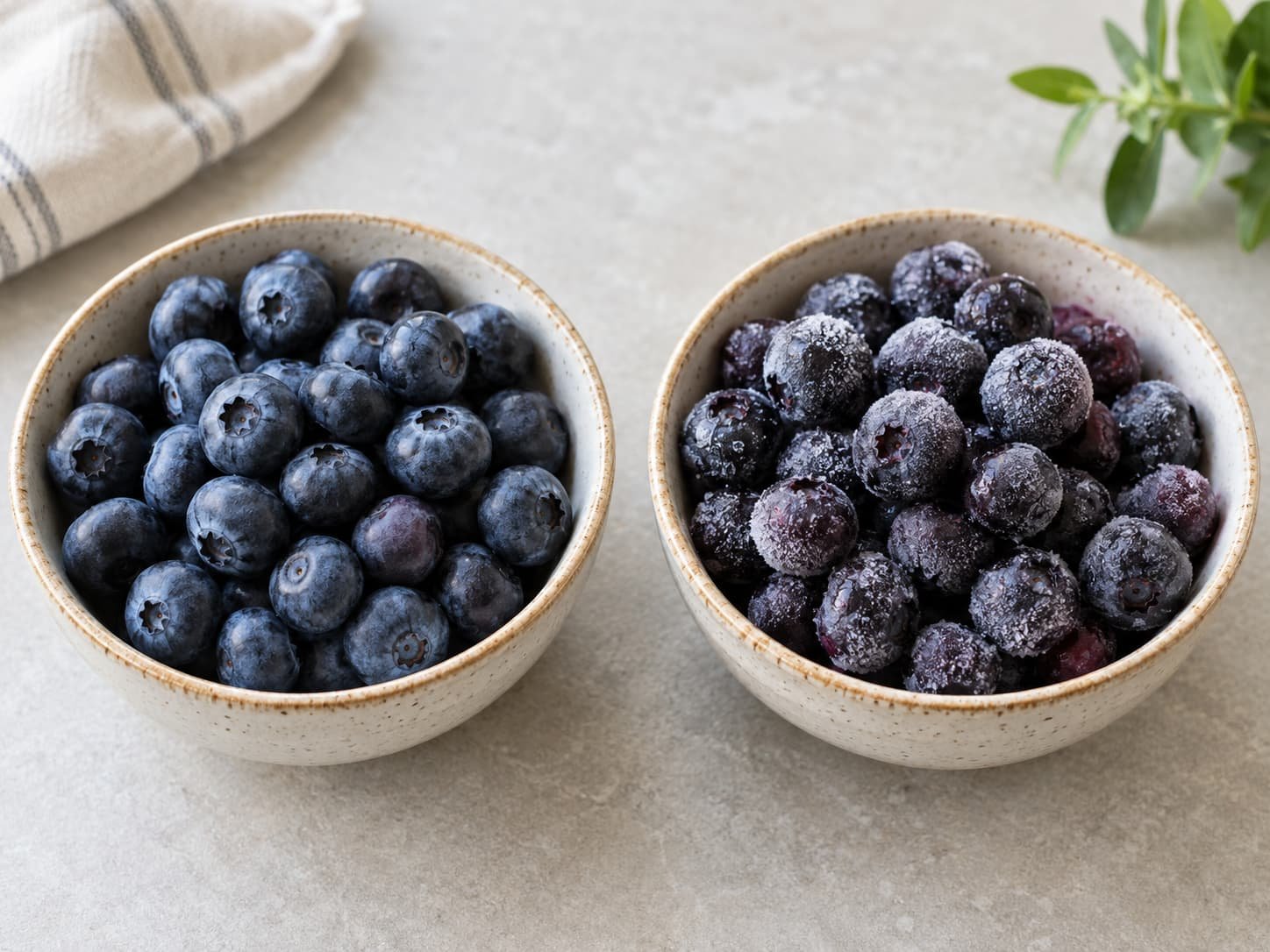
Both fresh and frozen blueberries can be used in published pie formulas, but they may release moisture differently. This can affect filling consistency, so the fruit should be handled according to the specific formula being followed.
Frozen berries should not automatically be treated exactly like fresh berries. Some recipes use them frozen, while others call for thawing, draining, or another preparation method.
How Fresh Blueberries Behave in Pie Filling
Fresh blueberries release juice as they heat. The amount can vary with the fruit’s ripeness, juiciness, size, and natural moisture.
Some berries may soften and release more liquid, while others can remain partly intact. This variation is one reason fruit fillings do not always behave exactly the same from one batch of berries to another.
A suitable thickener helps manage the released juice, but filling consistency also depends on the ingredient proportions, chosen thickener, and baking method.
Can Frozen Blueberries Be Used?
Yes. Frozen blueberries are used in some blueberry pie formulas.
However, freezing changes the fruit’s physical structure, and frozen berries can release substantial liquid as they thaw and heat. A recipe designed for frozen fruit may account for this through its preparation method, thickener, or other formula-specific adjustments.
This does not mean frozen blueberries always produce a runny filling. It means a recipe written for fresh berries should not automatically be assumed to work identically with frozen fruit.
Should Frozen Blueberries Be Thawed First?
Not always. There is no universal rule for thawing frozen blueberries before making pie.
Some methods use the berries while still frozen. Others thaw, drain, partially cook, or otherwise prepare them before assembling the filling.
Thawed berries can release liquid before the pie reaches the oven, while berries used frozen release more of that moisture as they heat. The appropriate method depends on how the recipe is designed to manage that liquid.
For this reason, follow the fruit-handling instructions in a reliable formula rather than applying one thawing rule to every blueberry pie.
How Blueberry Pie Filling Thickens
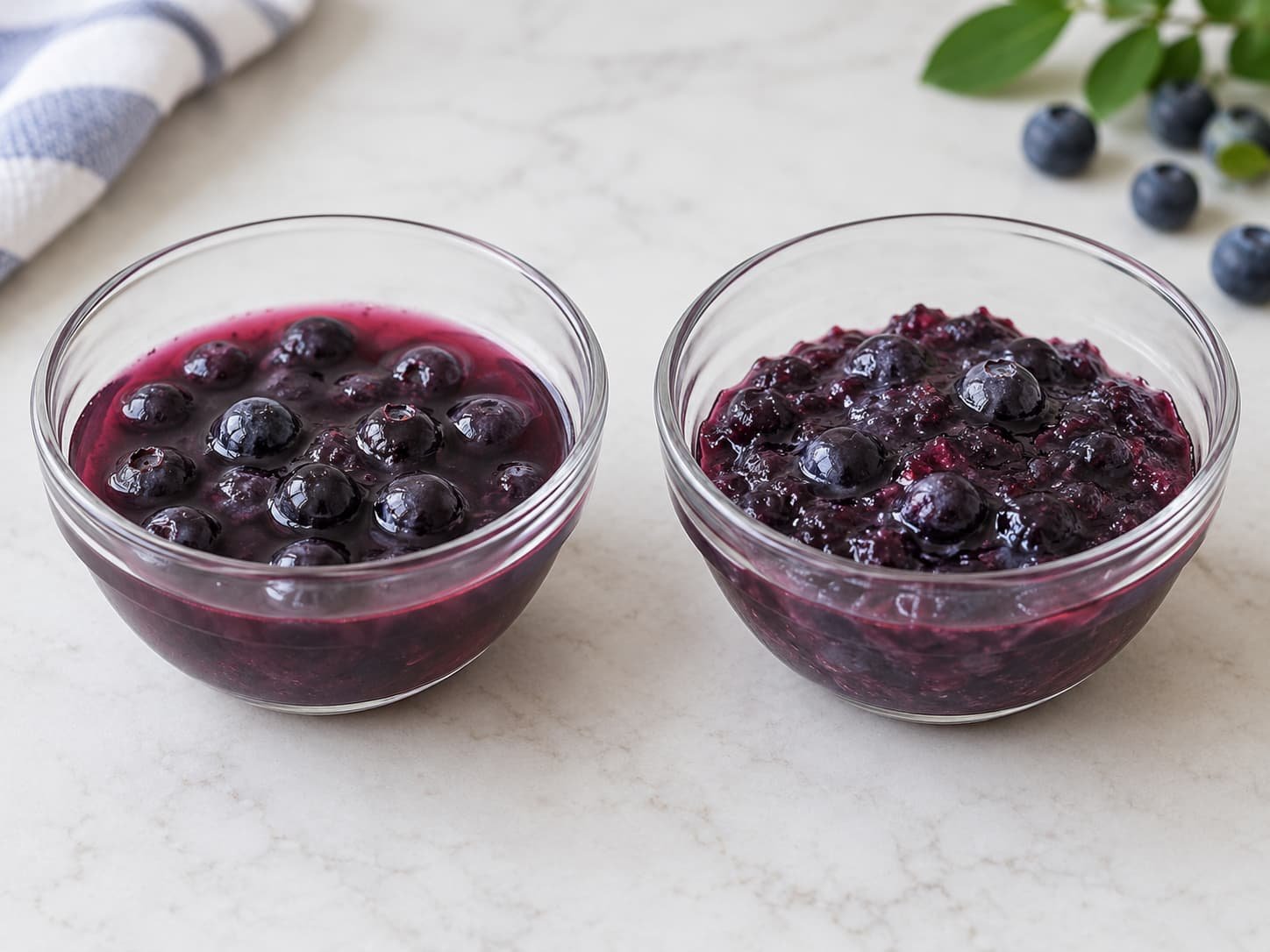
Blueberries release juice during baking, so many pie fillings use a starch-based thickener to help control that liquid.
As the filling heats, the chosen starch can thicken some of the fruit juice and help create a more stable filling. The final consistency still depends on the fruit, thickener, proportions, heating, and cooling.
Why Blueberry Pie Needs a Thickener
A thickener helps prevent the liquid released by blueberries from remaining completely loose around the fruit.
Common starches used in fruit pie fillings absorb or interact with liquid as they heat. This can turn free-flowing juice into a thicker filling that becomes more stable as it cools.
Adding starch alone does not guarantee a particular texture. The amount and type of thickener must suit the fruit and the specific formula, and the filling must be heated appropriately for that thickener to function as intended.
Cooling is also important because hot fruit filling is typically less stable than the same filling after it has cooled.
Common Thickeners Used for Blueberry Pie
Common fruit-pie thickeners include cornstarch, all-purpose flour, and tapioca.
Cornstarch can produce strong thickening with a relatively small amount compared with some other starches.
All-purpose flour also thickens fruit juice, but it behaves differently from cornstarch and may produce a different appearance and consistency.
Tapioca is another option used in fruit pie fillings and has its own thickening characteristics.
These thickeners should not automatically be substituted in equal quantities. Their thickening strengths and behavior differ, so a recipe developed for one should not be converted to another using a simple one-for-one replacement unless a reliable conversion supports it.
When possible, use the thickener specified in the chosen formula.
Why Blueberry Pie Filling Can Turn Runny
A runny blueberry filling can have several possible causes rather than one single explanation.
Common factors may include:
- berries that release more liquid than expected
- too little thickener for the amount of available liquid
- substituting one thickener for another without an appropriate adjustment
- a filling that did not heat sufficiently for the chosen starch
- changing fruit or ingredient proportions
- slicing the pie before the filling had enough time to cool and stabilize
These factors can overlap. For example, very juicy fruit combined with an unsuitable thickener adjustment may create a looser filling than either factor alone.
Because the cause can vary, it is more useful to review the fruit, thickener, heating method, and cooling stage together rather than assuming one ingredient is always responsible.
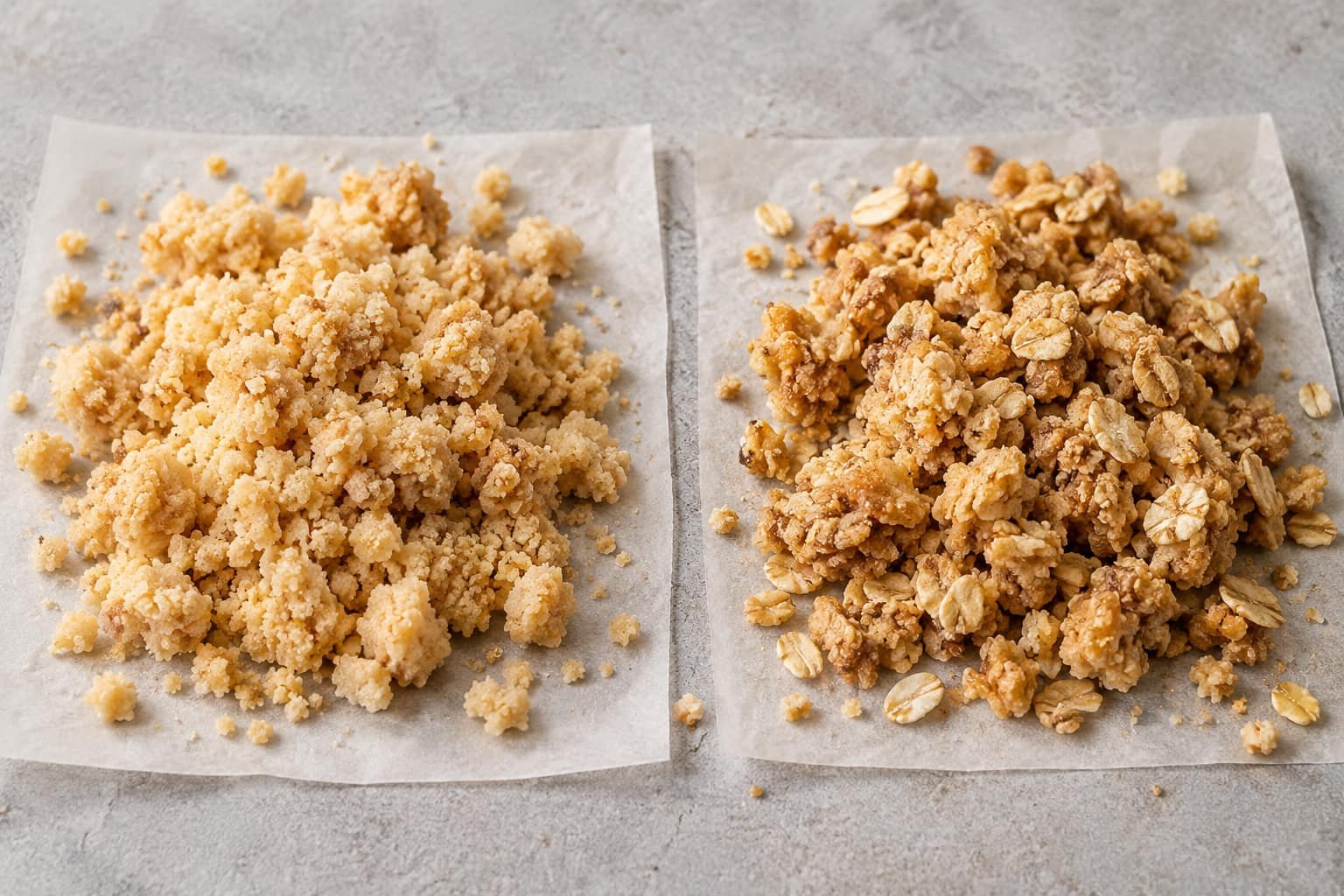
How Crumb Topping Works on Blueberry Pie
Crumb topping forms a loose layer over the blueberry filling instead of using a full pastry crust. It usually combines flour, sugar, and fat, although some versions also include oats, nuts, or spices.
Because the topping is directly exposed to oven heat, it can brown faster than the fruit filling underneath. Its texture and baking behavior depend on the ingredient proportions and preparation method.
What Creates a Crumbly Topping?
Flour, sugar, and fat commonly form the base of a crumb or streusel topping. When combined, the fat coats and binds portions of the dry ingredients, creating crumbs or clusters instead of a smooth pastry dough.
The balance of ingredients affects the structure. More or less flour, sugar, or fat can change whether the mixture forms fine crumbs, larger clusters, or a denser layer. The condition of the fat and the amount of mixing can also influence the result.
There is no single appearance that every crumb topping must have before baking. The expected consistency should follow the specific formula being used.
Does Blueberry Pie Crumb Topping Need Oats?
No. Oats are optional.
Traditional streusel-style toppings may use only flour, sugar, and butter, while other crumble toppings include oats. Some versions also add nuts or spices.
An oat-based crumble and a flour-based streusel can both be used on blueberry pie, but they may differ in texture, flavor, and browning. Oats are therefore a variation, not a required ingredient.
Why Can Crumb Topping Brown Too Quickly?
Crumb topping can brown before the blueberry filling is fully cooked because it sits on the exposed surface of the pie.
Sugar and fat also contribute to browning, while oven temperature, rack position, and the topping formula can affect how quickly the surface darkens.
Some published fruit-pie methods use a loose foil tent when the topping or crust becomes too brown before the filling is ready. This is a protective technique used in certain recipes, not a step that should be applied at one fixed time for every pie.
A browned topping alone does not confirm that the fruit filling underneath is fully cooked. The filling and topping need to be judged separately according to the chosen method.
Crust Considerations for a Juicy Blueberry Filling
The bottom crust sits directly beneath the blueberry filling, so moisture and heat transfer can affect how it bakes.
Blueberries release juice during baking, and that liquid can reach the pastry before the crust has fully set. Crust thickness, filling consistency, pan type, oven conditions, and preparation method may all influence the bottom layer.
Does the Crust Need to Be Blind Baked?
Not always. Some blueberry crumb pie methods use an unbaked crust, while others partially bake the crust before adding the filling.
Blind baking means baking a pie crust without filling. When the crust is baked only partway before filling is added, the process is usually described as par-baking or partial pre-baking.
Par-baking may be used for some single-crust fruit pies, including versions finished with crumb or streusel topping. However, it is not required for every blueberry pie.
Other published methods place the filling directly into an unbaked crust and rely on the full baking process to cook the pastry.
The correct approach depends on the specific recipe rather than one universal rule.
What Can Contribute to a Soft or Soggy Bottom Crust?
A soft bottom crust can have several possible causes. One common factor is moisture from the fruit filling reaching the pastry before the lower crust has had enough heat to set and brown.
Other possible factors include:
- a filling that releases a large amount of liquid
- crust thickness or dough composition
- the type of pie pan used
- limited heat reaching the bottom of the pie
- whether the method uses an unbaked or partially baked crust
- insufficient baking of the lower pastry
These factors can interact, so there is no single guaranteed solution.
Some recipes use par-baking to give the crust a head start, while others rely on baking methods that improve heat transfer to the bottom of the pie. The most suitable approach depends on the crust, filling, pan, and instructions in the specific formula.
General Assembly and Baking Principles
Blueberry crumb pie is generally assembled in three layers: a bottom crust, blueberry filling, and crumb topping. The exact ingredient amounts, pie size, oven temperature, and baking time depend on the specific formula being followed.
A typical preparation sequence is:
- Prepare the bottom crust as directed by the chosen method.
- Prepare the blueberry filling with the fruit, sweetener, thickener, and any other specified ingredients.
- Add the filling to the prepared crust.
- Spread or scatter the crumb topping over the fruit.
- Bake according to a verified recipe or formula.
- Let the pie cool before slicing so the filling has time to become more stable.
This sequence describes the general process without assuming that every blueberry pie requires the same measurements or baking conditions.
During baking, the topping and filling may progress at different rates. The exposed crumb layer can brown before the fruit underneath has finished heating, so surface color alone is not a reliable sign that the whole pie is ready.
How to Tell When Blueberry Crumb Pie Is Baked
A bubbling fruit filling and an appropriately browned crust and topping are useful visual signs when judging a baked blueberry pie. The exact doneness guidance should still come from the formula being followed rather than from one universal baking time.
For a thickened fruit filling, sufficient heating is important because commonly used starches need heat to develop their thickening effect.
What to Look for in the Filling
Look for active bubbling in the blueberry filling, particularly around the edges or through openings in the crumb topping.
Bubbling shows that the liquid in the filling has become very hot. This matters because starch-based thickeners rely on sufficient heating to thicken the fruit juices effectively.
A few isolated bubbles should not automatically be treated as proof that the entire filling is ready. The specific recipe may provide additional signs of doneness.
The filling will also be looser while it is very hot. Its final consistency is easier to judge after the pie has cooled and the thickened fruit mixture has had time to become more stable.
What to Look for in the Crust and Topping
The crust and crumb topping should show appropriate browning, but there is no single exact color that defines a finished blueberry crumb pie.
Because the topping is exposed directly to oven heat, it may brown before the filling underneath is ready. For this reason, topping color should be considered together with signs from the fruit filling.
The visible crust should also appear baked according to the chosen method rather than raw or underdone.
If the topping or exposed crust darkens too quickly, some pie methods use a loose foil covering to reduce further browning while baking continues. This is a formula-dependent technique rather than a step that should be applied at the same time for every pie.
Why Blueberry Pie Needs Time to Cool Before Slicing
Blueberry pie filling is usually looser while it is very hot. As it cools, the thickened fruit mixture can become more stable, which may make the pie easier to slice.
Cooling time varies by formula. Factors such as filling depth, fruit moisture, and the type and amount of thickener can influence how quickly the filling settles.
Cutting the pie too soon may allow hot juices to flow more freely, even if the filling has thickened during baking. For that reason, cooling is an important part of the overall process.
Use the cooling guidance provided by the specific recipe rather than assuming one fixed time applies to every blueberry pie.
Common Blueberry Crumb Pie Problems
Problems with blueberry crumb pie usually involve the filling, crumb topping, or bottom crust. More than one factor can contribute, so troubleshooting should consider the full method rather than focusing on a single ingredient.
The Filling Is Too Runny
A runny filling can have several possible causes.
These may include berries that release more liquid than expected, too little thickener for the formula, an unsuitable thickener substitution, insufficient heating, or slicing before the filling has cooled enough to stabilize.
Because these factors can overlap, changing one ingredient without reviewing the rest of the method may not solve the problem.
The Filling Becomes Too Thick
A filling that becomes unusually firm may contain more thickener than the available fruit liquid requires.
Fruit moisture can also vary. A formula designed around very juicy blueberries may behave differently when used with berries that release less liquid.
Other possible causes include changing ingredient proportions or replacing one thickener with another without a reliable conversion. There is no universal correction ratio because different starches and fruit mixtures behave differently.
The Crumb Topping Is Dense Instead of Crumbly
A dense crumb topping may be related to ingredient balance or how the mixture was handled.
The proportions of flour, sugar, and fat affect how crumbs or clusters form. The condition of the fat and the amount of mixing can also influence whether the topping stays loose or becomes more compact.
The expected consistency should follow the specific topping formula rather than one universal visual standard.
The Topping Browns Before the Filling Is Ready
The crumb topping may brown before the blueberry filling is fully cooked because it is exposed directly to oven heat.
The topping ingredients, oven conditions, and rack position can all affect how quickly the surface darkens.
Some pie methods use a loose foil covering when the topping is becoming too dark while the filling still needs more baking. This is a formula-dependent technique, not a step that should be applied at a fixed time for every pie.
The Bottom Crust Is Soft
A soft bottom crust can be related to moisture from the blueberry filling reaching the pastry before the lower crust has fully set and browned.
Other possible factors include crust thickness, filling consistency, pie-pan material, oven heat reaching the bottom of the pie, and whether the chosen method uses an unbaked or partially baked crust.
There is no single guaranteed fix. The crust, filling, pan, and baking method should be considered together when identifying the likely cause.
Blueberry Pie With Crumb Topping Questions
Can You Make Blueberry Crumb Pie With Frozen Blueberries?
Yes. Frozen blueberries can be used in some blueberry pie formulas.
Because frozen berries may release moisture differently from fresh fruit, use a recipe that specifically explains how to handle them rather than assuming they can always be substituted without adjustment.
Do You Need to Thaw Frozen Blueberries Before Making Pie?
Not always. Some recipes use blueberries while still frozen, while others call for thawing, draining, or another preparation step.
The correct approach depends on how the particular filling formula manages fruit moisture.
What Is Commonly Used to Thicken Blueberry Pie Filling?
Cornstarch, all-purpose flour, and tapioca are common thickeners for fruit pie fillings.
They differ in thickening strength and behavior, so they should not automatically be substituted in equal amounts. Follow the thickener and quantity specified by a reliable formula.
Does Crumb Topping Have to Contain Oats?
No. Oats are optional in crumb topping.
Some versions use an oat-based crumble, while flour-based streusel may use flour, sugar, and fat without oats. Nuts and spices are also optional additions in some formulas.
Is Blueberry Crumble Pie the Same as Blueberry Crumb Pie?
The terms often describe closely related pies with a blueberry filling, bottom crust, and crumb-style topping.
However, the terminology is not completely standardized. One recipe may use a flour-based streusel while another uses an oat-based crumble, so the exact topping can vary.
Should Blueberry Pie Crust Be Blind Baked?
Not always. Some blueberry crumb pie recipes use an unbaked crust, while others partially bake the crust before adding the filling.
Whether blind baking or par-baking is appropriate depends on the crust and baking method used in the specific recipe.
Why Is My Blueberry Pie Filling Runny?
Possible causes include very juicy berries, insufficient thickening, an unsuitable thickener substitution, inadequate heating, or slicing while the filling is still very hot.
Because several factors can contribute, check the fruit, thickener, baking method, and cooling stage together rather than assuming one ingredient is responsible.