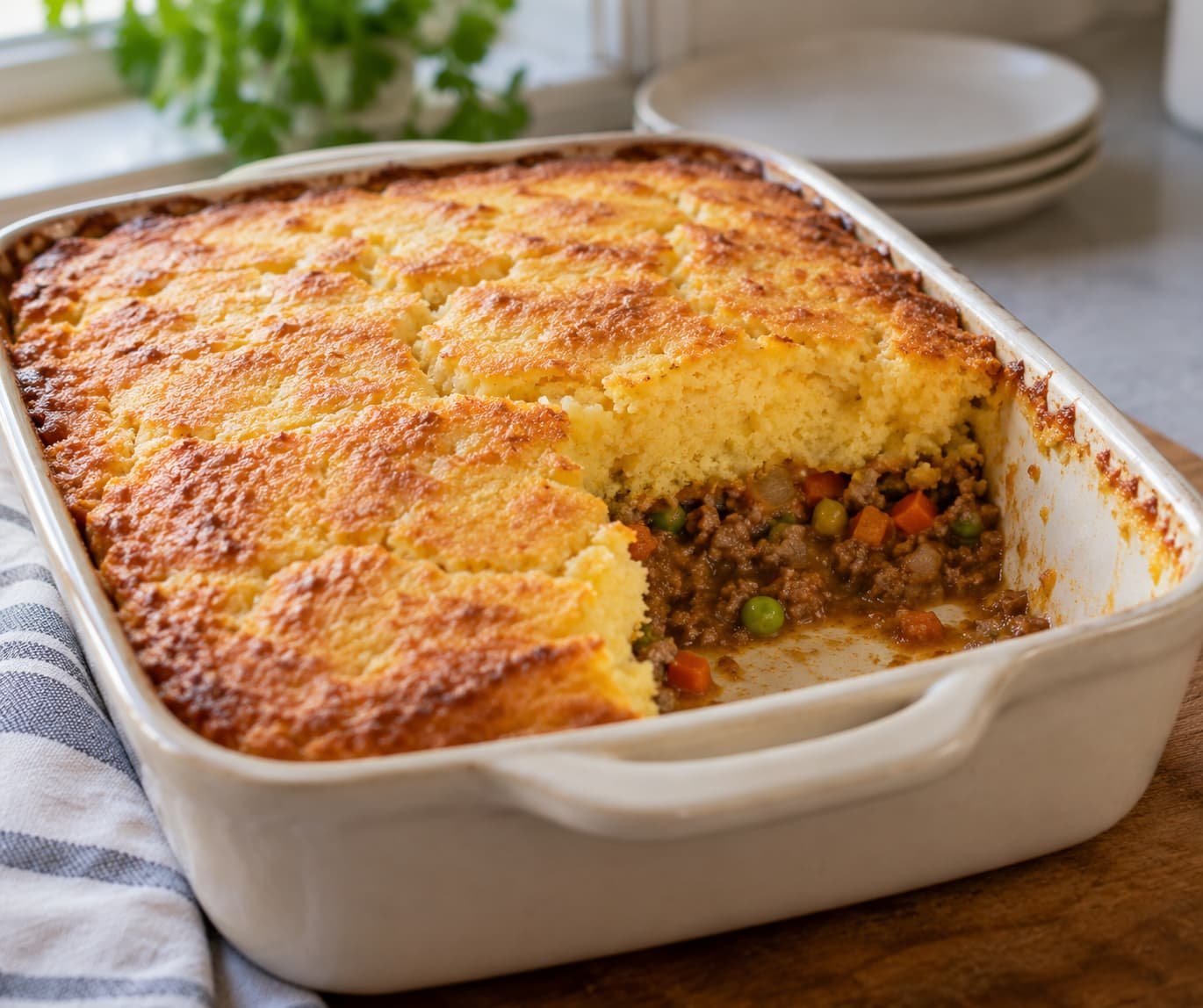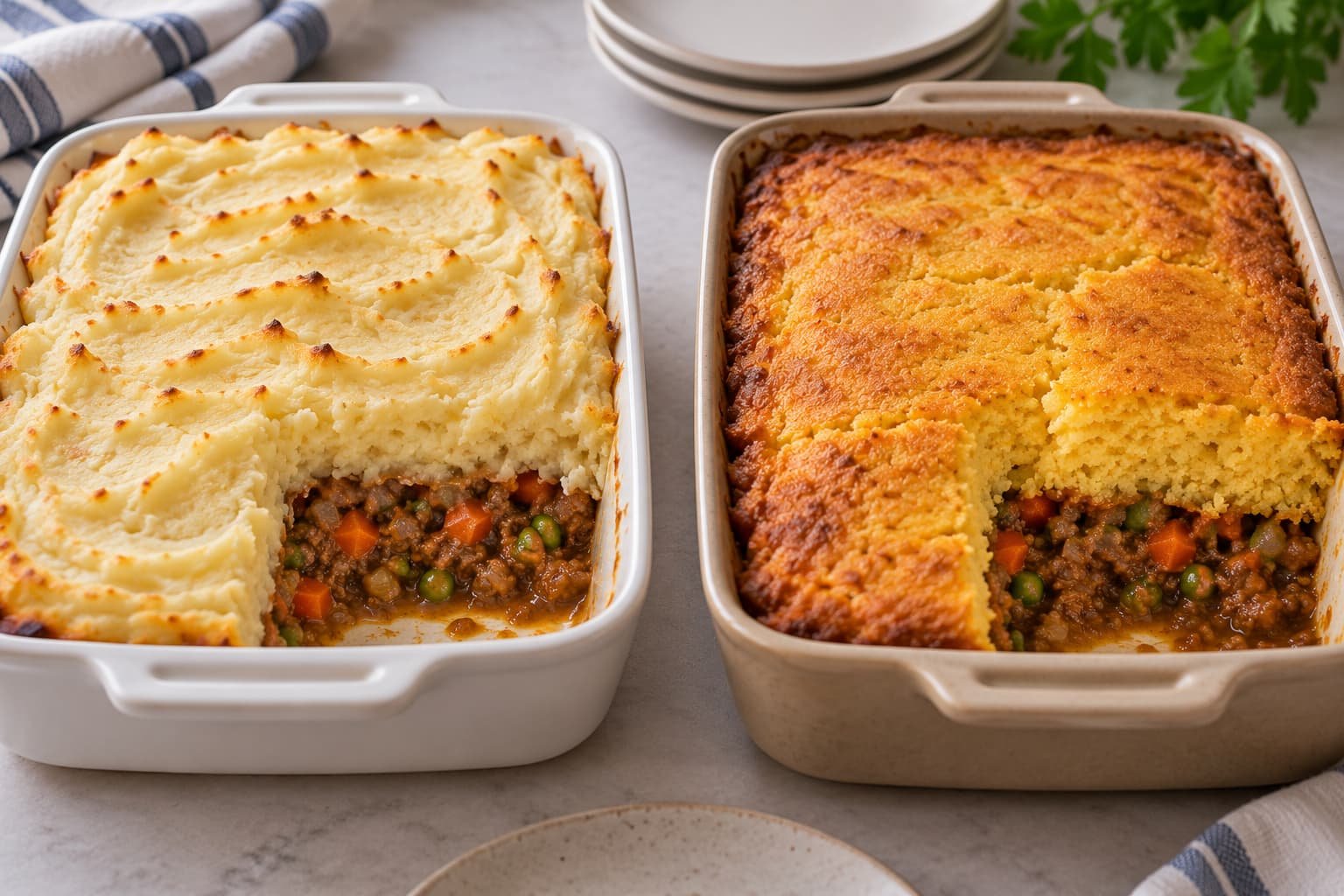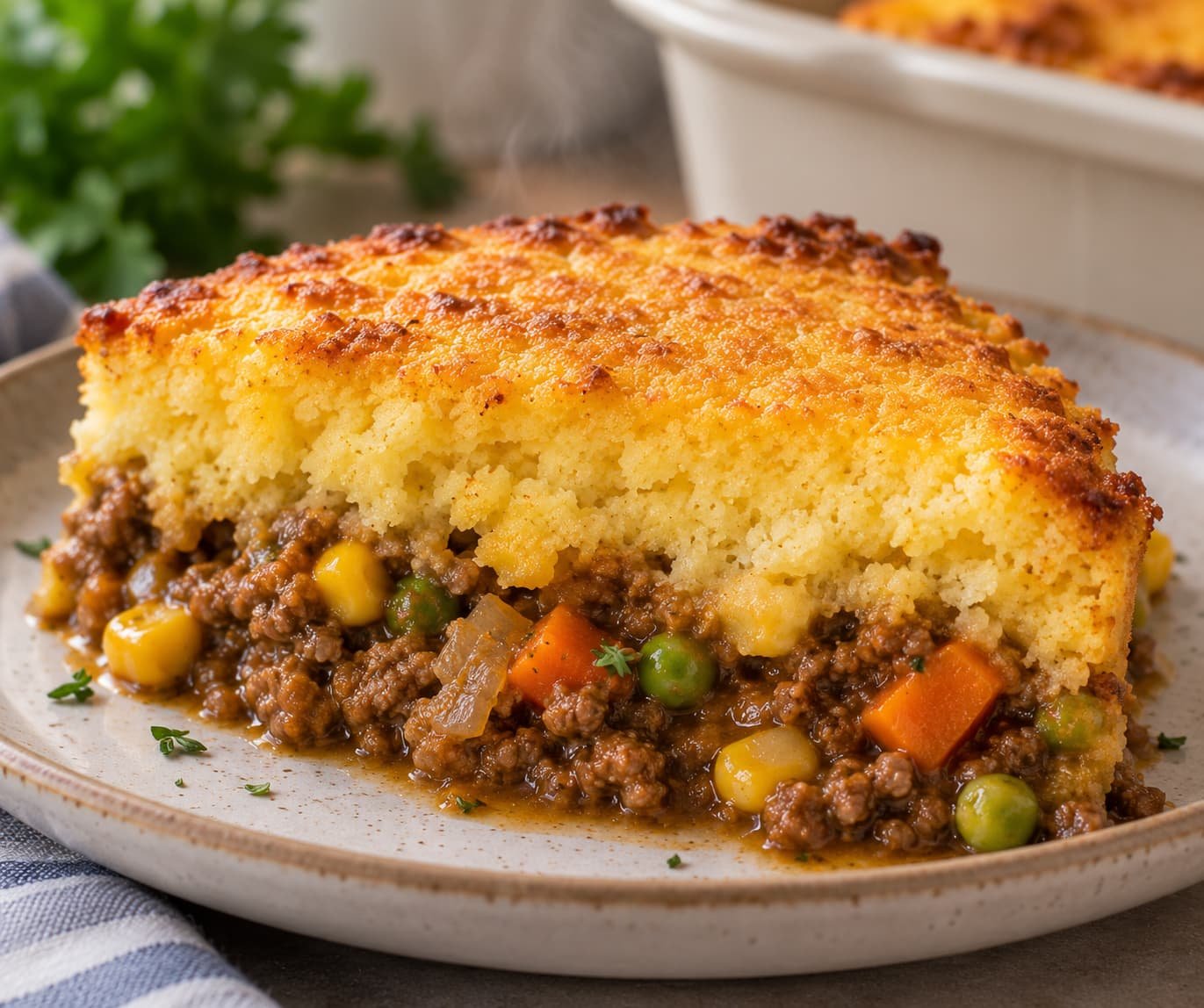
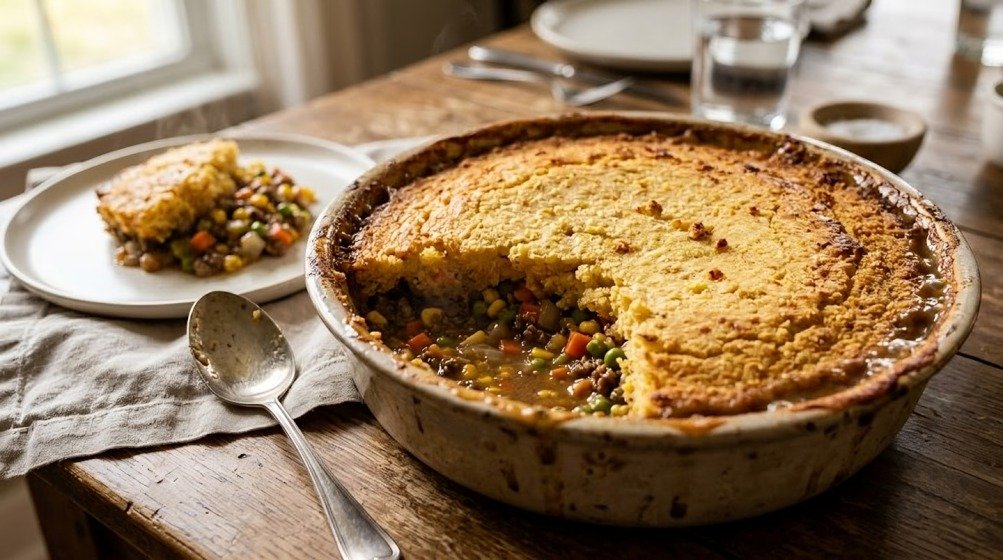
Southern-style shepherd’s pie with cornbread combines a savory ground beef filling, colorful vegetables, and a golden buttermilk cornbread topping in one hearty casserole. Instead of the mashed potatoes commonly found in traditional versions, this recipe uses cornbread to create a lightly sweet contrast that pairs beautifully with the rich beef mixture underneath.
The filling is cooked with onion, bell pepper, garlic, and a flavorful beef gravy that thickens as it simmers. Once topped with cornbread batter and baked, the casserole develops a golden crust around the edges while remaining tender in the center. The result is a satisfying meal that feels comforting without requiring complicated ingredients or extra side dishes.
Whether you need an easy weeknight meal or something substantial enough for a weekend gathering, this recipe fits naturally alongside other family-friendly dinners. It is budget-conscious, easy to prepare ahead, and made with ingredients many home cooks already keep on hand.
What Is Southern-Style Shepherd’s Pie with Cornbread?
Southern-style shepherd’s pie with cornbread is a baked casserole made with seasoned ground beef, vegetables, and a thick savory gravy topped with homemade cornbread. The cornbread bakes directly over the filling, creating a soft center and lightly crisp golden surface that turns the dish into a complete one-pan meal.
Traditional shepherd’s pie is typically associated with lamb and a mashed potato topping. In many American kitchens, however, ground beef is a common substitute because it is affordable, accessible, and easy to prepare for family meals.
This Southern-inspired version takes the concept in a different direction by replacing the potato layer with cornbread. The use of cornmeal, buttermilk, and a casserole-style preparation gives the dish its Southern character while preserving the hearty, comforting appeal that makes shepherd’s pie so popular. Rather than trying to replicate the classic recipe exactly, it offers a practical twist that brings together familiar ingredients, balanced textures, and rich homemade flavor.
Recipe at a Glance
This Southern-style shepherd’s pie with cornbread needs about 20 minutes of hands-on preparation before it goes into the oven. The filling is browned and thickened on the stovetop, then covered with fresh cornbread batter and baked until the center is cooked and the edges are golden.
| Recipe detail | Information |
| Prep time | 20 minutes |
| Stovetop cooking time | 15 minutes |
| Baking time | 30 minutes |
| Resting time | 5 minutes |
| Total time | 1 hour 10 minutes |
| Yield | 6 generous or 8 moderate servings |
| Oven temperature | 375°F (190°C) |
| Skill level | Easy |
| Primary pan | Deep 10-inch oven-safe skillet |
| Alternative pan | 9 × 13-inch baking dish |
| Make-ahead status | Beef filling can be prepared up to 2 days in advance |
A deep oven-safe skillet is the best choice because the beef filling can be cooked and baked in the same pan. It also creates a thicker cornbread layer and reduces the number of dishes needed after dinner.
A 9 × 13-inch baking dish also works, although the topping will spread into a wider, slightly thinner layer. If using a baking dish, prepare the filling in a skillet first, then transfer it before adding the cornbread batter.
For the best make-ahead result, cook the beef filling, let it cool, and refrigerate it in a covered container for up to two days. Prepare the cornbread batter shortly before baking. Keeping the batter separate prevents it from absorbing moisture and helps the topping stay tender rather than dense or soggy.
Why You’ll Love This Cornbread Shepherd’s Pie
This cornbread shepherd’s pie brings the main parts of dinner together in one baking dish. The seasoned beef filling, vegetables, sauce, and homemade cornbread topping make it satisfying enough to serve without several extra sides.
The recipe also relies on familiar, reasonably priced ingredients. Ground beef, corn, onion, broth, pantry seasonings, and basic cornbread ingredients make it practical for a regular family meal rather than something that requires a special shopping trip.
Browning the beef before adding the broth, tomato paste, and Worcestershire sauce gives the filling a deeper flavor. As the mixture simmers, it thickens enough to stay beneath the cornbread instead of soaking into the batter while the casserole bakes.
The topping provides a welcome contrast to the savory filling. It stays soft through the center, develops browned edges, and adds a mild corn sweetness without making the dish taste like dessert.
This recipe also works well for advance preparation. The beef mixture can be cooked and refrigerated for up to two days, then covered with freshly mixed cornbread batter shortly before baking.
Leftovers remain enjoyable when reheated gently, and the filling is easy to adjust. Peas, carrots, green beans, or frozen mixed vegetables can all work, while the seasoning can be made smokier, milder, or more herb-forward depending on your preference. You can find more comforting beef dinners in the beef recipe collection.
What Makes This Shepherd’s Pie Southern-Style?
The clearest Southern influence in this shepherd’s pie is the cornbread topping. Traditional versions are generally covered with mashed potatoes, while this casserole is finished with a cornmeal batter that bakes into a soft layer with lightly browned edges.
Buttermilk gives the topping a tender crumb and a subtle tang. Melted butter adds richness and encourages browning, while corn in the filling connects the flavors of the casserole to the cornbread above it.
The beef mixture begins with onion, celery, and bell pepper. This vegetable combination is common in many Southern-style savory dishes and gives the filling a fuller, more developed flavor than beef and gravy alone.
Garlic, thyme, black pepper, and smoked paprika add warmth without overwhelming the other ingredients. The seasoning remains savory and balanced, allowing the beef, vegetables, and cornbread to stay at the center of the dish.
Cheddar is optional. A modest amount can be folded into the batter or sprinkled over the filling before the topping is added. It gives the casserole a sharper flavor and a little extra richness, but the recipe still works well without it.
The preparation also follows the familiar style of a baked family casserole. The filling is cooked first, spread evenly in the pan, covered with cornbread batter, and baked until the surface is browned and the sauce is bubbling around the edges.
This dish is best described as Southern-inspired rather than a traditional Southern recipe. Its regional character comes from the cornbread, buttermilk, corn, vegetable base, mild seasoning, and casserole-style preparation, not from a claim of specific historical origin.
Ingredients You’ll Need

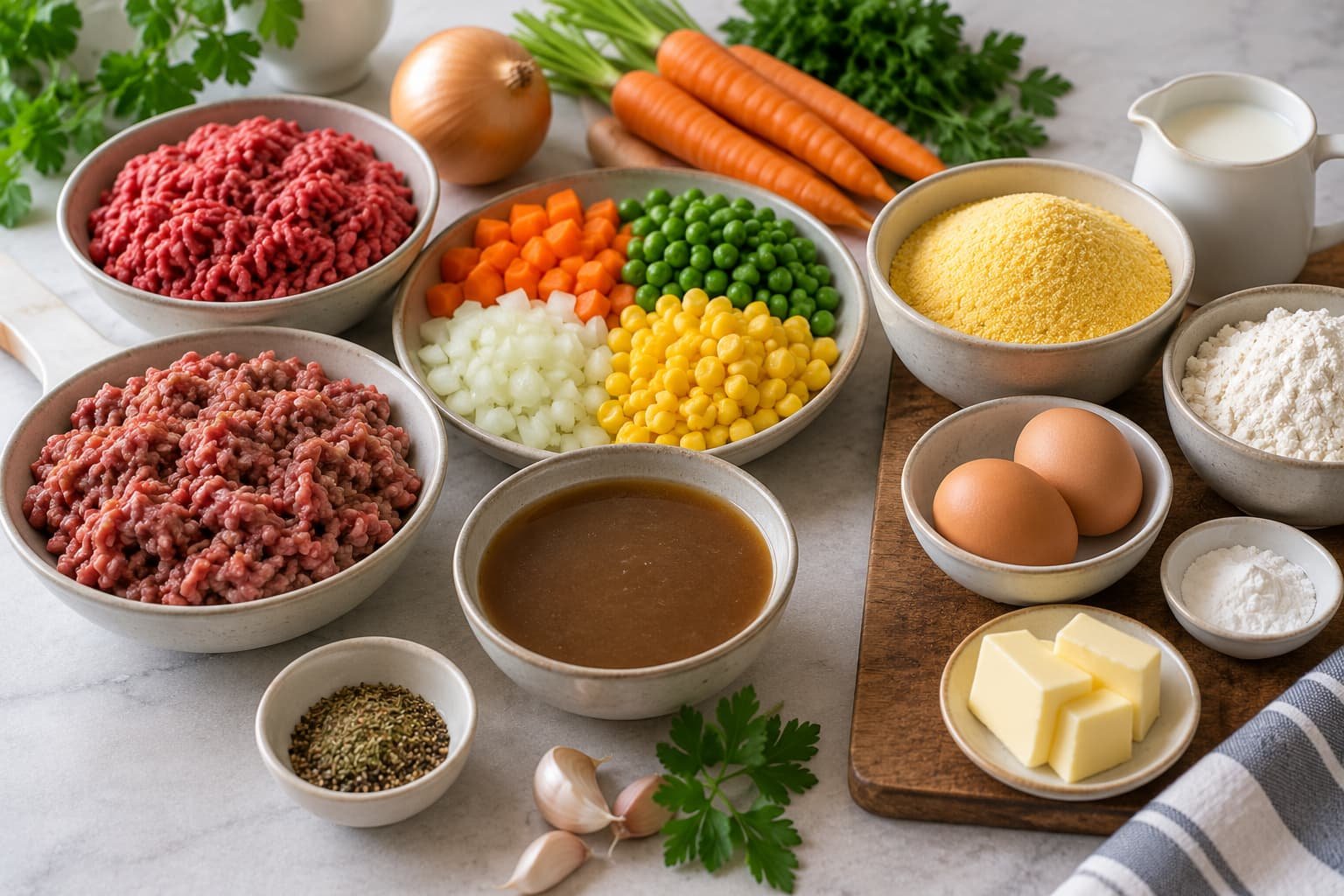
This Southern-style shepherd’s pie with cornbread is made in two parts: a savory ground beef filling and a homemade cornbread topping. The filling should be rich and moist, but not runny. If it is too thin, the batter may sink into the beef mixture instead of baking into a separate golden layer.
Most of the ingredients are simple refrigerator and pantry staples. Fresh, frozen, and canned vegetables can all work, which makes the recipe easy to adjust without changing the character of the dish.
For the Savory Ground Beef Filling
Ground beef gives the casserole its hearty base. An 85% lean blend works well because it has enough fat for flavor without making the filling greasy. Drain off any large amount of excess fat after browning, but leave a little in the skillet to help cook the vegetables.
Onion, celery, and bell pepper form the vegetable base of the filling. Onion brings mild sweetness, celery adds a savory note, and bell pepper contributes freshness and color. Cut them into small, even pieces so they soften at the same rate and blend smoothly into the beef mixture.
Garlic adds another layer of flavor. Stir it in after the vegetables have softened and cook it briefly, just until fragrant. Adding it too early can cause it to brown before the other ingredients are ready.
Corn echoes the flavor of the cornbread topping and adds a gentle sweetness to the filling. Fresh, frozen, or canned corn can be used. Drain canned corn thoroughly, and shake off any visible ice from frozen kernels before adding them to the skillet.
Peas or mixed vegetables add color, texture, and make the casserole more substantial. Peas and carrots are a dependable choice, but green beans or a plain frozen vegetable blend also work. If the blend already contains corn, reduce or leave out the separate corn so the filling does not become unbalanced.
Tomato paste adds body, color, and concentrated flavor. Cook it with the beef and vegetables for a minute before pouring in the broth. This softens its sharp raw taste and gives the sauce a deeper flavor.
Worcestershire sauce strengthens the beef flavor and adds a mild tang. Only a small amount is needed, since too much can overpower the vegetables and seasoning.
Beef broth creates the base of the sauce and helps lift the browned bits from the bottom of the skillet. Low-sodium broth is the best option because it gives you more control over the final seasoning.
Flour is the preferred thickener for this filling because it creates a smooth, gravy-like consistency. It should be stirred into the beef mixture and cooked briefly before the broth is added. Cornstarch can be used as an alternative, but it requires a smaller measured amount and should first be mixed with cold water or broth.
Smoked paprika and thyme give the filling gentle warmth and an earthy finish. Smoked paprika should remain in the background rather than dominate the dish. Regular paprika is a suitable substitute for a milder result.
Salt and black pepper should be added gradually. Worcestershire sauce and broth already contain sodium, so taste the filling after it has simmered and thickened before adding the final seasoning.
The finished ground beef filling should be thick and spoonable rather than soupy. When you drag a spoon across the bottom of the skillet, the sauce should leave a clear path for a second before slowly moving back into place. This consistency helps the cornbread batter remain on top and bake into a distinct layer.
For the cornbread topping
The cornbread topping should bake into a soft, sliceable layer with a lightly browned surface and slightly firmer edges. It should stay mostly savory so it complements the rich beef filling rather than competing with it.
Cornmeal provides the familiar corn flavor, warm golden color, and lightly textured crumb. Fine or medium-ground yellow cornmeal is the best choice for this casserole. Coarse cornmeal can produce a grittier texture, while self-rising cornmeal mix should be avoided unless the recipe is specifically adjusted for the flour, salt, and leavening it already contains.
All-purpose flour balances the texture of the cornmeal and helps the topping hold together when the casserole is sliced. Without it, the cornbread layer may be more fragile and difficult to serve neatly over the moist filling.
Baking powder supplies the lift that keeps the topping from becoming flat or dense. For the best result, use baking powder that is still fresh and active.
Salt strengthens the corn flavor and prevents the topping from tasting bland. The amount should stay moderate, especially when cheddar is included or the filling is already well seasoned.
Buttermilk adds moisture, a mild tang, and a softer texture. Full-fat buttermilk gives the richest result, although low-fat buttermilk also works well. The baking powder provides most of the rise, while the buttermilk contributes flavor and tenderness.
When buttermilk is unavailable, use the measured milk-and-acid substitute listed in the recipe notes. It will not taste exactly the same as cultured buttermilk, but it can still produce a good casserole topping.
The egg binds the batter and gives the cornbread enough structure to remain intact over the beef filling. It does not need to be brought fully to room temperature for this recipe.
Melted butter adds richness, improves browning, and keeps the topping from tasting dry. Let it cool slightly before combining it with the egg and buttermilk so the ingredients blend smoothly.
Cheddar is optional, but it adds a sharper, more savory flavor that works well with beef and corn. Medium or sharp cheddar gives the clearest flavor. Freshly shredded cheese usually blends more evenly, although packaged shredded cheddar can still be used.
Mix the batter only until no dry pockets remain. A few small lumps are fine. Overmixing can make the baked topping firmer and less tender.
Ingredient Notes and Smart Substitutions
This recipe can handle a few practical substitutions, but each one changes the flavor, moisture, or richness of the finished casserole. Whatever meat you choose, the filling should remain thick, well seasoned, and moist enough to balance the cornbread topping without becoming watery.
Ground beef versus lamb
Ground beef gives this cornbread shepherd’s pie a mild, familiar flavor that works well for everyday family meals. It is widely available, usually more affordable than lamb, and pairs naturally with corn, vegetables, Worcestershire sauce, and the savory cornbread topping.
An 85% lean ground beef blend is a dependable choice because it provides enough fat for flavor without leaving the filling greasy. Leaner beef can also be used, but a small amount of oil or butter may be helpful when cooking the vegetables so the filling does not taste dry.
Ground lamb brings the dish closer to traditional shepherd’s pie, which is commonly made with lamb rather than beef. Its flavor is richer and more distinctive, and it may release more fat as it cooks. Drain any large amount of excess fat before adding the vegetables, but leave a little in the skillet for flavor.
When using lamb, add the smoked paprika and Worcestershire sauce gradually and taste the filling before using the full amount. Onion, garlic, thyme, and black pepper complement lamb well without hiding its natural character.
Ground turkey is another suitable option for a leaner casserole. Turkey that includes some dark meat usually stays juicier than extra-lean breast meat. Since turkey releases less fat than beef or lamb, cook the vegetables in a small amount of oil if the skillet looks dry.
Turkey also has a milder flavor, so proper browning and a well-seasoned sauce are especially important. Let the meat cook undisturbed for short periods before breaking it apart so it develops some color rather than steaming.
Break any ground meat into small, even pieces as it cooks. This creates a more consistent filling and makes the baked casserole easier to portion. For food safety, ground beef and lamb should reach 160°F (71°C), while ground turkey should reach 165°F (74°C).
Fresh, frozen, or canned corn
Fresh, frozen, and canned corn all work well in this Southern-style shepherd’s pie with cornbread, but each option affects the filling a little differently.
Fresh corn brings a mildly sweet flavor and a firmer texture. When corn is in season, it adds a pleasant bite that holds up well during baking. Because fresh kernels are not packed in liquid, controlling the consistency of the filling is usually straightforward.
Frozen corn is often the most practical choice. It is picked and frozen quickly, so it retains good flavor throughout the year. In most cases, it can be added directly to the skillet without thawing. If the kernels have a heavy coating of ice, allow them to drain briefly so excess moisture does not thin the filling.
Canned corn is another convenient option, especially when fresh corn is unavailable. The most important step is draining it thoroughly before adding it to the beef mixture. The liquid from the can can loosen the gravy and make it harder for the cornbread topping to bake into a distinct layer.
No matter which type you choose, corn should add sweetness and texture without becoming the dominant ingredient. If you are using a frozen vegetable blend that already contains corn, reduce the separate corn accordingly to keep the filling balanced.
Can I use creamed corn?
Yes, shepherd’s pie with cream-style corn can work very well, but a few adjustments are important. Creamed corn contains crushed kernels and more moisture than drained whole corn, which creates a softer and creamier filling.
For the best texture, use only the amount called for in the tested recipe and reduce some of the beef broth to compensate for the added liquid. The goal is to maintain a thick filling that can support the cornbread topping during baking.
Avoid adding a full can of creamed corn while keeping the original broth amount unchanged. Too much liquid can thin the filling, encourage the batter to sink, and prevent the cornbread from baking properly along the bottom.
Cream-style corn also adds more sweetness than whole kernels. Because of this, many cooks reduce the amount of regular corn when using it. The finished filling should remain savory and well balanced, with the beef, vegetables, and cornbread all contributing equally to the final flavor.
When prepared carefully, creamed corn can add a richer texture and a deeper corn flavor without making the casserole heavy or soggy.
Can I use Jiffy cornbread mix?
Yes, Jiffy Corn Muffin Mix can be used as a quick topping for this cornbread shepherd’s pie. The homemade buttermilk cornbread remains the preferred version because it gives better control over sweetness, seasoning, and texture, but the boxed mix is a practical shortcut for a busy night.
Prepare one standard box according to the package directions. Spoon the batter over the hot, thickened beef filling and spread it gently into an even layer without pressing it into the meat mixture.
Jiffy makes a sweeter topping than the homemade version, so there is no need to add extra sugar. For a more savory finish, you can stir in a little sharp cheddar or black pepper.
The batter may bake differently over a moist casserole filling than it does in a muffin pan. Start checking near the end of the stated baking time. The top should be golden, and a toothpick inserted into the cornbread layer should come out without wet batter. A few moist crumbs are fine.
Use the egg and liquid amounts printed on the box rather than combining the mix with the homemade cornbread measurements. Mix only until no dry pockets remain; a few small lumps are normal.
Regular Jiffy Corn Muffin Mix contains wheat and is not suitable for a gluten-free version. Always check the current package label when allergies, gluten, or other dietary restrictions are a concern.
Gluten-free option
A gluten-free variation should be possible with careful substitutions, but the main recipe should not be described as gluten-free unless that version has been tested from start to finish.
For the beef filling, use cornstarch or a measured gluten-free flour as the thickener. Cornstarch should be mixed with cold broth or water before it is added so it does not form lumps.
For the topping, use certified gluten-free cornmeal and a dependable cup-for-cup gluten-free flour blend. Cornmeal does not naturally contain gluten, but cross-contact can happen during milling, packaging, or storage, so certification is important for anyone who must avoid gluten strictly.
Check the labels on the beef broth, Worcestershire sauce, seasoning blends, and any packaged vegetables. Ingredients and manufacturing practices can vary by brand, so look for a clear gluten-free statement when needed.
Do not use regular Jiffy Corn Muffin Mix for this variation because it contains wheat. Choose a tested gluten-free cornbread mix instead, or prepare the topping with certified cornmeal and gluten-free flour.
Gluten-free batter may absorb liquid differently from the standard version. It should be thick but easy to spoon across the filling. Avoid adding extra liquid unless the batter is too stiff to spread, and allow the baked casserole to rest before serving because the topping may be slightly more delicate.
How to Make Shepherd’s Pie with Cornbread
Making shepherd’s pie with cornbread is not difficult, but the filling and topping must be prepared in the right order. The ground beef mixture should be fully cooked and thick enough to support the batter before the casserole goes into the oven.
A watery filling can soak into the topping, prevent the bottom from setting, or cause the cornbread batter to sink. For a better result, cook the filling until no loose liquid collects in the skillet, then add the topping while the mixture is still warm.
Once assembled, bake the casserole until the filling bubbles around the edges and the cornbread is golden on top and cooked through in the center.
Step 1: Preheat the oven and prepare the baking dish
Preheat the oven to 375°F (190°C) and position a rack in the center. The middle rack helps the cornbread topping bake evenly without placing it too close to the upper heating element.
Lightly grease a baking dish with butter or cooking spray. A 2½- to 3-quart casserole dish works well for most recipes made with about 1 to 1½ pounds of ground beef. Depending on the amount of filling and batter, an 8-by-8-inch, 9-by-9-inch, or similarly sized deep baking dish may also be suitable.
Avoid using a dish that is much larger than the tested recipe requires. Spreading the mixture too thinly can dry out the beef filling and produce a shallow cornbread layer. The assembled casserole should also have some open space near the top so the filling can bubble without spilling over.
If the dish looks nearly full, place it on a rimmed baking sheet before putting it in the oven. This catches any drips and makes the hot casserole easier to move.
A deep oven-safe skillet can be used instead of a separate baking dish when it has enough capacity for both layers. A 10- to 12-inch skillet may work, but the correct size depends on the recipe yield. Do not fill the skillet to the rim, and remember that a wider pan may produce a thinner topping that cooks more quickly.
Keep the prepared dish nearby while you make the savory ground beef filling. Transfer the filling while it is still warm, then add the cornbread batter during the assembly step.
Step 2: Brown the ground beef
Heat a large, heavy 12-inch skillet over medium-high heat. If you are using very lean ground beef, add about a teaspoon of oil first. Beef with a little more fat usually does not need extra oil.
Add the ground beef and spread it across the skillet so the meat has as much contact with the hot surface as possible. Let it cook without stirring until the underside begins to brown, usually about 2 to 3 minutes.
Break the beef into medium crumbles with a wooden spoon or sturdy spatula. Avoid chopping it into very fine pieces. Medium-sized crumbles give the shepherd’s pie filling a meatier texture and are less likely to become dry or grainy.
Continue cooking until the beef is no longer pink and several pieces have developed deep brown edges. Stir only when needed. Constant stirring moves the meat away from the hot surface and makes it more likely to steam instead of brown.
If liquid collects in the skillet, keep cooking until it evaporates. The pan should look mostly dry before the vegetables are added. This step is important because properly browned beef gives the cornbread shepherd’s pie a deeper, more savory flavor.
Spoon off most of the excess fat, leaving about 1 tablespoon in the skillet to cook the vegetables. Transfer the hot grease to a heat-safe container and discard it after it cools. Do not pour it down the sink.
If the pan looks completely dry after draining, add a small amount of oil or butter before moving to the next step.
Step 3: Cook the vegetables and seasonings
Reduce the heat to medium. Add the chopped onion, celery, and bell pepper to the browned ground beef.
Cook for 5 to 7 minutes, stirring occasionally, until the onion becomes translucent and the celery and pepper begin to soften. They do not need to be fully tender because they will continue cooking in the sauce and later in the oven.
As the vegetables release moisture, scrape up any browned bits that loosen from the bottom of the skillet. Do not worry if some remain stuck at this stage; the broth added later will help release the rest.
Stir in the smoked paprika and dried thyme and cook for about 20 seconds, just long enough to coat the meat and vegetables. Keep the mixture moving so the spices do not scorch.
Add the garlic last and cook for 30 to 45 seconds, until fragrant. Garlic cooks much faster than onion, celery, and bell pepper. If it is added too early, it can burn before the other vegetables are ready and give the entire filling a bitter taste.
Season lightly with black pepper and a small amount of salt. The beef broth and Worcestershire sauce added later may already contain salt, so it is better to adjust the final seasoning after the sauce has thickened.
Move directly to the next step once the garlic becomes fragrant. Leaving garlic and paprika over dry heat for too long can make both taste harsh.
Step 4: Build and thicken the filling

Make the cornbread batter
Add the tomato paste to the beef and vegetable mixture. Stir it through the skillet and cook for about 1 minute, until it darkens slightly and no longer smells raw.
Sprinkle the flour evenly over the meat and vegetables. Stir constantly for another minute so the flour absorbs the fat and cooks before any liquid is added. No dry streaks of flour should remain.
Add the Worcestershire sauce, then gradually pour in the beef broth while stirring. Adding the broth in stages helps create a smooth sauce and makes it easier to loosen the browned bits from the bottom of the skillet.
Stir in the corn and bring the filling to a gentle simmer. If you are using canned corn, drain it well first. Cook uncovered over medium-low heat until the sauce begins to thicken, then add the peas during the final few minutes so they keep more of their color and texture.
Do not rely on cooking time alone. Drag a spoon or spatula across the bottom of the skillet. The filling is ready when it leaves a visible path for 1 to 2 seconds before the mixture slowly settles back into place.
There should also be no watery liquid pooling around the edges. If the path closes immediately, continue simmering for a few more minutes. If the filling becomes too thick, stir in a small splash of broth.
The finished filling should be moist, thick, and easy to spoon. It must be sturdy enough to support the cornbread batter without becoming dry.
If you are using cornstarch instead of flour, do not add it directly to the skillet. Mix it with cold broth or water until smooth, then stir the slurry into the simmering filling. Cook for 1 to 2 minutes, until the sauce looks glossy and passes the same spoon-path test.
Taste the filling before removing it from the heat. Adjust the salt, pepper, thyme, or Worcestershire sauce as needed. Add extra Worcestershire a few drops at a time because its salty, tangy flavor can become strong quickly.
Step 5: Make the cornbread batter

Make the cornbread batter after the filling has thickened and is ready for assembly. Once the wet and dry ingredients are combined, use the batter promptly so the baking powder retains as much lift as possible.
In a medium bowl, whisk together the cornmeal, all-purpose flour, baking powder, and salt. Make sure the baking powder is evenly distributed and break up any noticeable lumps.
In a separate bowl, whisk together the buttermilk and egg. Slowly whisk in the melted butter after it has cooled slightly. The butter should be warm, not hot, and the buttermilk should not be ice-cold, or the butter may harden into small pieces.
Pour the wet mixture into the dry ingredients. Stir gently with a spatula just until the dry ingredients are moistened and no large flour pockets remain.
A few small lumps are normal. Do not continue mixing until the batter is completely smooth. Overmixing can make the cornbread topping dense or tough instead of light and tender.
If you are adding shredded cheddar, fold it in with the final few strokes. Stop mixing as soon as the cheese is evenly distributed.
The batter should be thick, soft, and easy to spoon over the filling. It should rest on top rather than run into the meat mixture.
If the batter seems unusually stiff, check the ingredient measurements first, then add buttermilk 1 tablespoon at a time if needed. If it looks thin or runny, recheck the measurements rather than immediately adding more flour, since too much extra flour can make the topping dry.
Step 6: Add the cornbread topping

Remove the skillet from the heat and let the filling stand briefly, just until it stops bubbling strongly. It should still be hot when the cornbread batter is added.
If you are using a separate baking dish, transfer the filling and spread it into an even layer. Distribute the beef and vegetables evenly so the topping has a level surface underneath.
Spoon the batter over the filling in several small portions rather than placing it all in the center. This makes it easier to cover the casserole without pushing the batter down into the meat mixture.
Use the back of a spoon or a small spatula to spread the batter gently. A lightly greased spoon can help if the mixture is sticky. Work with a light touch and avoid dragging the utensil through the filling.
Spread the cornbread topping to a similar thickness across the center and edges. An uneven layer can cause thin areas to dry out before the thickest section is fully baked.
The batter can be spread close to the sides of the dish. Leave a narrow margin only if the casserole is filled near the top and needs extra room for the sauce to bubble.
Bake soon after adding the topping so the batter does not sit for too long before the heat activates the leavening.
Step 7: Bake until golden and cooked through

Bake the cornbread shepherd’s pie on the center rack at 375°F (190°C) for about 25 to 35 minutes, or until the topping is golden and cooked through. Begin checking near the lower end of the range, since a wide, shallow dish may bake faster than a deep casserole.
The cornbread should look evenly risen, with a dry surface and no wet or shiny batter in the center. A few small cracks on top are normal once the topping has risen and set.
Insert a toothpick or thin knife into the thickest part of the cornbread layer. It should come out without wet batter. A few soft crumbs are fine, but streaks of uncooked mixture mean the center needs more time.
If the top or edges are browning before the middle is ready, cover the dish loosely with foil and continue baking. The foil reduces further browning while allowing the center to finish cooking.
The filling will usually bubble around parts of the outer edge when the casserole is hot. Use this as a supporting sign rather than the only doneness test, since a thick filling may not bubble evenly across the entire dish.
When the casserole is assembled with freshly cooked filling, the cornbread test is usually the most useful check. A casserole assembled in advance and refrigerated will need more time to heat through. For a chilled casserole, check that the center is fully hot and reaches about 165°F (74°C) before serving.
Remove the shepherd’s pie from the oven and let it rest for 10 to 15 minutes. The filling will continue to settle as the casserole stands, and the topping will firm slightly from the remaining heat. This rest makes the portions easier to lift without the layers sliding apart.
How to Keep the Cornbread Topping from Getting Soggy
The most important way to prevent soggy cornbread is to thicken the beef filling before adding the batter. The filling should remain moist and rich, but there should be no loose broth or watery liquid around the edges of the skillet.

Use the spoon-path test before assembling the casserole. Drag a spoon or spatula across the bottom of the skillet. The filling is thick enough when the path remains visible for 1 to 2 seconds before the mixture slowly settles back into place. If it closes immediately, continue simmering uncovered.
Drain canned corn and other canned vegetables thoroughly. Frozen vegetables may also release water, especially when they are heavily coated with ice. Remove loose frost and drain any liquid before adding them to the beef mixture.
Do not spoon cornbread batter over a watery filling. Excess liquid can soak into the underside of the topping and stop it from setting properly, even when the surface appears golden. The filling should be thick and hot, then allowed to settle briefly before the batter is added.
Use the baking dish specified in the recipe. A dish that is too small creates a deep cornbread layer that may brown before the middle cooks. A dish that is too large spreads both layers too thin and can leave the casserole dry.
Place the batter over the filling in several small spoonfuls, then spread it gently into an even layer. Do not drop all the batter in the center or press it into the meat. Keeping the topping level helps the center and edges finish baking at roughly the same time.
Bake the casserole soon after assembly. Once the wet and dry cornbread ingredients are mixed, the batter should not sit for a long period before going into the oven.
Check the thickest part of the topping instead of judging doneness by the browned edges. A toothpick inserted near the center should come out without wet batter. A few soft crumbs are normal.
Allow the shepherd’s pie to rest for 10 to 15 minutes after baking. The filling will thicken slightly as it stands, and the cornbread layer will become easier to cut and lift without falling apart.
Common Cornbread Shepherd’s Pie Mistakes to Avoid
Most problems come from excess moisture, uneven batter, incorrect dish size, or poor timing. Use this table to identify the likely cause and the best correction.
| Problem | Likely cause | Solution |
| Soggy cornbread topping | Filling was too wet | Simmer uncovered until the spoon-path test is passed |
| Wet bottom with a browned top | Center needed more baking time | Cover loosely with foil and continue baking |
| Raw center | Batter was too thick or dish was too small | Use the recommended dish and spread batter evenly |
| Dry cornbread | Batter was overmixed or overbaked | Mix gently and begin checking early |
| Dense or tough topping | Batter was mixed until completely smooth | Stop when no dry pockets remain; small lumps are fine |
| Greasy filling | Too much beef fat remained | Drain excess grease, leaving about 1 tablespoon |
| Bland casserole | Filling was under-seasoned | Taste before topping and adjust seasoning carefully |
| Thin, runny filling | Too much liquid or too little simmering | Simmer uncovered until no liquid pools at the edges |
| Batter sinks into the filling | Filling was watery or batter was pressed down | Let filling settle, then spread batter lightly |
| Filling bubbles over | Dish was too shallow or overfilled | Use a deeper dish and place it on a sheet pan |
| Burnt edges with a raw center | Uneven topping, hot oven, or high rack | Use the center rack, spread evenly, and cover with foil |
| Casserole falls apart | It was served immediately | Rest for 10 to 15 minutes before cutting |
Homemade Cornbread vs. Boxed Cornbread Mix
Both homemade cornbread and boxed mix can work well for shepherd’s pie with cornbread topping. The right choice depends on whether you value more control over flavor and texture or faster preparation.
Homemade batter gives the casserole a stronger Southern-style character and makes it easier to keep the topping savory. Boxed mix is convenient and dependable when you use the same brand, but many varieties are sweeter and more cake-like.
Homemade Cornbread Topping
A homemade cornbread topping gives you control over the balance of corn flavor, richness, and sweetness. That matters in a cornbread shepherd’s pie because the topping should support the seasoned beef filling rather than cover it with an overly sweet flavor.
Using cornmeal, flour, baking powder, buttermilk, egg, and butter creates a tender crumb with a noticeable corn flavor. Buttermilk adds a mild tang that balances the richness of the beef and gives the topping more depth than a basic batter made with regular milk.
Homemade batter also makes it easier to add savory ingredients without changing the character of the recipe. A small amount of sharp cheddar, for example, can add richness and a lightly salty finish.
The main drawback is that the ingredients must be measured separately. Even so, the batter takes only a few extra minutes to prepare and uses common baking ingredients.
Boxed Cornbread Mix for Shepherd’s Pie
Boxed cornbread mix is a useful shortcut when time is limited. It reduces measuring, requires fewer separate ingredients, and usually produces a consistent result when the same brand is prepared according to its package directions.
The biggest difference is often sweetness. Some boxed mixes produce a soft, cake-like topping that works well for families who enjoy a sweeter casserole. Others have a firmer crumb and a more noticeable corn flavor, so results can vary from one brand to another.
Always follow the liquid and egg amounts printed on the package. Do not combine the boxed mix with the homemade batter measurements, since each product is formulated differently.
Use only enough prepared batter to create an even layer over the filling. An unusually thick topping may brown at the edges while remaining undercooked in the center.
Extra sugar is rarely necessary. When using a sweeter mix, a small amount of sharp cheddar can add a savory note and make the overall flavor feel more balanced.
Check the ingredient label when allergies or dietary restrictions matter. Boxed mixes may contain wheat, milk ingredients, added sugar, or other ingredients that are not used in every homemade cornbread recipe.
Which Cornbread Topping Is Better?
Homemade cornbread is the better choice when you want more control over sweetness, texture, and corn flavor. It also gives this shepherd’s pie with cornbread a stronger Southern-style flavor and character.
Boxed mix is the more practical option for a busy weeknight. It saves preparation time and can still produce a satisfying topping when the batter is spread evenly and baked until the center is fully set.
For the main version of this recipe, homemade batter is recommended. Boxed cornbread mix works well as an alternative for readers who prefer convenience or a slightly sweeter topping.
| Feature | Homemade cornbread | Boxed cornbread mix |
| Sweetness | Easy to control | Often sweeter |
| Texture | Can be adjusted through the recipe | Depends on the brand |
| Flavor | Stronger buttermilk and corn flavor | Varies from mild to sweet |
| Preparation | Takes a few extra minutes | Faster and easier |
| Ingredients | Uses basic pantry ingredients | Requires fewer separate ingredients |
| Consistency | Depends on careful measuring | Consistent within the same brand |
| Best use | Southern-style homemade version | Busy weeknight shortcut |
Make-Ahead Instructions
Shepherd’s pie with cornbread can be prepared ahead, but the best method is to cook the beef filling in advance and make the cornbread batter shortly before baking.
Once the wet and dry cornbread ingredients are combined, the leavening begins to work. Batter that sits overnight may rise poorly and bake with a dense texture, so the two parts of the casserole should be stored separately.
Prepare the Beef Filling Ahead
Preparing the beef filling in advance is the most reliable make-ahead option for cornbread shepherd’s pie. Cook the beef, vegetables, seasonings, broth, and thickener as directed in the main recipe.
Simmer until the mixture is thick and no loose liquid collects around the edges. The filling should be able to support the cornbread topping without soaking into its underside.
Remove the skillet from the heat and let the filling cool briefly, just until it is no longer steaming heavily. Transfer it to a shallow airtight container or the baking dish you plan to use, then refrigerate it promptly. Do not leave cooked ground beef at room temperature for more than 2 hours in total.
Cover the container or dish well to keep the surface from drying out and prevent the filling from absorbing refrigerator odors. It can be refrigerated for up to 3 days.
When you are ready to bake, check the consistency before assembling the casserole. The chilled filling will naturally look firmer because the fat and thickener have set. It usually loosens again as it heats, so do not add broth unless it seems unusually dry. If needed, stir in only a small splash.
You can add the fresh cornbread batter directly over cold filling, or warm the filling gently first. Using it cold is more convenient but increases the baking time. Warming it until just hot reduces the time needed in the oven and helps the casserole heat more evenly.
If the filling was stored separately, spread it evenly in the recommended baking dish. Prepare the cornbread batter fresh, spoon it over the surface in small portions, and spread it gently without pressing it into the meat mixture.
Bake at 375°F (190°C) until the topping is golden, the center contains no wet batter, and the filling is hot throughout. A casserole assembled with cold filling may need roughly 10 to 15 minutes longer, although the exact time will depend on the depth and material of the dish.
If the top browns before the center is ready, cover it loosely with foil and continue baking. For a refrigerated casserole, the center of the filling should reach 165°F (74°C) before serving.
When using a refrigerated glass baking dish, avoid moving it directly from a very cold refrigerator into a hot oven unless the manufacturer states that it is safe. Let the dish stand briefly while the oven preheats, and follow the care instructions for the bakeware.
Allow the baked shepherd’s pie to rest for 10 to 15 minutes. This gives the filling time to settle and helps the cornbread topping firm enough for cleaner portions.
Assemble the Whole Casserole Ahead
You can assemble the entire shepherd’s pie with cornbread topping in advance, but this method works best for a short holding period rather than overnight storage.
Prepare the beef filling as directed and let it cool until it is no longer steaming heavily. Spread it evenly in the baking dish, then prepare the cornbread batter and spoon it gently over the top.
Cover the assembled casserole and refrigerate it promptly. For the best topping texture, try to bake it within a few hours. The longer the mixed batter sits, the greater the chance that the cornbread will lose some of its rise and develop a heavier crumb.
Do not assemble the casserole with warm filling and immediately cover it for refrigeration. Trapped steam can create condensation beneath the cover and add unwanted moisture to the topping.
When ready to bake, remove the casserole from the refrigerator while the oven preheats. A chilled dish will usually need more time than a casserole assembled with hot filling.
Bake at 375°F (190°C) until the topping is golden, the center contains no wet batter, and the filling reaches 165°F (74°C). Add extra baking time as needed rather than relying only on the original recipe time.
If the cornbread begins to brown before the center is fully hot, cover the dish loosely with foil and continue baking.
This method is convenient when the casserole needs to be ready for the oven before guests arrive, but preparing the filling ahead and mixing fresh batter at baking time will usually produce a lighter topping.
Bake and Reheat Later
Baking the casserole completely and reheating it later is a practical choice for lunches, busy evenings, and weekly meal planning.
Bake the cornbread shepherd’s pie until the topping is fully cooked and the filling is hot throughout. Let it rest for 10 to 15 minutes before storing so the layers have time to settle.
Refrigerate leftovers within 2 hours of baking. Store the casserole tightly covered or divide it into airtight individual containers. Properly refrigerated portions can be kept for up to 3 to 4 days.
To reheat the entire casserole, cover it loosely with foil and place it in a 350°F (175°C) oven. Heat until the center reaches 165°F (74°C). Removing the foil during the final few minutes can help dry and lightly crisp the surface.
Individual servings can be reheated in the microwave. Place a portion on a microwave-safe plate, cover it loosely, and heat in short intervals until hot in the center. Microwave reheating is faster, although the cornbread will usually be softer than when reheated in the oven.
Avoid reheating the casserole longer than necessary. Excessive heat can dry out the cornbread topping while causing the edges of the filling to become oily.
For the best result, reheat only the amount you plan to eat. Repeated cooling and reheating can reduce the quality of both the beef filling and the cornbread layer.
Assemble the Whole Casserole Ahead
You can assemble the entire shepherd’s pie with cornbread topping in advance, but this is best treated as a short-term convenience rather than an overnight method.
Prepare the beef filling as directed, then let it cool until it is no longer steaming heavily. Spread it evenly in the baking dish before mixing the cornbread batter.
Spoon the fresh batter over the cooled filling and spread it gently into an even layer. Cover the dish and refrigerate it promptly.
For the best texture, bake the assembled casserole within about 2 to 4 hours. The longer the mixed batter sits, the more likely the topping is to lose some of its lift and bake with a heavier crumb.
Do not add the batter while the filling is still very warm. Trapped steam can create condensation beneath the cover, adding moisture that may leave the underside of the cornbread soft.
When you are ready to bake, remove the casserole from the refrigerator while the oven preheats. This brief pause helps reduce the chill, but the dish should not be left at room temperature for an extended period.
If you are using refrigerated glass bakeware, check the manufacturer’s instructions before placing it in a hot oven. Sudden temperature changes can damage some glass dishes.
Bake the casserole at 375°F (190°C) until the cornbread is golden, the center has no wet batter, and the filling reaches 165°F (74°C).
A fully chilled casserole may need about 10 to 15 minutes longer than the standard baking time, although the exact timing will depend on the depth and material of the dish. If the top begins to brown too quickly, cover it loosely with foil and continue baking until the center is ready.
Assembling the whole casserole ahead can be helpful when you need dinner ready for the oven before guests arrive. For a lighter, more reliable topping, however, preparing only the filling ahead and mixing the cornbread batter just before baking remains the better method.
Bake and Reheat Later
Baking the casserole completely and reheating it later works well for packed lunches, busy evenings, and weekly meal planning.
Bake the cornbread shepherd’s pie until the topping is fully set and the filling is hot throughout. Let it rest for 10 to 15 minutes before serving or storing.
If you are saving the casserole for later, refrigerate it within 2 hours of baking. Cover the dish well, or divide it into shallow airtight containers so individual portions cool more quickly.
Properly refrigerated shepherd’s pie can be stored for 3 to 4 days.
To reheat a full casserole, cover it securely with foil and place it in a 350°F (175°C) oven. Begin checking after about 20 to 25 minutes, although a deep or very cold casserole may take longer.
Continue heating until the center reaches 165°F (74°C). Remove or loosen the foil during the final 5 minutes if you want the surface of the cornbread to dry slightly and regain some texture.
For individual portions, place the shepherd’s pie on a microwave-safe plate and cover it loosely. Heat in short intervals, rotating the plate if necessary, until the center is hot. Let the portion stand for 1 minute before eating so the heat can distribute more evenly.
Microwave reheating is faster, but the cornbread topping will usually be softer than it is after oven reheating.
Avoid heating the casserole longer than necessary. Too much time in the oven or microwave can dry out the topping and cause some of the fat in the beef filling to separate.
Reheat only the amount you plan to serve. This protects the texture and reduces the need to cool and reheat the same portion more than once.
How to Store, Freeze, and Reheat Shepherd’s Pie with Cornbread

Shepherd’s pie with cornbread stores well, but the topping will usually become softer after refrigeration or freezing. Prompt cooling, airtight storage, and careful reheating help protect the texture of the cornbread while keeping the beef filling moist.
Refrigerating Leftovers
Allow the casserole to rest briefly after baking, then refrigerate it within 2 hours. Do not wait for a large casserole to cool completely on the counter.
For faster cooling, divide the shepherd’s pie into individual portions and place them in shallow, airtight containers. A large amount of hot filling cools more slowly when it is stored in one deep dish.
Keep leftovers refrigerated at 40°F (4°C) or below. Properly stored cornbread shepherd’s pie should be eaten or frozen within 3 to 4 days.
Write the storage date on the container if you are unlikely to remember when the casserole was prepared. This is especially useful when portions are being saved for lunches later in the week.
Reheat only the amount you plan to eat. Keeping the remaining casserole cold avoids repeatedly warming and cooling the same food.
Freezing Cornbread Shepherd’s Pie
For the most dependable result, freeze the shepherd’s pie after it has been fully baked. The cornbread topping may lose some softness and structure after freezing, but baked portions generally store more reliably than uncooked cornbread batter.
Let the casserole cool briefly, then divide it into serving-size portions. Refrigerate promptly if the portions are still warm, and freeze them once chilled.
Place each portion in a freezer-safe airtight container. You can also wrap portions tightly in freezer wrap and place them inside a freezer bag. Remove as much excess air as possible to reduce drying and freezer burn.
Label each package with the recipe name and freezing date. Freeze leftovers as soon as you know they will not be eaten within the normal 3-to-4-day refrigerator period.
For the best flavor and texture, use frozen portions within about 3 to 4 months. Food kept continuously frozen at 0°F (-18°C) remains safe for longer, but its quality will gradually decline.
Thaw frozen shepherd’s pie overnight in the refrigerator. Do not leave it on the counter to thaw.
A full casserole can also be frozen in a freezer-safe dish, but individual portions cool, thaw, and reheat more evenly. They also make it easier to heat only what you need.
The cornbread topping may be slightly softer after thawing because it absorbs moisture from the filling during storage. Oven reheating can help the surface dry slightly and regain some structure, although it may not become as firm as it was when freshly baked.
Reheating Shepherd’s Pie in the Oven
The oven is the best choice when retaining the cornbread topping’s texture matters more than speed.
Place the thawed shepherd’s pie in an oven-safe dish and cover it securely with foil. Reheat at 350°F (175°C) until the center is hot.
Begin checking an individual portion after about 15 to 20 minutes. A larger or deeper amount may require 25 minutes or longer, so use the time only as a starting point.
Keep the casserole covered for most of the reheating period to prevent the filling and topping from drying out. Remove or loosen the foil during the final 5 to 10 minutes to allow some surface moisture to escape.
The center of the casserole should reach 165°F (74°C) before serving. USDA guidance recommends reheating leftovers to this temperature.
Frozen portions can be reheated without thawing, but they will take considerably longer and may heat less evenly. Thawing overnight in the refrigerator usually produces a warmer center without overly dry edges.
Reheating Shepherd’s Pie in the Microwave
The microwave is the fastest way to reheat an individual serving, although the cornbread topping will usually remain softer than it would after oven reheating.
Place one portion in a microwave-safe dish and cover it loosely with a microwave-safe lid. Leave a small opening so excess steam can escape.
Begin with a short heating period appropriate for your microwave and portion size, then continue in 30-second intervals. Rotate the plate or turn the portion between intervals to reduce cold spots.
Because microwave power varies, avoid relying on one exact reheating time. Check the center and at least one other area before serving.
Allow the portion to stand for about 1 minute after reheating. This gives the heat time to spread more evenly through the thick beef filling and cornbread layer.
The center must reach 165°F (74°C). Covering and rotating food during microwave reheating also helps it heat more evenly.
Avoid continuing to heat the portion once it is fully hot. Excessive microwave reheating can make the cornbread dry or tough and may cause some of the fat in the beef filling to separate.
What to Serve with Cornbread Shepherd’s Pie

The best sides for cornbread shepherd’s pie are fresh salads, green vegetables, vinegar-based slaw, and lightly pickled vegetables. Since the casserole already contains beef, vegetables, and a generous cornbread topping, lighter sides usually create the best balance.
A small side portion is often enough. The casserole is hearty on its own, so the goal is to add freshness, acidity, or a different texture rather than another heavy starch.
Fresh Green Salad
A crisp green salad is one of the easiest and most balanced sides to serve with shepherd’s pie with cornbread.
Romaine, spring mix, arugula, or tender mixed greens all work well. Add cucumber, tomatoes, thinly sliced onion, or radishes for extra crunch.
Use a light vinaigrette made with lemon juice, red wine vinegar, or Dijon mustard. A sharp dressing helps balance the savory ground beef filling and slightly sweet cornbread topping.
Thick, creamy dressings can still be served, but they may make the overall meal feel heavier.
Collard Greens
Collard greens pair naturally with the Southern-style flavors in cornbread shepherd’s pie. Their earthy, slightly bitter taste provides a pleasant contrast to the rich beef filling.
Cook the greens with onion, garlic, black pepper, and a splash of vinegar. A small amount of smoked meat can add flavor, but it is not necessary when the casserole is already substantial.
For a lighter meal, avoid cooking the greens with too much fat. The vinegar should remain noticeable enough to brighten the plate.
Green Beans
Green beans are a simple weeknight side that adds color and a firmer texture to the meal.
Steam, sauté, or roast them until tender but not overly soft. Season with garlic, black pepper, lemon juice, or a small amount of butter.
Roasted green beans develop deeper flavor, while steamed green beans keep the meal especially light. Both work well with the soft cornbread layer and savory filling.
Roasted Broccoli
Roasted broccoli is a good warm side for cooler evenings. Its browned edges and slightly nutty flavor pair well with ground beef, cornmeal, thyme, and smoked paprika.
Roast the broccoli until the edges are browned but the stems still have some firmness. Overcooked broccoli can become soft and lose the texture contrast that makes it useful beside the casserole.
Finish it with lemon juice or a small splash of vinegar just before serving.
Vinegar-Based Slaw
Vinegar-based slaw is one of the best choices when the cornbread topping is slightly sweet or the beef filling is especially rich.
The crisp cabbage and tangy dressing refresh the palate between bites. A simple mixture of cabbage, carrots, vinegar, mustard, salt, and a small amount of sugar is enough.
Let the slaw rest briefly so the cabbage softens slightly, but avoid preparing it so far ahead that it becomes watery.
A mayonnaise-heavy slaw can work, though a vinegar dressing usually provides better contrast with this casserole.
Cucumber and Tomato Salad
Cucumber and tomato salad is especially suitable during spring and summer when a cool side feels more appealing than a cooked vegetable.
Combine sliced cucumber, ripe tomatoes, thin onion, olive oil, vinegar, salt, and black pepper. Fresh herbs such as parsley, basil, or dill can also be added.
Prepare the salad shortly before serving. Tomatoes and salted cucumbers release liquid as they sit, which can make the salad watery if it is made too early.
Pickled Vegetables
Pickled vegetables add sharpness without requiring a full second side dish. Pickled red onions, cucumbers, okra, green beans, or mixed vegetables can all work.
Pickled onions are particularly useful because they add acidity without overpowering the beef filling. Pickled okra also fits the Southern-inspired character of the recipe.
Serve pickles in a small bowl or directly on the side of the plate. Because they can be salty and strongly flavored, a little is usually enough.
Which Side Dish Is Best?
For the most balanced meal, choose a green salad, vinegar-based slaw, or roasted broccoli.
A salad is the easiest all-purpose choice. Slaw works particularly well with a sweeter cornbread topping, while roasted broccoli is a good option when you want a warm vegetable.
Collard greens and pickled okra are strong choices when you want to reinforce the Southern-style flavor of the casserole.
Sides That Can Make the Meal Too Heavy
Potatoes, biscuits, dinner rolls, macaroni and cheese, and other heavy starches are not the best first choices for cornbread shepherd’s pie.
The casserole already has a thick cornbread topping, so adding another bread or potato side can make the meal feel overly filling. These foods are not wrong, but they provide less contrast than a salad, green vegetable, slaw, or pickled side.
For most meals, one lighter side is enough to complete the plate.
Recipe Variations
This shepherd’s pie with cornbread can be changed in several ways without rewriting the entire recipe. The key is to keep the filling thick, avoid adding unnecessary liquid, and make sure the cornbread topping is cooked through in the center.
Cheesy Cornbread Shepherd’s Pie
For a richer topping, stir shredded cheddar directly into the cornbread batter before spooning it over the beef filling.
Sharp cheddar works especially well because its stronger flavor holds up against the ground beef, vegetables, smoked paprika, and thyme. For a standard 8-inch or 9-inch casserole, about ¾ to 1 cup of shredded cheese is usually enough.
Most of the cheese should be mixed into the batter. You can sprinkle a small amount over the surface during the final 5 minutes of baking if you want a more noticeable cheese layer.
Avoid covering the top with a thick layer of cheese at the beginning. Cheese on the surface can brown quickly, even when the middle of the cornbread still needs more time.
Spicy Southern Cornbread Shepherd’s Pie
For a spicy Southern version, cook finely chopped jalapeño with the onion, celery, and bell pepper.
One small jalapeño usually adds mild to moderate heat, although the strength can vary. Remove the seeds and inner membrane for a gentler flavor, or leave some in for a hotter filling.
You can also add a small pinch of cayenne or a few dashes of hot sauce with the Worcestershire sauce and broth. Add the heat gradually so it does not overpower the beef and vegetables.
Taste the filling before adding the topping. The cornbread may soften the overall impression of the spice, but the filling should still taste balanced rather than aggressively hot.
Pickled jalapeños are another good option when you want tang as well as heat. Drain and chop them before adding so they do not introduce excess liquid.
Shepherd’s Pie with Creamed Corn

Shepherd’s pie with creamed corn has a softer, creamier filling and a slightly sweeter corn flavor than the standard version.
Use canned creamed corn or cream-style corn as part of the filling rather than adding it on top of the full amount of broth and vegetables. As a starting point, reduce the beef broth by about ⅓ to ½ cup, then add more only if the filling seems too thick.
Creamed corn can replace some or all of the whole corn. Using both gives the filling a creamy base while keeping some visible kernels and texture.
Simmer the mixture uncovered until a spoon dragged through the pan leaves a visible path for a second or two. If the filling is too loose, the cornbread topping may sink or remain damp underneath.
Taste before adding the batter. Because some brands are noticeably sweet, a little extra black pepper, Worcestershire sauce, or a few drops of vinegar can help restore a savory balance.
Ground Turkey Cornbread Shepherd’s Pie
Ground turkey can replace the beef, but it needs stronger seasoning and closer attention to moisture.
A dark-meat blend usually stays juicier than very lean ground turkey. If you are using a lean package, add a small amount of oil to the skillet before cooking.
Cook the turkey until it is no longer pink, then allow any released liquid to evaporate before adding the broth. If that moisture remains in the pan, the finished filling may become too thin.
Garlic, smoked paprika, thyme, Worcestershire sauce, and well-seasoned broth help give the turkey filling more depth. Taste carefully before topping the casserole because turkey has a milder flavor than beef.
Avoid cooking the meat until it becomes dry and crumbly. It will continue heating in the oven.
The finished casserole should reach 165°F (74°C) in the center before serving.
Cast-Iron Skillet Cornbread Shepherd’s Pie

A cast-iron skillet makes this recipe easier to prepare in one pan and gives it a rustic presentation at the table.
A deep 12-inch oven-safe skillet is usually the safest choice for a full casserole. A deep 10-inch skillet may work for a smaller batch, but it can become crowded once the cornbread topping is added.
Brown the meat, cook the vegetables, and thicken the filling in the same skillet. Remove it from the heat and let the filling settle briefly before adding the batter.
Spoon the cornbread topping over the surface and spread it gently. Do not press it down into the filling.
Leave enough space below the rim for the cornbread to rise and the filling to bubble. Placing the skillet on a rimmed baking sheet can protect the oven from spills.
Because cast iron retains heat well, the edges may bake faster than the center. Start checking a few minutes earlier than you would with a glass or ceramic casserole dish. Cover the top loosely with foil if it browns too quickly.
Individual Cornbread Shepherd’s Pies
Individual shepherd’s pies are useful for dinner parties, packed lunches, or meals that need to be portioned in advance.
Divide the thickened filling among lightly greased oven-safe ramekins. For 8-ounce ramekins, leave about ½ inch of space below the rim so the filling and topping have room to rise.
Spoon the cornbread batter evenly over each portion without packing it down. Set the ramekins on a rimmed baking sheet before placing them in the oven.
Smaller dishes usually bake faster than a full casserole. Begin checking 8-ounce ramekins after about 18 minutes. Deeper or larger ramekins may need several additional minutes.
The topping should be golden, the center should contain no wet batter, and the filling should be hot throughout.
Let the ramekins rest for 5 to 10 minutes before serving. The filling and the dishes themselves will remain extremely hot even after they leave the oven.
Frequently Asked Questions
Can cornbread be used instead of mashed potatoes on shepherd’s pie?
Yes. Cornbread can replace mashed potatoes on shepherd’s pie, creating a tender topping with a lightly sweet corn flavor and a golden surface.
For the best result, thicken the meat filling before adding the batter. A loose filling can cause the cornbread to sink or remain damp underneath. Spread only enough batter to cover the filling in an even layer, then bake until the center contains no wet batter.
This version is commonly called shepherd’s pie with cornbread or cornbread shepherd’s pie.
Is shepherd’s pie made with ground beef or lamb?
Traditional shepherd’s pie is made with lamb. When the filling is made with beef, the traditional name is cottage pie.
In the United States, however, many home cooks and recipe sites use the name shepherd’s pie for ground beef versions as well. This recipe follows that familiar American naming while replacing the usual mashed potatoes with a homemade cornbread topping.
Ground lamb can be substituted for the beef. Depending on its fat content, you may need to spoon off additional rendered fat before adding the vegetables and broth.
Can I use Jiffy mix for the cornbread topping?
Yes. Jiffy corn muffin mix can be used as a convenient shortcut.
Prepare the mix according to the package directions rather than combining it with the homemade cornbread measurements. Spread the prepared batter in an even layer over the thickened filling.
One standard box may create a relatively thin topping on a large casserole, so make sure you have enough prepared batter to cover the surface without making the center excessively deep.
Jiffy mix is generally sweeter than homemade buttermilk cornbread. Do not add extra sugar. A little sharp cheddar or black pepper can give the topping a more savory flavor.
Check the center carefully before removing the dish from the oven. The edges may turn golden while the middle still contains wet batter. Standard corn muffin mixes may also contain wheat, so check the package if you need a gluten-free topping.
Should the beef filling be hot before adding cornbread batter?
For immediate baking, the beef filling can be warm or hot, but it should be thick rather than watery.
Simmer the filling until a spoon drawn through the pan leaves a visible trail for one or two seconds. If the mixture is still bubbling aggressively, let it settle briefly before spooning the cornbread batter over the top.
Spread the batter gently without pressing it into the meat mixture.
For make-ahead assembly, cool the filling before adding the batter and refrigerating the casserole. This reduces trapped steam and condensation, both of which can soften the underside of the topping.
Why is my cornbread topping still raw in the middle?
A raw center usually means the topping is too thick, the filling contains too much liquid, the baking dish is too small or deep, or the oven is running cooler than expected.
Use only enough batter to cover the filling evenly. Before adding it, simmer the meat mixture until it passes the spoon-trail test.
Bake the casserole in the recommended dish size and check the center rather than testing only near the browned edges. An oven thermometer can help confirm that the oven is actually reaching 375°F (190°C).
If the surface is already golden but the center remains wet, cover the dish loosely with foil and continue baking. The foil protects the top while the middle finishes cooking.
Can I make this recipe in a cast-iron skillet?
Yes. A deep, oven-safe cast-iron skillet works well for this recipe and allows you to cook the filling and bake the casserole in the same pan.
A deep 12-inch skillet is usually the safest size for a full batch. Brown the beef, soften the vegetables, and thicken the filling before adding the cornbread batter.
Leave space below the rim because the filling may bubble and the topping will rise. Since cast iron retains heat well, begin checking the casserole a few minutes earlier than you would in a ceramic or glass baking dish.
Can I add cheese to the cornbread?
Yes. Sharp cheddar is a good choice for the cornbread topping.
For a standard 8-inch or 9-inch casserole, stir ¾ to 1 cup of shredded cheddar into the batter. This amount adds noticeable flavor without making the topping overly heavy.
Mix most of the cheese into the batter. A small amount can be sprinkled over the surface during the final few minutes of baking.
Avoid adding a thick layer of cheese at the beginning because it may brown before the center of the cornbread is fully cooked.
Can shepherd’s pie with cornbread be frozen?
Yes. For the most convenient result, bake the casserole completely and freeze it in individual portions.
Let the casserole cool briefly, divide it into shallow containers, and refrigerate it within two hours. Once chilled, transfer the portions to freezer-safe airtight containers or wrap them tightly before placing them in freezer bags.
Label each package with the recipe name and date. For the best texture, use the frozen portions within about 3 to 4 months.
Thaw them overnight in the refrigerator before reheating. The cornbread topping may be slightly softer after freezing, but reheating it in the oven can help the surface regain some structure.
A full casserole can also be frozen, although individual servings cool, thaw, and reheat more evenly.