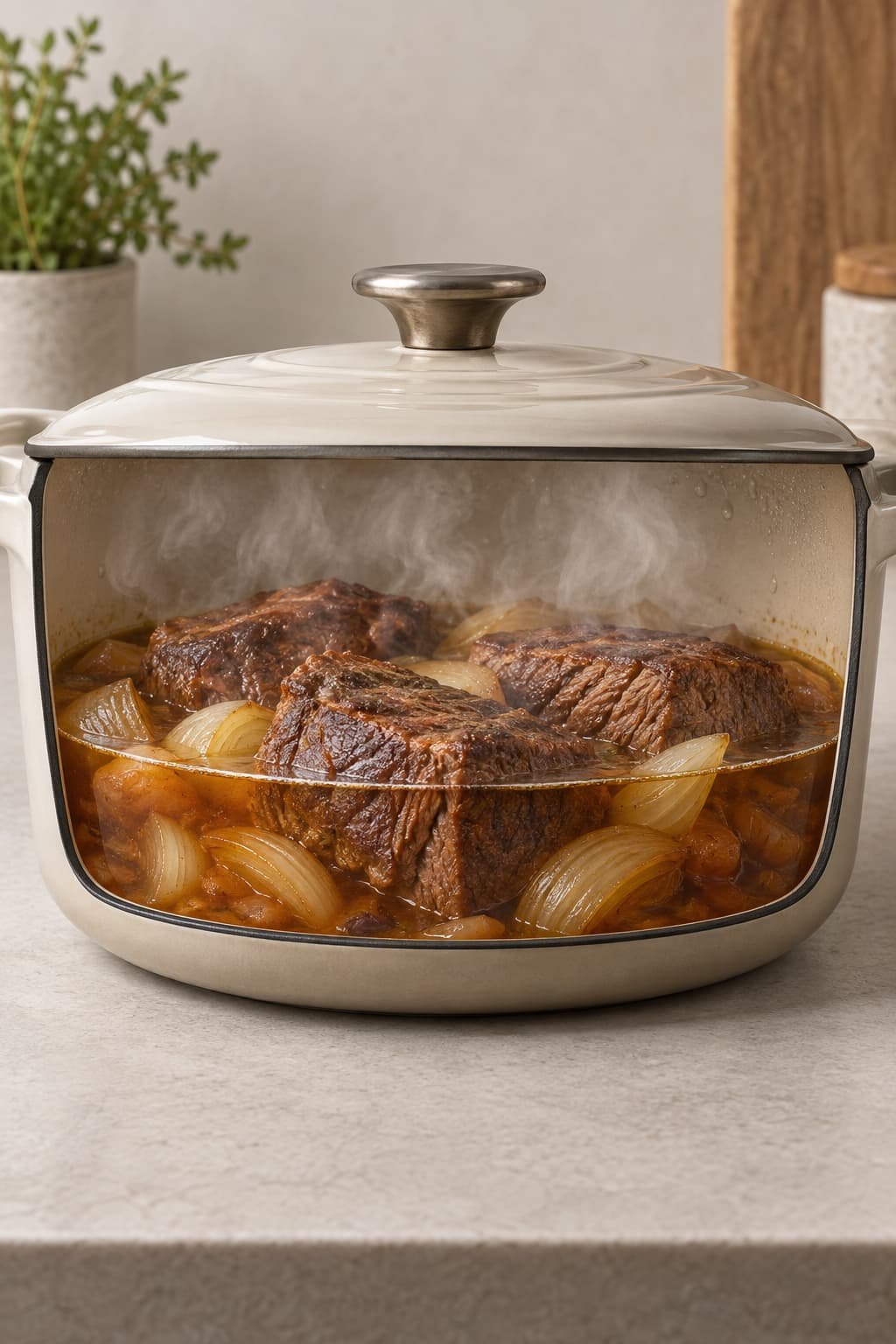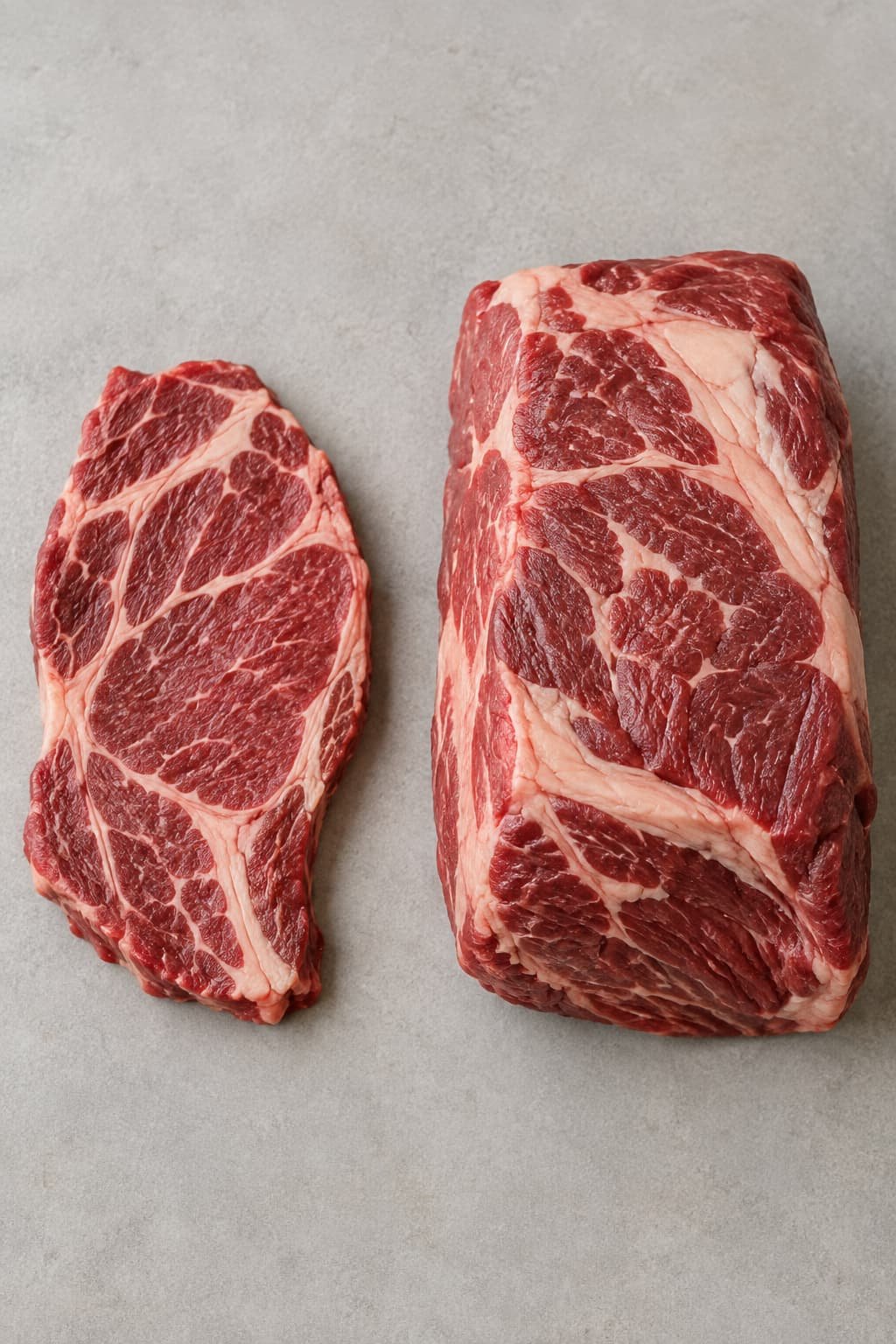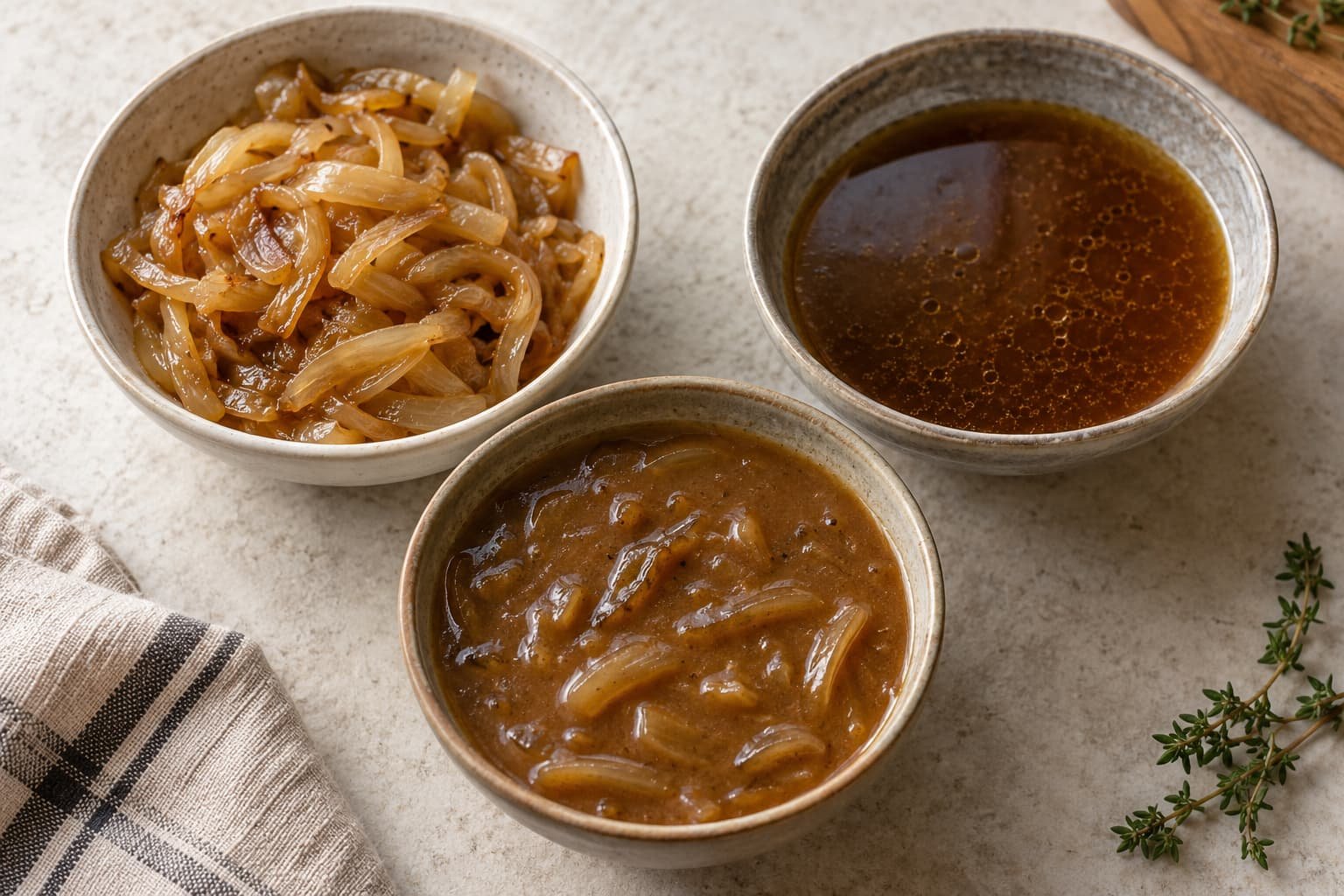
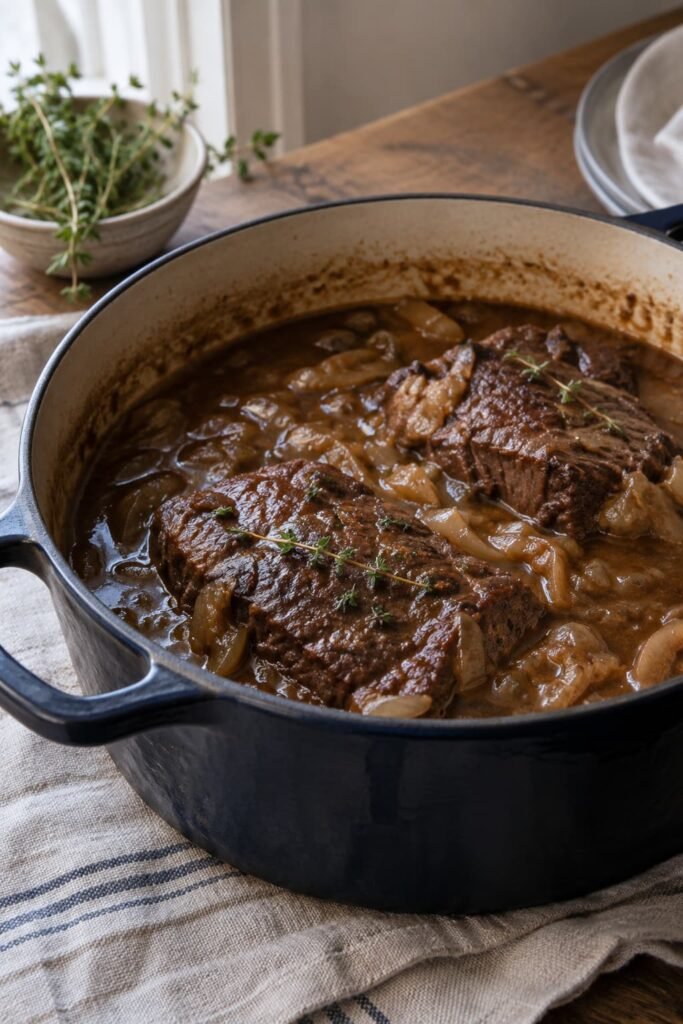
Chuck steak offers rich beef flavor and good value, but its shoulder muscles contain connective tissue that stays chewy when the meat is cooked too quickly. This braised chuck steak recipe solves that problem with slow, moist cooking. The steaks are seared until deeply browned, then gently braised with sliced onions, garlic, beef broth, and herbs in a covered Dutch oven. As the meat cooks, it becomes fork-tender while the onions soften and add body to the cooking liquid. The same pot then produces a savory onion gravy to spoon over the beef, without canned soup or packaged gravy. It is a practical choice for a comforting family dinner that needs little hands-on attention.
Quick Answer: How Do You Braise Chuck Steak Until Tender?
To braise chuck steak until tender, pat ¾–1-inch steaks dry, season them, and sear them in a hot Dutch oven until deeply browned. Cook sliced onions in the drippings, then add beef broth until it reaches about halfway up the meat. Cover and braise at 325°F (163°C), checking after two hours, until a fork enters with little resistance. Most steaks need approximately 2–2½ hours, although the exact time depends on their thickness and cut.
Recipe at a Glance
This braised chuck steak is prepared in a wide Dutch oven, where the steaks are first deeply browned and then slowly cooked in beef broth with onions and herbs. The active preparation is straightforward, but the meat needs enough covered cooking time for its connective tissue to soften properly.
| Detail | Recipe information |
| Preparation time | 20 minutes |
| Searing and gravy-base time | Approximately 20 minutes |
| Oven-braising time | Approximately 2–2½ hours |
| Gravy-finishing and resting time | 10 minutes |
| Estimated total time | Approximately 2 hours 50 minutes to 3 hours 20 minutes |
| Servings | 4 |
| Main cut | Boneless chuck steak |
| Recommended steak thickness | ¾–1 inch |
| Cooking method | Sear, then oven-braise |
| Oven temperature | 325°F (163°C) |
| Main equipment | Wide 5–6-quart Dutch oven |
| Doneness test | A fork or thin skewer enters with little resistance |
| Make ahead | Yes; store the steaks in their gravy |
| Freezer friendly | Yes; freeze the beef together with the gravy |
When Is Braised Chuck Steak Done?
Begin checking the steaks after two hours of covered braising. The meat is ready when a fork or thin skewer slides into the thickest part with little resistance. If it still feels firm or chewy, make sure enough braising liquid remains, replace the lid, and continue cooking in 15–20-minute intervals. Thickness, marbling, and connective tissue can affect the final cooking time, so tenderness is a more dependable guide than the clock alone.
What Is Braised Chuck Steak?
Braised chuck steak is made from a steak cut from the beef chuck, the heavily worked shoulder region of the animal. This cut has a pronounced beef flavor and good marbling, but many chuck steaks also contain enough connective tissue to remain firm or chewy when cooked quickly.
Braising is well suited to this cut because it combines deep browning with slow cooking in a relatively small amount of liquid. After the steaks are seared, they cook gently with beef broth, onions, garlic, and seasonings in a covered pot. The steady heat gradually converts collagen into gelatin, tenderizing the beef while giving the onion gravy a fuller body and smooth texture.
Chuck Steak vs Chuck Roast
Chuck steak and chuck roast come from the same general beef region, but they are not direct substitutes when following a recipe. Their different sizes and thicknesses affect the pot required, liquid level, cooking time, doneness testing, and final serving style.
| Feature | Chuck steak | Chuck roast |
| Shape | Cut into individual steak portions | One larger, thicker piece |
| Typical thickness | Commonly about ¾–1½ inches | Usually several inches thick |
| Cooking time | Generally becomes tender sooner | Normally requires a longer braise |
| Serving style | Served as whole steak portions | Sliced, shredded, or pulled apart |
| Best use in this recipe | The intended cut | Not a direct timing substitute |

For this braised chuck steak recipe, select steaks with a similar thickness so they cook at approximately the same rate and fit in one layer. A whole chuck roast can also be braised, but it may require a larger pot, a different liquid level, and considerably more cooking time. Following the steak timing for a thick roast could leave its center tough.
Why This Braising Method Works
The flavor of this braised chuck steak begins before the slow cooking stage. Searing the steaks over medium-high heat creates a deeply browned surface and leaves rendered fat and browned bits, known as fond, in the bottom of the Dutch oven. These concentrated bits provide the foundation for the onion gravy.
Sliced onions cook in the same pot until softened and lightly golden, bringing gentle sweetness and body to the sauce. Beef broth releases the fond from the bottom of the pot, while a measured amount of Worcestershire sauce deepens the savory flavor without overpowering the onions or beef.
When the steaks are returned to the Dutch oven, the broth should reach roughly one-third to halfway up their sides without fully submerging them. The liquid, steady oven heat, and moisture trapped beneath the lid create an even braising environment. Limiting the broth also keeps the cooking liquid concentrated enough to become a rich gravy.
A tight-fitting lid slows evaporation and prevents the liquid from reducing before the meat becomes tender. Gentle heat gives the connective tissue enough time to soften without subjecting the steaks to the vigorous boiling that can make their fibers feel dry or stringy.
Ingredients for Braised Chuck Steak
Boneless Chuck Steaks

Use approximately 2 pounds of boneless chuck steak for four servings. Choose steaks with visible marbling and a similar thickness, ideally around ¾–1 inch. Evenly sized pieces fit more easily in one layer and are more likely to become tender at approximately the same time.
Avoid extremely thin chuck steaks because their edges may dry out before the connective tissue has had enough time to soften. Trim thick pieces of external fat, but leave the fine marbling within the meat. This intramuscular fat contributes flavor and helps create a richer eating experience after the long braise.
Bone-in chuck steak can also be used, but it is not an equal weight-for-weight replacement. Part of its weight comes from the bone, so purchase slightly more if you need four full servings. Bone-in pieces also occupy more space, making a wide Dutch oven especially important. Arrange the steaks in one layer and use tenderness, rather than the original cooking time alone, to determine when they are ready.
Onions and Garlic
Yellow onions are a dependable choice for a long braise because they soften without losing their flavor. As they cook, their natural sweetness balances the savory beef and gradually adds body to the onion gravy. Slice the onions evenly so they soften at the same rate and distribute consistently around the chuck steaks.
Add minced garlic only after the onions are soft and lightly golden. Cook it for about 30 seconds, just until fragrant, without allowing it to brown. Burned garlic can introduce bitterness that remains noticeable after the gravy has reduced.
Lower-Sodium Beef Broth
Beef broth forms the base of the braising liquid and reinforces the natural flavor of the chuck steak. Lower-sodium broth is the better choice because it provides more control over the final seasoning. As the liquid cooks and reduces, its salt becomes more concentrated.
Full-sodium broth, Worcestershire sauce, and added salt can easily make the finished gravy overly salty when used together. Taste and adjust the seasoning only after the steaks are tender and the gravy has reached its final consistency.
Worcestershire Sauce and Tomato Paste
A measured amount of Worcestershire sauce adds savory depth and mild tang, helping balance the richness of the beef and onions. Tomato paste contributes color, body, concentrated flavor, and gentle acidity.
Cook the tomato paste with the softened onions until it darkens slightly and begins to coat the bottom of the pot. This removes its raw taste and develops a deeper flavor before the flour and broth are added. In restrained quantities, neither ingredient should dominate the onion gravy or make it taste strongly of tomato.
Flour
Use all-purpose flour only as the gravy thickener, not as a coating for the chuck steaks. Once the onions have softened and the tomato paste has cooked, sprinkle the flour evenly over the mixture.
Stir for 1–2 minutes, until no dry flour remains and the mixture loses its raw flour smell. Gradually pour in the beef broth while stirring and scraping the bottom of the Dutch oven. Adding the liquid slowly helps create a smooth gravy without flour lumps.
Using flour in one clearly defined stage also prevents a flour coating from burning while the chuck steaks develop their browned crust.
Herbs and Seasoning
Thyme and one bay leaf add a restrained herbal background that complements the beef without covering its natural flavor. Fresh thyme sprigs can be removed with the bay leaf before serving. Dried thyme is more concentrated than fresh, so use a smaller measured amount rather than substituting it in equal quantities.
Season the steaks with salt and black pepper before browning, but wait until the gravy has finished reducing before making the final adjustment. The broth and Worcestershire sauce already contribute salt, so early overseasoning can be difficult to correct.
Equipment You’ll Need
This braised chuck steak recipe requires only a few basic tools. A wide Dutch oven with a tight lid is the most important because the steaks need enough room to brown and braise in a single layer.
| Equipment | Purpose |
| Wide 5–6-quart Dutch oven with a tight lid | Searing the steaks, preparing the onion gravy, and covered oven-braising |
| Tongs | Turning and transferring the steaks without piercing them |
| Cutting board and chef’s knife | Trimming the beef and slicing the onions and garlic |
| Wooden spoon | Cooking the onions and releasing the browned bits from the pot |
| Measuring cups and spoons | Measuring the broth, flour, and seasonings consistently |
| Fork or thin skewer | Checking the thickest part of each steak for tenderness |
| Instant-read thermometer | Checking the internal temperature; tenderness must still be tested separately |
How to Make Braised Chuck Steak
1. Prepare and Season the Steaks
Pat the chuck steaks thoroughly dry with paper towels. Trim only thick pieces of external fat, leaving the fine marbling within the meat. Season both sides evenly with the measured salt and black pepper listed in the recipe.
A dry surface is essential for proper browning. Moisture must evaporate before the meat can sear, so wet steaks are more likely to develop a pale, steamed surface instead of the deep crust needed for a flavorful onion gravy.
2. Sear the Chuck Steaks
Heat the oil in a wide Dutch oven over medium-high heat. The oil is ready when it shimmers across the surface but is not smoking heavily. Add the steaks in a single layer with space between them.
Sear for approximately 3–4 minutes per side, until a deep brown crust forms and the steaks release from the pot without force. Brown them in batches if they cannot fit comfortably. Overcrowding lowers the pot’s temperature and prevents consistent browning.
Transfer the seared steaks to a clean plate. Pour off excessive rendered fat, leaving a thin layer for cooking the onions.
Inspect the bottom of the pot before continuing. Keep any dark brown bits because they contain concentrated beef flavor. If the residue is black and smells acrid or burned, carefully wipe or clean the pot before adding the onions. Burned fond cannot be corrected after it enters the gravy.
3. Build the Onion Gravy Base
Reduce the heat to medium and add the sliced yellow onions. Cook for approximately 8–12 minutes, stirring regularly, until the onions are soft and lightly golden around the edges.

Add the minced garlic and cook for about 30 seconds, just until fragrant. Stir in the tomato paste and cook for 1–2 minutes, until it darkens slightly and begins coating the onions.
Sprinkle the flour evenly over the mixture. Stir continuously for another 1–2 minutes, until no dry flour remains and the mixture no longer smells raw.
4. Deglaze the Dutch Oven and Start the Gravy
Gradually pour in part of the lower-sodium beef broth while stirring. Scrape the bottom and corners of the Dutch oven with a wooden spoon to release the browned bits into the liquid.
Continue adding the broth slowly and stirring until the flour mixture becomes smooth. This step both deglazes the pot and begins forming the onion gravy. Adding all the broth at once can make flour lumps more difficult to remove.
5. Add the Steaks and Braising Liquid

Stir in the measured Worcestershire sauce, then add the thyme and bay leaf. Return the chuck steaks to the Dutch oven in a single layer.
Pour in enough remaining broth to reach roughly one-third to halfway up the sides of the steaks. Do not completely submerge them. The limited amount of liquid keeps the beef in a proper braising environment while preserving a concentrated base for the gravy.
6. Cover and Oven-Braise the Chuck Steak
Bring the liquid to a gentle simmer on the stovetop. Cover the Dutch oven with a tight-fitting lid and transfer it to a preheated 325°F (163°C) oven.
Braise for two hours before checking the steaks for the first time. Avoid repeatedly opening the lid because every check releases heat and moisture. Most ¾–1-inch chuck steaks require approximately 2–2½ hours, although the exact time depends on their thickness and connective tissue.
7. Check for Fork-Tender Beef
Insert a fork or thin skewer into the thickest part of each steak. Properly braised chuck steak should offer very little resistance. It does not need to fall apart completely, but it should cut easily without feeling firm or rubbery.
If the steaks are still chewy, check the liquid level and replace the lid. Add a small amount of hot broth if the pot is becoming dry, then continue braising in 15–20-minute intervals. Tough chuck steak usually needs additional gentle cooking time, not a higher oven temperature.
8. Finish the Rich Onion Gravy

Transfer the tender chuck steaks to a warm plate and tent them loosely with foil. Remove the bay leaf and thyme stems, then skim any obvious excess fat from the surface of the cooking liquid.
If the onion gravy is thin, simmer it uncovered over medium heat for 5–10 minutes, stirring regularly, until it lightly coats the back of a spoon. Taste before reducing it heavily; continued reduction will also concentrate the salt.
The flour added earlier should provide the main thickening. If the gravy remains thin after reduction, combine 1 teaspoon of cornstarch with 1 tablespoon of cold water. Whisk in a small amount of the slurry and simmer the gravy for 1–2 minutes before deciding whether more is necessary.
Taste and adjust the salt and black pepper. Return the steaks to the Dutch oven for several minutes, turning them once so both sides are coated and heated through. Serve the braised chuck steak with the rich onion gravy spooned over the top.
How to Know When Chuck Steak Is Tender

Food safety and tenderness are two different measurements. The USDA recommends cooking whole beef steaks and roasts to a minimum internal temperature of 145°F (62.8°C), followed by a three-minute rest. Chuck steak can reach that safe minimum and still remain chewy because its connective tissue has not yet softened.
Use an instant-read thermometer to verify food safety, but judge tenderness with a fork or thin skewer. Insert it into the thickest part of the steak. Properly braised chuck steak should offer very little resistance and should cut easily without feeling tight or rubbery.
Do not use one exact internal temperature as the universal target for tender chuck steak. Thickness, marbling, and the specific shoulder muscle can all affect when the meat becomes tender. If the steak has passed the safe minimum but still resists the fork, keep it covered and continue braising gently.
Common Braised Chuck Steak Problems and How to Fix Them
Why Is My Chuck Steak Still Tough?
Chuck steak that feels tight and rubbery after approximately two hours usually needs more covered cooking time. Check that enough braising liquid remains, replace the lid, and continue cooking in 15–20-minute intervals.
Do not increase the oven temperature to force faster results. Higher heat can make the liquid boil too vigorously, accelerate moisture loss, and reduce the gravy before the connective tissue has softened. Let tenderness, rather than the original cooking time, determine when the steak is ready.
Why Did the Chuck Steak Become Dry?
Dry chuck steak may result from using pieces that are too thin, cooking at excessive heat, allowing too much liquid to evaporate, using a loose lid, or continuing to cook after the meat was already tender.
Cooking a dry steak for longer will not restore the moisture it has lost. Instead, slice it across the grain and coat it with warm onion gravy away from direct heat. This can improve the serving texture, although it cannot completely reverse severe overcooking. Prevent the problem by using evenly cut ¾–1-inch steaks and checking them at the lower end of the expected braising range.
Why Is the Onion Gravy Too Thin?
Remove the tender steaks and simmer the gravy uncovered over medium heat until it lightly coats the back of a spoon. Stir regularly to prevent the bottom from scorching.
If further reduction would make the gravy too salty, mix 1 teaspoon of cornstarch with 1 tablespoon of cold water. Whisk in a small portion of the slurry and simmer for 1–2 minutes before checking the consistency. Add more only if the gravy remains too thin.
Why Is the Onion Gravy Too Thick?
Whisk in warm lower-sodium or unsalted beef broth 1–2 tablespoons at a time. Warm the gravy briefly, stir well, and then reassess its consistency before adding more.
Avoid pouring in a large amount at once. The gravy can quickly become watery, requiring additional reduction that may concentrate the salt and soften the onions excessively.
Why Is My Onion Gravy Greasy?
Remove the Dutch oven from the heat and let the gravy stand undisturbed for 3–5 minutes. As the fat rises to the surface, skim it away with a wide spoon or small ladle.
Do not add flour in an attempt to absorb the grease. Flour thickens the liquid but does not remove excess fat, and adding more can leave the gravy heavy or pasty.
Why Does the Onion Gravy Taste Bitter?
Properly browned fond is dark brown and smells roasted. Burned garlic, flour, tomato paste, or blackened residue smells sharp and acrid and can give the entire gravy an unpleasant bitter taste.
For very mild bitterness, stop reducing the gravy and add a small amount of unsalted broth. This may soften the flavor, but it is not a guaranteed correction. If the sauce tastes distinctly burned, extra seasoning will not repair it; preparing a fresh gravy base is the reliable solution. To prevent the problem, inspect the Dutch oven immediately after searing and remove genuinely burned residue before cooking the onions.
Ingredient Substitutions and Variations
Can I Use Bone-In Chuck Steak?
Bone-in chuck steak can replace boneless chuck steak, but it is not an equal weight-for-weight substitution. To replace approximately 2 pounds of boneless steak, begin with about 2¼–2½ pounds of bone-in chuck steak, depending on the size of the bones.
Bone-in pieces also require more space in the Dutch oven. Arrange them in one layer without forcing them to overlap. Their cooking time may differ from the boneless version, so check each piece individually and continue braising until a fork or thin skewer enters with little resistance.
Can I Use Unsalted Beef Broth?
Unsalted beef broth can replace lower-sodium broth in the same quantity. It provides greater control over the finished gravy, particularly because Worcestershire sauce also contributes salt.
Do not add extra salt automatically. Wait until the steaks are tender and the gravy has reached its final consistency, then taste and adjust the seasoning.
How Do I Make Gluten-Free Onion Gravy?
Omit the all-purpose flour and prepare the braised chuck steak as directed. Once the meat is tender, transfer it to a warm plate and bring the onion gravy to a gentle simmer.
Mix 2 teaspoons of cornstarch with 2 teaspoons of cold water until smooth. Whisk half of the slurry into the gravy and simmer for 1–2 minutes before checking the consistency. Add more only if needed.
Confirm that the beef broth, Worcestershire sauce, and other packaged ingredients are labeled gluten-free. If the recipe is being prepared for someone with celiac disease or a serious sensitivity, also consider possible cross-contact from cookware, utensils, and preparation surfaces.
Can I Add Mushrooms?

Cremini or button mushrooms add earthy flavor and work well with the onion gravy. Cook the sliced onions for about 4–5 minutes, until they begin to soften, then add the sliced mushrooms.
Continue cooking until the mushrooms release their moisture and begin to brown around the edges. Letting that liquid evaporate before adding the broth prevents a diluted gravy and develops a deeper mushroom flavor.
Fresh Thyme vs Dried Thyme
Fresh and dried thyme can both be used, but dried thyme is more concentrated. For a restrained herbal flavor, use approximately 1½ teaspoons of fresh thyme leaves or ½ teaspoon of dried thyme.
If using whole fresh sprigs, about three average sprigs should be sufficient. Add them with the bay leaf and remove the woody stems before serving. Measure dried thyme carefully because it remains in the finished gravy.
Does Braised Chuck Steak Require Wine?
No. This braised chuck steak recipe uses beef broth and develops its flavor through browned beef, softened onions, tomato paste, and Worcestershire sauce.
If adapting another version that contains wine, replace it with an equal amount of lower-sodium or unsalted beef broth. The gravy will have less acidity, so taste it after reduction before deciding whether any further adjustment is necessary.
Slow-cooker, pressure-cooker, and stovetop methods require different liquid levels and cooking times. Use a recipe developed specifically for the selected method rather than converting these Dutch-oven instructions directly.
What to Serve with Braised Chuck Steak

Mashed Potatoes: The Most Practical Pairing
Creamy mashed potatoes are the most practical all-around side dish for braised chuck steak. Their mild flavor and soft texture provide a comfortable base for the tender beef without competing with the deeply savory sauce.
Plain buttery mashed potatoes work especially well. Spoon the onion gravy over both the meat and potatoes just before serving. Preparing the potatoes separately preserves their fluffy texture and allows each person to add as much gravy as preferred.
Other Starches for the Gravy
Buttered egg noodles provide a soft, less creamy alternative to mashed potatoes. Their broad surface holds the gravy well, and they can be prepared while the chuck steak completes its final braising time.
Creamy polenta offers a smooth base with a mild corn flavor, while steamed white rice is a neutral, practical choice for absorbing the sauce. Crusty bread works better as a smaller accompaniment than as the main base, particularly when extra gravy remains on the plate.
One main starch is usually enough for this rich beef dinner, although a small amount of crusty bread can still be served alongside mashed potatoes, noodles, or rice.
Vegetables and Fresh Sides
Green beans and roasted broccoli provide color and a firmer texture that contrasts with the tender chuck steak. Season them simply with salt, black pepper, and a small amount of oil or butter. Heavy cheese sauces or sweet dressings can compete with the onion gravy.
Lightly glazed carrots are another suitable option, but keep the glaze restrained because the slowly cooked onions already add sweetness to the meal. For a fresher contrast, serve a crisp cabbage salad with a lightly acidic dressing. Its crunch and acidity help balance the richness of the beef.
A well-balanced plate can be as simple as braised chuck steak, buttery mashed potatoes, green beans, and a spoonful of gravy. This combination delivers tender beef, a creamy base, and a fresh vegetable without making the meal unnecessarily heavy.
Make-Ahead, Storage, and Reheating

Making Braised Chuck Steak Ahead
Braised chuck steak is a practical make-ahead dinner because storing the beef in its onion gravy helps preserve its flavor and moisture. After an overnight rest, the seasonings can taste more evenly blended, while the chilled gelatin naturally thickens the gravy around the meat.
Prepare the recipe up to one day ahead and refrigerate the steaks with their gravy. As the dish chills, excess fat rises and firms on the surface, making it easier to remove before reheating.
How to Store Leftover Chuck Steak
Divide the chuck steak and gravy among shallow airtight containers without overfilling them. Keep the steaks in a single layer when possible and spoon gravy over the exposed surfaces. Use more than one container rather than stacking several hot steaks in one deep container.
Refrigerate the containers promptly rather than waiting for the food to cool completely on the counter. Do not leave cooked beef at room temperature for more than two hours. At a refrigerator temperature of 40°F (4°C) or below, properly stored leftovers can be kept for 3–4 days.
Can You Freeze Braised Chuck Steak?
Yes. Place the cooled steak and onion gravy together in shallow freezer-safe containers, leaving a little space for expansion. Keeping the beef surrounded by gravy helps protect its surface from drying during frozen storage.
For the best quality, use frozen braised beef within approximately 2–3 months. Thaw it overnight in the refrigerator rather than on the counter, then reheat it using the stovetop or oven method.
Reheating Braised Chuck Steak on the Stovetop
Place the steak and gravy in a covered skillet or saucepan over medium-low heat. Add a small splash of lower-sodium or unsalted beef broth if the chilled gravy is too thick to spread around the meat.
Bring the gravy to a steady simmer while spooning it over the steaks. Turn each steak carefully once if necessary, since fork-tender pieces may break when handled repeatedly. Avoid prolonged hard boiling, which can reduce the sauce too quickly.
Continue reheating until the center of the beef reaches 165°F (74°C) when checked with an instant-read thermometer.
Reheating Braised Chuck Steak in the Oven
Arrange the steak and gravy in a covered oven-safe dish. Add a small amount of broth if the sauce has thickened considerably, then reheat in a 325°F (163°C) oven.
Keep the dish covered to reduce moisture loss. Begin checking an individual portion after approximately 20 minutes, although the total time will depend on the number and thickness of the steaks. Use temperature rather than time as the final guide and reheat the center to 165°F (74°C).
Remove only the amount you plan to serve and keep the remaining portion refrigerated. Repeated cooling and reheating can gradually reduce the quality of both the beef and the gravy.
Frequently Asked Questions
How Long Should Chuck Steak Be Braised?
For ¾–1-inch chuck steaks, begin checking after approximately two hours. Most require around 2–2½ hours at 325°F (163°C), but thickness and connective tissue affect the timing. The steak is ready when a fork or thin skewer enters with very little resistance.
What Temperature Is Best for Oven-Braised Chuck Steak?
Braise the chuck steak at 325°F (163°C). This temperature provides steady, gentle heat without making the liquid boil aggressively or reduce before the meat becomes tender. Increasing the heat will not necessarily shorten the tenderizing process.
Should Chuck Steak Be Completely Covered with Liquid?
No. The broth should reach roughly one-third to halfway up the sides of the steaks. A tight-fitting lid traps moisture around the exposed portion, while partial submersion keeps the cooking liquid concentrated enough to form a rich gravy.
Do I Have to Sear Chuck Steak Before Braising?
Searing is not required for braising, but it creates a deeper beef flavor and a richer onion gravy. Deglazing the Dutch oven with broth releases the browned bits left by the steaks and incorporates their concentrated flavor into the sauce.
Can I Use Chuck Roast Instead of Chuck Steak?
Chuck roast comes from the same general shoulder region but is considerably thicker. It may need a larger pot, a different liquid level, and a longer braising time. Do not apply the chuck-steak timing directly to a whole roast.
Can I Braise Chuck Steak on the Stovetop?
Yes. Keep the pot tightly covered and adjust the heat to maintain occasional gentle bubbles without vigorous boiling. Check periodically for sticking and add a small amount of hot broth if the braising liquid reduces too quickly.
Can I Make Braised Chuck Steak Ahead of Time?
Yes. Prepare it one day ahead and refrigerate the steaks in their onion gravy. Reheat gently on the stovetop or in a covered 325°F (163°C) oven, adding a small splash of broth if the chilled gravy is too thick.
Why Is My Braised Chuck Steak Chewy?
Firm, rubbery chuck steak usually needs more covered braising time. Check the liquid level and continue cooking in 15–20-minute intervals. Dry, stringy meat points instead to excessive heat, insufficient liquid, a loose lid, or cooking beyond tenderness.
Tender Braised Chuck Steak with Rich Onion Gravy
Chuck steaks are seared until deeply browned, then gently oven-braised with yellow onions, garlic, beef broth, and herbs. Everything cooks in one Dutch oven, producing fork-tender beef and a rich onion gravy without canned soup or packaged gravy.
Recipe Details
| Detail | Information |
| Preparation time | 20 minutes |
| Cooking time | Approximately 2 hours 45 minutes |
| Total time | Approximately 3 hours 5 minutes |
| Servings | 4 |
| Course | Main Course, Dinner |
| Cuisine | American |
| Cooking method | Searing and oven braising |
| Oven temperature | 325°F (163°C) |
| Main equipment | Wide 5–6-quart Dutch oven |
Ingredients
- 2 pounds boneless chuck steaks, approximately ¾–1 inch thick
- 1 teaspoon fine sea salt, about 6 grams, divided
- ½ teaspoon freshly ground black pepper
- 1 tablespoon neutral cooking oil
- 2 medium yellow onions, thinly sliced
- 3 garlic cloves, minced
- 1 tablespoon tomato paste
- 2 tablespoons all-purpose flour
- 2 cups lower-sodium beef broth, plus more if needed
- 1 tablespoon Worcestershire sauce
- 3 fresh thyme sprigs or ½ teaspoon dried thyme
- 1 bay leaf
For an optional slurry:
- 1 teaspoon cornstarch
- 1 tablespoon cold water
Instructions
- Prepare the chuck steaks. Preheat the oven to 325°F (163°C). Pat the steaks thoroughly dry with paper towels. Trim thick deposits of exterior fat but leave the fine marbling. Season both sides with ¾ teaspoon salt and the black pepper.
- Sear the steaks. Heat the oil in a wide Dutch oven over medium-high heat. When the oil shimmers, add the steaks in a single layer. Sear for 3–4 minutes per side, until a deep brown crust forms. Brown the steaks in batches if necessary, then transfer them to a plate.
- Inspect the Dutch oven. Keep the brown, roasted-smelling drippings in the pot. If any residue is black and smells acrid, remove it before adding the onions because burned material can make the gravy bitter.
- Cook the onions. Reduce the heat to medium. Add the sliced onions and remaining ¼ teaspoon salt. Cook for 8–12 minutes, stirring occasionally, until soft and lightly golden.
- Build the gravy base. Add the garlic and cook for about 30 seconds. Stir in the tomato paste and cook for 1–2 minutes, until it darkens slightly. Sprinkle the flour over the onions and stir continuously for one minute.
- Deglaze the Dutch oven. Gradually add approximately 1 cup of beef broth while stirring. Scrape the browned bits from the bottom of the pot and work them into the gravy.
- Add the steaks and braising liquid. Return the chuck steaks to the Dutch oven in a single layer. Add the Worcestershire sauce, thyme, bay leaf, and enough remaining broth to reach approximately one-third to halfway up the sides of the meat.
- Braise the chuck steaks. Bring the liquid to a gentle simmer. Cover the Dutch oven tightly and transfer it to the oven. Begin checking the steaks after two hours. Continue braising until a fork or thin skewer enters the thickest part with very little resistance, usually about 2–2½ hours.
- Finish the onion gravy. Transfer the tender steaks to a plate and cover them loosely with foil. Remove the bay leaf and thyme stems, then skim excess fat from the gravy. If the gravy is thin, simmer it uncovered for 2–5 minutes, checking the consistency frequently.
- Adjust the consistency if needed. If the gravy remains thin, combine the cornstarch and cold water. Whisk in half of the slurry and simmer for 1–2 minutes. Add the remaining slurry only if necessary. Taste before adding more salt or pepper.
- Coat and serve. Reduce the heat to low and return the steaks to the gravy for 1–2 minutes, just until coated and warmed through. Serve with the onion gravy spooned over the top.
Recipe Notes
Use chuck steaks of similar thickness so they become tender at approximately the same time. Extremely thin steaks can dry out before their connective tissue has time to soften.
The steaks should be partially submerged, not completely covered. If the braising liquid falls noticeably below one-third of the meat, add a small amount of hot lower-sodium broth.
If the steaks remain firm or rubbery after two hours, check the liquid level, replace the lid, and continue braising in 15–20-minute intervals. Do not increase the oven temperature.
The USDA safe minimum for whole beef steaks is 145°F (62.8°C), followed by a three-minute rest. However, chuck steak can reach this safe temperature before becoming tender. Use an instant-read thermometer to verify safety and a fork or thin skewer to evaluate tenderness.
Storage and Reheating
Refrigerate the chuck steak and gravy within two hours of cooking. Divide the food between shallow, covered containers and keep the steaks surrounded by gravy to limit drying. Refrigerate for up to 3–4 days.
Reheat the steak and gravy gently in a covered saucepan over medium-low heat or in a covered 325°F (163°C) oven. Add a small amount of broth if the chilled gravy is too thick. Reheated leftovers should reach 165°F (74°C).
Estimated Nutrition
Estimated nutrition per serving, assuming four servings and most of the gravy is consumed:
Nutrient |
Estimated amount |
| Calories | 650 kcal |
| Protein | 48 g |
| Carbohydrates | 15 g |
| Fat | 43 g |
| Saturated fat | 16 g |
| Fiber | 2 g |
| Sugar | 5 g |
| Sodium | 850 mg |
Nutrition will vary according to the chuck steak’s marbling, the brands of broth and Worcestershire sauce, the amount of fat skimmed, and how much gravy is consumed. Recalculate these values using the exact ingredients and final cooked yield after testing.