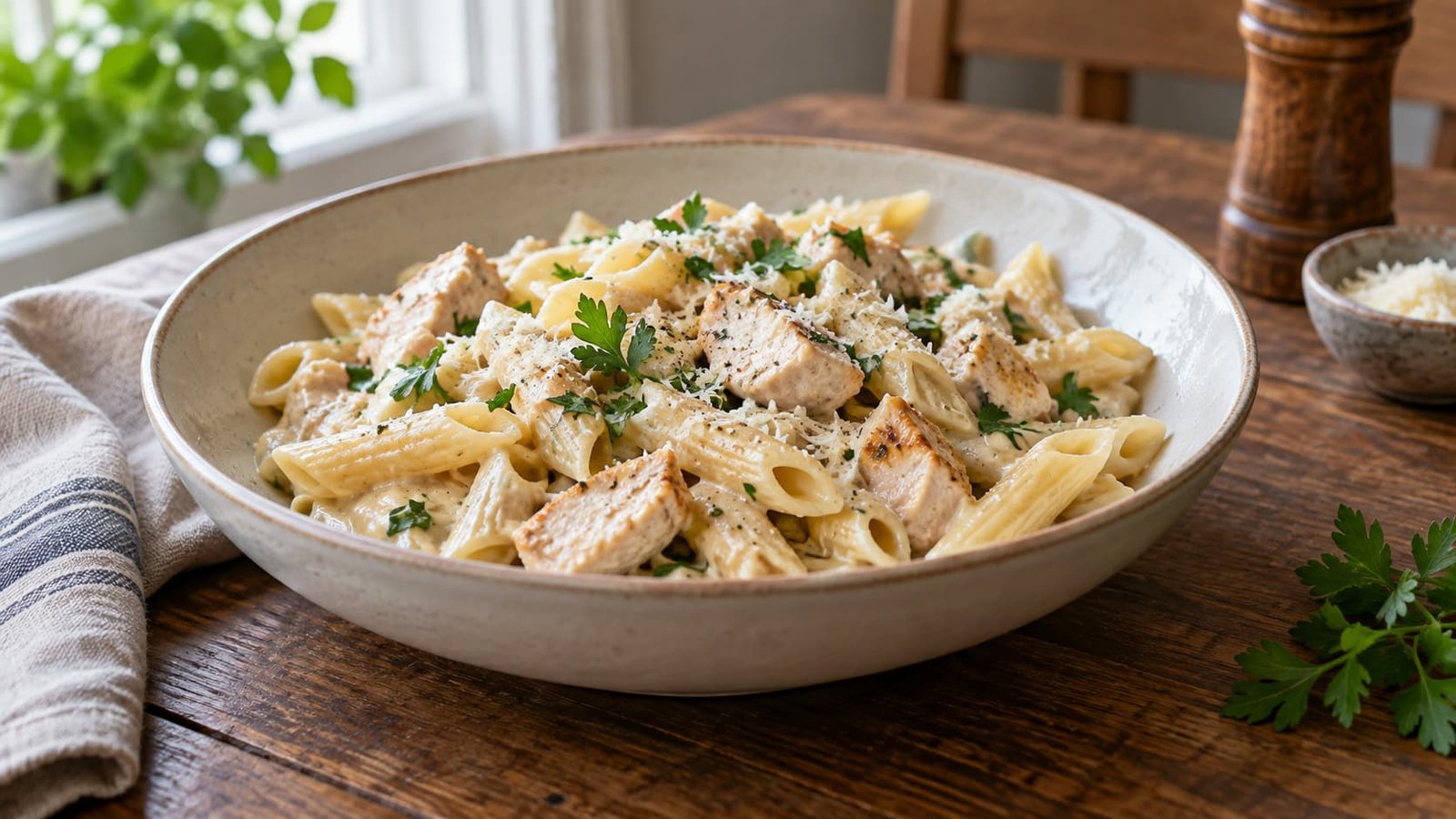
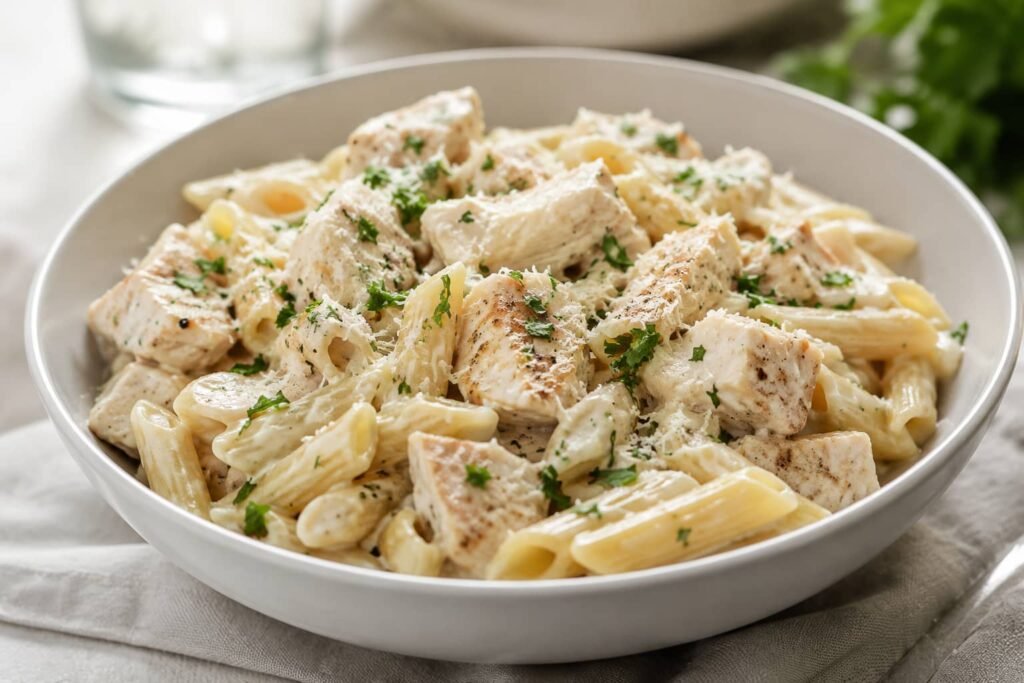
This chicken pasta with Philadelphia cream cheese combines tender, golden chicken pieces with short pasta and a smooth garlic-Parmesan sauce. Philadelphia cream cheese gives the sauce a light tang and creamy texture, while chicken broth and reserved pasta water loosen it without the need for heavy cream.
The chicken is browned separately so it develops better color instead of steaming in the sauce. Once the pasta is cooked, everything is tossed together over gentle heat until the sauce becomes silky and coats each piece evenly. The result is a practical weeknight dinner with a rich flavor, balanced seasoning, and a sauce that stays creamy rather than turning thick, greasy, or clumpy.
Quick Answer
Creamy Philadelphia chicken pasta is made by boiling short pasta in one pot and browning seasoned chicken in a wide skillet. Reduce the heat before adding Philadelphia cream cheese, garlic, Parmesan, and chicken broth. Stir in reserved pasta water gradually until the sauce is smooth and fluid enough to coat the pasta without becoming watery.
Recipe at a Glance
| Detail | Information |
| Preparation time | 10 minutes |
| Cooking time | 20 minutes |
| Total time | 30 minutes |
| Servings | 4 main-course servings |
| Main pasta | Penne or rigatoni |
| Main protein | Boneless, skinless chicken breast |
| Sauce | Garlic-Parmesan Philadelphia cream cheese sauce |
| Equipment | Large pasta pot and wide skillet |
| Difficulty | Easy |
| Storage | Refrigerate in an airtight container and reheat gently |
Why This Philadelphia Chicken Pasta Works
Creamy Sauce Without Heavy Cream
Philadelphia cream cheese gives the sauce a smooth texture, gentle tang, and enough richness without requiring heavy cream. Chicken broth adds savory flavor, while reserved pasta water loosens the cream cheese so it coats the pasta instead of forming a heavy layer at the bottom of the skillet.
The starch in the pasta water also helps the finished sauce cling more evenly. Lower the heat before adding the cream cheese and avoid bringing the mixture to a hard boil, which can make a dairy-based sauce look oily or uneven.

Chicken Cooked Separately for Better Browning
Browning the chicken before preparing the Philadelphia cream cheese pasta sauce allows it to make direct contact with the hot skillet. This develops a deeper savory flavor and a lightly golden surface that would be difficult to achieve if the chicken were cooked directly in the liquid.
Use a wide skillet and arrange the chicken in a single layer. Overcrowding traps steam, while evenly sized pieces help the chicken cook at a similar rate and reduce the risk of dry edges or undercooked centers.
Short Pasta Holds the Sauce
Penne and rigatoni work particularly well because their hollow centers and ridged surfaces hold the creamy sauce. Their shape also makes it easier to distribute the bite-size chicken throughout the finished dish.
Fusilli is another good choice because its twists catch the sauce between the grooves. Spaghetti can be used, but short pasta is easier to toss with the chicken and usually produces a more even coating.
Measured Liquid Prevents a Watery Sauce
Chicken broth creates the savory base, while reserved pasta water is used near the end to fine-tune the consistency. Adding both liquids gradually gives you better control than pouring everything into the skillet at once.
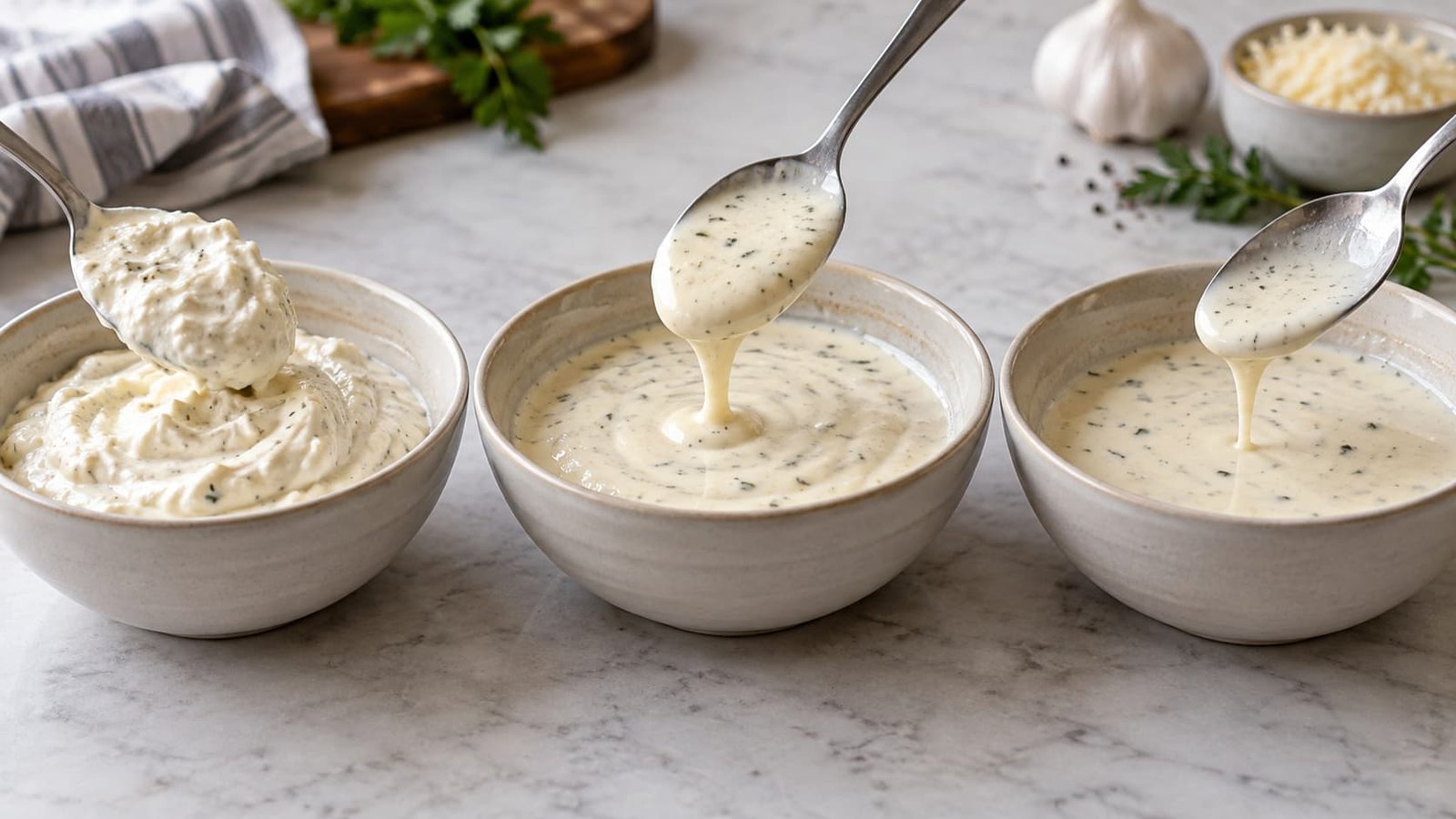
Start with the measured broth listed in the recipe card. After adding the pasta, stir in reserved pasta water a small amount at a time until the cream cheese sauce is silky and fluid enough to coat the pasta.
The sauce should appear slightly looser in the skillet than it will on the plate. As the pasta rests, it absorbs moisture and the sauce naturally thickens. Adding too much liquid at once can weaken the flavor and leave the finished pasta watery.

Ingredients You’ll Need
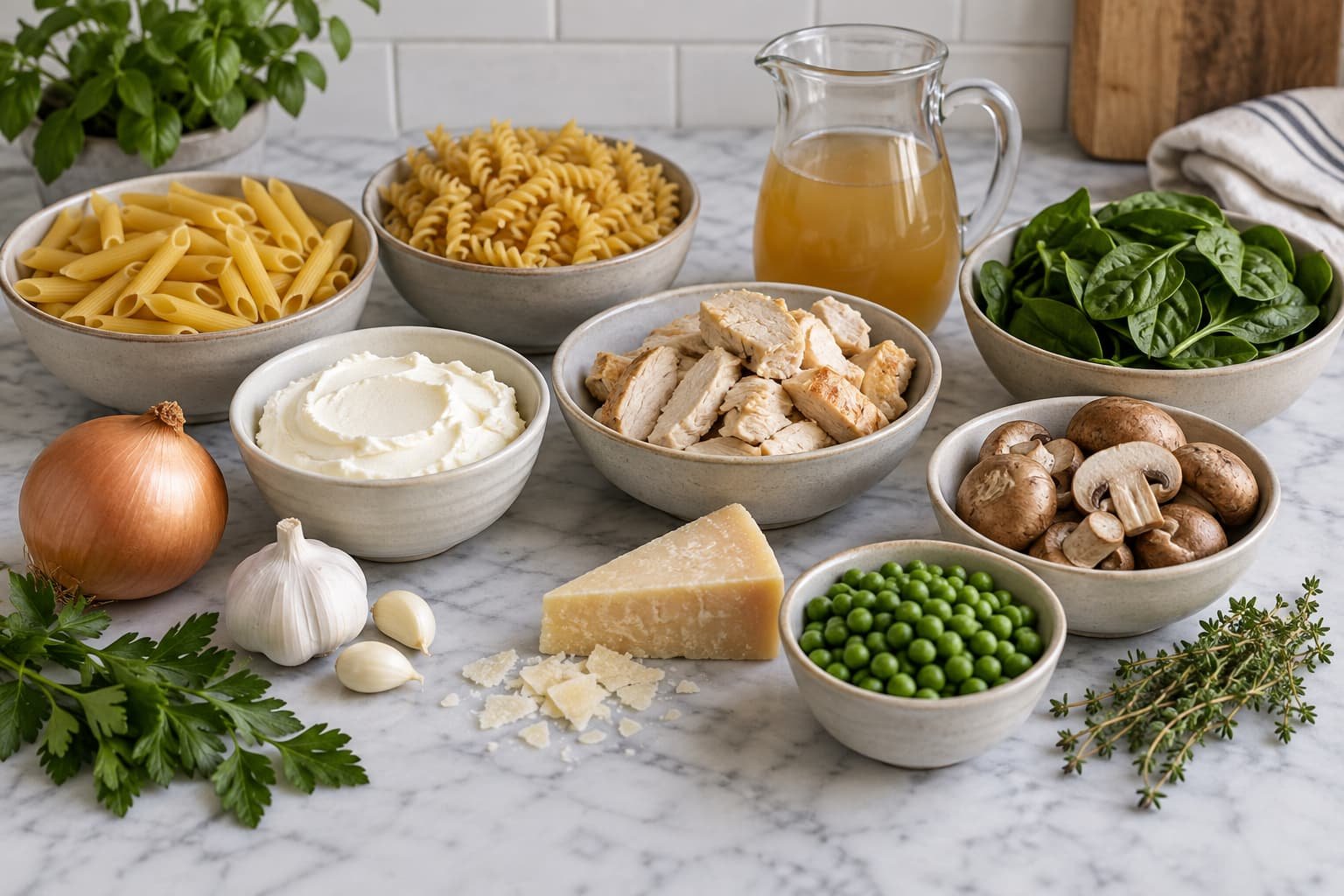
This Philadelphia chicken pasta uses familiar ingredients, but the final texture depends on how they are prepared and combined. Evenly sized chicken pieces cook more consistently, short pasta holds the sauce well, and reserved pasta water helps the cream cheese blend into a smooth coating.
Exact quantities are listed in the recipe card below. The notes here explain which ingredients work best and how each one affects the finished dish.

Chicken
Boneless, skinless chicken breast is the main protein in this recipe. It cooks quickly and has a mild flavor that works well with the garlic-Parmesan Philadelphia sauce.
Cut the chicken into roughly 1-inch pieces. Uniform pieces brown more evenly and are less likely to leave you with small, dry pieces alongside larger, undercooked ones.
Cook the chicken in a wide skillet and keep it in a single layer. When the pan is overcrowded, released moisture becomes trapped and the meat steams instead of developing a lightly golden surface. Cook in two batches if necessary.
Boneless, skinless chicken thighs are a suitable alternative. They have a richer flavor and tend to remain tender even if cooked slightly longer. Trim away any large pieces of fat and cut the thighs to the same approximate size as the chicken breast.
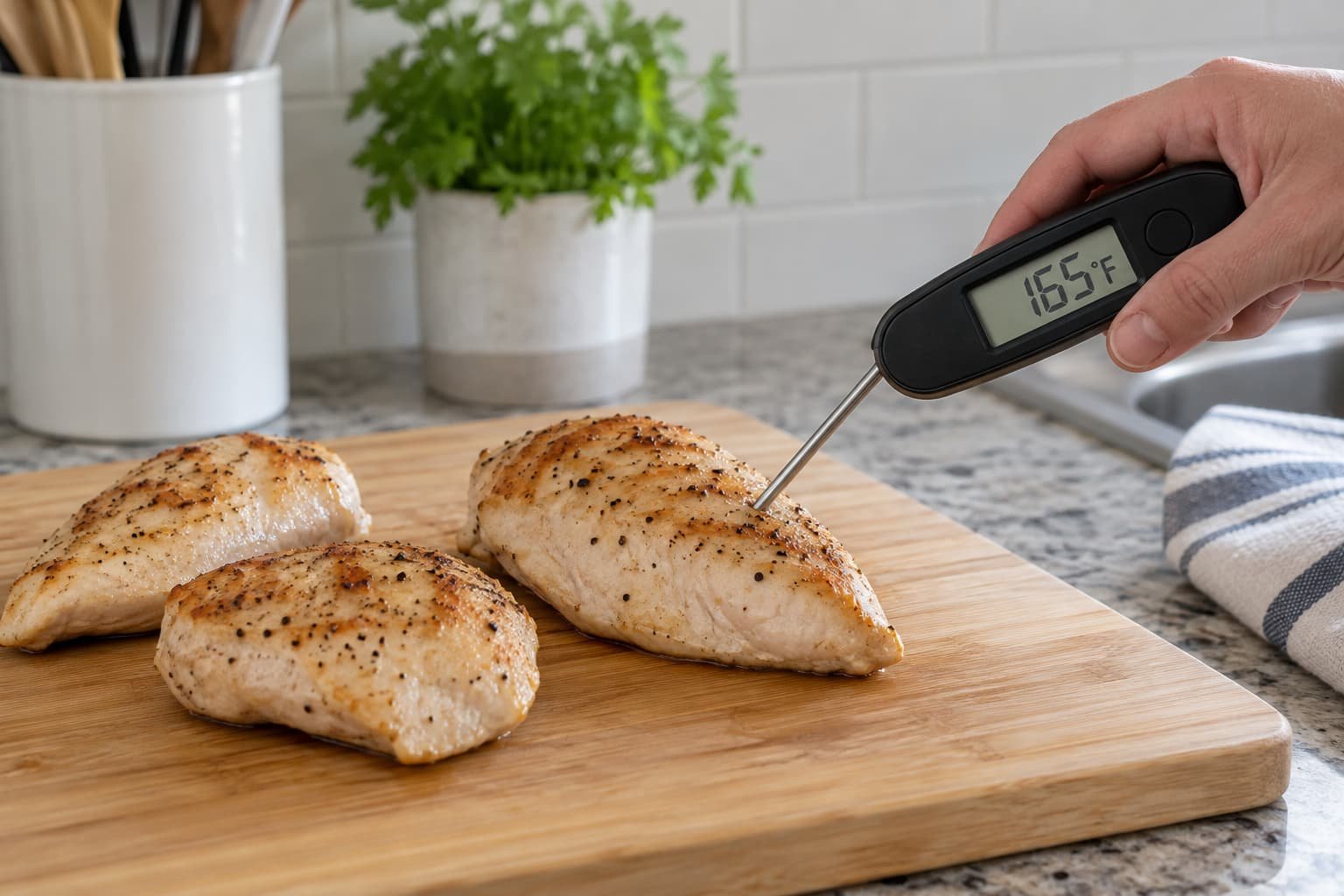
Whichever cut you choose, check the thickest pieces with an instant-read thermometer. Chicken is safely cooked when it reaches an internal temperature of 165°F or 74°C.
Philadelphia Cream Cheese
Original full-fat Philadelphia cream cheese gives the sauce the most reliable body and smooth texture. Its mild tang balances the Parmesan and chicken broth without requiring additional heavy cream.
Spreadable cream cheese from a tub blends into warm liquid quickly. Firmer block-style cream cheese, whether Philadelphia or another brand, should be cut into small cubes so it softens evenly and does not leave lumps in the sauce.
Remove the cream cheese from the refrigerator before you begin preparing the other ingredients. Allowing it to lose some of its chill helps it combine more smoothly with the warm broth. It does not need to become fully room temperature.
Light Philadelphia can also be used, but its lower fat content and higher moisture may create a softer, less rich sauce. Add the broth and reserved pasta water cautiously, because the lighter version may require less liquid.
Philadelphia is not the only cream cheese that works. Another plain, full-fat brand can be substituted in the same amount, although its salt level, tanginess, moisture content, and melting consistency may differ slightly.
Avoid whipped cream cheese for this recipe. The air incorporated into it makes volume measurements less dependable and can affect the consistency of the finished sauce.

Pasta
Penne and rigatoni are the best choices for this creamy chicken pasta. Their hollow centers and ridged surfaces catch the sauce, while their compact shape makes them easy to toss with bite-size pieces of chicken.
Fusilli is another good option because its spirals hold the cream cheese sauce between the grooves. Use 12 ounces or 340 grams of dry pasta for four main-course servings, provided this amount matches the final tested quantity of chicken and sauce.
Cook the pasta until al dente. It should be tender but retain a slight firmness in the center. Begin checking it one or two minutes before the shortest cooking time printed on the package.
The pasta will cook briefly again when it is tossed with the hot sauce. Draining it only after it becomes completely soft can result in a mushy finished dish.
Before draining, reserve at least 1 cup of pasta water. You may use only part of it, but keeping extra gives you enough control to adjust the sauce. Add it near the end, beginning with a small amount and stirring before deciding whether more is needed.
Spaghetti can be used, but short pasta is easier to distribute evenly with the chicken. Long strands may also need a slightly looser sauce and more careful tossing to prevent clumping.
Sauce Ingredients
Finely diced onion forms the savory base of the sauce. Cook it until soft and lightly golden before adding the garlic. Properly softened onion adds subtle sweetness, while undercooked onion can leave a sharp flavor in the finished pasta.
Fresh garlic should be added after the onion and cooked only until fragrant, usually about 30 seconds. Garlic burns quickly, and even a small amount of burnt garlic can make the sauce taste bitter.
Lower-sodium chicken broth loosens the cream cheese and adds savory depth. A lower-sodium option gives you more control because the Philadelphia and Parmesan already contain salt. Add the measured broth first and use pasta water later only to fine-tune the consistency.
Freshly grated Parmesan adds saltiness, depth, and a lightly thickened finish. It generally melts more evenly than many pre-shredded varieties, which may contain ingredients that prevent clumping in the package.
Add the Parmesan over low heat or after briefly removing the skillet from the burner. Excessive heat can make a cheese sauce look oily or grainy.
Italian seasoning adds a mild blend of dried herbs without overpowering the garlic and cream cheese. Black pepper provides gentle warmth and helps balance the richness of the sauce.
Taste before adding extra salt. The amount needed will depend on the saltiness of the broth, cream cheese, Parmesan, and pasta water.
Fresh parsley is best stirred in or scattered over the pasta just before serving. It adds a clean herbal finish and a little color without changing the main garlic-Parmesan flavor.
How to Make Chicken Pasta with Philadelphia Cream Cheese
Cook the pasta while the chicken browns so both components are ready at roughly the same time. Measure and prepare the sauce ingredients before heating the skillet, because the garlic and Philadelphia cream cheese sauce comes together quickly.
Step 1: Prepare the Chicken and Boil the Pasta Water
Pat the boneless, skinless chicken breast dry, then cut it into roughly 1-inch pieces. Keeping the pieces similar in size helps them brown evenly and finish cooking at the same rate.
Season the chicken with salt, black pepper, and Italian seasoning.
Bring about 4 quarts of water to a rolling boil in a large pot. Season it lightly with salt, remembering that the cream cheese, Parmesan, chicken broth, and reserved pasta water will all contribute to the final salt level.
Step 2: Cook the Pasta Until Al Dente
Add 12 ounces of penne, rigatoni, or fusilli to the boiling water and stir well. Follow the package directions, but begin checking the pasta about two minutes before the shortest suggested cooking time.
Drain it about one minute before it reaches your preferred texture. The center should still feel slightly firm because the pasta will continue cooking when tossed with the hot Philadelphia cream cheese sauce.
Before draining, reserve at least 1 cup of the starchy pasta water. Do not rinse the pasta, since the starch left on its surface helps the sauce cling.
For the best timing, begin cooking the pasta shortly before searing the chicken so it can move directly from the pot into the finished sauce rather than sitting and sticking together.
Step 3: Sear the Chicken
Heat 1 tablespoon of olive oil in a wide 11- or 12-inch skillet over medium-high heat. Once the oil is hot, arrange the chicken in one layer with a little space between the pieces.
Cook without stirring for 3–4 minutes, until the first side develops a lightly golden surface. Turn the pieces and continue cooking for another 2–3 minutes.
If the skillet cannot hold all the chicken in a single uncrowded layer, cook it in two batches. Crowding traps moisture and causes the chicken to steam instead of brown.
Check the thickest piece with an instant-read thermometer. Once it reaches 165°F or 74°C, transfer the chicken to a clean plate. Leave it uncovered while preparing the sauce so the browned surface does not soften from trapped steam.

Step 4: Build the Garlic Cream Cheese Sauce
Reduce the skillet heat to medium. Add the finely diced onion, along with a small drizzle of olive oil if the pan is dry.
Cook for 3–4 minutes, stirring occasionally, until the onion is soft and lightly golden. Add the minced garlic and cook for about 30 seconds, just until fragrant. Do not let the garlic darken.
Pour in ½ cup of lower-sodium chicken broth and scrape the bottom of the skillet with a wooden spoon. This loosens the browned bits left by the chicken and brings their flavor into the sauce.
Reduce the heat to medium-low. Add the Philadelphia cream cheese and stir gently until it blends into the warm broth. Firmer block-style cream cheese should be cut into small cubes first so it melts evenly.
Keep the mixture below a simmer. A hard boil can cause the cream cheese sauce to look greasy or uneven.

Step 5: Combine the Pasta and Chicken
Add the drained pasta to the skillet and toss until it is coated with the cream cheese sauce. Return the cooked chicken and any juices from the plate.
Pour in ¼ cup of reserved pasta water and toss everything over low heat for 1–2 minutes. The starch helps loosen the cream cheese while encouraging the sauce to cling to the pasta.
If the sauce still feels too thick, add more pasta water 1 tablespoon at a time. Stir well after each addition. Stop once the sauce moves easily through the pasta without collecting as a watery pool in the skillet.
Remove the skillet from direct heat, then add the freshly grated Parmesan. Toss until it melts into the sauce. Adding Parmesan away from aggressive heat helps prevent a grainy or oily texture.
Taste before adding more salt. Adjust with black pepper or Italian seasoning only if needed.
Step 6: Rest Briefly and Serve
Let the pasta rest off the heat for 1–2 minutes. The sauce should look slightly more fluid in the skillet than you want it to appear when served, because the cream cheese and starch will continue thickening.
If it becomes too thick, stir in another tablespoon of warm pasta water. Fold in the fresh parsley and serve immediately while the sauce is smooth and easy to coat over the pasta.

How to Keep Cream Cheese Pasta Sauce Smooth
A smooth cream cheese pasta sauce depends on gentle heat, controlled liquid, and careful timing. Philadelphia cream cheese should melt slowly into warm broth rather than boil, while reserved pasta water is added only until the sauce coats the pasta. Parmesan goes in after the pan leaves direct heat, helping the finished sauce stay creamy instead of oily or grainy.
Lower the Heat Before Adding Philadelphia
Reduce the skillet to medium-low before adding the Philadelphia cream cheese. The broth should be hot enough to soften the cheese, but it should not be boiling rapidly.
After browning the chicken, deglaze the skillet with the measured chicken broth. If the liquid immediately bubbles aggressively, lower the heat and allow the pan to settle before adding the cream cheese.
Stir gently as the Philadelphia melts into the broth. A light simmer is acceptable, but a hard boil can cause the fat and moisture in the sauce to separate, creating an oily surface or uneven texture.
Add Liquid Gradually
Begin with the measured chicken broth used to deglaze the skillet. Once the cream cheese has blended into the broth and the pasta has been added, start with ¼ cup of reserved pasta water.
Toss the pasta over low heat and check the consistency before adding more. If the sauce feels heavy or does not move easily through the pasta, add additional warm pasta water 1 tablespoon at a time.
There is no single maximum amount that works for every batch. Penne, rigatoni, and fusilli absorb liquid differently, and the sauce may reduce more quickly in a wide skillet. Stop adding water when the sauce coats the pasta evenly without collecting in a thin pool at the bottom of the pan.
Use Softened Cream Cheese
Cream cheese blends more easily when it is not refrigerator-cold. Remove the Philadelphia while preparing the remaining ingredients so it can lose some of its chill before it is added to the skillet.
Spreadable Philadelphia from a tub usually softens quickly. Firmer block-style cream cheese should be cut into small cubes, giving it more surface area and helping it melt without leaving noticeable lumps.
The cheese does not need to reach full room temperature. Cold cream cheese can still work, but it generally takes longer to blend and may require more stirring. Keep the heat gentle rather than increasing it to force the cheese to melt faster.
Add Parmesan Carefully
Remove the skillet from direct heat before adding freshly grated Parmesan. The pasta and sauce will retain enough heat to melt the cheese without exposing it to aggressive bubbling.
Add the Parmesan gradually while tossing. Freshly grated Parmesan usually melts more evenly than coarse pre-shredded cheese, which may contain ingredients that prevent the pieces from clumping in the package.
Parmesan will thicken the sauce quickly. If the pasta becomes sticky after the cheese is added, stir in 1 tablespoon of warm pasta water and toss again. Return the skillet only to very low heat if the cheese needs additional help melting.
Serve Promptly
The cream cheese sauce thickens as it cools, while the pasta continues absorbing some of the available liquid. A sauce that looks fully thickened in the skillet may become heavy by the time it is divided among the serving bowls.
Remove the pasta from the heat while the sauce still looks slightly more fluid than the desired serving consistency. Let it rest for 1–2 minutes, then serve it promptly.
If the pasta must sit longer, keep a little warm pasta water nearby. Stir in a small splash before serving to loosen the sauce without diluting the garlic-Parmesan flavor.

Common Problems and How to Fix Them
Cream cheese pasta sauce can thicken, separate, or lose its smooth texture when the heat or liquid balance is wrong. Make small adjustments rather than adding a large amount of broth, pasta water, or Parmesan at once.
| Problem | Likely cause | How to fix it |
| Sauce is too thick | Too little liquid, excess reduction, or resting too long | Remove from the heat and add warm pasta water 1 tablespoon at a time |
| Sauce is watery | Too much broth or pasta water | Toss over low heat for 1–2 minutes so the pasta can absorb some liquid |
| Sauce is grainy | Cream cheese or Parmesan became too hot | Remove from the heat and gently whisk in a small splash of warm broth or pasta water |
| Sauce looks greasy | The dairy mixture boiled or overheated | Take the skillet off the burner and toss with 1 tablespoon of warm pasta water |
| Chicken is dry | Pieces were uneven or overcooked | Loosen the sauce slightly, return the chicken only briefly, and avoid further simmering |
| Pasta absorbed the sauce | It rested too long or was refrigerated fully mixed | Reheat gently with a small splash of chicken broth or milk |
| Sauce does not cling | Pasta was rinsed or too much liquid was added | Toss over low heat until the sauce lightly thickens around the pasta |
| Cream cheese is lumpy | It was too cold or added in large pieces | Remove from direct heat, add warm broth, and whisk gently until smoother |
Warm liquid may improve a slightly grainy or greasy sauce, but it cannot always restore one that has severely separated. Prevention is more reliable: use gentle heat, add liquids gradually, and keep the sauce from reaching a hard boil.
Do not repair a thin sauce by immediately adding a large amount of Parmesan. It can make the pasta overly salty, heavy, or grainy. Toss the pasta over low heat first and allow it a minute to absorb some of the excess liquid.

Substitutions and Variations
These variations build on the same Philadelphia chicken pasta method, but each ingredient changes the moisture, salt level, or thickness of the sauce. Add broth and reserved pasta water cautiously, especially when using reduced-fat cheese, vegetables, bacon, or pesto.
Light Philadelphia Chicken Pasta
Light Philadelphia can replace the full-fat version when a less rich sauce is preferred. Because reduced-fat cream cheese may contain more moisture, the finished sauce can be slightly softer and less full-bodied.
Add the chicken broth gradually rather than pouring it in all at once. Wait until the cream cheese, pasta, and Parmesan are combined before deciding whether more broth or pasta water is needed.
This option has not been presented as identical to the full-fat version. Expect a lighter texture and adjust the liquid according to the consistency in the skillet.
Chicken and Spinach Philadelphia Pasta
Add about 3 packed cups of fresh baby spinach after returning the pasta and chicken to the skillet. Toss over low heat for 1–2 minutes, just until the leaves wilt into the sauce.
Adding spinach near the end prevents it from becoming overcooked and releasing unnecessary moisture. For frozen spinach, thaw it completely and squeeze it thoroughly before stirring it into the pasta.
The spinach should support the garlic-Parmesan flavor rather than turn the recipe into a watery vegetable sauce.
Mushroom Philadelphia Chicken Pasta
After removing the cooked chicken, add about 8 ounces of sliced mushrooms to the same skillet. Cook them over medium-high heat until their released moisture evaporates and the edges become golden.
Transfer the browned mushrooms to the plate with the chicken before preparing the cream cheese sauce. Return both to the skillet after adding the pasta.
Cooking the mushrooms separately matters. Raw mushrooms added directly to the sauce release water, weaken the flavor, and make browning impossible.
Bacon and Pea Variation
Cook about 4 ounces of chopped bacon until browned, then transfer it to a paper-towel-lined plate. Leave approximately 1 tablespoon of bacon fat in the skillet and use it in place of some or all of the olive oil.
Add 1 cup of frozen peas during the final 2–3 minutes of cooking. Stir the bacon back in shortly before serving so it retains some texture.
Bacon, Parmesan, broth, and Philadelphia all contain salt. Use lower-sodium broth, season the chicken lightly, and taste the completed pasta before adding any extra salt.
Pesto Philadelphia Chicken Pasta
Remove the skillet from direct heat, then stir 2 tablespoons of basil pesto into the finished Philadelphia cream cheese sauce. Taste before adding more because pesto can quickly dominate the mild garlic-Parmesan base.
Pesto also contributes oil, cheese, herbs, and salt. Reduce the Parmesan slightly and delay any additional seasoning until the sauce has been mixed and tasted.
If the pesto makes the sauce appear oily or overly thick, toss in warm pasta water 1 tablespoon at a time until the pasta is evenly coated.

What to Serve with Philadelphia Chicken Pasta
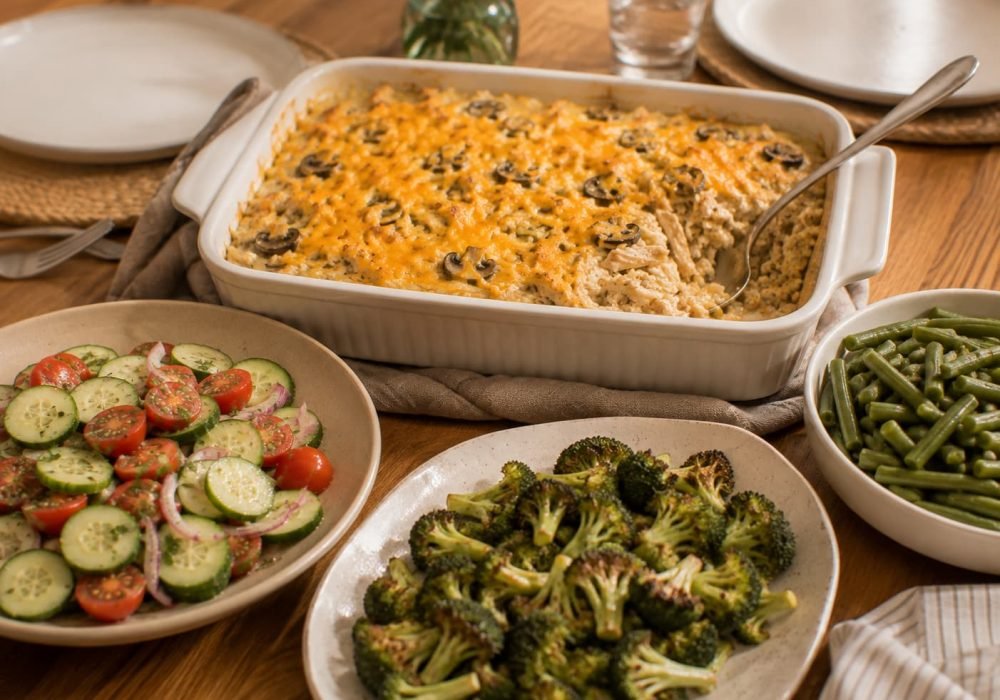
The rich garlic-Parmesan sauce pairs best with a fresh, crisp, or lightly roasted side. A green salad with a sharp vinaigrette offers the lightest contrast, while roasted broccoli, asparagus, or green beans add color and texture without competing with the pasta.
Garlic bread makes the meal more filling and is useful for soaking up any sauce left in the bowl. For a cooler side, serve the pasta with this keto cucumber salad. Its crisp cucumber and refreshing dressing balance the warm Philadelphia cream cheese sauce particularly well.

Storage, Reheating and Freezing
Philadelphia chicken pasta is best served immediately, while the sauce is smooth and fluid. During refrigeration, the pasta continues absorbing moisture and the sauce thickens. Gentle reheating with a small amount of liquid can restore a creamier consistency, although leftovers may not be identical to the freshly cooked dish.
Refrigerating Leftovers
Transfer leftover pasta to a shallow container with a tight-fitting lid. A shallow container allows the food to cool more quickly and evenly than a deep cooking pot.
Refrigerate leftovers within two hours of cooking, or within one hour when the surrounding temperature is above 90°F or 32°C. Keep the refrigerator at 40°F or 4°C or below, and use the pasta within three to four days.
Do not leave the pasta at room temperature until it feels completely cold. Divide it into smaller portions and refrigerate it promptly so the center cools safely.

Reheating Without Splitting the Sauce
For the stovetop method, place one average serving in a small skillet or saucepan and add 1 tablespoon of chicken broth, milk, or water. Broth preserves the savory flavor, milk produces a slightly richer result, and water loosens the sauce without adding more salt.
Warm the pasta over low heat, stirring frequently. If the sauce remains too thick, add more liquid 1 teaspoon at a time. Avoid a rapid boil, which can cause the cream cheese and Parmesan to separate or develop an oily texture.
For the microwave method, place one serving in a microwave-safe bowl and stir in 1 tablespoon of broth, milk, or water. Cover loosely, leaving a small opening for steam, and heat for 30 seconds.
Stir thoroughly, then continue heating in 20- to 30-second intervals until the pasta is evenly hot. Let it stand for one minute, stir again, and check the temperature in several places. Leftovers containing chicken should reach 165°F or 74°C throughout. USDA guidance recommends covering and stirring or rotating microwaved leftovers and allowing standing time before checking the temperature.
Reheat only the portion you plan to eat. Repeated cooling and reheating will continue softening the pasta and can make the sauce increasingly thick or greasy.
Can Philadelphia Chicken Pasta Be Frozen?
Philadelphia chicken pasta can be frozen safely when stored correctly, but freezing is not the best option for preserving its texture. This particular recipe has not been tested after freezing, so expect the cream cheese sauce to be slightly less smooth and the pasta to become softer after thawing.
Divide the pasta into shallow freezer-safe containers and store it promptly. Freezing sooner rather than waiting until the end of the refrigerated storage period will generally preserve better quality. Freezer-storage guidance primarily concerns quality because properly frozen food kept continuously at 0°F or −18°C remains safe for an extended period.
Thaw frozen pasta overnight in the refrigerator. Reheat it slowly over low heat with 1 tablespoon of broth or milk per serving, adding more 1 teaspoon at a time if needed.
The sauce may initially look slightly grainy or separated. Gentle heating and frequent stirring can improve minor separation, but they may not fully restore the original texture. For the best consistency, refrigerating and reheating the pasta is preferable to freezing it.
Frequently Asked Questions
Can I Use Light Philadelphia in Chicken Pasta?
Yes, light Philadelphia can be used, although the sauce may be less rich and slightly softer than one made with full-fat cream cheese. Reduced-fat products often contain more moisture and may need less broth or pasta water.
This variation has not been tested for the base recipe, so add the liquid gradually and judge the consistency only after the pasta and Parmesan have been incorporated.
Can I Use Another Brand of Cream Cheese?
Yes. Substitute another plain, full-fat cream cheese using the same weight as the Philadelphia.
Cream cheese brands vary in salt, moisture, firmness, and tanginess, so the finished sauce may need a small liquid adjustment. Soft tub-style cream cheese usually blends quickly, while firmer block-style cheese should be cut into small cubes before it is added.
Whipped cream cheese is less suitable when measured by volume because incorporated air makes the quantity inconsistent.
Can I Use Cream Cheese Instead of Heavy Cream in Pasta?
Yes, but cream cheese is not a direct one-to-one replacement for heavy cream. It produces a thicker, tangier sauce and must be loosened with broth, milk, or reserved pasta water.
Melt it over gentle heat, then add the liquid gradually until the sauce is smooth enough to coat the pasta without becoming thin or watery.
Why Is My Philadelphia Pasta Sauce Grainy?
The sauce usually becomes grainy when the cream cheese or Parmesan is exposed to excessive heat. A rapid boil can cause the dairy proteins and fat to separate.
Remove the skillet from the burner and gently whisk in a small splash of warm broth or pasta water. This may improve minor separation, although a badly overheated sauce may not become completely smooth again.
To prevent graininess, melt the Philadelphia over medium-low heat and add Parmesan after removing the skillet from direct heat.
Can I Use Leftover Rotisserie Chicken?
Yes. Remove the meat from the bones and cut or shred it into bite-size pieces.
Because rotisserie chicken is already cooked, skip the browning step. Add it with the drained pasta and warm it briefly in the cream cheese sauce. Prolonged simmering can make the chicken dry and stringy.
Taste before adding salt because rotisserie chicken is often heavily seasoned.
Can I Make Philadelphia Chicken Pasta Without Parmesan?
Yes, but the sauce will taste milder and may be slightly thinner. Parmesan adds salt, savory depth, and some body to the finished sauce.
Leave it out rather than replacing it with extra cream cheese. Add the pasta water cautiously and adjust the salt and black pepper after the sauce is combined.
This variation has not been tested with the base recipe, so the final liquid requirement may differ.
What Pasta Is Recommended for Philadelphia Chicken Pasta?
Penne and rigatoni are the recommended choices because their ridges and hollow centers hold the cream cheese sauce well. Their compact shape also mixes evenly with bite-size chicken.
Fusilli is another suitable option because its spirals catch the sauce between the grooves. Spaghetti can be used, but it requires more careful tossing and may not distribute the chicken as evenly.
Can I Prepare Philadelphia Chicken Pasta Ahead?
The finished pasta is best served fresh because it continues absorbing sauce as it rests.
For advance preparation, cut and season the chicken, grate the Parmesan, dice the onion, and measure the sauce ingredients. Store the raw chicken separately in a covered container in the refrigerator and keep it away from ready-to-eat ingredients.
Cook the pasta and prepare the sauce shortly before serving. Cooked chicken can also be prepared ahead, but it should be added near the end so it does not dry out.
How Do I Reheat Cream Cheese Pasta?
Reheat cream cheese pasta slowly with a small amount of liquid. Begin with 1 tablespoon of chicken broth, milk, or water per average serving.
Warm it over low heat on the stovetop, or microwave it in 20- to 30-second intervals, stirring between each interval. Add more liquid 1 teaspoon at a time if the sauce remains too thick.
Avoid rapid boiling. See the Storage, Reheating and Freezing section for the full methods and food-safety guidance.
More Easy Chicken Dinner Ideas
For more practical weeknight meals, explore these healthy pasta recipes for busy weeknights or browse this collection of high-protein, low-carb chicken recipes.
For a lighter skillet meal, try this healthy chicken and green bean stir-fry. When you are craving a quick takeout-style dinner, this easy moo shu chicken recipe is another useful option.
Printable Recipe Card
Kitchen Test Draft
This recipe card contains a complete working formulation, but it should not be published as a tested recipe until the cooking time, sauce consistency, final yield, reheating quality, and nutrition have been verified.
Creamy Philadelphia Chicken Pasta in 30 Minutes
Tender chicken and short pasta are coated in a smooth garlic-Parmesan sauce made with Philadelphia cream cheese, chicken broth, and reserved pasta water. The recipe uses one pasta pot and one wide skillet, with no heavy cream required.
| Recipe detail | Working information |
| Preparation time | Target: 10 minutes |
| Cooking time | Target: 20 minutes |
| Total time | Target: 30 minutes |
| Yield | 4 main-course servings |
| Serving size | ¼ of the finished recipe; measure final weight during testing |
| Pasta | Penne, rigatoni, or fusilli |
| Chicken | Boneless, skinless chicken breast |
| Chicken-piece size | Approximately 1 inch |
| Cream cheese | Original full-fat Philadelphia |
| Equipment | Large pot and 11- or 12-inch skillet |
| Safe chicken temperature | 165°F or 74°C |
Ingredients
- 12 ounces penne, rigatoni, or fusilli (340 g)
- 1 pound boneless, skinless chicken breast, cut into 1-inch pieces (454 g)
- 1 tablespoon olive oil (15 ml)
- ½ teaspoon fine sea salt for the chicken (3 g)
- ½ teaspoon ground black pepper (1 g)
- 1 teaspoon Italian seasoning (2 g)
- 1 small yellow onion, finely diced, about ¾ cup (100 g)
- 3 medium garlic cloves, finely minced (9 g)
- 8 ounces original full-fat Philadelphia cream cheese (226 g)
- ½ cup lower-sodium chicken broth (120 ml)
- ½ cup finely grated Parmesan cheese (45 g)
- 1 cup reserved pasta water, divided (240 ml)
- 2 tablespoons finely chopped fresh parsley (8 g)
- 2 teaspoons fine sea salt for the pasta water (12 g)
Instructions
- Start the pasta water. Bring approximately 4 quarts of water to a rolling boil in a large pot. While the water heats, pat the chicken dry and cut it into evenly sized 1-inch pieces. Season with ½ teaspoon salt, black pepper, and Italian seasoning.
- Cook the pasta. Add the remaining salt and pasta to the boiling water. Stir well and cook until al dente, beginning to check it about two minutes before the shortest package time. Before draining, reserve 1 cup of pasta water. Drain the pasta approximately one minute before it reaches the desired final texture. Do not rinse it.
- Brown the chicken. Heat the olive oil in an 11- or 12-inch skillet over medium-high heat. Arrange the chicken in one uncrowded layer and cook without stirring for 3–4 minutes. Turn and cook for another 2–3 minutes, or until the thickest pieces reach 165°F or 74°C. Cook in two batches if necessary. Transfer the chicken to a clean plate.
- Soften the onion. Reduce the skillet heat to medium. Add the diced onion and cook for 3–4 minutes, stirring occasionally, until soft and lightly golden. Add the garlic and cook for about 30 seconds, just until fragrant.
- Make the Philadelphia cream cheese sauce. Pour in ½ cup chicken broth and scrape the browned bits from the bottom of the skillet. Reduce the heat to medium-low. Add the Philadelphia cream cheese and stir gently until it melts into the broth. Keep the sauce below a rapid boil.
- Add the pasta. Stir the drained pasta into the cream cheese sauce. Add ¼ cup of reserved pasta water and toss over low heat until the sauce begins coating the pasta evenly.
- Add the Parmesan. Remove the skillet from direct heat. Add the freshly grated Parmesan and toss until it melts. If the sauce feels thick or sticky, add more warm pasta water 1 tablespoon at a time. Stop when the sauce moves easily through the pasta without forming a watery pool.
- Return the chicken. Add the cooked chicken and any juices from the plate. Toss only until the chicken is coated and warmed through. Avoid simmering it again, which can make the breast meat dry.
- Rest and serve. Let the pasta stand off the heat for 1 minute. The sauce should remain slightly fluid because it will continue thickening as it cools. Fold in the parsley, adjust the seasoning, and serve promptly.
Testing Targets
The finished sauce should coat the pasta and chicken without becoming sticky, grainy, or watery. During kitchen testing, record:
- The actual total cooking time
- The exact quantity of pasta water used
- The finished cooked weight
- The number and size of realistic servings
- Chicken texture after being returned to the sauce
- Sauce consistency after a one-minute rest
- Reheating quality after one and three days
Remove this testing section before publication and replace all target values with verified results.
Storage
Transfer leftovers to a shallow container with a tight-fitting lid and refrigerate promptly. Use within three to four days.
The pasta will continue absorbing liquid during storage, so the refrigerated sauce will be thicker than it was when freshly prepared.
Reheating
For one average serving, begin with 1 tablespoon of chicken broth, milk, or water.
Reheat over low heat on the stovetop, stirring frequently. For microwave reheating, use 20- to 30-second intervals and stir after each interval. Add more liquid 1 teaspoon at a time if the sauce remains too thick.
Heat the pasta evenly until the chicken reaches 165°F or 74°C.
Freezing
Freezing quality has not been tested for this recipe. Cream cheese sauce may become slightly grainy after thawing, while the pasta may soften and absorb more liquid.
Until the recipe has been frozen, thawed, and reheated successfully, refrigeration is the better storage option.
Estimated Nutrition
Working estimate per serving, based on four equal portions: approximately 730 calories, 45 g protein, 70 g carbohydrates, and 29 g fat.
These figures are estimates, not laboratory-tested values. Recalculate them using the exact pasta, Philadelphia cream cheese, Parmesan, broth, chicken, and final measured serving size used in the tested recipe.