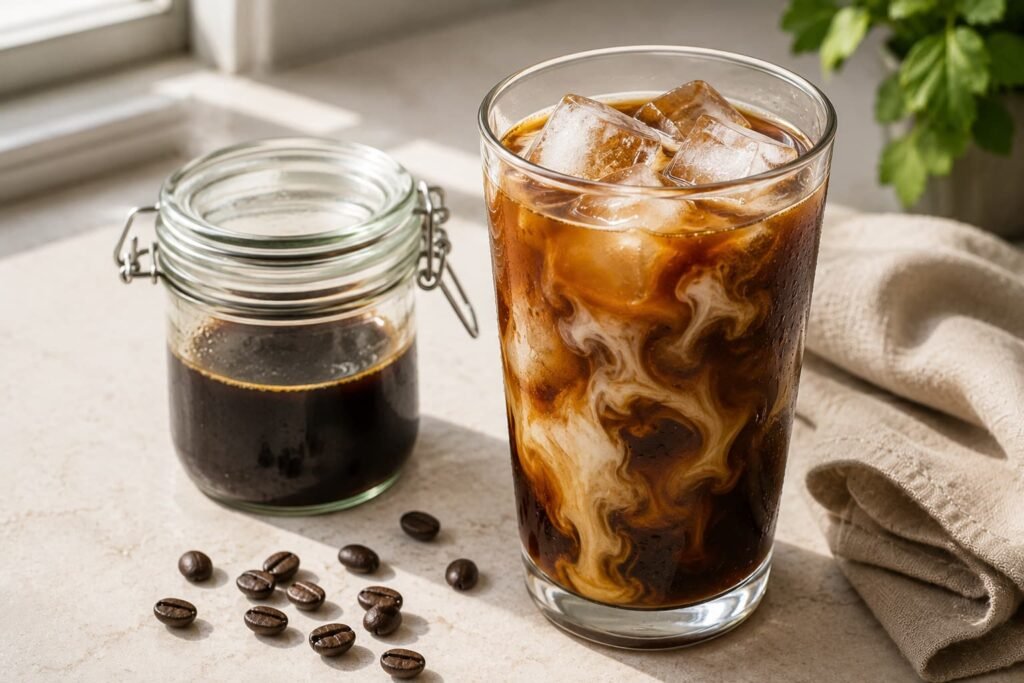
Cold brew concentrate is a strong coffee base that is usually diluted with water or milk before serving. It is made by allowing ground coffee and water to remain in contact for an extended brewing period and then filtering out the grounds.
The final strength can vary with the coffee-to-water ratio, grind size, steeping conditions, filtration method, coffee choice, and serving dilution. Published cold brew methods use different ratios and brewing conditions, so there is no single formula that defines every concentrate.
This guide explains how those variables work together and provides one practical framework for preparing concentrate at home without treating it as a personally tested or universally ideal formula.
Affiliate disclosure: As an Amazon Associate I earn from qualifying purchases.
What Is Cold Brew Concentrate?
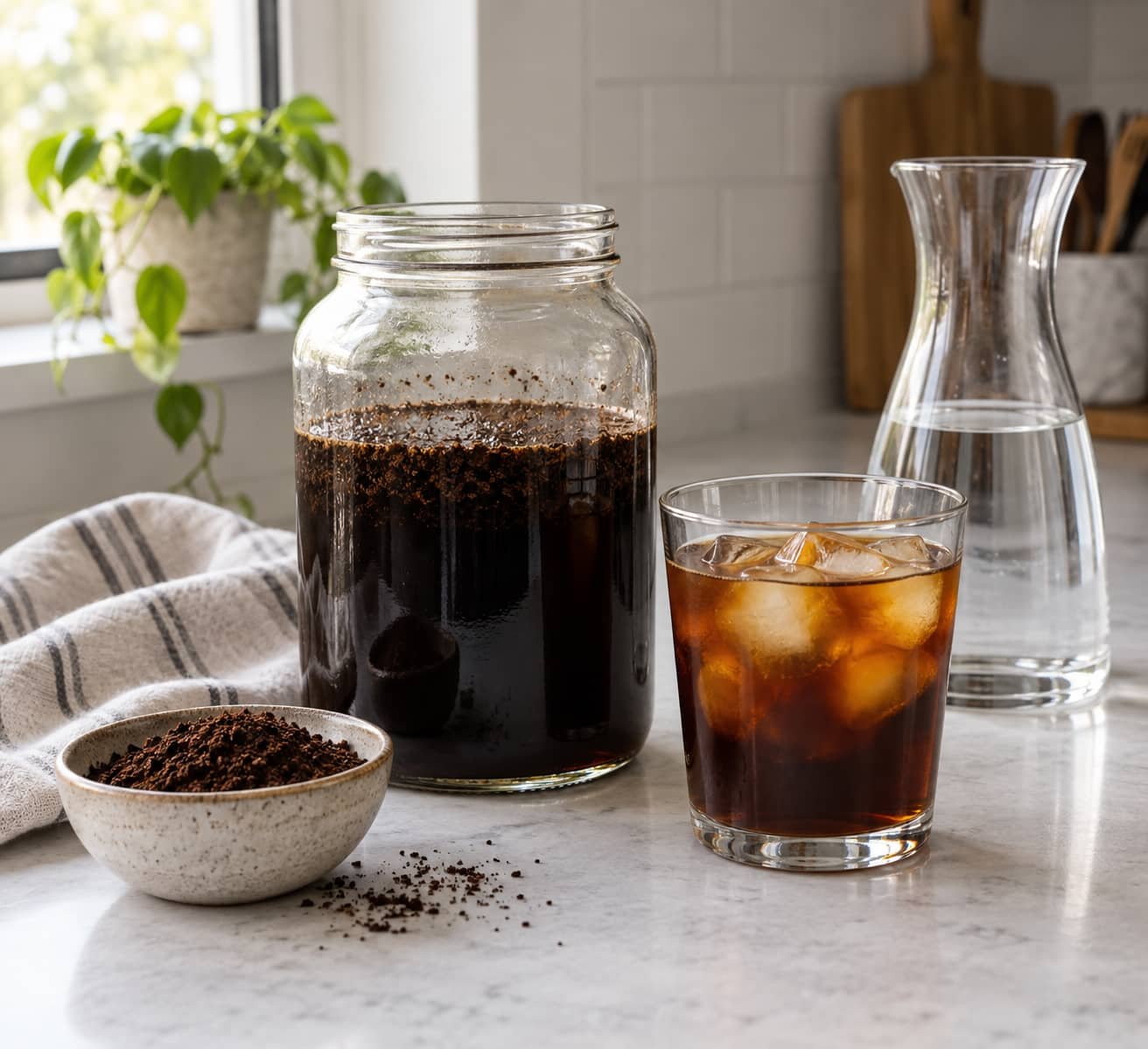
Cold brew concentrate is a concentrated form of cold-brewed coffee intended to be used as a base for a finished drink.
Compared with ready-to-drink cold brew, it generally contains a higher proportion of coffee relative to brewing water or produces a stronger filtered liquid that is later diluted.
“Concentrate” does not refer to one mandatory coffee-to-water ratio. Published cold brew methods use different proportions, including ratios around 1:5 and less concentrated approaches.
Cold brew is also different from ordinary iced coffee made by brewing hot coffee and cooling it. Cold brewing relies on longer contact between ground coffee and water at lower brewing temperatures.
Cold Brew Concentrate vs. Ready-to-Drink Cold Brew
The main difference is concentration and intended dilution.
Cold brew concentrate is normally used as a coffee base. Water, milk, or another suitable liquid can be added after filtration to bring it to the desired drinking strength.
Ready-to-drink cold brew is already brewed or diluted to a strength intended to be served without a separate dilution step.
How much dilution is needed depends on the strength of the original concentrate and the preferred final drink.
Understanding the Coffee-to-Water Ratio
The coffee-to-water ratio describes how much ground coffee is used compared with brewing water.
A higher proportion of coffee produces a more concentrated starting brew. A higher proportion of water produces a less concentrated one.
Different cold brew methods use different proportions, so a ratio should describe a particular method rather than be treated as a universal rule.
Brewing Ratio vs. Dilution Ratio
Brewing ratio refers to the amount of ground coffee compared with the water used during steeping. For example, a 1:5 ratio by weight means one part coffee to five parts water.
Dilution ratio applies after the coffee has been brewed and filtered. It describes how much concentrate is mixed with water, milk, or another liquid before serving.
These are separate measurements. A concentrate may be brewed at one ratio and served at another.
Why Measuring by Weight Is More Precise
Measuring coffee and water by weight makes brewing ratios easier to understand and reproduce.
Ground coffee can occupy different amounts of space depending on grind size, packing, and how a measuring cup is filled. One cup of ground coffee therefore does not always contain the same mass of coffee.
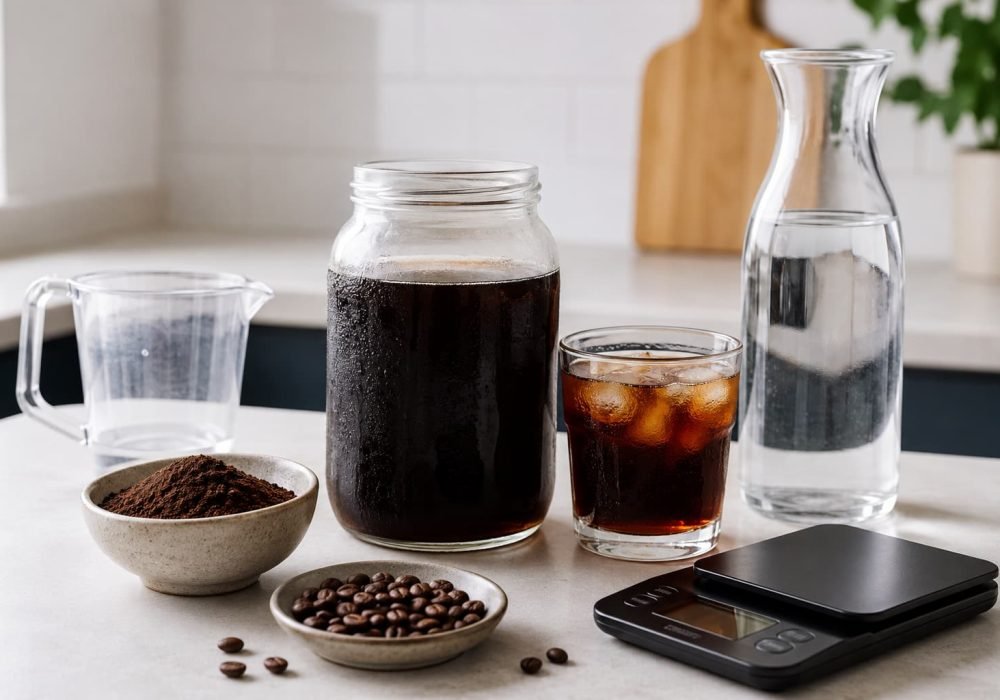
A kitchen scale reduces this volume-related variation. When coffee and water are both measured in grams, a ratio such as 1:5 can be calculated directly.
For additional ratios, conversions, and scaling information, see the Cold Brew Ratio Chart in Grams, Cups and Ounces.
Choosing Coffee and Grind Size for Cold Brew Concentrate
Cold brew can be prepared with different coffee beans and roast levels. No single roast level is required.
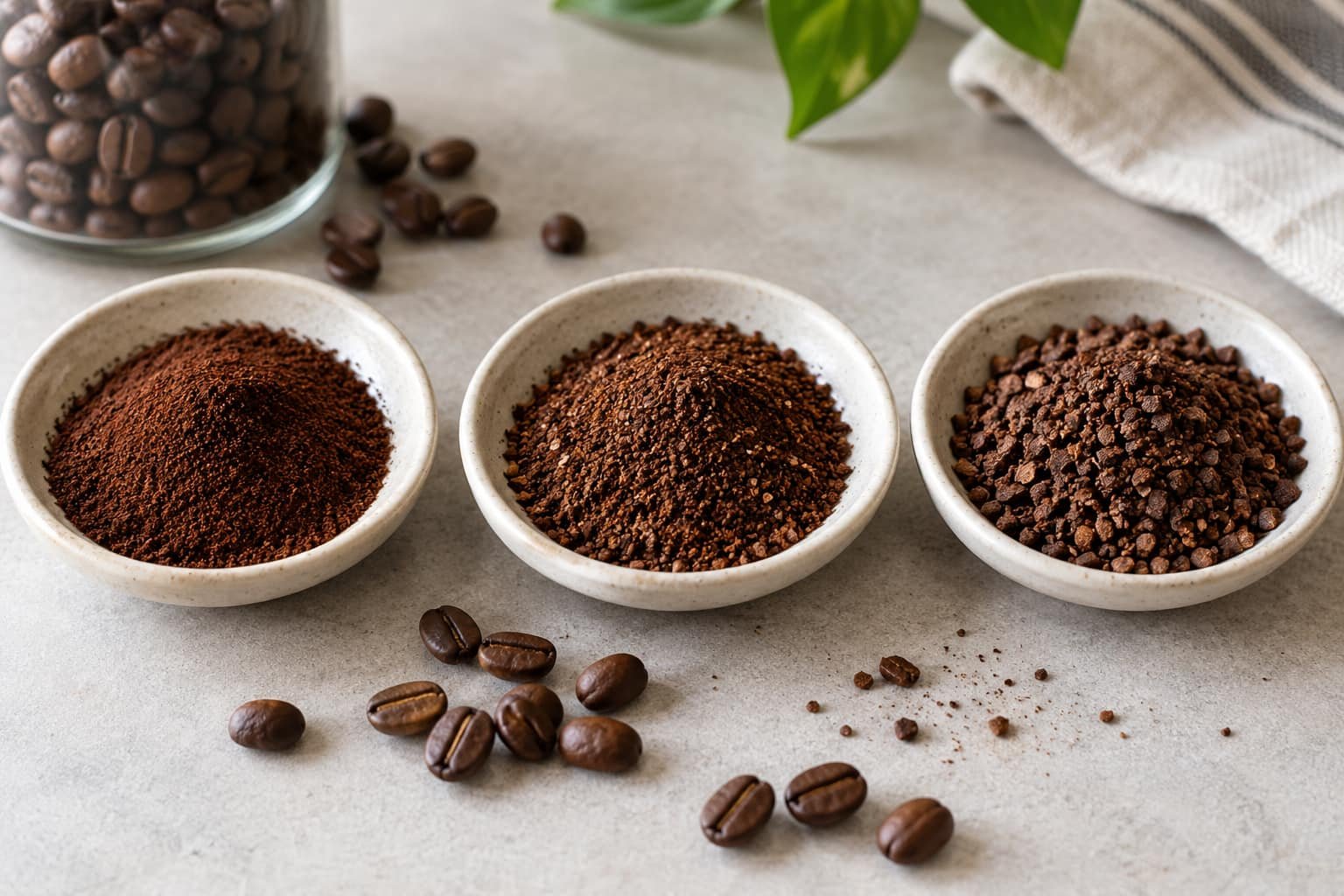
Grind size is an important practical factor because it can influence extraction and how easily the brewed coffee can be filtered. Medium-coarse and coarse grinds are commonly used for immersion-style cold brewing.
How Grind Size Affects Brewing and Filtration
Grind size changes how much coffee surface is exposed to water. Finer particles provide more exposed surface area than larger particles, which can change extraction during an extended steep.
Fine particles can also make filtration more difficult because some may pass through mesh or reusable filters and remain suspended in the liquid.
A coarser grind is generally easier to separate from the brewed coffee, but that does not mean the coarsest possible setting is always required. Different brewers and methods use different grind ranges.
The practical goal is to choose a grind that suits the brewing and filtration method being used.
Does Roast Level Matter?
Yes, roast level can influence flavor, but no single roast is required for cold brew concentrate.
Light, medium, and dark roasted coffees can all be used. The final flavor can vary with the coffee itself, roast profile, brewing ratio, grind, steeping conditions, and dilution.
Because flavor preference is subjective, roast level is better treated as a choice rather than labeling one roast as the “best.”
How Cold Brew Concentrate Is Made
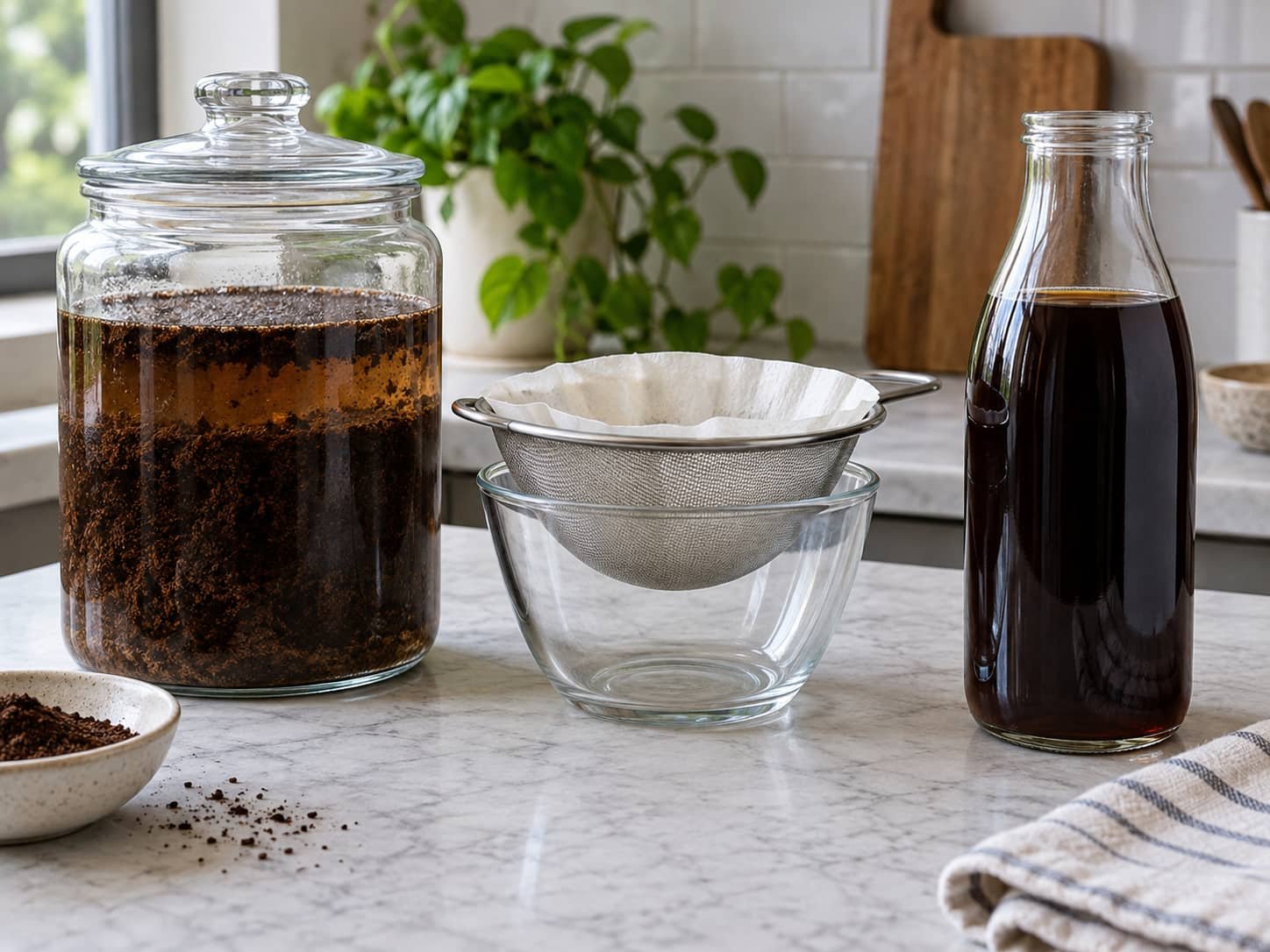
A basic concentrate method involves combining ground coffee and water, allowing them to steep, and filtering out the grounds.
For this guide, a 1:5 coffee-to-water ratio by weight is used as one concentrate framework:
- 100 grams coarsely ground coffee
- 500 grams water
The 100-to-500-gram quantities are a direct mathematical scaling of a 1:5 ratio. The ratio is a practical concentrate approach, not a claim that it is the only correct formula.
The approximately 16-hour refrigerated steep described below is also a practical starting method supported by published cold-brew guidance. It should not be interpreted as a personally tested or universally optimized combination with the 1:5 ratio.
Combine and Saturate the Coffee Grounds
Place the ground coffee in a clean jar or another food-safe brewing container.
Add the water gradually so it reaches the grounds throughout the container. Make sure the coffee is evenly wet rather than leaving obvious dry pockets.
For a simple jar method, gentle stirring can help distribute the water. Dedicated cold brew systems may have different directions, so their equipment instructions should take priority.
Cover the container before steeping.
Steep the Coffee
Cold brewing uses much longer coffee-and-water contact than typical hot-brewing methods.
Published cold brew methods use different combinations of temperature and time. Some use room-temperature steeping, while others use refrigerated brewing.
For this guide, about 16 hours in the refrigerator is one practical starting approach. It is not presented as the only correct steeping time or as a personally tested optimum.
After the steep is complete, filter out the grounds. If a stronger drink is wanted later, serving dilution can be adjusted rather than automatically extending the brewing period.
Strain and Filter the Concentrate
Straining removes the larger coffee grounds. Finer filtration can reduce the amount of small particles left in the concentrate.
Begin with a mesh strainer, cold brew filter, or similar setup that can separate the larger grounds from the liquid.
If a clearer concentrate is preferred, the liquid can then be passed through a paper coffee filter. Paper filtration can capture smaller suspended particles that may pass through some mesh or cloth filters.
A small amount of sediment does not necessarily mean the batch was prepared incorrectly. The amount remaining can vary with grind size and filtration method.

How to Dilute Cold Brew Concentrate for Iced Coffee
Cold brew concentrate is generally diluted before drinking because it is brewed stronger than ready-to-drink cold brew.
A 1:1 mixture of concentrate and water or milk is one documented starting point for some concentrate methods, but it is not a universal serving rule.
A simple starting approach is:
1 part concentrate + 1 part water or milk
Then adjust according to the actual strength of the concentrate and personal preference. Adding more water or milk reduces the concentration in the finished drink, while using less keeps it stronger.
Water can be used for black iced coffee. Milk can be used on its own or combined with water. Ice can be added after the coffee reaches the preferred drinking strength.
Remember that this 1:1 serving suggestion is a dilution ratio, not the 1:5 ratio used during brewing.
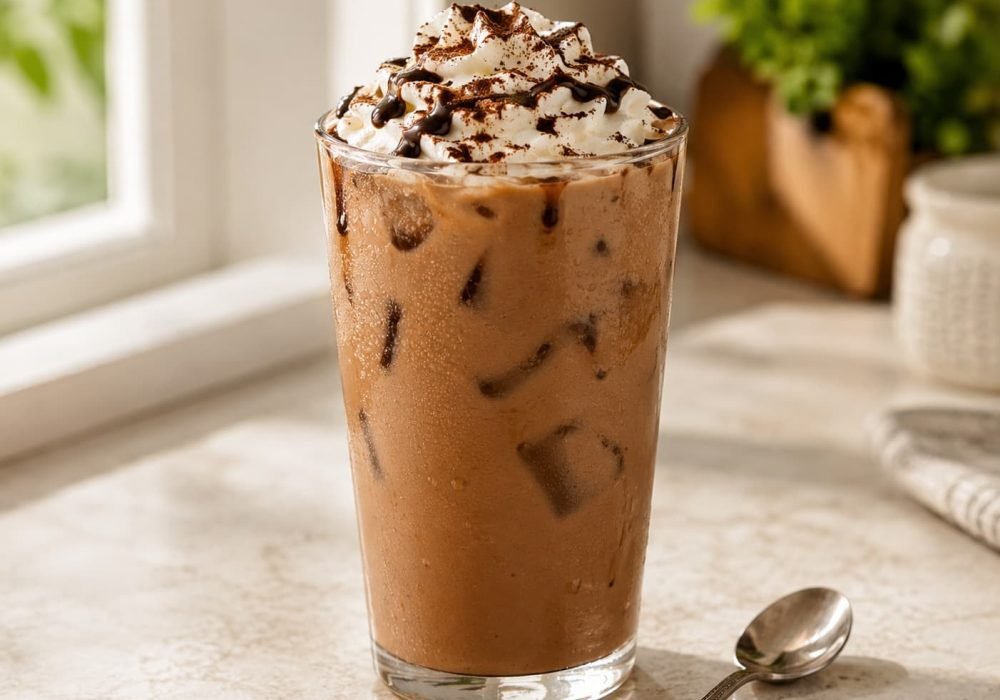
Once diluted to drinking strength, cold brew can also be used as the coffee base in drinks such as an iced mocha.
What Can Affect the Final Cold Brew Concentrate?
Cold brew can vary in strength, clarity, and flavor even when the same general method is followed.
The main variables include brewing ratio, grind size, steeping conditions, filtration, coffee selection, and final dilution. When troubleshooting, it is usually more useful to consider several variables rather than assume that one symptom has one definite cause.
Why Does Cold Brew Concentrate Taste Too Weak or Too Strong?
If the concentrate seems weaker or stronger than expected, check the brewing ratio and serving dilution first.
Using more water relative to coffee produces a less concentrated starting brew. Using more coffee relative to water increases the starting concentration.
Grind size and steeping conditions can also affect extraction, so ratio is not the only possible factor.
Serving dilution should be considered separately. Even a strongly brewed concentrate can seem weak if a large amount of water or milk is added.
Why Is Cold Brew Cloudy or Full of Sediment?
Cloudiness and sediment can come from fine coffee particles that remain after filtering.
Grinding produces particles of different sizes. The smallest particles, commonly called fines, can pass through some mesh or reusable filters and remain suspended in the concentrate.
If less sediment is preferred, the larger grounds can be strained first and the liquid can then be passed through a paper coffee filter.
Visible sediment does not automatically mean something went wrong. The amount present can vary with grind size and filtration.
What Can Cause Harsh or Unbalanced Cold Brew?
A harsh or unbalanced flavor can have several possible causes, including the coffee itself, grind size, brewing conditions, extraction, and serving dilution.
A grind that is much finer than the chosen method calls for changes the amount of coffee surface exposed to water and can alter extraction.
Steeping time and temperature may also influence the result, but there is no single time at which every cold brew automatically becomes bitter or unpleasant.
Before changing the entire brewing process, also check dilution. Concentrate served with very little added liquid may simply taste much more intense.
When making adjustments, changing one variable at a time can make it easier to identify what affected the result.
Storing Homemade Cold Brew Concentrate
Store filtered concentrate in a clean, covered container in the refrigerator at 40°F (4°C) or below.
Keeping the container covered and using clean brewing and storage equipment can help reduce opportunities for contamination.
A single maximum refrigerated storage period should not be applied to every homemade cold brew method without appropriate evidence. Manufacturer recommendations can depend on specific equipment and processes, while commercial food-safety requirements may use different limits.
For that reason, this guide does not assign a universal number of storage days or an unsupported freezing period. Keep homemade concentrate refrigerated and avoid unnecessary time at room temperature.
Common Questions About Cold Brew Concentrate
Can You Make Cold Brew Concentrate in a French Press?
Yes. A French press can be used for both steeping and the first stage of filtration.
Coffee and water steep together in the press, and the mesh plunger separates most of the larger grounds from the liquid.
Because a metal mesh filter may allow some fine particles through, the concentrate can contain more sediment than coffee passed through a paper filter. If less sediment is preferred, the liquid can be paper-filtered after using the press.
The coffee-to-water ratio and steeping conditions should still follow the chosen brewing method.
Can You Use Pre-Ground Coffee for Cold Brew Concentrate?
Yes. Pre-ground coffee can be used, but grind size is an important consideration.
Cold brew methods commonly use coarse or medium-coarse grounds. If pre-ground coffee is much finer than the method calls for, it can behave differently during extraction and may leave more fine particles in the filtered liquid.
If buying ground coffee specifically for cold brew, a coarse or medium-coarse option is a practical choice when available.
Pre-ground and freshly ground coffee should not be assumed to produce identical results because coffee age, grind size, brewing conditions, and filtration can vary.
Does Cold Brew Concentrate Have More Caffeine?
Not necessarily per finished serving.
Concentrate can contain a relatively high caffeine concentration before dilution, but the amount of caffeine in the drink you actually consume depends on several factors:
- the type and amount of coffee;
- the coffee-to-water ratio;
- brewing conditions;
- the amount of concentrate used;
- the amount of water or milk added.
Because those variables can differ substantially, it is not accurate to claim that every cold brew concentrate contains more caffeine per serving than every hot coffee or ready-to-drink cold brew.
This homemade method has not been laboratory tested for caffeine content, so no specific caffeine amount is assigned.
Key Takeaways
Cold brew concentrate is a stronger coffee base that is typically diluted before serving.
The coffee-to-water ratio, grind size, steeping conditions, filtration, coffee choice, and dilution can all influence the result. Published methods vary, so these should be treated as brewing variables rather than universal rules.
Dilution can be adjusted with water, milk, or a combination of both according to the concentration of the brew and the preferred drinking strength.
After filtering, store homemade concentrate in a clean, covered container in the refrigerator at 40°F (4°C) or below.