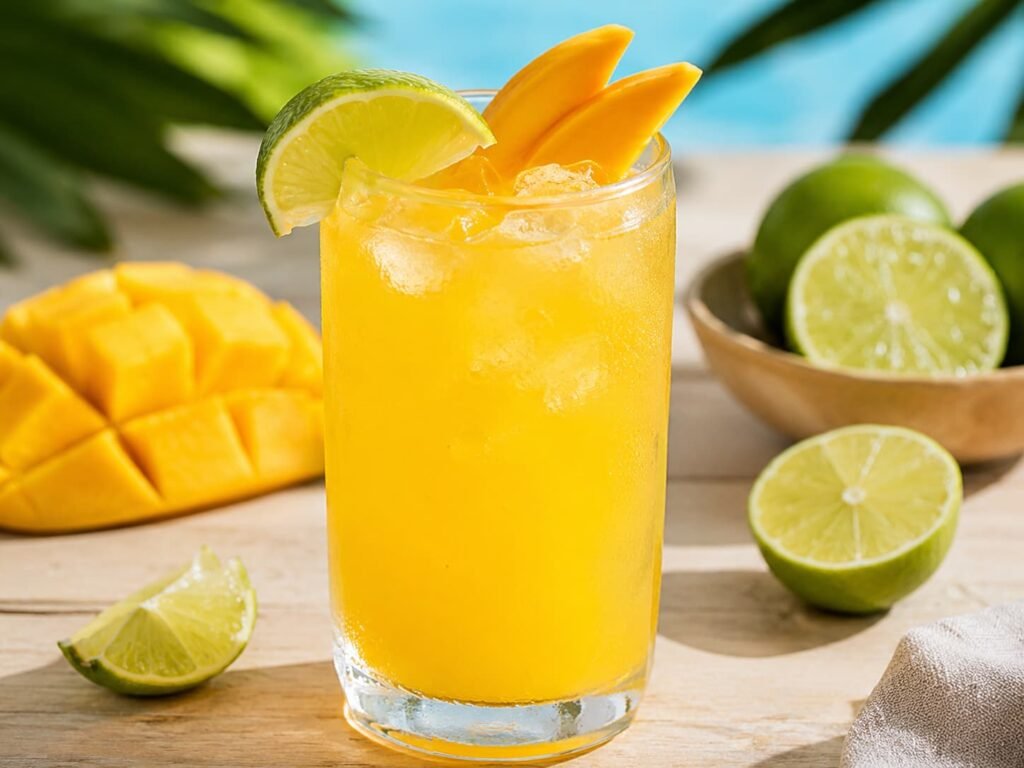
Mango agua fresca, also known as agua de mango, is a refreshing Mexican fruit drink made with ripe mango, cold water, fresh lime juice, and optional sweetener. It has a lighter, more pourable texture than a mango smoothie, so the fruit flavor stays fresh without making the drink feel thick or heavy.
This easy mango agua fresca takes about 10 minutes and requires no cooking. A ripe mango usually provides plenty of natural sweetness, while lime helps balance the flavor and keeps the drink bright. Start with less water, blend until smooth, then add more as needed to reach a light, refreshing consistency. Serve it well chilled or over ice with tacos, grilled meals, or a simple summer lunch.
Mango agua fresca, also called agua de mango, is a light Mexican mango drink made by blending ripe mango with cold water, fresh lime juice, and optional sweetener. Start with less water, then add more until the drink is smooth and pourable. Strain only if the mango is fibrous, then chill well or serve over ice.
Mango Agua Fresca at a Glance
| Detail | Recipe Guide |
| Prep Time | About 10 minutes |
| Cook Time | 0 minutes |
| Total Time | About 10 minutes |
| Main Fruit | Ripe mango |
| Main Liquid | Cold water |
| Lime | Fresh lime juice |
| Method | Blend, then adjust with water |
| Texture | Light, smooth, and pourable |
| Sweetener | Optional, depending on mango ripeness |
| Straining | Optional for fibrous mangoes |
| Best Served | Well chilled or over ice |
| Make Ahead | Yes, prepare ahead and refrigerate until serving |
| Storage | Keep covered in the refrigerator for up to 2 to 3 days |
What Is Mango Agua Fresca?
Mango agua fresca, also called agua de mango, is a light Mexican fruit drink made by blending ripe mango with cold water until smooth. Fresh lime juice adds brightness, while sugar, honey, or another sweetener can be added only if the mango needs it.
The water is what gives agua fresca its lighter texture. Instead of staying thick like a smoothie, the mango is diluted enough to create a smooth, pourable drink that still keeps a clear fruit flavor. A ripe, juicy mango may need less sweetener, while firmer fruit may need a small adjustment in both sweetness and water.
Mango agua fresca is best served well chilled or over ice. The finished drink should taste fresh and mango-forward without feeling heavy or overly thick.
Mango Agua Fresca vs Mango Juice vs Smoothie
Mango agua fresca, mango juice, and mango smoothies all use mango, but they differ mainly in texture, dilution, and the ingredients added to the fruit.
| Feature | Mango Agua Fresca | Mango Juice | Mango Smoothie |
| Water | A key part of the drink | Amount varies | Usually little or none |
| Dairy | Typically none | Usually none | May include milk or yogurt |
| Texture | Light, smooth, and pourable | More concentrated | Thick and creamy |
| Ice | Usually added when serving | Optional | Often blended in |
| Sweetness | Adjusted to mango ripeness | Depends on the recipe | Depends on fruit and added ingredients |
| Typical Use | Refreshing drink with meals | Fruit-focused drink | Thicker drink or snack |
The simplest way to tell the difference is by consistency. Mango agua fresca should pour easily from a pitcher and remain light enough to drink with a meal. If the mixture becomes thick, creamy, or spoonable, it is closer to a mango smoothie.
Ingredients You’ll Need
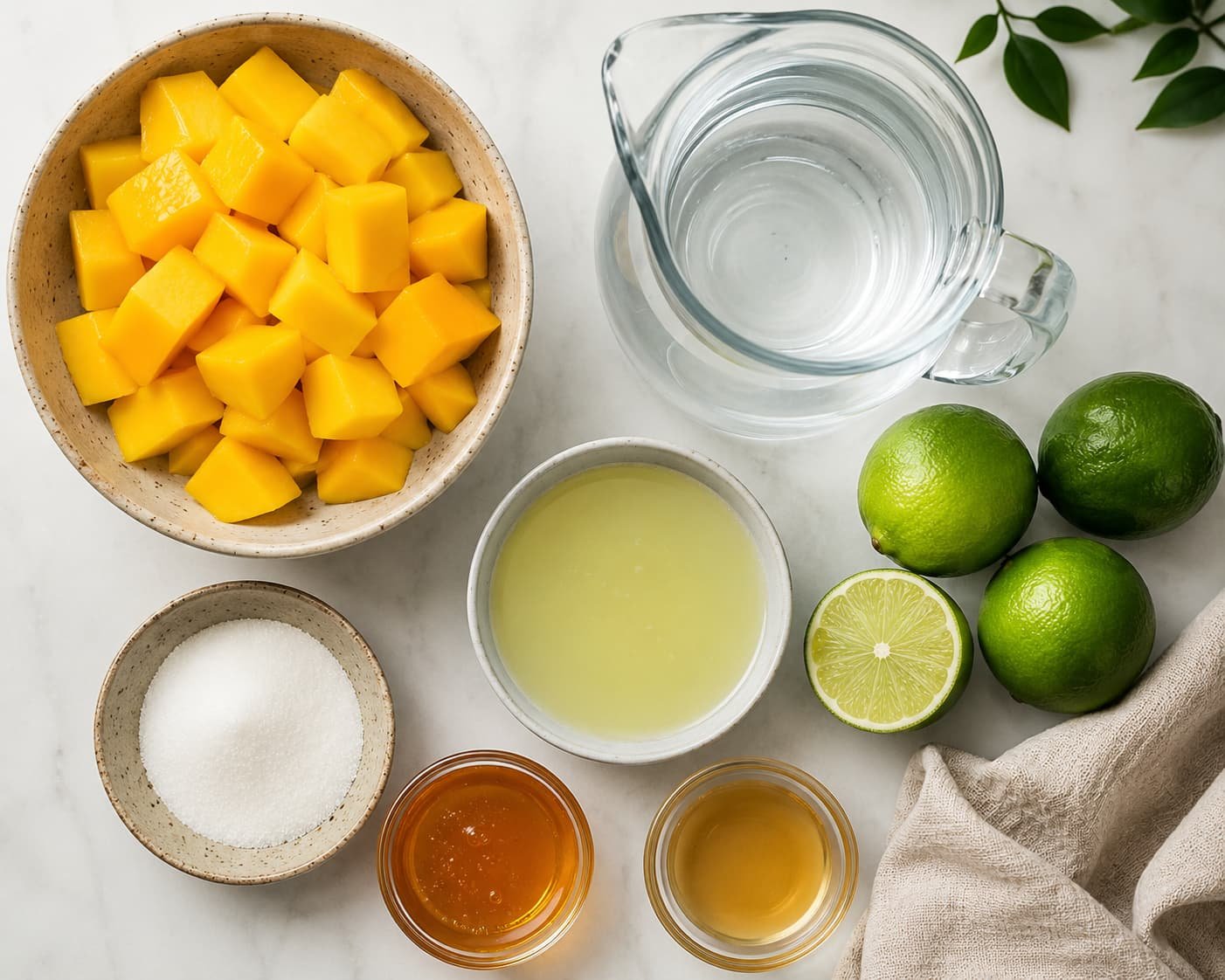
Mango agua fresca needs only a few simple ingredients, so the ripeness of the mango and the balance of water and lime make a noticeable difference. For about 4 servings, start with 2 cups diced ripe mango, 2 cups cold water, 1 to 2 tablespoons fresh lime juice, and up to 2 tablespoons sweetener if needed. Keep a little extra cold water nearby so you can adjust the consistency after blending.
Ripe Mangoes
Use mangoes that feel slightly soft when gently pressed and have a sweet, fruity aroma. Ripe mangoes give the drink a fuller flavor, smoother texture, and enough natural sweetness that you may not need much added sugar.
Fresh mango gives you the best control over flavor and consistency, but frozen mango also works. If using frozen fruit, let it soften for a few minutes before blending. The drink may start out thicker, so add a little more water as needed.
Some mango varieties contain more fiber than others. If the blended drink feels stringy or pulpy, pour it through a fine-mesh strainer. If the mango blends completely smooth, straining is not necessary.
Cold Water
Water gives mango agua fresca its light, refreshing texture. Instead of adding too much at the beginning, start with 2 cups of cold water for 2 cups of diced mango and check the consistency after blending.
If the drink is too thick, add extra cold water about ¼ cup at a time until it pours easily but still has a clear mango flavor. This gradual approach helps prevent the drink from becoming watery.
Fresh Lime Juice
Fresh lime juice adds acidity and helps balance the natural sweetness of ripe mango. Start with 1 tablespoon, blend, and taste. Add another tablespoon if you prefer a brighter, slightly more tangy flavor.
Fresh lime is the better choice for this simple drink because its flavor is cleaner and more noticeable. Bottled lime juice can be used if necessary, but it may taste slightly sharper.
Sweetener, If Needed
Taste the mango mixture before adding any sweetener. Very ripe mangoes may already provide enough sweetness on their own.
If needed, add 1 tablespoon of granulated sugar, honey, or agave, blend again, and taste before adding more. Keep the total amount modest so the mango remains the main flavor rather than the sweetener.
Ice and Garnishes
Chill the mango agua fresca before serving, then pour it over fresh ice. Adding a large amount of ice directly to the pitcher can dilute the drink as it melts.
Mango slices, lime wedges, or a few fresh mint leaves can be added for serving, but they are optional. The drink should taste complete without any garnish.
Fresh Mango vs Frozen Mango
Both fresh and frozen mango work well for mango agua fresca, but they give slightly different results. Fresh ripe mango is ideal when it is sweet, juicy, and flavorful, while frozen mango is a convenient year-round option when good fresh fruit is hard to find.
Fresh mango is usually easier to blend into a light, pourable drink because the fruit is already soft. For this recipe, use 2 cups of diced ripe mango with 2 cups of cold water as a starting point. Taste before adding sugar, honey, or agave because a fully ripe mango may already provide enough sweetness.
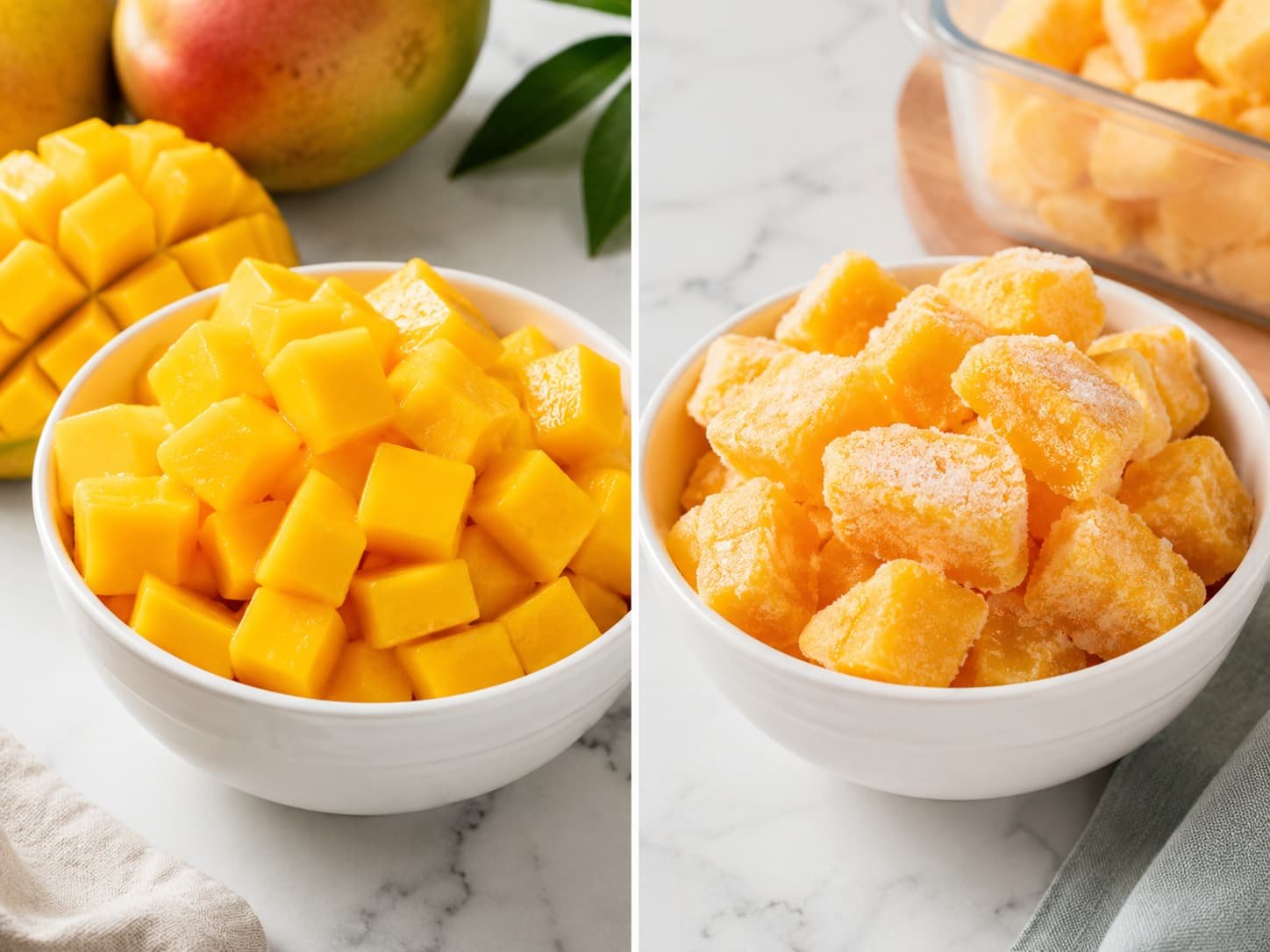
Frozen mango can be used in the same amount. Let the pieces sit at room temperature for about 5 to 10 minutes before blending so they soften slightly without fully thawing. The drink may start out thicker and colder than one made with fresh fruit, so add extra cold water about ¼ cup at a time until the texture becomes smooth and easy to pour.
After adding extra water, taste the drink again. More water can soften both the mango flavor and sweetness, so you may need a small adjustment of lime or sweetener before serving.
| Fresh Mango | Frozen Mango |
| Best when sweet, ripe, and juicy | Convenient throughout the year |
| Easier to control the final texture | Creates a colder, thicker drink at first |
| May need little or no added sweetener | Sweetness can vary |
| Usually needs less water adjustment | May need extra water after blending |
| Use 2 cups diced fruit | Use 2 cups frozen mango pieces |
Whichever option you choose, focus on the finished texture rather than following the water amount too rigidly. Mango agua fresca should pour easily and taste clearly of mango while remaining lighter than a smoothie.
How to Make Mango Agua Fresca
Mango agua fresca is easy to make, but adding the water in stages gives you better control over the final texture. Start with a concentrated mango base, then thin it gradually so the drink stays light, smooth, and full of mango flavor.
Step 1: Prepare the Mango
Peel the mangoes, cut the flesh away from the pit, and chop it into small pieces. You need about 2 cups of diced mango, roughly 320 to 340 grams depending on the size of the pieces.
For fresh mango, choose fruit that is ripe, fragrant, and slightly soft. If using frozen mango, measure the same amount and let it sit at room temperature for about 5 to 10 minutes so the pieces soften slightly before blending.
Step 2: Blend the Mango Base
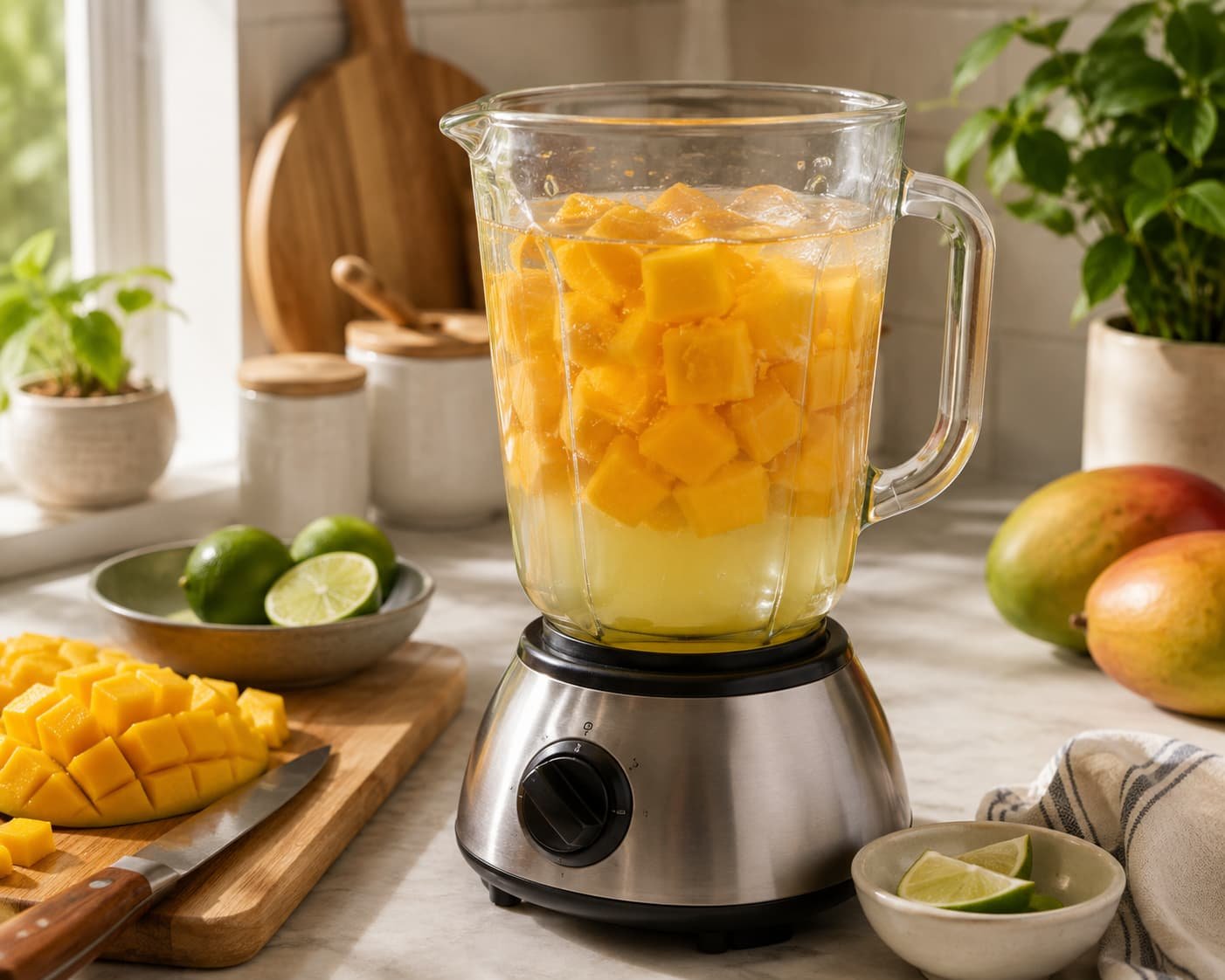
Add the 2 cups mango, 1½ cups cold water, and 1 tablespoon fresh lime juice to a blender. Blend for about 30 to 45 seconds, or until completely smooth.
Taste before adding sweetener. If needed, add 1 tablespoon granulated sugar, honey, or agave and blend briefly again.
Starting with less water makes it easier to control the strength of the mango flavor and prevents the drink from becoming too thin too quickly.
Step 3: Adjust the Consistency
Add the remaining ½ cup cold water and blend or stir briefly. The finished mango agua fresca should be smooth and easy to pour while still tasting clearly of ripe mango.
If it is still too thick, add extra cold water ¼ cup at a time until the texture feels light and refreshing. Taste after each adjustment. If the flavor becomes too mild, add a small squeeze of lime or a little more sweetener as needed.
Step 4: Strain If Needed
Straining is optional. If the mango is fibrous or the drink feels stringy, pour it through a fine-mesh strainer into a pitcher.
Let the liquid pass through naturally, stirring gently if needed. Avoid forcing too much pulp through the strainer if you want a smoother texture.
If your mango blends silky smooth or you enjoy a little natural pulp, you can skip this step completely.
Step 5: Chill and Serve
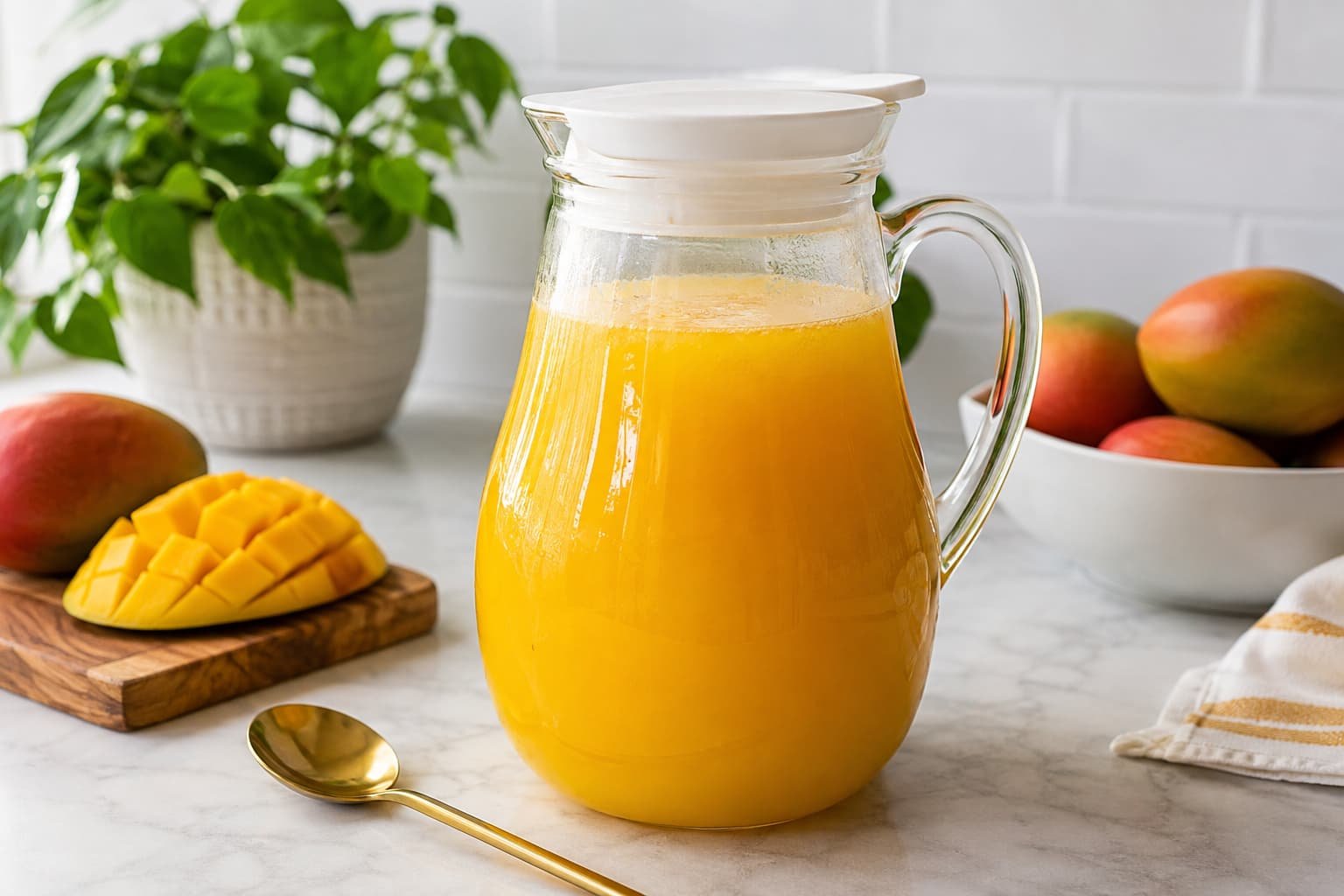
Pour the finished agua de mango into a pitcher and refrigerate until well chilled, or serve it immediately over fresh ice.
Add ice to individual glasses rather than filling the pitcher with ice. This helps keep the drink from becoming diluted as the ice melts.
If the mango agua fresca has been refrigerated for a while, some natural separation may occur. Give it a quick stir before pouring, then serve with a lime wedge, mango slice, or a few fresh mint leaves if desired.
How to Get the Mango-to-Water Ratio Right
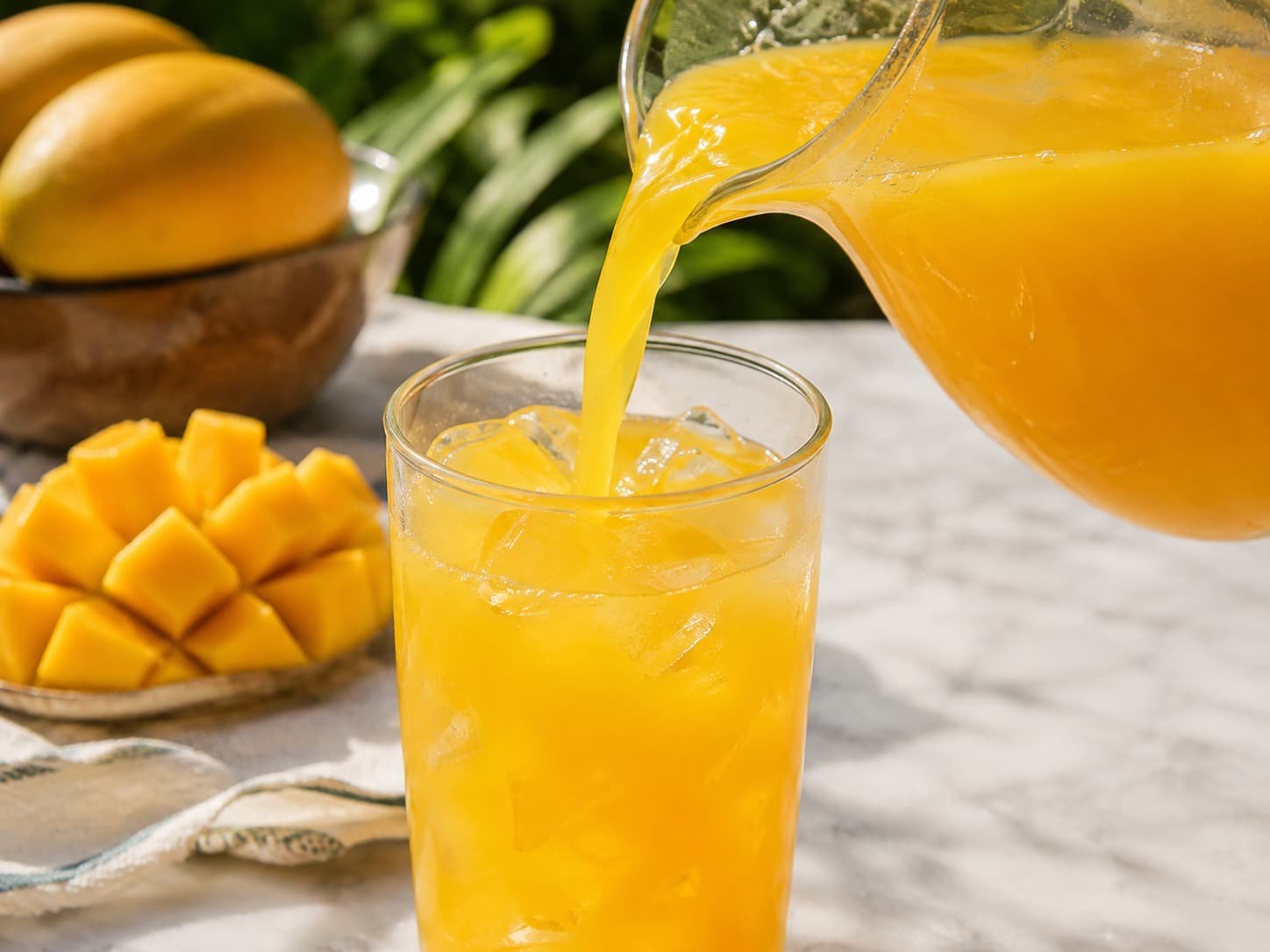
The best mango-to-water ratio can vary slightly because mangoes differ in ripeness, juiciness, and texture. For this recipe, start with 2 cups diced mango and 2 cups cold water, then adjust only if the drink needs it.
The goal is a mango agua fresca that is light and refreshing but still tastes clearly of mango.
If Your Mango Agua Fresca Is Too Thick
If the drink pours slowly or feels noticeably thick when you drink it, add more cold water.
Start with ¼ cup at a time, then stir or blend briefly before checking the texture again. Stop when the drink becomes smooth and easy to pour.
Frozen mango and denser, less juicy mangoes may need a little more water than very ripe, juicy fruit.
If Your Mango Agua Fresca Is Too Watery
If the drink tastes weak and the mango flavor disappears behind the water, adding more sugar will not fix the problem.
Blend in ¼ to ½ cup additional ripe mango, then taste again. If you are still in the blending stage, simply stop adding water once the drink reaches the right consistency.
A small squeeze of lime can brighten the flavor, but it should not replace the fruit itself.
What the Right Consistency Looks Like
Well-balanced mango agua fresca should pour freely from a pitcher and feel lighter than mango juice or a smoothie. It should be smooth, easy to sip over ice, and clearly mango-forward.
Keep the mango flavor slightly more concentrated before adding serving ice, since melting ice will dilute the drink a little. Give it one final taste after chilling and adjust with a small amount of water, lime, or sweetener only if needed.
Should You Strain Mango Agua Fresca?
Not always. Mango agua fresca only needs straining when the blended drink has noticeable fibers or pulp and you want a smoother texture.
Some ripe mangoes blend very smoothly on their own, while more fibrous varieties can leave small strands in the drink. If that happens, pour the mixture through a fine-mesh strainer into a pitcher and stir gently to help the liquid pass through.
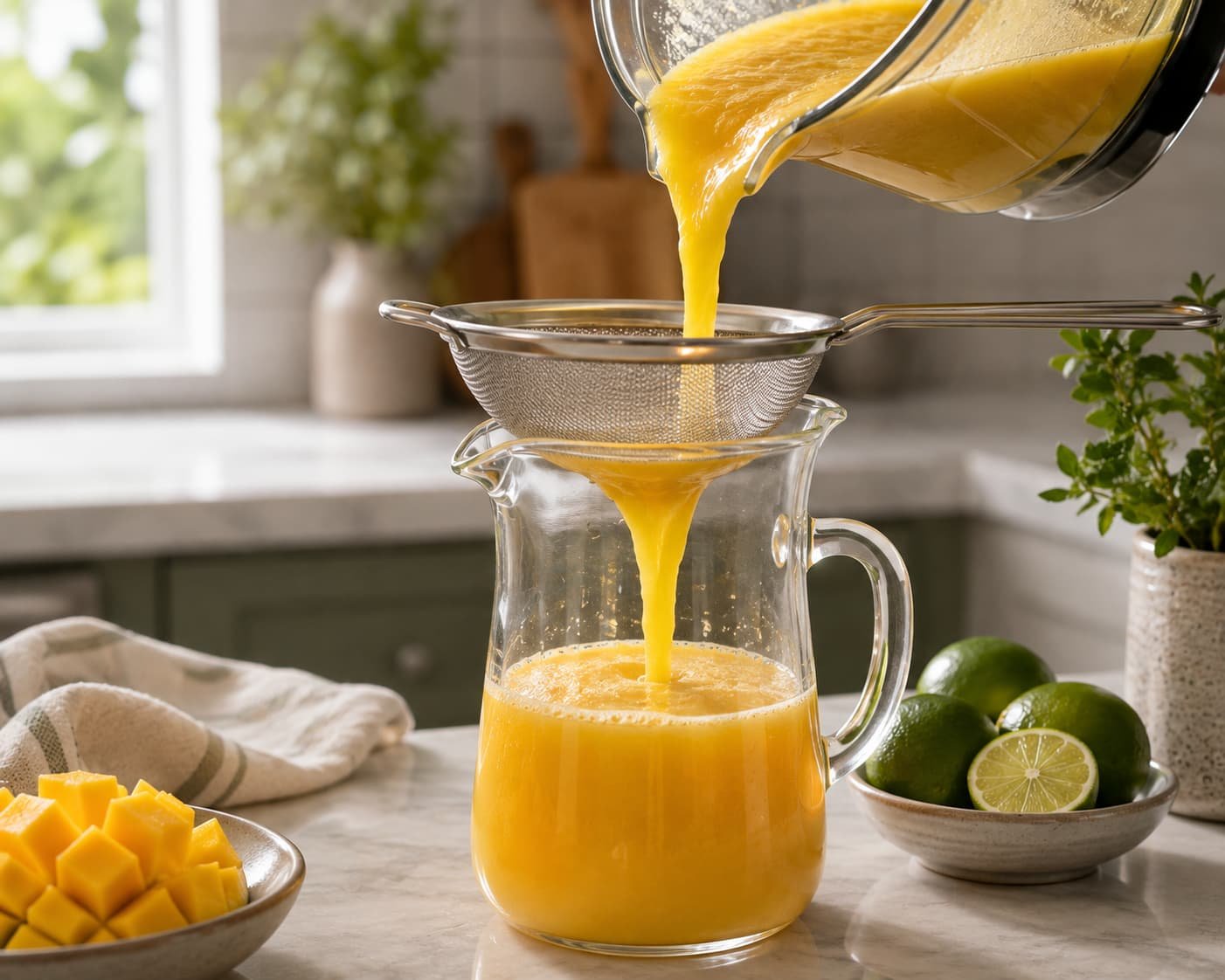
If the drink is already smooth or you enjoy a little natural pulp, skip this step. Straining removes fibers, but it will not fix an agua fresca that is simply too thick. In that case, add a little more cold water instead.
How to Sweeten Mango Agua Fresca
Taste the mango mixture before adding any sweetener. A ripe, juicy mango may already be sweet enough on its own.
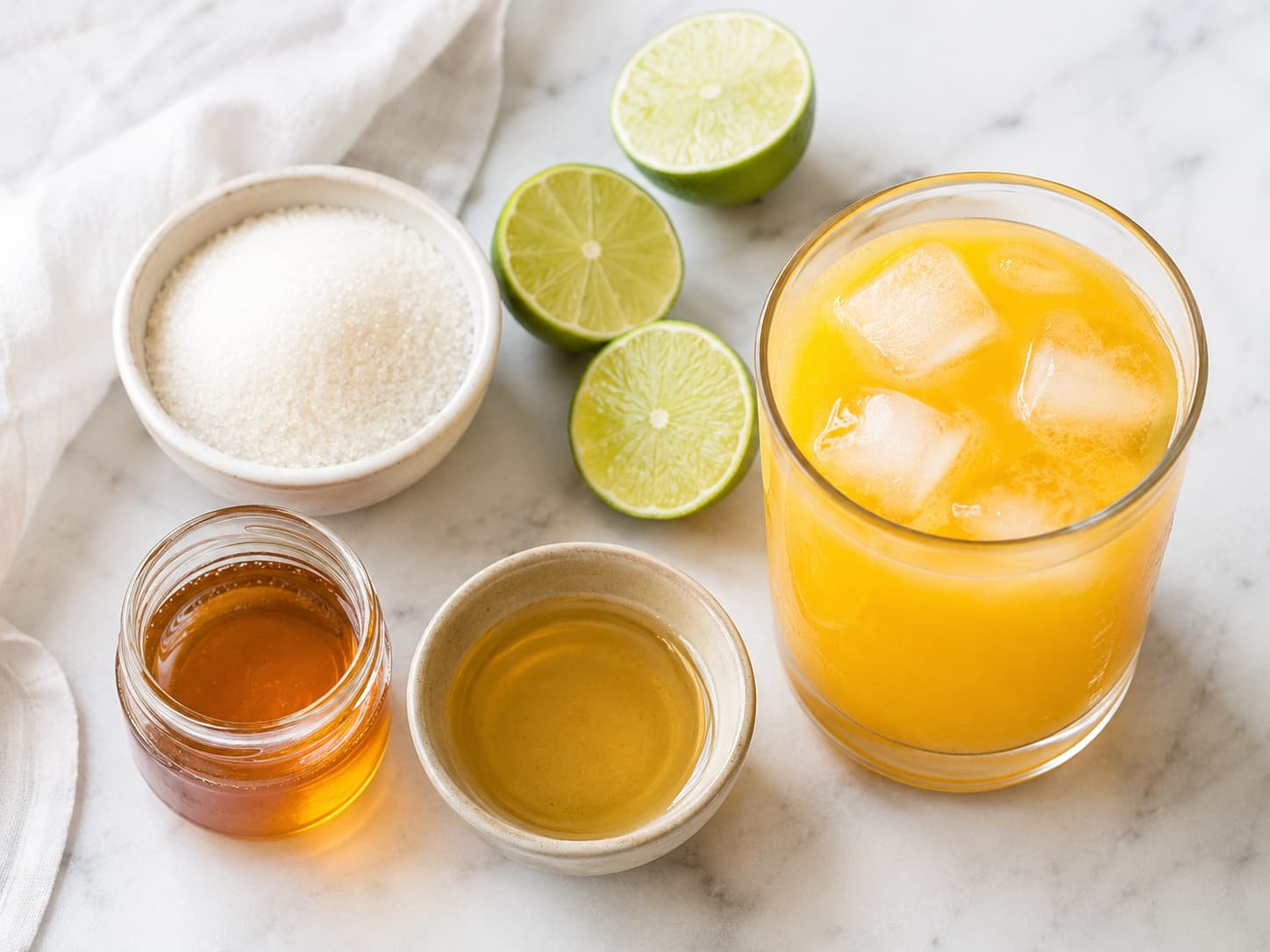
If the drink needs more sweetness, start with 1 tablespoon of granulated sugar, agave, or honey. Blend or stir, taste again, and add a second tablespoon only if needed.
For this recipe, 1 to 2 tablespoons of added sweetener is usually enough. Granulated sugar keeps the flavor neutral, agave mixes easily into a cold drink, and honey gives a slightly deeper sweetness.
If the mango is naturally sweet, you can make a no-added-sugar mango agua fresca. It should not be described as sugar-free because mango contains naturally occurring sugar.
Common Mango Agua Fresca Mistakes and How to Fix Them
Most problems come from the balance between mango, water, lime, and sweetener. Small adjustments are usually enough to bring the drink back into balance.
| Problem | Likely Cause | How to Fix It |
| Watery | Too much water | Blend in ¼ to ½ cup more ripe mango |
| Too thick | Too much mango or frozen fruit | Add cold water ¼ cup at a time |
| Bland | Underripe mango or too much dilution | Add ripe mango, then adjust lime or sweetness after tasting |
| Too sweet | Too much sugar, honey, or agave | Add a little cold water, then a small squeeze of lime if needed |
| Too tart | Too much lime juice | Add more mango or a small amount of water |
| Fibrous | Naturally stringy mango flesh | Pass the drink through a fine-mesh strainer |
| Diluted after serving | Too much melting ice | Chill the drink first and add ice to individual glasses |
Taste after each adjustment rather than changing several ingredients at once. This makes it easier to correct the drink without creating a new flavor or texture problem.
Mango Agua Fresca Variations
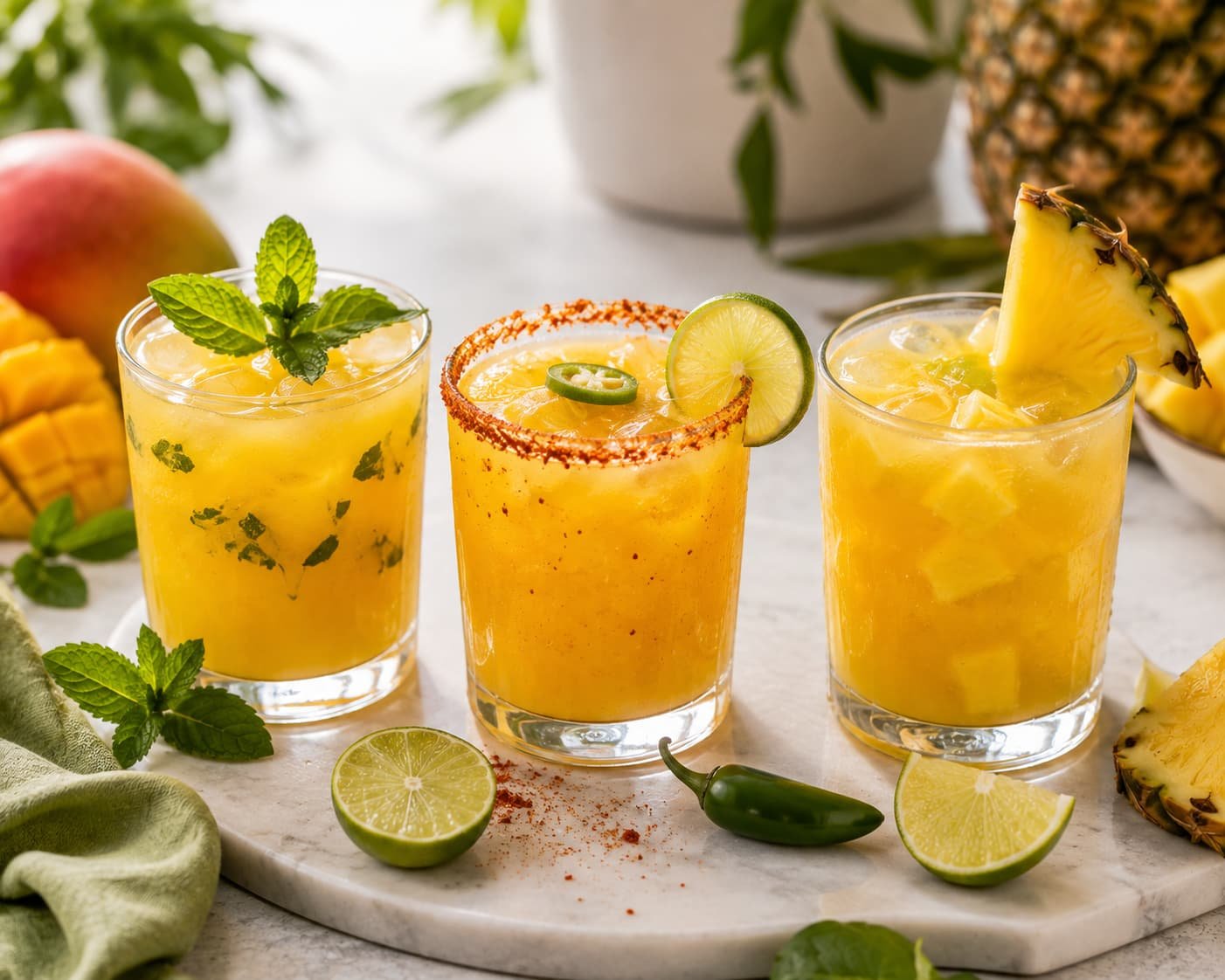
Once the base mango agua fresca tastes balanced, you can make small flavor changes without changing the basic method. Keep the additions light so the mango stays at the center of the drink.
Mango Lime Agua Fresca
For a brighter, slightly tangier version, add an extra 1 teaspoon fresh lime juice after blending. Taste before adding more so the lime does not overpower the mango.
This variation works especially well when the fruit is very ripe and naturally sweet.
Mango Mint Agua Fresca
Blend in 4 to 6 fresh mint leaves for a cooler, fresher flavor. Start with a small amount because mint can become dominant quickly.
If you only want a hint of mint, use the leaves as a garnish instead of blending them into the drink.
Spicy Mango Agua Fresca
For a sweet-spicy version, coat the rim of the glass with a chili-lime seasoning or add a small pinch directly to each serving.
Keeping the spice in individual glasses makes it easier for everyone to control the heat without changing the whole pitcher.
Mango Pineapple Agua Fresca
For a tropical variation, replace a small portion of the mango with fresh pineapple. Keep mango as the main fruit so the drink still tastes like mango agua fresca rather than a separate pineapple-based recipe.
Because pineapple adds extra tartness, taste the drink before adding more lime.
How to Serve Mango Agua Fresca
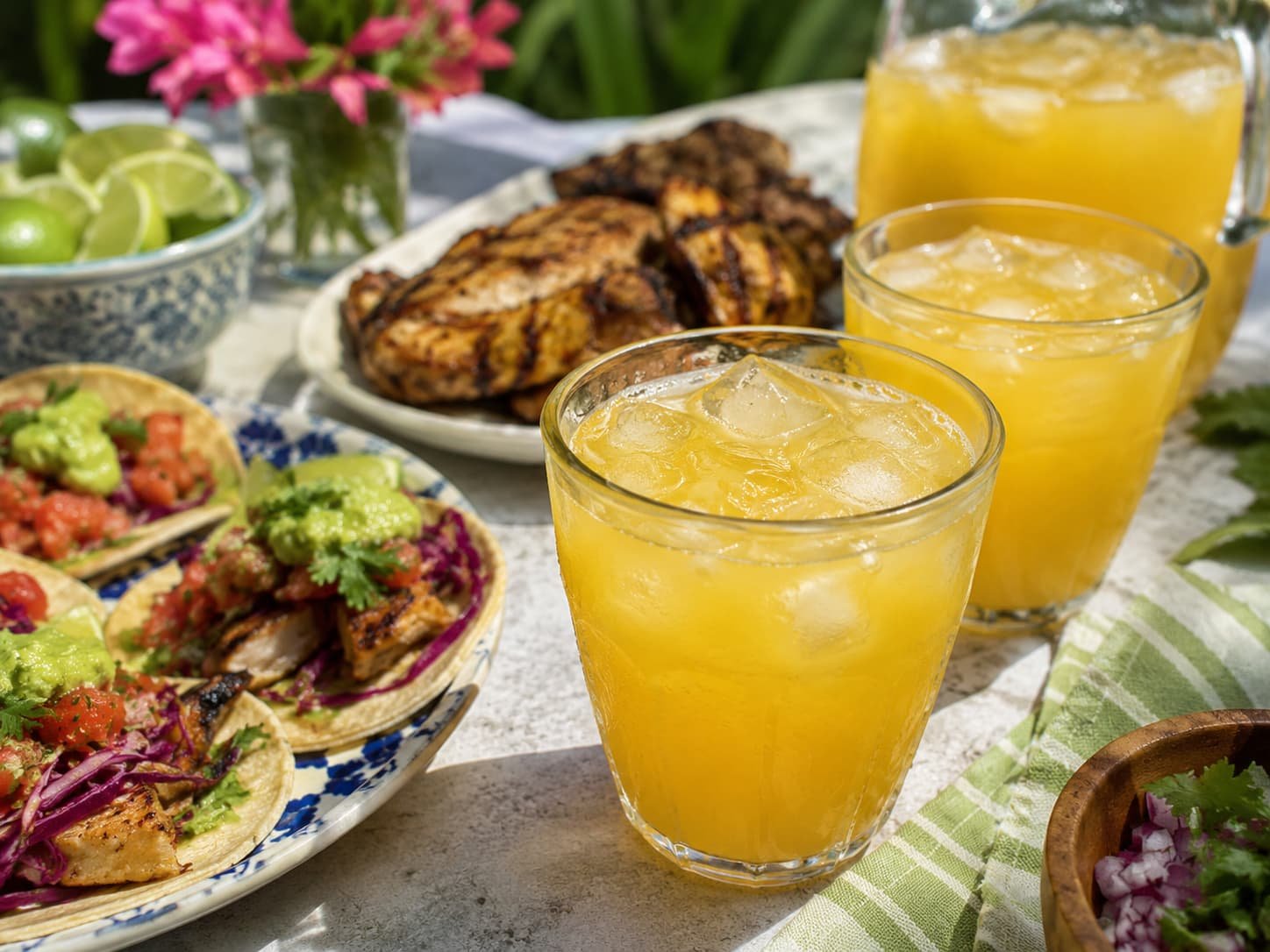
Serve mango agua fresca well chilled or pour it over fresh ice just before drinking. It works especially well as a refreshing summer drink alongside tacos, grilled chicken, barbecue, or a light lunch.
For picnics, family gatherings, or parties, prepare the drink ahead and keep it covered in the refrigerator until serving. Add ice to individual glasses rather than the full pitcher so melting ice does not dilute the batch.
For a larger group, double the mango and water first, then adjust the lime and sweetener after tasting. A larger batch may not need exactly double the lime or sugar, especially if the mangoes are already very sweet.
A lime wedge, mango slice, or a few fresh mint leaves can be added at serving time, but the drink does not need a garnish to taste complete.
How to Store Mango Agua Fresca
Store mango agua fresca in a covered pitcher or airtight container in the refrigerator soon after making it. For the best flavor and texture, use it within 2 to 3 days.
Some natural separation may occur as the drink sits, especially if it was not strained. This is normal. Stir the pitcher well before serving so the mango and water combine evenly again.
Avoid storing the drink with ice in the pitcher. Melting ice will gradually dilute the mango flavor. Keep the agua fresca chilled in the refrigerator and add fresh ice to individual glasses when serving.
Discard the drink if it develops clear signs of spoilage, such as an unusual smell, flavor, or appearance.
Frequently Asked Questions
What is mango agua fresca made of?
Mango agua fresca is made with ripe mango, cold water, fresh lime juice, and optional sweetener. The ingredients are blended until smooth, then additional water can be added as needed for a light, pourable texture. It is usually served chilled or over ice.
Is mango agua fresca the same as agua de mango?
Yes. Mango agua fresca is also called agua de mango. Both names refer to a light mango drink made by blending the fruit with water. Lime and sweetener can be added according to the ripeness and flavor of the mango.
Can I use frozen mango for mango agua fresca?
Yes. Use the same amount of frozen mango as fresh mango and let it soften for about 5 to 10 minutes before blending. Frozen fruit usually makes the drink thicker at first, so add extra cold water gradually until it becomes smooth and easy to pour.
Do I need to strain mango agua fresca?
No. Straining is optional. If the mango leaves noticeable fibers or pulp after blending, pass the drink through a fine-mesh strainer. If the texture is already smooth or you enjoy a little natural pulp, there is no need to strain it.
Can I make mango agua fresca without added sugar?
Yes. Ripe mango can be naturally sweet enough that no added sweetener is needed. Taste the drink before adding sugar, honey, or agave. A no-added-sugar mango agua fresca still contains the naturally occurring sugars found in mango.
Why is my mango agua fresca too thick?
The drink may be too thick if there is too much fruit for the amount of water or if frozen mango creates a denser blend. Add cold water ¼ cup at a time until the agua fresca becomes light, smooth, and easy to pour.
How do I fix watery mango agua fresca?
Blend in ¼ to ½ cup additional ripe mango, then taste again. Adding sugar may make the drink sweeter, but it will not restore the mango flavor lost through too much dilution.
How long does mango agua fresca last in the fridge?
Keep mango agua fresca covered in the refrigerator and use it within 2 to 3 days for the best quality. Natural separation is normal, so stir the drink well before serving.
Can I make mango agua fresca ahead of time?
Yes. Prepare the drink ahead, cover it, and refrigerate until serving. Stir before pouring and add fresh ice to individual glasses rather than storing the pitcher with ice.
Final Thoughts
Mango agua fresca works best with ripe mango, cold water, and fresh lime juice, with sweetener added only when the fruit needs it. Add the water gradually so the drink stays light, smooth, and full of mango flavor rather than becoming too thick or overly diluted.
Once the balance tastes right, chill the drink well and serve it over fresh ice. The result is a simple, refreshing mango drink that pairs easily with everyday meals, summer lunches, or casual gatherings.