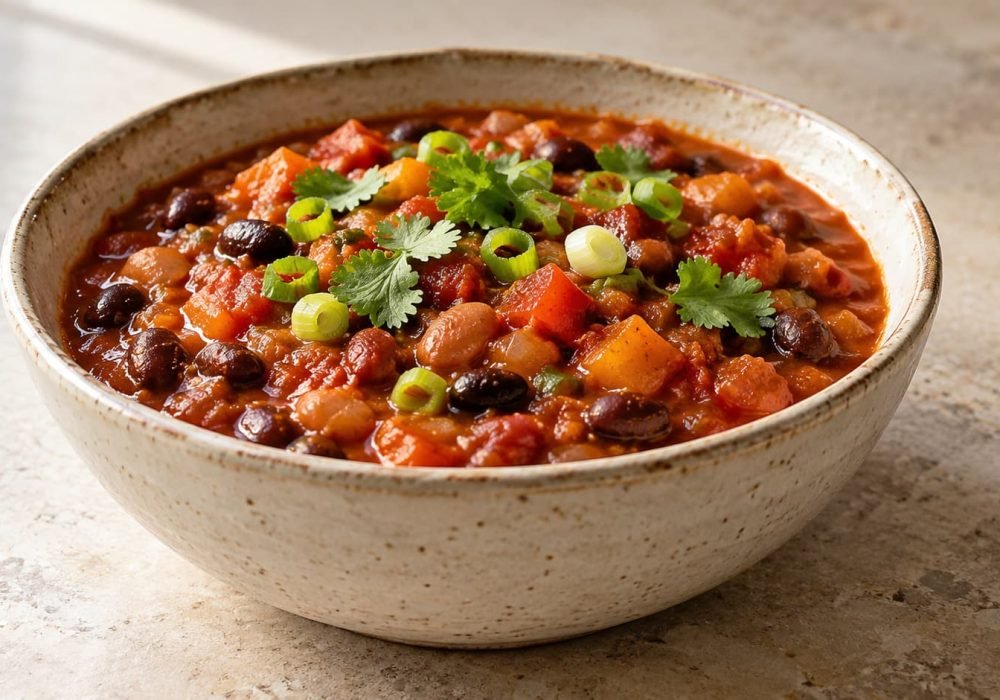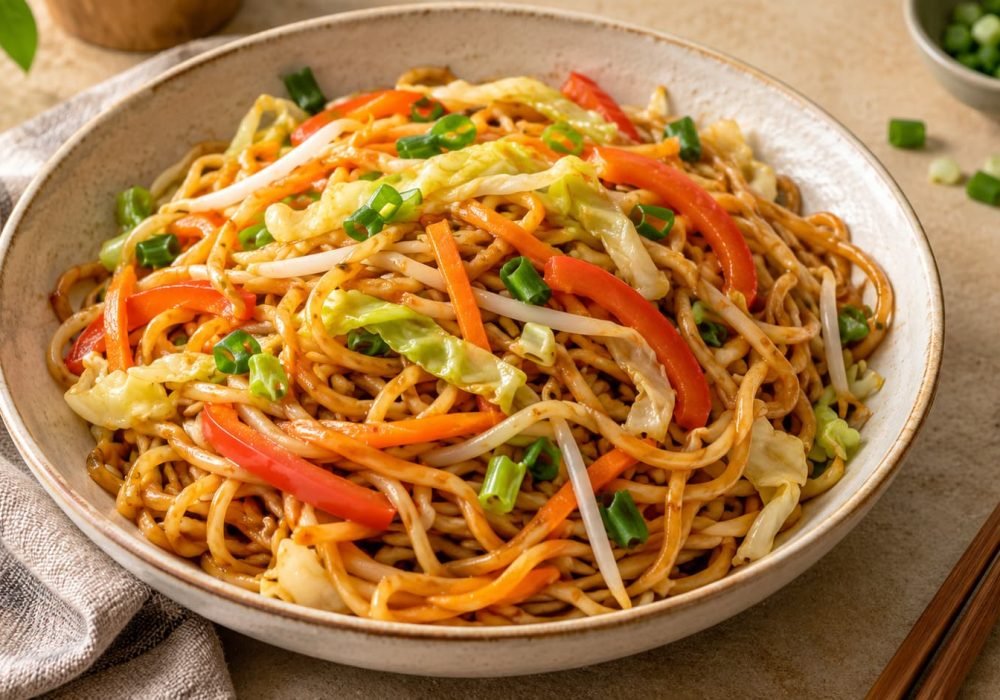
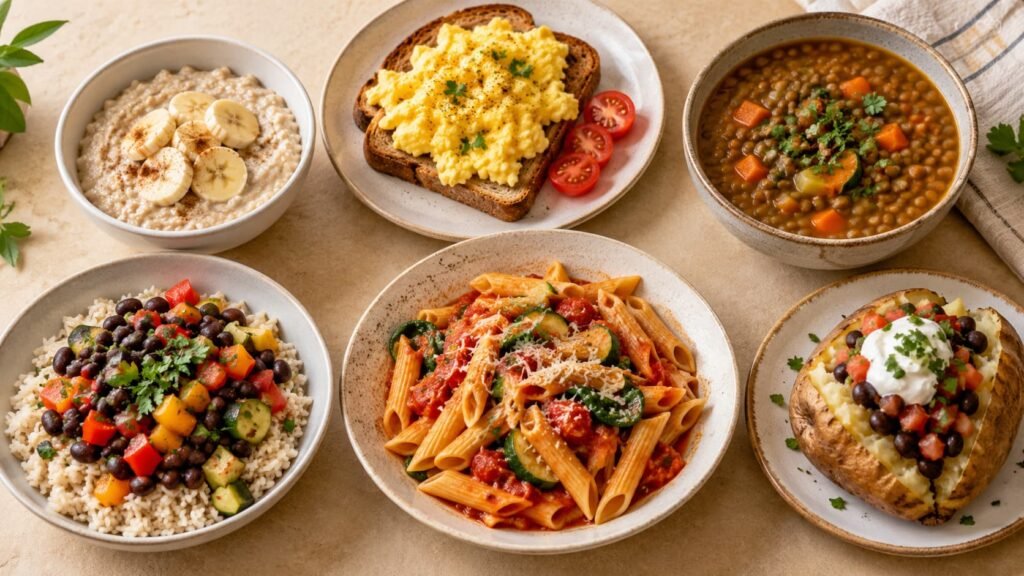
Cheap meal ideas include simple dishes such as oatmeal, egg sandwiches, vegetable fried rice, bean burritos, lentil soup, and pasta with tomato sauce. These meals use everyday ingredients that are often affordable and easy to prepare.
Cooking on a budget does not mean eating the same food every day. Ingredients such as rice, potatoes, beans, eggs, and vegetables can be combined in different ways to make a variety of breakfasts, lunches, and dinners.
The key is to choose ingredients that fit your grocery budget, plan meals around what you already have, and avoid buying items that may go unused.
What Are Cheap Meal Ideas?
Cheap meal ideas are dishes that help keep food costs manageable by using affordable ingredients, simple cooking methods, and practical portions. They often rely on pantry staples such as rice, pasta, oats, lentils, and beans, along with fresh or frozen vegetables.
A meal’s cost depends on more than the price of its main ingredient. Serving size, grocery prices, and the amount of food wasted can all affect how affordable it is.
For example, potatoes can be used for baked potatoes, vegetable soup, or a potato-and-egg skillet. Using one ingredient across several meals can make grocery planning easier.
What Makes a Homemade Meal Budget-Friendly?
A homemade meal is budget-friendly when it provides a satisfying portion without requiring unnecessary spending.
One useful approach is to choose ingredients that work in several dishes. A bag of rice, for example, can be used for rice bowls, vegetable fried rice, or a side dish with beans.
Other practical ways to manage food costs include:
- Choose versatile ingredients: Rice, pasta, potatoes, eggs, and beans can be used in many meals.
- Compare unit prices: Larger packages are not always the better value, especially when some of the food may go unused.
- Use seasonal or frozen produce: Compare prices and choose options that fit your budget.
- Check what you already have: Planning meals around pantry and refrigerator items can reduce unnecessary purchases.
- Store leftovers properly: Safe storage helps make it possible to use prepared food in another meal.
A meal with the fewest ingredients is not necessarily the cheapest. The better choice often depends on how much each ingredient costs and whether it can be used again.
How Can Cheap Meals Still Be Filling and Balanced?
Affordable meals can be filling and balanced when they include a combination of carbohydrates, protein sources, vegetables, and some dietary fat.
Rice, potatoes, pasta, and oats provide carbohydrates. Beans, lentils, eggs, and other protein sources contribute protein, while vegetables provide fiber and various vitamins and minerals.
For example, rice served with black beans and sautéed vegetables combines several food groups in one dish. A baked potato topped with beans and plain yogurt is another simple option.
Variety is also important. Using different vegetables, grains, and protein sources throughout the week can help create more varied meals without depending on expensive ingredients.
What Are Some Cheap and Easy Meal Ideas for Everyday Cooking?
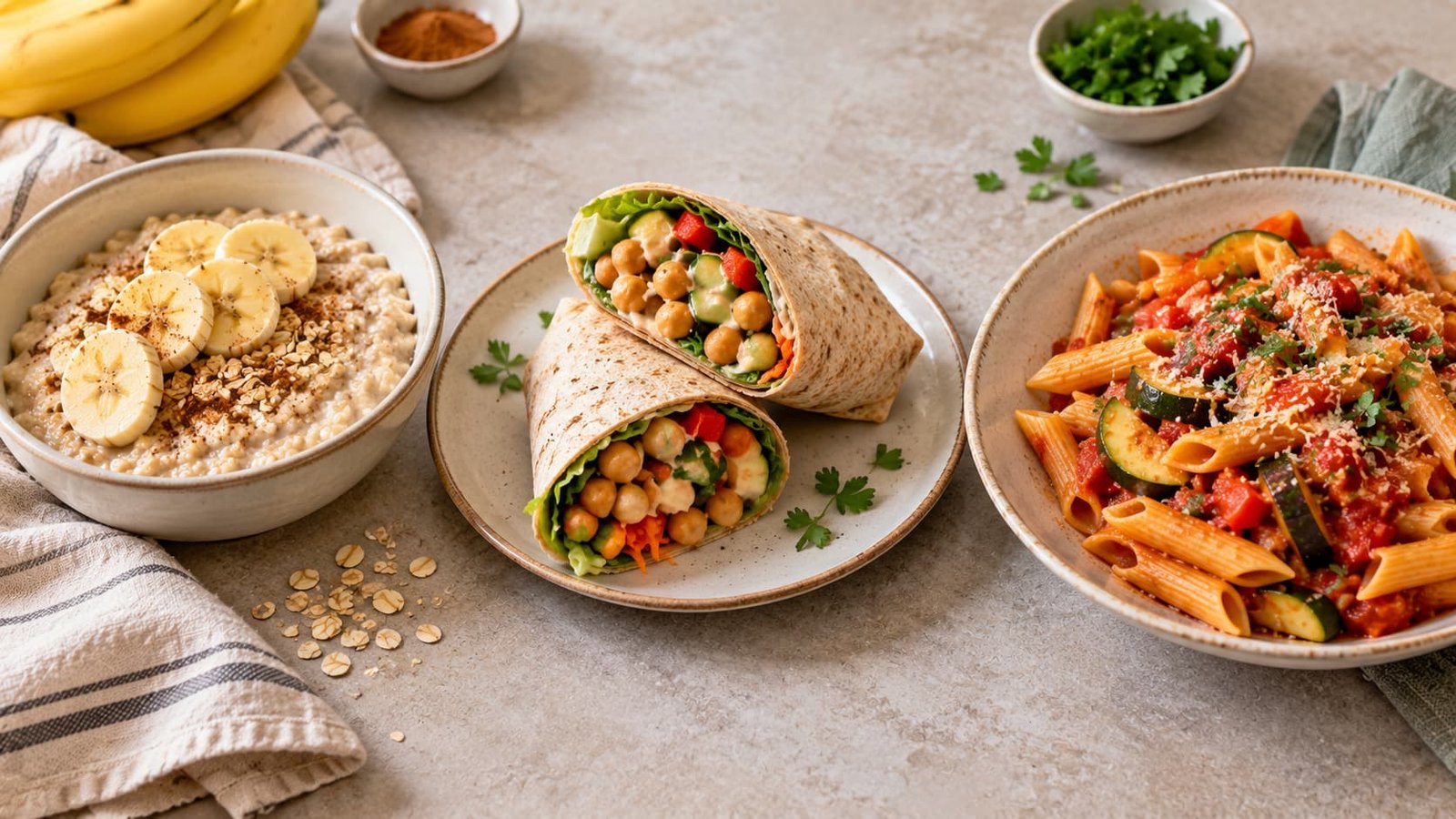
Some practical everyday meals include banana oatmeal for breakfast, bean wraps for lunch, and vegetable pasta or chickpea curry for dinner. These dishes use familiar ingredients and can be adjusted according to what is available.
The following suggestions are meal ideas rather than complete recipes with fixed measurements or cooking times.
What Are Some Affordable Breakfast Ideas?
Affordable breakfasts often use oats, eggs, bread, bananas, or yogurt. These ingredients can be prepared in different ways without requiring a complicated shopping list.
Banana Oatmeal
Cook oats with water or milk and top them with sliced banana. Cinnamon or peanut butter can be added for extra flavor. This is also a useful way to use ripe bananas.
Scrambled Eggs on Toast
Serve scrambled eggs on toasted bread with tomatoes or spinach if available. Whole-grain bread can add fiber, while vegetables provide additional variety.
Homemade Banana Pancakes
Combine mashed bananas with common pancake ingredients such as flour, eggs, and milk. This offers another way to use ripe bananas instead of throwing them away.
Yogurt With Oats and Fruit
Mix plain yogurt with oats and chopped fruit. Apples, bananas, or other reasonably priced fruits can work well. Compare yogurt prices locally, as this option may cost more than oatmeal in some areas.
Potato and Egg Skillet
Cook diced potatoes until tender, then combine them with eggs and vegetables such as onions or peppers. This makes a simple breakfast using ingredients that may already be in your kitchen.
Choosing a few breakfast options that share ingredients can make weekly shopping more manageable.
What Are Some Cheap Lunch Ideas?
Affordable lunches can be prepared with beans, rice, eggs, vegetables, and bread. Some also provide practical ways to use ingredients left from earlier meals.
Bean and Rice Burritos
Fill tortillas with cooked beans, rice, and chopped vegetables. Add salsa or a little cheese if available. The filling can also be served in a bowl when tortillas are not part of your grocery plan.
Egg Salad Sandwiches
Mix chopped hard-boiled eggs with a small amount of mayonnaise or another suitable dressing. Serve on bread with lettuce or sliced cucumber.
Vegetable Fried Rice
Combine cooked rice with vegetables such as peas, carrots, and onions. Add a fully cooked egg or another protein source. If using leftover rice, make sure it was cooled and refrigerated promptly and reheated thoroughly.
Lentil and Vegetable Soup
Cook lentils with onions, carrots, tomatoes, and broth or water until tender. The vegetables can be changed depending on what is available.
Chickpea Salad Wraps
Mash cooked chickpeas lightly and mix them with chopped vegetables and a dressing. Serve the mixture in a tortilla or between slices of bread.
Lunch planning becomes easier when ingredients overlap with dinner. For example, beans prepared for burritos can also be used in rice bowls or baked potato toppings.
What Are Some Budget-Friendly Dinner Ideas?
Budget-friendly dinners often start with a filling ingredient such as pasta, rice, or potatoes and include vegetables and a protein source. Soups, skillet dishes, and one-pot meals are useful options for everyday cooking.
Pasta With Tomato and Vegetables
Cook pasta and combine it with tomato sauce, onions, garlic, and available vegetables. Lentils or beans can be added for more protein and fiber.
Bake potatoes until tender, then top them with cooked beans, sautéed vegetables, and a little cheese or plain yogurt.
Chickpea and Vegetable Curry
Combine cooked chickpeas with tomatoes, onions, vegetables, and spices. Serve with rice for a simple dinner using common pantry ingredients.
Rice and Beans With Vegetables
Serve cooked rice and beans with sautéed peppers, onions, or other vegetables. Seasonings such as cumin, garlic, and paprika can provide different flavors.
Vegetable and Egg Frittata
Combine beaten eggs with cooked vegetables such as potatoes, spinach, or onions. Cook until the eggs are fully set and serve with toast or a side salad.
Lentil and Potato Stew
Simmer lentils, diced potatoes, onions, and vegetables in broth or water until everything is properly cooked. Herbs and spices can be used to adjust the flavor.
Homemade Vegetable Pizza
Use homemade or ready-made pizza dough with tomato sauce, vegetables, and cheese. This can be an affordable option when the ingredients are already available, although the cost depends on the dough and toppings.
Simple Vegetable Noodles
Cook noodles and combine them with cabbage, carrots, onions, or other vegetables. Add a cooked egg, tofu, or another protein source if desired.
For dinner planning, consider how ingredients can be shared between meals. Carrots and onions, for example, can be used in pasta sauce, lentil stew, and vegetable noodles.
What Ingredients Can Help You Make Cheap Meals at Home?
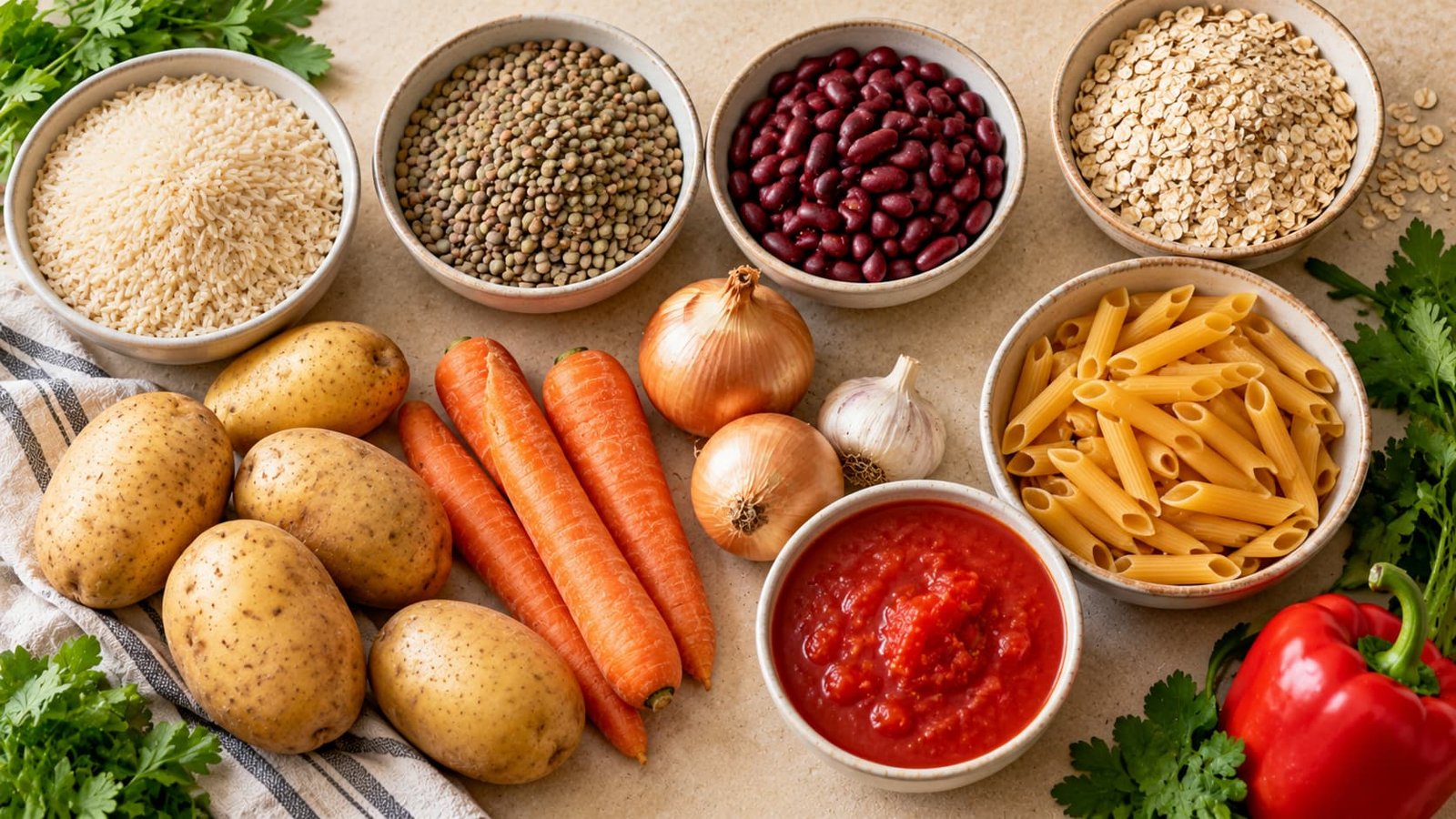
Ingredients that are affordable, versatile, and easy to store can make budget cooking more manageable. Rice, pasta, beans, lentils, potatoes, eggs, and vegetables are useful examples because they can be combined in many different dishes.
The best ingredients to buy depend on local prices, available storage space, and how often you cook. A large package is only economical when you can use it before the food spoils.
Which Pantry Staples Are Useful for Budget Cooking?
Pantry staples are ingredients that can be stored for a relatively long time when kept under suitable conditions. They are useful because they allow you to prepare meals without buying every ingredient fresh.
Common options include:
| Ingredient | Common uses |
| Rice | Rice bowls, vegetable rice, side dishes |
| Dried pasta | Tomato pasta, pasta salads, soups |
| Dried or canned beans | Burritos, soups, rice bowls |
| Lentils | Stews, soups, curries |
| Oats | Porridge, pancakes, baked oatmeal |
| Canned tomatoes | Pasta sauces, soups, curries |
| Flour | Pancakes, flatbreads, simple doughs |
| Cooking oil | Sautéing, roasting, basic cooking |
| Dried herbs and spices | Adding flavor to simple dishes |
You do not need to purchase every item at once. Start with the ingredients you regularly use and add others when they are needed for planned meals.
Checking storage instructions is also important. Dried goods should be kept in suitable containers, while opened canned foods and prepared dishes may require refrigeration.
How Can Rice, Pasta, Beans, and Potatoes Be Used in Affordable Meals?
Rice, pasta, beans, and potatoes are useful foundations for budget meals because they can be paired with different vegetables, sauces, and protein sources.
Rice can be served with lentils, beans, vegetables, or curry. It can also become part of fried rice when cooked rice has been stored safely.
Pasta works with tomato-based sauces, vegetables, and beans. A simple pasta dish can be changed by using different vegetables or seasonings rather than purchasing a new set of ingredients.
Beans can be added to soups, wraps, salads, and rice bowls. Canned beans are convenient, while dried beans may offer better value per cooked serving, depending on prices and cooking costs. Dried beans must be prepared and cooked safely according to their type.
Potatoes can be baked, boiled, mashed, or added to soups and stews. Their mild flavor makes them suitable for many different seasonings and toppings.
These ingredients are not interchangeable in every recipe. Rice and pasta mainly provide a carbohydrate base, while beans also contribute substantial protein and fiber. Combining them with other food groups can create more varied meals.
How Can Seasonal Vegetables and Affordable Protein Sources Fit Into Cheap Meals?
Seasonal vegetables and reasonably priced protein sources can add variety and nutritional value to inexpensive meals.
Vegetable prices change throughout the year, so it helps to compare fresh, frozen, and canned options. Frozen peas, spinach, and mixed vegetables can be convenient because you can use the amount needed and keep the remainder frozen according to package instructions.
Cabbage, carrots, onions, and other locally affordable vegetables are also useful in soups, stir-fries, rice dishes, and stews.
For protein, consider options such as:
- Eggs: Useful in sandwiches, rice dishes, and vegetable skillets.
- Lentils: Suitable for soups, curries, and stews.
- Beans and chickpeas: Work well in wraps, salads, and rice bowls.
- Tofu: Can be used in stir-fries and noodle dishes when reasonably priced.
- Canned fish: May be useful for sandwiches, pasta, or rice meals, depending on local prices.
- Chicken: Larger or less expensive cuts may offer value, but compare usable portions and cooking needs.
Choosing protein sources does not have to mean selecting the same option every day. A mix of plant-based foods, eggs, and other available proteins can help keep meals varied.
The most useful strategy is to compare prices and plan combinations before shopping. For example, carrots, onions, lentils, and canned tomatoes can be used together in a stew, while some of those same ingredients can also work in pasta sauce or soup.
How Can You Make Cheap Meals for Different Household Sizes?
Making affordable meals for one person, a couple, or a larger family requires different approaches to portion sizes and grocery shopping. Smaller households may benefit from buying flexible ingredients in manageable quantities, while larger households can sometimes save money by preparing meals in bigger batches.
The goal is to purchase enough food for everyone without creating unnecessary leftovers or waste.
What Are Some Cheap Meal Ideas for One or Two People?
For one or two people, simple dishes that use a few versatile ingredients are often practical. Meals such as vegetable omelets, bean wraps, baked potatoes, and small portions of pasta are easy to adjust without preparing excessive amounts.
Some useful options include:
- Egg and vegetable sandwiches: Combine cooked eggs with bread and available vegetables for a simple meal.
- Rice bowls: Serve cooked rice with beans, vegetables, and your preferred seasonings.
- Baked potatoes: Top potatoes with beans, cheese, or sautéed vegetables.
- Small pasta dishes: Prepare pasta with tomato sauce and a few vegetables.
- Vegetable soup: Make a manageable batch using lentils, potatoes, or other available ingredients.
Smaller households should pay attention to package sizes. A large container may appear cheaper per serving, but it is not always economical if some of the food spoils before it can be used.
Freezing suitable ingredients in smaller portions can help reduce waste and make future meals easier to prepare.
What Are Some Affordable Meal Ideas for Families?
For families, affordable meals often include dishes that can be prepared in larger quantities and divided into suitable portions. Pasta, soups, stews, rice dishes, and casseroles are useful because they can combine several ingredients in one meal.
Vegetable Pasta With Beans
Combine cooked pasta with tomato sauce, vegetables, and beans. This creates a filling dish that can be adjusted for different family sizes.
Rice and Lentil Bowls
Serve cooked rice with seasoned lentils and vegetables. Family members can add different toppings according to their preferences.
Homemade Bean Burritos
Fill tortillas with beans, rice, and vegetables. Each person can choose their preferred fillings, making the meal flexible for different tastes.
Potato and Vegetable Casserole
Layer cooked potatoes with vegetables and a suitable sauce or topping, then bake until heated through. This can be a practical way to use ingredients already available.
Hearty Vegetable Soup
Prepare a pot of soup with lentils, beans, potatoes, and vegetables. Serve with bread or another side dish if needed.
When cooking for a family, consider the cost per serving rather than only the total grocery bill. A larger meal may offer better value when everyone can eat it and any leftovers are stored and used safely.
How Can You Plan Cheap Meals for the Week?
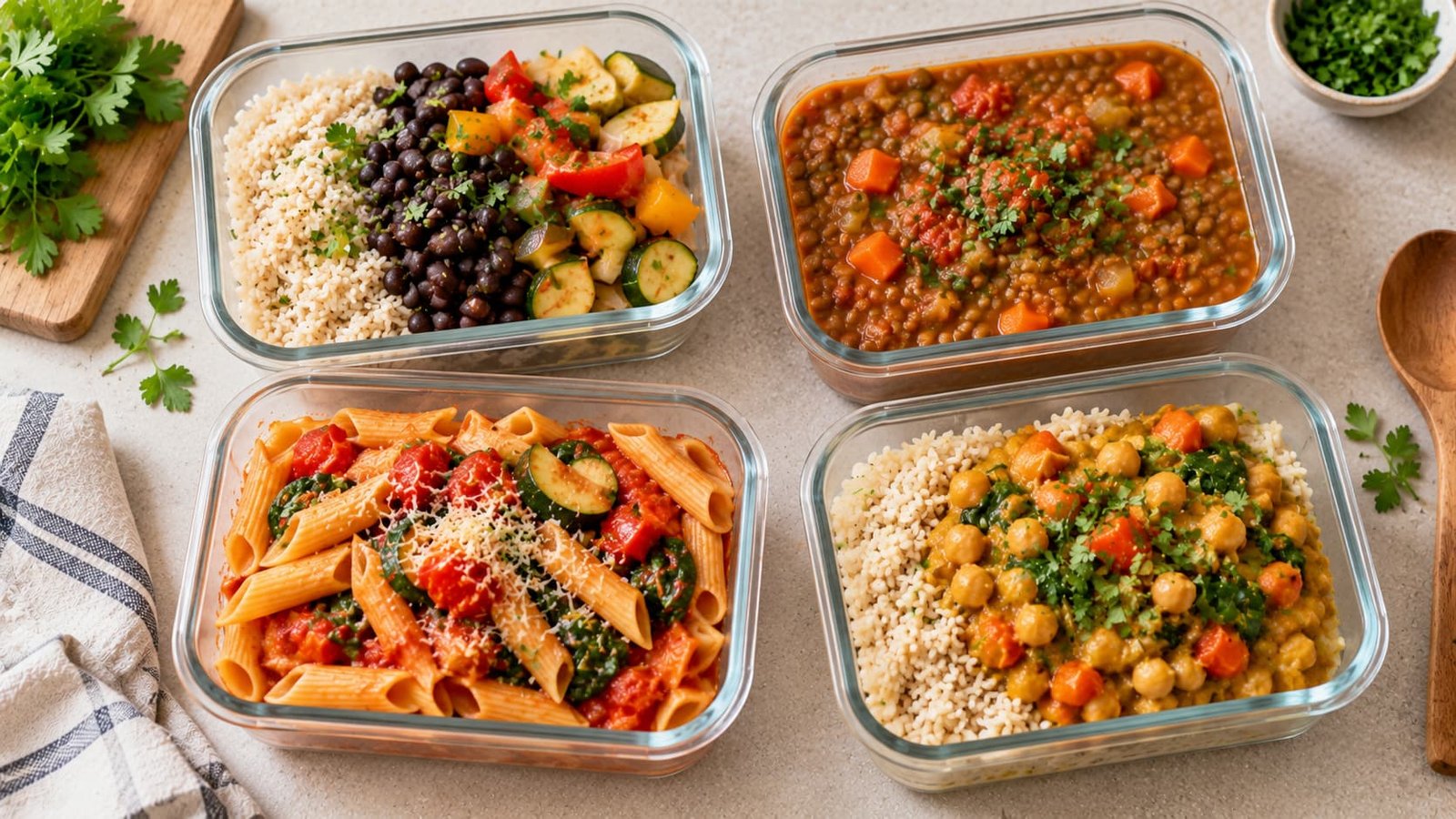
Planning affordable meals for the week starts with checking the food you already have, choosing a few practical dishes, and creating a shopping list based on those meals.
A weekly plan does not need to include a different recipe every day. Using some of the same ingredients in several dishes can make shopping and cooking more manageable.
How Can a Weekly Meal Plan Help Reduce Food Costs?
A weekly meal plan can help reduce unnecessary spending by giving each grocery purchase a clear purpose.
For example, if you plan to prepare vegetable pasta, lentil soup, and bean burritos, you can identify ingredients that work across these dishes before visiting the store.
Here is an example of a simple weekly dinner plan:
| Day | Budget-Friendly Dinner |
| Monday | Rice and beans with vegetables |
| Tuesday | Pasta with tomato sauce and lentils |
| Wednesday | Baked potatoes with bean toppings |
| Thursday | Vegetable and egg frittata |
| Friday | Chickpea curry with rice |
| Saturday | Lentil and vegetable soup |
| Sunday | Vegetable noodles with a protein source |
This is a flexible example rather than a fixed meal plan. You can change the dishes based on grocery prices, dietary needs, and ingredients already available.
Planning can also help you decide which meals need fresh ingredients first and which can use pantry or frozen foods later in the week.
How Can You Use Leftovers to Make Different Meals?
Leftovers can become ingredients for new dishes instead of being served exactly the same way.
For example, cooked vegetables can be added to an omelet, mixed into pasta, or used as a filling for wraps. Cooked beans can become part of a rice bowl, soup, or baked potato topping.
Other practical combinations include:
- Leftover roasted vegetables: Add them to a frittata, soup, or pasta dish.
- Cooked lentils: Use them in a tomato-based sauce or vegetable stew.
- Extra cooked potatoes: Turn them into a potato skillet or add them to soup.
- Cooked chicken: When stored safely, use it in sandwiches, rice dishes, or soup.
- Unused fresh vegetables: Add suitable vegetables to stir-fries or soups before they spoil.
Food safety matters when reusing prepared meals. Refrigerate perishable leftovers promptly, generally within two hours, or within one hour in very hot conditions. Most cooked leftovers should be used within three to four days when properly refrigerated, or frozen for longer storage. Reheat leftovers thoroughly.
Not every leftover is suitable for every new dish, so consider its condition, storage history, and flavor before using it.
How Can You Shop for Ingredients Without Overspending?
Shopping with a clear list can help prevent unnecessary purchases and keep grocery costs more predictable.
Start by checking your pantry, refrigerator, and freezer. Then identify the ingredients needed for your planned meals.
A few useful shopping habits include:
- Compare unit prices: Check the cost per weight or volume when comparing similar products.
- Choose store brands when suitable: They may cost less than branded alternatives, but compare ingredients and prices.
- Buy realistic quantities: Bulk purchases only save money when you can use or safely store the food.
- Compare fresh and frozen produce: Choose based on price, quality, and how much you need.
- Keep flexible alternatives in mind: If one vegetable is expensive, another suitable option may work in the same dish.
Sales can be useful, but a discounted item is not automatically a good purchase. Buying something you do not need can increase spending rather than reduce it.
What Common Mistakes Can Make Homemade Meals More Expensive?
Homemade meals can become more expensive when ingredients are purchased without a plan, portions are unnecessarily large, or food is allowed to spoil.
Even inexpensive ingredients can lead to higher grocery bills when too much is bought or prepared.
How Can Buying Too Many Ingredients Increase Food Costs?
Buying too many ingredients can increase costs because some items may be used only once or spoil before they are needed again.
For example, preparing several unrelated recipes in one week may require different sauces, vegetables, seasonings, and specialty ingredients. If those items are not used again, the total grocery cost can become higher than expected.
A more practical approach is to choose meals with overlapping ingredients.
Onions, carrots, canned tomatoes, and lentils can be used in soups, stews, and pasta sauces. This creates variety without requiring an entirely separate shopping list for every dish.
It is also helpful to distinguish between ingredients you use regularly and ingredients purchased for a single recipe. Specialty items may be worthwhile occasionally, but they are not always necessary for everyday cooking.
Why Is Reducing Food Waste Important for Budget Cooking?
Reducing food waste helps protect your grocery budget because discarded food represents money spent without being fully used.
Fresh produce, prepared meals, and opened packages may spoil when they are not stored properly or used in time.
Simple habits can help:
- Store food according to its packaging and food safety requirements.
- Plan meals around ingredients that need to be used soon.
- Freeze suitable foods before they spoil.
- Prepare portions that match your household’s needs.
- Check leftovers before planning another grocery trip.
For example, vegetables approaching the end of their usable freshness may still be suitable for soup or a cooked dish if they have been stored safely and show no signs of spoilage.
However, cooking does not make spoiled food safe. Discard food that has spoiled or has been stored unsafely.
Reducing waste does not mean forcing yourself to use every ingredient. It means buying thoughtfully, storing food correctly, and using safe ingredients before they are lost.
Frequently Asked Questions About Cheap Meal Ideas
What Is the Cheapest Type of Meal to Make at Home?
Meals based on oats, rice, lentils, beans, pasta, or potatoes are often among the more affordable homemade options. Oatmeal, lentil soup, and rice with beans are practical examples.
However, there is no single cheapest meal everywhere. Ingredient prices, portion sizes, and local grocery costs determine which option offers the best value.
What Can You Cook When You Have Very Few Ingredients?
Simple dishes such as scrambled eggs, plain pasta with tomato sauce, baked potatoes, oatmeal, or rice with beans can be made with relatively few ingredients.
Start by checking which staple foods you have available, then choose a preparation method that does not require several additional purchases.
How Can You Make Cheap Meals Without Meat?
Beans, lentils, chickpeas, eggs, and tofu can be used in affordable meals without meat.
Examples include lentil curry, vegetable frittatas, chickpea wraps, bean burritos, and pasta with lentil tomato sauce. The most economical choice depends on local prices and dietary preferences.
Are Homemade Meals Always Cheaper Than Takeout?
No. Homemade meals are often more economical, particularly when ingredients are used across several servings, but they are not always cheaper.
A homemade dish requiring expensive specialty ingredients or large quantities that go unused may cost more than an inexpensive takeout option. Cooking energy, preparation time, and food waste can also affect the overall value.
Comparing the total cost per serving gives a more useful picture than comparing only the price of individual ingredients.
Can You Prepare Cheap Meals Ahead of Time?
Yes. Many affordable dishes, including lentil soup, bean stew, cooked grains, and some pasta dishes, can be prepared ahead of time.
Choose foods that store well, divide them into suitable portions, and refrigerate or freeze them promptly. Most cooked leftovers can be refrigerated for three to four days under proper storage conditions.
For longer storage, freeze suitable meals in labeled containers. Follow appropriate thawing and reheating practices before serving.
Final Thoughts on Making Cheap Meals at Home
Making affordable meals at home is mainly about choosing useful ingredients, planning realistic portions, and reducing unnecessary food waste.
Everyday foods such as rice, pasta, beans, lentils, potatoes, and vegetables can be used to prepare a wide range of breakfasts, lunches, and dinners. You do not need complicated recipes or a completely different shopping list for every meal.
Start with ingredients you already have, compare prices before shopping, and choose meals that suit your household size and preferences.