Author’s Note by Aish Anees Malik: This article is presented as an informational cooking guide. It does not claim personal recipe testing, professional culinary experience, or guaranteed cooking results.
Affiliate Disclosure: This article contains affiliate links. As an Amazon Associate I earn from qualifying purchases.
Moo shu beef is a stir-fry variation made with thinly sliced beef, vegetables, aromatics, and a savory sauce. It is commonly served with thin pancakes or wraps, although rice and other serving options are also used in home cooking.
If you are searching for a moo shu beef recipe, this guide explains the ingredients commonly associated with the dish, how the components are generally prepared, what moo shu pancakes are, possible ingredient substitutions, and how beef moo shu differs from similar stir-fried dishes.
What Is Moo Shu Beef?
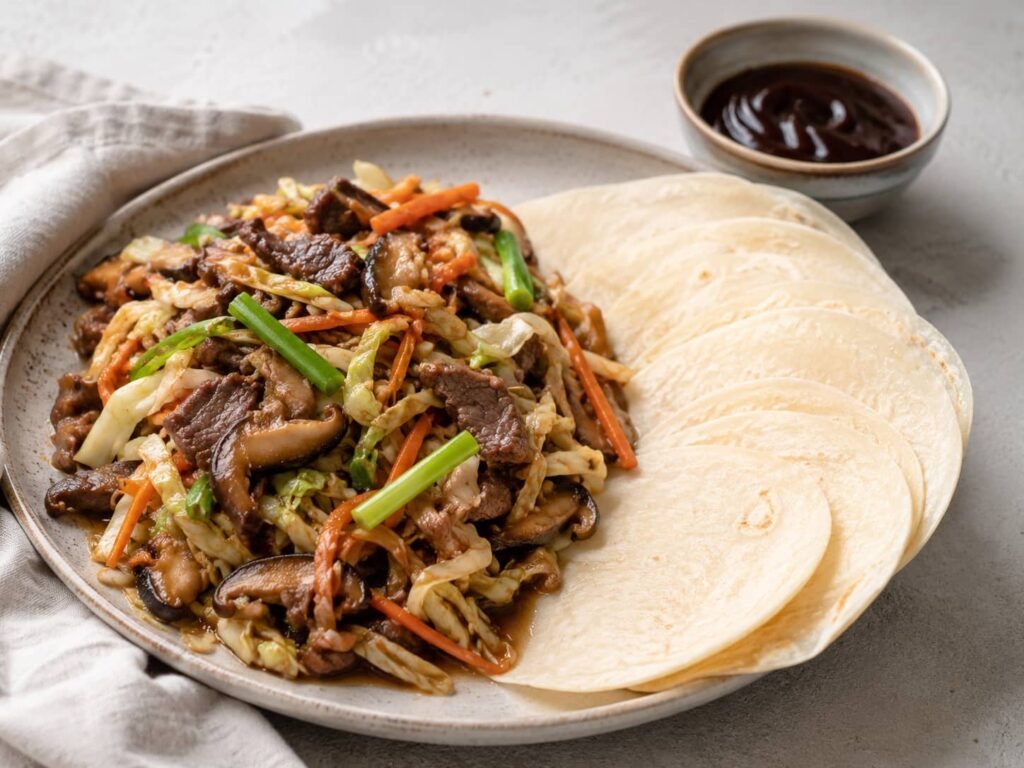
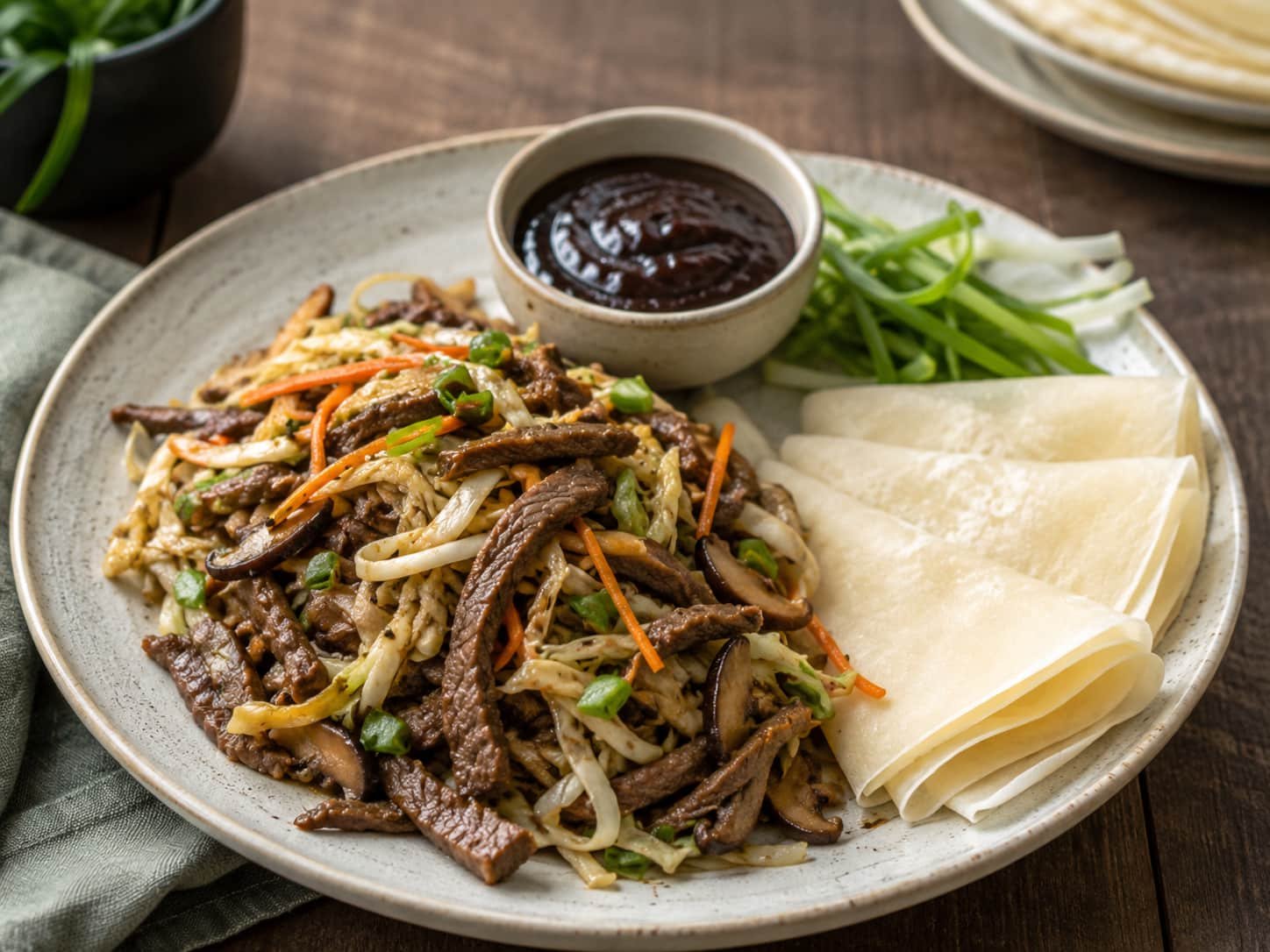
Moo shu beef is a beef-based variation of moo shu-style stir-fry. The filling generally combines thin strips of beef with vegetables such as cabbage, mushrooms, carrots, and green onions.
Garlic, ginger, soy sauce, hoisin sauce, and sesame oil are commonly used to create the sauce and aromatic base.
The cooked filling may be placed inside thin pancakes and folded or rolled before eating. Depending on the restaurant, household, or recipe, the exact vegetables, sauce proportions, beef cut, and serving method can differ.
You may also see the name written as mu shu beef, beef moo shu, or moo-shu beef. These spellings are commonly used to describe closely related dishes and preparations.
Moo shu itself is more widely associated with pork preparations, so moo shu beef is better understood as a beef variation rather than one fixed formula that every cook prepares in exactly the same way.
What Is Moo Shu Beef With Pancakes?
Moo shu beef with pancakes refers to a serving style in which the cooked beef and vegetable filling is placed inside a thin pancake.
These are not sweet breakfast pancakes. Moo shu or Mandarin-style pancakes are thin, soft wrappers intended for savory fillings.
A small portion of beef and vegetables can be placed in the center before the pancake is folded or rolled.
Hoisin sauce may also be served with the pancakes, either incorporated into the filling or added separately.
When Mandarin-style pancakes are unavailable, some home recipes use small flour tortillas as an accessible substitute. A tortilla changes the traditional presentation and texture, but it can perform a similar practical role as a wrapper.
Common Moo Shu Beef Ingredients
There is no single ingredient list used in every moo shu beef recipe. Restaurant versions, home recipes, and regional adaptations can differ.
A practical ingredient framework may include the following.
Beef
Common options include:
- 1 pound flank steak or sirloin steak, thinly sliced
- 1 tablespoon soy sauce
- 1 teaspoon sesame oil
- 1 teaspoon cornstarch
Thinly sliced beef is useful in stir-frying because the smaller pieces cook relatively quickly.
Flank steak and sirloin are common recipe choices, although other beef cuts suitable for quick cooking may also be used.
Slicing across the visible direction of the muscle fibers can change the way the cooked beef feels when chewed. The thickness of the slices also affects cooking time.
Cornstarch is sometimes included with the beef before cooking to create a light coating.
If you are interested in other ways thin beef can be prepared, see these beef strip recipe ideas.
Vegetables
A moo shu beef filling may contain:
- 3 cups thinly sliced green cabbage
- 1 cup julienned carrots
- 1 cup sliced mushrooms
- 4 sliced green onions
Other recipes may use napa cabbage, wood ear mushrooms, bean sprouts, bok choy, bell peppers, snow peas, or similar vegetables.
The ingredient combination does not need to be identical in every version. What matters for understanding the dish is the general combination of sliced meat, vegetables, aromatics, and sauce.
Sauce and Aromatics
A simple moo shu-style sauce may include:
- 3 tablespoons hoisin sauce
- 2 tablespoons soy sauce
- 1 teaspoon sesame oil
- 3 minced garlic cloves
- 1 tablespoon grated fresh ginger
Hoisin sauce contributes sweetness and seasoning, while soy sauce adds saltiness and savory flavor. One commercially available option is Lee Kum Kee Hoisin Sauce.
Garlic, ginger, and sesame oil contribute additional aroma and flavor.
Commercial hoisin sauce, soy sauce, and sesame products vary by brand, so ingredient and allergen labels should be checked when that information matters to you.
For Serving
Possible serving ingredients include:
- 8 to 10 Mandarin-style or moo shu pancakes
- Additional sliced green onions
- Hoisin sauce
- Rice, if preferred
Small flour tortillas may also be used when dedicated moo shu pancakes are unavailable.
How Moo Shu Beef Is Commonly Prepared
The following method explains a common cooking sequence rather than presenting it as a personally tested or guaranteed formula.
Actual cooking time can vary according to the thickness of the beef, quantity of ingredients, cookware, and heat level.
1. Slice and Season the Beef
Cut the beef into thin strips.
Combine the sliced beef with soy sauce, sesame oil, and cornstarch until the pieces are lightly coated.
Some recipes allow the seasoned beef to sit briefly while the other ingredients are prepared.
Preparing the beef, vegetables, and sauce before heating the pan can be useful because stir-frying moves quickly once cooking begins.
2. Combine the Sauce Ingredients
Place the hoisin sauce, soy sauce, sesame oil, garlic, and ginger in a small bowl and stir them together.
Having the sauce prepared separately makes it easier to add it later without stopping to measure ingredients while the beef and vegetables are cooking.
3. Cook the Vegetables
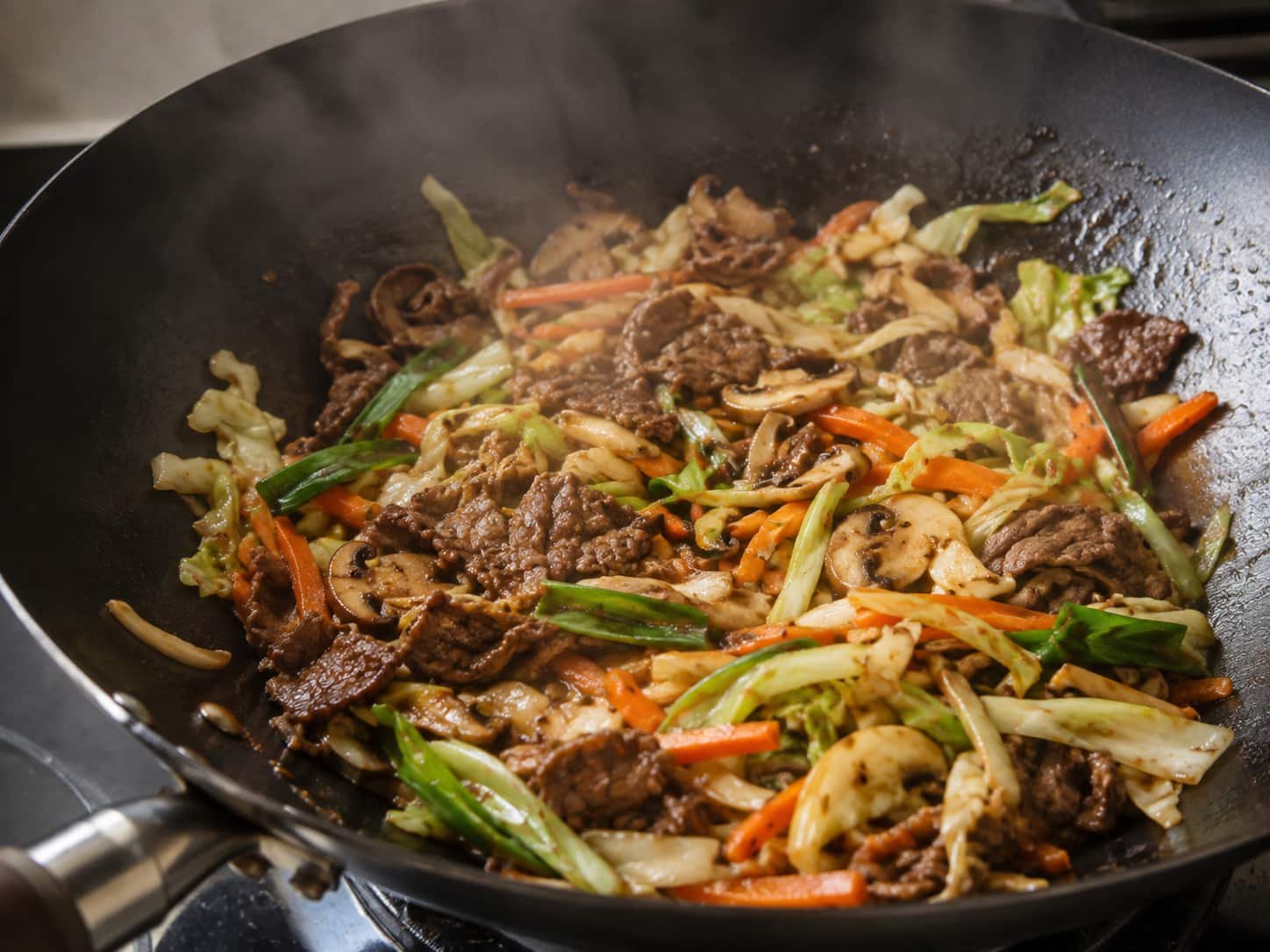
Heat a wok or large skillet and add an appropriate amount of cooking oil. If you prefer a carbon-steel wok, the YOSUKATA 13.5-inch Carbon Steel Wok is one commercially available option; a large skillet can also be used.
Mushrooms can be added first, followed by carrots and cabbage. Green onions can be added later in the cooking process.
The exact sequence can be adjusted depending on the vegetables being used and how soft or firm you want them to become.
Transfer the vegetables from the pan once they have reached the texture you want.
4. Cook the Beef
Return the wok or skillet to the heat.
Arrange the beef in the pan without packing the pieces too tightly together. If the pan is small, the beef can be cooked in separate batches.
Thin strips of beef cook more quickly than thick pieces, so cooking time should be based on the size of the slices rather than a fixed number of minutes.
For food safety, use an appropriate food thermometer and current food-safety guidance for beef rather than relying only on appearance or color.
5. Combine the Beef, Vegetables, and Sauce
Return the vegetables to the pan with the beef.
Add the prepared sauce and stir so it is distributed throughout the mixture.
Continue cooking only as needed to heat the ingredients together and finish the sauce.
The amount of sauce can be adjusted according to the quantity of beef and vegetables being prepared.
6. Warm the Pancakes
Prepare packaged moo shu or Mandarin-style pancakes according to their package directions.
If flour tortillas are being used instead, they can also be warmed before serving so they are easier to fold.
Place a moderate amount of filling inside each wrapper rather than overfilling it.
What Does Moo Shu Beef Usually Contain?
The exact answer depends on the version being prepared, but the main components generally fall into four groups.
Protein: Thinly sliced beef.
Vegetables: Cabbage, mushrooms, carrots, and green onions are common possibilities.
Aromatics and sauce: Garlic, ginger, soy sauce, hoisin sauce, and sesame oil frequently appear in home-style versions.
Wrapper or side: Mandarin-style pancakes are a well-known serving option, although rice, tortillas, and other alternatives are sometimes used.
Thinking about the dish in these groups makes it easier to understand which ingredients are central to a specific recipe and which can be adjusted.
Moo Shu Beef vs. Moo Shu Pork
Moo shu beef and moo shu pork use a similar general cooking concept, but the main protein differs.
Moo shu pork uses sliced pork, while beef moo shu replaces the pork with sliced beef.
The vegetable and sauce combinations can also vary, so the difference is not necessarily limited to the type of meat.
Moo shu pork is more closely associated with the established name of the dish, while beef is one of several adaptations found in restaurant and home cooking.
If you want to compare another protein variation, Daily Bite Recipes also has an easy moo shu chicken recipe.
Moo Shu Beef vs. Beef and Broccoli
Moo shu beef and beef and broccoli are both beef-based stir-fries, but their ingredient structure and serving styles are different.
Beef and broccoli generally focuses on sliced beef and broccoli with a savory sauce and is frequently paired with rice.
Moo shu beef usually contains a broader mixture of vegetables and may be served with thin pancakes that function as wrappers.
The sauces can also differ. Hoisin sauce is frequently associated with moo shu-style preparations, while beef-and-broccoli recipes use a range of soy-based stir-fry sauces.
Can You Make Moo Shu Beef Without Pancakes?
Yes. Pancakes are one serving option rather than a requirement for every modern moo shu beef variation.
The beef and vegetable mixture may also be served with:
- Steamed rice
- Jasmine rice
- Brown rice
- Lettuce cups
- Small flour tortillas
- Noodles
These alternatives change the presentation but allow the same general beef-and-vegetable filling to be used in different meals.
If your goal is specifically to understand moo shu beef with pancakes, Mandarin-style pancakes provide the most relevant comparison.
Ingredient Substitutions and Variations
Because recipes differ, several ingredients can be changed while keeping the general moo shu-style concept recognizable.
Different Vegetables
Cabbage and mushrooms are common, but a recipe may also incorporate vegetables such as:
- Napa cabbage
- Bok choy
- Snow peas
- Bell peppers
- Bean sprouts
- Zucchini
Different vegetables contain different amounts of moisture and cook at different rates, so they may need to be added to the pan at different stages.
Spicier Versions
A recipe can include ingredients such as chili garlic sauce, fresh chili, chili crisp, or crushed red pepper when a hotter flavor profile is wanted.
Because these products can vary significantly in salt, heat, and other ingredients, the amount should be adjusted according to the specific product being used.
Other Proteins
Chicken, pork, and tofu appear in other moo shu-inspired preparations.
Changing the protein also changes the cooking requirements, so the preparation method should be adjusted accordingly rather than assuming every protein requires the same cooking time.
Cooking Variables That Affect Moo Shu Beef
Several practical variables influence the final texture and appearance of a stir-fry.
Beef Slice Thickness
Thin pieces cook differently from thick pieces. Keeping the slices relatively even makes it easier for them to cook at a similar rate.
Pan Size
Crowding a small skillet with a large quantity of ingredients increases the amount of moisture in the pan.
Cooking in batches is one option when the pan cannot comfortably hold all of the beef at once.
Vegetable Moisture
Washed vegetables can carry additional water into the pan. Draining or drying them before stir-frying can help control the amount of liquid present during cooking.
Sauce Quantity
Using more sauce produces a wetter filling, which can matter when the beef is being served inside pancakes.
A smaller quantity creates a more lightly coated mixture.
Neither approach needs to be presented as universally correct; it depends on the recipe and desired serving style.
Preparation Order
Stir-fry recipes often involve preparing ingredients before cooking begins because individual components may only spend a short period in the pan.
Having the vegetables sliced and sauce mixed beforehand can make the cooking sequence easier to manage.
How to Serve Moo Shu Beef
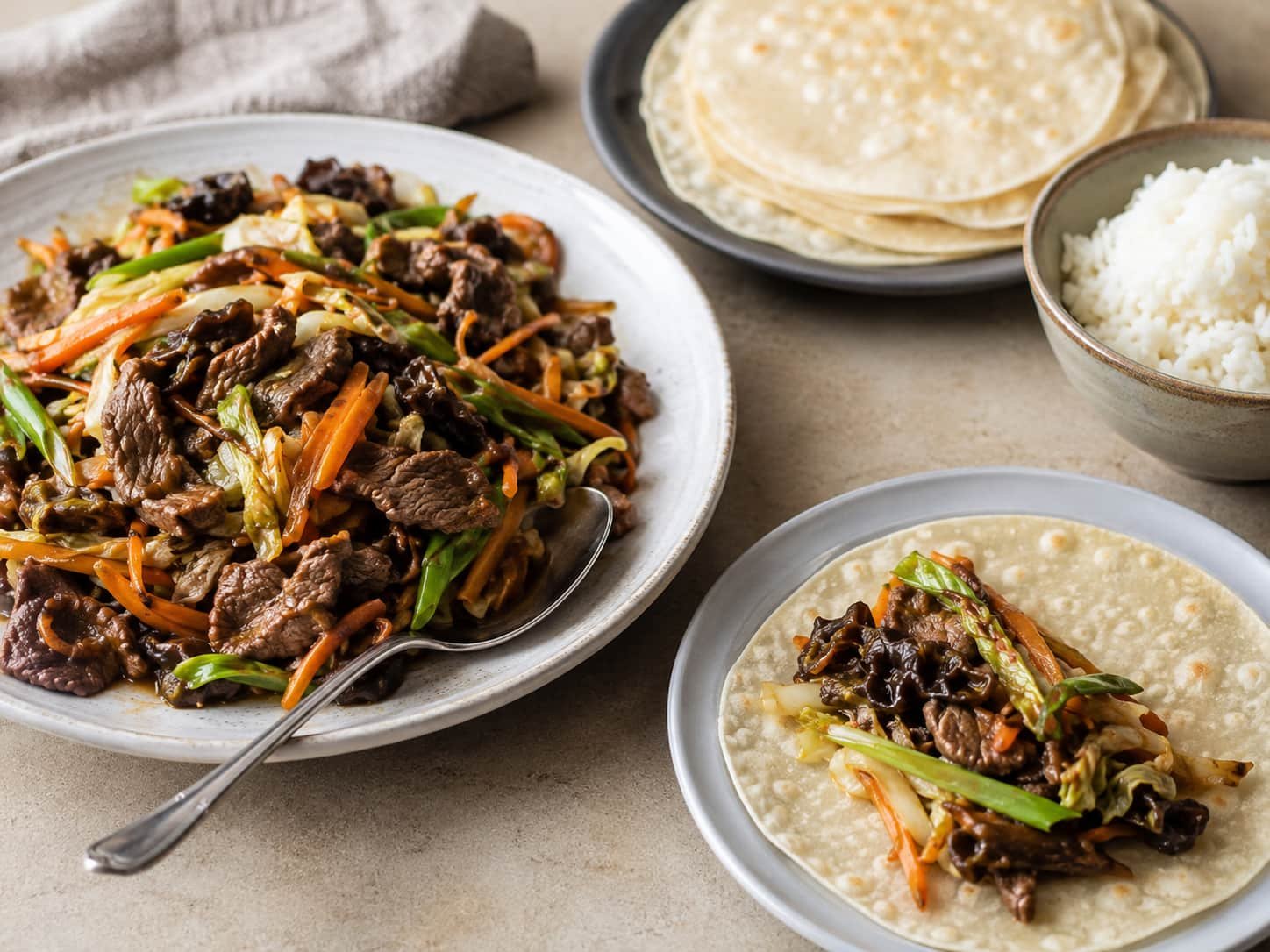
One serving method is to place a warm pancake on a plate, add a small amount of the beef and vegetable mixture, and fold the pancake around the filling.
Hoisin sauce may be included in the cooked mixture or served separately.
When serving the dish with rice, the beef and vegetables can simply be spooned over or alongside the rice.
The choice between pancakes and rice changes the way the dish is eaten but does not require changing the central beef-and-vegetable mixture.
Frequently Asked Questions
What is moo shu beef?
Moo shu beef is a beef variation of moo shu-style stir-fry. It generally combines thinly sliced beef, vegetables, aromatics, and a savory sauce. Many versions are served with thin pancakes or wrappers.
What is in moo shu beef?
Common ingredients include sliced beef, cabbage, mushrooms, carrots, green onions, garlic, ginger, soy sauce, hoisin sauce, and sesame oil. Ingredient combinations vary by recipe.
What is moo shu beef with pancakes?
It is a serving style in which the beef and vegetable filling is placed inside thin Mandarin-style pancakes before being folded or rolled.
Is moo shu beef the same as moo shu pork?
No. The dishes follow a related general concept, but moo shu beef uses beef while moo shu pork uses pork. Their other ingredients can also differ.
What cut of beef can be used for moo shu beef?
Flank steak and sirloin are commonly used in moo shu beef recipes because they can be sliced into thin strips. Other beef cuts suitable for quick stir-frying may also be used.
Final Overview
Moo shu beef is best understood as a flexible beef variation of the broader moo shu style of cooking rather than one recipe with a universally fixed ingredient list.
Most versions combine thinly sliced beef, vegetables, garlic, ginger, and a savory sauce that may contain hoisin and soy sauce. Mandarin-style pancakes are a familiar serving option, while rice, tortillas, and other alternatives also appear in home cooking.
Understanding the basic components beef, vegetables, aromatics, sauce, and wrapper makes it easier to compare different moo shu beef recipes without assuming that one variation is the only correct version.