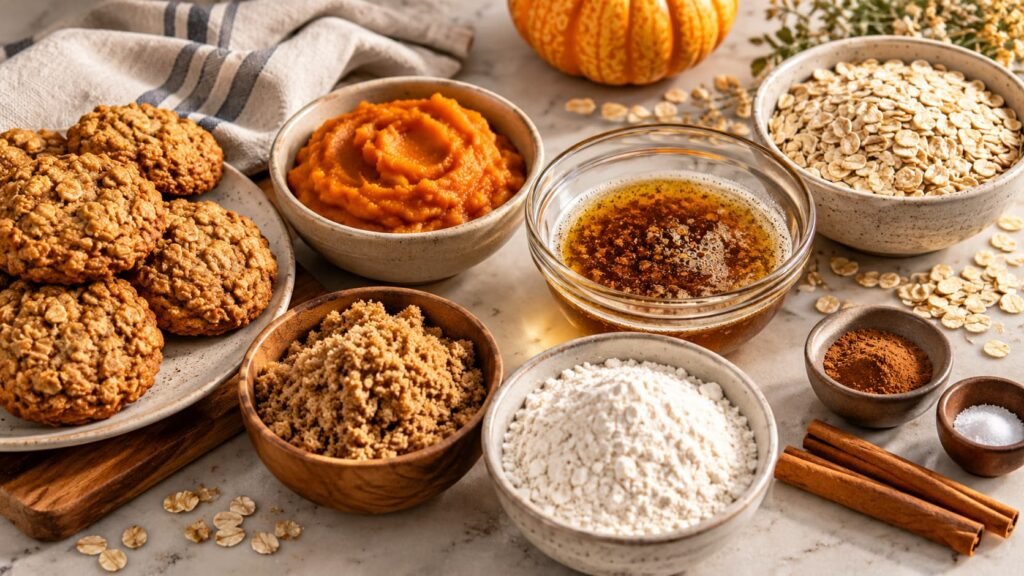
Brown butter pumpkin oatmeal cookies combine toasted brown butter, pumpkin puree, and oats in one cookie dough. Each ingredient affects more than flavor: browning butter removes some water, pumpkin adds moisture, and oats interact with that moisture while contributing their own texture.
Because of this balance, pumpkin oatmeal cookies can behave differently from standard oatmeal cookies. Some formulas produce a softer, more cake-like cookie, while others are designed for a denser or chewier texture.
The result depends on the complete formula, including pumpkin consistency, oat type, flour, sugar, eggs, fat, leavening, dough temperature, and baking method.
What Makes Brown Butter Pumpkin Oatmeal Cookies Different?
Brown butter and pumpkin change both flavor and dough composition. Brown butter contributes toasted notes while losing some water during heating. Pumpkin puree moves the balance in the other direction by adding moisture.
Oats add another variable because their size, type, and quantity can affect texture and the way the dough handles available liquid.
What Does Brown Butter Add?
Brown butter is butter that has been heated beyond simple melting until its milk solids begin to brown.
As the butter heats, some of its water evaporates. The milk solids gradually darken and develop toasted, nutty aromas. Those browned particles are an important part of brown butter’s characteristic flavor.
This makes brown butter different from ordinary melted butter. It changes both flavor and moisture balance, so replacing regular butter with browned butter is not always a neutral substitution.
In a pumpkin oatmeal cookie, those toasted notes can complement pumpkin, oats, brown sugar, cinnamon, and other warm spices. How noticeable the brown butter tastes will depend on the complete ingredient balance.
Why Does Pumpkin Change Cookie Texture?
Pumpkin puree adds water to cookie dough. In some formulas, that additional moisture can encourage a softer, puffier, or more cake-like texture.
That does not mean pumpkin cookies must be cakey.
Some developed formulas reduce pumpkin moisture before mixing, while others account for it through different amounts of flour, oats, fat, sugar, eggs, and leavening.
The more useful principle is this: pumpkin changes the moisture balance of cookie dough, and the rest of the formula determines how that moisture affects texture.
Which Ingredients Have the Biggest Effect on Texture?
Cookie texture comes from the relationship between wet and dry ingredients rather than from one “secret” ingredient.
Pumpkin and oats are especially important in this style of cookie, but flour, sugar, eggs, butter, and leavening also influence structure and spread.
Pumpkin Puree and Moisture
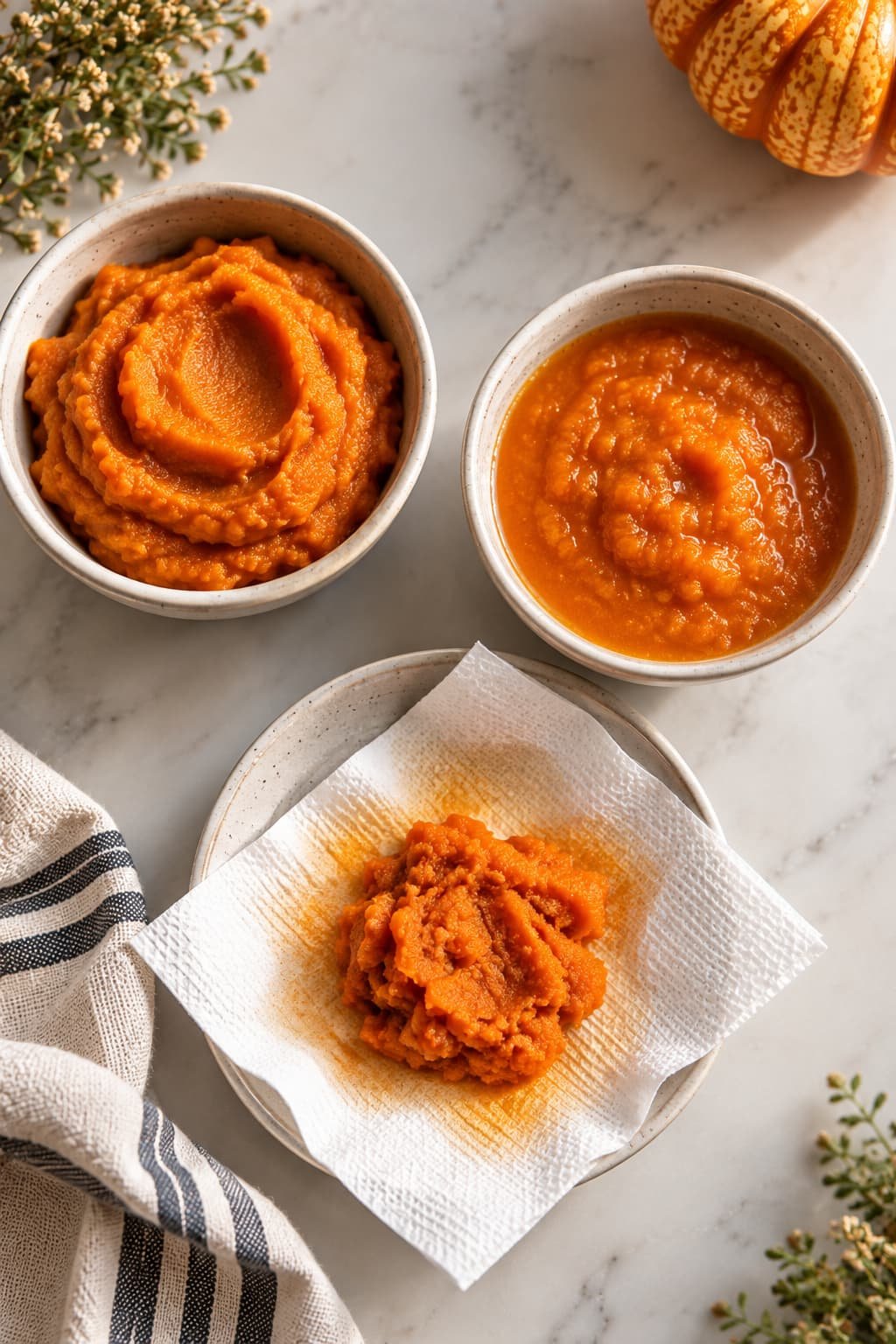
Plain pumpkin puree contributes flavor, color, and moisture.
Some pumpkin-cookie formulas reduce part of that moisture by blotting the puree or cooking it down before mixing. These methods can be useful when a recipe is specifically designed for a denser texture, but they are not universal requirements.
Homemade puree can also vary in consistency depending on the pumpkin and how it is cooked and drained. A thinner puree introduces more liquid than a thicker one, which may change the behavior of a formula developed around canned pumpkin.
Pumpkin puree should also be distinguished from pumpkin pie filling.
Plain pumpkin puree is a basic pumpkin ingredient used as part of a recipe.
Pumpkin pie filling or pie mix is already formulated with additional ingredients such as sweeteners and spices.
Using pie filling in place of plain puree can therefore change sweetness and seasoning as well as moisture balance.
Rolled Oats, Quick Oats, and Oat Texture
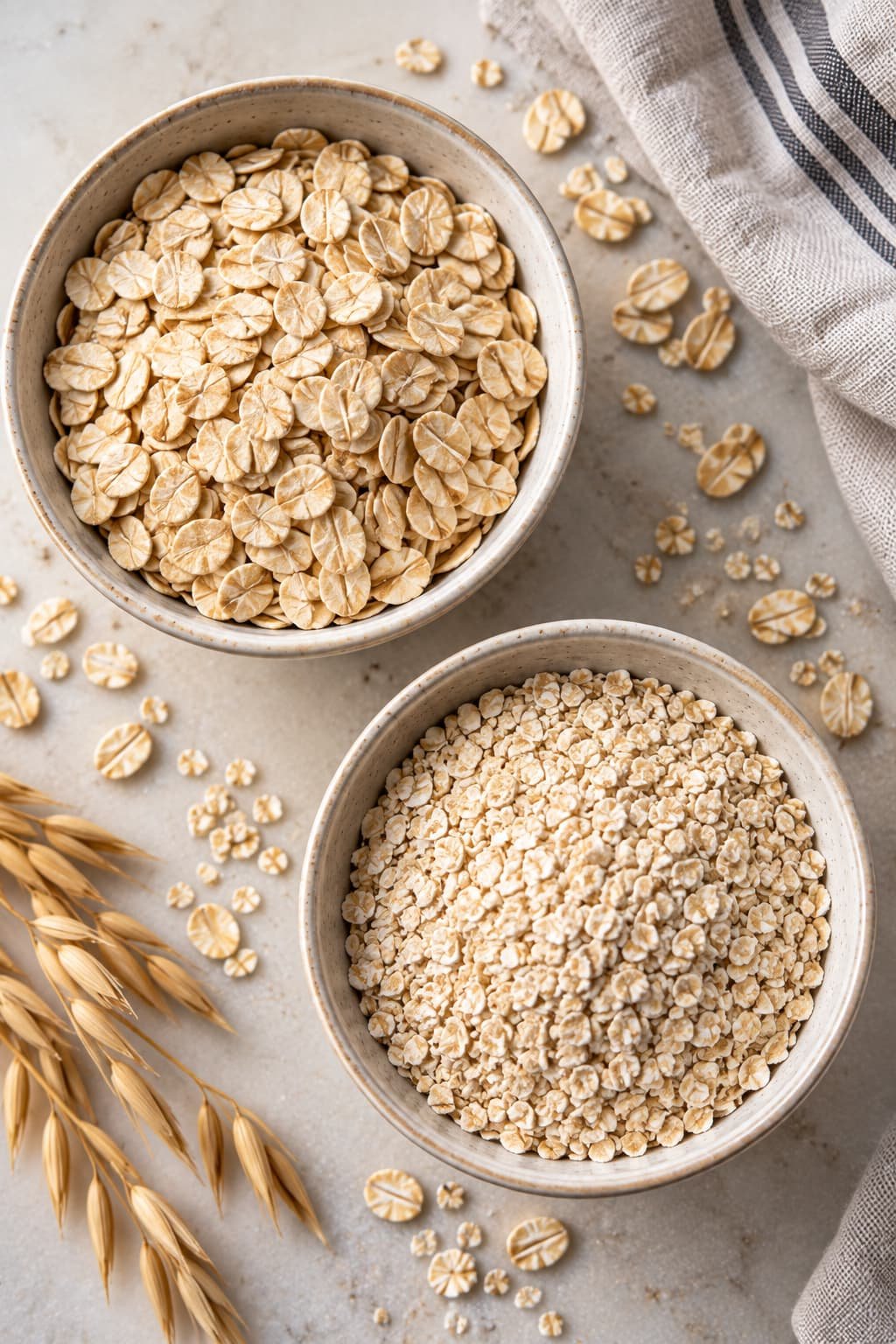
Old-fashioned rolled oats have larger flakes, while quick-cooking oats are processed into smaller pieces.
That difference can affect the finished texture.
Rolled oats may remain more noticeable in the cookie and can contribute a heartier oat texture. Quick oats tend to blend more closely into the dough because their pieces are smaller.
The effect on spread and moisture absorption is not universal, however. Different oat products can behave differently depending on the rest of the formula.
For that reason, rolled oats and quick oats should not automatically be treated as interchangeable in equal amounts unless the specific recipe has been developed that way.
Flour, Sugar, Eggs, and Leavening
These ingredients work together to determine how the cookie spreads and sets.
Flour provides structure. Changing the quantity can shift the balance between wet and dry ingredients.
Sugar affects sweetness, moisture behavior, and spread. Reducing or increasing it can therefore change more than flavor.
Eggs contribute moisture and structure. Whole eggs, whites, and yolks contain different proportions of water, protein, and fat, so changing from one to another can alter the formula.
Some pumpkin-cookie recipes use only a yolk, but that is a recipe-specific choice rather than a universal requirement for a chewy cookie.
Leavening affects expansion and structure. Baking soda and baking powder can influence rise and spread, but their effect depends on the other ingredients and the amounts used.
Why Do Pumpkin Oatmeal Cookies Become Cakey, Dry, or Spread Unevenly?
Texture problems usually have several possible causes. Pumpkin moisture, dry-ingredient quantities, fat temperature, dough consistency, leavening, and baking conditions can all contribute.
Troubleshooting is therefore more useful when the whole formula is considered instead of blaming one ingredient automatically.
Why Can Pumpkin Cookies Become Cakey?
Extra moisture from pumpkin is one possible contributor to a more cake-like texture.
Some developed cookie formulas reduce that moisture to produce a denser result. However, pumpkin is not the only factor.
A more cake-like cookie can also be influenced by the balance of:
- flour and oats
- eggs
- sugar
- fat
- leavening
- total moisture
For that reason, saying “too much pumpkin always causes cakey cookies” would be too broad.
Why Can They Become Dry or Crumbly?
Dry or crumbly cookies may result when the balance shifts too far toward dry ingredients or when the cookie loses more moisture during baking than the formula intends.
Possible contributors include excess flour or oats, reduced wet ingredients, changes to pumpkin consistency, altered egg or fat quantities, or baking beyond the needs of the particular recipe.
These are possible causes, not guaranteed diagnoses.
Oats are worth particular attention because changing their type or amount can affect both texture and moisture absorption.
What Affects Cookie Spread?
Cookie spread depends on how the dough softens and how quickly it develops enough structure to hold its shape.
Several factors can matter.
Butter and dough temperature: A warmer dough may spread differently from one designed to be baked chilled or at room temperature.
Moisture balance: More liquid or less structural material can change spread.
Flour and oats: Both contribute dry material and interact with moisture.
Brown butter: Browning removes some water from butter, so it can behave differently from regular melted butter in a cookie formula.
Shaping: Some stiff pumpkin-oatmeal doughs are flattened before baking because they spread relatively little. Other formulas may not need this step.
No single spread rule applies to every pumpkin cookie.
How Is Pumpkin Moisture Commonly Managed?
Pumpkin moisture can be managed in several ways.
Some formulas blot the puree, some reduce it by cooking, and others are designed around untreated pumpkin.
The appropriate method depends on how the complete recipe was developed.
What Does Blotting Pumpkin Mean?
Blotting means removing some moisture from pumpkin puree before it is mixed into the dough.
The goal in recipes that use this method is to make the puree more concentrated, not to remove every trace of moisture.
An exact blotting time, number of paper towels, or target weight should come from a validated recipe rather than being treated as a universal standard.
Is Blotting Always Necessary?
No.
Blotting is one possible way to control pumpkin moisture, but it is not required for every pumpkin-cookie formula.
Another recipe may reduce the puree on the stove, while another may use plain puree and balance its moisture through the rest of the ingredients.
If a developed recipe specifically calls for blotted, reduced, or untreated pumpkin, changing that step may also change the dough consistency.
How Should Brown Butter Be Handled Before Mixing?
Brown butter should be judged mainly by its appearance and aroma rather than by a universal number of minutes.
Its temperature before mixing also depends on what the specific cookie formula requires.
How Can You Recognize Browned Butter?
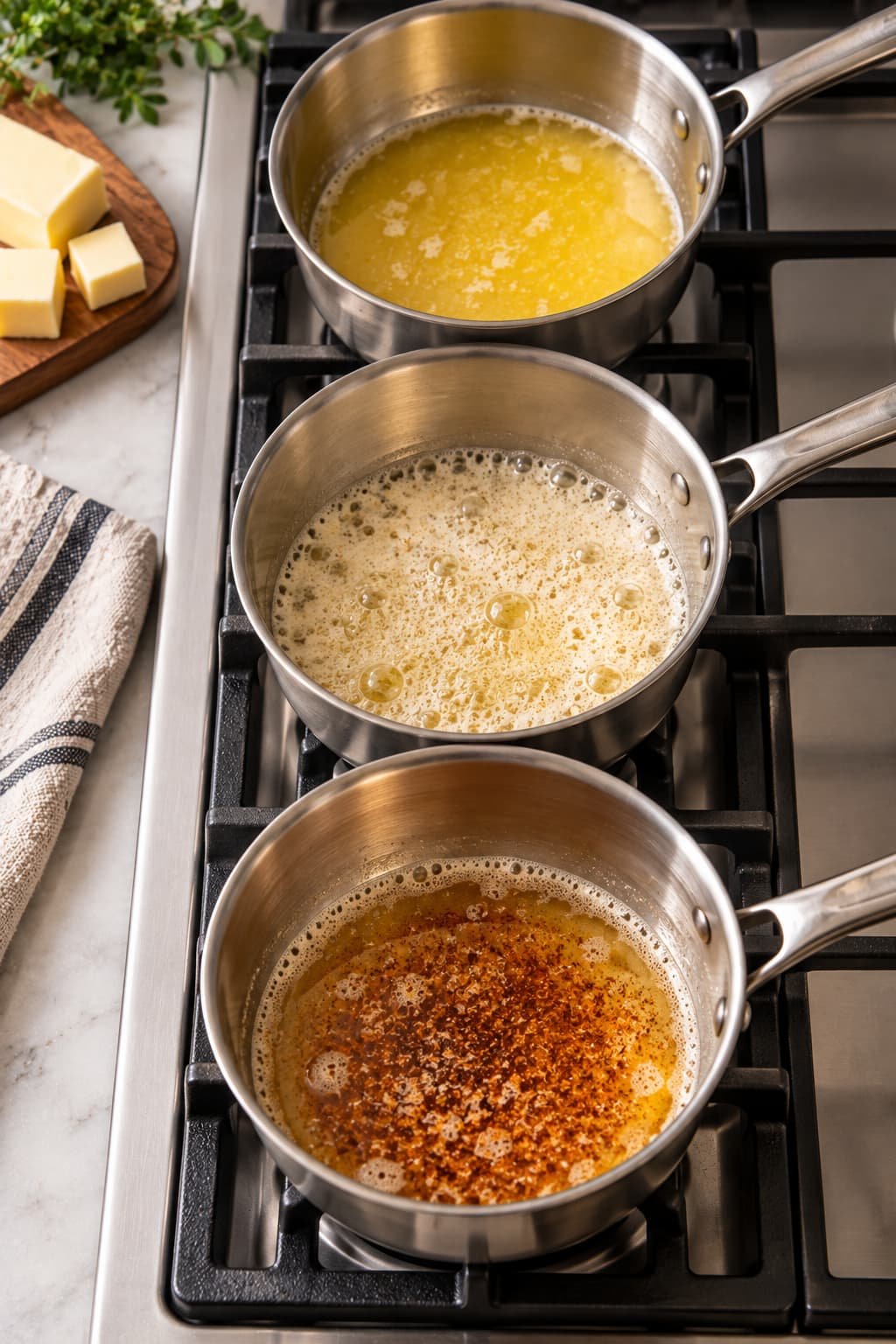
Butter first melts and begins releasing water as steam. It may foam and sputter while heating.
As cooking continues, the milk solids settle toward the bottom of the pan and gradually darken. The aroma moves from ordinary melted butter toward toasted and nutty notes.
The brown particles at the bottom are part of the browned milk solids and contribute flavor.
Browned and burned butter are not the same. If the milk solids become blackened, the flavor can turn bitter.
Because browning speed varies with the pan, heat level, and amount of butter, visual and aromatic signs are generally more useful than relying on one fixed time.
Why Does Brown Butter Temperature Matter?
The correct butter temperature depends on the recipe.
A formula designed for liquid melted butter may use brown butter while it is still fluid. A recipe developed around softened or cooler butter may require the browned butter to cool and change consistency before mixing.
The physical state of the fat can influence dough consistency and spread.
There is therefore no reliable universal instruction such as “cool brown butter for 15 minutes” that applies to every cookie formula.
How Are These Cookies Typically Put Together?
The general process is straightforward: prepare the brown butter and pumpkin, combine wet and dry components, then portion and bake according to a developed formula.
This is a process explanation rather than a complete original recipe. Exact quantities, oven temperature, baking time, cookie size, and yield should come from a verified formula.
Prepare the Brown Butter and Pumpkin
Brown butter is usually prepared early enough to reach the temperature or consistency required by the chosen formula.
Pumpkin preparation depends on the recipe. The puree may be used directly, blotted, or reduced to remove some water.
These two ingredients influence moisture differently: browning butter removes some water, while pumpkin adds moisture.
Combine the Wet and Dry Components
Dry ingredients such as flour, oats, leavening, salt, and spices are commonly distributed together before they are mixed with the wet ingredients.
The wet mixture may contain brown butter, sugar, pumpkin, egg or yolk, and flavorings, depending on the recipe.
Once everything is combined, extended mixing is generally unnecessary unless the formula specifically calls for it.
The expected dough consistency should be judged against the recipe being followed. A thick or sticky dough is not automatically a problem if that is how the formula was designed.
Portion and Bake According to the Formula
Cookie size affects baking behavior, so portion size and baking directions should be treated as connected.
Some pumpkin-oatmeal formulas call for flattening the portions before baking because the dough spreads relatively little. Other recipes may spread adequately without that step.
Visual cues such as set edges or surface browning can be useful when they are part of the directions for the specific recipe.
There is no single baking temperature, time, or doneness cue that responsibly applies to every version.
Do Brown Butter Pumpkin Oatmeal Cookies Need Chilling?
Not necessarily.
Some cookie formulas rely on chilling to firm the dough and control spread. Others are specifically developed to bake without chilling.
Whether chilling is useful can depend on:
- butter temperature
- dough consistency
- pumpkin moisture
- flour and oat balance
- overall ingredient ratios
A universal instruction such as “always chill for 30 minutes” is therefore not appropriate.
Follow the chilling directions of the specific recipe being used.
What Can Be Added Without Changing the Main Cookie Concept?
Chocolate, nuts, dried fruit, and icing can all fit naturally with pumpkin oatmeal cookies.
These additions still change the composition of the cookie, so large quantities should not be added without considering how the formula is designed.
Chocolate, Nuts, or Dried Fruit
Chocolate chips or chunks add sweetness and solid pieces.
Pecans or walnuts add bulk and a firmer texture.
Raisins or dried cranberries add concentrated sweetness and a chewy dried-fruit texture.
A substantial amount of any mix-in changes the proportion of dough to added ingredients, so there is no universal amount that should be assumed to work in every recipe.
Icing or Glaze
Icing is optional.
Brown butter glaze is one variation used with this style of cookie, but it is not what defines the cookie itself.
Leaving off the icing changes sweetness and the final finish, not the basic combination of brown butter, pumpkin, oats, and cookie dough.
An exact glaze formula should come from a tested recipe rather than being invented.
What Should You Consider Before Making Substitutions?
Cookie substitutions should be considered in relation to the entire formula.
Changing pumpkin changes moisture.
Changing oats can alter texture and liquid absorption.
Changing flour affects structural balance.
Changing whole eggs, whites, or yolks changes the combination of moisture, protein, and fat.
Changing regular butter to brown butter affects both flavor and water content.
Adding substantial chocolate, nuts, or dried fruit increases the amount of solid material in the dough.
These changes are not automatically unsuitable. The important point is that they interact with other ingredients.
A substitution should not be presented as a guaranteed 1:1 replacement unless it has been verified for the particular formula.
Can Homemade Pumpkin Puree Be Used?
Yes, but consistency matters.
Homemade puree can contain more or less water depending on the pumpkin and how it was prepared. A noticeably thinner puree may introduce more liquid into a cookie formula developed around thicker canned pumpkin.
If homemade puree is used, its consistency should be considered rather than assuming it will behave exactly like every canned product.
How Should These Cookies Be Stored?
Storage directions should come from the specific cookie and icing formula whenever possible.
Plain cookies and cookies finished with different types of icing may not have identical storage requirements. Room-temperature, refrigerated, and frozen storage are all used for cookies, but the appropriate duration can vary with the formulation.
Because this article does not present an independently validated Daily Bite Recipes formula, assigning one universal storage period would be misleading.
Follow the storage guidance supplied with the specific cookie and topping recipe being used.
Final Takeaway
Brown butter, pumpkin, and oats create a cookie dough in which moisture balance matters.
Browning butter removes some water while developing toasted flavor. Pumpkin adds moisture. Oats contribute texture and interact with the available liquid.
The final result also depends on flour, sugar, eggs, fat, leavening, dough temperature, shaping, and baking conditions.
Techniques such as blotting pumpkin, chilling the dough, flattening portions, or choosing a particular type of oat may be useful in one developed recipe and unnecessary in another.
There is no single technique that guarantees a specific texture. Exact quantities, temperatures, baking times, storage periods, and substitution ratios should come from a formula that has been properly developed or independently verified.