
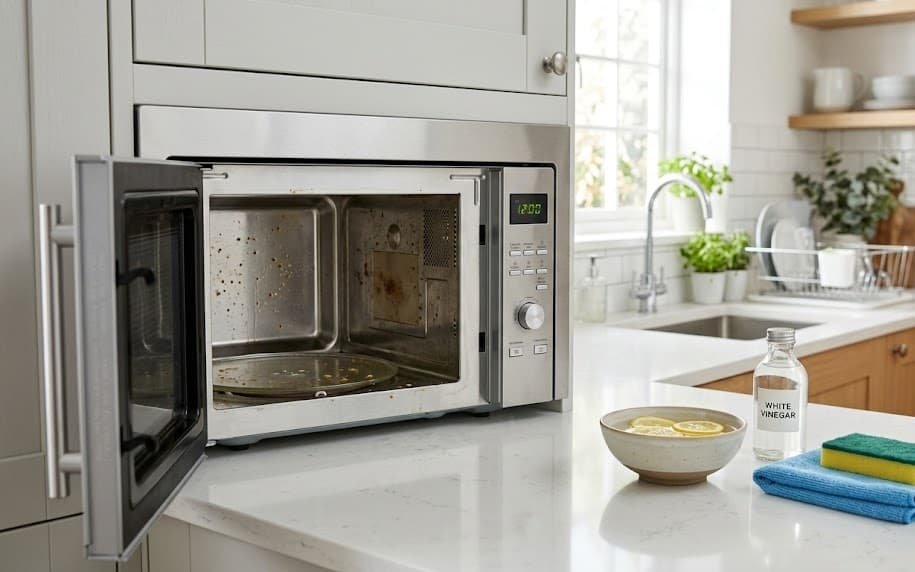
A dirty microwave usually starts with one small spill. Then, after a few busy days, there is food splatter on the walls, dried pasta sauce near the top, soup spots around the turntable, breakfast mess from oatmeal or eggs, and a bad smell that keeps coming back. This no-scrub microwave cleaning hack uses steam to loosen stuck-on food, so you can wipe the inside clean without fighting old stains.
You do not need a harsh cleaner, strong spray, or a long cleaning session. A simple bowl of water with lemon or vinegar can soften grease, lift dried sauce, and help remove microwave smells in just a few minutes. It is an easy kitchen trick for busy home cooks, especially if you reheat leftovers, plan make-ahead breakfast ideas, warm up quick breakfasts, or use the microwave often for family meals.
Lemon works well when the microwave smells bad or needs a fresh scent. Vinegar is better when the mess is greasy, sticky, or built up from sauces and reheated food. Both methods use the same idea: hot steam softens the mess first, so the wiping part is much easier.
Quick Answer: The Best No-Scrub Microwave Cleaning Hack
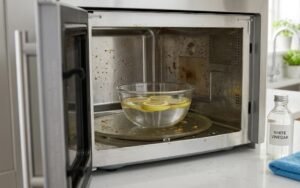
The easiest way to clean a microwave without scrubbing is to steam it first. Add 1 cup of water and a few lemon slices, or 1 to 2 tablespoons of white vinegar, to a microwave-safe bowl.
Microwave the bowl for 3 to 5 minutes, or until the inside of the microwave becomes steamy. Do not open the door right away. Let the bowl sit inside with the door closed for another 5 to 10 minutes so the steam can loosen dried food, grease, and old splatter.
Carefully remove the hot bowl using oven mitts or a thick towel. Then wipe the microwave walls, ceiling, door, and turntable area with a soft cloth or damp sponge. Most food spots should come off easily without hard scrubbing.
Why This Microwave Cleaning Hack Works
This microwave cleaning hack works because steam loosens the mess before you start wiping. When water heats inside the microwave, it creates warm steam that settles on the walls, ceiling, door, and turntable area. That moisture softens dried food, sticky sauce, grease spots, and old splatter that would usually need hard scrubbing.
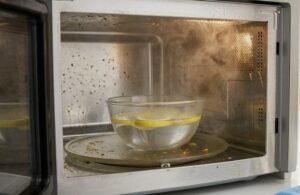
Lemon and vinegar both work well, but they are useful for different types of microwave mess. Lemon is best when the microwave smells like reheated food, soup, eggs, fish, or leftovers. It helps freshen the inside while the steam softens food stains. Vinegar is better for greasy buildup, dried pasta sauce, curry splatter, oily soup spots, or sticky food marks.
For stubborn stains, baking soda works best after the steam has already softened the food. Mix a small amount of baking soda with water to make a gentle paste, then use it on stuck-on spots around the corners, turntable area, or door edges. The goal is not to scrub harder. The goal is to let steam do the first job, then use a soft cloth to wipe away what has loosened.
This is why the no-scrub method works better than cleaning a cold, dry microwave. A dry stain holds tightly to the surface. A steamed stain softens first, which makes it easier to clean without rough pads, strong sprays, or extra effort.
What You Need Before You Start
You only need a few simple kitchen items for this no-scrub microwave cleaning hack: a microwave-safe bowl, 1 cup of water, a few lemon slices or 1 to 2 tablespoons of white vinegar, a microfiber cloth or soft sponge, baking soda for tough spots, mild dish soap for the glass turntable, and a dry towel.
Use lemon if your main problem is bad microwave smell. Use white vinegar if the inside feels greasy or has dried sauce from reheated meals. If a few marks still stay behind after steaming, mix baking soda with a little water and use it as a gentle paste on those spots.
Before you start wiping, remove the glass turntable if your microwave has one. Wash it separately with warm water and mild dish soap, then dry it with a clean towel before placing it back. This helps clean the food ring that often builds up under bowls, mugs, and meal prep containers, especially when your kitchen routine includes weekly meal planning.
Be careful when the microwave finishes heating. The bowl, water, and steam will be hot. Leave the door closed for 5 to 10 minutes so the steam can settle and soften the mess. When you open the door, do it slowly and keep your face away from the steam. Use oven mitts or a thick towel when removing the bowl.
Avoid mixing random cleaners inside the microwave. You do not need bleach, oven cleaner, strong sprays, steel wool, or harsh chemical mixtures for this method. Water, lemon or vinegar, baking soda, dish soap, and a soft cloth are enough for most everyday microwave messes.
Method 1: Clean a Microwave with Lemon Steam
Use this method when your microwave has light food splatter, a stale smell, or small breakfast messes from oatmeal, eggs, butter, or a quick egg breakfast. The lemon microwave cleaning hack works well because the steam softens the mess first, so you are not wiping a dry, sticky surface.
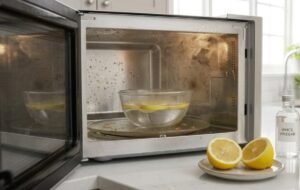
Pour 1 cup of water into a microwave-safe bowl and add a few lemon slices. If you do not have fresh lemon, use 1 tablespoon of lemon juice for light odors or 2 tablespoons if the microwave smells stronger. Place the bowl in the microwave and heat it for 3 to 5 minutes, until the water is hot and the inside looks steamy.
When the timer stops, keep the door closed for another 5 to 10 minutes. This resting time helps the lemon steam loosen dried food on the walls, ceiling, door, base, and turntable area. It can also help remove microwave smell from soup, eggs, leftovers, and other reheated meals.
After the steam has settled, open the door slowly and keep your face away from the hot steam. Remove the bowl carefully with oven mitts or a thick towel. Wipe the inside with a soft cloth or damp sponge, starting from the ceiling and working down to the walls, door, base, and turntable area.
Lemon steam is the best first choice when you want to clean a microwave with lemon and leave it smelling fresher without using a strong cleaner. It is especially useful for everyday messes that have not been sitting for too long.
Method 2: Clean a Greasy Microwave with Vinegar
Use vinegar when the microwave feels greasy or has sticky sauce splatter from pasta, curry, soup, cheese, butter, or oily leftovers. This microwave steam cleaning hack is helpful because vinegar works well on grease while the steam softens dried food and stuck-on marks.
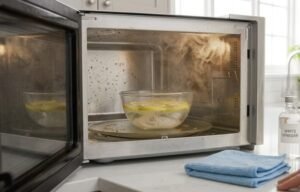
Add 1 cup of water and 1 to 2 tablespoons of white vinegar to a microwave-safe bowl. Do not fill the bowl too high, because the mixture can bubble while heating. Place it inside the microwave and heat for 3 to 5 minutes, until the inside becomes steamy. For a very greasy microwave, use the longer end of the heating time, but watch the bowl so it does not boil over.
Once the microwave stops, leave the door closed for 5 to 10 minutes. This gives the warm vinegar steam enough time to loosen greasy microwave stains, sauce marks, and food spots around the turntable, corners, and door edges.
Carefully remove the hot bowl, then wipe the inside with a damp cloth or soft sponge. Work from top to bottom so loosened grease and moisture move toward the base. If the glass turntable feels oily, remove it and wash it separately with warm water and mild dish soap, then dry it before placing it back.
If a light vinegar smell remains, this final step is optional. Place a fresh bowl of water with a few lemon slices inside the microwave and heat it for 1 to 2 minutes. Let it sit briefly, then wipe once more. This gives you the grease-cleaning benefit of vinegar with a fresher lemon finish.
Method 3: Use Baking Soda for Stubborn Microwave Stains
Baking soda is not the main cleaning method for this hack. The steam should always come first because it softens dried food and makes wiping much easier. Baking soda is only needed when a few stubborn microwave stains stay behind, especially dried sauce, stuck-on cheese, or food marks around the corners, base, and turntable area.
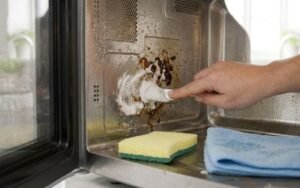
To clean a microwave with baking soda, mix about 2 tablespoons of baking soda with 1 teaspoon of water. Stir it into a soft paste. It should be thick enough to sit on the stain but still easy to spread. If it feels too dry, add a few more drops of water.
Wait until the microwave has cooled after steaming, then apply the paste directly to the stuck-on food or stain. Let it sit for 3 to 5 minutes. This gives the baking soda time to loosen the mark without needing a rough scrubber.
Wipe the area gently with a damp cloth or soft sponge. Do not use steel wool, metal tools, or rough scouring pads inside the microwave, because they can scratch the surface. If the stain does not lift the first time, repeat the steam method once more instead of scrubbing harder.
This method is helpful when you need to remove stuck-on food from microwave corners, the base, or the area under the turntable. It works best as a gentle backup after lemon steam or vinegar steam has already done most of the cleaning.
How to Clean the Microwave Turntable and Door
The turntable usually collects the mess that falls from bowls, mugs, and meal prep containers. Remove the glass turntable carefully and wash it in warm water with mild dish soap. If food has dried around the edges, let it soak for a few minutes before wiping it clean.
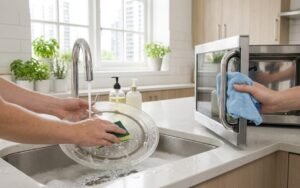
One important safety tip: if the glass turntable is still hot, let it cool before washing it. Do not place a hot glass turntable straight into cold water, because the sudden temperature change can cause glass to crack.
Do not forget the roller ring under the turntable. Food crumbs, sauce drops, and grease can collect there and cause smells over time. Lift it out if your microwave allows it, wipe it with a damp cloth, and clean the base underneath before putting everything back in place.
For the inside door, wipe around the edges, glass, and seal area with a damp cloth. This is where steam, grease, and food splatter often settle. The handle and control panel need a lighter touch. Use a slightly damp cloth, not a soaking wet one, so water does not drip into buttons, vents, or small openings.
For the exterior, wipe the front, sides, and handle with a soft damp cloth, then dry with a clean towel. If the outside has fingerprints or light grease, add a small drop of mild dish soap to the cloth. Avoid spraying cleaner directly onto the microwave. It is safer to dampen the cloth first, wipe the surface, and then dry it.
What Not to Use Inside a Microwave
A microwave is used for food, so it is better to clean the inside with simple kitchen-based methods whenever possible. Steam, lemon, vinegar, baking soda, mild dish soap, and a soft cloth are enough for most everyday messes. Strong cleaners may seem faster, but they can leave smells or residue behind, especially when the microwave is heated again.
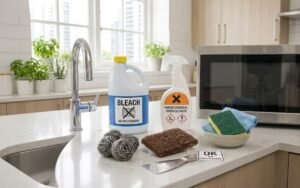
Avoid using bleach, ammonia, oven cleaner, strong commercial sprays, or disinfecting wipes inside the microwave. These products are not needed for normal food splatter and can leave behind fumes or residue in a small enclosed space. You should also avoid mixing cleaners, even if they are common household products. A microwave cleaning hack should make the job easier, not unsafe.
Rough cleaning tools can also cause problems. Steel wool, metal scrapers, abrasive pads, and hard brushes can scratch the inside surface. Once the surface is scratched, future food splatter and grease can become harder to wipe away. If a dried stain is not lifting, repeat the steam method or use a small amount of baking soda paste instead of scraping it.
The safest rule is simple: for the inside of the microwave, start with steam and wipe with a soft cloth. For the outside, dampen the cloth first instead of spraying cleaner directly onto the microwave. This is especially important near the control panel, vents, handle, and door edges, where extra moisture can get into small openings.
How to Keep Your Microwave Clean After Reheating Food
The easiest way to keep a microwave clean is to stop splatter before it dries. Soups, pasta, rice, sauces, and saucy leftovers can bubble quickly, so cover them with a microwave-safe lid or a loose microwave-safe cover before heating. Do not seal the cover tightly. Leave space for steam to escape so pressure does not build up.
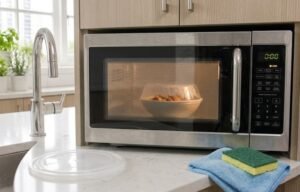
If something splashes, wipe it while the microwave is still slightly warm. Fresh splatter comes off much faster than dried sauce or cooked-on food. Keeping a small damp cloth near the microwave makes quick cleanup easier after reheating leftovers, warming soup, or making a fast breakfast.
Strong-smelling foods can also linger inside the microwave. After heating eggs, fish, curry, garlic-heavy meals, or leftovers with a strong sauce, leave the microwave door open for a minute so steam and smell can escape. If you use the microwave daily, a quick lemon steam clean once a week can help keep it fresher without turning cleaning into a big job.
This habit is especially helpful in a busy kitchen with make-ahead meals, quick breakfasts, and weeknight dinners. When you are reheating pasta leftovers, warming easy rice dishes, or prepping food ahead with weekly breakfast ideas, a clean microwave makes the whole routine feel easier.
Best Method by Microwave Mess
Not every microwave mess needs the same cleaning method. A light oatmeal splash is different from greasy pasta sauce, and a bad smell is different from stuck-on cheese. Choosing the right method helps you clean the microwave without scrubbing harder than needed.
| Microwave Problem | Best Method |
| Light food splatter | Lemon steam |
| Greasy sauce stains | Vinegar steam |
| Bad smell | Lemon water |
| Burnt odor | Air out first, then lemon water and a light baking soda wipe |
| Stuck-on food | Baking soda paste after steaming |
| Dirty turntable | Warm water with mild dish soap |
| Fingerprints outside | Damp microfiber cloth |
If you are not sure where to start, use lemon steam first. It is the gentlest option and works well for everyday food splatter, light smells, and small reheating messes. If the microwave feels oily or has sauce marks from pasta, curry, soup, cheese, or butter, vinegar steam is usually the better choice.
For dried food that still sticks after steaming, use baking soda paste only on the stubborn spot. There is no need to scrub the whole microwave. The glass turntable should be washed separately with warm water and mild dish soap, while the outside of the microwave only needs a damp microfiber cloth and a quick dry wipe. Be careful near the handle, vents, and control panel, and avoid using a soaking wet cloth.
Common Mistakes That Make Microwave Cleaning Harder
Opening the door too soon
One common mistake is opening the microwave door right after heating the lemon water or vinegar mixture. The steam needs time to sit inside and soften dried food. If you open the door too quickly, most of the steam escapes before it can loosen the mess.
Using too little water
Using too little water can make the microwave steam cleaning hack less effective. If the bowl does not create enough steam, food splatter stays dry and harder to wipe. One cup of water is usually enough for a normal cleaning session. Use a bowl that is large enough, and do not fill it more than halfway so the water has room to bubble without spilling over.
Scrubbing with rough pads
Rough pads, steel wool, and hard brushes can scratch the inside surface of the microwave. If a stain does not come off after one wipe, do not scrub harder. Steam the microwave again or use a small amount of baking soda paste once the inside has cooled.
Forgetting the ceiling
The ceiling of the microwave is easy to miss, but it often collects the most splatter. Soup, oatmeal, sauces, and reheated leftovers can pop upward while heating. Wipe the ceiling first, then move down to the walls, door, base, and turntable area.
Leaving the turntable in place
Another mistake is leaving the turntable in place during the whole cleaning process. Food often collects under the glass plate and around the roller ring. Removing the turntable helps you clean hidden crumbs, grease, and dried sauce that can cause smells later.
Letting spills sit for days
Spills become harder to clean when they sit too long. A quick wipe while the microwave is still slightly warm can stop fresh splatter from turning into stuck-on food. This small habit makes weekly cleaning much easier.
Using random cleaner mixtures
Avoid random viral cleaner mixtures inside the microwave. Lemon, vinegar, baking soda, dish soap, and steam are enough for most everyday microwave messes. Mixing strong cleaners can create fumes, leave residue, or turn a simple kitchen job into an unsafe one.
FAQs
What is the easiest way to clean a microwave without scrubbing?
The easiest way to clean a microwave without scrubbing is to loosen the mess with steam first. Add 1 cup of water and either lemon slices or 1 to 2 tablespoons of white vinegar to a microwave-safe bowl. Heat it for 3 to 5 minutes, then keep the door closed for another 5 to 10 minutes. The steam softens dried food, grease, and splatter so you can wipe the inside with a soft cloth.
Can I clean a microwave with lemon and vinegar together?
You can use lemon and vinegar in the same cleaning routine, but you usually do not need to mix them in the same bowl. Vinegar works better for greasy sauce stains and oily leftovers, while lemon is better for light smells and everyday splatter. If your microwave is both greasy and smelly, start with vinegar steam, then use lemon water afterward for a fresher finish.
How long should I microwave lemon water for cleaning?
Microwave lemon water for 3 to 5 minutes, depending on how much food splatter is inside. For a light mess, 3 minutes is usually enough. For dried spots or stronger smells, heat it closer to 5 minutes, then let the steam sit with the door closed for another 5 to 10 minutes before wiping.
Is vinegar safe for cleaning a microwave?
White vinegar is safe for basic microwave cleaning when it is mixed with water and used as steam. Use 1 cup of water with 1 to 2 tablespoons of white vinegar. Do not mix vinegar with bleach, ammonia, oven cleaner, or strong cleaning sprays. Open the microwave door slowly after steaming and let it air out if the vinegar smell feels strong.
How do I remove bad smells from a microwave?
Lemon water is one of the simplest ways to remove bad smells from a microwave. Heat 1 cup of water with lemon slices for a few minutes, then let the steam sit inside before wiping. For stronger smells from fish, eggs, curry, garlic, or burnt food, leave the microwave door open for a minute after cleaning so the inside can air out.
Can I use baking soda inside a microwave?
Yes, baking soda can be used inside a microwave, but it works best as a spot treatment for stubborn stains. Steam the microwave first, then let it cool. Mix baking soda with a little water to make a soft paste, apply it to stuck-on food, wait 3 to 5 minutes, and wipe gently with a damp cloth.
What should I never use to clean a microwave?
Avoid bleach, ammonia, oven cleaner, strong commercial sprays, disinfecting wipes inside the microwave, steel wool, abrasive pads, metal scrapers, and random cleaner mixtures. These can leave residue, create strong fumes, or scratch the inside surface. For most microwave messes, steam, lemon, vinegar, baking soda, mild dish soap, and a soft cloth are enough.
How often should I clean my microwave?
If you use your microwave every day, wipe fresh spills as soon as they happen and do a quick lemon steam clean once a week. If you use it less often, clean it whenever you notice food splatter, grease, or smell. The sooner you wipe spills, the less likely they are to turn into stuck-on food.
Final Thoughts
A clean microwave makes everyday cooking feel easier, especially when you are reheating leftovers, warming quick breakfasts, or getting food ready for a busy family meal. This no-scrub microwave cleaning hack works because it keeps the method simple: steam first, let it sit, then wipe gently.
Use lemon when the microwave smells bad, vinegar when the inside feels greasy, and baking soda only for the stubborn spots that stay behind. After that, small habits make the biggest difference. Cover saucy food, wipe fresh splatter while it is still soft, and let strong-smelling foods air out for a minute after heating.
That is the kind of small kitchen habit we like at Daily Bite Recipes: simple, useful, and easy to repeat. This no-scrub method is one more way to keep your kitchen ready for quick meals, leftovers, and family cooking.